Counter-extremism scheme could turn cops into ‘Thought Police’
RT | May 24, 2016
Draconian plans to target alleged extremists through a controversial anti-radicalization program are at risk of creating a ‘Thought Police’ in the UK, the officer leading the operation has warned.
In a damning critique, Leicestershire Police Chief Constable Simon Cole said the ‘Prevent’ legislation risks making cops judges of “what people can and cannot say.”
The government formally announced a controversial new bill to tackle extremism in the Queen’s Speech to Parliament last week. It is considered to be Prime Minister David Cameron’s flagship policy of the year.
The legislation widens the police fight to include those who are defined as ‘extremists’, but who do not take part in or even advocate terrorism themselves.
“Unless you can define what extremism is very clearly then it’s going to be really challenging to enforce,” Cole told the Guardian.
“We don’t want to be the Thought Police. We absolutely don’t want to be the Thought Police.”
When asked if the Prevent strategy could make this happen, Cole said: “Potentially there is a risk.”
Cole’s intervention will prove damaging for the government, coming from a senior counterterrorism officer.
Cameron already faced several embarrassing defeats last parliamentary year, despite having a slim majority of seats in the House of Commons, and will be keen to avoid another capitulation.
But Cole believes the legislation has triggered serious reservations among British Muslims.
“The police need to be able to safeguard people without being drawn into a hugely contentious potential role about a kind of thought police control of what people can and cannot say.
“And that needs really clearly defining and it needs parliament to lay out what is and isn’t acceptable,” he added.
Despite spending eight months drafting a “legally robust” definition of extremism, government officials are still struggling to complete the task.
Cole said he has concerns about how “enforceable” the legislation would be, adding it is important for police officers to speak out.
While he accepted that society must impose “some limits” on what can and cannot be said, “They [the limits] need to be as broad as they possibly can be.”
‘UK trains armies on its own human rights blacklist’
Press TV – May 23, 2016
The British government is providing military training to the majority of nations it has blacklisted for human rights violations, a new report reveals.
In a report published on Sunday, the Independent revealed that 16 of the 30 countries on the Foreign & Commonwealth Office (FCO)’s “human rights priority” watchlist are receiving military support from the UK despite being accused by London itself of issues ranging from internal repression to the use of sexual violence in armed conflicts.
According to the UK Ministry of Defense, since 2014, British armed forces have provided “either security or armed forces personnel” to the military forces of Saudi Arabia , Bahrain, Afghanistan, Bangladesh, Myanmar, Burundi, China, Colombia, Egypt, Iraq, Libya, Pakistan, Somalia, Sudan, Yemen and Zimbabwe.
Britain is a major provider of weapons and equipment such as cluster bombs and fighter jets to Saudi Arabia in its year-long military aggression against Yemen that has killed nearly 9,400 people, among them over 2,230 children.
Since the conflict began in March 2015, the British government has licensed the sale of nearly $4 billion worth of weaponry to the Saudi kingdom.
British commandos also train Bahraini soldiers in using sniper rifles, despite allegations that the Persian Gulf monarchy uses such specialist forces to suppress a years-long pro-democracy uprising in the country.
Bahraini forces visited the Infantry Battle School in Wales last week, accompanied by troops from Nigeria, the Defense Ministry said.
Nigeria’s top military generals are accused by Amnesty International of committing war crimes by causing the deaths of 8,000 people through murder, starvation, suffocation and torture during security operations against the Boko Haram Takfiri terrorists, according to the report.
Andrew Smith, with the Campaign Against Arms Trade, said Britain should not be “colluding” with countries known for being “some of the most authoritarian states in the world.”
Prominent British professor turns down Israeli prize
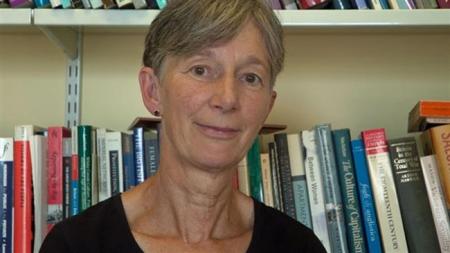
British Professor Catherine Hall
Press TV – May 22, 2016
A prominent British academic and historian has refused to accept a $330,000 prize by an Israeli university.
Professor Catherine Hall of University College London was slated to receive the Dan David Prize by Tel Aviv University on Sunday, but withdrew her acceptance citing political reasons.
“This was an independent political choice, undertaken after many discussions with those who are deeply involved with the politics of Israel-Palestine, but with differing views as to how best to act,” Hall said in a statement.
The annual academic award includes a series of $1 million prizes which are handed out in three fields.
As a historian, Hall was due to receive the prize for her “impact on social history, as a pioneer in gender history, race and slavery.”
Hall’s work on women’s history in the 1970s has helped her become known as a major feminist.
The British Committee for the Universities of Palestine described Hall’s decision as “a significant endorsement of the campaign to end ties with Israeli institutions.”
Hall’s share of the million dollar prize will now be given to three economists involved in the fight against poverty, three nano-science researchers, and two historians of social history.
The news comes amid tensions between Tel Aviv and London over remarks by several key British political figures who have condemned the Israeli regime’s crimes against the Palestinian people.
Ken Livingstone, the former mayor of London, was suspended from the Labor Party in late April after bringing up the issue of Israeli war crimes and stating that Adolf Hitler was a supporter of Zionism.
Before him, Naz Shah, a member of the British Parliament resigned as an aide to the party’s shadow chancellor after being forced to apologize for backing calls for Israel to “relocate” to the United States.
In early July 2014, Israel waged a devastating war on the Gaza Strip. The 50-day offensive claimed the lives of nearly 2,200 Palestinians, including 577 children.
The British government has banned all public bodies from joining the Boycott, Divestment and Sanctions (BDS) movement against Israel which demands the end of Israeli occupation and colonization of Palestinian land particularly through illegal settlement constructions in the occupied territories.
Labour to open re-education camps?
By Jonathon Cook | the Blog from Nazareth | May 18, 2016
The manufactured “anti-semitism crisis” in the British Labour party rumbles on into new realms of ideological insanity. The witch-hunt against commentary critical of Israel or Zionism has been in full flow, and now an internal party inquiry led by Jan Royall has reached its conclusions.
Note that in this report by the Guardian newspaper, it appears to be a given both by Royall and the Guardian that Ken Livingstone and the others suspended from the party are guilty of anti-semitism rather than anti-Zionism. I have challenged that assumption in previous posts, such as here and here. I am therefore going to put quotation marks around the word “anti-semitism”, at least as used by Royall, because it is far from clear to me that most of those under investigation have said things that are anti-semitic.
Royall’s first conclusion is that there should be no “statute of limitations” on “anti-semitism.” That’s a green light for every right-winger and Blairite to go trawling through Labour party members’ back catalogue of social media posts in search of anti-Zionist or anti-Israel utterances. Here’s a simple piece of advice to John Mann and the Blairite brigade: if you want to simplify your task, examine postings from winter 2008 and summer 2014, when Israel was killing hundreds of children in Gaza. I suspect you’ll find the “anti-semitism” you’re looking for in those periods.
Royal also suggests that there may be a need for “more rigorous vetting procedures for national and local government candidates.” So the Blairites will be further encouraged to trawl through candidates’ social media postings on Israel in the knowledge that they can thereby ensure only people like themselves get to stand for election.
Another of Royall’s conclusions is that a membership ban for “anti-semitism” should not be for life if there is “demonstrable” change by the offender. Re-education camps, anyone?
So members may be allowed back into the Labour party if they can show that over a sustained period of time they have disavowed their criticisms of Israel. Presumably, to reassure the party that they are not likely to slip back into their former bad ways of thinking, they will need to enthusiastically embrace Zionism and support an ethnic Jewish state that oppresses Palestinians in the occupied territories and systematically discriminates against the fifth of its citizens who are Palestinian.
In other words, these measures will have the practical effect of ensuring that the party is reserved for those of a Blairite persuasion.
There are other disturbing conclusions reached by Royall. She is apparently recommending that an imminent external inquiry she will also sit on consider whether members should qualify for investigation simply because “the victim or any other person” has “perceived” a comment to be anti-semitic. In short, every Netanyahu-loving Zionist may soon be guaranteed the chance to force the suspension of any Labour member who offends them by criticising Israel.
Royall suggests that the coming inquiry consider “swifter action to deal with antisemitism”, which is surprising given that the current suspensions have all been implemented summarily.
And she prefers “a review of how online debate is conducted to make it welcoming and productive.” In other words, Labour members will be expected not to criticise Israel or Zionism in case it puts off hardcore Israel supporters.
It is not hard to see where all this is leading, and was designed to lead by the Blairite faction trying to engineer a coup against leader Jeremy Corbyn. Polls show that Corbyn’s support has actually grown over the past year among ordinary members, despite the endless character assassination against him.
So the Blairites who dominate the Labour parliamentary caucus are simply re-engineering the party more to their liking: terrify into submission a new generation of candidates who have been inspired by Corbyn to enter politics, and through a war of attrition demoralise the hundreds of thousands of new members who joined the party, in the hope they will leave.
This is self-sabotage on a vast scale. The Blairites (and their cheerleaders in liberal media like the Guardian ) would prefer to destroy the party than help Corbyn and his supporters mount a credible challenge to the Conservative government. And that insight tells you all you need to know about the true ideological sympathies of the Blairites, who were so ready to cosy up to the corporations and the Murdoch media.
Syria White Helmets: Humanitarians or “Executioners”?
UK Column News – May 20, 2016
In this UK Column News special, Mike Robinson speaks to Vanessa Beeley about Syria’s “first responder” group, the White Helmets who are being pushed forward for nomination for a Nobel Peace Prize. Do they deserve it?
For more background on this, please see our previous interview from November last year: http://youtu.be/mLa9ztvAGWw
Also see Vanessa’s articles on 21st Century Wire:
http://21stcenturywire.com/2015/10/23…
US ‘leverage in Syria’ thanks to collusion with terrorists
By Finian Cunningham | RT | May 20, 2016
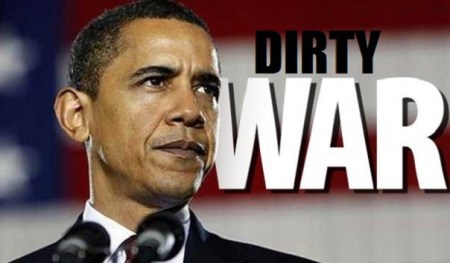
There is a simple explanation why Washington refuses to proscribe the militant groups Jaysh al-Islam and Ahrar al-Sham as terrorist. Because Washington relies on them for regime change in Syria.
Therefore, Washington and its Western and Middle East allies cannot possibly designate Jaysh al-Islam and Ahrar al-Sham as terrorist; otherwise it would be a self-indicting admission that the war in Syria is a foreign state-sponsored terrorist assault on a sovereign country.
This criminal conspiracy is understood by many observers as an accurate description of the five-year Syrian conflict and how it originated. Syria fits into the mold of US-led regime change wars in the Middle East and elsewhere. However, Washington and its allies, assisted by the Western corporate news media, have maintained a fictitious alternative narrative on Syria, claiming the war is an insurgency by a pro-democracy rebel movement.
That narrative has strained credulity over the years as the putative “secular rebels” have either vanished or turned out to be indistinguishable from extremist groups like al-Qaeda-linked Jabhat al-Nusra and so-called Islamic State (also known as Daesh).
Washington asserts that it only supports “moderate, secular rebels” of the Free Syrian Army. British Prime Minister David Cameron has claimed that there are 70,000 such “moderate rebels” fighting in Syria against the government of President Bashar al-Assad. But no-one can locate these supposed pro-democracy warriors.
All that can be seen is that the fight against the Syrian government is being waged by self-professed extremist jihadists who have no intention of establishing “democracy”. Instead, they explicitly want to carve out an Islamic state dominated by draconian Sharia law.
In addition to Jabhat al-Nusra and Daesh, the two other major militant groups, Jaish al-Islam and Ahrar al-Sham, are vehemently committed to forming a Caliphate based on Salafi or Wahhabi ideology. That ideology views all other religious faiths, including moderate Sunni Muslims, as well as Shia and Alawites, as “infidels” fit to be persecuted until death.
Leaders of both Jaysh and Ahrar have publicly declared their repudiation of democracy.
Yet these two groups are nominated as the Syrian “opposition” in the Geneva talks, as part of the High Negotiations Committee (HNC). The HNC was cobbled together at a summit held in the Saudi capital Riyadh in December ahead of the anticipated negotiations to find a Syrian political settlement.
The HNC is endorsed by Washington as official representatives of the Syrian opposition. It is supported by Saudi Arabia, or indeed more accurately, orchestrated by the Saudi rulers since the main components of the HNC are Jaysh al-Islam and Ahrar al-Sham. Other major sponsors of the militant groups are Qatar and Turkey.
Staffan de Mistura, the UN envoy to Syria, also plays an important part in the charade of furnishing an opposition composed of extremists who demand the Syrian government must stand down as a precondition for talks. This maximalist position is one of the main reasons why the negotiations have come unstuck, according to Russian Foreign Minister Sergey Lavrov.
Another basic reason is that the HNC members have been involved in breaching the cessation of violence the US and Russia brokered on February 27, as a confidence-building measure to assist the talks process in Geneva.
That Jaysh al-Islam and Ahrar al-Sham have not observed the shaky ceasefire is a corollary of the fact that both groups are integrated with al-Qaeda-affiliated terror organizations, al Nusra and Daesh, which are internationally designated terrorist organizations.
The UN excluded al-Qaeda franchises from the ceasefire when it passed Security Council Resolution 2254 in December to mandate the purported Syrian peace talks. In that way, Syria and its foreign allies, Russia, Iran and Lebanon’s Hezbollah, have been legally entitled to continue offensive operations against the extremists in parallel to the Geneva process.
The offensive on the terror groups should include HNC members Jaysh and Ahrar. Both groups have publicly admitted to fighting alongside both Nusra and Daesh in their campaign against the Syrian army. All of these organizations have been involved at various times in bloody feuds and turf wars. Nevertheless, they are at other times self-declared collaborators.
Jaysh al-Islam and Ahrar al-Sham are also well-documented to having engaged in massacres and barbarities as vile as the other higher profile terror outfits.
Only last week, Ahrar al-Sham was responsible for the massacre of women and children in the village of Al-Zahraa, near Aleppo, according to survivors. The group has carried out countless no-warning car bombings in civilians neighborhoods. It claimed responsibility for a bombing outside the Russian base at Idlib earlier this year, which killed dozens.
Jaysh al-Islam has publicly admitted using chemical weapons against Kurdish civilians in recent weeks, also near Aleppo, Syria’s second city after the capital Damascus, and currently the key battleground in the whole conflict.
The same jihadist militia is allegedly linked to the chemical weapon atrocity in August 2013 in the Damascus suburb of East Ghouta, when hundreds of civilians, including children, were apparently killed from exposure to Sarin gas. That attack was initially blamed on Syrian government forces and it nearly prompted the Obama administration to order direct military intervention on the pretext that a “red line” was crossed. Until that is, Moscow steered a ground-breaking deal to decommission chemical weapons held by the Syrian state. It later transpired that the more likely culprit for the East Ghouta atrocity was the Jaysh al-Islam militants.
A former commander of the group, Zahran Alloush, once declared that he would “cleanse” all Shia, Alawites and other infidels from the Levant. Many Syrian civilians later rejoiced when the “terrorist boss” – their words – was killed in a Syrian air force strike on December 25. Notably, Saudi Arabia and Turkey vehemently protested over Alloush’s death.
It is irrefutable from both their actions and self-declarations that Jaysh al-Islam and Ahrar al-Sham are by any definition terrorist groups. Certainly, Russia and Iran have officially listed both as such.
But not so Washington and its allies. Earlier this month, a Russian proposal at the UN Security Council to proscribe Jaysh and Ahrar was blocked by the US, Britain and France. An American spokesperson told the AFP news agency that it rejected the Russian motion because it feared the tentative Syrian ceasefire would collapse entirely. This is an unwitting US admission about who the main fighting forces in the Syrian “rebellion” are.
This week US Secretary of State John Kerry made an extraordinary claim which, as usual, went unnoticed in the Western media. Kerry said the US “still has leverage in Syria” because if the Syrian government does not accept Washington’s demands for political transition then the country would face years of more war.
Kerry’s confidence in threatening a war of attrition on Syria is based on the fact that the main terror groups are directly or indirectly controlled by Washington and its regional allies in Saudi Arabia and Turkey.
Jaysh al-Islam and Ahrar al-Sham are essential to the terror front that gives Washington its leverage in Syria. But the charade must be kept covered with the preposterous denial that these groups are not terrorists.
‘Tony Blair lied on Iraq and will be exposed by Chilcot report’ – Corbyn
RT | May 18, 2016
Former Prime Minister Tony Blair’s lies about weapons of mass destruction and his secret war pact with former US President George W Bush will be exposed by the Chilcot Inquiry, Labour Party leader Jeremy Corbyn has said.
Sir John Chilcot is due to finally release his long-delayed report on the legality of the 2003 Iraq invasion on July 6, seven years after the inquiry was commissioned.
Corbyn made the remarks on Tuesday in a speech at the London School of Economics to honour the late Ralph Miliband, a Marxist scholar and father of Corbyn’s predecessor, Ed Miliband.
While Corbyn supported some of the domestic achievements of Blair’s “New Labour,” he argued it had stuck too closely to its neoliberal, Thatcherite ideological roots.
Addressing Blair’s Iraq legacy, Corbyn warned: “The Chilcot report will come out in a few weeks’ time and tell us what we need to know, what I think we already know: There were no weapons of mass destruction, there was no ability to attack within 45 minutes and a deal had been done with Bush in advance.”
Corbyn took a leading role in opposing the 2003 invasion both inside and outside parliament.
Asked if Blair should be tried for war crimes, Corbyn said: “If he’s committed a war crime, yes. Everyone who’s committed a war crime should be.
“I think it was an illegal war, I’m confident about that, indeed [former UN Secretary General] Kofi Annan confirmed it was an illegal war, and therefore [Blair] has to explain to that.”
“Is he going to be tried for it, I don’t know. Could he be tried for it? Possibly,” Corbyn added.
Some MPs are trying to revive a campaign to have Blair prosecuted for his part in the war, either at an international tribunal or by a special parliamentary impeachment process.
Although rare, parliament can impeach a current or former official. It would involve a member of the Commons presenting evidence in the manner of a parliamentary motion, and if carried, it would then move to the House of Lords. If it was also passed by the Lords, the impeachment process would resemble a conventional trial.
The last time parliament attempted to impeach anyone, however, was in 1806, according to the BBC.
Scottish National Party (SNP) MP Alex Salmond said Monday that, rather than parliamentary impeachment, he favored Blair being brought before the International Criminal Court (ICC) in The Hague.
However, the ICC has said it is not yet able to exercise jurisdiction over international “crimes of aggression” – the offense often connected with Blair’s role in Iraq.
The ICC will rule on whether to extend its powers to try suspects of aggression on January 1, 2017.
Osborne called university fees ‘very unfair’ in 2003… but was happy to triple them in 2010
RT | May 17, 2016
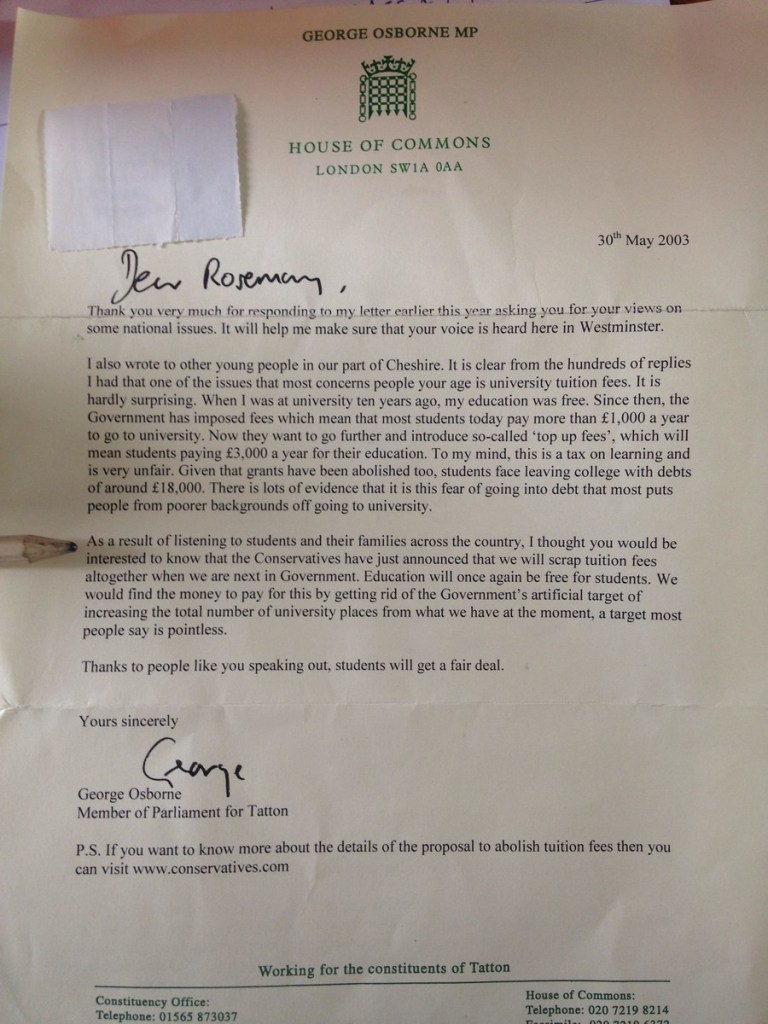
Well, that’s embarrassing. Chancellor George Osborne said university tuition fees were a “tax on learning” and “very unfair” in a letter he wrote 13 years ago – but that didn’t stop him from tripling fees after taking office in 2010.
The letter, sent by Osborne when he was a Tory whip, criticised the then-Labour government’s plan to triple fees to £3,000 (about US$4,350), and pledged to scrap fees totally. Osborne wrote:
“To my mind, this is a tax on learning and is very unfair.”
“There is a lot of evidence that it is this fear of going into debt that puts most people from poorer backgrounds off going to university.
“I thought you would be interested to know that the Conservatives have just announced that we will scrap tuition fees altogether when we are next in government.”
How he must regret making that pledge all those years ago.
When the Tories came to power in coalition with the Liberal Democrats in 2010, one of Osborne’s first acts was to triple tuition fees from £3,000 per year to £9,000 per year.
The chancellor’s embarrassing letter has re-emerged a day after a new government white paper suggested universities that meet certain ‘high standards’ will soon be allowed to raise fees yet again in line with inflation.
Violinist Rosy Williams posted the letter on Facebook on Tuesday afternoon after finding it in storage.
“Rooted through a box of old letters last night and discovered this brief exchange … with a young, up and coming MP by the name of George Osborne.
“So glad he made sure our ‘voices were heard in parliament.’”
Labour’s shadow business secretary, Angela Eagle, told the Mirror :
“This letter exposes George Osborne’s rank hypocrisy. He called the tuition fees a ‘tax on learning.’
“Then, when he was Chancellor, he trebled them. He warned of the fear of debt putting young people off, but on his watch, students are leaving university owing tens of thousands of pounds.”
Read more:
£9,000 not enough? University fees may rise again under new Tory white paper
Featured Video
The American Retreat from Vietnam
or go to
Aletho News Archives – Video-Images
From the Archives
Secret document reveals plans for civil war in Lebanon, Israeli false flags, and invasion
By Randi Nord | Geopolitics Alert | April 5, 2019
Beirut – During his visit with US Secretary of State, Mike Pompeo, Lebanese President Michael Aoun reportedly received a US-Israeli document detailing plans for creating a civil war in Lebanon with covert false flag operations and possible Israeli invasion.
Although the source of the document is Israeli and created in partnership with Washington, no one knows who presented it to Aoun. The Lebanese TV station, Al-Jadeed, initially reported the document on Lebanese TV and a video on its website. Geopolitics Alert translated the report for this article. … continue
Blog Roll
 Aletho News
- EU Council Advances Chat Control 2.0 Scanning Proposal
- Ex-Greek MEP files complaint against Israeli spyware firm over alleged Pegasus surveillance
- Troubling ideas throughout the Torah, Talmud, Mishneh Torah and Tanya
- ‘Grave, alarming’: Iran mission on Trump’s UNGA ‘annihilation’ threats
- Najaf airport to reopen to Iranian flights within 24 hours: Ambassador
- From ‘How Will This End For Iran’ to ‘When America Walks Away’: A tale of two Economist covers
- Tehran blasts ‘baseless’ speculation linking Iran to alleged bomb plot at UK air base
- The Rise And… Rise Of ‘Color Revolutions’
- The Coming GOP Bloodbath?
- Arctic Scare Stories Melt Away
- If Americans Knew
- Netanyahu Asked UAE Leader to Deny Report on Oct. 7 Warning in Secret Visit, Sources Say
- CNN Chief Int’l Correspondent Clarissa Ward on Journalists in Gaza
- Democratic Party Consultants Surround Troy Jackson with Pro-Israel Donors
- Christian Leader Responds To Netanyahu’s Claims Regarding Palestinian Christians
- In Gaza, ‘Whoever Survives the Bombing Won’t Survive the Rubble’
- Israel kills more Palestinians, amid push to resettle Gaza – Daily Update
- Israel forces Gazans to live in constant peril – Daily Update
- Deconstructing Netanyahu’s pants-on-fire UN rant – Daily Update
- Trump betrayed voters with his campaign lies and prioritized a foreign country once he took office
- Netanyahu calls Israel’s war in Gaza ‘opposite of genocide’ in UN speech to near-empty hall
- No Tricks Zone
- New Study: Earth And Venus Surface Warmth Largely Explained By Convection And Lapse Rate, Not CO2 Or Radiation
- 2025 Nature Paper Claiming Worsening Global Drought Gets RETRACTED …Heavily Flawed
- New Study: ‘Global Drought Shows No Detectable Recent Acceleration Under Climate Warming’
- Economic Masterminds: German Socialists Suggest Taxing Productivity Gains Stemming From Using AI
- The South China Sea Has Not Been Cooperating With The Climate Change Narrative
- Energy Crisis: Germany Enters Heating Season With Historically Low Gas Reserve Fill Levels
- New Study: The Antarctic Ice Sheet Gained Mass From 2020-2024 Due To Staggering Snow And Ice Accumulation
- Study: Ocean Heating Rates From Thousands Of Years Ago ‘Dwarf’ Modern Ocean Heating Rates
- Climate Extremists Target, Attack Large-Scale Power Grid Infrastructure In Germany!
- New Study: Antarctic Ice Melt Has Contributed Less Than 1 Centimeter To Sea Level Rise In The Last 30 Years

