Halt Saudi arms sales immediately, probe civilian attacks in Yemen – MPs
RT | February 3, 2016
A group of MPs have called on the British government to immediately suspend arms sales to Saudi Arabia and have demanded an independent inquiry into the war in Yemen, where British arms are thought to have been used against civilians.
In a letter to Development Secretary Justine Greening, the International Development Select Committee urged the UK to cease opposing an inquiry which aims to examine potential breaches of humanitarian law by the Saudi bombing campaign in Yemen.
It comes after human rights charities and anti-war groups criticized Saudi Arabia for allegedly bombing civilian targets.
The British government has sold £1 billion (US$1.45 billion) worth of arms to the Saudi government in the past year.
Last week a leaked UN report found Saudi Arabia guilty of breaking humanitarian law. In response the Saudi government set up an internal inquiry.
British MPs say the UK should back an independent inquiry. Members of the committee were shocked to hear the UK had hindered efforts to launch such an investigation in September 2015 when it was proposed by the UN.
“We need an independent, international fact-finding mission to uncover the truth. Until then we should cease selling arms to Saudi Arabia,” wrote committee chair Stephen Twigg.
“All parties to this conflict should review their obligations under international law and undertake to put civilians and humanitarian work above other interests.”
MPs said they had been presented with evidence from the head of UNICEF Yemen, who said the Saudi-led coalition had been involved in bombing campaigns which endangered the lives of civilians.
The committee’s letter was welcomed by activist group Campaign Against the Arms Trade (CAAT), which condemned the British government’s actions.
“The humanitarian situation is getting worse and the UK government has been complicit in it. We agree that arms sales need to stop, but they should never have been allowed in the first place.
“Saudi Arabia has a terrible human rights record and has been supported by governments of all political colors for far too long,” said CAAT’s Andrew Smith.
The leaked UN report, obtained by the Guardian last week, found that Saudi airstrikes are breaching international law by hitting civilian targets, including refugee camps, civilian weddings, vehicles, medical facilities and schools.
The UN panel of experts on Yemen used satellite imagery to look at areas before and after bombings, which also targeted an Oxfam warehouse storing equipment for a water project funded by the EU.
US & Israeli arms companies bag £500m UK military contract
RT | February 2, 2016
Israeli arms company Elbit Systems and US military contractor Kellogg, Brown and Root (KBR) have won a £500-million contract to provide aircraft training for the UK military.
The Affinity venture, in which the two are partners, will provide fixed wing training for sections of the UK Armed Forces concerned with aviation.
Affinity’s component is part of a larger deal led by Ascent Flight training and worth £1.1 billion. Ascent is itself a fifty-fifty venture between international arms firms Babcock and Lockheed Martin.
The aim is to deliver flight training up to the year 2033 in line with the UK Military Flying Training System (UKMFTS).
In a statement, Ascent’s director Paul Livingston said: “The award of these contracts marks a key milestone for the fixed wing element of UKMFTS. Modern training aircraft selected specifically to meet the bespoke needs of the UK’s Armed Forces will deliver optimized training alongside high tech simulators and classroom trainers.”
Ministry of Defence (MoD) Procurement Minister Phillip Dunne said the deal was “fantastic news for the future of our military aircrew” and would provide them with “a modern training system which will equip them to deliver on the front line.”
Elbit Systems are well known for their range of drones and the firm is of particular concern among human rights groups.
According to a report by the charity War on Want, the MoD awarded a £1-billion contract to Elbit and its UK partner Thales to develop the Watchkeeper drone. The model is now in service with the military.
The charity argues that Watchkeepers are field tested in the Occupied Palestinian Territories.
“Israeli companies such as Elbit will often boast of their competitive advantage in the global arms market due to their extensive ‘testing’ of their weaponry in ‘real life’ situations,” the report says.
Latest corruption index does not reveal Britain’s real place in global crime wave
By Graham Vanbergen | TruePublica | February 1, 2016
Transparency International (TI) releases its latest report entitled the Corruption Perceptions Index and continues to find that corruption is rife globally and remains a blight around the world. Overall, two-thirds of the 168 countries on the 2015 index did not fair well.
Denmark took the top spot for the 2nd year running for least corrupt, with North Korea and Somalia the worst performers.
TI states on their website that the goals to aim at for a corruption free country has certain characteristics such as; “high levels of press freedom; access to budget information so the public knows where money comes from and how it is spent; high levels of integrity among people in power; and judiciaries that don’t differentiate between rich and poor, and that are truly independent from other parts of government. Conflict and war, poor governance, weak public institutions like police and the judiciary, and a lack of independence in the media characterise the lowest ranked countries.
Notably the five countries with the biggest declines in these characteristics in the past 4 years include Libya, Australia, Brazil, Spain and Turkey. The big improvers in its report include Greece, Senegal and surprisingly, the UK.
As it turns out sixty-eight per cent of countries worldwide have a serious corruption problem. Half of the G20 are among them. The G20 consists of the top 20 economies in the world but ranks the EU as one economy even though it is made up of 28 countries alone.
The research shows that half of all the 34 OECD countries are violating their international obligations to crack down on bribery by their companies abroad.
Britain has entered the top ten for the first time behind Denmark (1st), Finland, Sweden, New Zealand, Netherlands, Norway, Switzerland, Singapore, Canada, Germany and Luxembourg. The US ranks 16th. In the EU, other countries not doing so well are; France which ranks 23rd, Spain 36th, Italy 61st and Bulgaria, the last of EU nations at 69th place.
The truth is that Britain has not done better, don’t forget this is an index of perception, not actual corruption.
In comments from TI, Britain was found to have conducted an “extraordinarily inept” review of freedom of information laws. The government’s review of the Freedom of Information Act threatens to further undermine trust in politicians and damage democracy. If ever there was a demonstration of the governments intention of transparency, look no further than Former home secretary Jack Straw, who previously stated he wants the act to be scrapped and rewritten, and Lord Carlisle who accused the Guardian of a “criminal act” in publishing the Snowden leaks, both are on the commission. TI fails to mention this.
Even TI’s own UK executive director Robert Barrington said there were “good reasons why people are sceptical about whether Britain really merits a top 10 ranking,” proving not even he believes this ranking.
He went further by highlighting; “overseas bribery by UK companies, the laundering of corrupt assets through the City, the lax regulation and lack of transparency in British-controlled tax havens, to say nothing of corruption scandals here in the UK,” and mentions the “dropping of significant proposals putting personal responsibility on bankers for money-laundering failings.” He continues with “The sequence of petty political scandals around lobbying, the revolving door and party funding discredits the UK in the eyes of the world and gives fuel to the critics who want to portray Mr Cameron’s agenda as nothing more than hypocritical and sanctimonious.”
Barrington is rightly angry.
The Independent reported in July that The City of London is the money-laundering centre of the world’s drug trade, according to an internationally acclaimed crime expert. In addition, every financial expert now agrees that due to lax financial laws by government, that the London property market is built largely on laundered money of crime from all over the world involving hidden tax havens, most of which are British.
In March last year, the Financial Conduct Authority (itself replacing the toothless Financial Services Authority that was funded by the very banks it was supposed to oversee) said that it would conduct a review on whether banking culture was changing after a slew of financial scandals that dogged the industry. Martin Wheatley, the CEO was looking into the rigging of bank lending rates amongst the many crimes perpetrated in The City of London. Chancellor George Osborne then sacked Wheatley as it was clear he was going to do his job and then just a few weeks ago had the review dropped after replacing Wheatley with a person ‘more agreeable’ to the banks. This was a cynical move by Osborne to protect the banking industry.
When it comes to press freedom Britain has no bragging rights. Just two years ago the British government’s draconian response to the Guardian’s reporting of Edward Snowden saw the UK drop five places in TI’s report. Shockingly, Britain languishes globally in 36th position behind countries such as Belize for press freedom, a country that is rife with lawlessness, corruption, suffers a lack of public, business and press freedom, is mired in accusations of labour abuse, crime and unemployment.
It doesn’t help that the Serious Fraud Squad who was investigating high-profile cross-border investigations into business practices at some of the UK’s biggest companies had their budget cut so deeply that the FT reported “The scale and pace of budget cuts inflicted on the SFO will make prosecuting its caseload impossible.” It must be clear by now that the government has an agenda to protect these serial corporate offenders.
David Cameron won praise in 2013 after announcing at the Open Government Partnership summit in London that the UK intended to require companies registered in the UK to reveal the identity of their real owners in public filings at Companies House. This was then heavily watered down after the Queen was warned that her British territories were now the world biggest tax havens, harbouring tens of trillions of illegally stashed cash and assets that was described as a “web of secrecy jurisdictions”. The Tax Justice Network (TJN) said Britain now rules the world of tax havens.
Her Majesty’s British Overseas Territories and Crown Dependencies make up around 25 percent of the world’s tax havens which are now blacklisted by the European Commission and now ranked as the most important player in the financial secrecy world, hardly a shining example of integrity and morality.
And the extent of these crimes is almost boundless as TJN said “The victims of this secrecy include, among others, 2 billion Commonwealth citizens. A recent study of 33 African countries found that they lost over $1tr in capital flight since the 1970s, of which $640bn came from 16 Commonwealth countries. These losses dwarf the external debts of ‘just’ $190bn for the 33 countries.”
In the meantime, Suspicious Activity Reports dealt with by a British specialist police unit focusing on the proceeds of crime and corruption blocked just seven transactions in an entire year. Transparency International reported that the police unit during the previous year (2014) for seizing corrupt assets was “not fit for purpose”. Given the sheer scale of financial crimes and corruption taking place, this performance can only be seen as suspicious itself. In 2015, this police unit required emergency funding.
So widespread is corruption in Britain that Keith Bristow, director-general of the UK’s National Crime Agency, said in January that the scale of crime and it’s subsequent money laundering operations was “a strategic threat” to the country’s economy and reputation. “Many hundreds of billions of pounds of criminal money is almost certainly laundered through UK banks and their subsidiaries each year.” And yet the government facilitates it by actively doing nothing.
When it comes to conflict and war, Britain’s international performance is dire. Britain, as we now all know, was heavily involved in the fall and subsequent deaths of over a million innocent Iraqis. Its campaign in Libya has turned the wealthiest and healthiest African nation into a lawless cesspool ruled by terrorism and death. Syria is ongoing. This has manifested itself into a refugee crisis the likes of which has not been seen since the last world war and an escalation of terrorism continues.
The granting of licences by government for the sale of spying equipment and armaments to some of the most oppressive regimes in the world is another scandal that further destabilises world peace.
The Corruption Perception Index does not tackle the issues at hand. It confuses by focusing on pubic sector corruption, but private corporations are the worst offenders backed by significant government cooperation. Britain’s banking industry is not effectively cited even though it is mired in scandal, facilitates a huge international crime wave backed by money laundering services on an industrial scale along with the tax havens that supports it.
Look who’s in charge of UK government cybersecurity
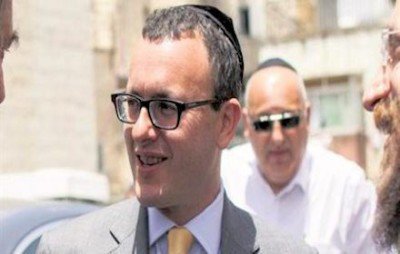
By Stuart Littlewood | My Catbird Seat | November 10, 2015
A chilling remark from a House of Lords debate just caught my eye.
Hansard 4 Nov 2015 : Column GC355
Lord Mendelsohn: We welcome the appointment of the former British ambassador to Israel, Matthew Gould, who will have a key role in cybersecurity inside the Cabinet Office — a very useful and important position.
Sure enough, the UK Government’s website confirms that Gould is now Director of Cyber Security and Information Assurance at the Cabinet Office. “He and his team are focussed on keeping Britain safe from cyber attack, through delivering the UK’s Cyber Security Strategy.”
They must think we have very short memories. Gould was the first Jew ever to hold the post of Britain’s ambassador to Israel. He describes himself as a “passionate” Zionist and whilst in Tel Aviv was instrumental in setting up the UK-Israel Tech Hub. In the words of MATIMOP (the Israeli Industry Center for R&D), the Hub was established “to promote partnerships in technology and innovation between Israel and the UK, and is the first initiative of its kind for the British Government and for an embassy in Israel. The Hub’s creation followed an agreement between Prime Ministers David Cameron and Benjamin Netanyahu to build a UK-Israel partnership in technology.”
Three years ago Cameron appointed venture capitalist Saul Klein as the UK Tech Envoy to Israel with the task of promoting the partnership, leading UK tech missions to Israel, bringing Israeli start-ups to Britain, and hosting tech events in both countries.
MATIMOP quotes Britain’s National Health Service as an example of successful UK-Israel tech collaboration. The NHS “has now formed strong collaborations with Israeli life sciences companies conducting clinical trials in the UK. The cooperation was made as part of the burgeoning partnership between Israel and Britain’s life sciences industries initiated by the UK-Israel Tech Hub.”
Four years ago Craig Murray, a former UK ambassador to Uzbekistan, argued that British policy was being driven in an underhanded fashion by the Israel lobby. He linked Gould with the Fox-Werritty scandal and raised questions about meetings between disgraced former Defence Minister Liam Fox and Fox’s friend/adviser Adam Werritty (who was backed financially by Israel lobbyists but had no security clearance and therefore no authorized role) and Gould.
Murray wrote to Gould asking when he first met Werritty, how many times he had met him, and how many communications of every kind had passed between them. He was told these questions would be answered in Cabinet Secretary O’Donnell’s investigation. “But Gus O’Donnell’s report answered none of these questions,” wrote Murray. “It only mentioned two meetings at which Fox, Gould and Werritty were all three present…”
This prompted Murray to dig further. “There were at least six Fox-Werritty-Gould meetings, not the two given by O’Donnell…. Matthew Gould was the only British Ambassador who Fox and Werrity met together. They met him six times. Why?”
Murray, with many useful sources from his days as an ambassador, claimed to have serious evidence connecting Gould with a secret plan to attack Iran, but the Foreign Office and the Cabinet Secretary blocked questions. Murray published his story ‘Matthew Gould and the plot to attack Iran’ here.
In it he pointed out that “Matthew Gould does not see his race or religion as irrelevant. He has chosen to give numerous interviews to both British and Israeli media on the subject of being a jewish ambassador, and has been at pains to be photographed by the Israeli media participating in jewish religious festivals. Israeli newspaper Haaretz described him as ‘Not just an ambassador who is jewish, but a jewish ambassador’. That rather peculiar phrase appears directly to indicate that the potential conflict of interest for a British ambassador in Israel has indeed arisen.”
He went on to say that Gould stood suspected of long term participation with Fox and Werritty “in a scheme to forward war with Iran, in cooperation with Israel”. The stonewalling by O’Donnell and the FCO led Murray to conclude that “something very important is being hidden right at the heart of government”.
Labour MP Paul Flynn remarked that no previous ambassadors to Israel had been Jewish so as to avoid conflict of interest and accusations of going native. He immediately came under intense flak. Flynn too asked about meetings between Werritty and Gould, as some reports suggested that Gould, Werritty and Fox discussed a potential military strike on Iran with Mossad. “I do not normally fall for conspiracy theories,” said Flynn, “but the ambassador has proclaimed himself to be a Zionist and he has previously served in Iran.”
Fox had earlier made the idiotic claim: “Israel’s enemies are our enemies” and “in the battle for the values that we stand for… Israel’s enemies are our enemies and this is a battle in which we all stand together”. The Jewish Chronicle hailed him as “a champion of Israel within the government”. Furthermore Fox continually rattled the sabre against Iran which, of course, was no threat to Britain but is regarded by Israel as a bitter enemy. Iraq too was Israel’s enemy, not ours. Yet Fox, according to the theyworkforyou.com, voted “very strongly” for the Iraq war. He was also an enthusiastic supporter of the war in Afghanistan.
Given that Fox so eagerly waved the flag of a foreign military power and was a man with dangerous beliefs and demonstrably weak judgement, how could those who appointed him not see that he was unemployable as a Minister of the British Crown – unless they were similarly tainted?
When the Werrity relationship came to light Fox jumped before being flung from the battlements. But the good people of North Somerset, in their wisdom, re-elected him at the general election last May. He’s already on the road to political rehabilitation among the Conservative high command.
Gould’s new job as head of The Office of Cyber Security & Information Assurance (OCSIA) involves giving strategic direction to cyber security and information assurance for the UK. This includes e-crime, working with private sector partners on exchanging information, and engaging with international partners in improving the security of cyberspace and information security. Does it seem right for such a person to be in charge of crucial security matters at the heart of our government? What was in fellow Zionist David Cameron’s mind when he appointed him?
Well, here’s a possible clue. In March of this year Francis Maude, the previous Cabinet Office minister responsible for cyber security, announced three UK-Israel academic collaboration ventures with cyber research funding, the partnerships being University of Bristol/Bar Ilan University, University College London/Bar Ilan University and University of Kent/University of Haifa. They’ll be working together on six specific areas of research:
- identity management
- governance: regulating cyber security
- privacy assurance and perceptions
- mobile and cloud security
- human aspects of security or usable security
- cryptography.
This builds on existing UK-Israel cooperation. Both parties signed a Memorandum of Understanding on digital co-operation in March 2014.
Still sitting comfortably? Only this week the Cameron government was lecturing us on threats to national security and announcing plans to trawl through our personal emails and web browsers in order to “keep us safe”.
Question is, who trawls Gould’s private emails?
Britain’s ‘proxy war’ in Yemen condemned by critics
RT | January 28, 2016
Britain is at war in Yemen and is arming and facilitating a brutal Saudi dictatorship that is bombing innocent civilians, a growing chorus of critics has warned.
The allegation that Britain is engaged in covert warfare in Yemen was first made by Scottish National Party (SNP) Westminster leader Angus Robertson during a heated discussion in Parliament on Monday. However, it has since been echoed by political commentators and human rights campaigners, who are demanding the government come clean on the role of UK forces in the Saudi-led campaign.
The conflict in Yemen consists of a range of regional, local and international power struggles emanating from historical and recent events. As scrutiny of Britain’s involvement in the war intensifies, campaigners and commentators insist that the UK is intervening in the conflict. They argue that Britain’s arming of the Saudi-led coalition and provision of advice to Saudi military personnel amounts to proxy warfare.
‘Reckless conduct’
Britain’s arms sales to Saudi Arabia totaled £2.95 billion (US$4.23 billion) for the first nine months of 2015, and roughly £7 billion since Prime Minister David Cameron took office in 2010. Amid mounting concerns that UK-made weapons have been used to bomb schools, hospitals, markets and other civilian targets in Yemen, Cameron has been urged to suspend all arms sales to Saudi Arabia.
Labour Party leader Jeremy Corbyn and Shadow Foreign Secretary Hilary Benn sent a letter to the PM on Wednesday demanding transparency on Britain’s involvement, after a leaked version of a UN panel’s report concluded attacks on Yemeni civilians had been “widespread and systemic.”
The 51-page report, which was obtained by the Guardian, examined 199 missions conducted by the Saudi-led coalition that violated international law.
Many of the attacks involved repeated airstrikes on civilian objects, including refugee camps; civilian gatherings such as weddings; civilian vehicles such as buses; residential areas; medical facilities; schools; mosques; markets, factories and essential civilian infrastructure. Three cases of civilians being pursued and shot at by aircraft as they fled residential bombings were also recorded.
UK director of Human Rights Watch said the findings of the UN report “flatly contradict” UK ministers’ rhetoric about the Saudi-led coalition’s actions in Yemen.
“For almost a year, [Foreign Secretary] Philip Hammond has made the false and misleading claim that there is no evidence of law or war violations by the UK’s Saudi ally and other members of the coalition,” he told the Guardian.
Amnesty International UK’s head of policy and government affairs Allan Hogarth expressed disgust at the government’s attempt to downplay concerns over Saudi Arabia’s conduct in Yemen.
“Thousands of civilians have already died and it’s been utterly dismaying to see Downing Street brushing aside extremely serious concerns about the reckless conduct of Saudi Arabia in this devastating conflict,” he said.
Conflict in Yemen
Saudi Arabia revealed earlier this month that British and American forces are stationed in the control center from which military operations against Yemen are being directed. However, the Ministry of Defence (MoD) has refused to disclose how many British personnel are involved.
The department also insists Britain’s involvement is confined to advice and training geared at ensuring Saudi Arabia complies with international law.
Yemen’s civil war kicked off in 2014, after Zaidi Shiite-led Houthi rebels overran the capital, Sanaa. The rebels, who had been targeted in six separate wars by Yemen’s central government, were loyal to Yemen’s former President Ali Abdullah Saleh.
During the Arab spring in 2011, the Houthis had gained control of Yemen’s Saada province. However, it wasn’t until September 2014 that they conquered Sanaa. The Shiite-led rebels subsequently forced President Hadi to resign in January 2015, and seized control of swaths of southern Yemen.
The following March, a Saudi-led coalition of states launched airstrikes against the Houthis in a bid to retake Yemen. Sometime later, a Saudi-led ground operation also began. By August 2015, the Houthis had been pushed back by resistance fighters supported by the Saudi-led coalition.
As the conflict rolls onward and civilian fatalities continue to mount, criticism of Britain’s role in the Saudi-led military campaign is growing ever stronger.
The silent increase in London’s mass surveillance network, one year on…

Image by No CCTV
NO CCTV – 27/1/2016
On 27th January 2015 the Mayor of London, Boris Johnson, signed an order that increased the data collected by the police’s network of Automatic Number Plate Recognition (ANPR) cameras in the capital by 300% [1]. At the time no-one seems to have noticed. One year on the sound of silence is still deafening.
Johnson achieved this massive increase of blanket surveillance in London without erecting a single new camera. Instead he allowed the police to share Transport for London’s (TfL) network of around 1400 ANPR cameras used for the London Congestion Charge, the Low Emission Zone and other traffic monitoring. This was a policy tucked away in Johnson’s 2012 mayoral crime manifesto [2].
Since 2007 the Metropolitan Police Service has controversially been allowed limited access to TfL’s congestion charge cameras for “national security” purposes only. The new camera sharing arrangement allows the police “general access” to an expanded raft of number plate cameras.
The mayor used powers given to him by the Greater London Authority Act [3] whereby he can do anything that he considers will further one or more of the Authority’s principle purposes. In the case of expanding police use of automatic checkpoint cameras he decided that it will “further the promotion of social development in Greater London”. Quite how Johnson came to this conclusion is a mystery, as is the way in which he was so easily able to trade the freedoms of so many car drivers in London by simply issuing a mayoral decison.
In his 1929 book ‘The New Despotism’ [4] then Lord Chief Justice of England, Lord Hewart coined the phrase “Administrative Lawlessness” to describe a worrying trend in English politics at that time – the exercise of arbitrary power, where decisions are made in the shadows, not based on evidence and without proper debate. Hewart wrote:
Arbitrary power is certain in the long run to become despotism, and there is danger, if the so-called method of administrative “law”, which is essentially lawlessness, is greatly extended, of the loss of those hardly won liberties which it has taken centuries to establish.
Johnson and the police claim that the people of London were consulted, via an 8 week “consultation”. However there were just 2,315 responses to the online survey out of an estimated population in Greater London of over 8 million people [5].
Meanwhile the Metropolitan police responded to what they described as “concerns about the level of surveillance in the capital, data security and misuse” by stating that they are convinced that [6]:
the majority of the public will remain satisfied that this does not represent undue or unnecessary surveillance.
The important thing to the police, then, is not whether the policy is an illiberal assault on individual freedoms and liberties, but rather that most people will not understand or know what is going on, .
No CCTV has repeatedly warned that the UK police’s ANPR camera network is the biggest mass surveillance network that no-one’s ever heard of. We have laid out many of our concerns in our report ‘What’s wrong with ANPR?’ [7]. Police store the details of all cars that pass ANPR cameras in a central database for a minimum of two years. There are currently discussions within the police to extend this to seven years [8].
Whilst the mainstream media have all but ignored this massive expansion of the surveillance state it is worth pointing out that writer and artist James Bridle made a series of Freedom of Information requests in 2013/14 that reveal much of the disturbing progression of this policy [9].
Endnotes:
- [ 1] Mayoral Decision MD1439 and supporting documents https://www.london.gov.uk/decisions/md1439-delegation-transport-london-tfl-grant-metropolitan-police-service-mps-direct-access
- [ 2] 2012 Crime Manifesto p14 http://www.london.gov.uk/sites/default/files/Boris-Johnson-2012-Crime-Manifesto.pdf
- [ 3] The Greater London Authority Act 1999 http://www.legislation.gov.uk/ukpga/1999/29/contents
- [ 4] ‘The New Despotism’, Lord Hewart, 1929, page 52 https://archive.org/details/LordHewart-TheNewDespotism1929
- [ 5] 2001 census statistics for Greater London http://www.ons.gov.uk/ons/rel/census/census-2001-key-statistics/urban-areas-in-england-and-wales/urban-areas-in-england-and-wales-ks01-usual-resident-population.xls
- [ 6] Letter from Cressida Dick, Met Police https://www.london.gov.uk/sites/default/files/gla_migrate_files_destination/Appendix%20C%20-%20Letter%20of%20Response%20from%20Cressida%20Dick.pdf
- [ 7] What’s Wrong With ANPR? http://www.no-cctv.org.uk/whats_wrong_with_anpr.asp
- [ 8] ANPR National User Group Minutes 3rd June 2015 https://www.whatdotheyknow.com/request/289438/response/730763/attach/6/03%20ANPR%20NUG%20Minutes%2003062015.pdf
- [ 9] James Bridle’s Freedom of Information Requests – https://anon.to/5TtSr3
James Bridle also has an article about London and the congestion charge cameras, ‘ All Cameras Are Police Cameras’ at: http://shorttermmemoryloss.com/nor/2014/11/07/all-cameras-are-police-cameras/
Read more NO CCTV articles on our news/articles page
UK’s leading pro-Palestine campaign group blocks call to expel Israel from the UN (again)
By Stuart Littlewood | American Herald Tribune | January 26, 2016
At its Annual General Meeting last weekend the Palestine Solidarity Campaign (PSC) threw out a proposal to seek Israel’s expulsion from the United Nations.
Chairman Hugh Lanning is reported to have kicked off proceedings on a positive note saying: “Let us recommit to Palestine to make sure that we make a difference in the coming year.”
But the mask slipped when a motion was put for the PSC’s Executive Committee to:
“request the Government of the United Kingdom, enforced by a petition and lobbying, to submit a motion to the Security Council recommending that the General Assembly expel Israel from the UN in compliance with the UN Charter, Article 6.”
The motion failed — 76 in favour, 116 against. A statement by its main sponsor, Blake Alcott, says that an identical motion to the AGM a year ago was likewise opposed by the PSC leadership who felt “the time is not yet right”. His reaction to this latest rejection was to say: “Pro-Palestinians must wonder how much worse Israel’s crimes must be before the international community takes disciplinary action.”
There is ample reason for calling for Israel’s expulsion from the UN. It chimes very well with the ‘Sanctions’ element of Boycott, Divestment and Sanctions (BDS). And it is a good fit with the sort of measures that, in the ‘Call to Action’ by the BDS Movement, should be maintained until Israel meets its obligation to recognize the Palestinian people’s inalienable right to self-determination and fully complies with the precepts of international law by:
1. Ending its occupation and colonization of all Arab lands and dismantling the Wall
2. Recognizing the fundamental rights of the Arab-Palestinian citizens of Israel to full equality; and
3. Respecting, protecting and promoting the rights of Palestinian refugees to return to their homes and properties as stipulated in UN resolution 194.
Israel clearly isn’t the ‘peace-loving state’ required by UN Charter Article 4. Nor has it fulfilled the four conditions put on its acceptance as a member back in May 1949. As the record shows, Israel has wilfully breached conditions of membership for decades. Many have argued it automatically disqualifies itself by failing to fulfill membership requirements in the first place. Furthermore it continues to show contempt for numerous UN resolution despite frequent reminders.
When considering an appropriate response for civil society to make, suspension sounds ‘softer’ than expulsion as membership can be speedily restored if and when Israel satisfies the other member states that it now conforms. And in the circumstances suspension would surely be more difficult to veto.
But under the rules suspension isn’t an option, it seems. This is what the relevant part of the UN Charter says:
(Article 5) A Member of the United Nations against which preventive or enforcement action has been taken by the Security Council may be suspended from the exercise of the rights and privileges of membership by the General Assembly upon the recommendation of the Security Council. The exercise of these rights and privileges may be restored by the Security Council.
(Article 6) A Member of the United Nations which has persistently violated the Principles contained in the present Charter may be expelled from the Organization by the General Assembly upon the recommendation of the Security Council.
It might be argued that the passing of numerous UN Security Council resolutions amounts to ‘preventive action’ (although still awaiting ‘enforcement’). But Article 6, which stipulates expulsion, is more clear-cut. Israel has certainly violated every norm, every rule of decency, every principle of humanity in the book. And it continues to do so without showing a shred of remorse.
Too timid to put down a marker for upholding international law?
 Of course Mr Alcott’s motion, if passed, would have been brushed off by the British Government which is pledged by Cameron to protect and reward Israel right or wrong. But that is not the point. The aim of the motion was to put down a marker and provide a focus around which other campaign groups across the world could mobilise, bringing similar pressure to bear on their own governments and creating an irresistible swell of global opinion to ensure international law is eventually upheld.
Where does the PSC go from here, after failing a simple test? How will it now “make a difference” on behalf of the long-suffering Palestinians? The PSC’s media people have been asked twice for comment and further information but are “too busy”.
Right now some 71 UK doctors are pressuring the WMA to revoke the membership of the Israel Medical Association over claims that its doctors perform medical torture on Palestinian patients. According to Press TV/Al Ray, if the British physicians succeed, the Tel Aviv regime will be banned from taking part in international medical conferences and publishing in journals. Evidently our doctors have the balls for firm action, so why not the PSC?
Meanwhile ace propagandist and chief spokesman for the terror regime in Tel Aviv, Mark Regev, is due to take up his appointment as Israel’s ambassador to the UK later this year. His presence here will have special significance. If the PSC and the impotent Palestine Mission in London are the best he’ll come up against, we can expect a media communications massacre.
‘Jihadi Jack’ denies joining ISIS, calls reports ‘awkward’

Jack Letts © Amaze with our planet / YouTube
RT | January 26, 2016
A 20-year-old boy accused of being the first white Briton to join Islamic State (IS, formerly ISIS) has distanced himself from allegations suggesting he is a terrorist, calling the claims “awkward.”
More than one year ago, Jack Letts – dubbed ‘Jihadi Jack’ – converted to Islam and traveled to Syria. He has since been accused of fighting for IS, but his family has dismissed these reports, insisting he is carrying out “humanitarian work.”
It is also claimed that Letts is now living under the name Abu Mohammed and has a wife and son.
‘Lies’
In private Facebook messages seen by the Independent, Letts denied the claims and said: “It’s sort of awkward when the media thinks your ISIS and you’re not.”
“Maybe they got bored worrying about what colour socks certain celebrities wear and took out the frustration on me? [sic]” he wrote on the social media site.
The suspected terrorist then went on to accuse the media of publishing lies about him because of his faith.
“The formula with the media is simple: English guy became Muslim + went to the Middle East + followed Islam = ISIS + eats babies x evil,” he said.
“It doesn’t help, admittedly, that bare [lots of] different people have used my fb account [some of whom are extreme etc.. and only got my password through one guy I stupidly trusted].”
Responding to allegations that he has been in contact with Omar Hussain, the former supermarket worker from High Wycombe who left Britain to fight for Isis in 2014, Letts said: “I just read that I met with some guy called umar in some article. First time I learn this amongst the other lies [sic].”
Mocking tabloid newspaper reports, he added: “One of the funniest articles was the one were the last sentence was ‘Jack Letts and ISIS have been contacted for comment. Like me and ISIS have like a shared office in which we receive requests for comment and were still thinking about whether to reply or not.”
‘Ridiculous’
Earlier this week, Letts’ mother Sally dismissed reports suggesting her son is a terrorist, saying they are “absolutely ridiculous.”
“He is not a member of ISIS, he is very probably not the first white convert that has gone out there. He does not have a son and is not known as Abu Mohammed,” she told the Evening Standard.
“We spoke to him yesterday and he said he had never had a weapon in his life. He went out there for humanitarian purposes to help kids in Syrian refugee camps.
“It is not as if he is hiding – he tells us what he has for breakfast. All this is absolutely ridiculous, it is shocking,” his mother continued.
‘Did talk passionately about ISIS’
However, according to the Mail Online, Letts is a frontline fighter for the terrorist group.
One anonymous source, believed to be a friend of Letts, claimed he started to “talk passionately about ISIS” after he befriended a group of Muslim boys at school.
“He started befriending a group of Muslim boys at the school and that exposed him to Islam. I noticed he started becoming very preachy and was using Arabic, which was strange because I only ever saw him as a typical Oxford boy,” the source told the paper.
“He did talk passionately about ISIS, but I always assumed he meant he opposed them, not that he would join them.”
Some 800 British citizens are thought to have traveled to Iraq and Syria and there are growing fears about them returning to the UK to plot terror attacks in Britain.
Earlier this month, Home Secretary Theresa May announced nearly 400 of the 800 Britons who traveled to Syria since the start of the civil war have returned.
“Since the start of the conflict in Syria, more than 800 people from the UK who are of national security concern are thought to have travelled to the region, and we believe that around half of those have returned. Those who have travelled include young women and families,” May told the House of Commons.
‘Great need to strengthen EU’s response to terror’
In a report published on Monday, International police agency Europol warned that IS is preparing to bring mayhem to the streets of Europe, similar to the suicide bombings and shootings which left 130 people dead in Paris in November.
Apart from the jihadist group’s main bases in Syria, it has “smaller-scale training camps in the EU and Balkan [region],” Europol found.
The report says there is “every reason” to expect another IS-led terror attack in the coming months, as the group has a new “combat style capability.”
“There is every reason to expect that IS, IS-inspired terrorists or another religiously inspired terrorist group will undertake a terrorist attack somewhere in Europe again, intended to cause mass casualties amongst the civilian population,” Europol said in the report.
In a statement, Europol stressed that the threat of further terror attacks in Europe remains high, but added that there is a “great need” within the EU to “strengthen our response to terror.”
The publication of Europol’s report comes after the release of IS’ new propaganda video, showing the alleged Paris attackers participating in murders in a desert.
IRA terrorist behind 1993 Belfast bombing was ‘MI5 informant’ – leaked documents
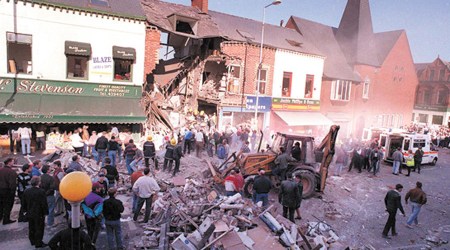
Aftermath of the Shankill Road Bombing © Wikipedia
RT | January 26, 2016
Northern Ireland’s police watchdog is investigating allegations that the IRA operative who planned the 1993 Shankhill Road bombing was an MI5 informant who gave intelligence that could have helped security forces stop the atrocity.
Nine civilians, including two children, were killed in the attack on a fish shop in Belfast’s loyalist heartland in 1993. The bombing became one of the most notorious atrocities of The Troubles, prompting a wave of sectarian revenge murders in its wake.
Inside job?
Some 23 years after the attack, allegations have surfaced that sensitive documents stolen by the Irish Republican Army in a 2002 raid on the Royal Ulster Constabulary (RUC) headquarters in Castlereagh show that the terrorist who planned the bombing was a British intelligence agent codenamed “AA.”
Excerpts of the stolen files indicate that AA had extensively briefed his Special Branch or MI5 handlers on the objective and timing of the bombing, which had been designed to stoke sectarian anger by murdering the leader of loyalist terror group the Ulster Defense Association (UDA).
UDA chiefs had planned to meet above the fish shop on the day of the attack, but postponed at short notice. Although they escaped the blast unharmed, it killed Protestant shoppers and one of the bombers, IRA member Thomas Begley.
The initial plan had been to light a fuse just long enough for civilians to be evacuated from the site and for the bombers, who were disguised as delivery men, to flee. But the bomb exploded as Begley approached the shop’s counter amid a group of customers.
Establishing a motive
The allegations concerning AA, which were first reported by the Belfast-based newspaper Irish News, raise the question of precisely what British intelligence officers knew in the run-up to the atrocity.
Observers suggest UK intelligence officers either allowed a botched bombing of civilians to play out or failed to intervene quickly enough to stop the atrocity.
The police ombudsman for Northern Ireland, Dr Michael Maguire, has confirmed he is examining the allegation.
“We have received a complaint. It centers on two concerns: Did the RUC have information which would have allowed them to prevent the bombing and was the subsequent investigation compromised; [and] did the police ‘fail to deliver justice to the families of those who lost their lives in the bombing?’” he said.
“We will seek to establish if this is something we should investigate, and if so, when we could begin this work.”
History of collusion
The police ombudsman’s inquiry began after relative of one of the Shankill Road bombing’s victims approached the watchdog, asking about AA.
The Castlereagh documents are believed to reveal that AA was passing information back to his handlers on details of the IRA plot to target senior UDA members, including the location and date of the bombing.
The documents stolen by the IRA in its raid on the RUC Castlereagh offices gave the codenames of British agents inside Republican terrorist groups, and a year later the IRA “stood down” one of its operatives, which it identified as AA after comparing the RUC documents with its own intelligence.
Investigators examining the case will look to ascertain whether information from the British agent could have been given to the UDA leadership to make sure their meeting was rescheduled and whether there is evidence to show British intelligence operatives allowed the attack to go ahead to protect AA as their source.
Relatives of the bombing’s victims have called for a full investigation.
Charlie Butler, who lost three relatives in the Shankill Road bombing, said he and other families would be “devastated” if the allegations are accurate.
“Collusion is not a nice word for anyone but when it is collusion with innocent people losing their lives to protect someone else there has to be a line drawn to say that is wrong,” he told BBC News.
“[The security forces] were there to do a job, to protect people. If they knew about [the bombing] then they should pay.”
The claims are the latest in a long line of allegations of collusion between terror groups and security forces on both sides of The Troubles.
In addition to the case involving AA, Northern Ireland’s police watchdog is investigating murders in the 1980s and 1990s of at least 20 alleged IRA informers whose family members believe they were used as scapegoats to cover the tracks of the security forces’ prominent IRA agents.
Featured Video
The American Retreat from Vietnam
or go to
Aletho News Archives – Video-Images
From the Archives
Secret document reveals plans for civil war in Lebanon, Israeli false flags, and invasion
By Randi Nord | Geopolitics Alert | April 5, 2019
Beirut – During his visit with US Secretary of State, Mike Pompeo, Lebanese President Michael Aoun reportedly received a US-Israeli document detailing plans for creating a civil war in Lebanon with covert false flag operations and possible Israeli invasion.
Although the source of the document is Israeli and created in partnership with Washington, no one knows who presented it to Aoun. The Lebanese TV station, Al-Jadeed, initially reported the document on Lebanese TV and a video on its website. Geopolitics Alert translated the report for this article. … continue
Blog Roll
 Aletho News
- There Is A Drought in Academia: A Drought in Honest Research on the Subject of Drought and Other Weather Extremes
- Department of War Awards $20.7 Billion Contract to Raytheon for Air-to-Air Missiles
- ‘Distance yourselves from Israel’: IRGC urges US population to question govt policies
- America’s Greenland deal has a radioactive backstory
- The RAF Fairford ‘terror plot’: Unpacking escalation in the UK echo-chamber
- EU Council Advances Chat Control 2.0 Scanning Proposal
- Ex-Greek MEP files complaint against Israeli spyware firm over alleged Pegasus surveillance
- Troubling ideas throughout the Torah, Talmud, Mishneh Torah and Tanya
- ‘Grave, alarming’: Iran mission on Trump’s UNGA ‘annihilation’ threats
- Najaf airport to reopen to Iranian flights within 24 hours: Ambassador
- If Americans Knew
- New Report: “Scholasticide and Genocide in Gaza: Assessment, Testimonies and Legal Analysis”
- Ex-Biden officials are desperate for a Gaza scapegoat
- Israeli “settlers” Invade Al-Aqsa; Pour Boiling Water on 75-Year-Old
- Israel Has Kidnapped Another American Teenager
- US arms sales to Israel worth $21.6 billion in 20 months
- Three Palestinians Killed in Israeli Attacks on Gaza
- Revealed: German “Anti-Semitism Expert” Driving Crackdown on Palestine Solidarity is Former Israeli Spy
- Egypt’s Warning to Israel Before Oct 7
- Israel’s siege signals another cruel winter for 1.8 million Gazans – Daily Update
- Netanyahu Asked UAE Leader to Deny Report on Oct. 7 Warning in Secret Visit, Sources Say
- No Tricks Zone
- New Study: Earth And Venus Surface Warmth Largely Explained By Convection And Lapse Rate, Not CO2 Or Radiation
- 2025 Nature Paper Claiming Worsening Global Drought Gets RETRACTED …Heavily Flawed
- New Study: ‘Global Drought Shows No Detectable Recent Acceleration Under Climate Warming’
- Economic Masterminds: German Socialists Suggest Taxing Productivity Gains Stemming From Using AI
- The South China Sea Has Not Been Cooperating With The Climate Change Narrative
- Energy Crisis: Germany Enters Heating Season With Historically Low Gas Reserve Fill Levels
- New Study: The Antarctic Ice Sheet Gained Mass From 2020-2024 Due To Staggering Snow And Ice Accumulation
- Study: Ocean Heating Rates From Thousands Of Years Ago ‘Dwarf’ Modern Ocean Heating Rates
- Climate Extremists Target, Attack Large-Scale Power Grid Infrastructure In Germany!
- New Study: Antarctic Ice Melt Has Contributed Less Than 1 Centimeter To Sea Level Rise In The Last 30 Years

