Cameron to mark Balfour Declaration centenary with UK Jewish community
MEMO | January 19, 2016
Prime Minister David Cameron has told representatives of the UK’s Jewish community that he intends to “mark” with them the centenary of the Balfour Declaration next year.
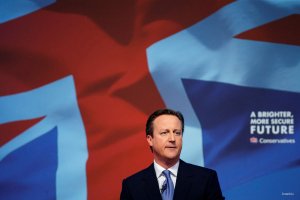 Cameron met members of the Jewish Leadership Council (JLC) on January 13, in what has become an annual meeting.
According to a Downing Street spokesperson, the PM “recognised how next year is a special year for the Jewish community with the centenary of the Balfour Declaration.”
In remarks quoted in the Jewish News, Cameron said of the anniversary: “I want to make sure we mark it together in most appropriate way.”
A statement issued by the JLC after the meeting said that topics covered also included “glorification of terrorists on campuses and student unions’ adoption of BDS policies”, and “the government’s approach to the Middle East conflict and the need to prepare people for peace rather than conflict.”
The JLC is an umbrella body made up of over 30 Jewish communal organisations.
MH-17’s Unnecessary Mystery
By Robert Parry | Consortium News | January 15, 2016
As the whodunit mystery surrounding the shoot-down of Malaysia Airlines Flight 17 nears the 1½-year mark, the Obama administration could open U.S. intelligence files and help bring justice for the 298 people killed in eastern Ukraine on July 17, 2014. Instead, a separate mystery has emerged: why has the U.S. government clammed up since five days after the tragedy?
Immediately after the crash, senior Obama administration officials showed no hesitancy in pointing fingers at the ethnic Russian rebels who were then resisting a military offensive by the U.S.-backed Kiev regime. On July, 20, 2014, Secretary of State John Kerry appeared on TV talk shows claiming there was a strong circumstantial case implicating the rebels and their Russian backers in the shoot-down.
After mentioning some information gleaned from “social media,” Kerry said on NBC’s “Meet the Press”: “But even more importantly, we picked up the imagery of this launch. We know the trajectory. We know where it came from. We know the timing. And it was exactly at the time that this aircraft disappeared from the radar.”
Two days later, the Office of the Director of National Intelligence released a “Government Assessment,” also citing “social media” seeming to implicate the rebels. Then, this white paper listed military equipment allegedly supplied by Russia to the rebels. But the list did not include a Buk missile battery or other high-powered anti-aircraft missiles capable of striking MH-17, which had been flying at around 33,000 feet.
The DNI also had U.S. intelligence analysts brief a few select mainstream reporters, but the analysts conveyed much less conviction than their superiors may have wished, indicating that there was still great uncertainty about who was responsible.
The Los Angeles Times article said: “U.S. intelligence agencies have so far been unable to determine the nationalities or identities of the crew that launched the missile. U.S. officials said it was possible the SA-11 [the designation for a Russian-made anti-aircraft Buk missile] was launched by a defector from the Ukrainian military who was trained to use similar missile systems.”
That uncertainty meshed somewhat with what I had been told by a source who had been briefed by U.S. intelligence analysts shortly after the shoot-down about what they had seen in high-resolution satellite photos, which they said showed what looked like Ukrainian military personnel manning the battery which was believed to have fired the missile.
There is also an important distinction to make between the traditional “Intelligence Assessment,” which is the U.S. intelligence community’s gold standard for evaluating an issue, complete with any disagreements among the 16 intelligence agencies, and a “Government Assessment,” like the one produced in the MH-17 case.
As former CIA analyst Ray McGovern wrote: “The key difference between the traditional ‘Intelligence Assessment’ and this relatively new creation, a ‘Government Assessment,’ is that the latter genre is put together by senior White House bureaucrats or other political appointees, not senior intelligence analysts. Another significant difference is that an ‘Intelligence Assessment’ often includes alternative views, either in the text or in footnotes, detailing disagreements among intelligence analysts, thus revealing where the case may be weak or in dispute.”
In other words, a “Government Assessment” is an invitation for political hacks to manufacture what was called a “dodgy dossier” when the British government used similar tactics to sell the phony case for war with Iraq in 2002-03.
Demonizing Putin
Yet, despite the flimsiness of the “blame-Russia-for-MH-17” case in July 2014, the Obama administration’s rush to judgment proved critical in whipping up the European press to demonize President Vladimir Putin, who became the Continent’s bete noire accused of killing 298 innocent people. That set the stage for the European Union to accede to U.S. demands for economic sanctions on Russia.
The MH-17 case was deployed like a classic piece of “strategic communication” or “Stratcom,” mixing propaganda with psychological operations to put an adversary at a disadvantage. Apparently satisfied with that result, the Obama administration stopped talking publicly, leaving the impression of Russian guilt to corrode Moscow’s image in the public mind.
But the intelligence source who spoke to me several times after he received additional briefings about advances in the investigation said that as the U.S. analysts gained more insights into the MH-17 shoot-down from technical and other sources, they came to believe the attack was carried out by a rogue element of the Ukrainian military with ties to a hard-line Ukrainian oligarch. [See, for instance, Consortiumnews.com’s “Flight 17 Shoot-Down Scenario Shifts” and “The Danger of an MH-17 Cold Case.”]
But that conclusion – if made public – would have dealt another blow to America’s already shaky credibility, which has never recovered from the false Iraq-WMD claims in 2002-03. A reversal also would embarrass Kerry, other senior U.S. officials and major Western news outlets, which had bought into the Russia-did-it narrative. Plus, the European Union might reconsider its decision to sanction Russia, a key part of U.S. policy in support of the Kiev regime.
Still, as the MH-17 mystery dragged on into 2015, I inquired about the possibility of an update from the DNI’s office. But a spokeswoman told me that no update would be provided because the U.S. government did not want to say anything to prejudice the ongoing investigation. In response, I noted that Kerry and the DNI had already done that by immediately pointing the inquiry in the direction of blaming Russia and the rebels.
But there was another purpose in staying mum. By refusing to say anything to contradict the initial rush to judgment, the Obama administration could let Western mainstream journalists and “citizen investigators” on the Internet keep Russia pinned down with more speculation about its guilt in the MH-17 shoot-down.
So, silence became the better part of candor. After all, pretty much everyone in the West had judged Russia and Putin guilty. So, why shake that up?
The Ukrainian Buks
Yet, what has become clear after the initial splurge of U.S. blame-casting is that U.S. intelligence lacked key evidence to support Kerry’s hasty judgments. Despite intensive overhead surveillance of eastern Ukraine in summer 2014, U.S. and other Western intelligence services could find no evidence that Russia had ever given a Buk system to the rebels or introduced one into the area.
Satellite intelligence – reviewed both before and after the shoot-down – only detected Ukrainian Buk missile systems in the conflict zone. One could infer this finding from the fact that the DNI on July 22, 2014, did not allege that Buks were among the weapons systems that Russia had provided. If Russian-supplied Buks had been spotted – and the batteries of four 16-foot-long missiles hauled around by trucks are hard to miss – their presence surely would have been noted.
But one doesn’t need to infer this lack of evidence. It was spelled out in a little-noticed report by the Netherlands’ Military Intelligence and Security Service (MIVD) that was made public last October when the Dutch Safety Board issued its findings on the causes of the doomed MH-17 flight. (Since the flight had originated in Amsterdam and carried many Dutch passengers, Netherlands took a lead role in the investigation.)
Dutch intelligence, which as part of NATO would have access to sensitive overhead surveillance and other relevant data, reported that the only anti-aircraft weapons in eastern Ukraine – capable of bringing down MH-17 at 33,000 feet – belonged to the Ukrainian government.
MIVD made that assessment in the context of explaining why commercial aircraft continued to fly over the eastern Ukrainian battle zone in summer 2014. MIVD said that based on “state secret” information, it was known that Ukraine possessed some older but “powerful anti-aircraft systems” and “a number of these systems were located in the eastern part of the country.”
But the intelligence agency added that the rebels lacked that capacity: “Prior to the crash, the MIVD knew that, in addition to light aircraft artillery, the Separatists also possessed short-range portable air defence systems (man-portable air-defence systems; MANPADS) and that they possibly possessed short-range vehicle-borne air-defence systems. Both types of systems are considered surface-to-air missiles (SAMs). Due to their limited range they do not constitute a danger to civil aviation at cruising altitude.”
MIVD noted that on June 29, 2014, “the Separatists captured a Ukrainian armed forces military base in Donetsk [where] there were Buk missile systems,” a fact that was reported in the press before the crash and attracted MIVD’s attention.
“During the course of July, several reliable sources indicated that the systems that were at the military base were not operational,” MIVD said. “Therefore, they could not be used by the Separatists.”
In other words, it is fair to say – based on the affirmative comments from MIVD and the omissions from the U.S. DNI’s “Government Assessment” – that the Western powers had no evidence that the ethnic Russian rebels or their Russian allies had operational Buk missiles in eastern Ukraine, but Ukraine did.
It also would have made sense that Ukraine would be moving additional anti-aircraft systems close to the border because of a feared Russian invasion as the Ukrainian military pressed its “anti-terrorism operation” against ethnic Russians fighters. They were resisting the U.S.-backed coup of Feb. 22, 2014, which had ousted elected President Viktor Yanukovych, whose political base was in the east.
According to the Dutch Safety Board report, issued last October, a Ukrainian warplane had been shot down by a suspected air-to-air missile (presumably from a Russian fighter) on July 16, 2014, meaning that Ukrainian defenses were probably on high alert. The Russian military also claimed that Ukraine had activated a radar system that is used to guide Buk missiles.
Gunning for Putin?
I was told by the intelligence source that U.S. analysts looked seriously at the possibility that the intended target was President Putin’s official plane returning from a state visit to South America. His aircraft and MH-17 had similar red-white-and-blue markings, but Putin took a more northerly route and arrived safely in Moscow.

A side-by-side comparison of the Russian presidential jetliner and the Malaysia Airlines plane.
Other possible scenarios were that a poorly trained and undisciplined Ukrainian squad mistook MH-17 for a Russian plane that had penetrated Ukrainian airspace or that the attack was willful provocation designed to be blamed on the Russians.
Whoever the culprits and whatever their motive, one point that should not have remained in doubt was where the missile launch occurred. Remember that just three days after the crash, Secretary Kerry had said U.S. intelligence detected the launch and “We know where it came from.”
But last October, the Dutch Safety Board still hadn’t pinned down anything like a precise location. The report could only place the launch site within a 320-square-kilometer area in eastern Ukraine, covering territory then controlled by both Ukrainian and rebel forces. (The safety board did not seek to identify which side fired the fateful missile).
By contrast, Almaz-Antey, the Russian arms manufacturer of the Buk systems, conducted its own experiments to determine the likely firing location and placed it in a much smaller area near the village of Zaroshchenskoye, about 20 kilometers west of the Dutch Safety Board’s zone and in an area under Ukrainian government control.
So, with the firing location a key point in dispute, why would the U.S. government withhold from a NATO ally (and investigators into a major airline disaster) the launch point for the missile? Presumably, if the Obama administration had solid evidence showing that the launch came from rebel territory, which was Kerry’s insinuation, U.S. officials would have been only too happy to provide the data.
A reasonable conclusion from the failure to share this information with the Dutch investigators is that the data does not support the preferred U.S. government narrative. If there’s a different explanation for the silence, the Obama administration has failed to provide it.
Amid the curious U.S. silence, the most significant public finding by Western intelligence is that the only powerful and operational anti-aircraft-missile systems in eastern Ukraine on July 17, 2014, belonged to the Ukrainian military.
Nevertheless, the mainstream “conventional wisdom” remains that either the ethnic Russian rebels or the Russians themselves shot down MH-17 and have sought to cover up their guilt.
Some of this certainty comes from the simpleminded game of repeating that Buk missiles are “Russian-made,” which is true but irrelevant to the issue of who fired the missiles, since the Ukrainian military possesses Russian-made Buks.
But much of this “group think” can be credited to the speed with which the Obama administration got its narrative out immediately citing dubious “social media” and exploiting the West’s disdain toward Russian President Putin. He was a ready-made villain for the story.
Lying First
A similar case occurred in 1983 when Korean Airlines Flight 007 penetrated deeply into Soviet territory and was pursued by a Soviet fighter that – after issuing warnings that were ignored – shot the plane down believing it was an enemy military aircraft. Though the Soviets quickly realized they had made a terrible mistake, the Reagan administration wanted to use the incident to paint the “evil empire” in the evilest of tones.
So, Reagan’s propagandists edited the ground-control intercepts to make it appear that the Soviets had committed willful murder, a theme that was presented to the United Nations and was gullibly lapped up by the mainstream U.S. news media.
The fuller story only came out in 1995 with a book entitled Warriors of Disinformation by Alvin A. Snyder, who had been director of the U.S. Information Agency’s television and film division. He described how the tapes were edited “to heap as much abuse on the Soviet Union as possible.”
In a boastful but frank description of the successful disinformation campaign, Snyder noted that “the American media swallowed the U.S. government line without reservation. Said the venerable Ted Koppel on the ABC News ‘Nightline’ program: ‘This has been one of those occasions when there is very little difference between what is churned out by the U.S. government propaganda organs and by the commercial broadcasting networks.’”
Snyder concluded, “The moral of the story is that all governments, including our own, lie when it suits their purposes. The key is to lie first.”
In the case of MH-17, however, the falsehoods and deceptions are not simply some spy-vs.-spy propaganda game of gotcha, but rather obstruction of justice in a mass murder investigation. Whatever evidence the Obama administration has, it should have long since been made available to the investigators, but – so far – the official Dutch reports have indicated no such assistance.
While the U.S. government maintains its official silence, the Russian manufacturer has tried to provide details about the functioning of various generations of Buks and challenged the conclusion from the Dutch Safety Board of precisely which model likely brought down MH-17. The Dutch Safety Board cited a 9M38M1 missile using a 9N314M warhead that dispersed “butterfly or bow-tie” fragments that ripped through MH-17’s fuselage.
But Almaz-Antey reported that only older warheads and missiles of the 9M38 type have that signature. “The 9M38M1 missile has no H-shaped striking elements,” Almaz-Antey executive Yan Novikov said. According to the manufacturer, the Russian army had phased 9M38 missiles out years ago, but they remained part of Ukraine’s arsenal.
On Jan. 14, the Russian aviation agency issued its own report critical of the Dutch Safety Board’s understanding of the Buk models, saying that “the strike elements” in the 9N314M warhead did not match the composition of what was recovered from MH-17. Yet, the Dutch-led criminal investigation, which is being partly run by the Ukrainian government, has shown little interest in the Russian information.
‘Citizen Journalists’
The inquiry has been much more welcoming of leads from Bellingcat, a group of “citizen journalists” led by British blogger Eliot Higgins.
Despite having made significant mistakes in an earlier investigation of the Syria-sarin case in 2013 – including misstating the range of suspect missiles – Higgins has been treated as something of a savant on the MH-17 case, basing his analysis on photographs that popped up the Internet purportedly showing a Buk missile system heading eastward from Donetsk shortly before MH-17 was shot down.
Although one of the first lessons anyone learns about the Internet is to be cautious about what you find there, Higgins and Bellingcat relied on the images to conclude that this battery was dispatched from Russia under the command of Russian forces. The bloggers went so far as to send a list of Russian soldiers’ names as suspects to the MH-17 criminal investigators.
There are, of course, problems with this sort of theorizing. First, it assumes that the photos on the Internet are genuine and not cleverly photo-shopped fakes. The Internet can be a devil’s playground for both amateur and professional disinformationists.
But even assuming that the photos are real, there is the question of why – if this cumbersome weapons system was lumbering around eastern Ukraine apparently for weeks – did Western intelligence services not detect it from overhead surveillance either before or after the shoot-down? From Bellingcat’s Internet photos, it appears there was no effort to conceal the Buk system, which curiously was headed eastward toward Russia, not westward from Russia.
Higgins also directed an Australian TV film crew to the supposed site in Luhansk where the Buk battery, minus one missile, supposedly made its getaway back into Russia. However, the location that the Australian crew filmed clearly was the wrong place. None of the landmarks matched up, but this journalistic fraud did nothing to diminish Bellingcat’s sterling reputation with mainstream Western news outlets which routinely repeat the group’s allegations. [See Consortiumnews.com’s “A Reckless Stand-upper on MH-17.”]
It turns out that it is an excellent business model for “citizen” bloggers to find “evidence” on the Internet to reinforce whatever the U.S. government’s propagandists are claiming. Since the U.S. government’s credibility is shaky at best, young hip Internet readers are more inclined to trust what they hear from bloggers – and when the bloggers echo what Washington claims, the mainstream media and well-funded think tanks will join in the applause.
Latest Speculation
Earlier this month, Bellingcat’s speculation identifying Russian soldiers as MH-17 suspects based on their assignment to a Buk battery was splashed across the international press, including Dutch television, London’s Telegraph and the British Guardian. The U.S.-funded Radio Free Europe/ Radio Liberty headlined its story, “Russian Soldiers Said Involved in Downing of MH17 Airliner,” complete with photos of Russian soldiers with their eyes blacked out, courtesy of Bellingcat.
“The Britain-based Bellingcat group said it had identified up to 100 Russian soldiers who may have knowledge of the movements of the Buk missile launcher that destroyed the Boeing 777 on July 17, 2014, killing all 298 on board,” RFE/RL reported, citing a quote that Higgins gave to the Telegraph : “We have the names and photos of the soldiers in the June convoy who traveled with the MH17 Buk, their commanders, their commanders’ commanders, etc.”
Higgins told Dutch TV channel NOS that Belligcat believed that at least 20 soldiers in an air-defense unit based in Kursk “probably” either fired the missile or know who fired it.
The Dutch-led prosecution team, which collaborates with the Ukrainian government and nations that suffered large numbers of deaths from the crash including Australia and Malaysia, welcomed the Bellingcat information and promised to “seriously study it.”
Not that the prosecution team has asked or appears interested, but one could also give the sleuths a list of Americans who almost certainly have knowledge about who fired the missile and from exactly where: CIA Director John Brennan, DNI James Clapper, Secretary of State John Kerry and President Barack Obama.
Any one of those officials could end the strange silence that has enveloped the U.S. government’s knowledge about the MH-17 shoot-down since five days after the tragedy and – by doing so – perhaps they could finally bring some clarity and justice to this mystery.
Investigative reporter Robert Parry broke many of the Iran-Contra stories for The Associated Press and Newsweek in the 1980s. You can buy his latest book, America’s Stolen Narrative, either in print here or as an e-book (from Amazon and barnesandnoble.com).
Government must clarify whether UK personnel are under Saudi orders
Reprieve | January 15, 2016
UK personnel are working in a Saudi Arabian “control centre” assisting with targeting as part of a bombing campaign in Yemen, which has been accused of attacks which “may amount to a war crime” by the UN Secretary General.
Saudi Arabia’s foreign minister told journalists today that “British officers were working alongside Saudi and other coalition colleagues in the campaign’s operations rooms,” according to media reports. The campaign has reportedly hit several Medicins Sans Frontieres (MSF) facilities, as well as a centre for the blind and a wedding hall.
The Saudi minister’s revelations go further than previous British Government statements, which have said that nearly 100 UK personnel are embedded in ‘Coalition HQs’ but have failed to specify which coalitions those are. It now appears that the Written Statement published by the Defence Secretary in December last year may have been referring to UK personnel embedded with the Saudi coalition, but did not make this clear at the time.
Whether or not the British personnel in the Saudi centre are ‘embedded’ is significant because the UK Government has previously stated that such personnel fall under the control of the ‘host nation’ – in this case, the Saudis. In a July 2015 statement to Parliament, Michael Fallon said that “Embedded UK personnel operate as if they were the host nation’s personnel, under that nation’s chain of command, but remain subject to UK domestic, international and Host Nation law.” Therefore, there are concerns that the UK personnel in the centre could be under the command of the Saudi authorities.
Commenting, Jennifer Gibson, staff attorney at international human rights organization Reprieve said:
“The Saudi bombing campaign in Yemen has killed thousands of civilians, hitting Medicins Sans Frontieres clinics, a school for the blind and a wedding hall.’
“It is shocking to discover that our Government has embroiled British personnel in the targeting process that is creating this mayhem. More disturbingly, we’re learning about the UK’s involvement not from the our Government, but from the Saudi authorities who now appear to be more transparent than their British counterparts.
“Crucial questions remain unanswered: whose command are British personnel in the Saudi operations centre under – British or Saudi? Are they ‘embedded’ personnel referred to in the Defence Secretary’s vague December statement, which stated that 94 British personnel were embedded in ‘Coalition HQs?’ And what part have ministers played in signing off their activities? The British public has a right to know.”
Yemen: A very British war
By Dan Glazebrook | RT | January 11, 2016
Britain is at the heart of a humanitarian disaster of epic proportions unfolding in the Yemen.
At least 10,000 people have been killed since the Saudi bombing campaign against Yemen began in March 2015, including over 630 children. There has been a massive escalation in human rights violations to a level of around 43 per day and up to ten children per day are being killed, according to UNICEF. Seventy-three percent of child casualties are the direct result of airstrikes, say the UN.
Civilian targets have been hit again and again. Within days of the commencement of airstrikes, a refugee camp was bombed, killing 40 and maiming over 200, and in October a Medicins San Frontier [Doctors Without Borders] hospital was hit. Schools, markets, grain warehouses, ports and a ceramics factory have all been hit. Needless to say, all of these are war crimes under international law – as is the entire bombing campaign, lacking, as it does, any UN mandate.
Beyond their immediate victims, the airstrikes and accompanying blockade – a horrendous crime against a population which imports 90 percent of its basic needs – are creating a tragedy of epic proportions. In August 2015, Oxfam warned that around 13 million people were struggling to find enough to eat, the highest number of people living in hunger it had ever recorded. “Yemen after five months looks like Syria after five years,” the head of the International Red Cross commented in October. The following month, the UN reported that 14 million now lacked access to healthcare and 80 percent of the country’s 21 million population are dependent on humanitarian aid. “We estimate that over 19 million people lack access to safe water and sanitation; over 14 million people are food insecure, including 7.6 million who are severely food insecure; and nearly 320,000 children are acutely malnourished,” the UN’s Humanitarian Coordinator told reporters in November. He estimated that around 2.5 million have been made refugees by the war. In December, the UN warned that the country was on the brink of famine, with millions at risk of starvation.
Statements from British government ministers are crafted to give the impression of sympathy for the victims of this war, and opprobrium for those responsible. “We should be clear” said Foreign Secretary Philip Hammond in September 2014, “the use of violence to make political gains, and the pointless loss of life it entails, are completely unacceptable. Not only does the recent violence damage Yemen’s political transition process, it could fuel new tensions and strengthen the hand of al-Qaeda in the Arabian Peninsula – threatening the security of all of us…Those who threaten the peace, security or stability of Yemen, or violate human rights, need to pay the price for their actions.”
Indeed. So presumably, one might have thought, when the Saudis began their massive escalation of the war six months after Hammond made this statement, the British government must have been outraged?
Not quite. The day after the Saudis began ‘Operation Decisive Storm’, David Cameron phoned the Saudi king personally to emphasize “the UK’s firm political support for the Saudi action in Yemen.”
Over the months that followed, Britain, a long-term arms dealer to the Saudi monarchy, stepped up its delivery of war materiel to achieve the dubious honor of beating the US to become its number one weapons supplier. Over a hundred new arms export licenses have been granted by the British government since the bombing began, and over the first six months of 2015 alone, Britain sold more than £1.75 billion worth of weapons to the Saudis – more than triple Cameron’s usual, already obscene, bi-annual average. The vast majority of this equipment seems to be for combat aircraft and air-delivered missiles, including more than 1000 bombs, and British-made jets now make up over half the Saudi air force. As the Independent has noted, “British supplied planes and British made missiles have been part of near-daily raids in Yemen carried out by [the] nine-country, Saudi Arabian led coalition.”
Charities and campaign groups are unanimous in their view that, without a shadow of a doubt, British patronage has greatly facilitated the carnage in the Yemen. “The [British] government is fuelling the conflict that is causing unbearable human suffering. It is time the government stopped supporting this war,” said chief executive of Oxfam GB, Mark Goldring. The director of Amnesty International UK, Kate Allen, said: “The UK has fuelled this appalling conflict through reckless arms sales which break its own laws and the global arms trade treaty it once championed…. legal opinion confirms our long-held view that the continued sale of arms from the UK to Saudi Arabia is illegal, immoral and indefensible.”
For Edward Santiago, Save the Children’s country director in Yemen, the UK’s “reluctance to publicly condemn the human cost of conflict in Yemen gives the impression that diplomatic relations and arms sales trump the lives of Yemen’s children,” whilst Andrew Smith from Campaign Against the Arms Trade, has written that “UK fighter jets and UK bombs have been central to the humanitarian catastrophe that is being unleashed on the people of Yemen.” Leading lawyers including Philippe Sands have argued that Britain is in clear breach of international law for selling weapons which it knows are being used to commit war crimes.
Now it has emerged that it is not only British weapons being used in this war, but British personnel as well. According to Sky News, six British military advisors are embedded with the Saudi air force to help with targeting. In addition, there are 94 members of the UK armed forces serving abroad “carrying out duties for unknown forces, believed to be the Saudi led coalition,” according to The Week – although the government refuses to state exactly where they are.
Indeed, even British airstrikes in Syria may have been motivated in part by a desire to prop up the flagging war effort in Yemen. Questioning of Philip Hammond in parliament recently led him to admit that there had been a “decrease in air sorties by Arab allies” in Syria since Britain’s entry into the air campaign there due to the “challenges” of the Yemen conflict.
For Scottish Nationalist MP Stephen Gethins this suggests that, by stepping up bombing in Syria, Western countries were effectively “cutting them [Arab states] a bit of slack to allow them to focus on the Yemen conflict,” especially needed given that support for the Yemen campaign has been flagging from states such as Jordan, Morocco and Egypt. It is particularly ironic that British MPs’ supposed commitment to destroying ISIS in Syria is actually facilitating a war in Yemen in which ISIS is the direct beneficiary.
Finally, it is worth considering British support for the Saudi bid for membership of the UN Human Rights Council. The Council’s reports can be highly influential; indeed, it was this Council’s damning (and, we now know, fraudulent) condemnation of Gaddafi that provided the ‘humanitarian’ pretext for the 2011 NATO war against the Libyan Jamahiriya. And the Yemeni government’s recent expulsion of the UN Human Rights envoy shows just how sensitive the prosecutors of the Yemeni war are to criticism. It would, therefore, be particularly useful for those unleashing hell on Yemen to have the UN Council stacked with supporters in order to dampen any criticism from this quarter.
Britain, then, is the major external force facilitating the Saudi-fronted war against the people of Yemen. Britain, like the Saudis, is keen to isolate Iran and sees destroying the Houthis as a key means of achieving this. At the same time, Britain seems perfectly happy to see Al-Qaeda and ISIS take over from the Houthi rebels they are bombing – presumably regarding a new base for terrorist destabilization operations across the region as an outcome serving British interests.
Dan Glazebrook is a freelance political writer. His first book “Divide and Ruin: The West’s Imperial Strategy in an Age of Crisis” was published by Liberation Media in October 2013. It featured a collection of articles written from 2009 onward examining the links between economic collapse, the rise of the BRICS, war on Libya and Syria and ‘austerity’. He is currently researching a book on US-British use of sectarian death squads against independent states and movements from Northern Ireland and Central America in the 1970s and 80s to the Middle East and Africa today.
Corbyn backs anti-nukes rally amid fresh Shadow Cabinet resignations
RT | January 11, 2016
Labour Party leader Jeremy Corbyn has backed a mass Campaign for Nuclear Disarmament (CND) rally opposing the renewal of Britain’s Trident nuclear arsenal amid a flurry of resignations and threats from right-wing shadow ministers.
Corbyn told the BBC on Monday that Britain could play a part in achieving a nuclear-free world.
“Let’s get the discussion and debate out there,” he said.
“I want [Labour] members to have a big say in it. Whether that comes as a vote of individual members, or a vote at conference, that will be decided. I have not made up my mind on that.
“My whole election program was based on the need for ordinary people to be able to participate much more in politics, so that leaders don’t go away and write policy, so that executive groups don’t go off and decide what the policy is, ordinary people do,” he said.
His comments indicate he may push for a ballot of the entire Labour membership to decide on the party’s nuclear weapons policy.
A vote to rid Britain of nukes would end 25 years of pro-nuclear Labour policy, a prospect which has rattled many on the party’s right-wing.
Senior MPs from the Blairite quarters of the party have previously said Trident is a “fundamental red line” they will not compromise on.
Corbyn’s comments come as two more Shadow Cabinet figures tendered their resignations. Shadow Attorney General Catherine McKinnell was the most senior to quit, citing concerns over the party’s “direction and internal conflict.”
She claimed Labour is taking an “increasingly negative path.”
She was the fourth to resign since last week’s Shadow Cabinet reshuffle after two junior shadow ministers, Stephan Doughty and Jonathon Reynolds, threw in the towel over the sacking of Tony Blair loyalist Pat McFadden as Europe minister. Shadow Armed Forces Minister Kevan Jones also returned to the backbenches.
The fifth Shadow Cabinet figure to go, also on Monday, was Dewsbury MP Paula Sherriff, who was serving as the parliamentary private secretary (PPS) for John Trickett MP.
On Sunday, Alison McGovern MP acted prematurely, attempting to resign from a role overseeing party policy on child poverty that hadn’t yet been established. She did so while condemning Shadow Chancellor John McDonnell, who had branded Progress, a Blairite faction within Labour, a “hard right” group.
Others who have hinted at resignations, particularly in relation to nuclear weapons policy, include the Shadow Work and Pensions Secretary Owen Smith and Shadow Justice Secretary Lord Falconer.
Falconer, who once shared a flat with former PM Tony Blair, told the BBC on Sunday: “I am clear that I support Trident remaining.”
The anti-Trident demonstration will be held in Trafalgar Square on February 27.
Britain’s sale of arms to Saudi Arabia violates international law – lawyers
RT – January 11, 2016
The British government has been accused of violating international law by enabling the export of British-made arms to Saudi Arabia, which may have been used to kill civilians.
In the face of mounting evidence that Saudi forces are breaching international law in Yemen, law firm Leigh Day has challenged the government’s export of missiles and other arms to the Gulf state.
A letter issued by the firm to the government on Sunday highlights global organizations that have branded Saudi airstrikes in Yemen illegal. Among these are the European Parliament (EP) and an array of prominent human rights groups that have been monitoring Saudi Arabia’s attacks on Yemen.
Leigh Day’s 19-page letter, which was sent to the government on behalf of Campaign Against the Arms Trade (CAAT), condemns the targeting of civilians and non-combatants in Yemen, as well as the targeting of facilities vital for sustaining basic humanitarian needs. It also criticizes the disproportionate number of civilian casualties in Yemen and an overall failure to ensure unnecessary harm to civilians is avoided.
The letter says Saudi Arabia’s airstrikes have destroyed culturally significant property in Yemen, and condemns a Saudi naval blockade, which is halting the flow of essential food and medicine into the crisis-ridden state.
Despite the gravity of these allegations, the British government has refused to suspend military licenses governing arms’ exports to the Gulf state. It has also failed to call for an inquiry into whether Saudi Arabia has violated international law.
Leigh Day called on the government to confirm whether or not it accepts there is concrete evidence that Saudi Arabia’s conduct in Yemen has breached international law. It also urged the government to verify if Secretary of State for Business, Innovation & Skills (BIS) Sajid Javid will suspend Britain’s sale of arms to Saudi Arabia until a full review of their legality is carried out.
Leigh Day also urged Javid not to authorize further export licenses for Saudi Arabia until the inquiry is completed.
The law firm asked for a full response to its letter within two weeks. Failure to do this would spark legal proceedings against the government, forcing it to explain in the high court what steps it has undertaken to ensure British arms are not being used in violation of international law.
A BIS spokesperson confirmed the department’s receipt of the letter, but told the Guardian it would not comment on the matter because of “ongoing legal action.”
Leigh Day human rights lawyer Rosa Curling said the government has a legal duty to ensure arms and technological equipment exported from Britain are used in accordance with international law.
“Given the widespread and credible evidence that the Saudi authorities are breaching their international obligations in Yemen, we can see no credible basis upon which the UK government can lawfully continue to export arms to them,” she said.
“We hope our client’s letter will cause the government to reconsider its position and suspend all licenses with immediate effect pending a proper investigation into the issue.”
Andrew Smith of Campaign Against the Arms Trade (CAAT) warns that British weapons are central to the military campaign that has “killed thousands of people, destroyed vital infrastructure and inflamed tensions in the region.”
“The UK has been complicit in the destruction by continuing to support airstrikes and provide arms, despite strong and increasing evidence that war crimes are being committed,” he said.
“These arms sales should never have been approved in the first place. The Saudi regime has an appalling human rights record and always has done.”
Leigh Day’s legal maneuver highlights Britain’s lucrative arms trade with Saudi Arabia. Almost £6 billion worth of British arms have been licensed to the Gulf state since Prime Minister David Cameron took office in 2010.
There was pressure to suspend the UK’s military exports to Saudi Arabia in July 2015, but the government flatly refused. Foreign Office minister Tobias Ellwood told parliament at the time the government had seen no credible evidence indicating the Saudi-led coalition had acted illegally.
By contrast, Amnesty International warned of the coalition’s disgraceful disregard for civilian lives. The UN also expressed similar concern.
‘Secret’ police files relating to Green Party peer ‘deleted in highly irregular cover up’
RT | January 8, 2016
A Scotland Yard intelligence unit that spies on political campaigners, shredded files relating to Green Party peer Jenny Jones to stop her from discovering the extent of the police monitoring of her activities, an officer has claimed.
Exposing a “highly irregular” cover-up, whistleblower Sgt David Williams claims the police unit improperly destroyed Jones’ files stored in its secret database of “domestic extremists.”
In a four-page letter addressed to the peer, the ex-officer said: “I didn’t become a police officer to monitor politicians or political parties, nor to pay casual disregard to policy and procedure.”
“This letter to you may not be in my best interests but not sending it would be unconscionable for me. I fear it may initiate a series of escalating actions against me designed to discredit me or lead to my suspension from duty or my dismissal,” he said.
He then revealed that he saw three officers engaged in “physically destroying” a number of police records.
“I believe all of these records related to you. There were in excess of 30 reports,” he told Jones in the letter.
“One of these officers then began to electronically delete a number of police records from a police database. Again, I believe these records related to you.”
The whistleblower said the peer’s records were erased immediately without being retained on the unit’s back-up database. “This process would thwart any freedom of information request within a 28-day period from the initial deletion.”
Williams said he reported his concerns to the Directorate of Professional Standards (DPS) but the internal department responsible for investigating misconduct told him it had been unable to find any evidence to support his claims.
In the personal letter, Williams also alleged that another officer who complained about drunken behavior, racism and alleged fraud, was removed from the unit.
Commenting on the allegations, the Metropolitan Police insisted it did not delete the files “inappropriately,” adding they were destroyed as part of a legitimate program to improve record keeping.
“In fact the lead detective in the case, who spoke to all potential witnesses as part of their investigation, found that the unit was responding positively to demands to improve its document retention procedures by destroying information that it had no need to retain and that therefore should not be retained,” they told the Guardian.
Two years ago, Jones used the Data Protection Act to obtain records showing how the police had kept a log of her political movements between 2001 and 2012.
During that period, she had been a member of the official committee scrutinizing the Metropolitan Police Service.
“I would describe myself as many things, but domestic extremist is not one of them. In the eyes of the Metropolitan Police, however, that is what I am; and that’s why my name is on a file in their secret database of ‘domestic extremists,’” she wrote in the Guardian in June 2014.
UK Foreign Secretary refuses to condemn Saudi mass execution
Reprieve | January 8, 2015
The UK Foreign Secretary has claimed that 47 people executed by the Saudi authorities on Saturday, including four protestors, were “convicted terrorists”, and has refused to condemn the Saudi government’s actions.
Speaking on BBC Radio 4’s Today programme this morning, Philip Hammond was invited to condemn the executions, but replied “let’s be clear that these people were convicted terrorists”. He added that the UK has made its opposition to the death penalty “well known” to the Saudi government, as well as other countries such as Iran, but that he believed the UK could only be effective in individual cases.
Mr Hammond’s comments come after Saudi Arabia’s Deputy Crown Prince, Mohammed bin Salman, gave an interview in which he labelled those killed as terrorists, and claimed that their trials had been fair. It has also emerged that the Saudi authorities this week sent a memo to all British MPs, attempting to justify Saturday’s mass execution.
Contrary to those claims, the 47 prisoners included at least four people who were arrested in relation to political protests: activist Sheikh Nimr and young men Ali al-Ribh, Mohammad Shioukh and Mohammad Suweimal. Ali was 18 when he was arrested, reportedly by police entering his school. All four protestors were convicted in secretive trials in the country’s Specialized Criminal Court, with defence lawyers often denied access to the courtroom and their clients. In at least one of the cases, the court relied on a ‘confession’ extracted through torture as evidence.
Three juveniles still awaiting execution in relation to protests – Ali al-Nimr, Dawoud al Marhoon and Abdullah al-Zaher, who are assisted by human rights organization Reprieve – were also sentenced to death in the SCC, after being tortured into signing statements. All three remain in solitary confinement, and could be executed at any time. Mr Hammond said that the UK had been lobbying the Saudi authorities regularly for “assurances” that the death penalty would not be carried out in their cases.
Recent research by Reprieve has found that, of those facing execution in Saudi Arabia in 2015, the vast majority – 72 per cent – were convicted of non-lethal offenses such as political protest or drug-related crimes, while torture and forced ‘confessions’ were frequently reported. Reprieve has also established that the Saudi authorities executed at least 158 people in 2015 – a marked increase on the previous year.
Commenting, Maya Foa, head of the death penalty team at Reprieve, said: “While Philip Hammond’s efforts to prevent the execution of Ali al Nimr and other juveniles are welcome, it appears he is alarmingly misinformed about the mass executions. Far from being ‘terrorists’, at least four of those killed were arrested after protests calling for reform – and were convicted in shockingly unfair trials. The Saudi government is clearly using the death penalty, alongside torture and secret courts, to punish political dissent. By refusing to condemn these executions and parroting the Saudis’ propaganda, labelling those killed as ‘terrorists’, Mr Hammond is coming dangerously close to condoning Saudi Arabia’s approach.”
Featured Video
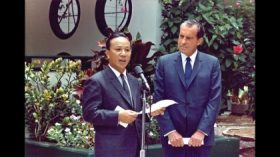
The American Retreat from Vietnam
or go to
Aletho News Archives – Video-Images
From the Archives
Secret document reveals plans for civil war in Lebanon, Israeli false flags, and invasion
By Randi Nord | Geopolitics Alert | April 5, 2019
Beirut – During his visit with US Secretary of State, Mike Pompeo, Lebanese President Michael Aoun reportedly received a US-Israeli document detailing plans for creating a civil war in Lebanon with covert false flag operations and possible Israeli invasion.
Although the source of the document is Israeli and created in partnership with Washington, no one knows who presented it to Aoun. The Lebanese TV station, Al-Jadeed, initially reported the document on Lebanese TV and a video on its website. Geopolitics Alert translated the report for this article. … continue
Blog Roll
 Aletho News
- There’s a drought in academia: A drought in honest research on the subject of drought and other weather extremes
- Department of War Awards $20.7 Billion Contract to Raytheon for Air-to-Air Missiles
- ‘Distance yourselves from Israel’: IRGC urges US population to question govt policies
- America’s Greenland deal has a radioactive backstory
- The RAF Fairford ‘terror plot’: Unpacking escalation in the UK echo-chamber
- EU Council Advances Chat Control 2.0 Scanning Proposal
- Ex-Greek MEP files complaint against Israeli spyware firm over alleged Pegasus surveillance
- Troubling ideas throughout the Torah, Talmud, Mishneh Torah and Tanya
- ‘Grave, alarming’: Iran mission on Trump’s UNGA ‘annihilation’ threats
- Najaf airport to reopen to Iranian flights within 24 hours: Ambassador
- If Americans Knew
- New Report: “Scholasticide and Genocide in Gaza: Assessment, Testimonies and Legal Analysis”
- Ex-Biden officials are desperate for a Gaza scapegoat
- Israeli “settlers” Invade Al-Aqsa; Pour Boiling Water on 75-Year-Old
- Israel Has Kidnapped Another American Teenager
- US arms sales to Israel worth $21.6 billion in 20 months
- Three Palestinians Killed in Israeli Attacks on Gaza
- Revealed: German “Anti-Semitism Expert” Driving Crackdown on Palestine Solidarity is Former Israeli Spy
- Egypt’s Warning to Israel Before Oct 7
- Israel’s siege signals another cruel winter for 1.8 million Gazans – Daily Update
- Netanyahu Asked UAE Leader to Deny Report on Oct. 7 Warning in Secret Visit, Sources Say
- No Tricks Zone
- New Study: Earth And Venus Surface Warmth Largely Explained By Convection And Lapse Rate, Not CO2 Or Radiation
- 2025 Nature Paper Claiming Worsening Global Drought Gets RETRACTED …Heavily Flawed
- New Study: ‘Global Drought Shows No Detectable Recent Acceleration Under Climate Warming’
- Economic Masterminds: German Socialists Suggest Taxing Productivity Gains Stemming From Using AI
- The South China Sea Has Not Been Cooperating With The Climate Change Narrative
- Energy Crisis: Germany Enters Heating Season With Historically Low Gas Reserve Fill Levels
- New Study: The Antarctic Ice Sheet Gained Mass From 2020-2024 Due To Staggering Snow And Ice Accumulation
- Study: Ocean Heating Rates From Thousands Of Years Ago ‘Dwarf’ Modern Ocean Heating Rates
- Climate Extremists Target, Attack Large-Scale Power Grid Infrastructure In Germany!
- New Study: Antarctic Ice Melt Has Contributed Less Than 1 Centimeter To Sea Level Rise In The Last 30 Years

