UK Midlands outrage: Police teargas and ‘assault’ students protesting tuition fees
RT | December 4, 2014
A student protest at Warwick University against soaring tuition fees was broken up by police and security guards using tear gas and significant force. Protesters were threatened with a Taser, pushed to the ground and rammed against a wall, activists say.
The protest, organized by Warwick For Free Education, occurred on Wednesday as part of a nationwide chain of student demonstrations coordinated by the National Campaign Against Fees and Cuts.
The students had decided to hold a peaceful sit-in at the university’s Senate House in protest at rising fees for higher education that have been introduced under PM David Cameron’s government.
A spokesman for Warwick University said university security guards, who were monitoring the protest, were subjected to a “shocking and unprovoked act of violence,” which prompted them to call for a police presence. But the spokesman’s claims were contradicted by students who insisted the protest was quiet and peaceful.
One of the student protesters told OpenDemocracy.org that approximately 50 students attended a rally on Warwick University’s campus before making their way to occupy the reception area of the university’s Senate House. He claimed his fellow protesters were seated peacefully in a large circle, only to be besieged by security guards and officers.
Following the arrival of West Midlands Police officers, clashes ensued. A formal statement published on the Warwick For Free Education website alleges that “at least 20 students were assaulted by university security and police.”
Protesters were “punched, pushed onto the floor, dragged, rammed by their throat into the wall and kneed in the face,” the protest group claims.
‘Disproportionate force’
Footage published online shows an officer shoving the students with considerable force, while protesters shout, “What are you doing?”
The YouTube video reveals screaming students, visibly shocked and fearful, being forcibly dispersed by police.
One girl, who appeared to be filming the protest, was physically hauled forward by an officer and subsequently pushed away as she screamed in a terrified manner. A nearby student who witnessed the event shouted at the officer, “Get your hands off her! Mate, what are you doing? This is peaceful.”
The officer appeared to respond by lunging toward the young man in a threatening manner with a can of CS gas.
CS or tear gas is a commonly used agent for riot control. Exposure creates a sensation of burning, and causes excessive tearing of the eyes so that the subject’s vision is temporarily impaired.
One student who had attended the demonstration told the Coventry Telegraph that a police officer “took out his CS spray and sprayed it in one person’s eyes and then into a crowd of about 10 people.”
“A Taser was taken out and was being made to crackle by pressing the trigger, but it wasn’t used,” he added.
The student said the force deployed felt “particularly disproportionate.” “When the police came they didn’t say why they were there. A lot of younger students were visibly shaken and left in tears.”
The activist added the violence the students experienced was a “shock” because the protest was “quiet.” “We weren’t even shouting,” he emphasized.
‘Released without charge’
On Wednesday, just before 9 pm, a spokesperson for West Midlands Police declared on Twitter that the protest was still ongoing. The force had made three arrests, following what it claimed were “reports of an assault.”
“During the disorder, a Taser was drawn and an audible and visible warning was issued to prevent further incidents. The Taser was not fired,” another Tweet posted by the police force read.
Warwick University Students’ Union said in a statement that the force deployed by West Midlands Police was “disproportionate.”
“From the footage we have seen of this incident, we absolutely believe that disproportionate force was used against protesters. We stand in solidarity with the Warwick students who were unnecessarily harmed in this action.”
West Midlands Police arrested one person on suspicion of assault, while two others were arrested on suspicion of obstructing officers. All three have been released without charge, Warwick For Free Education announced on the group’s Facebook page Wednesday night.
Shocked and disgusted by yesterday’s events, staff and former students at the university have launched a petition calling for an “immediate review of the university’s police liaison policies,” and for the university to make “an unreserved apology” to the students who endured violence on university property.
It also demands that the university issue a firm guarantee it will assist “students in making complaints through the Independent Police Complaints Commission and, if necessary, pursuing legal action against the police.”
Ireland takes UK to human rights court over Hooded Men case
RT | December 4, 2014
The Irish government has asked the ECHR to reexamine the 1978 verdict of the Hooded Men Case. The Northern Irishmen involved seek justice after a new set of previously classified documents point to torture by the UK government in the high-profile case.
The case in question involves torture allegations brought by 14 suspects who said they were subjected to suffering during their detention without trial in 1971 at the Ballykelly British Army Base in County Londonderry.
Liam Shannon, one of the protagonists in the Hooded Men Case, told RT’s ‘In the Now’ that his nightmare began on August 9, 1971, when “hundreds of Catholic men” were arrested by the British Army and taken to detention centers all over Belfast, Northern Ireland, at the height of the troubles there.
From hundreds, Shannon says, 14 people were selected for “in-depth interrogation.”
“That took the form of the use of five techniques. ‘Wall standing’ in the stress position, ‘hooding’, white noise, sleep deprivation, food deprivation and continued beatings,” Shannon told RT host Anissa Naouai.
After the men were released, they brought a legal challenge to the European Court, which in 1978 ruled that the evidence against UK authorities did not constitute torture, but instead was ‘inhuman and degrading treatment’. This judgment is now being challenged.
“We never expected that a government would torture its own citizens and that’s exactly what happened,” Shannon says, as he recalled his pain from his detention. “We were hooded from the word go. We were put into helicopters and told that we were hundreds of feet in the air, and thrown out just to find that we were 3 or 4 feet off the ground.”
Calling it a “very frightening experience,” he said ‘hooding’ continued for seven days straight as the “hoods were never taken off except during interrogation,” when he was repeatedly beaten.
“We were kept hooded, we were beaten. If we couldn’t stand against the wall for any longer… and if you attempted to get off the wall you were severely beaten and put back open again,” Shannon recalls.
All men in the case, Shannon says, suffered psychologically as well as physically from the confinement.
“I actually contracted Crohn’s disease afterwards when I was released from prison, which left me very, very ill for quite some time and left me having to take strong medication for a long time. We also all have sleepless nights, nightmares, cold sweats… everything else that goes along with it.”
A statement by the Irish Foreign Minister Charles Flanagan on Tuesday announced the request by Dublin for the European court to revise its judgment. He said that the government had taken seriously the material in the RTÉ documentary ‘The Torture Files’ in June this year.
“On the basis of the new material uncovered, it will be contended that the ill-treatment suffered by the Hooded Men should be recognized as torture,” Flanagan said. […]
RT’s ‘In the Now’ managed to get a hold of Paul O’Conner from the Pat Finucane Centre (PFC), a human rights advocacy and lobbying entity in Northern Ireland which helped initiate RTE’s documentary.
He told RT that PFC’s research in the British National Archives in London led to “literally thousands of documents” that prove UK government was complicit in torturing the hooded men.
“These documents show that the British government has misled the court. They withheld evidence, they withheld witnesses. They have lied to the court. And with that evidence, we went to Irish State television,” O’Conner said.
Now as victims await the torture recognition verdict, Shannon says all they want is justice.
“It will make a massive difference. It will be some justification for all the years and it will be some benefit psychologically for us. We have to remember that three of our number have since died premature deaths. Their loved ones, their families – it will make a massive difference to them, because they know what happened to their loved ones. Their loved ones were tortured to death,” Shannon told RT.
At the same time O’Conner stressed that torture conclusion by the ECHR will change a number of things. First of all, he says it will prompt a police investigation into the allegations of torture.
“That has not happened and yet we know from the documents which have emerged that senior government ministers were named as having ordered the torture, namely Lord Carrington, then Secretary of State for Defence , in the 1970s,” O’Conner told Naouai.
And most importantly, O’Conner claims the 1978 verdict will cease to be used as a precedent to justify the torture of own citizens.
“This very case has been quoted by the Israeli supreme court in cases involving torture of Palestinians. And in the infamous torture memos that were provided to George Bush in the lead up to Iraq War, the memos which led to the establishing of the Guantanamo Bay, they quote this judgment extensively,” O’Conner says.
Demonizing Russia as US goes to war
By Finian Cunningham | Press TV | November 30, 2014
Every Russian maneuver is now being recklessly construed as a sinister war threat by the Western media – no matter that the Russian maneuvers are entirely in keeping with international law and are a normal part of any nation’s right to movement of its military forces.
The latest “incident” was reported by Britain’s Daily Mail in which a squadron of Russian warships was “escorted” by the British Royal Navy as it sailed through the English Channel.
The Daily Mail headline was spiced with sinister innuendo of Russia doing something untoward, illegal and threatening. ‘Royal Navy catches up with Russian warships to ‘keep an eye’ on Putin’s fleet sailing along the Channel.’
Note the sly demonization of Russia’s President Vladimir Putin, by attributing the Russian leader as the personal owner of the warships – as if he were some kind of arch-villain in a cheesy James Bond movie.
The report informs readers: “The Royal Navy has escorted [sic] a squadron of Russian warships sailing through the English Channel [sic]. Four ships passed through the through the Strait of Dover after carrying out military exercises [sic] in the North Sea. HMS Tyne, a Type 45 Destroyer and one of the Royal Navy’s most technically advanced warships, was able to pinpoint and monitor [sic] the movement of the group led by Russian aircraft carrier Admiral Kuznetsov as it approached [sic] the UK.”
The words and tone used by Daily Mail are loaded with malign implication suggesting that the Russian vessels were performing a secretive mission that transgressed international law. The facts are that the Russian ships were at all times in internationally navigable waters, had complied with maritime reporting regulations, and were conducting legitimate military training maneuvers, which is the prerogative of all countries’ navies and is a routine occurrence.
Even a British Ministry of Defense spokesman quoted by the newspaper acknowledged that the Russian warships were not doing anything illegal.
“We are aware that four Russian naval ships have passed through the Dover Strait from the North Sea into the English Channel, which all ships have the right to do under international law,” said the British MoD spokesman.
A British navy source is quoted as saying: “It’s not provocative but we are keeping an eye on them.”
So, the Russian “provocation” is not supported by any facts; it is merely being contrived by the Western media, who are evidently following a political line.
Ever since Washington and its European allies backed the illegal coup in Kiev last February by helping to overthrow the elected government and installing a hostile anti-Russian neo-Nazi regime, the Western powers have been accusing Russia of subversion, annexation and aggression. Thus, Western governments and the Western media have completely turned reality on its head.
The media spin of Russian forces conducting stealthy maneuvers and posing an international threat is part of this Western anti-Russian narrative aimed at distracting from the real cause of insecurity and conflict in Europe.
Earlier this week, General Philip Breedlove, the American commander of the NATO military alliance, was in Kiev reiterating claims that Russia is escalating tensions by acting aggressively, not just in Ukraine, but in the Baltic region and Black Sea. Breedlove went as far as claiming that Russia was militarizing the Crimea with nuclear weapons.
Russia has had a naval base and military forces in Crimea for decades under an internationally recognized agreement with Ukrainian governments – before the West helped overthrow President Yanukovych.
The people of Crimea invoked the Western-backed secession by Kosovo from Serbia in 2008, by voting in March to secede from the Kiev regime and join the Russian Federation.
Russia is therefore not doing anything illegal in Crimea or in international airspace and seas in the Baltic region, the Black Sea, or anywhere else, including that narrow strait between the North Sea and the Atlantic Ocean that Britain presumptuously calls the “English Channel.”
NATO commander Breedlove has had ample Western media coverage for his assertion that US-supplied fighter jets “have been scrambled” threefold times more this year compared with last year in order “to intercept” Russian military aircraft across Europe.
But, quietly between the lines, NATO spokesmen acknowledge that Russian aircraft have not actually breached any national airspace in all this time. Again, as with the “incident” of the Russian naval vessels passing through waters off Britain, there is no factual basis for the alarmist response. The alarmist response is simply being manufactured in order to give credence to the hoary narrative of “Russian threat.”
The absurd and pernicious logic of this narrative is that any Russian vessel or aircraft, whether civilian or military, anywhere in the world is being tagged as a potential threat. This is the corollary of Western sanctions and NATO military encirclement of Russia.
Russia is little by little being turned into a pariah by Western governments and their media to the extent that Russia is being excluded from its legitimate and normal access to international territorial space.
It is the Western powers that are acting illegally in pursuing this unlawful interdiction of Russia.
Meanwhile, back in the real world, the US and its allies continue to build up aggressive military forces around Russia. NATO warplanes have increased their number in the Baltic region by 400 per cent compared with last year. That is a fact, according to NATO’s own information.
The US-led military alliance has spent at least $200 million over the past year in upgrading air bases in Poland, Latvia, Lithuania and Estonia, according to a report last month in the Financial Times.
And the US navy has deployed an increasing number of Aegis missile-capable warships in the Black Sea. All these US and NATO maneuvers on Russia’s doorstep are in contravention of binding agreements – the Founding Act of 1997 and the Montreux Convention, respectively.
Ironically, as NATO’s General Breedlove was being hosted by the neo-Nazi regime in Kiev this week, there were low-key US media reports noting that American troops from Fort Carson in Colorado “will deploy for supporting Ukraine.”
The Colorado-based Gazette reports: “US European Command said that a 100-soldier team from the 16,000-soldier division will head to Europe in early 2015 to lead ground forces in ‘Operation Atlantic Resolve.’”
The report added: “Leaders from the division will run a series of training exercises to ensure American forces are ready to fight alongside partners.”
Two significant things about Fort Carson are that it is a base not only for infantry but also for Special Forces trained in unconventional warfare. Its troops are dedicated to European Command of the US army.
European Command is headed up by none other than General Philip Breedlove who wears a second military hat in addition to his NATO one.
It is significant that Breedlove, as NATO leader, is touring Europe rallying a “response” to alleged Russian aggression; then, in the very same week that he is in the anti-Russian regime capital of Kiev, the Pentagon announces that US troops under Breedlove’s European Command are now being dispatched to “support Ukraine.”
Washington is playing European governments like a fiddle. But shamefully while the US is mobilizing war efforts in Europe, Western media are chasing after Russian phantoms in the air and at sea.
Pro-Israel activists ask MPs to halt non-violent BDS protests
MEMO | November 24, 2014
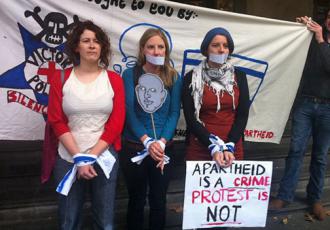 Zionist activists have urged British MPs to implement new legislation that police could use to stop non-violent, pro-BDS protests.
Manchester-based group North-West Friends of Israel have urged politicians to give police more power to stop boycotts of businesses by pro-Palestine solidarity activists.
As cited in a report by The Jewish Chronicle, the group’s co-chair Anthony Dennison wants the Public Order Act amended “to allow police to halt non-violent protests, if they disrupted ‘the lawful right of customers and shops to trade’.”
Dennison commented: “Peaceful protest can be intimidating, if demonstrators are stood outside a shop, holding placards with horrible images, are customers really going into that shop?”
UK approved $11mn Israeli arms sales before Gaza war: Report
Press TV – November 24, 2014
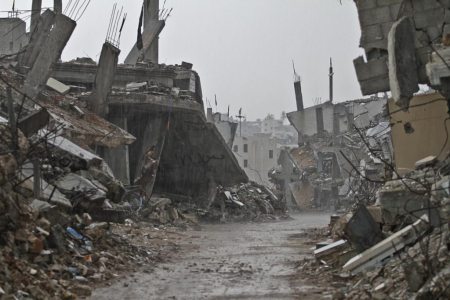
A new report has revealed Britain’s approval of arms sales to Israel worth nearly USD 11 million (£7 million) in the six months before the regime’s latest aggression against the Gaza Strip.
The Sunday report by The Independent newspaper raised fresh concerns about the use of British-made weapons and equipment by the Israeli army during the 50-day war on Gaza that killed more than 2,100 Palestinians and wounded 10,000 others in July-August.
Citing government figures, it added that the sales included components for drones, combat aircraft and helicopters along with spare parts for sniper rifles.
The figures also show that the British government has issued 68 export licenses for exports of military-use items to Israel between January and June.
“The Independent can reveal that ministers in the Department for Business Innovation and Skills (BIS) have also ordered a fresh review of military export licenses to Israel granted prior to the outbreak of the conflict after officials found 12 instances where arms containing British components may have been used in Gaza” by the Israeli army, it added.
“The refusal of the government to suspend these licenses caused a split in the coalition and led to the resignation of Foreign Office minister Baroness Warsi, who described Britain’s stance during the Israeli land and air assault as ‘morally indefensible’,” the British daily said.
Andrew Smith of the Campaign Against Arms Trade (CAAT) confirmed to the newspaper that “right up until the eve of the bombing, the UK was supporting licenses for the same kinds of weapons that (Secretary of State for Business, Innovation and Skills) Vince Cable’s own review found are likely to have been used against the people of Gaza.”
“Unfortunately it would not have been the first time UK weapons were used by Israel. The public was rightly shocked by this summer’s bombardment. That is why the UK must announce an embargo on all arms sales to Israel and an end to military collaboration.”
Katy Clark, a Labour party lawmaker, also said, “It is now abundantly clear that not only did the UK refuse to condemn Israeli military action,” but also it actively allowed UK companies to arm the Israeli military throughout the latest war on the beleaguered enclave.
Last month, the British government ordered the new review of licenses after campaigners began proceedings in the High Court to challenge its decision not to suspend the 12 licenses after Downing Street insisted Israel had a “legitimate right to self-defense.”
In August, The Independent revealed that arms export licenses worth $70 million had been granted to 130 British defense manufacturers since 2010 to sell military equipment to the Tel Aviv regime.
These range from bulletproof garments to naval gun parts and armored vehicles.
UK journalists take legal action against police spying
Press TV – November 21, 2014
Six British journalists have filed a lawsuit against the Scotland Yard after documents showed that the police in London were spying on them for more than a decade.
The lawsuit, which was filed by the National Union of Journalists against London’s Metropolitan Police and the Home Office, was announced late Thursday.
The group of journalists, including three photographers, an investigative journalist, a newspaper reporter and a freelance video journalist, took legal action after they discovered the Metropolitan Police had been recording their professional activities on a secret database.
The database was reportedly designed to monitor so-called domestic extremists.
The records included the movements of the journalists while working, their appearance and how they used a camera to record the events they were covering.
Freelance photographer David Hoffman questioned why he had been labeled as an extremist in the files kept by the police, saying he has “never contemplated any sort of extreme action of a political or criminal nature.”
The journalists said the lawsuit is aimed at exposing the persistent pattern of journalists being assaulted, monitored and stopped and searched by police during their work.
The group is also seeking to force the police to destroy the files containing records of their activities, saying the surveillance violates the liberty of the press and their privacy.
Both the Metropolitan police and the Home Office have declined to comment on the legal action.
The lawsuit comes as recent public disclosures of police records have revealed that Scotland Yard secretly seized journalists’ telephone records.
Several senior police officers have acknowledged keeping an eye on journalists by using powers granted under anti-terrorism measures.
A previous lawsuit by five journalists resulted in the police apologizing or paying damages for wrongdoing, including assault and unjustifiable searches while they were working.
What Really Happened to the Wobblies
By STAUGHTON LYND | CounterPunch | November 21, 2014
 The Wobblies are back. Many young radicals find the Industrial Workers of the World (IWW) the most congenial available platform on which to stand in trying to change the world.
This effort has been handicapped by the lack of a hard-headed history of the IWW in its initial incarnation, from 1905 to just after World War I. The existing literature, for example Franklin Rosemont’s splendid book on Joe Hill, is strong on movement culture and atmosphere. It is weak on why the organization went to pieces in the early 1920s.
Eric Chester’s new book, The Wobblies in their Heyday: The Rise and Destruction of the Industrial Workers of the World during the World War I Era, fills this gap. It is indispensable reading for Wobblies and labor historians. One way to summarize what is between these covers is to say that Chester spells out three tragic mistakes made by the old IWW that the reinvented organization must do its best to avoid.
Macho Posturing
Labor organizing flourished during World War I because of the government’s need for a variety of raw materials. Among these were food, timber, and copper. Wobbly organizers made dramatic headway in all three industries. At its peak in August 1917 the IWW had a membership of more than 150,000.
Nine months later, Chester writes, “the union was in total disarray, forced to devote most of its time and resources to raising funds for attorneys and bail bonds.”
This sad state of affairs was, of course, partly the result of a calculated decision by the federal government to destroy the IWW. But only partly.
According to Chester another cause of the government’s successful suppression of the Wobblies was that during and after the Wheatlands strike in California hop fields in 1913 some Wobblies threatened to “burn California’s agricultural fields if two leaders of the strike were not released from jail.”
For years, Wobbly leaders had insisted that sabotage could force employers to make concessions, Chester writes. But what Chester terms “nebulous calls for arson” and “macho bravado” only stiffened the determination of California authorities not to modify jail sentences for Wobbly leaders Ford and Suhr.
Chester finds that there is no credible evidence that any fields were, in fact, burned. But after the United States entered World War I in April 1917, this extravagant rhetoric calling for the destruction of crops apparently helped to convince President Wilson to initiate a systematic and coordinated campaign to suppress the Wobblies.
Efforts to Avoid Repression by Discontinuing Discussion of the War and the Draft
International solidarity and militant opposition to war and the draft were central tenets of the IWW. Wobblies who had enrolled in the British Army were expelled from the union. At the union’s tenth general convention in November 2015, the delegates adopted a resolution calling for a “General Strike in all industries” should the United States enter the war.
What actually happened was that general secretary-treasurer Bill Haywood and a majority of IWW leaders agreed that the union should desist from any discussion of the war or the draft, in the vain hope that this policy would persuade the federal government to refrain from targeting the union for repression. At the same time, the great majority of rank-and-file members, with support of a few leaders such as Frank Little, insisted that the IWW should be at the forefront of the opposition to the war.
Self-evidently, what Chester terms the IWW’s “diffidence” was the very opposite of Eugene Debs’ defiant opposition to the war. When Wobbly activists “flooded IWW offices with requests for help and pleas for a collective response to the draft,” the usual response was that what to do was up to each individual member. Haywood, Chester writes, “consistently sought to steer the union away from any involvement in the draft resistance movement.” Debs notwithstanding, however, the national leadership of the Socialist Party like the national leadership of the IWW “scrambled to avoid any confrontation with federal authorities.” Radical activists from both organizations formed ad hoc alliances cutting across organizational boundaries.
The IWW General Executive Board, meeting from June 29 to July 6, 1917, was unable to arrive at a decision about the war and conscription, and a committee including both Haywood and Little, tasked to draft a statement, likewise failed to do so. In the end, Chester says, “the IWW sought to position itself as a purely economic organization concerned solely with short-run gains in wages and working conditions.”
Disunity Among IWW Prisoners Fostered by the Government
The reluctance of the Wobbly leadership to advocate resistance to the war and conscription carried over to a legalistic response when the government indicted IWW leaders. Haywood urged all those named in the indictment to surrender voluntarily and to waive any objection to being extradited to Chicago. In the mass trial that followed, the defendants were represented by a very good trial lawyer who was also an enthusiastic supporter of the war and passed up the opportunity to make a closing statement to the jury. Judge Landis’ superficial fairness deluded Wobs into hoping for a good outcome.
The jury took less than an hour to find all one hundred defendants guilty of all counts in the indictment. Ninety-three received lengthy prison terms. Judge Landis ordered that they be imprisoned in Leavenworth, described by Chester as “a maximum-security penitentiary designed for hardened, violent criminals.” Forty-six more defendants were found guilty after another mass conspiracy trial in Sacramento.
Thereafter, Chester writes, the “process of granting a commutation of sentence was manipulated during the administration of Warren Harding to divide and demoralize IWW prisoners.” The ultimate result was “the disastrous split of 1924, leaving the union a shell of what it had been only seven years earlier.” Executive clemency, like that granted to Debs, was the only hope of the Wobblies in prison for release before the end of their long sentences. President Harding rejected any thought of a general amnesty, obliging each prisoner to fill out the form requesting amnesty as an individual. The application form for amnesty contained an implicit admission of guilt. The newly-created ACLU supported this process.
Twenty-four IWW prisoners opted to submit a form requesting amnesty. A substantial majority refused to plead for individual release. More than seventy issued a statement in which they insisted that “all are innocent and all must receive the same consideration.” The government insisted on a case-by-case approach. Fifty-two prisoners responded that they refused to accept the president’s division of the Sacramento prisoners, still alleged to have burned fields, from the Chicago prisoners. Moreover they considered it a “base act” to “sign individual applications and leave the Attorney General’s office to select which of our number should remain in prison and which should go free.”
Initially, the IWW supported those prisoners who refused to seek their freedom individually. Those who had submitted personal requests for presidential clemency were expelled from the union. In June 1923, the government once again dangled before desperate men the prospect of release, now available for those individual prisoners promising to remain “law-abiding and loyal to the Government.” This time a substantial majority of the remaining prisoners accepted Harding’s offer, and IWW headquarters, in what Chester calls “a sweeping reversal,” gave its approval.
Eleven men at Leavenworth declined this latest government inducement. In addition, those who were tried in California did not receive the same offer.
In December 1923 the remaining IWW prisoners at Leavenworth including twenty-two who had been convicted in Sacramento were released unconditionally. The damage had been done. Those who had held out the longest launched a campaign within the IWW to expel those who had supported a form of conditional release. There were accusations against anyone who had allegedly proved himself “a scab and a rat.” When a convention convened in 1924 both sides claimed the headquarters office and went to court. An organization consisting of the few hundred members who had supported the consistent rejection of all government offers “faded into oblivion by 1931.”
Conclusion
It is not the intent of brother Chester’s book, or of this review, to trash the IWW. This review has dealt with only about half of the material in the book, for example passing by the story of Wobbly organizing in copper, both at Butte, Montana and Bisbee, Arizona. Moreover, any one who lived through the disintegration of SDS, SNCC and the Black Panthers is familiar with tragedies like those described here. The heroism of members of all three groups who were martyrs, such as Frank Little, Fred Hampton, and the Mississippi Three (Chaney, Goodman, and Schwerner), remains. The vision of a qualitatively different society, as the Zapatistas say “un otro mundo,” remains also.
What it seems to me we must soberly consider is what practices we can adopt to forestall disintegration when different members of a group make different choices. Hardened secular radicals though we may be, we can learn something from King Lear’s words to his daughter Cordelia: “When you ask me blessing, I’ll kneel down and ask of you forgiveness.”
Staughton Lynd is an American conscientious objector, Quaker, peace activist and civil rights activist, tax resister, historian, professor, author and lawyer. Staughton Lynd’s most recent book is From Here to There: the Staughton Lynd Reader.
High Court will hear case of UK torture and rendition victim
Reprieve | November 19, 2014
A High Court judge has said that a victim of UK rendition and torture can proceed with his claims against the British Government.
In a judgment handed down today, Mr Justice Leggatt found that the court would be “failing in its duty” if it did not deal with the claims of Yunus Rahmatullah, from Pakistan. Mr Rahmatullah was seized by UK forces in Iraq in 2004 and tortured before being handed over to the US and rendered to Bagram prison in Afghanistan, via the notorious Abu Ghraib prison in Iraq. He suffered a further decade of secret US detention before he was finally released in June this year.
The UK long denied any involvement in rendition, before being forced to correct the record in Parliament in 2008, when then-Defence Secretary John Hutton publically admitted that the rendition of Mr Rahmatullah and another man, Amanatullah Ali, had taken place.
The judgment by Mr Justice Leggatt, published this morning, confirms he was unconvinced by the Government’s ‘Foreign Act of State’ argument – the theory that a British court cannot hear cases where the UK has cooperated with another state, in this case the US, in wrongdoing. Mr Leggatt wrote: “If it is necessary to adjudicate on whether acts of US personnel were lawful… in order to decide whether the defendants violated the claimant’s legal rights, then the court can and must do so.”
Today’s judgment follows a recent Court of Appeal ruling that a separate renditions case – Abdul-Hakim Belhaj and anor v Jack Straw and ors – should be heard, despite similar claims by the British Government that doing so would damage US-UK relations.
Kat Craig, legal director at charity Reprieve, which is assisting Mr Rahmatullah, said: “Yunus Rahmatullah suffered some of the most shocking abuses of the ‘war on terror’ – now we know the Government’s attempt to avoid accountability for his ordeal is without merit. The fact is that victims of British rendition and torture, like Yunus, deserve their day in court – the Government must accept this, and be prepared to answer for its past actions.”
Sapna Malik, Partner at Leigh Day said: “The High Court has rightly stated that it would be failing in its duty if it refused to adjudicate upon the allegations made in these claims just because it may be required to make findings about the conduct of US personnel. It is now high time for the British government to abandon its attempts to evade judicial scrutiny of its conduct in operations involving the US in Iraq and Afghanistan, so that justice may finally be served for what has passed and lessons learned for the future.”
I’m confused, can anyone help me? Part Three
RT | November 18, 2014
I’m confused. The first thing I’m confused about is democratic legitimacy after elections are held in war-torn countries.
Western leaders have hailed the recent parliamentary elections in Ukraine, as a great triumph of “democracy.”
Barack Obama said it was “an important milestone in Ukraine’s democratic development.” Top EU officials said it represented “a victory of the people of Ukraine and of democracy.”
Yet large parts of war-torn Ukraine took no part in the vote. Turnout, according to the Ukraine Central Election Commission was just 52.42 percent.
In May’s presidential elections, turnout, according to official figures, was 60.3 percent. They were won by Petro Poroshenko with 54.7 percent of the vote. Again, western leaders hailed the results as a great victory for “democracy.”
Now let’s consider the case of Syria, another war-torn country where there were also important elections this year.
Unlike Ukraine’s elections, leading western politicians did not say the result of Syria’s first multi-candidate presidential election in over forty years represented an “important milestone in Syria’s democratic development”- even though, according to official figures, the turnout was much higher than in Ukraine, at 73.42 percent.
Far from it, the same people who hailed the elections in Ukraine haughtily dismissed the election in Syria as a “farce.”
“This election bore no relation to genuine democracy. It was held in the midst of civil war,” said British Foreign Secretary William Hague.
“Today’s presidential election in Syria is a disgrace,” said US State Department spokesperson Maria Harf.
French Foreign Minister Laurent Fabius called Syria’s election a “fake.” Fabius did not telephone Bashar al-Assad, the winner, to offer his “warmest congratulations” as he did with Poroshenko.
How come one election held in a country divided by war is hailed as a “victory of the people and of democracy” but another election- where the turnout is higher -denounced? Why are Poroshenko and the Ukrainian Prime Minister Yatsenyuk deemed to be the legitimate representatives of the Ukrainian people but Bashar al-Assad, despite his higher level of popular support, denied any kind of democratic legitimacy? I’m confused. Can anyone help me?
At the recent G20 summit in Brisbane, Canadian Prime Minister Stephen Harper told Vladimir Putin to “get out of Ukraine.” Leaving aside the fact that there’s no hard evidence that Russia is in Ukraine – and that Harper didn’t produce any- the statement seems to imply that the Canadian Prime Minister doesn’t like other countries interfering in the affairs of others and believes in state sovereignty and the inviolability of state borders.
But in 2003, Harper was a strong supporter of the US-led invasion of Iraq (and wanted Canada to join in), a clear example of one county “getting” into another. He actually thought it was a “mistake” of the then Canadian government not to take part in the invasion of Iraq. Why is Stephen Harper so concerned about a non-existent Russian invasion of Ukraine, but happy to support a real, actual, and blatantly illegal invasion of Iraq?Does the Canadian Prime Minister support state sovereignty and the inviolability of state borders, or doesn’t he? I’m confused. Can anyone help me?
David Cameron tells us that ISIS poses a “clear and present threat to the United Kingdom.” Yet only last year he was trying desperately to persuade Parliament to vote for air strikes against a secular Syrian government that was fighting ISIS and other radical extremists associated to al Al-Qaeda. Cameron describes ISIS as “an evil against which the whole world must unite,” but even now the British government, in common with other western governments is still working for the violent overthrow of the government in Damascus whose forces are the only ones on the ground in Syria capable of defeating ISIS. If defeating ISIS really was so important, why is the west trying to topple the anti-ISIS Syrian government? Why, if “the whole world must unite” against ISIS, won’t the British and western governments work with the Syrian government? I‘m confused. Can anyone help me?
To coincide with the launch of RT UK, we’ve seen a wave of attacks on RT by self-proclaimed “democrats” and “liberals” in the British media.Some of these attacks have urged Ofcom – the broadcasting regulator – to take action against RT. I always thought that being a “democrat” and “liberal” meant support for alternative voices being heard, not trying to stop people from hearing them. John Stuart Mill, the author of On Liberty, a classic text on liberalism, wrote of the “peculiar evil of silencing the expression of an opinion” and that “all silencing of discussion is an assumption of infallibility.”
So how come western “liberals” want to silence the opinions expressed on RT? Why are those who claim to be anti-censorship, so censorious when it comes to RT? I would have thought people calling themselves “democrats” and “liberals” would welcome a wide variety of news channels for people to watch, yet instead of that supporters of “free speech” are attacking a channel which broadcasts opinions which they don’t agree with it. I’m confused. Can anyone help me?
Western politicians say that they are appalled by the “barbarism” shown by ISIS in the various beheading videos they have released.But if beheading people is so bad (as most people would agree that it is), why is there no similar condemnation of the beheadings which take place in Saudi Arabia? In August, Amnesty International reported a “surge” in beheadings in Saudi Arabia, amounting to at least 23 in three weeks. Why are beheadings by ISIS “savage” but the ones carried out in Saudi Arabia acceptable? I’m confused. Can anyone help me?
Pussy Riot, the Russian punk protest group who were jailed after a demonstration in an Orthodox Cathedral in Moscow are feted as heroes in the West, with a whole range of public figures including the pop star Madonna coming forward to express their support. But there was no such celebrity support for Trenton Oldfield, a protestor who was jailed for six months in Britain after trying to disrupt the Oxford- Cambridge University boat race in 2012. Oldfield said he was protesting against elitism, inequality and government cuts. If Pussy Riot’s cause is deserving of “progressive” support, then why isn’t Oldfield’s? Why are some anti-government protestors who go to jail hailed as heroes, but others totally ignored? I’m confused. Can anyone help me?
You can read I’m confused, can anyone help me Parts One and Two.
Featured Video
Dan Dicks with James Corbett on Solutions Watch
or go to
Aletho News Archives – Video-Images
From the Archives
$1.5bn up in smoke: US THAAD missile stockpile dries up defending Israel against Iran
By Ivan Kesic | Press TV | July 2, 2025
According to American media, defense news outlets, and independent analysts, the 12-day Israeli military aggression against Iran significantly depleted the US stockpile of THAAD (Terminal High Altitude Area Defense) interceptor missiles.
Citing official sources, American magazine Newsweek reported on Friday that the US transferred a substantial portion of its advanced missile defense capabilities to support the Israeli regime, an effort with questionable results and a critical impact on US strategic reserves.
THAAD, developed by Lockheed Martin arms manufacturing company, is a key component of Israel’s multi-layered air defense architecture. It is designed to intercept medium-range ballistic missiles, including those launched from Iran and Yemen.
The US-made system is capable of targeting short-, medium-, and intermediate-range ballistic missiles during their terminal phase, whether inside or outside Earth’s atmosphere.
THAAD uses a “hit-to-kill” method, relying on kinetic energy rather than explosive warheads to destroy incoming threats, intercepting at altitudes of up to 150 km and ranges between 150-200 km.
Operated exclusively by American personnel, the US military maintains eight THAAD batteries with an estimated 350–400 interceptors in total. The eighth battery was activated during the June 20 Israeli aggression against Iran and is capable of intercepting hypersonic missiles. … continue
Blog Roll
 Aletho News
- While Gaza dominates the UN, these are the people keeping it alive
- New Report: “Scholasticide and Genocide in Gaza: Assessment, Testimonies and Legal Analysis”
- ‘THAAD Delusion’: Iran war exposes US missile shield limits – The Atlantic
- Moscow issues warning to NATO over Russian exclave
- Yes, the Iran war has destroyed Trump’s presidency
- The fallacy of US delusions about Iran’s economic collapse
- Hezbollah denies Syria cell link, warns of Israeli plan to sow discord
- The legacy of US sanctions, war, and occupation in Iraq
- Iraqi resistance group rejects disarmament, vows to maintain support for Lebanon
- Sheikh al-Asadi warns of Iraqi government compliance with US demands
- If Americans Knew
- Iran’s Revolutionary Guards Publish Letter to the American People
- DMFI launches $1 million ad campaign supporting Virginia’s Elaine Luria
- US Senate blocks resolution seeking report on Americans killed by Israel
- Israeli Attacks Kill Ten Palestinians in Gaza
- Massacre at Minab: The School That Became a Grave
- Israeli media: The IDF Shows It Doesn’t Turn a Blind Eye; It Actively Emboldens Settler Havoc
- As settlers ravage West Bank, Israeli forces kill 10 in Gaza – Daily Update
- New Report: “Scholasticide and Genocide in Gaza: Assessment, Testimonies and Legal Analysis”
- Ex-Biden officials are desperate for a Gaza scapegoat
- Israeli “settlers” Invade Al-Aqsa; Pour Boiling Water on 75-Year-Old
- No Tricks Zone
- Green Energy Debacle: German Expert Professor Fritz Vahrenholt Warns Of Severe Economic And Social Consequences
- Two More Paleo Reconstructions Affirm Meters-Higher Sea Levels Across Ireland, Brazil 7000-6000 Years Ago
- New Study: Earth And Venus Surface Warmth Largely Explained By Convection And Lapse Rate, Not CO2 Or Radiation
- 2025 Nature Paper Claiming Worsening Global Drought Gets RETRACTED …Heavily Flawed
- New Study: ‘Global Drought Shows No Detectable Recent Acceleration Under Climate Warming’
- Economic Masterminds: German Socialists Suggest Taxing Productivity Gains Stemming From Using AI
- The South China Sea Has Not Been Cooperating With The Climate Change Narrative
- Energy Crisis: Germany Enters Heating Season With Historically Low Gas Reserve Fill Levels
- New Study: The Antarctic Ice Sheet Gained Mass From 2020-2024 Due To Staggering Snow And Ice Accumulation
- Study: Ocean Heating Rates From Thousands Of Years Ago ‘Dwarf’ Modern Ocean Heating Rates

