Syria ‘Hero Boy’ Video Revealed to be Government Propaganda

By Daniel McAdams | Ron Paul Institute | November 14, 2014
A dramatic video clip showing a young boy heroically rescuing a young girl amid a hail of gunfire in Syria has racked up millions of YouTube viewings and has been trending heavily on other social media platforms.
The mainstream media and US government jumped on the video as evidence of the absolute depravity of the Assad regime. What kind of monster purposely targets children?
Wrote the International Business Times :
The incident certainly is not the first time that Pro-Assad gunmen have targeted children in the nearly four years of the bloody civil war in Syria.
Liz Sly, the Washington Post Beirut bureau chief covering Syria, Lebanon, Iraq — and presumably an expert in the area? — promoted the video on her Twitter page, adding “wow” in her comments. Sly’s reporting consistently agitates for more US involvement in Syria on the side of the rebels, her anti-Assad bias is solidly established.
Then the “experts” chimed in. According to the London Daily Telegraph (article since consigned to the memory hole), the experts have “confirmed the authenticity” of the video.
Then the US State Department chimed in to magnify and focus the propaganda, tweeting that a boy “hero” rescued a girl from an Assad regime sniper firing on civilians.
One problem: the whole thing was a fake. The Norweigan Film Institute, funded by the government of NATO-member Norway, chipped in $30,000 for the film to be produced in Malta and released publicly without informing viewers that it was not authentic footage.
The filmmakers made it clear to the Norwegian government in their funding application that they would not reveal that the footage was fake and authorities raised no objection to the operation.
The BBC wrote about how so many people were fooled by the film:
So once the film was made, how did it go viral? “It was posted to our YouTube account a few weeks ago but the algorithm told us it was not going to trend,” Klevberg said. “So we deleted that and re-posted it.” The filmmakers say they added the word “hero” to the new headline and tried to send it out to people on Twitter to start a conversation.
By the time its inauthenticity had been established, millions were outraged at the Assad government. Propaganda depends on framing the issue first. No one reads corrections once a false story is printed.
How convenient this is at a time when so many NATO member countries and the usual interventionist suspects are pushing hard for the US government to retool its Syria anti-ISIS campaign to first target the Assad government for destruction.
This episode should demonstrate how easy it is for governments to hide behind willing accomplices and the social media to produce and disseminate propaganda.
State Department Spokesperson Marie Harf recently drew some ridicule for stating that US evidence “proving” Russian involvement in the shoot-down of Malaysian Airlines flight MH17 over Ukraine came from “social media” sources. Perhaps those “social media” sources she urges us to rely upon are similarly supported and funded by governments with an agenda to push.
They are lying to us.
Israel Campaigns Against Global Free Speech
The Bilzerian Report | February 20, 2014
Alarmed at the rise of anti-Semitism and anti-Israeli sentiments on the internet, Israeli politicians recently called for nations around the world to enact legislation prohibiting criticism of Jews and Israel. Lobbying to outlaw global free speech is nothing new for Israel, however; it has been in the business of criminalizing speech for decades.
 Israel is in the precarious position of receiving tens of billions of dollars in aid every year from nations that purport to support democracy, while simultaneously oppressing the Palestinian people and perpetrating what Nobel Peace Prize winners Bishop Desmond Tutu and President Jimmy Carter deem an apartheid. If the American or European people ever knew that their tax dollars where being used in such a way they would surely cut Israel off. In order to conceal this truth and stifle any criticism, Israel and its lobbyists rely on sympathy from the Holocaust and labels of anti-Semitism to discredit critics. Even US Secretary of State John Kerry was recently called an anti-Semite for supporting a peaceful resolution to the Jewish/Palestinian conflict. Kerry is not alone however, President Obama, and just about anyone who has ever opposed an Israeli policy has been labeled anti-Semitic by his enemies. In order to add teeth to these labels, Israel lobbyists around the world lobby endlessly to criminalize anti-Semitism and Holocaust denial.
Israel’s threat of forcing world governments to enact new laws against free speech should not be taken lightly. Israel and its lobbyists have already succeeded in enacting stiff anti-racist laws in most Western countries. These laws have been used on numerous occasions to jail academics, pro-Palestinian activists, and also individuals who have spoken provable facts that are deemed anti-Semitic “canards.”
In Australia, Jewish groups lobbied successfully to outlaw holocaust study and “hate speech.” As with most laws regulating speech and academic study, it has been routinely abused, and is now on the list for repeal. In fact, the law is so tied to Jewish lobbying, that the Jewish newspaper Haaretz published an article: Australian Jews brace for a fight against the repeal of hate laws.
In Canada, Jewish groups lobbied for the enactment of hate speech regulation, and defend its use today. In 1983, Israel lobbyists filed a complaint against Ernst Zundal over a book he had written. He was tried several times, his citizenship application in Canada denied (even though he had resided there for decades), he was detained for two years without trial, and eventually deported to Germany where he was sentenced to 5 years imprisonment.
In France, Israel lobbyists publicly complained about comedian Dieudonne’s parodies of Israel and the holocaust. His home was raided, his shows banned, and hefty fines were imposed. England also followed suit and barred Dieudonne’s entrance into the country. In 2003, the French legislator and Israel lobbyist Pierre Lellouche managed to push through a law which extends the definition of discrimination to include nationalities so anti-Israel activists could be jailed. In 2009, the Lellouche law was used to convict 20 anti-Israel activists.
In England, Jewish lobbying efforts successfully enacted strict hate speech laws, and in Austria, acclaimed historian David Irving was incarcerated after Israel lobbyists complained about his academic work. The European Jewish Parliament and the chief Israel lobbyist in Belgium recently called for similar laws to stifle criticism of Israel. According to the Canadian Jewish News article French Vigilance on anti-Israel speech provoking backlash, Israel lobbyists are also attempting to enact similar legislation in the Netherlands.
In America, the Israel lobby has been fighting mightily for years to prohibit hate speech. Those efforts have been unsuccessful thus far, but they have managed to enact hate crime legislation. As Abe Foxman of the ADL noted, the social consequences in America for bigotry against Jews are so severe, (given disproportionate Jewish influence in government, media, finance, higher education, professional sports, etc…) that anti-Israel speakers often see graver consequences than the criminal sanctions they would face in Europe. For example, if one were to be labeled an “anti-Semite,” even if the allegations were wholly unsubstantiated, he would most likely be fired and ostracized from society.
One has to realize that Israel’s efforts having nothing to do with hate speech, anti-Semitism or holocaust denial, but are rather about stifling critical speech that affects Israel and its lobbyists. For example, we know that Israel and its lobbyists are not offended by holocaust denial because Israel and its lobbyists are the leading proponents of Armenian holocaust denial in the world today. Israel should also not be particularly offended by anti-Semitism, because Israel is actually one of the most racist and anti-Semitic nations on the planet.
Today, Israel is furiously enacting anti-free speech laws, hiring internet trolls to spread propaganda and disinformation, and even asking the Jewish owners of social media websites Facebook, Wikipedia, Google, and Youtube to remove material Israel does not like, regardless of its truth or merit. Israel has also campaigned against political parties it does not like in Greece, Hungary, and Ukraine. In Greece, the anti-Israel Golden Dawn Party was disbanded and its leaders arrested for no legal reason. This is a dangerous precedent that threatens world wide freedom and must be combated immediately, before speaking out against such Israeli efforts is also illegal.
Laws protecting free speech are put in place specifically to protect speech that powerful groups find objectionable. Otherwise, there is no free speech and it is just a matter of time before the list of prohibited phrases grows to include everything the powerful oppose. If it’s illegal to speak about certain races, the disabled or elderly, then why not government employees, and then the rich, or poor, and so on? Either speech is totally protected or it is not protected at all. The point of speech protection is to protect the most unpopular forms of speech. Popular forms of speech obviously need no protection.
Amid soaring fuel bills 25,000 UK pensioners to die this winter from cold weather
Press TV – November 12, 2014
A report says that a pensioner will die from cold weather every seven minutes in Britain this winter, amid soaring fuel bills.
The Age UK charity released the report on Tuesday, saying that, this winter, 25,000 elderly people in England and Wales will die as a result of the cold weather and due to high fuel costs and poorly insulated homes.
The charity also revealed that one in three pensioners, or more than 5 million elderly people, are worried that they will not be able to afford to warm their houses.
Caroline Abrahams, the charity’s director, said a growing number of people in Britain are facing difficulties in heating their homes properly.
“No older person should worry that they could die from the cold in their own home,” said Abrahams, adding, “Fuel poverty is a national scandal which has claimed the lives of too many people – both old and young – for far too long and left many more suffering from preventable illness.”
Abrahams called for a long-term solution to the problem, such as bringing Britain’s housing up to a high energy efficiency standard.
The government responded to the charity’s report by insisting that officials are already doing enough to protect elderly Britons struggling to heat their homes.
The UK has seen rising energy costs in recent years. A separate report published earlier this year revealed that the prices of domestic energy in the UK rose by 45 percent between 2008 and 2014.
British Spying Is Our Problem, Too
By Alex Sinha | ACLU | November 10, 2014
The chilling effect of surveillance may be spreading across the Atlantic.
We learned last week that GCHQ – the U.K. equivalent of the NSA – permits its employees to target the communications of journalists and lawyers. That revelation has serious implications for the work of both groups.
American surveillance is already impacting the work of U.S.-based journalists and lawyers. As the ACLU and Human Rights Watch documented in a recent report, the effects are not pretty. National security and intelligence journalists have been struggling to develop and maintain relationships with increasingly skittish sources, and lawyers are losing the freedom to communicate with clients, co-counsel, and witnesses without exposing confidential information to the government.
We depend on the press to keep us informed, helping ensure the government’s accountability to the governed. But when journalists are vulnerable to surveillance, that accountability suffers.
Attorneys are also indispensable, and their right to communicate privately with clients has long been recognized both in domestic and international law. When attorneys can’t communicate freely with clients, they can’t build trust or develop strategy. That weakens important due process rights and diminishes our confidence in the verdicts issued by our justice system.
Like the United States, the U.K. conducts significant surveillance, including tapping fiber-optic cables to gain access to enormous volumes of Internet traffic. The revelations from last week show not only that the communications of journalists and lawyers get caught up in the U.K.’s dragnet, but also that this may happen by design.
The breadth and poor regulation of the U.K.’s surveillance practices are a problem for everyone – including Americans. Here’s why.
The United States has extensive intelligence-sharing arrangements with key allies like the U.K., and through them has access to information that it can’t legally collect on its own. Sharing flows both ways, so the U.K. also has unfettered access to much “raw” or unfiltered U.S. surveillance data.
As far as we know, nothing stops the United States from accessing information from GCHQ that is derived from targeting journalists or lawyers. In fact, we’ve seen this movie before. Last February, we learned that an Australian intelligence agency gave the NSA privileged communications between a U.S.-based law firm and its clients. We’d be foolish to assume anything different happens between the United States and the U.K. – which, like Australia, is one of the NSA’s “Five Eyes” surveillance partners.
What happens in Britain reaches us, too, and U.K. surveillance programs almost certainly collect many Americans’ communications. But we also don’t want our government targeting U.K. journalists and lawyers by proxy.
Considering the extensive intelligence cooperation between our two countries, we should all be concerned about the United States outsourcing practices we would reject at home.
Winston Churchill was a Racist Ass#*%!
Moonlit History | October 24, 2014
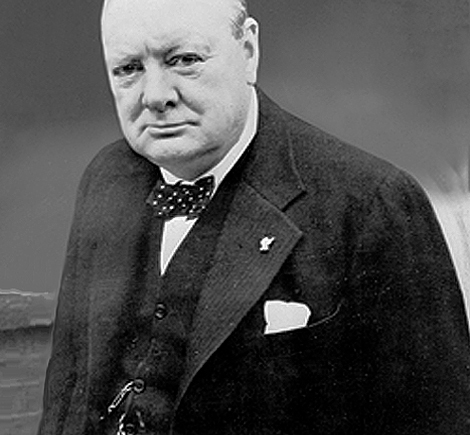
Churchill is seen as the British icon of endurance and strength through gloomy war. His drowning voice of “we shall fight on the beaches” is easily identifiable with World War II. And he was a complete drunk.
But what do common folks now-a-days know of this man? Do you know much about Dear ol’ Churchill? Let’s find out.
In December of 1910, while young Churchill was Home Secretary, he wrote:
“The unnatural and increasingly rapid growth of the Feeble-Minded and Insane classes, coupled as it is with a steady restriction among all the thrifty, energetic and superior stocks, constitutes a national and race danger which it is impossible to exaggerate. I am convinced that the multiplication of the Feeble-Minded, which is proceeding now at an artificial rate, unchecked by any of the old restraints of nature, and actually fostered by civilised conditions, is a terrible danger to the race.” Churchill was all-for forcing “feeble-minded” people to labour colonies. January 19, 1899, Churchill wrote in a letter to his cousin: “The improvement of the British breed is my aim of life.” [1]
Wait a minute, he was in favor of eugenics? This sounds really familiar to someone else in history, I just can’t remember his name. Anyway, moving on.
As a young MP, it was well-known he believed that “the Aryan stock is bound to triumph.” — Okay, wait! He sounds just like that guy with the funny mustache! Whoa!
When concentration camps were built in South Africa, for white Boers, he [Churchill] said they produced “the minimum of suffering”. The death toll was almost 28,000, and when at least 115,000 black Africans were likewise swept into British camps, where 14,000 died, he wrote only of his “irritation that Kaffirs should be allowed to fire on white men.”
As Colonial Secretary in the 1920s, he unleashed the notorious Black and Tan thugs on Ireland’s Catholic civilians, and when the Kurds rebelled against British rule, he said: “I am strongly in favour of using poisoned gas against uncivilised tribes… [It] would spread a lively terror.” [2]
And after Ghandi’s movement of peace was taking hold in the then British colony of India, Churchill was noted to have said:
“I hate Indians. They are a beastly people with a beastly religion.” Churchill’s gross demeanor towards others not of his skin did not cease while the Bengali famine occurred (which led to the death of nearly 3 million souls). He remarked the famine was not Britain’s fault, but it was “their” fault—because they “breed like rabbits.” He was talking about the Indians, of course. Amartya Sen, an economist who won the Nobel Prize in 1998, proved for a fact that the famine was due to the imperialist structure of the British Empire. [3]
In conclusion: make your own conclusion.
Sources:
[1] Winstonchurchill.org
[2] The Independent
[3] BBC
Inside the UN Resolution on Depleted Uranium
By JOHN LAFORGE | CounterPunch | November 6, 2014
On October 31, a new United Nations General Assembly First Committee resolution on depleted uranium (DU) weapons passed overwhelmingly. There were 143 states in favor, four against, and 26 abstentions. The measure calls for UN member states to provide assistance to countries contaminated by the weapons. The resolution also notes the need for health and environmental research on depleted uranium weapons in conflict situations.
This fifth UN resolution on the subject was fiercely opposed by four depleted uranium-shooting countries — Britain, the United States, France and Israel — who cast the only votes in opposition. The 26 states that abstained reportedly sought to avoid souring lucrative trade relationships with the four major shooters.
Uranium-238 — so-called “depleted” uranium — is waste material left in huge quantities by the nuclear weapons complex. It’s used in large caliber armor-piercing munitions and in armor plate on tanks. Toxic, radioactive dust and debris is dispersed when DU shells burn through targets, and its metallic fumes and dust poison water, soil and the food chain. DU has been linked to deadly health effects like Gulf War Syndrome among U.S. and allied troops, and birth abnormalities among populations in bombed areas. DU waste has caused radioactive contamination of large parts of Iraq, Bosnia, Kosovo and perhaps Afghanistan.
The measure explains that DU weapons are made of a “chemically and radiologically toxic heavy metal” [uranium-238], that after use “penetrator fragments, and jackets or casings can be found lying on the surface or buried at varying depth, leading to the potential contamination of air, soil, water and vegetation from depleted uranium residue.”
The main thrust of the latest UN resolution, “Encourages Member States in a position to do so to provide assistance to States affected by the use of arms and ammunition containing depleted uranium, in particular in identifying and managing contaminated sites and material.” The request is a veiled reference to the fact that investigators have been stymied in their study of uranium contamination in Iraq, because the Pentagon refuses to disclose maps of all the places it attacked with DU.
In the diplomatic confines of UN resolutions, individual countries are not named. Yet the world knows that up to 700 tons of DU munitions were blasted into Iraq and Kuwait by U.S. forces in 1991, and that U.S. warplanes fired another three tons into Bosnia in 1994 and 1995; ten tons into Kosovo in 1999, and approximately 170 tons into Iraq again in 2003.
The International Coalition to Ban Uranium Weapons (ICBUW.org), based in Manchester, England and representing over 160 civil society organizations worldwide, played a major part in seeing all five resolutions through the UN process and is working for a convention that would see the munitions outlawed. In October, ICBUW reported that the US military will again use DU weapons in Iraq in its assaults against ISIS “if it needs to”. The admission came in spite of Iraq’s summer 2014 recent call for a global ban on the weapons and assistance in clearing up the contamination left from bombardments in 1991 and 2003.
The new resolution relies heavily on the UN Environment Program (UNEP) which conducted radiation surveys of NATO bombing targets in the Balkans and Kosovo. It was a UNEP study in 2001 that forced the Pentagon to admit that its DU is spiked with plutonium. (Associated Press, Capital Times, Feb. 3, 2001: “But now the Pentagon says shells used in the 1999 Kosovo conflict were tainted with traces of plutonium, neptunium and americium — byproducts of nuclear reactors that are much more radioactive than depleted uranium.”)
The resolution’s significant fourth paragraph notes in part: “… major scientific uncertainties persisted regarding the long-term environmental impacts of depleted uranium, particularly with respect to long-term groundwater contamination. Because of these scientific uncertainties, UNEP called for a precautionary approach to the use of depleted uranium, and recommended that action be taken to clean up and decontaminate the polluted sites. It also called for awareness-raising among local populations and future monitoring.”
The “precautionary principle” holds that risky activities or substances should be shunned and discouraged unless they can be proved safe. Of course, instead of adopting precaution, the Pentagon denies that DU can be linked to health problems.
John LaForge works for Nukewatch and lives on the Plowshares Land Trust near Luck, Wisc.
Featured Video
Dan Dicks with James Corbett on Solutions Watch
or go to
Aletho News Archives – Video-Images
From the Archives
$1.5bn up in smoke: US THAAD missile stockpile dries up defending Israel against Iran
By Ivan Kesic | Press TV | July 2, 2025
According to American media, defense news outlets, and independent analysts, the 12-day Israeli military aggression against Iran significantly depleted the US stockpile of THAAD (Terminal High Altitude Area Defense) interceptor missiles.
Citing official sources, American magazine Newsweek reported on Friday that the US transferred a substantial portion of its advanced missile defense capabilities to support the Israeli regime, an effort with questionable results and a critical impact on US strategic reserves.
THAAD, developed by Lockheed Martin arms manufacturing company, is a key component of Israel’s multi-layered air defense architecture. It is designed to intercept medium-range ballistic missiles, including those launched from Iran and Yemen.
The US-made system is capable of targeting short-, medium-, and intermediate-range ballistic missiles during their terminal phase, whether inside or outside Earth’s atmosphere.
THAAD uses a “hit-to-kill” method, relying on kinetic energy rather than explosive warheads to destroy incoming threats, intercepting at altitudes of up to 150 km and ranges between 150-200 km.
Operated exclusively by American personnel, the US military maintains eight THAAD batteries with an estimated 350–400 interceptors in total. The eighth battery was activated during the June 20 Israeli aggression against Iran and is capable of intercepting hypersonic missiles. … continue
Blog Roll
 Aletho News
- While Gaza dominates the UN, these are the people keeping it alive
- New Report: “Scholasticide and Genocide in Gaza: Assessment, Testimonies and Legal Analysis”
- ‘THAAD Delusion’: Iran war exposes US missile shield limits – The Atlantic
- Moscow issues warning to NATO over Russian exclave
- Yes, the Iran war has destroyed Trump’s presidency
- The fallacy of US delusions about Iran’s economic collapse
- Hezbollah denies Syria cell link, warns of Israeli plan to sow discord
- The legacy of US sanctions, war, and occupation in Iraq
- Iraqi resistance group rejects disarmament, vows to maintain support for Lebanon
- Sheikh al-Asadi warns of Iraqi government compliance with US demands
- If Americans Knew
- Iran’s Revolutionary Guards Publish Letter to the American People
- DMFI launches $1 million ad campaign supporting Virginia’s Elaine Luria
- US Senate blocks resolution seeking report on Americans killed by Israel
- Israeli Attacks Kill Ten Palestinians in Gaza
- Massacre at Minab: The School That Became a Grave
- Israeli media: The IDF Shows It Doesn’t Turn a Blind Eye; It Actively Emboldens Settler Havoc
- As settlers ravage West Bank, Israeli forces kill 10 in Gaza – Daily Update
- New Report: “Scholasticide and Genocide in Gaza: Assessment, Testimonies and Legal Analysis”
- Ex-Biden officials are desperate for a Gaza scapegoat
- Israeli “settlers” Invade Al-Aqsa; Pour Boiling Water on 75-Year-Old
- No Tricks Zone
- Green Energy Debacle: German Expert Professor Fritz Vahrenholt Warns Of Severe Economic And Social Consequences
- Two More Paleo Reconstructions Affirm Meters-Higher Sea Levels Across Ireland, Brazil 7000-6000 Years Ago
- New Study: Earth And Venus Surface Warmth Largely Explained By Convection And Lapse Rate, Not CO2 Or Radiation
- 2025 Nature Paper Claiming Worsening Global Drought Gets RETRACTED …Heavily Flawed
- New Study: ‘Global Drought Shows No Detectable Recent Acceleration Under Climate Warming’
- Economic Masterminds: German Socialists Suggest Taxing Productivity Gains Stemming From Using AI
- The South China Sea Has Not Been Cooperating With The Climate Change Narrative
- Energy Crisis: Germany Enters Heating Season With Historically Low Gas Reserve Fill Levels
- New Study: The Antarctic Ice Sheet Gained Mass From 2020-2024 Due To Staggering Snow And Ice Accumulation
- Study: Ocean Heating Rates From Thousands Of Years Ago ‘Dwarf’ Modern Ocean Heating Rates

