The current standoff between Moscow and Washington came about because of American support for the 2014 coup in Ukraine, Russian President Vladimir Putin said on Wednesday.
“Relations between Russia and the US, on which global security and stability directly depend, are unfortunately going through a deep crisis,” Putin told 17 ambassadors who gathered at the Kremlin to formally present their credentials. This crisis is “rooted in fundamentally different approaches to the formation of the modern world order,” he added.
Addressing the US envoy Lynne Tracy, the Russian president apologized for somewhat disrupting the “gracious atmosphere” of the credentialing ceremony.
“I cannot but say today that the US use of such foreign policy tools as ‘color revolutions’, and support in this regard for the coup d’état in Kiev in 2014, ultimately led to the current Ukrainian crisis and made an additional contribution to the degradation of Russian-American relations,” Putin said.
Moscow has repeatedly pointed to the Maidan revolt as the root cause of turmoil in Ukraine, as it ultimately resulted in the need for a military intervention to ensure Russia’s security. Speaking at an event in November 2022, Putin said that “none of this would have happened” if not for the February 2014 coup.
The violent overthrow of a democratically elected government, ‘midwifed’ by US diplomat Victoria Nuland and then vice-president Joe Biden, brought to power anti-Russian nationalists and gave Washington “total control” of Ukraine, according to the Russian president.
Putin told Tracy on Wednesday that Moscow remains committed to building relations with Washington “solely on the principles of equality, respect for each other’s sovereignty and interests, and non-interference in internal affairs.”
Addressing all ambassadors, the Russian president said Moscow did not intend to self-isolate and was open to constructive partnerships with everyone, without hidden or hostile intent, but expected them to be based on equality and mutual consideration. Russia’s actions will be guided by its internal priorities, but also the awareness of its “special responsibility for maintaining stability and security at the global and regional levels,” Putin said, citing the recently updated foreign policy platform.
April 5, 2023
Posted by aletho |
Timeless or most popular | Russia, Ukraine, United States |
Leave a comment
Neocon control of America has led to the collapse of American global hegemony and the shredding of our nation’s moral authority, according to Robert F. Kennedy, Jr.
“The collapse of U.S. influence over Saudi Arabia and the Kingdom’s new alliances with China and Iran are painful emblems of the abject failure of the Neocon strategy of maintaining U.S. global hegemony with aggressive projections of military power,” Kennedy said Monday on Twitter, sharing an article from Reuters on OPEC+ cutting production to spike the price of oil in defiance of the Biden regime.
“China has displaced the American Empire by deftly projecting, instead, economic power,” Kennedy continued. “Over the past decade, our country has spent trillions bombing roads, ports, bridges, and airports. China spent the equivalent building the same across the developing world.”
“The Ukraine war is the final collapse of the Neocon’s short-lived ‘American Century.’ The Neocon projects in Iraq and Ukraine have cost $8.1 trillion, hollowed out our middle class, made a laughingstock of U.S. military power and moral authority, pushed China and Russia into an invincible alliance, destroyed the dollar as the global currency, cost millions of lives and done nothing to advance democracy or win friendships or influence,” Kennedy said.
Kennedy is absolutely correct.
His point was further underlined last month when Mexican President Andres Manuel Lopez Obrador went off on the U.S. State Department for accusing Mexico of “human rights abuses” when the Biden regime is working to imprison former President Donald Trump, extradite Julian Assange and bombed the Nord Stream pipelines.
April 5, 2023
Posted by aletho |
Economics, Militarism | Iraq, Saudi Arabia, Ukraine, United States |
Leave a comment
Inviting Kiev to Brussels over Budapest’s explicit objections violates NATO’s principles, Hungarian Foreign Minister Peter Szijjarto said on Tuesday. He took part in the meeting of the NATO-Ukraine Committee anyway, to raise the issue of ethnic Hungarian minority rights.
“We came here in hope that no one will question the validity of our earlier joint decision that NATO is not a part of the war taking place in our neighbor [Ukraine] and that everything must be done to prevent a direct NATO-Russia conflict,” Szijjarto said on Facebook, posting from the foreign minister conference of bloc members.
Inviting Ukraine “violates the principle of the unity of the allies within NATO, but in the spirit of constructiveness we will participate in the meeting,” he added. “I will also make it clear that Hungary will support any integration efforts of Ukraine only if the Ukrainians restore to Transcarpathian Hungarians the rights they had before 2015.”
Around 150,000 ethnic Hungarians live in modern Ukraine, mainly in the Transcarpathian Region. Budapest has vowed not to give up on them “under any circumstances,” even though there has been pressure from “both sides of the Atlantic” to do so, Szijjarto had said earlier this month.
Hungary will not support Ukraine’s applications to either the EU or NATO so long as Kiev’s laws threaten Hungarian-language schools, the minister repeated last week.
Ukraine’s crackdown on Russian-speakers, begun by the government installed by the US-backed coup in 2014, has also affected Hungarian, Romanian, and Polish minorities. Romania had previously joined Hungary in demanding linguistic protections for around 400,000 ethnic Romanians and Moldovans, but Bucharest has been silent as of late.
According to Szijjarto, Ukraine had made promises to Hungary for years, but did nothing to address the matter. Despite criticism from the Council of Europe, Kiev has only doubled down on legislation mandating the use of Ukrainian at all levels of education.
NATO procedures require a consensus of members, but the joint commission with Ukraine was set up over Hungary’s objections. The US-led bloc has given Kiev billions of dollars worth of military aid over the past year, but continues to insist it is not actually involved in the conflict with Russia.
April 5, 2023
Posted by aletho |
Civil Liberties, Ethnic Cleansing, Racism, Zionism | Hungary, NATO, Ukraine |
Leave a comment
On Sunday, April 2, 2023, the well-known Russian journalist/blogger, Vladlen Tatarsky, whose real name was Maxim Fomin, was killed in what appears to have been a targeted assassination.
At the time of his murder, Tatarsky had over 560,000 followers on his Telegram channel, making him one of the most influential voices when it came to covering the ongoing Russian special military operation in Ukraine.
The Russian government has publicly condemned the attack, with Russian Ministry of Foreign Affairs spokeswoman Maria Zakharova condemning the role played by the West, noting that the harassment of Russian journalists by the West constitutes a veritable “witch hunt” that represents an acquiescence, if not outright complicity, in the murder of persons like Tatarsky and Daria Dugina, the daughter of the noted Russian philosopher, Alexander Dugin, and a journalist in her own right.
“Not a single case of the violent death of a Russian journalist hailed as a ‘success’ by the Kiev regime and its thugs, has been investigated by Western countries, international organizations, or foreign professional communities, and not even basic human sympathy has been shown,” Zakharova noted.
The double standard of the collective West, and in particular the United States, which prides itself for its ostensible support of a free press, has been put on display for all the world to see. In 2012, Marie Colvin, a war correspondent for The Sunday Times, was killed while covering the conflict in Syria.
In February 2019, Judge Amy Berman Jackson, of the US District Court in Washington, DC, awarded Marie Colvin’s estate damages in the amount of $300 million, claiming that Colvin had been “specifically targeted” by the Syrian government “because of her profession.” Judge Jackson further stated that “The murder of journalists acting in their professional capacity could have a chilling effect on reporting such events worldwide,” adding that “a targeted murder of an American citizen whose courageous work was not only important, but vital to our understanding of war zones and of wars generally, is outrageous.” [Note: The Syrian government denies that Marie Colvin was specifically targeted. She died when a so-called “media center” in a rebel-held town that doubled as a command center was struck by Syrian artillery. Colvin was operating in Syria without the permission of the Syrian government, in an active war zone.]
The murder of Daria Dugina and Vladlen Tatarsky clearly represents the deliberate targeting of journalists operating in their professional capacity. Both Dugina and Tatarsky provided reporting that was “vital to our understanding of war zones and war,” and yet, because this “understanding” came with a Russian slant, the US government remains silent.
The “chilling effect” which Judge Amy Jackson warned about is, it seems, to be embraced when those chilled speak Russian, or whose facts sustain a Russian narrative.
The compassion shown Marie Colvin by the US government, in the defense of a free press, is exposed as a lie when confronted by the silence that followed the deaths of Daria Dugina and Vladlen Tatarsky. But this was to be expected — after all, the US is seeking the extradition of WikiLeaks founder Julian Assange so he can be prosecuted for the crime of publishing so-called “secrets” that exposed war crimes and other official malfeasance on the part of the US government and military in both Iraq and Afghanistan.
Putting a journalist in jail for 175 years (the maximum sentence Julian Assange would face if found guilty) is the same thing as a death sentence. Free speech, American-style, is not free — it comes with a heavy price, especially if one publishes material that runs against the US-backed official narrative.
Both Daria Dugina and Vladlen Tatarsky were included on the notorious “Myrotvorets” “kill list,” purportedly promulgated by the Ukrainian Security Services, along with hundreds of others—many of them minor children—similarly marked for death for the crime of speaking out against the policies of the Ukrainian government.
I, too, am on that list, along with scores of other Americans and non-Ukrainians.
To date, the US government has yet to condemn the Ukrainian government for targeting US citizens to die for exercising their Constitutionally protected right of free speech.
If the US government won’t protect its own citizens, one cannot expect it to speak out in the defense of the lives of non-US citizens designated for speech-related assassination.
But this isn’t simply a case of remaining silent in the face of crimes being committed by others. The US government is an active participant in the Ukrainian government’s campaign to silence dissenting voices using whatever means possible, including targeted assassination. The US government funds, helps organize, and actively supports the work of the Center for Countering Disinformation, or CCD, a Ukrainian agency operating under the auspices of the Office of the President of Ukraine. The CCD publishes a so-called “black list” containing the names of persons designated by the Ukrainian government as facilitating “Russian propaganda,” and designates those whose names appear on this list as “information terrorists” and “war criminals” who must be prosecuted to the full extent of the law.
Just to be clear, the US actively hunts down and kills persons designated as terrorists. To fund and support similar designations of its own citizens by a foreign government — Ukraine — known to arrest, torture, and murder dissenting voices means the US, implicitly, supports marking them for death.
This is the truth behind the US silence in the face of the murders of Russian journalists like Daria Dugina and Vladlen Tatarsky. A nation founded on the principles of free speech cannot tolerate free speech when it is practiced by those who oppose the US-backed narrative. Rather than engaging these dissenting voices in fact-based debate, dialogue, and discussion, the US —cognizant of the fact that their side could not prevail in such a contest — opts to silence these voices forever. For Julian Assange, this means life in prison.
For Daria Dugina and Vladlen Tatarsky, this meant death.
This is how you kill a free press. Hopefully the voices of dissent that remain will not be “chilled” by this result, but rather opt to double down on their commitment to pursue the truth, whatever the cost.
I know I will.
April 4, 2023
Posted by aletho |
Civil Liberties, Full Spectrum Dominance, War Crimes | Human rights, Ukraine, United States |
Leave a comment

Door cam footage of Natalya Vovk, Ukrainian national suspected of killing Russian journalist Daria Dugina.
The main suspect in the murder of prominent Russian military blogger Vladlen Tatarsky, Darya Trepova, has confessed to investigators details of her involvement in the incident, according to the news outlet Fontanka.
Tatarsky was killed in an explosion on Sunday at a cafe in St. Petersburg, after Trepova handed him a gift, a statuette, that contained an improvised explosive device (IED). The bombing, which also wounded 40 people, has been classified as a terrorist attack.
According to Fontanka, Trepova claims that it all started when she made friends with a certain activist online and was offered to move to Kiev to take up an editorial position at an unnamed media channel. Before she could be hired, however, she was told that she had to undergo an internship to “prove that she knows how to deal with Russian propaganda.”
Her first task was to go to the Listva bookstore in St. Petersburg and strike up a friendship with Tatarsky, who was holding an event there. Afterwards, she was reportedly told via Telegram that she had to travel to Moscow. There, a taxi driver, who was likely unaware of what he was doing, gave Trepova a package that contained a golden figurine.
Upon receiving the package, Trepova was instructed to go back to St. Petersburg to meet with Tatarsky at the Street Bar 1 café, where he was holding another event for his followers. She was allegedly told to give the figurine to Tatarsky as a gift, and “come up with something about the heroes of the Wagner PMC,” according to Fontanka.
“Then, we will act,” Trepova was reportedly told by her handlers, who said they had booked her a flight to Uzbekistan, where she would be transported to Kiev. Trepova reported her every move to her contact, sending messages such as “I’m arriving at the cafe,” “I’m about to present the figurine to Tatarsky,” and “I’ve handed it over.”
Trepova reportedly insists that she did not know the figurine contained a bomb and has repeatedly claimed that she was set up. Fontanka says her arguments seem plausible since she did not leave the building after handing over the statuette, and did not hesitate to sit next to it when Tatarsky invited her to join him on stage not long before it detonated.
Fontanka reports that explosives experts are now examining the blast site to confirm that the bomb was activated via SIM card, which would have made it possible to detonate it from anywhere in the world.
April 4, 2023
Posted by aletho |
Deception, War Crimes | Russia, Ukraine |
Leave a comment
Seventeen months ago the US State Department officially declared the US will “NEVER” recognize Crimea as part of Russia. Three months ago Ukrainian President Zelensky vowed to “take back” Crimea. Is this possible?
In June 2016 I visited Crimea with a delegation from the Center for Citizen Initiatives (CCI). This is a US organization which has conducted people to people exchanges with Russia for decades. They have never received financial support from Russia but did receive some grants from USAID in the 1990’s. CCI especially promotes exchanges with Rotary clubs.
In Crimea, we were based in Yalta, a small city on the Black Sea. From Yalta we did trips to the capitol Simferopol, the naval port at Sebastopol, the “valley of death” and many other destinations.
Crimea is beautiful and the people were very friendly and happy to see us. At that time, they had been under Western sanctions for two years because of their decision to secede from Ukraine in March 2014. Tourist ships that previously visited their ports no longer stopped because of sanctions. Students who graduated from Crimean universities no longer had their academic achievements recognized in the Europe. Visa and Mastercard could not be used. The sanctions caused a myriad of problems.
We met with many groups including the elected city council of the capital Simferopol, college students, high school students, Armenian and Tatar ethnic groups, a Rotary business group and more. They all said the decision to secede from Ukraine was overwhelmingly popular. The official referendum results confirmed what they said: with 83% of the voting public participating, 97% of voters said they wanted to “re-unify” with the Russian Federation.
When we asked why they preferred to be part of Russia, there were various explanations. Everyone referred to the Feb 2014 coup which overthrew President Yanukovich. Over 75% of the Crimean population voted for Yanukovich in the 2010 election which was deemed to free and fair by European monitors. They did not like the violent coup which ousted their elected president.
Another reason was because the coup government immediately repealed legislation that the Russian language could be used in schools and institutions. The majority of the population in eastern Ukraine and Crimea have Russian as their native language. The hostility of the coup government was unmistakable.
A third reason was because of the violence and thuggery of the forces which drove the coup. Over a few days almost 100 people were killed on the Maidan plaza. There is overwhelming evidence the killing was done by snipers shooting from rooms and the roofs of opposition controlled buildings. The fact that BOTH protesters and police were killed indicates purposeful intent to exacerbate and ignite the crisis which is exactly what happened.
A fourth reason for the Crimean decision was because of an incident on the night of Feb 20. Hundreds of Crimeans had gone to Kyiv to peacefully demonstrate in favor of the government and against the increasingly violent mob. When the killing peaked on Feb 20, they realized it was too dangerous and peaceful protests were hopeless. They headed home in an 8 bus convoy. One hundred miles south of Kyiv the bus convoy was stopped by ultra-nationalist thugs. All the passengers were terrorized, many were beaten and seven killed. News of this violence rapidly spread and shocked the people of Crimea. The referendum was quickly organized and held without violence on March 16. Turnout was huge and the results decisive. Two days later, Russia welcomed Crimea into the Russian Federation.
When we visited, just two years after the coup, we learned there were no regrets about the decision to leave Ukraine despite the problems caused by western sanctions. People told us that Crimea had been neglected under Ukraine. Now, as part of the Russian Federation, all sorts of infrastructure improvements were being made. We saw this first hand at the new Simferopol airport. We heard about the coming Kerch Straight bridge, which was completed a few years later. We saw the remodeling and rebuilding of the famous Artek youth summer camp.
It was very interesting to meet with young Tatars. This is an Muslim indigenous ethnic group in Crimea. When asked if western NGOs were active in promoting opposition, they smiled and said “Yes … Soros”. Looking it up later, I learned that the US billionaire gave grants of $230 million to influence Ukraine.
On our trip we also learned about Crimea’s long history as part of Russia. The Crimea peninsula and naval port at Sebastopol has been Russian ever since 1783. It has been the Russian Navy’s only southern freshwater port for 240 years.
In 1954 Crimea was designated to the Ukrainian republic by Soviet Premier Krushchev. There was no consultation but it was not critical because they were all part of a centralized Soviet Union. When the Soviet Union broke up, 94% of Crimean voters wanted to leave Ukraine and re-establish the Crimean Soviet Socialist Republic. Those wishes were ignored by Kyiv.
The 2014 coup was the last straw. The Maidan violence, coup government decisions on language, and attacks on civilians made it imperative to quickly secede. Russia already had soldiers in Crimea at the leased naval base at Sebastapol. The referendum proceeded quickly and peacefully.
Western hypocrisy and double standards are breathtaking. The West actively promoted the breakup of Yugoslavia, the secession of Kosovo from Serbia and South Sudan from Sudan. The right and popular will of Crimeans to secede from Ukraine and re-unify with Russia is clear. Yet the West continues to falsely claim that Russia “occupies” Crimea.
In November 2021 the US signed a “Charter on Strategic Partnership” with Ukraine. It declares, “The United States does not and will never recognize Russia’s attempted annexation of Crimea.” Evidently it does not matter what the Crimeans think and want. What kind of “democracy” is this?
Any attempt by a Ukrainian government to “take back” Crimea would be met with firm opposition and resistance from the people who live there. The chance of this happening is near zero.
The misinformation about Crimea shows how distorted media coverage of the entire Ukraine conflict is.
April 3, 2023
Posted by aletho |
Progressive Hypocrite | Crimea, Ukraine, United States |
Leave a comment
President Joe Biden triumphantly saved world democracy last week (at least according to the White House scorecard). Biden co-hosted another Summit for Democracy, a repeat performance after the December 2021 test run. Biden sounded like a Quaalude Savior as he recycled his “inflection point of history” cliché. But the summit proved again that politicians are perils to freedom regardless of their prattle.
Biden promised that “we are seeing real indications that we are turning the tide” in favor of democracy around the globe. Practically no one who’s not on Biden’s payroll agrees. The president’s boast was like taking a victory lap around the deck of the Titanic.
Last year democracy “declined around the world for the 17th consecutive year,” according to Freedom House. Twice as many nations are veering “toward authoritarianism” as towards democracy, according to The Economist. Most shocking: the United States is now categorized as a less free nation than Mongolia, Mauritius, and 56 other nations says Freedom House (funded by the U.S. government, so they must be trustworthy).
Team Biden believes a big problem with democracy is that politicians don’t have enough power: “Weak state capacity.” In reality, elected rulers around the globe are turning themselves into dictators who increasingly repress their citizens. Rather than representative governments, elected regimes have turned into Leviathan Democracies far superior to the citizenry.
Consider Biden’s record in the Oval Office. Federal judges and/or the Supreme Court have struck down Biden’s eviction moratorium for deadbeat renters, his $400 billion cancellation of federal student debt, his “climate change” decree shutting down power plants, his mask mandate for airline passengers, and his edict compelling all employees of large companies and all federal employees to get COVID vaccine injections. But all of Biden’s decrees are supposedly “pro-democracy” because he won the 2020 election.
“Democracy delivers” was a key talking point for Team Biden at the summit. Presumably, any increase in government handouts automatically increased government legitimacy. Unfortunately, “leashing politicians” is not on the Biden Bingo Card for Saving Democracy™. The American Bar Association recently warned that “the Rule of Law is in Decline Globally” but it is “not a central focus of the U.S. Government’s approach” on democracy. A top ABA official warned, “Discussing sustainable development in the absence of rule of law…is at best delusional and at worst dishonest.” Three-quarters of nations representing almost 85% of the world’s population recently “experienced declines in rule of law,” according to the World Justice Project. In lieu of “government under the law,” Team Biden offers “the People Centered Justice Multistakeholder Cohort’s Declaration and Call to Action.” Sloshing out more government handouts to activist groups who score media headlines was “close enough for government work” to the rule of law.
Rather than a system of informed consent, democracy is degenerating into regimes which blindfold citizens and demand unlimited submission. At the summit, government officials made it clear that freedom of speech is a luxury that democracy can no longer afford. Secretary of Anthony State Blinken declared, “The misuse of technology and the spread of digital authoritarianism must end. We must stand for an affirmative, values-driven, and rights-respecting vision of democracy in the digital era.” “Affirmative” and “values-driven” become code words to legitimize pervasive government censorship. Blinken “proposed a ‘delicate balance’ between ‘openness and security,’ ‘protecting speech and preventing incitement,’ and ‘fostering innovation and limiting the power of Big Tech,’” as Tom Parker observed for Reclaim the Net.
Homeland Security Secretary Alejandro Mayorkas sermonized on a “Countering the Rise of Digital Authoritarianism” panel. He was joined by YouTube CEO Neil Mohan, who could have boasted of how Washington censors his channel. An internal DHS document reveals plans to crack down on “inaccurate” information on “the efficacy of COVID-19 vaccines, racial justice, U.S. withdrawal from Afghanistan, and the nature of U.S. support to Ukraine.” Any facts which embarrass Team Biden are automatically “inaccurate’ and ripe for suppression. Federally-funded entities spearheaded the censorship of true information on COVID vaccine side effects to bolster Biden’s effort to inject every American.
Eight governments, including Ukraine and Poland, issued a call for more censorship on the first day of the summit. They called for tech companies to take action “against disinformation that undermines our peace and stability” and to suppress posts that “weaken our support to Ukraine amid Russia’s war of aggression.” The letter asserted that “hostile foreign powers are using [social media] to spread false narratives that contradict reporting from fact-based news outlets,” especially the endless reports on the glorious victories of the Ukrainian army. Facebook responded by promising to ramp up its censorship, including relying on “a third-party fact-checking service to determine if posts contain false claims.” Some “third-party fact checking services” have been government fronts. As journalist Aaron Maté scoffed, “We are fueling a proxy war in Ukraine in order to defend freedom, such as the freedom to censor dissenting views on our proxy war in Ukraine.”
Is the “will of the people” so fragile that it can no longer survive exposure to any thoughts that officialdom disapproves? Does winning an election automatically convert tinhorn politicians into minor deities entitled to control the thoughts of any voter? Nullifying freedom of speech converts citizens into vassals that politicians can use and abuse as they please.
Throughout the summit proceedings, piety was thicker than hog slop at an Iowa slaughterhouse. Secretary Blinken declared on March 28, “No woman or girl should face harassment and abuse in-person or online.” The State Department’s effort on this score was propelled by its Global Engagement Center, which previously pressured Twitter to cancel hundreds of thousands of accounts, including vast numbers of hapless Americans. That Center is leading the fight against “gendered disinformation” and whooped up a report on “the need for more research to tackle this scourge.” According to the United Nations, a prime example of this “scourge” is “Zoom Bombing.” That atrocity occurs when uninvited people crash a Zoom meeting and make rude comments. Is it an international human rights crisis because boneheaded Zoom organizers fail to require pass codes to attend a meeting?
As part of its summit festivities, the Biden administration announced new crackdowns to make it “more difficult for corrupt actors to conceal their identities, assets, and criminal activities.” Despite reform promises at the first summit, there has been no worldwide progress. The U.S. ranks #24 on the international corruption index—even worse than France, according to Transparency International. And that score was calculated before the latest revelations of the Biden family pocketing vast sums from smarmy foreign companies.
Biden boasted that his administration plans to spend more than $9 billion to support democracy worldwide by the end of next year. But U.S. foreign aid programs obliterate the anti-corruption initiatives of the U.S. government. An American Economic Review analysis concluded that “increases in [foreign] aid are associated with contemporaneous increases in corruption,” and that “corruption is positively correlated with aid received from the United States.” As a Brookings Institution analysis observed, “The history of U.S. assistance is littered with tales of corrupt foreign officials using aid to line their own pockets, support military buildups, and pursue vanity projects.” Torrents of U.S. “aid” helped make Afghanistan one of the most corrupt places on Earth. John Sopko, the Special Inspector General for Afghan Reconstruction (SIGAR), observed, “We need to understand how U.S. policies and practices unintentionally aided and abetted corruption.” The U.S. has been “fighting corruption” in Ukraine since the end of the Cold War, and in those decades Ukraine became one of the most corrupt nations in Europe. Biden administration officials helped defeat a congressional proposal to create an Inspector General to audit and oversee the $100 billion the U.S. government has pledged to the government of Ukraine.
But another handout will fix that problem. The Biden administration is bankrolling foreign journalists to fight “kleptocracy”—government of thieves. There is even an aid program entitled “Empowering the Truth Tellers.” (Julian Assange need not apply.) The Biden administration claims to support “independent media” by effectively putting foreign journalists on the U.S. payroll. Those journalists are “independent” because the U.S. government says so, and anyone who disagrees will be labeled an enemy of democracy. Besides, the United States is no role model: it ranks a pathetic #42 in the World Press Freedom Index, worse than Moldova and Guyana, according to Reporters Without Borders.
Biden is “saving” democracy” with buckets of goofy new acronyms: SHE PERSISTS, one of the rallying cries for Hillary Clinton’s 2016 presidential campaign, now stands for Supporting Her Empowerment: Political Engagement, Rights, Safety, and Inclusion Strategies to Succeed Investing. And then there was SHE WINS (Support Her Empowerment: Women’s Inclusion for New Security). The Agency for International Development is whooping up PxP—Powered by the People. Did the White House believe acronyms should look like drug prescriptions? ADD stands for Advancing Digital Democracy but policymakers should have worked in an ‘H’ to reflect their cluelessness. ACRF stands for the Anti-Corruption Response Fund. They should have tweaked that one to make it ARF-ARF, to symbolize officialdom’s cravenness to the powers that be.
To safeguard democracy, the Biden administration is creating “the Global Network for Securing Election Integrity [GNSEI], to align on standards and practices for supporting clean elections.” On that score, the Biden administration touts its ballot expanding efforts here at home. The White House “fact sheet” detailing progress on democracy touts the Biden proposal to spend $5 billion on the Postal Service to “support for vote-by-mail, including making ballots postage-free and reducing the cost of other election-related mail for jurisdictions and voters.” Ballot harvesting and unverified absentee ballots will save democracy everywhere! Who knew that the “will of the people” was so fragile that it could be blighted by requiring citizens to purchase one first-class stamp to send in their ballot?
Comic relief failed to redeem the summit. The State Department wanted Americans to make short videos with the hashtag #SummitForDemocracy whooping up “What has democracy made possible in your own life?” Such as falling living standards, soaring inflation, sporadic financial panic, and a befuddled commander-in-chief who doesn’t know if he is in Canada or China? A search on Twitter indicates that almost all the videos made with #SummitforDemocracy hashtags were done by governments or by government-funded entities. Biden’s democracy spiel can’t compete with cat videos.
Revealing all the levels of hypocrisy at the summit would be on par with peeling an onion. Mexico President López Obrador declared at the gathering, “Many of the great crimes against humanity have been committed in the name of God, or in the name of democracy.” Many of the nations showcased at the summit are dutiful U.S. allies, meaning that Washington ignores their oppression.
In his speech last Wednesday, Biden declared that “the power of these summits” is “not just to speak high-minded words.” But even U.S. government officials feared the summit would be an “inconsequential talk shop,” according to The Washington Post. Council on Foreign Relations President Richard Haass scoffed, “The summit for democracy is a bad idea that won’t go away… American democracy is hardly a model for others.”
Unfortunately, the Pentagon missed the memo on democracy. Since 2008, foreign soldiers who received training from the U.S. military “attempted at least nine coups (and succeeded in at least eight) across five West African countries,” as journalist Nick Turse reported. The Pentagon denies responsibility for the debacles. But, as Antiwar.com reported, Rep. Matt Gaetz (R-FL) declared at a recent congressional hearing, “I think we should at least know how many countries we train the coup plotters.”
Biden concluded his spiel to the Summit, “The great strength of democracy is that it gives us all the tools we need for self-government and self-improvement.” But the tools are controlled by politicians who equate ever greater submission with the triumph of the “will of the people.” Self-government is being defined down to little more than coronating whichever of the rascal’s political parties can offer voters more stuff. With politicians openly championing censorship, Leviathan Democracy is dropping its mask and no longer pretending to give a damn about freedom.
Jim Bovard is the Junior Fellow for The Libertarian Institute. He is the author of Public Policy Hooligan (2012), Attention Deficit Democracy (2006), Lost Rights: The Destruction of American Liberty (1994), and 7 other books.
April 3, 2023
Posted by aletho |
Civil Liberties, Corruption, Full Spectrum Dominance, Progressive Hypocrite | Afghanistan, Ukraine, United States |
Leave a comment
By Uriel Araujo | April 3, 2023
Former US ambassador to Finland, Earle Mack has visited Ukraine several times, on humanitarian missions. He claims, in a March 29 piece for The Hill, that, during his last visit, he could see a lack of morale firsthand, in the voice of the leaders to whom he talked. More importantly, Mack states matter-of-factly that the West has been “propping up Ukraine to fight a proxy war”, which is, in itself, a very important admission from a former US diplomat. He adds, however, that Kiev desperately needs “modern fighting hardware”, and claims that, by the time American Abrams tanks reach the country, in eight to ten months, the conflict could be over already with a defeated Ukraine.
To the general public, this reasoning might appear strange. After all, everyone knows that the US and its allies have been sending tons of weapons, ammunition and lots of cash to Ukraine. The constant sending of aid to Kiev has even caused Washington and European powers to have a hard time replenishing their own stocks of weapons.
It is true that American weapons manufacturers profit tremendously from today’s conflict. Much the same way portions of the sums sent to Ukraine (Europe’s most corrupt nation) are being diverted to shady schemes, the Pentagon, as a matter of fact, cannot account for billions worth of weaponry. Many such weapons appeared in the Middle East and Africa, trafficked through black markets. This however is only part of the story.
When Ukrainian President Volodymyr Zelensky visited Washington, during a 21 December 2022 joint press conference, his American counterpart, Joe Biden, provided a clearer picture. Regarding the insistent calls for more powerful weaponry being sent to Kiev, the US President said that providing Ukrainians with long-distance missiles “would have a prospect of breaking up NATO”, and “breaking up the EU and the rest of the world.” He added that his NATO allies were “not looking to go to war with Russia. They’re not looking for a third world war.” After saying that much, Biden “reassured” the Ukrainian leader standing next to him, by telling Zelensky this: “as I said, Mr. President, you don’t have to worry — we are staying with Ukraine as long as Ukraine is there.”
Inadvertently, Biden’s December remarks almost paraphrased the cruel joke about Americans being willing to fight “to the last Ukrainian”. More importantly, his blunt answer amounted to an indirect admission that Washington keeps arming and aiding Kiev as part of a proxy protracted war. It would thus appear the West’s strategy is not about giving Ukrainians victory but rather about wearing down Moscow. The conflict, however, is wearing out Ukraine itself – and even the West.
It is not just Ukraine that is in a bad shape, though: de-industrialized Europe is in fact more dependent than ever on the US for security, its military being in an “appalling state”, according to experts. The EU’s defense base lacks a common defense market, as well as the necessary production capacities and supply chains. Moreover, whenever the EU tries to articulate an industrial policy, Washington steps in. This is so because American interests benefit not only from the defense industry, but also from the continent’s own energy crisis and deindustrialization. Washington’s goal of a NATOized Europe is made impossible by the US own economic and industrial policies against Europe, as exemplified by Biden’s subsidies package.
Earle Mack describes the current conflict as attrition warfare, that is one which seeks military victory by wearing down the enemy. On a larger scale, also including the realms of financial and economic warfare, one could very well argue that the political West has indeed been trying to “wear down” the Russian Federation in all manners, by arming Kiev plus imposing unprecedented sanctions on Moscow. The sanctions have boosted Eurasian integration and largely backfired. Alas, the same could be said about Washington’s military attrition strategy, which normally aims for the long run. If this is an attrition war, it seems Ukraine is bound to tire out first – and is tiring out already. Hence, Earle Mack’s sense of urgency.
With that in mind, the former diplomat writes that the US and its allies should urgently send Kiev “military modern weaponry, including more Patriot missiles and many more Leopard 2 and Abrams tanks.”
In his piece, Earl Mack, also rightly reminds readers that although the current Russian military campaign in Ukraine is just a year old, that nation “has been in almost continuous conflict” since 2014 – this, one might add, is a situation that has been largely promoted and fueled by the West and by NATO’s expansion. During these years, Kiev’s human rights violations against the Donbass population have been covered-up by Western press, to the point of, more recently, whitewashing the Azov Regiment’s neonazism. In a July 2020 piece, I described the then Donbass combat as Europe’s forgotten war – and in a way it remains so, because the large public still thinks of military conflict in Ukraine as being only a year old phenomenon.
Ukranians are thus approaching “a decade of death and chaos”, in Earle Mack’s words. Over 10 million Ukrainians left their country. Interestingly, over 5.5 million, from Ukraine and Donbass, have fled to Russia. The loss of populations plus badly damaged infrastructure is exhausting the country.
Good diplomacy and lots of table talks are needed more than ever. Instead, Mack claims that to obtain victory, “Ukraine needs everything, everywhere, all at once” – and urgently. In any case, one can only give so much. It remains to be seen how much the US-led West is willing to give, while the Washington world system collapses.
Uriel Araujo is a researcher with a focus on international and ethnic conflicts.
April 3, 2023
Posted by aletho |
Economics, Militarism | NATO, Ukraine, United States |
Leave a comment

An explosion that rocked the ‘Street Bar’ café in St. Petersburg, Russia on Sunday has claimed at least one life and left 19 people injured, authorities have reported.
Vladlen Tatarsky (real name Maksim Fomin), a military correspondent and blogger, was killed in the incident, according to emergency services.
Tatarsky joined the Donbass militias back in 2014 in the wake of the Maidan coup in Kiev. He has since become known in Russia as a blogger and a correspondent reporting on the situation in the Donetsk and Lugansk People’s Republics. Tatarsky has also authored several books.
According to Readovka news outlet, the man was hosting a live event for supporters of his work when an explosion ripped through the building, blowing the café’s glass front into the street.
Emergency services have reported that an improvised explosive device was detonated near the stage in the cafe.
The incident is reminiscent of another attack on a Russian journalist. In August 2022, Darya Dugina was assassinated in a car blast. She was the daughter of philosopher Aleksandr Dugin, who Western media have described as an ideologue of Russian nationalism. According to some reports, he might have been the real target of the attack. The Russian security services later claimed that Ukrainian agents were behind it.
April 2, 2023
Posted by aletho |
Full Spectrum Dominance, War Crimes | Russia, Ukraine |
Leave a comment
This excerpt is from a very important book on the conflict in Ukraine: To the Last Ukrainian: An American War. It is written by Régis Le Sommier, who was embedded in both the Ukrainian and Russian armies. The account that he gives in this riveting chronicle tells of the perfidy of politicians and the tragedy of ordinary soldiers caught up as pawns in the machinations of geopolitics.
Régis Le Sommier is one of France’s great journalists whose work, spanning thirty years, has received several awards. He is the only war reporter who went to both sides of the front line with the Ukrainian and Russian armies for a year. This is his story.
You may purchase a copy of To the Last Ukrainian: An American War either from Amazon, or from Barnes and Noble.
The Strange Carl Larson
 The bus stopped in the center of a village.
“This is the place,” Max announced.
We, the Frenchmen, picked up our luggage and walked about two kilometers to a place designated by the GPS on Max’s smartphone. At a bend in the road, Ukrainian soldiers came to meet us.
“We are French. We’ve come for the Ukrainian legion.”
One of the soldiers made a phone call. A few minutes later, a man of athletic build, dressed in grey and wearing a commando cap on his head, got out of a vehicle.
<
“You have a military training?” He asked after shaking hands.
Max and Sabri nodded in response. This soldier was American.
“They call me the Grinch,” he said to the Frenchmen who had no idea what this nickname was supposed to mean. Neither did the Ukrainian soldiers around them.
The Grinch is the American bogeyman, a grumpy, greenish character from a Theodor Seuss Geisel cartoon, whose goal is to ruin Christmas. This cultural reference reflected the mindset of this American who naturally believed that the whole world knew about the Grinch. He announced that he was part of a team of American instructors who had come to train foreign volunteers.
“I’m here to put the internationals in order,” he told the Frenchmen. “I am in charge here. Too many people showed up at the center and they had no business being there.”
The French volunteers listened to him without saying a word. Then he moved on to instructions and declared:
“If you have international phones, you’ll have to cut them off or get local SIM cards.”
It was at this point that I told him that Noël, my sidekick, and I were journalists. Until then, he naturally thought we were volunteers. His face tightened immediately. What? Journalists who’ve dared to come out here?
The American was upset, or perhaps he realized that he had said too much? He chose to deal with the problem in a radical way:
“You don’t belong here,” he told me in an icy tone.
I protested by invoking the right to information:
“The French public has the right to know what is happening to their fellow-
citizens who’ve come to fight alongside the Ukrainians.”
The man was embarrassed. As a good American, and even though his presence here fell in the realm of clandestine operations, he believed that the right to information was sacred, that it was a virtue of his country.
Technically, he had no right to ask us to leave. So, he called his Ukrainian counterparts on the phone and, as if to pass the buck, asked them:
“You don’t want reporters, do you?”
Then he turned to me and with his white teeth gleaming announced:
“They don’t want reporters.”
He then explained his approach in a more conciliatory tone. He had come to help the Ukrainians. He was fighting for the freedom of the people, the great American classic line which I’ve hear since Iraq. However, from the way he spoke to us earlier, this individual clearly had far greater responsibilities. I’ve been around the US military in Iraq so much that I know by instinct who’s in charge, regardless of what they’re wearing.
Judging from the docile behavior of the Ukrainians around him, this man was no simple volunteer filled with good will. He could have just said that he was an instructor, that he was in charge of training, and that he was from the United States, and that would have been enough. But his commanding tone, that “I’m in charge here,” left no doubt.
I did some research on him. I found an interview he gave to the Seattle Times. His name is Carl Larson and he admits to being one of the American instructors who came to help the Ukrainian army against Russia.
But when we were listening to him with the volunteers, everyone was thinking the same thing. The scene was worthy of being in the Hall of Legends. There were also curious elements in his background. He was an Iraq War veteran. He was part of a military contingent that participated in the initial phase of the invasion. Then, he was no longer in the news. And today, was he still in the military? Was he on a mission for the Pentagon? I can’t say for sure. I tried to verify this through contacts in the American army and in French intelligence, but I did not get any answers. Cover-up is big part of the war in Ukraine.
What I can confirm is that in the recruitment of foreign volunteers to fight in Ukraine, an American veteran was in charge. Another Seattle Times article appeared about him on October 25. It said that after his assignment to select international recruits, Carl Larson trained a unit deployed to the Kharkiv front. Then he returned home. On his role in the selection of volunteers for the Ukrainian Legion, it is written that he was reluctant at the beginning, partly because of the recruits who were “unstable or without military experience.” The article went on to say that he himself was reluctant to join the Legion for fear of not being properly utilized.
“Finally, after discussions with Ukrainian officials, he agreed to select and train a unit before it went to the front.”
We had to leave quickly after we revealed ourselves to the American. We were not allowed to wish our friends well. Just a look, a little wave before they boarded an Opel Corsa, to my great surprise, registered in Essonne and driven by the American. The day after this hasty departure, Sabri explained to me in a text message that they had left by bus for a front line where they had to relieve a unit. They signed a commitment to stay until the end of the war.
April 2, 2023
Posted by aletho |
Book Review | Ukraine, United States |
Leave a comment
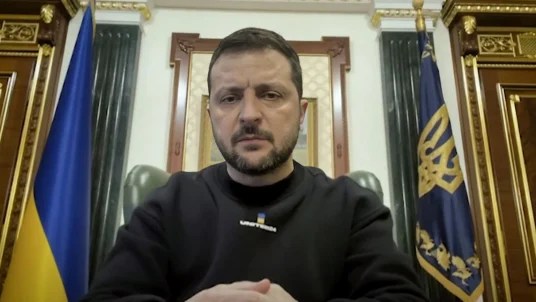
Ukraine has spearheaded a collective call to action, joining forces with seven other Central and Eastern European nations to combat “disinformation” on social media platforms.
In an open letter, the prime ministers of these nations urge prominent tech companies, such as Meta, to implement effective measures that curb the spread of misleading content and foreign interference, which threatens peace, stability, and democracy.
The letter, signed by the leaders of Ukraine, Moldova, Poland, Czech Republic, Slovakia, Estonia, Latvia, and Lithuania, alleges a danger of disinformation campaigns aimed at destabilizing their countries and undermining the European Union‘s support for Ukraine amidst Russia’s aggression.
Tech giants are implored to remain vigilant and avoid inadvertently advancing hostile goals.
Specific steps recommended in the letter include refusing payments from sanctioned individuals, increasing algorithmic transparency, and adjusting algorithms to prioritize accuracy over user engagement.
Furthermore, the leaders insist that platforms dedicate adequate resources to content “moderation” and address the growing challenges posed by deep fakes and AI-generated disinformation.
In response, Meta has stated that it has expanded its fact-checking capabilities in Eastern Europe and implemented measures to combat alleged misinformation related to the conflict in Ukraine.
The company has also restricted access to Russian state-controlled media and added labels to related posts, informing users of the source before they click or share.
April 1, 2023
Posted by aletho |
Civil Liberties, Full Spectrum Dominance, Russophobia | European Union, Human rights, Ukraine |
Leave a comment
MOSCOW – Russia is calling for an independent investigation into the last year events in the city of Bucha, near Kiev, and calls on the United Nations to publish a list of the victims, Russian Foreign Ministry spokeswoman Maria Zakharova said on Thursday.
“We are saying it once again. In order to find out the truth, it is necessary to carry out a fair, impartial, independent investigation, which should be focused on giving answers to four questions: identification of bodies, time and cause of death, signs of possible transportation of the bodies,” Zakharova said during her press conference.
Russia has requested the full list of Bucha’s residents, who died at the time of the events, from the UN, but the organization has not provided such a list yet, Zakharova added.
The UN referred to the lists of victims available on the Internet and in social media, but Moscow would like to deal with official information, the official said, adding that the events in Bucha were a provocation aimed at scuttling the negotiations between Russia and Ukraine, as well as imposing new anti-Russia sanctions.
In April, the Russian Ministry of Defense said that no residents of Bucha suffered from any violent actions while the city was under Russian control.
March 31, 2023
Posted by aletho |
False Flag Terrorism | Russia, Ukraine, United Nations |
Leave a comment