Any NATO Vehicle Coming to Ukraine With Weapons Will Be Considered Legitimate Target
Samizdat – 04.05.2022
Russia has repeatedly denounced the continuous flow of weapons into Ukraine from the West, saying that it adds fuel to the fire and derails the negotiation process.
Russian Defence Minister Sergei Shoigu said that any NATO vehicle coming to Ukraine with weapons or equipment for Ukrainian forces will be considered a legitimate target for destruction.
“The United States and its NATO allies continue to pump weapons into Ukraine. I can confirm that any transport from the North Atlantic alliance that arrives in the country with weapons or materiel for the Ukrainian armed forces will be considered by us as a legitimate target for destruction,” Shoigu said on Wednesday.
According to him, during the course of the special operation, the Russian servicemen have “shown courage and bravery, honourably fulfilling their military duty, and ensuring the safety of the civil population of Donbass.”
Earlier, Moscow warned that the West’s contribution of weapons to Ukraine threatens to undermine peace talks, not to mention the probability that they could fall into the wrong hands.
Since Russia launched its special military operation in Ukraine in February, the US, its NATO allies, and the European Union, have increased weapons supplies to Ukraine.
On 3 May, the UK government announced that it will provide Ukraine with a $375 million military aid package.
Recently, US President Joe Biden asked US Congress for $33 billion in emergency supplemental funding to support Ukraine, including $20 billion for military assistance. The request comes on top of about $4 billion in military aid the Biden administration has already earmarked for Ukraine, $3.4 billion of which came after Russia launched its military operation in late February.
Amid weapons and military equipment deliveries there are discussions about the need to supply Ukraine with heavy weapons, tanks, war planes, etc. Although some countries, such as the UK, call for those kinds of supplies, others oppose the idea.
Earlier, German Chancellor Olaf Scholz said that the German military can no longer supply arms to Ukraine as the country’s weapons stockpiles are practically exhausted.
In turn, Public support of German heavy weapons deliveries to Ukraine has shrunk to 46 percent from 55 percent two weeks ago and 60 percent in early April, with the number of critics rising by 10 percentage points, a poll out Tuesday showed.
On 28 April, Kremlin spokesman Dmitry Peskov said that the trend of delivering heavy weapons to Ukraine and other countries is threatening the security of the European continent.
The Long, Lucrative, and Bloody Road to World War III
By Connor Freeman | The Libertarian Institute | May 3, 2022
Well, this war in Ukraine will last “months and years.” At least, that is what the leaders of the D.C. foreign policy blob, the media, President Joe Biden’s men, Pentagon and NATO leadership have decided. Their plan is to pour oil on the flames and keep the fire raging. Also, Americans are going to have to cough up the dough for another massive aid package, with $20 billion worth of weapons to keep the blood flowing. In total, this next package will cost the taxpayer $33 billion. With Biden’s proposed $813 billion “defense” budget for 2023, the U.S. is spending more on the military and war now than ever before in the country’s history.
Now that we have our very own Ministry of Truth, it would appear any national debate over these polices, indeed if such a debate is ever allowed to take place, will likely have to be moderated by cockroaches and Keith Richards.
NATO is set to expand again, bringing in Finland and Sweden. This will extend the alliance’s border with Russia by greater than 800 miles and further stoke nuclear tensions, bringing the current brinksmanship to a whole new level. Moscow plans to respond including by increasing air and naval forces in the Baltic Sea and reinforcing its Kaliningrad exclave, which lies between NATO members Poland and Lithuania, with additional nuclear weapons and hypersonic missiles. Until 2004, it was unthinkable that NATO would ever expand to Russia’s borders until that actually happened. Like most of our issues with Russia, this is all Bill Clinton and George W. Bush’s fault.
Even as Russia’s Foreign Minister Sergei Lavrov and other leaders in Moscow repeatedly warn of nuclear conflict and World War III, even directly comparing the current situation to the Cuban Missile Crisis, senior Pentagon officials say they are not concerned.
Nor do our all-knowing rulers appear concerned with the fact that they have “almost zero” ability to keep track of the myriad sophisticated weapons systems they are sending to Ukraine. CNN quoted briefed sources saying intelligence shows American arms are falling into a “big black hole.” They say it’s worth it.
Nor do they seem to be concerned with the Russians’ warnings regarding how the West’s weapons flood in Ukraine threatens to expand the war into NATO territory and destabilize Europe.
UK Foreign Secretary Liz Truss demands the West must “double down” on arms shipments, insisting particularly on “heavy weapons, tanks, airplanes—digging deep into our inventories, ramping up production. We need to do all of this.”
Our top diplomat Antony Blinken says the plan is regime change in Moscow, much like his boss did in March with his Polish “gaffe.” Ironically, the $47 billion in weapons and other U.S. aid pledged to Ukraine these last two months will soon surpass the State Department’s entire budget. Eat your heart out, Netanyahu!
Secretary of Defense Lloyd Austin, former Raytheon board member, says the goal is to see Russia “weakened” to the point where it lacks even the capability to defend itself just outside its borders. As Pat Buchanan notes, this policy, whether its intended to or not, pressures the Kremlin to more seriously consider pulling its nuclear trigger.
“We want to see Russia weakened to the degree that it can’t do the kinds of things that it has done in invading Ukraine,” Austin said with a clear eye toward increasing Russian casualties and the long term destruction of Moscow’s conventional power.
Perhaps, Austin wants to cripple Russia so severely that his Pentagon can fight a war with China, the “most consequential strategic competitor and the pacing challenge for the Department,” without having to worry so much about Moscow—deemed a second tier “acute” threat, albeit one armed with roughly 6,000 nukes—getting involved.
Austin’s Raytheon pals are making a killing on this proxy war as well as the ancillary effects such as European NATO states, at long last, increasing their military spending.
As Ron Paul has written,
One group of special interests profiting massively on the war is the US military-industrial complex. Raytheon CEO Greg Hayes recently told a meeting of shareholders that, “Everything that’s being shipped into Ukraine today, of course, is coming out of stockpiles, either at DOD or from our NATO allies, and that’s all great news. Eventually we’ll have to replenish it and we will see a benefit to the business.”
He wasn’t lying. Raytheon, along with Lockheed Martin and countless other weapons manufacturers are enjoying a windfall they have not seen in years. The U.S. has committed more than three billion dollars in military aid to Ukraine. They call it aid, but it is actually corporate welfare: Washington sending billions to arms manufacturers for weapons sent overseas.
By many accounts these shipments of weapons like the Javelin anti-tank missile (jointly manufactured by Raytheon and Lockheed Martin) are getting blown up as soon as they arrive in Ukraine. This doesn’t bother Raytheon at all. The more weapons blown up by Russia in Ukraine, the more new orders come from the Pentagon.
Former Warsaw Pact countries now members of NATO are in on the scam as well. They’ve discovered how to dispose of their 30-year-old Soviet-made weapons and receive modern replacements from the U.S. and other western NATO countries.
There is scarcely a status quo to oppose. For weeks, escalations have continued apace. London has deployed SAS troops in Kiev to train Ukrainian troops on English anti-tank weapons. The U.S. is training Kiev’s troops in Germany and two other secret locations in Europe on heavy artillery, radar systems, and armored vehicles. Washington is expanding intelligence sharing with Kiev for its war with Russia in the Donbas, providing howitzers, vehicles to carry them, and an additional 144,000 artillery rounds. Poland is sending tanks to Ukraine, Slovenia has a plan to send large numbers of T-72 battle tanks as well. The Germans will be supplying anti-aircraft tanks to Kiev and the Pentagon says an unidentified European ally is providing Ukraine with warplanes.
London’s armed forces minister declared his government’s support for Kiev’s “completely legitimate” attacks inside Russia using British arms. This comes amid an uptick in reports of Ukrainian cross border drone and helicopter assaults including on Russian oil depots, residential areas, and villages. The U.S. and its European allies are implementing a long term policy that looks to exile Russia, looking toward a new world order where they no longer seek to “coexist” with Moscow.
London wants Europe to cut off all Russian energy “once and for all,” which would make war more likely, impoverish innocent people, and cause massive recessions.
The U.S., NATO, and Russian presence in the Mediterranean Sea has reached Cold War levels, as NATO builds new Eastern European battlegroups.
In March, NATO Secretary General Jens Stoltenberg warned that any “use of chemical weapons would totally change the nature of the conflict, it would be a blatant violation of international law and would have far-reaching consequences.” This weekend, legislation for a new Authorization for the Use of Military Force (AUMF) has been introduced by Congressman Adam Kinzinger (R-IL). Kinzinger’s announcement calls the would be AUMF a “clear red line,” which would authorize Biden to deploy troops to Ukraine to fight Russians if Moscow should “use chemical, biological, and/or nuclear weapons.”
With the almost complete bipartisan Congressional support for the renewal of Lend-Lease and other anti-Russia, pro-war legislation, it is not outside the realm of possibility that this bill and its cynical redline trap becomes law.
For nearly two decades, Washington has funded “biological research” and other laboratories inside Ukraine. According to the head of the DoD’s Cooperative Threat Reduction Program, some of these labs may contain Soviet-era bioweapons.
As Dave DeCamp, news editor at Antiwar.com, has reported,
The Pentagon funds labs in Ukraine through its Defense Threat Reduction Agency (DTRA). According to a Pentagon fact sheet released last month, since 2005, the U.S. has “invested” $200 million in “supporting 46 Ukrainian laboratories, health facilities, and diagnostic sites.”
Moscow has accused Ukraine of conducting an emergency clean-up of a secret Pentagon-funded biological weapons program when Russia invaded. The World Health Organization said it advised Ukraine to destroy “high-threat pathogens” around the time of the invasion.
For their part, the U.S. maintains that the program in Ukraine and other former Soviet states is meant to reduce the threat of biological weapons left over from the Soviet Union. While downplaying the threat of the labs, Pentagon officials have also warned that they could still contain Soviet-era bioweapons.
Robert Pope, the director of the DTRA’s Cooperative Threat Reduction Program, told the Bulletin of the Atomic Scientists in February that the labs might contain Soviet bioweapons and warned that the fighting in Ukraine could lead to the release of a dangerous pathogen.
Much like previous Syrian redlines, this is practically the hawks’ invitation to bad actors seeking U.S. intervention to go ahead and launch an attack that could be plausibly blamed on our Hitler du jour to manufacture their desired casus belli.
It seems there may be ample sites somebody could hit that would cross Kinzinger’s cleverly drawn line in the sand. And much like the CIA, Turkey, and Saudi Arabia’s al Qaeda allies in Syria, the Azov Battalion and other Nazi groups, who have taken a humiliating beating thus far in the war, are prime candidates to launch a false flag.
If the American people do not wake up and demand an end to our government’s intervention in Ukraine, the U.S. may be directly entering this war soon.
If Russia was doing what the U.S. and its allies are doing in Ukraine, in Mexico or Canada, in addition to the unprecedented economic war being waged, these hawks in D.C. would have pulled the aforementioned nuclear trigger months ago.
Names of Hungarian PM, Croatian President Appear on Notorious Ukrainian Kill List Site
Samizdat | May 2, 2022
Curated by the Security Service of Ukraine and officials from the Ministry of Internal Affairs, the Myrotvorets website publishes the personal info of so-called “enemies of Ukraine”. Several individuals whose names have been posted on the site have been murdered, and rights groups and governments have repeatedly called for it to be taken down.
Hungarian Prime Minister Viktor Orban’s name has appeared on the notorious Ukrainian website Myrotvorets.center (lit. “Peacekeeper”).
The 58-year-old politician is listed as an “accomplice of Russian war criminals”, an “accomplice in the crimes of Russian authorities against Ukraine and its citizens”, for his “participation in acts of humanitarian aggression against Ukraine”, as an “anti-Ukrainian propagandist”, and for his general all-round “cooperation with the Russian aggressor”.
Orban’s specific “crimes” include his refusal to allow weapons intended for Ukraine to be sent through his country’s territory, and his refusal to reject Russian gas supplies even in the long-term. The prime minister’s willingness to pay for Russian gas in rubles is also mentioned.
The site further recalled Orban’s 4 April statement about the forces Hungary has faced to remain independent, ranging from the local opposition to “the bureaucrats in Brussels, money and institutes of the Soros empire, international media as well as the Ukrainian president”.
Finally, the website points to Orban’s demands that Kiev’s post-2014 authorities respect western Ukraine’s sizeable ethnic Hungarian community, and provide residents of Zakarpattia with greater autonomy.
Along with Orban, Croatian President Zoran Milanovic’s name has also been added to the site. Milanovic is listed as an “accomplice of Russian invaders” for his alleged “humanitarian aggression against Ukraine” for “the spreading of Kremlin propaganda” and so-called “support and justification of Russian aggression against Ukraine”.
The site recalls Milanovic’s 2 February 2022 remarks that Russia must be “a factor” in the “equation” of European-wide stability, and his opposition to Ukraine joining NATO.
Former Russian President and Prime Minister Dmitry Medvedev, who now serves as deputy chairman of the Russian Security Council, suggested that Orban and Milanovic’s appearance on the notorious website was a sign that Ukraine’s neo-Nazi elements were dissatisfied with the amount of weapons, mercenaries, and money they have received from the West.
“At this rate, soon Ukrainian Nazis will personally carry out reprises against objectionable leaders and ‘separate the sheep from the goats’ directly in European capitals”, Medvedev wrote on his Telegram channel.
Hungary has refused to toe the line on the European Union’s anti-Russian policy in the wake of the escalation of the Ukraine crisis in February. On Sunday, Minister of the Prime Minister’s Office Gergely Gulyas said that Budapest has “made it clear” that it will “never support” extending EU sanctions against Russian energy imports, implying that it may veto Brussels’ plans to ban Russian oil.
Journalists, human rights groups, the G7, and the Russian Foreign Ministry have repeatedly called for Myrotvorets to be shut down, citing its use against the so-called “enemies of Ukraine” to murder, threaten, and intimidate individuals whose names have been listed there. Set up in 2014, the site has since amassed tens of thousands of names, ranging from Ukrainian opposition politicians and public figures to foreign officials, journalists, and businessmen.
In 2015, former Ukrainian lawmaker Oleg Kalashnikov and journalist and writer Oles Buzina were murdered after their personal data (including addresses) were posted on the site. Before he was killed, Kalashnikov repeatedly reported on threats being made against his life after his info was placed on the site. After he and Buzina were killed, Myrotvorets’ official Twitter handle mockingly joked about “the successful completion of a combat mission by agent 404” – a reference to the well-known HTTP 404 “not found” error.
Several other journalists and public figures listed on the site have subsequently been killed. Among the deceased is Andrea Rocchelli, an Italian independent journalist working in Donbass.
In 2015, the website began to publish the personal data of Russian military personnel involved in the anti-terrorist operation in Syria. Then-adviser to the Ministry of Internal Affairs Anton Gerashchenko publicly encouraged Daesh (ISIS) to “deal with” Russian troops under Sharia law. His comments prompted Russia’s Investigative Committee to open a criminal case against him over public calls for terrorist activities.
In 2016, Myrotvorets got its hands on leaked detailed personal data of some 5,000 Ukrainian, Russian, and Western journalists who had worked in Donbass. Among the records leaked was detailed personal information including phone numbers and addresses, and many of the journalists have reported threats against their lives.
Orban isn’t the first Hungarian to be added to the Myrotvorets list. In 2018, the website listed over 300 ethnic Hungarian residents from Zakarpattia who had “illegally” obtained Hungarian citizenship (Ukraine doesn’t allow dual citizenship, but much of the country’s political and business elite holds two or more citizenships anyway). In October 2018, Hungarian Minister of Foreign Affairs Peter Szijjarto blasted the site and the Ukrainian government, saying authorities in Kiev were using the website as part of a “hate campaign” in a desperate attempt to increase then-President Petro Poroshenko’s sagging approval ratings.
India, Germany cogitate on Ukraine
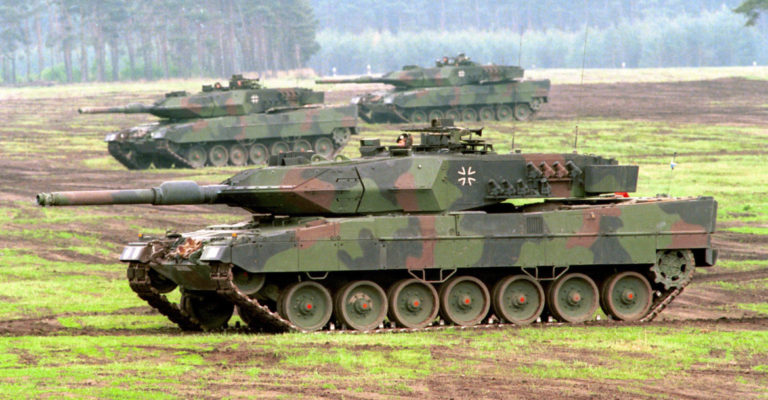
Germany to send fifty Leopard 1 tanks to Ukraine to fight Russia
BY M. K. BHADRAKUMAR | INDIAN PUNCHLINE | MAY 3, 2022
Prime Minister Narendra Modi’s short visit to Germany pegged on the Indian-German Intergovernmental Commission meeting in Berlin on Monday inevitably came to focus on the Ukraine crisis. The western media would have loved to grill Modi on India’s reluctance to criticise Russia’s special military operation in Ukraine. But German hosts thoughtfully skipped the customary Q&A after the joint appearance of Modi and Chancellor Olaf Scholz before the press.
India’s prudence is self-evident as much as Germany’s zealousness to flaunt its condemnation of Russia. Modi and Scholz are sailing in different boats. Modi draws flak for being a “strongman” who views the Ukraine crisis through the prism of India’s interests, while also taking a principled stance, whereas, Scholz carries the burden of vacuous moralising.
Scholz must prove constantly that he is indeed a loyal ally of President Biden and is by no means a “pacifist.” (To get a hang of Scholz’s predicament, read Spiegel’s maddening interview with him, here — alternatively annoying, infuriating, taunting, affronting and goading.)
Modi can afford to be nonchalant because he is clearheaded about where Indian interests lie — its strategic autonomy in a highly unpredictable international environment. But Scholz is nervous as a mouse because German interests are caught up betwixt the crosscurrents of European politics and the NATO’s epochal struggle to bring Russia down on its knees.
Modi is well ensconced in power while Scholz heads a precarious coalition of disparate partners. Modi could witness Scholz and his foreign minister Annalena Baerbock speaking in two different voices on Russia. Baerbock insisted that Russian forces should vacate Ukrainian soil before Western sanctions can be lifted, but Scholz toned down saying that the lifting of Western sanctions is linked to Russia and Ukraine reaching an agreement.
Germany is a divided house when it comes to Russia ties. On the contrary, aside the clutch of noisy American lobbyists operating in India, the Indian public at large recognises the centrality of India’s friendly relations with Russia.
India gets the space to manoeuvre, as Russia is excessively indulgent towards Delhi’ stance, which is, quintessentially, neither to support nor to oppose Moscow’s intervention — something like Professor Godbole in the EM Forster novel A Passage to India, a Brahman Hindu who is very spiritual and reluctant to become involved in human affairs.
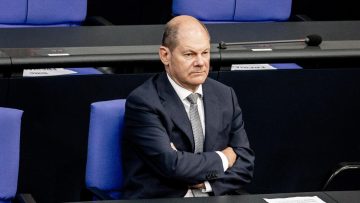 Scholz who is new to international diplomacy could have learnt a thing or two from UK prime minister Boris Johnson’s recent visit to India. Johnson put Ukraine on the back burner and focused on the agenda of “Global Britain” to create his country’s post-Brexit pathway in India’s vast market.
That said, Scholz has done remarkably well in getting the US off his back over sanctions against gas supplies from Russia. Germany’s dependence on Russian supplies of oil and gas (and coal) has been heavy and the Americans accept it as a reality. The point is, Germany and Russia have had a dense relationship and the Ukraine crisis comes in handy for Washington to try to redefine the parameters within which German-Russian relations will work in future.
In India’s case, if Washington dared to bully the Modi government, it was largely because in the post-Cold War era, under successive Congress governments, India’s relations with Russia got atrophied to such an extent that Americans convinced themselves that it was a conscious Indian policy direction dictated by the compulsions of the “Washington Consensus,” which has been a beacon light for India’s past leaderships. Unsurprisingly, the Biden Administration misjudged that Modi too must be fair game.
But the core difference between the German and Indian predicament is that while German industry is a stakeholder in the relationship with Russia, India’s corporate houses, for reasons best known to them, sidestep the Russian turf in deference to the US wish. Thus, Washington has powerful Indian lobbyists and, therefore, the Modi government’s audacity to pursue an independent policy toward Russia becomes commendable.
The chances are that Germany may pick up the threads of its relationship with Russia once the Ukraine conflict ends. In the chronicle of the “German Question” in European history, Russia had the role of a balancer, mostly. But there is a deep economic and political crisis waiting to erupt in Germany and how it pans out is crucial.
The rising inflation and the dramatic fall in living standards is souring the German mood, as the debris from Ukraine falls on it. So far, an estimated 5 million Ukrainian refugees have entered Europe. This figure is expected to double in a near future.
Meanwhile, the looming food crisis will also put tens of millions of people in Africa or the Middle East on the verge of starvation fuelling in turn large scale migration to Europe. Such migration will inevitably bring the dregs of Ukrainian society into Germany, which means that organised crime, human trafficking, illegal drug distribution and transnational crime, etc. will increase. Make no mistake that the Ukrainian mafia will introduce a new vicious culture of crime as it begins to dominate the European streets.
All in all, a fine balance has been struck during Modi’s visit. The joint statement conceded the host country’s prerogative to reiterate its “strong condemnation of the unlawful and unprovoked aggression against Ukraine by Russian Forces.” But it formed a “stand alone” statement of a solitary sentence, which helps signal India’s distancing from it. Germany joined India’s call for an “immediate cessation of hostilities,” although Berlin just announced a major transfer of offensive weaponry to Ukraine as part of the US-led “coalition of the willing” and implicitly acquiesces with the Biden administration’s aggressive agenda of “weakening Russia” militarily.
Significantly, the sombre mood in Germany got reflected in the joint statement. The Indo-German economic relations are far below potential and will remain so. CNN carried a grim report in the weekend that not only is German economy heading into a recession but it may suffer “structural damage” that will make recovery a drawn-out process.
Clearly, behind the German rhetoric today, the fact remains that Berlin’s intelligence apparatus played a dubious role in Ukraine by navigating the ascendancy of the neo-Nazi forces to usurp power in Kiev in the coup in February 2014. This controversial past is now further complicated by Berlin fuelling the conflict by despatching tanks into Ukraine, which was after all the invasion route of Nazi Germany.
When it comes to Ukraine, Germany doesn’t make good company for India. We have a transparent record and with great honesty and integrity, Modi could forewarn , with Scholz listening, that “there will be no winning party in this war, everyone will suffer.”
Russia doubles down on Hitler remarks, says Israel supports neo-Nazis
Press TV – May 3, 2022
Russia says Israel is supporting “the neo-Nazi regime in Kiev”, raising the stakes in its tensions with Tel Aviv over the raging war in Ukraine.
The spat began after Russian Foreign Minister Sergei Lavrov, speaking to Italian outlet Mediaset’s Rete 4 channel in an interview released Sunday, said that Adolf Hitler had Jewish origins.
Israeli foreign minister Yair Lapid on Monday accused Lavrov of making an “unforgivable and outrageous statement as well as a terrible historical error” and summoned Moscow’s ambassador for “clarifications”.
“We have paid attention to Foreign Minister Yair Lapid’s anti-historical remarks, which largely explain the current government’s decision to support the neo-Nazi regime in Kiev,” said the Russian foreign ministry in a statement on Tuesday.
“History unfortunately knows tragic examples of cooperation between Jews and Nazis,” it said.
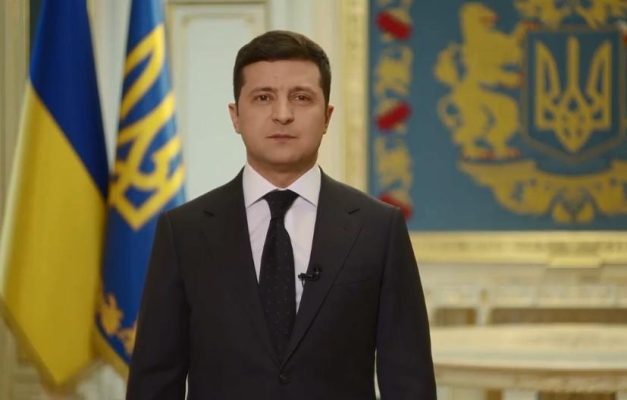
In his interview, Lavrov said Ukrainian President Volodymyr Zelensky “puts forward an argument of what kind of Nazism can they have if he himself is Jewish”.
Lavrov, according to a transcript posted on the Russian foreign ministry website, then added: “I could be wrong, but Hitler also had Jewish blood”.
Israeli prime minister Naftali Bennett characterized Lavrov’s remarks as “lies” that he said effectively “accuse the Jews themselves of the most awful crimes in history”, perpetrated against themselves.
On Tuesday, the Russian foreign ministry said “the Jewish origins of the president (Zelensky) is not a guarantee of protection against rampant neo-Nazism in the country”.
“Ukraine, may it be said in passing, is not the only one in this case,” the ministry said, citing Latvian President Egils Levits who “has also Jewish roots and he also gives cover… to the rehabilitation of the Waffen SS in his country”.
Israel has expressed solidarity with Ukraine but unlike its Western allies, it has refrained from enforcing formal sanctions on Russia over its military operation in the neighboring country.
Last month, Lapid accused Russia of committing war crimes in Ukraine. Moscow hit back, accusing Israel of using Ukraine to “distract” the world from its ongoing aggression against Palestinians.
Foreign Minister Sergey Lavrov interview with Xinhua News Agency
Russian Ministry of Foreign Affairs | April 30, 2022
Question: What do you think is at the root of the Ukrainian crisis? What can the international community do to solve this problem?
Sergey Lavrov: When we talk about the Ukrainian crisis, first of all we need to look at the destructive policy of the Western states conducted over many years and led by the United States, which set a course to knock together a unipolar world order after the end of the Cold War. NATO’s reckless expansion to the East was a key component of those actions, despite the political obligations to the Soviet leadership on the non-expansion of the Alliance. As you know, those promises were just empty words. All these years, NATO infrastructure has been moving closer and closer to the Russian borders.
The West was never concerned about the fact that their actions grossly violated their international obligations not to strengthen their own security at the expense of the security of others. In particular, Washington and Brussels arrogantly rejected the initiatives put forward by Russia in December 2021 to ensure our country’s security guarantees in the west: to stop the expansion of NATO, not to deploy armaments that pose a threat to Russia in Ukraine and to return the Alliance’s military infrastructure to the 1997 configuration, when the NATO-Russia Founding Act was signed.
It is well-known that the United States and NATO member states have always viewed Ukraine as a tool to contain Russia. Over the years, they have actively fuelled anti-Russia sentiments there, forcing Kiev to make an artificial and false choice: to be either with the West or with Moscow.
It was the collective West that first provoked and then supported the anti-constitutional coup d’etat in Kiev in February 2014. Nationalists came to power in Ukraine and immediately unleashed a bloody massacre in Donbass, and set the course on the destruction of everything Russian in the rest of the country. Let me remind you that it was precisely because of this threat that the people of Crimea voted in a referendum for the reunification with Russia in 2014.
Over these past years, the United States and its allies have done nothing to stop the intra-Ukrainian conflict. Instead of encouraging Kiev to settle it politically based on the Minsk Complex of Measures, they sent weapons, trained and armed the Ukrainian army and nationalist battalions, and generally carried out the military-political development of Ukraine’s territory. They encouraged the aggressive anti-Russia course pursued by the Kiev authorities. In fact, they pushed the Ukrainian nationalists to undermine the negotiating process and resolve the Donbass issue by force.
We were deeply concerned about the undeclared biological programmes implemented in Ukraine with Pentagon’s support in close proximity to the Russian borders. And, of course, we could not disregard the Kiev leadership’s undisguised intentions to acquire a military nuclear potential, which would create an unacceptable threat to Russia’s national security.
In these conditions, we had no other choice but to recognise the Donetsk and Lugansk people’s republics and launch the special military operation. Its aim is to protect people from genocide by the neo-Nazis, as well as to demilitarise and denazify Ukraine. I would like to stress that Russia is acting to fulfil its obligations under bilateral agreements on cooperation and mutual assistance with the DPR and LPR, at the official request of Donetsk and Lugansk under Article 51 of the UN Charter on the right to self-defence.
The special military operation launched on February 24 is progressing strictly in accordance with the plan. All its goals will be achieved in spite of our opponents’ counteractions. At the moment we are witnessing a classic case of double standards and hypocrisy of the Western establishment. By publicly supporting the Kiev regime, NATO member states are doing everything in their power to prevent the completion of the operation by reaching political agreements. Various weapons are flowing endlessly into Ukraine through Poland and other NATO countries. All of this is being done under the pretext of “fighting the invasion”, but in fact the United States and the European Union intend to fight Russia “to the last Ukrainian.” They do not care at all about the fate of Ukraine as an independent subject of international relations.
The West is ready to jeopardise the energy and food security of entire regions of the globe to satisfy its own geopolitical ambitions. What other explanation is there for the unrestrained flywheel of anti-Russian sanctions launched by the West with the start of the operation and which they aren’t thinking of stopping?
If the United States and NATO are truly interested in settling the Ukrainian crisis, then, first, they must come to their senses and stop supplying weapons and ammunition to Kiev. The Ukrainian people do not need Stingers and Javelins; what they need is a solution to urgent humanitarian issues. Russia has been doing this since 2014. During this time, tens of thousands of tonnes of humanitarian cargo have been delivered to Donbass, and about 15,000 tonnes of humanitarian aid have already arrived in the part of Ukraine liberated from the Kiev regime, the DPR and the LPR, since the launch of the special military operation.
Second, it is essential that the Kiev regime stops cynical provocations, including in the information space. Ukrainian armed formations are barbarically shelling cities using civilians as living shields. We saw examples of this in Donetsk and Kramatorsk. Captured Russian servicemen are being abused with animal cruelty, and these atrocities are being posted online. At the same time, they use their Western patrons and global media controlled by the West to accuse the Russian army of war crimes. As they say, laying the blame at somebody else’s door.
It is high time for the West to stop unconditionally whitewashing and covering up for Kiev. Otherwise, Washington, Brussels and other Western capitals should consider their responsibility for complicity in the bloody crimes perpetrated by the Ukrainian nationalists.
Question: What measures has Russia taken to protect the lives and property of civilians? What efforts has it made to establish humanitarian corridors?
Sergey Lavrov: As I mentioned earlier, the special military operation is proceeding according to plan. Under this plan, the Russian military personnel are doing everything in their power to avoid victims among civilians. Blows are carried out with high-precision weapons, first of all at military infrastructure facilities and places where armoured vehicles are concentrated. Unlike the Ukrainian army and nationalist armed groups that use people as living shields, the Russian army provides the locals with all kinds of assistance and support.
Humanitarian corridors open daily from Kharkov and Mariupol to evacuate people from dangerous districts, but the Kiev regime demands that the “national battalions” in control of those areas do not release the civilians. Nevertheless, many are able to leave with the assistance of Russian, DPR and LPR servicemen. During the special military operation, the hotline of the Interdepartmental Coordination Headquarters of the Russian Federation for Humanitarian Response in Ukraine has received requests for assistance in evacuating 2.8 million people to Russia, including 16,000 foreign citizens and employees of UN and OSCE international missions. In total, 1.02 million people have been evacuated from Ukraine, the DPR and LPR, of which over 120,000 are citizens of third countries, including over 300 Chinese nationals. There are over 9,500 temporary accommodation facilities operating in Russian regions. They have space for rest and hot meals, and everything that may be necessary. Newly arrived refugees are provided with qualified medical and psychological assistance.
Russia is taking measures to ensure civilian navigation in the Black and Azov seas. A humanitarian corridor opens daily, a safe lane for ships. However, Ukraine continues to block foreign ships, creating a threat of shelling in its internal waters and territorial sea. Moreover, Ukrainian naval units have mined the shore, the ports and territorial waters. These explosive devices disconnect from their anchor lines and drift into the open sea, so they pose a serious danger to both the fleets and the port infrastructure of the Black Sea countries.
Question: Since the special military operation was launched in Ukraine, Western counties have adopted a large number of unprecedented sanctions against Moscow. How do you think these sanctions will affect Russia? What are the main countermeasures taken by Russia? Some say that a new Cold War has begun. How would you comment on that?
Sergey Lavrov: It is true that the special military operation was used by the collective West as a pretext to unleash numerous restrictions against Russia, as well as its legal entities and individuals. The United States, Great Britain, Canada and EU countries do not conceal that their goal is to strangle our economy by undermining its competitiveness and blocking Russia’s progressive development. At the same time, the Western ruling circles are not embarrassed by the fact that anti-Russian sanctions are already beginning to harm ordinary people in their own countries. I mean the declining economic trends in the United States and many European countries, including growing inflation and unemployment.
It is clear that there can be no excuse for this anti-Russian line and it has no future. As President Vladimir Putin said, Russia has withstood this unprecedented pressure. Now the situation is stabilising, though, of course, not all risks are behind us.
In any case, they will not succeed in weakening us. I am confident that we will restructure the economy and protect ourselves from our opponents’ possible illegitimate and hostile actions in the future. We will continue to give a fitting and adequate response to the imposed restrictions, guided by the goal of maintaining the stability of the Russian economy and its financial system, as well as the interests of domestic businesses and the entire nation. We will focus our efforts on de-dollarisation, de-offshorisation, import substitution, and promotion of technological independence. We will continue to adapt to external challenges and step up development programmes for promising and competitive industries.
During the period of turbulence, our retaliatory special economic measures needed to ensure the normal functioning of the Russian economy will be continued and expanded. As a responsible player on the international market, Russia intends to continue scrupulously fulfilling its obligations under international contracts on export deliveries of agricultural products, fertilisers, energy carriers and other critical products. We are deeply concerned about a possible food crisis provoked by the anti-Russian sanctions, and we are well aware how important the deliveries of essential goods, such as food, are for the socioeconomic development of Asian, African, Latin American, and Middle Eastern countries.
I will be brief as regards the second part of your question. Today we are not talking about a new “cold war,” but, as I said earlier, about the persistent desire to impose a US-centric model of the world order coming from Washington and its satellites, who imagine themselves to be “arbiters of humankind’s fate.” It has reached the point where the Western minority is trying to replace the UN-centric architecture and international law formed after World War II with their own “rule-based order.” These rules are written by Washington and its allies and then imposed on the international community as binding.
We must realise that the United States has been carrying out this destructive policy for several decades now. It is enough to recall NATO’s aggression against Yugoslavia, attacks on Iraq and Libya, attempts to destroy Syria, as well as the colour revolutions that Western capitals staged in a number of countries, including Ukraine. All of this came at the cost of hundreds of thousands of lives and resulted in chaos in various regions of the planet.
The West tries to crudely suppress those who carry out an independent course in their domestic and foreign policy. Not just Russia. We can see how bloc thinking is being imposed in the Asian-Pacific Region. We can recall the Indo-Pacific strategy promoted by the United States, which has a pronounced anti-China tendency. The US seeks to dictate the standards according to which Latin America should live, in the spirit of the outdated Monroe Doctrine. This explains many years of the illegal trade embargo on Cuba, sanctions against Venezuela, as well as attempts to undermine stability in Nicaragua and other countries. The pressure on Belarus continues in the same context. This list can go on.
It is clear that the collective West’s efforts to oppose the natural course of history and solve its problems at the expense of others are doomed. Today the world has several decision-making centres; it is multipolar. We can see how quickly Asian, African, and Latin American countries are developing. Everyone is getting a real freedom of choice, including where it comes to choosing their development models and participation in integration projects. Our special military operation in Ukraine also contributes to the process of freeing the world from the West’s neocolonial oppression heavily mixed with racism and a complex of exceptionalism.
The faster the West accepts the new geopolitical situation, the better it will be for the West itself and for the entire international community.
As President Xi Jinping said at the Boao Forum for Asia, “We need to uphold the principle of indivisible security, build a balanced, effective and sustainable security architecture, and oppose the pursuit of one’s own security at the cost of others’ security.”
Question: Russian-Ukrainian talks have attracted close attention of the international community. What are the main obstacles to the talks today? How do you regard the prospects of a peace treaty between the two parties? What kind of bilateral relations does Russia intend to have with Ukraine in the future?
Sergey Lavrov: At present the Russian and Ukrainian delegations are holding discussions on the possible draft almost daily, via videoconference. This document should contain such elements of the post-conflict situation as permanent neutrality, the non-nuclear, non-bloc and demilitarised status of Ukraine, as well as guarantees of its security. The agenda of the talks also includes denazification, recognition of the new geopolitical reality, the lifting of sanctions and the status of the Russian language, among other things. Settling the situation in Ukraine will make a significant contribution to the de-escalation of the military and political tensions in Europe and the world in general. The establishment of an institution of guarantor states is envisaged as a possible option. First of all, they will be the permanent members of the UN Security Council, including Russia and China. We share information on the progress in the talks with Chinese diplomats. We are grateful to Beijing and other BRICS partners for their balanced position on the Ukrainian issue.
We are in favour of continuing the talks, although the process is difficult.
You are right to ask about the obstacles. For example, they include the militant rhetoric and incendiary actions of Kiev’s Western patrons. They are actually encouraging Kiev to “fight to the last Ukrainian,” pumping the country with weapons and sending mercenaries there. Let me note that the Ukrainian security services staged a crude bloody provocation in Bucha with the help of the West, to complicate the negotiation process among other things.
I am confident that agreements can only be reached when Kiev starts to be guided by the interests of the Ukrainian people, and not the advisors from far away.
Speaking about Russian-Ukrainian relations, Russia is interested in a peaceful, free, neutral, prosperous and friendly Ukraine. Despite the current administration’s anti-Russian course, we remember the many centuries of all-embracing cultural, spiritual, economic and family ties between Russians and Ukrainians. We will definitely restore these ties.
Why Won’t They Say Who Funded These Ukraine Ads?

By Michael Tracey | May 2, 2022
On April 17, I was in London Bridge train station in central London, and couldn’t help but notice that the entire station was blanketed with these digital “Be Brave Like Ukraine” ads. Stylized in a nifty semi-Cyrillic font, the ads feature the classic blue and yellow color scheme that has now become so ubiquitous across “The West” — perhaps most prominently in London, where a local acquaintance told me she’s seen more Ukraine flags on display over the past two months than she ever saw of the UK’s own national flag.
I had a few natural questions upon seeing these ads. First, who crafted them? That answer came quickly: Just go to the “brave.ua” website and you’ll discover the ads were crafted by a consortium within the Ukraine government, including the office of Zelensky.
The answer to other natural questions have not come so quickly, though. Those questions include: Who paid for these ads? How much did they cost? Who organized their placement in some of the most expensive advertising real estate in the world? (They’ve also been displayed in Times Square, among other high-profile locations.)
Strangely, this information has proven difficult to acquire.
First I tried querying the TFL, the government body in charge of transport in London. They had no clue about the ads. Then I tried Network Rail, which runs most of the railways in England. They had no clue either. Finally I tried the massive global advertising agency which apparently owns the digital screens in question, JCDecaux. And… it initially seemed like they might have the answer. I know this because the “Corporate Communications Director” for JCDecaux inadvertently sent me an email where she deliberates with her colleague about how to answer my questions:
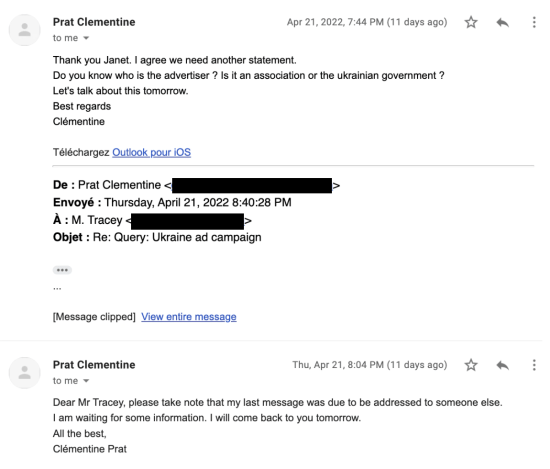
Kinda funny that the “Corporate Communications Director” still doesn’t have the hang of communications skills like sending your sensitive internal emails to the right recipient. Either way, this person did not in fact “come back to me tomorrow.” Days passed, and I heard nothing. Then, finally, here was the answer:

Curious, don’t you think? Why would a multinational advertising conglomerate based in France, with branches in the UK, US, and elsewhere, be so skittish about providing basic details about this Ukraine government advertising campaign? Shouldn’t they be proud of it, and therefore happy to provide the details? I thought the message of the ads was to “Be Brave Like Ukraine.” Apparently that “Bravery” doesn’t extend to allowing for transparency in the financial arrangements of these PR maneuvers, which have resulted in “Western” capitals being saturated with imagery that to the naked eye may seem benign — but, functionally, amounts to obvious pro-war propaganda.
Because bear in mind that these government-crafted ads have flooded London, NYC, Washington DC, etc. at the same time as Ukraine officials are furiously lobbying the UK and US governments to ramp up their military involvement in the war. Those lobbying efforts have been incredibly successful, with Respectable Mainstream outfits like The New Yorker finally now admitting that the scale of the US commitment constitutes “a full proxy war with Russia.” (Not so long ago, I was attacked as a peddler of “Putin’s talking points” for using the term “proxy war” on TV.)
It went largely unremarked upon when the head of the Pentagon, flanked by the head of the State Department, transited into Kiev for a secret mission on April 25 — and then hours later, a series of giant explosions ripped through a Russian military logistics hub approximately 90 miles inside Russia. This after US officials began leaking that they would no longer even pretend to recognize any distinction between “defensive” and “offensive” combat operations conducted by the Ukraine military — effectively acknowledging their willingness to provide both weaponry and real-time intelligence to launch attacks on Russia itself.
In the UK, the Armed Services Secretary, James Heappey, followed this up by declaring that it would be “entirely legitimate” for arms delivered by “Western countries” to be used for offensive strikes within Russian territory. Foreign Secretary Liz Truss then went further than even any US official when she declared that total “victory” in Ukraine must also include driving Russia out of Crimea, raising the stakes higher still.
With each passing week, both these countries adopt a more and more aggressive, bombastic war footing.
Meanwhile, the nice-seeming “Be Brave Like Ukraine” ads are covering major transportation centers. It doesn’t take much elaborate dot-connecting to apprehend that the ads are one facet of the larger PR campaign to draw the US, UK, and other governments further and further into the war. This campaign has been demonstrably effective. And the ad agency which facilitated the ads is choosing to conceal from the public basic details about their provenance — such as who even paid for them. Really makes you think.
Enormous U.S. Military Spending, EU Dragged into Abyss of War against Russia.
By Manlio Dinucci | Global Research | May 1, 2022
President Biden has asked Congress for another 33 billion dollars to arm and train the Ukrainian forces, in addition to the 20 billion dollars already allocated and provided to Kiev: a total of over 50 billion dollars from 2014 for the war against Russia. At the same time, U.S. Secretary of Defense Lloyd Austin met in Germany with representatives of more than 40 countries, including Italy, to plan additional arms shipments.
This results in enormous military spending of public money diverted from social spending. For example, the M777 howitzer supplied to Ukrainian forces can fire 7 Excalibur bullets per minute at 40 km. Each bullet costs $112,000. Therefore in one minute the howitzer shoots bullets costing the equivalent of 25 gross annual salaries (according to the Italian average).
The US and NATO are thus conducting a proxy war against Russia in Europe, which began with the 2014 coup d’état and the attack on the Russian populations of Ukraine. Dramatic evidence of this is the massacre in Odessa on May 2, 2014, carried out by the neo-Nazi forces – Pravi Sektor, Azov Battalion and others – that have since assumed power in Kiev.
The regime established in Ukraine, represented publicly by President Zelensky, has imposed a single party and a single television channel, shutting down 11 political parties and all other television channels; it has drawn up a proscription list of thousands of independent journalists and implemented a systematic campaign of torture and assassinations to eliminate all opposition.
Europe, through the European Union itself, is thus dragged into the abyss of the war against Russia, which the US and NATO want to make permanent. The price paid by European citizens is enormous: the boycott of Russian gas imports is causing a disastrous economic crisis. Hence the vital need to bring Italy and Europe out of the war.
This article was originally published in Italian on byoblu.
Manlio Dinucci, award winning author, geopolitical analyst and geographer, Pisa, Italy. He is a Research Associate of the Centre for Research on Globalization (CRG).
Poland hosts major NATO wargames
Samizdat | May 1, 2022
Poland is participating in two large-scale multinational drills and is the host nation for one of them, the country’s Defense Ministry revealed on Sunday amid Russia’s allegations that Warsaw is preparing to occupy the western part of Ukraine.
The Defender Europe 2022 (DE22) and Swift Response 2022 (SR22) will be conducted in nine countries including Poland between May 1-27, the Polish ministry said.
“There will be approximately 18,000 participants from over 20 countries training together in both exercises. The portion of the exercises on Polish soil will see some 7,000 troops and 3,000 pieces of equipment,” the statement reads.
Defender Europe is a regularly conducted American-led multinational exercise that aims poised to “build preparedness and interoperability between Allies and partners” of NATO and America. DE22 training will be conducted at several sites in Poland, with Polish soldiers to be joined by personnel from the US, France, Sweden, Germany, Denmark, and UK.
The Swift Response exercise will entail approximately 550 Polish soldiers being deployed to Lithuania and Latvia along with troops from the Czech Republic and a German-Dutch force.
“Joint combined exercises such as these enhance the security of the NATO Eastern Flank through a training in accordance with NATO standards and procedures,” the Defense Ministry emphasized.
It added that the drills also contribute to the allies’ preparedness “to meet new and emerging challenges at the contemporary battlefield in order to deter a potential aggressor.”
The military specifically pointed out that DE22 and SR 22 “are not aimed against any country and are not related to the current geopolitical situation in the region,” in a veiled reference to the ongoing Russian military offensive in Ukraine.
These assurances come as Russian Foreign Intelligence Service (SVR) Director Sergey Naryshkin accused Warsaw of preparing to occupy the western part of Ukraine, which Poland considers as “historically belonging” to it. The potential “reunification” of Poland with western Ukraine will come under the guise of deploying a “peacekeeping” mission into the country under the pretext of protecting Kiev from “Russian aggression,” the official alleged. Warsaw denied the claims.
For years, Russia has expressed concern over NATO’s expansion eastwards, which it considers a direct threat to its own security. This factor along with the possibility of Ukraine eventually joining the alliance were named by Moscow as the key reasons for launch of its military offensive.
Ukrainian strike on Donetsk market was a terrorist act

© Eva Bartlett
By Eva Bartlett | Samizdat | April 30, 2022
If the Donetsk marketplace that was hit by rocket artillery on Thursday had been in a city controlled by Kiev, the names and faces of the five civilians killed would be on all major news sites. But because it was another Ukrainian attack on civilians in the Donetsk People’s Republic (DPR), the deaths and 23 additional civilians injured will almost certainly go unreported, as has the been the norm during the regime’s eight years of the Donbass and Western media’s eight years of ignoring the attacks.
According to the DPR’s Healthcare Ministry, “The strike at the Tekstilschik neighbourhood in the Kirovsky district killed four people on the spot. One patient died in an ambulance during the transportation.”
With another journalist, I went in a taxi to the bombed markets. Two of the dead still lay at the site when we arrived, splayed on the ground. The other bodies had already been removed, but traces of their blood remained on the ground, doors nearby were riddled with shrapnel holes and debris from the strike was all around.
Presumably, rescue workers dealt with the injured first and didn’t prioritize retrieving all the dead as further Ukrainian strikes were possible. I saw this during my experience in Gaza, where Israeli’s waited for people to come to the scene of their attack, then bombed again.
According to Gennady Andreevich, a local employee of the district’s safety commission, at 11:40 am Grad missiles struck two different nearby markets: the vegetable and clothing market where the bodies lay, and a household chemicals and building materials market across and down the street. The latter was far more damaged, stalls completely burnt out, but no one was killed there.
Gennady walked with us to the vegetable market, speaking about previous Ukrainian attacks–which have been happening since 2014. More recent shellings hit near a gas station outside the market, at a residential building beyond the market, and in his own market administrative building, killing two colleagues.
He noted that at this time of day the market would have been filled with people, and that Ukraine knows very well what it is firing at.
“They know there is a market here and that from 10am to 1pm there are many people here,” Gennady said as we walked past shops.
This is a completely civilian area, no military installations.
Who else attacks markets and public spaces?
Striking crowded markets and streets at a busy time of the day is something terrorists in Syria did for years, to the silence of Western media. It is something Israel has also done for a long time, hitting residential and public areas of Gaza–one of the most densely inhabited places on earth.
During the 2009 war on Gaza, Israel bombed crowded mosques, hospitals, and buildings housing displaced Palestinians. One of the more notable incidents was when Tel Aviv targeted a UN-run school in Jabaliya sheltering nearly 1,500 people. At least 40 were killed. Another horrific attack on a crowded place was in the Zeitoun district, after Israeli soldiers forced at gunpoint nearly 100 of the extended Samouni family into one home and later bombed it, killing 48 members of the clan.
During the war, I accompanied medics in their ambulances, documenting Israel’s war crimes. A medic (Arafa abd al-Dayem) I had accompanied was killed one day when the Israeli army fired a prohibited flechette (dart) shell directly at him and the ambulance he stood beside. The following day, Israel struck the crowded mourning tents, also with flechettes, killing six and injuring 25 of the relatives and friends who had gathered in one small space to mourn Arafa’s death.
Damascus’ old city is a maze of twisting lanes, overlapping houses, churches, mosques, schools, crowded outdoor eateries, and markets. Terrorist factions occupying eastern Ghouta shelled most frequently when children would be going to or from school, people to markets.
Having spent a lot of time in the East Gate and Thomas Gate areas of the old city, I experienced the shelling and, unfortunately, acquired many accounts of the terrorists shelling crowded places.
Even today, walking around Old Damascus, you’ll find the imprint of mortar blasts. And if you do walk those lanes, you’ll see how crowded they usually are, meaning many people would have been injured and killed per single mortar blast.
In mid April 2014, for example, they hit an elementary school and a kindergarten, killing one child and injuring 65 more, just some of the countless children killed and injured by shelling over the years.
Incidentally, I later wrote about how the BBC were present at the same hospital where I saw these injured children, and were told explicitly that terrorists were mortaring the city every single day. The BBC article that later followed included the line: “the government is also accused of launching them into neighborhoods under its control.”
I also wrote about terrorist bombings of Aleppo, citing one day in November 2016 when I was in the city, which by the end of the day killed 18 and injured more than 200 civilians. These were some of the nearly 11,000 civilians killed in Aleppo alone by terrorist attacks on homes and public places.
I could continue citing such acts of terrorism in Syria, in Palestine, elsewhere, but I’ve made my point: when Ukraine bombs a crowded market, it is an intentional act of terrorism. As is Ukraine’s relentless bombing of homes in the Donbass republics these past eight years.
Western Media won’t report on this; Western politicians won’t condemn this; virtue signallers won’t speak about this. And when you actually go and document it, they will silence you relentlessly.

© Eva Bartlett
My initial tweet about the market attack was predictably trolled, with comments claiming the bodies were fakes, the bombing never occurred, “prove it” sort of remarks.
Since my observations and photos, as well as Gennady’s testimony, will still not be proof enough, in my video I also included footage taken by a local who was in the market when it was bombed and filmed the immediate aftermath. Gennady himself showed photos on his phone of firefighters dousing the flames, and scenes of the wounded and dead, clearly surrounded by new bomb debris.
But this is what we’ve come to today: Ukraine, often using weapons acquired from the West, can continue to bomb busy civilian areas of the Donbass republics, killing still more civilians, and not only do the hypocrites of the West so keen to accuse Russia of war crimes (which they can never prove and often contradict themselves over), but media and troll farms work in lockstep to gaslight the public and whitewash Ukraine’s war crimes.
Eva Bartlett is a Canadian independent journalist. She has spent years on the ground covering conflict zones in the Middle East, especially in Syria and Palestine (where she lived for nearly four years).
Syria grants amnesty for terrorist crimes
Samizdat | April 30, 2022
Syrian President Bashar Assad issued a decree on Saturday granting amnesty to Syrians for terrorist crimes up to the end of April, except those leading to death. Assad has extended similar olive branches to deserters, criminals and opposition fighters before, often to the displeasure of the US.
Assad’s decree, first reported by Syrian state media on Saturday, “grants a general amnesty for terrorist crimes committed by Syrians before [Saturday], except for those that led to the death of a person.”
While the pardon frees terrorists from criminal prosecution, it does not exempt them from civil lawsuits brought by those they may have harmed.
Those pardoned would have been prosecuted under a 2012 anti-terrorism law and a 1949 provision of Syria’s legal code, and as such will affect the various terrorist groups fighting in Syria’s civil war, which began in 2011. Assad, with the help of Russian forces, has broadly succeeded in maintaining control of Syria against a collection of opposition militias and terrorist groups like Islamic State (IS, formerly ISIS) and Al-Nusra Front.
Throughout more than a decade of war, Assad has periodically offered pardons to his opponents. Military deserters who didn’t take up arms with terrorists were given amnesty in 2018 and allowed to return to Syria, while a general amnesty for misdemeanors and juvenile crimes was granted in 2021.
However, at the outset of the Syrian Civil War in 2011, Assad attempted to offer opposition fighters amnesty in exchange for surrender. This offer was rejected by the United States, with State Department official Victoria Nuland advising the opposition to ignore Assad’s offer and continue fighting.
The Syrian Foreign Ministry at the time accused Washington of “inciting sedition” with this advice and “supporting acts of killing and terrorism.” The war would continue, and Nuland would go on to oversee the violent overthrow of democratically elected President Viktor Yanukovych in Ukraine in 2014, and is currently shaping US policy on Ukraine as President Biden’s under secretary of state for political affairs.
HOW COULD THE U.S. HELP TO BRING PEACE TO UKRAINE?
BY NICOLAS J. S. DAVIES | BLACKLISTED NEWS | APRIL 28, 2022
On April 21st, President Biden announced new shipments of weapons to Ukraine, at a cost of $800 million to U.S. taxpayers. On April 25th, Secretaries Blinken and Austin announced over $300 million more military aid. The United States has now spent $3.7 billion on weapons for Ukraine since the Russian invasion, bringing total U.S. military aid to Ukraine since 2014 to about $6.4 billion.
The top priority of Russian airstrikes in Ukraine has been to destroy as many of these weapons as possible before they reach the front lines of the war, so it is not clear how militarily effective these massive arms shipments really are. The other leg of U.S. “support” for Ukraine is its economic and financial sanctions against Russia, whose effectiveness is also highly uncertain.
UN Secretary General Antonio Guterres is visiting Moscow and Kyiv to try to kick start negotiations for a ceasefire and a peace agreement. Since hopes for earlier peace negotiations in Belarus and Turkey have been washed away in a tide of military escalation, hostile rhetoric and politicized war crimes accusations, Secretary General Guterres’ mission may now be the best hope for peace in Ukraine.
This pattern of early hopes for a diplomatic resolution that are quickly dashed by a war psychosis is not unusual. Data on how wars end from the Uppsala Conflict Data Program (UCDP) make it clear that the first month of a war offers the best chance for a negotiated peace agreement. That window has now passed for Ukraine.
An analysis of the UCDP data by the Center for Strategic and International Studies (CSIS) found that 44% of wars that end within a month end in a ceasefire and peace agreement rather than the decisive defeat of either side, while that decreases to 24% in wars that last between a month and a year. Once wars rage on into a second year, they become even more intractable and usually last more than ten years.
CSIS fellow Benjamin Jensen, who analyzed the UCDP data, concluded, “The time for diplomacy is now. The longer a war lasts absent concessions by both parties, the more likely it is to escalate into a protracted conflict… In addition to punishment, Russian officials need a viable diplomatic off-ramp that addresses the concerns of all parties.”
To be successful, diplomacy leading to a peace agreement must meet five basic conditions:
First, all sides must gain benefits from the peace agreement that outweigh what they think they can gain by war.
U.S. and allied officials are waging an information war to promote the idea that Russia is losing the war and that Ukraine can militarily defeat Russia, even as some officials admit that that could take several years.
In reality, neither side will benefit from a protracted war that lasts for many months or years. The lives of millions of Ukrainians will be lost and ruined, while Russia will be mired in the kind of military quagmire that both the U.S.S.R. and the United States already experienced in Afghanistan, and that most recent U.S. wars have turned into.
In Ukraine, the basic outlines of a peace agreement already exist. They are: withdrawal of Russian forces; Ukrainian neutrality between NATO and Russia; self-determination for all Ukrainians (including in Crimea and Donbas); and a regional security agreement that protects everyone and prevents new wars.
Both sides are essentially fighting to strengthen their hand in an eventual agreement along those lines. So how many people must die before the details can be worked out across a negotiating table instead of over the rubble of Ukrainian towns and cities?
Second, mediators must be impartial and trusted by both sides.
The United States has monopolized the role of mediator in the Israeli-Palestinian crisis for decades, even as it openly backs and arms one side and abuses its UN veto to prevent international action. This has been a transparent model for endless war.
Turkey has so far acted as the principal mediator between Russia and Ukraine, but it is a NATO member that has supplied drones, weapons and military training to Ukraine. Both sides have accepted Turkey’s mediation, but can Turkey really be an honest broker?
The UN could play a legitimate role, as it is doing in Yemen, where the two sides are finally observing a two-month ceasefire. But even with the UN’s best efforts, it has taken years to negotiate this fragile pause in the war.
Third, the agreement must address the main concerns of all parties to the war.
In 2014, the U.S.-backed coup and the massacre of anti-coup protesters in Odessa led to declarations of independence by the Donetsk and Luhansk People’s Republics. The first Minsk Protocol agreement in September 2014 failed to end the ensuing civil war in Eastern Ukraine. A critical difference in the Minsk II agreement in February 2015 was that DPR and LPR representatives were included in the negotiations, and it succeeded in ending the worst fighting and preventing a major new outbreak of war for 7 years.
There is another party that was largely absent from the negotiations in Belarus and Turkey, people who make up half the population of Russia and Ukraine: the women of both countries. While some of them are fighting, many more can speak as victims, civilian casualties and refugees from a war unleashed mainly by men. The voices of women at the table would be a constant reminder of the human costs of war and the lives of women and children that are at stake.
Even when one side militarily wins a war, the grievances of the losers and unresolved political and strategic issues often sow the seeds of new outbreaks of war in the future. As Benjamin Jensen of CSIS suggested, the desires of U.S. and Western politicians to punish and gain strategic advantage over Russia must not be allowed to prevent a comprehensive resolution that addresses the concerns of all sides and ensures a lasting peace.
Fourth, there must be a step-by-step roadmap to a stable and lasting peace that all sides are committed to.
The Minsk II agreement led to a fragile ceasefire and established a roadmap to a political solution. But the Ukrainian government and parliament, under Presidents Poroshenko and then Zelensky, failed to take the next steps that Poroshenko agreed to in Minsk in 2015: to pass laws and constitutional changes to permit independent, internationally-supervised elections in the DPR and LPR, and to grant them autonomy within a federalized Ukrainian state.
Now that these failures have led to Russian recognition of the DPR and LPR’s independence, a new peace agreement must revisit and resolve their status, and that of Crimea, in ways that all sides will be committed to, whether that is through the autonomy promised in Minsk II or formal, recognized independence from Ukraine.
A sticking point in the peace negotiations in Turkey was Ukraine’s need for solid security guarantees to ensure that Russia won’t invade it again. The UN Charter formally protects all countries from international aggression, but it has repeatedly failed to do so when the aggressor, usually the United States, wields a Security Council veto. So how can a neutral Ukraine be reassured that it will be safe from attack in the future? And how can all parties be sure that the others will stick to the agreement this time?
Fifth, outside powers must not undermine the negotiation or implementation of a peace agreement.
Although the United States and its NATO allies are not active warring parties in Ukraine, their role in provoking this crisis through NATO expansion and the 2014 coup, then supporting Kyiv’s abandonment of the Minsk II agreement and flooding Ukraine with weapons, make them an “elephant in the room” that will cast a long shadow over the negotiating table, wherever that is.
In April 2012, former UN Secretary General Kofi Annan drew up a six-point plan for a UN-monitored ceasefire and political transition in Syria. But at the very moment that the Annan plan took effect and UN ceasefire monitors were in place, the United States, NATO and their Arab monarchist allies held three “Friends of Syria” conferences, where they pledged virtually unlimited financial and military aid to the Al Qaeda-linked rebels they were backing to overthrow the Syrian government. This encouraged the rebels to ignore the ceasefire, and led to another decade of war for the people of Syria.
The fragile nature of peace negotiations over Ukraine make success highly vulnerable to such powerful external influences. The United States backed Ukraine in a confrontational approach to the civil war in Donbas instead of supporting the terms of the Minsk II agreement, and this has led to war with Russia. Now Turkey’s Foreign Minister, Mevlut Cavosoglu, has told CNN Turk that unnamed NATO members “want the war to continue,” in order to keep weakening Russia.
Conclusion
How the United States and its NATO allies act now and in the coming months will be crucial in determining whether Ukraine is destroyed by years of war, like Afghanistan, Iraq, Libya, Somalia, Syria and Yemen, or whether this war ends quickly through a diplomatic process that brings peace, security and stability to the people of Russia, Ukraine and their neighbors.
If the United States wants to help restore peace in Ukraine, it must diplomatically support peace negotiations, and make it clear to its ally, Ukraine, that it will support any concessions that Ukrainian negotiators believe are necessary to clinch a peace agreement with Russia.
Whatever mediator Russia and Ukraine agree to work with to try to resolve this crisis, the United States must give the diplomatic process its full, unreserved support, both in public and behind closed doors. It must also ensure that its own actions do not undermine the peace process in Ukraine as they did the Annan plan in Syria in 2012.
One of the most critical steps that U.S. and NATO leaders can take to provide an incentive for Russia to agree to a negotiated peace is to commit to lifting their sanctions if and when Russia complies with a withdrawal agreement. Without such a commitment, the sanctions will quickly lose any moral or practical value as leverage over Russia and will be only an arbitrary form of collective punishment against its people, and against poor people everywhere who can no longer afford food to feed their families. As the de facto leader of the NATO military alliance, the U.S. position on this question will be crucial.
So policy decisions by the United States will have a critical impact on whether there will soon be peace in Ukraine, or only a much longer and bloodier war. The test for U.S. policymakers, and for Americans who care about the people of Ukraine, must be to ask which of these outcomes U.S. policy choices are likely to lead to.
NICOLAS J. S. DAVIES IS AN INDEPENDENT JOURNALIST AND THE AUTHOR OF BLOOD ON OUR HANDS: THE AMERICAN INVASION AND DESTRUCTION OF IRAQ.
Featured Video

False Flags and the Dawn of Bioterrorism
or go to
Aletho News Archives – Video-Images
From the Archives
How 1960’s French Nuclear Tests Are Still Claiming Lives in Algeria
Sputnik – 15.02.2018
On February 13, 1960, France carried out its first nuclear test in Algeria’s southern Reggane region. According to official statistics, 17 nuclear tests were carried out in total over the next 6 years. The area remains affected, and local scientists say that radioactive contamination has caused genetic mutations and irreversibly changed the region.
There are no official statistics on the number of victims. The only figures can be found in the records kept by the French representative of the local church, which lists 42,000 victims of nuclear tests. Three years ago, the French Ministry of Defense issued a statement, putting the number at 27,000 people. The victims include French soldiers as well as local Algerians who lived in the surrounding areas. … continue
Blog Roll
 Aletho News
- Using nuclear weapons, the US-Israeli alliance still can’t beat Iran
- Sunset on the Quality of Western Propaganda: Arrival of the Dr Strangelove Moment
- Ukrainian general accused of protecting crime bosses
- US-‘Israel’ alliance faces growing rupture after midterms
- GOP’s Crushing Midterm Loss Could Reshape US Political Landscape – Analyst
- Midterm loss gives Congress power to rein in US war on Iran
- Midterms Were ‘Vote of No Confidence’ in GOP, But Iran Has No Illusions About Democrats – Marandi
- Israeli Soldiers Inadvertently Prove Their Own Genocidal Guilt
- Ukraine arrests woman who exposed Azov battalion’s ‘torture chamber’
- Did Israel lose the midterms?
- If Americans Knew
- An error has occurred; the feed is probably down. Try again later.
- No Tricks Zone
- New Study: The Net Fossil Fuel Contribution To Rising Atmospheric CO2 Has Been Zero For 500 Years
- Germany’s Green Energy Transition Becoming Increasingly Expensive…Another 6 Trillion Euros!
- Sudden Stratospheric Warming, Powerful El Niño Combination May Lead To Extreme Europe Cold, Energy Crisis!
- Two New Studies Find Thwaites Glacier Melt Cannot Be Driven By Human Activity Or A Warming Ocean
- E-Cars Reduce CO2 Emissions By Only 41% Compared To Internal Combustion Engine Vehicles
- Predictions Made By Renowned Climate Professor Over Past Decades Have Been Proven To Be Poor
- New Study Suggests Large Regions Of The Pacific Ocean Have Been Cooling For The Last 80 Years
- Germany’s Green Energy Debacle: High Energy Costs Force Kahla Porzellan to Close After 182 Years!
- New Study: 50 Years Of The Most Aggressive ‘Net Zero’ Policies Can Only Affect The Global Climate By 0.03°C
- US September “Heat” Was No Record…Many Records Set Decades Ago

