IMF refuses to help Ukraine
By Lucas Leiroz | December 1, 2020
Ukraine’s economic situation is getting more and more complicated. The country is going through a moment of great crisis, from which it hoped to mitigate the effects by receiving emergency financial aid from the International Monetary Fund. However, the IMF now refuses to provide a large part of such emergency aid and launches Kiev into a danger of financial collapse. Now, the country must look for other ways to end this fiscal year after facing a large debt in its budget.
The new support program for Ukraine, approved by the IMF Board of Governors in early June, provides for the sending of 5 billion dollars over a period of one and a half years. Kiev has already received the first payment, valued at 2.1 billion. The remaining amount was expected to be sent in four installments of around 700 million dollars each one, in late June and late September, with two revisions next year. However, there will be no further installment until the end of 2020. Therefore, Ukraine must work within the current amount and meet its targets, which is truly complicated, if not impossible.
According to Yaroslav Zhelezniak, the first vice-chairman of the Ukrainian Parliament’s Financial and Fiscal Policy Committee, more than a billion dollars are missing – adding to the amount already collected – for the state to be able to pay the so-called “protected expenses”, which are those that according to Ukrainian national law cannot be cut, such as salaries, pensions, defense industry, among others. In any event, spending considered “secondary” would be canceled, but now, with the IMF’s delay, Kiev will not even be able to afford its protected expenses.
The accumulation of debts with protected expenses is precisely the greatest current threat to the Ukrainian state, as it represents a structural danger not only for finances but also for all strategic sectors affected by the lack of resources. For reasons of confidentiality, current Treasury information does not show which specific items of protected expanses have stopped receiving funding, but currently protected sectors account for 80% of all budgetary expenses.
As for unprotected items, everything is clear: simply, nothing is paid. In November, nothing outside the strategic sectors was financed from the Ukrainian state budget. That is, the authorities simply decided not to pay service providers and public-private partnerships in November. Obviously, this was a forced choice: without money available, there is no way to pay. However, it is undeniable that the social consequences of such default will be severe and will only further weaken Ukraine.
Given this scenario, the draft budget for 2021 has already been rewritten by the Council of Ministers. The new version was approved at an extraordinary meeting on 26 November and sent to Parliament for evaluation. In particular, the first budget plan for 2021 was one of the reasons for the refusal by the IMF of the aid to Ukraine, considering that the project had a deficit forecast of 6%, instead of the 5.3% agreed with the IMF. In the revised version, the deficit was reduced to 5.5%. This required increasing revenues and cutting expenses. Still, Ukraine remains hopeful of receiving aid with such a reduction.
In the draft of the second version of the 2021 budget, GDP growth remains estimated at 4.6%. However, it is important to note that this forecast appeared in the middle of the year, when nothing was known about the second wave of the coronavirus pandemic in Ukraine and the current crisis, which means that the calculations must be updated. Currently, the World Bank expects Ukrainian GDP growth of less than 1.5%, contrary to the optimism of Kiev’s experts.
It is interesting to note how Ukraine has struggled over the past six years to establish a political and economic orientation totally focused on the interests of Western powers, having been completely abandoned by such powers during its most fragile moment. In recent years, Kiev has entered a crisis that is already considered by many experts to be the worst since World War II. And the positioning of its western allies in the face of this scenario of imminent national collapse has been an absolute omission. Washington, for example, constantly announces military cooperation projects with Ukraine valued at millions of dollars, providing equipment and human resources, but at least in the past five years no effective financial aid project to the Ukrainian state has been established, having been limited to one small participation in European aid announced in 2014.
Amid the pandemic and the rise of economic isolationism, Ukraine will only be more and more alone. Perhaps the best path to follow is a general review of state priorities. For example, why include the defense industry in protected expenses when the country is experiencing a deep social crisis? It would be more strategic – and in line with the humanitarian values that Kiev claims to defend – to retreat in military spending and invest capital in partnerships with the private sector that can improve the lives of the Ukrainian people. This is currently the only possible way to Kiev.
Lucas Leiroz is a research fellow in international law at the Federal University of Rio de Janeiro.
Informal British-Turkish-Ukrainian alliance is emerging in the Black Sea
By Paul Antonopoulos | November 30, 2020
Trade agreements between the UK and Turkey are “very close,” Turkish Foreign Minister Mevlüt Çavuşoğlu said during a visit to Britain in July. London’s endeavour to secure post-Brexit trade agreements reflects on the status of its economic relations with Turkey. A UK-Turkey trade agreement is important for both countries, not only commercially, but also geopolitically as it can extend into the Ukraine against Russia, particularly in the Black Sea.
The trade agreement is crucial because the EU’s relationship with Turkey and the UK have deteriorated. Brussels and Ankara clash over the erosion of democratic controls and balances in Turkey, and also because of its increasingly dynamic foreign policy in Libya and the Eastern Mediterranean against Greece and Cyprus. Turkey’s relationship with the U.S. has also intensified, especially since Ankara bought the Russian S-400 missile defense system despite opposition from Washington and NATO. With it appearing imminent that Joe Biden will become the next U.S. President, relations between Washington and Ankara are set to deteriorate further.
This makes the UK one of Turkey’s few remaining friends in the West, and for Ankara a trade deal would signal a close economic and political relationship with a major European power that still wields international influence. For its part, the UK was willing to cultivate a good relationship with Ankara in the context of a “Global Britain” that it wants to build after Brexit.
When it was still a member of the EU, the UK was one of the leading supporters of Turkey’s membership into the bloc. London has also taken a much more discreet stance than other European capitals in condemning President Recep Tayyip Erdoğan for the deteriorating domestic situation. When Turkey launched a military operation in Syria in 2019, the UK was initially reluctant to condemn Ankara unlike other NATO members, just like what happened when Turkey intervened in Libya.
It was always inevitable that a post-Brexit UK would have strengthened relations with Turkey, especially as British Prime Minister Boris Johnson often boasts that his paternal great-grandfather, Ali Kemal, was a former Ottoman Minister of the Interior.
Johnson describes the Gülen movement, once allied to Erdoğan but now considered a terrorist organization by Ankara, as a “cult.” He also supports Turkey’s post-coup purges that resulted in the detainment of over half a million Turkish citizens, not only from the military, but also from education, media, politics and many other sectors.
It appears that Johnson’s post-Brexit “Global Britain” has Turkey as a lynchpin for its renewed international engagement with the world, and this poses immense security risks for Russia, especially in the Black Sea.
Erdoğan was outraged when Canadian Prime Minister Justin Trudeau suspended arms shipments to Turkey because of its involvement in Azerbaijan’s war against Armenia. This was a major blow to the TB2 Bayraktar drones that are highly valued by Erdoğan as he uses them in his military adventures in not only Libya, Syria and Nagorno-Karabakh, but also in the Aegean in espionage acts against so-called NATO ally Greece. He has even set up a drone base in occupied northern Cyprus to oversee the Eastern Mediterranean.
The so-called “domestically produced” Bayraktar drones have been exposed for using parts from nine foreign companies, including a Canadian one. Although Erdoğan was outraged by Trudeau’s decision, he found a British company to replace Canadian parts. Britain’s decision to be involved in the Bayraktar drone program is all the more controversial considering five of the nine foreign companies involved have withdrawn their support because of Turkey’s role in the Second Nagorno-Karabakh War.
Although the growing unofficial alliance for now appears to be in the fields of economics and military technology, alarming reports are emerging that British troops will be stationed in Ukraine’s Mykolaiv Port on the Black Sea.
Ukrainian Foreign Minister Dmytro Kuleba told the BBC that if British troops “land there and stay, we will not mind either. From the first day of the Russian aggression, Britain has been close and provided practical support, and not only militarily.”
Post-Brexit Britain will not weaken its maximum pressure against Russia, and rather it appears to be increasing its campaign. Britain, as a non-Arctic country, is attempting to bully its way into Arctic geopolitics by undermining Russian dominance in the region. However, Britain’s campaign of maximum pressure creates instability on Russia’s vast frontiers, including in Ukraine and the Black Sea.
With this we can see an informal tripartite alliance emerge between the UK, Turkey and Ukraine.
Kiev has formed a venture with Ankara to produce 48 Turkish Bayraktar drones in Ukraine. This also comes as Ukraine’s Ukrspetsexport and Turkey’s Baykar Makina established the Black Sea Shield in 2019 to develop drones, engine technologies, and guided munitions. In fact, Turkey will allow Ukraine to sell Bayraktar drones it produces, which will now contain British parts after several foreign companies withdrew from the drone program. It is not known whether Bayraktar drones can currently be produced because of the mass withdrawal of foreign companies, but we can expect Ukrainian and British companies to eventually fill the voids left behind.
Both Turkey and Ukraine cannot challenge Russian dominance in the Black Sea alone, and it is in their hope that by closely aligning and cooperating that they can tip the balance in their favor, especially if Britain will have a military presence in Mykolaiv Port. Ukraine still does not recognize Russian sovereignty over Crimea, Britain maintains sanctions against Moscow because of the reunification, and Turkey continually alleges that Russia mistreats the Crimean Tatars.
Erdoğan uses Turkish minorities, whether they be in Syria, Greece or Cyprus, to justify interventions and/or involvement in other countries internal affairs. Erdoğan is now using the Tatar minority to force himself into the Crimean issue while simultaneously helping Ukraine arm itself militarily. With Turkish diplomatic and technological support, alongside British diplomatic, technological and perhaps limited military support, Ukraine might be emboldened to engage in a campaign against Crimea or disrupt Russian trade in the Black Sea.
It certainly appears that an informal tripartite alliance is emerging between the UK, Turkey and Ukraine, and it is aimed against Russia in the Black Sea to end the status quo and insert their own security structure in the region on their own terms.
Paul Antonopoulos is an independent geopolitical analyst.
YouTube mysteriously bans Russia-friendly opposition politician just before crucial elections in Ukraine
RT | October 24, 2020
The YouTube channel of Viktor Medvedchuk, the co-chair of Ukraine’s main opposition party, has been suspended just as the country holds crucial municipal elections.
Medvedchuk is a controversial figure in Ukraine, going defiantly against the anti-Russian line to which most other political forces adhere. For example, earlier this month he called on Kiev to purchase the Russian-developed vaccine against Covid-19, which he claimed he had tested on himself.
The suspension of Medvedchuk’s YouTube channel came out of the blue with no explanation from the video service, which now labels it with a generic message that it had violated terms of service. His party, Opposition platform – For Life, called it an act of political retaliation by the US government for his Russia-friendly, West-skeptical position. It didn’t explain why they believe Washington was behind the move.
Before being banned, the channel had more than 70,000 subscribers, with some videos scoring over a million views. The party bragged that its co-chair was more popular on YouTube than other major Ukrainian politician, including President Volodymyr Zelensky.
The ban was reported on Saturday, a day before Ukraine holds municipal elections throughout the country. Zelensky’s Servant of the People party is fighting an uphill battle to produce a result even remotely comparable to the landslide victory it won last year.
During the July 2019 general election, the president’s party secured a huge majority in the 450-seat Ukrainian parliament, taking 254 seats. Medvedchuk’s party came a distant second with 43 seats. Recent opinion polls ahead of Sunday’s vote suggest that the Servant of the People party could end up behind both the pro-Russian politician’s grouping, and that of his predecessor, Petro Poroshenko.
Colonel Alexander Vindman’s Revenge
Another “expert” with an agenda surfaces

By Philip Giraldi • Unz Review • October 13, 2020
During last year’s impeachment process directed against President Donald Trump, Congress obtained testimony from a parade of witnesses to or participants in what was inevitably being referred to as UkraineGate. It centered around an investigation into whether Trump inappropriately sought a political quid pro quo from Ukrainian leaders in exchange for a military assistance package.
The prepared opening statement by Lieutenant Colonel Alexander Vindman, described as the top Ukraine expert on the National Security Council (NSC), provided some insights into how decision making at the NSC actually works. Vindman was born to a Jewish family in Ukraine but emigrated to the United States at age three. He was commissioned as an army infantry officer in 1998 and served in some capacity in Iraq from 2004-5, where he was wounded by a roadside bomb and received a purple heart. Vindman, who speaks both Ukrainian and Russian fluently, has filled a number of diplomatic and military positions in government dealing with Eastern Europe, to include a key role in Pentagon planning on how to deal with Russia.
Vindman, Ukrainian both by birth and culturally, clearly was a major player in articulating and managing U.S. policy towards that country, but at that time it was sometimes noted that he did not really understand what his role on the NSC should have been. As more than likely the U.S. government’s sole genuine Ukrainian expert, he should have become a good source for consideration of viable options that the United States might exercise vis-à-vis its relationship with Ukraine, and, by extension, regarding Moscow’s involvement with Kiev. But that is not how his statement before congress, which advocated for a specific policy, read. Rather than providing expert advice, Vindman was concerned chiefly because arming Ukraine was not proceeding quickly enough to suit him, an extremely risky policy which had already created serious problems with a much more important Russia.
Part of Vindman’s written statement (my emphasis) is revealing: ”When I joined the NSC in July 2018, I began implementing the administration’s policy on Ukraine. In the Spring of 2019, I became aware of outside influencers promoting a false narrative of Ukraine inconsistent with the consensus views of the interagency. This narrative was harmful to U.S. government policy. While my interagency colleagues and I were becoming increasingly optimistic on Ukraine’s prospects, this alternative narrative undermined U.S. government efforts to expand cooperation with Ukraine.”
Vindman was also interested in promoting a policy that would limit any damage to the Democratic Party. Note the following additional excerpt from Vindman’s prepared statement to Congress: “…. I was worried about the implications for the US government’s support of Ukraine…. I realized that if Ukraine pursued an investigation into the Bidens and Burisma, it would likely be interpreted as a partisan play which would undoubtedly result in Ukraine losing the bipartisan support it has thus far maintained.”
So Alexander Vindman clearly was pushing a risky alternative policy that had not been endorsed by either the president of the United States or the secretary of state, who were and still are the responsible authorities for making decisions relating to foreign and national security issues. It is therefore tempting to conclude that Vindman was an integral part of the Washington inside-the-beltway Deep State, which believed the solution to the Ukraine problem was to send arms to Kiev to enable an attack on Russia that would in turn weaken President Vladimir Putin. Along the way, Vindman attempted to make the absurd claim that the political situation in Kiev was somehow important to U.S. national security, asserting that “Ukraine is a frontline state and a bulwark against Russian aggression.” He did not care to ask the inevitable next question, “Aggression against whom?” The combined visions of Russia as an aggressive, expansionistic power coupled with the brave Ukrainians serving as a bastion of freedom is so absurd that it is hardly worth countering.
It is perhaps not surprising to learn that Colonel Vindman is at it again, joining the chorus of former government officials who are seeking to bring about the defeat of Donald Trump in November. And this time around he has the useful bully pulpit provided by the New York Times and The Atlantic, which have featured a Times op-ed co-authored by him followed by a recorded and transcribed interview as well as another article based on yet another interview with The Atlantic. The Times op-ed revealed that Vindman has not learned anything about how the government works since he made the statement to Congress last year. In a piece entitled “Trump Has Sold Off America’s Credibility for His Personal Gain: From China to Ukraine, this president has acted at odds with American foreign policy. Imagine what he could do with four more years” it cites Vindman’s perspective that “… the president and his associates asked officials in Kyiv to deliver on Mr. Trump’s political interests in exchange for American military aid needed to defend Ukraine… This was not a unique instance of Mr. Trump’s personal priorities corrupting American foreign policy. As the 2020 election grew closer, the president increasingly ignored the policies developed by his own government and instead pursued transactions guided by self-interest and instinct.”
Colonel Vindman is wrong in not realizing that when it comes to foreign policy “his own government” is the president whose decisions are binding, whether one likes it or not. And he also fails to understand that bilateral international agreements and understandings are a process of horse trading, with favors being done by both sides. Trump was certainly within his rights to want to know about possible illegal activity carried out by the son of a former Vice President.
The Atlantic piece, written by editor in chief Jeffrey Goldberg, former Israeli prison guard and now leading anti-Trump malcontent, quotes Vindman and editorializes as follows: “’President Trump should be considered to be a useful idiot and a fellow traveler, which makes him an unwitting agent of Putin,’” he says. Useful idiot is a term commonly used to describe dupes of authoritarian regimes; fellow traveler, in Vindman’s description, is a person who shares Putin’s loathing for democratic norms. But do you think Russia is blackmailing Trump? “’They may or may not have dirt on him, but they don’t have to use it,’” he says. “’They have more effective and less risky ways to employ him. He has aspirations to be the kind of leader that Putin is, and so he admires him. He likes authoritarian strongmen who act with impunity, without checks and balances. So he’ll try to please Putin.’” Vindman continues, “’In the Army we call this ‘free chicken,’ something you don’t have to work for—it just comes to you. This is what the Russians have in Trump: free chicken.’”
It is very easy to despise what passes for foreign policy in the Trump White House, but the alternative of rule by agenda-driven bureaucrats like Colonel Alexander Vindman is even more unpalatable from a constitutional point of view. His original testimony before Congress, wrapped in an air of sanctimoniousness and a uniform, should be regarded as little more than the conventional thinking that has produced foreign policy failure after failure in the past twenty years. Russia the perpetual enemy requiring “friends” like Ukraine with little regard for the actual threat level or the potential consequences. The fact that Vindman is how exploiting a bully pulpit on the largely discredited New York Times while also getting into bed with the scoundrel Jeffrey Goldberg should tell one all that is necessary to know. Trump is right about ending America’s love affair with foreign wars, even though it is a subject that neither he nor Joe Biden will be discussing. Vindman is little more than an apologist for why those useless wars are promoted and are continuing.
Philip M. Giraldi, Ph.D., is Executive Director of the Council for the National Interest, a 501(c)3 tax deductible educational foundation (Federal ID Number #52-1739023) that seeks a more interests-based U.S. foreign policy in the Middle East. Website is https://councilforthenationalinterest.org, address is P.O. Box 2157, Purcellville VA 20134 and its email is inform@cnionline.org.
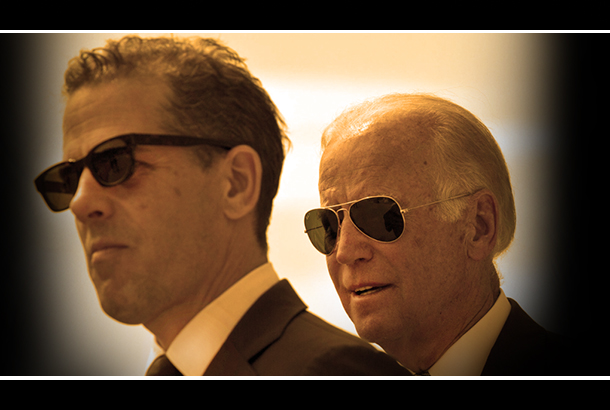
When Will the Truth About the Bidens’ Ukraine Deals & Financial Bonanza Come Out?
By Ekaterina Blinova – Sputnik – 10.10.2020
Despite the US mainstream media and the FBI appearing uninterested in the latest GOP study concerning Hunter Biden’s financial transactions and occupations during his father’s vice presidency, the investigation may go full throttle if Joe Biden is defeated in the 2020 campaign, suggests US investigative journalist George Eliason.
The FBI has refused to either confirm or deny the existence of any ongoing investigations concerning Hunter Biden, the son of former Vice President and Democratic presidential nominee Joe Biden, The Federalist reported on 8 October, citing an exclusively obtained bureau letter written in response to a 24 September request by Republican Congressman Jim Jordan, the ranking member on the House Judiciary Committee.
Why FBI Unlikely to React Before the Election
On 24 September, Jordan sent a letter to FBI Director Christopher Wray asking what investigative steps – if any – the intelligence agency had taken in response to the GOP report detailing misconduct and suspicious financial transactions involving Hunter Biden, his family, and his associates.
Nevertheless, the FBI has yet to respond to Jordan’s questions concerning potential inquiries into:
· Hunter Biden receiving millions of dollars from foreign nationals with questionable background and funding individuals “involved in human trafficking and organised prostitution”;
· Hunter’s Chinese transactions “involv[ing] potential criminal activity”;
· a bribe allegedly paid by Ukrainian gas firm Burisma’s owner to the country’s officials to stop investigations against him while Hunter served on the company’s board.
Although Republican congressmen are urging the FBI to look into the Bidens’ potential misconduct, there is little if any chance of the Senate pressuring Wray into launching a formal investigation before the November election, believes George Eliason, a Donbass-based American investigative journalist.
“The last thing the Senate will do is make any move that looks partisan or trying to influence the election”, Eliason stresses. “After the election it is possible, if Biden loses. On the chance of a Biden win, the investigation will be mute”.GOP Report Sheds Light on Hunter Biden’s Gains
The GOP report indicates that Hunter Biden’s financial gains from foreign sources substantially increased during his father’s tenure as US vice president and after, citing a potential conflict of interest.
Referring to Treasury records, the document also alleges “potential criminal activity relating to transactions among and between Hunter Biden, his family, and his associates with Ukrainian, Russian, Kazakh and Chinese nationals”.
Several days before the release of the committee’s findings, Just the News reported that the Financial Crimes Enforcement Network (FinCEN), a bureau of the US Treasury Department, had “flagged several foreign transactions to Hunter Biden-connected businesses as ‘suspicious’ during the end of the Obama administration and the beginning of the Trump administration”. These findings were highlighted in the agency’s Suspicious Activity Reports (SARs) which, according to the media outlet, “is [per se] not evidence of wrongdoing, but it is usually a starting point for investigation”.
In addition to receiving $4 million in “questionable financial transactions” with foreign financiers, Hunter Biden was spotted sending funds to individuals “linked to what ‘appears to be an Eastern European prostitution or human trafficking ring'”, the GOP report reads.
Republican investigators specifically turned the spotlight on Hunter Biden’s role in the Ukrainian gas firm Burisma when his father served as the Obama administration’s “public face” of its policy towards the Eastern European state. In May 2014, Hunter joined the firm’s board of directors, despite having no experience in energy, and was paid as much as $50,000 per month.
“The Bidens were in the front seat [of the Obama administration’s Ukraine politics] the entire time”, Eliason recollects. “Joe Biden’s support for the Ukrainian diaspora and fulfilling their wants in Ukraine has been unwavering. The fact that Ukraine became a cash cow for his family that early makes it very clear”.
Thus, in December 2014, the owner of Burisma, Mykola Zlochevsky, reportedly gave a $7 million bribe to Ukrainian officials to have the case against him closed and his $23-million assets in the UK unfrozen while Hunter Biden was on Burisma’s board. According to the GOP document, the case was reported to the FBI by a DOJ official at the US Embassy in Kiev in 2015, but no action seemingly followed. While US State Department officials considered Zlochevsky “corrupt” at the time, then Vice President Biden avoided denouncing the Ukrainian oligarch, the document says.
More Facts May Emerge After 2020 Campaign
While the FBI keeps silent, the US left-leaning mainstream media have downplayed the study, saying that it does not show whether Hunter Biden’s actions influenced US government policy in any way.
CBS News, in particular, has drawn attention to the fact that “the report does not assert that the former vice president pushed for the firing of a Ukrainian prosecutor in order to protect Burisma, a central claim made by President Trump and his allies”. For its part, the Biden campaign denounced the GOP research as a political attack amid the 2020 presidential campaign.
“The MSM has been firmly behind Biden and has to step back further than is now possible with credibility”, says Eliason referring to the mainstream media’s previous efforts to bury the anti-Biden sexual harassment allegations put forward by Tara Reade, a former staff assistant in Biden’s US Senate office. “As far as not affecting US policy, it’s a fogging ploy to relieve Biden from any culpability in crimes the evidence is very strong pointing to his involvement”.
Meanwhile, the Ukrainian probe into the alleged Biden-Poroshenko tapes, concerning the ouster of then Ukrainian Prosecutor General Viktor Shokin – who was investigating Burisma Holdings – in exchange for a $1 billion loan, is still ongoing, the journalist emphasises.
Ukrainian Prosecutor General Iryna Venediktova confirmed in mid-September that the tapes are being examined: “We are waiting for the results of the research. We will react only where it is prescribed by law … Ukraine does not interfere in the affairs of other states. We remain in the field of criminal justice”, she stated on Savik Shuster’s YouTube podcast on 12 September.
Eliason believes that more facts concerning the Bidens may surface when the presidential campaign is over, as it will no longer be seen as an attempt to interfere in the elections. Furthermore, in case Biden loses and Trump retains office, the situation “would be cut and dry”, which would help US investigators to eventually sort things out.
Britain Ready to Supply Lethal Arms to Ukraine, Country’s Presidential Aide Says
By Oleg Burunov – Sputnik – 09.10.2020
Using foreign military hardware is nothing new for the Ukrainian Army, where US-made weaponry, including patrol vehicles, fast boats, and Javelin anti-tank missiles are currently in service.
Senior Ukrainian presidential aide Andriy Yermak said on Friday that the UK had expressed readiness to provide the country with a hefty lethal weapons contract, in addition to a £1 billion ($1.2 billion) loan to the Ukrainian Navy.
The statement came as President Volodymyr Zelensky met UK Prime Minister Boris Johnson in London to sign a spate of bilateral cooperation agreements.
Yermak claimed that recent mass protests in neighbouring Belarus pose a possible threat to Ukraine, which he said is seeking assurances from the EU and the UK about their willingness to help Kiev maintain national security.In this vein, he also referred to a simmering military conflict in eastern Ukraine’s Donbass region, touting the current truce as “a huge achievement”.
Ukraine Conflict
Kiev launched a special military operation in southeastern Ukraine in April 2014, after local residents refused to recognise the new central authorities, who had come to power as a result of a coup. This was preceded by the residents voting for the creation of the independent Donetsk (DNR) and Lugansk (LNR) People’s Republics.
In February 2015, the two sides reached a peace agreement after talks brokered by the leaders of Russia, France, Germany, and Ukraine — the so-called Normandy Four — in the Belarusian capital Minsk.
The deal stipulates a full ceasefire, weapons withdrawal from the line of contact in Donbass, as well as constitutional reforms that would give a special status to the DNR and the LNR.
The ceasefire regime has repeatedly been violated, with both sides accusing each other of multiple breaches, undermining the terms of the accord.
Yermak’s remarks come after the Pentagon reportedly signed off on an additional $125 million in its lethal military aid to Ukraine. The latter had earlier received batches of US military hardware, including patrol vehicles, fast boats, radar systems, and Javelin anti-tank missiles.
The aid is part of a $250 million package appropriated by Congress in its 2020 National Defence Authorisation Act, legislation that committed a whopping $738 billion to American defence spending, including tens of billions for US operations overseas.
Russia has repeatedly warned the global community against supplying weapons to Ukraine, saying that such actions will escalate the military conflict in the Donbass region.
Much-hyped US-made Javelin missile FAILS during Ukrainian military drill attended by President Zelensky
RT | September 24, 2020
After all the ballyhoo about their supply to Kiev you think they’d at least work? A US-made Javelin anti-tank missile has malfunctioned during a major military exercise, in the presence of Ukrainian President Volodymyr Zelensky.
The commander of the Ukrainian Armed Forces Northern Command, Major General Valery Zaluzhny, confirmed the incident to local media on Wednesday.
“The Javelin didn’t work. The missile didn’t fly out. Maybe, it was a mistake by the operator. Maybe, it was something else. We have to figure it out,” Zaluzhny said.
President Zelensky attended the ongoing ‘Joint Efforts 2020’ drill in the country’s Nikolaev region. Around 12,000 service personnel are participating in the exercise from September 22-25.
The drill was described by Zelensky’s website as “the first exercise conducted in accordance with the standards of NATO after Ukraine had received NATO’s Enhanced Opportunities Partner status.”
Ukraine received the first batch of Javelin missiles in June 2020. The second shipment is expected in 2021-22.
CIA releases new fiction on Putin
Press TV – September 22, 2020
The US Democratic Party and their media sycophants along with elements of the CIA are trying to make Americans believe that Russian President Vladimir Putin is directing a campaign to help Donald Trump win re-election in November, Charles Dunaway has said.
Dunaway, an American political commentator who’s based in Oregon, made the remarks in an interview with Press TV on Tuesday while commenting on a report which said US intelligence agencies believe President Putin is behind a disinformation campaign targeting Democratic presidential nominee Joe Biden.
According to a CIA assessment, Ukrainian lawmaker Andriy Derkach is engaged in peddling “disparaging information about Biden inside the United States through lobbyists, Congress, the media and contacts with figures close to the president,” two sources with knowledge of the report told The Washington Post.
“We assess that President Vladimir Putin and the senior most Russian officials are aware of and probably directing Russia’s influence operations aimed at denigrating the former U.S. Vice President, supporting the U.S. president and fueling public discord ahead of the U.S. election in November,” the document reportedly reads.
Why admit fault when you can blame Putin?
Commenting on this, Dunaway said, “Once again the US mainstream media is publishing stories intentionally leaked by the CIA without independent fact checking or investigation. In essence a Ukrainian lawmaker, who the CIA ‘believes’ to be a Russian agent (no evidence), met with Rudy Giuliani last year and appeared once on a pro-Trump TV network peddling some audio recordings between then Vice President Biden and then Ukraine President Poroshenko. Those tapes allegedly proved there was a connection between the delivery of US aid to Ukraine and the investigation of Burisma.”
“As a raw first source for a story, this sounds interesting but there are so many facts alleged that a responsible journalist would need to find external corroboration for them. The Ukranian MP, Andriy Derkach, was a supporter of former President Yanukovych who was overthrown in a coup supported by the Obama-Biden Administration. In October 2019, Derkach alleged that Biden had been involved in an international money-laundering scheme with Burisma Holdings and the US-based investment firm headed by Biden’s son Hunter,” he added.
“The very curious fact that Biden threatened to withhold US aid to the Poroshenko regime unless they fired the prosecutor investigating Burisma Holdings should be well known to the US public since video of Biden bragging about it surfaced on the internet months ago. The same media outlets that are printing the recent CIA allegations as fact didn’t spend any time at all looking into the very suspicious activities of Biden in the Ukraine or the fact that Poroshenko would not have been President had it not been for a coup engineered by the US,” he stated.
“Now the Democratic Party and their media sycophants along with elements of the CIA are trying to make us believe that his member of the Ukraine parliament is being personally directed by Vladimir Putin in a campaign to help Trump win re-election. Trump’s Treasury Department issued sanctions on Derkach on September 10th, hardly much of a reward for his alleged service to the Trump campaign,” he said.
“A conscientious journalist would view this allegation in light of the many other unfounded accusations, many of which are purely fantasy, that are being made against the Russian government. The idea of blaming Putin and Russia for US election interference was born after the 2016 election when the US political elite, aghast at the prospect of a Trump presidency, decided to blame Russia for their defeat. Since the US elites see Russia as a threat to the US empire, they want to destroy it, or at least change its government into a subservient puppet of the US. They also want to get rid of Trump,” he said.
“From a few ineffective Facebook ads and some news and analysis on Russian media outlets, they invented the first Russian interference story. When it petered out with the failed Mueller report, they raised the specter of Trump threatening to withhold military aid to Ukraine unless they investigated Biden. That ploy amplified into an impeachment trial failed as well. But it did uncover the Biden-Ukraine connection and that must be thoroughly discredited now to get rid of Trump,” he noted.
“It’s time the US media did their job and treat the US government, especially the CIA, as no more trustworthy than a man in a trench coat approaching them in a parking garage. Instead they should spend their time investigating US interference in Ukraine, Belarus, Thailand, Russia, Iran, Syria, Libya and China. We should remove the beam from our own eye rather than trying to find motes the eyes of others,” he concluded.
US sanctions Ukrainian lawmaker who published Biden-Poroshenko tapes for ‘Russian influence’ in presidential election
RT | September 10, 2020
Ukrainian parliamentarian Andrii Derkach has been sanctioned by the US, and his publication of alleged phone calls between the Ukrainian president and the US vice president declared ‘Russian interference’ in the US election.
Derkach “has been an active Russian agent for over a decade, maintaining close connections with the Russian Intelligence Services,” the US Treasury Department declared on Thursday, sanctioning the member of parliament for “foreign interference in an attempt to undermine” the upcoming presidential elections. In addition, three alleged employees of the Internet Research Agency, also referred to as the St. Petersburg ‘troll factory,’ were placed on the sanctions list.
The move against “four Kremlin-linked officials” was hailed by the State Department as “a clear signal that the United States will not tolerate interference or influence” in the upcoming vote.
No evidence was offered for the allegation that either Derkach, or the IRA trio – identified as Artem Lifshits, Anton Andreyev and Darya Aslanova – were actually in any way connected to the Russian government.
Instead, the Treasury claimed that Derkach had “waged a covert influence campaign centered on cultivating false and unsubstantiated narratives concerning US officials.” Between May and July this year, he released “edited audio tapes and other unsupported information with the intent to discredit” US officials, they allege.
Derkach released several hours worth of audio tapes purporting to be conversations between former Ukrainian President Petro Poroshenko and former US Vice President Joe Biden from 2014-2016, including references to investigations of the gas company Burisma, which had given Biden’s son Hunter a lavishly compensated seat on its board.
Poroshenko has denounced the revelations as “fabrications” and “part of a large-scale hybrid war” by Russia, and it appears the US Treasury has taken his word at face value. There was no indication any of Derkach’s claims, the tapes, or the documents he offered to the press have been investigated; instead, the Treasury simply asserts that everything he said was “unsubstantiated.”
Similarly, Derkach’s “reliance on US platforms” is taken as proof that he “almost certainly targeted the US voting populace, prominent US persons, and members of the US government.”
The Treasury’s explanation of why Derkach was sanctioned basically claims that any effort to investigate Biden – now the Democratic presidential nominee – or his son amounts to “interference” in US elections, which was the main premise of the Democrat-led effort to impeach President Donald Trump back in September 2019.
Senate chairman subpoenas FBI Director, ex-State official as Russia-Ukraine probe intensifies
John Solomon Reports | August 17, 2020
A powerful Senate committee chairman has subpoenaed FBI Director Chris Wray and a former State Department official in an intensifying investigation into possible U.S. corruption in Russia and Ukraine and declared there is evidence Joe Biden’s family engaged in a “glaring conflict of interest.”
Senate Homeland Security and Government Affairs Committee Chairman Ron Johnson announced the actions Monday, strongly accusing Democrats of levying false allegations against him and other GOP investigators to distract from the evidence his committee has gathered about Joe and Hunter Biden’s dealings in Ukraine.
“We didn’t target Joe and Hunter Biden for investigation; their previous actions had put them in the middle of it,” Johnson wrote in a letter released Monday that provided a detailed timeline of Joe Biden’s Ukraine policy actions and his son’s hiring with the Ukraine natural gas company Burisma Holdings.
“Many in the media, in an ongoing attempt to provide cover for former Vice President Biden, continue to repeat the mantra that there is ‘no evidence of wrongdoing or illegal activity’ related to Hunter Biden’s position on Burisma’s board,” the senator wrote. “I could not disagree more.”
Johnson noted evidence gathered by his committee showed Joe Biden met with his son’s business partner, Devon Archer, in April 2014 and within a month the vice president then visited Ukraine and both his son Hunter and the business partner were put on the Burisma board as the firm faced multiple corruption investigations.
“Isn’t it obvious what message Hunter’s position on Burisma’s board sent to Ukrainian officials?” Johnson asked. “The answer: If you want U.S. support, don’t touch Burisma. It also raised a host of questions, including: 1) How could former Vice President Biden look any Ukrainian official (or any other world leader) in the face and demand action to fight corruption? 2) Did this glaring conflict of interest affect the work and efforts of other U.S. officials who worked on anti-corruption measures?”
You can read Johnson’s letter here:
File 2020-08-09 RHJ letter re Investigation history purpose goals 1805.pdf
Sources familiar with Johnson’s investigation say the committee has secured testimony from at least one State Department official who worked in Ukraine saying the Bidens’ conduct created the appearance of a conflict of interest and undercut U.S. efforts to fight corruption in Kiev.
Johnson also divulged that late last week he issued a formal subpoena to Wray demanding he immediately surrender records from the Russia collusion probe that the committee has been seeking for months.
The subpoena gives Wray until 5 p.m. on Aug. 20 to comply and demands all records from the probe known as Crossfire Hurricane, including those provided for a damning report by the Justice Department inspector general.
You can view the subpoena here:
Johnson also announced his committee has prepared a subpoena for Jonathan Winer, a former Obama State Department official who had extensive contact with British intelligence operative Christopher Steele, the author of a flawed dossier that helped propel the FBI probe into now disproven Trump-Russia collusion.
“Mr Winer‘s counsel has not responded since Thursday as to whether he would accept service of the subpoena,” Johnson said. “If he does not respond by tomorrow, we will be forced to effect service through the U.S. Marshals. More subpoenas can be expected to be issued in the coming days and weeks.”
Johnson and Senate Finance Committee Chairman Chuck Grassley have been pursuing a two-track investigation for more than two years, examining both failures and corruption in the FBI’s Russia probe as well as the issue of the Bidens’ conflicts in Ukraine.
As the 2020 election draws nearer and the committee’s evidence mounts in the Biden portion of the probe, Democrats have repeatedly attacked Johnson and Grassley accusing them of accepting evidence with Ukrainian officials tied to Russia.
In his letter, Johnson adamantly denies he has talked with or received documents from the Russian-tied Ukrainians, accusing Democrats like Sen. Richard Blumenthal of Connecticut of knowingly fomenting disinformation.
“The only problem with their overblown handwringing is that they all knew full well that we have been briefed repeatedly, and we had already told them that we had NOT received the alleged Russian disinformation,” Johnson wrote. “The very transparent goal of their own disinformation campaign and feigned concern is to attack our character in order to marginalize the eventual findings of our investigation.”
Johnson’s letter identifies 14 questions he believes Joe Biden should answer and said the dealings documented by his committee — all from U.S. government documents — follow a larger pattern of family members appearing to cash in on the vice president’s policymaking.
“The appearance of family profiteering off of Vice President Biden’s official responsibilities is not unique to the circumstances involving Ukraine and Burisma,” the senator wrote. “Public reporting has also shown Hunter Biden following his father into China and coincidentally landing lucrative business deals and investments there.
“Additionally, the former vice president’s brothers and sister-in-law, Frank, James and Sara Biden, also are reported to have benefited financially from his work as well. We have not had the resources to devote investigatory time to these other allegations, but I point them out to underscore that Ukraine and Burisma seem more of a pattern of conduct than an aberration.”
Johnson’s announcement follows one day after Senate Judiciary Committee Chairman Lindsey Graham released a document Sunday he says shows the FBI misled senators on the Intelligence Committee during the Russia probe by falsely suggesting Steele’s dossier was backed up by one of his key sources.
“Somebody needs to go to jail for this,” Sen. Lindsey Graham (R-S.C.) the panel’s chairman, told the Fox News program Sunday Futures with Maria Bartiromo. “This is a second lie. This is a second crime. They lied to the FISA court. They got rebuked, the FBI did, in 2019 by the FISA court, putting in doubt all FISA applications.”
The document in question contains the draft talking points the FBI used to brief the Senate Intelligence Committee in February 2018, including an assessment that the primary sub-source of the information contained in the Steele dossier had backed up the former MI-6 agent’s reporting.
The primary sub-source “did not cite any significant concerns with the way his reporting was characterized in the dossier to the extent he could identify it,” the FBI memo claimed. “… At minimum, our discussions with [the Primary Sub-source] confirm that the dossier was not fabricated by Steele.”
In fact, by the time the FBI provided senators the briefing, agents had already interviewed Steele’s primary sub-source, who disavowed much of what was attributed to him in the dossier as in “jest” or containing uncorroborated allegations.
You can read the FBI memo Graham released here:
Featured Video
The American Retreat from Vietnam
or go to
Aletho News Archives – Video-Images
From the Archives
Secret document reveals plans for civil war in Lebanon, Israeli false flags, and invasion
By Randi Nord | Geopolitics Alert | April 5, 2019
Beirut – During his visit with US Secretary of State, Mike Pompeo, Lebanese President Michael Aoun reportedly received a US-Israeli document detailing plans for creating a civil war in Lebanon with covert false flag operations and possible Israeli invasion.
Although the source of the document is Israeli and created in partnership with Washington, no one knows who presented it to Aoun. The Lebanese TV station, Al-Jadeed, initially reported the document on Lebanese TV and a video on its website. Geopolitics Alert translated the report for this article. … continue
Blog Roll
 Aletho News
- ‘Distance yourselves from Israel’: IRGC urges US population to question govt policies
- America’s Greenland deal has a radioactive backstory
- The RAF Fairford ‘terror plot’: Unpacking escalation in the UK echo-chamber
- EU Council Advances Chat Control 2.0 Scanning Proposal
- Ex-Greek MEP files complaint against Israeli spyware firm over alleged Pegasus surveillance
- Troubling ideas throughout the Torah, Talmud, Mishneh Torah and Tanya
- ‘Grave, alarming’: Iran mission on Trump’s UNGA ‘annihilation’ threats
- Najaf airport to reopen to Iranian flights within 24 hours: Ambassador
- From ‘How Will This End For Iran’ to ‘When America Walks Away’: A tale of two Economist covers
- Tehran blasts ‘baseless’ speculation linking Iran to alleged bomb plot at UK air base
- If Americans Knew
- Israel Has Kidnapped Another American Teenager
- US arms sales to Israel worth $21.6 billion in 20 months
- Three Palestinians Killed in Israeli Attacks on Gaza
- Revealed: German “Anti-Semitism Expert” Driving Crackdown on Palestine Solidarity is Former Israeli Spy
- Egypt’s Warning to Israel Before Oct 7
- Israel’s siege signals another cruel winter for 1.8 million Gazans – Daily Update
- Netanyahu Asked UAE Leader to Deny Report on Oct. 7 Warning in Secret Visit, Sources Say
- CNN Chief Int’l Correspondent Clarissa Ward on Journalists in Gaza
- Democratic Party Consultants Surround Troy Jackson with Pro-Israel Donors
- Christian Leader Responds To Netanyahu’s Claims Regarding Palestinian Christians
- No Tricks Zone
- New Study: Earth And Venus Surface Warmth Largely Explained By Convection And Lapse Rate, Not CO2 Or Radiation
- 2025 Nature Paper Claiming Worsening Global Drought Gets RETRACTED …Heavily Flawed
- New Study: ‘Global Drought Shows No Detectable Recent Acceleration Under Climate Warming’
- Economic Masterminds: German Socialists Suggest Taxing Productivity Gains Stemming From Using AI
- The South China Sea Has Not Been Cooperating With The Climate Change Narrative
- Energy Crisis: Germany Enters Heating Season With Historically Low Gas Reserve Fill Levels
- New Study: The Antarctic Ice Sheet Gained Mass From 2020-2024 Due To Staggering Snow And Ice Accumulation
- Study: Ocean Heating Rates From Thousands Of Years Ago ‘Dwarf’ Modern Ocean Heating Rates
- Climate Extremists Target, Attack Large-Scale Power Grid Infrastructure In Germany!
- New Study: Antarctic Ice Melt Has Contributed Less Than 1 Centimeter To Sea Level Rise In The Last 30 Years

