Russian oil expert detained at Kiev’s request in Greece, lawyer calls arrest ‘politicized’
RT | March 3, 2019
A Russian national has been arrested in Greece and faces extradition to Ukraine on tax-crime charges. His lawyer said he is being persecuted for supporting the former Ukrainian president who was ousted in a Western-backed coup.
Evgeny Kalinin, a Russian energy expert, was arrested by the Greek authorities at Athens International Airport on Thursday, his lawyer, Yannis Rahiotis, told Sputnik.
Kalinin is a well-known oil industry expert, Rahiotis said, noting that his client was on a routine business trip to the country at the time. Kalinin appeared in court on Friday, when he was sent to prison until Ukraine’s extradition request is delivered to Athens.
According to Rahiotis, Kalinin faces unspecified tax-crime charges, which allegedly arise from his past work as a top executive in Ukraine’s oil company.
Kalinin served as vice president of TNK-BP Commerce, a Kiev-based company that specializes in producing and selling crude oil products in Ukraine and Russia, until 2011. The company, which was founded in 2003, also operates a network of gasoline and filling stations in Ukraine.
While the essence of the charges Kalinin is facing are not yet clear, Rahiotis believes they are politically motivated. The lawyer pointed out that Kalinin’s name has been included in a database of the notorious Ukrainian website Mirotvorets (Peacekeeper). The ultra-nationalist site contains a blacklist of ‘traitors’ who it says must be dealt with. On the list, Kalinin has found himself in the company of such big foreign political names as former German chancellor Gerhard Shroeder, who was added to the ‘hit-list’ in November, prompting the German Foreign Ministry to reprimand Kiev for not taking down the website.
“This case is a political one. Kalinin is included into the Mirotvorets list. He is being persecuted because he was a supporter of former president Victor Yanukovich,” Rahiotis said.
Russian diplomats have been in contact with Kalinin, and have been providing him “with all necessary consular assistance,” the Russian Embassy in Greece said, as cited by Sputnik.
Kalinin’s arrest has already drawn condemnation from a senior Russian lawmaker.
The deputy head of the Russian Senate Defense and Security Committee, Franz Klintsevich, has said that by playing into the Kiev’s hands, Athens is undermining its centuries-old relationship with Russia, which has traditionally been an ally.
“It’s still not late to stop. Russia will do everything to free Evgeny Kalinin,” he wrote on Facebook.
Another State Duma MP, Natalia Poklonskaya, argued that Kalinin’s arrest is likely to be politicized and exploited in the ongoing Ukrainian presidential campaign. She also warned Greece against becoming a pawn in a third party’s hands by simply following formal legal guidelines.
The Hunt for Konstantin Kilimnik
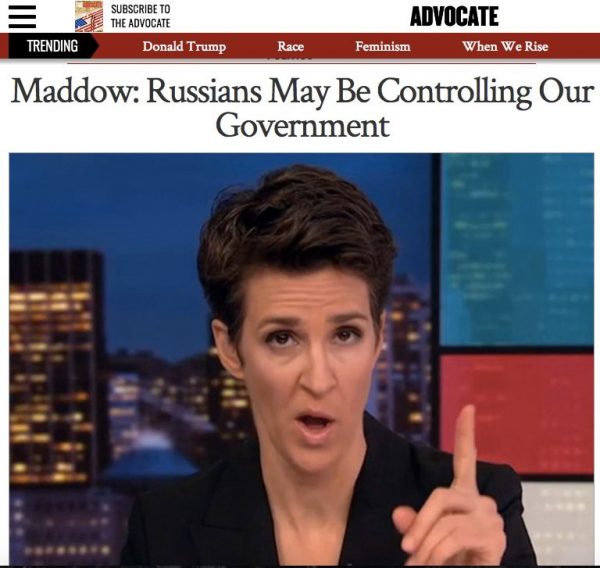
By Deena Stryker – New Eastern Outlook – 24.02.2019
Since 2014, the US has been accusing Russia of having ‘invaded’ Ukraine. Yet the latest story being repeated by the news media transforms an interesting proposal by a Ukrainian national to bring peace to that country into a devious attempt to have sanctions on Russia removed!
It was months ago that Rachel Maddow first mentioned the name of Konstantin Kilimnik, without mentioning why, specifically, that he had a plan to bring back Ukraine’s ousted President Yanukovich to head the Donbas. Merely quoting Kilimnik as saying ‘This is about my country’ Maddow implied he was a Russian, in what was to become a long series of misinterpretations and obfuscations.
A youngish Ukrainian who worked for Paul Manafort’s PR firm, Konstantin Kilimnik figured the Russian-speaking Donbas’s refusal to recognize the Kiev government could be ended by installing the country’s former pro-Russian President, whom the US deposed, in the breakaway province, the Minsk Agreements (I and II) laboriously crafted by the West having failed to heal the rift.
If he were an American, Kilimnik would be referred to as a patriot, but instead his only moniker is ‘having ties to the GRU’, that is being assumed because of the fact that he received language training in Russia’s Military University of the Ministry of Defense. Having become proficient in English, Kilimnik got a job working with the American Paul Manafort, who was trying to teach that President, Viktor Yanukovich to become a public figure. When, in 2014, Hillary Clinton, as Obama’s Secretary of State replaced Yanukovich with a government that relies on virulent anti-Russian fascist militias (among other things, they burned 200 opponents live), the Russian-speaking Donbas refused to recognize the new government and President Putin looked the other way when ‘volunteers’ crossed the border to help them repulse Kiev’s attacks.
(This policy is consistently referred to by the US media as Russia ‘invading’ Ukraine, hence US sanctions…). When Donald Trump ran for President, Kilimnik’s boss, Manafort, became the head of his campaign, and managed to scotch a Republican Party plan to deliver arms to Kiev for use against the Donbas.)
While the press endlessly details accusations against Manafort (known as a high-flyer wearing exotic clothes), it never mentions his protege’s goal: to secure American backing for a plan that would bring peace to Ukraine. Recently, for the first time, the BBC’s Katy Kay mentioned that plan on MSNBC. But without spelling it out, she allowed her colleagues to remark that it could result in the sanctions the US imposed on Russia being lifted. The US is not interested in bringing peace to Ukraine after five years of strife, but only in pursuing its goal of replacing Vladimir Putin with a more compliant Russian President, among other things, via sanctions for its ‘behavior’ vis a vis Ukraine.
When President Trump rightly points out that the majority Russian-speaking population of Crimea voted by 90% to rejoin Russia in a referendum, the media comments that he knows nothing about foreign affairs. Five years after the events, the American public is unlikely to remember — if it ever knew — that 90% of Crimeans are Russian. Not one in a hundred thousand knows that Catherine the Great wrested Crimea from the Ottoman Turks in the eighteenth century, building a big naval base in Sebastopol to give Russia a warm water port. (In the US it would be an impeachable offense if the president were to allow a hostile government to lay its hands on such a crucial asset.)
The latest chapter in the federal case against Manafort involves the ‘revelation’ that he met with Kilimnik in a New York bar during the campaign, providing him with polling data about the up-coming election, Trump having probably indicated to Russians in or around the government that he would be open to relaxing the sanctions imposed by Obama.
The laudable desire to bring peace to Ukraine has been turned into a crime in order to prove that Trump is appeasing Russia — either in return for money-laundering facilities or a future tower in Moscow. Washington cares not a whit that Ukraine — whose Western aspirations it supposedly backs — will continue in a state of low-level civil war for the foreseeable future.
P.S. Just in: Ukraine’s US installed president Petro Poroshenko just had an article added to the constitution stating that it is the duty of the government to ensure that Ukraine simultaneously enters the EU and NATO, so that NATO can not only camp on Russia’s European border, but in neighboring Ukraine as well.
Meet Pierre Omidyar, billionaire patron of US regime change operations, neocons & activist media
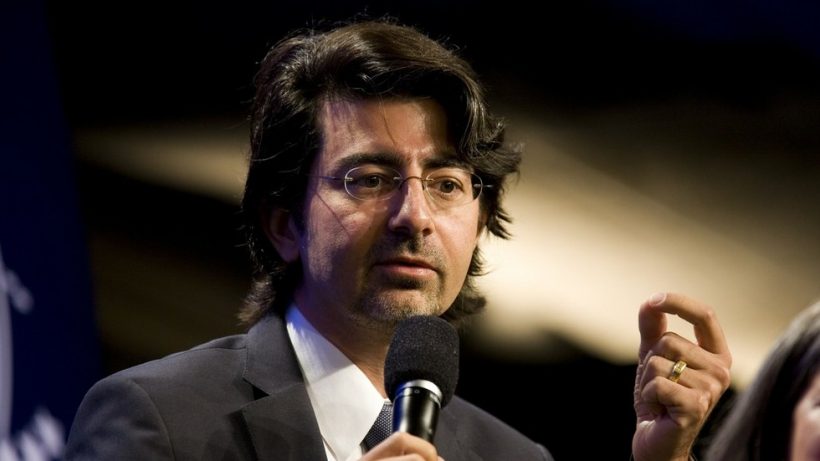
Pierre Omidyar speaks at a ‘Technology For Citizen Empowerment and Human Rights’ panel at the Clinton Global Initiative in New York, September 23, 2010 © AFP / Brian Harkin
RT | February 22, 2019
Amid the US push for regime change in Venezuela, RT speaks with investigative journalists who looked into the eBay founder and self-described “progressive” billionaire Pierre Omidyar, a major patron of regime-change operations.
An ongoing series in MintPress News, written by Alexander Rubinstein and Max Blumenthal, is a rare look into the projects undertaken by the “progressive philanthropreneur,” who has been praised by the liberal interventionist establishment for following in the footsteps of George Soros but attracts far less media attention.
“Part of the reason for doing this investigation was to inspire more scrutiny of Pierre Omidyar,” Rubinstein told RT. “There are mountains of newsworthy bits of information about many of the organizations he funds, but the sad reality is that it would require a team of at least half a dozen journalists working overtime to fully make sense of it all.”

Detail of a chart showing the connections between Pierre Omidyar and various media outlets, foundations, activists and outfits. © MintPress News
The second part in Blumenthal and Rubinstein’s series, published Wednesday, took a particular interest in Omidyar’s ties to organizations promoting “regime change.” In Ukraine, it was a TV station (Hromadske) that backed what turned into a violent 2014 coup against the government in Kiev. In Zimbabwe, Omidyar money funded a “cultural activist network” that campaigned for the ouster of President Robert Mugabe in 2017. And in the Philippines Omidyar is backing The Rappler, a news site opposed to President Rodrigo Duterte that is developing surveillance technologies like a “mood meter” of the audience to capture – and channel? – “non-rational reactions.”
Not progressivism but power
Omidyar is not doing this on his own, either, working hand in hand with US Agency for International Aid and Development (USAID) and the National Endowment for Democracy (NED).
“He has the money and – for one reason or another– the desire to participate in such destabilizing policies,” Rubinstein told RT, noting that the billionaire’s embrace of such projects makes him “the perfect private partner for the US government” in seeking regime change abroad.
How does a self-described progressive find himself riding the horse of regime change? This is one of the questions Rubinstein and Blumenthal hope further research will answer. Their digging has found Omidyar’s money behind the Alliance for Securing Democracy and The Bulwark – projects led by NeverTrump neoconservative Bill Kristol that push “Russiagate” and carry the torch of interventionism.
“If partnering with the neocon think tank guru who was a main conduit for US government messaging in the lead-up to the Iraq War is ‘progressive’ then I think it’s time we retire the term,” Rubinstein told RT.
He believes that Omidyar is not driving the regime-change agenda, but going along with it in “the perfect alliance of convenience.”
“If you’re looking for a coherent ideology that permeates through each of Omidyar’s investments, it’s not progressivism: it’s power… and power lies with empire,” Rubinstein said.
More specifically, Omidyar is looking to manage all areas of modern life, from journalism and transportation to banking and finance and government administration, journalist Yasha Levine, author of ‘Surveillance Valley: The Secret Military History of the Internet,’ told MintPress.
To him it’s not just about running a single service, but integrating things together to give technocrats, business executives and government officials a God’s-eye view of the world – to manage and control society more efficiently.
The role of Omidyar and other billionaires – who would be called ‘oligarchs’ if they were Russian but keep being presented as ‘philanthropists’ in the West – in influencing media and politics around the world is woefully under-examined, Rubinstein and Blumenthal argue.
Controlled or ‘responsible’ opposition?
Part of the problem is that Omidyar funds a wide range of media outlets through foundations, nonprofits and other cutouts, and many journalists who consider themselves independent or progressive aspire to work at Omidyar-backed Intercept, famous for publishing (some of) the documents leaked by NSA whistleblower Edward Snowden in 2013.
“All of the media ventures funded by Omidyar have one thing in common: their slickness,” Rubinstein said, noting that the “cutting edge design, high production values, and the esoteric portrayal of the process of reporting” all contribute to creating the image of Omidyar-backed outlets as the “responsible opposition” in contrast to outlets with a more shoestring budget.
While Intercept editor Glenn Greenwald has been sharply critical of US foreign policy and the ‘Russiagate’ conspiracy theory, other writers at the outlet have “carried water for al-Qaeda in Syria” and pushed Russiagate, said Rubinstein.
He described as “incredibly troubling” the fact that The Intercept has rolled out only a portion of the Snowden documents, de facto making them serve the agenda of Omidyar and his First Look Media rather than be responsibly released to the public, as Snowden intended.
The End of Truth as We Know It – Or Knew It
By Jeremy Salt | American Herald Tribune | February 21, 2019
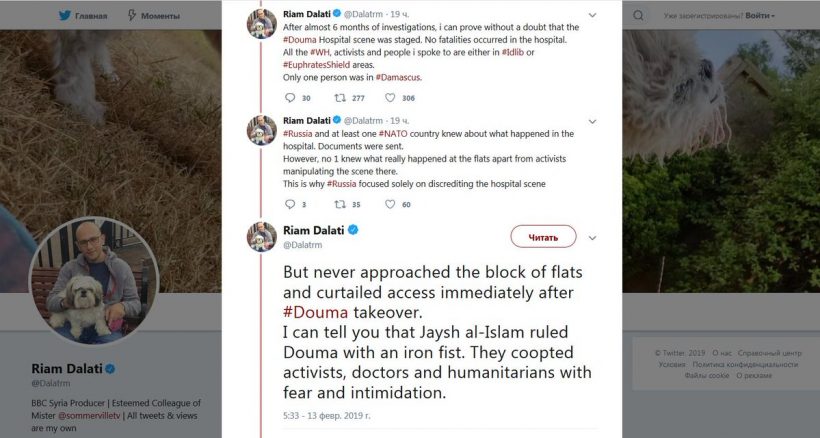
The claim (or admission) by the BBC journalist Riam Dalati that the alleged sarin attack on Douma in April 2018, was staged was received by the Russian embassy in London with glee. “Remarkable that the British MSM chose to ignore it’, whoever it was at the embassy wrote. ‘No breaking news, no articles, nothing.’
Remarkable? Not at all, given the endless track record of the media in ignoring news that does not suit its agenda. The real interest lies in the fact that an insider has owned up. His personal opinion only, according to the BBC, which along with the rest of the media, had taken the initial version of the alleged attack for granted, thus setting Syria up for the cruise missile strike by the US, Britain, and France which soon followed.
‘I can prove without a doubt that the Douma hospital scene was staged,’ Dalati wrote. Well, enough of the evidence has already been produced to prove that. As for the sarin, in July 2018, the OPCW (Organization for the Prevention of Chemical Weapons) put out an interim report indicating that whatever was used at Douma was not sarin, but most probably chlorine.
The next question is ‘used by whom?’ Again the evidence suggests that the yellow gas cylinders shown in the media propaganda blitz were not dropped from an aircraft but planted at the scene by the ‘activists’ who faked the whole episode.
The OPCW now seems to be reaching the point where it will release its full report. What it might contain opens the doors to endless speculation. It has already indicated that it found traces of chlorine and it may point an accusing finger at ‘the regime’ but without having the proof that it did it.
So expect something ultimately inconclusive, i.e. there is evidence of chlorine having been used, the Syrian regime might have used it but we really can’t say, leaving enough room for western governments to argue that they were right to bomb on the basis of the facts that were known at the time and for E. Higgins and company to argue that their version has not been disproved.
With Idlib, the last redoubt of the takfiris in Syria, now the focal point of political maneuvers and possibly military action, any credibility given by the OPCW to the accusations against the Syrian military might encourage the takfiris to try again, most likely in Idlib province, the location of the alleged chemical weapons attack in Khan Shaikhun in April, 2017. Without having the proof, the US launched a missile strike against a Syrian air base by way of retaliation.
Another faked attack would give the US and its law-breaking friends the pretext needed to disrupt or forestall any Syrian military campaign to drive the takfiris out of Idlib, which, far from having quietened down following the ‘de-escalation’ agreement reached by Turkey, Iran and Russia, is now an even hotter hothouse of takfiri activity.
The main group, Hayat Tahrir al Sham (HTS) basically still Jabhat al Nusra/Al Qaida in Syria despite the name change, and its allies have routed their ‘moderate’ enemies and taken control of between 70 to 90 per cent of the province, including Idlib city, which lives under a harsh form of sharia law.
The HTS collective has tens of thousands of armed fighters on call. So does the rival Turkish-supported National Liberation Front. The entire province is awash with arms and armed groups refusing to adhere to any agreements drawn up in Astana or Sochi and saying they will fight to the last.
Along with the fighting men are the civilians, the families of the takfiris and the normal civilian population of the province who are helpless in the face of the violence and intimidation all around them and the scheming of powerful actors far from the scene.
At present nothing is clear. The US is apparently planning to withdraw troops from northern Syria but has not withdrawn them. Erdogan and Putin have met to discuss what the US is up to, as well as the situation in Idlib and Turkey’s desire to set up a buffer zone running 460 kms and 32 kms deep along the Syrian border (on the Syrian side). Russia and Iran have so far refused to support the idea.
The buffer zone would be set up against the Kurdish People’s Protection Units (YPG), aligned with Turkey’s Kurdistan Workers’ Party (PKK) and ‘terrorists’ in the view of the Turkish government but not in the eyes of the US, which, of course, has been using the Kurds in pursuit of its own strategic interests
Turkey has recently been committing itself to the territorial and political integrity of Syria, raising an obvious question: if this is the case, why did you make such strenuous attempts to destroy both over the past eight years?
The US is on the brink of defeat in Syria. Not just defeat but defeat by Russia, which is why Trump’s plan to withdraw is facing furious criticism at home by neocons who want more war, somewhere, anywhere, and ‘liberals’ who hate Trump and will buy into almost anything that brings him down. In their views on Syria, Iran, Hizbullah, Hamas and now Venezuela the two groups are indistinguishable, even if they also affect to hate each other.
Idlib will be liberated sooner or later. If the takfiris are insisting that they will fight to the last drop of their blood that is because they have nowhere else to go. The foreigners among them can’t go back to their own countries. Turkey does not want them on its side of the border although, as the Syrian Kurds claim, it might allow them to move into Afrin, occupied by the Turkish army in March 2018. As fighters or police, they would have their uses. What happens to them when Afrin is finally returned to the hands of the Syrian state is an issue for the future.
But back to Douma. Was the district being bombed at the time a chemical weapons attack was alleged? Of course, it was. It had been taken over by one of the most murderous takfiri groups in Syria, Jaysh al Islam, and the army was shelling Douma to drive them out. What government and what army would not be constitutionally bound to do the same?
Douma was not under siege by the Syrian army, as the corporate media kept telling the world. It was being held hostage by a murderous armed group, for which the presence of civilians, deterring the army from a full-on ground military assault, was a prized asset. Civilians died in the shelling but the most likely cause of the breathing difficulties suffered by those given genuine medical treatment was smoke and dust inhalation. Jaysh al Islam and the White Helmets converted their distress into a chemical weapons attack and then ran around a clinic spraying water over everyone to prove the point.
The arguments will continue over the provenance of the yellow cylinders that gave Eliot Higgins something else to do. These were normal industrial gas cylinders that had been filled with chlorine which could only be released if someone opened the valve with a monkey wrench or if the valve had opened on impact. That a Syrian military helicopter would drop these cylinders in the hope that somehow the valve would open or break on landing is surely nonsensical.

The valves were intact so how the chlorine could have got out of the cylinders without someone manually opening them remains unexplained by those making the claim that the cylinders were dropped from a helicopter. There was no evidence of anyone in the house where the cylinders were found having been affected and as someone has observed, even the chickens running around nearby were unharmed. In short, the whole scenario screams one word: fake.
One thing not to be forgotten is that when the takfiris finally were pushed out of Douma, a makeshift chemical weapons factory, complete with how-to-make instructions and receipts for the machinery and chemical compounds received, was found underground in an elaborate network of tunnels.
Neither the factory nor the tunnels, nor the brutal nature of the takfiris holding Douma, or their previous crimes, including their previous alleged use of chemical weapons were items for show or discussion in the media.
Neither was the story one of armed fanatics taking over a district close to a national capital and holding its citizens hostage. Neither was the story one of foreign governments and the armed groups they were supporting besieging an entire country. The facts were reversed so that it was the Syrian government and army laying siege to its own people and killing them with chemical weapons.
Over the past eight years, the propaganda onslaught by these governments and the corporate media has been total. No authoritarian state or dictatorship could have done a better hatchet job on public opinion but these arch manipulators of public opinion are self-described liberals.
Therein lies their advantage. The citizens of an authoritarian state don’t believe their government or their media in the first place but western media consumers still cling to the illusion of a free press guarding their interests and are thus sucked in all the time. ‘Free for whom?’ and ‘Whose interests is the media really guarding?’ are questions that are rarely asked except by seekers after truth pushed to the margins of public debate.
The worst excesses of the takfiris – Islamic State beheadings, the throwing of people off the roofs of high buildings, the drowning of caged captives in a swimming pool and the burning of a Syrian soldier – had to be reported because they were indescribably inhuman and could not be ignored but the mundane terrorism of groups just a cut below the Islamic State in barbarity was either underplayed, ignored or blamed where possible on the Syrian military.
In the eyes of the media these groups were not terrorists but rather the ‘opposition’ or ‘rebels’ standing up to the ‘regime,’ its barrel bombs and its chemical weapons attacks, all of them, the best evidence suggests, launched by the takfiris with the intent of incriminating the Syrian government and bringing on a US-led air war.
Roughly about the same time as Riam Dalati was uttering his truth on his tweet, a Berlin-based outfit calling itself the ‘Global Public Policy Institute’ was putting out a report on chemical weapon use in Syria entitled ‘Nowhere to Hide: The Logic of Chemical Weapons Use in Syria.’
This ‘institute’ counted the number of such attacks in Syria, 336, of which number it attributed 98 percent to the ‘Assad regime’ and the rest to the Islamic State. The fact that it uses the word ‘regime’ to describe the legitimate government of Syria is the first tell-tale sign of where this report is going to lead.
The next is the sources of information, ‘our friends and partners,’ as the GPPI calls them: the Syrian Archive, the Syrian American Medical Society (SAMS) Mayday Rescue, the White Helmets, the Syrian Network of Human Rights, the VDC (Violations Documentation Centre) and Human Rights Watch, every single one of them fully engaged in propaganda attacks on the Syrian government if not actually embedded (like the White Helmets) with the takfiri groups.
The 47 pages of this report are beautifully laid out. The graphics and maps are meticulously done. As a school project, the GPPI would get 10 marks for presentation but nothing for content. On the basis of ‘evidence’ coming from such tainted sources, what makes the authors think that any reasonably well-informed person could believe their claims, and how is it that well-established German charitable foundations can hand over money for the production of such garbage?
The Syrian crisis has spawned an industry of parasites, feeding off its agony. There is no shortage of money for anyone smart enough to harvest it by giving the media what it wants and setting themselves up as a conduit for government propaganda. There is a market for lies and deceit and the laws of supply and demand being what they are, the demand is being met.
There is a truth here about the media that needs to be said. It was never truly independent, never the watchdog of the people’s interests in all seasons but it was arguably a lot better than what it has become. The explanation for this state of affairs lies partly in the death of the independent proprietor and the monopoly corporatization of the media. The proprietor’s or the board’s interest is now immeasurably greater than those of the independent owner who used to wander around the editorial floor once a week to make sure everything was ok and the staff was happy.
The corporation is global, not local, with interests that the small independent owner would hardly be able to comprehend because the leading newspaper or the television station is usually just one small part, and mostly a lesser part, of an empire that spans communications in all its branches. Conflict of interest, affecting news presentation, is inbuilt.
If the newspaper has value, it lies in its use as a weapon against or for a government depending on what the government is willing to give in return. Rupert Murdoch is the past master in using the media this way. Even if they lose money, he will keep his flagship papers going.
In the past 20 years, we have seen an abrogation of journalistic integrity for which it is hard to find a parallel in modern history. The Vietnam war was launched and maintained on the basis of lies but it did not take long for journalists to emerge who challenged the official narrative and exposed it for what it was. Compare this with Iraq and the way the media ran with the official narrative on ‘weapons of mass destruction’ from the beginning until the very one, when not one could be found.
Seymour Hersh was the leading example of journalistic integrity in Vietnam (which is not to minimize the reporting of others in the small group exposing the official lies) and, amazingly enough, is still the leading example half a century later.
For his audacity in challenging the accusation that the Syrian government was responsible for the apparent chemical weapons on the outskirts of Damascus in August 2013, and showing that it was the so-called rebels, supported by outside governments, who were most probably responsible for this atrocity, Hersh was pushed to the margins of mainstream journalism in his own country and eventually out of it altogether.
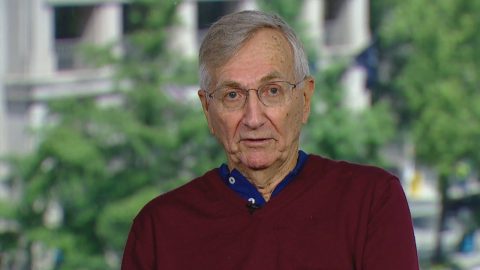
*(Seymour Hersh)
Syria is only part of a broad mosaic of ill intent, however. It was attacked in the first place because it was a strategic ally of Iran. Russia’s twin successes, in deflecting US penetration of Ukraine and making the Americans look stupid in Syria, was followed by allegations of Russian interference in the 2016 US elections. There was no proof then and there is no proof now but the same empty accusations are being repeated by the same columnists, anchors and talk show hosts all the time.
We are now facing a multi-pronged assault on truth in which governments and the corporate media are partners. On both sides of the Atlantic, they have lined up against the renewed primary enemy, Russia, wherever it is and whatever it does.
Russia lost the Democrats the US elections. Russia stole Crimea from Ukraine.
Russia saved the Syrian dictator from defeat. Russia is supporting the dictator Maduro. Russia trades with Iran. Russia does not regard Hizbullah and Hamas as terrorists as we do. Russia does not give open-ended support to Israel but rather regards it as a primary fomenter of disorder in the Middle East.
Russia poisoned the Skripals, of course. Skripal senior was a former double agent, double-crossing Russia while working for British intelligence. There is no obvious reason why Russia would want a washed-out former spy dead but of course, it had to be Russia that daubed the door handle of his house with Novichok. There was no proof, but who else could it be but Russia, and if you say ‘British intelligence,’ setting up a new round of Russia-bashing, then wash your mouth out with soap.
Mysterious Russian figures turn up in Salisbury. The British government says they are agents, stopping off at the Skripals’ house to put a few drops of Novichok on the door handle before sauntering off down the main street to look into the window of a shop selling collectibles and rare stamps.
They seemed to be enjoying themselves. They seemed in no hurry at all to get away from the scene of the crime and take the first plane back to Moscow, but isn’t that exactly the way well-trained Russian agents would behave?
Somewhere along the way they dropped what was left of their Novichok into a rubbish bin, cunningly concealed in a hi-tech perfume bottle, Nina Ricci, ‘Premier Jour.’ Enough still left to kill 4000 people, said the newspapers, but failing to kill the Skripals and killing only poor Dawn Burgess, who pulled it out of the bin and apparently sprayed or dabbed herself with some.
We don’t really know who these Russians were and what they were doing in Salisbury but we need proof, not accusations and suppositions, and the British government does not have it. We can reach conclusions on the basis of what we know or think we know but the lies told by the British government over the attack on Iraq in 2003, plus the death/murder of the UN weapons inspector David Kelly five months after the war was launched, are sufficient reasons not to believe or trust anything this government says.
This new cold war is drifting steadily towards the brink of a hot one. The US is confronting Russia through missile bases, economic sanctions and interference in the politics of states around Russia’s borders.
Trump has just announced the withdrawal of the US from the Intermediate-range Nuclear Forces (INF) treaty, accusing Russia of breaching it and saying ‘we will move forward with developing our own military response options.’
In fact, Russia had already accused the US of violating the treaty. In May, 2018, the US/NATO opened a missile base in Romania where, Russia claimed, the US had simply transferred the launchpad for the Aegis integrated naval weapons system, which utilizes Tomahawk cruise and intermediate range missile banned by the INF treaty, from sea to land.
These missiles have a range of 300-3400 miles and their apparent positioning in Romania was naturally regarded as a direct threat by Russia.
The withdrawal of the US from the INF and Trump’s threat that the US will ‘move forward’ by developing its own options raises the apprehension in Russia that the US will station other cruise and intermediate range missiles in Europe once it finds willing partners.
In his state of the union address, Putin said that such missiles could reach Russia in 10 to 12 minutes and warned of a symmetrical response, if the US deployed them in Europe, directed not just at the US but at the states hosting its missiles.
To those contemplating such measures, he said: ‘Let them count the speed and range of our missiles. That is all I ask.’
It is not just Russia that the US is threatening, however, but China. If China held naval exercises off the US or British coasts the world would quickly be facing another 1962 Cuba crisis, only much more dangerous, but the US and Britain give themselves the right to hold such exercises off the Chinese coast in the South China Sea.
As for Venezuela, the US has reverted to the crude gunboat imperialism of the late 19th century (not that gunboat imperialism ever went away). ‘Do what we want or else’ is the message sent to Maduro and the Venezuelan people. What the US wants is the resurrection of the 1823 Monroe Doctrine, and the complete domination of Latin America, including open access to its resources.
In essence, the imperialism of the 21st century is the same as the imperialism of the 20th or the 19th centuries. In the 1940s and 1950s the people of Asia, the Middle East and Africa struggled to lift the yoke of occupation, economic domination and the plundering of their natural resources off their necks. In the third millennium, they are still struggling, especially in the Middle East and Latin America.
The members of the ‘western’ collective fight among themselves but always fall into line when the alpha dog barks at them. Considerations of right and wrong, law, ethics, morality and justice are irrelevant. The alpha dog has barked and the pack must obey. Riam Dalati’s exposure of media deceit is interesting but still a mere detail on a very large and dirty canvas as the ‘west’, its governments and its media, tries to maintain control of a world fast slipping from its hands.
Jeremy Salt has taught at the University of Melbourne, Bosporus University (Istanbul) and Bilkent University (Ankara), specialising in the modern history of the Middle East. His most recent book is “The Unmaking of the Middle East. A History of Western Disorder in Arab Lands” (Berkeley: University of California Press, 2008.)
Russia remains Ukraine’s key trade partner despite Kiev’s claims of cutting economic ties
RT | February 20, 2019
Despite years of mutual trade restrictions, Russia remained Ukraine’s biggest trade partner in 2018, according to data published by the State Statistics Service of Ukraine.
Sales of Russian produce to Ukraine saw 12.3-percent year-on-year growth to US$8.1 billion. That makes Russia the biggest Ukrainian supplier, leaving China, Germany, Belarus, and Poland far behind. At the same time, the Russian market remained a major destination for Ukrainian exports. Ukraine sold $3.7 billion worth of goods to Russia, marking a 7.1 percent increase compared to the previous year.
Moscow suspended the free trade zone deal with Kiev shortly after the Ukrainian government signed an association agreement with the EU. Ukraine was automatically included on Russia’s counter-sanctions list against the EU, introduced by Moscow in 2014 in retaliation to European penalties over re-unification with Crimea and Russia’s alleged military involvement in Ukraine’s eastern regions.
In 2015, Ukraine imposed sanctions on a wide range of food imports from Russia, including meat and fish, coffee, dairy products, chocolate and confectionery, grains, cigarettes, beer, and many others. Last year, Kiev added fertilizers to its endless list of restrictions. In December, the Ukrainian authorities extended the measures for another year. The country also introduced sanctions against several individuals and entities.
In response, Russia banned the import of more than 50 Ukrainian goods, worth $510 million. The Kremlin announced that the restrictions can be lifted if Kiev gives up its own restrictions targeting specific Russian goods.
Despite bilateral restrictions, trade turnover between Russia and Ukraine has been increasing in recent years, with Russia enjoying a significant trade surplus.
The Ukrainian Election: When No News Is Bad News
By Dmitry BABICH | Strategic Culture Foundation | 15.02.2019
As the Ukrainian presidential election, scheduled to take place on March 31, draws ever closer, Western politicians are going out of their way to protect it from “Russian meddling.” This protection, which became a sort of peculiar Anglo-Saxon sport in the United States and the UK, will figure highly on the agenda of the meeting of the European Union’s foreign ministers on February 18, slated for a discussion of the coming Ukrainian election. A naïve reader of the Western press might wonder why the president of the “newly Westernized” Ukraine, Petro Poroshenko, has an approval rating of just 14%, trailing the comedian Vladimir Zelensky with his 21.9% and former Prime Minister Yulia Tymoshenko with her 19%. Obviously, some “meddling” must have taken place…
A COUNTRY THAT’S A THREAT TO ITSELF
Upon a closer look, however, the Ukrainian election appears to be more in need of protection from its own forms of Ukrainian extremism and what to the untrained eye might appear to be idiocies, rather than from any meddling from the Russian side. Suffice it to present a brief list of the recent suggestions and real policy moves (some of them coming from the very top echelon of government) which were made in the heat of electoral hysteria. Not surprisingly, most of these suggestions and moves are tied to Russia.
Presidential candidate Vitaly Kupryi simply suggested that Ukraine should officially declare war on Russia, obliging president Petro Poroshenko to announce an immediate mobilization and to use a special law to start moving troops against the “aggressor.” Since Kupryi is a deputy in the Supreme Rada (the Ukrainian parliament), his draft bill, which enjoys the support of a group of equally belligerent deputies, has been officially registered and waits to be reviewed by parliamentarians. Until now, the Supreme Rada has demurred from traveling along this somewhat suicidal path, preferring other, longer, more oblique routes toward a catastrophe. Last week, the Rada made Ukraine’s road towards NATO and the EU legally binding through another special law, altering Ukraine’s constitution, where the neutral, non-bloc status of the country had been enshrined since the 1990s. The parliamentarians also continued working on a draft bill, which makes “denial of Russian aggression against Ukraine” (that is, stating the truth that the war in the Russian-speaking eastern regions of Ukraine is a civil conflict) a criminal offence, punishable by several years in jail. The leading candidate, acting President Petro Poroshenko, has not allowed his parliament to outpace him in belligerent idiocies. He declared the visits by Russian citizens of the Russian-speaking Crimean peninsula to be “heinous crimes — breaches of the Ukrainian border,” which should all be punished by several years in Ukrainian jail. (6.8 million Russian tourists visited Crimea in 2018 alone, so theoretically Poroshenko could land Ukraine into the Guinness Book of World Records as the country with the highest potential prison population).
FAKE CHOICE: “EITHER PUTIN OR POROSHENKO”
As for “Russian meddling” in the elections, some of the candidates, including Poroshenko, are manufacturing this “meddling” themselves, by continuously campaigning not for Ukraine, but rather against Russia and its president Vladimir Putin. For example, Poroshenko’s campaign ad, which was unveiled on the day his candidacy officially launched on January 29, showed a Photoshopped image of the acting Ukrainian president confronting his Russian colleague, with the caption: “Either Poroshenko or Putin.”
The reason why Poroshenko continuously tries to redirect the attention of voters away from the country’s real problems and toward Russia’s ostensible “invasion” is obvious. “Ukraine’s catastrophic economic situation does not leave Poroshenko any room for self-promotion. Economically, this candy billionaire, who became rich working in all the governments, from Kuchma’s to Yanukovich’s, turned up to be rather helpless,” says Mikhail Pogrebinsky, the head of the Kiev-based Center for Political Research and Conflict Studies.
In the last quarter of the year 2018, the average income of a Ukrainian household was 9,400 hryvnas (about $350). This prompted the IMF to declare Ukraine the poorest country in Europe: Ukraine has even bested Moldova for this dubious honor, a nation that was previously at the top of the poverty rankings with an average salary of $375. Oleg Lyashko, a flamboyant nationalist candidate from Ukraine’s Radical party, accused Poroshenko of “taking us to Europe via Africa.”
A SAD END FOR THE FOREIGN “SAVIORS”
No wonder Poroshenko stopped talking about fighting corruption and introducing Western standards of state management, the two pillars of his plans for Ukraine at the beginning of his presidency in 2014. The “parachuting” of foreign specialists into the government (the Georgians Mikheil Saakashvili and Alexander Kvitashvili, the Lithuanian national Aivaras Abromavicius, as well as an American citizen, Natalie Jaresko) ended in dishonorable resignations, coupled with scandals and mutual accusations. When he quit, former Minister of Economy and Trade Abromavicius and former Governor of Odessa Saakashvili accused Poroshenko’s entourage of far-reaching corruption, much worse than the practices under the former president, Viktor Yanukovich. It is interesting to note that both Saakashvili and Poroshenko’s first prosecutor general, Vitaly Yarema, initially justified violent protests against the “corrupt” Yanukovich in 2013 and 2014, when 38 policemen were killed by the US-supported “peaceful protesters” from Maidan. But they both now acknowledge that “corruption schemes have become even more intricate and harmful” for society today compared to the Yanukovich era. Not surprisingly, Yarema was fired days after making such statements.
“The rule of oligarchs over the economy and the extortion of bribes from citizens by state officials have not diminished since Yanukovich’s rule,” writes a popular Kiev-based blogger and political expert Viktor Datsyuk. “What is even worse, the greediness of the ruling elite destroyed the ‘oligarchic consensus’ that had existed in Ukraine for years.” In Datsyuk’s opinion, this may lead to a new Hobbesian “war of all against all” in Ukraine.
SUBMISSION TO THE WEST AS THE NEW CONSENSUS
Upon a closer look, again, a certain “oligarchic consensus” still exists in Ukraine, and that consensus is based on the total submission of the local oligarchs to the “overseers” of Ukraine, who operate from Washington and Brussels.
At the peak of the presidential campaign, Ukraine simply exploded with anger when Poroshenko refused to obey a ruling from Kiev’s administrative court. The court removed Ulyana Suprun from her office — an American of Ukrainian descent, the last of the “foreign specialists” still operating in the Ukrainian government with an American passport. Legally, the ruling of the court was correct: Suprun has been “performing the duties” of the country’s health minister without being officially appointed in due course and in violation of a law that prohibits non-citizens of Ukraine from occupying government positions.
“I gave her citizenship through my own decree,” Poroshenko said, brushing off questions about Suprun NOT relinquishing her American citizenship, as required by the Ukrainian law.
The last time the Western elite was so up in arms to protect a “foreign specialist” inside the Ukrainian elite was in 2017, when Poroshenko suddenly canceled his own decree granting Ukrainian citizenship to Mikheil Saakashvili, the former Georgian president. At the time, Saakashvili was in Western Europe, but somehow he made his way back to Ukraine through a border checkpoint inside a crowd of supporters in September 2017, and was met “by chance” on the Ukrainian side of the border by the heads of influential Rada factions Yulia Tymoshenko (the “Fatherland” party) and Andrei Sadovoy (from the Samooborona, or “Self-Defense” movement). Somehow, the border checkpoint was also visited at that moment by Valentin Nalivaichenko, the former head of the fearsome Ukrainian Security Service (SBU).
They all embraced Saakashvili with grim faces, not quite in keeping with a miraculous and “spontaneous” breakthrough across the heavily guarded border.
A few months later, when Saakashvili somehow fell out of grace with his Western supervisors and was evicted from Ukraine by Poroshenko’s special forces via a chartered flight to Europe, his “friends” Tymoshenko and Nalivaichenko did not lift a finger in his defense.
THE INEVITABLE INCUMBENT
Obviously, after the US and the EU allowed Poroshenko to eject Saakashvili from Ukraine without punishment, it became clear that they had no other serious alternative to Poroshenko. Most likely, they will “allow” Poroshenko to win, using the hugely negative public image of Tymoshenko (70% of Ukrainians do not want to see her as their president under any circumstances).
As for the people who are suggesting realistic alternatives to the current disastrous course, they are being stigmatized as “Russian agents” or, worse, “Putin’s friends.”
This is not a situation in which no news is good news, though. Poroshenko’s continued hold on power in Ukraine means the continued threat of another war in the Donbass, the persecution of political opponents, and dispossession and the loss of legal status for the Ukrainian Orthodox Church under the Moscow Patriarchate. So, Poroshenko should not complain, when, as he himself told journalists, Vladimir Putin refused to take his phone call. “I did not want to help Poroshenko in his electoral campaign,” Putin explained. He had a good reason to say so.
Anti-Russia Sanctions Imposed Due to Strong US Pressure – Lavrov
Sputnik – 13.02.2019
On Tuesday, the Financial Times reported that the United States and the European Union had been negotiating and were close to reaching an agreement on imposing new economic sanctions against Russia after the incident in the Sea of Azov in late November.
Russian Foreign Minister Sergei Lavrov stated on Tuesday that the possible sanctions over the Kerch Strait incident are imposed under strong pressure from the United States.
“But we also know that these sanctions are taken under the strongest US pressure, which once again shows the EU’s lack of independence. Sad,” Lavrov said.
He also said that Russia doesn’t discuss sanctions with anyone and it is focused on developing its economy so it does not depend on other states’ whims.
“We have already said a long time ago that we are not discussing sanctions with anyone. We want to build our economy, trade with normal foreign partners so as not to depend on someone’s whims. In this case, the whims of those who did not keep their word, allowed a coup in Kiev, did not make the opposition fulfill agreements with [then] president [Viktor] Yanukovych, ” Lavrov said at a press conference following talks with his Lesotho counterpart Lesego Makgothi.
He added he considered the planned sanctions as a sign that the Europeans were again admitting their inability to make Ukrainian President Petro Poroshenko implement the Minsk agreements.
The foreign minister’s comments follow the Financial Times’ earlier reports that the US and the EU were close to reaching an agreement on imposing new economic anti-Russia sanctions for its alleged aggression toward Ukraine in the Sea of Azov in late November.
On November 25, Ukraine’s Berdyansk and Nikopol gunboats, and the Yany Kapu tugboat illegally crossed the Russian maritime border as they sailed toward the Kerch Strait, the entrance to the Sea of Azov. Russia seized the Ukrainian vessels and detained 24 people on board after they failed to respond to a demand to stop. After the incident, a criminal case on illegal border crossing was opened in Russia.
Moscow has repeatedly slammed Kiev’s attempts to portray the detained sailors as prisoners of war, stressing that they faced criminal charges. Russian President Vladimir Putin said that the incident was a provocation prepared in advance as a pretext to declare martial law, which was announced after the incident and lasted for a month. Putin said the provocation could be linked to Ukrainian leader Petro Poroshenko’s low approval ratings ahead of the presidential election, set to be held in March.
The ‘Peacekeeper’ Vigilante Website and Freedom of Speech in Ukraine
By Halyna Mokrushyna | CounterPunch | February 8, 2019
The 2013-2014 pro-European Union protest movement in Ukraine known as the ‘Euromaidan’ is officially celebrated in Ukraine and is largely recognized in the West as a pro-democratic, peaceful, popular revolution against the ‘corrupt autocratic regime’ (according to the mainstream Western and Ukrainian media) of president Victor Yanukovych. Ukrainians should now breathe more freely, live better and enjoy the rule of law and freedom of speech. And yet today, under the supposedly democratic, post-Euromaidan government, there is much less freedom in Ukraine and much more political violence.
Examples abound. They include the official banning of Russian social networks, movies, books and other cultural products; persecutions and imprisonment of citizens holding dissenting opinion; searches of the offices of media outlets that dare to criticize the new Ukrainian power holders; attacks by ultra-right nationalists against journalists and media offices with the connivance of the state; cyber-bullying of journalists and bloggers who hold alternative opinions, carried out by so-called porokhoboty – bloggers and opinion leaders who propagate the ‘official’ truth with the informal support by the administration of President Petro Poroshenko; increasing state control of television channels through the oligarchic owners of these channels. And the list goes on and on. (For a detailed and well-researched analysis on freedom of speech and opinion in Ukraine, I refer the reader to the recent report presented to the Organization for Security and Cooperation in Europe by the Ukrainian human rights platform Uspishna Varta in September 2018.)
One of the new forms of intimidation of journalists and citizens who do not agree with the ‘official’ version of what is happening is Ukraine is the public exposure of their personal data by anonymous denunciators using the snitch Ukrainian website with the telling name ‘Myrotvorets‘, which translates as ‘Peacekeeper’ from Ukrainian. The website lists the names of journalists, Ukrainian citizens and foreign citizens accused of holding anti-Ukrainian and ‘pro-Russian’ views, foreigners who joined the military forces of the non-recognized ‘peoples republics’ of Donetsk and Lugansk, names of Russian volunteers assisting the republics or fighting on their side, and people who have entered Crimea through the territory of Russia instead of Ukraine. The Myrotvorets vigilantes cast their net really large: even a reposting from a Facebook group supporting the Anti-Maidan resistance movement in Ukraine is grounds for accusation of “treason”. The listing of persons on the website includes his/her profile on social media, home address and phone number, and personal data of relatives.
The Myrotvorets website formally calls itself the ‘Center for Research of Signs of Crimes against the National Security of Ukraine, Peace, Humanity and International Law’. Its self-described role is to provide information to law enforcement authorities and security services about “pro-Russian terrorists, separatists, mercenaries, war criminals, and murderers”, as it is stated on the home page of this ‘research center’. The information is obtained through illegal means, such as hacking and phishing of computers or searching through open sources.
Myrotvorets is curated by the security and intelligence services of Ukraine. A group of ‘volunteers’ began collecting data on “terrorists and separatists” in the summer of 2014. This group was led by Georgy Tuka, a Ukrainian politician and ‘activist-patriot’. In December of 2014, Anton Herashchenko, a deputy of the Ukrainian Parliament (Verkhovna Rada) and an advisor to the Minister of Interior of Ukraine, officially announced the Myrotvorets project. He called upon “conscious citizens” to use the website to denounce “terrorists” of the rebel Donetsk and Lugansk republics and their sympathizers in Ukraine and abroad, helping thus the Security Service of Ukraine and the Ministry of Interior to identify ‘enemies’ of the state.
By April 13, 2015, the Myrotvorets database had grown to contain over 30,000 records, including the names, phone numbers and home addresses of the journalist and writer Oles Buzyna and the former deputy of the Verkhovna Rada Oleg Kalashnikov. Kalashnikov was an active participant in the Anti-Maidan protests in Kyiv in December 2013 – February 2014 and one of the organizers of the Victory Day celebration in Kyiv on May 9, 2015.
Oles Buzyna was a well-known historian, journalist, and writer. He saw Ukraine and Ukrainian culture as part of a common Russian civilization. He criticized the ultra-nationalist, violent groups of the Euromaidan protests and took an active Anti-Maidan position. He was a target of many public and hidden threats from the Ukrainian extreme right militants. Like Kalashnikov, he was shot dead close to his home, in broad daylight, on April 16, 2015. The criminal investigations into these two cases have been dragging on for three years now with no prospect of being solved.
On May 7, 2016, Myrotvorets published names, phone numbers, and addresses of over 4,000 Ukrainian and foreign journalists from leading Western media that were accredited in the Donetsk People’s Republic. It stated that journalists who were risking their lives covering both sides of the conflict “collaborated with terrorists”. Anton Heraschenko explained that Myrotvorets obtained these data by hacking the accreditation lists of the authorities of the Donetsk and Lugansk republics in the last two years. Besides the journalists from international news agencies, such as BBC, AFP, CNN, Deutsche Welle and New York Times, these lists contained also the names of employees of NGOs.
The publication of that data provoked an international scandal. The Head of the European Union Delegation to Ukraine, Jan Tombinski, called upon the Ukrainian authorities to take the names of journalists out of the public domain because disclosure of personal data violates international norms and Ukrainian legislation. However, his appeal was ignored. OSCE Representative on Freedom of the Media Dunja Mijatovic expressed concern about published personal information of journalists on Myrotvorets and called it ‘a very alarming development’. In July of 2017, following continuing international pressure, the National Police of Ukraine opened a criminal investigation into Myrotvorets‘ activities. However, the website continues to operate, while courts, the SBU, the State Border Service and other departments continue to use the data against Ukrainian citizens.
The lawyers of the Ukrainian human rights platform Uspishna Varta have established that in the last four years, data from Myrotvorets has been used as evidence in 28 court cases in all stages – from pre-trial inquiries to adjudication of the culpability. Ukrainian courts rely on these non-verified data to grant access to a person’s confidential banking data, phone conversations and e-mails; to identify suspects; to arrest and detain people; to extend periods of detention; and to start in-absentia pre-trial investigations. Myrotvorets website data is used not only in criminal cases but also in civil offenses as well, such as revocation of parental rights or permission for a child to travel abroad without a father’s permission.
From the legal point of view, publishing personal data without a person’s consent violates personal security and the right for the protection of personal data. It also violates Article 6 of the European Convention on Human Rights which guarantees the right to a fair trial for all.
And yet in spite of appeal of many international organizations to shut down its illegal activities, Myrotvorets remains up and running. By failing to intervene, the Ukrainian state silently approves it. Moreover, it is impossible to sue anyone associated with the website because all of the denunciations on it are anonymous. Myrotvorets claims to be an NGO, however it is not registered as such. The domain and the host of the website are outside of Ukraine – one is located in the US and another is registered to the name of a citizen of Thailand. Hence, in strictly legalistic terms, Ukraine does not have juridical power over it. Nevertheless, Ukrainian authorities use its data for repression against its own citizens.
My name is on the Myrotvorets website, too. In April of 2015, I went on a media fact-finding tour to the war-affected city of Donetsk in Eastern Ukraine with the purpose of witnessing how the residents of Donetsk and the broader Donbass region are coping in the difficult circumstances of Ukraine’s armed attacks against them. The press tour was organized by the German-Russian NGO ‘Europa-Objektiv’. The personal data of journalists participating in the tour were published on the Myrotvorets website. Under my name, it is written that I consciously violated the state border of Ukraine and that I “manipulated socially important information”. The webpage contains a facsimile of the main page of my Canadian passport with all its personal data.
Stating that I illegally crossed the Ukrainian-Russian border is a lie. Our delegation traveled from Rostov, Russia to Donetsk by bus and, indeed, crossed the border on the Ukrainian side. The border was under the control of the Donetsk People’s Republic (DPR). There is no law in Ukraine that qualifies such crossing as illegal. And the claim that I manipulated socially important information is ridiculous for a country that declares itself democratic and free. In a free, democratic country, no one should denounce and threaten another person for merely expressing a different point of view or presenting information that contradicts the ‘official’ or mainstream version of facts.
The publication of my Canadian passport data on the Internet is a violation of international norms on the protection of privacy. It is an attempt to intimidate journalists and to silence those who seek to understand both sides of the armed conflict in Ukraine and inform the international community about it. People behind the snitch website Myrotvorets published my personal data in the hope that the Security Service of Ukraine will use the information to harass or prosecute me. As a proof that data of Myrotvorets is used by Security Service of Ukraine (SBU), I have an official letter by the State Border Guard Service of Ukraine declaring that, following a request from the SBU, they put me under an official ban from entering the territory of Ukraine for three years.
I have sought to draw the attention of Canadian government authorities to this dirty practice of the state organs of Ukraine which Canada so proudly supports. For one year and a half, I have e-mailed and phoned my Member of Parliament requesting a meeting to discuss the matter, but without success. I also consulted a Canadian lawyer who said that, essentially, Canada has no duty but does have the right to take action against Ukraine on my behalf. However, given complex legal issues involved in the process, Canada would most likely rely on Ukraine to intervene. I also know that with the unconditional support to the current Kyiv regime by the Canadian political leadership, no Canadian politician will publicly condemn actions of the Ukrainian state organs. So I am left with no choice but to draw as much attention as I can to the unacceptable, illegal practices of the Myrotvorets website and the people behind it.
Western countries are reluctant to acknowledge that the Euromaidan, which they so eloquently supported, did not bring more freedom to Ukraine. On the contrary, it brought tighter control of the media by the state and its proxy oligarchs; political repression against people with dissenting views, including imprisonment, searches, and interrogations; and acts of aggression by ultra-right, vigilante groups against opponents of the current political regime in Kyiv while police stand by without intervening.
Ukraine is suffocating. To breathe, it needs freedom – journalistic freedom to report what is happening on the ground, personal freedom to speak up and not be afraid of repression by the state apparatus, public freedom to conduct open and honest discussions about the present crisis and the common future, inclusive of all citizens of Ukraine. I hope that this article will contribute to public awareness of the dire situation with the freedom of speech in Ukraine, although I am very skeptical that it will lead to any response from Canadian or Ukrainian authorities.
Halyna Mokrushyna, Ph.D., is an independent researcher and journalist. Her research interests include the challenges of the post-Soviet transition in Ukraine; social and economic inequality in the post-Soviet context; historical and cultural divisions within Ukraine; social memory and politics of memory; relations between Russia and Canada and the broader context of the post-cold war world and relations between the East and the West.
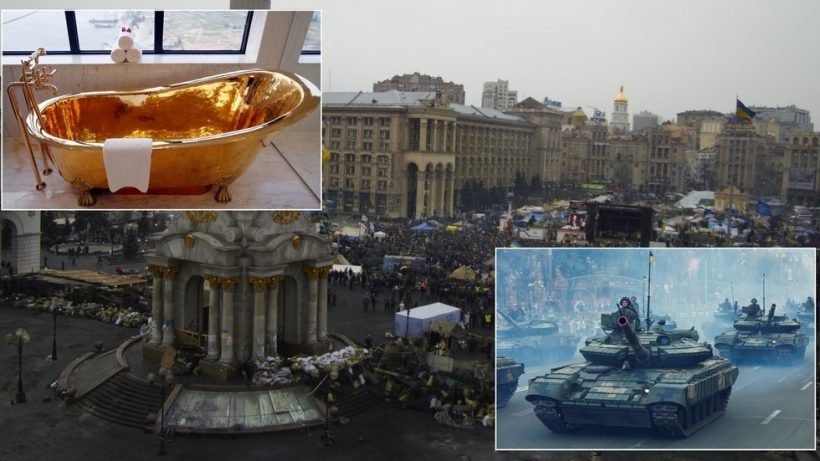
Tanks on Maidan, president’s gold bath & more outrageous Ukraine fakes by disgraced Spiegel reporter
RT | December 22, 2018
One wonders just how outrageous ‘fake news’ must be in order to get busted, but Der Spiegel’s ex-star reporter Claas Relotius got away with it all while writing for several outlets – maybe because it was about places like Ukraine.
Titled ‘Bribing prohibited’ Relotius’ piece on the new Ukrainian police has all the elements of his trademark style: dramatic narrative, likeable heroes – and entirely made-up ‘facts’.
The ‘report’, published by the Swiss magazine Reportagen in June 2016, tells a tale of two young people – Dimitri and Valeria – who became members of the rebranded police force of post-Maidan Ukraine. Given the recent revelations over his fictional reporting, it’s now unclear whether Relotius met the duo in reality, but the story makes for a very compelling read indeed.
It states that each day before going on patrol, Dimitri and Valeria have been coming to the center of Kiev to pray near the “altar” erected in memory of those who died during the 2014 Euromaidan unrest. The two were among the protesters back then, it reveals, describing how they recall burning buildings, the “smell of corpses,” a man “with a child in his arms” shot dead beside an old well – and a ruined wall, where dozens were “slayed by snipers” and “rolled over by tanks.”
Wait, what? Given that the majority of victims in Kiev – both protesters and law enforcement officers – were killed over two days of murky clashes in February 2014, the “smell” of dead bodies appears to be a little of an exaggeration. No “old wells” could immediately be found in central Kiev, and there’s nothing to back up the story about a “man with a child” either.
But most glaring of all, no “tanks” were ever deployed to curb the city unrest, so the “ruined wall” part was made up in its entirety. In reality, the police unsuccessfully tried to use light APCs to storm some barricades, but the vehicles were pelted with Molotovs and burnt down. At least the “burning buildings” part holds some water, as some central Kiev sites, including the Trade Unions Building, were indeed put to the torch.
It’s not much of a surprise that the rest of the article is riddled with inconsistencies and false statements. Notably, it claims that the ousted President of Ukraine, Viktor Yanukovych, had a mansion where he “lived like a pharaoh, with banisters and baths made of pure gold.” The claim appears to be based on the long-debunked rumor that the protesters who stormed the president’s lavish residence discovered a golden toilet.
Incumbent president of the country – Petro Poroshenko – is also described, for some reason, as a “billionaire praline manufacturer from Odessa.” Poroshenko has held several top government posts since the early 2000s, but this fact is not even mentioned in the article. He was indeed born in the Odessa region in the Soviet Union, yet the image of a “successful businessman from Odessa” seems to be quite a stretch.
Describing the old bribery mindset the new police officers have been supposedly battling, Relotius managed to make another, quite outlandish, mistake. The article says that the new police force was in use not only in the capital city of Kiev, but in other major cities, namely “in Kharkiv and Donetsk, in Lviv and in Odessa.”
The problem is, at the time of publication, the eastern city of Donetsk had for two years been under the control of anti-Kiev rebels, who rejected the Euromaidan coup, proclaimed their own republic, and had actual tanks and warplanes sent to crash them into submission – with only limited success.
It doesn’t seem probable that the new Ukrainian police force would have been welcome there – a fact that may have eluded the disgraced Der Spiegel reporter. Just as it, sadly, would go over the head of many of his readers, submerged in the MSM reporting on Ukraine – a narrative often fed from the Kiev government’s POV – and with little fact-checking.
Read more:
Game of deception: How a fraudster who faked his stories for years got to be Germany’s top reporter
Psychoanalysing NATO: The Diagnosis
By Patrick ARMSTRONG | Strategic Culture Foundation | 21.12.2018
In previous essays I argued that NATO tries to distract our attention from its crimes by accusing Russia of those crimes: this is “projection“. NATO manipulates its audience into thinking the unreal is real: this is “gaslighting“. NATO sees what it expects to see – Moscow’s statements that they will respond to medium range missiles emplaced next door are re-jigged as the “threats” which justify NATO’s earlier act: this is “confirmation bias“. And, finally, NATO thinks Russia is so weak it’s doomed and so strong that it is destroying the tranquillity of NATOLand: this is a sort of geopolitical “schizophrenia.” (I must acknowledge Bryan MacDonald’s marvellous neologism of Russophrenia – a condition where the sufferer believes Russia is both about to collapse, and take over the world.)
I wrote the series partly to amuse the reader but with a serious purpose as well. And that serious purpose is to illustrate the absurdities that NATO expects us to believe. NATO here being understood as sometimes the headquarters “international staff”, sometimes all members in solemn conclave, sometimes some NATO members and associates. “NATO” has become a remarkably flexible concept: Libya was a NATO operation, even though Germany kept out of it. Somalia was not a NATO operation even though Germany was in it. Canada, a founding NATO member, was in Afghanistan but not in Iraq. Some interventions are NATO, others aren’t. The NATO alliance today is a box of spare parts from which Washington assembles its “coalitions of the willing“. It’s Washington’s beard.
NATO and its members are inexhaustible sources of wooden language and dishonesty. Take Washington’s demand that Iran get out of Syria while US forces stay there. Syria has a recognised government, that government invited Iran in; no one invited the USA and its minions in. A child could see the upside down nature of this: it’s a housebreaker demanding the host evict the guests and hand over their bedrooms. This, apparently, is what NATO calls the “rules-based order“. Here’s the American official insisting it’s all legal: “our forces are there under a set of legal and diplomatic documents… “; but he only mentions one and it’s an American one. Putin is condemned for saying “Whatever action a State takes bypassing this procedure are illegitimate, run counter to the UN Charter and defy international law“. We are expected to solemnly nod our heads rather than contemptuously laugh when unilateralism is meretriciously named “rules-based”. These inversions of reality are routinely fed to us by NATO and its mouthpieces.
A very recent revelation of NATO’s gaslighting is the Integrity Initiative (such a gaslighting name!) busy trolling away with a couple of million from the British taxpayer. Its remit, apparently, includes infiltrating political movements of an ally and it “defends democracy against disinformation” by smearing its own political actors with disinformation. Does Russia do this? Well there’s RT and Sputnik and “Russians” did spend nearly $5000 on Google and $7000 on Facebook fixing the US election. And almost one dollar on Brexit ads. And one should never forget the insidious effect of Masha and the Bear. But don’t dare laugh at these preposterous assertions: the BBC earnestly assures us that humour is Putin’s newest weapon. Against this mighty effort, there can be no vigilance too strong! The only way to protect our values is to trash them: defend freedom of thought by secretly planting fake stories, defend democracy by smearing the opposition as Russian stooges. Pure gaslighting, defended by projection and confirmation bias: “This kind of work attracts the extremely hostile and aggressive attention of disinformation actors, like the Kremlin and its various proxies“.
NATO hyperventilates about “Russia’s military activities, particularly along NATO’s borders“. Only in NATO’s counterfeit universe could this be imagined; in the real world Russia’s military is inside its own borders. Once again, the proper response is a contemptuous sneer rather than solemn head nodding.
NATO collectively and severally manifests a detachment from reality. Its website is full of pious assertions about being a defensive alliance that brings stability wherever it goes, replete with valuable values. And it always tells the truth. The reality? No rational person would regard Moscow’s concern about a military alliance creeping ever closer as “aggressive”. There is less stability in Libya, Iraq and Afghanistan than before NATO entered them. Fooling around in Yugoslavia, Georgia and Ukraine have sparked actual shooting wars. NATO’s activities in Syria (illegal by any standards of international law, be it remembered) have not brought stability. More civilians killed, Raqqa obliterated, hospitals methodically destroyed. All “tragic accidents” of course; but don’t look here! look at Russia! Only in its imagination is NATO a bringer of stability. As to its values, they’re mutable – it’s good to break up Yugoslavia, invade Iraq and Afghanistan and destroy Libya but Crimeans taking the opportunity to return to Russia is a heinous crime. NATO’s so-called values are whatever NATO does. And as to NATO’s promises: well it did expand, didn’t it? (Here’s NATO’s official weasel-wording: “Personal assurances from individual leaders cannot replace Alliance consensus and do not constitute formal NATO agreement”. And suddenly its narrative jumps to President Clinton. Wrong POTUS, actually; NATO’s caught gaslighting again.) Its intervention in Libya was very far from what the UN resolution approved: it was an armed intervention against the government on false pretences.
Here’s what NATO’s so-called “stability projection” has actually produced: riots in France, partly connected with the influx of “migrants” coming from the Libya that NATO destroyed. But, we are supposed to believe it has nothing to do with NATO, it’s Putin! Only an idiot could believe that.
NATO had a purpose when it was formed, or at least it thought it did. It is true that, at war’s end where the Soviet Army stood “elections” were held and socialist or communist parties came to power and stayed in power. (Austria being an exception). There were at least two ways that one could understand this extension of Soviet power. One was that they were the actions of an expansionist hostile power that fully intended to go all the way to Cape Finisterre if it could and, if not prevented, would. In such a case the Western Allies would be fully justified in forming a defensive alliance to deter Soviet expansion. Another possible interpretation was that, after such a hard victory in so fearfully destructive a war, Moscow was determined that never again would its neighbours be used as an assembly area and start line for the forces of another Hitler. Such an interpretation would call for quite another approach from the Western Allies. We all know which of the two interpretations was followed. I have speculated elsewhere that Reinhard Gehlen may have had a strong influence on that decision. But, for whatever reason, the NATO alliance was founded on that first assumption and it shaped the world in one direction rather than another.
Since the USSR broke up, taking with it NATO’s original raison d’être, NATO members, sometimes under the NATO flag and sometimes not, have helped break up Yugoslavia and Serbia, invaded Afghanistan, Iraq (twice), Syria, destroyed Libya, incited a war in Georgia, carried out a coup d’etat in Ukraine and participated in the civil war there. That’s not stability. And, where NATO has set foot, it stays. KFOR is still bringing “peace and stability” in Year 19 and Kosovo is home to a huge US base. Afghanistan is in Year 17. Iraq is in Year 15. Syria is Year 7 and set to run forever. Ironically Latvians, Estonians and Lithuanians are back in Afghanistan; different flag, same place. That’s not stability either.
And still the wooden language rolls out. But turn off your brain when you read it.
POLITICAL – NATO promotes democratic values and enables members to consult and cooperate on defence and security-related issues to solve problems, build trust and, in the long run, prevent conflict.
MILITARY – NATO is committed to the peaceful resolution of disputes. If diplomatic efforts fail, it has the military power to undertake crisis-management operations. These are carried out under the collective defence clause of NATO’s founding treaty – Article 5 of the Washington Treaty or under a United Nations mandate, alone or in cooperation with other countries and international organisations.
Has post-USSR NATO ever peacefully resolved a dispute? Anywhere? Any time? It’s always military power. What did Article 5 (an attack on one is an attack on all) have to do with NATO’s war on Libya? Did it attack one of them? How about Serbia? One can (fraudulently) argue that someone in Afghanistan attacked the USA but who did in Iraq? As to “democratic values”, well, it will be amusing to watch NATO’s reactions to Ukraine President Poroshenko trying to avoid the election. And nobody likes to mention the pack of organ harvesters and drug runners NATO gave a whole country to.
If NATO were a human individual on the couch, a case could be made that it is living in a fantasy world in which everything is reversed.
Woe unto them that call evil good, and good evil;
that put darkness for light, and light for darkness;
that put bitter for sweet, and sweet for bitter!
Delenda NATO est!
Ukraine plans another incursion into Kerch Strait, hopes NATO ships will join in – top official
RT | December 20, 2018
Kiev is considering sending its Navy ships through the Kerch Strait again, a high-ranked official said weeks after a tense standoff between Russian and Ukrainian vessels in the area.
Another passage by Ukrainian Navy ships through the Kerch Strait which connects Black and Azov Seas might take place very soon, according to Alexander Turchinov, head of Ukraine’s National Security and Defense Council. “I think that this issue cannot be delayed,” he told BBC News Ukraine on Wednesday.
Turchinov, who briefly served as interim president after the Western-backed 2014 Euromaidan coup in Kiev, didn’t mince his words while explaining the rationale between the action. To him, Russia is after “seizing the Azov Sea,” install new maritime borders and “legitimize the occupation of Crimea.”
The only antidote to the plan is “to show to the entire world that Ukraine has not lost its position in the Azov Sea.” Turchinov was speaking several weeks after three Ukrainian ships attempted to break through the strait which Russia had closed on safety reasons.
On November 25, three Ukrainian Navy vessels, including two combat-ready gunboats, entered the Kerch Strait without getting proper clearance first, according to Moscow. After ignoring multiple warnings and demands to stop, they were fired upon and seized by the Russian coast guard, while the sailors were taken to custody.
This time, the official said he hopes Ukraine will not be left alone in the next endeavor. “It would be very logical if NATO ships which we invited [to visit] the Azov Sea ports make sure that Russia complies with international law,” he said, lamenting the military bloc provided no response yet.
Nevertheless, Turchinov hopes that “during the next passage of Ukrainian warships through the Kerch Strait they will at least send their observers to us.” Kiev had also invited officials from OSCE and other international bodies to be on board Ukrainian ships to prove “that Ukraine and its sailors do not violate any laws and international rules.”
The latter phrase sounds odd given that Moscow had accused Ukrainian sailors of deliberately violating Russia’s maritime borders in the Kerch Strait and breaking specific rules of passing through the narrow, complex water area. Top Russian officials maintained that this was a premeditated and provocative act plotted by the Ukrainian government.
Turchinov’s BBC interview was predictably met with little praise in Moscow. “This was just an announcement of another provocation,” Foreign Ministry spokeswoman Maria Zakharova said on Wednesday, calling it “utterly irresponsible.” She noted the inflammatory remark came at the time when “many Ukraine’s partners try to defuse tensions in this situation and seek ways of de-escalation.”
It also comes several days after the UN General Assembly passed a Ukrainian resolution, condemning the presence of the Russian military in the Crimean Peninsula and the surrounding waters of the Black Sea and the Azov Sea. 66 countries supported the non-binding resolution but 72 abstained from voting altogether.
Featured Video
The American Retreat from Vietnam
or go to
Aletho News Archives – Video-Images
From the Archives
Secret document reveals plans for civil war in Lebanon, Israeli false flags, and invasion
By Randi Nord | Geopolitics Alert | April 5, 2019
Beirut – During his visit with US Secretary of State, Mike Pompeo, Lebanese President Michael Aoun reportedly received a US-Israeli document detailing plans for creating a civil war in Lebanon with covert false flag operations and possible Israeli invasion.
Although the source of the document is Israeli and created in partnership with Washington, no one knows who presented it to Aoun. The Lebanese TV station, Al-Jadeed, initially reported the document on Lebanese TV and a video on its website. Geopolitics Alert translated the report for this article. … continue
Blog Roll
 Aletho News
- There’s a drought in academia: A drought in honest research on the subject of drought and other weather extremes
- Department of War Awards $20.7 Billion Contract to Raytheon for Air-to-Air Missiles
- ‘Distance yourselves from Israel’: IRGC urges US population to question govt policies
- America’s Greenland deal has a radioactive backstory
- The RAF Fairford ‘terror plot’: Unpacking escalation in the UK echo-chamber
- EU Council Advances Chat Control 2.0 Scanning Proposal
- Ex-Greek MEP files complaint against Israeli spyware firm over alleged Pegasus surveillance
- Troubling ideas throughout the Torah, Talmud, Mishneh Torah and Tanya
- ‘Grave, alarming’: Iran mission on Trump’s UNGA ‘annihilation’ threats
- Najaf airport to reopen to Iranian flights within 24 hours: Ambassador
- If Americans Knew
- New Report: “Scholasticide and Genocide in Gaza: Assessment, Testimonies and Legal Analysis”
- Ex-Biden officials are desperate for a Gaza scapegoat
- Israeli “settlers” Invade Al-Aqsa; Pour Boiling Water on 75-Year-Old
- Israel Has Kidnapped Another American Teenager
- US arms sales to Israel worth $21.6 billion in 20 months
- Three Palestinians Killed in Israeli Attacks on Gaza
- Revealed: German “Anti-Semitism Expert” Driving Crackdown on Palestine Solidarity is Former Israeli Spy
- Egypt’s Warning to Israel Before Oct 7
- Israel’s siege signals another cruel winter for 1.8 million Gazans – Daily Update
- Netanyahu Asked UAE Leader to Deny Report on Oct. 7 Warning in Secret Visit, Sources Say
- No Tricks Zone
- New Study: Earth And Venus Surface Warmth Largely Explained By Convection And Lapse Rate, Not CO2 Or Radiation
- 2025 Nature Paper Claiming Worsening Global Drought Gets RETRACTED …Heavily Flawed
- New Study: ‘Global Drought Shows No Detectable Recent Acceleration Under Climate Warming’
- Economic Masterminds: German Socialists Suggest Taxing Productivity Gains Stemming From Using AI
- The South China Sea Has Not Been Cooperating With The Climate Change Narrative
- Energy Crisis: Germany Enters Heating Season With Historically Low Gas Reserve Fill Levels
- New Study: The Antarctic Ice Sheet Gained Mass From 2020-2024 Due To Staggering Snow And Ice Accumulation
- Study: Ocean Heating Rates From Thousands Of Years Ago ‘Dwarf’ Modern Ocean Heating Rates
- Climate Extremists Target, Attack Large-Scale Power Grid Infrastructure In Germany!
- New Study: Antarctic Ice Melt Has Contributed Less Than 1 Centimeter To Sea Level Rise In The Last 30 Years

