We noted in a previous post how important Ukraine was to George Soros, with documents from DC Leaks that show Soros, and his Open Society NGO, scouring the Greek media and political landscape to push the benefits of his Ukraine coup upon a Russian leaning Greek society.
Now more documents, in the massive 2,500 leaked tranche, show the immense power and control Soros had over Ukraine immediately following the illegal Maidan government overthrow.
Soros and his NGO executives held detailed and extensive meetings with just about every actor involved in the Maidan coup… from US Ambassador Geoffrey Pyatt, to Ukraine’s Ministers of Foreign Affairs, Justice, Health, and Education.
The only person missing was Victoria Nuland, though we are sure those meeting minutes are waiting to see the light of day.
Plans to subvert and undermine Russian influence and cultural ties to Ukraine are a central focus of every conversation. US hard power, and EU soft power, is central towards bringing Ukraine into the neo-liberal model that Soros champions, while bringing Russia to its economic knees.
Soros NGO, International Renaissance Foundation (IRF) plays a key role in the formation of the “New Ukraine”… the term Soros frequently uses when referring to his Ukraine project.
In a document titled, “Breakfast with US Ambassador Geoffrey Pyatt”, George Soros, (aka GS), discusses Ukraine’s future with:
Geoffrey Pyatt (US Ambassador to Ukraine); David Meale (Economic Counsellor to the Ambassador); Lenny Benardo (OSF); Yevhen Bystrytsky (Executive Director, IRF); Oleksandr Sushko (Board Chair, IRF); Ivan Krastev (Chariman, Centre for Liberal Studies); Sabine Freizer (OSF); Deff Barton (Director, USAID, Ukraine)
The meeting took place on March 31, 2014, just a few months after the Maidan coup, and weeks before a full out civil war erupted, after Ukraine forces attacked the Donbass.
In the meeting, US Ambassador Pyatt outlines the general goal for fighting a PR war against Putin, for which GS is more than happy to assist.
Ambassador: The short term issue that needs to be addressed will be the problem in getting the message out from the government through professional PR tools, especially given Putin’s own professional smear campaigns.
GS: Agreement on the strategic communications issue—providing professional PR assistance to Ukrainian government would be very useful. Gave an overview of the Crisis Media Center set up by IRF and the need for Yatseniuk to do more interviews with them that address directly with journalists and the public the current criticisms of his decision making.
Pyatt pushes the idea of decentralization of power for the New Ukraine, without moving towards Lavrov’s recommendation for a federalized Ukraine.
GS notes that a federalization model would result in Russia gaining influence over eastern regions in Ukraine, something that GS strictly opposes.
Ambassador: Lavrov has been pushing the line about constitutional reform and the concept of federalization in Russia. The USG reaffirmed it will not negotiate over the heads of the Ukrainians on the constitutional reform issue and that Ukraine needs to decide on this issue for itself. He noted that there are templates for devolution that can be used in this context but that the struggle will be to figure out how to move forward with decentralization without feeding into Russian agenda.
GS: Federalization plan being marketed by Putin to Merkel and Obama would result in Russia gaining influence and de facto control over eastern regions in Ukraine. He noted Lavrov has clear instructions from Putin to push the line on federalization.
Ambassador: Secretary Kerry would be interested to hear GS’s views on the situation directly, upon return from his trip.
SF: There is no good positive model for federalization in region, even models of decentralization are very poor because the concept is not very common. The institutions need for decentralization do not yet exist and need to be built.
YB: Ukraine should pursue a decentralization policy based on the Polish decentralization model. IRF funded the development of a plan based on this model previously and those involved are now advisers to government on this issue.Noted it is also important to encourage the constitution council created y government to be more open and involve independent experts.
Ambassador: Constitutional reform issue as the most urgent issue facing Ukraine—there is a need to decentralize in order to push democracy down to the local level and break the systemic corruption that results from Kiev’s authority over the local governments.
Ambassador: Russian propaganda machine telling Kharkhiv and Donbass residents that the government in Western Ukraine is looking to take away their resources and rights through decentralization process, feeding into Lavrov’s line that the Ukrainian government is dysfunctional and not successful as a unitary state, making it a necessity to have federalization.
The participants cannot stop fixating on Russia and Putin throughout the meeting. The Ukraine project seems to be more about sticking it to Russia, then about saving a country about to fall into the abyss.
US Ambassador Pyatt hands over full control to GS, and point blank asks him, “what USG should be doing and what the USG is currently doing.”
GS’s response is stunning,“Obama has been too soft on Putin”…
Ambassador: Asked GS for a critique of US policy and his thoughts on what USG should be doing.
GS: Will send Ambassador Pyatt copies of correspondences he previously sent to others and his article in NY Review of Books. Obama has been too soft on Putin, and there is a need to impost potent smart sanctions. He noted the need for a division of labor between the US and the EU with the US playing the bad cop role. The USG should impose sanctions on Russia for 90 days or until the Russian government recognizes the results of the presidential elections. He noted that he is most concerned about transitional justice and lustration.
Ambassador: USG will organize conference with the British at the end of April on financial crimes that will bring together senior level government officials and representatives of the international community to discuss where money went. He noted his worries about the complete implosion of the Party of Regions and will be speaking to IRI and NDI about offering assistance to reconstruct the party for the post-Yanukovych era.
US Ambassador Pyatt decides to take out Tymoshenko from the New Ukraine equation.
She served her purpose as a poor and sick political prisoner while Yanukovich was in power, saying that “Tymoshenko is associated with everything undignified”…
Ambassador: Personal philosophy on the greatest need for Ukraine right now is the need for national unification. This will not happen under Tymoshenko because she is perceived as a hold over of the old regime and a very divisive personality. He calls the revolution a “revolution of dignity” and Tymoshenko is associated with everything undignified.
GS: Need to cleanse the “original sin” that all of the current presidential candidates are marked with in order for Ukraine to move forward.
Concern over the Pravy Sector, and how to disarm, or integrate, the muscle that was used to instigate much of the violence during the Maidan is debated.
Soros even throws out his suspicion that the Privy Sector has been infiltrated, and now is working under Russia’s FSB.
GS: Belief that the Pravy Sector is an FSB plot and has been funded to destabilize Ukraine
Ambassador: Agreed that this was at least partly true, but the problem now is that Pravy Sector has become organic and is still armed. There is a need for the government to figure out how to demobilize and disarm the Pravy Sector.
GS: How can we defend against Putin’s attempts to destabilize the May elections?
Ambassador: The international community should send in a flood of observers from the OSCE and other institutions. The US Embassy is also currently working with the local intelligence agencies to monitor the situation and they have already found Russian agents. He noted that a second ambassador, Cliff Bond, will be brought into the embassy to focus on the longer term questions such as decentralization, lustration, e-governance, and anti-corruption and will be coordinating with the donor community on these issues. Obama has instructed the embassy to focus primarily on economic support and assistance for Ukraine, avoiding military support or assistance.
GS: Hopes that going forward there will be close contact and cooperation between the US Embassy and the IRF.
The meeting minutes documented present a clear and conclusive case that George Soros and his International Renaissance Foundation (IRF) manipulated Ukraine into moving towards an untenable and self destructive direction.
In one meeting under the title, “Civil Society Roundtable Meeting”, Crimea fifth column schemes are advanced as viable solutions to those participating in the discussion.
Likewise we see how involved Soros was in making sure a Ukraine under federalisation is completely undermined at the highest levels, influencing Merkel and Obama to reject such initiatives.
In hindsight it has now become clear as day that the only way Ukraine was going to survive the coup in one piece was to move towards a federalised model of governance.
He [George Soros] noted that Ukraine is in grave danger because Putin knows he cannot allow the new Ukraine to succeed. He reiterated his points about the conversations Putin has had with Merkel and Obama about federalism and his concerns surrounding that development. He noted that he hasn’t had direct feedback yet regarding this issue and is basing his worries on second hand information about the reactions of Merkel and Obama. But he reiterated the need for the Ukrainian government to respond loudly and immediately.
Is Crimea about to explode? The mainstream media reports that Russia has amassed troops on the border with Ukraine and may be spoiling for a fight. The Russians claim to have stopped a Ukrainian sabotage team that snuck into Crimea to attack key infrastructure. The Russian military is holding exercises in Crimea and Russian President Vladimir Putin made a visit to the peninsula at the end of the week.
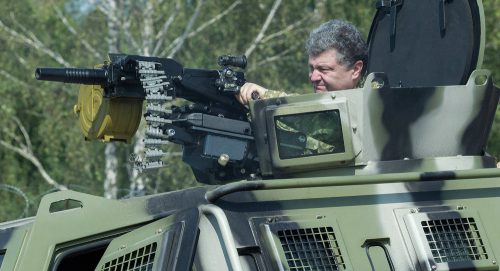
The Ukrainians have complained to their western supporters that a full-scale Russian invasion is coming, and Ukrainian President Petro Poroshenko said he may have to rule by martial law due to the Russian threat.
Though the US media pins the blame exclusively on Russia for these tensions, in reality there is plenty of blame to go around. We do know that the US government has been involved with “regime change” in Ukraine repeatedly since the break up of the Soviet Union. The US was deeply involved with the “Orange Revolution” that overthrew elected president Viktor Yanukovych in 2005. And we know that the US government was heavily involved in another coup that overthrew the same elected Yanukovych again in 2014.
How do we know that the US was behind the 2014 coup? For one, we have the intercepted telephone call between US Assistant Secretary of State Victoria Nuland and US Ambassador to Ukraine, Geoffrey Pyatt. In the recording, the two US officials are plotting to remove the elected government and discussing which US puppet they will put in place.
You would think such undiplomatic behavior could get diplomats fired, but sadly in today’s State Department it can actually get you promoted! Nuland is widely expected to get a big promotion – perhaps to even Secretary of State – in a Hillary Clinton administration, and Geoffrey Pyatt has just moved up to an Ambassadorship in Athens.
Ambassador Pyatt can’t seem to control himself: Just as tensions were peaking between Russia and Ukraine over Crimea this month, he published a series of Tweets urging Ukraine to take back Crimea. Is this how our diplomats overseas should be acting? Should they be promoting actions they know will lead to war?
When the mainstream media discusses Crimea they are all lock-step: that’s the peninsula Putin annexed. Never do they mention that there was a referendum in which the vast majority of the population (who are mostly ethnic Russians) voted to join Russia. The US media never reports on this referendum because it produced results that Washington doesn’t like. How arrogant it must sound to the rest of the world that Washington reserves the right to approve or disapprove elections thousands of miles away – meanwhile we find out from the DNC hacked files that we don’t have a lot of room to criticize elections overseas.
What should we do about Ukraine and Russia? We should stop egging Ukraine on, we should stop subsidizing the government in Kiev, we should stop NATO exercises on the Russian border, we should end sanctions, we should return to diplomacy, we should send the policy of “regime change” to the dustbin of history. The idea that we would be facing the prospect of World War III over which flag flies above a tiny finger of land that most US politicians couldn’t find on a map is utterly ridiculous. When are we going to come to our senses?
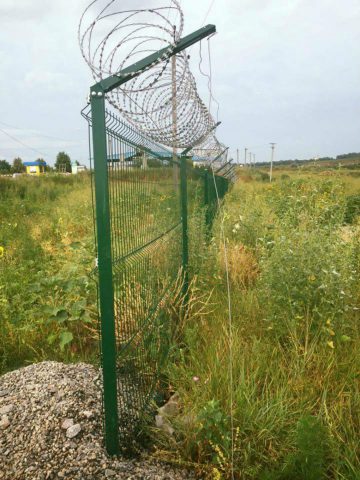
Public outcry is growing in Ukraine over the amount of money spent on the construction of what was supposed to be a ‘wall’ at the border between Ukraine and Russia, presented at the time by ex-PM Yatsenyuk as no less than ‘The European Rampart’; it turned out to be a metal fence, which “wouldn’t even stop a rabbit.”
One of Ukraine’s most widely discussed and costly projects from the times of the former Prime Minister Yatsenyuk – a giant wall on the border with Russia dubbed no less than ‘The European Rampart’ turns out to be a figment of our collective imagination.
‘The Wall’, which was once claimed to become an “arrangement of the Eastern border of Europe,” is actually a metal fence which “wouldn’t even stop a rabbit,” and by all accounts, the money that was chanelled into the grand scheme has been embezzled.
Last week the Ukrainian media reported that the country’s Specialized Anti-Corruption Prosecutor’s Office (SAP) opened a criminal case over the embezzlement of funds allocated for the implementation of the proposed barrier, which was supposed to act as a layered defense system on the border with Russia.
SAP’s head, Nazar Golodnitsky, told journalists that prosecutors will go to the site “to look, to describe and to examine.”
Meanwhile the deputies of the Verkhovnaya Rada, the country’s parliament, have already visited the site of the wall and posted their impressions on their Facebook pages.
Deputy Borislav Bereza called it a “garden wire netting” which “wouldn’t even stop a rabbit.”
“My colleague Elena Sotnyk has gone to have a look at the notorious Wall which Yatsenyuk has been pouring millions of hryvnas into,” the deputy wrote at this Facebook page.
“And so what do we see now? There is no wall, no money and no Yatsenyuk. However there is Yatsenyuk running around Washington in his pink t-shirt.”
“And who is going to answer for this “creativity” which under the wartime laws could be considered a raid, undermining of state security and large-scale money embezzlement,” he further wondered.
Elena Sotnyk also posted her comments where she called it a “pit at the cost of 4 billion hryvnas ($158 mln).
“Let me remind you that we are talking about ‘The European Rampartl’ – Yatsenyuk’s “strategic fortification project,” which he used for self-promotion and PR for almost a year. The project is still claimed to be under construction and the budget money is still being allocated to this epic wall,” she wrote on her Facebook page.
Public officials and experts were outraged by the construction cost.
According to deputy Bereza, Yatsenyuk’s government has already spent over 1 billion hryvnas ($39 mln), while Sotnyk’s estimates suggest it was 4 billion hryvnas ($158 mln).
The project has been strongly criticized by experts who explained that such a wall couldn’t possibly deter the hypothetic assault of a regular army. Regular citizens have also posted pictures online of flooded pits and criss-crossed fences.
Ukrainian political analyst, director of the Institute of Political Management and Analysis Ruslan Bortnik suggested that the primary purpose of the project was to calm down the Ukrainians in the midst of the military hysteria when everyone was afraid of “Russian intervention.”
And already during the construction of the fence, public officials have invented corruption schemes, he told Russian online newspaper Vzglyad.
Director of the Center for Eurasian Studies Vladimir Kornilov suggested that the project was an exceptional PR stunt which went very well.
“Ukrainian public servants and foreign politicians have actively taken pictures on the background of dug-out pits, simulated some activity, appropriated the allocated grants and budget money and left happily,” he told the website.
He also recalled that even though the ‘Project Wall’ was initially associated with the Yatsenyuk’s government, Geoffrey R. Pyatt, former US Ambassador to Ukraine who has recently left it for Greece, has also regarded it as his own achievement.
“He has only just left, and already the Ukrainian authorities have begun arresting public servants for the unfinished construction of the wall,” Kornilov said.
Back in 2014 then-Ukrainian Prime Minister Arseniy Yatsenyuk announced that he would fence the country’s 2,000 kilometer border with Russia, claiming that it would prevent Russian military and paramilitary personnel from infiltrating the nation’s territory.
Kiev then said it needed more than $500 million and four years to complete its wall.
“The ‘European Rampart’, and namely its construction and equipping the state borders with Russia, will be completed. This project should be finished within four years,” Yatsenyuk said at the time.
The prime minister stated that Ukraine was establishing a “separate state agency to support the border,” adding that the project will cost an estimated 8 billion hryvnas [about $510 million].
Yatsenyuk had faced a great deal of scrutiny for the wall’s lack of progress and although he has branded the project the “European Rampart” it is more widely known by its ironic name “the Great Wall of Ukraine.”
In every age it has been the tyrant, the oppressor and the exploiter who has wrapped himself in the cloak of patriotism, or religion, or both to deceive and overawe the People.
— Eugene Victor Debs, 1855-1926.
Oh dear, as the fantasy of Vladimir Putin as “Vlad the Terrible” ratchets up in the US-UK-NATO driven new Cold War, the Independent runs a piece headed “What lies behind the new Russian threat to Ukraine”, the sub-heading is: “Vladimir Putin, his opponents repeatedly point out, has form on this. The war between Russia and Georgia took place in 2008 at the time of the Beijing Olympics”
Trying to find the “Russian threat to the Ukraine” is, as ever, a hard task. It was, of course, the US which organized the February 2014 coup which replaced the legitimate government and reduced yet another country to chaos. Russia, however, also appears the victim in a recent incident which triggered the Independent article which Katehondescribes with admirable clarity:
A Ukrainian group of saboteurs was arrested last week (10th August) by Russia’s secret service, the FSB. It was revealed that the Ukrainians had intended to organize terrorist attacks in Russian Crimea. During the arrest, two Russian citizens from the Federal Security Service and military of the Armed Forces were killed. This tragic incident has provoked tensions between Ukraine and Russia. The Ukrainian regime has begun to move its troops towards the border with Russia and the republics of Donbass, preparing for an invasion.
Thus Ukrainian forces are encroaching on Russia, not the other way round. Moreover, according to The Telegraph (August 10th): “Russian security agencies said on Wednesday that two Russians were killed as they thwarted Ukrainian commando raids into Crimea over the weekend.” (Emphasis added.) The paper expands:
The FSB said the agent who died was killed during an overnight operation on Saturday and Sunday, when officers smashed a ‘terrorist’ group and seized an arms cache including twenty homemade explosive devices. The Agency claimed Ukrainian forces tried to ‘break through’ twice more on Sunday night and Monday morning, killing a Russian soldier.
Katehon further comments:
Obviously, this hostile activity is coordinated with the United States and NATO, which want to unleash a new war on the border with Russia. At the same time, the US leadership believes that Russia will not inflict a crushing defeat on Ukraine and thereby objectively lower its status in the geopolitical confrontation by trying to solve an insolvable conflict. At the same time, the United States wants to show ‘Russia’s aggressiveness’ to Europe.
Faithfully toeing the West’s misteaching mantra, the Independent article dropped in:
Crimea has not experienced serious military action since it was annexed from Ukraine by the Kremlin in the chaotic aftermath of the Maidan protests.
Crimea, of course, was not “annexed” by a marauding Russia as is implicated.
Only two years ago the paper wrote of the referendum (March 16th, 2014) held in Crimea – arranged by Crimea, not Russia – in which over 95% of voters made their feelings clear over the US engineered coup:
Fireworks exploded and Russian flags fluttered above jubilant crowds on Sunday after residents in Crimea voted overwhelmingly to secede from Ukraine and join Russia … after the polls closed late on Sunday, crowds of ethnic Russians in the regional Crimean capital of Simferopol erupted with jubilant chants in the main square, overjoyed at the prospect of once again becoming part of Russia.
The referendum was monitored by 135 international observers from 23 countries.*
Russia thus had not aggressively “annexed” Crimea, the people had voted to secede. Definition of referendum: “A general vote by the electorate on a single political question which has been referred to them for a direct decision.” (Oxford Dictionary.) At the time of the referendum Russia anyway had a lease on Crimea until 2042 under the Kharkiv Pact.
On the day of the referendum the White House released a statement ending, apparently without irony:
In this century, we are long past the days when the international community will stand quietly by while one country forcibly seizes the territory of another. We call on all members of the international community to continue to condemn such actions, to take concrete steps to impose costs, and to stand together …
Breathtaking!
This from a country that has, since the end of World War 11, “forcibly seized”, invaded, interfered in or decimated thirty three countries to 2011 – not counting Syria and Ukraine subsequently.
As for “The war between Russia and Georgia took place in 2008 at the time of the Beijing Olympics”, in the Independent’s epic bit of Russia bashing:
Leaked State Department documents provide further evidence that United States authorities knew that the ex-Soviet republic of Georgia, a key ally of Washington in the Caucasus region, initiated the August 2008 war with Russia.
Cables from US diplomats in the Georgian capital, Tbilisi, were released through the whistleblower website WikiLeaks. They show that Washington was well aware that the Georgian government was intensifying its military build-up near the breakaway province of South Ossetia in the weeks before the outbreak of full-scale hostilities.
Further:
A cable records that US embassy observers witnessed 30 government buses ‘carrying uniformed men heading north’ towards South Ossetia the day of the Georgian attack.
The Georgian assault on South Ossetia, launched August 7, involved the shelling of the main city of Tskhinvali followed by a ground invasion by 1,500 troops. The operation destroyed hundreds of civilian properties and claimed the lives of an estimated 160 South Ossetians and 48 Russian military personnel.
Despite this knowledge of Georgian military preparations, once the war began, US ambassador John Tefft simply relayed the claims of Georgian President Mikhail Saakashvili that Russia was the aggressor.
The pretext for the attack was US ally Georgia’s allegation of an imminent Russian attack.
The subsequent investigation into the invasion and destruction, held under Swiss diplomat Heidi Tagliavini, found that: “None of the explanations given by the Georgian authorities in order to provide some form of legal justification for the attack”, were valid.
“In particular, there was no massive Russian military invasion under way, which had to be stopped by Georgian military forces,” Tagliavini confirmed.
“There is the question of whether the force by Georgia during the night of 7/8 August was justifiable under international law. It was not …”, the investigators found.
It was: “The shelling of Tskhinvali by the Georgian armed forces during the night of 7 to 8 August 2008” which “marked the beginning of the large-scale armed conflict in Georgia”, the Report stated. Thus Georgia’s belligerence triggered Russia’s response in defence of an allied country, Russia’s own military personnel and Russia’s three military bases there.
The parallels between the Georgia and Crimea disinformation are stark, whether orchestrated by political Western Cold Warriors, or media ones.
Russian Minister of Foreign Affairs, Sergey Lavrov has said relating to the Crimea insurgents:
We really don’t conceal what is known, we show people who were detained, stores with weapons and munitions, which were detected in the Crimea. Of course we cannot show everything on TV, but we have irrefutable evidence that it was sabotage, which had been masterminded by the main directorate of intelligence of the Ukrainian Defence Ministry and aimed to destabilize the Russian Crimea.
He added: “Russia is open for provision of additional facts … to our Western partners, who are seriously interested in avoidance (of a repeat) of what happened in the future. For that to happen, one should influence Kiev”, he added pointedly.
So why the Independent’s strange interpretation of above events and creating a fantasy of Russia planning an Olympic timed war? Heaven forbid it would be anything to do with their owner, Russian billionaire and former KGB agent Alexander Lebedev, who bought the ailing newspaper for just a £1 in March 2010, pledging major financial backing.
The Independent built a name on foreign policy expertise, but this year has been forced to shut down the main daily print version and the Independent on Sunday. Whilst the Independent is still on line, the only hard copy in its stable is the good, but more limited daily “I.”
Billionaire backers are rare in these straightened times. Mr Lebedev is a Putin critic. The cynic might say there could be a connection given the slant of the Crimea story. However, with titles Alexander Lebedev has backed at home and abroad, he has always vowed never to interfere with editorial policy, so many would surely regard such thoughts as conspiratorial rubbish.
* For minute detail on Ukraine complexities also see here.
Russia deems it vital to restore economic relations with Ukraine, Russian President Vladimir Putin said Friday after appointing the former education minister to the post of trade envoy with the neighboring country.
Putin accepted the prime minister’s proposal to appoint Olga Vasilyeva as the new Minister of Education and Science. Her predecessor Dmitry Livanov was assigned special envoy for trade and economic relations with Ukraine.
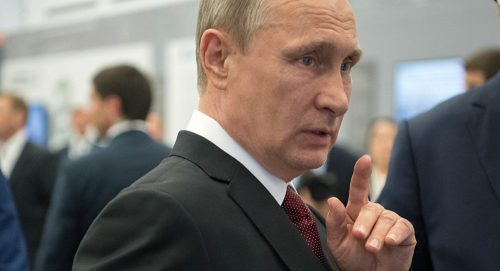
“The development of trade and economic relations [with Ukraine] should be in the permanent field of our attention,” Putin said during a working meeting with Prime Minister Dmitry Medvedev on arrival to Crimea.
Noting Livanov’s “purely civilian” credentials with extensive public sector experience, Putin noted that his “personal business acumen will help in building and reviving economic relations with our neighboring country, which is important to us.”
The bulk of George Soros’ documents hacked and published on DC Leaks website shed light on the magnates’ meddling into Ukrainian affairs and shaping public opinion in Western Europe regarding the February coup of 2014 in Kiev through a series of projects and media campaigns.
DC Leaks’ release of almost 2,576 files from groups run by US billionaire George Soros, has exposed the magnate’s involvement in Ukraine’s Euromaidan affairs as well as manipulation of public opinion in Western and Southern Europe in order to “legalize” the February 2014 coup in Kiev.
“The emergence of a New Ukraine carries with it the opportunity to reinvigorate the European project,” read a 2015 document by the Open Society Initiative for Europe (OSIFE) entitled “The Ukraine debate in Western Europe.”
“However, this is complicated by the reluctance of some EU actors to accept the Maidan revolution as democratic and the Ukrainian government as legitimate. These actors have their own agendas — related to geopolitical and economic considerations with Russia — and will therefore be difficult to influence,” the OSIFE document underscored, adding that “for other groups and individuals, on the political left and across various social movements, one can detect confusion regarding the state of affairs in Ukraine.”
OSIFE specified that this “second group” comprised key opinion-makers, a number of traditional mainstream players, emerging political parties — especially in Southern Europe — such as M5S in Italy, Podemos in Spain and Syriza in Greece, and “a wide range of liberal NGOs in western Europe.”
In order to tackle the “problem,” the organization offered to kick off a series of initiatives aimed at shaping public opinion in the West regarding the Ukrainian affairs.
The document revealed that OSIFE pursued three major objectives.
First, it sought to “stimulate debate and doubt in those democratic left movements, parties and audiences of Western Europe where a negative perception of the transformation of Ukraine is hegemonic, or very preponderant.”
Second, it wanted to “discredit the idea that the independence and integrity of Ukraine is an ideological cause of the Right.”
Third, OSIFE intended to “influence the way information about Ukraine is heard and perceived in Southern Europe, especially among the group of doubters.”
The issue was dramatically complicated by the fact that the major driving forces of the so-called “Euromaidan Revolution” of February 2014 were the Ukrainian far-right groups, most notably the nationalist All-Ukrainian Union Svoboda and Right Sector, founded by ultra-right Trident and the Ukrainian National Assembly-Ukrainian National Self-Defense (UNA-UNSO) paramilitary group.
“The surge in violence sparked by Right Sector has revealed how uncritical and undiscerning most of the media has been of the far-right parties and movements that have played a leading role in the ‘Euromaidan,'” US journalist Alec Luhn warned on January 21, 2014, in his article for the Nation.
It was again the right-wing militants who championed Kiev’s Anti-Terrorist Operation (ATO) in eastern Ukraine aimed against the breakaway Donbass regions.
However, regardless of Kiev’s activities casting shadow on the image of “New Ukraine,” OSIFE’s plan envisaged spending $750,000 in 2015 on grants, consultancy contracts, fellowships, workshops, exchange visits, conferences and advocacy activities in order to reach the objectives.
For instance, the Soros entity planned to provide “greater presence of voices from Ukraine’s civil society in left leaning and alternative press” in the West.
In addition, it sought to amplify “left-wing ‘pro-Maidan’ opinion formers’ voices” in the debate on Ukraine by organizing conferences “on the New Ukraine in partnership with the political science/international affairs department in the leading universities in each of Germany, France, Spain, Italy and Greece.”
“Russia’s line on Ukraine will be subjected to a greater degree of scrutiny and skepticism by the left-wing actors involved in this project, relating to the European anti-fascist movement will be a key entry point in this debate,” the document read.
To manipulate the Europeans’ vision of Maidan, OSIFE planned to involve such reputable mainstream media source as, for example, the Guardian (“to increase coverage of voices from the New Ukraine — e.g. Maidan”) and the alternative press such as Eurozine, Huffington Post, Street Press, and Internazionale as “key influencers for the audience we [OSIFE] are targeting.”The document shows that OSIFE envisioned funding translations of articles of Ukrainian journalists and providing individual grants to “investigative” reporters covering the situation on the ground in Ukraine to counter Russia’s narrative.
But that is not all. Another document released by DC Leaks indicates how OSIFE planned to “amplify independent media voices from Ukraine in France.”
To propagate OSIFE’s Ukraine narrative among left-leaning media outlet the organization envisioned “establishing media partnerships between Ukrainian and European outlets allowing content syndication and other collaborative opportunities.”
“We have established contact with Hromadske International, an emerging media outlet in Ukraine combining broadcast and online content,” the report read, adding that Hromadske may become a potential Ukrainian “incubator” for the project.
OSIFE also planned to involve Mediapart in France to kick off the project.
“The good potential synergy between Hromadske and Mediapart… offers an opportunity to launch this project by OSF enabling an introduction between Hromadske and Mediapart,” the report continued.
OSIFE foresaw that such a partnership “would allow Hromadske and inroad into France,” with the potential for further expansion of its partnership network in four other EU’s “key countries” — Germany, Spain, Italy and Greece.
The two documents observed constitute only the tip of the iceberg of George Soros’ comprehensive and longstanding policy regarding Ukraine. However, they shed light on the depth of the billionaire’s interference into the affairs of the post-Soviet state.
The Saturday leak turned the spotlight on George Soros’ global activities, exposing work plans, strategies, priorities of the Soros-run entities across the world, covering the period from 2008 to 2016.
“Soros, the master manipulator of governments who pulls the strings at the State Department, will face unprecedented scrutiny,” Thomas Lifson of the American Thinkercommented on the hack.
The Wall Street Journalreported Sunday that DC Leaks previously released the content of email and records of the US Democratic Party, as well as those of Gen. Philip Breedlove, a former supreme commander of NATO.
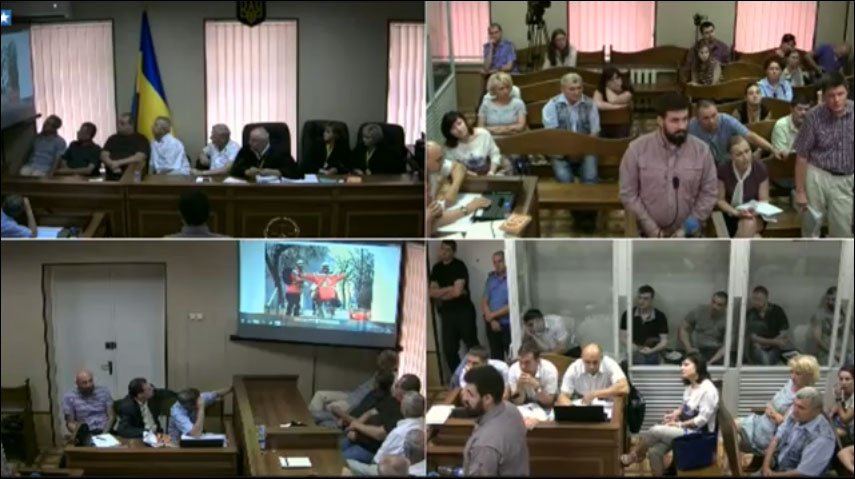
Unbeknownst to consumers of mainstream Western media, trials in Ukraine are ongoing against officers of the former ‘Berkut’ police force who were on duty in Maidan Square, Kyiv at the height of the violent protest movement that overthrew the elected President Victor Yanukovych on February 22, 2014.
‘Maidan Massacre’ trial in Kyiv – Aug 4, 2016
Trial proceedings are filmed and broadcast (in Ukrainian language), but Western media is loathe to cover and report on proceedings. That’s because trial testimony is countering the centrepiece of the Western propaganda construct of the overthrow of Ukrainian President Victor Yanukovych in February 2014, namely the killings by sniper fire of dozens of protesters on Maidan Square on February 20, 2014.
Western governments and media have claimed all along that the killings were the work of the Berkut special police under orders of the Yanukovych government to suppress the protests. But as revealed at the trial and brought to light in the English language by the ongoing writing of Ottawa researcher Ivan Katchanovski, it turns out that most if not all of the sniper killings were perpetrated by paramilitaries of the extreme, right-wing forces on Maidan Square.
Katchanovski is reporting the revelations at the ‘Maidan Massacre’ trials on his Facebook page and in occasional academic papers analyzing the whole snipers episode. Enclosed is his report of August 5, 2016 on Facebook, reporting on trial revelations the day before.
By Ivan Katchanovski, August 5, 2016
An on-site, forensic ballistic investigation which was conducted by a ballistics expert on a GPU [Prosecutor General of Ukraine] request and made public during the Maidan massacre trial on August 4, 2016 confirmed my APSA paper [research paper presented to American Political Science Association in September 2015] finding that a Maidan medic was wounded from a Maidan-controlled location on February 20, 2014 and not from the Berkut positions. The moment of his wounding was filmed by CNN from the Hotel Ukraina and used by the media in the West and in Ukraine as evidence that the government forces deliberately targeted even medics. My analysis found that the medics were shot by Maidan “snipers” as a part of a false flag operation.
The on-site forensic ballistic investigation concluded that Roman Kotliarevsky was shot from a sector ranging from the Hotel Ukraina to the Bank Arkada. The ballistic expert did this based on the reconstruction of the position of Kotliarevsky and his wound location that were shown by this wounded medic but the expert amazingly did not see the CNN video to make a more precise determination about the shooting location. [Lengthy trial video footage streaming of Aug 4, 2016 here.]
A forensic medical report made public during the trial confirmed that Kotliarevsky was shot in the top back part of his right thigh at a steep angle from a top to bottom direction. This wounded medic stated during this investigation experiment that he was most likely shot from the Bank Arkada based on the steep direction of his wound channel. The GPU investigation continues to deny that any “snipers” were at these locations and charges the Berkut police with wounding Kotliarevsky.
A forensic ballistic report, made recently public during the trial concluded that this medic was shot from the same 7.62×39 caliber AKM-type weapon, or its hunting version, which was used to kill Mykola-Oleh Pankiv. The forensic medical reports, made public during the Maidan massacre trial last year, also found that Pankiv was killed from a steep vertical angle. These forensic findings confirm my APSA paper finding that Pankiv was killed from the same Maidan controlled-sector, specifically the Bank Arkada and Horodetskoho Street buildings (pp. 39-40 of APSA research paper):
“Mykola-Oleh Pankiv was fatally wounded 10:07am when he was filmed in the Zelenyi Front video sitting behind a tree protecting from the Berkut side and facing Horodetskoho Street and Bank Arkada. The prosecution charges confirmed that he was shot in his chest. This indicates either of these two buildings in the Maidan-controlled area but the prosecution charged the Berkut policemen with his murder. Within several seconds of his killing, Oleksander Labetsky, who was next to Pankiv behind the same tree facing Arkada, was wounded. He said that he was shot in his inner thigh and saw the bullet on the ground nearby. His position shortly before he was shot and the wound location and its very steep direction indicate that he was most likely shot by a sniper on the roof of Bank Arkada.
At 10:17am, CNN filmed from the Hotel Ukraina a Maidan medic being shot in his right leg, but did not report in its Emmy-nominated coverage of the Maidan massacre that this direction pointed to a shooter in one of the Maidan-controlled buildings. Roman Kotliarevsky, the wounded Maidan medic, said that his position at the moment of his shooting and a steep wound in the side back area of his right thigh indicated that he was shot from the Bank Arkada or a roof of one of the buildings there, i.e. on Horodetskoho Street. He also stated that he was wounded with 7.62mm bullet and that the investigation in his shooting was dragged out and that no specific suspects were identified.”
Modern mass-media is replete with instances of cognitive dissonance. However none can so perfectly encapsulate the madness of the pretend world so many “journalists” now live in better, than these two offerings from the always entertaining Luke Harding.
It has been reported that Russia has beefed up security on the Ukraine-Crimea border, in response to an apparent attack by SBU agents that resulted in the deaths of 2 Russian servicemen, there are also fears Kiev may try to disrupt the September 18th parliamentary elections.
Luke’s reaction to this, on twitter, was as balanced and reasonable as anybody who reads his articles would expect (at least, the ones he hasn’t stolen from other people):
Yes, he declares the Ukrainian attacks are “classic fakery”, when asked he would not provide evidence for this assertion. But then evidence isn’t really Luke’s thing.
The strange thing is that, in his other writings, such as this column for the Guardian, he writes:
Last November Ukrainian activists blew up energy pipelines to Crimea, plunging homes into darkness. People ate dinner by candlelight, factories shut down and for the first few days even traffic lights stopped working. The peninsula’s water supply is also vulnerable.
So which is it Luke? Do Ukrainians target Crimea or not? How can you state that the most recent Ukrainian attacks on Crimea are “classic fakery”, whilst at the same time volunteering that Ukraine has been actively trying to terrorise the population of the peninsula for over two years?
How can you confidently speculate about “another invasion” of Ukraine by the Russian army:
At this point there seem to be three possible scenarios. One is that Putin will try to leverage this latest crisis to persuade EU countries to drop the sanctions imposed over the Ukraine conflict. Another is that he is preparing a limited military incursion, possibly to set up a security corridor, which doubtless would include the electricity station in the nearby Ukrainian city of Kherson. A third is that he is planning something bigger.
…whilst simultaneously admitting that every single one of your previous speculations as to Russia’s plans in Ukraine had been totally wrong?
In spring 2014 there was speculation that he would seek to carve out a land corridor connecting separatist Donetsk and Luhansk with Crimea. That would involve over-running Ukrainian forces in the port city of Mariupol and advancing along the coast. The Kremlin also floated the idea of Novorossiya, a historical pseudo-entity encompassing Ukraine’s southern and south-eastern Russian-speaking regions…None of this happened
Not for a moment does the author’s fevered brain consider that, given every single one of his previous speculations “never happened”, maybe he should lay off the speculating this time. Not once do his previous humiliations cause him to adjust his world view. It is, to put it bluntly, insane.
It is staggering that, no matter the utter and complete failures of logic, no matter the number of totally incorrect rampant speculations they publish, the MSM will simply continue to push insane narratives about Russia, written by a man with only the flimsiest grasp on reality.
Oh well, that’s The Guardian for you. And especially Luke Harding, it’s why he’s our favourite
In an interview that is sure to infuriate Russophobic neocons backing Hillary Clinton, GOP presidential candidate Donald Trump once again broke from the establishment party line on Russia, doubling down on his statements the US needed a better relationship with the country.
After stringently denying any personal links to Vladimir Putin in the interview with ABC’s George Stephanopoulos, Trump was asked about his campaign removing a plank from the Republican party platform which called for arming the Ukrainian regime. Trump said he wasn’t involved, but denied Putin wanted to invade Ukraine anyway:
Trump: He’s not going into Ukraine – just so you understand – he’s not going to go into Ukraine. You can mark it down…you can take it any way you want.
Stephanopoulos: Well he’s aready there.
Trump: Well he’s there in a certain way, but I’m not there. You have Obama there. And frankly, that whole part of the world is a mess under Obama.
Stephanopoulos then challenged Trump on Crimea, asking if he would recognize Russia’s “annexation” of the peninsula. Mr. Trump replied that he might:
Stephanopoulos: But you said you might recognize [Crimea].
Trump: I’m going to take a look at it. But you know, the people of Crimea – from what I’ve heard – would rather be with Russia, than where they were. And you have to look at that also. […] As far as the Ukraine is concerned, it’s a mess, and that’s under Obama’s administration with his strong ties to NATO.
Trump then reiterated his stance that improving relations with Russia is paramount:
Trump: And we’ll do better [than Obama on Ukraine], and yet we’ll have a better relationship with Russia. Maybe. But having a good relationship with Russia is a good thing, not a bad thing.
So it appears that Donald Trump is standing firm on his commitment to restoring mutually beneficial relations with Russia, China, and other countries. It also appears the barrage of smear directed at Trump and Putin by US mainstream media is seemingly having little effect on his popularity.
Those in the political establishment with vested interests in continued confrontation and “regime change” must be tearing their hair out.
According to a new report by Princeton University’s Andrew Moravcsik, ‘Western policy to block Russian assertiveness in Ukraine has been surprisingly successful.’
The report, entitled Lessons from Ukraine: Why a Europe-led Economic Strategy is Succeeding, is published by the Transatlantic Academy, which describes itself as ‘a research institution devoted to creating common approaches to the long-term challenges facing Europe and North America.’ In a chapter entitled ‘Ukraine as a Western Policy Success’, the report says that ‘the current outcome in Ukraine, a “frozen conflict”, is in many respects a failure rather than a victory for Moscow, and a positive outcome for the West. … It is essential to remember that just two years ago, most observers … expected Russia to prevail easily.’ But, ‘Putin did not succeed’, and Russia ‘reversed its military advances, trimmed its ambitions, and eventually reverted to economic and diplomatic haggling with the West.’
‘Western policy success’ is thus measured not in terms of any positive gains by the West, but in terms of alleged ‘Russian failure’. This takes three forms, Moravcsik writes: 1) ‘Russia’s military was stalemated in the eastern Ukraine’; 2) ‘the Kremlin achieved few major political objectives in eastern Ukraine’; and 3) ‘with the insurgency in eastern Ukraine essentially over … Moscow’s only remaining alternative has been to negotiate with Ukraine and Europe using energy, trade, finance, domestic political influence, propaganda, and diplomacy.’
I can agree with number 2 of these: Russia certainly hasn’t gained anything out of the war in Donbass. But the other two propositions don’t match the facts. Russia’s military wasn’t stalemated – Ukraine’s was. It began the war against the insurgency in Donbass with a massive military advantage over its opponents, but in the end it failed to defeat them. Direct Russian military intervention in Donbass was brief, and was certainly not halted because of the efforts of the Ukrainian military. The Russians halted because they chose to halt, a fact which demonstrates the very limited nature of Russian objectives.
As I pointed out in an article in the journal European Politics and Society, ‘Moscow has largely been reacting to events and trying to gain some control of a process which was originally almost entirely outside of its control. Its primary aim has been to get the Ukrainian government to negotiate directly with the rebels, in order to produce a permanent peace settlement’. In that, the Kremlin has not succeeded. But it doesn’t make a lot of sense to talk about Moscow’s failure to ‘prevail’, when it wasn’t ever actually pursuing some broader objective of destroying Ukraine or the like. Moreover, since what Russia did want was precisely a return to negotiation, Moravcsik’s point 3 can hardly be said to constitute a failure.
In any case, it isn’t sensible to define Western ‘success’ purely in terms of Russian ‘failure’, as if international politics is entirely a zero-sum game. We must define success instead in terms of achieving some positive results for Western countries. It is hard to see what those might be. Moravcsik says that, ‘For Western governments, the ideal outcome would be for states of the former Soviet Union to evolve into prosperous market-oriented, democratic regimes able to control their own territorial sovereignty and cooperate with the West.’ In those terms, European policy towards Ukraine, from the time it pressed an EU association agreement on Ukraine, through its support of the Maidan revolution to today, has been entirely unsuccessful. Ukraine is now less prosperous, not obviously any more democratic, certainly not able to control its territory, and still divided about its relationship with the West, as shown by recent opinion polls indicating that support for NATO membership among Ukrainians has once again fallen below 50%.
The only real success Moravcsik can point to is that the Ukrainian economy has not completely collapsed because of the financial aid European countries have given, and indeed it is true that the provision of financial aid has had a more positive effect on the situation in Ukraine than anything else Western states have done. The one strong point of this report is that it makes this clear. Moravcsik pours some welcome cold water on NATO hawks who see Russia as a military threat which requires a firm military response. Commenting on the very limited extent of Russia’s military involvement in Ukraine, he writes:
The obvious lesson from Ukraine is that Putin lacks the political will to fight a major war even under the most propitious of circumstances. … If the Kremlin was unwilling to tolerate even modest expenditures of blood, treasure, and prestige to sustain a modest military advance in support of a majority Russian-speaking population in a small corner of Ukraine for a few weeks, why should we expect that it would attack even a weak NATO ally like Latvia or Estonia, let alone a heavily armed, strongly anti-Russian country without a substantial Russian minority, such as Poland?
Given that the answer to this question is that Russia wouldn’t do such a thing, Moravcsik concludes that Europe should focus on supporting Ukraine economically, rather than on resisting or deterring Russia militarily. This is a sound conclusion – a flourishing Ukrainian economy is in everybody’s interests (including Russia’s), and helping that economy would be far more productive than wasting yet more money on defence. But we shouldn’t kid ourselves that Ukraine, whose GDP per capita is a third of that of Gabon, is suddenly going to turn into Switzerland. Nor should we kid ourselves that Western policy in Ukraine has been anything other than a failure.
A paramilitary force of the right-wing Organisation of Ukrainian Nationalists, headed by Nikolai Kokhanivskiy, has put up a picket on Zhytomyr highway near Kyiv to block the mass religious procession for peace which began several weeks ago from entering Kyiv. They are prepared to stop the “‘Moscow popy” (pejorative term for Orthodox Church priests). A report in Ukrinform is here.
“They must understand that Kyiv is Ukraine, so they have to turn around and march to Donetsk and Moscow, not Kyiv”, said Kokhanivsky.
When asked what his force will do with women and children marching in the procession, he answered that they will deal only with the “popy”.
The title of the news article in Ukrinform, the Ukrainian state news agency, calls the Orthodox Church procession a “Moscow procession” while OUN men in military uniforms are called “activists”. The procession has been harassed and threatened by right-wing nationalists along its two routes, which began in western Ukraine and in eastern Ukraine in early July.
The procession is ignoring the authorities’ ban from entering Kyiv and continues marching. Pilgrims are also refusing to board buses offered by authorities, reports Ukrinform.
A July 26 news report is published in French on the procession; it is here.
For 17 months, since the Minsk Agreements were signed in February 2015 to try to bring peace to the eastern Ukraine the Kiev regime, and its neo-Nazi and NATO allies, have been preparing for a new offensive against the east Ukraine republics. On July 22nd the Russian Ambassador Vitaly Churkin stated in a letter to the UN Security Council that “a relapse of large-scale military operations in eastern Ukraine may bury the process of peace settlement there.” He then called on Kiev’s allies to pressure Kiev to back off its war preparations which include the continuous shelling of civilian areas by Ukraine heavy and medium artillery and constant probing attacks by Ukraine and foreign units over the past spring and summer months.
The commander of the Donetsk Republic forces stated in a communiqué on July 22 that the region along the contact line between the two sides was shelled 3,566 times in one week alone ending on the date of the communiqué and confirmed the information set out in Churkin’s letter and reports of the Organisation For Security Cooperation in Europe (OSCE) that the Kiev regime had transferred more heavy artillery, mortars, tanks, multiple rocket launchers to the front.
The shelling has destroyed civilian housing, a water treatment plant and other infrastructure with the clear objective of forcing out the residents and to prepare the ground for a large scale offensive. Ambassador Churkin added that not only were regular Kiev forces massing in the east but they had also deployed the new-Nazi Azov and Donbas “volunteer” battalions, and that Kiev has begun a wide ranging seizure of land in the neutral zone and the towns located there.
Of course the blame for all these criminal actions by NATO and its marionettes in Kiev is placed on Russia as we have seen set out in both the Atlantic Council Report earlier this year and in the NATO Warsaw Communiqué on July 9th in which NATO put the ultimatum to Russia, “do what we say or you will see what we will do”. The day before Ambassador Churkin sent his letter to the Security Council, the French Foreign Minister, Jean-Marc Ayrault, in a speech at the Centre of Strategic and International Studies stated that the “sanctions”, that is, the economic war being carried out against Russia by the NATO countries, would only stop if Russia did what it was told.
The Germans have also made noises about being prepared to halt this economic warfare against Russia, about how much they regret it and how they desire only peace and harmony, but, again, only if Russia adheres to their demands.
The attacks on the Donbas republic civilian areas are of course war crimes and crimes against humanity to which the prosecutor of the International Criminal Court responds with her practiced silence despite the fact she has accepted two letters from the Kiev regime providing the ICC with jurisdiction to prosecute war crimes committed there. But, of course, neither Kiev, nor their NATO bosses that control the prosecutor of the ICC have any intention of laying war crimes charges against themselves.
The Russian fear of a renewed offensive against the Donbas republics is a real one since the Warsaw Communiqué issued by NATO on July 9th stated emphatically that NATO does not recognise the republics, that Ukraine needs to be reunited by force if necessary, and that Crimea must be returned to Ukraine. The increased military activity in eastern Ukraine is taking place at the same time that there is increased activity in the Baltic centred on the Russian base at Kaliningrad, a strategic objective for NATO in order to control the Baltic sea lanes and air space and the approaches to St. Petersburg. Crimea is an objective because of the Russian naval base at Sevastopol, the seizure of which was one of the primary objectives of the NATO coup that overthrew the government of President Yanukovich. It is the main objective in the on going NATO “Sea Breeze” naval exercise in the Black Sea.
The situation has become increasingly dangerous as the war against Russia is conducted without limits, that is, across all sectors of life from the military and economic to sports. The International Olympic Committee has now banned the core of the Russian Olympic track and field team from competing at the Games, plus any others who have faced doping allegations in the past, an act of collective punishment that is totally unjustified since it is based on the dubious statements of a wanted man in Russia, Grigory Rodchenkov, who is singing for his supper in the United States, and will sing any song they want him to. The whole scandal is motivated not by problems with doping, but by an attempt to further isolate Russia from the world and slander its leadership and people. The result is that the Olympic Games will be a farce both as a sports event and as a symbol of peace in the world and should be cancelled or boycotted.
On top of all this, compelling evidence is daily coming out that the attempted coup against the government of Turkey was instigated by the Americans and its partners in other NATO countries in order to stop President Erdogan from a rapprochement with Russia. The timing alone of the coup indicates that; for it took place just a few days after Erdogan apologised to President Putin regarding the shoot down of the Russian plane, and just after rumours circulated that he would kick the US out of their base at Incirlik and give it to Russia.
The Turkish government has accused the US of being involved at least indirectly by supporting Turkish Islamist émigré elements led by the cleric, Fethullah Gulen, an arch enemy of President Erdogan, who resides in the US and appears, to Erdogan, to be linked to the coup. Stories have also appeared in the Turkish press of the arrest of the two pilots that shot down the Russian plane over Syria, who happen to be, according to the accusations, the same two pilots that attempted to shoot down Erdogan’s plane the night of the coup. It is stated, though not confirmed, in the Turkish press that these two men worked for the CIA.
On Monday July 25th, it was reported in the Turkish press that American General John Campbell, former commander of NATO forces in Afghanistan was central to the planning of the coup and that it was financed with CIA money through meetings at the US base at Incirlik. If these accusations are correct then the attempted coup constitutes act of aggression by the United States and its allies against Turkey, an attack by NATO on a NATO member.
The British on the same day floated a story in the Daily Express that their special forces, the SAS, are ready to go into to Turkey to “rescue UK citizens” in the event of a second coup attempt and predicted civil war in Turkey of there is a second coup attempt. They stated,
“With fears rebels could be about to try to overthrow the government for a second time, which is likely to result in a Turkish civil war, troops have moved into neighbouring Cyprus and are preparing a rescue mission to save stranded Britons.
Defence chiefs have drawn up emergency plans and fully armed soldiers, together with members of the Special Forces Support Group, are ready to fly into areas popular with tourists and help families get home safely.
Hundreds of jets, helicopters and other aircraft will be drafted in to help the estimated 50,000 Brits flee the danger.”
This means that Britain as well as the US are prepared to help a second coup attempt against Erdogan and further confirms their involvement in the first coup attempt, as does the reported refusal of the Germans to allow Erdogan’s plane to enter German air space to seek refuge when it appeared he had been overthrown. That decision turned out to be a mistake as he quickly recovered his wits, returned to Turkey and broke the coup.
However this turns out, the principal target remains Russia. Erdogan’s rapprochement with Russia and falling out with NATO weakens NATO in its war against Russia and provides Russia with another card to play, even if it may be the Joker.
Meanwhile in the United States the war against Russia has become a dangerous internal political issue as the Clinton camp accuses Donald Trump of being a Russian agent and his campaign financed by Russian money, essentially accusing Trump of treason. Trump laughs all this off but the fact that these absurdities can even get the attention of the news media shows how desperate things are. New York Times columnist Andrew Rosenthal wrote a column on the 25th of July with the title “Is Donald Trump Putin’s Puppet” then proceeded to state that he was Putin’s pet poodle at the least.
But things get even more curious as the FBI states it is investigating whether emails “leaked” by Julian Assange’s WikiLeaks organisation, were provided to him by Russia after Russia hacked into the email system of the Democratic National Convention. The Russians deny this absurd charge but so far I have not seen Julian Assange deny that they are his source and we must wonder what his true motivations are if the effect of his “leak” is to have Russia accused of hacking into US government and political party email systems thereby supporting the NATO propaganda against Russia.
It also begs the question as to why Assange would get involved in American party politics at all by publishing emails that would supposedly damage the Clinton campaign for the benefit of the Trump campaign. Is he working for Trump? Is he working for Clinton trying to make it look like Trump works for Russia, or, as is more likely, is he working for those who want to bring down both Trump and Russia? Andrew Rosenthal for the Times, quipped, “it’s eerie, at best, that Julian Assange’s WikiLeaks chose this moment to release the stolen emails…”
But it is not so “eerie” if the exercise is meant to smear Russia and a candidate for President who is willing to at least talk with the Russians. Perhaps his supporters can ask him and report back what his answer is because his actions raise serious questions as to his motivations, his intentions, and his connections. Someone is playing us. It’s about time we found out who.
Beirut – During his visit with US Secretary of State, Mike Pompeo, Lebanese President Michael Aoun reportedly received a US-Israeli document detailing plans for creating a civil war in Lebanon with covert false flag operations and possible Israeli invasion.
Although the source of the document is Israeli and created in partnership with Washington, no one knows who presented it to Aoun. The Lebanese TV station, Al-Jadeed, initially reported the document on Lebanese TV and a video on its website. Geopolitics Alert translated the report for this article. … continue
An error has occurred; the feed is probably down. Try again later.
Contact:
atheonews (at) gmail.com
Disclaimer
This site is provided as a research and reference tool. Although we make every reasonable effort to ensure that the information and data provided at this site are useful, accurate, and current, we cannot guarantee that the information and data provided here will be error-free. By using this site, you assume all responsibility for and risk arising from your use of and reliance upon the contents of this site.
This site and the information available through it do not, and are not intended to constitute legal advice. Should you require legal advice, you should consult your own attorney.
Nothing within this site or linked to by this site constitutes investment advice or medical advice.
Materials accessible from or added to this site by third parties, such as comments posted, are strictly the responsibility of the third party who added such materials or made them accessible and we neither endorse nor undertake to control, monitor, edit or assume responsibility for any such third-party material.
The posting of stories, commentaries, reports, documents and links (embedded or otherwise) on this site does not in any way, shape or form, implied or otherwise, necessarily express or suggest endorsement or support of any of such posted material or parts therein.
The word “alleged” is deemed to occur before the word “fraud.” Since the rule of law still applies. To peasants, at least.
Fair Use
This site contains copyrighted material the use of which has not always been specifically authorized by the copyright owner. We are making such material available in our efforts to advance understanding of environmental, political, human rights, economic, democracy, scientific, and social justice issues, etc. We believe this constitutes a ‘fair use’ of any such copyrighted material as provided for in section 107 of the US Copyright Law. In accordance with Title 17 U.S.C. Section 107, the material on this site is distributed without profit to those who have expressed a prior interest in receiving the included information for research and educational purposes. For more info go to: http://www.law.cornell.edu/uscode/17/107.shtml. If you wish to use copyrighted material from this site for purposes of your own that go beyond ‘fair use’, you must obtain permission from the copyright owner.
DMCA Contact
This is information for anyone that wishes to challenge our “fair use” of copyrighted material.
If you are a legal copyright holder or a designated agent for such and you believe that content residing on or accessible through our website infringes a copyright and falls outside the boundaries of “Fair Use”, please send a notice of infringement by contacting atheonews@gmail.com.
We will respond and take necessary action immediately.
If notice is given of an alleged copyright violation we will act expeditiously to remove or disable access to the material(s) in question.
All 3rd party material posted on this website is copyright the respective owners / authors. Aletho News makes no claim of copyright on such material.