US government’s deep involvement in European journalism
By Anne-Laure Dufeal | Brussels Signal | February 10, 2025
The US government, through the United States Agency for International Development (USAID), has been funnelling millions of dollars into student and professional media outlets across Europe mainly in Eastern and Central Europe, data from US government spending has shown.
This long-term financial support has been framed as part of Washington’s “commitment to supporting democratic values and civil society in the [European] region” under the Assistance to Europe, Eurasia and Central Asia/Economic Support Fund (AEECA/ESF PD) programmes.
The scale and scope of the funding have raised questions about the extent of US influence in shaping media narratives and civil society in these regions.
Democracy or Influence? Moldova case study
In the heart of Eastern Europe, in Moldova, a former Soviet Union country strategically located between Ukraine and Romania, the US has quietly poured millions of dollars into the nation’s media sector.
The funding, directed toward media organisations such as Internews Network Moldova, the journalist association Asociația Presei Independente (API), the Media Alternativa Association and investigative outlet Rise Moldova, has played a pivotal role in transforming Moldova’s media landscape. It has undone, little by little, the deep-rooted influence of Russia in the country television networks replacing that with its own Biden administration American influence.
Between 2019 and 2024, the Media Alternativa Association — owner of TV8, the fourth most-watched television channel in Moldova —received $1.85 million (€1.7 million) from Washington.
Since the beginning of the Ukraine war, Western sanctions resulted in the suspension and cancellation of licences for several Russian-owned TV stations in Moldova, creating a vacuum.
US-funded media outlets quickly moved in, filling the space once occupied by Kremlin-aligned broadcasters.
According to the Media Alternativa Association, until 2022 Moldova’s broadcast landscape remained heavily influenced by Russian networks, with political parties leveraging media holdings to shape public opinion.
That influence is now waning — replaced by institutions receiving direct financial backing from the US.
US-funded investigative outlet Rise Moldova has exclusively focused on exposing Russian influence within Moldova.
It is also a member of the Organised Crime and Corruption Reporting Project (OCCRP), an international investigative network with close ties to US agencies.
Critics have argued this funding has fostered a media environment more aligned with Washington’s strategic goals rather than true editorial independence.
A key architect of Moldova’s evolving media landscape is Internews Network Moldova, a US-backed organisation which has played a similar role in reshaping media environments in other Eastern European nations such as Ukraine.
Members of Internews Network Moldova – Ziarul de Gardă and NewsMaker – two of Moldova’s leading investigative media outlets, have frequently published reports linking Moldovan corruption to Russian interests.
In 2017, Internews launched a new initiative in Moldova titled “Media Enabling Democracy, Inclusion, and Accountability in Moldova” (MEDIA-M) — a project bankrolled by USAID and the UK government.
Officially, MEDIA-M sought to develop an independent, professional press sector resilient to political and financial pressures.
Its impact has been unmistakable: a media environment increasingly aligned with Western narratives and a weakened Russian presence in Moldova’s information space.
The US has also funded democratic programmes fostering the Western identity of Moldovans.
Washington’s $20 million (€19.4 million) “Moldova Resilience Initiative,” initially planned to run from 2022 to 2023 but extended to 2026, was designed to “strengthen popular support for a democratic, European Moldova” by “uniting Moldovans around a shared European identity.”
In 2024, the US government gave $83,602 to the US billionaire George Soros Moldova Foundation.
According to the website, the Soros Moldova Foundation has been supporting the European integration process of the Republic of Moldova for almost fifteen years.
These developments seemed to bear fruit when, in October 2024, Moldova held a decisive presidential election and a referendum on European Union accession.
With voters asked to choose between a pro-European future or maintaining ties with Russia, the election outcome — narrowly favouring EU integration — was attributed by some analysts, at least in part, to sustained US influence.
The monitoring of the election was entrusted to Promo-LEX, a think-tank heavily funded by the US government. In 2024 alone, Promo-LEX secured $1.7 million (€1.6 million) in US grants.
The scale of US financial involvement in Moldova’s political and media ecosystem has been significant.
According to USAID records — some of which are no longer publicly accessible —the US has invested over $640 million (€620.6 million) in Moldova since 1992.
The actual financial commitment through grants and indirect funding mechanisms has probably hit the several billions in payments for the whole country.
USAID “backbone” of the Ukrainian media landscape
Across the Moldovan border in Ukraine, USAID’s influence is, perhaps, even more pronounced.
Via Internews Network Ukraine, USAID funded a network of social media-driven news platforms in Ukraine, including New Voice of Ukraine, VoxUkraine, Detector Media and the Institute of Mass Information.
These outlets have published reports targeting figures including US economist Jeffrey Sachs, Republican commentator Tucker Carlson and journalist Glenn Greenwald, portraying them as part of a “Russian propaganda network”.
According to Wikileaks, Internews Network globally has ties with the Democratic Party in the US.
Oksana Romaniuk, director of the Institute of Mass Information in Ukraine, said an estimated 80 per cent of Ukrainian media outlets have collaborated with USAID in some capacity.
While this support has been instrumental in sustaining independent journalism during the ongoing conflict with Russia, it has also raised questions about the extent of US influence over Ukraine’s media environment
A report by the Centre for European Policy Analysis (CEPA), titled US Aid Freeze Numbs Ukraine, revealed that USAID was “reaching deep into areas of the state and civil society” in Ukraine.
Funding for independent media has been drawn from a $290 million (€281 million) pool allocated for democracy, human rights and governance initiatives.
These efforts, framed as support for democratic values, have also underscored the significant leverage the US holds over Ukraine’s media and civil society sectors.
USAID’s involvement in the media landscape has intensified following the outbreak of the war with Russia in 2022.
Since 2021, the organisation has provided technical support to 66 local media outlets in Ukraine, aiming to bolster independent journalism in the face of Russian disinformation and propaganda.
In the UK, the publicly-owned BBC acknowledged that USAID contributed to 8 per cent of its BBC Media Action charity funding in 2023-24.
“Like many international development organisations, BBC Media Action has been affected by the temporary pause in US government funding, which amounts to about 8 per cent of our income in 2023-24. We’re doing everything we can to minimise the impact on our partners and the people we serve,” the charity stated on its website.
While it is not directly linked to the BBC’s core news operations, that has raised questions about foreign funding in public media-led enterprises.
Similarly, it was revealed that US-owned international news outlet Politico received money via subscription to its Politico Pro platform from the US government.
Although this funding is not directly allocated to Politico’s journalism activities, subscriptions to Politico Pro — used by policymakers and industry leaders — are a source of revenue for the media organisation.
Politico is owned by Axel Springer, the media giant that also publishes the German Bild, Bild am Sonntag, Welt, Welt am Sonntag, as well as the TV channel Welt, Business Insider and the US newsletter Morning Brew.
Washington’s involvement in European media has extended beyond direct funding to local outlets.
Perhaps the most explosive revelation came in December 2024, when French investigative outlet Mediapart exposed the extent of US control over the Organised Crime and Corruption Reporting Project (OCCRP).
According to Mediapart, Washington has supplied half of OCCRP’s budget, retained veto power over senior staff appointments, and directed investigations targeting political regimes opposed by the US, such as those in Russia and Venezuela.
OCCRP’s 2023 audit report confirmed $11 million (€10.6 million) in funding from US agencies.
This revelation has sparked concerns about the independence of OCCRP and the potential for US influence to shape its investigative priorities.
The White House’s involvement in European media and civil society appeared to be part of a broader strategy.
A paper from the US Congressional Research Services published in 2022 argued that US foreign assistance was an essential instrument of the country’s foreign policy.
“Foreign assistance is the largest component of the international affairs budget and is viewed by many Members of Congress as an essential instrument of US foreign policy,” the document stated.
It revealed that in the 2019 financial year, US foreign assistance totalled an estimated $48.18 billion (€46.7 million) of the federal budget authority.
The report said that meant US foreign assistance served the United States’ soft power and sharp power ambitions around the globe. It likened it to the Marshall Plan after the Second World War that was designed to rebuild European economies so they could resume trade with the US, benefiting US industries.
In Albania, for instance, the US has recently committed $20,000 to initiatives aimed at preventing hate speech and discrimination.
While modest compared to other regions, the funding reflected a broader pattern: Washington’s use of financial support to advance its foreign policy interests or liberal ideals.
Observers ask, where does support for democracy end and influence begin?
The US government’s funding of media and civil society organisations has reshaped narratives and counteracted Russian influence in Eastern and Central Europe.
But at what cost? Critics have argued this financial involvement risked undermining the very independence it was designed to protect.
On February 3, USAID worldwide funding was officially halted for 90 days.
Russia has won a war against the West: What the Putin-Trump call really means
By Tarik Cyril Amar | RT | February 13, 2025
It’s obviously good news for the world that the US has finally ended its perverse policy of anti-diplomacy (its absurd essence: When there’s a really dangerous problem, do not try to solve it by communicating) regarding Russia, the other great power with a massive nuclear arsenal.
But let’s not forget the even bigger picture: US President Donald Trump will not (and cannot) admit it – and Russian President Vladimir Putin is wise enough to not rub it in – but the single most important take-away from yesterday’s phone conversation is that Russia has won a war against the West.
Yes, it was a half-proxy war (that is, by proxy for the West, often half-heartedly, while very direct for both Russia and Ukraine), but that makes little geopolitical difference now. The West has been asking for this defeat. It could have easily been avoided, either by finding a compromise with Russia earlier or by staying out of the fight between Moscow and Kiev. But now things are what they are and the new reality is that the West can be stopped and forced to negotiate on its opponent’s (in this case, Russia’s) terms – and that the whole world knows this now as a tested, empirical fact. This is a historic turning point, and also good news for humanity. The reverberations will be felt for decades.
Ukrainians have been used and sold out. Those few in the West warning that this would happen were systematically maligned and sidelined. But now it will be Ukraine’s false ‘friends’ (and their own US- and Canadian-based diaspora) who should have a reckoning coming. So does the Kiev regime. The tragedy of Ukraine is immense, and it was unnecessary. In Ukraine, this, too, will become a historic turning point, and will have long-lasting consequences.
What will happen between the US and Russia is not yet predictable, but a broader détente is possible. The perversely, self-destructively, treasonously obedient EU elites, in any case, will learn what it feels like to be first used and then ignored, just like Ukraine. The worst thing they could do – and as things currently stand, something they might actually do – is let the US ‘Europeanize’ the war. The Biden administration has done a brilliant job wrecking its EU-NATO vassals. Trump might complete it by luring them into the trap of trying to tangle with Russia on their own – while Washington and Moscow make up, as they should.
Tarik Cyril Amar is a historian from Germany working at Koç University, Istanbul, on Russia, Ukraine, and Eastern Europe, the history of World War II, the cultural Cold War, and the politics of memory.
Hegseth Replaces Deception with Reality
Washington presents the terms for a peaceful settlement
By Glenn Diesen | February 13, 2025
US Secretary of Defence Pete Hegseth presented some realities and conditions for peace that burst the bubble of deception – which has kept the war going. Hegseth argued there would be no NATO membership for Ukraine, Ukraine would not recover its territories, and the US would not offer any security guarantees. Such a position has been criminalised across the West as a betrayal of Ukraine, but the opposite is true as ignoring reality has been the source of destruction. To quote Niccolò Machiavelli: “Men will not look at things as they really are, but as they wish them to be – and are ruined”.
Hegseth outlined a painful reality that is dangerous to ignore. First, regarding territorial losses:
“We want, like you, a sovereign and prosperous Ukraine, but we must start by recognizing that returning to Ukraine’s pre-2014 borders is an unrealistic objective. Chasing this illusionary goal will only prolong the war and cause more suffering”.
Second, NATO expansion was taken off the table:
“the United States does not believe that NATO membership for Ukraine is a realistic outcome of a negotiated settlement”.
Third, the US will not participate in any security guarantees:
“Security guarantees must be backed by capable European and non-European troops. If these troops are deployed as peacekeepers at any point, they should be deployed as part of a non-NATO mission and should not be covered under Article 5… To be clear: As part of any security guarantee, there will not be U.S. troops deployed to Ukraine”.
The End of Dangerous and Immoral Deception
They understand in Ukraine that the war has been lost and that even more men, territory and infrastructure will be lost if the war continues. Yet, there has been a belief that if Ukraine only fights a bit longer, then its determination would convince NATO to enter the war. However, this is a proxy war where Ukrainians are used to fight Russia. The efforts to keep hope alive and speak about future NATO membership have been a NATO deception to keep the long war going.
On the first point, the territorial losses are painful, humiliating and will complicate any future Ukrainian recovery. Yet, the alternative is not between losing the territories currently under Russian control or recovering them, rather it is between losing the territories currently under Russian control or losing even more.
On the second point of removing NATO membership from the table, it was always common sense that any future peace would have to be based on restoring Ukraine’s neutrality. The well-known and well-documented reality is that Russia considers NATO’s incursion into Ukraine to be an existential threat, and Russia would never accept it, much like how the US would not accept Russian military bases and missile systems in Mexico. Any appeal to allowing Ukraine to decide its membership in military alliances or appeal to international law does not change that reality. Threatening the survival of the world’s largest nuclear power was always going to trigger a fierce response, although Russia’s industrial and logistical advantage meant it would win with conventional weapons. We can remain in our bubble and denounce all common sense as Russian propaganda and treason, but refusing to accept how things are instead of how we wish them to be, will result in more devastation.
On the third point of the US not participating in offering any security guarantees, it is important in any peace agreement to remove all incentives for restarting the conflicts. Security guarantees could incentivise Ukraine to restart the conflict with NATO on its side, which would be reasonable given the humiliating and devastating peace agreement it will have to accept. The US refusing to participate and arguing that NATO’s Article 5 will not apply, suggests that the Europeans would stand alone. European leaders have already been clear that they will not place their troops in Ukraine without assurance of support from the US. In other words, there will be no serious security guarantees.
Is this an unfair and one-sided peace by taking into account Russian security concerns and largely ignoring valid security concerns of Ukraine and its great suffering? Yes, it is. But this is also the consequence of losing a war. A much more favourable peace was available in March 2022, but the US and UK sabotaged it and the Europeans remained quiet. NATO is now out of weapons, Ukraine is out of manpower, and Russia has won the war. Russia has the advantage and rejects any ceasefire in which the fighting can restart in a few years, they want a permanent favourable political settlement. The US did not give Russia “a gift” by accepting these terms as the media now suggests, the alternatives were either to accept the current Russian terms or accept much worse terms as the Ukrainan army collapses.
NATO expansionism was a manifestation of unipolarity after the Cold War. Peace in a unipolar system does not depend on mitigating mutual security concerns, on the contrary peace derives from overwhelming dominance to the extent one does not have to take into account the security concerns of adversaries. Unipolarity is over, and it is therefore necessary for the US to make priorities as it cannot dominate everywhere. Making it abundantly clear that America intends to shift strategic focus away from Europe and towards Asia, Hegseth also argued that the US was no longer “primarily focused” on European security. Shock waves go through a Europe that created an ideological bubble for itself with comfortable narratives of liberal hegemony that are divorced from reality.
The Immorality of Ignoring Reality
The Europeans have learned to speak and frame all issues in the language of morality. While this creates a sense of virtue, it is also the source of intolerance as opposing voices are always scorned as immoral. As the US has popped the bubble, it is worth reflecting on what has been done in the alternative social reality we constructed for ourselves.
The West has championed narratives that were intended to signal support for Ukraine. Fake narratives were created to preserve the war enthusiasm in the West and mobilise public support for a long war. Governments, the media and fake “NGOs” claimed for three years that Ukraine was winning, Russia was taking more losses, the Russians were running out of weapons, the Russian economy would collapse etc. These were all lies, and those who threatened the narratives with facts were smeared, censored and cancelled.
The reality is that only a small minority of Ukrainians wanted NATO membership before 2014, and NATO knew it would likely trigger a war. The Western-backed coup in 2014 that toppled the democratically elected government was unconstitutional and did not have majority support in Ukraine. The CIA, MI6 and the government they installed in Ukraine began covert operations against Russia from the first day after the coup, before Russia took Crimea and a revolt started in Donbas. NATO and Ukraine sabotaged the Minsk peace agreement from 2015 to 2022 even though they had accepted it as the only path to a peaceful settlement of the conflict. Zelensky’s landslide election victory in 2019 based on a peace platform was reversed following threats from Western-funded “NGOs” and right-wing groups. The US and NATO rejected Russian demands for security guarantees in 2021 even as they knew Russia would take military action without it. The US and UK sabotaged the Istanbul negotiations in 2022 in which Russia would have pulled its troops back in return for Ukraine restoring its neutrality – something both Russia and Ukraine agreed to. Then, the NATO countries boycotted all diplomacy and rejected any negotiations to end the war for almost three years as hundreds of thousands of young men died needlessly on the battlefield. Promises of future peace and NATO membership after the war motivated both the Ukrainians and the Russians to keep fighting. Russia can, for example, accept that the historical Russian city of Odessa remains part of a neutral Ukraine, but will annex the region if it risks ending up as NATO territory and a front against Russia. Even now that the war has been lost and a majority of Ukrainians want negotiations, there is still opposition to peace negotiations in Europe. This has all been done under moral slogans and the banner of “supporting Ukraine”.
The people who called for diplomacy, mutual understanding and negotiations over the past 10 years were not propagandists for the Kremlin who had to be smeared and purged from society, they merely rejected NATO’s fake war narratives and recognised the disaster awaiting by refusing to see the world as it is, as opposed how we wish it would be.
If deception destroyed Ukraine, then perhaps reality can save it.
https://twitter.com/RnaudBertrand/status/1889710026325107022
Kiev backtracks on Tulsi Gabbard claims
Ukraine’s ‘anti-disinformation’ center has admitted to spreading disinformation
RT | February 13, 2025
The Ukrainian Center for Countering Disinformation (CCD) has publicly recognized that it previously disseminated unverified information about Tulsi Gabbard, a former Democratic lawmaker who now serves as the US director of national intelligence.
Established in 2021 under Ukraine’s security council, the center was designed to combat perceived information threats, primarily those attributed to Russia.
The news site Strana.ua reported in November that the CCD took down four of its bulletins mentioning Gabbard from social media, including one from April 2022 that described her as someone who “for several years, has been working for foreign audience for the Kremlin money.”
A June 2024 bulletin accused Gabbard of spreading disinformation about Ukrainian leader Vladimir Zelensky, and a February 2023 post claimed she was “espousing pro-Russian rhetoric,” according to the outlet.
On Thursday, the center admitted to past misjudgments concerning Gabbard, who has just been confirmed by the US Senate as the national intelligence director. The statement added that in 2022 and 2023, the Ukrainian organization released content about her that “had not been properly verified and thus fell short of the Center’s standards.”
An internal investigation initiated by a new CCD head last year uncovered these errors, although the center did not clarify why the findings clearing Gabbard’s name were not disclosed sooner. The CCD said those responsible for the inaccuracies were dismissed around a year ago and can no longer be penalized.
Gabbard, who previously represented Hawaii in the US Congress, rose to prominence in 2016 when she resigned as vice-chair of the Democratic National Committee (DNC) to endorse Bernie Sanders for president.
She pursued the Democratic nomination for the 2020 presidential election, advocating against American military interventions abroad, which she described as harmful for both service members like herself and national interests. At the time, former Secretary of State Hillary Clinton disparaged Gabbard as the candidate favored by Russia.
As her discord with the Democratic Party deepened, Gabbard resigned from it in 2022. After two years as an independent, she switched to the Republican Party and endorsed Donald Trump during last year’s presidential campaign.
Critics raised the alarm over Trump’s selection of Gabbard as the director of national intelligence, labeling it a significant security risk. Nevertheless, her nomination was confirmed this week by a 52-48 vote, with only one Republican, Senator Mitch McConnell of Kentucky, opposing her appointment.
In Ukraine, Gabbard was also featured on Mirotvorets, a semi-official database of perceived enemies of the state. This website highlights personal information about targeted individuals, and some public figures in Ukraine have been murdered after their profiles were made available, leading critics to condemn Mirotvorets as a ‘kill list’.
Retired Russian colonel claims Trump ‘has dirt’ on Zelensky that will force him to compromise
By Liz Heflin | Remix News | February 13, 2025
Retired Russian Armed Forces Intelligence Colonel Anatoly Matviychuk has come out swinging in the lead-up to the Munich Security Conference, saying the U.S. has compromising information on Zelensky that will force him to compromise, namely, that he has possibly embezzled large amounts of money from the funds sent to Ukraine for its defense against Russia.
In an interview with MK, the retired colonel said that President Trump “has long had a grudge against Zelensky,” since the head of the Kyiv regime supported his persecution and passed on compromising information about him to the previous U.S. administration under Biden.
“Today, Trump is skillfully dealing with everyone who once spoke out against him,” Matviychuk noted. “Among them are Zelensky and Yermak. I am sure that Trump has more than enough dirt on them.”
These may have to do with the embezzlement of money. “It is not surprising that it has now become clear that about 100 billion dollars have sunk into oblivion,” the intelligence officer noted. “I believe that in fact the U.S. knows very well where these billions ended up…”
Matviychuk claims the money ended up in Zelensky’s Spanish, Italian and British real estate. However, he also went after Zelensky’s wife.
“In addition, the million-dollar expenses of the First Lady of Ukraine, Elena Zelenskaya, in European boutiques have been well calculated,” the expert added.
Matviychuk added that Zelensky has also opened himself up to accusations of prolonging the conflict and numerous war crimes.
This is not the first time someone has claimed Zelensky has enriched himself from U.S. taxpayer money sent for his country’s defense against Russia.
The Organized Crime and Corruption Reporting Project found that Zelensky and his partners owned a network of offshore companies dating back to 2012 in the British Virgin Islands, Cyprus and Belize.
The documents also revealed that before Zelenskyy became president in 2019, he gave his stake in an offshore company to a business partner but made an arrangement that the offshore company would continue paying dividends to a company Zelensky’s wife owned, the reporting project said.
In response, USA Today offered up its own “fact check,” stating: “The Pandora Papers – secret records obtained by the International Consortium of Investigative Journalists – highlight information about Zelensky’s overseas dealings. However, the papers don’t reveal the exact amount Zelensky or his wife have in overseas accounts. Sullivan said none of the assets claimed in the social media post were in the papers.”
USA Today also cites a 2022 Forbes piece that estimated Zelensky’s real estate portfolio at some $4 million after reports that he purchased his parents an $8 million mansion — although USA Today said the claims about an $8 million mansion were false. Nor did the magazine find any proof to back up claims that Zelensky owned three private jets or five luxury yachts. The original Instagram post targeted by USA Today reportedly stating that Zelenky owned “a 35 million dollar home in Florida and has $1.2 billion in an overseas bank account” is no longer available.
Despite no hard evidence of embezzlement, allegations have continued non-stop, with many saying that now that Donald Trump is in office, a real audit will uncover the truth.
Tucker Carlson headlined a recent episode of his podcast by claiming “Ukrainian military is selling American weapons systems on the black market, including to drug cartels on the (American) border.” His guest U.S. Col. Daniel Davis said that Zelensky had even recently made a point of denying such allegations, and “the media just reports what he says.” The colonel then added that this has been “an open secret for almost the duration of (the war).”
West’s ‘project Ukraine’ should never have started – ex-US Army officer
RT | February 13, 2025
Russia and the US are “starting to make headway” in resolving the Ukraine conflict by resuming direct communication between their leaders, retired US Army Lieutenant Colonel and international security consultant Earl Rasmussen has told RT. The West’s “project Ukraine should never have started,” he added.
Rasmussen’s comments follow a phone conversation between US President Donald Trump and his Russian counterpart, Vladimir Putin, on Wednesday – the first direct talks between the leaders of the two powers since 2022. Trump said they agreed to have their teams start negotiations to resolve the Ukraine conflict “immediately.” Both Moscow and Washington have indicated that the two leaders will meet face-to-face in the near future.
“We actually have a dialogue between the two leaders… This is a major step forward, considering the previous administration, which almost did a cancel culture attempt on Russia,” Rasmussen said on Thursday.
Rasmussen also commented on Trump’s post-talk statements in which he indicated that Washington will not support Ukrainian accession to NATO as part of a peace deal with Moscow. This signifies Trump’s commitment to ending the conflict as soon as possible, he believes.
“Realistically, Ukraine, I just can never picture it being part of NATO. And I think for the Ukrainian nation and Europe and Russia… neutrality is the best place,” he said, noting that Trump’s acceptance of this fact is “a step forward and a recognition of reality.”
“I think it’s good. I think both leaders want to end the violence and the killing. But you need to recognize Russia’s valid security concerns and their reality on the ground,” he added.
Moscow has cited Kiev’s NATO aspirations and the bloc’s expansion toward its borders as root causes of the conflict, demanding that any settlement include Ukrainian neutrality and demilitarization. It also insists that Kiev recognize the new territorial realities and drop its claims to former Ukrainian regions that chose to join Russia.
Rasmussen suggested that the next step forward is to get Kiev on board with the peace plans. He indicated, however, that this process could be tricky with Vladimir Zelensky at the helm, and suggested that “maybe that’s why we’re pushing for elections” in Ukraine – “to have a transition” of power. Zelensky’s presidential term expired in May last year, but he has refused to hold elections, citing martial law.
Rasmussen also warned that there may be “issues with the political hierarchy in Ukraine,” along with “some pushback from the European leaders” regarding a resolution to the conflict, but said this can be overcome as the global public supports the idea of peace.
End of war in Ukraine near as Poland and Europe fear explosion of Ukrainian crime activity
By Uriel Araujo | February 13, 2025
Even a peace deal will not put an end to problems in the region or tensions in Europe. US-funded Ukrainian radical nationalism will not just go away overnight. Likewise, there is no easy way out of Ukraine’s structural problems with endemic corruption and criminality. When it comes to the Ukrainian crisis, unfortunately, the end is not the end.
The Polish, and the rest of Europe for that matter, are bracing themselves for an explosion of cross-border organized crime activity with the end of the conflict in Ukraine (which now seems closer than ever). Poland’s President Andrzej Duda is warning about such an “explosion” of crime within Ukraine with the end of the war, and is calling on Kyiv’s allies to provide it with “massive support”. Moreover, Duda is worried, as he said in an interview to the Financial Times, that this could spill across the border into his own country, and also affect the rest of Europe and even the United States, with migration waves and transnational mob activity.
The situation reminds the Polish leader of Russia in the early nineties, after Soviet collapse, when organized crime gangs of the so-called “Vor” subculture were able to recruit veterans of the Soviet campaign in Afghanistan. The Ukrainian soldiers, in the present situation, would go back home to find a ruined economy. “Just recall the times when the Soviet Union collapsed and how much the organised crime rate went up in western Europe, but also in the US”, said Duda.
Duda should be taken seriously: The Ukrainian mafia gangs are major players in international crime including the dope trade, prostitution and weapons trafficking. In addition to that, Transparency International ranked Ukraine at 104 out of 180 countries in its 2023 corruption index. Ukraine’s level of corruption is similar to what one may find in Uganda, for instance.
There is another reason why Duda’s warning makes sense: it implies that the end of the conflict could be near enough so that Poland (and Europe) should start taking measures to prepare for such a scenario. There are of course two main ways the war can come to an end: via a Ukrainian victory or via a Russian one. The former is tremendously unlikely as of now unless something extraordinarý were to happen. The latter is obviously what Duda must have in mind.
Poland, despite occasional tensions, has been a steady ally of Kyiv, but even the Polish authorities in Warsaw are saying that they have no intention of deploying their troops in the neighboring country (to help it against Russia). Other European leaders feel similarly about this – with his proposals about deploying troops in Ukraine, France’s President Emmanuel Macron is to become a lone voice.
The situation has obviously changed, largely due to Trump’s election. Even if Ukraine were to somehow obtain victory now through military or diplomatic means, the heavily armed and radicalized nationalists in the country (who can be found in the military and a number of militias) would not simply disappear and would in fact feel empowered in such an unlikely scenario, thus planting the seed for further conflicts with Russia in the future and with other neighbors, including Poland. Again this does not even seem like a possibility at all right now.
A third scenario would be some kind of negotiated peace with Russia still being most plausible. This in fact is thus just a variation of the Russian victory scenario. Here is why such victory today (more than ever) is the most likely scenario to take place pretty soon:
1. The first reason has to do with the Trump factor. The US President, in a clear departure from the previous administration’s foreign policy, has just announced that Washington-Moscow talks on ending the war are to begin “immediately.” It actually makes sense for the US to take the initiative because the whole matter has to a large degree been an American proxy attrition war against Russia.
US Defense Secretary Pete Hegseth has already made Washington’s new stance clear during a meeting at the NATO headquarters in Brussels: he said it would not be realistic for Ukraine to expect to reclaim its pre-2014 borders and there is no point in seeking such an “illusionary goal” and thereby “prolonging” the war. Hegseth also ruled out the possibility of Ukraine becoming a NATO member.
Partly “withdrawing” from Europe (albeit still eyeing Greenland) is in any case in line with Trump’s neo-Monroeism. While focusing on the border and on Panama and other issues, Trump also has to face pressing issues with regard to the crisis in Palestine and Israeli demands. Ukraine is just not his priority, it seems.
2. One can argue that Trump’s call for peace in Ukraine could be only for show and would actually be a way of shifting the Ukrainian “burden” onto Europe. The problem is that it remains unclear whether Europe right now would be capable or willing to play this role. As Zelensky himself told European leaders last month, Europe simply cannot protect Ukraine without American help. The European members of NATO in fact face one concrete threat of aggression against a European ally today, and that comes from Washington itself, which is quite an ironic development. The US President, amazingly enough, has refused to rule out military action to conquer Greenland, which is part of the Kingdom of Denmark.
In other words, a Russian victory, perhaps by a negotiated peace, cannot be taken for granted (nothing can) but is increasingly likely. It would in any case put an end to an unfortunate conflict which has been tremendously costly in a number of ways, including in terms of the humanitarian crisis.
The last two years of the conflict should be always seen as part of the longer one-decade crisis which started in 2014. One may be critical of Vladimir Putin’s decision to launch a military campaign in 2022. The fact remains that the current crisis has been largely driven by American interference, by pushing NATO expansion and supporting the coup d’etat which overthrew President Viktor Yanukovych, as well as backing the subsequent ultra-nationalist Maidan revolution. Washington funded and armed the Ukrainian far-right militias as well which have been integrated into the country’s military and security forces as the case of the infamous Azov regiment.
Ukrainian chauvinism (US funded or not) has in turn fueled tensions – and not only with Russia but also with other neighbors, as I wrote before. The Ukrainian far-right would be empowered even by a Russian victory, because it could promote a revengeful narrative or denounce Zelensky’s “betrayal”.
The ultra-nationalists are not the only ones who can cause problems in the aftermath of today’s crisis – mobsters are another force in itself, as mentioned. With regards to Duda’s concern about a boom in mafia activity, the truth is that Polish-Ukrainian first steps taken towards a confederacy risk blowing back and fueling anti-Ukrainian feelings in Poland, as Poland has issues with its own strand of radical nationalism. Polish ultra-nationalists in fact could also claim parts of neighboring Ukraine with the end of the war, as I’ve written.
It is said one cannot uncook an egg. Be as it may, even if Ukraine and Russia reach a peace deal, this will not put an end to problems in the region or even to tensions in Europe, more broadly. US-funded Ukrainian radical nationalism (which has roots in the new independent state of Ukraine and its attempt at nation-building since the nineties) will not just go away overnight. Likewise, there is no easy way out of Ukraine’s structural problems with endemic corruption and criminality. When it comes to the Ukrainian crisis, unfortunately, the end is not the end.
Uriel Araujo, PhD, is an anthropology researcher with a focus on international and ethnic conflicts.
Panic Grips European Leaders as EU Left Out of Trump-Putin Call
By Svetlana Ekimenko – Sputnik – 13.02.2025
Russian President Vladimir Putin and his US counterpart Donald Trump discussed Ukraine, the Middle East, energy issues, and the exchange of citizens in a telephone call that lasted for one and a half hours, Kremlin Spokesman Dmitry Peskov revealed.
The phone conversation between Vladimir Putin and Donald Trump has triggered a litany of reactions from European politicians.
Britain’s Foreign Secretary David Lammy posted a joined statement by several European states that read: “Our shared objectives should be to put Ukraine in a position of strength. Ukraine and Europe must be part of any negotiations.”
UK Defense Secretary John Healey claimed that no peace talks could be done “about Ukraine without Ukraine.”
Boris Pistorius, Germany’s defense chief, lamented the development as “regrettable” arguing that the Trump administration had made “concessions” to Russia, while asserting that “it would have been better to speak about a possible NATO membership for Ukraine or possible losses of territory at the negotiating table.”
Joining the bandwagon, Germany Foreign Minister Annalena Baerbock added that “peace can only be achieved together. And that means: with Ukraine and with the Europeans.”
In addition, Polish Prime Minister Donald Tusk declared that “All we need is peace… Ukraine, Europe and the United States should work on this together.”
For his part, French top diplomat Jean-Noel Barrot insisted that “There will be no just and durable peace in Ukraine without Europeans.”
Meanwhile, Estonian Defense Minister Hanno Pevkur chimed in, saying: “Europe is investing in Ukrainian defense, and Europe is rebuilding Ukraine with European Union money, with our bilateral aid – so we have to be there.”
And finally, NATO Secretary General Mark Rutte called for turbo-charging defense production among member states, adding: “We have to make sure that Ukraine is in a position of strength.”
Soft Power, German-Style: What Does Germany’s GIZ Have in Common With USAID?
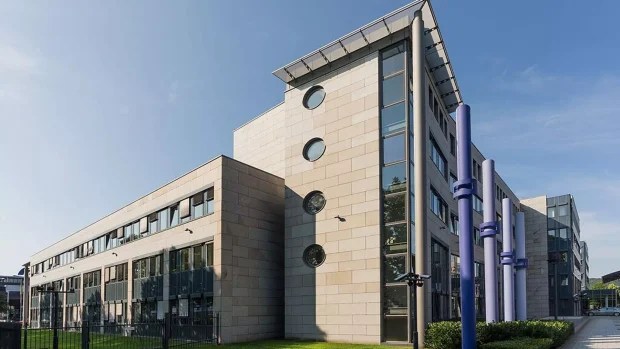
By Ilya Tsukanov – Sputnik – February 11, 2025
NATO countries’ ‘aid’ agencies are reeling amid Trump’s freeze on USAID and revelations on the agency’s record of global meddling and largesse. Sputnik has already explored the shady activities of USAID’s British and French cousins. Now it’s Germany’s turn.
The German Corporation for International Cooperation (German acronym GIZ) gets most of its €4 bln ($4.1 bln US) straight from the federal budget, plus EU ‘co-financing’, to support up to 1,700 projects in 120 countries.
Many of GIZ’s projects revolve around ‘climate action’ and ‘sustainability’. From organic farming in Africa to solar/wind power in Latin America, GIZ is involved in pushing countries trying to break out of poverty to adhere to development goals set by the West.
GIZ also supports things like the digitization of governance, local media, Africa’s film industry, and refugee reintegration. In Ukraine, they’ve provided over 1,100 microloans for small businesses from dance studios to fashion ateliers.
A damning 2024 Focus Magazine exposé uncovered tens of millions in questionable GIZ spending, from “vague” multi-million euro grants for “climate awareness” and monitoring projects in Thailand and Turkiye, to €5M spent to make mosques “green” in Morocco, to €44M for bike lanes in Lima as part of a €529M “climate and development partnership.”
In April 2023, the Federal Audit Office revealed, in Focus’s paraphrasing, that “nobody knows what GIZ actually does,” with lack of economic success criteria for projects, lavish salaries up to €240k, first-class flights and a fleet of luxury cars for top officials highlighting the agency’s extravagance.
Waste, combined with the increasingly sorry state of Germany’s own infrastructure amid an unprecedented economic crunch, has prompted opposition figures including the AfD’s Alice Weidel to blast the government for “squandering” millions in tax money on GIZ projects in developing nations “while the transport infrastructure in its own country is in ruins.”
GIZ-USAID cooperation has been extensive, ranging from “climate finance” projects in the developing world to small business development projects in Georgia for the EU’s Eastern Partnership (which aims to sway Russia’s neighbors toward eventual EU membership).
In Ukraine, GIZ has provided “advisory” assistance on the implementation of the EU-Ukraine association agreement – the fateful pact that triggered the 2014 coup and the present European crisis.
Britain: Operation Gladio’s Secret ‘Headquarters’
By Kit Klarenberg | Al Mayadeen | February 11, 2025
Operation Gladio was a covert NATO program using clandestine units for false flag attacks and political destabilization, with Britain and the CIA playing a central role.
‘Operation Gladio’ is the collective name for a notorious Cold War-era program whereby Anglo-American intelligence services and NATO, in conjunction with mafia elements and fascist paramilitaries, constructed a pan-European nexus of clandestine “stay behind” armed resistance units. Their ostensible purpose was to remain ever-poised to respond to potential future Soviet invasion. In reality, these guerrilla factions carried out false flag attacks, assassinations, robberies, mass casualty bombings, and other incendiary acts to discredit the Western left, while fomenting a “strategy of tension”. Their objective was simple:
“You were supposed to attack civilians, women, children, innocent people from outside the political arena. [This would] force the public to turn to the state and ask for greater security… People would willingly trade their freedom for the security of being able to walk the streets, go on trains or enter a bank. This was the political logic behind the bombings. They remain unpunished because the state cannot condemn itself.”
This candid explanation was provided by an Italian fascist, jailed for life in 1984 for a car bombing 12 years earlier that killed three police officers, and injured two. The attack was intended to be blamed on the Red Brigades, a left-wing militant group. This false flag’s unraveling played a significant role in subsequently blowing the Operation wide open publicly. However, three-and-a-half decades later, much remains unclear and uncertain about Gladio, and the evidential trail went cold long ago.
Perhaps the most striking feature of Operation Gladio is also its least well-known. The effort is typically understood and widely portrayed as a primarily CIA-led effort. In reality, Britain served as the inspiration, headquarters and training ground for all Europe’s “stay behind” secret armies throughout the Cold War, with MI6 taking the lead on arming these factions and directing their incendiary activities. This little-acknowledged history has enormous contemporary relevance, given London secretly continues to perpetuate the Gladio model overseas today.
In November 2024, The Grayzone exposed how a cloak-and-dagger Ministry of Defence-created cell of military and intelligence veterans, dubbed Project Alchemy, is charged with “keeping Ukraine fighting… at all costs”.
Since the proxy war’s first days, the unit has strategised and orchestrated a vast array of belligerent acts, both covert and overt, to escalate the conflict and prevent a negotiated settlement. Chief among their initial recommendations was the creation of a “stay behind”, Gladio-style force, to carry out assassinations and sabotage in Russian territory.
‘The Meanest’
Uniquely revealing insight into Britain’s central role in Operation Gladio is provided by interviews with Francesco Cossiga, published in November 2010 by Bulletin of Italian Politics, a political science journal. A prominent politician throughout Rome’s bloodspattered “years of lead” and beyond, the journal notes Cossiga had “always been proud of his association” with Gladio, and took personal credit “for the creation of anti-terrorist rapid response units in Italy”, tied to Rome’s “stay behind” paramilitaries.
During the interviews, Cossiga revealed these “special services” were born following a tour of Europe, where he studied “different models” of special forces units for inspiration. Repeated visits to the base camp of Britain’s SAS, where he was shown “mock-up villages” used to train soldiers deployed to Northern Ireland during London’s brutal “counterinsurgency” against the province’s Catholic minority, convinced him to “opt for the British model”. Cossiga explained, “the meanest of all were the British” – and besides, if Gladio’s activities ever came to public light:
“I could always defend myself by saying I had chosen the model used in the oldest parliamentary democracy in the world.”
Moreover, Cossiga testified, Britain was “the headquarters” of every European “stay behind” organisation. Namely, Fort Monckton, where MI6 operatives are trained in every covert discipline, including surveillance, sabotage, assassinations, entrapment, and other black ops. According to Cossiga, Italy’s Gladio legions and “special services” similarly received instruction in these murderous dark arts at the facility, and from the SAS. A secret base in Sardinia was also “made available to the CIA and to other intelligence services,” to enhance “stay behind” operations in the country and beyond.
Despite all this, and a 1959 Italian intelligence agency report stating plainly “domestic threats” were a dedicated “stay behind” target, Cossiga vehemently refuted any suggestion Operation Gladio was ever “intended to combat subversion” by local political elements. Its sole purpose, he insisted, was to “resist invasion” by the Soviet Union, which never materialised. Yet, Cossiga’s unconvincing veil of denial slipped somewhat when asked whether he believed it possible for security and intelligence agencies “to act without the implicit or explicit approval of a government”:
“Yes it is. A certain autonomy exists, and it’s not as if an intelligence service has to tell its government what it does. The government sets objectives but it doesn’t have to know the means by which the service goes about achieving those objectives. Nor does it want to know. An intelligence service that respects the rules doesn’t exist. It’s a contradiction in terms. If MI5 had to obey the law it might as well use Scotland Yard’s Special Branch [Britain’s political police].”
‘Repressive Backlash’
Cossiga’s discussion of the murder of Aldo Moro – purportedly his “confidant and friend”, with whose “political philosophy” he ardently adhered – raises further alarm bells. Moro was a veteran centre-right Italian statesman, who served as the country’s prime minister five times during the 1960s and 70s. Highly respected then and now, he was kidnapped by the Red Brigades in March 1978, en route to a historic meeting where he would greenlight a coalition administration, formally bringing Italy’s Communist party into government for the very first time.
After 55 days in captivity, Moro was executed, his bullet-riddled corpse left in a car trunk in central Rome to rot, and for authorities to find. According to Cossiga – then-interior minister – official rescue efforts were exhaustive and wide-ranging. “We tried everything,” he proclaimed, including “air patrols… fitted with infrared sensors that would pick up heat from human bodies” in order to find the abducted premier. Cossiga also supposedly prepared the SAS-trained Comsubin, an Italian special forces unit, to conduct raids to find Moro.
Cossiga recounted how “one evening” during Moro’s captivity, authorities “received information” he “might be in a certain place.” Comsubin was thus mobilised, with a doctor charged with “[throwing] himself over Moro if there was a shootout.” Cossiga excitedly noted the medical professional in question was not only his “classmate at school”, but “later became the effective commander of Gladio!” That extraordinary coincidence may account for why, as Bulletin of Italian Politics reports, Comsubin in fact “did not conduct any raids” whatsoever while Moro was imprisoned.
This glaring contradiction tends to confirm the conclusions of Italian security and intelligence veteran Roberto Jucci – that the hunt for Moro was set up to fail. In March 2024, he publicly exposed how the formal, foreign-advised committee established to save Moro was “composed largely” of individuals tied to Propaganda Due – aka P2 – a CIA-tied Masonic lodge inextricably linked with Operation Gladio. These rabidly anti-Communist actors were, per Jucci, determined to destroy Moro “politically and physically”, therefore preventing the development of radical politics locally.
Jucci’s disclosures caused domestic and international shockwaves at the time. Yet, declassified British Ministry of Defence files dating to November 1990, in the immediate wake of Operation Gladio’s public exposure, show officials in London were well-aware of the mephitic role played by P2 in sabotaging the mission to rescue Moro. The Masonic lodge was described as just one “subversive” force in Italy employing “terrorism and street violence to provoke a repressive backlash against Italy’s democratic institutions,” in service of a “strategy of tension.”
Those documents also note that “circumstantial evidence” indicated “one or more of Moro’s kidnappers was secretly in touch” with Rome’s “security apparatus at the time,” and Italian spooks “deliberately neglected to follow up leads which might have led to the kidnappers and saved Moro’s life.” One might reasonably ask how London’s secret state could’ve been possessed of such knowledge. An obvious answer is that, given Britain’s enduring status as Operation Gladio’s “headquarters”, MI6 was, one way or another, embroiled in the plot to neutralise Moro.
USAID and NGOs for Narrative Control and War
By Professor Glenn Diesen | February 10, 2025
President Trump’s decision to cut funding to USAID revealed the extent to which the US government has been financing media, protests and other means to hijack the civil society around the world. In Ukraine, USAID had a key role in toppling President Yanukovych in 2014 and has since financed between 85-90% of Ukrainian media to ensure narrative control. The Georgian Prime Minister has also been warning that Western NGOs have been activated to topple the government and convert Georgia into a second front against Russia. There is also overwhelming evidence that the US government established “non-governmental organisations” (NGOs) since the 1980s that are financed by the US government, staffed with people linked to the US intelligence community, and pursue US geopolitical interests under the guise of promoting democracy and human rights. One of these “NGOs” is the National Endowment for Democracy (NED) established by Reagan to take over some of the tasks of the CIA. These organisations are instruments for the US to govern the societies of other nations and pursue regime change when necessary.
Subverting Democracy and Pursuing War
When Zelensky won a landslide victory in the 2019 presidential election on a peace platform, the US activated its NGOs to ensure that Zelensky would reverse and abandon his peace mandate. Zelensky had won 73% of the votes by promising to engage in talks with Donbas, make peace with Russia, and implement the Minsk peace agreement. Furthermore, Zelensky argued in favour of preserving language rights and religious rights to prevent divisions in society. Immediately, protests emerged with NGOs presenting Zelensky’s peace platform as “capitulation”.
One of the US-financed “NGOs” was the Ukraine Crisis Media Centre which had been established allegedly to “promote the development of a self-sufficient Ukrainian state and society”, something I would certainly support. However, this is yet another NGO created by the US to subvert society and prevent peace from breaking out.
The Ukraine Crisis Media Centre threatened Zelensky, and warned him against delivering on his election promises: “As civil society activists, we present a list of ‘red lines not to be crossed’. Should the President cross these red lines, such actions will inevitably lead to political instability in our country and the deterioration of international relations”.[1]
These red lines included “holding a referendum on the negotiations format to be used with the Russian Federation and on the principles for a peaceful settlement”; conducting negotiations without the Western states; “making concessions to the detriment of national interests”; failing to implement the security and defence policies of the former government; “delaying, sabotaging, or rejecting the strategic course for EU and NATO membership”; “initiating any actions that might contribute to the reduction or lifting of sanctions against the aggressor state by Ukraine’s international partners”; attempting to review the language law or supporting the Russian Orthodox Church in Ukraine; “ignoring dialogue with civil society” etc. Simply put, the peace platform supported by the overwhelming majority of the population or the NGOs would make sure Zelensky was also ousted from power.
This threat from the US-financed NGO was countered with death threats from US-financed far-right groups. Zelensky eventually abandoned the peace mandate, ignored the Minsk peace agreement and fell in line with US policy.
The donors to the Ukraine Crisis Media Centre that financed the cancellation of Zelensky’s peace mandate include USAID, the National Endowment for Democracy, the US embassy, and various Nordic governments. On the list of donors is also The Institute for Statecraft, the discredited organisation behind the Integrity Initiative, which was caught in the covert operations of creating “clusters” of loyal politicians, journalists and academics to manufacture the impression of an established consensus to control the narrative. The integrity initiative was also working with UK intelligence agencies to target dissent in politics and the media.
My Encounter with these “NGOs”
USAID, NED and other NGOs also operate in countries allied with the US to prevent dissent and preserve bloc discipline. The Ukraine Crisis Media Centre wrote an entire article smearing me in its project of “shady horses of Russian propaganda”, which listed false accusations such as being a “defender of Russia’s aggression”. The evidence for the absurd accusations included conversations with Professor John Mearsheimer and former US Senator Ron Paul, which are labelled Kremlin “mouthpieces”.[2] The Norwegian government (my own government) is also listed as a donor to this project of intimidation and smears.
The US foreign ministry, the National Endowment for Democracy, and my own government also finance the Norwegian Helsinki Committee, another “human rights NGO”, which has pursued a project of systematic intimidation against me for the past 4 years. Their tactics against me include regular smear pieces in the media, almost weekly tweets labelling me a propagandist for Russia, letters and phone calls to the head of my university to end my position as a professor, calls on other academics to go against me, efforts to cancel me from events where I have been invited to speak, etc. After successfully whipping up hatred in the public, the police advised me to hide my address and phone number. At this point, an employee at the Norwegian Helsinki Committee published a picture of my house on social media. These are the activities that my own government finances under the guise of supporting an “NGO” that promotes democracy and human rights. In response to the purge of academic freedom, I am now in the process of acquiring another citizenship to relocate to a country where civil society is not outsourced to fake NGOs pushing war propaganda and censorship.
What was my great crime? I have been deeply critical of NATO’s policies towards Ukraine since the NGO-backed “Orange Revolution” in 2004. For years I criticised the efforts to pull Ukraine into NATO’s orbit when only a small minority of Ukrainians wanted to join the military alliance, and NATO was aware it would likely trigger a war. I criticised the EU’s rejection of Ukraine’s proposal for a trilateral EU-Ukraine-Russia agreement in 2013 that would have made Ukraine a bridge rather than a frontline. I warned that the NGO-backed toppling of Yanukovych in 2014 would result in Russia’s seizing Crimea and war. For 7 years, I insisted that sabotaging the Minsk peace agreement would result in a military solution to the conflict. Since 2022, I have argued that the sabotage of the Istanbul peace agreement and the boycott of all diplomacy and negotiations would result in Russia destroying Ukraine in a war of attrition. From my perspective, these are pro-Ukrainian arguments that would have preserved Ukrainian sovereignty, territory and lives.
The people who advocated for the policies that created this disaster have a monopoly on the media, and all dissent is crushed with smears, censorship and cancellation. We have more newspapers than I can count, yet they all write the same thing and cite the same “NGOs”. Even now, it is still considered controversial and suspicious to argue for peace negotiations, even as the majority of Ukrainians want negotiations, the war has been lost, and Ukraine suffers greatly with the loss of men and territory every day. Criticism of the NATO war narratives is not met with counterarguments, rather it is met only with accusations of having evil intentions, being “controversial” and “pro-Russian”, legitimising the invasion, not caring about Ukrainians, spreading propaganda etc. These crude and pathetic attacks do not have to be substantiated as the assault on free speech and academic freedom are always wrapped in moralistic language and claims about defending democracy.
Everything I have argued played out as predicted, including why the sanctions were destined to fail. I can confidently argue why my analyses have been correct and why my policy recommendations would have prevented this disaster. However, I do not live in an open society with the free exchange of ideas. I live in a society where government-sponsored smears, censorship and cancellation are permitted as long as an NGO is used as a middleman.
[1] Joint statement by civil society representatives on the first political steps of the President of Ukraine Volodymyr Zelensky | UACRISIS.ORG
[2] Kremlin Shady Horse’s: Glenn Diesen – Russian propaganda aligned rhetoric, defender of Russia’s aggression, blames NATO for expansionism | UACRISIS.ORG
Featured Video
The Truth About the Trump Shootings with Ken Silva
or go to
Aletho News Archives – Video-Images
From the Archives
Trans ‘milk’ as good as the real thing – NHS
RT | February 18, 2024
The drug-induced nipple secretions of trans women are as good as mothers’ breast milk for babies, the University of Sussex Hospitals NHS Trust claimed in a letter to campaigners made public in a report by British think tank the Policy Exchange on Sunday.
The healthcare trust’s medical director, Rachel James, argued that the off-label prescription drug cocktail men transitioning to female take in order to produce milk was “similar to the natural hormones which encourage lactation to develop when the baby is newly born.”
“The evidence which is available demonstrates that the milk is comparable to that produced following the birth of a baby,” James wrote in the letter, sent to Children of Transitioners last August.
Biological men who wish to lactate must first take hormones to grow milk glands and then take high doses of either domperidone or metoclopramide to stimulate milk production. Neither drug is approved for this use, though they are occasionally prescribed off-label to biological women who have trouble lactating.
However, domperidone’s own manufacturer, Janssen, warns patients the drug “may cause unwanted side effects affecting the heart in a breastfed baby” and “should be used during breastfeeding only if your physician considers this clearly necessary.” … continue
Blog Roll
 Aletho News
- Russia Voted Under Fire. Washington Is Loading the Tankers.
- 12 Things Your Oncologist Was Trained Not to Tell You
- Anthrax Attacks Paved Way for COVID-Era ‘Junk Drugs and Vaccines’
- How Real Is the Impact of Western Sanctions on Israel?
- France, You Are Guilty: How Paris Turned Western Sahara into the Maghreb’s Powder Keg
- 2025 Nature Paper Claiming Worsening Global Drought Gets RETRACTED …Heavily Flawed
- Your Milk Is Not the Problem
- The Truth About the Trump Shootings with Ken Silva
- ARE PATIENTS BEING PROPERLY INFORMED ABOUT OZEMPIC?
- US lawmaker blocks $2.8 billion weapons sale to Israel: Report
- If Americans Knew
- Salah Sarsour’s Legal Team Says DHS Has Not Met Its Burden to Prove He Is Deportable
- An analysis of tax forms by The Intercept show Kraft’s charity and LLC have donated to Friends of the IDF and AIPAC’s super PAC.
- Israeli attacks kill four Palestinians in Gaza – Daily Update
- Inside Gaza’s death trap of collapsing, bombed-out buildings
- The everyday items Israel bans from Gaza every day
- Inside the siege, the ruined buildings of Gaza – Daily Update
- Debunking The Claim That Macklemore Has A “History Of Antisemitism”
- CPJ demands release of arrested Palestinian-US journalist near Bethlehem
- Robert Kraft: The Billionaire Friend of Netanyahu Pulling The Strings Behind the Macklemore/Ed Sheeran Blow Up
- Columbia Administered Fund Gives Big Money to Pro-Israel Groups
- No Tricks Zone
- 2025 Nature Paper Claiming Worsening Global Drought Gets RETRACTED …Heavily Flawed
- New Study: ‘Global Drought Shows No Detectable Recent Acceleration Under Climate Warming’
- Economic Masterminds: German Socialists Suggest Taxing Productivity Gains Stemming From Using AI
- The South China Sea Has Not Been Cooperating With The Climate Change Narrative
- Energy Crisis: Germany Enters Heating Season With Historically Low Gas Reserve Fill Levels
- New Study: The Antarctic Ice Sheet Gained Mass From 2020-2024 Due To Staggering Snow And Ice Accumulation
- Study: Ocean Heating Rates From Thousands Of Years Ago ‘Dwarf’ Modern Ocean Heating Rates
- Climate Extremists Target, Attack Large-Scale Power Grid Infrastructure In Germany!
- New Study: Antarctic Ice Melt Has Contributed Less Than 1 Centimeter To Sea Level Rise In The Last 30 Years
- Fear Of Debate: Alarmist German Climate Scientist Calls On Mainstream Media To Discredit Skeptic Voices
 Aletho News