Le Figaro deletes SCALP missile claim
RT | November 18, 2024
The French daily Le Figaro has walked back its claim that France and the UK have allowed Ukraine to use long-range missiles they have supplied to strike targets deep inside Russian territory. The original claim appeared shortly after the New York Times reported on Sunday that outgoing US President Joe Biden had given Kiev the green light for such strikes.
The UK was the first to provide Ukraine with its long-range Storm Shadow missiles back in May 2023, with France following suit several months later, with its own version of the system, named SCALP. The US delivered its ATACMS rockets in the fall of that year.
Despite Kiev’s repeated requests to allow it to use the weapons to strike targets deep inside Russia, its Western backers had until recently publicly refused to acquiesce, citing concerns over potential uncontrollable escalation.
In its now-amended article on Sunday, Le Figaro originally claimed that the “French and the British had authorized Ukraine to strike deep into Russian territory with their SCALP/Storm Shadow missiles.”
However, in an updated version of the piece, any mention of the supposed permission or SCALP/Storm Shadow rockets is gone. The initial wording is, however, still accessible in a cached snapshot of the report.
Speaking to reporters ahead of an EU ministerial meeting in Brussels on Monday, France’s top diplomat, Jean-Noel Barrot, clarified that there was “nothing new” with respect to Paris’ stance on long-range strikes on internationally recognized Russian territory, adding that such a scenario remained an option.
On Sunday, the New York Times, citing anonymous US officials, reported that the White House had given the green light for Ukrainian strikes on Russia’s Kursk Region, using US-supplied ATACMS missiles.
The NYT and several other media outlets have reported that Washington could extend its approval to allow Ukraine to strike other parts of Russia.
Neither the White House nor the Pentagon has commented on the matter.
In his video address on Sunday, Ukrainian leader Vladimir Zelensky cautiously welcomed the reported development, stressing that “strikes are not carried out with words. Such things are not announced.”
“Missiles will speak for themselves. They certainly will,” he added, without elaborating.
Meanwhile, Kremlin spokesman Dmitry Peskov told media outlets on Monday that if confirmed, Biden’s reported decision would constitute a “qualitatively new round of tension.”
Back in September, President Vladimir Putin warned that since Ukrainian forces lack the necessary capabilities and knowledge to use Western-supplied long-range missiles, permission for strikes deep into Russia would mean that “NATO countries [have] become directly involved in the military conflict.”
Scholz desperately tries to prevent Germany from being seen as open enemy by Russia
By Lucas Leiroz | November 18, 2024
The recent phone call between Olaf Scholz and Vladimir Putin has caused a lot of controversy in Western politics. The German leader has been criticized for his relatively diplomatic stance, since most Western politicians believe Moscow should be treated as an “international pariah”. However, the moves made by the US, France and the UK shortly after Scholz’s call may be the main explanation for his contact with the Russian president.
Recently, the German Chancellor called the Russian President and held a conversation lasting about an hour on sensitive topics in bilateral relations. Commenting on the details of the conversation, Scholz explained that this was an opportunity to reaffirm the German and European stance and to make it clear to Putin that support for Kiev will not wane. He also said that he considers it important to maintain dialogue with Russia, despite his publicly pro-Ukrainian stance on the conflict, and emphasized the necessity of European leaders participating in the diplomatic process. In addition, Scholz surprisingly promised to call Putin again in the future.
“The conversation was very detailed but contributed to a recognition that little has changed in the Russian president’s views of the war – and that’s not good news (…) It was important to tell him [Putin] that he cannot count on support [for Kiev] from Germany, Europe, and many others in the world waning (…) There are those in Germany who consider the lack of negotiations with Putin a good idea, but I am not one of them (…) Soon I will talk to the president of Russia again (…) In my view, it would not be a good idea if there were talks between the American and Russian presidents and the leader of an important European country was not also doing so,” he said.
The reaction to Scholz’s initiative was extremely negative. Vladimir Zelensky said that the German leader had opened a “Pandora’s box” by starting a dialogue with Putin. Zelensky emphasized his unrealistic desires for victory, stating that there will be no “Minsk 3.0” and tacitly promising to take the war to its ultimate consequences.
“Chancellor Scholz told me that he was going to call Putin (…) Now there may be other conversations, other calls (…) We know how to act. And we want to warn: there will be no ‘Minsk-3’. We need real peace,” Zelensky said.
In fact, the conversation between Scholz and Putin seemed at first to be yet another move in the direction of Europe’s attempt to take a leading role in an alleged “peace process” that some EU diplomats have been trying to promote since Donald Trump’s victory. However, the recent announcement that the US has lifted restrictions on “deep” strikes against Russia may be an interesting key to understand the real purpose of the phone call.
On November 17, several Western media outlets announced that Joe Biden had lifted restrictions on the use of American long-range weapons against targets in Russia’s “deep” territory. In addition, shortly after the announcement, rumors emerged, which have not yet been officially denied, that France and the UK had followed the American example and also authorized such operations by Ukraine.
As Russian officials have repeatedly stated, this is an irreversible escalation of the conflict, as it substantially changes the nature of the war. Long-range weapons are not operated by Ukrainian military personnel, but by NATO specialists illegally sent to the battlefield. Until now, Moscow has been tolerant of the use of such weapons inside the New Regions, since the West considers them Ukrainian territories. However, long-range strikes inside the territory that the West recognizes as Russian would mean incursions by NATO itself into the Russian Federation, which would legitimize, in accordance with recent changes in Russian military doctrine, a nuclear response.
Joe Biden is apparently using his final days in the White House to destroy the entire global security architecture and then give to Donald Trump a world at open global war. US’ main military allies in Europe, the UK and France, are following this same path and co-participating in the Biden-led catastrophe. However, Scholz seems cautious. Germany has so far not supplied Ukraine with long-range missiles, with Scholz saying “Germany has made a clear decision about what we will do and what we will not do,” and that “this decision will not change.”
Of course, significant decisions are not made in a hurry. The authorization of the strikes was certainly planned for a long time and Biden chose precisely the current moment, during the G20 Summit in Brazil, to lift the restrictions without causing a major political and media impact, hoping that the world would be distracted by the event bringing together the main global leaders in Rio de Janeiro.
In this sense, it is possible that Scholz knew in advance of what was about to happen and decided to talk to Putin beforehand to make it clear that Germany would not send long-range weapons and, therefore, would not be participating in the escalation promoted by Biden. In this way, Scholz hopes to spare Berlin from the possible devastating consequences that an unrestricted war between Russia and NATO would cause.
There are two facts that advocate this assessment. Scholz recently blamed support for Ukraine for the crisis in his government. The coalition backing the German chancellor has collapsed and he now appears worried about the future of his position. This may be driving him to act desperately to avoid even more negative consequences for his government.
Furthermore, on the same day that the restrictions were lifted, German defense minister Boris Pistorius made a public statement emphasizing Germany’s position not to send long-range Taurus missiles to Ukraine, stating that such a move would mean direct German involvement in the conflict.
“The Taurus would not be a game changer. Our mission is different. We now have to ensure that Ukraine continues to receive sustainable supplies (…) It would only be tenable to deliver [these weapons] if we determine and define the targets ourselves, and that is again not possible if you don’t want to be part of this conflict,” he said.
It is difficult to believe that all these moves are mere coincidence. Scholz has acted irresponsibly since the beginning of the conflict, but he seems completely incapable of dealing with an uncontrolled escalation. The chancellor is afraid of what the war could bring to Germany and to himself if the point of no return is crossed. His call to Putin was a desperate attempt to free Germany from the consequences of the war. It remains to be seen whether he will have enough political strength to resist the pressure from his own Western “partners” from now on.
Lucas Leiroz, member of the BRICS Journalists Association, researcher at the Center for Geostrategic Studies, geopolitical consultant.
Tulsi Gabbard, the new U.S. intel chief… a brave call to debunk NATO’s war propaganda in Ukraine
Strategic Culture Foundation | November 15, 2024
The nomination of Tulsi Gabbard as the United States intelligence supremo has sent shockwaves through the American and NATO establishments. The Western news media – always a dutiful echo chamber for deep-state policymakers – is reverberating with horror at her nomination by President-elect Donald Trump.
That reaction is a good sign that something significant has happened.
The potential appointment of Gabbard as Director of National Intelligence (DNI) could be the most consequential decision yet by Trump in forming his cabinet.
If one move could signal the foreign policy direction under the 47th president, Gabbard’s nomination is the most salient and potentially the most constructive on the key issue of world peace.
Time magazine headlined with the U.S. intelligence community’s response to Gabbard’s selection. “We are reeling,” it was reported. Reuters reported that the Western “spy world is vexed.” Meanwhile, in The Atlantic, an establishment mouthpiece, Gabbard was denounced as a “threat to the security of the United States.”
That’s a staggering charge to levy on the person who is going to be head of national security.
It is almost hilarious to see the apoplectic reaction in the U.S. establishment and its servile mainstream media.
CNN’s news anchor Jim Sciutto was distraught in sharing his concerns with colleague Richard Quest, remarking that Gabbard’s views “contradict” almost everything about U.S. foreign policies.
If we may paraphrase that exchange, the sentiments were: Oh my God, how terrible! Whatever shall we say now about all the lies we have been spinning for years and getting fat salaries for?
After all, as far as the U.S. corporate media are concerned, especially those channels and newspapers associated with the Democrats, the establishment, and the deep state intelligence apparatus, Tulsi Gabbard has been smeared as a “Russian asset.”
It is indeed profoundly challenging – one might even say, earth-shattering – to the deep state if Gabbard becomes Director of National Intelligence.
As with Trump’s other cabinet picks, the nominations will have to be approved by Senate panels. So there is a while to go before her post is confirmed. A lot can change or be derailed.
Trump’s cabinet picks this week have been keenly watched by observers trying to discern the future foreign policies of the next presidency, which begins in January after his inauguration. Trump’s early call-ups this week of hawkish figures Pete Hegseth for defense and Marco Rubio for secretary of state caused dismay among some critics of U.S. foreign policy who wanted a fundamental break from warmongering and hostility toward Russia, China, and Iran, among others.
Then came Trump’s selection of Tulsi Gabbard. The former Congresswoman has gained wide popular American and international respect for her outspoken and independent criticism of U.S. militarism in the Middle East and Ukraine.
However, the U.S. political establishment and media have slandered her as a “traitor” and a “Russian asset” for her views criticizing Washington’s regime change wars in Syria and the Middle East. In 2017, Gabbard traveled to Syria and met with President Bashar al-Assad. She spoke out against Washington’s covert policy of sponsoring terrorist militia for regime change in Damascus. For telling the truth, she was vilified as an “apologist” for Assad.
More recently, the “apologist” slur was thrown at her again after Gabbard opposed the U.S. and NATO’s arming of the Kiev regime and the proxy war against Russia. She said that the conflict in Ukraine could have been avoided if Russia’s security concerns about NATO’s threatening expansion had been taken into consideration. How refreshing to hear that sanity and objectivity.
In a twisted way, the CNN clapping seals are correct. Her views on the conflict in Ukraine do indeed contradict the U.S. establishment and media’s propaganda about “Russian aggression.” Her views unequivocally debunk the wall-to-wall “news” propaganda as false and serve as a warning to the public that NATO’s lies are dragging the world into a nuclear war.
The role of Tulsi Gabbard in the second Trump administration – if she makes it through Senate vetting – cannot be overstated.
In her DNI capacity, she is the intel supremo who oversees the CIA and NSA. Through her daily briefings to the president, Gabbard will play a crucial role in President Trump’s foreign policymaking. Given Trump’s freewheeling style, it can be fairly assumed that Gabbard’s input into policymaking will have much greater influence than the secretaries of defense or state. She will call the shots, and Trump will designate Hegseth, Rubio, and others to follow suit on the policies.
Some critics of Gabbard have pointed out that she is unduly supportive of Israel. That is a valid concern.
Nevertheless, in relations with Russia, China, and Iran, Gabbard has been a trenchant and tenacious voice of reason. She has courageously advocated peaceful negotiations and diplomacy along with historical understanding as a way to avoid military conflicts. Her reasonable emphasis on diplomacy illustrates just how extremist the U.S. “mainstream” has become in its promotion of wars and more wars.
Gabbard is a veteran of the Iraq War and appears to have been deeply affected by the human cost of wars. She has repeatedly condemned endless wars that are endemic to U.S. imperialism. Her honesty in criticizing the failings and faults of American policy, calling it out often as criminal, is admirable.
She quit the Democrat party in 2022, condemning it for its relentless warmongering policies. She endorsed Trump for the White House because, she said, he would prevent World War Three by stopping the reckless proxy war in Ukraine.
President-elect Trump has said that he wants to end the conflict in Ukraine as one of his priorities.
Some commentators have expressed skepticism about the chances of Trump making a peace settlement in Ukraine. Even senior Russian figures have said they do not expect significant change in U.S. policy.
Still, Russia has clearly stated that it is open to dialogue and diplomacy. Moscow has said it will respond positively to Trump’s outreach. And Trump is reported to be ready to appoint an envoy of credible stature to explore a peaceful solution in Ukraine.
Now, there’s the rub. Russia is adamant that its conditions for peaceful settlement must involve its original objectives: no Ukraine membership of NATO, denazification of the Kiev regime, and acceptance of realities on the ground, meaning recognition of Russia’s regained historical territories. Russia will not accept a frozen conflict, and given the rapid military advances it is making against the NATO-backed regime, Moscow is in a position to fully demand its terms.
If Trump is serious about finding a peaceful resolution, he will have to accept Russia’s terms. That will require an understanding of how that conflict started and how to reverse it. No bluster, no bravado, and certainly no browbeating Russia.
Tulsi Gabbard can provide the necessary counsel to Trump upon which a lasting peace settlement can be made because she understands the history of that conflict and has debunked the false propaganda that the U.S. establishment, the Democrats, some Republicans, and the corporate media have peddled for far too long.
In the meantime, Russia must advance towards its righteous goals in Ukraine. And right now, the best contribution to peace is to defeat the corrupt Nazi regime in Kiev in short order.
Ukrainian MP calling for dialogue with Russia jailed

RT | November 17, 2024
A court in Kiev has placed Ukrainian MP Evgeny Shevchenko in custody for two months after the authorities charged him with treason. Earlier this month, he urged Vladimir Zelensky to engage in dialogue with Russia.
Following the escalation of the Ukraine conflict, Kiev outlawed a number of opposition parties, including Opposition Platform – For Life, the second biggest party in terms of seats in parliament. The authorities cited the opposition’s presumed involvement in subversive activities.
Several individual MPs have similarly been prosecuted.
On Friday, the judge in Shevchenko’s case ruled that the lawmaker would remain behind bars until January 11, 2025. The day before, the Security Service of Ukraine (SBU) charged him with treason, accusing him of “systematically” spreading pro-Russian narratives in his speeches and online content. The authorities cited Shevchenko’s publications on Telegram and YouTube, describing them as “harming Ukraine’s defense capabilities and information security.”
The prosecutor also noted that since late 2020, the lawmaker traveled dozens of times to neighboring Belarus and met with President Alexander Lukashenko. Kiev does not recognize Lukashenko as the legitimate leader of the country, which is a key ally of Russia.
One visit in April 2021 resulted in Shevchenko being expelled from the ruling Servant of the People parliamentary faction.
Speaking to reporters on Friday, Shevchenko suggested that he was being targeted for political reasons. His defense lawyers called the case a hastily prepared concoction of materials.
In a post on Telegram last Thursday, Shevchenko called on Zelensky to “begin dialogue” with Russia. “I understand that you will have to go after that. But the country is more important than personal ambitions,” the lawmakers wrote.
He also offered to travel to Belarus and help mediate the process. The MP warned the Ukrainian leader that if he refuses to negotiate, “you will be forced to go… by those who applauded you yesterday in Western countries.”
Commenting on the suggestion, Andrey Yermak, the head of the Office of the President of Ukraine, said that some lawmakers “seem to be confused about issues of national security, national interests, and the future of the country.”
Shevchenko responded by urging Yermak to stop “eliminating” dissenting lawmakers, as “this won’t do Ukraine any good.” In a separate post on Telegram, he called for an end to the “political persecution” of these MPs.
“I wrote a letter to [US President-elect] Donald Trump and [VP-elect] J.D. Vance asking for assistance in putting an end to further authoritarianism, dictatorship, and lawlessness” in Ukraine, he added.
Top Ukrainian academic claims British publisher censoring truth
A Canada-based professor says Routledge is demanding that he include Western-backed conspiracy theories in a new book
RT | November 15, 2024
A leading academic on Ukraine has accused prominent British publisher Routledge of attempting to censor his new book, claiming the company demands he include “alternative” perspectives in his analysis of the Russia-Ukraine conflict.
Ivan Katchanovski, a University of Ottawa professor originally from Western Ukraine, is known for his forensic debunking of popular myths around the so-called Maidan coup in Kiev, and a critical stance towards Kiev’s pro-Western, post-Maidan government.
In a series of X posts on Thursday, Katchanovski claimed that Routledge, under contract to publish his book “From the Maidan to the Russia-Ukraine War,” is refusing to release it unless he revises the manuscript to include Western-backed conspiracy theories.
He specifically mentioned the publisher’s request to reflect “alternative sources” on contentious issues such as the Nord Stream bombing and the blocking of peace talks in 2022, which Katchanovski says were hindered by the US and the UK.
Katchanovski wrote: “Routledge states that my book cannot be published unless I would revise the entire manuscript… and would use other perspectives and alternative sources concerning the Russia-Ukraine war, the peace deal, the Nord Stream bombing, and all other issues I examine, including the Maidan massacre.” He argues that the demands are politically motivated and prevent him from presenting his findings based on the facts.
According to the academic, his book has garnered support from several experts. One unnamed peer reviewer described it as “an important contribution” to the study of the Russia-Ukraine conflict, noting its “unsurpassed broad empirical base.” Another reviewer stated that Katchanovski’s work has “withstood criticism” and is highly respected within the academic community.
The professor built his reputation on his evidence-based research, including an analysis of the 2014 Maidan sniper incident, which he claims, using forensic video analysis, was a false flag operation used to justify the ousting of Ukraine’s then president, Victor Yanukovich. This theory, which contradicts the official Western narrative, was met with criticism from pro-Maidan voices when first proposed, but Katchanovski continues to be cited by scholars and analysts.
Katchanovski says he faces the choice of either revising his manuscript to fit Routledge’s requirements or canceling the contract altogether. He refuses to commit “academic fraud,” stating, “I cannot base my book on politically convenient narratives and sources propagated by any government and media.”
Routledge, a major academic publishing house, has yet to comment on Katchanovski’s allegations. The publisher is known for its books in the humanities and social sciences, but has been accused of yielding to political pressure in recent years.
Katchanovski has suggested that he may seek alternative publishers if Routledge continues to block the release, though this could delay publication of his work by up to a year.
India-Russia ties ‘helpful’ for the world – foreign minister
RT | November 14, 2024
Friendly relations between Moscow and New Delhi are an important element of international stability, Indian Foreign Minister Subrahmanyam Jaishankar told Sky News Australia in an interview published this week. According to the diplomat, the West should be less concerned about countries enjoying good relationships with Russia and more about diplomacy and ending the Ukraine conflict.
The minister defended New Delhi’s decision to increase oil purchases from Russia after the US and its allies slapped Moscow with unprecedented sanctions over the Ukraine conflict, which targeted Russia’s financial sector and international trade.
“If we had not made the moves we had, let me tell you the energy markets would have taken a completely different turn and actually would have precipitated a global energy crisis. It would have caused inflation across the world as a consequence,” Jaishankar said.
Imports of crude oil from Russia currently constitute nearly 40% of India’s total oil purchases, up from less than 1% before the escalation of the Ukraine conflict in February 2022. Earlier this week, the foreign minister said that he expected bilateral trade between the two nations to reach a target volume of $100 billion before 2030.
The minister was responding to Sky News host Sharri Markson, who said that New Delhi’s close ties to Moscow were causing “angst” in Australia. Jaishankar hit back by saying that “countries don’t have exclusive relationships” nowadays. Using the same logic, India should be worried about any country who has a relationship with its regional rival, Pakistan.
“What India has done and is doing with Russia is actually… helpful to the international community as a whole,” the minister said. He said that not only had India’s actions helped to avert a potential global energy crisis, but may also contribute to ending the fighting between Moscow and Kiev.
New Delhi can talk to both parties and “try to find some intersection in those conversations” to eventually find a way to get them both to the negotiating table, according to the top diplomat.
“I think the world, including Australia, needs such a country that will help bring this conflict back to the conference table,” he stated, adding that “conflicts rarely ends on the battlefield, mostly they end [through] negotiations.”
When further pressed by Markson on whether India is concerned about growing cooperation between Russia, China, North Korea and Iran, Jaishankar replied that such developments, which were further encouraged by the Ukraine conflict, show that the West should also be primarily interested in ending the hostilities.
”It’s in everybody’s interest that the sooner the conflict ends the better,” the minister said. “The longer the conflict drags out… all sorts of things are going to happen. Not all those things could necessarily be to Australia’s advantage or… that of Western countries.”
European lackeys in panic mode as Trump signals detente with Russia
By Finian Cunningham | Strategic Culture Foundation | November 12, 2024
It’s early days yet. However, there are signs that President-elect Trump is moving toward a detente with Russia over Ukraine.
One good sign is that Trump will not invite Mike Pompeo or Nikki Haley to join his cabinet when he is inaugurated as the 47th U.S. president on January 20. Both of these figures were rabid anti-Russia hawks during Trump’s previous administration. There were suggestions that Pompeo and Haley might return with senior posts in his second administration. But Trump has announced the pair will not be offered new positions.
Another positive sign is from people close to Trump’s inner circle who are letting the Kiev regime know – rudely – that the U.S. military aid spigot is being turned off.
Donald Trump has yet to hold a phone call with Russian President Vladimir Putin, according to the Kremlin. But both leaders have already expressed a willingness to negotiate a peaceful settlement over the Ukraine conflict.
Another promising sign of potential detente between the United States and Russia is the sheer panic among European leaders. The news of Trump’s election last week has caused most European elites to scramble like scared children on hearing “boo!”.
European Commission President Ursula von der Leyen and French President Emmanuel Macron are consoling themselves by urging Europe to “come together” in the wake of Trump’s stunning election victory. The collapse of Germany’s coalition government of Chancellor Olaf Scholz is an early casualty of the Trump impact.
European leaders fear that if Trump pulls the plug on military aid to the Kiev regime they will be left holding the can to fund the proxy war against Russia, which the weak European economies have no chance of sustaining.
It’s no secret that the main European states were betting on Democrat candidate Kamala Harris winning the race to the White House. Harris would have ensured the continuation of NATO’s backing for the Kiev regime. With Trump becoming president, all bets are off.
The political price will be ruinous for European leaders who have invested huge political capital in waging war to “defend Ukraine from Russian aggression.” Trump has shown skepticism toward that false narrative. He has told Europe to go it alone if it wants to. And the European Russophobes know they can’t do that.
If Trump follows through on his election promise to negotiate with Putin on a settlement in Ukraine, then the Europeans are going to be left with serious amounts of egg on their faces.
One thing about Trump that is of concern to the Europeans is his frustration with them as being, in his view, freeloaders on American protection. Another is Trump’s vindictive streak. He’s not going to forget that most of the European leaders wanted him to lose the election.
Take Britain’s Prime Minister Keir Starmer. His Labour Party sent volunteers over to the U.S. to advise Harris on winning the election. The British Foreign Secretary David Lammy has also been reminded that he previously disparaged Trump as a racist “sociopath.”
Trump’s election is bad news for Britain and there is no doubt that Starmer is now trying to repair post-Brexit relations with Europe as a hedge against the expected chill from Washington during the next four years.
When Britain pulled out of the European Union after its 2016 Brexit referendum, there were high hopes that it could negotiate a special trade deal with the U.S. That deal didn’t work out and looks even less likely now. Hence, Starmer has been busy since taking office in Downing Street trying to restore relations with the EU.
This week, the British leader attended the Armistice ceremony in Paris to commemorate the end of the First World War. The last time a British leader honored that event in Paris was in 1944 when Winston Churchill visited the French capital following its liberation from Nazi occupation.
Macon invited Starmer to lay wreaths in the Champs-Elysee and the Arc de Triomphe.
The choreographed caper of European unity is a reflection of the panic gripping European leaders in the aftermath of Trump’s return to the White House.
But everything is up in the air for the European politicians. Starmer was bending over backward to renew relations with Germany as a way to forge a warmer connection between London and the European Union after years of post-Brexit bitterness, only for that to be thrown into doubt.
Last month saw a landmark security deal between Britain and Germany in which German arms maker Rheinmetall would open a new factory in Britain, and the German Luftwaffe would be able to fly warplanes from an RAF base in Scotland. The deal was touted as “a sign of joint European security in the face of Russian threat.”
With the collapse of the government in Berlin over the unbearable financial costs of the Ukraine war to the German economy, the British security treaty may not materialize. That means a big setback to Starmer’s reset plans with Europe.
Hungary’s Viktor Orban and Slovakia’s Robert Fico are in the minority of European politicians who genuinely welcomed Trump’s election as an opportunity to wind down the NATO proxy war in Ukraine against Russia.
On the other hand, the ardent NATO warmongers in Europe, including Britain, Germany, France, Poland and the Baltic states now face a desperate dilemma. Along with EU leaders like Von der Leyen and the Dutch NATO chief Mark Rutte, they have all nailed their colors to the mast for continuing the reckless proxy war against Russia.
Trump seems to be showing good sense in calling off that proxy war and finding a way to negotiate sensibly with Russia on detente. Moscow wants its long-term security demands to be met. That means no NATO membership for Ukraine, an end to the NeoNazi regime in Kiev, and recognition of its historical lands in Crimea and the Donbass.
This is all eminently negotiable, and Trump might just be ready to cut a deal to avoid World War Three, as he has repeatedly indicated he would do. That would mean Trump dumping the false narrative that Biden, Harris and the Democrats – and their European vassals – contrived about “defending Ukraine”.
That would leave the European lackeys in a disastrous lurch. How will they explain to their electorates the three-year slaughter in Ukraine? How will they justify the tens of billions of Euros and Sterling wasted on pushing a war that not only destroyed millions of lives but their economies as well?
The stupid European leaders are in panic mode, and that’s a good thing.
Ukraine in league with Al-Qaeda – Syria
RT | November 12, 2024
Ukrainian agents have been working with Al-Qaeda in Syria, offering them drone warfare training and some of their US-supplied weapons in exchange for manpower, the government in Damascus has told RT.
The terrorist group Jabhat al-Nusra, since rebranded as Hayat Tahrir-al-Sham (HTS) has been reduced to parts of Idlib province in the northwest of the country, thanks in part to Russia helping the Syrian government defeat various rebel militants, including Islamic State (formerly ISIS).
RT’s Roman Kosarev has visited Syria and saw “undeniable evidence” that Kiev has made an alliance with HTS.
“We have real confirmation of the Ukrainian instructors’ presence in Syria,” a Russian soldier, identified only by the callsign ‘Gilza’, told RT. He said Kiev’s operatives have been teaching HTS militants how to fly suicide drones, as well as supplying them with such weapons.
Video footage filmed on a ship showed a US-made Switchblade 600 drone being delivered to the Syrian militants in crates labeled as humanitarian aid. Another video showed a man, wearing a black T-shirt with a Ukrainian trident symbol, chatting with a militant somewhere in Idlib.
Mohammed Hamra, a former government official who had to flee Idlib, has his own sources about what’s going on in the province. He told RT that around 250 Ukrainian instructors have been training HTS militants to kill Syrians and Russians.
Syrian intelligence has confirmed the presence of “several” Ukrainian operatives in Idlib. One of the Syrian officials, who sought anonymity, told Kosarev that Kiev’s instructors have been preparing HTS militants for attacks on government-controlled territory, in particular the Russian base at Khmeimim.
Kiev has delivered drones and even drugs – stimulants to keep militants alert – to HTS through Turkish territory, the Syrian said. In return for advice and technology, Kiev has asked HTS to release Chechen militants from their ranks so they could fight in Ukraine.
Moscow has “reliable information” that Islamic State militants and “similar groups” have been fighting in Ukraine under the guise of Chechen and Crimean Tatar units, according to Alexander Bortnikov, head of the Russian security service FSB.
Russia has accused Ukraine of “openly supporting terrorist groups in Africa,” pointing to an incident in Mali earlier this year involving Touareg militants. Ukraine’s HUR military intelligence agency has boasted about providing the Touaregs with information and drone warfare techniques to help them kill government soldiers and Russian security contractors.
Kiev supports terrorist organizations – former SBU officer
RT | November 12, 2024
Ukraine has been working with terrorist groups in the Middle East due to a shortage of trained soldiers in its fight against Russia, former Ukrainian Security Service (SBU) officer Vasily Prozorov has stated.
Speaking to RT on Tuesday, the ex-SBU officer claimed Kiev was deploying servicemen to Syria to train terrorists, with the aim of recruiting them.
“When we were working in Syria studying arms smuggling between Ukraine and Islamic terrorist organizations, we already received information that representatives of the Ukrainian special services were sending their people to Syria, to areas not controlled by the official government, to train terrorists,” Prozorov recalled.
He elaborated that “First of all, they are training [terrorist organizations] to fly drones … and secondly, they are recruiting personnel there because Kiev has very big problems with trained personnel on their territory.”
Prozorov went on to say that there are fewer people willing to fight in Ukraine, which is why Kiev is “looking for everyone they can reach, including among terrorist militants in the Middle East.”
The former SBU officer indicated that during a series of interviews he had managed to record with several captured Ukrainian soldiers, one of them – from the nationalist unit Kraken – admitted that servicemen from his battalion were on a mission in Sudan and participated in military operations against Sudanese authorities on the side of separatists.
“They went there on direct orders from Ukrainian intelligence,” Prozorov claimed. “If we add to this the information about how Ukrainian intelligence responded to the clash in Mali between fighters of the African corps and local terrorist groups, then a clear line can be traced that Kiev supports terrorist organizations,” Prozorov insisted.
A commando regiment operating under the Ukrainian military intelligence agency HUR, Kraken was established in 2022 by former members of the neo-Nazi Azov Battalion and other intelligence officers.
Spokesman for HUR Andrey Yusov has previously admitted his agency’s involvement in July’s deadly raid in Mali, when Tuareg insurgents ambushed and killed dozens of Malian forces and personnel from Russia’s Wagner Group. Yusov has said that HUR had provided the rebels with “necessary information, and not just information, which enabled a successful military operation.” According to Le Monde, Ukrainian spies shared their drone warfare techniques to help the rebels kill Russian security contractors.
Yusov’s remarks then sparked outrage in Mali and several neighboring West African countries, which have accused Ukraine of supporting aggression. The Malian military government and its ally in Niger responded by breaking off diplomatic relations with Kiev.
“I think that the more problems Ukraine has at the front, the more we will see Ukrainian mercenaries in all sorts of hotspots under the auspices of Western intelligence services …” Prozorov concluded.
Trump’s war on “woke” ideology could trigger mass exit of Pentagon staff
By Ahmed Adel | November 12, 2024
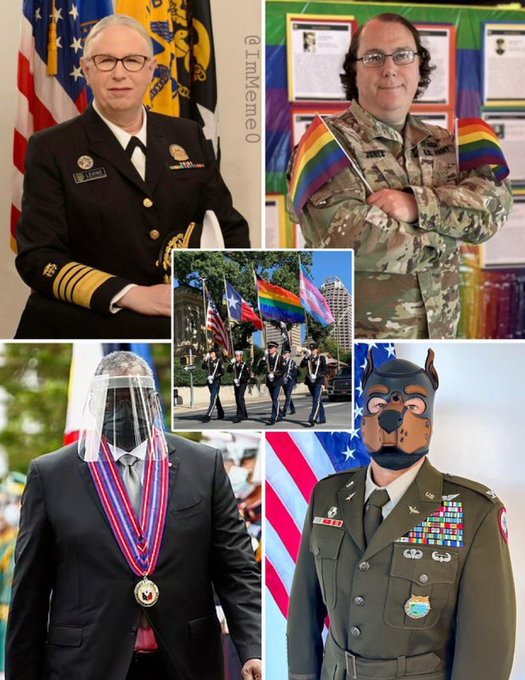
If President-elect Donald Trump follows through on his campaign promises in his victory speech, the Pentagon could see personnel fired, especially “woke” generals who have embraced progressive movements associated with racial and social issues.
In his last term, Trump faced numerous forms of resistance, especially from the Pentagon, largely due to his position on security issues such as NATO or his willingness to put troops on the streets to suppress protests in the US. Former generals and defence secretaries have been some of the former president’s fiercest critics, labelling him a fascist and saying he was unfit to be president, a Reuters investigation found.
Having gained experience in his first term, Trump is expected to prioritise loyalty in key elements of his administration, which could lead to the removal of military officers and career civil servants he deems disloyal.
In June, when questioned by Fox News, Trump said he would fire generals described as “woke.”
“I would fire them. You can’t have (a) woke military,” Trump said.
According to the Reuters investigation, sources believe that the current chairman of the Joint Chiefs of Staff, Air Force Gen. Charles Q. Brown Jr, a former fighter pilot and widely respected black military commander, is in Trump’s crosshairs after he spoke out on racial discrimination in the US following the May 2020 killing of George Floyd.
During the election campaign, Vice President-elect JD Vance expressed his opinion during an interview by stating that political leaders have to “get rid of them and replace” the people who are not aligned with the political vision that the head of state is trying to implement.
This speech corroborates the fear of some of the American elite who understand that this anti-woke movement by Trump could become broad.
Trump’s strongest anti-woke messaging during the election campaign aimed at transgender troops, and it is recalled that he had previously banned transgender service members, posting a campaign ad on X portraying them as weak, with the vow that “WE WILL NOT HAVE A WOKE MILITARY!”
Removing woke ideology from the US military is seen as imperative by Trump, especially after US News & World Report ranked Russia, and not the US, as having the world’s “strongest military.” Therefore, Trump will not only purge woke ideologues from the military but also those responsible for the war in Ukraine since, as it turns out, the war is responsible for strengthing Russia instead of weakening it.
US military figures facing repercussions for their fervent support for the war in Ukraine is something welcomed by Moscow, which has consistently called for peace negotiations, while the Kiev regime has consistently rejected them despite losing the war and experiencing catastrophic economic decay and demographic decline.
Kremlin spokesman Dmitry Peskov said Trump’s statements in favour of peace in Ukraine differentiate him from other political figures in the US.
“At least [Trump] is talking about peace [in Ukraine]. He is not talking about confrontation, about the desire to inflict a strategic defeat on Russia. This distinguishes him favourably from the current US administration. It is difficult to predict what will come next,” Peskov told Rossiya 1 television.
At the same time, Peskov noted that Trump is “less predictable” than current US President Joe Biden or Vice President Kamala Harris, the failed Democratic candidate and rival in the presidential race. According to the Kremlin spokesman, it is not possible to say now whether Trump will stick to the pacifist statements he made during his election campaign.
However, what is certainly predictable is that Trump’s war on “woke” ideology in the US military will not be limited to the purging of generals but also career civil servants at the Pentagon, who could be subjected to loyalty tests, according to current and former officials.
A senior US defence official, speaking on condition of anonymity, told Reuters there was increasing concern within the Pentagon that Trump would purge career civilian employees from the department.
“I’m deeply concerned about their ranks,” the official said, adding that several colleagues had expressed concern about the future of their jobs.
“This will be 2016 on steroids and the fear is that he will hollow out the ranks and expertise in a way that will do irreparable damage to the Pentagon,” the official predicted.
In effect, it appears that great changes are coming to the Pentagon and US military once Trump enters the White House on January 20. How this reflects on policy remains to be seen, but it can be expected that the president-elect will focus more on challenging China and supporting Israel against Iran than the current administration’s priority of challenging Russia and supporting Ukraine.
Ahmed Adel is a Cairo-based geopolitics and political economy researcher.
WaPo Putin-Trump call claim ‘pure fiction’ – Kremlin
RT | November 11, 2024
US President-elect Donald Trump and Russian President Vladimir Putin did not have a phone conversation about the Ukraine conflict, Kremlin spokesman Dmitry Peskov has said.
The Washington Post claimed on Sunday that Trump called Putin after winning his second, albeit non-consecutive term as US president to discuss his vision regarding how the Ukrainian crisis could be deflated. Peskov said on Monday that the article was a “vivid example of the quality of information published by even some respectable outlets.”
“This absolutely does not correspond to reality. This is pure fiction. This information is simply false,” he told the press.
Kiev previously denied the claim made by the Washington Post in its piece that the Ukrainian government was informed about the phone call beforehand and gave its consent to the US-Russian engagement.
“Reports that the Ukrainian side was informed in advance of the alleged call are false,” the Ukrainian Foreign Ministry spokesman told Reuters on Sunday.
Trump had claimed while on the campaign trail that he could end the Ukraine conflict “in 24 hours,” if US voters grant him a second term in office. He reportedly intends to leverage US military and financial aid to Ukraine to pressure both Moscow and Kiev to achieve a compromise.
Russia, which currently has the advantage on the battlefield, has said that it will only accept an outcome that addresses the core causes of the Ukraine conflict. Those include NATO’s enlargement in Europe and Kiev’s discriminatory policies against ethnic Russians, according to Moscow.
The Washington Post reported a phone call between Trump and Putin based on accounts by sources “familiar with the matter,” who spoke on condition of anonymity.
Trump must end wars – Dennis Kucinich
RT | November 9, 2024
US president-elect Donald Trump will have his hands full fixing the mess in foreign and domestic policy left by incumbent leader Joe Biden’s administration, according to Dennis Kucinich, two-time Democratic presidential candidate and retired eight-term US congressman.
In an interview with Going Underground host Afshin Rattansi broadcast on RT on Saturday, Kucinich said that the success of Trump’s presidency will depend on his ability to shift the focus of US politics from the “globalist aspirations of the State Department” to problems at home.
The veteran politician welcomed Trump’s victory over Democrat Kamala Harris in this week’s election, saying that it represents a “historic shift” in US politics towards “populism.”
“[The US] has come through a very dark period where the government put this country to the edge of World War III, and people don’t want that,” Kucinich stated, noting that ordinary Americans worry about simple things like paying bills and generally “making ends meet,” which he called “very practical aspirations they have in common with people around the world.” He said Trump’s presidency “will depend on not getting further involved in foreign entanglements.”
“This economy is shaking, the dollar is not in the same position it was in four years ago… the previous administration has not been successful in reviving the economy with all this money for Wall Street but not enough for main street,” he stated. Kucinich added that this happened “precisely” because the Biden administration poured billions into wars “that are not necessary.”
There’s a lot of work Trump will need to do, he is going to be faced with some serious decisions about scaling back the US position in Europe and the Middle East and to try to find a way that we can move past the events that the Biden administration embroiled America in.
Kucinich noted that he expects Trump to be able to extricate the US from global conflicts through his “deal-making finesse.”
“Trump is a deal-maker… a family man concerned about children and grandchildren. He’s not personally interested in seeing the US expand into war, he’s not a globalist in that way,” he stated.
Kucinich also suggested that Trump would be wise to lead the US towards cooperation with the “new world” that is “taking shape in response to disastrous sanctions and wars,” citing BRICS as one of the alignments that the US should consider working with.
You can watch the full interview here.
Featured Video
The Truth About the Trump Shootings with Ken Silva
or go to
Aletho News Archives – Video-Images
From the Archives
Trans ‘milk’ as good as the real thing – NHS
RT | February 18, 2024
The drug-induced nipple secretions of trans women are as good as mothers’ breast milk for babies, the University of Sussex Hospitals NHS Trust claimed in a letter to campaigners made public in a report by British think tank the Policy Exchange on Sunday.
The healthcare trust’s medical director, Rachel James, argued that the off-label prescription drug cocktail men transitioning to female take in order to produce milk was “similar to the natural hormones which encourage lactation to develop when the baby is newly born.”
“The evidence which is available demonstrates that the milk is comparable to that produced following the birth of a baby,” James wrote in the letter, sent to Children of Transitioners last August.
Biological men who wish to lactate must first take hormones to grow milk glands and then take high doses of either domperidone or metoclopramide to stimulate milk production. Neither drug is approved for this use, though they are occasionally prescribed off-label to biological women who have trouble lactating.
However, domperidone’s own manufacturer, Janssen, warns patients the drug “may cause unwanted side effects affecting the heart in a breastfed baby” and “should be used during breastfeeding only if your physician considers this clearly necessary.” … continue
Blog Roll
 Aletho News
- Seyed M. Marandi: U.S. Strike Imminent – Toward Total War in the Middle East
- Russia Voted Under Fire. Washington Is Loading the Tankers.
- 12 Things Your Oncologist Was Trained Not to Tell You
- Anthrax Attacks Paved Way for COVID-Era ‘Junk Drugs and Vaccines’
- How Real Is the Impact of Western Sanctions on Israel?
- France, You Are Guilty: How Paris Turned Western Sahara into the Maghreb’s Powder Keg
- 2025 Nature Paper Claiming Worsening Global Drought Gets RETRACTED …Heavily Flawed
- Your Milk Is Not the Problem
- The Truth About the Trump Shootings with Ken Silva
- ARE PATIENTS BEING PROPERLY INFORMED ABOUT OZEMPIC?
- If Americans Knew
- Salah Sarsour’s Legal Team Says DHS Has Not Met Its Burden to Prove He Is Deportable
- An analysis of tax forms by The Intercept show Kraft’s charity and LLC have donated to Friends of the IDF and AIPAC’s super PAC.
- Israeli attacks kill four Palestinians in Gaza – Daily Update
- Inside Gaza’s death trap of collapsing, bombed-out buildings
- The everyday items Israel bans from Gaza every day
- Inside the siege, the ruined buildings of Gaza – Daily Update
- Debunking The Claim That Macklemore Has A “History Of Antisemitism”
- CPJ demands release of arrested Palestinian-US journalist near Bethlehem
- Robert Kraft: The Billionaire Friend of Netanyahu Pulling The Strings Behind the Macklemore/Ed Sheeran Blow Up
- Columbia Administered Fund Gives Big Money to Pro-Israel Groups
- No Tricks Zone
- 2025 Nature Paper Claiming Worsening Global Drought Gets RETRACTED …Heavily Flawed
- New Study: ‘Global Drought Shows No Detectable Recent Acceleration Under Climate Warming’
- Economic Masterminds: German Socialists Suggest Taxing Productivity Gains Stemming From Using AI
- The South China Sea Has Not Been Cooperating With The Climate Change Narrative
- Energy Crisis: Germany Enters Heating Season With Historically Low Gas Reserve Fill Levels
- New Study: The Antarctic Ice Sheet Gained Mass From 2020-2024 Due To Staggering Snow And Ice Accumulation
- Study: Ocean Heating Rates From Thousands Of Years Ago ‘Dwarf’ Modern Ocean Heating Rates
- Climate Extremists Target, Attack Large-Scale Power Grid Infrastructure In Germany!
- New Study: Antarctic Ice Melt Has Contributed Less Than 1 Centimeter To Sea Level Rise In The Last 30 Years
- Fear Of Debate: Alarmist German Climate Scientist Calls On Mainstream Media To Discredit Skeptic Voices
 Aletho News