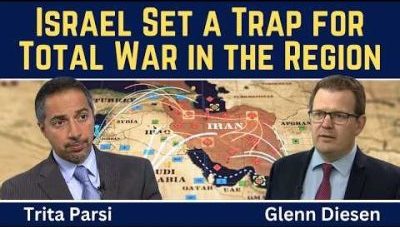
Two things happened this weekend that belong in the same frame, though you will not see them connected anywhere in the Western press. Russia held a national election under a hail of drones and cyberattacks — and came through it. And overnight, the United States began signaling that it is about to widen the war in the Middle East. They are not separate stories. The same barrage that tried to break the Russian vote also tore a piece out of Russia’s refining capacity, and that connects directly to the fuel crisis Washington is about to make worse. Take them in order.
An election under attack
Russians voted over three days, September 18 through 20, to seat the ninth convocation of the State Duma, their national legislature — all 450 seats. What made the final day extraordinary was the effort, backed by the West, to disrupt it by force.
Overnight, Ukraine launched the largest drone assault of the war. Moscow’s mayor, Sergei Sobyanin, reported that air defenses brought down more than 1,600 drones across Russia since Saturday, roughly 450 of them bound for the capital region; the Russian Defense Ministry put the single-night intercept figure at 1,110, the highest it has ever reported. I will be candid: I woke up Sunday morning with no idea any of it had happened. The overwhelming majority were destroyed well before they reached Moscow. A handful got through — two people were killed and about twenty injured in the Moscow region. For those who lost their lives, and for their families, it is a tragedy. But set it against the scale: some seventeen million people live in the Moscow region, and their day went on. Then, through the voting hours, came waves of cyberattacks on the electronic voting system — another attempt to break the election that failed to break it.
Now the numbers that matter. Official turnout, per the Central Election Commission, came in around 56.7 percent over the three days. Ten parties qualified for the ballot. And in the four newly constituted republics — Donetsk, Luhansk, Zaporizhia and Kherson — turnout ran dramatically higher than the national figure, despite those regions being under active attack. People who face drones on their way to the polling station and vote anyway are telling you something about how much the franchise means to them.
The election was watched by international observers — independent-minded people, some of them frankly sympathetic to Gennady Zyuganov’s Communists, no friends of the ruling party. I spoke with several. Their verdict was the same: this was a free and fair election. I saw nothing to contradict it — no signs going up and being torn down, no one dragged away for campaigning.
Now, I know exactly what the Western press will wave in reply, so let me meet it head-on. Yes: the Supreme Court struck the federal list of Yabloko, the one small party that campaigned against the war, and Boris Nadezhdin was kept off the ballot and has since left the country. Those are the two names you will hear over and over as proof that the whole exercise was theater. It is not much of a case. Yabloko has polled below the five-percent threshold for the better part of two decades; the position it staked out — abandoning the four republics and the men fighting for them — is one almost no Russian holds. Excluding a marginal faction that stands where the West stands is not the same thing as crushing dissent, and it does not turn a three-day, ten-party election with 56.7 percent turnout into a fraud. The real spectrum of Russian politics does not run from pro-war to anti-war. It runs from those who support the special military operation to those who want it fought harder — and inside that spectrum the parties went at each other in the open, and the observers, including men who would sooner see a Communist in the Kremlin, judged the contest fair. On the evidence in front of me, the endless claim that Putin simply crushes all opposition is a fabrication.
Here is what the West consistently misreads. Russia’s parties argue fiercely about domestic policy — income inequality, taxes, education, health care, the ordinary business of any democracy. But on foreign policy they are united, something on the order of 95 percent behind the President and the special military operation. If the ruling bloc’s share slips, it will not be because Russians want the war to end. It will be because they want it prosecuted harder. That is the opposite of the war-weariness Western capitals keep predicting.
The refinery, and the squeeze
Here is the hinge the Western coverage misses entirely. In that same overnight barrage, a drone reached the Gazprom Neft refinery on Moscow’s southeastern edge — a plant that processes on the order of 245,000 barrels a day and supplies fuel to the capital region — and set it ablaze. Strip away the election framing for a moment and look at what that means for the world’s fuel balance. Every refinery knocked offline, in Russia or in the Gulf, tightens the same global distillate market. Ukraine, prodded and supplied by the West, is not only trying to break a Russian election; it is degrading Russian refining capacity at the precise moment the world can least afford to lose a barrel of diesel or jet fuel. That is the thread running straight into the second half of this story.
Washington reaches for the matches
The second development arrived overnight as well, and it points the other direction — toward escalation.
Late Saturday, September 19, the State Department sharpened its travel guidance, telling Americans outside the Middle East to seriously reconsider any travel to or through the region and warning those already there to brace for airspace closures and canceled flights. That advisory is confirmed and public. Alongside it came reports — which I have not been able to independently confirm, so I flag them as reports — that personnel manning Central Command’s operations centers are being recalled to duty, and that aerial refueling tankers are up and flying over the region. Anyone who has watched these sequences knows what airborne tankers usually precede.
The open question is the target. It could be Yemen and the Houthis — Ansar Allah — who have been trading strikes with Saudi Arabia and just put a plume of black smoke over Riyadh’s King Khalid airport. It could be Iran. It could be both. I cannot rule out any of the three. As I write this Sunday night, there is no sign that strikes are actually under way. So we will learn soon enough whether this is saber-rattling or whether Donald Trump means to escalate.
What we already know is that the global diesel and distillate crisis is getting worse, not better, and nothing on the horizon reverses it. The EIA now expects U.S. distillate inventories to sit below the five-year low through much of 2027; industry veterans reckon the world has lost something like seven million barrels a day of refining capacity to this year’s fighting. Last night’s strike on the Moscow refinery subtracts a little more. This is the box Trump has built for himself. He wants gasoline and diesel cheaper and inflation tamed — and every move he has made around the Persian Gulf, Iran, the Gulf states and now the Houthis guarantees tension stays high and the distillate squeeze stays on.
The market has been whipsawing on every on-again, off-again ceasefire rumor; crude actually eased into Friday’s close, near $104 Brent, on hopes that Saudi Arabia could restore pipeline flows. But if fresh American strikes land this week, expect that to reverse hard — crude spiking, equities selling off, the pump price and the diesel crack climbing right back up. These signals went out on a Sunday evening. Come Monday morning in New York, the odds favor a market moving the wrong way for a President who says he wants the opposite.
So that is where we stand. Trump, for all his talk of ending wars and lowering prices, keeps doing the one thing that makes both harder: pouring fuel on the fire. I will have more once the real shape of the Russian result is clear and once we know whether the tankers meant anything.
For now, the democracy that is Russia did more than survive this weekend. It was attacked, and it voted anyway. Thanks for reading.
The single most consequential number in this essay:
“The overall contribution of curative and adjuvant cytotoxic chemotherapy to 5-year survival in adults was estimated to be 2.3% in Australia and 2.1% in the USA.”
— Morgan, Ward, and Barton, Clinical Oncology, 2004
Everything else follows from that number, and from the specialty’s twenty-plus-year refusal to act on it.
What Was Done to John Bailar
On May 8, 1986, John Bailar and Elaine Smith published a paper in the New England Journal of Medicine titled “Progress Against Cancer?” Bailar had spent over two decades at the National Cancer Institute and held an appointment at the Harvard School of Public Health. The paper used the specialty’s own registry data. It reached one conclusion. Between 1950 and 1982, the age-adjusted mortality rate from cancer in the United States had risen, along with crude mortality and incidence rates. Reported five-year survival rates had also risen. The authors argued that the age-adjusted mortality rate was the correct measure of progress and that by this measure the country was “losing the war against cancer, notwithstanding progress against several uncommon forms of the disease.”¹
Bailar was not a dissident. He was working inside the institution. The paper drew on SEER data, the specialty’s own registry. The methodology used age-adjusted mortality per 100,000, the same denominator the American Cancer Society used in its annual publications. His conclusion was cautious and quantitative.
The response was not to change practice. The American Society of Clinical Oncology labeled him a naysayer. Funding for the work he cared about became harder to secure. He continued publishing. In 1997, with Heather Gornik, he returned to the same question in the same journal under the title “Cancer Undefeated.” Using more rigorous statistical methods, the paper found that age-adjusted cancer mortality in 1994 was 6.0 percent higher than in 1970 (200.9 versus 189.6 per 100,000), with a 1 percent decline only between 1991 and 1994. The authors concluded that the war against cancer was “far from over,” that observed changes in mortality primarily reflected changing incidence or early detection, and that the effect of new treatments on mortality had been largely disappointing.²
Bailar’s conclusion was in the specialty’s own journal, using the specialty’s own data, from a statistician who had spent his career inside the specialty’s own institutions. The response was to continue.
What Was Done to Ralph Moss
In 1974, Memorial Sloan Kettering hired a young science writer named Ralph Moss as assistant director of public affairs. His job was to translate the institution’s research into press releases and articles for the in-house publication. In the course of that work he befriended Kanematsu Sugiura, MSK’s senior research scientist, then in his late eighties, whose name appeared on foundational papers in cancer chemotherapy going back to the 1930s.
Sugiura had been running experiments on amygdalin, the compound the alternative cancer world called laetrile. His results across five years of work at MSK showed that laetrile did not shrink primary tumors in his mouse models but dramatically reduced the appearance of lung metastases. In one series, mice receiving laetrile showed 21 percent metastasis rates compared to 90 percent in controls. When Moss asked Sugiura in 1977 whether he still stood by his findings, Sugiura told him yes. Moss then asked to see the internal documents.
He found that MSK’s leadership was publicly denying the very findings its own laboratory had produced. On June 15, 1977, at a press conference, MSK president Lewis Thomas told the world: “We have no evidence that laetrile possesses any biological activity with respect to cancer, one way or the other.” Robert Good, director, added: “We have no reproducible evidence that amygdalin, or laetrile, is active.”³
On November 18, 1977, Moss held a counter press conference. He and a small internal working group called Second Opinion released a forty-eight-page report documenting what MSK had actually found, when it had found it, and how the institutional story had diverged from the laboratory data. He named names. He produced the documents.
The next day he was fired. The stated reason was that he had failed to carry out his most basic job responsibilities, which, as he later observed dryly, evidently included lying on behalf of Memorial Sloan Kettering. He went on to write The Cancer Industry in 1980, Questioning Chemotherapy in 1995, and Doctored Results in 2014, the last being his firsthand account of the laetrile suppression. The mainstream oncology establishment has not acknowledged the substance of his charge in the intervening five decades.
The pattern did not stop with Moss. In September 2018, Peter Gøtzsche, co-founder of the Cochrane Collaboration and director of the Nordic Cochrane Centre, was expelled from Cochrane’s Governing Board by a 6-to-5 vote. Gøtzsche’s Cochrane reviews had established that mammographic screening turns healthy women into cancer patients without reducing total mortality, and his critique of the Cochrane review of HPV vaccines had been published in the BMJ Evidence-Based Medicine journal shortly before his expulsion. Four board members resigned in protest. Thirty-five hundred scientists and health-care professionals signed a letter objecting to his treatment. John Ioannidis, the Stanford statistician who has published foundational work on the reliability of medical research, wrote to the Danish Minister of Health that Gøtzsche was one of the greatest scientists of our times and that removing him through administrative machinations violated the basic norms of scientific discourse.⁴
That same week, Gilbert Welch, whose work on screening overdiagnosis is cited throughout this essay, resigned from Dartmouth over plagiarism allegations that arose from a graph attribution dispute in a paper on thyroid cancer overdiagnosis. Cowan, who cites Welch extensively in Cancer and the New Biology of Water, observed that the college’s accusations did not detract from the importance of Welch’s work.⁵
Two of the highest-profile screening critics in the field lost their institutional positions in the same week. The pattern that began with Bailar in the mid-1980s and Moss in 1977 continues in real time.
The Structure That Explains the Pattern
What was done to Bailar, Moss, Gøtzsche, and Welch defines the specialty’s response to its own data. When the numbers do not support the enterprise, the enterprise continues and the person who published the numbers is marginalized. This is not scientific debate leading to synthesis. It is an economic structure defending itself against evidence its business model cannot accommodate.
Community oncology practices in the United States operate on a system called buy-and-bill. The oncologist purchases infused chemotherapy drugs and then bills the payer for their use. Under the Medicare Modernization Act of 2003, Medicare Part B reimburses these drugs at the average sales price plus a small margin, currently around 4.3 percent after sequestration.⁶ For hospitals participating in the 340B drug pricing program, a 2017 Community Oncology Alliance analysis found average profit margins on oncology drugs of 49 percent by 2015.⁷ Drug reimbursement is the single largest revenue stream for a typical community oncology practice.
A drug costing $10,000 per infusion generates a margin dollar figure that a $99 drug does not. The 4.3 percent margin on a $200,000 branded therapy is $8,600 per year per patient. The same 4.3 percent margin on generic metformin, at pennies per pill, is meaningless. Higher-priced drugs generate proportionally higher absolute margins. This is the incentive gradient inside which every oncology decision is made.
Every subsequent choice the specialty has made about what to test, what to prescribe, what to teach, and what to ignore has followed the same structural logic. What follows are twelve specific things oncology has decided not to say. Each is documented in the specialty’s own trials, its own registries, or its own admissions.
1. The five-year survival statistic conceals the failure.
Ask most oncologists whether the country has made progress against cancer and they will point to five-year survival. In 1975, the five-year survival rate for all cancers combined was approximately 49 percent. Today it exceeds 68 percent. The number sounds decisive. It is also almost meaningless as evidence that anything the specialty does actually extends life.
Lead-time bias is the first distortion. A cancer that would have killed a patient at age seventy will still kill them at seventy whether it is diagnosed at sixty-five or sixty-nine. What screening changes is not the date of death but the date of diagnosis. Move the diagnosis forward by three years and you have added three years to five-year survival without extending the patient’s life by a single day. Cowan puts it plainly: starting the clock earlier is not a reason to celebrate people living longer.⁸
Overdiagnosis is the second distortion. Screening programs detect cellular changes the pathologist calls cancer that would never have progressed to cause symptoms or death. Archie Bleyer and Gilbert Welch, publishing in the New England Journal of Medicine in 2012, examined three decades of mammographic screening data and concluded that breast cancer had been overdiagnosed in an estimated 1.3 million American women. In 2008 alone, 31 percent of all breast cancer diagnoses were cancers that would never have caused symptoms or death if left undetected.⁹ Every one of those women was subjected to surgery, radiation, or chemotherapy for a condition that required no treatment. Each entered the five-year-survival denominator as a cured cancer.
Hardin Jones saw the distortion earliest. A professor of medical physics at the Berkeley Donner Laboratory, Jones spent decades analyzing cancer survival data using the methods of demographic statistics. His 1956 paper “Demographic Consideration of the Cancer Problem,” published in the Transactions of the New York Academy of Sciences, and his subsequent presentations at the American Cancer Society’s Science Writers Seminar in 1969, argued that treated patients did not, on close examination, live meaningfully longer than untreated patients matched for stage and cell type. His work established what statisticians now call the Hardin Jones principle: for a homogeneous cohort of cancer patients, the logarithm of the fraction surviving over time has a constant slope, a mortality-rate constant that treatment does not appreciably shift.¹⁰ Linus Pauling, a Nobel laureate in chemistry, considered the principle sufficiently robust to build his own biostatistical analysis around it in a 1989 paper in the Proceedings of the National Academy of Sciences.
Bailar’s 1986 and 1997 papers, using age-adjusted mortality per 100,000 rather than five-year survival, confirmed the picture Jones had drawn. The mortality rate had not fallen. The five-year survival rate had risen because the specialty had learned to detect and count cancers earlier, not because it had learned to prevent people from dying of them.
2. Chemotherapy contributes 2.1 percent to five-year survival in adult solid tumors.
In 2004, three Australian oncologists, Graeme Morgan, Robyn Ward, and Michael Barton, published a systematic literature review in the specialty’s own journal Clinical Oncology. They asked a specific question. Across twenty-two adult malignancies, how much of the five-year survival benefit that the specialty attributed to itself could actually be attributed to cytotoxic chemotherapy? They pulled the randomized controlled trials for each malignancy, calculated absolute survival benefit for each, and summed the contributions.
The answer, for Australia, was 2.3 percent. For the United States, 2.1 percent. The authors added that cytotoxic chemotherapy makes only a minor contribution to cancer survival.¹¹
The paper has been in the peer-reviewed literature for over two decades. The specialty has not refuted it. Community oncology practice has not shifted. Roughly 650,000 Americans receive chemotherapy each year at an average cost per patient in the tens of thousands of dollars, generating the buy-and-bill revenue stream that keeps community practices operating. The 2.1 percent has been known throughout. It does not appear in the conversation the patient has with the oncologist at the point of consent.
Cowan cites the Morgan paper. Seyfried cites it. Marik cites it. The training programs that produce oncologists do not.
3. The FDA approves cancer drugs on tumor shrinkage, not on survival.
Every prescription an oncologist writes in the United States corresponds to a drug the FDA has approved. The patient assumes, reasonably, that approval means the drug has been shown to extend life. The specialty knows the assumption is largely false.
Vinay Prasad and Chul Kim, publishing in JAMA Internal Medicine in 2015, examined every oncology drug approved by the FDA between 2008 and 2012. Fifty-four drugs were approved. Thirty-six of them, or two-thirds, were approved on the basis of a surrogate endpoint rather than overall survival. Surrogate endpoints in oncology mean things like response rate (the tumor got smaller by a certain percentage) or progression-free survival (the tumor grew more slowly). Neither is the same as living longer.
The authors then asked, several years later, how many of those thirty-six surrogate-approved drugs had subsequently been shown to actually extend life. The answer was five. Eighteen had been shown to fail to extend survival. Thirteen had unknown effects on survival because the confirmatory studies had never been done or had never reported out. Of drugs approved on the basis of tumor shrinkage or slowed growth, 86 percent had unknown or absent survival benefit after years of use.¹²
A subsequent 2019 analysis in the same journal extended the picture to the FDA’s accelerated approval pathway, examining ninety-three drugs approved on this basis between 1992 and 2017. Only nineteen of the ninety-three had subsequently been shown to improve overall survival.¹³ The pathway was designed to speed access to life-saving drugs. What it has largely produced is speeded access to drugs whose life-saving effect was never demonstrated and, in most cases, never subsequently confirmed.
The reason the endpoint matters is that a drug can shrink a tumor while the patient dies faster. Cowan explains the mechanism. Anti-androgen therapy for prostate cancer selects for cancer cells that no longer need testosterone to grow. The tumor shrinks initially, meeting the response-rate threshold. The residual cells then resume growth in a more aggressive form.¹⁴ The trial captures the shrinkage. The patient captures the aggressive recurrence. The FDA approves on the shrinkage.
The current flagship of the industry, checkpoint inhibitor immunotherapy, is the same story with better marketing. Pembrolizumab (Keytruda) and nivolumab (Opdivo) list at over $150,000 per year. In melanoma and a narrow subset of PD-L1-high lung cancers, they extend median survival by measurable margins. Across every other tumor type they have been trialed in, the benefit is either marginal or absent, while severe adverse events including fatal inflammatory reactions occur in a meaningful minority of patients. The specialty’s approval and prescription of these drugs across expanding indications is proceeding largely on surrogate endpoints, and the confirmatory survival data, when it eventually arrives, tends to disappoint.
4. Screening finds cancers that would never have killed anyone.
Between 1975 and 2005, breast cancer incidence in the United States roughly doubled while the mortality rate barely moved. If the additional cancers being detected were meaningful cases, mortality should have fallen sharply as they were caught and treated early. It did not. The additional cancers were largely overdiagnosis: cellular changes that met the pathological definition of cancer but would never have become the clinical event the woman would die of.
Ductal carcinoma in situ makes the case most cleanly. DCIS is now diagnosed in roughly 60,000 American women each year, almost all detected on mammography. Before mammographic screening, DCIS was a footnote in the pathology literature. Now it is the earliest diagnosable breast cancer, treated with lumpectomy, radiation, and often hormonal therapy. Long-term follow-up of untreated DCIS suggests low mortality without treatment. The LORIS and LORD trials, testing active surveillance rather than immediate treatment, exist because the specialty’s own researchers understand that most DCIS is a lesion the woman would have died with rather than of. Nasha Winters notes that the incidence of DCIS has risen by 328 percent since mammographic screening was introduced.¹⁵ Meanwhile, DCIS mortality remains near baseline.
Prostate cancer follows the same pattern. Welch and Albertsen documented that between 1986 and 2005, the introduction of PSA screening produced an epidemic of prostate cancer diagnoses without a corresponding decline in prostate cancer deaths.¹⁶ The ProtecT trial, published in the New England Journal of Medicine in 2016 and updated in 2023, followed men with localized prostate cancer randomized to active monitoring, surgery, or radiation. Prostate-cancer-specific mortality was nearly identical across the three groups.¹⁷ Men in the active-monitoring arm neither died at higher rates nor lived less well than men who had their prostates removed.
The routine mammogram itself is not without cost. The Institute of Medicine’s 2012 report Breast Cancer and the Environment: A Life Course Approach estimated that approximately 2,800 breast cancer cases per year in the United States stem from medical radiation.¹⁵ The Canadian National Breast Screening Study, following 89,835 women aged 40 to 59 across 25 years, found that annual mammography produced no reduction in breast cancer mortality compared to physical examination alone, with 22 percent of screen-detected invasive cancers overdiagnosed.
5. The tumor is not the disease. It is the wall the body built.
Look inside a tumor and it is possible to catalog what has accumulated there. Patrick Coles has done this work more systematically than anyone. Inside the enclosed region: breakdown products from seed oils, free iron, excess copper, excess estrogen, ammonia carried in through glutamine metabolism, histamine, microplastics, and, in the injected population, the metallic debris that produced the original electrical injury. Cancer cells produce enzymes that break glutamine into glutamate and ammonia, allowing dangerous nitrogen to be handled locally rather than circulating. Iron is stored inside tumor cells, which is why cancer patients present as anemic even while their total body iron is elevated: the iron is trapped in the wall rather than available to the body. Lipid droplets inside the enclosed cells serve as neutralization sites for fat-soluble toxins the compromised region cannot expel.¹⁸
Mainstream oncology has cataloged the contents. It has not asked what the enclosed region is doing.
From the terrain paradigm* the question is obvious. What accumulates inside a wall is what a containment structure would contain. The body invests significant infrastructure in building this structure. New blood vessels form to supply the region, though the vasculature is architecturally disorganized and unable to deliver oxygen efficiently, locking the interior into the anaerobic state the cells inside have already shifted to. Extracellular scaffolding is laid down around the compromised region. Specialized metabolic machinery is upregulated. What emerges is not random disease. It is a sequestration vault the body constructed around a region of tissue that could no longer sustain itself under the load the body could not clear.¹⁹
The clinical consequence of this reframe is total. Every mainstream cancer treatment attacks the wall while the primary insult continues to circulate. Surgery removes the wall. It does not remove the substrate. New walls form. What the specialty calls metastasis is not invasion by rogue cells but the body building further containment structures at further sites as the substrate continues to reach those sites. Chemotherapy poisons every rapidly dividing cell in the body, cancer and non-cancer alike, without correcting the underlying electrical injury and while adding cytotoxic drugs that are themselves biopersistent toxins the body will subsequently have to sequester. Radiation burns tissue and creates additional regions of damage the body will then have to wall off.
Giorgio Baroldi’s autopsies documented what most people already know if they think about it. Many people die carrying tumors that never killed them. Many people who die of cancer had lived symptom-free with their tumors for years, the containment holding, until the underlying substrate load crossed a threshold the containment could no longer manage.²⁰ The wall is not the disease. The wall is what the body did about the disease.
Oncology treats the wall as the enemy and destroys it. Nothing in the specialty’s training addresses what the wall was built for.
6. Surgery and biopsy breach the wall the body built.
The specialty’s two most common physical interventions on a solid tumor are the biopsy needle and the surgeon’s scalpel. Both breach the containment structure the previous item described. Both release the contents into the surrounding tissue. Both trigger the systemic response the body mounts to acute injury. The specialty performs both routinely, at scale, and against the following evidence.
The biopsy first. When a needle enters a suspected tumor to extract cells for pathological examination and then withdraws, it draws cells and contents along its track and deposits them in the tissue it passed through. Some of what is deposited lodges. Some of what lodges forms new tumors along the biopsy tract. Oncologists call this needle-tract seeding. Seyfried explains why the tract is preferred: the metastatic cells that establish there express macrophage characteristics, and macrophages home to wounds.²¹ An unhealed biopsy tract is the kind of tissue environment the released material preferentially colonizes. The specialty acknowledges the phenomenon, quantifies it as rare (single-digit percentages, higher for hepatocellular and pancreatic tumors), and continues the practice at the rate of millions of biopsies per year. The alternative, treating on imaging and clinical presentation without cutting first, is not offered. The billing codes do not support it.
Surgery second. Jane McLelland, whose case history is the substance of How to Starve Cancer, was the first widely read patient advocate to name the phenomenon plainly. Surgery sets off the body’s response to acute injury. Fibrinogen production surges. The cells the body uses to clear damaged tissue are redirected to the surgical site. The wound-healing cascade activates growth factors including VEGF. The perioperative period becomes a systemic environment optimized for the spread of the very cells the surgery was performed to remove.²²
Marik documents the mechanism in the Cancer Care monograph. Tumor excision facilitates both pro-metastatic and anti-metastatic processes. Minor perioperative dominance of the pro-metastatic side can trigger what he calls a snowball effect, leading to accelerated progression of minimal residual disease. He terms the surgical event the surgical metastatic roulette.²³ The mechanism runs through beta-adrenergic signaling, COX-2 activity, and the release of pro-inflammatory mediators. Perioperative propranolol combined with a COX-2 inhibitor such as ketorolac or etodolac reduces post-surgical metastasis in randomized trials. The COMPIT trial, testing this combination in colorectal cancer, reported a five-year recurrence rate of 12.5 percent in the treatment arm versus 50 percent in the placebo arm.²⁴ The number needed to treat to prevent one recurrence was three.
None of this is in routine surgical practice. The surgeon operates. The patient goes home. No propranolol. No ketorolac. No cimetidine. No aspirin in the perioperative window. The bimodal recurrence distribution Retsky and Demicheli mapped in breast cancer, in which recurrences cluster tightly at ten months and again at twenty-four months post-surgery, is what the specialty has built into its follow-up scanning schedule. The peaks are what surgical metastatic acceleration looks like on a Kaplan-Meier curve. The specialty tracks them. It does not intervene to prevent them.
Read the two mechanisms together with Item 5. The tumor is the wall. The biopsy pierces the wall. The surgery removes the wall and floods the surrounding tissue with released contents. The specialty performs these procedures on the premise that the wall is the disease. From the terrain framework* they are mechanical breaches of a containment structure the body built for a reason, at a moment when the reason the body built it has not been addressed.
7. The disease is in the cytoplasm, not the nucleus. Oncology looked at the nucleus for a century.
In 1987, Warren Schaeffer at the University of Vermont ran an experiment that should have ended the genetic theory of cancer. He took the nucleus of a cancer cell, the nucleus that contains all the mutated material the genetic theory blames for the disease, and transplanted it into a normal cell whose own nucleus had been removed. If the genetic theory were correct, the result should have been cancer. Of the recipient cells implanted into mice, almost none produced tumors.
The reverse experiment produced the reverse result. Normal nuclei transplanted into the cytoplasm of cancer cells produced cancerous cells at a rate that varied by cell line but was consistently much higher than the forward experiment produced.²⁵
The disease was not in the nucleus. The disease was in the cytoplasm.
This finding sat in the peer-reviewed literature for nearly four decades and was not followed up. The industry could not follow it up, because the cytoplasm carries no patentable target. There is no molecule to sequence, no mutation to license, no personalized therapy to bill. What the cytoplasm carries is water, the machinery embedded in that water, and the electrical charge that organizes both.
The water inside a living cell is not the same as water in a glass. Gerald Pollack’s laboratory at the University of Washington documented across two decades of experiments that water adjacent to hydrophilic surfaces (which include the interior walls of cellular structures) forms a structured gel-like layer distinct from bulk liquid water. He named it the exclusion zone because it excludes solutes. The layer carries a strong negative electrical charge, and the bulk water beyond it carries a compensating positive charge.²⁶ Every gel-phase water body in a living cell is a battery. Thomas Cowan’s Cancer and the New Biology of Water extends the physics into cancer biology directly. The cell is not a bag of chemicals suspended in liquid water. It is a hydrogel. The gel is not a container for the machinery. It is the organization.²⁷
Mitochondria cannot respire in a cytoplasm whose gel phase has collapsed. Warburg’s fermentation shift, which he documented in 1924 and which every cancer cell examined since has confirmed, is what mitochondria do when their surrounding environment can no longer support oxidative metabolism. Warburg said the prime cause of cancer was the replacement of respiration by fermentation. What replaces the respiration is the collapse of the electrical and water-body environment respiration requires. The measurable voltage difference is direct evidence. Healthy cells sit at roughly minus 70 to minus 80 millivolts across their membrane. Cancer cells sit at approximately minus 15 millivolts. The metabolic shift Warburg described and the voltage collapse Pollack and Levin measured are the same event described from different angles.²⁸
The Schaeffer experiment, read against Pollack’s physics, makes obvious what the nuclear-transplant result should have made obvious in 1987. What Schaeffer transferred when he transplanted cytoplasm was a water body plus its embedded machinery. When he transferred it from a cancerous cell into a healthy one, he transferred a collapsed gel. The recipient cell’s mitochondria did not fail because something was wrong with them. They failed because their environment had collapsed around them. The paradigm essay in this series works the causal chain in full: what damages the water body, what the zeta potential of blood has to do with it, and what the metallic content of injected products contributes to the collapse.¹⁹
None of this appears in the training a mainstream oncologist receives. Warburg’s Nobel-winning finding sits in the specialty’s textbooks as a historical footnote, described as a metabolic curiosity rather than the causal mechanism it was. Schaeffer’s finding has not been named in any oncology curriculum. Pollack’s water physics is not in the curriculum at all. Cowan’s synthesis is on the shelf of any oncologist who chose to read it and is read by almost none.
The Cancer Genome Atlas, launched in 2006 as the definitive catalog of what mainstream oncology calls cancer-causing mutations, returned mutational chaos rather than a coherent genetic cause. Nearly 700 targeted therapies have been developed on the genetic model. No patient with a solid tumor has been cured by this strategy.²⁹ James Watson, co-discoverer of the double helix and the paradigm’s founding figure, publicly walked away from the genetic theory in 2009. Writing in the New York Times, he urged researchers to shift their focus from decoding the genetic instructions behind cancer to understanding the chemical reactions taking place within cancer cells.³⁰ He later called this his most important insight since the double helix. The paradigm’s founder recanted the paradigm. The industry it built continued.
8. The oncologist earns from the drug margin.
The economic structure inside which every American oncology decision is made was rewritten by the Medicare Modernization Act of 2003 and implemented in 2005. Before that, the reimbursement formula produced substantial margins that were widely acknowledged to distort prescribing. The MMA reformed the arithmetic. It did not remove the distortion.
Under the current rules, community oncology practices buy infused drugs at the manufacturer’s price, administer them to patients, and bill the payer at the average sales price plus a small percentage margin. For hospitals in the 340B program, which was designed to help safety-net providers, oncology drug margins had reached an average of 49 percent by 2015.⁷ The mechanics vary by setting. The gradient does not. The higher the drug’s list price, the higher the absolute dollar margin per infusion. Buy-and-bill drug reimbursement is the largest single line item in the annual revenue of a typical community oncology practice.
The structural implication is not that individual oncologists prescribe drugs to enrich themselves. It is that the entire enterprise sits on top of an incentive gradient. A drug that costs $10,000 per infusion generates a margin dollar figure that a $99 drug does not. Metformin costs pennies per day. Cisplatin costs thousands per cycle. Practice payroll, overhead, and solvency depend on the volume and price mix of infused chemotherapy administered.
The FDA’s surrogate-endpoint approval pathway feeds directly into this structure. New drugs, priced at hundreds of thousands of dollars per year, enter the buy-and-bill stream on the basis of tumor shrinkage rather than survival benefit. The oncologist is paid to administer them. The patient is charged for them. A study finding that repurposed off-label metformin at pennies per day outperformed the branded infused drug would collapse the practice’s revenue model. Such studies are not commissioned by the entity that would lose the revenue.
A 2022 Miljković and Prasad analysis in JAMA Internal Medicine examining 224 FDA approvals of 119 cancer drugs from 2015 to 2020 found that pricing was not correlated with clinical benefit. Drugs approved on overall survival were priced at a median $185,000 per year. Drugs approved on progression-free survival were priced at $203,000. Drugs approved on tumor response rate, the weakest endpoint, were priced at $239,000.³¹ The market prices drugs at what the market will bear. Not at what they clinically deliver.
9. The metabolic markers that matter are not tested.
Ask an oncologist what a stage-3 breast cancer patient’s fasting insulin, ferritin, HbA1c, homocysteine, 25-hydroxycholecalciferol, and ceruloplasmin values are, and in most cases the answer will be that the panel has not been ordered. The oncology intake bloodwork tracks a specific set of markers: complete blood count, comprehensive metabolic panel, tumor-specific antigens (CA-125, CA 19-9, CEA depending on tumor site), and drug-specific safety markers. The markers that would predict metabolic response to disease, and that would track the terrain the tumor is embedded in, are not routinely obtained.
Winters, drawing on twenty years of clinical work as an integrative oncologist, lists what she orders for every cancer patient: fasting glucose, fasting insulin, HbA1c, IGF-1, fibrinogen, VEGF, serum copper and ceruloplasmin, ferritin, hsCRP, homocysteine.³² Marik lists an overlapping panel in the Cancer Care monograph. Kalamian’s Keto for Cancer details how each marker responds to metabolic intervention and why tracking them lets the patient assess whether a ketogenic protocol is working.³³ Fasting insulin under 5 mIU/mL is a different metabolic environment from fasting insulin at 25 mIU/mL. Ferritin at 40 ng/mL supports normal cellular function; ferritin at 400 ng/mL fuels tumor growth. Each marker is inexpensive. Each is standard laboratory work. Each is missing from most oncology panels.
Kalamian quotes an oncologist telling a patient bluntly: “We don’t run tests because we’re curious.”³⁴ The tests that get ordered are the tests that support the treatment the specialty performs. The tests that would support metabolic intervention, which the specialty does not perform, are the tests that do not get ordered. The patient can request them. Insurance may or may not cover them. The oncology practice will often decline to order them, sending the patient to their primary care physician or an integrative provider. The result, from the patient’s perspective, is a treatment plan built on a partial picture of their own biochemistry, chosen because the missing pieces would have suggested a different plan.
10. Diet counseling is absent.
Miriam Kalamian writes that she has lost count of the times an oncologist has told one of her ketogenic diet clients that diet does not matter, eat what you want.³⁵ The instruction is not incidental. It is the specialty’s default position, delivered thousands of times per day across American cancer centers, and it is delivered against a body of evidence the specialty knows exists and has decided not to integrate.
The evidence begins with Warburg. Every cancer cell ferments glucose. Restrict glucose and provide ketones as an alternative fuel and the metabolic environment shifts against the tumor’s requirements. Seyfried has spent forty years developing this into a clinical protocol. Kalamian’s book documents her son Raffi’s response to a ketogenic diet after conventional treatment for his brain tumor failed. Cases across Seyfried’s published series show patients on ketogenic protocols living a decade or more beyond terminal prognoses. The mechanism is not speculative. It is the metabolic inflexibility of the fermenting cell, exploited by removing its fuel.
The response an oncologist gives when the patient raises the ketogenic diet is instructive. Kalamian catalogs the responses: diet doesn’t matter, you can’t stop your body from making glucose, if a diet worked I’d read about it in the professional journals, we don’t want you to lose weight, this isn’t standard of care. Each response deflects. None engages the underlying evidence. The oncologist has been trained to view diet as adjunct at best, distraction at worst, and has been given fewer than twenty-five hours of nutrition education across the entirety of medical school. What the oncologist can say honestly is that they have not been trained to answer the patient’s question. What the oncologist tends to say instead is that the question does not matter.
Kalamian identifies why the culture holds. An oncologist who mentions a therapy outside their practice is stepping outside the professional envelope.³⁶ The specialty polices itself. An oncologist who begins recommending diet to patients steps outside the standard-of-care envelope and becomes vulnerable to malpractice challenge if any patient subsequently does poorly. The safer position professionally is silence, which is what the patient hears.
11. Repurposed off-label drugs work and are not offered.
Metformin costs approximately five cents per pill. It has been in generic use for over half a century as a first-line treatment for type 2 diabetes. Multiple observational studies and meta-analyses have found that diabetic patients on metformin have significantly lower cancer incidence and lower cancer mortality across a range of tumor types than diabetic patients on other agents.³⁷ The mechanism runs through AMPK activation and mTOR inhibition, which shifts cellular metabolism away from the growth pathway cancer cells depend on. Metformin has been evaluated in over a hundred cancer clinical trials.
It is not a standard part of any American oncology protocol.
The Care Oncology Clinic in London prescribes a specific four-drug combination as an adjunct to conventional cancer treatment: metformin, atorvastatin (a statin), mebendazole (an antiparasitic), and doxycycline (an antibiotic). Each is an off-patent generic drug with decades of safety data. Each has documented anticancer mechanisms. The Care Oncology approach was pioneered by Justin Stebbing, a mainstream British oncologist, and has become the reference protocol for the metabolic oncology community. Jane McLelland, whose own combination of these and related agents produced a durable remission from a widely metastatic cancer she was told was terminal, popularized the approach in How to Starve Cancer.³⁸ Amanda King and Hariharan Kuhan’s Metabolic Drugs for Cancer catalogs the mechanism and clinical evidence for over a dozen repurposed agents.³⁹
The FLCCC’s Cancer Care monograph, authored by Paul Marik, catalogs 371 approved drugs with documented anticancer effects, drawn from the Repurposing Drugs in Oncology (ReDO) database.⁴⁰ These are drugs on the shelves of every pharmacy in the developed world. They can be prescribed today. Marik recommends the first six to ten as a starting protocol for any cancer patient, adjusted to tumor type and clinical response.
None of these drugs is standard oncology practice. The specialty has not evaluated them in the trials that would move them into practice, and it will not, because the manufacturers cannot patent them. Michelle Holmes, associate professor of medicine at Harvard Medical School, spent years attempting to secure funding for a trial on aspirin in breast cancer. She told a ProPublica reporter in 2014: “For some reason a drug that could be patented would get a randomized trial, but aspirin, which has amazing properties, goes unexplored because it’s 99 cents at CVS.”⁴¹ The specialty’s silence on repurposed drugs is not a scientific silence. It is a commercial one.
12. The injection substrate is not investigated as a cause of the cancer being treated.
Since 2021, oncologists in laboratories, diagnostic services, and clinical practices across the developed world have been reporting a pattern of cancer presentations they had not seen before their careers. Cancers arriving at Stage 3 or 4 in patients in their twenties and thirties with no medical history. Multi-focal cancers presenting in multiple tissues simultaneously with no identifiable primary. Recurrence within weeks of apparent successful treatment. Aggressive tumor grades in populations previously associated with slower-growing disease. Ute Krüger, a senior consultant pathologist in Sweden with decades of specialty in breast cancer, has been the most prominent voice describing the pattern. Ryan Cole, from an Idaho diagnostic laboratory, has documented the same shift. Harvey Risch, professor emeritus of epidemiology at Yale, has adopted the shorthand “turbo cancer” for the phenomenon and called for formal epidemiologic investigation.⁴²
The pattern has not yet been formally quantified in a peer-reviewed epidemiologic study. This is a Tier 3 confidence area rather than a Tier 1 documented fact. Risch, Krüger, and Cole have all called for the study that would establish or refute what they are seeing. No such study has been funded. The absence is itself significant. In a specialty that funds studies at scale on branded drugs, the study that would establish whether the injection rollout altered the age distribution and aggression profile of new cancer presentations has not been commissioned.
The mainstream response has been either silence or the routine attribution of the pattern to delayed screening during the COVID-19 lockdowns. The delayed-screening explanation does not account for the age distribution shift, the multi-focal presentation, the aggression of the tumor grades, or the temporal association with the injection rollout rather than with the lockdown itself. It is an explanation the specialty has adopted because the alternative explanation is unavailable inside the specialty’s framework.
The alternative is developed in full in What Is Turbo Cancer? in this series.⁴³ The Diblasi paper published in the International Journal of Vaccine Theory, Practice, and Research in December 2024 quantified fifty-seven chemical elements by ICP-MS in six brands of COVID-19 injectables. Twelve of the fifteen lanthanides were present. All eleven of the standard heavy metals were present. Twenty trivalent cations, whose effect on colloidal stability was mapped in the 1880s by Schulze and Hardy and quantified in Riddick’s 1968 monograph on zeta potential, were present in every product examined.⁴⁴ What these ions do to a colloidal fluid is collapse the electrical repulsion that keeps it fluid. Blood is a colloidal fluid. The water inside cells is a colloidal fluid. The causal chain then runs through the mechanism Items 5 and 7 described: zeta potential collapse, water body decomposition, mitochondrial fermentation shift, containment wall. Compressed by the delivery mechanism from the sixty-year timeline of ambient environmental exposure to a matter of months.
No oncologist in mainstream American practice is asking their newly diagnosed young patient about their injection history. No oncologist in mainstream American practice is testing for the specific metallic content the patient is carrying. No oncologist is investigating the correlation between the tissue distribution of the LNP-delivered cocktail and the tissue distribution of the aggressive cancers now appearing. The specialty is treating the wall while the substrate that produced the wall continues to circulate. Every mainstream treatment attacks the wall while the primary insult continues. New walls form.
The specialty could commission this investigation. It is not going to. The pharmaceutical companies that manufactured the injections have indemnification. The regulatory agencies that approved them have institutional exposure. The oncology practices that treat the resulting disease have revenue exposure. Nobody in the incentive structure is positioned to fund the study that would name the cause.
The Oncologist’s Waiting Room
The next appointment is on the calendar. It is Thursday at 2:00.
The patient will check in. A phlebotomist will draw the standard oncology panel. A tumor-marker level will come back. The oncologist will review the imaging, review the pathology report, and present a treatment recommendation drawn from the National Comprehensive Cancer Network guidelines for the specific tumor type and stage. Surgery, chemotherapy, radiation, or some combination. The recommendation will be delivered as the standard of care. The five-year survival percentage will be quoted. The consent forms will be presented.
Nothing in the sequence will ask what the patient ate for breakfast, whether they were injected with a COVID-19 mRNA product, what their fasting insulin is, whether they carry an amalgam filling in every molar or a root canal in the tooth over the jaw that drains the region where the primary lesion sits, what their 25-hydroxycholecalciferol level is, what their psychological load has been over the last five years, whether they sleep more than six hours a night, or whether they have been standing on the earth barefoot at any point in the last decade. None of it will be asked because the appointment is not structured to ask it.
The oncology specialty in its current form sits at the end of a long causal chain. The chain runs from injected substrate and industrial food and electromagnetic exposure and psychological strain and dental toxicity through the mechanisms the paradigm essay develops to the tumor the oncologist is now treating. The oncologist did not create the chain. The oncologist is also not paid to address it.
What This Means for the Next Appointment
Before any chemotherapy prescription, ask for the Morgan 2004 paper by name. Ask what percentage of five-year survival the recommended regimen has been shown to contribute in randomized trials. Ask what the absolute survival benefit is over no treatment, not the relative reduction in recurrence.
Before any FDA-approved targeted therapy or immunotherapy, ask what endpoint the drug was approved on. If the answer is response rate or progression-free survival, ask what the overall survival data is, and if there is none, ask why.
Before any surgery on a solid tumor, ask about perioperative propranolol, ketorolac, and cimetidine. Ask about the bimodal recurrence peaks Retsky and Demicheli mapped. Ask whether the surgeon uses NSAID protocols in the perioperative window.
Before any biopsy, ask about needle-tract seeding rates for the specific tumor being biopsied and whether imaging-based diagnosis is a defensible alternative.
Before any screening protocol, ask whether the screening extends life or advances the date of diagnosis. Ask about overdiagnosis rates. Ask whether the LORIS or LORD trials would apply to your case.
Ask what your fasting insulin, HbA1c, ferritin, 25-hydroxycholecalciferol, homocysteine, and hsCRP values are. If they have not been tested, ask why not.
Ask whether the oncologist has read Marik’s Cancer Care monograph, Seyfried’s Cancer as a Metabolic Disease, Winters and Kelley’s The Metabolic Approach to Cancer, or Kalamian’s Keto for Cancer. The answer, or the way the answer is given, is the diagnostic finding you take home.
For the patient already deep in the cascade, the framework in the paradigm essay applies. The wall comes down when the conditions that required it are no longer sustained. Reversing the chain runs from the substrate outward: reduce further exposures, restore charge, restore the water body, restore respiration, release the wall, carry out what the wall contained. The paradigm essay in this series works each of the six layers in detail. This essay was for the professional layer, the appointment, the practice, the industry sitting on top of the biology.
Bailar’s arithmetic has been in the specialty’s journal since 1986. Morgan’s 2.1 percent has been in the specialty’s journal since 2004. Warburg’s fermentation shift has been in the specialty’s textbooks for a century. Schaeffer’s cytoplasm-transfer experiment has been in the peer-reviewed literature since 1987. Nothing has changed. That is the pattern of a professional structure defending its economic base against evidence it cannot accommodate.
How to Explain It to a Six-Year-Old
Sometimes people get very sick with a thing called cancer. There are doctors whose whole job is to take care of people with cancer. They are called oncologists.
Oncologists have three tools. They can cut the sick part out. They can burn it with a special light. Or they can put a strong medicine into a tube in your arm that makes you feel very bad but is supposed to kill the sick part.
Here is the part the doctors do not tell you. The lump is not the sickness. The lump is a wall. The body builds the wall around a spot that got hurt inside and could not get better. Inside the wall is all the bad stuff the body could not get out. The wall keeps the bad stuff away from the healthy parts. That is why the wall is there.
When the doctor cuts the wall out, the bad stuff spills into the surrounding tissue. Some of it lodges somewhere else. The body has to build a new wall there. The doctors call the new wall by a new name and treat it like a new disease. But it is not a new disease. It is the same problem. The body is still trying to hold the bad stuff away from the healthy parts, because the bad stuff never left.
The reason the doctors do not tell you this is that if you understood it you would want them to help you get the bad stuff out of your body instead of cutting the walls. Getting the bad stuff out is slow. It is done with food and sunshine and fixing bad teeth and not being so worried and cheap old medicines that have been around for a long time. None of those things pay the doctor.
Cutting the walls pays the doctor. Burning the walls pays the doctor. The strong medicine in the tube in your arm pays the doctor.
So the doctor does what pays the doctor. And the walls keep coming back, because the bad stuff is still there.
If you ever get sick with the cancer thing, or if someone you love does, remember: the lump is not the sickness. The sickness is what made the body build the lump. And you fix the sickness by taking away what is making the body build the lumps, not by cutting the lumps out.
The oncologist will probably never tell you this.
Now you know.
In Print
The Unbekoming library is available in paperback, printed to order through Lulu and shipped worldwide. The shelf begins with the paradigm question underneath everything else — No Virus, the isolation problem, the collapse of virology’s foundational claims, and a disease-by-disease reappraisal — and moves through the suppressed compounds mainstream medicine set aside: The DMSO Book, Chlorine Dioxide: The Forbidden Remedy, The Iodine Book, and The Hydrogen Peroxide Book. Two more recover what’s still on the kitchen shelf: Baking Soda and The Castor Oil Book. Two more recover the minerals modern soil, water, and processing quietly stripped from the diet: The Magnesium Handbook and The Boron Book. Sitting alongside these is No Contagion, co-authored with Jamie Andrews — the case against germ theory itself, catalogued through 258 failed contagion experiments.
The critique books cover what medicine, dentistry, psychiatry, and veterinary practice have become. The Unvaccinated treats the completely unvaccinated as a comparison group across twenty chapters and five appendices. Medicalized Motherhood follows a woman through 123 documented interventions from teenage pill to postpartum discharge. Drilling for Profit treats cavities, gum disease, and crooked teeth as the dietary problem they are. What Your Vet Can’t Tell You applies the same critique to pets. Escape from Psychiatry documents the fabrication of the DSM and the specific damage of every major psychiatric drug class. The Vitamin K Injection covers what happens in the first hours of a newborn’s life.
The full shelf is at lulu.com/spotlight/unbekoming. A physical book reaches the person a Substack post never will — the skeptical relative, the friend who won’t click a link but might open a book, the visitor whose eye lands on a coffee table. Buy one to keep, and one to give away.
New Biology Clinic
For those of you looking for practitioners who actually understand terrain medicine and the principles we explore here, I want to share something valuable. Dr. Tom Cowan—whose books and podcasts have shaped much of my own thinking about health—has created the New Biology Clinic, a virtual practice staffed by wellness specialists who operate from the same foundational understanding. This isn’t about symptom suppression or the conventional model. It’s about personalized guidance rooted in how living systems actually work. The clinic offers individual and family memberships that include not just private consults, but group sessions covering movement, nutrition, breathwork, biofield tuning, and more. Everything is virtual, making it accessible wherever you are. If you’ve been searching for practitioners who won’t look at you blankly when you mention structured water or the importance of the extracellular matrix, this is worth exploring. Use discount code “Unbekoming” to get $100 off the member activation fee. You can learn more and sign up at newbiologyclinic.com
References
Bailar JC 3rd, Smith EM. “Progress against cancer?” New England Journal of Medicine 314, no. 19 (May 8, 1986): 1226–1232.
Bailar JC 3rd, Gornik HL. “Cancer undefeated.” New England Journal of Medicine 336, no. 22 (May 29, 1997): 1569–1574.
Moss RW. Doctored Results: The Suppression of Laetrile at Sloan-Kettering Institute for Cancer Research. New Spring Press, 2014. See also The Cancer Industry: The Classic Exposé on the Cancer Establishment, revised edition, Equinox Press, 1999. The June 15, 1977 MSK press conference statements by Lewis Thomas and Robert Good are documented in Moss’s account and in Eric Merola’s documentary Second Opinion: Laetrile at Sloan-Kettering (2014).
Gøtzsche PC. “Cochrane—no longer a collaboration.” BMJ Opinion, November 8, 2018. See also Undark magazine, “’Evidence-Based Medicine’ and the Expulsion of Peter Gøtzsche,” December 30, 2019. The John Ioannidis statement and the 3,500-scientist letter are documented in Undark and in Gøtzsche’s own account of his expulsion. Gøtzsche founded the Institute for Scientific Freedom in 2019.
Cowan T. Cancer and the New Biology of Water. Chelsea Green Publishing, 2019, on Welch’s departure from Dartmouth over a graph attribution dispute in his thyroid cancer overdiagnosis work.
Medicare Modernization Act of 2003. Payment for Medicare Part B drugs is set at average sales price plus 6 percent, subsequently reduced to approximately 4.3 percent under sequestration. See Ward JC. “Oncology reimbursement and the shifting site of care.” Journal of Oncology Practice 11, no. 4 (2015): 264–267.
Community Oncology Alliance and Berkeley Research Group, “The Oncology Drug Marketplace: Trends in Discounting and Site of Care,” December 2017, documenting an average 340B hospital margin on oncology drugs of 49 percent in 2015.
Cowan T. Cancer and the New Biology of Water. Chelsea Green Publishing, 2019, Chapter 13 on screening.
Bleyer A, Welch HG. “Effect of three decades of screening mammography on breast-cancer incidence.” New England Journal of Medicine 367 (2012): 1998–2005.
Jones HB. “Demographic consideration of the cancer problem.” Transactions of the New York Academy of Sciences 18 (1956): 298–333. Presentation at the American Cancer Society Science Writers Seminar, March 7, 1969. Pauling L. “Biostatistical analysis of mortality data for cohorts of cancer patients.” Proceedings of the National Academy of Sciences 86 (1989): 3466–3468.
Morgan G, Ward R, Barton M. “The contribution of cytotoxic chemotherapy to 5-year survival in adult malignancies.” Clinical Oncology 16 (2004): 549–560.
Kim C, Prasad V. “Cancer drugs approved on the basis of a surrogate end point and subsequent overall survival: an analysis of 5 years of US Food and Drug Administration approvals.” JAMA Internal Medicine 175, no. 12 (2015): 1992–1994.
Gyawali B, Hey SP, Kesselheim AS. “Assessment of the clinical benefit of cancer drugs receiving accelerated approval.” JAMA Internal Medicine 179, no. 7 (2019): 906–913.
Cowan T. Cancer and the New Biology of Water, chapter on the mechanism of tumor shrinkage without survival benefit in anti-androgen therapy.
Winters N, Kelley JH. The Metabolic Approach to Cancer. Chelsea Green Publishing, 2017. Institute of Medicine. Breast Cancer and the Environment: A Life Course Approach. National Academies Press, 2012. Miller AB, Wall C, Baines CJ, Sun P, To T, Narod SA. “Twenty five year follow-up for breast cancer incidence and mortality of the Canadian National Breast Screening Study: randomised screening trial.” BMJ 348 (2014): g366.
Welch HG, Albertsen PC. “Prostate cancer diagnosis and treatment after the introduction of prostate-specific antigen screening: 1986–2005.” Journal of the National Cancer Institute 101 (2009): 1325–1329.
Hamdy FC et al. “10-Year outcomes after monitoring, surgery, or radiotherapy for localized prostate cancer” (ProtecT trial). New England Journal of Medicine 375 (2016): 1415–1424; 15-year follow-up published in NEJM 2023.
Coles P. Toxin Sequestration Theory. See patrickcoles.substack.com for the framework covering seed oils, iron, copper, estrogen, glucose, glutamine, and microplastics inside the tumor as a sequestration vault.
Unbekoming. “What Is Cancer? An Essay on the Warburg Shift, the Cytoplasm, and the Particle in the Vial.” Lies are Unbekoming, July 2026.
Baroldi G. “Coronary heart disease: significance of the morphologic lesions.” American Heart Journal 85 (1973): 1–5, and subsequent autopsy series. Discussed in Cowan T. Human Heart, Cosmic Heart (2016) and in Hussey S. Understanding the Heart (2022) on tumors present at autopsy in individuals whose cause of death was not cancer.
Seyfried TN. Cancer as a Metabolic Disease: On the Origin, Management, and Prevention of Cancer. Wiley, 2012, Chapter 13 on metastasis and inflammatory oncotaxis.
McLelland J. How to Starve Cancer: Without Starving Yourself. Agenor Publishing, 2018, chapter on perioperative interventions.
Marik PE. Cancer Care. FLCCC Alliance monograph, Version 2.2, 2024, section on perioperative metastatic mechanisms.
Marik, Cancer Care, on the COMPIT trial (NCT00888797) provisional results in colorectal cancer.
Israel BA, Schaeffer WI. “Cytoplasmic suppression of malignancy.” In Vitro Cellular & Developmental Biology 23, no. 9 (1987): 627–632. See also Howell AN, Sager R. “Tumorigenicity and its suppression in cybrids of mouse and Chinese hamster cell lines.” Proceedings of the National Academy of Sciences 75, no. 5 (1978): 2358–2362. The specific reciprocal-transfer results described here are drawn from Israel and Schaeffer’s paper and subsequent cybrid studies summarized in Seyfried, Cancer as a Metabolic Disease, Chapter 11.
Pollack GH. The Fourth Phase of Water: Beyond Solid, Liquid, and Vapor. Ebner and Sons Publishers, 2013.
Cowan T. Cancer and the New Biology of Water. Chelsea Green Publishing, 2019.
Chernet BT, Levin M. “Endogenous voltage potentials and the microenvironment: bioelectric signals that reveal, induce and normalize cancer.” Journal of Clinical & Experimental Oncology, Supplement 1 (2013): 002. Documents the membrane potential difference between healthy and cancer cells.
Christofferson T. Tripping over the Truth: How the Metabolic Theory of Cancer Is Overturning One of Medicine’s Most Entrenched Paradigms. Chelsea Green Publishing, 2017.
Watson J. “To fight cancer, know the enemy.” New York Times, August 5, 2009. Watson JD. “Oxidants, antioxidants and the current incurability of metastatic cancers.” Open Biology 3 (2013): 120144.
Miljković MD, Tuia JE, Olivier T, Haslam A, Prasad V. “Association Between US Drug Price and Measures of Efficacy for Oncology Drugs Approved by the US Food and Drug Administration From 2015 to 2020.” JAMA Internal Medicine 182, no. 12 (2022): 1319–1320. See also Prasad V. Malignant: How Bad Policy and Bad Evidence Harm People with Cancer. Johns Hopkins University Press, 2020.
Winters N, Kelley JH. The Metabolic Approach to Cancer. Chelsea Green Publishing, 2017, chapters on laboratory assessment across the ten terrain factors.
Kalamian M. Keto for Cancer: Ketogenic Metabolic Therapy as a Targeted Nutritional Strategy. Chelsea Green Publishing, 2017, chapter on laboratory monitoring.
Kalamian, Keto for Cancer, on the oncologist’s approach to laboratory testing.
Kalamian, Keto for Cancer, on oncologist responses to patient inquiries about ketogenic dietary therapy.
Kalamian, Keto for Cancer, on the professional culture that inhibits oncologists from mentioning nonstandard therapies.
Marik, Cancer Care, sections on metformin including citations 667–679 covering AMPK activation, mortality benefit meta-analyses, and organ-specific evidence.
McLelland J. How to Starve Cancer. Agenor Publishing, 2018. Care Oncology Clinic protocol overview through Professor Justin Stebbing’s collaborative work.
King A, Kuhan H. Metabolic Drugs for Cancer. 2025. Foreword by Paul Marik.
Marik, Cancer Care, referencing the Repurposing Drugs in Oncology (ReDO) database and its catalog of 371 approved drugs with anticancer effects.
Bernstein J. “MIA in the War on Cancer: Where Are the Low-Cost Treatments?” ProPublica, April 23, 2014. Michelle Holmes quotation, Harvard Medical School. Cited in Marik, Cancer Care.
Krüger U, lectures and public presentations 2022–2024 on breast cancer pathology observations. Cole R, presentations 2022–2025 on diagnostic laboratory observations. Risch H, Yale School of Public Health emeritus, public commentary 2022–2025 on the pattern he has termed “turbo cancers.”
Unbekoming. “What Is Turbo Cancer? An Essay on the Cocktail in the Vial, the Cation Charge State, and the Cancer That Is Not New.” Lies are Unbekoming, July 2026.
Diblasi J et al. “True or False? At Least 55 Undeclared Chemical Elements Have Been Detected by ICP-MS in COVID-19 ‘Vaccines.’” International Journal of Vaccine Theory, Practice, and Research 3, no. 2 (2024). Schulze H. “Schwefelarsen im wässriger Lösung.” Journal für praktische Chemie 25 (1882): 431–452. Hardy WB. “A preliminary investigation of the conditions which determine the stability of irreversible hydrosols.” Proceedings of the Royal Society of London 66 (1900): 110–125. Riddick TM. Control of Colloid Stability through Zeta Potential. Livingston Publishing, 1968.
* A note from the author. This essay is written from the terrain paradigm. Cancer is not a disease the body produces against itself; it is the body’s containment response to injury it cannot resolve. The full paradigm case is developed in three companion essays in this series (What Is Cancer?, What Is Turbo Cancer?, The Primary Cause), and this essay refers out to them rather than duplicating their work. What follows is a professional critique. Twelve specific practices oncology teaches, performs, or refuses to perform, each named against its own literature, each held against the framework the specialty has chosen not to integrate. Two registers operate throughout. When the essay engages material framed in establishment terms (five-year survival, tumor response rate, metastatic cascade, genetic causation), the establishment vocabulary appears in quotation, attribution, and reference titles. The terrain paradigm operates in the author’s own analytical voice. Readers who have not made the shift from mechanistic to terrain biology may find the conclusions inverted from what they expect.
The anthrax attacks that followed 9/11 did more than frighten Americans — they helped create the legal, regulatory and biosecurity framework that later enabled the government’s response to COVID-19, according to Dr. Meryl Nass.
Speaking at the Turning the Tide: 9/11 25 Years Later conference last week in New York City, Nass drew a direct line between the anthrax letters of 2001 and the coronavirus pandemic.
“It’s worth thinking about the similarities between the COVID experience and the anthrax letters because it seems that both were inside jobs planned by the same cabal for the same purpose,” Nass said.
Nass, an internal medicine physician who has conducted extensive research on biological warfare and anthrax, outlined what she sees as striking parallels between the two events.
“Each had an uncanny, scripted simulation preceding it,” she said, pointing to the Dark Winter tabletop exercise in 2001 and Event 201, a pandemic simulation, in 2019.
“Each was blamed on countries the U.S. government had already targeted,” Nass said. The anthrax attacks were initially blamed on Iraq while COVID-19 was blamed on China.
“A huge, expensive biodefense gravy train resulted after each of them,” she said.
Both events were also accompanied by “a massive amount of false narrative construction and control of the media to project the false narratives.” And neither received a serious investigation into who perpetrated the event, according to Nass.
In addition, both crises “led to a mushrooming of the surveillance state,” Nass said.
‘We got fear propaganda pumped out 24/7’
The anthrax letters began arriving in the weeks after 9/11, as Americans were already on edge. Letters containing anthrax spores were mailed to media outlets and government offices, killing five people and infecting another 17.
Nass said the attacks opened a new public-health pathway that ultimately led toward “a surveilled, totalitarian and technocratic state.”
“As the hysteria from 9/11 wound down, the anthrax letters appeared and we got fear propaganda pumped out 24/7,” Nass said.
She highlighted several consequences that followed the anthrax crisis, including a continuing fear of contagion, repeated pandemic scares, billions of dollars in biodefense spending, a growing emphasis on vaccines and looser regulations governing medical products.
The pattern has repeated itself again and again, she said. “How many ginned-up pandemics can they pull off?”
Nass listed 11 disease threats that she said major media outlets “tried to scare us with” during the 25 years since 9/11: SARS-1, H5N1 avian flu, Zika, swine flu, three types of Ebola, Marburg, SARS-2, monkeypox and hantavirus.
She also pointed to the dramatic growth in government biodefense spending.
“We were spending less than a billion dollars on biodefense before the anthrax letters,” she said. “In the decade following, we went to $6 billion to $7 billion a year. And then in the decade after that, we went to $10 billion to $11 billion a year.”
During the Biden administration, officials were seeking nearly $20 billion a year for biodefense, she said.
‘Congress went crazy … expanding liability shields’ for drug manufacturers
Nass said one of the most consequential changes came through federal laws that made it easier to deploy medical products during national emergencies while shielding manufacturers from liability.
“After the anthrax letters, Congress went crazy legalizing the use of unlicensed pharmaceuticals and expanding liability shields for them,” she said.
The Project BioShield Act of 2004 created the framework for emergency use authorizations and provided billions of dollars for vaccines and drugs intended for pandemics and biological warfare.
Nass said an unlicensed drug or vaccine could be used during a national security emergency if public health officials thought “it was more likely than not that it would be useful.”
“So a very low bar to start using unlicensed drugs and vaccines,” she said.
According to Nass, these changes were critical during COVID-19 because they created a system for rapidly deploying medical products while eliminating manufacturers’ legal risks.
“The PREP Act … legalized the use of liability-free vaccines and drugs that might or might not be licensed,” she said.
She also criticized the 21st Century Cures Act of 2016, which protected manufacturers from legal claims for vaccines recommended to pregnant women.
“The nastiest thing was to remove liability for all vaccines that are recommended during pregnancy,” Nass said. “So if anything happens to the fetus or to the pregnant mother, there is no liability.”
‘Biosecurity agenda is not actually about protecting the public’
Nass said the post-anthrax expansion of biodefense eventually evolved into a broader global biosecurity agenda.
She pointed to the Coalition for Epidemic Preparedness Innovations, or CEPI, which was established to accelerate the development of vaccines and other countermeasures against pandemic threats.
CEPI’s goal of making vaccines available within 100 days represented a dramatic departure from the traditional development timeline, Nass said.
“It normally took 10 years or more by the time a vaccine could be rolled out for use,” she said. “But all of that was going to be thrown in the trash.”
To achieve that speed, countries around the globe would need to loosen regulatory requirements and establish liability protections, according to Nass.
“CEPI was working on all of that,” she said. “Trying to get … the [World Health Organization] WHO involved, which would then sort of produce its own guarantees or licenses for drugs and vaccines and would use very minimal … regulatory standards. And then they would try to impose these WHO standards on all the other countries.”
Nass said the same approach helped create the conditions for the COVID-19 response, which included developing, authorizing and deploying vaccines and other medical products at unprecedented speed.
Nass also challenged the premise behind the pandemic-preparedness system — that governments must develop products in advance for unknown future threats.
“What will we face? We don’t know,” Nass said. “But we have to start making products anyway, even though we don’t know what we need.”
She argued that repurposed drugs could be deployed more quickly during a respiratory pandemic — but said governments and the WHO suppressed them because they offered fewer financial opportunities.
“There’s no money to be made from them,” Nass said. “And this tells me that the biosecurity agenda is not actually about protecting the public, but it is about protecting the industry and government.”
Anthrax case involved ‘creating a lurid … narrative and repeating it over and over’
Nass also challenged the official account of who carried out the 2001 anthrax attacks.
The FBI concluded in 2008 that Dr. Bruce Ivins was responsible. Ivins died by suicide three days before the FBI’s announcement, after the bureau said it planned to pursue him as the perpetrator and seek the death penalty, according to Nass.
Nass, who knew Ivins, said the case against him was never adequately established. “The case is unsolved, although the FBI would like you to believe otherwise.”
Nass said the FBI focused on Ivins despite what she described as substantial evidence pointing elsewhere.
“The FBI had publicly chased [seven other scientists] in their search to find a patsy that they could pin the case on,” she said.
The National Academy of Sciences later concluded that the available scientific evidence could not establish the origin of the anthrax spores in the mailed letters. Nass said that finding undermined the FBI’s conclusion.
Nass posted a blog in 2010 with more than 20 reasons why Ivins could not have been responsible and “how the FBI had deliberately fudged the case.”
“By creating a lurid Ivins narrative and repeating it over and over and over, most Americans still wrongly think the case was solved, and Ivins did it,” Nass said.
A similar strategy unfolded during COVID-19, when officials and media repeatedly promoted narratives about the virus, its origins and the appropriate public-health response, according to Nass.
Global biosecurity initiative ‘a very, very lucrative and special industry’
Nass said she sees the anthrax attacks as the starting point for a system that ultimately made the COVID-19 response possible.
She warned that expanding international biosecurity programs could bring more surveillance, emergency powers, vaccine mandates and centralized control over public health.
The potential scale is enormous, Nass said. She cited estimates that a globally coordinated biosecurity initiative, such as the proposed WHO BioHub System, could cost $30 billion to $40 billion a year.
The proposed system would facilitate the sharing of biological materials with “epidemic or pandemic potential,” according to the WHO website.
She also described biodefense as an unusually lucrative industry because governments determine what products are needed and they shield manufacturers from liability.
“There are no standards or rules,” Nass said. “Nobody knows what products you need, what vaccines or drugs, what tests … how many doses … how many gowns, how many masks or gloves.”
Nass said manufacturers simply persuade government officials to fund their products.
“You get a contract. You can charge almost what you want. You’re almost certain to be granted a liability shield,” she said.
That system makes biodefense “a very, very lucrative and special industry.”
Nass urged the audience to resist efforts to give international organizations greater control over health emergencies, and oppose the creation of global pathogen-lending libraries and press Congress to end emergency-use and liability protections.
“Ending those liability shields is the most critical thing we can do,” she said.
The legal and regulatory changes that followed the anthrax attacks created tools that were later used during COVID-19. Those tools need to be dismantled “so we, the people, will be saved from junk drugs and vaccines and maybe deliberately dangerous drugs and vaccines,” Nass said.
“And we should never again allow the government or WHO to control the medical care that you receive,” she said. “We’ve already been there once.”
Ken Silva of Headline USA joins us to discuss his new book, The Trump Assassination Plots: What the Investigations Missed and Why it Matters. From the unlikely official account of these shootings and plots to the still unexplained aspects of the events to the possibility of a false flag operation to blame a future shooting on Iran, James and Ken discuss all the details of these mysterious events.
Video player not working? Use these links to watch it somewhere else!
GLP-1 drugs are easier to get than ever, even as reports of overdoses, severe reactions, vision loss, and multibillion-dollar lawsuits continue to mount. Del and Jefferey look at how quickly these drugs are being prescribed, how little time some providers spend with patients, and why proper dosing and medical follow-up may make all the difference.
A top Democrat on the Senate Foreign Relations Committee, Sen. Jeanne Shaheen, has placed a hold on a $2.8 billion weapons sale to Israel, The Hill reported on Friday.
Shaheen has voiced frustration that Israeli Prime Minister Benjamin Netanyahu has not addressed concerns raised by Democratic lawmakers over civilian deaths in Gaza, Israeli strikes in Syria, and growing violence against Palestinians by extremist Israeli occupiers in the West Bank.
The proposed weapons package includes 40,000 one-ton bombs. The Biden administration had previously withheld similar munitions due to concerns over their use in Gaza and the resulting civilian casualties.
Palestinian health officials estimate that around 70,000 Palestinians have been killed during the three-year war between Israel and Hamas since October 2023, though the figures do not distinguish between civilians and militants.
As the Senate Foreign Relations Committee’s top Democrat, Shaheen can place a hold on major arms sales while the State Department addresses lawmakers’ concerns. Semafor first reported that she imposed the hold in July.
Her House of Representatives counterpart, Rep. Gregory Meeks, also announced Wednesday that he had placed a hold on the sale, citing concerns about whether Netanyahu’s government would use US-supplied weapons in accordance with international humanitarian law and US law.
Asked by CNN about Meeks’ decision, Shaheen said: “All of us share concern about what Israel is doing … what they’re doing in Gaza, their bombing in places like Syria, and what that means for any peaceful solution in the Middle East.”
“Netanyahu needs to hear from America that we don’t like what he’s doing. We don’t like what’s happening in the West Bank where settler violence is killing Palestinians, sending them out of their homes, disrupting basic infrastructure. And the Netanyahu administration has basically done nothing to address that,” she added.
Red Crescent relief workers search among the debris of homes destroyed in US-Israeli strikes in Kermanshah, west Iran, on April 1, 2026. (Photo by Tasnim)
Iran’s Judiciary has issued indictments against 159 senior US and Israeli political and military officials over the assassination of the martyred Leader, Ayatollah Seyyed Ali Khamenei, and military commanders, Judiciary spokesman Ali Kazemi says.
Kazemi said on Saturday that 92 of the accused are US nationals and 67 are Israeli, adding that the indictments had been issued and the cases referred to court.
He said a separate civil case, filed collectively by people in Tehran and concerning material, moral and punitive damages, is being heard after the jurisdiction of Iran’s courts to consider the lawsuit was established. A hearing date will be set soon, he added.
Regarding the cases involving martyred commanders, Kazemi said cases have been opened and investigated concerning 19 commanders. Indictments were ultimately issued against 97 US and Israeli officials, including 74 Americans and 23 Israelis.
The Judiciary spokesman said around 400 cases have been filed with Iranian courts as part of domestic and international legal proceedings, adding that one case involved more than 350,000 plaintiffs.
He said the purpose of the measures was to document claims and evidence, conduct judicial proceedings and issue well-founded rulings, allowing the pursuit of legal claims inside Iran and, if necessary, internationally.
On February 28, the US and Israel launched the second round of aggression against Iran, assassinating Ayatollah Khamenei and several high-ranking commanders and officials. The war, which lasted for 40 days, was met with Iran’s decisive military response.
Iran has vowed to legally pursue those behind the assassinations at domestic and international levels.
Earlier this month, Minister of Justice Amin Hossein Rahimi said the crimes committed during the US-Israeli war on Iran are being documented for lawsuits and judicial and legal follow-up at international forums.
The Turkish Banking Regulation and Supervision Agency (BDDK) revoked Iran’s Bank Mellat license, citing vague financial risks amid Washington’s economic sanctions campaign on Tehran, Turkiye’s Official Gazette reported on 18 September.
The regulator invoked Article 71(b) of Turkiye’s banking law, which allows a license to be revoked if a bank is deemed a threat to depositors or to the stability of the financial system, thereby ending the lender’s 44-year presence in the country.
The notice made no reference to US sanctions or to any operational failings at the bank’s Istanbul branch.
However, Bank Mellat, whose largest shareholder is the Iranian government, is under US, EU, and UK sanctions, according to the open-source sanctions-tracking database OpenSanctions.
Earlier this week, Ankara declared that Iran’s Mahan Air would be grounded starting 21 September, following Washington’s sanctions on three Turkish companies for providing services to the airline.
The US Treasury said Turkiye and Oman agreed to halt the flights following talks on complying with its sanctions.
“The risk now extends to every Turkish entity providing services to Mahan Air, from airport operations and ground handling to ticketing and banking,” one official warned.
The airline, which ran at least three daily flights between Istanbul and Tehran, is also suspending services to Oman and Georgia.
The revocation follows a string of punitive measures under Washington’s “Economic Outcast” operation, an economic strangulation campaign launched after the US failed to achieve its military objectives against Iran.
On 4 September, the US Treasury sanctioned Golden Global Bank, a small Turkish investment bank, along with two of its Istanbul-based units, accusing them of channeling tens of millions of dollars for the Islamic Revolutionary Guard Corps’ (IRGC) Quds Force.
Days earlier, the Treasury cut the UAE branches of Egypt’s Banque Misr off from dollar access over their dealings with Iran, the Financial Times reported on 28 August.
US Treasury Secretary Scott Bessent vowed to roll out new secondary sanctions every week, with banks first in line.
“This is going to be financial violence if we have to,” he told AP.
Bessent has also repeatedly pressed Washington’s allies to intensify their own sanctions on Tehran, warning G20 finance chiefs they would face secondary sanctions of their own if they failed to cut ties.
“This treaty is mostly for show, but in legal terms it’s much ado about nothing” because “the US already had free access to Greenland and the main responsibility for the defense of Greenland,” Swedish military and geopolitics analyst Mikael Valtersson told Sputnik, commenting on the new US-Denmark Greenland deal.
While the agreement grants the US permanent military access, basing and overflight rights, Valtersson pointed out that Washington already had these rights, and that it was the US itself that “voluntarily and drastically reduced its own military resources on Greenland” after the end of the Cold War.
Valtersson suspects the deal is “mainly a PR stunt for the US government ahead of the upcoming midterm elections in November.”
However, given fears in Denmark and Europe in general that the current administration’s “erratic foreign policy” might trigger an actual military conflict over Greenland, which “would have created a huge crisis in Transatlantic relations,” the agreement is likely to be a relief to the EU, and will let Copenhagen “stop worrying about a potential military confrontation with the US” over the dependency.
Iranian Foreign Minister Abbas Araghchi says military intervention cannot create security and coercion cannot bring peace, calling for a fundamental shift from militarism and intervention toward sustainable development, respect for national sovereignty, and lasting peace.
Addressing the “Calling for a Global U-Turn: Recentering Development, Reclaiming Humanity, Restoring Justice in a Crazi(er) World” conference at the 2026 Global Town Hall hosted by the Foreign Policy Community of Indonesia on Saturday, Araghchi said decades of foreign intervention, military pressure, and endless wars in West Asia have demonstrated that military intervention does not create security and coercion does not lead to peace.
The tragedy of Gaza and the ongoing crimes committed by the Israeli regime are among the clearest and most horrific manifestations of this failed pattern, Araghchi said.
He warned that a dangerous pattern has emerged in which military force is no longer being used as a last resort, but as a permanent mechanism for reshaping the political and security landscape of the region.
Under such circumstances, aggression becomes normalized, escalation becomes institutionalized, and destruction turns from a consequence of war into a tool for advancing political objectives, he said.
Araghchi described the US and Israeli military action against Iran as part of this broader pattern, calling it illegal, unjust, and aggressive and pointing out that it occurred without prior provocation.
He also referred to targeted assassination campaigns against Iranian officials, threats against political figures, violations of national sovereignty, and impunity for acts of aggression, saying the failure of the international community to respond effectively to such actions would gradually erode the boundaries established by international law.
Referring to the killing of 168 students in an attack on a school in Minab, southern Iran, Araghchi said the victims should not be reduced to numbers in war statistics.
Behind each of these lost lives, there was a family, a future and a life, he said, asking, “When do we say enough is enough?”
Araghchi said international law could not be upheld if it were ignored whenever the interests of major powers demanded it, adding that human rights could not be called universal if they were treated as an inherent right for some nations and a conditional privilege for others.
He stressed that the answer was not abandoning multilateralism, but establishing real, effective and fair multilateralism.
The foreign minister called for a shift from militarism to sustainable development, interventionism to respect for national sovereignty, collective punishment to protection of civilians, selective accountability to universal justice, and endless wars to lasting peace.
He also stressed that lasting security in West Asia could not be dictated from outside the region.
Regional security must belong to the region itself, Araghchi said, arguing that regional countries should be able to discuss security, stability, development, and their shared future and find solutions without foreign intervention.
He said Iran believed sustainable security could be achieved through dialogue, confidence-building, cooperation, and mutual respect among regional countries rather than through the military presence of foreign powers and the imposition of their will.
Araghchi concluded that the international community faced a historic choice between continuing militarism, intervention, and endless conflict and changing course toward development, human dignity, justice, and respect for international law.
The time for this is not tomorrow or some indefinite future; the time is now, he said.
The Gulf Cooperation Council (GCC) countries—Saudi Arabia, UAE, Qatar, Bahrain, and Kuwait—are heavily invested in AI as part of a strategy to diversify away from petroleum. National AI strategies across GCC countries emphasize investment in research and development, encourage public-private partnerships, and create regulatory frameworks that support innovation. The GCC AI market size increased from USD $6.22 billion in 2025 to USD $7.60 billion in 2026. It is projected to reach USD $23.03 billion by 2034.
In April, Iran’s Tasnim news agency mentioned the submarine cables, landing stations, and data hubs in the Gulf as strategic pressure points in the conflict initiated by the United States and Israel. According to the market research company IMARC Group, subsea internet data cables in the Gulf sit at the intersection of Europe, Asia, and Africa, and damage to these networks risks connectivity losses in one of the world’s most important internet traffic zones.
The economic importance of these cable systems extends far outside internet browsing or streaming services, notes Techstory, “because financial markets, payment systems and cloud computing firms depend on uninterrupted connections between continents every second of the day. Data centers in the Gulf and Asia also depend on those same cables to connect cloud systems serving businesses around the world.” Analysts estimate that networks linked to the GCC support roughly $10 trillion worth of financial transactions daily.
Iran claims the cables are within its territorial waters and fall under its jurisdiction. Tasnim and Fars suggest Iran may charge tech companies to use the internet cables, while Ebrahim Zolfaghari, a Brigadier General and the spokesperson for Iran’s Khatam al-Anbiya Central Headquarters, said that “companies like Google, Microsoft, Meta, and Amazon” will be required to “comply with Iranian law” and pay licensing fees for cable passage, with repair and maintenance rights given exclusively to Iranian firms.
The Islamic Republic cited the 1982 United Nations Convention on the Law of the Sea (UNCLOS), which includes provisions governing submarine cables. Article 79 of UNCLOS says coastal states have the right to establish conditions for cables or pipelines entering their territory or territorial sea.
On September 2, Iran’s Kayhan newspaper urged Iran’s IGRC to disrupt or sever international fiber-optic cables to pressure the United States and its allies. “Is it not our indisputable right, in order to bring these sources of evil to their knees and cut off their lifeline, to prevent internet cables from passing through the depths of the Persian Gulf and the Strait of Hormuz?” asked Kayhan editor-in-chief Hossein Shariatmadari. “This necessary measure could be carried out by seriously disrupting the cables’ operation or even cutting them.”
Iran has the ability to take out key cable networks, including the Fibre in Gulf submarine cable system, which connects Bahrain, Iraq, Kuwait Oman, Qatar, Saudi Arabia, and UAE. The Falcon Network connects Bahrain, Egypt, India, Iraq, Kuwait, Maldives, Oman, Qatar, Saudi Arabia, Sri Lanka, Sudan, and Yemen, while the the Gulf Bridge International links Bahrain, Iran, Iraq, Kuwait, Oman, Qatar, Saudi Arabia, UAE, and has onward connectivity to India, and Europe.
The Islamic Republic may decide to retaliate for the imposition of crippling sanctions which have negatively affected its economy, causing an increase in inflation and unemployment. Iran’s minimum wage stands at approximately 104 million rials, equivalent to roughly $110 US monthly. Essential commodity prices have risen sharply, with the International Monetary Fund documenting an annual inflation rate of 42.4%, according to October 2025 figures. Most estimates suggest sanctions have cost Iran approximately $60 billion each year by limiting investments in the energy sector. The sanctions have also significantly reduced Iran’s petroleum exports.
In 2023, the Iranian navy unveiled the domestically developed and manufactured Chamrosh-4 VTOL, a remotely operated drone designed for detecting, locating, and destroying both anchored and sleeping naval mines. Furthermore, Iran operates an undersea fleet of roughly 4 to 6 diesel-electric attack submarines well-suited to operate in the shallow waters of the Strait of Hormuz. In short, Iran has the ability to sabotage subsea internet data cables.
On September 17, President Trump, frustrated by the current stalemate in his war, said he faces a major decision over whether to escalate military action against Iran. “I have a big decision to make,” Trump said. “Do I want to go in and eliminate them or not? That’s a big decision. Anything can happen with me.”
Iran has given the United States an ultimatum for a period of three to four weeks, during which the United States must satisfy all Iranian demands. Failure to comply will result in severe escalation within the Strait of Hormuz and the execution of Iran’s planned preemptive military action targeting United States-backed Gulf infrastructure as well as American and Israeli assets, according to a senior Iranian official based in Tehran with direct knowledge of the situation.
The demands include $300 billion in reconstruction funds, a full release of Iran’s frozen assets of up to $120 billion, lifting of the US naval blockade, an end to war on all fronts (including Gaza and Lebanon), lifting of all sanctions on Iranian oil and gas, and acceptance of Iran’s permanent control of the Strait of Hormuz, including up to 7% transit fees.
President Trump is unlikely to accept these conditions, and as previously mentioned, may intensify military operations before the midterm elections. Should Trump choose to escalate, Iran has indicated it will heighten the intensity of its assaults against remaining American military and commercial infrastructure throughout the GCC region and West Asia.
On September 15, Amazon Web Services disclosed that Iranian drone strikes caused substantial damage to the corporation’s data facilities located in the United Arab Emirates and Bahrain. The preceding week, officials from the UAE declared that they were modifying their AI data center initiatives in response to the strikes, thereby underscoring a critical weakness that Iran continues to leverage with considerable facility.
Israel is expected to seek “compensation” from the US in the form of weapons systems that Washington has so far declined to sell to Tel Aviv, in response to US plans to sell F-35 fighter jets to Saudi Arabia in a $25 billion deal, Walla reported on 18 September.
A source familiar with the matter told the Hebrew news outlet that the Israeli military would prefer that no other country in West Asia receive the F-35 to preserve Israel’s qualitative military edge (QME) in the region.
The deal marks the first time an Arab state gains access to the F-35, the US military’s most advanced warplane.
“This proposed sale will support the foreign policy and national security objectives of the United States by improving the security of a major non-NATO ally that is a force for political stability and economic progress in the Gulf region,” the State Department said in a statement on Thursday.
Even if the deal is signed soon, Saudi Arabia would receive its first F-35s only in five years and without all the enhancements Israel has for its fleet of the warplanes, US officials toldMiddle East Eye(MEE).
Using the deal as leverage, Tel Aviv intends to ask Washington to allow it to participate in the development and production of classified US weapons systems, including space-based weapons, the source speaking with Walla said.
Israel will also ask the US to participate in the development and production of some of its own weapons systems, including missile interceptors for the Arrow 4 and Arrow 5 systems.
Additionally, Israel wants access to advanced munitions that Washington has so far declined to sell to Tel Aviv, including bunker-busting weapons designed to penetrate through mountains deep underground, autonomous strike systems, and swarms of unmanned aerial vehicles.
Israel may also seek funding to finance a third F-15 squadron and additional F-35 squadrons, which Israeli officials say they are currently struggling to do.
At the same time, the source speaking with Walla said that the Saudi purchase of F-35s would not threaten Israel’s qualitative military edge.
Israel continues to hold a clear operational advantage over other countries that have purchased the aircraft from the US due to the extensive operational experience accumulated by the Israeli Air Force and its pilots while carrying out the genocide of Palestinians in Gaza and the bombing of Lebanon and Iran.
One Israeli defense official sought to play down concerns, saying that Israel’s advantage lies “not just in the machine, but mainly in the people.”
Tel Aviv has also received Washington’s approval to integrate Israeli-made weapons systems into its Adir aircraft, the Israeli version of the F-35.
MEE notes that the sale has raised concerns among some in the US defense and intelligence community who believe China could gain access to critical US technologies through espionage if Saudi Arabia is allowed to operate the warplane.
By Donald Neff | Washington Report On Middle East Affairs | January 1996
On January 4, 1948, Jewish terrorists drove a truck loaded with explosives into the center of the all Arab city of Jaffa and detonated it, killing 26 and wounding around 100 Palestinian men, women and children.[1] The attack was the work of the Irgun Zvai Leumi – the “National Military Organization,” also known by the Hebrew letters Etzel – the largest Jewish terrorist group in Palestine. The Irgun was headed by Revisionist Zionist Menachem Begin and had been killing and maiming Arabs, Britons and even Jews for the previous ten years in its efforts to establish a Jewish state.
This terror campaign meant that at the core of Revisionist Zionism there existed a philosophical embrace of violence. … continue
This site is provided as a research and reference tool. Although we make every reasonable effort to ensure that the information and data provided at this site are useful, accurate, and current, we cannot guarantee that the information and data provided here will be error-free. By using this site, you assume all responsibility for and risk arising from your use of and reliance upon the contents of this site.
This site and the information available through it do not, and are not intended to constitute legal advice. Should you require legal advice, you should consult your own attorney.
Nothing within this site or linked to by this site constitutes investment advice or medical advice.
Materials accessible from or added to this site by third parties, such as comments posted, are strictly the responsibility of the third party who added such materials or made them accessible and we neither endorse nor undertake to control, monitor, edit or assume responsibility for any such third-party material.
The posting of stories, commentaries, reports, documents and links (embedded or otherwise) on this site does not in any way, shape or form, implied or otherwise, necessarily express or suggest endorsement or support of any of such posted material or parts therein.
The word “alleged” is deemed to occur before the word “fraud.” Since the rule of law still applies. To peasants, at least.
Fair Use
This site contains copyrighted material the use of which has not always been specifically authorized by the copyright owner. We are making such material available in our efforts to advance understanding of environmental, political, human rights, economic, democracy, scientific, and social justice issues, etc. We believe this constitutes a ‘fair use’ of any such copyrighted material as provided for in section 107 of the US Copyright Law. In accordance with Title 17 U.S.C. Section 107, the material on this site is distributed without profit to those who have expressed a prior interest in receiving the included information for research and educational purposes. For more info go to: http://www.law.cornell.edu/uscode/17/107.shtml. If you wish to use copyrighted material from this site for purposes of your own that go beyond ‘fair use’, you must obtain permission from the copyright owner.
DMCA Contact
This is information for anyone that wishes to challenge our “fair use” of copyrighted material.
If you are a legal copyright holder or a designated agent for such and you believe that content residing on or accessible through our website infringes a copyright and falls outside the boundaries of “Fair Use”, please send a notice of infringement by contacting atheonews@gmail.com.
We will respond and take necessary action immediately.
If notice is given of an alleged copyright violation we will act expeditiously to remove or disable access to the material(s) in question.
All 3rd party material posted on this website is copyright the respective owners / authors. Aletho News makes no claim of copyright on such material.
 /
/  /
/  /
/  /
/  /
/  or DOWNLOAD THE MP4