Russia reads the riot act to US
By M K Bhadrakumar | Indian Punchline | March 30, 2018
The video of Pakistan Prime Minister Shahid Khaqan Abbasi nonchalantly zipping up his trousers at the JFK airport in New York after the frisking when he landed on American soil recently, gives a dismal feeling. But one would say, ‘No surprises here!’ No, I’m not making a ‘anti-Pakistan’ statement. Frankly, 90 percent of the Indian elite would also any day be only too eager to unzip their trousers if that was what was needed to be permitted to enter the US. Remember the famous incident of the stripping of an Indian Defence Minister right down to his underwear at the JFK airport?
It is in their DNA – be it Abbasis or Bhatias and Suris. Pathetic. Their argument is a familiar one – only the West can provide us investments and new technology, management practices and facilitate integration into global technological chains. Of course, Indian pundits went overboard by expounding that the George W Bush administration was determined to make their country a ‘great power’ and a ‘counterweight’ to China, and make it America’s ‘natural ally’ and so on.
That is why this morning’s news of the expulsion of 60 American diplomats posted in Russia brings cheer. To be frank, I was skeptical whether Foreign Minister Sergey Lavrov would be able to keep his word when he said earlier this week that Russia would retaliate. The point is, Russia also has its fair share of the ‘westernists’ among its elite. Even after all that has happened in Russia’s relations with the US in the recent years and notwithstanding the foul air that envelops them, there are Russian strategists who still argue that America is an indispensable partner for Russia.
Therefore, Moscow’s decision to give back to the Americans fully in their own coin marks a new stage. First, Russians have assessed that the controversy over the Skripal spy case is in reality an Anglo-American joint venture – and not a solo act by London. Evidently, the feedback from various European capitals would be that they came under immense American pressure to follow the US-UK lead and expel Russian diplomats. Which means there is a deliberate American strategy to degrade Russia’s relations with the West. There is really no sense in Moscow trying to salvage the situation by making conciliatory moves.
Second, Russians are no longer making a distinction between President Trump and the so-called Deep State in America. They will henceforth attack Trump’s policies on merit. Put differently, Trump cannot have it both ways – being pally with Vladimir Putin on the phone while also acting bloody-mindedly toward Russia on the policy front. The Russians couldn’t care a damn anymore as to who is the “real Trump” or whether he is only trying to placate the “swamp” in the Beltway.
Third, most important, Russia is assessing that the only language Washington understands is the language of strength. This of course has profound consequences for regional and international security. Indeed, there are serious limitations today to the US’ capacity to browbeat Russia. The US policies are inconsistent and fickle whereas Russian foreign policy is rational, coherent and stable. The American society is hopelessly split and polarized whereas Russian society is consolidated and stands united. Trump can never match anywhere near the groundswell of support Putin enjoys from the Russian nation.
In geopolitical terms, the US’ transatlantic leadership role is shaky. Interestingly, while making token expulsion of Russian diplomats on Monday, Germany also simultaneously gave the final clearance for the construction of the Nord Stream 2 gas pipeline project from Russia, defying the US opposition. French President Emmanuel Macron just signaled his plan to visit Russia in May. Austria point blank turned down the US-UK demarche seeking expulsion of Russian diplomats. May 12 becomes a crucial dateline: if Trump tears up the Iran nuclear deal, there may be mutiny by the US’ European allies.
On the other hand, China has signaled its interest to further strengthen the quasi-alliance with Russia. The Chinese Ministry of Defence said on Thursday that Beijing and Moscow will “jointly defend the interests of the two states and also maintain regional and global peace and stability.” No doubt, it is a hugely resonant statement in the prevailing backdrop. The Chinese Defence Minister Wei Fenghe is visiting Moscow next week.
In strategic terms, too, the new weapon systems developed by Russia (announced by Putin on March 1) reinforce the country’s capacity to maintain global strategic balance for the foreseeable future. The hypersonic missiles, in particular, are unique and can be decisively lethal in a Russia-US confrontation. Significantly, the Russian note verbale on Thursday declaring the expulsion of 60 American diplomats gives a pointed warning to the Trump administration that any seizure of Russian assets in the US “will lead to a serious deterioration in bilateral relations, which will result in dire consequences for global stability.” Read the defiant remarks by Lavrov regarding the expulsion of American diplomats.
Never mind Facebook, Google is the all-seeing ‘big brother’ you should know about
RT | March 30, 2018
The Cambridge Analytica scandal put Facebook through the wringer in recent weeks, losing the company $100 billion in stock value and prompting a global debate on internet privacy.
The social media giant was forced to apologize and overhaul its privacy and data sharing practices, but it still remains in the media spotlight and in the crosshairs of the Federal Trade Commission, which says it may be liable for hundreds of millions of dollars worth of fines.
But amid all the furor, one monolithic entity has continued to harvest data from billions of people worldwide. The data gathered includes a precise log of your every move and every internet search you’ve ever made, every email you’ve ever sent, your workout routine, your favourite food, and every photo you’ve ever taken. And you have allowed it to happen to yourself, for the sake of better service and more relevant advertising.
Google is a ‘Big Brother’ with capabilities beyond George Orwell’s wildest nightmares. These capabilities are all the more chilling after Google’s parent company, Alphabet Inc., cut its famous “don’t be evil” line from its code of conduct in 2015.
Everything you’ve ever searched for on any of your devices is recorded and stored by Google. It’s done to better predict your future searches and speed up and streamline your browsing. You can clear your search history, but it only works for that particular device. Google still keeps a record of everything. Click here to see everything you’ve ever searched on a Google device.
The same goes for every app and extension you use. If it’s connected to Google, your data is stored. That means that your Facebook messages are not only farmed out to companies like Cambridge Analytica, Google also has them from the Facebook app you use.
YouTube, which is a Google subsidiary, also stores a history of every video you watch. It will know if you’ve listened to Linkin Park’s ‘In the End’ 3,569 times, or watched hours of flat-earth conspiracy theory videos.
Likewise, any file you’ve ever stored on Google Drive, any Google Calendar event you’ve attended, any photo you’ve stored on Google Photos, and every email you’ve ever sent are all stored. You can access a copy of all of this data by requesting a link from Google here.
Perhaps what hits home the hardest, though, is that Google keeps track of where you are and how you got there, at all times. If you have a smartphone, there’s a good chance it runs the Android operating system, considering Android phones account for 82 percent of the global market share. That’s over 2 billion monthly active users.
And, unless you’ve disabled this feature, clicking here will show you a list of every journey you’ve ever made with your phone, including an estimate of how you traveled there. If you’re back and forth between work and home at the same time every day, Google knows this is your commute. That heavy traffic warning Google maps gives you on your drive home; Google knows there’s a traffic jam because it knows that every Android phone in every car is moving slower than they usually do at that time of day.
Google doesn’t do this behind your back. On a desktop, Google Chrome allows sites to access your computer’s camera and microphone by default. On a smartphone, agreeing to an app’s terms of service allows the app to do nearly anything, from accessing your phone’s camera and location, to recording your calls and log your messages. The Facebook app, for example, requires 44 such permissions.
It is possible to opt out of most of Google’s tracking – including search history, location timeline and targeted advertising – but it takes a bit of rooting around in settings menus, and you have to know about the option first. And of course, Google says it’s not associating the data with you, as a person – instead, it’s linked to your “advertising ID,” and never shared unless you want it to be. Or unless a government requests that Google hands it over – which US government agencies alone have done almost 17,000 times in just the first half of 2017, with over 80 percent of requests fulfilled, at least to some extent.
China becomes Trump’s indispensable partner
By M K Bhadrakumar | Indian Punchline | March 29, 2018
On Wednesday, the Chinese ambassador to the United States briefed the National Security Council in the White House regarding the visit by the North Korean leader Kim Jong Un to Beijing. The White House Press Secretary Sarah Sanders later expressed cautious optimism that in their estimation, “things are moving in the right direction” and the meeting in Beijing between Kim and Chinese President Xi Jinping was “a good indication that the maximum pressure campaign (on North Korea) has been working.” She said:
- You saw him (Kim) leave for the first time — since becoming the leader of North Korea — for that meeting. And we consider that to be a positive sign that the maximum pressure campaign is continuing to work. And we’re going to continue moving forward in this process in hopes for a meeting down the road.
- Certainly we would like to see this (end-May meeting between Trump and Kim). Obviously this is something of global importance and we want to make sure that it’s done as soon as we can, but we also want to make sure it’s done properly. And we’re working towards that goal. As we’ve said before, the North Koreans have made that offer and we’ve accepted, and we’re moving forward in that process.
Trump himself gave thumbs-up. He tweeted: “For years and through many administrations, everyone said that peace and the denuclearization of the Korean peninsula was not even a small possibility. Now there is a good chance that Kim Jong Un will do what is right for his people and for humanity. Look forward to our meeting!”
Evidently, Beijing transmitted some extraordinarily hopeful tidings. The remarks by former US state secretary James Baker (who still remains an influential voice in the conservative spectrum) praising China’s role suggests that Beijing is moving in tandem with the Trump administration. In an exclusive interview with NBC News, Baker said:
- “I think it’s too bad that there wasn’t some way that we could work with the Chinese to achieve this, this result of denuclearization of the peninsula. China is the only country in the world that really has any influence, significant influence on North Korea.”
- “I would have sent some high-level envoy to Xi Jinping, the president of China, that the Chinese trust and have confidence in. And I would have said, ‘Look, you don’t like what’s going on in the Korean Peninsula. We don’t like what’s going on. Why don’t we cooperate to stop it?”
- “We, the United States, will support any government you (China) install in North Korea, provided they repudiate the acquisition or maintenance of nuclear weapons. We will trade with that government, we will establish diplomatic relations, we will execute a peace treaty ending the Korean War. Your (China’s) job is to put a government in place there that is different than this government.” (See the video of the interview.)
There is great poignancy here in these remarks because Baker had played a key role under President Ronald Reagan (Trump’s role model) negotiating the end of the Cold War in the 1980s face to face with Mikhail Gorbachev.
China has positioned itself brilliantly as the facilitator-cum-partner-cum-ally-cum-friend – depending on who its interlocutor on the Korean Question happens to be. Xi deputed politburo member Yang Jiechi as his special envoy to visit Seoul to brief the South Korean leadership, even as preparatory talks for the inter-Korean summit in April were scheduled in the DMZ in Panmunjom. Evidently, Yang had a hand in the positive outcome today at the Panmunjom meeting where there is agreement to schedule the inter-Korean summit on April 27. (here and here)
Quite obviously, there are processes today that are beyond the US’ control. Again, the US’ number one ally in Northeast Asia – Japan – has been marginalized. No one set out from Beijing to brief Tokyo. Inevitably, there are conspiracy theories. The London Times newspaper resuscitated today the hackneyed thesis that China is driving a wedge between the US and South Korea. But that seductive conspiracy theory underestimates that China is, in actuality, playing for far higher stakes in its rise on the global stage as a great power.
To be sure, history is in the making. If, as Baker says, the US is willing to normalize with North Korea and conclude a peace treaty to bring the Korean War to a formal end, the raison d’etre of continued US military presence in South Korea (on which there is significant local opposition already) becomes unsustainable. That impacts the overall US power projection in Asia. Again, if the North Korean problem is resolved peacefully, can the Taiwan Question be far behind?
Equally, China must know that there is no quick fix to the North Korean problem and it suits China to leverage the US’ critical dependence on its cooperation for the long haul – which in turn can stabilize the Sino-American relationship itself and open a new era of big-power relationship based on trust, mutual respect and sensitivity to each other’s core interests, which Beijing has been assiduously seeking.
On the other hand, Trump is well aware that if he can swing a deal on North Korea, it will significantly boost his re-election bid in 2020. Wouldn’t China know it, too? (Read my column in The Week magazine recently – The art of the Korean deal.)
Syria: Is Trump Finally Putting America First?
By Thomas L. Knapp | William Lloyd Garrison Center | March 29, 2018
During a visit to Ohio to promote his infrastructure plan on March 29, US president Donald Trump dropped one of the bombshells that Americans have become accustomed to over the last year and a half: “We’ll be coming out of Syria, like, very soon …. Let the other people take care of it now.”
If he’s serious, if the more hawkish members of his administration don’t dissuade him, and if he follows through, Trump will be taking a giant step in the right direction on foreign policy. The US never had any legitimate business in Syria. Its military adventurism there has been both dumb and illegal from the beginning.
Yes, illegal. Congress has never declared war on, or against any force in, Syria. For that matter, it hasn’t even offered the fig leaf of an extraconstitutional “Authorization for the Use of Military Force.” Former president Barack Obama just decided to go to war there, did so … and got away with it.
And yes, dumb. The rise of the Islamic State in Syria was a direct consequence of the US invasion and occupation of Iraq. American military intervention in Syria using the Islamic State as an excuse simply doubled down on that previous mistake.
While I carry no brief for the Ba’athist regime headed by Bashar al-Assad, that regime has never offered the US or its allies anything resembling a legitimate casus belli. US calls for “regime change” and backing for anti-Assad rebels (many of whom seem to be foreign jihadists rather than domestic dissidents) remind one, as they should, of similar calls regarding the Taliban in Afghanistan and Saddam Hussein’s regime in Iraq. After nearly two decades of “war on terror,” following through on those calls would just add a third quagmire to the set.
Then, of course, there are the Russians. Russia and Syria have been allied since the days of Assad’s late father. Syria provides Russia with its only naval base on the Mediterranean (at Tartus), and the two states have been linked by a “Treaty of Friendship and Cooperation” since 1980. Among areas where the new Cold War could turn hot in a hot minute, Syria stands out.
Trump’s first year and change as president has been marked by a bellicosity at odds with his sometimes non-interventionist statements on the campaign trail. Around the globe he has continued and sometimes escalated the war policies of his predecessors. But between a prospective summit with North Korea’s Kim Jong Un and now talk of withdrawal from Syria, perhaps those of us who have considered him “business as usual” on foreign policy, and his remaining non-interventionist supporters naive, will get a big plate of crow to eat. If so, I’ll gladly have seconds.
Thomas L. Knapp (Twitter: @thomaslknapp) is director and senior news analyst at the William Lloyd Garrison Center for Libertarian Advocacy Journalism (thegarrisoncenter.org).
Media Boosts Obvious Saudi Front Group as Neutral ‘Think Tank’

By Adam Johnson | FAIR | March 28, 2018

Washington Post, 5/31/17
The Arabia Foundation appeared in spring 2016, seemingly out of nowhere, as a Saudi-focused think tank with “ties to Riyadh,” but vaguely independent of the regime. Or at least independent enough so that media wouldn’t represent it as an extension of the kingdom. But the past few weeks have clearly shown it to be little more than a PR outlet for de facto Saudi ruler Mohammed bin Salman and his sprawling, opaque business interests.
After multiple requests by FAIR for its donors, the Arabia Foundation refused to give any, other than its founder, Saudi investment banker Ali Shihabi. It insists it doesn’t take money from “the Saudi government,” but instead is backed by unnamed private Saudi citizens.
The distinction between private citizens and the “government” in the hereditary monarchy of Saudi Arabia is notoriously blurry, but one connection is worth noting: The registered agent and legal counsel of the Arabia Foundation, Eric L. Lewis, represented the Saudi government and related “charities” in the lawsuit brought by families of 9/11 victims over the Saudi royal family’s role in the September 11 attacks. The website of Lewis’ law firm, Lewis, Baach, Kaufmann and Middlemiss, boasts it has “extensive experience representing and advising foreign sovereigns, including the governments of Saudi Arabia, Kuwait and Egypt.”
The New York Times (11/30/18) has described the group as “close to the Saudi government,” while the Washington Post’s Ishaan Tharoor (11/6/17) noted it had “close ties to the kingdom.” That doesn’t stop the Post opinion section from running multiple op-eds from Arabia Foundation figures (5/31/17, 12/20/17, 1/4/18, 1/22/18). In most press appearances, the group is simply identified as “a Washington-based think tank.” Absent documented evidence of who exactly funds the group, why should media not assume—based on its connections to the government and cartoonishly pro–bin Salman line—that the Arabia Foundation is a front group for the government?
In repeated interviews (BBC World News, 3/20/18; Morning Joe, 3/20/18; CNN, 3/19/18) last week, Shihabi, the head of the nominally independent group, spun for war crimes, human rights abuses and a whole host of morally dubious activities carried out by the increasingly despotic Saudi ruler. The Arabia Foundation’s ties to the Saudi government are never noted or even vaguely referenced in these interviews.
On MSNBC’s Morning Joe, after saying the “crown prince” has engaged in a “massive corruption crackdown” (a wholly PR frame discredited earlier this month by the New York Times, 3/11/18), host Mika Brzezinksi teed up Shihabi to comment on Saudi Arabia. The softball interview that followed hit all of the regime’s central premises without question: as well as “cracking down on corruption,” bin Salman is “modernizing Saudi Arabia” and “taking on the religious establishment.”
No one on the panel brought up Saudi Arabia’s ongoing war crimes in Yemen—consistent with MSNBC’s network-wide virtual blackout on one of the world’s worst humanitarian crises (FAIR.org, 3/20/18). The Council on Foreign Relations’ Richard Haas made one opaque reference to Saudi “war with Yemen,” but didn’t note the thousands killed or up to one million infected with cholera; the US-backed war was was simply dismissed as a “strategic overreach.” The New York Times’ Elisabeth Bumiller, another panelist, did get in a question about torture, which Ali Shihabi dismissed as having “no evidence” despite Bumiller speaking with several doctors who witnessed it.
Reliable Saudi stenographer David Iglesias who, as FAIR (4/28/17) noted last year, has been running the same reformist press release for the royal family for 15 years, continued his unique brand of faux criticism, insisting that the Saudi prince was too “bold”—the political commentary equivalent of answering “I work too hard” when asked on a job interview what your biggest flaw is.
Shihabi claimed without irony that what Saudi Arabia needed was “autocracy to affect change,” and a “benevolent autocrat.” His evidence that the masses approved of bin Salman’s “bold, needed” leadership was approved of by the masses? That there has been “no bloodshed, there’s been no demonstration, no domestic strife.” Of course, the last time there were anti-government demonstrations, in 2011, the Saudi military opened fire on protesters, and snuffed out resistance with torture and extrajudicial killings. In 2017, when one Shia town resisted the regime, Riyadh flattened an entire neighborhood. This could perhaps be why the general population isn’t quick to take to the streets, but the Arabia Foundation insist it’s an implicit admission the crown prince is loved and popular.
The CNN and BBC interviews, likewise, didn’t note the Arabia Foundation’s obvious ties to the Saudi regime.
Forbes keeps running “op-eds” by Arabia Foundation fellow Ellen Wald that amount to little more than press releases for Saudi investment opportunities (e.g., 12/11/17, 2/1/18, 3/13/18). Another pundit on the Arabia Foundation’s payroll, Bernard Haykel, writes fawning profiles of bin Salman in the Washington Post (1/22/18) without disclosing he’s a founding director of the organization—instead listing his more benign academic credentials.
The Arabia Foundation is so satisfied with the media’s presentation of its messaging that it routinely tweets out articles it’s featured in and TV appearances it’s had, knowing its messaging is syncing up nicely with bin Salman’s PR tour to the United States. “Yemen is a tragedy. Wars are a tragedy. Saudi is aware of that and is going out of its way to try to address humanitarian issues there,” boasted one tweet, quoting Shihabi’s interview with the BBC.
By contrast, this obtuse inability to connect dots is absent when discussing think tanks “close to” the Syrian government. Never is the Assad-connected British Syrian Society set up as a neutral arbiter of affairs of the Syrian conflict. It is met with disdain, painted as “little more than a Syrian regime propaganda exercise” (Guardian, 10/26/17), the “mouthpiece in the West” (Middle East Eye, 10/19/17) for a war crime–committing tyrant. Those who associate with it, including academics, journalists and British members of parliament, are publicly shamed for participating in a “regime PR exercise” (Independent, 10/29/16). Yet somehow the “Saudi-connected” Arabia Foundation, which cheers on a “benevolent autocrat” as he rains bombs on Yemen and uses hunger as a weapon of war, receives no such moral banishment. Instead, it is dressed up as just another respectable think tank.
The fact that the Arabia Foundation is a thinly veiled PR firm for the Saudi government matters. The average reader or viewer would take Shihabi and his network of mercenary “fellows” less seriously if they were presented as spokespeople for a repressive government rather than quasi-academics from a impressive-sounding “foundation.”
With all the hysteria surrounding RT and foreign influence on the American public, one might think such an obvious racket would give editors and TV producers pause. But the same rules don’t apply to American allies. Their propaganda is treated not like a sinister “influence operation,” but like a respectable group of academics calling balls and strikes on international affairs.
AP’s slanted report on Gaza Return March, corrected and annotated
The Associated Press’s news story on the upcoming Great Return March echoes Israeli talking points…
By Kathryn Shihadah | If Americans Knew | March 30, 2018
The Associated Press, a (usually) trusted name in global news, has been unmasked for its pro-Israel bias, and the ruse continues.
Today’s exhibit is of particular significance, as the people of Gaza are about to embark on a large-scale nonviolent protest. True to form, AP has cranked out a Hamas-bashing, Israel-congratulating piece that fails to provide the accurate information its readers deserve. The report largely replicates Israel’s public relations strategy.
Below are excerpts from the AP article with commentary that will fill in some of the gaps and clear up some misrepresentations. Truth matters.
AP: Gaza’s embattled Hamas rulers are imploring people to march along the border with Israel in the coming weeks in a risky gambit meant to shore up their shaky rule, but with potentially deadly consequences.
Many Americans fail to recognize what is going on in Gaza for precisely this reason: nearly every word of this paragraph is problematic. Hamas has not imposed some kind of tyrannical regime over Gaza; their “rule” is shaky in that Israel has such a chokehold on the territory that the people are starving to death. There is little governing going on.
Grassroots movements have been in the making for years – decades, even – because Palestinians don’t need to be told they should resist the occupation. Many can see their original homes in what is now Israel or the location of their villages from the fence imprisoning them. They remember every day; they pray to God to bring them back home. Their people are being slowly, systematically eradicated.
The “gambit” is indeed “risky” – because Gazans will be nonviolently protesting while in the crosshairs of Israeli snipers, and the “potentially deadly consequences” of the initiative will almost certainly involve unarmed Palestinians dying.
Israel has essentially promised this outcome: Major General Yoav Mordechai vowed, “We intend to do everything to prevent violent demonstrations and terror demonstrations.” While Palestinians have made it clear that they will not so much as throw rocks, Israel has 100 sharpshooters at the ready, drones lined up to drop tear gas canisters, and thousands of troops armed to the teeth.
AP: But the first-of-its-kind protest also comes at a low point for the Islamic militant group and the 2 million residents of Gaza, where conditions have deteriorated since Hamas seized control of the territory from the internationally-backed Palestinian Authority in 2007.
Conditions have indeed deteriorated, but this statement is misleading: Hamas was voted into office by the people of Gaza, and Israel collectively punished them for this by imposing a blockade. Combine that with multiple “wars” against the essentially unarmed population with thousands killed and tens of thousands left homeless. “Conditions have deteriorated” is an understatement.
AP: Beginning Friday, Hamas hopes it can mobilize large crowds to set up tent camps near the border. It plans a series of demonstrations culminating with a march to the border fence on May 15, the anniversary of Israel’s establishment, known to Palestinians as “the Nakba,” or catastrophe.
Let’s take a minute to unpack the phrase that tried to sneak past. “The Nakba” is not just an Arabic name for the anniversary of Israel’s birth: it is the name for the forced exile of 75% of their population and the loss of 78% of their land. This catastrophe occurred in 1948, and tens of thousands of Palestinians who live in Gaza today are among those refugees.
AP: The group aims to mobilize hundreds of thousands of people for the effort, though it hasn’t been able to get such turnouts at past rallies. Nonetheless, a jittery Israel is closely watching and vowing a tough response if the border is breached.
Israel lives in a constant state of jitter, but why? Because the stones in Palestinians’ hands are so dangerous? Because the rockets are so deadly? (See here) Or because if Palestinian voices are heard, Israel will be exposed?
AP: An Israeli-Egyptian blockade, along with three wars with Israel and a series of sanctions by Palestinian President Mahmoud Abbas, have left Gaza’s economy in tatters. Unemployment is well over 40 percent, tap water is undrinkable and Gazans receive just a few hours of electricity a day.
Israel is the occupying power over Gaza. The occupation is now in its 6th decade, and the blockade in its 11th year. Israel has an obligation as occupier to maintain the lives and wellbeing of the occupied. Egypt and Abbas are minor players in this situation.
AP: “Hamas has realized it’s besieged from three sides; Israel, Egypt and the Palestinian Authority,” said Mkhaimar Abusada, political science professor at Gaza’s al-Azhar University. “It feels the crisis is suffocating.”
All Gazans are suffocating, not just Hamas. That is why this movement is happening right now. This is not some ploy by a terrorist organization to make trouble for Israel. It is the organic response of Palestinians who can endure no more, who must resist.
AP: [Mkhaimar Abusada] said that for Hamas, the protests can divert attention from their domestic woes while avoiding renewed war with Israel. “They think busying Israel with this issue may put it under pressure,” he said.
What the people actually think is that perhaps this time, the world will pay attention and finally realize that the level of cruelty and injustice being perpetrated on Palestinians is a huge, ongoing crime against humanity. The hope is not to “busy Israel” but to seek the rights that have been promised them by international law: the right to self-determination, the right to return to the land from which they were exiled, the right to be heard and to receive justice.
AP: A combination of social pressure and curiosity in a territory with few options for recreation could help attract people.
This statement shows an inexcusable level of ignorance: it assumes that Palestinians are content with a never-ending, illegal occupation and blockade; that they would not be inclined to march in resistance against their oppressor; and above all that people attending the protest would come for recreational purposes.
AP: Israel opposes any large-scale return of refugees, saying it would destroy the country’s Jewish character.
It’s hard to decide how to respond to this statement. Yes, having refugees pour into one’s country can be upsetting to one’s culture. The Palestinians were willing to take in Jews in the early 20th century, at a high social cost. The thanks they got for this gesture was to be themselves made refugees. Of course Israel opposes the return of non-Jews. But return they must, according to international law and consensus.
AP: Israeli Cabinet Minister Yoav Galant said, “Hamas is in distress. They are using in a cruel and cynical way their own population in order to hurt them and to hurt Israel.”
Israel has massive military might, and Israel and AP both know it. With one of the most advanced armies in the world, $10 million a day in military aid coming from the US, at least 100 nuclear weapons, and a military that is armed to the teeth, this march is not going to “hurt” Israel in any reasonable sense of the word. The only real pain the state can anticipate is the fear of being found out.
AP: “We will try to use the minimum force that is needed in order to avoid Palestinians wounded and casualties. But the red line is very clear. They stay on the Gazan side and we stay in Israel.”
Only time will tell what “minimum force” looks like, but in a nation where children can be imprisoned for years if they are suspected of throwing a stone, chances are Palestinians will die.
Most Western media, if they cover this event at all, will publish inaccurate, biased accounts that will make the Palestinians out to be the aggressors. They will completely fail to ground the story in the context of illegal occupation and blockade, not to mention dispossession and forced exile. Israel will come out looking like it acted in self-defense, and the injustice will continue unchecked as it has for lo these many years.
Kathryn Shihadah is a staff writer for If Americans Knew.
What to Expect from the ‘Second Most Dangerous Man in Washington’
By Philip M. GIRALDI | Strategic Culture Foundation | 29.03.2018
It is fairly simple to understand what the appointment of John Bolton as the Trump Administration’s National Security Advisor is all about. First of all, as there is no congressional approval or confirmation process involved, the announcement made last week, which is being criticized from all sides, is not really subject to debate. Bolton is the new Advisor and will serve at the will of the president. One might note, however, that he is the third Advisor in fourteen months, so the position itself has in practice turned out to be a death sentence for those who have been bold enough to seek it.
Bolton is in place because his belligerent worldview coordinates very well with and validates that of the president, though it remains to be seen if that will translate into action. Trump’s harsh rhetoric has so far not produced a new war, though there are plenty of threats being flung about regarding Iran and North Korea, and there have been some unfortunate incidents in Syria and with Russia. But so far Donald Trump has, if anything, been more moderate than Hillary Clinton would likely have been.
John Bolton has been praised by some in the media in the false belief that he represents a “bad cop” in the administration who will free up Trump to act as the “good cop” in dealing with world problems. That is a fanciful analysis as the Administration is already well represented in “bad cops” in UN Ambassador Nikki Haley and Secretary of State Mike Pompeo. Another argument is that the White House sorely needs a shake-up of the National Security Council, which Bolton will head, because it is not aggressive enough in supporting US interests. It is a ridiculous argument as Bolton has never represented actual US interests. His guiding principle is that Washington should bomb everyone who is even remotely a threat and if someone is not a threat and merely an irritant, bomb them anyway.
Bolton’s appointment was based on good chemistry with Trump, who knows virtually nothing about what is going on in the world, but it also derives from demands made by the president’s major financial backer, Israeli-American casino multi-billionaire Sheldon Adelson. Adelson has funded various ventures launched by Bolton and is his patron. For Adelson, US foreign policy is all about Israel, a reality that is reflected in those who are expressing their enthusiasm for the Bolton appointment: Israel’s government, the Israel Lobby in the United States, and the media that reflexively supports anything that is perceived as being beneficial for the Jewish state.
Bolton, described as “the most abrasive American diplomat of the twenty-first century,” is a frequent contributor to the media, so his views on what must be done are pretty well defined. It can be expected that he will continue to support any and all efforts to end the nuclear agreement with Iran and bring about regime change, to include support of the totalitarian terrorist-cult Mujahideen e Khalq (MEK), which has for many years been paying him to speak at their rallies. To reduce Iranian regional influence, he favors “reconstructing” Iraq and Syria.
John Bolton also believes that Russia’s alleged interference in American elections was an “act of war.” He thinks that negotiations with enemies are useless and recommends preemptive attacks by US forces to end the actual or potential weapons of mass destruction threat coming from North Korea and Iran. He further believes that the United Nations is a dangerous anachronism and that leadership of the entire world, when necessary, should be exercised by the United States based solely on American interests.
Not surprisingly, Bolton is hardcore pro-Israeli and has been associated with virulent Islamophobes like Pamela Geller. He wants to end the problem posed by potential Palestinian statehood, which he describes as a ploy to strangle Israel, by allowing Jordan to take control of some bits of the West Bank, Egypt to resume control of Gaza, and the Israelis to absorb what is left for its settlers.
Conservative columnist George Will describes Bolton as the “second most dangerous man in Washington,” the most dangerous being his boss. The New York Times in a lead editorial observes that “There are few people more likely than Mr. Bolton is to lead the country into war. His selection is a decision that is as alarming as any Mr. Trump has made… indulging his worst nationalistic instincts.”
I would add that Bolton is particularly dangerous because he is a well-educated ideologue who sounds credible. He is, unfortunately, exactly the type of advisor that an ignorant president would find convincing. Therein lies the danger.
Trump approves 20 million dollars for subversion against Cuba
Radio Rebelde | 2018-03-26
US President Donald Trump approved over the weekend a 20-million-dollar fund to support subversive actions against Cuba.
The move, which is commonplace as part of the permanent US’s anti-Cuba policy, came in after Trump himself had proposed to eliminate such funds in May 2017. The money dedicated to subvert internal order in Cuba is part of the US budget for fiscal 2018.
Despite large cuts by the White House to funds destined to the State Department, the USAID and foreign assistance programs for this year, Washington did not hesitate in allocating the large sum of money also destined by previous US administrations to undertake subversive programs in Cuba under the so-called promotion of democracy projects.
Since 1996, when the Helms-Burton Law was adopted, Washington has used public funds for anti-Cuba programs. The Obama administration proposed 20 million dollars annually for those aims from fiscal 2009 to 2016. Add to these the funds destined to maintain subversive radio and TV transmissions plus the money to fund penetration and intelligence actions.
Featured Video
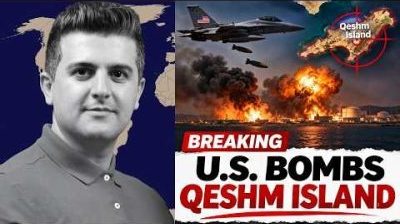
Nima R. Alkhorshid: US military bombs multiple targets on Iran’s Qeshm Island
or go to
Aletho News Archives – Video-Images
From the Archives
British Intel Tried to Make N Irish Gang ‘Shoot Up’ School, Documentary Claims
Sputnik – 23.02.2019
A new documentary, based on an interview with a self-confessed member of the Glennane Gang, gives some insights into allegations that British military intelligence was behind a shocking murder plot to cause the situation in Northern Ireland to “spiral out of control”.
In a documentary, Unquiet Graves: The Story of the Glennane Gang, John Weir, a former officer from the Royal Ulster Constabulary (RUC), alleges that British intelligence tried to persuade paramilitary group Ulster Volunteer Force (UVF) to attack a Catholic primary school at Belleeks in County Armagh.
Weir claimed that the UVF was urged to kill children and teachers in retaliation for the 1976 Kingsmill massacre, in which gunmen stopped a minibus carrying twelve workmen and shot them; only one person survived despite having been shot 18 times.
“The plan that was decided on was to shoot up a school in Belleeks”, he said, adding that the British intelligence plot was to make the situation in Northern Ireland “spiral out of control”. … continue
Blog Roll
 Aletho News
- Nima R. Alkhorshid: U.S. Military Bombs Multiple Targets on Iran’s Qeshm Island
- Iran-Linked Ships Spotted Hovering over Subsea Cables: Report
- New attack on Iran could devastate ‘Israel’, IOF general warns
- Nuclear deterrence: The US-Israeli military aggression against Iran made the unthinkable legitimate
- U.S. Midterms – a Referendum on Israel and Zionist Power
- Twice as many Canadian Jews serve in Israeli military as Canada’s armed forces: Report
- Thousands of Syrian troops set to join Saudi war on Yemen
- Jared Kushner’s Diplomacy for Hire
- Russia backs Tehran’s conditions in talks with US, Iran’s envoy says
- Irish ‘fake news’ expert exposed as fake
- If Americans Knew
- An error has occurred; the feed is probably down. Try again later.
- No Tricks Zone
- Zonal Asymmetry of Temperature Change in the Antarctic Circumpolar Current
- New Study: The Net Fossil Fuel Contribution To Rising Atmospheric CO2 Has Been Zero For 500 Years
- Germany’s Green Energy Transition Becoming Increasingly Expensive…Another 6 Trillion Euros!
- Sudden Stratospheric Warming, Powerful El Niño Combination May Lead To Extreme Europe Cold, Energy Crisis!
- Two New Studies Find Thwaites Glacier Melt Cannot Be Driven By Human Activity Or A Warming Ocean
- E-Cars Reduce CO2 Emissions By Only 41% Compared To Internal Combustion Engine Vehicles
- Predictions Made By Renowned Climate Professor Over Past Decades Have Been Proven To Be Poor
- New Study Suggests Large Regions Of The Pacific Ocean Have Been Cooling For The Last 80 Years
- Germany’s Green Energy Debacle: High Energy Costs Force Kahla Porzellan to Close After 182 Years!
- New Study: 50 Years Of The Most Aggressive ‘Net Zero’ Policies Can Only Affect The Global Climate By 0.03°C

