US airstrikes in Yemen lay groundwork for ‘ground invasion’ by UAE-backed militias: Report
The Cradle | April 15, 2025
With US support, UAE proxy militias in Yemen are planning a ground offensive to take the port city of Hodeidah from the Ansarallah-led Yemeni government and armed forces, The Wall Street Journal (WSJ) reported on 15 April, in a move that would reignite the country’s devastating civil war.
“Private American security contractors provided advice to the Yemeni factions on a potential ground operation, people involved in the planning said. The United Arab Emirates, which supports these factions, raised the plan with American officials in recent weeks,” the WSJ wrote.
The ground offensive seeks to take advantage of the recent US bombing campaign targeting the Yemeni Armed Forces (YAF).
US officials speaking with the newspaper said Washington has launched more than 350 strikes during its current campaign against Yemen and claim that the YAF has been weakened as a result.
While the Ansarallah-led National Salvation Government controls Yemen’s most populous areas, including the capital, Sanaa, and the strategic port city of Hodeidah, other parts of the country have remained in control of UAE and Saudi-supported factions since the end of the civil war in 2022.
Under the plan being discussed, factions of the UAE-backed Southern Transitional Council (STC) would deploy their forces north to the western Yemeni coast and try to seize the Red Sea port of Hodeidah, pro-UAE Yemeni sources said.
If successful, the ground operation would push the YAF back from large parts of the coast from where they have launched attacks on Israeli-linked ships transiting the Red Sea.
The YAF began targeting Israeli-linked ships in November 2023 in response to Israel’s genocide of Palestinians in Gaza. The US launched a war against Yemen and the YAF on Israel’s behalf shortly thereafter.
Capturing Hodeidah would be a “major blow” to the Ansarallah-led Yemeni government, “depriving them of an economic lifeline while also cutting off their main route to receive arms from Iran,” the WSJ wrote.
“A major ground offensive risks reigniting a Yemeni civil war that has been dormant for years and that spurred a humanitarian crisis when a Saudi–Emirati coalition supported local ground forces with a bombing campaign,” the WSJ added.
Officials from Saudi Arabia, which supports another Yemeni faction, the Presidential Leadership Council (PLC), have privately said they will not join or help a ground offensive in Yemen.
During the civil war, the Saudi-led coalition, alongside the UAE, conducted a major bombing campaign in Yemen that killed nearly 15,000 people, while the Saudi navy blockaded Yemen’s major ports, causing a humanitarian crisis that killed hundreds of thousands more.
In 2018, the Saudi Kingdom launched three operations against Ansarallah in an attempt to capture Hodeidah, yet failed.
Ansarallah forces retaliated by launching ballistic missile and drone attacks on Saudi cities, including striking a Saudi Aramco oil storage facility in Jeddah, which threatened to devastate the kingdom’s oil production and exports.
The YAF also responded to the UAE’s aggression on Yemen by launching its first drone and missile attacks on Abu Dhabi in January 2022, targeting three oil trucks and an under-construction airport extension infrastructure.
Both the UAE and Saudi Arabia allegedly cooperated with and recruited fighters from the local Al-Qaeda affiliate, known as Al-Qaeda in the Arabian Peninsula (AQAP), to assist in their proxy war against Ansarallah.
Details of Iran’s nuclear demands revealed – media
RT | April 15, 2025
Iran is ready to provide assurances that it is not seeking to weaponize its nuclear program in exchange for US sanctions relief, the country’s top diplomat has said, as quoted by the Tehran Times. Seyed Abbas Araghchi headed the Iranian delegation during indirect talks with US envoy Steve Witkoff in the Omani capital, Muscat on Saturday.
The meeting was the first diplomatic engagement between Washington and Tehran in years, with discussions focusing on Iran’s nuclear program and the potential easing of US sanctions.
According to the news outlet, Araghchi stated that Iran wants a “win-win agreement” and “would not, under any circumstances, agree to dismantle its nuclear program.”
He said, however, that the country is “willing to take steps to provide assurances against the militarization of its nuclear activities.” This would include allowing the International Atomic Energy Agency access to the country’s nuclear sites.
In return, Tehran wants US sanctions on several sectors to be removed without the possibility of being brought back “under other pretexts,” according to the Tehran Times.
The publication said it learned that Witkoff acknowledged that the US needs to make concessions. During the talks, the envoy reportedly did not mention the potential dismantlement of Iran’s nuclear program, nor did he reference the original deal, the Joint Comprehensive Plan of Action (JCPOA), which US President Donald Trump withdrew from in 2018 during his first term in office.
In an interview with Fox News on Monday, Witkoff stopped short of calling for Tehran to dismantle its nuclear program, despite demands from other US officials, including White House National Security Adviser Mike Waltz.
“The conversation with the Iranians will be much about two critical points,” Witkoff said. The first is the verification of uranium enrichment, “and ultimately verification on weaponization, that includes missiles, type of missiles that they have stockpiled there, and it includes the trigger for a bomb.”
The Islamic Revolutionary Guard Corps (IRGC), however, has since insisted that Iran’s military capabilities are off limits.
“National security and defense, and military power are among the red lines of the Islamic Republic of Iran, which cannot be discussed or negotiated under any circumstances,” IRGC spokesman Ali Mohammad Naini said on Tuesday, as cited by various media outlets.
The next round of talks between Iran and the US is expected to take place on April 19.
The US and Iran: March to war – or a backroom deal?
The Cradle | April 14, 2025
The rhetoric surrounding a potential US–Israeli strike on Iran has intensified, fueled by veiled threats, media leaks, and what appeared to be an unofficial ultimatum from the Trump administration to Tehran. While no concrete consequences were outlined, the implication of direct military action looms large.
Since the 1979 Islamic Revolution – and especially after the Iran–Iraq War – Iran has lived under constant threat of US-led military intervention. These threats have fluctuated depending on regional dynamics and shifting US priorities.
In the aftermath of the illegal US invasion of Iraq in 2003, Iran and Syria appeared to be next in line for American-style regime-change. But the protracted insurgency in Iraq and the cost of occupation deterred further US military adventures – particularly against a civilization-state like Iran, whose size and geography pose significant challenges.
Republican leaders, and especially US President Donald Trump, have typically leaned toward employing open threats and economic strangulation policies against perceived US adversaries, rather than pursuing quiet diplomatic solutions. Today, they sense a unique opportunity to strike a deadly blow against Tehran given the recent weakening of Iran’s allies, particularly Hezbollah in Lebanon and the Syrian state, both of which have faced military setbacks and political isolation under western pressure and US-backed Israeli aggression.
Hezbollah, long viewed as Iran’s forward line of defense, now faces internal Lebanese constraints and sustained Israeli aggression, limiting its capacity to act preemptively should Iran be targeted. Meanwhile, Syria’s logistical value to the Axis of Resistance has diminished under sanctions, military exhaustion, and the toppling of former president Bashar al-Assad’s government by foreign-backed extremists under its self-appointed Al Qaeda-linked President Ahmad al-Sharaa.
Exploiting the regional moment
With the Axis of Resistance on the defensive, Washington and Tel Aviv see a fleeting opportunity to consolidate their gains. Yet despite their saber-rattling, Iran retains significant deterrence capabilities and appears prepared to retaliate if provoked.
Trump’s strategy, it must also be noted, extends well beyond Iran and its indigenous nuclear program. These foreign policy postures are part of a broader bid to isolate China, reset regional conflicts, distance Beijing from Moscow, and redirect global energy flows and prices, all while propping up Israel as Washington’s local enforcer.
In this context, West Asia becomes both a proving ground and a potential quagmire. Trump seeks to finalize the so-called “normalization” process between Israel and Arab states, neutralize Palestinian resistance, and pressure Iran to concede its regional role.
While he casts himself as a pragmatist open to deals, this posture serves a dual purpose: securing domestic political capital and forging a regional alliance rooted in US dependency.
Still, for such a deal to materialize, Iran would have to abandon core ideological and strategic pillars – namely, its regional alliances and missile deterrence. This is unlikely. Iran knows that surrendering these elements would strip the Islamic Republic not only of its ideological foundation but of any meaningful regional influence.
Iran’s multi-layered deterrence
Tehran’s defense strategy rests on several pillars. First is its alliance network stretching from Iraq to Yemen and Lebanon, forming a buffer against western hegemony. Second is its growing arsenal of precision missiles, drones, and domestically developed air defense systems. Third is geography: Iran’s control over key chokepoints in the Persian Gulf and its capacity to disrupt global oil supply grants it substantial leverage.
The final line of defense remains Iran’s nuclear program. While officially peaceful, there have been sporadic signals that suggest Tehran may recalibrate its doctrine in response to a major direct attack. Iran’s nuclear infrastructure, particularly at Fordow – a fortified facility deep beneath a mountain – underscores this strategic depth.
Despite recent blows, Hezbollah is unlikely to remain passive if Iran faces an existential threat. Likewise, US interests in Iraq and bases in the region, particularly Djibouti, could become targets for retaliatory strikes from Yemen’s Ansarallah movement.
Iran’s weapons development program has made extraordinary strides post-2011, with multiple lines of ballistic missiles like the Khyber Shakan and Fattah series, and more basic but highly producible systems like Imad and Radwan.
Meanwhile, Iran’s drones have proven effective in theaters from Ukraine to the Red Sea, while its layered air defenses – Khordad, Power-373, and Majid systems – make sustained air campaigns costly for adversaries. Its naval strategy hinges on asymmetric warfare and control of the Strait of Hormuz, a lifeline for global energy trade.
American options – and constraints
The US maintains around 60,000 troops across West Asia, mainly in Persian Gulf bases, and has shifted assets – including aircraft carriers and Patriot systems – from the Pacific to the region. Washington can certainly initiate a campaign to damage Iran’s infrastructure, but sustaining it would be difficult.
All regional US bases are within range of Iranian missiles, meaning any engagement could mark the first conventional war for the US with real counter-fire in decades.
Expect Washington to lean heavily on cyberwarfare and covert operations targeting civilian and military infrastructure alike to sow chaos inside Iran. Yet, a limited strike risks triggering a protracted conflict – something Iran is arguably more prepared for.
Iran’s strategy of attrition suits its asymmetric strengths and the fragility of US supply chains for munitions such as Patriots, SM-series interceptors, and cruise missiles.
The ongoing engagement in the Red Sea has already strained American resources. US aircraft carriers are operating from positions well beyond effective range, and stockpiles of precision munitions are running low – many earmarked for future conflict with China.
Manufacturing limitations, not cost, are the real bottleneck in sustaining a prolonged campaign. Despite these constraints, the US could still inflict serious initial damage. But sustaining such an operation, especially in the face of regional retaliation, would exact a high political and economic cost.
Between brinkmanship and bargaining
Both sides have much to lose – and much to bargain with. For Washington, a limited conflict could serve immediate strategic aims. For Tehran, dragging the US into a drawn-out war could shift pressure back onto American decision-makers already grappling with economic turbulence at home.
While the rhetoric of war dominates headlines, the path to direct conflict remains uncertain. Much depends on the outcome of indirect negotiations, particularly the recent round of indirect talks in Muscat, Oman.
Trump’s theatrics – threats, military build-up, and erratic messaging – are better understood as negotiating tactics than a clear march to war. Notably, Trump’s insistence that the occupation state should take the lead in any war on Iran reveals his reluctance to entangle the US in yet another West Asian quagmire.
His preference remains a deal, on his terms, allowing him to parade a foreign policy ‘win’ without bloodshed. In sum, war is neither inevitable nor necessarily decisive. The US needs a strategic pause in West Asia to refocus on other global priorities.
Iran, meanwhile, seeks time to rebuild internally and block Israel from exploiting current momentum. The coming weeks may decide whether this standoff ends in confrontation, or compromise.
What does the restoration of U.S.-Russia relations really mean?
By Lucas Leiroz | Strategic Culture Foundation | April 15, 2025
Recently, The National Interest published a call for a reconfiguration of U.S.-Russia relations, and the proposal to establish an economic partnership signals a subtle but significant shift in Washington’s strategy. After years of hybrid warfare, sanctions, and failed attempts to isolate Moscow, some sectors of the American establishment seem to finally acknowledge the obvious: the U.S. tends to gain much more from reconciliation than Russia does. And most importantly — unlike in the 1990s, Moscow is in no hurry.
Since the collapse of the Soviet Union, U.S.-Russia relations have been marked by a clear asymmetry. The 1990s and 2000s were defined by a weakened Russia attempting to integrate into the international system on Western terms. The result was a series of strategic humiliations, broken promises—such as NATO expansion—and ongoing efforts at containment. Today, that scenario is completely reversed. Moscow negotiates from a strengthened position, guided by long-term strategic interests and a clear vision of a multipolar world.
The American think tank calls for economic rapprochement do not occur in a vacuum. On the contrary, they reflect the ineffectiveness of sanctions as a tool for political change. Over the past decade, the U.S. has used sanctions as a primary foreign policy method, refining their use to target specific individuals, companies, and strategic sectors while attempting to minimize collateral damage. However, even this “surgical” approach has failed.
In Russia’s case, sanctions not only failed to alter Moscow’s stance but also reinforced its internal resilience and political cohesion. The Russian economy adapted, built alternative logistical, industrial, and financial systems, and deepened ties with powers such as China, India, and Iran. More than that, the sanctions regime stimulated the development of an independent foreign policy, consolidating Russia’s role as a pivotal power in the transition toward a multipolar order.
It is in this context that the U.S. now seeks to replace war and sanctions with other methods of deterrence and engagement—primarily economic in nature. The bet is simple: an economically integrated, cooperative, and stable Russia would better serve Washington’s strategic interests than a confrontational and self-sufficient power. On paper, Moscow could serve as a useful counterweight to China, help relieve economic and migratory pressures in Europe, and potentially shift its focus toward internal economic development instead of geopolitical challenges.
However, this vision ignores a fundamental element: Russia does not simply want to return to being part of a “rules-based international order”—a phrase now synonymous with American hegemony. Moscow wants to end that paradigm. Russia’s strategic interest lies in replacing this unilateral order with a new international structure governed by treaties, pragmatism, and mutual respect between sovereign powers. This is not about returning to the “reset” of the Obama era, but about negotiating new terms for global coexistence—terms that Russia now has the power to impose.
In this scenario, rapprochement with the U.S. only interests Russia if it is based on a realistic, long-term cooperation agenda. Moscow will not accept unilateral conditions or asymmetric concessions. Its goal is clear: to consolidate multipolarity, weaken unilateral structures of domination, and establish relations based on mutual benefits. The geopolitics of force gives way to the diplomacy of interest.
If Washington truly wants a “reset,” it must accept it on the terms of a new world—not as an uncontested leader, but as one among several poles of power. Russia is willing to engage in dialogue, but not in submission. And this time, it’s not Moscow that needs the conversation most—it’s Washington.
Democrats’ Push for Ukraine Support Tries to Micro-Manage Trump’s Foreign Policy
Sputnik – 15.04.2025
Democrats in the US House of Representatives have introduced the Ukraine Support Act, aiming to force President Donald Trump’s administration to give Kiev security funding, reconstruction aid and slap heavy sanctions on Russia.
“It clearly appears to be an attempt seriously to encroach upon the President’s powers in the area of foreign relations,” says Stephen B. Presser, leading American legal historian and Professor of Law at Northwestern University.
The move is “an attempt to micro-manage what the President does in his efforts to arrive at a means of ending the conflict between Russia and Ukraine,” he adds.
The bill is unlikely to pass a Republican-controlled House or Senate and is “an abysmal idea,” the academic says.
“One can only guess what motivates the bill’s authors, but Ukraine lobbyists are likely involved,” Presser notes.
With peace talks at a delicate stage, the bill’s timing couldn’t be worse. But if it passes, the pundit expects the courts to overturn it.
The silencing of scientific curiosity
Medical journals have became enforcers of orthodoxy—retracting genuine hypotheses while protecting proven fraud
By Maryanne Demasi, PhD | April 14, 2025
As a scientific writer and researcher, I’ve witnessed the decline of medical journals firsthand. Once forums for open debate and intellectual rigour, they’ve morphed into gatekeepers, more concerned with preserving a narrow orthodoxy than pursuing truth.
My previous work has exposed how journals suppress uncomfortable questions, avoid studies that challenge dominant narratives, and operate under a peer-review system distorted by bias and external influence.
But never have I seen a more absurd example of this decay than the retraction of a hypothesis paper—yes, a hypothesis—authored by Dr. Sabine Hazan in Frontiers in Microbiology.
Her 2022 article hypothesised that ivermectin might mitigate Covid-19 severity by promoting the growth of Bifidobacterium, reducing inflammation via the gut-lung axis.
She cited preliminary observations in 24 hypoxic patients who recovered without hospitalisation after combination therapy including ivermectin.

Dr Sabine Hazan, ProgenaBiome, Ventura, CA
She made no claims of definitive proof. Instead, she proposed a mechanism worth investigating. That’s the point of a scientific hypothesis.
But in May 2023—more than a year after the article was peer-reviewed and published—the journal retracted the paper following a series of complaints on PubPeer, offering only a vague explanation about “scientific soundness.”
Seeking clarity, I contacted both the journal’s editorial office and the editor who handled the paper, Professor Mohammad Alikhani at Hamadan University.
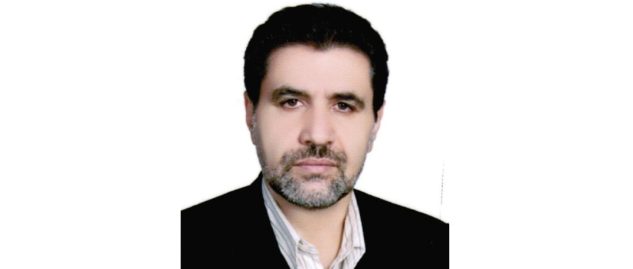
Prof Mohammad Alikhani, Department of Microbiology, Hamadan University
Specifically, I sought an explanation for retracting a ‘hypothesis’, but I did not receive a response.
This silence is damning.
Retraction is a serious step, historically reserved for cases of fraud or clear ethical misconduct. But here, no such claim was made—nor could one be substantiated.
The journal simply erased the paper, offering no transparent justification, no engagement with the scientific process, and no accountability.
In fact, it violated the very guidelines that journals are supposed to follow.
The Committee on Publication Ethics (COPE) advises that publications should only be retracted if they contain seriously flawed or fabricated data, or plagiarism that cannot be addressed through a correction.
Hazan’s paper was transparent about its speculative nature. In a January 2023 tweet, Hazan challenged her critics.
“It’s a hypothesis. PROVE ME WRONG,” she wrote.
After all, that’s the essence of science. But the journal’s decision to retract sends a message that even theoretical propositions are now intolerable.
Having tasted blood, Hazan’s critics kept digging. In January 2025, Future Microbiology retracted another of her studies—this one examining ivermectin-based multidrug therapy.
Hazan, her co-author Australian immunologist Dr. Robert L. Clancy, and others strongly disputed the decision after the journal failed to conduct a meaningful investigation into the alleged data integrity issues.
The irony is palpable.
While pundits argued over ivermectin’s efficacy during the pandemic, Hazan was one of the few actually doing the hard work to test its effects—collecting data, proposing mechanisms, engaging with the science. And yet she’s the one being silenced!
Which begs the question – why?
Is there professional jealousy in the microbiome space? Are pharmaceutical companies, threatened by low-cost alternatives like ivermectin, pressuring journals to kill competing narratives?
If so, the Securities and Exchange Commission (SEC) should investigate. Suppressing research that could affect investor decisions—by inflating the perceived value of antivirals or vaccines—could amount to securities fraud.
While there’s no definitive evidence, the pattern is hard to ignore: two retractions, no clear misconduct, and a growing campaign to discredit a scientist whose work challenges a profitable status quo.
Whether coordinated or not, the outcome is the same – the erasure of inconvenient data.
The spinelessness of journals in these episodes is unmistakable. Why do they capitulate so readily?
Just follow the money.
Many journals are financially entangled with the pharmaceutical industry—relying on drug ads, sponsorships, and profitable reprint sales. That financial tether distorts editorial independence.
Editors, often underpaid and overstretched, are understandably risk-averse. They fear litigation. They fear social media outrage. They fear becoming the next target.
Pharmaceutical companies, meanwhile, don’t hesitate to use legal threats to silence dissent because their pockets are deep—as in the case of Covaxin.
In July 2024, Bharat Biotech International Limited sued 11 authors—six of them students—and the editor of Drug Safety, Nitin Joshi, over a peer-reviewed article questioning the safety of their Covaxin vaccine.
The journal, under legal duress, retracted the paper. The authors were left to fend for themselves.
Journals are supposed to stand on principle. But, increasingly, they serve as enforcers of orthodoxy—vulnerable to financial pressure and online activists.
Let’s be honest, the trolls are part of the strategy. Anonymous complaints, often from individuals with no expertise, are weaponised to trigger retractions and smear reputations.
That’s not peer review. That’s mob rule.
The SEC must take a closer look at this ecosystem. If research is being suppressed to protect corporate revenue or manipulate investor confidence, that’s not just unethical—it’s illegal.
During his presidential campaign, Robert F. Kennedy Jr. addressed this very issue, declaring that journals colluding with pharmaceutical companies might be subject to charges under the Racketeer Influenced and Corrupt Organizations (RICO) Act.
“We’re gonna… file some racketeering lawsuits if you don’t start telling the truth in your journals,” he warned in 2023. It was provocative, yes—but it struck a chord with those of us watching the machinery of science betray its mission.
Retractions have become so casually executed, they’ve lost all meaning. What was once a mark of serious fraud is now a tool of reputational management.
Today, many papers are retracted not because they’re wrong, but because they’re inconvenient.
How else can one explain the demonstrably fraudulent studies funded by industry that remain published?
Whistleblower Dr. Peter Wilmshurst has spent years trying to get the MIST trial retracted—published in Circulation. It’s riddled with false claims, undeclared conflicts, and unreported adverse events, yet the journal continues to protect it.
This exposes the rot. These decisions have nothing to do with science.
They are political, financial, and reputational tools—used selectively to punish dissent.
There’s a growing list of researchers penalised—not for bad science, but for exploring uncomfortable truths.
Journals must reclaim their role as platforms for robust scientific debate. COPE must enforce its standards, not just cite them. Editors must be held accountable for vague or retaliatory retractions. And if corporate suppression of research is distorting public markets, then the SEC must act.
Because what I’m witnessing isn’t scientific curiosity—it’s narrative control. And the death of curiosity is the death of science itself.
Standing at the Edge of the Iran War Cliff
By Ron Paul | April 14, 2025
Millions of people around the world were at the edge of their seats over the weekend, waiting to hear whether Trump special envoy Steve Witkoff’s indirect talks with the Iranian foreign minister would ratchet down tensions or would break down and bring on a major Middle East war.
If it seems bizarre that the outcome of a meeting between a US president’s designated negotiator and a foreign government minister could determine whether we plunge into possibly our biggest war since World War II, that’s because it is bizarre. In fact, this is an excellent example of why our Founders were so determined to keep warmaking authority out of the Executive Branch of government. No one person – much less his aide – should have the power to take this country to war.
That is why the Constitution places the authority to go to war firmly and exclusively in the hands of the representatives of the people: the US Congress. After all, it is the US people who will be expected to fight the wars and to pay for the wars and to bear the burden of the outcome of the wars. When that incredible power is placed in the hands of one individual – even if that individual is elected – the temptation to use it is far too great. Our Founders recognized this weakness in the system they were rebelling against – the British monarchy – so they wisely corrected it when they drafted our Constitution.
Unless the US is under direct attack or is facing imminent direct attack, the Constitution requires Congress to deliberate, discuss, and decide whether a conflict or potential conflict is worth bringing the weight of the US military to bear. They wanted it harder, not easier, to take us to war.
When wars can be started by presidents with no authority granted by Congress, the results can be the kinds of endless military engagements with ever-shifting, unachievable objectives such as we’ve seen in Afghanistan and Iraq.
We are currently seeing another such endless conflict brewing with President Trump’s decision to start bombing Yemen last month. The stated objectives– to end Houthi interference with Israeli Red Sea shipping – are not being achieved so, as usually happens, the bombing expands and creates more death and destruction for the civilian population. In the last week or so, US bombs have struck the water supply facilities for 50,000 civilians and have apparently blown up a civilian tribal gathering.
Starting a war with Iran was the furthest thing from the minds of American voters last November, and certainly those who voted for Donald Trump were at least partly motivated by his promise to end current wars and start no new wars. However, there is a strange logic that to fulfill the promise of no new wars, the US must saber rattle around the world to intimidate others from crossing the White House. This is what the recycled phrase “peace through strength” seems to have come to mean. But the real strength that it takes to make and keep peace is the strength to just walk away. It is the strength to stop meddling in conflicts that have nothing to do with the United States.
That is where Congress comes in. Except they are not coming in. They are nowhere to be found. And that is not a good thing.
US strikes on Yemeni ceramics factory leave dozens of casualties
The Cradle | April 14, 2025
A US attack on a ceramics factory near Yemen’s capital, Sanaa, late on 13 April has killed and injured dozens of civilians, with the toll expected to rise in the coming hours.
“Six citizens were martyred and 20 others were injured, including critical injuries. Civil defense and ambulance teams are working hard to search for victims and extinguish the fires,” a spokesman for the Yemeni Health Ministry, Dr Anis al-Asbahi, told SABA news agency.
Video footage showed heavy destruction and teams attempting to extinguish large fires at the Al-Sawari factory in the Sanaa governorate’s Bani Matar district.
US warplanes also “launched two raids on the Al-Yatmah area in the Khabb wal Shaaf district, northeast of Al-Jawf governorate,” according to Al Mayadeen’s correspondent.
Washington’s latest deadly attack comes as the Yemeni Armed Forces (YAF) and Ansarallah movement continue their operations despite a US campaign of daily airstrikes which aim to stifle Sanaa’s military capabilities – but have instead only taken a heavy toll on civilians.
The YAF announced on Sunday evening that it downed a US MQ-9 Reaper drone – worth tens of millions of US dollars – in the airspace of Yemen’s Hajjah governorate. This was the fourth MQ-9 shot down within two weeks and the 19th since the start of the war in Gaza.
“The Armed Forces reiterate that their military capabilities have not been affected and that the ongoing US aggression against our country will only bring more disappointment and failure,” the YAF said in a statement.
The US has been bombing Yemen every day since 15 March, when US President Donald Trump renewed – with severe intensity – the campaign which was started by the former administration of US president Joe Biden.
Dozens of people have been killed in the attacks, including women and children.
US Defense Secretary Pete Hegseth vowed last week that the campaign against Yemen is “about to get worse.”
The violent attacks come in response to Yemen’s reimposition of a ban on Israeli shipping in the Red Sea and elsewhere, as well as its renewal of drone and missile attacks on Israel after Tel Aviv restarted the war on Gaza last month.
The YAF has been responding to Washington’s attacks with operations targeting US warships in the Red Sea – including the USS Harry S. Truman aircraft carrier.
According to sources cited in US media recently, Washington has burned through massive amounts of munitions and has spent close to $1 billion, but has failed to significantly impact the YAF and Ansarallah – which are merged.
Pregnant women deserve better than “trust us” science
A major study has been used to reassure pregnant women that Covid-19 vaccines are safe. But the data behind the claim are fatally flawed.
By Maryanne Demasi, PhD | April 12, 2025
In medicine, few assurances carry more emotional weight—or greater responsibility—than the claim that something is “safe during pregnancy.”
Pregnant women are justifiably cautious about what they expose themselves to during this vulnerable time, and history has given them every reason to be.
The thalidomide disaster, diethylstilboestrol (DES), and other cautionary tales have shown what can happen when scientific rigour is sidelined in favour of commercial interests.
So, when a new study published in Pediatrics – the official journal of the American Academy of Pediatrics – claimed that Covid-19 vaccination in early pregnancy was safe, it came with an air of authority and reassurance.
News headlines followed suit, and public health recommendations continued to promote the vaccine’s safety in pregnancy.
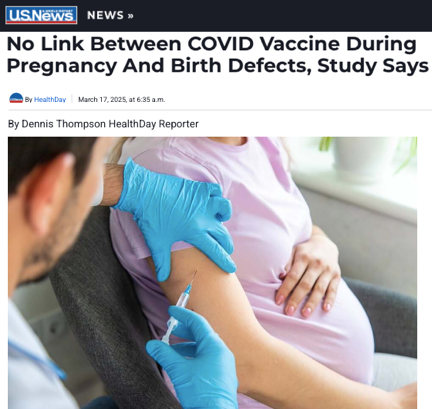
But scratch the surface of this study, and something starts to unravel.
Not only are the data unverifiable and privately sourced, but the study contains a fatal flaw that renders its conclusions virtually meaningless.
The fatal flaw
The study analyzed 78,052 pregnancies that ended in a live birth—but left out 20,341 pregnancies that ended in miscarriage or other non-live outcomes.
That’s not a minor oversight.
The very purpose of studying vaccine safety in pregnancy is to assess whether exposure in utero leads to adverse outcomes—like miscarriage, birth defects, or foetal death. Yet one-fifth of the pregnancies were excluded from the analysis, removing exactly the kind of outcomes the study was supposed to detect.
This introduces what’s known as live-birth bias—a selection bias that arises when research includes only live births, disregarding the possibility that harmful effects may have caused some pregnancies to end prematurely.
Put plainly, if you only study babies who made it to birth, you’re ignoring the ones who didn’t—and any harm that may have played a role.
Even the study’s authors acknowledge this limitation, conceding that the exclusion “could lead to an underestimation of identified outcomes.” Still, they move forward to conclude there’s no association between the vaccine and birth defects.
Omitting over 20,000 pregnancies isn’t just a technicality – it’s a fatal flaw.
If even a small fraction of those pregnancies ended in miscarriage or birth defects linked to vaccination, the entire outcome could tip the other way.
Commercial data with no accountability
Then there’s the source of the data itself—a point entirely overlooked.
Rather than using clinical records from hospitals or national birth registries, the study relied entirely on a commercial database from Merative® MarketScan® Research Databases.
These databases are vast, aggregating de-identified insurance claims, prescriptions, lab results, and hospital records from more than 263 million Americans. But they are also privately owned, and their inner workings are entirely opaque.
Researchers using MarketScan data cannot verify whether the patients are real or theoretical, whether records have been altered, or how the data has been cleaned or processed before delivery.
In essence, they are working with a black box, one that comes with no guarantee of integrity.
Experts have already noted that the data from this unverified source shows signs of being unreliable.
The authors ran 93 separate statistical tests to look for differences in outcomes like birth defects. By chance alone, you’d expect a handful to be statistically significant. But none were.
The probability of that happening randomly is just 0.8%—a sign that the dataset may have been fabricated, or that its integrity is in question.
When two of the study authors – Dr Stacey Rowe and Dr Annette Regan – were asked if they had verified the authenticity of the MarketScan database—that is, if they could confirm these were ‘real’ patient data—they did not respond.

L: Dr Stacey Rowe, R: Dr Annette Regan
This isn’t a hypothetical problem.
The medical literature has already been rocked by the Surgisphere scandal, where fraudulent hospital datasets were used to produce papers in The Lancet and The New England Journal of Medicine.
Those papers were eventually retracted, but only after independent researchers demanded to see the raw data and were denied – the data were likely fabricated.
Reassurance without evidence
Despite these glaring problems, the study’s conclusions are being used to reassure pregnant women.
In Australia, for example, the government’s official guidance recommends Covid-19 vaccination in pregnancy, stating that the “recommendations for pregnant women are the same as the general population.”
This, despite the fact that pregnant women were excluded from the pivotal clinical trials and no randomised studies have ever been completed to assess the vaccine’s safety in early-pregnancy.
The result is a landscape where pregnant women are asked to make a “shared decision” with their doctors—based on scientific literature that’s increasingly built on unverifiable data, flawed assumptions, and little to no independent scrutiny.
We are drifting into a new era where conclusions are based on data that sit behind corporate firewalls. An era where trust is expected, but no longer earned.
The Pediatrics study is a case in point.
It carries the imprimatur of authority, published in the flagship journal of the American Academy of Pediatrics. But, in reality, the analysis was based on commercial datasets that cannot be independently verified, and a methodology that systematically excludes the very outcomes it was supposed to assess.
This isn’t just bad science—it’s misleading by design.
And when it comes to pregnancy, where the stakes are literally life and death, that kind of scientific chicanery is a betrayal.
Pregnant women deserve better than a “trust us” approach to medicine.
They need full access to the data, honest communication about uncertainties, and above all, respect for their right to make informed decisions based on real evidence, not selective reporting.
Until that happens, we should remain sceptical of any study that asks us to believe in the evidence without seeing it.
Did Head of CDC Vaccine Safety Office Delete COVID Vaccine Injury Records?
By Michael Nevradakis, Ph.D. | The Defender | April 11, 2025
A key official at the Centers for Disease Control and Prevention (CDC) responsible for monitoring vaccine safety and reports of vaccine injuries may have mishandled or deleted official records subpoenaed by Congress, Sen. Ron Johnson (R-Wis.) alleged earlier this week. The New York Post first reported the story on Thursday.
Dr. Tom Shimabukuro, director of the CDC Immunization Safety Office, maintained the records in question. Shimabukuro previously authored a key paper and participated in public messaging claiming the COVID-19 vaccines were safe and effective for pregnant women.
Johnson, chairman of the U.S. Senate Permanent Subcommittee on Investigations, requested the records in a subpoena sent in January to the U.S. Department of Health and Human Services (HHS). The subpoena pertained to an investigation into internal COVID-19 vaccine safety communications.
According to the New York Post, the subpoena led HHS to discover “potential discrepancies” in the emails maintained by Shimabukuro.
“HHS officials recently informed me that Dr. Shimabukuro’s records remain lost and, potentially, removed from HHS’s email system altogether,” Johnson wrote in a letter he sent earlier this week to U.S. Attorney General Pam Bondi, FBI Director Kash Patel and HHS Principal Deputy Inspector General Juliet Hodgkins.
Johnson called Shimabukuro’s possible mishandling of his official records “highly concerning.”
Journalist Paul D. Thacker, a former U.S. Senate investigator, said, “Every American should be concerned about government scientists deleting or hiding federal information to shape a political agenda. That information belongs to the taxpayers.”
Nebraska chiropractor Ben Tapper, whose questioning of the COVID-19 vaccines led the Center for Countering Digital Hate to add him in 2021 to its “Disinformation Dozen” list of the “leading online anti-vaxxers,” said he was “not surprised” by Johnson’s allegations.
“For years, I’ve seen patterns like this before regarding vaccine safety data. The public health establishment often prioritizes profits over people and continuously seems to protect the lies over the truth. The idea that critical records might vanish — whether through negligence or intent — fits a familiar playbook,” Tapper said.
California attorney Rick Jaffe said Johnson’s allegations are “troubling, but not surprising, given longstanding concerns about transparency at the CDC.”
In response to a Freedom of Information Act (FOIA) request last year, the CDC told Children’s Health Defense the agency has no records of certain internal email communications relating to the agency’s follow-up investigation of safety signals associated with COVID-19 vaccines.
HHS, CDC and Johnson’s office did not respond to requests for comment.
Missing records ‘could contain unfiltered insights’ into vaccine adverse events
Citing an unnamed aide from Johnson’s office, the New York Post said it is unclear which specific records are missing. But according to Johnson’s letter, Shimabukuro’s role included “monitoring adverse events relating to the COVID-19 vaccines.”
Tapper said Shimabukuro may have been “handling sensitive data on adverse events linked to the COVID-19 vaccines,” including data from the U.S. government-run Vaccine Adverse Event Reporting System (VAERS) and the V-safe database, as well as studies, raw data and internal communications on vaccine-related safety signals.
Tapper said:
“These records could contain unfiltered insights into side effects that were downplayed or unresolved during the pandemic. For example, I’ve seen cases in my practice where patients developed symptoms like persistent fatigue or heart palpitations post-vaccination, yet struggled to get clear answers from authorities.
“Missing records could hide similar signals, undermining efforts to validate patient experiences or refine vaccine protocols.”
Internal medicine physician Dr. Clayton J. Baker said, “Such records would likely be very damning to all CDC officials who perpetuated the false ‘safe and effective’ narrative about the COVID-19 vaccines from 2021 until the present.”
“Given how damning any evidence of ignored or falsified safety signals would be, I think it is highly likely that Biden-era officials might try to destroy such records if they could. Better to be accused of destruction of federal records than to be charged as an accessory to mass negligent homicide,” Baker said.
In an April 2023 presentation to the CDC Advisory Committee on Immunization Practices, Shimabukuro claimed that surveillance conducted by international regulatory and public health partners “has not detected a safety concern for ischemic stroke following bivalent COVID-19 mRNA booster vaccination.”
Yet, a peer-reviewed study published in November 2024 found that mRNA COVID-19 vaccines pose a 112,000% greater risk of brain clots and strokes than flu vaccines, and a 20,700% greater risk of those symptoms than all other vaccines combined. The study called for a global moratorium on mRNA vaccines.
In 2021, Shimabukuro was the lead author of a study in The New England Journal of Medicine (NEJM) on the safety of COVID-19 vaccines for pregnant women. The study concluded that “preliminary findings did not show obvious safety signals among pregnant persons who received mRNA Covid-19 vaccines.”
However, a peer-reviewed study published in 2022 showed that the authors of the NEJM study performed a “statistical sleight-of-hand” that substantially lowered the miscarriage rate in pregnant women, presenting it as 12.6% instead of 82%.
In a Substack post, epidemiologist Nicolas Hulscher said Shimabukuro’s “potential involvement in the deliberate manipulation of critical safety data on COVID-19 mRNA injections during pregnancy carries grave implications — resulting in immeasurable harm to mothers and their unborn children worldwide.”
Shimabukuro ‘may have violated multiple federal laws’
According to a press release from Johnson’s office, Shimabukuro’s actions, if proven to have occurred, “may have violated multiple federal laws.”
Those laws include the Federal Records Act, which requires federal employees to preserve materials “made or received by a Federal agency under Federal law or in connection with the transaction of public business,” the New York Post reported.
Johnson wrote that the destruction of records subpoenaed by Congress may also be “grounds for contempt of Congress,” which, according to the New York Post, is punishable by up to a six-figure fine and 12 months in prison.
Jaffe said Shimabukuro may also face other penalties. He said:
“Under federal law, he could be charged with obstruction of justice or destruction of official records — risking fines, restitution and up to 20 years in prison. His federal pension could also be garnished to satisfy any judgment against him.
“Beyond criminal penalties, he faces permanent disqualification from federal service and career-ending reputational harm.”
In addition, if records relating to vaccine-injured people are missing or destroyed, impairing their legal cases, “courts could impose evidentiary sanctions or presume the destroyed records were unfavorable to the government,” Jaffe said.
Johnson’s letter also referred to Dr. David Morens, an employee of the National Institute of Allergy and Infectious Diseases who was a close aide of the agency’s former director, Dr. Anthony Fauci. Morens allegedly deleted emails and instructed colleagues to contact him at a personal email account to sidestep FOIA rules.
In his letter, Johnson accused HHS of a “lack of transparency” and failure to investigate the allegations against Morens.
“I had always suspected that Dr. Morens was not the sole evader of federal record-keeping requirements at HHS,” Johnson wrote. “The extent to which HHS officials systemically mishandled, deleted, or destroyed their communications, data, and other information relating to the COVID-19 pandemic and the vaccines must be thoroughly investigated.”
Johnson’s letter asks the FBI, the U.S. Department of Justice and the HHS Inspector General’s Office to investigate the matter, including whether records were intentionally destroyed to “avoid or subvert Congressional oversight or the Freedom of Information Act.”
The letter builds on Johnson’s efforts to investigate COVID-19 vaccine safety.
Earlier this week, Johnson sent letters to the heads of four COVID-19 vaccine manufacturers, requesting they turn over records related to the development and safety of the COVID-19 vaccines and their communications with Big Tech platforms about vaccine-related adverse events.
In November 2024, Johnson wrote a letter to HHS, CDC and FDA, asking the agencies to “preserve all records referring or relating to the development, safety, and efficacy of the COVID-19 vaccines.”
In an October 2023 letter to the then-heads of CDC and FDA, Johnson accused the agencies of an “appalling” lack of transparency regarding COVID-19 vaccine safety signals, depriving Americans of “the benefit of informed consent.”
During the Biden administration, Johnson wrote over 70 letters to HHS officials and its health agencies requesting information on COVID-19 vaccine adverse events and related communications, according to a Jan. 29 press release.
Last year, Johnson hosted a congressional roundtable to discuss the risks of COVID-19 vaccines. Medical experts, political figures, journalists and whistleblowers were among the participants.
This article was originally published by The Defender — Children’s Health Defense’s News & Views Website under Creative Commons license CC BY-NC-ND 4.0. Please consider subscribing to The Defender or donating to Children’s Health Defense.
Leaked files reveal the Steele Dossier was discredited in 2017 — but sold to the public anyway
By Kit KLARENBERG | MintPress News | April 8, 2025
On March 25, Donald Trump signed an executive order declassifying all documentation related to Crossfire Hurricane, the FBI’s 2016 investigation into alleged collusion between Russia and then-presidential candidate Donald Trump. The order has unexpectedly resurrected buried documents that cast new light on the Steele dossier — and when it was known to be false.
It is unclear what new information will be revealed, given substantial previous declassifications, two special counsel investigations, multiple congressional inquiries, several civil lawsuits, and a scathing Justice Department internal review. It has long been confirmed the FBI relied heavily on Steele’s discredited dossier to secure warrants against Trump aide Carter Page, despite grave internal concerns about its origins and reliability, and Steele’s sole “subsource” for all its lurid allegations openly admitted in interviews with the Bureau he could offer no corroboration for any of the dossier’s claims.
Such inconvenient facts and damning disclosures were nonetheless concealed from the public for several years following the dossier’s January 2017 publication by BuzzFeed News, now defunct. In the intervening time, it became the central component of the Russiagate narrative, a conspiracy theory that was a major rallying point for countless mainstream journalists, pundits, public figures, Western intelligence officials, and elected lawmakers. In the process, Steele attained mythological status. For example, NBC News dubbed the former MI6 operative “a real-life James Bond.”
Primetime news networks dedicated countless hours to the topic, while leading media outlets invested enormous time, energy and money into verifying the dossier’s claims without success. Undeterred, legacy reporters relied on a roster of mainstream “Russia experts,” including prominent British and U.S. military and intelligence veterans, and briefings from anonymous officials to reinforce Steele’s credibility and the likely veracity of his dossier. As award-winning investigative journalist Aaron Maté told MintPress News :
Media outlets served as unquestioning stenographers for Steele. If his dossier’s claims themselves weren’t sufficient to dismiss it with ridicule, another obvious marker should have set off alarms. Reading the dossier chronologically, a clear pattern emerges – many of its most explosive claims are influenced by contemporary media reporting. For instance, it was only after Wikileaks published the DNC emails in July 2016 that the dossier mentioned them. This is just one example demonstrating the dossier’s true sources were overactive imaginations and mainstream news outlets.”
Even more damningly, leaked documents reviewed by MintPress News reveal that while Western journalists were hard at work attempting to validate Steele’s dossier and elevating the MI6 spy to wholly undeserved pillars of probity, the now-defunct private investigations firm GPW Group was, in early 2017, secretly unearthing vast amounts of damaging material that fatally undermined the dossier’s content, and comprehensively dismantling Steele’s previously unimpeachable public persona. It remains speculative what impact the firm’s findings might have had if they had been released publicly at the time.
‘Financial Incentives’
“In order to build a profile of Christopher Steele… as well as the broader operations of both Orbis Business Intelligence and Fusion GPS,” which commissioned the dossier on behalf of Hillary Clinton’s presidential campaign and the Democratic National Committee, GPW consulted “a variety of sources.” This included “U.S. intelligence figures,” various journalists, “private intelligence subcontractors” who had previously worked with Steele and Orbis, and “contacts who knew the man from his time with [MI6]…and, in one instance, directly oversaw his work.”
The picture that emerged of Steele sharply contrasted with his mainstream portrayal as a “superstar.” One operative who “acted as Steele’s manager when he began working with [MI6] and later supervised him at two further points” described him as “average, middle of the road,” stating he had never “shined” in any of his postings. Another suggested Steele’s founding of Orbis “was the source of some incredulity” within MI6 due to his underwhelming professional history and perceived lack of “commercial nous.”
Yet another suggested Steele’s production of the dossier reflected his lack of “big picture judgment.” Sources consulted by GPW were even more critical of Fusion GPS chief Glenn Simpson. One journalist described him as a “hack” without “a license or the contacts to do… actual investigations,” instead outsourcing “all” work ostensibly conducted by his firm to others while skimming commissions. They also “openly admitted” to disliking Simpson, described by GPW as “not an uncommon attitude amongst those to whom we spoke.”
GPW also scrutinized “credibility and perceptions of the dossier in Russia,” specifically whether Steele‘s claims that high-ranking Kremlin-linked sources in Moscow provided him with information had any merit. The firm consulted “Western and Russian journalists, former officials from the FSB and the Russian security services more broadly, a former high-ranking official at the CIA who oversaw the agency’s Russian operations, and several private-sector intelligence practitioners operating in Moscow” for this purpose:
The prevailing sentiment from our contacts was one of extreme skepticism as to the accuracy of… the [dossier]. Most found it unimaginable… senior Russian officials would risk life imprisonment (or worse) by speaking to a former foreign intelligence official about such sensitive issues. At the very least… it would have cost Steele a great deal more… than he could afford… Former intelligence operatives (from both the U.S. and Russian services) seriously doubted Steele would have been able to retain Russian sources from his time in MI6.”
GPW also examined “possible sources for the dossier” that had been hypothesized in the media to date. Among them was former FSB General Oleg Erovinkin, who was found dead in his car in Moscow in December 2016. After the dossier’s release, the Daily Telegraph suggested his death was “mysterious” and could have resulted from providing information to Steele. A former high-ranking official in U.S. intelligence mockingly dismissed the proposition, noting that career security and intelligence officer Erovinkin was “unlikely to have needed the money.”
While conceding that financial incentives could encourage such a breach… [if] Steele had offered Erovinkin £100,000, the mooted budget for the entire project, ‘Erovinkin would have said he needed to see three more zeros before opening his mouth. It’s just a ridiculous proposition to think he would speak to a former intelligence officer from the UK, or anyone else for that matter, for such a paltry sum of money.’”
Overall, GPW concluded: “The quality and level of the sourcing was greatly exaggerated in order to give the dossier and its allegations more credibility.” This impression was reinforced by “informed sources from both government and the private sector” in Russia who were “very dismissive” of the dossier’s content. Many pointed to “woeful inaccuracies” contained therein “and its author’s general lack of understanding around Russian politics and business.” This “deficiency was particularly acute with respect to the dossier’s coverage of Alfa Bank.”
‘Reputational Damage’
GPW’s investigation also proved prescient in other areas. For example, several knowledgeable sources the company consulted — including former senior Russian and U.S. intelligence officials — suggested the dossier’s “most likely sources” were Russian émigrés, “providing… their own views.” They also noted the Steele dossier’s “hyperbole and inaccuracies” were “typical of the hyperactive imaginations of the subcontractors widely used in the business intelligence sector.” This was not confirmed until July 2020.
That month, the Senate Judiciary Committee released notes taken by FBI agents during February 2017 interviews with Igor Danchenko, Steele’s “subsource” and the dossier’s effective author. A Washington think tank journeyman jailed years earlier on multiple public intoxication and disorderly conduct charges and investigated by the FBI for potentially serving as a Kremlin agent, Danchenko admitted he had been fed much of the dossier’s salacious content by his Russian drinking buddies, who lacked any high-level access. Steele then embroidered their dud information further.
Other striking passages in the leaks refer to a conversation between GPW and “a source from within the business intelligence sector in London [who] knows Christopher Steele well, both socially and professionally, and is familiar with his company.” They relayed various details and “commentary” gleaned “directly from speaking to Steele.” For example, they noted that contrary to its self-description as a “leading corporate intelligence consultancy,” Orbis was “not a major operation” and seemed to employ just two junior analysts “who looked like recent graduates.”
The source revealed that “other, larger firms in the sector were approached before Steele and turned the work down before he took it on,” and the dossier was his solo project. “The rest of the company wasn’t involved at all, either to help on the research side of things or to look through the product before it went out,” and “Steele basically collated the information himself.” They further suggested the dossier’s sources let their imaginations run wild, believing their claims would never see the light of day:
I think they got carried away — they didn’t think the material would ever be made public because at that point it was very unlikely that Trump was going to get into power…Steele was rather naive about the whole thing. He didn’t think that it would get exposed in the way it did.”
In other investigative briefs, GPW noted it was unusual that “Steele would have permitted (or indeed facilitated) the distribution of such questionable material under his name,” given the dossier’s apparent falsity. The firm postulated that “in sharing the material with U.S. government figures,” the former MI6 operative “may have thought he was currying favor with them by doing so,” but ultimately, “he never intended for the dossier to be made public in the manner it was.”
One possible answer to this question is found in a defamation case brought against Orbis by Petr Aven, Mikhail Fridman, and German Khan in Britain in May 2018. In July 2020, a British court ruled that the dossier’s allegations against them and Alfa Bank were “inaccurate and misleading,” awarding damages “for the loss of autonomy, distress and reputational damage.” During the trial, Steele made a notable disclosure:
Fusion’s immediate client was law firm Perkins Coie… it engaged Fusion to obtain information necessary for Perkins Coie to provide legal advice on the potential impact of Russian involvement on the legal validity of the outcome of the 2016 U.S. Presidential election. Based on that advice, parties such as the Democratic National Committee and [“Hillary for America”] could consider steps they would be legally entitled to take to challenge the validity of the outcome of that election.”
In essence, the dossier was commissioned by Clinton’s campaign as a contingency in the event she lost the election. However, as GPW’s source close to Steele noted, when the MI6 operative took on the work, the prevailing perception was that “it was very unlikely” Trump would win. As a result, Steele may have had the motivation to fill the dossier with unverified material, believing it would never be used for its intended purpose. He also had a commercial incentive to exaggerate his high-level access. A serving CIA official told GPW:
Steele was known to have been ‘up and down the alley’ pitching for business – a reference to the major defense firms, such as Lockheed Martin, which are located close to one another in Arlington, Virginia. She did not know which firms Steele had worked for in particular, if any, but he has visited several of them in person at their headquarters.”
A core mystery at the heart of the Steele dossier saga has never been satisfactorily resolved — one that Trump’s latest declassification order could help illuminate. In his December 2019 report on Crossfire Hurricane, Justice Department Inspector General Michael Horowitz criticized the FBI’s use of the dossier to obtain warrants against Carter Page but insisted Steele’s assorted claims “played no role” in the bureau opening its investigation of Trump’s campaign, reportedly on July 31, 2016.
As extensively documented by Aaron Maté, this claim is difficult to reconcile with the numerous contacts and meetings between Steele and senior FBI and Justice Department officials in the weeks leading up to that date. The former MI6 officer provided material that would later comprise the dossier to senior U.S. government officials, including Victoria Nuland, prior to the official opening of Crossfire Hurricane. Nuland reportedly encouraged the bureau to investigate the contents.
According to the FBI’s electronic communications that initiated Crossfire Hurricane, the probe’s founding predicate was a vague tip provided to the bureau by Australian diplomat Alexander Downer. He claimed that low-level Trump campaign staffer George Papadopoulos had “suggested” to him over drinks in London that “the Trump team had received some kind of suggestion [emphasis added] from Russia that it could assist… with the anonymous release of information during the campaign that would be damaging” to Clinton. The EC further acknowledged that “It was unclear whether he or the Russians were referring to material acquired publicly or through other means. It was also unclear how Mr. Trump’s team reacted to the offer.”
As Maté told MintPress News, this was an “extraordinarily thin basis upon which to investigate an entire presidential campaign.” He added that “upon officially opening Crossfire Hurricane, FBI officials immediately took investigative steps that mirrored the claims in the Steele dossier, even though they were supposedly unaware of it.” The FBI’s first probes into individual Trump campaign figures — Carter Page, Michael Flynn, and Paul Manafort — began in August 2016. All are mentioned in the dossier. Maté concludes:
To accept the official timeline, one has to stipulate that the FBI investigated a Presidential campaign, and then a President, based on a low-level volunteer having ‘suggested’ Trump’s campaign had received ‘some kind of suggestion’ of assistance from Russia. One would also have to accept that the Bureau was not influenced by the far more detailed claims of direct Trump-Russia connections – an alleged conspiracy that would form the heart of the investigation – advanced in the widely-circulating Steele dossier.”
Somaliland Offers Trump Red Sea Base in Exchange for Recognition
Sputnik – 13.04.2025
Somalia’s breakaway region of Somaliland wants to be recognized as an independent state by US President Donald Trump in exchange for leasing its Berbera port and airstrip to the US, media reported on Saturday.
In March, the Semafor daily newspaper reported that Somalian President Hassan Sheikh Mohamud had offered the US control over ports and airbases located in Somaliland and another breakaway region, Puntland, in an attempt to prevent Washington from recognizing them.
Somaliland, however, plans to strike a deal with Trump, offering the US to lease its airstrip and port, which will ensure smooth military and logistical access to the Gulf of Aden, in exchange for Washington’s recognition of its statehood, The New York Times reported.
The airstrip at the Berbera International Airport was built by the Soviet Union in the 1970s. Stretching for over 2.5 miles, it is the longest airstrip in Africa.
The Associated Press reported in mid-March, citing a US official, that the US was in talks with Somaliland to determine what it could offer in exchange for its recognition. The US is reportedly exploring options for resettling Palestinians from the Gaza Strip.
Somalia ceased to exist as a unified state in 1991 following the fall of dictator Siad Barre. The international community recognizes the federal government of Somalia, which controls Mogadishu and parts of the country.
Featured Video
New positive ivermectin evidence
or go to
Aletho News Archives – Video-Images
From the Archives
Fanatical Followers of the Covid Regime: A Jim Jones-Style Cult?
By Professor Roger Watson and Dr. Niall McCrae | The Daily Sceptic | November 15, 2021
As scholars at leading British universities over recent decades, we witnessed the replacement of critical thinking and debate by narrative: facts are discrimination and scientific method is imperialism; truth, instead, is derived from ‘progressive’ values. This educational trend may be a major contributory factor to the ease in which society has been inculcated to the Covid ‘new normal’ of masking, testing, and repeated doses of vaccines for a disease of similar risk to severe influenza.
One doesn’t need much critical reasoning to observe the flawed logic of some vaccination enthusiasts, such as people who respond to experiencing any side effects, however debilitating, by saying “at least I know it’s working”, or, after contracting the disease despite their promised inoculation (over 90% effective, according to initial drug company claims), “I’d have been worse off without the jab.” … continue
Blog Roll
 Aletho News
- Merck Virologists Admitted to Falsely Certifying Vaccine Efficacy
- Mandatory Folic Acid for every man, woman & child
- Pro-Palestine protesters arrested outside UK’s ruling Labour Conference in Liverpool
- Mauritius denies landing permit to flight from Israel, forcing cancellation: Tour operator
- Israeli finance minister calls for genocidal war on West Bank, annexation of south Lebanon
- 12 Things Your Psychiatrist Was Trained Not to Tell You
- From Unipolar Universalism to Multipolar Civilizational Distinctiveness
- RSF military group defects, joins Sudanese army: State media
- Ireland goalkeeper refuses to play ‘Israel’ as squad weighs boycott
- China pushes back against US on Cuba, Iran
- If Americans Knew
- Israel forces Gazans to live in constant peril – Daily Update
- Deconstructing Netanyahu’s pants-on-fire UN rant – Daily Update
- Trump betrayed voters with his campaign lies and prioritized a foreign country once he took office
- Netanyahu calls Israel’s war in Gaza ‘opposite of genocide’ in UN speech to near-empty hall
- Settler Kidnappings: Torture, Sexual Abuse and Terrorisation of Palestinian Abductees as Israel Deepens Annexation of West Bank
- Gaza winter nears as 162,000 tents become unusable, raising fears of humanitarian crisis
- Netanyahu says, “It’s the opposite of genocide”; UN says Gaza economy is world’s ‘most severe crisis on record’ – Daily Update
- Israel’s US-Backed Assault on Gaza Has Created the ‘World’s Most Severe Economic Crisis on Record’: UN
- ‘Protecting U.S. Citizens’… From Israel
- ‘This is where I live now, the back of a truck’: a day in the life of a grandmother in Gaza
- No Tricks Zone
- New Study: Earth And Venus Surface Warmth Largely Explained By Convection And Lapse Rate, Not CO2 Or Radiation
- 2025 Nature Paper Claiming Worsening Global Drought Gets RETRACTED …Heavily Flawed
- New Study: ‘Global Drought Shows No Detectable Recent Acceleration Under Climate Warming’
- Economic Masterminds: German Socialists Suggest Taxing Productivity Gains Stemming From Using AI
- The South China Sea Has Not Been Cooperating With The Climate Change Narrative
- Energy Crisis: Germany Enters Heating Season With Historically Low Gas Reserve Fill Levels
- New Study: The Antarctic Ice Sheet Gained Mass From 2020-2024 Due To Staggering Snow And Ice Accumulation
- Study: Ocean Heating Rates From Thousands Of Years Ago ‘Dwarf’ Modern Ocean Heating Rates
- Climate Extremists Target, Attack Large-Scale Power Grid Infrastructure In Germany!
- New Study: Antarctic Ice Melt Has Contributed Less Than 1 Centimeter To Sea Level Rise In The Last 30 Years

