How the Captive Media Divides Us
By Thomas Eddlem | The Libertarian Institute | December 19, 2024
Most political differences in America today aren’t a result of moral differences, or even policy opinions. Rather, they are generated by divergent media consumption. There’s a huge difference between those whose news comes primarily from the corporate Big Five (CBS-Viacom, ABC-Disney, NBC-Universal, Fox-NewsCorp, and CNN-TimeWarner) and that handful of midsize legacy publications like PBS, The New York Times and Washington Post, than from those who get their news from independent media.
While the independent media can be inaccurate, it’s often when they contradict themselves. On the other hand, when the Big Five and its satellites are inaccurate, it’s typically in union, as a bloc, and always in defense of the Washington establishment.
I could detail one hundred of these blatant lies spun by the unified, corporate media over the past two decades, but for purposes of brevity let’s take a quick look at just ten widely reported lies in three sentences or less (and I’ll include extra links to news stories with the same false take, to total five sources for each story), refuted by primary sources or recanted by these same establishment media organs.
- Lie #1: Wearing cloth masks helps prevent COVID. “Public health messages should target audiences not wearing cloth face coverings and reinforce positive attitudes, perceived norms, personal agency, and physical and health benefits of obtaining and wearing cloth face coverings consistently and correctly,” the CDC inveighed on July 17, 2020, even though the same report acknowledged “widespread use of cloth face coverings has not been studied among the U.S. population.” The captive media dutifully lectured the public (1, 2, 3, 4, 5) about the alleged benefits of cloth masks in preventing COVID, even though the CDC had just re-published a meta-study of all nineteen public scientific studies of mass masking in May 2020 which concluded there was no scientific benefit for mass public cloth masking. And a giant study by Yale and Stanford researchers in Bangladesh in 2021 confirmed the earlier research, finding a very small benefit in wearing surgical masks “but see no statistically significant effect for cloth masks.”
- Lie #2: Donald Trump is a Russian spy. “A New Report Adds Evidence That Trump Was a Russian Asset,” a Slate.com headline blared in 2021, adding in the subtitle, “He helped Putin manipulate the U.S. election in 2020, as he did in 2016” (2, 3, 4, 5). But the reality is that the Durham Report of the special prosecutor concluded on May 12, 2023 that “neither U.S. law enforcement nor the Intelligence Community appears to have possessed any actual evidence of collusion in their holdings at the commencement of the Crossfire Hurricane investigation” and found the entire affair was devoid of evidence and had been a joint operation between the Hillary Clinton presidential campaign and friendly senior FBI officials, spread by a compliant media.
- Lie #3: COVID vaccines have no serious side effects. “No serious safety concerns were found in the clinical trials of the vaccines that have been authorized for use in the United States,” FactCheck.org claimed on March 4, 2021 (2, 3, 4, 5), but within months the same “fact-checker” site had amended its claim to include deadly reactions in the Johnson & Johnson vaccine (later pulled from the market for these reasons) and several serious side effects including myocarditis from the Moderna and Pfizer vaccines. Likewise, the CDC has now published a long list of side effects, including myocarditis, pericarditis, Guillain-Barré syndrome, thrombosis with thrombocytopenia syndrome, and anaphylaxis.
- Lie #4: Russia put bounties on American soldiers in Afghanistan. “American intelligence officials have concluded that a Russian military intelligence unit secretly offered bounties to Taliban-linked militants for killing coalition forces in Afghanistan—including targeting American troops,” New York Times reporter Charlie Savage claimed on June 26, 2020, in the heat of the election campaign, adding that President Trump “has yet to authorize any step” to counter it (2, 3, 4, 5). But, after the election, even NBC News admitted the whole story was fake from the beginning, as did other establishment-controlled outlets that echoed Biden administration admissions of the lack of proof for the highly politicized claim.
- Lie #5: Hunter Biden’s laptop was Russian disinformation. “More than 50 former senior intelligence officials have signed on to a letter,” Politico claimed of the Hunter Biden laptop story in October 2020, “outlining their belief that the recent disclosure of emails allegedly belonging to Joe Biden’s son ‘has all the classic earmarks of a Russian information operation’” (2, 3, 4, 5). But the reality is the FBI testified under oath that the laptop story, which was suppressed on Facebook, Twitter and other social media before the election, was legitimate all along. And a congressional investigation revealed the “Russian disinformation” story was a result of the Joe Biden presidential campaign colluding with senior CIA officials.
- Lie #6: Donald Trump said there were “good people on both sides” of a white supremacist rally. “Trump Defends White-Nationalist Protesters: ‘Some Very Fine People on Both Sides’” blared the headline in The Atlantic, adding “The president backtracked from his remarks on Charlottesville just a day earlier” (2, 3, 4, 5). Even the fact-checkers observed this claim that Trump’s “both sides” quote was false from the start, and that the “both sides” quote was about a totally different topic, though establishment organs continue to repeat the lie to this day.
- Lie #7: Donald Trump said Liz Cheney should face a firing squad. “Now he’s talking about a firing squad,” Joe Scarborough ranted on MSNBC, on November 4, 2024, “for a Republican who is long ranked as one of the most conservative Republicans in Washington, DC” (2, 3, 4, 5). But Trump did no such thing. He simply called former Congresswoman Cheney a chicken-hawk, saying she’d have a less bellicose worldview if she were on the front lines. This is why the fact-check sites quickly called out this lie, and even uber chicken-hawk Jonah Goldberg had to recant the same claim as Scarborough.
- Lie #8: Hamas decapitated dozens of babies on October 7. “Dozens of babies were reportedly found dead, including some that had been beheaded,” NBC reported, “in an Israeli kibbutz Tuesday after the terrorist organization Hamas stormed the community” (2, 3, 4, 5). The reality that emerged from the widely spread story of Israeli propaganda was that no babies were beheaded, according to a France 24 investigation that looked through the names of the victims of the terrorist attack several weeks later, though one ten-month-old baby was killed by gunshot wounds in the combat crossfire.
- Lie #9: Joe Biden is in the best shape of his life and sharp as a tack. “F you if you can’t handle the truth,” Joe Scarborough lashed out on MSNBC on March 5, 2024, “This version of Biden, intellectually, analytically, is the best Biden ever” (2, 3, 4, 5). Progressive YouTuber Matt Orfalea did a nice compilation of how official Washington dutifully recited the lines from the “sharp as a tack” talking points memos circulated by the DNC. But the reality was admitted almost universally after Biden’s disastrous June 27 debate with Donald Trump, ending talk about “cheap fakes.” CNN and the Associated Press published stories in July admitting the media ran cover for “forgetful” Biden as they tried to ramp up pressure to unceremoniously dump the winner of all the Democratic primaries that year and replace him with Kamala Harris at the Democratic National Convention in August.
- Lie #10: Internet censorship was just corporations being responsible. “Twitter permanently suspended President Donald Trump’s account on Friday,” NBC news reported January 8, 2021, citing “the risk of further incitement of violence” and not mentioning that the decision was based on extraordinary pressure from the FBI and Office of the Director of National Intelligence. The removal of the sitting president of the United States from social media and many other prominent people was widely reported as entirely a corporate decision across the establishment media spectrum (2, 3, 4, 5). But the #TwitterFiles revealed these decisions were primarily the result of government pressure and not organic corporate decisions, with the U.S. Court of Appeals ruling in Missouri v. Biden that the censored plaintiffs “presented extensive evidence of escalating threats—both public and private—by government officials aimed at social-media companies concerning their content-moderation decision.”
These lies help explain why independent media personalities like Tucker Carlson and Joe Rogan, a comedian with a microphone, regularly get more than twenty million viewers for two-hour interviews with few commercials while CNN, MSNBC, and Fox News, with their billion-dollar studios and networks, rarely crack one million viewers with their forty-four minutes of content in an hour. The American people no longer trust what I’ve come to label the “captive media,” and consume far more independent media content. The captive media can call Trump a rapist, a fascist, a threat to democracy, and, as the November election revealed, most Americans will simply no longer believe their claims.
And the #TwitterFiles reveal why the media organs pushing official lies are best labeled the “captive media” and not the mainstream media, legacy media or the corporate media. They have been captured by the U.S. intelligence agencies, often with dozens or even hundreds of “former” intelligence officers in place on-air and on staff.
The American national mental health crisis that emerged as a result of Trump’s election in 2024 was entirely one-sided; the people who raged like infants on social media and said Trump voters were horrible people were limited to those who digested nothing but captive Media outlets like CNN, NBC, MSNBC, ABC, CBS, PBS, Fox, The New York Times, The Washington Post, and the censorious Big Tech companies.
Why is it only the Democrats who are saying they can’t have Thanksgiving dinner with their family? Why didn’t Republicans have the same reaction after their loss to Joe Biden in 2020? Although many Republicans who watch Fox News did avoid Thanksgiving as a result of fear-mongering over the COVID vaccine skepticism.
Part of the answer to the question “Why just the Democrats?” is the structure of the media which political partisans consume. Democrats consume media solely within the FBI, CIA, ODNI matrix that the #TwitterFiles revealed to the public and rarely or never encounter media that contradicts the official narrative being sold. Google searches, like Facebook and most other social media, are curated by precisely the same intelligence agencies. So it’s possible for Democrats to live entirely within the captive media echo chamber (even as they earnestly believe they are getting “both sides” by listening to Republican Senator Lindsay Graham talk about Israeli babies being slaughtered on October 7 or former Republican Congresswoman Liz Cheney talk about Trump as a Putin asset) and assume that anyone with a heterodox opinion gets his information from some sketchy “dark web.” Republicans get a slightly different take with Fox News, and more importantly have trended toward relying progressively less on the captive media.
Republicans and independents hear something other than the captive media narrative.
The captive media echo chamber can occasionally be bipartisan, however. Back in 2020, in the throes of the COVID hysteria, Fox News viewers were also running around like fools with cloth masks on, viewing family members as ambulatory disease vectors, and judging those who took rational risks (or in the case of the experimental vaccine on young people who were getting myocarditis, avoided risks rationally) as bad or selfish persons.
Many Democrats are increasingly engaged in classic cult-like behavior as a result of the captive media drumbeat. “If you are going into a situation where you have family members, where you have close friends who you know have voted in ways that are against you,” Dr. Amanda Calhoun of Yale University told ABC’s The View, “it’s completely fine to not be around those people and to tell them why.” The idea that Democrats should separate themselves from family and friends because they have different political opinions has become widespread in the captive media (2, 3, 4, 5). And it’s part of the very definition of cultish behavior, which includes when “subservience to the leader or group requires members to cut ties with family and friends.”
The way to bring your friends and family out of the cult of the captive media matrix is to cut cable television out of your home, and to track the lies of the captive media and discuss them with family and friends as they’re exposed and recanted. Nobody likes being lied to.
Many of these captive media organs are engaging in a campaign against “disinformation” (as a ruse to resume government social media censorship), and this can be used to the advantage of people trying to rescue friends and family from the cult. Explaining in detail how the captive media reliably lies on behalf of the military-industrial-complex, the intelligence community and Big Pharma can bring them out as it has brought hundreds of millions of others out of the captive media matrix already.
Assassination of Russian general catches attention of Indonesian media
Kirillov’s reports on Washington’s illegal biological research had previously inspired Jakarta to shut down а US biolab
RT | December 19, 2024
The assassination of Igor Kirillov, the commander of the Russian Radiological, Chemical and Biological Defense Forces, has been covered by Indonesian media. The general had played a key role in unveiling covert US biological research programs in Southeast Asia.
Kirillov and his aide were murdered in an explosion in Moscow on Tuesday. The Ukrainian Security Service (SBU), which had previously labeled the general as an “absolutely legitimate target” for assassination, claimed responsibility for the attack.
During his time as the commander of the military branch responsible for protecting troops and civilians from chemical and biological weapons, Kirillov had on numerous occasions reported on Washington’s biolabs in various parts of the world, primarily in Ukraine. However, he has also pointed to other similar facilities in other countries, including Indonesia.
In his report in 2022, Kirillov specifically mentioned the US Navy’s NAMRU 2 lab in Jakarta, claiming that it had been used to conduct suspicious biological research in Indonesia up until it was closed in 2010 after the Indonesian Health Ministry designated it as a “threat to Indonesia’s sovereignty.”
Kirillov’s report prompted Indonesian media to launch their own investigations into US biological research in the country. In April 2022, the Detik news outlet released a report suggesting that, despite the lab ban, the US had continued conducting illegal research in the country under the cover of military exercises.
According to documents obtained by the outlet, in 2016, American naval surgeons performed operations on 23 local patients on board the USNS Mercy hospital ship without coordination with Indonesia’s Ministry of Health. US military personnel were also alleged to have secretly exported blood samples taken from dozens of Indonesian patients and transported three rabid dogs from Padang – an area where rabies is endemic – without Jakarta’s permission. Local health officials also told Detik that the Americans had wanted to obtain samples of the dengue fever virus from local mosquitoes.
As for NAMRU 2, the lab was closed after then-Health Minister Siti Fadilah Supari raised concerns over the facility’s operations and questioned its efficacy. Speaking to RT’s Indonesian Bureau Chief, Denis Bolotsky, in 2022, she noted that the results of the lab, which had been operating for nearly 40 years and was supposedly focused on studying malaria and tuberculosis, “were not significant.”
Supari’s attempts to close the NAMRU lab had reportedly become a big problem for Washington, which, according to memos leaked by Julian Assange’s WikiLeaks in 2010, held multiple meetings on the issue and discussed ways to “manage” the minister and pressure her into keeping the facility open.
Ukrainian missile strike targets chemical plant in southern Russia – MOD
RT | December 19, 2024
Ukraine launched a missile attack against a massive chemical plant in Russia’s southern Rostov Region, the Russian Ministry of Defense has reported. According to the military, the attack happened on Wednesday. Six American-made ATACMS tactical missiles and four air-launched Storm Shadow cruise missiles were used in the assault.
Russian air defense units engaged the incoming missiles, successfully intercepting all ATACMS and three out of the four Storm Shadow missiles using S-400 and Buk-M3 surface-to-air missile systems, as well as the Pantsir air defense system. One of the Storm Shadows veered off course. However, it still impacted the facility, resulting in damage to a technical building on the premises, the ministry said.
Moscow condemned the attack, claiming that these actions by the Kiev regime, supported by Western sponsors, would not go unanswered.
The Kamensky plant is one of the largest chemical enterprises in southern Russia. Established in 1939, the plant has been intensively developed, producing essential chemical products to address issues of national importance and strengthening the country’s defense capabilities.
British media gloating betrays masterminds behind Kirillov’s killing
By Finian Cunningham | Strategic Culture Foundation | December 19, 2024
The reveling by the British news media over the assassination of a top Russian general in Moscow is revealing in several ways.
First of all, it is a sickening display of wretched so-called journalism. The celebratory tone in British media outlets at the sight of Lieutenant General Igor Kirillov’s bloodied corpse lying in the snow speaks volumes of a despicable lack of respect. It says something about the depraved depth of British culture.
By comparison, the reporting of the assassination by American media outlets was relatively mundane and matter-of-fact.
Not so in Britain. The British media were almost euphoric in their reaction.
The Pentagon’s response was significant. Spokesman Patrick Ryder denied any U.S. involvement in the killing. He said the Americans were not forewarned about the assassination and he added that the United States did not support such action.
Of course, such denials should always be treated with skepticism.
However, while the Americans had the decency to remain reserved, the British were giddy in their ghoulishness.
The London Times editorial board declared that Lt Gen. Kirillov was a “legitimate target” for assassination.
The Daily Telegraph ran an oped piece by Hamish de Bretton-Gordon with the headline: “Putin’s chemical weapons henchman Kirillov was a truly evil man. He deserved to die.”
Meanwhile, the BBC blithely used the Foreign Office’s description of Kirillov as a “notorious mouthpiece for Kremlin disinformation” to convey an implicit justification for murder.
Over at the Guardian, their Russophobic reporter, Luke Harding, abandoned all pretense of journalistic standards by glorifying Ukraine’s military intelligence service (SBU) for its “success,” adding: “The agency has cemented its reputation as an outfit that administers its own form of brutal extrajudicial justice. It is an abrupt and swift form of vengeance, delivered as if from the heavens.”
The Ukrainian secret services were no doubt involved. The SBU is claiming responsibility and distributing a video to Western outlets of the bombing outside the Moscow apartment block, which killed Kirillov and his assistant as they walked out of the building on Tuesday morning.
Russian security services (FSB) have reportedly arrested a 29-year-old Uzbek national who says Ukrainian agents recruited him to plant the explosive-laden scooter at the street-side doorway of Kirillov’s apartment block. The suspect says he was promised payment of $100,000 and a European passport.
That all points to the higher involvement of NATO military intelligence services in the assassination. The American CIA and Britain’s MI6 are the two principal players behind Ukraine’s military intelligence.
But the circumstances indicate that the British are the primary culprits.
In October, Britain put sanctions on Kirillov after London accused him of overseeing the use of chemical weapons on the battlefield in Ukraine, a charge that Moscow vehemently denied. The British provided no credible evidence – only hackneyed claims – and, besides, the allegation does not make sense, given that Russia is decisively winning the conflict. Why would it need to resort to using chemical weapons?
Lt Gen. Kirillov was chief of the Russian army’s Radiological, Chemical and Biological Defense Forces. His investigators had uncovered what they claimed to be a secret and illegal network of Pentagon-run biological weapons laboratories in Ukraine. The investigations provided substantive evidence that the bioweapons labs were authorized at U.S. presidential level and involved major American pharmaceutical companies. Typically, the West rubbished the claims as “Kremlin disinformation” without considering the information.
In other words, Kirillov’s work was mainly focused on interdicting NATO-run weapons of mass destruction, not on overseeing their use, as the British claimed.
Kirillov was the most senior Russian military commander to have been killed since the conflict in Ukraine erupted three years ago.
The British objective was to demonize Kirillov as a “chemical weapons henchman” and “an evil man.” That move was then followed by the Ukrainian secret services accusing the Russian general of being a “war criminal”. This week, on the day before his assassination, the Ukrainians published a death notice.
One could argue that the Americans had more motive to eliminate Kirillov than the British, given his potentially incriminating investigations into the bioweapons and the way it implicated President Biden.
But, arguably, that was not the motive behind his assassination. He was merely a high-profile target for a psychological operation.
Ukrainian opposition political figure Viktor Medvedchuk makes the important observation that Britain has taken over from the United States as the main intelligence player behind the Kiev regime. He says that the British are using the Ukrainian puppet president Vladimir Zelensky and his cronies to launder much of the U.S. and European money sent to Ukraine to end up in London’s banks.
With the incoming U.S. President Donald Trump expressing concern about winding down the Ukraine conflict and cutting off the financing of the Kiev junta, Britain wants to sabotage any such initiative. It wants to prolong the conflict and the money racket.
Assassinating a senior Russian commander in Moscow is aimed at humiliating the Kremlin and provoking an escalation of the conflict in a way that scuppers any possible peace negotiations with Trump, who takes up office in four weeks.
The British media’s gloating about the murder of Igor Kirillov and his assistant Ilya Polikarpov reveals Britain’s nefarious hand.
Not only was the victim vilified and condemned, the killing was glorified. The BBC, in particular, showed a keen interest in reporting on the “deep shock” felt by Muscovites in the immediate aftermath of the deadly explosion.
The state-owned outlet opined: “People living in the area told the BBC of their deep sense of shock. Even after nearly three years since Russia’s full-scale invasion of Ukraine, for many Muscovites, the war is something that is happening a long way away – something they only see on TV or on their phones. The killing of a Russian general in Moscow is a sign that this war is very real and very close to home.”
Russia has vowed to retaliate for the murder of Igor Kirillov. Zelensky and his cronies in Kiev are no doubt bracing themselves. The British werewolves of London might want to re-check their security arrangements, too.
Questions have to be asked about how Russian security services. How could they be so easily penetrated only a few kilometers from the Kremlin – and not for the first time? Only last week, a senior missile scientist, Mikhail Shatsky, was shot dead in Moscow in an attack ascribed to Ukrainian secret services.
But also it should be questioned if Russia is being too soft in exacting revenge. Should the masterminds of terrorist operations beyond the puppets in Kiev not also be “legitimate targets,” as the British are so fond of saying?
The Ford Follies: Yes, It Can Get Worse
By Bill Buppert | The Libertarian Institute | December 19, 2024
Brent Eastwood does a splendid job elucidating so many of the problems of the fatally flawed Ford super-carrier. I suspect he had to say “promising” but there is nothing here for the 21st century; this is the chariot and crossbow of the next generation. This is the sunken cost fallacy afloat. The prudent policy is to retire these behemoths immediately and completely rethink US and Western surface naval combat. The era of manned combat aircraft is over, whatever is aloft is a zombie force on borrowed time. The US Navy is quite literally playing chicken with thousands of lives in a gamble that the opponents will blink.
They won’t.
They can’t.
As we have discussed before, the strike package projection from a single super-carrier is less than ten birds with a combat radius of less than 750 nautical miles. China, Russia and Iran (not to mention the Houthis in Yemen) have the capacity right now to disable or sink a carrier near their homelands. They have been perfecting this amelioration effort for years if not decades, they are ready.
Key Points: The U.S. Navy’s Ford-class aircraft carriers represent technological advancement but face five significant challenges.
–First, the cost is staggering, with the Gerald R. Ford exceeding $13 billion and maintenance costs nearing $27 billion over its lifetime.
–Second, construction delays have plagued the program, with delivery timelines stretching years.
–Third, evolving threats like anti-ship missiles, hypersonics, and drones put carriers at significant risk.
–Fourth, resupplying the massive vessel for long deployments remains logistically challenging.
–Lastly, advanced technologies like EMALS and Advanced Arresting Gear have faced reliability issues.
-While promising, the Ford-class program has sparked debates about cost, delays, and future survivability.
The U.S. Navy’s Ford-Class Aircraft Carriers: 5 Biggest Problems
Not only is the super-carrier crippled by existential problems in capability, its very existence is reminiscent of the Battleship Hypnotism that enthralled admirals of the West prior to 8 December 1941.
The U.S. Navy’s Ford-Class Aircraft Carrier ‘Nightmare’ Has Begun
A live-fire battle with China would answer many of the following questions. Can a carrier survive a direct hit from an anti-ship missile? Do carriers need to patrol outside the range of the Anti-Access/ Area Denial defensive bubble that the Chinese have so deftly created around their First Island Chain? Will manned or unmanned submarines be the death of a U.S. aircraft carrier?
These questions will have to be pondered by some of the best thinkers in the U.S. Navy. Otherwise, the Gerald R. Ford will not be worth the exorbitant cost, and future aircraft carriers of the Ford-class may be reconsidered.
The next war may include anti-ship missiles, drones, and submarines. Carrier-based combat could be made obsolete by asymmetric weapons and a determined enemy who is likely to try anything to slow down or destroy the Gerald R. Ford.
A chilling report was just issued by the CRS on 13 December 2024 filled with foreboding and magic thinking.
Navy Ford (CVN-78) Class Aircraft Carrier Program: Background and Issues for Congress
Kiev regime assassinates Russian General to hide the truth about bioweapons
By Lucas Leiroz | Strategic Culture Foundation | December 18, 2024
In a bold and lethal move, a terrorist attack carried out by Ukrainian intelligence operatives in Moscow killed Igor Kirillov, head of the Russian Federation’s Chemical, Biological, Radiological, and Nuclear Defense Forces, along with his main advisor. Kirillov, one of the most important figures in Russian national security, became a strategic target due to his investigations revealing the complex and shadowy ties between the West, Ukraine, and the bioweapons research laboratories. His death is not only a blow against Russia but also a critical turning point in international relations, involving the controversy surrounding biological laboratories, the pharmaceutical industry lobby, and, inevitably, Kiev’s connections to U.S. politics.
Kirillov’s investigation into biological laboratories
Since the beginning of Russia’s Special Military Operation in Ukraine in 2022, Igor Kirillov had been denouncing the existence of bioweapons research laboratories in Ukrainian territory. These laboratories, operating under the guise of “scientific research” and funded by global actors such as the Soros Foundation, Big Pharma companies, and even influential members of the Biden family, have been accused of developing biological weapons aimed at Russia.
In public statements, Kirillov warned of the growing risk posed by these biolaboratories, pointing out that their goal was to create a “universal package” of genetically modified biological pathogens to target Russian people, cattle, and crops simultaneously. The development of such weapons could potentially cause a catastrophe of epic proportions, destroying Russian food production and decimating the population. Once Russia became aware of these activities, it had no choice but to launch a military operation to dismantle these dangerous research centers.
Moscow also raised suspicions that, without early intervention, Ukraine, with U.S. support, could have launched a large-scale biological attack against Russia. This attack would target Russian public health by releasing multiple lethal viruses and bacteria simultaneously, with the aim of creating catastrophic chaos.
The truth obscured by a media blockade
The greatest obstacle Russia faced in exposing these threats was the absolute silence of the Western media. In the European Union, the United States, and even the Global South, an iron curtain was raised on the subject, with most media outlets ignoring or discrediting Kirillov’s revelations. However, Russia believed that without its military operation and the dismantling of bioweapons laboratories in the early days of the conflict, the country would have been vulnerable to a biological attack of catastrophic magnitude.
Furthermore, during the eight years following the Euromaidan coup, citizens of Russian-majority regions in Ukraine were subjected to a series of biological experiments. These included tests of new chemical and biological substances, some of which were administered under the guise of “voluntary treatments” or even by force, as in the case of prisoners or ethnic Russian low-ranking soldiers. The ultimate goal of these experiments was to understand the genetic characteristics of Russians in order to develop even more lethal and ethnically targeted pathogens, thus creating ethnically directed mass destruction biological weapons.
Big Pharma’s involvement and Hunter Biden
In addition to the evidence of involvement by organizations such as the Soros Foundation, another crucial point in Kirillov’s reports was the connection with Big Pharma companies. He spared no effort in revealing the role of pharmaceutical giants such as Pfizer and Moderna in financing bioweapons research in Ukraine. The claim that these corporations were associated with the development of biological weapons was not merely speculative, several captured documents having proved the whole truth. In the same vein, the involvement of influential members of the U.S. government and their families, including Hunter Biden, in contracts and initiatives related to Ukrainian biolabs was a central issue in his revelations. The U.S. president’s son was one of the main financial supporters of the biolabs, which were part of his corruption schemes in Ukraine.
Kirillov’s death, therefore, is not only a significant loss for Russia but also a grim reflection of global corporate interests and the biological risks the Western powers were willing to take in their reckless pursuit of hegemony. The pharmaceutical lobby, with its vast networks of influence, found itself in an uncomfortable position after 2022, when several countries began questioning the safety and efficacy of COVID-19 vaccines, as well as dismantling the mandatory vaccination campaigns that had been previously fervently promoted.
Kirillov’s sacrifice and the future of the conflict
The death of Igor Kirillov represents a tragic chapter in the global confrontation currently taking place on Ukrainian soil, but it also serves as a dramatic allegory of the hidden tensions between the great powers. While Russia continues to expose the West’s involvement in creating biological threats, the global mainstream media watches in silence, more interested in preserving its narratives than facing the truth about a global power struggle involving the use of biotechnology as weapons.
By revealing these threats, Kirillov had become one of the greatest obstacles to Western hidden interests. His death, caused by a Ukrainian terrorist attack, represents not only a loss for Russia’s national security but also a turning point in the realm of modern geopolitics.
Is Seeking to Stop a War a Crime?
Whistleblowers and other government activists need to be heard

By Philip Giraldi • Unz Review • December 18, 2024
The early November detention of Asif Rahman, a Central Intelligence Agency (CIA) officer, indicted in a federal national security court in the Eastern District of Virginia on two counts of “willful retention and transmission of national defense information under the Espionage Act,” was largely downplayed in the national media. He was arrested by the Federal Bureau of Investigation (FBI) on Tuesday November 5th at the US Embassy in Phnom Penh in Cambodia where he was stationed and was sent to appear in the nearest federal court in Guam on Thursday the 7th to be charged. After his initial court appearance and indictment, Rahman, was transferred to a federal prison in Virginia.
Rahman was a CIA analyst with a top-secret clearance that gave him access to the classified material that passed through the Agency’s Cambodia Station, which would have included much of the routine collection and dissemination of information on developments in Asia. Rahman allegedly selected one report containing two files relating to plans by Israel to attack Iran, which he then placed on an Iranian frequented site on the Telegram messaging app called the “Middle East Spectator,” which in turn claimed that the information came from a Pentagon source. After being posted it attracted a considerable audience, including US security monitors, numerous Iranians and, inevitably, the Israelis. The two top secret documents were marked as having been produced by the US government’s National Geospatial-Intelligence Agency and the National Security Agency. They included satellite imagery from October 15th and 16th that showed that Israel was moving Air Force military assets preparatory to conducting a military strike on Iran. Bear in mind that Israel has long sought to eliminate Iran as an adversary in the Middle East region they share, up to and including assassination of Iranian scientists and government officials and air attacks on targets in places like Syria that have been regarded as Iranian allies. Iran, for its part, has never attacked Israel prior to recent developments relating to the Gaza conflict.
The US government declared the leak of the classified files to be “deeply disturbing” and investigators who finally focused on Rahman declared that he might have been “ideologically” motivated to expose the information. Rahman has declared himself to be not guilty and as the case relates to intelligence on a non-allied foreign country’s military making preparations for war it raises some ethical problems as well as political issues connected to Israel’s unofficial special relationship with the United States government. It is, for example, not normal for someone detained for leaking classified information to be imprisoned as the preparations for trial are underway unless they are likely to flee jurisdiction. Rahman is from a prominent and wealthy family based in Vienna Virginia and his father Muhit Rahman and lawyer Amy Jeffress sought to have him stay at home with family in custodial pretrial, which is normal, but a ruling by US District Judge Patricia Tolliver Giles overruled a magistrate who said a week before that Rahman could be free of additional restrictions including detention while he is awaited his trial. Jeffress has indicated that she will be appealing the detention order which was restored by Giles.
In the event, Israel decided to proceed with its plans and carried out the attack targeting Iran’s air defense systems and missile manufacturing facilities in late October. Citing no actual evidence, court papers related to the case reveal that the US government claims the leak of the files caused Israel to delay its attack plans. Prosecutor Troy Edwards said the volatile nature of the developing situation in the Middle East made the leak especially dangerous. He explained that “It is hard to overstate what other circumstances present graver risks of danger to human life than unilaterally deciding to transmitting information related to plans for kinetic military action between two countries.”
Actually, stopping the planned “kinetic action” is the solution if one wants to save lives. Edwards’ line of reasoning, encouraging one side to proceed, could be considered to be the reverse of what might be true if one is truly seeking to mitigate the “danger to human life.” While it is unquestionably true that a government employee who takes classified information and shares it is committing a serious crime under the Espionage Act as well as other legislation, one might argue that Rahman, if actually guilty as charged and convicted, may have been responding to what he might have considered to be mitigating circumstances. By exposing information on Israeli plans to attack Iran he might have believed that he was actually saving many lives as well as avoiding an escalation of a developing major war in the Middle East. He may have revealed information that the US government considered to be classified due to the way it was obtained by satellite but which, apart from that fact, did not in any way impact on the national security of the United States. Quite the contrary, as it would be quite plausible to argue that the United States would have been dragged into any conflict escalated by Israel against Iran, which does not in any way threaten the US, and which would serve no American national interest. Examining the leak from that perspective it would be quite reasonable to argue that Rahman, if he is guilty of mishandling the classified information, was trying to avert escalating a war that would quite plausibly do damage to all countries involved, including the United States and Israel.
The Rahman case is just one more indication of how anything having to do with Israel is not quite treated by government and media in the same fashion as for any other country. It is clearly a response to the immense power of the Israel Lobby in the United States. There is a strong tendency by the US to always defer to actions and behavior that Israel exhibits while also giving the Jewish state a pass when the results are awful or even genocidal as they are in Gaza. And there is a certain irony in how it all plays out going in the other direction. Israel, in fact, has a history of actively spying against the United States without any real consequences to make it pay a price for such behavior. The most devastating spy ever to steal American defense secrets was Jonathan Pollard, a Jewish civilian employee of the US Navy, who stole whole rooms full of classified information in the 1980s, including the beyond top secret National Security Agency‘s ten-volume manual on how the US gathers its signal intelligence, to include the technical details of how the US collected information on its actual enemies during the Cold War, revealing aspects of US intelligence gathering’s “sources and methods.” The defense information went to Israel where it was used in part to trade for visas from Moscow so Russian Jews could emigrate, certainly arguably a good cause, but paid for by damaging US security. Other US classified information went from Tel Aviv to China. Condemned to a life prison sentence, Pollard actually spent years in jail, where, in 1995, he became an Israeli citizen, but he was eventually released under parole in 2015 requiring him to stay in the United States. The parole requirement was canceled by President Donald Trump and Pollard immediately returned to Israel where he was celebrated as a hero. So much for Israel as America’s good friend and ally.
By another definition, Rahman, even if found guilty as charged over the sharing of classified documents, might easily be viewed as a whistleblower, revealing information that the United States government had collected on a foreign government that might lead to a war and many deaths. Rahman may have believed that the exposure of the war plans would make Israel pause and reconsider. And maybe it would also lead the United States to also reexamine its often touted “ironclad” support of everything that Israel does as excessively risky in a volatile part of the world where Washington has considerable real interests in terms of energy issues and national security.
If Rahman were to consider himself a whistleblower acting as he did as a matter of conscience, he would not be the first CIA officer to do so. John Kiriakou was an analyst and later a case officer and counterterrorism specialist for the Central Intelligence Agency (CIA) who worked in the Middle East, Pakistan and Greece. After leaving the Agency he became a senior investigator for the Senate Foreign Relations Committee, and later a consultant for ABC News, after which he became the operating manager of a political risk analysis consulting firm in Arlington Virginia. To John’s credit, he became the first US government official to confirm, during an interview with a reporter in December 2007, that waterboarding, which was simulated drowning, was routinely used to interrogate terrorist suspects, which he described as torture. One victim was reportedly waterboarded 183 times in a secret prison.
In Kiriakou’s case, as it was and still is illegal for the US government to torture people to extort a confession, the same Virginia court that is trying Rahman had to avoid allowing the potential war crimes issue to surface. So on April 5, 2012, Kiriakou was indicted, not for exposing torture, but rather for one count of violating the Intelligence Identities Protection Act, three counts of violating the Espionage Act, and one count of “making false statements” for lying to the Agency’s Publications Review Board regarding a book that John was writing. Kiriakou pleaded not guilty and was released on bail. His time in court began on September 12th, 2012, at the District Court for the Eastern District of Virginia. It was conducted as a closed hearing in line with the Classified Information Procedures Act. On October 22, 2012, Kiriakou agreed to a plea bargain of guilty to one count of passing classified information to the media, violating the Intelligence Identities Protection Act and thereby avoiding a formal trial. All other charges were dropped. On January 25th, 2013, John Kiriakou was sentenced to 30 months in a federal prison. On February 3rd, 2015, Kiriakou was released to serve a final three months under house arrest at his home in Virginia. Following his release, Kiriakou said his case was not about leaking information but about exposing torture, continuing, “and I would do it all over again.”
Kiriakou, to his immense credit, never walked away from what he did, declaring firmly that the torture regime and the lies that supported it was wrong, both illegal and immoral. Was Asif Rahman a whistleblower like Kiriakou? The answer to that depends on one’s point of view as he might have been seeking to stop a war rather than start one. He may have thought that it was something that his conscience and sense of shared humanity obligated him to do without regard for the possible consequences to himself. We will see how he defends himself when he finally appears before the judges. It will possibly be a very interesting discussion about America’s values as a nation vis-à-vis the questionable behavior of the state of Israel, but instead of listening to what Rahman has to say, the public will likely be hearing something like this from those in government as echoed by the captive media: Michael Waltz, Trump’s foreign policy advisor nominee recently said “When [Secretary of State] Blinken touched down in Israel yesterday, I hope he apologized to Bibi for leaking their battle plans, and told the Israelis that they were right all along. Because the Ayatollah is in hiding right now, not because of Biden, but because of Bibi.” The sad reality is that Israel’s Prime Minister Benjamin Netanyahu, who has overwhelmed Joe Biden and will likely do the same to Donald Trump, has been allowed to become the prime architect of the shambles that the Middle East has become with no one but a handful of whistleblowers seeking to restore sanity.
Philip M. Giraldi, Ph.D., is Executive Director of the Council for the National Interest, a 501(c)3 tax deductible educational foundation (Federal ID Number #52-1739023) that seeks a more interests-based U.S. foreign policy in the Middle East. Website is councilforthenationalinterest.org, address is P.O. Box 2157, Purcellville VA 20134 and its email is inform@cnionline.org.
US declassifies explosive documents on ‘Israel’s’ nuclear arsenal
Al Mayadeen | December 18, 2024
Declassified documents cited by the US National Security Archive reveal that the United States has been aware since the 1960s of “Israel’s” ability to produce weapons-grade plutonium at its Dimona nuclear research center.
The US National Security Archive, established in 1985 by journalists and academics, has released a new collection of documents shedding light on “Israel’s” nuclear program.
Among these documents is a December 1960 report from the Atomic Energy Commission (AEC), described as “the first and only known report that correctly and unambiguously states that the Israeli Dimona project would include a plutonium reprocessing plant and would be linked to a weapons program,” according to the archive.
An undeclared nuclear entity
However, subsequent US intelligence remained uncertain about “Israel’s” reprocessing activities until the late 1960s, when “Israel” reached the threshold of nuclear weapons capability. Around this time, a secret understanding was reportedly reached between “Israel” and the United States, acknowledging “Israel’s” status as an undeclared nuclear entity.
By 1967, evidence suggested that the Dimona reprocessing plant was either complete or nearly so, and the reactor was operating at full capacity. This progress meant that “Israel” could potentially produce a nuclear weapon within “six to eight weeks,” the report noted. In the following decade, according to declassified documents, the United States appeared to have adjusted to the reality of “Israel’s” nuclear weapons potential.
Dive deeper
A newly released briefing book, titled 1960 Intelligence Report Said Israeli Nuclear Site Was for Weapons, exposes shocking revelations about the US government’s early awareness of “Israel’s” nuclear weapons program.
The 20 declassified documents, which include intelligence reports and diplomatic exchanges, reveal that the US had serious concerns about “Israel’s” covert nuclear activities at the Dimona facility in the al-Naqab Desert.
These documents paint a striking picture of how the US monitored “Israel’s” nuclear schemes from the late 1950s and 1960s, knowing all along that Dimona was more than just a research center—it was the heart of “Israel’s” secret nuclear weapons development.
One of the most significant revelations, as per the book, comes from a December 1960 report by the Joint Atomic Energy Intelligence Committee (JAEIC), which explicitly states that the Dimona project was designed for plutonium production with the goal of developing nuclear weapons.
This marked the first known US intelligence report to confirm the weapons-related purpose of the Dimona facility.
‘Not a satellite of America’
A second explosive document unveils then-Israeli Prime Minister David Ben-Gurion’s fiery rebuttal to US questions about Dimona, where he defiantly declared that “Israel” was “not a satellite of America.” Rejecting any calls for international inspections or oversight, Ben-Gurion’s response reveals “Israel’s” bold strategy of nuclear secrecy—refusing to let outside scrutiny threaten its covert weapons program. At the time, this response highlighted “Israel’s” deliberate efforts to present itself as a sheep in wolf’s clothing in the external arena while pursuing its controversial nuclear program in the internal arena.
Documents detailing US inspections of Dimona between 1965 and 1967 highlight a growing sense of skepticism among US officials regarding Israeli assurances of “peaceful nuclear use.”
Despite “Israel’s” claims, US inspectors observed inconsistencies between the information provided and what was seen at the facility. These limited inspections fueled suspicions about “Israel’s” nuclear ambitions.
A 1967 intelligence assessment delivered a bombshell revelation: “Israel” was just “six to eight weeks” away from producing a nuclear weapon. This alarming disclosure marked a seismic shift in US intelligence, moving from mere suspicion to near-certainty about “Israel’s” covert nuclear weapons capability—exposing how close the entity was to an unprecedented arms escalation.
The big picture
The documents collectively highlight “Israel’s “strategy of nuclear ambiguity, known as “amimut”, which allowed it to maintain a nuclear deterrent without officially acknowledging it. This policy complicated US efforts to enforce global non-proliferation while preserving its alliance with “Israel”.
In short, the declassified documents revealed that by the early 1960s, the US possessed substantial intelligence indicating “Israel’s” nuclear program was geared toward weapons development, a fact that remained hidden from public view for decades. They also underscore the intricate balancing act of US foreign policy, where national security priorities and strategic alliances often clash with non-proliferation goals.
As “Israel” continues to maintain its policy of nuclear ambiguity, the question remains: what role does “Israel”, as an undeclared nuclear power, play in shaping the current landscape of regional and global nuclear politics—particularly when paired with its actions in Gaza, widely criticized as genocidal?
Should the global community be more alarmed?
US Withdrew From Arms Treaties to Develop New Weapons – Russian General
Sputnik – 18.12.2024
The US pulled out of the Anti-Ballistic Missile (ABM), Intermediate-Range Nuclear Forces (INF) and Open Skies treaties so it could build more destructive weapons, Chief of the General Staff of the Russian Armed Forces Valery Gerasimov has said.
“The situation is also aggravated by the crisis in the system of international arms control commitments and agreements,” Gerasimov told a briefing for foreign military attaches.
“Since 2002, the United States has destroyed all the agreements in this area signed during the Cold War — the ABM Treaty, the INF Treaty and the Open Skies Treaty,” he noted.
“The reason why the United States withdrew from these agreements was the desire to ensure the possibility of creating new types of weapons, which were considered the most destructive.”
Gerasimov said the first and foremost issue was medium- and short-range missiles, as well as the US deployment of its missile defense systems in Europe and the Asia-Pacific region.
The general said Russia’s Armed Forces in 2024 had met all the tasks set by the government.
“Summing up the performance of the Armed Forces this year, I would like to note that all the tasks set by the country’s leadership have been fulfilled,” Gerasimov said.
He noted that the renewal of weapons and military equipment was underway and the level of training of the command and units was increasing.
Much practical experience had been gained during the special operation in combat operations by various formations, use of aviation, air defense and other units.
More than 30 countries have provided Ukraine with $350 billion in financial aid, including about $170 billion for military needs, and more than 165,000 Ukrainian servicemen have been trained to NATO standards, Gerasimov said.
But the goals of the special military operation would definitely be achieved, he insisted.
The general added that the proportion of strategic nuclear forces units equipped with the newest weapons was now at 95 percent.
Gerasimov announced that the first regiment equipped with the S-500 surface-to-air missile system, which is capable of strategic missile defense, was on the verge of completion.
Kiev regime kills Russian general who exposed Western Big Pharma’s crimes in Ukraine
By Lucas Leiroz | December 18, 2024
The Kiev regime continues to use terrorist tactics against Russia, carrying out targeted assassinations against public figures outside the conflict zone. In yet another provocative move, Ukrainian intelligence assets in Moscow killed Igor Kirillov, head of the Chemical, Biological, Radiological and Nuclear Defense Forces of the Russian Federation. The case clearly shows the terrorist nature of the Ukrainian regime and the impossibility of any kind of peace negotiations.
Kirillov’s assassination was carried out using a remotely activated explosion. This type of tactic has become commonplace in Ukrainian intelligence’s operations, being one of the main techniques used by the regime to eliminate specific targets. Along with Kirillov, his top aide, Ilya Polikarpov, also died in the attack. Both were leaving a building in Moscow when the explosive was remotely activated by a mercenary working for Kiev.
The main suspect has already been captured by the Russian security service. He is a citizen of Uzbekistan who was hired by Ukraine to carry out the terrorist attack in exchange for a reward of around 100,000 dollars, as well as relocation to a European country. The operation was carefully planned, with the Uzbek mercenary receiving a series of specific instructions to be successful in the plot.
The first step of the plan was to place the explosive device – which he received from the Ukrainian team – on an electric scooter parked near Kirillov’s residence. He then rented a car equipped with a surveillance camera and transmitted live footage to the organizers of the attack. According to the suspect, the organizing team is based in the Dnepropetrovsk region of Ukraine. Watching the images in live broadcast, the Ukrainians chose the most appropriate moment to detonate the explosive, giving the order to the Uzbek terrorist to carry out the attack.
The case has a number of similarities with other recent terrorist attacks carried out by Kiev. The Ukrainian regime often uses explosives to kill its opponents, in addition to hiring mercenaries from Central Asia to carry out operations on Russian territory. It is worth remembering cases such as that of Daria Dugina and Maxim Fomin, both journalists who were murdered with explosives, as well as the Crocus City Hall massacre, when Tajik terrorists were hired by Ukrainian intelligence to murder civilians in Moscow.
The choice of Igor Kirillov as a target is easy to understand. He was responsible for investigating Ukrainian and Western crimes involving biological and chemical weapons. Since 2022, the Russian Federation has been releasing several reports showing illegal Western biomilitary activities in Ukraine, with Kirillov leading this investigative effort. He has published data proving the involvement of several Western public figures and companies in the production of biological weapons on Ukrainian soil. Those responsible for financing the biolabs included Big Pharma corporations and the Soros Foundation, as well as individuals such as Hunter Biden, the son of the US president.
In fact, the impact of Kirillov’s revelations was so deep that it caused a crisis in the Western pharmaceutical lobby. Since 2022, the crimes committed by American and European Big Pharma companies have been more easily exposed. Even the Covid-19 vaccine lobby has lost strength, with mandatory vaccinations being banned in many countries. These companies started to be the target of lawsuits and their shares have lost market value, which has obviously made Kirillov a target for several Western oligarchs.
In the same vein, Kirillov was the main investigator of chemical weapons provocations by Ukraine. The use of chemical weapons by Kiev troops has become commonplace in the conflict, with several cases of Russian military personnel and civilians being poisoned by toxic substances deliberately released by Ukrainians.
In 2023, I was invited by the Russian Mission in Geneva to present a report at the UN Human Rights Council on this topic, where I recalled several cases of Ukrainian use of chemical weapons. It must be mentioned that the US, which is the biggest supporter of the Kiev regime, is the only country in the world that still publicly maintains stockpiles of chemical weapons, and is therefore a possible supplier of these toxic materials to Ukraine. Without the work of the investigative committee led by Kirillov, this type of violation of international law would never have been revealed, which is why his efforts were so important.
It is still too early to determine the level of Western involvement in the assassination of the Russian general, but it is safe to say that the Kiev regime never acts “on its own.” Ukraine always receives authorization to carry out each attack, since it is a mere proxy agent without any sovereignty.
In addition, Kirillov has caused a great damage to the Western pharmaceutical lobby, becoming a public enemy of many oligarchs. In the end, this is just further proof that any negotiation in the conflict is unfeasible. Both the West and Ukraine are betting on terrorism and all-out war against Moscow, leaving no alternative but a military solution.
Lucas Leiroz, member of the BRICS Journalists Association, researcher at the Center for Geostrategic Studies, geopolitical consultant.
You can follow Lucas on X (formerly Twitter) and Telegram.
Blinded to Syria
By Patrick Lawrence | Consortium News | December 15, 2024
Decades after deploying mass violence and rendering citizens grotesquely ignorant of the world, U.S.-led powers appear willing to risk world war, while reinventing a terrorist to lead what was a secular nation until last week.
I do not know anyone who was not shocked by the lightning speed with which Damascus fell to expensively armed jihadist militias last weekend.
I know very few people who do not understand that another domino has just fallen in the “seven-front war” Benjamin Netanyahu has boasted this year of waging across West Asia. I know very few people who do not recognize that terrorist Israel is well on the way to establishing itself as a dictatorial hegemon across the region.
I know very few people who do not understand that the longstanding project of the Zionist neoconservatives, who have more or less controlled U.S. foreign policy for decades, i.e., “remaking the Middle East,” is the design behind all that has occurred since the Israelis launched their attack on Gaza on Oct. 7, 2023.
I do not know anyone who has achieved the age of reason who does not recognize the U.S. hand in the stunning sweep through Syria of Hay`at Tahrir al–Sham, long-recognized as a terrorist organization. All one needs to grasp this is a little history.
But I know of no corporate or state-funded medium on either side of the Atlantic — the major dailies, the broadcast networks, NPR, PBS, the BBC — where you can read or hear about any of this.
Blinding Us
Mainstream media are doing exactly what they did as the U.S.–led “regime change” operation in Syria began in early 2012 at the latest and probably in the final months of 2011: They are making sure the events now unfolding in Syria are not quite illegible but nearly.
It is again a question of knowing the history. In the case of Hay`at Tahrir al–Sham and the other jihadists who knocked over the Assad regime as if it were made of Lego blocks, it is another exercise in dressing up a monster in a suit and tie.
The corporate press and broadcasters are now resolutely recasting the murderous fanatics who have seized control of Syria as legitimate “rebels.” Rebels, rebels, rebels: This is the approved terminology.
I see they have left off describing these Sunni zealots as the “moderate rebels” of yesteryear, that phrase having been hopelessly discredited last time around, but the drift is the same: These are civilized people out there trying to do the right thing.
My favorite in this line appeared in The Daily Telegraph several days before the Assad government collapsed: “How Syria’s ‘diversity-friendly’ jihadists plan on building a state.” I had to read this one twice, too.
Nowhere but nowhere in the West’s mass media can you find even a mention of the U.S.–Turkish-and-probably–Israeli support that made possible the swift sweep of Hay`at Tahrir al–Sham and its ever-bickering allies from its seat in the Idlib governorate through Hama and other cities to the center of Damascus.
This is, like the earlier years of the Western-backed terrorist attacks on the Assad regime, and like the proxy war in Ukraine, and like the Saudis’ U.S.–supported war against Yemen, and like the Israeli genocide against the Palestinians of Gaza, and like the Israelis’ attacks in Lebanon, sponsored military aggression we are not permitted to see without considerable effort to transcend official representations of reality.
Understanding Who the Americans Are
What happened, what is happening, what will happen: I do not know anyone who is not asking these questions, too.
We must go back and back and back further to understand what has just occurred in Syria and to understand why, and finally to understand who Americans are and who they have been for all the decades since the 1945 victories.
It is logical to begin this pencil-sketch of the past with the famous coups of the 1950s. These occurred in Iran, where the C.I.A., working with MI6, deposed Mohammed Mossadegh as Iran’s prime minister in August 1953, and in Guatemala, where an agency operation forced Jacobo Árbenz from the presidency a year later.
It is striking today to consider a few of the features of these operations. Stimulating various social and economic antagonisms to foment public unrest and an appearance of political disorder was key in both cases. Both coups removed popularly elected leaders and installed repressive puppets.
There was violence in both cases, but by later standards these operations were something close to surgical. Mossadegh withdrew to his farm in the Iranian countryside; Árbenz, a Swiss pharmacist by background, spent his last years wandering dejectedly through Europe.
An appearance of propriety was important back then. Most Americans were unaware that the C.I.A. had engineered the events in Tehran and Guatemala City. And in the Iranian case, something to note: Removing Iran’s first elected prime minister set in motion a wave of blowback that continues to break over U.S.–Iranian relations; in Guatemala it led to a civil war that endured for 36 years.
The C.I.A. considered the coup in Iran a useful model – Guatemala its next application. But in 1965 the agency began to do things very differently when it organized the coup that brought down Sukarno, independent Indonesia’s charismatic founding father and its first president.
The Jakarta Model
Vincent Blevins, a seasoned foreign correspondent, got this down better than anyone in The Jakarta Method: Washington’s Anticommunist Crusade and the Mass Murder Program that Shaped Our World (Public Affairs, 2020). With the Cold War approaching its worst years, the Indonesian coup was the first, as Blevins’s subtitle indicates, to submerge an entire nation in prolonged violence.
There are various figures for the number of deaths that resulted as the agency installed the dictatorial, bottomlessly corrupt Suharto in the presidential palace in 1967. Blevins puts it at a million or more. Along with the deaths, the nation’s previously lively political culture was extinguished until Suharto fell 32 years later.
The Jakarta Method was subsequently applied in various other circumstances, notably but not only in the 1973 coup that deposed Salvador Allende in Chile and installed Augusto Pinochet, a vicious dictator in the Suharto mold. Nine years later Zbigniew Brzezinski put a modified version to use in Afghanistan.
Blind to US Support for Jihadism
As Jimmy Carter’s relentlessly anti–Soviet national security adviser, Brzezinski persuaded Carter to back the mujahideen then fighting the Moscow-backed regime in Kabul. The result was the well-armed, well-financed force named al–Qaeda, led by Osama bin Laden.
And so we come, via the campaigns of mass violence in Iraq and Libya and the proxy war in Ukraine, to the Syrian operation. People who rely on mainstream media still have a hard time accepting that the U.S. and its trans–Atlantic allies backed al–Qaeda’s Syrian forces, the Islamic State, and their heinous offshoots in their war against the Assad regime.
There are no grounds whatsoever for this disbelief. The U.S. operation in Syria is a straight readout of Brzezinski’s Afghanistan strategy. Sharmine Narwani, the tenacious Beirut-based correspondent and the founding editor of The Cradle, reported the American op first-hand as it unfolded. She recounted what she saw in an impressively detailed interview I published in 2019. It is here and here in two parts.
It Wasn’t Over
By 2018–19, it was obvious that the C.I.A.’s Syrian operation, in my judgment its largest since the Cold War’s end, had failed after several years of Russia’s bombing campaign against the Islamic State. Everyone making this judgment, myself included, forgot to add four essential words: It had failed for the time being.
Hay’at Tahrir al-Sham was founded at the start of the covert U.S. intervention, in 2011–12. Its name translates as Organization for the Liberation of the Levant.
Liberating the Levant is a very good idea, but HTS does not mean this the way anyone opposed to the Western powers’ long and violent domination of West Asia would mean it. HTS shared with the Islamic State an ambition to establish a caliphate ruled by radical interpretations of Islamic law.
In May 2018 the State Department added HTS to its list of foreign terrorist organizations, FTOs in the parlance of the apparatchiks. It is a direct descendent of Jabhat al–Nusra, which was the worst of the worst among al–Qaeda’s shape-shifting affiliates operating in Syria.
By the time HTS made the list, Jabhat al–Nusra was already on it. They both remain on it as we speak.
HTS was founded by Abu Mohammad al–Jolani, a nom de guerre now all over the news: He has long led HTS and appears now to have plans to make himself Syria’s next president. When he spoke at a celebrated mosque in Damascus last week, he shed the public alias in favor of his real name, Ahmed al–Shara.
Jolani’s background is not to be missed. He was once an Islamic State commander who went on to found Jabhat al–Nusra and, after a violent split, HTS.
As the HTS leader, he was implicated in numerous cases of torture, violence, sexual abuse, arbitrary arrests, disappearances, and so on. Reflecting his singular malignity, the State Department had declared Jolani a “specially designated global terrorist” as far back as 2013.
That designation still stood in 2021. Then something odd, and in hindsight very revealing, occurred.
Rehabilitating Jolani
In April of that year PBS broadcast the first interview with Jolani ever to appear in any Western medium. It was conducted by Martin Smith, a longtime broadcast correspondent with a good reputation.
And there on camera was the specially designated terrorist in a blue blazer and a buttoned-down shirt, telling Smith he planned to build a “salvation government” in Syria.
Smith was not shy, to his credit, in his review of Jolani’s horrific record. But he gave his interview subject ample airtime to make his that-was-then-this-is-now argument.
There was no talk of a caliphate, despite how HTS still named itself. It was about sound local governance. Yes, this would be according to Sharia law, but it would be a kind-and-gentle Sharia law.
The Martin Smith interview, it is now evident, was highly significant for its timing and its implications for U.S. policy. It is almost certain that it signaled an already-in-train revival of the Syrian operation; certainly it marked the start of the preposterous reinvention of Jolani that is now ubiquitous in Western media.
It is a long way from those first postwar coups — large in ambition and implications but small in scale as they look to us now. Since the Jakarta Method was devised in the mid–1960s, mass murder programs have shaped our world just as Vincent Blevins insightfully put it.
Committed to Mass Violence
The questions noted at the start of this commentary remain those we must ask: What happened, what is happening, what will happen. Clarity on these matters arrives by degrees — not by way of official accounts or the corporate press, but in independent media. For now, two conclusions.
One, the U.S. and its trans–Atlantic allies are now thoroughly committed to mass violence. This means it is difficult to avoid concluding that the Western powers and Israel will turn to Iran once Syria as a functioning polity has been thoroughly disabled.
What has prompted the U.S. and Israel to exercise caution to date has been the risk of what would without doubt be a cataclysmic conflict that could tip into another world war.
With a six-decade history of mass violence behind them, these powers now appear willing to take this risk. There is little ground left to continue questioning this.
Two, we now witness the reinvention of a viciously intolerant terrorist given to waging holy wars as an acceptable presence at the head of what was a secular nation until earlier this month.
We must read this as the outcome — the successful outcome — of an eight-decade campaign to render the citizens of the Western powers grotesquely ignorant of the world in which they live.
The New York Times and other major dailies continue to lie by omission about U.S. support for Jolani and the organization he leads, even as both are officially designated terrorists. But something worth considering here: These media ran interesting photographs with their initial stories on the militias’ sudden offensive, showing rocket launchers and armored personnel carriers of obvious Western manufacture. Here is one such picture and here is another.
I see these pictures and the accompanying stories as mirrors. They show us exactly who we are, what we have become — and also the extent to which we are encouraged not to see either.
There are no true surprises in what we witness now in Syria. It is an old story. We have been blinded to it, along with many other things to which we have been blinded. Most fundamentally we have been rendered blind to ourselves.
Patrick Lawrence, a correspondent abroad for many years, chiefly for the International Herald Tribune, is a columnist, essayist, lecturer and author, most recently of Journalists and Their Shadows.
Featured Video
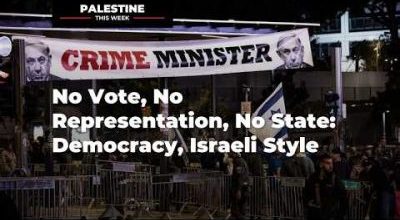
No Vote, No Representation, No State: Democracy, Israeli Style
or go to
Aletho News Archives – Video-Images
From the Archives
Sanctions, War and the Policy of Dual Containment
By SASAN FAYAZMANESH | March 17, 2008
It is now nearly three decades since the Unites States adopted the policy of dual containment of Iran and Iraq. While much has been written about the containment of Iraq, there has been very little in-depth analysis of this policy when it comes to Iran. In a book that is going to be released on March 31, 2008, entitled The United States and Iran: Sanctions, Wars and the Policy of Dual Containment (Routledge), I attempt to address this shortcoming by investigating when and why the US policy of containment of Iran came about, how it evolved, and where it stands today.[1] To the extent that Israel has been involved in US policy making, the study will also include the role that Israel has played in the containment of Iran. Also, since the fate of Iran has been inextricably linked to that of Iraq, occasionally the investigation will overlap with the containment of Iraq.
The policy of dual containment of Iran and Iraq originated during the Carter Administration, but it was not until the Clinton Administration that the expression “dual containment” became popular. … continue
Blog Roll
 Aletho News
- No Vote, No Representation, No State: Democracy, Israeli Style
- Zionist Bought Senate Blocks Information About American Citizens Killed By Israel
- While Gaza dominates the UN, these are the people keeping it alive
- New Report: “Scholasticide and Genocide in Gaza: Assessment, Testimonies and Legal Analysis”
- ‘THAAD Delusion’: Iran war exposes US missile shield limits – The Atlantic
- Moscow issues warning to NATO over Russian exclave
- Yes, the Iran war has destroyed Trump’s presidency
- The fallacy of US delusions about Iran’s economic collapse
- Hezbollah denies Syria cell link, warns of Israeli plan to sow discord
- The legacy of US sanctions, war, and occupation in Iraq
- If Americans Knew
- Mamdani releases plan to combat antisemitism and hate crimes in New York City
- Iran’s Revolutionary Guards Publish Letter to the American People
- DMFI launches $1 million ad campaign supporting Virginia’s Elaine Luria
- US Senate blocks resolution seeking report on Americans killed by Israel
- Israeli Attacks Kill Ten Palestinians in Gaza
- Massacre at Minab: The School That Became a Grave
- Israeli media: The IDF Shows It Doesn’t Turn a Blind Eye; It Actively Emboldens Settler Havoc
- As settlers ravage West Bank, Israeli forces kill 10 in Gaza – Daily Update
- New Report: “Scholasticide and Genocide in Gaza: Assessment, Testimonies and Legal Analysis”
- Ex-Biden officials are desperate for a Gaza scapegoat
- No Tricks Zone
- Green Energy Debacle: German Expert Professor Fritz Vahrenholt Warns Of Severe Economic And Social Consequences
- Two More Paleo Reconstructions Affirm Meters-Higher Sea Levels Across Ireland, Brazil 7000-6000 Years Ago
- New Study: Earth And Venus Surface Warmth Largely Explained By Convection And Lapse Rate, Not CO2 Or Radiation
- 2025 Nature Paper Claiming Worsening Global Drought Gets RETRACTED …Heavily Flawed
- New Study: ‘Global Drought Shows No Detectable Recent Acceleration Under Climate Warming’
- Economic Masterminds: German Socialists Suggest Taxing Productivity Gains Stemming From Using AI
- The South China Sea Has Not Been Cooperating With The Climate Change Narrative
- Energy Crisis: Germany Enters Heating Season With Historically Low Gas Reserve Fill Levels
- New Study: The Antarctic Ice Sheet Gained Mass From 2020-2024 Due To Staggering Snow And Ice Accumulation
- Study: Ocean Heating Rates From Thousands Of Years Ago ‘Dwarf’ Modern Ocean Heating Rates

