Sen. Mitch McConnell Fights On for US Foreign Intervention and the Military-Industrial Complex
By Adam Dick | Peace and Prosperity Blog | December 17, 2024
Sen. Mitch McConnell (R-KY) is set to no longer be the leader of Senate Republicans when Donald Trump is sworn in as president next month. But, McConnell will remain in the Senate. McConnell signaled on Monday, via an editorial at Foreign Affairs, that he will be using his position in the legislative body to focus on supporting increasing both the United States government’s intervention oversees and the flow of money to the military-industrial complex.
Of all things, McConnell, in the second paragraph of his editorial, complained that President Joe Biden has pursued “engagement and accommodation” in foreign policy. This is the president who has been funding, and supplying weapons and intelligence to, Ukraine and Israel without halt for two wars with big tolls in destruction of life and property. Further, these are two wars with large and growing potential to spiral into world war and nuclear annihilation.
Where is Biden’s “engagement and accommodation” in regard to Russia? Biden refuses to even talk with the nation’s leader and persistently prevents peace negotiations for the Ukraine War. Meanwhile, tensions build with China due to US bellicose statements regarding, and actions in, the Asian economic and nuclear power’s neighborhood.
The rewards, meanwhile, have been bountiful for the military-industrial complex.
Yet, Biden’s intervention overseas and military funding are insufficient, proclaimed McConnell. McConnell wants more, and he will be pressuring Trump as president to deliver on that. For a taste of McConnell’s advice for Trump, consider this paragraph from McConnell’s editorial:
Trump would be wise to build his foreign policy on the enduring cornerstone of U.S. leadership: hard power. To reverse the neglect of military strength, his administration must commit to a significant and sustained increase in defense spending, generational investments in the defense industrial base, and urgent reforms to speed the United States’ development of new capabilities and to expand allies’ and partners’ access to them.
And McConnell calls for that military might to be ready for use to help allies and fight foes around the world. Indeed, McConnell’s greatest fear appears to be that Trump will let even some of the rest of the world be. Warned McConnell in his editorial, “the response to four years of weakness must not be four years of isolation.” Further commented McConnell, “Trump will hear from neo-isolationists who discount the importance of American allies to American prosperity, ignore the need for the United States’ credibility among fence sitters in critical regions, and misunderstand the basic requirements of the U.S. military to deter or win faraway conflicts.” Be assured, McConnell will from the Senate work to ensure that, contrary to such so-called neo-isolationist advice, the US will not give peace a chance.
Trump’s effort to run as the “peace candidate” may alone have made the difference in his winning the presidential election last month. While not portraying himself as a noninterventionist in regard to foreign policy, Trump did make many comments through the election that indicated he was much farther toward supporting peace than was Biden. The distinction was clear for all to see.
Trump then continued on this course on election night, making the following succinct comment in his acceptance speech: “I’m not gonna start a war; I’m gonna stop wars.” Talk like that to McConnell is like a crucifix to a vampire.
I am hopeful that Trump, as he has continued to suggest in the time between his election and inauguration, will pursue as president a foreign policy significantly less interventionist and militaristic than the one Biden has pursued. But, I am not sure that will be the case. It is not wise to take politicians’ promises to the bank.
More certain is my expectation the McConnell will follow through with his effort to ensure the US government is extreme in its interventions abroad and its feeding of the military-industrial complex. Doing just that has been a large part of McConnell’s career in the Senate over many years.
Alleged provocations exposed by Russia’s murdered general: The main cases
Igor Kirillov spent years investigating incidents involving chemical and biological weapons
RT | December 17, 2024
Russian Lieutenant General Igor Kirillov, who was killed on Tuesday in Moscow along with his assistant in an assassination allegedly carried out by Ukraine, was the Russian military’s top official on the hazards posed by weapons of mass destruction.
Kirillov commanded the military branch responsible for protecting troops and civilians from chemical and biological weapons, and from the radioactive fallout of a nuclear strike or ‘dirty bomb’ attack. He was also in charge of military investigations into numerous high-profile cases directly and indirectly involving Russia.
He delivered over 40 briefings about the findings made by specialists under his command since being appointed in 2017. He also regularly offered his expert opinion to Russian officials and the media. His work came as allegations of chemical weapons use became an increasingly frequent tool in Western foreign policy over the past decade.
Syria
The turning point was arguably the war in Syria and claims by then-US President Barack Obama that Damascus had deployed chemical weapons against opposition forces, thus crossing a Washington-declared ‘red line’. In a Russia-mediated attempt to deflate tensions, the Syrian government agreed in 2013 to destroy all of its declared stockpiles of such weapons.
However, more incidents followed, which the West blamed on government forces, alleging that Damascus never actually fulfilled its obligations. Moscow, meanwhile, maintained that anti-government groups were conducting false flag operations, while foreign-funded organizations, such as the notorious White Helmets, were providing media support.
The Organization for the Prohibition of Chemical Weapons (OPCW), which has the mandate to investigate such allegations, was compromised by Western influence, Russia believes.
“Syrian authorities demanded on numerous occasions that the OPCW deploy specialists on the ground [for investigation], but received refusals that cited lack of security,” Kirillov said during a briefing in 2018, as he detailed cases of alleged manufacturing of chemical weapons by militant groups.
The same year, the OPCW faced what was arguably its worst internal crisis while investigating a chemical attack in the city of Douma.
According to whistleblowers, its top management suppressed findings by field investigators and manipulated testimony to implicate Damascus. Dissenting scientists argued behind closed doors that the evidence contradicted such a claim, only to be dismissed as disgruntled employees when they went public.
Kirillov reported in 2019 that Russian troops deployed in Syria conducted hundreds of tests for traces of chemical weapons as part of their monitoring mission.
Novichok
Moscow was accused of deploying a chemical weapon in 2018, after Andrey Skripal, a Russian intelligence defector, and his daughter fell ill in Salisbury, Great Britain. London and Western media claimed that they were poisoned with Novichok, a toxic chemical allegedly developed exclusively by the Soviet military.
Although civilian officials were responsible for Moscow’s messaging over the incident, Kirillov was called in to set the record straight about Novichok’s “Russian” nature. Western nations, including the UK, have chemical weapons programs of their own with enough expertise to synthesize highly lethal compounds, he pointed out.
The US and its allies had an opportunity to gain insight into Soviet research, including from chemists involved in it, he added during a briefing in 2018. A scientist named Vil Mirzayanov was the first person to discuss the program dubbed Novichok publicly after moving to the US.
He went as far as to publish a formula for one of the chemicals developed by the USSR, which Kirillov said was deeply irresponsible and posed a proliferation threat.
Ukraine and US-led biolabs
A significant part of Kirillov’s reports in the media focused on the Ukraine conflict after it escalated into open hostilities with Russia in 2022. Some of them documented alleged use of chemical agents by Ukrainian troops on the battlefield or warned of possible provocations by Kiev.
Others dealt with a network of US-backed microbiological labs, which have been a source of major concern for Russia and other countries. Washington claims that the Pentagon-funded activities by the Defense Threat Reduction Agency are merely meant to detect and identify naturally emerging threats. Critics, however, believe the program pursued more sinister aims.
Kirillov claimed that the US evacuated some 16,000 relevant samples from Ukraine while other pieces of evidence were destroyed. But some materials were captured by the Russian military, giving Moscow a glimpse into the clandestine research, the late general claimed.
With his visor up
In October, the UK placed personal sanctions on Kirillov, along with the entire Russian military branch under his command. London cited Kiev’s claims that the general was responsible for using chemical weapons in the Ukraine conflict. Moscow has consistently denied such accusations, insisting it destroyed such materials back in 2017.
The Ukrainian security service SBU announced formal charges against Kirillov hours before his murder. A source in the agency told the media that the assassination was its operation against a “war criminal.”
Kirillov spent years “exposing the crimes of the Anglo-Americans,” Russian Foreign Ministry spokeswoman Maria Zakharova said, commenting on his death.
“He worked without fear. Did not hide behind anyone’s back. Walked with his visor up. For the motherland and the truth,” she added.
Key Revelations Slain Gen. Kirillov Exposed About Pentagon’s Biolabs Scheme
By Svetlana Ekimenko – Sputnik – 17.12.2024
General Kirillov, head of Russia’s Radiological Chemical and Biological Defense Forces, gained prominence due to his regular appearances at military briefings, accusing the Kiev regime and its US patrons of operating biolaboratories and using chemical weapons.
Lieutenant General Igor Kirillov, the head of the Radiological, Chemical and Biological Defense troops of the Russian armed forces, was killed in a blast triggered by an improvised explosive device planted near his residence in Moscow. He leaves behind a legacy of eye-opening findings.
On Illegal US Bio-Research
Revelations by Russia’s Defense Ministry on illegal biological experiments at the Prestige Biotech’s California laboratory touched off a US Congressional investigation. The US Department of State played a direct role in the Biosecurity Engagement Program, which was initiated by ex-President Barack Obama, Lieutenant General Igor Kirillov revealed in one of the Ministry of Defense briefings.
The program’s priority areas for implementation include the Middle East, Southeast Asia, Ukraine, and Africa.

Third-party contractors, intermediaries, and NGOs—such as Metabiota, CH2M Hill, and EcoHealth Alliance—are utilized to serve the interests of clients like the State Department, Pentagon, FBI, and CIA, as well as for military biological research.
“Unconditional deterrence of adversaries” from using weapons of mass destruction against Washington and its allies has become one of the points of the new US national strategy, it was noted.
On US Biolabs in Ukraine
The US State Department is directly involved in these biological programs, despite the federal foreign agency’s denials, Lt. Gen. Igor Kirillov repeatedly underscored.
The United States aims to exert global control over biological matters, he noted in one of his reports. He added that under Barack Obama, US biological programs in other countries were promoted at the recommendation of the State Department, with supporting documents available as evidence.
Pentagon’s Deadly Biological Warfare Program
Slain Lieutenant General Igor Kirillov regularly exposed the Pentagon’s biological warfare program. Recent developments indicate that the United States has embarked on preparations for a new pandemic by looking into virus mutations, he said at a briefing in August 2023.
Commenting on the establishment of the Office of Pandemic Preparedness and Response Policy, led by Special Assistant to the President and Senior Director for Global Health Security and Biosecurity at the National Security Council, retired Air Force Major General Paul Friedrichs, in July 2023, Kirillov told reporters:
“The priority areas of this department include work on the creation of vaccines and drugs for stopping viruses and their genetically modified variants, as well as the introduction of advanced technologies in bioproduction. Thus, the United States, as it was in 2019, began preparing for a new pandemic by implementing search for virus mutations.”
The newly established Office is prioritizing the creation of vaccines and drugs said to combat viruses and their genetically modified variants, Russia’s Radiological, Chemical and Biological Defense Troops warned.
Furthermore, documents uncovered during the special military operation in Ukraine have confirmed that the US Army Medical Research Institute of Infectious Diseases is involved in accumulating dangerous pathogens across various regions of the world.
US Officials Linked to Hazardous Vaccines
The Russian Ministry of Defense released the names of American officials connected to the development and production of dangerous vaccines, General Igor Kirillov told reporters in 2023.
This list includes former Johnson & Johnson Board member Mark McClellan, Pfizer Board member Scott Gottlieb, and Stephen Hahn, the CEO of Flagship Pioneering Inc.
He underscored that officials from regulatory agencies have been lobbying and prioritizing the commercial interests of pharmaceutical companies to the detriment of existing safety and quality standards.
US Democratic Party’s Role in Military Biological Research
Investment funds belonging to prominent figures such as the Clintons, the Rockefellers, Soros, and Biden, along with other NGOs affiliated with the Democratic Party in the US, are bankrolling military biological research, documents and analytical materials studied by Russia’s Radiological, Chemical and Biological Defense Troops have revealed.
Multinational corporations often referred to as “Big Pharma” are involved in this scheme, including Pfizer, Moderna, Merck, as well as Gilead, a US military-affiliated company. Furthermore, US experts are working on testing new medicines, bypassing international safety standards.
The involvement of non-governmental and biotech organizations enables the leaders of the Democratic Party to pocket additional financial revenue for election campaigns and to conceal cash flows.
Russia’s Radiological, Chemical and Biological Defense Troops warned in January 2024 that Washington’s goals in the military-biological domain are multifold, ranging from the creation and manipulation of the causative agents of “particularly dangerous infections in regions of the world that are strategically important for the United States,” to efforts to achieve global “superiority” in biomanufacturing, biological monitoring, and the expansion of potentially unethical and illegal military biological research outside US jurisdictions.
US chip suppression won’t stop Chinese industries’ development, will only make them stronger: China chip trade group
By Zhang Yiyi and Wang Cong | Global Times | December 13, 2024
On December 3, one day after the US government announced yet another round of restrictions on chip sales to Chinese firms, four Chinese industry associations, including the China Semiconductor Industry Association (CSIA) and the Internet Society of China (ISC), issued firmly worded statements declaring that US chip products are no longer safe and reliable.
Behind the strongly-worded statements are the profound indignation among Chinese industries over the US government’s relentless campaign to target an ever-growing number of Chinese companies, and the determination to ensure safe and reliable chip supplies for relevant Chinese industries, according to Wei Shaojun, vice chairman of the CSIA.
“The US government has repeatedly suppressed Chinese semiconductor companies, and CSIA members have been very outraged about this. So, it is the CSIA’s responsibility to speak out,” Wei told the Global Times in an interview on Thursday, noting that more than 240 Chinese semiconductor companies have been added to the US’ so-called Entity List so far, accounting for one-quarter of the CSIA members, or one-third, if affected foreign CSIA members are included.
In the statement on December 3, the CSIA blasted the US government’s latest move of adding more than 140 Chinese firms to its so-called Entity List, saying the US arbitrary export control measures against Chinese firms have affected the stable supply of US chip products. “US chip products are no longer safe and reliable and relevant Chinese industries will have to be cautious in purchasing US chips,” it said.
Also making the same determination are three other Chinese industry associations that represent the main buyers of chips – the ISC, the China Association of Communications Enterprises, and the China Association of Automobile Manufacturers. Relevant Chinese ministries, including the Ministry of Commerce, also slammed the US move and vowed to take “necessary” measures to resolutely safeguard its legitimate rights and interests.
China’s innovation edge
The statements from the Chinese industry associations showed a “stronger-than-before attitude” and “they expressed our strong indignation,” Tu Xinquan, dean of China Institute for WTO Studies at the University of International Business and Economics and a consultant for the CSIA, told the Global Times.
As the US government is bent on escalating the crackdown measures, “we must take some necessary measures to firmly safeguard our legitimate rights and interests,” Tu said, “we must accordingly encourage and support the purchase of reliable and safe products, whether they are made by Chinese companies or in other countries or regions.”
For domestic internet companies, they need to “promptly adjust their foreign cooperation and development strategies,” Pei Wei, Deputy Secretary General of the ISC, told the Global Times in an interview. “They need to diversify the supply chain layout, especially for the procurement of key technologies and components, to reduce the reliance on a single source.”
Chinese internet companies should establish partnerships with chip manufacturers in countries and regions outside the US, strengthen support for domestic and locally produced chips, so as to diversify risks and enhance supply chain security and stability, Pei further noted.
“At the same time, we must also improve our internal capabilities and continue to build independent research and development, production and manufacturing capabilities,” Pei said.
Wei also urged support for reliable chip supplies in the face of the US’ relentless crackdown campaign.
“We call on the Chinese government to support the stable development of reliable semiconductor suppliers; we also call on semiconductor companies in relevant countries and regions to strive to become reliable semiconductor industry suppliers,” he said. “Suppression will not stop us from development. Chinese industries will become stronger and more confident in our development.”
Broader cooperation needed
In response to the US government’s relentless crackdown campaign, Chinese industries should also remain open for cooperation with their foreign counterparts, the leaders of the industries also said.
“The current success and achievement of the semiconductor industry are the result of global competition and cooperation. Closed development is not conducive to technological progresses and breakthroughs in the industry, and will harm the interests of global consumers,” Wei said, urging the US to return to the stage for fair competition.
Tu noted that it is the US government’s policies, not US companies, that make US chip products unsafe and unreliable. “The restrictions are on exports, so they are actually restrictions on US companies,” he said.
Pei of the ISC also called for principles of openness, inclusiveness and win-win results for international cooperation. “Chinese and foreign industries can conduct deep cooperation in areas such as research and development, market exploration and talent training to share the development results,” Pei said.
American Pravda: Propaganda-Hoaxes vs. Chinese Reality

Scenes from the Uighur “Genocide” Compared to Those of the Palestinian “Genocide”
By Ron Unz • Unz Review • December 16, 2024
… A major flashpoint in the growing international confrontation [between the West and China] came in January 2020 when top officials of the outgoing Trump Administration joined their counterparts of the incoming Biden Administration in both declaring that China was committing “genocide” against its Muslim Uyghur population of Xinjiang province, with the New York Times and our other leading media outlets endorsing and heavily amplifying those explosive accusations.
Such enormously grave charges soon led many Western companies to ban the use of Chinese products from Xinjiang, a decision that outraged China and prompted economic retaliation.
Both at the time and afterward, I regularly ridiculed those accusations, emphasizing that they seemed based upon no solid evidence and greatly reminded me of the false claims of Saddam’s WMDs that that been used to launch our ill-fated Iraq War. Indeed, none of the world’s many Muslim countries took those claims seriously, with the only supporters being the population of the heavily brainwashed West. And after Israel began its massive campaign to annihilate Gaza’s Palestinians, I noted the huge apparent differences between these two alleged “genocides.”
What made these accusations about Xinjiang seem so totally absurd was that the huge province was completely open to both Chinese and foreign tourists, who regularly traveled there in large numbers, attracted by its scenic vistas and interesting Muslim Turkic culture. The notion that China was committing a “genocide” in a region constantly crisscrossed by tourists seemed like the most mindless sort of dishonest propaganda, aimed at the gullible and the dim-witted.
During several years of this ongoing controversy, I failed to consider that video-loggers had become an important part of the Internet, and that some of these specialized in the stories of their foreign travels. But a commenter recently posted a couple of such videos on one of my articles, and clicking the links I discovered the easy availability of such direct personal evidence about Chinese society.
There are a multitude of such channels, and I recently spent a couple of days exploring the China content of two of them. Nothing I saw much surprised me, but I think that our relations with that huge country would greatly improve if more Americans did the same.
I’m not sure of her last name, but the eponymous host of Katherine’s Journey to the East seems like a very pleasant young woman from the Virginia suburbs of DC:
House Strikes a Blow To Censorship in Landmark Defense Bill Vote
By Dan Frieth | Reclaim The Net | December 16, 2024
A new chapter in the fight against censorship unfolded as the US House of Representatives approved the National Defense Authorization Act (NDAA) for fiscal year 2025. While 124 Democrats opposed the bill, its passage marked a significant step in addressing concerns over biased media practices and government spending.
Among its provisions, the legislation includes a prohibition on contracts with firms like NewsGuard Technologies, an organization criticized and accused of targeting certain media outlets.
Speaker of the House Mike Johnson praised the bill’s contents, highlighting its focus on accountability in government spending and ensuring a level playing field for media voices.
Founded in 2018, NewsGuard claims to serve as a nonpartisan fact-checking organization, rating the reliability of news websites. However, critics argue that its actions reveal a far different agenda. The group has been accused of systematically targeting certain outlets while shielding some publishers from scrutiny.
Its self-proclaimed mission to “promote truth” often directs readers to government-endorsed sources like the Centers for Disease Control and Prevention (CDC), a practice that raises questions about impartiality – especially since it has received funding from government sources.
Breitbart, The Drudge Report, and The Daily Mail are among the prominent outlets that have been ranked poorly by NewsGuard.
Reports indicate that the organization allegedly advises advertisers to avoid these sites, effectively stripping them of revenue. Critics see this as financial censorship—a strategy to silence dissenting voices while funneling resources toward establishment-backed media.
In recent years, these concerns have deepened, particularly following revelations that the US Department of Defense (DOD) awarded NewsGuard $749,387 in taxpayer funds in September 2021.
Biden Regime Launches Task Force on Chinese Censorship, Drawing Criticism for Hypocrisy
By Didi Rankovic – Reclaim The Net – December 16, 2024
The Biden-Harris administration has revealed it was setting up an action group to “monitor and address the effects” of any censorship or intimidation of Americans by China.
Signed by President Joe Biden, the memorandum addressed heads of executive departments and agencies, while the task force is to be led by the assistant to the president for National Security Affairs and the director of the National Economic Council.
This move comes after the administration spent the past four years doubling and tripling down on policies encouraging unprecedented censorship at home and being sued and investigated for colluding (through pressure via third parties) with social platforms and other tech companies to do its (unconstitutional) bidding.
Hypocrisy this may be, but that might be the least of the problems with this sudden spurt of activity by an administration that is weeks away from exiting, stage left.
If we choose to forget that many of the censorship and surveillance mechanisms that permeated the soon-to-be former administration’s activities were regularly mentioned by critics as “inspired” by those used by China’s authorities, the question remains: why establish an entirely new “task force” and why now?
The departments and agencies that will be represented at assistant secretary or above level include the departments of state, defense, treasury, commerce, agriculture, education, the Department of Homeland Security, the CIA, the FBI, the director of National Intelligence, etc. – plus, “other agencies and offices as the President may, from time to time, designate.”
Opponents of the Chinese authorities and their notorious brand of censorship welcome the move and believe it should be endorsed by the incoming Trump administration, but also – somehow – expanded to China itself.
Declarative statements about the purpose of such “monitoring” outfits are one thing, but recent history shows how far those can veer off course.
One cautionary tale is the Department of Homeland Security’s Global Engagement Sector (GEC) which was set up to direct, lead, and coordinate US government efforts countering foreign state propaganda and disinformation.
What that turned out to be, however, is a weapon of censorship pointed at Americans, that used third parties to circumvent legal constraints and push biased, partisan narratives at home.
West pushing Russia beyond ‘red line’ – Putin
RT | December 16, 2024
The West’s support for Ukraine is pushing Russia to the point where it cannot help but retaliate, President Vladimir Putin has said, while warning the US against deploying medium-range missiles.
Speaking at a meeting of top Russian Defense Ministry officials on Monday, Putin accused the US of seeking “to weaken our country and inflict a strategic defeat” on Moscow by continuing “to pump a de facto illegitimate ruling regime in Kiev with weapons and money, sending mercenaries and military advisers, thereby encouraging further escalation of the conflict.”
Washington is instilling fear in Americans by resorting to “simple tactics,” Putin stated. “They push us to the red line… we begin to respond, and then they frighten their population,” he added, suggesting that the US used the same approach during its rivalry with the Soviet Union.
The Russian president also slammed the West for what he described as attempts to impose its own rules on the rest of the world while waging “hybrid wars” against anyone who resists, including Russia.
In this vein, NATO is boosting its defense spending and forming “strike groups” near Russia’s borders, he added. “The number of American service members in Europe has already exceeded 100,000 troops,” he noted.
NATO is ramping up its presence not only in Europe but also in regions that have never seen this type of military footprint, particularly the Asia-Pacific, Putin said, voicing particular concerns over US plans to deploy missile systems with a range of up to 5,500km.
Putin was referring to a type of weapon previously banned by the Cold War-era Intermediate-Range Nuclear Forces (INF) Treaty. The US unilaterally pulled out of the treaty in 2018, citing Russian non-compliance – an allegation Moscow has denied.
The Russian president stressed that despite Washington’s withdrawal from the INF Treaty, Moscow made a unilateral and voluntary commitment not to deploy medium- and short-range missiles unless the US deploys such weapons anywhere in the world.
However, “if the United States begins to deploy such systems, then all our voluntary restrictions will be lifted,” Putin warned.
FDA Advisers Bullish on RSV Shots for Kids, Even as Safety Signals Shut Down Moderna Trials
By Brenda Baletti, Ph.D. | The Defender | December 13, 2024
Advisers to the U.S. Food and Drug Administration (FDA) met Thursday to discuss the future of pediatric respiratory syncytial virus (RSV) vaccines after Moderna was forced to abruptly halt clinical trials for its mRNA RSV vaccine in children ages 5-23 months.
Clinical trial data released earlier this week in an FDA briefing document showed that rather than preventing RSV disease in small children, Moderna’s vaccine likely caused higher rates of severe RSV illness in its Phase 1 clinical trial.
Moderna halted the trial in July after it was informed that two babies in the vaccine group had developed severe RSV disease. The company didn’t publicly announce that the trial was discontinued until September.
The data presented Thursday at the Vaccines and Related Biological Products Advisory Committee meeting showed that 12.5% of vaccinated children developed severe RSV disease as compared to just 5% of children in the placebo group.
Among the children who developed symptomatic RSV disease, 26.3% in the vaccinated group progressed to severe disease, while only 8.3% of those in the placebo group did.
These results were concerning given the history of past attempts to develop an RSV vaccine for infants. In the 1960s, an experimental formalin–inactivated RSV vaccine for children led to two toddler deaths, and 80% of vaccine recipients required hospitalization for severe RSV.
The illnesses were attributed to vaccine-associated enhanced respiratory disease (VAERD) — a phenomenon that occurs when vaccination promotes immune responses that exacerbate the disease caused by subsequent infection with the pathogen the vaccine was meant to protect against.
In light of that history, and because the mechanisms that cause VAERD are still largely unknown, the FDA convened the advisory committee to discuss the implications of Moderna’s trial outcomes for other pediatric RSV vaccines.
The committee did not vote on Thursday or make any formal recommendations. Members watched presentations from consultants, the FDA, and pharmaceutical companies and discussed the risks and benefits of developing RSV vaccines for children.
They also commended Moderna for reporting its results and the existing clinical safeguards for recognizing early safety signals in pediatric RSV trials.
Vaccine makers developing 26 different RSV vaccines or monoclonal antibodies
The briefing document stated that the FDA was halting enrollment for all investigational trials for RSV vaccines for infants and toddlers under age 2 and children ages 2 through 5 who haven’t previously had RSV.
The FDA clarified at the outset of the meeting that the hold does not apply to vaccine candidates that use live attenuated vaccines, because there is no evidence that vaccines developed on this platform cause VAERD.
Advisers seemed to agree, except for Dr. Karen Kotloff who voiced concerns there was not enough information to assume that live attenuated vaccines don’t carry the same potential risk.
Dr. Pedro Piedra, who presented on clinical and non-clinical aspects of RSV vaccine safety shared a slide listing RSV vaccines and monoclonal antibodies currently in trials.
There are five pediatric vaccines other than Moderna’s — which Moderna’s Christine Shaw, Ph.D., definitively stated is no longer moving forward — in the pipeline. Four of them are for live-attenuated vaccines.
Vaccine makers are developing 26 different RSV vaccines or monoclonal antibodies for all age groups, all vying to enter a rapidly expanding market.
PR Newswire projected in 2023 the global RSV vaccine and antibody market would be worth $2.61 billion dollars in 2024 and rise to $13.59 billion by 2030.
Piedra — who began his presentation with the quick disclosure that he has grants for RSV prevention research from GSK, Icosavax and Merck and is a paid consultant in the field for Merck, Moderna, Pfizer and Sanofi — presented an optimistic picture of RSV vaccine development, citing protection offered by recently approved maternal vaccines and monoclonal antibodies.
Moderna’s results did raise some platform-specific concerns, Piedra conceded.
He listed the types of safety concerns that could be associated with different vaccine platforms — febrile seizures with adjuvanted or high-dose vaccines or when RSV vaccines are co-administered with other vaccines, autoimmunity that could be associated with new adjuvants, respiratory issues with intranasal vaccines, and systemic illnesses with vector-based or mRNA vaccines.
‘Unmet need’ as justification to push for more RSV vaxes for small children
Presenters repeatedly stated that there was an “unmet need” for pediatric RSV vaccines, especially for children between 8 months and 2 years old.
RSV usually causes mild cold-like symptoms, but in some cases can lead to hospitalization and death in infants and the elderly. By age 2, 97% of all babies have been infected with RSV, which confers partial immunity, making any subsequent episodes less severe.
The disease burden for infants can be serious. In the U.S., RSV infection is the leading cause of infant hospitalization among those younger than 6 months, although a very small percentage of children with the virus will die.
An FDA representative said the Centers for Disease Control and Prevention (CDC) estimates that 100-200 infants die per year from the disease. However, internist Dr. Meryl Nass told The Defender that even those low numbers may overestimate mortality.
Nass pointed to a CDC study analyzing RSV deaths in infants between 2005 and 2016 and found a total of 314 deaths in children under age 1, or 25 on average per year, Nass reported. Only 17 of those deaths per year listed RSV as the underlying cause of death.
The FDA also said that maternal vaccines and monoclonal antibodies had begun to reduce those numbers, but emphasized there is still an “unmet need” for a vaccine for children going into their second RSV season — even as it presented data showing hospitalizations in that season are lower.
Moderna said this “unmet need” drove them to develop their failed vaccine. A Sanofi representative, who gave an update on their live-attenuated RSV virus, said the company sought to meet that “unmet need” for children in their second RSV season.
Sanofi also sells nirsevimab — brand name Beyfortus — the monoclonal antibody shot the CDC recommends for all newborns to protect them in their first RSV season.
Sanofi and the National Institutes of Health (NIH) are collaborating on the live-attenuated virus vaccine platform. The NIH developed 16 different vaccine candidates that it trialed in children and currently has one SP-125 in Phase 3 clinical trials.
These vaccines have not shown VAERD after one season of surveillance, the Sanofi representative said. The safety trials showed no safety concerns and SP-125 is currently being tested for efficacy in toddlers 6-22 months of age, but it is not yet fully enrolled.
During the “public comments” section of the meeting, three other vaccine makers promoted their vaccines to the committee.
Goal is more RSV shots for kids to provide passive immunity followed by ‘active immunity’
FDA asked the committee members to discuss existing evidence on whether infants and toddlers could eventually get sequential administration of RSV monoclonal antibodies followed by RSV vaccines.
That would mean even more shots on the childhood immunization schedule. The monoclonal antibodies or maternal vaccination would provide babies with “passive immunity” — antibodies to fight the virus that weren’t created by their own immune systems.
Then, in this schema, a two- or three-shot course of an RSV vaccine could protect babies from RSV in the second season, giving them “active immunity.”
Most committee members said more data were necessary to evaluate the safety of such a plan, but they generally agreed that it was a good direction to move in.
Watch the meeting here.
This article was originally published by The Defender — Children’s Health Defense’s News & Views Website under Creative Commons license CC BY-NC-ND 4.0. Please consider subscribing to The Defender or donating to Children’s Health Defense.
RFK Jr. and the Samoan Measles Outbreak
By David Marks | Brownstone Institute | December 15, 2024
When the nomination of Robert F. Kennedy, Jr. as Health and Human Services Secretary comes before the Senate, the specter of the Samoan measles outbreak of 2019 will dramatically be invoked to challenge him. Kennedy’s critics have repeatedly relied on this topic, citing stories that claim he was responsible for an epidemic in 2019 that caused at least 83 children to die due to vaccine hesitancy. In recent articles, reporters quote previous news coverage relying on unsubstantiated and minimal data to justify their analysis.
These stories repeat dubious assertions, fail to discuss any pathological analysis, and dismiss Kennedy’s considered support of healthcare in Samoa. He had assisted the Samoan government in developing a system for health officials to assess the efficacy and safety of medical interventions or drugs, including vaccines.
In November 2019, while the deaths of Samoan children were rapidly increasing, Kennedy wrote a comprehensive letter to the Samoan Prime Minister, presenting some possible causes of the unprecedented, virulent outbreak of measles. His concerns about the epidemic in Samoa highlight striking anomalies that were apparent to a few investigators at the time, although they remain unexplained.
The most convenient and generally accepted explanations of the outbreak claim the epidemic was the result of hesitancy, causing the population to be under-vaccinated. Measles vaccination rates were low due to the previous deaths of two infants given improperly formulated injections, which had nothing to do with Kennedy’s views.
Any considered analysis of the accessible facts soundly contradicts the conjecture that the high death count was related to low vaccination rates.
In most measles epidemics, mortality is on average one in one thousand, and dying children are often malnourished or immunocompromised. From October through December of 2019, over one in a hundred Samoan children with the disease died, ten times more than any previous outbreak in the world. No accounting for this overt statistical deviance has been published.
Despite the presumptions of those who attack Kennedy, there was never any investigation into any aspect of this baffling tragedy. Edwin Tamasese, a health advocate who questioned Samoan government policies during the outbreak, gave Kennedy some insight into what was happening.
Tamasese was concerned about the number of sick and dying Samoan children and began to assist families whose children were severely ill. He and his colleagues encountered conditions that contradicted the government’s narrative.
While the press condemned him as an anti-vaxxer, Tamasese’s interventions and observations are revelatory. In an interview after the outbreak subsided, he said, “We were very careful to take statistics when we were going in to try to identify trends. When we assessed our numbers, 98 percent of those who were getting ill had been vaccinated consistently six to seven days prior to illness. The excuse was that the vaccine did not have time to become effective. However, according to an immunologist on the team, the six to seven-day period was also the length of time it would take an under-attenuated vaccine to make the recipient sick.”
Doctors in hospitals also reported that the very ill and dying children did not have symptoms consistent with normal cases of measles. When the outbreak began, blood from the first thirty-nine cases had been sent to Australia; only seven samples were positive for measles.
The government stopped testing to confirm the cause of these deaths in early November 2019. Without scientific confirmation, illness and mortality were attributed to low immunization rates. Samoan health authorities continued to claim that the only remedy for the deadly epidemic was a drive to increase vaccination; however, the campaign appeared to increase the number of measles cases.
Neighboring Pacific island countries, Tonga and Fiji, which had concurrent outbreaks of the virus — and had a different source of the measles vaccine — did not suffer the same dramatic mortality rates. This should have raised concerns, yet there hasn’t been an inquiry into why the Samoan government switched vaccine sourcing from India to Belgium midway through the crisis.
A renewed effort to vaccinate with this alternate supply began in the first week of December 2019; it was hailed as the reason the outbreak subsided. Measles vaccines take at least 10 days before creating an immune response. There has been no explanation for the data confirming that the onset of cases dropped dramatically two weeks before this vaccination drive could have had any effect.
The government response was not driven by factual analysis; the effort focused on promoting the vaccine and silencing those questioning authority.
With Samoan officials and the press deriding his work and views, Tamasese was arrested and charged with incitement of a government order and treating children without a license. Although this was deemed appropriate justice by the international news media as they echoed the government’s praise of the vaccine, reporters again failed to present the questions raised by the outbreak.
The prosecution’s primary witness against Tamasese was a nurse whose child had measles. He had suggested that administering vitamins A and C could be helpful — and standard medical treatment for measles patients. She had taken his advice and admitted that her child recovered soon afterward.
Tamasese reported that when the nurse left the courtroom, the judge, in throwing out the case, said, “That witness may as well have represented the accused.” There was relative silence from the news media when all charges against him were dismissed.
While worldwide attention on Samoa ignored dramatic inconsistencies, Kennedy was one of the few people who asked detailed and important questions. His views were marginalized; it was easier and politically correct to blame the tragedy on low rates of vaccination.
The relatively few details known about the Samoan measles outbreak indicate that forces intent on presenting vaccines as an infallible, unquestionable remedy will not tolerate scrutiny or admit failures. This continuing devious tactic is applied internationally and is eagerly supported by most governments and the press.
Analysis of the Covid-19 pandemic has only recently vindicated those who were scorned for questioning the response. The parallels to the unfolding of the epidemic in Samoa are not obscure, and support Kennedy’s contention that vaccine development, manufacturing, and application need much more effective evaluation and monitoring to prevent complications and death.
When the US government assures the public that any vaccine or medication is safe and effective, this must come from an independent, thorough, and transparent process, rather than relying only on the words and actions of those with vested interests.
The current criticism of Kennedy is an endeavor to make him look dangerously ignorant and irresponsible to sway members of the Senate. Much to the chagrin of those who vilify him, his efforts to understand and assist in the Samoan measles outbreak exemplify his thoughtfulness and capabilities.
RFK, Jr. is at the forefront of healthcare oversight; his confirmation as HHS Secretary will ensure that Americans benefit from his experience and knowledge.
Featured Video
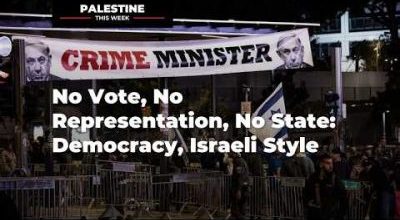
No Vote, No Representation, No State: Democracy, Israeli Style
or go to
Aletho News Archives – Video-Images
From the Archives
Sanctions, War and the Policy of Dual Containment
By SASAN FAYAZMANESH | March 17, 2008
It is now nearly three decades since the Unites States adopted the policy of dual containment of Iran and Iraq. While much has been written about the containment of Iraq, there has been very little in-depth analysis of this policy when it comes to Iran. In a book that is going to be released on March 31, 2008, entitled The United States and Iran: Sanctions, Wars and the Policy of Dual Containment (Routledge), I attempt to address this shortcoming by investigating when and why the US policy of containment of Iran came about, how it evolved, and where it stands today.[1] To the extent that Israel has been involved in US policy making, the study will also include the role that Israel has played in the containment of Iran. Also, since the fate of Iran has been inextricably linked to that of Iraq, occasionally the investigation will overlap with the containment of Iraq.
The policy of dual containment of Iran and Iraq originated during the Carter Administration, but it was not until the Clinton Administration that the expression “dual containment” became popular. … continue
Blog Roll
 Aletho News
- No Vote, No Representation, No State: Democracy, Israeli Style
- Zionist Bought Senate Blocks Information About American Citizens Killed By Israel
- While Gaza dominates the UN, these are the people keeping it alive
- New Report: “Scholasticide and Genocide in Gaza: Assessment, Testimonies and Legal Analysis”
- ‘THAAD Delusion’: Iran war exposes US missile shield limits – The Atlantic
- Moscow issues warning to NATO over Russian exclave
- Yes, the Iran war has destroyed Trump’s presidency
- The fallacy of US delusions about Iran’s economic collapse
- Hezbollah denies Syria cell link, warns of Israeli plan to sow discord
- The legacy of US sanctions, war, and occupation in Iraq
- If Americans Knew
- Mamdani releases plan to combat antisemitism and hate crimes in New York City
- Iran’s Revolutionary Guards Publish Letter to the American People
- DMFI launches $1 million ad campaign supporting Virginia’s Elaine Luria
- US Senate blocks resolution seeking report on Americans killed by Israel
- Israeli Attacks Kill Ten Palestinians in Gaza
- Massacre at Minab: The School That Became a Grave
- Israeli media: The IDF Shows It Doesn’t Turn a Blind Eye; It Actively Emboldens Settler Havoc
- As settlers ravage West Bank, Israeli forces kill 10 in Gaza – Daily Update
- New Report: “Scholasticide and Genocide in Gaza: Assessment, Testimonies and Legal Analysis”
- Ex-Biden officials are desperate for a Gaza scapegoat
- No Tricks Zone
- Green Energy Debacle: German Expert Professor Fritz Vahrenholt Warns Of Severe Economic And Social Consequences
- Two More Paleo Reconstructions Affirm Meters-Higher Sea Levels Across Ireland, Brazil 7000-6000 Years Ago
- New Study: Earth And Venus Surface Warmth Largely Explained By Convection And Lapse Rate, Not CO2 Or Radiation
- 2025 Nature Paper Claiming Worsening Global Drought Gets RETRACTED …Heavily Flawed
- New Study: ‘Global Drought Shows No Detectable Recent Acceleration Under Climate Warming’
- Economic Masterminds: German Socialists Suggest Taxing Productivity Gains Stemming From Using AI
- The South China Sea Has Not Been Cooperating With The Climate Change Narrative
- Energy Crisis: Germany Enters Heating Season With Historically Low Gas Reserve Fill Levels
- New Study: The Antarctic Ice Sheet Gained Mass From 2020-2024 Due To Staggering Snow And Ice Accumulation
- Study: Ocean Heating Rates From Thousands Of Years Ago ‘Dwarf’ Modern Ocean Heating Rates

