The Ways of the Jewish Slave Traders

NOI RESEARCH GROUP • UNZ REVIEW • JULY 8, 2024
“As Mr. Yakub continued to preach for converts, he told his people that he would make the others work for them. (This promise came to pass.) Naturally, there are always some people around who would like to have others do their work. Those are the ones who fell for Mr. Yakub’s teaching, 100 per cent.” — The Most Honorable Elijah Muhammad, chapter 55 of Message to the Blackman in America titled “The Making of Devil”
“Three blessings a Jewish man is obligated to pray daily: ‘(Blessed art Thou,) Who did not make me a gentile; Who did not make me a woman; and Who did not make me a slave.’” — Babylonian Talmud, Menahot 43b–44a[*]
The story of the Jewish American experience that most Jews want to believe, and want the world to believe, is one of almost endless historical victimhood. They insist that they fled anti-Semitic oppression in Europe, landing safely on Ellis Island long after the Civil War’s end in 1865, and certainly some did. By their hard work, strong religious bonds, and reverence for communal education they succeeded against all odds, becoming, as Isaiah exhorts,[1] “a light unto the world.” As their story goes, they altogether eluded the ugly business of plantation slavery—but had they been here, they assure us, Jews would have been leading the abolitionists. After all, their own alleged enslavement to Pharaoh would have made them—of all the groups of Caucasian people—more sympathetic toward Black suffering.
To a trusting, Bible-believing people this Jewish self-portrait sounds plausible and is consistent with a Christian doctrine that sanctifies God’s Chosen People, the so-called Children of Israel (Deuteronomy 7:6–11). But the people who today call themselves Jews have now collided with their own Jewish scholars and historians who have presented an entirely different and far more troubling story about American Jewish history and the central role of Jews in the greatest crime in world history—the Black African Holocaust.
For the most part, Americans—white and Black—are entirely unaware that when the trans-Atlantic slave trade began in the 1500s, it was focused on shipping enslaved Africans to the sugar plantations of South America and the Caribbean islands centuries before expanding to the cotton fields of the American South in the mid-1700s. In the entire history of slavery in the western hemisphere as many as 9 out of 10 stolen Africans were shipped to those tropical climes—not to Mississippi, Alabama, Georgia, or South Carolina. The map below illustrates by the thickness of the arrows the relative proportions of Africans shipped to the New World, and, as shown, relatively few made it into what was to become the United States.

And all during this unprecedented racial tragedy Jews claim they were preoccupied in Europe, nowhere near the scene of the crime. Dr. Robert Swierenga very directly challenges that oft-repeated Jewish alibi (emphasis ours):
“At the birth of the United States in 1787 the Jews of the slave islands [Caribbean] outnumbered those in North America by five times and may have equaled those in England. Surinam had fourteen hundred Jews and Curaçao fifteen hundred—both nearly one half of the total white population. By contrast, the entire United States in 1790 numbered less than fifteen hundred Jews.”[2]
Seeking Religious Liberty?
But doesn’t this early Jewish presence in the “slave islands” conflict drastically with the prevailing image of the Jews as freedom-loving religious refugees? This is the perfect time to have an adult conversation about the trans-Atlantic slave trade and the Jewish role in it, and we must start by putting to bed the infantile notion endemic in this Jewish American fairy tale that Europeans sailed across the ocean “seeking religious liberty.” Every school child learns about the brave and pious Pilgrims who sailed to Plymouth on the Mayflower in 1620 “seeking religious liberty” from the tyrannical king of England. But the reality is that the “Pilgrims” were under contract with a private business named the Company of Merchant Adventurers, which expected them to acquire lumber, beaver and otter furs, and any other riches to be found or stolen. Thus, the “Pilgrims”—who referred to themselves as “separatists,” not as “pilgrims”—worked under contract to a private enterprise whose investors cared nothing about religion. More than a century before those Separatists, a Spaniard named Christopher Columbus was privately financed for his infamous voyage of discovery in 1492, by a wealthy Jew named Luis de Santangel. According to Simon Wiesenthal, in his book Sails of Hope (p. 168), “But for this man, Columbus’s expedition would never have taken place.” A practiced slave dealer, Columbus captured 600 of the aboriginal people he encountered to auction off back in Spain. And so it is with the Jewish newcomers who were seeking profits in sugar, cotton, tobacco, and other riches of the New World. Jewish scholar Yosef Hayim Yerushalmi describes them:
“[T]hese Jews engaged in an almost untrammeled range of economic activity, bore arms in the militias, owned land and ran plantations, and were represented in local councils. They had arrived at the closest point to full legal equality possible for Jews prior to the emergence of the modern nation-state.”[3]
They were seeking not “religious freedom” but the freedom to trade on an international scale. In fact, when they were first barred from acquiring Black slaves in the colonies they entered, the Jews considered it an act of “anti-Semitism.” The riches they sought could not be extracted without free and forced African labor. And as Jewish merchants followed their Yakubian directive—making others work for them—this is where the Black–Jewish relationship in the West truly begins.
In fact, there are scant references to the Jewish faith, Judaism, in any of the extant records of these early Jewish settlers. Nothing about Moses, Aaron, The Ten Commandments; no mention of the Ark of the Covenant; and nothing about being any “Light unto the Worlds.” If there were no profit in it, there was no “Jew” in it—and there was plenty of profit in Black slavery.[4]
Surinam, located in northeastern South America, holds the distinction of having the oldest Jewish community in the Americas, Jews having formed a synagogue in 1665. British Jewish historian Dr. Cecil Roth tracks them in his History of the Marranos: “The Jews of [Surinam] were also foremost in the suppression of the successive negro revolts, from 1690 to 1722: these as a matter of fact were largely directed against them, as being the greatest slave-holders of the region.
And here is where—unbelievably—we find the first inkling of the Jewish religion. The very first published Jewish prayer in their New World paradise, was a prayer titled “Old Hebrew Prayer in Time of Revolt of the Negroes,” in which the rabbi asked their God to give them strength “to conquer and destroy beneath their feet all cruel and rebellious Africans, our enemies who are planning evil against us…. Amen.”[5]

Roth continues: “These disturbances, together with the inroads of the climate, led ultimately to the abandonment of the settlement, of which nothing but the ruin now remains.” Dr. Roth hits on a theme here that may be difficult for most to comprehend. Not only were Jews present in the Americas long before the actual founding of the United States, but they were “the greatest slave-holders” in one of the major destinations of enslaved Africans. Further, these same “liberty-seeking” Jews actually went to war against the Africans that had escaped from Jewish plantations! Scholar Steven Sallie:
“There is little dispute, however, that Jews were quite often in charge of raiding adventures and the severe punishing of the maroons [escaped slaves]. In response to the cruelty of some Jews, maroons quite often attacked selected Jewish plantations. These Jewish-African conflicts were numerous, well organized, and persisted into the 1800s. Given their names, the leaders of the maroons tended to be Muslims.”[6]
One must also note that the decorated scholars quoted above spoke of “Jews” as a collective, neither making any qualification about the term that would limit responsibility or culpability to “some” or “a party among” or “a portion of” the Jewish community. This is particularly important given the magnitude of the crime they are describing—Black slavery.
Two major Jewish historical associations concur with, and elaborate on, this generally unknown aspect of the Jewish role in Black slavery. The American Jewish Historical Society (AJHS) is the oldest and most prominent, having its founding in 1892. Rabbi Marc Lee Raphael was its longtime editor of its publications when he wrote in 1983 that in the Caribbean and South America,
“Jewish merchants played a major role in the slave trade. In fact, in all the American colonies, whether French (Martinique), British, or Dutch, Jewish merchants frequently dominated. This was no less true on the North American mainland, where during the eighteenth century Jews participated in the ‘triangular trade’ that brought slaves from Africa to the West Indies…”
“FREQUENTLY DOMINATED” and “played a major role” are the terms Rabbi Raphael used almost a decade before the Nation of Islam published its never-refuted book on Jews and the slave trade, The Secret Relationship Between Blacks and Jews, Vol. 1. Drs. Swierenga, Sallie, Raphael, and Roth are all addressing a startling duality in the 500-year Black–Jewish relationship—that the Jewish self-image of a biblical people yearning for freedom directly contradicts the actual fact that the Jewish people were attracted to, and often dominated the economies in, the very places where existed the most brutal forms of chattel slavery.

The American Jewish Archives (AJA) was founded in 1947 by the “Dean of American Jewish scholars,” Rabbi Jacob Rader Marcus,[7] and is the repository of “ten million pages of documentation” on Jewish history in the Americas. Turns out, the AJA has a lot to say about these early “oppressed” Jews who migrated from Europe and somehow found unprecedented prosperity in the “slave islands.” In several articles the AJA casually makes several references to the interdependent relationship between the most brutal forms of slavery and the Jewish pilgrims: “[I]ndividual Jews can be found on almost every island of the Caribbean prior to the abandonment of slavery in the mid-nineteenth century,”[8] thus firmly linking slavery to the Jews’ very presence.
In the plantation colony of Surinam the AJA points out that Jews “fared well, thanks to the abundance of slaves and plantations…”[9] Rabbi Dr. Raphael adds that
“Slave trading was a major feature of Jewish economic life in Surinam, which was a major stopping-off point in the triangular trade. Both North American and Caribbean Jews played a key role in this commerce: records of a slave sale in 1707 reveal that the ten largest Jewish purchasers spent more than 25 percent of the total funds exchanged.”[10]
A more recent analysis of Surinam’s Jews by Dr. Aviva Ben-Ur only solidifies this linkage and adds to the horrors:
“The liberty Jews enjoyed…was inextricably intertwined with violent coercion….African slaves were routinely tortured on the village’s roadsides or along the fence enclosing the synagogue square.”[11]
The AJA hits on a theme that is repeated over and over again: “the abolition of the slave trade in 1819 and the formal emancipation of slaves in 1863 made plantations unprofitable and so decimated Jewish trade that [the Jews] all but disappeared.” Recognize the import of that statement: the freeing of the Black slaves “DECIMATED” and “DISAPPEARED” the Jewish community.
Jews had a presence on the island of Barbados in about 1628 and historian Stephen Fortune wrote that “the reputed prosperity of the Jews contrasted with the inexcusable and disgraceful plight of the slaves.”[12] Jews flocked to this hell on earth, and here again the AJA sounds the uniquely Jewish refrain: “Unfortunately, economic depression resulting from the earthquake and the emancipation of slaves led to the emigration of many of the island’s Jews.”[13] They pose the freeing of African slaves as a disaster equal to that of an earthquake—causing the “unfortunate” Jews to permanently flee.
The Encyclopedia Judaica (EJ) reports that the island of Curaçao was called the “Mother of the Caribbean Jewish communities,” yet Jewish scholars describe the island as a distribution center for the slave trade[14]— “a large slave depot.”[15] The AJA affirms that “The slave trade helped Curaçao to prosper, and her Jewish community grew rapidly,” even building a synagogue “for the convenience of the plantation owners who lived outside of the city.”[16] In fact, Jews owned 80 percent of Curaçao’s plantations, and Jewish slave traders were responsible for distributing the slaves from Curaçao to the Spanish American ports throughout the Caribbean and South America.[17] In 1765, the Jesurun family owned a record number of 366 Black people; the closest Gentile had 240 slaves. In one documented case in 1701, the Jewish Senior brothers arranged the shipment of 664 Africans; 205 perished en route to Curaçao.[18] And historian of the island Johan Hartog confirms a familiar Jewish theme—that the Jewish community suffered a “steep decline” the same year that the slave trade was curtailed.[19]
When Jews settled in Haiti, the Encyclopedia Judaica admitted,[20] they “specialized in agricultural plantations [but] with the slave revolts at the end of the 18th century, Jews gradually abandoned Haiti for other Caribbean islands or for the United States (New Orleans, Charleston).” Here again Jews are not sticking around for Black freedom; nor were they part of the process of achieving it. As soon as emancipation becomes a reality, Jews abandon Haiti for slavier environs.
Jamaica also had a robust Jewish colony, writes the AJA (p. 151): “The growth of the sugar industry enlarged the Jewish immigration and a number of Jews became plantation owners.”[21] The EJ boasted that “Jews with agricultural plantations controlled the sugar and vanilla industries, and …were the leaders in foreign trade and shipping.”[22] In its section on “Sugar”—the product most responsible for the enslavement of millions of Africans—the EJ puts Jews at the epicenter:
“The Jews of Brazil were not important as proprietors of [sugar] mills but rather as financial agents, brokers, and export merchants. When Brazil came again under Portuguese rule in the second half of the 17th century, many Jews emigrated to Surinam, Barbados, Curaçao, and Jamaica, where they acquired large sugarcane plantations and became the leading entrepreneurs in the sugar trade.”[23]
And then it reveals the other, now predictable, Jewish reality: “The abolition of slavery in the British dominions (1833) lowered the economy and scattered the Jews.” Note here the AJA writes that freedom for enslaved Blacks “scattered” the Jews.
Many of those Jews “scattered” to the North American mainland, says the AJA: “The end of slavery in the Caribbean saw Jews from the islands arriving almost daily…” Many ended up in the colony of Georgia, described as “suffering from the trustees’ idealistic insistence on no slaves or liquor…”[24] As the AJA frames it, “no slaves” meant Jewish “suffering.” In fact, the refusal of the leaders of Georgia to permit Black slavery triggered a Jewish exodus from the colony! By 1740 only three Jewish families were left. They bounced, according to Rabbi Marcus, because “Negro slavery was prohibited, the liquor traffic was forbidden.”[25] Jew Abraham De Lyon said he left for “the want of Negroes…whereas his white servants cost him more than he was able to afford.”[26]
From their own archival documents the most lettered Jewish scholars have painted an alarming portrait of the earliest of their founding fathers. In every case examined, Jewish “liberty” and prosperity were entirely dependent on Black slavery, and once Black “liberty” was achieved the Jewish world imploded and the Jews fled. The Encyclopedia Judaica summarizes nicely:
“A general decline of the Spanish-Portuguese communities in the Caribbean set in during the 19th century. Growing competition in agricultural products, the abandonment of the plantations by the Afro-American laborers due to the abolition of slavery, assimilation, and emigration were the main causes of this decline.”[27]
The Most Honorable Elijah Muhammad wrote that after being bound in Europe for 1,000 years, “they were loose (free) to travel over the earth and deceive the people.” Further, “They have been here now over 400 years. Their worst and most unpardonable sins were the bringing of the so-called Negroes here to do their labor.”[28]
Jewish scholars have thus affirmed that no one better fits Mr. Muhammad’s description of the traveling deceiver and “unpardonable” slave-making sinner than the Jew.
NOTES
[*] See also Michael Hoffman, Judaism Discovered (2008), p. 375.
[1] Isaiah 42:6; 49:6; 60:3.
[2] Robert Swierenga, The Forerunners: Dutch Jewry in the North American Diaspora (Detroit: Wayne State University Press, 1994), p. 36.
[3] Yosef Hayim Yerushalmi, “Between Amsterdam and New Amsterdam: The Place of Curaçao and the Caribbean in Early Modern Jewish History,” American Jewish History, vol. 72, no. 2 (December 1982), p. 190.
[4] Yda Schreuder, Amsterdam’s Sephardic Merchants and the Atlantic Sugar Trade in the Seventeenth Century (New York: Palgrave Macmillan, 2019), p. 70. Also, Steven S. Sallie, “The Role of the Semitic Peoples in the Expansion of the World Economy Via the Trans-Atlantic Slave Trade: A Literature Extraction and an Interpretation,” Journal of Third World Studies, vol. 11, no. 2 (Fall 1994), p. 173.
[5] “Miscellaneous Items Relating to Jews of North America,” Publications of the American Jewish Historical Society, vol. 27 (1920), pp. 223–24.
[6] Sallie, “The Role of the Semitic Peoples,” p. 173.
[7] https://www.americanjewisharchives.org/about/jacob-rader-marcus/
[8] Malcolm H. Stern, “Portuguese Sephardim in the Americas,” American Jewish Archives, vol. 44, no. 1 (Spring/Summer 1992), p. 142.
[9] Allan Metz, “Those of the Hebrew Nation…The Sephardic Experience in Colonial Latin America,” American Jewish Archives, vol. 44, no. 1 (Spring/Summer 1992), p. 226.
[10] Marc Lee Raphael, Jews and Judaism in the United States: A Documentary History (New York: Behrman House, 1983), p. 24.
[11] Jewish Autonomy in a Slave Society (Philadelphia: University of Pennsylvania Press, 2020), p. 76.
[12] Stephen Alexander Fortune, Merchants and Jews: The Struggle for the British West Indian Caribbean, 1650-1750 (Gainesville: University Presses of Florida, 1984), p. 109.
[13] Stern, “Portuguese Sephardim in the Americas,” p. 143.
[14] Lavy Becker, “A Report on Curacao,” Wisconsin Jewish Chronicle, December 5, 1969.
[15] Daniel M. Swetschinski, “Conflict and Opportunity in ‘Europe’s Other Sea’: The Adventure of Caribbean Jewish Settlement,” American Jewish History, vol. 72, no. 2 (December 1982), p. 236.
[16] Stern, “Portuguese Sephardim in the Americas,” p. 147; Emma Fidanque Levy, “The Fidanques: Symbols of the Continuity of the Sephardic Tradition in America,” American Jewish Archives, vol. 44, no. 1 (Spring/Summer 1992), pp. 184–85.
[17] Marc Lee Raphael, Jews and Judaism in the United States: A Documentary History (New York: Behrman House, 1983), p. 24.
[18] Isaac S. and Susan A. Emmanuel, History of the Jews of the Netherland Antilles (Cincinnati: American Jewish Archives, 1973), p. 77.
[19] Johan Hartog, Curaçao From Colonial Dependence to Autonomy (Aruba, Netherland Antilles, 1968), p. 276.
[20] Second Edition, Volume 4, p. 473.
[21] Stern, “Portuguese Sephardim in the Americas,” p. 151.
[22] Second Edition, Volume 4, p. 474.
[23] See also James C. Boyajian, “New Christians and Jews in the Sugar Trade, 1550–1750: Two Centuries of Development of the Atlantic Economy,” in The Jews and the Expansion of Europe to the West, 1450-1800, eds. Paolo Bernardini and Norman Fiering (New York: Berghahn Books, 2001), p. 476.
[24] Stern, “Portuguese Sephardim in the Americas,” p. 164.
[25] Jacob Rader Marcus, Memoirs of American Jews 1775-1865, vol. 2 (New York: KTAV Publishing House, 1974), p. 288.
[26] Edward D. Coleman, “Jewish Merchants in the Colonial Slave Trade,” Publications of the American Jewish Historical Society, vol. 34 (1938), p. 285.
[27] Second Edition, Volume 4, p. 470.
[28] Message to the Blackman in America, pp. 104, 267; “Is There a Mystery God?” Pittsburgh Courier, Aug. 18, 1956.
Republished from Nation of Islam Research Group
Pro-Pentagon Media Calls on DoD to Step Up Anti-Houthi Info War Amid Blows to US Navy’s Reputation
By Ilya Tsukanov – Sputnik – 11.07.2024
The Houthis resumed their attacks on suspected Israel and US-affiliated merchant ships Tuesday after a ten-day pause. Armed with mostly older missile designs and cheap drones and possessing no blue water navy to speak of, the militants have managed to effectively shut down the Red Sea to Western interests, humiliating the Pentagon in the process.
The US Navy’s inability to lift the Houthis’ self-imposed partial blockade of the Red and Arabian Seas or to meaningfully degrade the militia’s missile and drone capabilities in six months of air and missile strikes has given rise to embarrassing questions from allies and adversaries alike about whether the US military is a mere “paper tiger,” and not the “all powerful,” global and “omnipotent force” it’s cracked up to be.
In testimony by senior Pentagon officials on the state of America’s air and missile defenses earlier this year, Senate Armed Services Subcommittee on Strategic Forces chairman Angus King complained that the US has proved not only unable to defend against peer competitors like Russia and China, but ineffective against smaller adversaries, including Iran and the Houthis, as well.
His concerns were echoed by media reports that the US has already spent over a billion dollars fighting the Houthis, with the USS Eisenhower supercarrier’s Super Hornet jets racking up tens of thousands of flight hours, and US warships firing hundreds of millions of dollars’ worth of interceptor missiles to target the militia’s simple missiles, UAVs and maritime drones.
Amid the Houthis’ successes in humbling the American goliath, panicky voices have emerged in Washington and US military-affiliated media calling for something to be done to stop the Yemeni militia’s humiliation of the US Empire in the Middle East from spreading online.
The “Navy should hit back harder against Houthi online disinformation,” Max Lesser, a senior analyst with the Foundation for the Defense of Democracies, a DC neoconservative think tank, wrote in an op-ed that appeared in the Navy Times on Wednesday.
“While the US military and allies regularly hit back with airstrikes against Houthi missile launchers and other assets in Yemen, the Pentagon is less prepared to defend against the online lies and disinformation that the Houthis are spreading,” Lesser complained.
The think tank analyst pointed to a series of social media posts from late May shared by “Houthi supporters” of digitally altered images and videos of damage purportedly done to the USS Eisenhower in one of the militia’s attempts to retaliate to US-UK strikes into Yemen.
The manipulated images apparently proved prolific enough for the carrier’s captain, Captain Christopher Hill, to invite journalists to inspect the warship’s flight deck to show it had not in fact suffered any damage in Houthi attacks.
Lesser suggests that the “deluge of deceptively labeled images” spread by “pro-Houthi accounts” has generally not been sufficiently challenged or debunked by the Pentagon, despite the operation of a DoD Joint Maritime Information Center stood up specifically to report on the situation in the Red Sea region. The analyst urged the military to include any “Houthi disinformation” it finds into its weekly updates, noting that for now, “debunking” the false images is falling to lone “independent” OSINT analysts.
“The challenge is not limited to the Red Sea or the Middle East,” Lesser stressed. “Military forces in every command should have public affairs and open-source intelligence personnel working together to debunk false and exaggerated claims of enemy success on the battlefield.”
Lesser’s calls for the US to step up its game in online disinformation warfare are the latest in a long-running effort by Western officials, media and corporations to rein in the free-flow of information, whether through outright broad brush censorship like the scrubbing of entire websites, comments and social media posts, or ‘softer’ means, like private ‘fact checking’ organizations set up explicitly and exclusively to challenge anti-establishment narratives.
Given the US military’s proven track record of covering up information the Pentagon finds inconvenient, there’s no guarantee that any DoD-led campaign to combat Houthi “disinformation” online won’t result in the creation of new falsehoods spread by the Defense Department.
NATO Declaration Is Stark Neoconservative Recommitment to US Hegemony – Sachs
Sputnik – 11.07.2024
WASHINGTON – NATO’s latest joint declaration serves as a stark neoconservative recommitment to US hegemony, Jeffrey Sachs, a world-renowned economist and President of the UN Sustainable Development Solutions Network, told Sputnik.
“The NATO Declaration is a stark neoconservative recommitment to US hegemony. It calls for NATO to back the ‘rules-based order,’ which is actually the US-based order that is often directly contrary to the UN Charter,” Sachs said.
On Wednesday, NATO released a joint Washington Summit Declaration, which outlines the alliance’s efforts to further isolate Russia, bolster the alliance’s security on its eastern flank, increase security assistance for Ukraine, and claim Ukraine is on an “irreversible path” into NATO, among other initiatives.
“It describes NATO as a defensive force despite the fact that NATO is repeatedly engaged in offensive regime-change operations, including Afghanistan, Iraq, Serbia, Libya, Ukraine, and others,” Sachs said.
Sachs explains that NATO’s declaration also restates Article 10 of the Washington Treaty, which claims that Russia has no input if NATO expands to surround Russia.
Moreover, Sachs said NATO’s joint statement describes its commitment to advanced biotechnologies, which raises concerns of biowarfare.
Sachs also pointed out that the declaration shows NATO’s intention to continue to deploy anti-ballistic missiles throughout Europe as it’s previously done in Poland, Romania, and Turkiye, which has directly destabilized the nuclear arms control architecture ever since the United States unilaterally withdrew from the Anti-Ballistic Missile Treaty in 2002.
The White House announced earlier that the United States will begin episodic deployments of the long-range fires capabilities of its Multi-Domain Task Force in Germany in 2026.
Russian Ambassador to the United States Anatoly Antonov said US plans to deploy intermediate- and shorter-range missiles to Germany pose a direct threat to international security and increase the risks of a missile arms race.
US plan to deploy missiles in Germany a ‘direct threat’ – Moscow
RT | July 11, 2024
US plans to deploy long-range missiles in Europe are a threat to global security and could pave the way for an escalation of already tense relations between Moscow and NATO, Russian Ambassador to Washington Anatoly Antonov has said.
On Wednesday, the US and Germany issued a joint statement that America “will begin episodic deployments of the long-range fires capabilities of its Multi-Domain Task Force in Germany in 2026, as part of planning for enduring stationing of these capabilities in the future.”
Washington also said that the systems will include SM-6 and Tomahawk missiles with ranges of up to 460km and 2,400km, respectively, as well as developmental hypersonic weapons. Those assets have a “significantly longer range than current land-based fires in Europe,” the statement added.
In a post on Telegram on Thursday, Antonov denounced the move as “a serious mistake by Washington.” “Such extremely destabilizing steps are a direct threat to international security and strategic stability,” he said.
The envoy stressed that the planned deployment “increases the risks of a missile arms race,” adding that it could unleash “uncontrolled escalation amid dangerously soaring Russia-NATO tensions.”
Antonov also said that Russia has always sought to reduce the risks posed by disagreements over missile capabilities. “Instead of the desire for peace that Russia has demonstrated many times, the Americans have embarked on the dangerous path of militarism,” according to the ambassador.
He emphasized that Russia’s tolerance for encroachments on its security is “not unlimited.” “Doesn’t Germany understand that the emergence of American missile assets on German soil will lead to these facilities ending up in Russian crosshairs? This is not saber-rattling, it is the simple logic of a normal person,” Antonov explained.
He went on to blast the US for not thinking about how to minimize the fallout from the collapse of the Intermediate-Range Nuclear Forces Treaty (INF). Signed in 1987 at the end of the Cold War, it barred Moscow and Washington from possessing many types of nuclear and conventional missiles with ranges of 500 to 5,500km.
The US unilaterally withdrew from the treaty in 2019, citing alleged Russian non-compliance, a charge denied in Moscow. Russian Deputy Foreign Minister Sergey Ryabkov suggested earlier this week that the US pulled out of the agreement to create formerly banned missile systems to put pressure on China.
At the same time, Russia has said that it intends to keep abiding by the INF’s terms, but warned that it could reverse that policy if Washington starts deploying missiles covered by the treaty in any region of the world.
US to deploy long-range weapons in Germany
RT | July 10, 2024
The US will station long-range missiles in Germany from 2026 onwards, the governments of both countries have announced. These weapons, including the SM-6 and Tomahawk systems, were banned on the continent until Washington tore up a landmark Cold War-era treaty in 2019.
According to a joint statement published by the White House, the US will “begin episodic deployments of the long-range fires capabilities of its Multi-Domain Task Force in Germany in 2026, as part of planning for enduring stationing of these capabilities in the future.”
The statement was released following talks between American and German officials at NATO’s annual summit in Washington on Wednesday.
The weapons systems deployed to Germany will include the SM-6 anti-air missile, which has a range of up to 460km (290 miles), and the Tomahawk cruise missile, which can reportedly strike targets more than 2,500km away.
The White House said that “developmental hypersonic weapons” will also be stationed in Germany, and will have a “significantly longer range than current land-based fires in Europe.”
The US has yet to successfully field a hypersonic weapon, and has canceled every hypersonic project since its first successful test in 2017.
Land-launched missiles with a range between 500km and 5,500km were banned on European soil under the Intermediate-Range Nuclear Forces (INF) treaty, signed by Ronald Reagan and Mikhail Gorbachev in 1987. Along with the START-I and START-II agreements, the INF treaty helped defuse nuclear tensions in Europe after the West and the USSR came perilously close to nuclear war during NATO’s Able Archer military exercise in 1983.
The US pulled out of the INF treaty in 2019, with the State Department claiming that some of Russia’s cruise missiles had breached the agreement. Moscow denied this, and Russian President Vladimir Putin warned then-US President Donald Trump that the demise of the treaty would “have the gravest consequences.”
Russia continued to abide by the treaty and imposed a moratorium on the development of missiles that it prohibited. However, Putin announced earlier this month that the Russian defense industry would resume development of such armaments, citing the “hostile actions” of the US.
“We now know that the US is not only producing these missile systems, but has also brought them to Europe, Denmark, to use in exercises. Not long ago, it was reported that they were in the Philippines,” Putin explained at the time.
US and Danish forces trained with SM-6 missiles last September, while the Pentagon deployed its Typhon Weapon System – which can fire both SM-6 and Tomahawk missiles – to the Philippines in April.
High-tech Western weapons ‘useless’ in Ukraine conflict – WSJ
RT | July 10, 2024
Russia’s electronic warfare capabilities have rendered precision-guided Western munitions “useless” in the Ukraine conflict, the Wall Street Journal reported on Wednesday. With their guidance systems scrambled, some of these weapons have reportedly been retired within weeks of hitting the battlefield.
When the US announced the delivery of GPS-guided Excalibur artillery shells to Ukraine in 2022, pro-Kiev outlets predicted that the $100,000-per-shot projectiles would make “Ukrainian artillery a whole lot more accurate” and “cause Russia a world of pain.”
However, the Russian military adapted within weeks, Ukrainian commanders told the Wall Street Journal. Russian signal-jamming equipment was used to feed false coordinates to the shells and interfere with their fuses, causing them to veer off course or fall to the ground as duds.
“By the middle of last year, the M982 Excalibur munitions, developed by RTX and BAE Systems, became essentially useless and are no longer employed,” the newspaper stated, paraphrasing the Ukrainian commanders.
The Soviet Union invested heavily in electronic warfare (EW) during the 1980s, viewing jamming technology as a crucial bulwark against the guided missiles and shells that the US was beginning to develop at the time. While weapons such as the 1990s-era Excalibur shells were used by the US to devastating effect in Iraq and Afghanistan, officials and analysts in Washington have since concluded that they are far less effective against a peer-level opponent like Russia.
“The Russians have gotten really, really good” at interfering with guided munitions, US Deputy Secretary of Defense for Acquisition and Sustainment William LaPlante told the WSJ.
Retired US General Ben Hodges, who once predicted that Western weapons would help Ukraine seize Crimea by last winter, told the newspaper that “we probably made some bad assumptions because over the last 20 years we were launching precision weapons against people that could not do anything about it… and Russia and China do have these capabilities.”
Some of NATO’s most advanced weapons systems have met a similar fate in Ukraine. The newly-developed Ground-Launched Small Diameter Bomb (GLSDB), a joint project of Boeing in the US and Saab in Sweden, was given to Ukraine earlier this year, with Kiev’s troops firing these GPS-guided munitions before their American counterparts. However, it has since been pulled from the battlefield after it proved completely ineffective against Russian EW.
Likewise, Russian EW has significantly blunted the accuracy of Ukraine’s Western-provided GMLRS missiles, which are fired from the HIMARS multiple-launch rocket system, Ukrainian soldiers told the WSJ. As with the Excalibur shells, GMLRS missiles were once described by pro-Kiev pundits and analysts as a “game changer” that would swing the conflict in Ukraine’s favor.
Russia has long insisted that no amount of Western weapons systems will prevent it from achieving victory. Supplying these weapons is a “futile project” that will only encourage Kiev to “commit new crimes,” Moscow’s ambassador to Washington, Anatoly Antonov, warned last week.
Two Infants Died Within Hours of Receiving RSV Shots, CDC Internal Emails Show
By Brenda Baletti, Ph.D. | The Defender | July 8, 2024
At least two infant deaths reported to the Vaccine Adverse Event Reporting System (VAERS) as occurring after the babies mistakenly received Pfizer’s adult respiratory syncytial virus (RSV) vaccine were likely caused instead by nirsevimab, the monoclonal antibody shot approved for infants and meant to prevent RSV.
Freedom of Information Act (FOIA) documents obtained by Children’s Health Defense (CHD) from the Centers for Disease Control and Prevention (CDC) show that both babies died on the day they received the shots.
According to the reports in VAERS, a 27-day-old boy died immediately upon receiving the shot in the doctor’s office and an infant girl was found not breathing by her father seven hours after receiving the shot. The infant was pronounced dead soon after.
The deaths were reported in VAERS as resulting from mistaken administration of Pfizer’s adult RSV vaccine, but the CDC internal emails obtained by CHD indicate the babies had been administered Beyfortus, the brand name for nirsevimab, manufactured by AstraZeneca and Sanofi.
The U.S. Food and Drug Administration (FDA) approved the drug in July 2023 and the CDC recommended it in August 2023 for infants under 8 months or high-risk infants up to 24 months of age.
In clinical trials for the drug, 12 infants died, but an FDA spokesperson told CNBC when the drug was approved that “none of the deaths appeared to be related to nirsevimab.”
After the CDC recommended the drug, it expanded the 2024 childhood vaccine schedule and included nirsevimab for infants whose mothers did not receive the RSV vaccine — also recently approved — during pregnancy.
The CDC’s childhood immunization schedule lists the CDC-recommended shots for children from birth through age 18. Pediatricians and other clinicians typically use the schedule to make recommendations to parents, and schools use it to set vaccine requirements.
Monoclonal antibodies are not technically vaccines. Vaccines stimulate the individual’s immune system to trigger an immune response. Monoclonal antibodies are proteins cloned in a lab that act like antibodies, seeking out antigens in the body to destroy them just like people’s own antibodies do, according to the Cleveland Clinic.
When the CDC expanded the 2024 vaccine schedule, it changed the description of the schedule to be for “vaccines and other immunizing agents,” before adding the RSV monoclonal antibodies to the list.
Even professionals confused about how to report injuries related to infant RSV shots
When people experience vaccine injuries, they can report them to the CDC using VAERS, a passive surveillance system available to anyone — including doctors, other vaccine administrators and the public — for reporting adverse events.
The CDC also has other systems for monitoring vaccine safety. It monitors COVID-19 and adult RSV vaccines through the V-safe system, a different voluntary reporting system, and most vaccines through the Vaccine Safety Datalink (VSD), which analyzes healthcare data, often investigating concerns initially raised in VAERS.
However, according to the internal emails obtained by CHD, and reported by the CDC to its advisory committee, the CDC doesn’t monitor injuries from medications that are not vaccines. The FDA recommends those injuries be reported to MedWatch, the FDA’s adverse event reporting system.
That means adverse events from all medical treatments on the immunization schedule are not monitored through the same system. This can generate confusion, even among medical professionals, who treat monoclonal antibodies as vaccines.
For example, even people at the CDC in internal emails referred to the monoclonal antibodies as the “RSV (Sanofi Pasteur) Vaccine.”
Data analyst and VAERS expert Albert Benavides told The Defender this also presents a challenge to people who want to report nirsevimab injuries, because VAERS does not have a category for the drug, so people have submitted their claims as “unknown vax type” or selected one of the existing RSV vaccines, which are different drugs.
In analysis, they may fall through the cracks or be underreported, rather than forwarded to the FDA’s MedWatch system.
The emails obtained by CHD support Benavides’ claims that there is confusion between RSV vaccines approved for adults and RSV monoclonal antibodies approved for infants.
For example, Carol Ennulat, VAERS project coordinator, on March 21 emailed Pedro Moro, M.D., M.P.H, who headed up the accidental infant RSV vaccination study, informing him that one of the infants — a 1-month-old girl in Texas — died after receiving the “RSV (Sanofi Pasteur) Vaccine,” which is actually Beyfortus, the monoclonal antibody.
She told Moro the baby had been misclassified and therefore mistakenly assigned to the adult RSV project.
Moro forwarded the email to others and said the FDA was following up on nirsevimab reports, so they should take no action on the report.
In a second email the following day, Ennulat informed Moro that a second infant death — a 27-day-old New York boy — was misclassified as having received the Pfizer Abrysvo vaccine according to documents that had become available.
“The case was misclassified,” Ennulat wrote. Although the sentence indicating what drug he received was redacted, she added, “I assume FDA follows this,” which would indicate the drug administered to the infant and then reported to VAERS was likely also nirsevimab.
500 pages of FOIA documents largely redacted
CDC researchers in May published an article in Pediatrics reporting that at least 34 babies were mistakenly given the RSV vaccine — made by either Pfizer or GSK and authorized for adults — and one of those babies was hospitalized.
Thirty-one of the children under age 2 identified in the study who were mistakenly vaccinated between Aug. 21, 2023, and March 18, 2024, were less than 8 months old. Seven reports described adverse health events including fevers, vomiting, coughing and injection site swelling.
One baby was hospitalized for cardiorespiratory arrest within 24 hours of receiving the GSK RSV vaccine. The baby had a history of congenital heart disease and was hospitalized at the time of the VAERS report.
When the paper was published, The Defender worked with Benavides and identified at least two other babies in the VAERS system reported to have received the RSV vaccine and died within hours of vaccination.
The Defender reached out to the CDC in a series of emails inquiring about why the babies were not included in the study, but the CDC declined to provide details about its knowledge of the reports.
The agency said only that the VAERS reports were mistaken — neither infant had received the shot.
In response, CHD filed FOIA requests with the CDC for communications related to the two reports.
The CDC recently responded to the request, sending 556 pages of largely redacted response materials. Redactions included portions of emails sent by The Defender to the CDC and the agency’s responses — which CHD clearly already had in its possession.
Two largely unredacted emails included in the documents, however, did pertain to the babies’ deaths.
No mention of infant deaths in CDC advisory committee meeting
In the last research presentation session of the June 26-28 meeting of the CDC’s vaccine advisory committee, the RSV work group presented data on nirsevimab, touting its effectiveness — how well it prevents disease under real-world conditions — with limited discussion of safety issues.
The CDC reported in the presentation that 41% of eligible infants received the nirsevimab shot as of March 2024, 24% of parents indicated they would definitely get the shot for their children and 23% indicated they would probably get it or were unsure. Twelve percent indicated they would never give their children the shot.
The agency also said it was meeting with manufacturers to ensure they would ramp up production for the coming year after shortages of the drug were reported last year.
The committee presented a range of different effectiveness numbers from different observational studies. Overall, real-world data found the shot was “well above 50%” effective against RSV infection. Committee members said this corresponded to the European published literature that found effectiveness against hospitalization of 70-89% and against emergency room visits of 55-88%.
They said observational data showed the duration of protection was unknown.
In the presentation on nirsevimab safety, the CDC’s Dr. Jefferson Jones informed the committee that VAERS is not the primary system for monitoring the drug’s safety, because it is not a vaccine, so the data had not been previously presented. Instead, he said, adverse events should be reported to MedWatch.
Same-day events are reported to VAERS, he said, and then reviewed by the FDA.
He did, however, review the adverse events reported to VAERS.
Jones said the most frequently reported adverse events were RSV breakthrough infections. He also said, “Cases of serious hypersensitivity reactions with nirsevimab were identified and the product labeling was updated in February 2024” to indicate that.
The reactions include hives, shortness of breath, low blood oxygen levels causing blue skin, lips and nailbeds and muscle weakness. “And no additional safety signals have been identified at this time,” he said.
Jones did not mention the two infant deaths that the FOIA documents obtained by CHD reveal happened immediately following the shots.
The committee did emphasize several times that newborn deaths reported to VAERS “is of course devastating for that family, but reporting to VAERS does not necessarily mean that vaccine caused that.”
However, in that case, they were discussing neonatal death associated with the maternal RSV vaccine.
Jones concluded that the RSV work group was “very happy and pleased with the evidence that shows nirsevimab to be highly effective.”
Known safety Issues with nirsevimab/Beyfortus
RSV is a common respiratory virus that usually causes mild cold-like symptoms but can lead to hospitalization and, in rare cases, death in infants and the elderly.
By age 2, 97% of all babies have been infected with the RSV virus, which confers partial immunity, making any subsequent episodes less severe.
Yet last year as the media hyped a dangerous “tripledemic” of COVID-19, flu and RSV, new RSV vaccines were approved and recommended for pregnant women and older adults, and nirsevimab was approved for infants.
The Biden administration rushed to work with Sanofi and AstraZeneca to make hundreds of thousands of doses of the antibodies available.
According to the CDC, approximately 58,000 to 80,000 children younger than age 5 are hospitalized due to RSV infection annually and 100 to 300 deaths occur annually in that group.
Those numbers are also disputed within the CDC’s own data.
In an Aug. 4, 2023, Substack post, Dr. Meryl Nass, an internist and biological warfare epidemiologist, cited 2021 CDC data showing that over 12 years, on average 25 babies up to age 1 die annually in the U.S. from RSV.
Although RSV can be a serious event for infants, with so few deaths among that age group, both researchers and practitioners have raised questions about administering vaccines to pregnant mothers and monoclonal antibodies to babies, especially given the serious risks evident in clinical trials, and now, in post-trial follow-up.
According to the Cleveland Clinic, reactions to monoclonal antibody treatments are common and occur during or shortly after they are administered. There are also “more serious but less common risks linked to unwanted immune system reactions, such as acute anaphylaxis, cytokine release syndrome (CRS) and serum sickness.”
Nass noted that no monoclonal antibody product has ever been given on a mass scale to children. She also said that the Beyfortus label doesn’t provide information about side effects and don’t address the infant deaths in the clinical trials.
Of the 12 infants that died in the nirsevimab trials, “four died from cardiac disease, two died from gastroenteritis, two died from unknown causes but were likely cases of sudden infant death syndrome, one died from a tumor, one died from Covid, one died from a skull fracture and one died of pneumonia,” CNBC reported.
“Most deaths were due to an underlying disease,” the FDA’s Dr. Melissa Baylor said.
According to the drug’s label, no drug interaction studies — that, for example, might identify safety risks if the antibodies are given with other vaccines — have been done for Beyfortus.
Researchers have been trying and failing to develop an RSV vaccine for children for 60 years, but have encountered serious safety issues. One version developed in the 1960s worsened symptoms for children. In that case, when two infants died, the vaccine distribution was stopped.
Beyfortus is being promoted for babies by governments globally, particularly in Europe, where it was first approved in November 2022.
French independent scientist and author Hélène Banoun, Ph.D., and French statistician Christine Mackoi found that data from France’s National Institute of Statistics and Economic Studies indicates an improbably high rate of deaths of babies between 2 and 6 days old in France during September and October 2023.
Those dates correspond with the introduction of Beyfortus in French hospitals, which began on Sept. 15, 2023, The Defender reported.
Beyfortus costs $519.75 per dose for 50-milligram (mg) and 100-mg doses and $1,039.50 for a 200-mg dose. That doesn’t include administration costs.
This article was originally published by The Defender — Children’s Health Defense’s News & Views Website under Creative Commons license CC BY-NC-ND 4.0. Please consider subscribing to The Defender or donating to Children’s Health Defense.
Columbia University staff removed over use of ‘ancient anti-Semitic tropes’
MEMO | July 9, 2024
Three senior administrators at Columbia University have been “permanently removed from their positions” and remain on leave due to texts exchanged during an on-campus event about Jewish life, the university’s President Minouche Shafik announced yesterday.
The issue in question occurred during a panel discussion in May titled “Jewish Life on Campus: Past, Present and Future” during which the deans exchanged texts disparaging students’ complaints about anti-Semitism.
Susan Chang-Kim, previously the vice dean and chief administrative officer, was dismissive of the students’ concerns, texting that they “come from such a place of privilege… hard to hear the woe is me.” Cristen Kromm, the former dean of undergraduate student life, used vomiting emojis and wrote, “Amazing what $$$$ can do.” Meanwhile, Matthew Patashnick, formerly the associate dean for student and family support, suggested that Jews on campus were just trying “to take full advantage of this moment. Huge fundraising potential.”
Shafik condemned their comments. In a letter released yesterday, she said that the comments were not only unprofessional, but also touched disturbingly on “ancient” anti-Semitic tropes. “Whether intended as such or not, these sentiments are unacceptable and deeply upsetting, conveying a lack of seriousness about the concerns and the experiences of members of our Jewish community that is antithetical to our University’s values and the standards we must uphold in our community.”
The event took place a month after university leaders called in New York City police to break up a pro-Palestinian protest camp which resulted in 108 arrests. Several students involved with the protest have been suspended and threatened with eviction from their graduate student housing for pro-Palestinian activism on campus.
Shafik described the decision to call in the police as an “extraordinary step” necessary to “support both the right to expression and the safety and functioning of our university” after the protesters refused to disperse.
Pro-Palestinian student groups condemned Columbia for allegedly supporting Israel while ignoring Palestinian suffering, and accused deans of labelling legitimate Palestinian resistance as “terrorism”. As pro-Palestinian protests escalated and Jewish students reported an increasingly hostile environment, Columbia came under growing scrutiny from students, alumni and even the US Congress regarding its response. The university is currently one of many institutions facing a federal investigation in this respect.
US approves new nuclear warhead program despite cost increase
RT | July 9, 2024
The US Department of Defense will continue developing its new Sentinel intercontinental ballistic missile (ICBM) despite an 81% increase in costs as Washington seeks to update its ‘nuclear triad’.
The Sentinel ICBM program, which is intended to replace aging Minuteman III nuclear missiles, is now expected to cost $140.9 billion – almost double the original estimate of $77.7 billion, the Pentagon said in a statement on Monday.
The ballooning cost of the nuclear warhead program has triggered what is known as a Nunn-McCurdy breach, which occurs if the cost of developing a new program increases by 25%, and requires a Department of Defense review to justify its continuation. Following this review, the Pentagon has found that there are no viable alternatives to the Sentinel.
William LaPlante, the under secretary of defense for acquisition, said his office was “fully aware of the costs.”
“But we are also aware of the risks of not modernizing our nuclear forces and not addressing the very real threats we confront,” he added in the statement.
Much of the cost increase has been attributed not only to building the new missile but also to the large-scale modernization of ground-based facilities, including launch control centers, nuclear missile bases, and testing facilities.
The approval of the Sentinel ICBM attracted considerable criticism, prompting more than 700 US scientists representing institutions across the country to send a letter to US President Joe Biden and Congress on Monday. The scientists urged the Pentagon to drop the “expensive, dangerous, and unnecessary” nuclear warhead program.
They argued that “there is no sound technical or strategic rationale for spending tens of billions of dollars building new nuclear weapons.”
“These weapons – stored in silos across the Plains states – place a target on communities and increase the risk of nuclear war while offering no meaningful security benefits,” said Tara Drozdenko, director of the Global Security Program at the Union of Concerned Scientists.
The size of the US nuclear arsenal is currently limited by New START, a treaty negotiated with Russia in 2010. It is set to expire in 2026, with no indications that it might be renewed.
Last year, Russia formally suspended its participation in New START, citing US sanctions over the Ukraine conflict and encouragement of Kiev’s attacks on Russian strategic air bases. However, Moscow has continued to observe the treaty’s provisions, capping its number of nuclear weapons and delivery systems.
US Provides $2 Billion Military Aid Package to Warsaw
By Connor Freeman | The Libertarian Institute | July 8, 2024
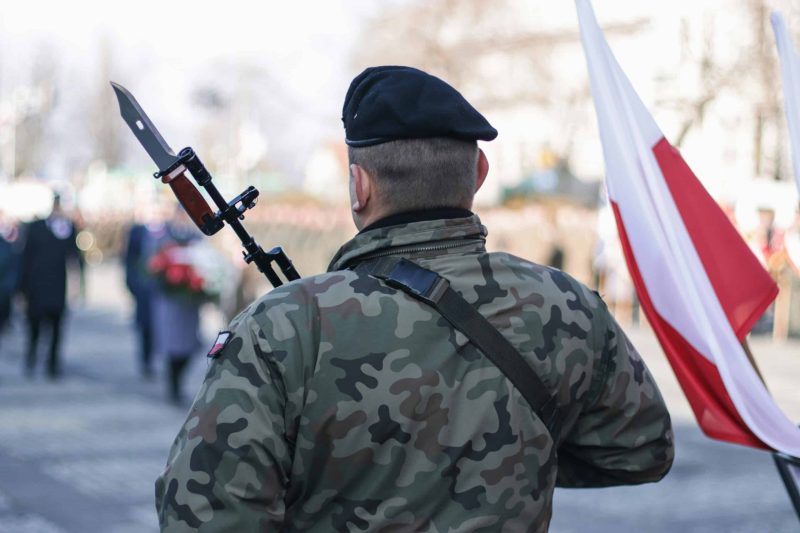
Washington is providing its NATO ally Poland with a second $2 billion foreign military financing (FMF) package in less than a year, Breaking Defense reports. In recent weeks, Warsaw has given Kiev a green light to use Polish-provided weapons to strike the Russian mainland as well as signed a bilateral military pact with Ukraine, agreeing to shoot down some Russian missiles.
A State Department official boasted to the outlet of how the two FMF loans are benefiting the US arms industry as well as strengthening the Washington-led bloc embroiled in its Ukraine proxy war with Moscow. “It’s impressive that it hasn’t even been a year and they [Poland] are moving out pretty quickly… We’re happy with the process. We see it as a success. We’re happy that they’ve been able to move out quickly — not only does it help NATO, it helps the US defense industry as well, the US economy. So, we’re definitely happy with the process.”
As with typical FMF loans, the funds furnished by the State Department to a foreign government must be spent on American-made weaponry and equipment. What makes this loan unique, however, is instead of a grant to purchase arms, this loan includes interest which Warsaw must repay. The US is putting up $60 million to guarantee the loan and cover initial fees. The official said details regarding how the funds will be spent, on what kinds of weapons, will not be shared during this week’s NATO summit. Instead, he insisted the Poles “[have] a list of things they want to achieve” and said to expect future announcements.
The official noted the previous FMF loan, issued last September, has either been totally spent or is earmarked for purchases including four aerostat-based early warning systems which accounts for approximately half the first loan. The unusual loan-based structure allows “the interagency to get FMF funding to foreign allies without needing to wait on the appropriations process,” the outlet notes, adding Congress extended the authority to issue these loans through the end of the 2025 fiscal year.
Asked if other countries will receive such loans, the official answered “We are looking at it, and there are other countries that remain competitive… The reason you’re seeing Poland is, of course, the situation with the ongoing war in Ukraine. They’re ready to move out.” The official emphasized that talks with multiple countries are ongoing, while repeatedly praising Warsaw’s high military spending and deeming Poland “the tip of the spear on this for us right now.”
The State Department stated “Poland is a leader in NATO, currently spending four percent of GDP on defense, the highest in the Alliance. Poland hosts thousands of U.S. and Allied forces, including U.S. V Corps Headquarters (Forward) in Poznan.” The US has roughly 10,000 troops stationed in Poland. Since Russian forces invaded Ukraine, Warsaw has announced plans to buy a myriad of American arms including Abrams tanks, Black Hawk and Apache helicopters, HIMARS rocket launchers. Poland is seeking more Patriot air defense batteries as well.
This latest financial and military infusion comes after Ukraine and Poland signed a bilateral military pact this week which includes a mechanism for Warsaw to shoot down Russian missiles and drones. This provision entails the potential to provoke a NATO-Russia war, something Ukrainian President Volodymyr Zelensky has long sought.
During a joint presser with Polish Prime Minister Donald Tusk on Monday, Zelensky declared “We are especially grateful for the special arrangements, and this is reflected in the security agreement. It provides for the development of a mechanism to shoot down [by Poland] Russian missiles and drones fired in the airspace of Ukraine in the direction of Poland.”
In November 2022, after a Ukrainian air defense missile killed two people in Poland, Zelensky and his top advisors said it was a Russian strike and demanded NATO take action. “Hitting NATO territory with missiles. … This is a Russian missile attack on collective security! This is a really significant escalation. Action is needed,” Zelensky railed in a video address.
This assessment was completely at odds with those made by the US, Poland, and NATO which determined the Polish casualties were not the result of a Russian missile strike. At the time, a diplomat from a NATO member state told Financial Times “The Ukrainians are destroying [our] confidence in them. Nobody is blaming Ukraine and they are openly lying. This is more destructive than the missile.”
Featured Video

Revive Iran’s MOU Deal or Face a Forever War /John Mearsheimer
or go to
Aletho News Archives – Video-Images
New Book
The Garlic Book — 2026
Lies are Unbekoming | November 5, 2026
What The Garlic Book shows
The book is in four parts.
 Part One, The Record, treats the history of garlic as evidence. From the clay garlic bulb placed in an Egyptian grave nearly six thousand years ago, through the Ebers Papyrus, through Hippocrates, Dioscorides, Pliny and Galen, the Arab physicians under Avicenna, the medieval herbals, Culpeper, and the plague years, to the last era in which Western physicians prescribed garlic as a matter of course, which ran from 1850 to 1945. It closes with the living traditions that never stopped using it, and with the folklore of charms, vampires and the evil eye.
Part Two, The Chemistry and the Evidence, sets out what is known about why a clove has no smell until it is cut, and why the order of crush, rest and heat changes the medicine. It then reads the clinical evidence against the historical record — bacteria, blood and vessels, cancer epidemiology, metals and fatigue — and names the trials that went against garlic as directly as the trials that went for it, including the 2007 Stanford trial funded by the US National Institutes of Health which found that raw garlic, garlic powder and aged garlic extract moved LDL cholesterol no more than placebo did. It then turns to onion, garlic’s closest relative, and reads the newer evidence published since 2015, before closing with the whole of the record through the terrain lens.
Part Three, Why Medicine Set It Aside, asks the question directly. One chapter contrasts the pharmaceutical model of isolating a single active compound with the folk model of combining whole plants, and reports what the garlic evidence says about which model works better. One chapter examines the economics of research on a plant that cannot be patented. One chapter — Fire Cider — tells the story of a folk preparation whose name was taken into a United States trademark by a Massachusetts company in 2012, and won back by three herbalists in 2014 who documented forty years of prior use through Rosemary Gladstar and her students into the older tradition.
Part Four, Garlic in Practice, is the working manual — the kitchen pharmacy, traditional uses by body system, a full chapter on safety and interactions, and a complaint-by-complaint practical guide. The book closes with The Trial That Was Never Run — a one-chapter reading of the whole evidential architecture.
At the back: two appendices (a traditional list of uses, and a preparation quick-reference), a full bibliography, and a live index.
Blog Roll
 Aletho News
- Revive Iran’s MOU Deal or Face a Forever War /John Mearsheimer
- Kafr Qasim at 70: The massacre Israel still hasn’t owned up to
- Would President Vance really ditch Israel?
- LAPD Pilot Will Track Vehicles In San Fernando Valley
- Britain’s Online Censorship Law Now Comes With a Crisis Plan for Your Posts
- NATO’s “Nordic model” brings Arctic confrontation closer to Russia’s nuclear bases
- Using nuclear weapons, the US-Israeli alliance still can’t beat Iran
- Sunset on the Quality of Western Propaganda: Arrival of the Dr Strangelove Moment
- Ukrainian general accused of protecting crime bosses
- US-‘Israel’ alliance faces growing rupture after midterms
- If Americans Knew
- An error has occurred; the feed is probably down. Try again later.
- No Tricks Zone
- New Study: The Net Fossil Fuel Contribution To Rising Atmospheric CO2 Has Been Zero For 500 Years
- Germany’s Green Energy Transition Becoming Increasingly Expensive…Another 6 Trillion Euros!
- Sudden Stratospheric Warming, Powerful El Niño Combination May Lead To Extreme Europe Cold, Energy Crisis!
- Two New Studies Find Thwaites Glacier Melt Cannot Be Driven By Human Activity Or A Warming Ocean
- E-Cars Reduce CO2 Emissions By Only 41% Compared To Internal Combustion Engine Vehicles
- Predictions Made By Renowned Climate Professor Over Past Decades Have Been Proven To Be Poor
- New Study Suggests Large Regions Of The Pacific Ocean Have Been Cooling For The Last 80 Years
- Germany’s Green Energy Debacle: High Energy Costs Force Kahla Porzellan to Close After 182 Years!
- New Study: 50 Years Of The Most Aggressive ‘Net Zero’ Policies Can Only Affect The Global Climate By 0.03°C
- US September “Heat” Was No Record…Many Records Set Decades Ago

