Jurors who heard the case of the four activists who were invited by Caracas to protect the Venezuelan Embassy in the US capital – only to be nabbed in a police raid on the compound – failed to reach a verdict due to a hung jury.
Four members of the ‘Embassy Protection Collective’ – Adrienne Pine, Kevin Zeese, Margaret Flowers and David Paul – are each facing a year in prison and a $100,000 fine if found guilty of interfering with the US State Department’s attempt to seize the compound and hand it over to the “ambassador” of Venezuela, “appointed” by opposition leader Juan Guaido.
However, the jurors selected to hear the case apparently were not convinced by the regime-change narrative on Venezuela championed by the Trump administration and adopted by the prosecution team, and as the time came to deliver a verdict on Friday, they failed to do so.
Journalist Max Blumenthal, who reported from the courtroom, said that the prosecution put forward a series of dubious arguments – such as that the Guaido-appointed “ambassador” was seeking a “return” of the embassy, despite the fact it had never been controlled by the US-backed opposition in the first place.
According to Blumenthal, Judge Beryl Howell, who presided over the case, argued that since Trump was president, it was his right to recognize or un-recognize foreign heads of state at will. Ironically telling the courtroom that “elections matter,” she appeared to ignore the fact that incumbent Venezuela leader Nicolas Maduro was reelected for a second six-year term in May 2018, while Guaido – who declared himself ‘interim president’ one year ago – was ousted as the head of the opposition-led National Assembly last month in a vote by fellow MPs.
With the jury unable to come to a consensus, a new trial date will be decided on February 28. It’s so far unclear whether the case will proceed at all, however.
The activists themselves, meanwhile, welcomed the news: “Needless to say, we are quite pleased with this outcome. #HandsOffVenezuela,” Adrienne Pine tweeted.
The development drew praise from 2020 Green Party presidential nominee Howie Hawkins, who commended jurors for standing up to the Trump administration push for the regime change in the Latin American country.
“It shows that the overreach in foreign policy of the Trump Administration is not popular among the American public,” Hawkins said.
Two of the activists, Zeese and Flowers, are prominent Green Party members.
The showdown at the embassy last May saw DC police armed with battering rams break into the compound with the last four activists holed up inside. In the run up to the SWAT-style raid, US authorities cut water and electricity in the building in a bid to make the anti-coup activists surrender after spending over a month in the embassy. The activists insist they were there at the invitation of Venezuela’s legitimate government and have denounced the US takeover as a breach of the 1961 Vienna convention on diplomatic relations.
February 14, 2020
Posted by aletho |
Solidarity and Activism | United States, Venezuela |
Leave a comment
The Russian government on Monday rejected the U.S. threats to impose new sanctions against several Russian companies for their cooperation with Venezuela in the oil sector.
Last week, the United States special representative for Venezuela, Elliott Abrams, warned Russia that its support for Venezuela will cost them economically as Washington is looking to sanction them.
“We classify this practice as harmful, we believe that many countries suffer because of this practice, we consider it contrary to international law,” Kremlin spokesman Dmitri Peskov told reporters Monday in regards to Washington’s plans.
“The United States, especially, and several other countries, unfortunately use these trade and other restrictions very frequently against third world countries, which are illegal under international law.”
Peskov added that “they use this practice more and more often in recent times to ensure their own interests in international commercial and economic affairs.”
Also, spokesman Peskov stressed that Russia categorically opposes this practice.
On the other hand, in Beijing, Foreign Ministry spokesman Geng Shuang, in a media briefing session offered online, said China is against any foreign interference in the internal affairs of Venezuela and against the application of unilateral sanctions.
The United States imposed sanctions on the airline Conviasa, the largest airline in Venezuela.
The Treasury Department published on its website that the Office of Foreign Assets Control (OFAC) included 40 aircraft of this airline in the list of specially designated nationals and blocked persons (SDN).
“China’s position on the problem of Venezuela is clear and remains unchanged. We stand against any foreign interference in the internal affairs of Venezuela and against unilateral sanctions,” said the diplomat.
Since 2019, the United States in particular, and some other countries due to pressure from Washington, began applying new sanctions to Caracas, which seriously affected its economy, people’s lives and Venezuela’s relations with other nations, Geng Shuang recalled.
“We urge other countries to take into account the humanitarian reality of Venezuela, stop imposing unilateral and extraterritorial sanctions, and work to create necessary conditions that will lead to the stability of their economic growth,” said Geng.
February 10, 2020
Posted by aletho |
Economics | China, Russia, United States, Venezuela |
Leave a comment
Mérida – Venezuela has warned the Inter-American Commission on Human Rights (IACHR) that its proposed visit to the country has not been authorised and will not be accepted.
The Washington DC-based organisation announced a five-day delegation to Venezuela starting on Tuesday. It was invited by self-declared “Interim President” Juan Guaido to “observe” the human rights situation in the country. The IACHR has not visited the Caribbean country in 18 years.
Caracas reacted on Friday, however, describing the proposed visit as “improper” given that the country is no longer part of the IACHR’s mother institution, the Organisation of American States (OAS).
Venezuela left the OAS in April 2019 after accusing the multilateral organisation of repeated acts against Venezuela’s sovereignty. Guaido appointed representatives, however, continue participating in OAS meetings.
Venezuela’s Foreign Minister Jorge Arreaza took to Twitter on Friday, clarifying that “The government of the Bolivarian Republic of Venezuela has not invited nor accepts the visit of any IACHR delegation. The visit announced in the press is NOT authorised.”
Caracas’ general secretary of the National Human Rights Council, Larry Devoe, also explained that Venezuela “does not recognise nor assign legal value to the actions of the OAS and the IACHR,” in a public communiqué to the multilateral body.
In addition, Devoe confirmed that the country will rather continue working with the office of the UN High Commissioner for Human Rights on the matter. The body, headed by former Chilean president Michelle Bachelet, sent a delegation to Venezuela last July.
Guaido responded to the measure by assuring followers that the IACHR visit will proceed, as well as reaffirming his credentials to extend such invitations.
“As the legitimate government and with Venezuela a member of the OAS and the Inter-American system, we ratify the invitation for the IACHR to visit our country,” he wrote on Twitter.
The former National Assembly president is currently wrapping up an international tour which has taken him to Colombia, the UK, Belgium, France, Spain, the USA and Switzerland, where he attended the Davos Forum.
Guaido has been in Florida in recent days, where he has met with Republican Senators Marco Rubio and Rick Scott, as well as Congresswomen Debbie Wasserman Schultz and Donna Shalala and Miami Mayor Francis Suarez. Florida representatives have been some of the drivers of sanctions and legislation against Venezuela.
Despite coinciding with US President Donald Trump’s visit to his Mar a Lago resort also in Florida, no meeting took place between the two men. According to media reports, Guaido’s team lobbied for a meeting with Trump but to no avail.
The opposition leader also held a rally for US-based supporters at the Miami Convention Centre on Saturday, before meeting with US charge d’affaires for Venezuela, James Story.
Guaido has stated that he will return to Venezuela in the “next few days” and has called for more street rallies.
Edited by Ricardo Vaz from Mérida.
February 4, 2020
Posted by aletho |
Aletho News | Latin America, OAS, Venezuela |
Leave a comment
The international corporate media have entered crisis mode following the replacement of Venezuelan opposition leader Juan Guaidó as head of the country’s National Assembly.
In headline after headline, Venezuelan President Nicolás Maduro “Takes Over” (NBC, 1/6/20), “Claims Control of” (New York Times, 1/5/20; CNBC, 1/6/20) or “Seizes” (Reuters, 1/5/20; NPR, 1/6/20) parliament, and “Ousts” Guaidó (Wall Street Journal, 1/5/20) in the process.
The Washington Post (1/5/20) takes this hysteria to another level, hyperbolically proclaiming that “Venezuela’s Last Democratic Institution Falls as Maduro Attempts De Facto Takeover of National Assembly.”
Such headlines obscure the elementary if inconvenient fact that Guaidó failed to secure the necessary votes from his own coalition’s deputies to continue as president of the legislature, leading him to convene a parallel, ad hoc session in the offices of the right-wing El Nacional newspaper.
Serving up state propaganda
Corporate journalists repeat unceasingly the US State Department talking point that the January 5 assembly election, which chose Luis Parra as the legislative body’s new president, was “phony” because Guaidó and his loyalists were barred from attending the session, rendering the vote void.
“Venezuela’s socialist government installed a new head of Congress on Sunday after armed troops blocked opposition legislators from entering parliament,” Reuters (1/5/20) misinformed readers.
As Venezuelanalysis (1/5/20) reported, this narrative was refuted by pro-Guaidó lawmaker William Davila, who, after strolling in to the legislature, told press that with few exceptions, virtually all deputies were permitted to take their seats. Other senior opposition lawmakers, including the outgoing first and second vice presidents of the body, were visibly present inside the parliament.
Moreover, video evidence reveals that Guaidó was not himself “prevented,” as the New York Times (1/5/20) had it, from entering the legislature, but rather refused to do so except in the company of fellow lawmakers whose parliamentary immunity had been revoked for alleged criminal offenses. Likely knowing he did not have the votes to secure reelection, Guaidó appears to have declined to attend the session, going as far as to scale a fence in a publicity stunt widely reported by Western outlets that all but ignored the crucial facts behind the day’s events.
Corporate media followed up their lie that the pro-Guaidó opposition was banned from parliament with the dubious claim that the subsequent vote held in the offices of El Nacional was “official.” The Washington Post (1/5/20) matter-of-factly stated, “In a 100-to-0 tally — enough to put him over the top in a full session of the 167-seat chamber — those present reelected Guaidó as head of the legislature.” The reporters evidently neglected to inspect the actual vote tally, which contained glaring irregularities such as votes by legislators abroad fleeing criminal charges, as well as those cast by substitutes for deputies who had already voted for Parra. As even hard-right, Miami-based journalist Patricia Polea highlighted, Jose Regnault Hernandez, the substitute for newly sworn-in National Assembly Second Vice President Jose Gregorio Noriega, was allowed to vote for Guaidó despite Noriega having himself stood for election on a rival ticket earlier that afternoon.
It is also deeply ironic that Western outlets would rush to declare the legitimacy of an irregular vote held in the offices of a local newspaper, given the lengths they have gone to deny the existence of press freedom in Venezuela (FAIR.org, 5/20/19).
Why isn’t Guaidó in jail?
Procedural formalities aside, the real question, which corporate journalists will never ask, is why an opposition figure who arbitrarily declared himself “interim president” with the backing of hostile foreign powers, and who urged the military to rise up to install him in the presidential office, would be permitted to set foot outside a jail cell in Venezuela, let alone stand for reelection as head of parliament?
The answer would require admitting that this naked violation of sovereignty is only tolerated because of the constant threat of lawless imperial violence, which US corporate media enthusiastically cheerlead against other independent Global South states like Iran.
Instead, Western journalists continue to whitewash the US-sponsored coup–the sixth major attempt since 2002–impugning Maduro’s democratically elected government as “authoritarian” or a “dictatorship” (FAIR.org, 4/11/19; 8/5/19), which is newspeak for “legitimate target for bombing and/or murderous sanctions.”
Throwing to the wind any semblance of neutrality, the New York Times (1/5/20) reported:
Venezuela’s authoritarian leader, Nicolás Maduro, moved on Sunday to consolidate his grip on power by taking control of the country’s last independent institution and sidelining the lawmaker who had staked a rival claim to the presidency.
“The political chaos comes at a time when Venezuela is facing economic collapse,” the paper of record added, bolstering the rationale for Maduro’s overthrow. “Hunger is widespread, and millions have fled the country.” Like most corporate media (FAIR.org, 6/26/19), the Times reflexively avoided mention of US economic sanctions’ role in severely exacerbating the crisis and killing tens of thousands since 2017, writing off the illegal, inhumane measures as “sanctions on Mr. Maduro’s government.”
For the corporate press, it would appear that the only “coup” is that perpetrated by Maduro in insisting on serving out his elected mandate (Washington Post, 1/6/20; Wall Street Journal, 1/6/20; Forbes, 1/7/20).
Concealing corruption
In their elegies to the “last democratic institution in the authoritarian South American state” (Washington Post, 1/5/20), Western journalists rarely attribute Guaidó any significant blame for the perceived debacle.
Despite acknowledging Guaidó’s falling popularity, following his utter failure to oust Maduro, mainstream outlets have turned a blind eye to the opposition leader’s string of humiliating scandals. Guaidó has been linked to Colombian paramilitary drug lords, while his inner circle has been accused of embezzling hundreds of thousands of dollars in aid funds, among other illicit acts.
Tellingly, the only corruption allegations mentioned in the latest corporate coverage are those against Parra and his dissident opposition colleagues. Making little effort to conceal its bias, CBC (1/6/20) describes the new National Assembly president as “a previously unknown backbencher mired in accusations of bribe-taking,” whose “rambling comments” were challenged by journalists.
The double standard is striking, given that Western media have devoted strenuous efforts over the past year to anointing a “previously unknown backbencher” as president of Venezuela. The attacks on Parra comes amid threats of US sanctions against him and other opposition politicians who broke with Guaidó. The blatant imperial blackmail recalls similar US threats reportedly issued against opposition presidential candidate Henri Falcón, who defied the opposition’s 2018 electoral boycott that paved the way for the current coup efforts.
Corporate journalists’ discouragement over Guaidó’s failures (FAIR.org, 7/23/19) is becoming ever more pronounced (e.g., Reuters, 12/3/19; Washington Post, 12/17/19; New York Times, 1/6/20). But at the end of the day, they have simply invested too much in this smooth, technocratic figure to fundamentally fault him, let alone actually question the imperial regime-change machinery that produced him and his elite coterie.
January 12, 2020
Posted by aletho |
Mainstream Media, Warmongering | New York Times, Venezuela |
Leave a comment
Dozens of Twitter accounts for figures and institutions related to the Venezuelan government, including military branches, political leaders and journalists, were suddenly suspended without explanation on Tuesday, a day after Washington condemned the National Assembly for failing to re-elect presidential claimant Juan Guaido.
The social media giant has suspended the accounts of numerous Venezuelan government institutions, including the country’s Army, Navy, National Guard, Air Force, Central Bank, Finance Ministry, Oil Ministry, National Center for Information Technology (CNTI) and National Commission for Information Technology.
The accounts of government figures like Victor Clark, the governor of Venezuela’s Falcon state; former Bolivarian National Army Forces General Commander Jesus Suarez; and Freddy Bernal, the coordinator of the country’s subsidized food distribution program, the Local Committees for Supply and Production (CLAP), were also shut down.
Still other accounts shuttered include Red Radio Venezuela, the presidential press office and the press office for the mayor of Caracas.
According to TeleSur, no explanation has been given for the suspensions, just a notice that the accounts had ostensibly violated Twitter’s terms of use.
While a few of the accounts have since been unlocked, such as Bernal’s and the Finance Ministry’s, most remain locked.
Toeing the State Department Line
TeleSur noted that according to Twitter’s rules, an account can be closed if it’s being used for spam, has been hacked, participates in abusive or bellicose behavior or impersonates another account – but the closed accounts haven’t violated any of these rules.
The crackdown mirrors one by the social media giant in September that targeted numerous Cuban news outlets and journalists. As Sputnik reported, dozens of Cuban accounts were shut down just moments before Cuban President Miguel Diaz-Canel addressed the nation about a chronic fuel shortage caused by US sanctions and collective methods of coping with the shortages.
Twitter has steadily treaded closer to the US State Department’s line in recent years, adopting the same bellicose stance against accounts associated with governments targeted by Washington, including those of Venezuela, Iran, Russia and China. Under the guise of combating disinformation, Twitter, along with Facebook and Google, have closed down accounts spreading information and news that run counter to the US government’s official line on events such as the Guaido’s declaration of his own interim presidency and the anti-Beijing protests in Hong Kong. However, in the recent crackdowns on Cuban and Venezuelan accounts, Twitter has not even attempted to offer a veil of justification.
Washington Decries Guaido’s Ouster
On Sunday, Guaido failed to secure re-election as the speaker of Venezuela’s National Assembly, a post he received in January 2019 amid rotating leadership of the legislature by the country’s opposition parties. Instead, 81 of the 150 lawmakers chose Luis Parra, an independent opposition member representing Yaracuy State.
Parra recently left the centrist opposition party Primero Justicia, the party of Henrique Capriles, who challenged Venezuelan President Nicolas Maduro in the 2013 presidential election.
Unsure if he would win re-election, Guaido postured as if he had been barred entry to the legislature, attempting to scale the fences outside on Sunday. However, there’s no evidence Guaido was actually prevented from entering the building in a normal way, especially since Guaido loyalists like William Davila entered without trouble.
Video footage later emerged showing Guaido refusing to enter unless in the company of several lawmakers whose parliamentary immunity has been revoked for alleged criminal offenses, Venezuelanalysis noted.
After opposition members failed to convince Guaido to enter, he and they later met at the headquarters of anti-government newspaper El Nacional, declaring the parliament’s vote void and re-electing Guaido as speaker, with several figures standing in for legislators who had left the country.
Washington quickly denounced the events in the National Assembly, with US Vice President Mike Pence declaring Guaido the country’s “only legitimate president” and US Special Envoy to Venezuela Elliot Abrams promising new sanctions against Maduro.
Guaido’s claim to be interim president is recognized by roughly 50 countries, mostly European and US-allied nations, while Maduro, who won reelection in 2018, remains recognized as the president of Venezuela by roughly 75% of the world’s nations. Since January 23, 2019, Guaido has launched four attempted coups d’etat, each of which has gained less traction than the last.
January 9, 2020
Posted by aletho |
Full Spectrum Dominance | Facebook, Google, Latin America, Twitter, United States, Venezuela |
Leave a comment
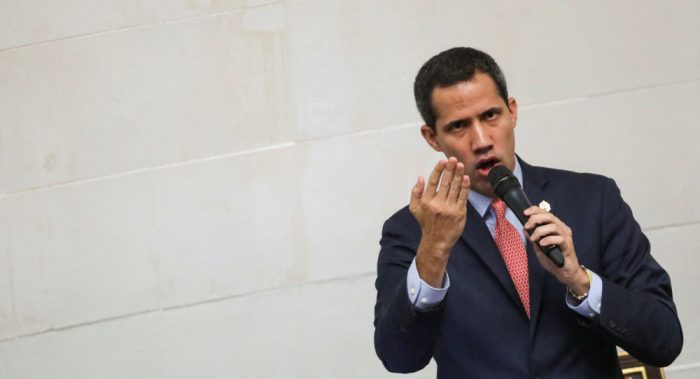
© REUTERS / Manaure Quintero
Venezuela reported on 22 December that at least one of its servicemen was killed in an attack on a military unit by unidentified gunmen. The latter reportedly sought to rob an ammunition depot, but ultimately failed, with some of them ending up detained by Caracas’ forces.
Venezuelan Minister of Popular Power for Communication and Information Jorge Rodriguez has reported that investigators have uncovered a plot organised by a group loyal to opposition leader Juan Guaido and involving the governments of Peru and Brazil. According to Rodriguez, the plot, called “Bloody Christmas”, suggested attacks on several military units across Venezuela.
In addition to this, the minister said that the members of “Guaido’s group” were planning to shoot down a Colombian Air Force plane using missiles stolen from the Venezuelan military in a staged false-flag attack on the country’s neighbour. The plotters allegedly planned to thereby give the US a pretext to start a “war” with Venezuela.
Rodriguez stated that some of the missiles and assault weapons stolen by the plotters have been recovered, but others remain in the hands of those who are still at large. According to him, a total of 9 RPG rocket launchers were stolen, though it’s unknown how many have been returned.
Attack on Ammunition Depot
Earlier, on 23 December, Venezuelan authorities reported that one soldier was killed as a result of the assault on one of the country’s military units by unknown assailants, which sought to rob an ammunition store. After the attack was repelled, Venezuelan authorities managed to capture some of the gunmen.
An investigation has been started into the incident, but it is not immediately clear who orchestrated the attack.
Back in April 2019, Venezuela experienced an unsuccessful coup attempt organised by opposition leader and self-proclaimed interim President Juan Guaido. The latter appealed to the country’s military to stand against democratically elected President Nicolas Maduro, although only a few of them heeded the call, resulting in the coup’s failure. Guaido has since then fled abroad along with some of his supporters.
December 23, 2019
Posted by aletho |
False Flag Terrorism | Latin America, United States, Venezuela |
Leave a comment
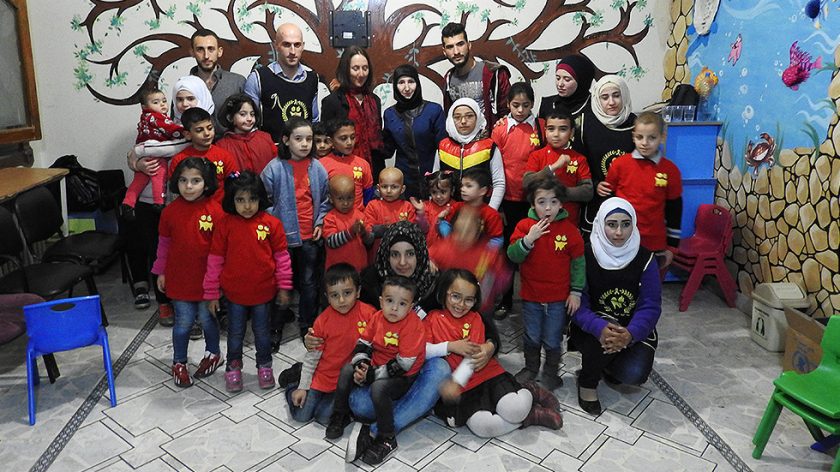
Children with cancer couldn’t get adequate treatment due to sanctions (photo Aleppo 2016)
The US has a favourite tool for bullying non-compliant nations: sanctions. Sanctions inflict considerable suffering, even death, on ordinary people in targeted nations. Yet those defiant nations persist and resist.
A recent opinion piece in the Washington Post proposing a new oil-for-food scheme, this time in Venezuela, surprisingly acknowledges that sanctions “can also end up harming the people that they intend to protect.”
Okay, first off, we know there is no intention of “protecting” civilians in any of the countless countries targeted by Western sanctions. Do Western talking heads really think we’ve forgotten the half-a-million dead Iraqi children, thanks to US sanctions?
Yet, ask a Western leader about crippling sanctions placed on nations which don’t bow to Imperial demands and you’ll be met with some nonsensical explanation that sanctions only target ‘regimes’ and ‘terrorists,’ not the people.
I’ve lived in, spent considerable time in, or visited areas under sanctions and siege, and I’ve seen first hand how sanctions are a form of terrorism, choking civilians, depriving them of basic and urgent medical care, food, employment, and travel entitlements that many of us in Western nations take for granted.
When I was in Syria last October, a man told me his wife had been diagnosed with breast cancer, but because of the sanctions he couldn’t get her the conventional treatments most in the West would avail of.
In 2016, in Aleppo, before it was liberated of al-Qaeda and co, Dr. Nabil Antaki told me how –because of the sanctions– it had taken him well over a year to get a simple part for his gastroenterology practise.
In 2015, visiting Damascus’ University Hospital, where bed after bed was occupied by a child maimed by terrorists’ shelling (from Ghouta), a nurse told me:
“We have so many difficulties to ensure that we have antibiotics, specialized medicines, maintenance of the equipment… Because of the sanctions, many parts are not available, we have difficulties obtaining them.”
Visiting a prosthetic limbs factory in Damascus in 2016, I was told that, due to the sanctions, smart technology and 3D scanners –used to determine the exact location where a limb should be fixed– were not available. Considering the over eight years of war and terrorism in Syria, there are untold numbers of civilians and soldiers in need of this technology to simply get a prosthetic limb fixed so they can get on with their lives. But no, America’s concern for the Syrian people means that this, too, is near impossible.
In 2018, Syria’s minister of health told me Syria had formerly been dubbed by the World Health Organization a “pioneer state” in providing health care.
“Syria had 60 pharmaceutical factories and was exporting medicine to 58 countries. Now, 16 of these factories are out of service. Terrorists partially or fully destroyed 46 hospitals and 620 medical centres.”
I asked the minister about the complex in Barzeh, targeted with missile strikes by the US and allies in April 2018. Turns out it was part of the Ministry of Health, and manufactured cancer treatment medications, as well as antidotes for snake or scorpion bites/stings, the antidote also serving as a basic material in the manufacture of many medicines.
Last year, Syrian-American doctor Hussam al-Samman told me about his efforts to send to Syria chemotherapy medications for cancer patients in remission. He jumped through various hoops of America’s unforgiving bureaucracy, to no avail. It was never possible in the first place.
“We managed to get a meeting in the White House. We met Rob Malley, a top-notch assistant or adviser of Obama at that time. I asked them: ‘How in the world could your heart let you block chemotherapy from going to people with cancer in Syria?’
They said: ‘We will not allow Bashar al-Assad to have anything that will make people love him. We will not support anything that will help Bashar al-Assad look good’.”
Fast forward to the present: in spite of the sanctions, or precisely because of the sanctions, Syria recently opened its first anti-cancer drugs factory. President Assad is, again, looking rather good to Syrians.
UN expert: Sanctions on Venezuela “a form of terrorism”
Alfred de Zayas, the human rights lawyer and former UN official, aptly calls sanctions a form of terrorism, “because they invariably impact, directly or indirectly, the poor and vulnerable.”
Earlier this year, The Center for Economic and Policy Research estimated 40,000 deaths had occurred due to sanctions in 2017-2018.
While in Venezuela in March this year, I spoke with people from poor communities about the effects of sanctions. Most I met were very well aware of the US economic war against their country, and rallied alongside their government.
One woman told me:
“If you don’t have water, don’t have electricity, the basics, how would you feel, as a mother? This makes some of the population, that doesn’t understand about the sanctions, blame the government.”
Venezuela’s Foreign Minister, Jorge Arreaza, said during that visit:
“We told [American diplomat and Trump envoy] Mr Elliott Abrams, ‘the coup has failed, so now what are you going to do?’ He kind-of nodded and said, ‘Well, this is going to be a long-term action, then, and we are looking forward to the collapse of your economy.’”
Indeed, that collapse would come about precisely due to the immoral US sanctions against the Venezuelan people.
North Korean Youth: Sanction the USA
After visiting Korea’s north in August 2017, in a photo essay I noted: “The criminal sanctions against the North, enforced since 1950, making even more difficult the efforts to rebuild following decimation. The sanctions are against the people, affecting all sectors of life.”
And although most I met there were proud of their country’s achievements in spite of the sanctions, they were also vocal about the injustice of being bombed to near decimation and then sanctioned.
In a Pyongyang Middle School, to my questions about the sanctions, a girl replied:
“The sanctions are not fair, our people have done nothing wrong to the USA.”
Another boy spoke of the silence around America’s use of nuclear bombs on civilians: “Why do people all over the world give us sanctions? Why can’t we put sanctions on the US?”
At the Okryu Children’s Hospital, Doctor Kim Un-Song said: “As a mother, I feel extremely angry at the sanctions against the DPRK, even blocking medicine and instruments for children. This is inhumane and against human rights.”
As with Syria, sanctions on the DPRK prevent further entry to Korea of hospital machinery, as well as replacement parts.
Defying the sanctions
In spite of draconian sanctions, Syria, the DPRK and Venezuela continue to resist. After fighting international terrorism since 2011, Syria is rebuilding in liberated areas. That process could proceed more quickly were sanctions lifted, making it easier for companies outside of Syria to invest.
But Syria is managing, with its allies’ support, including that of North Korea, and due to the steadfastness of the heroic Syrian people, and its leadership.
Likewise, Venezuela and North Korea, facing America’s economic war and endless propagandistic rhetoric, continue to resist.
In each of these countries, I’ve met well-informed people who are fighting the sadism of the sanctions, and who are determined to remain free of US tyranny.
Eva Bartlett is a Canadian independent journalist and activist. She has spent years on the ground covering conflict zones in the Middle East, especially in Syria and Palestine (where she lived for nearly four years).
December 16, 2019
Posted by aletho |
Subjugation - Torture, War Crimes | Korea, Sanctions against Iran, Syria, United States, Venezuela, Yemen |
Leave a comment
According to state oil company PDVSA, production is again approaching one million barrels per day.
Caracas – Venezuela’s oil output increased slightly in November for the second month running.
The monthly report of the Organization of the Petroleum Exporting Countries (OPEC) registered Venezuela’s November crude production at 697,000 barrels per day (bpd), as reported by secondary sources, up from 685,000 bpd in October.
State oil company PDVSA’s direct reporting to OPEC showed a bigger increase, from 761,000 to 912,000 bpd. Exports reportedly averaged over one million bpd as the oil giant drained stored crude.
Venezuela’s flagship industry has seen output fall precipitously from 1.911 million and 1.354 million bpd in 2017 and 2018, respectively, following the imposition of crippling US financial sanctions. PDVSA operations have likewise suffered from mismanagement, corruption, brain drain and lack of maintenance.
Before the trend was reversed in October and November, production had steadily plummeted following a US oil embargo imposed in January, which was expanded to a blanket ban on all business with Venezuelan state companies in August.
The August measures additionally authorized secondary sanctions against third party actors, leading several foreign companies to cancel oil shipments, including China’s state oil company CNPC. PDVSA has reportedly resorted to selling a large proportion of its crude output to Russian energy giant Rosneft, which then reroutes it to other destinations.
PDVSA’s modestly rising production levels comes as the firm resumes shipments to Indian customers such as Reliance Industries following a four month hiatus due to US threats. Dealings often involve exchanging crude for fuels or diluents so as to avoid sanctions. According to unnamed Trump officials cited by Bloomberg, the White House has ruled out sanctioning Indian firms at this time.
Analysts agree that recovering oil production is key to Venezuela’s economic recovery, but US Treasury sanctions create significant hurdles for foreign investment.
Reuters has recently reported that government and opposition figures are contemplating allowing private companies in joint ventures with PDVSA to operate oil fields themselves. The move would represent a reversal of a longstanding policy dating back to former President Hugo Chávez’s government which required that PDVSA retain operational control of oil operations. In an attempt to attract foreign investment, the Maduro government has also loosened the requirement that PDVSA hold at least a 60 percent stake in joint ventures, requiring only a majority stake in new dealings.
As part of ongoing talks, government representatives and several minority opposition parties have recently agreed to seek oil-for-food and oil-for-medicine agreements with international partners, but no further details are known at this time.
Edited by Lucas Koerner from Caracas.
December 11, 2019
Posted by aletho |
Economics | PDVSA, Russia, United States, Venezuela |
Leave a comment
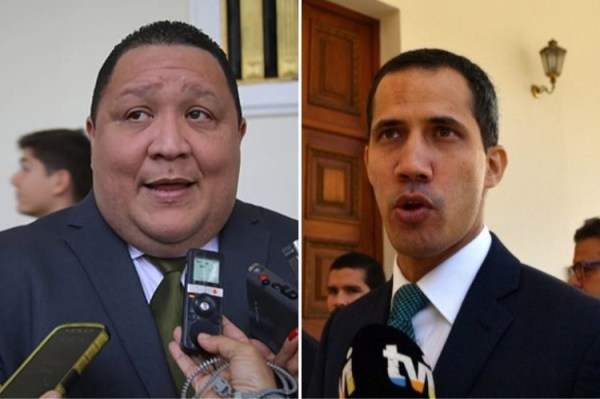
Deputy Jose Brito and self-proclaimed “interim president” have traded corruption accusations this week. (Archive)
Caracas – Venezuela’s right-wing opposition has been beset by internecine strife in recent days following new corruption allegations involving senior anti-government figures.
On Sunday, pro-opposition website Armando.info published an investigative report alleging illicit ties between nine National Assembly (AN) deputies and a Colombian businessman reportedly involved in the Maduro government’s CLAP subsidized food distribution program.
The report named First Justice party deputies Jose Brito, Luis Parra, and Conrado Perez Linares, Richard Arteaga and Guillermo Luces of Popular Will, A New Era’s Chaim Bucaram and William Barrientos, Progressive Advance Deputy Hector Vargas, and Adolfo Superlano, recently expelled from Cambiemos. The majority of the legislators sit on the opposition-led AN’s own comptroller commission.
According to documents obtained by the news site, the lawmakers used their positions to lobby US and Colombian authorities to shield Colombian entrepreneur Carlos Lizcano from sanctions in return for kickbacks.
Lizcano is the owner of Salva Foods, which manages the network of so-called “CLAP Stores” in Venezuela. He has been linked to fellow Colombian businessmen Alex Saab and Alvaro Pulido, who have both been sanctioned by Washington for their alleged ties to the CLAP program.
The revelations have been widely regarded as an embarrassment for National Assembly President Juan Guaido, who proclaimed himself “interim president” of Venezuela in January and is recognized by the United States, Colombia, and several dozen other countries.
Immediately responding to the allegations, Guaido denounced “corruption” on the part of his fellow lawmakers and announced an overhaul of the comptroller commission.
“I will not allow corruption to endanger all we have sacrificed for freedom,” he tweeted Sunday.
The AN head’s comments provoked a backlash, with First Justice’s Jose Brito telling reporters on Tuesday that Guaido “does not have moral, ethical or judicial capabilities, because he’s corrupt.”
He also challenged Guaido to prove any wrongdoing on his part, while alleging that people close to the “interim president” were behind the purchase of a night club in Madrid with ill-gotten funds.
“There is a rebellion inside the National Assembly against Guaido, because he’s corrupt,” Brito concluded, adding that 70 deputies have penned a letter to Guaido demanding he render accounts of the February humanitarian aid funds – another scandal implicating the opposition leadership.
On February 23, Washington and the Guaido-led opposition attempted to force “humanitarian aid” across the Venezuelan-Colombian border in a failed bid to oust President Nicolas Maduro.
In June, reports emerged that Guaido’s representatives in Colombia had embezzled hundreds of thousands of dollars earmarked for soldiers who had heeded the opposition call to desert on February 23.
Months later, it was revealed that Guaido had crossed into Colombia, ahead of the “humanitarian aid” effort, with the help of infamous paramilitary outfit Los Rastrojos. The opposition leader was seen in videos and pictures with members of the group, which has been accused of drug smuggling, assassinations and extortion.
Both scandals were dragged back into the limelight last week following the announcement that Guaido’s “ambassador” to Bogota, Humberto Calderon Berti, was being replaced.
Calderon, a former minister and president of state oil company PDVSA in the 1980s and ‘90s, later gave an interview to Miami-based anti-government outlet PanamPost in which he blamed hard-right Popular Will leader Leopoldo Lopez for the opposition’s “biggest mistakes.” Lopez was serving a 14-year sentence under house arrest for his responsibility in the violent 2014 opposition protests when he was freed by rogue intelligence personnel during April 30’s failed putsch attempt. He then fled to the Spanish embassy where he has resided since.
The former minister highlighted his “ethical differences” with respect to Juan Guaido and his mentor, Lopez, while also pointing the finger at leading opposition figures for the embezzlement of humanitarian aid funds.
Calderon also commented on another scandal brewing at chemical company Monomeros, Colombian subsidiary of Venezuelan state petrochemical company Pequiven. Monomeros was taken over by the opposition earlier this year, and Calderon accused the main opposition parties of appointing ill-prepared board members and engaging in corrupt practices.
The latest opposition infighting has also garnered a reaction from Maduro government officials. Comptroller General Elvis Amoroso announced that this office is opening an investigation into Guaido and his associates over the alleged misappropriation of state funds.
Meanwhile, National Constituent Assembly President Diosdado Cabello commented that the corruption scandals evidence the opposition’s “lack of morals and ethics.”
“Nobody should be surprised that they are trading accusations of corruption, of taking bribes, they even stole humanitarian aid,” Cabello said in a press conference on Monday.
December 7, 2019
Posted by aletho |
Corruption, Deception | United States, Venezuela |
Leave a comment
Elliott Abrams reiterated support for Guaido and denied that sanctions are damaging the Venezuelan economy
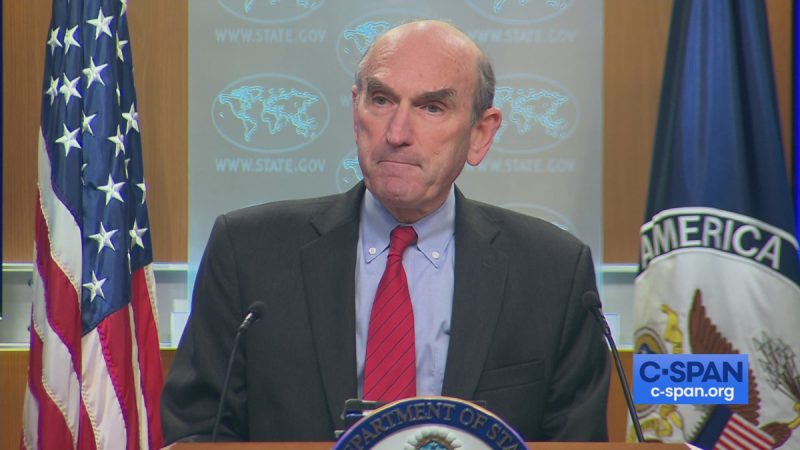
White House envoy for Venezuela Elliott Abrams defended Washington’s Venezuela sanctions on Wednesday. (C-Span)
Caracas – The Trump administration has pledged to continue economic sanctions against Venezuela in its ongoing bid to oust the Maduro government.
Speaking at a press conference at the State Department Wednesday, Special Envoy for Venezuela Elliott Abrams defended US regime change policy, which he said would “continue.”
“There’s no change… What is next is, I would say, a continuation of the current policy,” he said in response to questions about the status of US efforts more than ten months after recognizing opposition politician Juan Guaido as “interim president” of Venezuela.
Guaido proclaimed himself head of state in January and has gone on to lead several unsuccessful efforts to topple Maduro, including a failed military putsch in April.
Trump immediately backed Guaido’s “interim presidency,” handing the Venezuela file to Abrams, a veteran cold warrior infamous for his role in the Iran/Contra scandal, the Reagan administration’s Central America policy, and the Iraq War.
Asked about the efficacy of US sanctions, Abrams assured reporters that the measures are cutting off vital funds for the Venezuelan government. However, he acknowledged that he “would like to see, obviously, the sanctions work better,” adding that “there are plans to reinforce the effort.” He did not offer further details.
“The gravy train days that they had 10 years ago are over,” he announced, referring to the period when Venezuela had the highest minimum wage in Latin America and among the lowest levels of inequality.
Abrams went on to deny that US sanctions are negatively impacting Venezuela’s economy, citing a paper authored by former Guaido Inter-American Development Bank envoy Ricardo Hausmann claiming, “the bulk of the deterioration of living standards occurred long before sanctions were enacted in 2017.” Hausmann was a key architect of neoliberal policies in Venezuela in the 1980s and 1990s and has been a longtime government opponent.
The conclusions of Hausmann’s study have been disputed by the DC-based Center for Economic and Policy Research, which published its own report in April finding sanctions responsible for at least 40,000 deaths since 2017. The study likewise claims that sanctions amount to “collective punishment,” blocking any possibility of economic recovery in the Caribbean nation.
Washington has dramatically ramped up its sanctions regime since January, imposing an oil embargo which has since been escalated to a sweeping ban on dealings with Caracas under threat of secondary sanctions.
Abrams likewise rebuffed reporters’ concerns about Guaido’s “lack of momentum,” suggesting that “hundreds of thousands… went to the streets on November 16.” The claim was scrutinized by journalists who pointed out that viral video footage purported to be from the protests was in fact taken in January.
Questioned repeatedly about allegations of the Maduro government “intervening” in regional protests, the White House envoy accused Caracas and Havana of acting to “promote more strife everywhere.”
“There is evidence beginning to build of an effort by the regimes in Cuba and Venezuela to exacerbate problems in South America,” he added.
In recent weeks, the region has been rocked by massive anti-neoliberal protests that have shaken right-wing governments in Ecuador, Haiti, Chile, and Colombia. Government spokespeople have frequently attributed the uprisings to “meddling” by Caracas, while the Organization of American States has branded them a “destabilization strategy” by the “Bolivarian and Cuban dictatorships.”
December 4, 2019
Posted by aletho |
Economics | Latin America, United States, Venezuela |
Leave a comment
Haiti has been on fire for weeks, without the so-called ‘international community’ or its associated press paying any attention.
Fuel shortages have plunged the Caribbean country back into social turmoil which borders on civil war. There are many causes behind this dramatic panorama, which has been exasperated by the decrease in production by Venezuelan state-run oil company PDVSA, corruption scandals in the Caribbean country and relentless US pressure on Venezuela, which have all damaged the PetroCaribe crude oil supply programme, which Haiti was reliant on.
PDVSA’s internal collapse, coupled with the labyrinth of obstacles placed by the US’ unilateral coercive measures (sanctions) against Venezuela, has forced the dismantling of what was one of Commander Hugo Chavez’s most powerful initiatives.
The project is a regional mechanism for selling oil at preferential prices with financing for the residents of the Antillean Basin. Local opposition groups and the Washington-led international coalition have, however, always branded the programme as a way for Venezuela to ensure support in the international arena based on the so-called ‘petro-chequebook.’
Internal corruption
Before the programme was damaged by PDSVA’s fall in production and the blockade [against Venezuela], there were already revelations of financial irregularities by unscrupulous Haitian civil servants and entrepreneurs who took advantage of Venezuelan aid to line their own pockets.
In Haiti, these crimes are particularly outrageous because the programme was conceived as a way of providing financial assistance to the government to address serious internal problems, exacerbated by the 2010 earthquake and five major hurricanes, including Hurricane Matthew in 2016.
Under the programme, PetroCaribe delivered crude oil to a state agency called the Monetisation Bureau of Development Aid Programmes, which proceeded to sell it to private Haitian companies. The resulting funds should have been used to rebuild infrastructure, especially in the areas of health, education, housing and roadways, however around US $2 billion is estimated to have been stolen.
The responsibility of Venezuelan officials in this and other Petro Caribe- related corruption cases remains to be seen.
The issue of corruption is so important in the Haitian political debate that in addition to demanding the resignation of pro-US President Jovenel Moise, the opposition and Haitian grassroots movements, which have led the wave of demonstrations in recent months, also demand the prosecution of those involved in irregularities that distorted the initial objectives of the programme. Opposition Deputies Youri Latortue, Moise Jean Charles and Shiller Louidor have been the flag-bearers of these demands.
The political reasons
In parallel, and in accordance with Washington’s instructions, the Haitian government of businessman Jovenel Moise, which is propped up by the US, has preferred to sever its relationship with PetroCaribe, supposedly to distance itself from the influence that revolutionary Venezuela exerted on previous Haitian presidents, such as René Preval and Michel Martelly.
Moise (whose name also appears amongst the list of alleged benefactors from the theft of PetroCaribe funds) was snared with promises that the US would supply the oil that Venezuela would no longer deliver. But that obviously hasn’t happened.
As the country ran out of fuel, what has been described as Haiti’s worst political crisis has erupted. The nation has lived in perennial instability due to, among other reasons, the continued interference of the US in its internal affairs.
Apart from Haiti, the PetroCaribe programme favoured Antigua and Barbuda, the Bahamas, Belize, Cuba, Dominica, Guatemala, Guyana, Grenada, St. Kitts and Nevis, St. Lucia, St. Vincent and the Grenadines, El Salvador, the Dominican Republic and Suriname. Guatemala and Belize abandoned the agreement in 2014 and 2017 respectively, and in June 2018 Venezuela announced that it was suspending shipments to all these nations due to a drop in production, with the notable exception of Cuba.
Denouncements of irregularities [in the programme’s funds] were well exploited by Venezuela’s opponents to discredit the project between 2016 and 2018. Simultaneously, the US toured the Caribbean offering to supply US oil extracted through fracking in exchange for support for its aggressive political moves against the Venezuelan government of Nicolas Maduro. Of course, in the US’ case, we aren’t talking about a social programme but rather winning the Caribbean market for its oil corporations, while continuing to strangle Venezuela economically.
In 2018, a Caribbean Energy Security Summit was held in Washington, which mentioned adopting sustainable renewable energy systems for the region. The political purpose, the true one, was later expressed by a spokesman for the US State Department: “That the Caribbean doesn’t increase its debt to the only energy supplier which has attended the region to date.”
PDVSA’s inability to continue honouring the programme, in addition to corruption scandals in countries like Haiti, allowed this goal to be achieved just as the US wished.
Now, the entire Caribbean region once again depends on the savage capitalism’s suppliers , and Haiti’s social protests are one of the first symptoms of this return to the harsh reality.
Clodovaldo Hernández is a Venezuelan journalist who has written for left leaning news sites Supuesto Negado and Aporrea.
Translation by Paul Dobson for Venezuelanalysis.
November 23, 2019
Posted by aletho |
Corruption, Economics | Haiti, PetroCaribe, United States, Venezuela |
Leave a comment
Senior Colombian diplomats discussed strategies for regime change in Venezuela in a leaked audio published by Colombian news site Publimetro on Wednesday.
Speaking in a Washington DC cafe, Colombian Foreign Minister Claudia Blum and Ambassador to the US Francisco Santos repeatedly stressed the failure of US-led efforts to oust Venezuelan President Nicolas Maduro.
“The solution is not a military coup, because the military is not going to remove [Maduro]. Nor is the United States going to remove him at the point of an “I don’t know what,” observed Blum, alluding to the possibility of US military intervention in Venezuela.
Santos stressed the need for clandestine operations to “support the opposition.”
“The only thing that I see is with covert actions within [Venezuela] to make noise and support the opposition which is very isolated,” he told Blum.
The ambassador additionally reported that the “CIA [Central Intelligence Agency] is not getting involved [in Venezuela],” a fact that Blum appeared to lament.
Santos went on to complain about the apparent disarray within the Trump administration. He noted that the State Department and the White House were divided over the Inter-American Reciprocal Assistance Treaty (TIAR), which the former “wanted” but the latter did not. The TIAR was activated in September at the behest of the Venezuelan opposition, which hailed the move as a first step towards foreign military intervention in Venezuela.
For her part, Blum concurred with her ambassador’s assessment, lamenting that with US elections fast approaching, “no one knows what Trump is going to do.”
Santos responded by speculating that if Trump fears losing the presidential race, “he will go into Venezuela,” a possibility downplayed by the foreign minister.
Both officials, however, agreed on the urgent need to remove Maduro from power.
“If this guy doesn’t go, Colombia has no future,” warned Santos, going on to describe efforts to enlist US congressional support on Venezuela.
“Let them understand that this shithole is going to destabilize the whole continent,” he emphasized.
Since opposition leader Juan Guaido’s self-proclamation as Venezuelan “interim president” in January, the hard-right Colombian government of Ivan Duque has spearheaded efforts to oust Maduro.
In February, Colombia strongly supported a US-led attempt to force “humanitarian aid” across the Venezuelan border, which Blum dismissed as a “fiasco.”
More recently, tensions have been on the rise along the 2,219 kilometer Venezuelan-Colombian border since Bogota resumed hostilities with guerrilla factions in August.
The leaked audio is the latest in a series of Venezuela-related scandals that have dogged the Duque government in recent months.
In September, photos and witness testimony surfaced revealing that Guaido had crossed the Colombian border in February with the assistance of Colombian paramilitary groups in coordination with the Colombian authorities. The Duque administration had earlier been accused of turning a blind eye to accusations that Guaido’s envoys to the country had embezzled money destined to support deserters from the Venezuelan armed forces.
Weeks later, Duque came under fire after presenting false evidence of ELN activity in Venezuela during his speech at the UN General Assembly in New York.
The latest scandal provoked condemnation from Caracas, with Foreign Minister Jorge Arreaza slamming Colombian interference in Venezuelan affairs.
“Colombia has been affirming for years that Chavismo destabilizes the region… Meanwhile in a leaked conversation the new foreign minister and ambassador in the US confess how and with whom they conspire to destabilize Venezuela,” he tweeted.
November 22, 2019
Posted by aletho |
Deception | Colombia, Latin America, United States, Venezuela |
Leave a comment