Will phony assault charge intimidate Grayzone editor? Unlikely.
By Damian Wilson | RT | October 29, 2019
The heavy handed arrest and detention of Grayzone founder and editor Max Blumenthal comes five months after an attempted coup and assassination plot against the Venezuelan President failed. Maybe the US is running out of ideas…
The US intelligence service finally ran out of patience with Max Blumenthal last Friday morning and stormed his home, seizing him and spiriting him away to prison for a weekend of illegal detention, mistreatment and threats.
If that had happened to a well-respected investigative journalist in Caracas, Venezuela then the international media would have risen as one in outrage, condemning the heavy-handed tactics of President Nicolás Maduro and his security forces.
There would have been calls for the Venezuelans to explain their actions, demands to release the journalist immediately and to guarantee their future security. Sanctions already in place by the US would have been tightened and denunciations would have been forthcoming from all corners.
But with this happening in the US capital, it is a different story because the intelligence services do not like people like Max Blumenthal. He is the sort of troublemaker who asks awkward questions of the powers that be, who raises issues that are considered best left unexplored and generally makes them squirm when rocks are kicked over and their less honourable activities are revealed in daylight.
Ask Edward Snowden how that goes down. (Better still, read his autobiography Permanent Record which came out a few weeks ago.) Ask Chelsea Manning, ask Julian Assange.
If you cause a fuss that US intelligence does not like then your card is marked and it is only a matter of time before you will be whisked away for a weekend of fun and games while shackled in a cage. It might not be today, or tomorrow, but that knock on the door will come.
So Blumenthal’s reporting from outside the Venezuelan embassy, as he and other activists attempted to deliver food and sanitary supplies to those besieged inside was exactly the sort of thing to make the men in dark suits see red.
He told how, “the pro-coup mob outside turned violent, physically assaulting embassy protectors, and hurling racist, sexist and homophobic abuse at others” and he, along with his colleagues, tweeted details of pro-coup individuals vandalising the Venezuelan embassy and abusing the Embassy Protection Collective activists.
This sort of exposure did not fit in with the plans of the US Government to demonize Venezuela or its president, with Obama having kicked things off by declaring the nation a national security threat way back in 2015.
Current Secretary of State Mike Pompeo reiterated that belief earlier this year in case anyone thought there had been a thaw in the frozen relationship since the change in the White House residents.
And as the powers have spoken, don’t you dare disagree with them or make them look bad. Which is what Blumenthal has done.
Having made its mind up about Maduro, the US managed to sign up 50 nations to somehow back the notion that the Venezuelan opposition figure Juan Guaido should actually be recognised as president of the oil-rich nation. There are some powerful dissenting voices, however, namely Russia and China who sit alongside the US as permanent members the United Nations Security Council.
America decided to try and orchestrate a coup back in June this year and along with Colombia and Chile, devised a plot to overthrow the Venezuelan government and assassinate Maduro.
Around the same time, the embassy in DC became a focus for the plotters, who included supporters of Guaido but the local activists were too quick and managed to get people embedded inside the building to report on and record the siege as it unfolded.
That was not what the intelligence services wanted.
Blumenthal and Co needed to be shut down. Stooges willing to press fake charges were found and Blumenthal was wrongly accused of assault albeit five months after the incident apparently took place. Why the delay?
A puzzled Blumenthal wrote online: “If the government had at least told me I had a warrant I could have voluntarily surrendered and appeared at my own arraignment.”
But it is not justice that is being sought here. This is an exercise in intimidation and fear, hence the unheralded 9am arrival of the forces of law and order, the shackles, the cages and the denial of contact with legal representation.
Whatever happened to the press freedom guaranteed under the First Amendment which permits information, ideas and opinions without interference, constraint or prosecution by the government? Or doesn’t that count anymore?
Are threats, insults and attacks now simply occupational hazards for journalists in the USA?
Will Max Blumenthal and his colleagues at The Grayzone, and investigative journalists elsewhere, let an increasingly authoritarian regime intimidate them into early retirement? Unlikely.
Blumenthal has had an unpleasant experience, no doubt, and while the assault charge may not succeed in unnerving him he would certainly know now that the fight to maintain press freedom does not come easily. First amendment or not.
Damian Wilson is a UK journalist & political communications specialist.
Read more:
US Renews Chevron License as European Refiner Cuts Venezuela Ties over Sanctions
By Lucas Koerner | Venezuelanalysis | October 23, 2019
The US Treasury Department has allowed Chevron to continue its operations in Venezuela for a further 90 days.
One of the few remaining US petroleum companies still in Venezuela, Chevron currently produces around 200,000 barrels per day (bpd) in several joint ventures with Venezuelan state oil company PDVSA. The California-based energy giant had its Treasury-issued sanctions waiver extended on Monday.
The Trump administration imposed an oil embargo in January, barring dealings with Venezuela’s oil sector, including US imports of Veneuzelan crude, which then stood at 586,000 bpd. At the time, Chevron was issued a six-month license to wind down its Venezuela operations, which was renewed in a last-minute late July decision after months of lobbying. Other beneficiaries of the renewal are Haliburton, Schlumberger, GE’s Baker Hughes, and Weatherford International.
The license does not cover sales of diluents to PDVSA, which were outlawed by the Treasury Department in June. Venezuela relies on imports of diluents to blend its heavy crude into exportable grades, as well as produce gasoline and diesel for internal consumption.
Venezuela’s oil production has plummeted over the past two years since the US began imposing economic sanctions. According to OPEC secondary sources, output fell to just 644,000 bpd in September, down from an average of 1.911 and 1.354 million bpd in 2017 and 2018, respectively.
Caracas has scrambled to find new crude buyers, reportedly selling shipments to Russian state energy company Rosneft which then reroutes them to other customers. PDVSA has also moved to convert its heavy petroleum upgraders into blending facilities so as to produce lighter Merey grade crude favored by Asian markets.
In August, Washington upgraded its sanctions regime to a general embargo, prohibiting all US dealings with the Venezuelan state and its associated entities as well as authorizing secondary sanctions against third party actors.
The Trump administration has been reluctant to renew Venezuela operating licences, insisting on the need to deprive the Maduro government of export revenues in the hope of removing it from power. Venezuela depends on oil sales for over ninety percent of its hard currency earnings, which it uses for vital imports of food, medicine, and all classes of inputs.
Despite opting to greenlight Chevron’s operations for three additional months, the Treasury Department moved last week to modify the license of a European refining company prohibiting new purchases of Venezuelan crude.
Jointly owned by PDVSA and Finland’s Neste Oil, Nynas AB operates speciality refineries in Sweden, Germany, and the UK geared mainly towards asphalt production.
Under the terms of the new license, Nynas is authorized to sell Venezuelan oil or petroleum products already in inventory but is barred from making new purchases.
Nynas is one of only two remaining buyers of PDVSA’s lighter, Western-sourced crudes following Washington’s ratcheting up of sanctions this year, which have led most cash-paying customers to cut ties with the Venezuelan state oil firm.
Reuters reports that the move could lead Petrozamora, a Venezuelan-Russian joint venture in the western border state of Zulia, to cut production by 50,000 bpd in order to avoid overflowing oil stocks.
With additional reporting by Ricardo Vaz from Caracas.
Chevron hopes Trump allows it to stay in Venezuela
RT | October 19, 2019, 2019
US oil giant Chevron is hopeful that the Trump administration will extend a waiver allowing the company to continue doing business in Venezuela despite tough US sanctions on the South American country.
“We are a positive presence in Venezuela, and we are hopeful that General License 8C is renewed so that we can continue certain operations in the country for the long-term,” Chevron spokesman Ray Fohr said in a statement, as cited by Reuters.
General License No 8C is a document that authorizes transactions in Venezuela involving its state oil company PDVSA and its entities, according to the US Department of Treasury. Apart from Chevron, four other multinational corporations enjoy the right to continue certain operations in the country, including oil industry firms Halliburton, Schlumberger, Baker Hughes and Weatherford International.
As the document expires on Friday, Chevron, which has been operating in Venezuela for nearly a century, needs an extension to the waiver. The Trump administration is already considering the move, Bloomberg reported on Friday, citing sources. The report said that it is unclear if other companies will be granted a similar 90-day sanctions reprieve, as the Treasury wants to adhere to its “maximum pressure strategy” to further limit Venezuela’s oil production.
US economic warfare against the Bolivarian republic has seen multiple rounds of sanctions, including punitive ones targeting the country’s vital energy sector. Venezuela’s crude production has already neared a historic low of around 600,000 barrels per day, according to S&P Global Platts.
Analysts have recently predicted that a US refusal to extend the waivers for Chevron and other companies mentioned in the General License could further halve the country’s oil output.
“I think you’d see it go certainly to under 300,000 b/d within a month,” said Neil Bhatiya, an associate fellow with the Center for a New American Security, as cited by S&P Global Platts. “The question after that is whether and how fast there is backfilling by Chinese, or, more likely, Russian state firms. It will take a while though, so a Chevron-less Venezuela will probably be in the [sub-300,000 b/d] zone for the remainder of the calendar year.”
Venezuela says it would make sense for US to restore ties
Press TV – September 19, 2019
Venezuela says it would make sense for the United States to restore diplomatic ties with the elected government in Caracas as Washington has failed to install an opposition figure as Venezuela’s leader.
Venezuelan Vice President Delcy Rodriguez told reporters in Caracas on Wednesday that it would be reasonable for the US “to restore diplomatic contacts and dialog with the government” of President Nicolas Maduro.
Washington is left with “a single path,” having failed to remove Maduro from power, and that is “negotiation and diplomatic communication,” Rodriguez said.
In January, obscure opposition figure Juan Guaido unilaterally declared himself the “interim president” of Venezuela, winning the recognition of Washington.
Later, he attempted an abortive coup against Maduro’s government, again with support from the United States.
However, even the opposition groups that had sided with Guaido have been breaking ranks with him, joining talks that the government has opened to resolve differences peacefully.
On Monday, the representatives of several opposition parties concluded an agreement with Maduro’s top aides, including Rodriguez.
Meanwhile, an increasingly isolated Guaido has ruled out continuing talks with the government that Norway has been brokering.
Venezuela broke off relations with the US after Washington recognized Guaido as “interim president” on January 23.
The US has imposed several rounds of sanctions on Venezuela, confiscated its state oil assets based in the US, channeled revenue from them to Guaido, and has hinted at the use of force to remove Maduro.
Russia Warns US Against Economic Blockade on Venezuela – Deputy Foreign Minister
Sputnik – August 20, 2019
Russia has warned the United States against any attempts to impose an economic blockade on Venezuela, the Russian Deputy Foreign Minister Sergey Ryabkov said in a statement.
“We will certainly study the situation related to Washington’s boosting of illegal, illegitimate sanctions pressure and attempts to impose blockade [on Venezuela]. We warn Washington against incautious steps in this sphere”, Ryabkov said.
According to the diplomat, the issue of US sanctions against the Latin American nation will be discussed during the course of talks between Russian Foreign Minister Sergei Lavrov and Venezuelan Vice President Delcy Rodríguez scheduled for 21 August.
Ryabkov said that Rodríguez has already held several rounds of talks and will continue to communicate with Russian officials on various subjects.
Speaking about the bilateral ties between Russia and Venezuela, the diplomat said that the two nations will boost economic cooperation, including in mining and machine engineering.
“We are not discussing economic assistance, but economic cooperation”, Ryabkov said, when asked whether Russia possibly increasing its aid to the Latin American country was on the agenda during Venezuelan Vice President Delcy Rodriguez’s visit to Moscow. “We’re continuing work on a range of projects. New possibilities have emerged in some areas, such as the mining industry and … machine engineering. We’re continuing work on Russian grain deliveries to Venezuela in quite significant amounts. As I see it, the government already started … such discussions yesterday”.
Earlier this month, Washington imposed a new round of sanctions on Venezuela with National Security Adviser John Bolton saying that the pressure sent a direct signal to all enablers of “Maduro’s dictatorship”. Caracas decried the sanctions as “another serious aggression by the Trump administration through arbitrary economic terrorism against the Venezuelan people”.
Venezuela has suffered a political crisis since the beginning of this year when opposition figure Juan Guaido proclaimed himself interim president of the country just days after legitimate President Maduro was inaugurated for a second term.
Washington as well as other nations immediately recognised Guaido as Venezuela’s leader. However, Russia among several other nations refused to recognise the legitimacy of the self-styled president’s claim.
President Maduro, for his part, slammed the opposition leader as a US “puppet”, saying Guaido’s recognition by global leaders was a coup attempt staged by the United States.
Punishing the World With Sanctions
By Philip Giraldi | Strategic Culture Foundation | August 15, 2019
Sanctions are economic warfare, pure and simple. As an alternative to a direct military attack on a country that is deemed to be misbehaving they are certainly preferable, but no one should be under any illusions regarding what they actually represent. They are war by other means and they are also illegal unless authorized by a supra-national authority like the United Nations Security Council, which was set up after World War II to create a framework that inter alia would enable putting pressure on a rogue regime without going to war. At least that was the idea, but the sanctions regimes recently put in place unilaterally and without any international authority by the United States have had a remarkable tendency to escalate several conflicts rather than providing the type of pressure that would lead to some kind of agreement.
The most dangerous bit of theater involving sanctions initiated by the Trump administration continues to focus on Iran. Last week, the White House elevated its extreme pressure on the Iranians by engaging in a completely irrational sanctioning of Iranian Foreign Minister Mohammad Javad Zarif. The sanctions will have no effect whatsoever and they completely contradict Donald Trump’s repeated assertion that he is seeking diplomacy to resolve the conflict with Iran. One doesn’t accomplish that by sanctioning the opposition’s Foreign Minister. Also, the Iranians have received the message loud and clear that the threats coming from Washington have nothing to do with nuclear programs. The White House began its sanctions regime over a year ago when it withdrew from the JCPOA and they have been steadily increasing since that time even though Iran has continued to be fully compliant with the agreement. Recently, the US took the unprecedented step of sanctioning the entire Iranian Revolutionary Guard Corps, which is part of the nation’s military.
American Secretary of State Mike Pompeo has made clear that the sanctions on Iran are intended to cause real pain, which, in fact, they have succeeded in doing. Pompeo and his accomplice in crime National Security Advisor John Bolton believe that enough pressure will motivate the starving people to rise up in the streets and overthrow the government, an unlikely prospect as the American hostility has in fact increased popular support for the regime.
To be sure, ordinary people in Iran have found that they cannot obtain medicine and some types of food are in short supply but they are not about to rebel. The sanctioning in May of Iranian oil exports has only been partially effective but it has made the economy shrink, with workers losing jobs. The sanctions have also led to tit-for-tat seizures of oil and gas tankers, starting with the British interception of a ship carrying Iranian oil to Syria [?] in early July.
Another bizarre escalation in sanctions that has taken place lately relates to the Skripal case in Britain. On August 2nd, Donald Trump signed an executive order imposing a package of new sanctions against Moscow over the alleged poisoning of former Russian spy Sergei Skripal and his daughter in England in March 2018. The order “prohibit[s] any United States bank from making any loan or providing any credit… except for loans or credits for the purpose of purchasing food or other agricultural commodities or products.” The ban also includes “the extension of any loan or financial or technical assistance… by international financial institutions,” meaning that international lenders will also be punished if they fail to follow Washington’s lead.
The sanctions were imposed under the authority provided by the US Chemical and Biological Weapons Control and Warfare Elimination Act adopted in 1991, which imposes penalties for use of chemical weapons. Novichok, which was reportedly used on the Skripals, is a chemical weapon developed in the labs of the Soviet Union, though a number of states are believed to currently have supplies of the agent in their arsenals. Russia can appeal the sanctions with 90 days by providing “reliable assurance” that it will not again use chemical weapons.
Russia has strenuously denied any role in the attack on the Skripals and the evidence that has so far been produced to substantiate the Kremlin’s involvement has been less than convincing. An initial package of US-imposed sanctions against Russia that includes the export of sensitive technologies and some financial services was implemented in August 2018.
Venezuela is also under the sanctions gun and is a perfect example how sanctions can escalate into something more punitive, leading incrementally to an actual state of war. Last week Washington expanded its sanctions regime, which is already causing starvation in parts of Venezuela, to include what amounts to a complete economic embargo directed against the Maduro regime that is being enforced by a naval blockade.
The Venezuelan government announced last Wednesday that the United States Navy had seized a cargo ship bound for Venezuela while it was transiting the Panama Canal. According to a government spokesman, the ship’s cargo was soy cakes intended for the production of food. As one of Washington’s raisons d’etre for imposing sanctions on Caracas was that government incompetence was starving the Venezuelan people, the move to aggravate that starvation would appear to be somewhat capricious and revealing of the fact that the White House could care less about what happens to the Venezuelan civilians who are caught up in the conflict.
Venezuelan Vice President Delcy Rodriguez condemned the move as “serious aggression,” and accused the Trump Administration of trying to impede Venezuela’s basic right to import food to feed its people.
One of the most pernicious aspects of the sanctions regimes that the United States is imposing is that they are global. When Washington puts someone on its sanctions list, other countries that do not comply with the demands being made are also subject to punishment, referred to as secondary sanctions. The sanctions on Iran’s oil exports, for example, are being globally enforced with some few exceptions, and any country that buys Iranian oil will be punished by being denied access to the US financial and banking system. That is a serious penalty as most international trade and business transactions go through the dollar denominated SWIFT banking network.
Finally, nothing illustrates the absurdity of the sanctions mania as a recent report that President Trump had sent his official hostage negotiator Robert O’Brien to Stockholm to obtain freedom for an American rap musician ASAP Rocky who was in jail after having gotten into a fight with some local boys. The Trumpster did not actually know the lad, but he was vouched for by the likes of Kim Kardashian and Kanye West, both of whom have had nice things to say about the president. The negotiator was instructed to tell Sweden that if they did not release Rocky there would be “negative consequences.” Who can doubt that the consequences would undoubtedly have included sanctions?
It has reached the point where the only country that likes the United States is Israel, which is locked into a similar cycle of incessant aggression. To be sure Donald Trump’s rhetoric is part of the problem, but the indiscriminate, illegal and immoral use of sanctions, which punish whole nations for the presumed sins of those nations’ leaders, is a major contributing factor. And the real irony is that even though sanctions cause pain, they are ineffective. Cuba has been under sanctions, technically and embargo, since 1960 and its ruling regime has not collapsed, and there is no chance that Venezuela, Iran or Russia’s government will go away at any time soon either. In fact, real change would be more likely if Washington were to sit down at a negotiating table with countries that it considers enemies and work to find solutions to common concerns. But that is not likely to happen with the current White House line-up, and equally distant with a Democratic Party obsessed with the “Russian threat” and other fables employed to explain its own failings.
Food Shipment Destined For Venezuela Seized Due to US Blockade
teleSUR | August 7, 2019
Venezuela’s Vicepresident Delcy Rodriguez denounced Wednesday that a ship containing 25 thousand tonnes of Soya has been seized in the Panama Canal due to the U.S. blockade while calling on the United Nations to take action against the “serious aggression” that impede Venezuela “right to food”.
“Venezuela denounces before the world that a boat that holds 25 thousand tons of Soya, for food production in our country, has been seized in the Panama Canal, due to the criminal blockade imposed by Donald Trump,” the vice president said in a tweet.
“Venezuela calls on the UN to stop this serious aggression by Donald Trump’s govt against our country, which constitutes a massive violation of the human rights of the entire Venezuelan people, by attempting to impede their right to food.”
In a subsequent tweet, the Venezuelan senior official explained that the owner of the vessel carrying the merchandise of food was informed by the insurance company that it was prevented from moving that cargo to Venezuela.
The shipment seizure comes just days after Trump signed an executive order Monday that imposes a near-total blockade on government assets in that country, which includes an embargo against food suppliers, among other basic inputs. This is the first time in 30 years that Washington has taken such an action against a sovereign country.
Will Mercenaries Fight America’s Wars?
By Philip Giraldi | American Free Press | August 6, 2019
President Donald Trump’s pre-election pledge to end America’s useless wars in the Middle East and Afghanistan just might turn out to be somewhat less than what was promised if some political allies of the president have their way. For the past year there have been rumors circulating in Washington about the possibility of using mercenaries rather than American soldiers to keep the lid on a volatile Afghanistan and to arrange for regime change in countries like Venezuela.
It perhaps should surprise no one that a country dedicated to “free markets” should at least somewhat embrace the idea of using mercenaries to fight its wars. The concept is already embedded in the federal government, increasingly so since 9/11. A majority of the workers in the intelligence community as well as in the civilian ranks of the Pentagon are already paid contractors who work for the “Beltway bandit” firms that specialize in national security. A substantial number of those hires are armed paramilitaries operating in Afghanistan and elsewhere in the Mideast and Africa.
The logic for going with contractors rather than employees has been that budgets go up and down, so it is the smart thing to have a lot of people working for you who are on one-year contracts and can be let go if the money to pay them is not authorized. The downside is that the average federal employee costs roughly $125,000 per year in pay and benefits. A contractor costs three times as much, which means that the taxpayer pays the piper for something that is a convenience for the government.
The most prominent advocate for mercenary armies is Erik Prince, an outspoken supporter of Donald Trump and the founder of the controversial private security firm Blackwater. Blackwater was a major private military contractor in Iraq, where it provided security for State Department operations and facilities. Notoriously, in 2007, Blackwater employees shot and killed 17 Iraqi civilians at Nisour Square in Baghdad. One of Prince’s employees was eventually convicted of murder and three others have been convicted of manslaughter. Prince subsequently renamed the Blackwater security company and then sold it in 2010.
Prince, the scion of a wealthy Midwestern family that made its money selling auto parts, is himself a former Navy SEAL. Many of his Blackwater employees were drawn from the special operations community. His sister is Betsy DeVos, the conservative secretary of education, which certainly helps make sure that his views will be conveyed to the White House.
Two years ago, Prince was lobbying heavily in Washington in support of his plan to privatize the war in Afghanistan. He claimed that mercenaries operating in the special ops mode and not requiring a huge logistical tail could be more cost and manpower effective at fighting the similarly armed Taliban. But Prince did not see that as their primary mission, which would be training Afghan national forces while at the same time running the key elements in the country’s government that would support the effort, namely the treasury and national security team. In other words, it would be the foreign mercenaries in charge with the Afghan government going along for the ride until the situation would improve. Having the paid soldiers and their administrators in charge would also eliminate the pervasive Afghan government corruption, which has to this point crippled the war and training efforts.
It was a neat and also creative package that would at a stroke end direct U.S. involvement in the Afghan war, in a manner of speaking. It would also be quite lucrative for the company providing the mercenaries and the other support. Empirically speaking, however, it was always a nonstarter. The ability of a group of mercenaries to multitask in a difficult environment like Afghanistan has never been tested at this level, and it is impossible to imagine that the Afghan government would cede its authorities to a band of Americans and Europeans.
More recently, Prince has been supporting something similar, a private mercenary army of a few thousand men that would bring down the government of Venezuela’s socialist President Nicholas Maduro. Having learned from the Afghan experience that it is necessary to come up with the money before coming up with a plan, Prince has been discussing Venezuela with conservative Republican donors as well as with Miami-based Venezuelan millionaires, the so-called “bankers and oligarchs” that ran the country before the election of Hugo Chavez in 1998 forced many of them to go into exile. He has been seeking $40 million in seed money for the operation.
In private meetings in the United States and Europe, Prince sketched out a plan to field up to 5,000 soldiers-for-hire on behalf of Venezuelan opposition leader Juan Guaido. He has argued that a dramatic step is necessary to break through the standoff between Guaido and Maduro. Prince’s pitch detailing how he would accomplish a change in government features intelligence operations preceding deployment of those 5,000 mercenaries recruited in Latin America to conduct “combat and stabilization operations.”
The White House is cool to the plan, particularly in the wake of the poor intelligence that led to the badly bungled and embarrassing Venezuelan coup in May. It is currently more inclined to tighten sanctions to create more unrest, particularly as there are already reports of starvation in some parts of the country.
There also has been concern in Washington policy circles that the introduction of foreign soldiers in Venezuela could lead to civil war, something like a replay of what has been experienced in Afghanistan, Syria, Iraq, and Libya. But the most interesting aspect of the discussion is the fact that it is taking place at all. The United States of America, hostile to the ability of kings to initiate wars on their own authority, was founded in part in opposition to any permanent standing army beyond what was necessary for self-defense.
Now, the U.S. may be considering major military operations using mercenary armies to deal with undeclared and illegal wars thousands of miles away that do not even threaten the homeland. It is, unfortunately, just one more indication of how the United States has been changed beyond all recognition in the past 20 years.
Light oil set to flood global market
RT | August 3, 2019
According to the report, the US accounted for 88 percent of this growth in global oil production, while OPEC recorded a production decline overall, on the back of US sanctions against Iran and Venezuela, which took off a combined 800,000 bpd from the cartel’s production in 2018.
While the US became the world’s largest oil producer last year thanks to shale and found a place among the top ten oil exporters in the world, it changed the blend mix on global markets, Eni said in its report. Thanks to shale, the portion of light sweet crudes on international markets increased to more than 20 percent. At the same time, because of sanctions against Venezuela and declining production in Mexico, the portion of medium sour crudes fell below 40 percent of the total for the first time ever.
This change in crude oil grade availability is changing the dynamics in prices, too. Earlier this year, the prices of some heavy crude grades touched a premium to lighter grades on concerns about a heavy crude supply crunch resulting from sanctions and OPEC cuts: most OPEC members reduced their heavier crude production in favor of light and sweet grades used to produce gasoline.
This supply crunch helped US exports: in early June, Reuters reported that as many as six Very Large Crude Carriers were waiting to load medium sour crude from the Gulf of Mexico for export markets. At the same time, Gulf Coast refiners struggled with an excess of light crude produced from the shale plays nearby: the Permian and the Eagle Ford.
Interestingly enough, despite the looming new emissions rules of the International Maritime Organization that will go into effect next January, Eni reported that the global production of medium sour crude, which has a higher sulfur content than light sweet crudes, increased last year to come to account for 11.8 percent of the total from 9.9 percent a year earlier. At the same time, total sweet crude production inched down to 35.6 percent of the total from 36.3 percent in 2017.
Amid these changing patterns of production, demand for crude oil last year continued to grow despite the flurry of climate emergency declarations prompted by protests and demands by environmental organizations for governments to do more about climate change. According to Eni, global oil demand rose by 1.4 million barrels daily, with Asia—and specifically China and India—unsurprisingly leading the way. The two largest economies on the continent accounted for half of that demand growth. At the same time, in increasingly renewable Europe, oil demand remained virtually unchanged from a year earlier.
Refining capacity also increased last year, with Asia once again leading the way: as much as 75 percent of the new global refining capacity of 1 million bpd was built there, the Italian supermajor said. This year, more new refining capacity is expected, especially in China: new additions of almost 900,000 bpd are expected this year from the current 15 million bpd.
Venezuela: Six Chavista Militants Killed in Fresh Rural Violence
By Ricardo Vaz | Venezuelanalysis | July 30, 2018
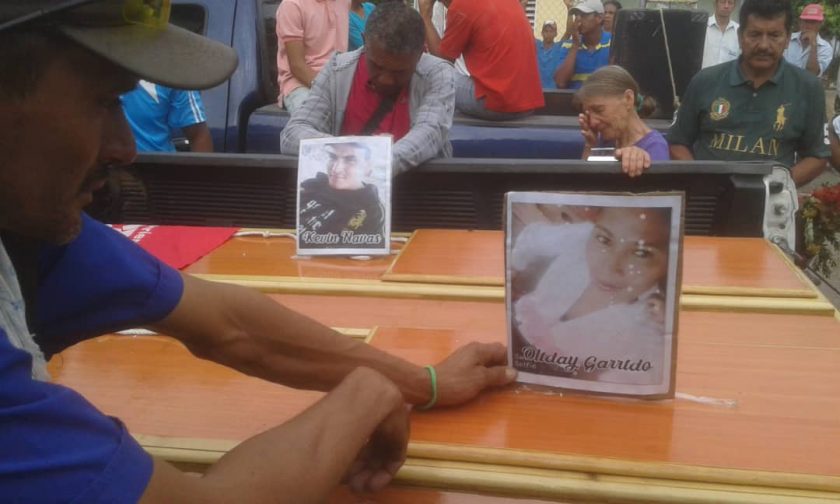
Caracas – Six activists from the grassroots Revolutionary Bolivar and Zamora Current (CRBZ) were assassinated in Barinas State on Saturday.
The victims, including one pregnant woman, were part of the so-called Hugo Chavez Popular Defense Brigades organized by the CRBZ in Barinas, Tachira, and other states regularly plagued by landowner violence against campesinos.
No information is yet known about the assailants, with the CRBZ claiming in a statement that they had “military training.”
“We want to denounce to the country and the world the murder of six comrades, presumably by mercenaries paid by right-wing landowners in the region,” the group declared, before adding that the six would remain present “in every battle and in every day of struggle.”
The incident reportedly took place on Saturday morning as the Chavista militants were repairing a motorbike in the Ticoporo Reserve, Barinas State.
The killings sparked immediate outrage and shows of solidarity from Venezuelan and international activists alike, with participants in the Sao Paulo Forum demanding justice.
“On behalf of the Patria Grande movement [in Argentina] I want to express my solidarity and repudiate this action of landowners who want to subjugate campesinos,” said Silvana Broggi during the meeting currently taking place in Caracas.
Chavista popular movements likewise voiced their solidarity and cry for justice in a Twitter storm, with the hashtag “no more Chavista killings” (#NoMásChavistasAsesinados) becoming the top trend in Venezuela on Monday evening.
For his part, National Constituent Assembly President Diosdado Cabello said that paramilitary violence in the countryside was not something new and demanded an investigation into the assassinations.
“We strongly condemn this violence and demand a thorough investigation to find the culprits,” the Chavista leader said on Sunday, vowing that the crimes would not go unpunished. The Attorney General’s Office has yet to issue a public statement, though the CICPC investigative police has appeared on scene to gather evidence.
The Venezuelan countryside has seen a recent increase in targeted killings of campesinos in the context of escalating disputes over land rights. Landowner violence was one of the issues driving the Admirable Campesino March in July 2018 which saw dozens of campesinos march over 400 kilometers on foot to demand a meeting with President Maduro in order to change the state’s rural policies. A high-profile televised meeting took place, and Maduro ordered the creation of commissions to resolve land disputes and end impunity for rural violence.
However, campesinos have repeatedly denounced that little to no progress has been made, with several new campesino murders taking place since then. The continued setbacks have led campesino activists to return to Caracas and set up a vigil at the Land Institute to demand answers from authorities.
According to campesino groups, since the inauguration of Venezuela’s revolutionary land reform law in 2001, over 300 small farmers have been murdered by hired guns in the employ of large landowners. While in some cases the assassins have been convicted of their crimes, impunity continues with respect to the role of landed elites financing the killings.
Venezuela blames nationwide blackouts on ‘electromagnetic attack’
RT | July 22, 2019
Massive power outages all across Venezuela were likely caused by an “electromagnetic attack,” the government of President Nicholas Maduro said, stressing that authorities are working to restore the service as soon as possible.
The blackout affected the entire nation, Minister of Communication and Information Jorge Rodríguez said on Monday evening, claiming that the power was knocked out by outside interference. The government has activated all the necessary protocols to provide safety for Venezuelans and work crews are already working to restore power.
Preliminary probe into the incident has suggested the “existence of an electromagnetic attack that sought to affect the hydroelectric generation system of Guayana, the main provider of this service in the country,” the minister told state channel VTV.
While authorities are struggling to resolve the crisis, the US-backed opposition leader Juan Guaido has used the power outage to once again attack his political opponent, accusing President Maduro of “destroying” the country’s electrical system.
In March, Venezuela suffered two major blackouts that sent the country into darkness for days. At the time, Caracas blamed it on cyberattacks on the Guri Hydroelectric generation and distribution system and accused the US-backed local opposition of sabotaging the power grid. Maduro also accused Washington of waging an “electricity war” to bring Guaido to power.
“US Causes Instability Anywhere It Sets Foot”
Al-Manar | July 20, 2019
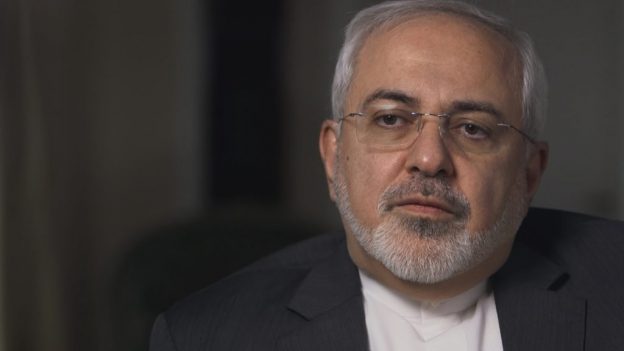
Iranian Foreign Minister Mohammad Javad Zarif said Saturday that the United States causes instability and insecurity everywhere in the world it sets foot, including the Persian Gulf and South America.
Iranian Foreign Minister Mohammad Javad Zarif arrived in the Venezuelan capital early Saturday after a six-day stay in New York.
Speaking to reporters upon arriving in Caracas, Zarif said that “anywhere the United States sets foot in, it causes instability there.”
“At the moment, the US is causing insecurity with its presence in the Persian Gulf, the Middle East, and also the South American region,” said Zarif.
He went on to add that, “I don’t know any place in the world where the US’s presence has brought stability.”
“Anywhere the US has set foot on, it led to pressure on the people and caused extremism and terrorism,” stressed the Iranian top diplomat.
While in Caracas, Zarif is slated to take part in the Ministerial Meeting of the Non-Aligned Movement (NAM) Coordinating Bureau (CoB) on 20-21 July under the theme: “Promotion and Consolidation of Peace through Respect for International Law.” He will also meet with a host of Venezuelan officials before making a visit to Nicaragua and Bolivia.
Featured Video
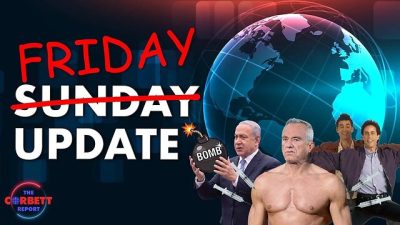
Racist Seinfeld Dances for Joy as Bibi Unveils His New Map
or go to
Aletho News Archives – Video-Images
TV Drama Review
Japanese drama projects Japan’s wartime atrocities onto Chinese characters

Global Times | October 25, 2026
By portraying Chinese characters as perpetrators of ruthless violence while casting Japanese Self-Defense Forces (SDF) intelligence operatives as defenders, the season 2 of the Japanese drama Vivant has recently drawn criticism from Chinese netizens, who argue that its depiction turns historical reality on its head while ignoring Japan’s wartime atrocities.
The TBS drama series – a spy suspense story in which an alleged unofficial intelligence unit of the SDF operates across the globe — has attracted a passionate fanbase. Its currently airing season 2 opened with a household rating of 18.8 percent, the highest for a TV drama this year, according toa commentary article by Japanese media Toyo Keizai.
What draws attention is the portrayal of the enemies in the series, the article noted. Scenes in which the Chinese organization subjects kidnapped members of the SDF unit to brutal torture are repeated with unrelenting intensity.
It is rare for Japanese TV dramas to explicitly portray a real-life country as the enemy, the article noted.
Japanese Prime Minister Sanae Takaichi also made a reference to the drama, saying that she has been recording Vivant and hopes to binge-watch it over the year-end and New Year holidays, according to Japanese media outlets.
China’s CCTV News report on Sunday revealed that the drama features scenes in which Chinese personnel cut off the fingers of and stab Japanese intelligence operatives in the abdomen. Such acts bear striking similarities to the torture inflicted on Chinese nationals by invading Japanese troops during the World War II.
The drama distorts the truth by attributing these atrocities to modern Chinese characters. Beneath the surface, it subtly glorifies Japan’s cross-border overseas operations, blurs the functional boundaries of the SDF and implicitly promotes an expansionist narrative, per CCTV News. … continue
Blog Roll
 Aletho News
- Iran FM Araghchi: “Hormuz Will No Longer Be the Same”
- EU facing trillion-euro debt hole while seeking more cash for Kiev
- How US, Europe, Persian Gulf states exhausted missile stockpiles, splurged billions to defend Israel
- Up in arms… Koreans reject U.S. empire’s plan to make South Korea the next Ukraine
- Iran, Turkey, Pakistan, Saudi Arabia could advance region-led security framework in Tehran: FM spox
- Netizens condemn Japanese drama for projecting Japan’s wartime atrocities onto Chinese characters
- Racist Seinfeld Dances for Joy as Bibi Unveils His New Map
- A West Bank War for Netanyahu’s Election Campaign, Could It Backfire?
- Yemen denounces European Parliament’s ‘hypocritical’ push to blacklist Ansarullah
- Qalibaf: UAE’s UN bid aims to ‘clear the runway’ for ‘Greater Israel’, whitewash genocide
- If Americans Knew
- An error has occurred; the feed is probably down. Try again later.
- No Tricks Zone
- Sudden Stratospheric Warming, Powerful El Niño Combination May Lead To Extreme Europe Cold, Energy Crisis!
- Two New Studies Find Thwaites Glacier Melt Cannot Be Driven By Human Activity Or A Warming Ocean
- E-Cars Reduce CO2 Emissions By Only 41% Compared To Internal Combustion Engine Vehicles
- Predictions Made By Renowned Climate Professor Over Past Decades Have Been Proven To Be Poor
- New Study Suggests Large Regions Of The Pacific Ocean Have Been Cooling For The Last 80 Years
- Germany’s Green Energy Debacle: High Energy Costs Force Kahla Porzellan to Close After 182 Years!
- New Study: 50 Years Of The Most Aggressive ‘Net Zero’ Policies Can Only Affect The Global Climate By 0.03°C
- US September “Heat” Was No Record…Many Records Set Decades Ago
- Latest European Green Energy Debacle; Portugal’s Largest Flagship Solar Park Insolvent!
- Green Energy Debacle: German Expert Professor Fritz Vahrenholt Warns Of Severe Economic And Social Consequences

