Newspeak at the Media Freedom Conference
Joint UK-Canada Event Littered With Insidious Undertones
By Kit Knightly | OffGuardian | July 16, 2019
OffGuardian already covered the Global Media Freedom Conference, our article Hypocrisy Taints UK’s Media Freedom Conference, was meant to be all there was to say. A quick note on the obvious hypocrisy of this event. But, in the writing, I started to see more than that. This event is actually… creepy.
Let’s just look back at one of the four “main themes” of this conference:
building trust in media and countering disinformation
“Countering disinformation”? Well,that’s just another word for censorship.
This is proven by their refusal to allow Sputnik or RT accreditation. They claim RT “spreads disinformation” and they “countered” that by barring them from attending.
“Building trust”? In the post-Blair world of PR newspeak, “building trust” is just another way of saying “making people believe us” (the word usage is actually interesting, building trust not earning trust).
The whole conference is shot through with this language that just feels… off.
Here is CNN’s Christiane Amanpour:
Our job is to be truthful, not neutral… we need to take a stand for the truth, and never to create a false moral or factual equivalence.”
Being “truthful not neutral” is one of Amanpour’s personal sayings, she obviously thinks it’s clever.
Of course, what it is is NewSpeak for “bias”.
Refusing to cover evidence of The White Helmets staging rescues, Israel arming ISIS or other inconvenient facts will be defended using this phrase – they will literally claim to only publish “the truth”, to get around impartiality… and then set about making up whatever “truth” is convenient.
Oh, and if you don’t know what “creating a false moral equivalence is”, here I’ll demonstrate:
MSM: Putin is bad for shutting down critical media.
OffG: But you’re supporting RT being banned and Wikileaks being shut down.
BBC: No. That’s not the same.
OffG: It seems the same.
BBC: It’s not. You’re creating a false moral equivalence.
Understand now? You “create a false moral equivalence” by pointing out mainstream media’s double standards.
Other ways you could mistakenly create a “false moral equivalence”:
- Bringing up Gaza when the media talk about racism.
- Mentioning Saudi Arabia when the media preach about gay rights.
- Referencing the US coup in Venezuela when the media work themselves into a froth over Russia’s “interference in our democracy”
- Talking about the invasion of Iraq. Ever.
- OR Pointing out that the BBC is state funded, just like RT.
These are all no-longer flagrant examples of the media’s double standards, and if you say they are, you’re “creating a false moral equivalence”… and the media won’t have to allow you (or anyone who agrees with you) air time or column inches to disagree.
Because they don’t have a duty to be neutral or show both sides, they only have a duty to tell “the truth”… as soon as the government has told them what that is.
Prepare to see both those phrases – or variations there of – littering editorials in the Guardian and the Huffington Post in the coming months. Along with people bemoaning how “fake news outlets abuse the notion of impartiality” by “being even handed between liars the truth tellers”. (I’ve been doing this site so long now, I have a Guardian-English dictionary in my head).
Equally dodgy-sounding buzz-phrases litter topics on the agenda.
“Eastern Europe and Central Asia: building an integrated support system for journalists facing hostile environments”, this means pumping money into NGOs to fund media that will criticize our “enemies” in areas of strategic importance. It means flooding money into the anti-government press in Hungary, or Iran or (of course), Russia. That is ALL it means.
I said in my earlier article I don’t know what “media sustainability” even means, but I feel I can take a guess. It means “save the government mouthpieces”.
The Guardian is struggling for money, all print media are, TV news is getting lower viewing figures all the time. “Building media sustainability” is code for “pumping public money into traditional media that props up the government” or maybe “getting people to like our propaganda”.
But the worst offender on the list is, without a doubt…
“Navigating Disinformation”
“Navigating Disinformation” was a 1 hour panel from the second day of the conference. You can watch it embedded above if you really feel the need. I already did, so you don’t have to.
The panel was chaired by Chrystia Freeland, the Canadian Foreign Minister. The members included the Latvian Foreign Minister, a representative of the US NGO Committee to Protect Journalists, and the Ukrainian Deputy Minister of Information
Have you guessed what “disinformation” they’re going to be talking about?
I’ll give you a clue: It begins with R.
Freeland, chairing the panel, kicks it off by claiming that “disinformation isn’t for any particular aim”.
This is a very common thing for establishment voices to repeat these days, which makes it all the more galling she seems to be pretending its is her original thought.
The reason they have to claim that “disinformation” doesn’t have a “specific aim” is very simple: They don’t know what they’re going to call “disinformation” yet.
They can’t afford to take a firm position, they need to keep their options open. They need to give themselves the ability to describe any single piece of information or political opinion as “disinformation.” Left or right. Foreign or domestic. “Disinformation” is a weaponised term that is only as potent as it is vague.
So, we’re one minute in, and all “navigating disinformation” has done is hand the State an excuse to ignore, or even criminalise, practically anything it wants to. Good start.
Interestingly, no one has actually said the word “Russia” at this point. They have talked about “malign actors” and “threats to democracy”, but not specifically Russia. It is SO ingrained in these people that “propaganda”= “Russian propaganda” that they don’t need to say it.
The idea that NATO as an entity, or the individual members thereof, could also use “disinformation” has not just been dismissed… it was literally never even contemplated.
Next Freeland turns to Edgars Rinkēvičs, her Latvian colleague, and jokes about always meeting at NATO functions. The Latvians know “more than most” about disinformation, she says.
Rinkēvičs says disinformation is nothing new, but that the methods of spreading it are changing… then immediately calls for regulation of social media.
Nobody disagrees.
Then he talks about the “illegal annexation of Crimea”, and claims the West should outlaw “paid propaganda” like RT and Sputnik.
Nobody disagrees.
Then he says that Latvia “protected” their elections from “interference” by “close cooperation between government agencies and social media companies”.
Everyone nods along.
If you don’t find this terrifying, you’re not paying attention. They don’t say it, they probably don’t even realise they mean it, but when they talk about “close cooperation with social media networks”, they mean government censorship of social media. When they say “protecting” their elections… they’re talking about rigging them.
It only gets worse.
The next step in the Latvian master plan is to bolster “traditional media”. The problems with traditional media, he says, are that journalists aren’t paid enough, and don’t keep up to date with all the “new tricks”.
His solution is to “promote financing” for traditional media, and to open more schools like the “Baltic Centre of Media Excellence”, which is apparently a totally real thing. It’s a training centre which teaches young journalists about “media literacy” and “critical thinking”.
You can read their depressingly predictable list of “donors” here.
I truly wish I was joking.
Next up is Courtney Radsch from CPJ – a US-backed NGO, who notionally “protect journalists”, but more accurately spread pro-US propaganda. (Their token effort to “defend” RT and Sputnik when they were barred from the conference was contemptible). She talks for a long time… without saying much at all. Her revolutionary idea is that disinformation could be countered if everyone told the truth. Inspiring.
Beata Balogova, Journalist and Editor from Slovakia, gets the ship back on course – immediately suggesting politicians should not endorse “propaganda” platforms. She shares an anecdote about “a prominent Slovakian politician” who gave exclusive interviews to a site that is “dubiously financed, we assume from Russia”.
They assume from Russia. Everyone nods. It’s like they don’t even hear themselves.
Then she moves on to Hungary.
Apparently, Orban has “created a propaganda machine” and produced “antisemitic George Soros posters”. No evidence is produced to back-up either of these claims. She thinks advertisers should be pressured into not giving money to “fake news sites”. She calls for “international pressure”, but never explains exactly what that means.
The stand-out maniac on this panel is Emine Dzhaparova, the Ukrainian First Deputy Minister of Information Policy. (She works for the Ministry of Information – nicknamed the Ministry of Truth, which was formed in 2014 to “counter lies about Ukraine”. Even The Guardian thought that sounded dodgy.)
She talks very fast and, without any sense of irony, spills out a story that shoots straight through “disinformation” and becomes “incoherent rambling”. She claims that Russian citizens are so brainwashed you’ll never be able to talk to them, and that Russian “cognitive influence” is “toxic… like radiation.”
Is this paranoid, quasi-xenophobic nonsense countered? No. Her fellow panelists nod and chuckle.
On top of that, she just lies. She lies over and over and over again.
She claims Russia is locking up Crimean Tartars “just for being muslims”, nobody questions her.
She says the war in Ukraine has killed 13,000 people, but doesn’t mention that her side is responsible for over 80% of civilian deaths.
She says only 30% of Crimeans voted in the referendum, and that they were “forced”. A fact not supported by any polls done by either side in the last four years, and any referenda held on the peninsula any time in the last last 30 year. It’s simply a lie.
Nobody asks her about the journalists killed in Ukraine since their glorious Maidan Revolution.
Nobody questions the fact that she works for something called the “Ministry of Information”.
Nobody does anything but nod and smile as the “countering disinformation” panel becomes just a platform for spreading total lies.
When everyone on the panel has had their ten minutes on the soapbox, Freeland asks for recommendations for countering this “threat” – here’s the list:
- Work to distinguish “free speech” from “propaganda”, when you find propaganda there must be a “strong reaction”.
- Pressure advertisers to abandon platforms who spread misinformation.
- Regulate social media.
- Educate journalists at special schools.
- Start up a “Ministry of Information” and have state run media that isn’t controlled, like in Ukraine.
This is the Global Conference on Media Freedom… and all these six people want to talk about is how to control what can be said, and who can say it.
They single only four countries out for criticism: Hungary, Nicaragua, Venezuela and Russia…. and Russia takes up easily 90% of that.
They mention only two media outlets by name: RT and Sputnik.
This wasn’t a panel on disinformation, it was a public attack forum – a month’s worth of 2 minutes of hate.
These aren’t just shills on this stage, they are solid gold idiots, brainwashed to the point of total delusion. They are the dangerous glassy eyes of a Deep State that never questions itself, never examines itself, and will do anything it wants, to anyone it wants… whilst happily patting itself on the back for its superior morality.
They don’t know, they don’t care. They’re true believers. Terrifyingly dead inside. Talking about state censorship and re-education camps under a big sign that says “Freedom”.
And that’s just one talk. Just one panel in a 2 day itinerary filled to the brim with similarly soul-dead servants of authority.
Truly, perfectly Orwellian.
Guaido Security Arrested for Selling Stolen Venezuelan Army Weapons
Telesur | July 13, 2019
Venezuelan Minister of Communication Jorge Rodriguez reports that two security guards of the self-declared interim president, Juan Guaido have been captured for trying to sell weapons stolen from the National Guard in the run up to Guaido’s failed coup d’état attempt of the government April 30.
At a press conference, Rodriguez presented “overwhelming” evidence of the direct involvement of Guaido in the theft of official weapons used in his failed overthrow of President Nicolas Maduro.
Security personnel of Guaido carried weapons during the April 30 attempted putsch, similar to the ones stolen the same day from the National Guard Park located in the Federal Legislative Palace.
Rodriguez reported that Erick Sanchez and Jason Parisi, in charge of security for the U.S.-backed opposition member, were carrying weapons similar to the ones stolen from the nation’s military.
The minister says the two were arrested while attempting to sell the arms for US$35,000. Along with the Sanchez and Parisi arrests, Eduardo Javier Garcia, cousin to Sanchez, was also taken into custody for aiding the failed transactions.
Investigators confiscated five AK-103 rifles with the serials matching those stolen from the National Guard Park in Caracas.
“This investigation continues its course and in the coming hours we will know more details,” said Rodriguez during the Saturday press conference.
“It can’t be that we are in a permanent dialogue toward peace (with Guaido) and it turns out those in his closest circle are in possession of weapons that belong to the Bolivarian Republic of Venezuela to protect the people, not to attack them,” asserted the communications director.
“Play clean or play fair” Rodriguez stated to the opposition that the Venezuelan government has been in talks with since late May, mediated by Norway, in order to come to accords and stabilize the nation.
In 2018, the opposition abandoned years-long dialogues between Maduro and opposition parties mediated by former Spanish Prime Minister Luis Rodriguez Zapatero, former Dominican Republic President Leonel Fernandez, former Panamanian head of state, Martin Torrijos.
Norway, Bachelet, and the Twilight of Guaido’s Insurrection
By Ociel Lopez | Venezuelanalysis | July 10, 2010
Guaido’s uprising is going through its terminal phrase. He does not yet appear to have reached his end as leader, as he still produces and consolidates an important consensus among the opposition. What has decisively failed is his attempt to form a government without elections with the backing of the hawks in Washington. In almost six months since his self-swearing in as “interim president,” it has become palpable that his governing is truly impossible. The coup de grace was delivered by Michelle Bachelet when she visited the National Assembly, of which he is president and a deputy. The UN high commissioner for human rights did not recognize him as president of the republic, but she did propose a roadmap for pressuring the Maduro government, which Guaido accepted even though it represents a deviation from Washington’s strategy.
The Trump administration invested a large part of its political and diplomatic capital in overthrowing Maduro, especially in the first six months of 2019. And it didn’t achieve it. Pence, Pompeo, Bolton, and Abrams squandered a valuable amount of time with disastrous results. Since talks began in Norway, the hawks have opted to wash their hands of the matter and leave Guaido to his own fate.
The fracture in the opposition deepens with every defeat. The faction of the opposition favored by the US government is stronger online than it is in the streets, where it grows weaker every day. Voluntad Popular (VP), Leopoldo Lopez and Juan Guaido’s minoritarian radical party with only 14 seats in the 165-seat legislature, was chosen by the hawks to lead a new offensive that has not only been defeated on its own terms, but VP has been accused of “appeasement” by its own radical sectors after promoting dialogue with the Maduro government under the auspices of Norway. As the Venezuelan popular saying goes, “they were left without the goat and without the leash.” That is, the much-anticipated invasion never came and the actors that could maneuver in the national political sphere, namely the large opposition parties, were displaced by those who imposed a media-driven politics that looks to foreign powers for solutions. And now what?
The anti-government march on July 5 demonstrated that the opposition now does not even mobilize the bases of its own parties. Looking at the social media feeds of the most radical and mobilized opposition currents, it’s clear that they blame Guaido for failing in his attempt to govern and for his inefficient endeavor to secure foreign military intervention. Also weighing heavy are the allegations of corruption on the part of his team in the provision of humanitarian aid, exposed by opposition media outlets.
From January of this year, when Guaido swore himself in, it was foreseeable that street mobilizations would not be enough to oust Maduro, not even those of January 23, whose widespread support was even evident in hardcore protests in some Caracas barrios. What was anticipated was some kind of direct action by the US armed forces, or those of a neighboring country, so that the escalation of the conflict in the media actually reached the national territory. The climax, which took place on February 23 around the attempted forced entry of humanitarian aid, quickly petered out. The same thing happened on April 30 with the coup attempt. They were very weak movements that drew Maduro and the armed forces closer together – the opposite of what was sought.
But the decline of Guaido does not mean a definitive victory for Chavismo. It can even debilitate it as we will see.
Bachelet’s report
The three-day visit to Venezuela by UN High Commissioner for Human Rights and former Chilean President Michelle Bachelet on June 19-21 and subsequent release of her report on July 5 can be read as a change of scene in the Venezuelan conflict.
During her stay, Bachelet met with President Maduro in the presidential palace and with Juan Guaido in the National Assembly. This may surprise us if we remember that since January over fifty foreign governments have recognized Guaido as “interim president,” although he has not been able to exercise any functions beyond naming “ambassadors.” Bachelet put an end to the farce and showed things as they really are, something which the international community has not dared to do: she removed the virtual throne from under Guaido and recognized Maduro as the only president.
Bachelet’s report effectively displaces the conflict to the political arena because it is accepted enthusiastically by the opposition, even though the document doesn’t repeat its mantra of the “end of the usurpation,” and is welcomed by Maduro, who made two important gestures: the release of 22 “political prisoners” and the rumored proposal for Bolivarian deputies to return to their seats in the National Assembly, which they had abandoned since the emergence of the National Constituent Assembly in August 2017. In this way, Maduro opens up the possibility of negotiation, in which the Norway experience can play a pivotal role.
The report presents interesting options for both parties in the conflict. For Maduro, it legitimates his refusal to recognize Guaido’s “interim presidency” and it sidelines Washington in the dispute for hegemony over the Venezuela question. For the opposition, which suffered another defeat and internal division following Bachelet’s recognition of Maduro, the report allows it to double down on its call for foreign military intervention. The radicals on either side have simultaneously launched a broadside of criticisms at the ex-president, but significant sectors in both camps have recognized the legitimacy of the report, which sets the table for Norway-mediated talks.
Chavismo in its trench
The elements of cohesion in Chavismo are more external than internal. Chavismo closes ranks when confronting an enemy force of the proportions of the governments of the US or Colombia, or when the opposition resorts to violence. Once the “Guaido effect” is exposed as an impotent act, the Maduro government is left standing without tangible opponents and begins to face a crisis situation in which it is itself completely helpless. That is when the seams in the institutional armor covering the government become visible, due to its inability to control an economy that is already liberalized.
What has also become apparent recently is the government’s lack of control over state security forces. Obviously, Chavismo resents having to confront situations like the death by alleged torture of Captain Acosta Arevalo on June 29, as well as the arrest of grassroots Bolivarian militant Jose Ramon Rodriguez on July 5. In the first case arrests have been made, and in the second, Ramon Rodriguez has been freed. However, the accusations of grave misconduct on the part of the security forces, detailed in the Bachelet Report, are a concern shared by some currents of Chavismo.
Other sectors, including the United Socialist Party of Venezuela, reject the Bachelet report. Even now Maduro has demonstrated – and Bachelet has recognized it – that he is making moves to set the stage for negotiations: is there movement towards a power-sharing agreement or rather tactical maneuvers to remain in power?
Regardless, it is undeniable that negotiations driven by Norway open the way for a scenario that can overcome the stalemate in the internal political game. A shift in political and diplomatic relations is needed in order to extricate Venezuela from its current economic quagmire, which is impacting the region.
Ociel Alí López is a Venezuelan researcher who has published numerous written and multimedia works. He is dedicated to analyzing Venezuelan society for several European and Latin American media outlets. He is a co-founder of alternative Venezuelan state television station Avila TV in 2006. He is the recipient of the CLACSO/ASDI researcher prize and the Britto Garcia literature award.
Why the US Puppet President of Venezuela is Toast

Photograph Source: The White House – Public Domain
By Roger Harris | CounterPunch | July 5, 2019
Even the corporate media are losing enthusiasm for the US government’s ploy to replace the democratically elected President Nicolás Maduro of Venezuela with the US-anointed security asset Juan Guaidó. Reuters reports in a July 1 article, “Disappointed Venezuelans lose patience with Guaidó as Maduro hangs on,” that the US-backed “military uprising” has “unraveled.” A critical reading of the article explains why.
Reuters correctly notes that “the 35-year old (Guaidó) had risen to prominence three months before,” though a little more background information would have been helpful. For instance, Guaidó was unknown to 81% of Venezuelans a little more than a week before he got a telephone call from US Vice President Pence telling him to declare himself interim president of Venezuela, which Guaidó dutifully did the following morning at a street rally flanked with US and Israeli flags. A member of a marginal far-right Venezuelan political party, Guaidó was not even in the top leadership of his own grouplet.
For background, Reuters tells the reader that President Maduro “took office in 2013 following the death of his political mentor, Hugo Chávez,” but fails to mention that Maduro took office via a democratic national election. Guaidó has never stood in a national election. He was elected to the National Assembly but became head of that body through a mechanism where the political parties in the legislature rotate which party’s representative occupies the office.
Reuters continues that after Maduro took office, he “has overseen an economic collapse that has left swaths of the once-wealthy country without reliable access to power, water, food, and medicines.” Not mentioned by Reuters is the economic war being waged against Venezuela by the US and its allies that has employed unilateral coercive measures – sanctions – responsible for taking the lives of some 40,000 people.
This illegal collective punishment of the Venezuelan people by the US government has diverted legitimate funds of the Venezuelan government. Reuters obliquely mentions “Guaidó has gained control of some of the Venezuelan assets in the United States.” In fact, the US government seized those assets, which would have gone to preventing the “economic collapse” that Reuters supposedly laments.
Reuters reports: “The opposition’s momentum has slowed since the April 30 uprising. Attendance at Guaidó’s public rallies has dropped and the opposition has held no major protests since then.” Reuters hints why Guaidó’s fortunes are eclipsing: “the opposition says it is…seeking to build a grassroots organization.” That is, the US surrogate does not have a meaningful grassroots presence.
This is further confirmed by Reuters’ admission that Guaidó’s organization is now “focused on expanding a network of Help and Freedom Committees…to organize at the local level – something the ruling Socialist Party has done successfully.” Reuters continues, “so far the committees have gotten little traction.” That is, Guaidó lacks significant organized popular support outside of Washington and its allies.
Guaidó visited Washington shortly before his self-appointment and subsequently toured a number of Latin American countries but has “only traveled to 11 of Venezuela’s 23 states,” according to Reuters. Guaidó’s handlers have directed him to “travel to at least five more this month to motivate his supporters.”
Recent polls cited by Reuters show support for Guaidó is falling. Reuters quotes a paid political consultant for Guaidó: “We can expect Guaidó’s popularity to continue to erode the longer he is not exercising power.”
President Maduro, according to Reuters, had waged a “crackdown on the opposition.” That is, the Venezuelan government has defended itself against US-backed assets who have actively engaged in attempts to violently overthrow the democratically elected government and assassinate key government and social movement leaders.
In the alternative universe of corporate media, which ignores the economic war being waged against Venezuela, Reuters bemoans that the “crackdown” on Guaidó’s agents has failed to receive “significant retaliation from the international community.” In reality, Venezuela has massively suffered from the US-orchestrated punishments for resisting reverting to the status of a client state.
While not consulting anyone associated with the elected government of Venezuela, Reuters gives full voice to an anonymous “US administration” official as is the practice of the corporate media. The US official states: “The United States continues to execute the president’s strategy of maximum pressure to achieve a peaceful transition to democracy in Venezuela.” Not mentioned is that the “military option” is a prominent part of the “peaceful transition”; deposing a democratically elected president is part of the “transition to democracy”; and “maximum pressure” is preventing vital foods and medicines from reaching Venezuela.
The anonymous US government official further claims, “Only Maduro wishes for the US to give up now.” Reuters does not question how incredibly circumscribed is the universe occupied by that official, which renders invisible the two-decade-old Bolivarian grassroots movement in Venezuela in support of their elected government and its international allies. The Venezuelans most adversely hurt by the US sanctions are those most militantly in support of their government.
Nor does Reuters question why in the US, with the conceit of a supposedly free press, the government is allowed to hide behind a cloak of anonymity. Reuters cites the names of a Venezuelan taxi driver, doctor, former police student, and teacher to give a patina of authenticity to the article but can’t name an official US government functionary who is quoted authoritatively.
Reuters reports Guaidó’s supporters “have demanded that Guaidó shift strategy and request a US-led military intervention.” So much for democracy! “We can’t get rid of Maduro with votes. It will have to be a violent exit.” Meanwhile, the polling firm Datanalisis, according to Reuters, tells us that less than 10% of Venezuelans support such an action.
In short, a critical reading between the lines of the Reuters article confirms that Washington has failed to cobble together a united opposition in Venezuela that is popular enough to win in the polls, so the alternative is violent regime-change supposedly in the name of “democracy.” The lesson that the Venezuelans themselves are the best agents of history to address their own destiny has yet to be learned by the world’s hegemon and its media apologists.
Bolton hails sanctions for ‘severing ties’ between Cuba & Venezuela
RT | July 4, 2019
US President Donald Trump’s national security hawk John Bolton has vowed to “sever ties” between Havana and Caracas with sanctions on oil and other exports after an Italian oil shipping firm folded under pressure.
The US State Department has lifted sanctions from the Italy-based PB Tankers oil shipping company, commending it for taking steps to “ensure that its vessels no longer were complicit in supporting the former Maduro regime.”
The company was sanctioned in April along with three others, accused by the US of aiding Maduro government by transporting oil from Venezuela, including to Cuba. The inclusion on the list came like a bolt out of the blue to PB Tankers, which said it was “shocked and concerned” by the development, while pledging to comply with the demands.
While the Italian firm caved in to the US’ browbeating, Washington slapped sanctions on Cubametales, a Cuban state-run company. In a statement on Wednesday, the State Department called it a “prime facilitator of oil imports from Venezuela” for its attempt to breach the US economic blockade.
Bolton apparently took pride in having bullied businesses into denying services to Venezuela, tweeting that the US “will continue to take actions” to end what he called an “oil for repression” scheme.
“We will continue to sever the ties between Cuba and Venezuela that contribute to repression,” he wrote.
Cuba has denounced the new sanctions as an illegal meddling attempt.
“The US has no right to impose unilateral measures on entities of Cuba or any other country trading with Venezuela,” Cuban Minister of Foreign Affairs Bruno Eduardo Rodríguez tweeted.
The Trump administration has been hell-bent on stamping out the close cooperation between Venezuela and Cuba, which along with Russia, China, Turkey and several other Latin American nations, took Maduro’s side in the ongoing political turmoil.
Washington has accused Havana of playing a “destabilizing” role in Latin America, and in Venezuela, in particular, hitting it with rounds of sanctions for refusing to abandon its major ally.
Bolton went as far as claiming the Venezuelan military would defect from Maduro to self-declared ‘interim president’ Juan Guaido if Cubans “let them do it.”
Bolton has never been shy about the US’ true intentions in Venezuela, openly encouraging regime change while claiming that Guaido enjoys “overwhelming public support” after the failed coup attempt, an assertion that did not age well considering that the stalemate between the Maduro government and the opposition is still ongoing.
Venezuelan Navy Captain Dies in State Custody, Maduro Orders Investigation
By Lucas Koerner | Venezuelanalysis | June 30, 2019
Caracas – Venezuelan President Nicolas Maduro has ordered a probe into the death of a retired navy captain in the custody of Venezuelan intelligence officials on Saturday.
Captain Rafael Acosta Arevalo, 49, was transferred to Dr. Vicente Salas Military Hospital where he died at approximately 1 am Saturday morning, his lawyer told Bloomberg.
According to a statement by Venezuela’s Defense Ministry, Acosta was presented before a military judge at Caracas’ Fort Tiuna military base on Friday when he reportedly fainted, prompting the judge to order his immediate transfer to the health facility. No further details have been made public at the time of writing.
However, the opposition has disputed the official account, claiming that the navy officer died as a result of toture.
Venezuelan Attorney Tamara Suju, who serves as self-proclaimed “Interim President” Juan Guaido’s envoy to the Czech Republic, took to Twitter, alleging that Acosta “arrived at court in a wheelchair, presenting grave signs of torture.” Her comments were echoed in a statement by Guaido’s office calling for an “independent international forensics team” to investigate the death.
Acosta, who retired from active service a decade ago, was arrested by Venezuela’s Military Counter-Intelligence Command (DGCIM) on Wednesday on charges of terrorism and sedition, in connection to a purported coup plot revealed by Communciations Minister Jorge Rodriguez that same day.
Rodriguez presented an allegedly intercepted video conference showing Acosta extensively discussing the coup plans with other alleged conspirators, which included seizing arms stored at the Central Bank before mounting an assault on Miraflores Palace in order to “eliminate target 1 and target 2,” referring to President Maduro and National Assembly President Diosdado Cabello. The retired navy captain described the assassination of the president and the Socialist Party’s number two as a “decisive, striking, mediatized and internationally noteworthy act” that would win over military officials still ambivalent about the coup.
In a statement Saturday, Venezuela’s Communications Ministry indicated President Maduro ordered a “thorough and exhaustive investigation” into the incident.
For its part, the Attorney General’s office likewise issued a declaration announcing that the 86th Caracas Metropolitan Area prosecutor, with a specialty in human rights, had been assigned to conduct an “independent, objective, and impartial” probe into the death.
In response to the incident, US Assistant Secretary of State for Western Hemisphere Affairs Kimberly Breier took to Twitter Sunday, condemning the death as “a grim reminder of how Maduro & his Cuban advisers are persecuting the military & National Assembly.”
Meanwhile, the EU’s spokesperson for foreign affairs, Maja Kocijancic, termed the case “a stark illustration of the arbitrary nature of the judicial system in the country” and called for a “full and independent investigation.”
FANB Warns that US Military Planes are Flying over Venezuelan Territory
Orinoco Tribune | June 21, 2019
The Comprehensive Aerospace Defense Command ( Codai ) of the Bolivarian National Armed Force (FANB) denounced that EP-3E and RC-135 aircrafts belonging to the United States Air Force have flown over Venezuelan coasts several times to carry out espionage actions and exploitative missions.
The information was disseminated by the military institution through its Twitter account on June 12, which also highlights that these overflights have intensified in 2019.
#Sabiasque El EP-3E Aries II es una aeronave de los EEUU para realizar misiones de exploración radioelectrónica? En el 2019 ha sido detectada en muchas ocasiones cerca de las costas de la RBV, siendo una amenaza a nuestra Soberanía #ElImperialismoExiste #TrumpHandsOffVenezuela pic.twitter.com/bx17KSlnMC
— CODAI (@CODAI_FANB) June 12, 2019
In March, the Minister of Popular Power for Defense, Vladimir Padrino López, denounced the incursion of a Boeing C17 ship of the same American military component that took off from the Hato base, located in Curaçao.
On that occasion, the crew of the aircraft made radio contact after their incursion. It was the second time that an American Air Force plane violated the space of the territorial sea that generates the Los Monjes archipelago in the Caribbean Sea.
The first time was in 2015 when a military aircraft of the DACH-8 type, equipped with an electro-optical system that allows the detection of thermal energy for the creation of images, flew over that same area.
Approximately since 2010, the FANB has detected the incursion of US aircraft without them having previously requested permission for their overflight.
Translated by JRE/EF
Source URL:
RELATED CONTENT:
Russia Says it Intercepted US/Swedish Spy Jets Over Baltic Sea
Here are the Exact Coordinates of the US Ship that Just Violated Venezuela’s Territory (Images)
Massive Embezzlement Scandal Threatens Juan Guaido’s Political Future
By Alexander Rubinstein – MintPress News – June 17, 2019
The political party of Juan Guaido — Voluntad Popular (Popular Will) — was never all that popular to begin with. The sixth largest political party in Venezuela, Popular Will is heavily financed by the United States Agency for International Development (USAID). Now, a recently exposed embezzlement scandal in Colombia risks to further alienate the party from the Venezuelan people.
What was supposed to be Guaido’s watershed moment has instead turned out to be a public-relations failure far worse than his quickly quelled attempted military coup, which MintPress News reported caused even the New York Times to describe Guaido as “deflated.”
What happened in Colombia appears to be so damning that not only is the Colombian intelligence service leaking documents exposing wrongdoing by Popular Will representatives appointed by Guaido, but the Organization of American States (OAS) — which is typically just as pro-opposition as the Colombian government — has called for an investigation.
In a tweet issued June 14 at 10:47 p.m. Venezuela time, Guaido called on his ambassador to Colombia — whom he had shut out of the aid event — to formally request an investigation by Colombian authorities, whose already-existing investigation is the reason the story came out in the first place. That was more than four hours after Secretary General of the OAS Luis Almagro called for an investigation that would clarify the “serious charges,” identify those responsible and effectuate accountability.
But Guaido had already been well aware of the charges, having dismissed his appointees who appear to be ringleaders of the embezzlement scheme. According to the report, he was contacted by the journalist who exposed the scandal 30 days before the story was published.
What happened in Cúcuta isn’t staying in Cúcuta
There’s barely a peep about the scandal in the Western press. A Google News search for “Juan Guaido scandal” and “Popular Will scandal” turned up nothing of relevance at the time of this article’s writing. But on Latin America social media, everyone is buzzing about it. American journalist Dan Cohen appears to be the first to highlight the scandal to an English-speaking audience.
It started with a request from Juan Guaido to billionaire investor and regime-change enthusiast Richard Branson.
The stated purpose of the concert was to help raise funds for humanitarian aid and spotlight the economic crisis. At least that’s how it was billed to Americans. To Venezuela’s upper class, it was touted as the “trendiest concert of the decade.”
It was to be a congregation of the elite with the ostensible purpose of raising funds for the poor. One director of Popular Will told Vice News in 2014 that “the bulk of the opposition protesters are from the middle and upper classes and are led by Venezuela’s elite.” The class character of the opposition has not changed since.
Meanwhile, USAID was to coordinate the delivery of aid alongside Guaido; and Elliot Abrams, who in Guatemala used “humanitarian aid” as cover for the delivery of weapons into the country, is running the White House’s policies toward Venezuela. And so the aid was widely criticized, even by the International Red Cross, as politicized. By others, it was called a Trojan Horse.
The concert was held in Colombia across a bridge linking the country to Venezuela. International media had claimed Venezuelan President Nicholas Maduro had the bridge shut down to prevent the delivery of aid, and Secretary of State Mike Pompeo demanded that the “Maduro regime must LET THE AID REACH THE STARVING PEOPLE.” But the bridge, in fact, has never been opened for use.
Nonetheless, Richard Branson sought to raise $100 million and promised that Guiado “will be coming to the other side of the bridge with maybe a million of his supporters.” In the end, it was a little more than 200,000 who came.
Meanwhile, Guaido told the President of Colombia, Ivan Duque, that more than 1,450 soldiers had defected from the military to join them. But that figure was also inflated. A new report by PanAmPress, a Miami-based libertarian newspaper, reveals that it was just 700. “You can count on your fingers the number of decent soldiers who are there,” one local told the outlet.
Despite the low turnout, organizers lived it up in Colombia. Representatives from Popular Will, which rejects the socialist leadership of Venezuela, found themselves living like socialites across the border.
There were earlier signs of excess and debauchery. One Popular Will representative was hospitalized and his assistant found dead after overdosing while taking drugs with prostitutes, although Senator Marco Rubio (R-FL) claims they were poisoned.b
The inflated soldier count meant more funds for the organizers, who were charged with putting them up in hotel rooms. Guaido’s “army was small but at this point it had left a very bad impression in Cucuta. Prostitutes, alcohol, and violence. They demanded and demanded,” the report said.
They also left a bad taste in the mouth of the authorities. The Colombian government was supposed to pay for some of the hotels, the UN High Commissioner for Refugees was to cover the costs of others, while Guaido’s people were only going to pony up the cash for two of the seven hotels.
But Popular Will never paid, leaving one hotel with a debt of $20,000. When the situation became completely untenable, the hotel kicked 65 soldiers and their families to the curb. One soldier anonymously told the outlet that the party was not taking care of their financial needs as promised.
Guaido’s ambassador to Colombia took money out of his own pocket to try to resolve the dispute, but the check bounced.
The responsibility of taking care of the needs of the defectors went to Popular Will militants Rossana Barrera and Kevin Rojas, as decreed by Juan Guaido in a signed statement. They were also charged with overseeing the humanitarian aid.
Barrera is the sister-in-law of Popular Will member of Congress Sergio Vargara, Guaido’s right-hand man. She and Rojas were managing all the funds.
But the pair started to live well outside their means, a Colombian intelligence source told the outlet. “They gave me all the evidence,” writes PanAmPress reporter Orlando Avendano. “Receipts that show excesses, some strangely from different check books, signed the same day but with identical writing styles.”
Rojas and Berrera were spending nearly a thousand dollars at a time in the hotels and nightclubs. Similar amounts were spent at times on luxurious dinners and fancy drinks. They went on clothes shopping sprees at high-end retail outlets in the capital. They reportedly overcharged the fund on vehicle rentals and the hotels, making off with the extra cash. Berrera even told Popular Will that she was paying for all seven hotels, not just the two. And they provided Guaido with the fake figure of more than 1,450 military defectors that needed accommodation.
In order to keep the funds flowing, Rojas and Berrera pitched a benefit dinner for the soldiers to Guiado’s embassy in Colombia. But when the embassy refused to participate, Berrera created a fake email address posing as a representative of the embassy, sending invitations to Israeli and U.S. diplomats. They canceled the event after Guaido’s embassy grew wise to the scheme and alerted those invited.
“The whole government of Colombia knew about it: the intelligence community, the presidency, and the foreign ministry,” writes PanAmPress, calling it an “open secret” by the time Guaido dismissed the pair. But that was after Guaido had been defending them staunchly, trying to avoid a firing by transferring responsibilities to the embassy.
Berrera was called to the embassy for a financial audit, represented by Luis Florido, a founding member of Popular Will. She turned in just a fraction of the records uncovered by Colombian intelligence, accounting for only $100,000 in expenditures. “The [real] amount is large,” the outlet reports, citing an intelligence agent who says far more was blown.
Meanwhile, “at least 60 percent of the food donated” by foreign governments “was damaged.”
“The food is rotten, they tell me,” the PanAmPress reporter said, adding that he was shown photographs. “They don’t know how to deal with it without causing a scandal. I suppose they will burn it.”
It isn’t yet known exactly how much was embezzled by Popular Will, but it is likely the truth will come out in due time, and more investigations are likely underway. On Monday, Venezuelan defectors said they will hold a press conference in Cucuta, showcasing more corruption by Popular Will. For now, however, the fallout remains to be seen.
One thing is certain: the scandal threatens to end Juan Guaido’s 15 minutes of fame. The de facto opposition leader had little name recognition inside Venezuela and never won a political position with more than 100,000 votes behind him. But the overnight sensation never had a lengthy life expectancy anyway.
Though he received so few votes (Venezuela’s population is nearly 32 million), Guaido became the president of the National Assembly because the body is controlled by a coalition of opposition groups, despite President Nicolas Maduro’s PSUV Party being the largest in the country. That was in January, and the length of the term lasts only one year. In 2015, the opposition coalition decided that after each term, the seat would be rotated to a representative of a different opposition party. While there is no law barring Guaido from being appointed president of the National Assembly again, tradition runs counter to it and another party may want to seize on a chance to get into the limelight.
Supporters of the coup — and Guaido’s self-declaration as interim president — claim that Maduro is derelict of his duties, which justifies a transition of presidential power according to the constitution. But the article that allows for such a transition in certain cases stipulates that ”a new election by universal suffrage and direct ballot shall be held within 30 consecutive days.”
To date, Guaido has run 145 days past his deadline to have elections held, and the opposition has made it clear they are not willing to accept new elections if Maduro runs.
This, of course, makes little dent in Guaido’s legitimacy in the eyes of the U.S. and other countries that have recognized his presidency. U.S. allies in Latin America have shown over the past few years that they have little regard for the sanctity of their constitutions. In 2017, a U.S.-backed candidate in Honduras, Juan Orlando Hernandez, ran for re-election in explicit violation of that country’s constitution and only wound up winning through fraud. Last week, Ecuador made the decision to allow the U.S. military to operate from an airfield in the Galapagos Islands despite a constitutional provision stating that the “establishment of foreign military bases or foreign facilities for military purposes shall not be allowed.”
Alexander Rubinstein is a staff writer for MintPress News based in Washington, DC. He reports on police, prisons and protests in the United States and the United States’ policing of the world. He previously reported for RT and Sputnik News.
Ottawa hires hit man to overthrow Venezuelan government
By Yves Engler · June 17, 2019

Allan Culham
Meet the hired gun Ottawa is using to overthrow the Venezuelan government.
The brazenness of Ottawa’s intervention in the South American country’s affairs is remarkable. Recently Global Affairs Canada tendered a contract for an individual to coordinate its bid to oust President Nicolás Maduro. According to buyandsell.gc.ca, the Special Advisor on Venezuela needs to be able to:
“Use your network of contacts to advocate for expanded support to pressure the illegitimate government to return constitutional order.
“Use your network of civil society contacts on the ground in Venezuela to advance priority issues (as identified by civil society/Government of Canada).
Must have valid Government of Canada personnel TOP SECRET security clearance.”
The “Proposed Contractor” is Allan Culham who has been Special Advisor on Venezuela since the fall of 2017. But, the government is required to post the $200,000 contract to coordinate Canada’s effort to overthrow the Maduro government.
Culham is a former Canadian ambassador to Venezuela, El Salvador, Guatemala and the Organization of American States. During his time as ambassador to Venezuela from 2002 to 2005 Culham was hostile to Hugo Chavez’s government. According to a WikiLeaks publication of US diplomatic messages, “Canadian Ambassador Culham expressed surprise at the tone of Chavez’s statements during his weekly television and radio show ‘Hello President’ on February 15 [2004]. Culham observed that Chavez’s rhetoric was as tough as he had ever heard him. ‘He sounded like a bully,’ said Culham, more intransigent and more aggressive.”
The US cable quotes Culham criticizing the national electoral council and speaking positively about the group overseeing a presidential recall referendum targeting Chavez. “Culham added that Sumate is impressive, transparent, and run entirely by volunteers”, it noted. The name of then head of Súmate, Maria Corina Machado, was on a list of people who endorsed the April 2002 military coup against Chavez, for which she faced charges of treason. She denied signing the now-infamous Carmona Decree that dissolved the National Assembly and Supreme Court and suspended the elected government, attorney general, comptroller general, and governors as well as mayors elected during Chavez’s administration. It also annulled land reforms and reversed increases in royalties paid by oil companies.
After retiring from the civil service in 2015 Culham described his affinity for another leading hard-line opposition leader. Canada’s current Special Advisor on Venezuela wrote, “I met [Leopoldo] López when he was the mayor of the Caracas municipality of Chacao where the Canadian Embassy is located. He too became a good friend and a useful contact in trying to understand the many political realities of Venezuela.” But, López also endorsed the failed 2002 coup against Chavez and was convicted of inciting violence during the 2014 “guarimbas” protests that sought to oust Maduro. Forty-three Venezuelans died, hundreds were hurt and a great deal of property was damaged during the “guarimbas” protests. Lopez was also a key organizer of the recent plan to anoint the marginal opposition legislator Juan Guaidó interim president.
In his role as Canada’s ambassador to the OAS Culham repeatedly took positions viewed as hostile by the Chavez/Maduro governments. When Chavez fell gravely ill in 2013, he proposed the OAS send a mission to study the situation, which then Vice-president Maduro described as a “miserable” intervention in the country’s affairs. Culham’s comments on the 2014 “guarimbas” protests and support for Machado speaking at the OAS were also unpopular with Caracas.
At the OAS Culham criticized other left-of-centre governments. Culham blamed elected President Rafael Correa for supposedly closing “democratic space” in Ecuador, not long after a failed coup attempt in 2010. When describing the Honduran military’s overthrow of social democratic president Manuel Zelaya in 2009 Culham refused to employ the term coup and instead described it as a “political crisis”.
In June 2012, the left-leaning president of Paraguay, Fernando Lugo, was ousted in what some called an “institutional coup”. Upset with Lugo for disrupting 61-years of one-party rule, Paraguay’s ruling class claimed he was responsible for a murky incident that left 17 peasants and police dead and the senate voted to impeach the president. The vast majority of countries in the hemisphere refused to recognize the new government. The Union of South American Nations (UNASUR) suspended Paraguay’s membership after Lugo’s ouster, as did the MERCOSUR trading bloc. A week after the coup Culham participated in an OAS mission that many member countries opposed. Largely designed to undermine those countries calling for Paraguay’s suspension from the OAS, delegates from the US, Canada, Haiti, Honduras and Mexico traveled to Paraguay to investigate Lugo’s removal from office. The delegation concluded that the OAS should not suspend Paraguay, which displeased many South American countries.
Four years later Culham still blamed Lugo for his ouster. He wrote: “President Lugo was removed from office for ‘dereliction and abandonment of duty’ in the face of rising violence and street protests (that his government was itself instigating through his inflammatory rhetoric) over the issue of land rights. Violence in both the countryside and the streets of Asuncion threatened to engulf Paraguay’s already fragile democratic institutions. Lugo’s impeachment and removal from office by the Paraguayan Congress, later ratified by the Supreme Court, launched a firestorm of protest and outrage amongst the presidents of Paraguay’s neighbours. Presidents Rousseff of Brazil, Hugo Chavez of Venezuela and Cristina Kirchner of Argentina, were the chief defenders of Lugo’s right to remain in office.”
After retiring from the civil service Culham became more candid about his hostility to those trying to overcome extreme power imbalances in the hemisphere, decrying “the nationalist, bombastic and populist rhetoric that many leaders of Latin America have used to great effect over the last 15 years.” For Culham, “the Bolivarian Alliance … specialized in sowing its own divisive ideology and its hopes for a revolutionary ‘class struggle’ across the hemisphere.”
Culham praised the defeat of Cristina Kirchner in Argentina and Dilma Rousseff Brazil.
In a 2015 piece titled “So long, Kirchners” he wrote, “the Kirchner era in Argentine politics and economics is thankfully coming to an end.” (Kirchner is the front runner in the upcoming election.) The next year Culham criticized Brazilian President Dilma Rousseff’s bid to have UNASUR challenge her impeachment, which he celebrated as “a sign of change in Latin America”.
Culham denounced regional integration efforts. In a long February 2016 Senate foreign affairs committee discussion of Argentina, he denounced diplomatic forums set up by Brazil, Ecuador, Bolivia, Argentina, Venezuela and others to break from US domination of the region. “Since I’m no longer a civil servant”, Culham stated, “I will say that CELAC [The Community of Latin American and Caribbean States] is not a positive organization within the Americas. Mainly because it’s built on the principle of exclusion. It purposefully excludes Canada and United States. It was the product of President Chavez and the Chavista Bolivarian revolution.” Every single country in the hemisphere except for Canada and the US were members of CELAC.
Culham criticized left-wing governments position at the US dominated OAS. Culham bemoaned the “negative influence ALBA [Bolivarian Alliance for the Peoples of our America] countries have brought to the OAS” and said Argentina “often sided with Bolivarian revolution members” in their “negative agenda” at the OAS, which he called “very close to my heart”.
In his comments to the Senate committee Culham criticized Kirchner for failing to pay the full price to US “vulture funds”, which bought up the country’s debt at a steep discount after it defaulted in 2001. He described Kirchner’s refusal to bow down to highly predatory hedge funds as a threat to the “Toronto Stock Exchange” and labeled a Scotia Bank claim from the 2001 financial crisis a “bilateral irritant” for Canada.
Canadian taxpayers are paying a hardline pro-corporate, pro-Washington, former diplomat hundreds of thousands of dollars to coordinate the Liberal government’s bid to oust Venezuela’s government. Surely, there is someone in the House of Commons willing to inquire about Canada’s Elliot Abrams?
No new defense contracts with Venezuela, Bolton’s words are ‘fiction’ – Russia’s envoy
RT | June 16, 2019
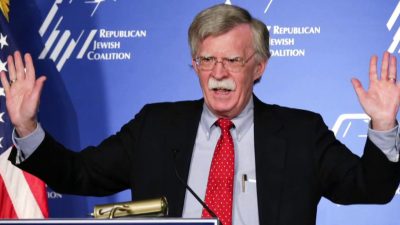 Moscow did not sign any new contracts with Caracas recently, Russia’s Ambassador to Venezuela, Vladimir Zaemsky said, dismissing the Sunday claim by the US National Security Advisor John Bolton.
Bolton claimed on Twitter that Venezuela’s President Nicolas Maduro “grossly mismanaged Venezuela’s resources” and that he inked a new $209-million defense contract with Russia in May, while “hundreds of thousands of Venezuelans went hungry.”
“This is another fiction, which Bolton apparently needs to maintain the illusion that Venezuela is an imaginary threat, and Russia, of course, is to blame,” Zaemsky said.
The US has repeatedly urged Moscow to “get out” of Venezuela and stop military cooperation with the country. Russia, however, rejected such threats, stating that the cooperation with Caracas has been going on for years, and is only set to expand.
‘We need points!’ US must invade Venezuela to scare Iran & N. Korea, Graham claims
RT | June 15, 2019
Sen. Lindsey Graham has suggested President Trump “put military force on the table” by invading Venezuela (and possibly Cuba) in order to scare North Korea and Iran into doing what they’re told. What could possibly go wrong?
“Give Cuba an ultimatum – without Cuba, Maduro doesn’t last one day – tell Cuba to get out of Venezuela. Do what Reagan did in Grenada – put military force on the table!” Graham told a Fox News host, going from zero to invasion in ten seconds flat in response to a question about how Trump should handle his foreign conflicts.
“We need points on the board,” the South Carolina senator insisted. “Start with your own backyard… Fix Venezuela and everybody else will know you’re serious.” North Korea and Iran, he implied, would fall right into line after Venezuela was put in its place.
While Graham paid lip service to the president’s non-military accomplishments, reluctantly congratulating him on slowing down North Korea’s nuclear ambitions, his advice didn’t include much by way of diplomacy: “When it comes to Rocketman, letters don’t matter anymore to me, it’s performance.” Graham notably called for Trump to “end the nuclear threat” mere hours after the president’s Hanoi summit with the North Korean leader collapsed.
Graham’s Monroe-doctrine-on-steroids patter isn’t exactly unfamiliar to those who’ve been following his bellicose ravings – the Republican senator dropped a Grenada reference just last month as Venezuelan President Nicolas Maduro prepared to meet his US-backed would-be replacement Juan Guaido in Oslo for negotiations, perhaps seeing his chance for a war in South America slipping away.
It’s easy to see why Graham would take such a fond view of Reagan’s bullheaded 1983 Grenada invasion. While it was universally condemned – the UN deemed it a “flagrant violation of international law” by a vote of 108 to 9, and even UK PM Margaret Thatcher privately disapproved (though she backed her ally in public) – Americans supported the invasion, having been convinced via a well-orchestrated propaganda campaign that a few hundred American medical students on the island were in mortal danger under the island’s new government.
Reagan hoped the neat and tidy four-day invasion would shore up Americans’ faith in their own military, which had been on a steady downhill slide since Vietnam, and Graham appears to believe the US would similarly receive a morale boost from Venezuela, despite the obvious differences in population and military power.
Refreshing the Dossier: New Report Portrays Venezuela as a Criminal Organization
Mision Verdad | June 3, 2019
The Center for International and Strategic Studies (CSIS, its acronym in English) on May 26 in Washington DC presented a report entitled The Last Defense of Maduro: The Survival of Venezuela through the Bolivarian Joint Criminal Enterprise, written by Douglas Farah and Caitlyn Yates, who are part of IBI Consultants, LLC and are “visiting fellows” of the National Defense University (INSS).
The event consisted in the presentation of the document and in a subsequent discussion with a panel composed of Farah himself, José Cárdenas (former assistant secretary for Latin America and the Caribbean of USAID and director of think tank Vision Americas), among others, and moderated by Venezuelan Moisés Rendón (Associate Director for CSIS Americas), known for his active role in the siege of the Venezuelan embassy in Washington, between April and May.
The CSIS, of unquestionable neo-conservative tendency can be remembered in recent times for hosting a discussion and round table (in Washington DC a few weeks ago) evaluating the possibility of an invasion of Venezuela.
There are clear indications to consider the entire performance (the preparation of the report and its institutional presentation) as a new information operation, a multipurpose intelligence action.
DETAILS AND SHADOWS OF THE REPORT
According to a review by IBI Consultants, Farah is a national security consultant and analyst who worked for nine months with the Intelligence Study Consortium, studying armed groups and intelligence reform, during the past two decades, a foreign correspondent and investigative journalist for the Washington Post and other publications, covering Latin America and West Africa.”
He is also one of the “specialists” consulted to highlight trends around the link between Hezbollah and Latin America or why Bolivia is supposedly a narco-state.
IBI Consultants is what is known as a private intelligence firm, which contracts directly or indirectly with governments and corporations linked to armed or political conflicts of medium and high intensity.
This purported investigation, although in its initial statement reaffirms that “it does not necessarily represent the position of the National Defense University, the Department of Defense, or any other body of the US government,” it is logical to think that the Trump Administration has used this firm to justify the next step of the sanctions cycle of 2019: designate the government of Nicolás Maduro as a “transnational criminal organization” or the inclusion of the country in the list of states that sponsor terrorism. Two turns of the screw.
Farah and Yates affirm that “the alliance of the Bolivarian states (ALBA) together with the FARC has merged into what we define as the Bolivarian Joint Criminal Enterprise.”
In this endeavor they unite several actors who are linked by the confrontation with the United States, specifically the guerrillas (inspired by the Cuban doctrine of asymmetric warfare) of the Farabundo Martí Front and the Sandinista Front, which later came to power in El Salvador and Nicaragua respectively, the former guerrilla of FARC (accused of drug trafficking since the 1980s by the US and Colombian authorities) and Venezuela under the governments of Hugo Chávez and Nicolás Maduro.
The report classifies as “criminal acts” actions that have not been proven and that in the first phase of the text does not lead to any specific fact. They take as a basis, for example, an accusation about PDVSA’s diversion of money by the District Attorney’s Office of the Southern District of Florida, in an attempt to project that this accusation corresponds to a plot related to terrorist acts and other crimes that place at risk the security of the Western Hemisphere. A propaganda maneuver consisting of half-truths, deceptive links and misinformation about the scope of the investigation of the Prosecutor’s Office of the Southern District of Florida.
Elsewhere it says that “the financial sum of these criminal acts is not known exactly, but a recent investigation conducted by a consortium of Latin American journalists found that Venezuela diverted US $ 28 billion from PDVSA, we have located at least US $ 10 billion in funds linked to Venezuela that moved between 2007 and 2018. ”
On the one hand, IBI Consultants affirms that it has made findings of funds, without any evidence, but on the other, it establishes a justification base for the United States government to extend the radius of confiscations and looting against Venezuelan assets.
Similarly, they try to convince that “in several oil subsidiaries of the region, through its branch PDV Caribe”, and the legitimate movements of funds made by PDVSA through that subsidiary, constitute an illegality. They condemn the agreements of PDVSA with the ALBA organization (specifically with the governments of Nicaragua and El Salvador) and show that the profits that come from this agreement represent “illicit funds”. Again, the report does not show evidence to support this claim.
Relying on press reports and interviews that can not be verified or contrasted through public sources, the report argues that from the company Alba Petróleo and Albanisa (Nicaragua) resources were diverted to tax havens, generating facade companies through frontmen in these countries
In this way, Douglas Farrah and Caitlyn Yates bet on the credibility of IBI Consultants to lie about Venezuela. They pay themselves and pocket the change.
Likewise, they center their accusations on the ALBA agreement and Nicaragua, countries that were declared by John Bolton as the “troika of evil”, specifically on Venezuela, Cuba and Nicaragua as targets of the unconventional international war being carried out by the Trump Administration, with the purpose of undermining the ALBA alternative within the framework of international relations in the Western Hemisphere.
The report places special emphasis on the figure of the Venezuelan businessman in the media and insurance branch, Raúl Gorrín. According to the text, “it is estimated that this scheme would have laundered between US $ 1.2 and 2.4 billion, using the US financial system, over four years”. Gorrín’s participation in this scheme would total approximately US $ 159 million”.
Farrah and Yates are not only (deliberately) inaccurate when it comes to handling data and accusations, but they also try to link Raúl Gorrín with the Venezuelan government. The report does not show this relationship that it insists on projecting, but only in the reference and the aprioristic sentence.
In addition, the authors use press reports and Bloomberg reports to construct a plot where, supposedly, the Venezuelan government would be in a relationship with the Kaloti Suriname Mint House company, in which not only does it not prove that this is true, but it also endorses criminal charges for the president of Suriname, Desi Bouterse, relying on biased reports from digital media.
On that same topic, “given that Venezuelan Central Bank gold reserves grew by 11 tons in 2018, despite the massive sale underway, everything suggests that a significant amount of merchandise was obtained illegally by the dissident groups of the FARC and the ELN”. Although there is no proof that this is the case, or that the aforementioned Colombian guerrilla groups are linked to the country’s gold activities, the report passes as unobjectionable truth what is a partial and biased opinion, impossible to verify or contrast, on the part of the “researchers“.
They accuse the Venezuelan government of laundering funds through “banco a banco” and with “fake infrastructure projects.” However, they emphasize, in the first part, that they do not have consistent information that supports their complaints.
Finally, the report attempts to link the deprivation of Venezuelan society in access to medicines, among other variables that affect the full development of their human rights, with the set of data and biased information they present throughout the purported investigation. In this sense, it tries to project the Venezuelan government as a “criminal state”, while it whitens and omits the blockade via sanctions as the most important factor in the violation of the human rights of the Venezuelan population.
In this sense, the positioning of the Venezuelan government as a “criminal state” or “joint criminal enterprise” is inconsistent. Venezuela is the victim of a high voltage operation against its economy, political system and national stability, so it seems illogical that a state victim of these hybrid war operations can be classified as a “criminal state”.
The report concludes that the result of this process of structuring the Bolivarian Joint Criminal Enterprise “is a complex criminal operation that undermines the rule of law, democratic governance and US alliances throughout the Western Hemisphere.”
It is worth mentioning and highlighting in extenso the second paragraph of the three that make up the conclusion:
“The Bolivarian structure has proven to be adaptable and resilient, with multiple redundant capacities, operatively, when one of the facets of the criminal network is under pressure, the Bolivarian Joint Criminal Enterprise is able to move its operations to new areas or find new allies, in general, by nurturing different strengths and connections of the shared history and the common objectives of the Enterprise, the US government has recently made a more unified and holistic effort to confront these criminal actors, offering significant results. The efforts to channel the funds that flow from PDVSA and the Bolivarian banking structure to the legitimately recognized Guaidó government – and out of the hands of the Maduro regime – are innovative and necessary as the former head of the Southern Command, Admiral James Stavridis, said: ‘A network is needed to fight a network’ “.
The report ends highlighting the need to confront the “Bolivarian structure” in a joint manner combining “resources and authorities … to face the multiple nodes of the Enterprise”.
But these combined actions between Defense, Treasury and State, for example, have already become evident in the maneuvers against Venezuela. However, the authors insist: “Now that the ideological impulses of the Bolivarian Revolution have been widely contested, this is an opportunity for the United States to boldly confront the region and confront the scope and complexity that this criminal enterprise encompasses.”
FINAL CONSIDERATIONS
- The multi-purpose: the structure of the report seeks to justify some categories that cover the criminal / judicial as the moral / informative. In the first case it offers an express characterization that would seek to move the next steps of the US power to fulfill the objective of “resolving the Venezuelan issue”, no longer as a problem within the framework of international legislation, forcing its discussion and resolution as something of an ordinary legal case (within the US system) closing the treatment of Venezuela as a domestic issue, returning to track the “unusual and extraordinary threat.” The Noriega method.
- In the plane here called “moral / informative” the distribution apparatus of the fake news against Venezuela is oxygenated, now moving the justification of the intervention and control over the story (which has suffered notable blows especially after 30A, preventing consolidation of the informational fence) to a moral issue. From the same logic, morality would also supplant the mediocre success of the attempt to sustain sanctions and the blockade as something legitimate and protected in a high cause. In that direction, it also works as a damage control.
- To exhibit the method more than the content: these kind of information aggressions are designed fundamentally so that it is difficult to take them to argumentation, of the ideas and their sustenance. Technically, it recalls the Gish Galop a lot, a specific tactic of debate that seeks to saturate the debate space with seemingly related particles of discourse that prevent a direct confrontation, and that, in the arena of discussion, seeks to win by attrition. Therefore, rather than focusing directly on the content, it is convenient to approach it from the use of the forms: how it is put together, what is the benefit in saying it (sources, data treatment, political orientation and / or interested in them), at what time it is said, who reacts and finally who wins with this operation. It can not be lost to sight, already under the reflexive logic of the intelligence services, that this set of elements produces the effect of plausible denial, the CIA’s motto: “We can not deny or confirm this information”.
- Deactivate the sources of enunciation: along with what was said about the meeting in early April promoted by the CSIS on a possible military invasion in Venezuela, we suggest evaluating the possibility of legal actions against these entities and their authors, which establish a line of defense elementary in the matter of false and delicate accusations made by private entities. This, within the American justice system itself, could have a precedent among its main variables.
- This type of accusation is not new, made, in addition, by the usual [actors]. If we take the case of Senator Marco Rubio, his marked insistence on the hashtag #MaduroCrimeFamily to refer to the president and the government in general, especially as of January 23 of the current year and the Guaidó cycle, is best seen in context from where it is coming to give form to the concept, and how now it aspires to fill the void that, by itself, represents the verbiage tweeted by Rubio.
- This maneuver reveals two elements to consider: 1) the degree of proactivity of a specific ideological sector with projections within the executive and operational power regarding the case of Venezuela (the Bolton-Pompeo-Pence-Rubio quartet) that needs to further accentuate the imperative of direct and expeditious intervention (pressing against the inertia and the vagaries of its president?), and 2) in addition to that process, the establishment of a new category at the same time “judicial” and “moral” (in the neoconservative key) to move, as we said, the penal institutions against a “mafia and corrupt” structure, and in its media projection to insert the concept as a “mobilizing” idea that provides another degree of encouragement to a regime change operation that has not reached its objectives in the short and medium term.
Featured Video
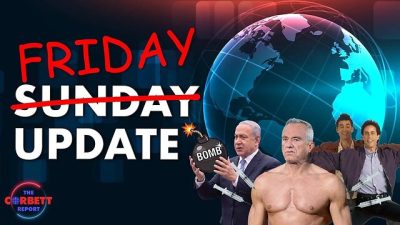
Racist Seinfeld Dances for Joy as Bibi Unveils His New Map
or go to
Aletho News Archives – Video-Images
TV Drama Review
Japanese drama projects Japan’s wartime atrocities onto Chinese characters

Global Times | October 25, 2026
By portraying Chinese characters as perpetrators of ruthless violence while casting Japanese Self-Defense Forces (SDF) intelligence operatives as defenders, the season 2 of the Japanese drama Vivant has recently drawn criticism from Chinese netizens, who argue that its depiction turns historical reality on its head while ignoring Japan’s wartime atrocities.
The TBS drama series – a spy suspense story in which an alleged unofficial intelligence unit of the SDF operates across the globe — has attracted a passionate fanbase. Its currently airing season 2 opened with a household rating of 18.8 percent, the highest for a TV drama this year, according toa commentary article by Japanese media Toyo Keizai.
What draws attention is the portrayal of the enemies in the series, the article noted. Scenes in which the Chinese organization subjects kidnapped members of the SDF unit to brutal torture are repeated with unrelenting intensity.
It is rare for Japanese TV dramas to explicitly portray a real-life country as the enemy, the article noted.
Japanese Prime Minister Sanae Takaichi also made a reference to the drama, saying that she has been recording Vivant and hopes to binge-watch it over the year-end and New Year holidays, according to Japanese media outlets.
China’s CCTV News report on Sunday revealed that the drama features scenes in which Chinese personnel cut off the fingers of and stab Japanese intelligence operatives in the abdomen. Such acts bear striking similarities to the torture inflicted on Chinese nationals by invading Japanese troops during the World War II.
The drama distorts the truth by attributing these atrocities to modern Chinese characters. Beneath the surface, it subtly glorifies Japan’s cross-border overseas operations, blurs the functional boundaries of the SDF and implicitly promotes an expansionist narrative, per CCTV News. … continue
Blog Roll
 Aletho News
- Iran FM Araghchi: “Hormuz Will No Longer Be the Same”
- EU facing trillion-euro debt hole while seeking more cash for Kiev
- How US, Europe, Persian Gulf states exhausted missile stockpiles, splurged billions to defend Israel
- Up in arms… Koreans reject U.S. empire’s plan to make South Korea the next Ukraine
- Iran, Turkey, Pakistan, Saudi Arabia could advance region-led security framework in Tehran: FM spox
- Netizens condemn Japanese drama for projecting Japan’s wartime atrocities onto Chinese characters
- Racist Seinfeld Dances for Joy as Bibi Unveils His New Map
- A West Bank War for Netanyahu’s Election Campaign, Could It Backfire?
- Yemen denounces European Parliament’s ‘hypocritical’ push to blacklist Ansarullah
- Qalibaf: UAE’s UN bid aims to ‘clear the runway’ for ‘Greater Israel’, whitewash genocide
- If Americans Knew
- An error has occurred; the feed is probably down. Try again later.
- No Tricks Zone
- Sudden Stratospheric Warming, Powerful El Niño Combination May Lead To Extreme Europe Cold, Energy Crisis!
- Two New Studies Find Thwaites Glacier Melt Cannot Be Driven By Human Activity Or A Warming Ocean
- E-Cars Reduce CO2 Emissions By Only 41% Compared To Internal Combustion Engine Vehicles
- Predictions Made By Renowned Climate Professor Over Past Decades Have Been Proven To Be Poor
- New Study Suggests Large Regions Of The Pacific Ocean Have Been Cooling For The Last 80 Years
- Germany’s Green Energy Debacle: High Energy Costs Force Kahla Porzellan to Close After 182 Years!
- New Study: 50 Years Of The Most Aggressive ‘Net Zero’ Policies Can Only Affect The Global Climate By 0.03°C
- US September “Heat” Was No Record…Many Records Set Decades Ago
- Latest European Green Energy Debacle; Portugal’s Largest Flagship Solar Park Insolvent!
- Green Energy Debacle: German Expert Professor Fritz Vahrenholt Warns Of Severe Economic And Social Consequences

