US media openly calling for Venezuela military coup

RT | June 7, 2018
If you’ve followed American media in recent times, you will have probably heard that meddling in affairs of foreign nations is a bad thing — but it seems that view changes dramatically when the US is the one doing the meddling.
Venezuelan President Nicolas Maduro was reelected in May in what Washington wrote-off as a “sham” election. In response, the Trump administration slapped new sanctions on the South American country and seemingly won’t be happy until Maduro and his socialist regime packs up and disappears.
Confirming that it’s Washington’s way or the highway, a former US official who worked as assistant administrator for Latin America at the US Agency for International Development, under the Bush administration, has openly called for a military coup — and Foreign Policy magazine has obligingly published his thoughts.
José R. Cárdenas has argued that “dialogue or diplomacy cannot bring a resolution” and insists that a military coup is a more attractive option. It is up to the US, he writes, to convince the Venezuelan military that they “bear a unique responsibility to rescue their country from the abyss” and that they must stand up and get rid of Maduro by force. It is the military, he writes, that are best placed to “restore a legitimate constitutional democracy.”
So concerned with the plight of the Venezuelan people, Cárdenas also touts the benefits of “diplomatic and economic isolation” which surely would do wonders for ordinary citizens. Graciously, Cárdenas accepts that such a plan “entails risk” but argues that it is “unlikely” that the military would seek to govern permanently.
But Cárdenas’ calls for a coup could hardly come as a surprise. It’s far from the first time current or former US officials have publicly called for the ousting of the Venezuelan president.
In February, Florida Senator Marco Rubio publicly called for a military coup in Venezuela on Twitter, saying that the “world would support” the armed forces if they rose up to remove Maduro.
Rubio’s comments followed similar ones from then Secretary of State Rex Tillerson who hinted at a military coup during an appearance at the University of Texas — without actually using those explicit terms.
“In the history of Venezuela and South American countries, it is often times that the military is the agent of change when things are so bad and the leadership can no longer serve the people,” Tillerson said.
But it’s not just government officials. Even the New York Times has gotten in on the action, publishing an editorial about how Maduro “must go” and discussing how best to “get rid of” him — although the paper of record managed to restrain itself slightly and did not call for an outright coup.
Canada Sanctions 14 People in Venezuela After ‘Illegitimate’ Elections
Sputnik – 30.05.2018
Canada has imposed new sanctions against key figures in the government of Venezuelan President Nicolas Maduro, Global Affairs Canada said in a press release on Wednesday.
“In response to the illegitimate and anti-democratic presidential elections held in Venezuela on May 20, Canada today announces further sanctions on key figures in the Maduro regime,” the release said.
The sanctions target 14 individuals responsible “for the deterioration of democracy in Venezuela,” the foreign ministry added.
Canada is not the first country to introduce restrictions against Venezuela following the re-election of Nicolas Maduro. Previously, Washington, citing “fraudulent vote,” banned US citizens from all transactions tied to Venezuelan government debt. The order he signed also prevented Venezuelan officials from selling equity in any entity majority-owned by the government. The EU, in its turn, froze some assets belonging to a number of Venezuelan individuals, companies and organizations
On May 20, Venezuela held its presidential election, with four candidates in the running. According to the National Electoral Council (NEC), incumbent leader Nicolas Maduro was re-elected as Venezuelan president for his second term, having secured 68 percent of votes, with slightly over 46 percent voter turnout. A number of states, including the EU members, have slammed the vote as either unfair or illegitimate.
Venezuela: ‘Colombia Joining NATO A Threat To Regional Peace’
teleSUR – May 26, 2018
Venezuela has rejected the announcement by Colombia’s President Juan Manuel Santos that his country will be entering the North Atlantic Treaty Organization (NATO) as a “global partner.”
“Venezuela denounces once more before the international community the intention of Colombian authorities to lend themselves to introduce, in Latin America and the Caribbean, a foreign military alliance with nuclear capacity, which in every way constitutes a serious threat for peace and regional stability,” a statement by the foreign ministry said.
Likewise, Venezuela reiterated that it supports the historical position of the region to distance itself from the politics and wars of NATO, and from “any other army or military organization that desires to apply force to the suffering of the people, to impose and guarantee the hegemony of a particular political and economic model.”
The statement asks that the Colombian government fulfill its obligations toward peace and peaceful solutions to regional controversies.
Colombia will be the fist “global partner” of NATO in Latin America, beginning next week, President Santos announced Friday.
NATO was founded during the Cold War and was primarily a means for Western nations – led by the United States – to suppress the Soviet Bloc militarily and economically.
It continues to play a major role in modern conflicts, and has engaged in major military interventions in sovereign countries, most recently the removal and murder of Libyan leader Muammar Gaddafi in 2011.
Maduro re-elected Venezuelan president; rival candidate challenges results
Press TV – May 21, 2018
Nicolas Maduro has been re-elected for a second term in office as Venezuela’s president in an election rejected as “illegitimate” by his main rival, who has also demanded that a repeat vote be held later this year.
With more than 90 percent of the ballots cast in Sunday’s presidential election counted, the National Election Council announced that incumbent Maduro had won another six-year term after securing 67.7 percent of the vote.
Maduro’s main challenger Henri Falcon came in second with 21.2 percent, followed by the president’s other rival, Javier Bertucci, who gained some 10 percent, said the Council’s head, Tibisay Lucena.
With the country’s mainstream opposition having boycotted the vote, the turnout was 46.1 percent, according to the board, which means 8.6 million out of the 20.5 million eligible voters took part in the election.
The ballots were recorded electronically, making the voting quick and easy. The presence of government troops around polling stations also ensured the safety of voters.
Some 150 international observers from 30 countries and international organizations were present in the Latin American country to monitor the process.
Maduro hails ‘historic’ win
When the results were released, Maduro’s supporters gathered outside his Miraflores presidential palace in downtown Caracas, celebrating his re-election with fireworks.
Maduro, surrounded by thousands of his supporters, also hailed his “popular victory,” saying, “This was a historic day! The day of a heroic victory! The day of a beautiful victory – of a truly popular victory.”
“Never before has a presidential candidate taken 68 percent of the popular vote,” he told the cheering crowd.
“The whole of Venezuela has triumphed! Democracy has triumphed! Peace has triumphed! Constitutionality has triumphed [These were] elections that were constitutional, legitimate and legal,” he said. “We have a president of the people! A working president!”
The president also called on the defeated challengers to join him for negotiations about the future of the country.
He said “permanent dialog” is needed with the entire opposition so that Venezuela could set aside political disputes.
Vote ‘lacks legitimacy’
However, before the official results were announced, Falcon said he would not recognize the vote for what he called irregularities, including widespread vote buying in favor of Maduro.
“As far as we are concerned there has been no election. There must be new elections in Venezuela,” he told reporters. “The process undoubtedly lacks legitimacy and as such we do not recognize it.”
Falcon, who broke with an opposition boycott to run for the election, also called for a fresh election to be held in November or December.
Several of Venezuela’s Latin American neighbors as well as the European Union also joined voices with Maduro’s challenger and said they would not recognize the results of the election.
They alleged that the conditions did not exist for the election to be free and fair.
However, former Spanish prime minister Jose Luis Rodriguez Zapatero, who is in Venezuela as an international observer, said he has no “doubt about the voting process.”
“It is an advanced automatic voting system. I come here to keep peace, coordinate and promote dialogue so as to improve the democratic mechanism here. What I need to do here is to see whether people can cast their ballots at their own discretion. Now we all see how people vote, don’t we?” he added.
The US also said it would not recognize the election and would actively consider oil sanctions on the country.
Washington has already imposed sanctions against Venezuela and blamed, together with its allies in the region and elsewhere, Maduro’s government for the country’s acute economic crisis.
On Saturday, the US ramped up pressure on Caracas by imposing new sanctions against the government’s top officials.
Maduro’s government, however, said the US was using new sanctions to sabotage the election.
It called Washington’s move as part of “a systematic campaign of aggression” by President Donald Trump’s administration and said they had no legal base.
US says won’t recognize Venezuela presidential election
Press TV – May 20, 2018
The United States government says it is not going to recognize the outcome of Venezuela’s presidential election which will be held on Sunday.
US Deputy Secretary of State John Sullivan made the announcement in a press briefing on Sunday and stressed that Washington was actively considering strict sanctions against Venezuela’s oil industry.
He also noted that the US would discuss a response to vote with its allies at the G20 meeting in the Argentinean capital Buenos Aires on Monday.
Washington has already put in place sanctions against Caracas and top Venezuelan government officials, as well as other measures to further weaken the country’s troubled economy and prevent the government and its state oil company from accessing international credit through US markets or entities.
On Friday, the US Treasury slapped sanctions against the head of the Venezuelan socialist party, Diosdado Cabello, and his wife, Marleny Josefina Contreras, who heads the country’s tourism institute, and his brother, Jose David.
Earlier in May, the administration of US President Donald Trump has slapped more sanctions against a number of Venezuelan companies and officials, accusing them of trafficking narcotics.
President Nicolas Maduro, who is running for a second six-year term in the vote, says the US has joined forces with opposition groups to topple his socialist government.
His opponents blame him for mishandling the economy and accuse him of dictatorial tendencies.
Maduro is predicted to win the Sunday election against main opposition candidate Henri Falcon.
Some opposition members have boycotted the vote, claiming it is rigged to ensure that Maduro wins a second six-year term in office.
Caracas, however, has assured the public that the election will be free and fair, saying those opposition members who refuse to participate in the election believe they have no chance to win.
Western Media Shorthand on Venezuela Conveys So Much
teleSUR | May 10, 2018
Over the years Western media have developed a journalistic shorthand of repetition, for conveying distortions and imperial hypocrisy about Venezuela.
A Reuters article (4/18/18) reports that the European Union “could impose further sanctions on Venezuela if it believes democracy is being undermined there.”
The line nicely illustrates the kind of journalistic shorthand Western media have developed, over years of repetition, for conveying distortions and whitewashing gross imperial hypocrisy about Venezuela. A passing remark can convey and conceal so much.
The EU’s sincerity in acting on what it “believes” about Venezuelan democracy is unquestioned by the London-based Reuters. Meanwhile Spain, an EU member, is pursuing the democratically elected president of Catalonia, Carles Puigdemont, for the crime of organizing an illegal independence referendum last year. Weeks ago, he was arrested in Germany at Spain’s request, and other elected representatives have been arrested in Catalonia, where Spain’s federal government deposed the elected regional government after the referendum.
In July 2017, a few months before the referendum in Catalonia, Venezuela’s opposition also organized an illegal referendum. One of the questions asked if the military should obey the opposition-controlled National Assembly, which was an extremely provocative question, given the opposition’s various efforts to overthrow the government by force since 2002. The referendum required an extremely high level of political expression, organization and participation. It allegedly involved 7 million voters.
The Venezuelan government disregarded the results—as Spain disregarded the Catalan referendum results—but unlike Spain, did not jail people for organizing it, or send police to brutally repress voters. In fact, two weeks later, Venezuelan voters (overwhelmingly government supporters, since the opposition boycotted and did not field candidates) were violently attacked by opposition militants when they elected a constituent assembly. The attacks resulted in several deaths.
Venezuelan President Nicolás Maduro has hardly failed to call attention to the hypocrisy of both the EU and Spain, but the Reuters article made no mention of it.
Reuters also reported that “the country’s two most popular opposition leaders have been banned from competing” from Venezuela’s presidential election on May 20. Reuters didn’t name the two supposedly “most popular opposition leaders,” but in the past (e.g., 4/12/18, 2/28/18, 2/19/18) the wire service has identified them as Leopoldo Lopez and Henrique Capriles. As it happens, according to the opposition-aligned pollster Datanalisis, whose results have been uncritically reported by Western media like Reuters for years, opposition presidential candidate Henri Falcón has been significantly more popular than Capriles in recent months, and barely less so than Lopez.
Mark Weisbrot (in an opinion piece for U.S. News, 3/3/18) broke the news that U.S. government officials had been secretly pressuring Falcón not to run, so that the election could be discredited as including no viable opposition candidate. Two weeks later, Reuters (3/19/18) discreetly reported Weisbrot’s scoop.
However, by far the most important thing Reuters neglects telling readers about the “two most popular opposition leaders” is that had they done in the EU what they’ve done in Venezuela since April 2002, Lopez and Capriles would both be serving long jail terms.
Capriles and Lopez together led the kidnapping of a government minister during a briefly successful U.S.-backed military coup in 2002 that ousted Venezuela’s democratically elected president, the late Hugo Chávez, for two days. Lopez boasted to local TV that the dictator installed by the coup (whom Lopez called “President Carmona”) was “updated” on the kidnapping.
Imagine what Carles Puigdemont’s predicament would be if, rather than organizing a peaceful referendum, he had participated in a foreign-backed, ultimately unsuccessful military coup against the Spanish government. Needless to say, running for public office would not be on the table. That would be the least of his worries.
In Venezuela, Capriles eventually served a few months in prison for participating in the coup, while Lopez avoided doing any time, thanks to a general amnesty granted by Chávez. Lopez was finally arrested in 2014 for leading another violent effort to overthrow the government.
I’ve reviewed before (teleSUR, 1/9/18) violent efforts to overthrow the government that Lopez, Capriles and other prominent opposition leaders have been involved with since the 2002 coup. I also described how Julio Borges and Henry Ramos (two other prominent opposition leaders) have openly sought to starve the Venezuelan government of foreign loans as it struggles with a severe economic crisis.
In August, Trump’s administration imposed sanctions on Venezuela’s entire economy that will cost Maduro’s government billions of dollars this year (FAIR.org, 3/22/18). It has threatened to go even further, brandishing an oil embargo or even a military attack. With sufficiently compliant media (and the collusion of big human rights NGOs like Amnesty International), such depravity becomes possible.
The Reuters article also says that Venezuela’s economic “collapse has driven an estimated 3 million people to flee the country.” No need to tell readers when the economic “collapse” began—2014—much less who made the estimates or if other sources contradict them. In fact, the U.N.’s 2017 population division numbers estimate Venezuela’s total expat population as of 2017 at about 650,000—only about 300,000 higher than it was when Chávez first took office in 1999. Even a group of fiercely anti-government Venezuelan academics estimated less than 1 million have left since the economic crisis began. (See FAIR.org, 2/18/18.)
Cherry-picked statistics aside, when Western powers want a democratically elected government overthrown, the approach is clear. Complete tolerance for violent foreign-backed subversion—which the powerful states and their allies would never be expected to tolerate—becomes the test for whether or not a state is a democracy. The targeted government fails the test, is depicted as a dictatorship, and all is permitted. Only the tactics required to bring it down need be debated.
Joe Emerberger is a writer based in Canada whose work has appeared in Telesur English, ZNet and Counterpunch.
How Voting Works in Venezuela
teleSUR | May 6, 2018
Venezuela’s election process has been lauded by numerous organizations and observers not only for its high turnout, but also for the transparency and checks involved in the voting and scrutiny.
Former U.S. President Jimmy Carter said: “Of the 92 elections that we’ve monitored, I would say that the election process in Venezuela is the best in the world.”
 Below are all the elements involved in the vote.
Requirements and Eligibility
Venezuelans who are 18 years of age or older are eligible to vote in an election, after registering.
Venezuelans living abroad are also eligible to vote, after meeting these requirements.
Article 63 of the constitution says: ‘Suffrage is a right. It is exercised through free, universal, direct and secret ballots. The law will guarantee the principle of individuality of suffrage and proportional representation.’
Security and Guarantees
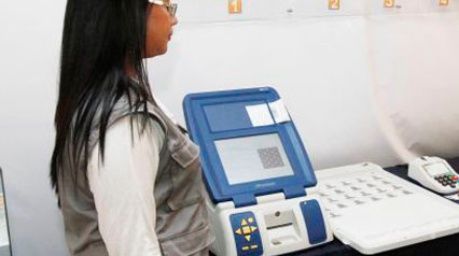
Venezuela’s elections utilize the latest in secure voting technology to ensure that each vote is counted fairly and cannot be tampered with. It was the first in the world to use voting machines that print a receipt so that each voter can confirm their vote with a physical copy.
Beginning in 2012, Venezuela’s elections used biometric authentication to activate the voting machine.
The current voting machines in use are the Smartmatic Auditable Election System (SAES) by Smartmatic, which are 100 percent auditable at each stage.
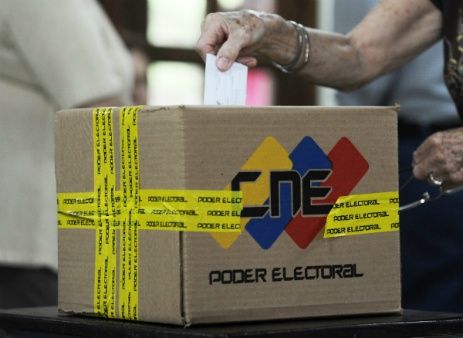
The final vote count is confirmed with the physical vouchers that voters put in the receipt box, and then transmitted electronically through a network isolated from the internet and any computer to assure that no interference can assure.
The vote will be witnessed and audited by international and national political observers, technicians and political organizations. The National Electoral Council has invited the United Nations and the Caribbean Community (Caricom) to send representatives to observe the process.
Voting
These are the five steps involved in voting in Venezuela:
1. When arriving at a poll, voters are directed the voting table that corresponds to them. At the table, there is a list with voters’ identification card numbers to allow a person to confirm their table.

2. The voter then goes to that table to present the document that confirms their identity. The voter then places their index finger or thumb on a fingerprint scanning device.

3. Once their identity is verified, the voting machine will unlock so that the voter can choose the option of their preference. Once selected, the choice can be changed up until the ‘vote’ button is changed.
In case there is any doubt about the voting process, the election official explains the steps involved.
After selecting their preferred option, the voter should press the ‘vote’ button. The machine then prints a receipt of the vote for the voter to read and confirm.
4. The voter then deposits this receipt in the corresponding ballot box.
5. Finally, the voter signs and places their fingerprint in the elections roll to confirm that they have voted, and have a finger marked with indelible ink.

Poll Closing and Tally Scrutinization
Polls are closed at a polling station only after everyone in line to vote has voted.
Once tally scrutinization on the machine finishes, a random paper ballot audit announced where the machines to be audited are randomly selected drawing numbers, and the machine’s serial number is recorded. The paper ballot box corresponding to the machine is also selected and opened and the results for each candidate are openly counted.
This is compared and audited with the original tally printed from the electronic results, and any anomaly or discrepancy is recorded in the audit report.
The original audit report is signed by election poll staff and observers from each party present, then sealed and handed to the military for delivery to the CNE.
Copies of the report are handed over to the representatives of the two highest vote getters.
Western Media Shorthand on Venezuela Conveys and Conceals So Much
By Joe Emersberger | FAIR | April 23, 2018
A Reuters article (4/18/18) reports that the European Union “could impose further sanctions on Venezuela if it believes democracy is being undermined there.”
The line nicely illustrates the kind of journalistic shorthand Western media have developed, over years of repetition, for conveying distortions and whitewashing gross imperial hypocrisy about Venezuela. A passing remark can convey and conceal so much.
The EU’s sincerity in acting on what it “believes” about Venezuelan democracy is unquestioned by the London-based Reuters. Meanwhile Spain, an EU member, is pursuing the democratically elected president of Catalonia, Carles Puigdemont, for the crime of organizing an illegal independence referendum last year. Weeks ago, he was arrested in Germany at Spain’s request, and other elected representatives have been arrested in Catalonia, where Spain’s federal government deposed the elected regional government after the referendum.
In July 2017, a few months before the referendum in Catalonia, Venezuela’s opposition also organized an illegal referendum. One of the questions asked if the military should obey the opposition-controlled National Assembly, which was an extremely provocative question, given the opposition’s various efforts to overthrow the government by force since 2002. The referendum required an extremely high level of political expression, organization and participation. It allegedly involved 7 million voters. The Venezuelan government disregarded the results—as Spain disregarded the Catalan referendum results—but unlike Spain, did not jail people for organizing it, or send police to brutally repress voters. In fact, two weeks later, Venezuelan voters (overwhelmingly government supporters, since the opposition boycotted and did not field candidates) were violently attacked by opposition militants when they elected a constituent assembly. The attacks resulted in several deaths.
Venezuelan President Nicolás Maduro has hardly failed to call attention to the hypocrisy of both the EU and Spain, but the Reuters article made no mention of it.
Reuters also reported that “the country’s two most popular opposition leaders have been banned from competing” from Venezuela’s presidential election on May 20. Reuters didn’t name the two supposedly “most popular opposition leaders,” but in the past (e.g., 4/12/18, 2/28/18, 2/19/18) the wire service has identified them as Leopoldo Lopez and Henrique Capriles. As it happens, according to the opposition-aligned pollster Datanalisis, whose results have been uncritically reported by Western media like Reuters for years, opposition presidential candidate Henri Falcón has been significantly more popular than Capriles in recent months, and barely less so than Lopez.

Mark Weisbrot (in an opinion piece for US News, 3/3/18) broke the news that US government officials had been secretly pressuring Falcón not to run, so that the election could be discredited as including no viable opposition candidate. Two weeks later, Reuters (3/19/18) discreetly reported Weisbrot’s scoop.
However, by far the most important thing Reuters neglects telling readers about the “two most popular opposition leaders” is that had they done in the EU what they’ve done in Venezuela since April 2002, Lopez and Capriles would both be serving long jail terms.
Capriles and Lopez together led the kidnapping of a government minister during a briefly successful US-backed military coup in 2002 that ousted Venezuela’s democratically elected president, the late Hugo Chávez, for two days. Lopez boasted to local TV that the dictator installed by the coup (whom Lopez called “President Carmona”) was “updated” on the kidnapping.
Imagine what Carles Puigdemont’s predicament would be if, rather than organizing a peaceful referendum, he had participated in a foreign-backed, ultimately unsuccessful military coup against the Spanish government. Needless to say, running for public office would not be on the table. That would be the least of his worries.
In Venezuela, Capriles eventually served a few months in prison for participating in the coup, while Lopez avoided doing any time, thanks to a general amnesty granted by Chávez. Lopez was finally arrested in 2014 for leading another violent effort to overthrow the government.
I’ve reviewed before (teleSUR, 1/9/18) violent efforts to overthrow the government that Lopez, Capriles and other prominent opposition leaders have been involved with since the 2002 coup. I also described how Julio Borges and Henry Ramos (two other prominent opposition leaders) have openly sought to starve the Venezuelan government of foreign loans as it struggles with a severe economic crisis.
In August, Trump’s administration imposed sanctions on Venezuela’s entire economy that will cost Maduro’s government billions of dollars this year (FAIR.org, 3/22/18). It has threatened to go even further, brandishing an oil embargo or even a military attack. With sufficiently compliant media (and the collusion of big human rights NGOs like Amnesty International), such depravity becomes possible.
The Reuters article also says that Venezuela’s economic “collapse has driven an estimated 3 million people to flee the country.” No need to tell readers when the economic “collapse” began—2014—much less who made the estimates or if other sources contradict them. In fact, the UN’s 2017 population division numbers estimate Venezuela’s total expat population as of 2017 at about 650,000—only about 300,000 higher than it was when Chávez first took office in 1999. Even a group of fiercely anti-government Venezuelan academics estimated less than 1 million have left since the economic crisis began. (See FAIR.org, 2/18/18.)
Cherry-picked statistics aside, when Western powers want a democratically elected government overthrown, the approach is clear. Complete tolerance for violent foreign-backed subversion—which the powerful states and their allies would never be expected to tolerate—becomes the test for whether or not a state is a democracy. The targeted government fails the test, is depicted as a dictatorship, and all is permitted. Only the tactics required to bring it down need be debated.
Messages to Reuters can be sent here (or via Twitter: @Reuters). Please remember that respectful communication is the most effective.
Despite International ‘Attacks,’ Venezuela Elections Will Go Ahead as Planned
teleSUR | April 11, 2018
Venezuela’s Foreign Minister Jorge Arreaza says his country will go ahead with the presidential elections scheduled for May, despite foreign interference and the threat of further sanctions.
Speaking at a press conference in Brussels, Belgium, Arreaza said: “The only ones who have to recognize the results in Venezuela are the Venezuelan people and the National Electoral Council (CNE).
“We are not worried about if (U.S. President) Trump recognizes it; if (Spanish Prime Minister Mariano) Rajoy recognizes it or if the European Union does not recognize it.
“It’s OK if they go beyond their capacity to dabble in new realms of political aggression against Venezuela. That’s not what we want to see; it wouldn’t be the best thing diplomatically, but if it happens, all we can do is govern for our people.”
Arreaza said the government had invited the High Representative of the European Union for Foreign Affairs and Security Policy Federica Mogherini to “observe the Venezuelan electoral process. The observation means coming two days before, but if they want to come two weeks before, come; and if they want to leave two weeks after… because in the end, it is to be present to observe the auditing process.
“Venezuela has a robust and secure electoral system. We don’t need anyone to moderate it; in fact, there are a lot that could learn something from Venezuela’s electoral system.”
Recalling the threats Venezuela has faced courtesy of the U.S. government and other Western powers, Arreaza said: “(Former U.S. President) Obama issued a decree in 2015 qualifying Venezuela as an unusual and extraordinary threat.
“I sincerely believe that the unusual and extraordinary attacks continue to happen against Venezuela in every field you could imagine.”
Despite the challenges, Arreaza said: “The Venezuelan people will prevail in spite of all the blockage… now President Trump is talking about an embargo, an oil embargo against Venezuela.
“We will work with our allies. There is Russia, there is China, there is Turkey, and even some European countries that want to help us as well, so we are not afraid and nothing will stop us.
“No political extortion, no extortion will stop the Venezuelan people, the Venezuelan Bolivarian government to do what we have to do.”
Venezuela’s presidential elections are scheduled to take place on May 20.
Featured Video
Houthis Keep Advancing as the Red Sea Crisis Deepens
or go to
Aletho News Archives – Video-Images
From the Archives
15 Saudi ‘hijackers’ were CIA agents working for US: Scholar
Press TV – April 13, 2016
Fifteen of the 9/11 “hijackers” from Saudi Arabia were CIA agents working for the United States government, which was seeking to destroy the Middle East for Israel and to double the American military budget, says Dr. Kevin Barrett, an American academic who has been studying the events of 9/11 since late 2003…. continue
Blog Roll
 Aletho News
- Russia Just Struck the Eyes of NATO’s War Machine in Ukraine
- Russia summons UK charge d’affaires over Kiev drone support
- NATO member warns bloc seeking pretext for war with Russia
- Macgregor: We Haven’t Seen the Worst of the Iran War Yet
- ‘We are not like everyone else’ laws that bind other nations do not apply to Israel, says Likud lawmaker
- Report: Saudi Arabia seeks allies’ assistance as missiles deplete amid war on Yemen
- Fuel Crisis Deepens: Pakistan Warns Tanker Attack in Red Sea Would Be an ‘Act of War’
- ‘Bucha massacre’ a false flag orchestrated by UK – Moscow
- China Rejects Outside Pressure on Trade Ties After New US Russia Sanctions Bill
- Houthis Keep Advancing as the Red Sea Crisis Deepens
- If Americans Knew
- Deportation Case of Palestinian Activist Salah Sarsour Tests First Amendment
- ‘We Will Not Forget’: Palestinians Mark 44 Years since Sabra and Shatila
- Why do we let Zionists decide what we can and can’t say?
- US welcomes Israeli, Iranian delegations to UN, but not Palestinians – Daily Update
- Biden’s Genocide Accomplices Targeted by New Accountability Campaign
- AIPAC’s Network Has Already Spent $67.2 Million to Shape the Midterm Elections
- Jewish Supremacist Manufacturing a Civilizational Threat to License Bigotry
- US bans Palestinian president from speaking at the UN
- Israeli Forces Detain Journalist Alaa al-Rimawi amid Widespread West Bank Raids
- Even a pro-Israel Congress member has put a hold on 40,000 one-ton bombs to Israel
- No Tricks Zone
- New Study: ‘Global Drought Shows No Detectable Recent Acceleration Under Climate Warming’
- Economic Masterminds: German Socialists Suggest Taxing Productivity Gains Stemming From Using AI
- The South China Sea Has Not Been Cooperating With The Climate Change Narrative
- Energy Crisis: Germany Enters Heating Season With Historically Low Gas Reserve Fill Levels
- New Study: The Antarctic Ice Sheet Gained Mass From 2020-2024 Due To Staggering Snow And Ice Accumulation
- Study: Ocean Heating Rates From Thousands Of Years Ago ‘Dwarf’ Modern Ocean Heating Rates
- Climate Extremists Target, Attack Large-Scale Power Grid Infrastructure In Germany!
- New Study: Antarctic Ice Melt Has Contributed Less Than 1 Centimeter To Sea Level Rise In The Last 30 Years
- Fear Of Debate: Alarmist German Climate Scientist Calls On Mainstream Media To Discredit Skeptic Voices
- End-Of-August Arctic Sea Ice Extent Hasn’t Fallen In 20 Years, Official Data Show!
 Aletho News