Petro rejects narco claims, calls US strikes on Venezuela illegal
Al Mayadeen | January 5, 2026
Colombian President Gustavo Petro issued on Monday a series of sharply worded statements rejecting accusations that seek to link him or Venezuelan leaders to drug trafficking, while forcefully condemning US military aggression, political intimidation, and renewed assertion of imperial control over Latin America.
In several posts published on X, Petro responded to remarks attributed to US President Donald Trump and to broader narratives circulating in Washington in the aftermath of the US aggression on Venezuela. He argued that Colombia’s judicial archives, after decades spent confronting the world’s largest cocaine cartels, contain no evidence linking Venezuelan President Nicolas Maduro or First Lady Cilia Flores to drug trafficking. According to Petro, such allegations originate primarily from figures aligned with the Venezuelan opposition rather than from any verifiable judicial findings.
Defamation rejected
Petro noted that Colombia’s judiciary functions independently of the executive branch and is largely influenced by political forces opposed to his government. Anyone genuinely seeking to understand the cocaine trade, he said, should consult Colombia’s court records rather than rely on politically motivated accusations. He added that his own name has never appeared in narcotics-related cases over more than five decades, affirming that he “deeply rejects” uninformed and defamatory claims.
He also stressed that Colombia’s experience with drug violence has been shaped not by state policy but by transnational demand, financial laundering networks, and decades of militarized counter-narcotics strategies promoted from abroad, strategies that, he implied, have failed to curb trafficking while devastating civilian populations.
Addressing personal attacks, Petro said it is unacceptable to “slander” Latin American leaders who emerged from armed struggle and later pursued peace, framing such rhetoric as political coercion aimed at delegitimizing independent leadership in the region. He referenced his own past in the M-19 movement, noting that it laid down arms and became part of Colombia’s peace process, a transition he described as a historic milestone in contemporary Latin American politics and a rare example of negotiated conflict resolution rather than foreign-imposed regime change.
Caracas under bombardment
Petro described the US aggression on Venezuela as the first time in modern history that a South American capital had been bombed by the United States, warning that such an act would remain etched in the collective memory of the continent. “Friends do not bomb one another,” he said, drawing parallels to some of the darkest episodes of 20th-century warfare.
The operation has raised particular alarm due to Washington’s open acknowledgment that it intends to administer Venezuela during a so-called transition period and to assert control over strategic sectors, including energy. Regional observers note that Venezuela’s oil infrastructure remained largely intact during the assault, a fact Petro did not ignore as he warned against war conducted in the name of justice but structured around resource access.
While explicitly rejecting retaliation, Petro argued that the events underline the urgent need for Latin America to rethink its political and economic alignments. He called for deeper regional unity, warning that without cohesion the region risks being treated as a “servant and slave” rather than as a central actor in global affairs. Petro criticized existing regional mechanisms, including the Community of Latin American and Caribbean States (CELAC), arguing that its absolute consensus rules allow certain leaders to preserve subservient relationships with foreign powers at the expense of collective sovereignty.
Scapegoated Dead
Petro also condemned celebratory reactions in some political circles to the bombing of Caracas, accusing them of erasing Latin America’s shared liberation history led by Simon Bolivar.
He further noted the US’ aggression resulted in civilian deaths, including that of a Colombian woman working informally in Caracas to support her daughter, a reminder, he stressed, that military interventions marketed as “precision operations” routinely exact a human toll on the most vulnerable.
Directly addressing Trump, Petro accused the US president of issuing internationally unlawful orders that led to the deaths of Colombian nationals who were later branded “narco-terrorists.” He rejected those labels as false and dehumanizing, arguing that many of the victims came from impoverished communities with no links to organized crime and were instead casualties of a long-standing policy of militarization, criminal profiling, and collective punishment.
Free speech, sovereignty, resistance
Petro defended his right to speak freely on US soil, noting that his remarks in New York and around the United Nations were protected under US law. He explained he had publicly condemned the genocide in Gaza, suggesting that his positions on Palestine, Venezuela, and US foreign policy more broadly triggered retaliatory narratives portraying him as corrupt or complicit in drug trafficking.
Rejecting those portrayals, Petro said he owns no luxury assets abroad and continues to pay for his home through his official salary. He also framed the controversy as part of a wider struggle against injustice, misinformation, and efforts to silence dissenting voices from the Global South through legal intimidation and reputational warfare.
The statements concluded with a call for respect between the Americas, invoking shared liberation traditions associated with figures such as Simón Bolívar and George Washington.
Petro warned against narratives that portray Latin America as inherently criminal, stressing that the region’s political movements are rooted in long-standing struggles for democracy, sovereignty, and social justice, not in the stereotypes imposed by external powers seeking control rather than partnership.
US Wants to Install ‘Functional Protectorate’ in Venezuela: Here Are Its Four Components
Sputnik – 05.01.2026
With Maduro out, Washington is looking to establish “four kinds of control” in Venezuela. Independent Peru-based geopolitical and economic analyst Nicolas Takayama Constantini outlines the mechanics of these measures for Sputnik.
“Operationally, it means that they will have a de facto tutelary administration,” Constantini explained. This would mean:
- “indirect political control” via a “provisional authority” or “transition council” approved by Washington, not the Venezuelan people
- technical and financial control over the oil sector, including contracts, ports and foreign currency flows
- direct control over oil revenues, either by the US Treasury, “or some entity controlled by the US”
- some form of US military or security presence, not necessarily a large one.
“So, in fact this wouldn’t be classical governance, but rather a form of functional protectorate, similar to Iraq in 2003,” the observer said.
Goal of US Operation: Seizure of Resources or Message to Rivals
“From a rational economic point of view, military intervention is not efficient. The military, political and reputational cost for the US far exceeds any potential energy gains. But it’s not only the resources,” even in Venezuela’s case (oil, gas, rare earths, tech metals, gold), Constantini said.
It’s about sending a message to Washington’s geopolitical rivals, including China, Russia and Iran, about preventing Venezuela’s resources from falling into their hands, and letting regional countries know: “if you don’t submit or make your resources available to me when I need, this will happen to you.”
“Just to have a note here, obviously the US doesn’t care about the Venezuelan interest or even the American citizens’ interest related to drug traffickers because the agencies in the US say that the main flow of drugs doesn’t come from Venezuela,” the expert added.
Venezuela Attack Signals Final Breakup of Post-WWII Order
“It’s an extremely serious precedent for the international order. It means that state sovereignty doesn’t work anymore. The head of state immunity doesn’t work anymore. It normalizes regime change by force without multilateral authorization. It reinforces the idea that power supersedes international law,” Constantini explained.
“It marks the end of what remained of international law and the international order after the Second World War… a greater militarization of foreign policy and acceleration of the global order’s fragmentation into competing blocs. This implies that other powers can do the same if they don’t consider a particular government legitimate,” the observer summed up.
Venezuela slashes oil production as US embargo halts exports
Al Mayadeen | January 5, 2026
Venezuela’s state-run oil company, PDVSA, began cutting crude output on Sunday as storage facilities reached critical capacity, a direct consequence of the comprehensive US oil embargo that has reduced exports to nearly zero.
The move adds further strain on an interim government grappling with mounting economic and political pressure.
PDVSA is shutting down oilfields and well clusters after storage facilities near capacity, with stocks of extra-heavy crude piling up. The company is also facing a shortage of diluents, essential for blending Venezuela’s heavy oil for export.
These constraints have forced the company to reduce PDVSA crude output.
Sources confirmed to Reuters that output cuts were requested at joint ventures such as CNPC’s Petrolera Sinovensa, Chevron’s Petropiar and Petroboscan, and Petromonagas. The latter, once operated jointly with Russian state-run Roszarubezhneft, is now under sole PDVSA control.
Chevron Shipments Halted Despite License
Chevron, which holds a US license to operate in Venezuela, had been an exception to the wider export freeze. However, since Thursday, its shipments have also come to a halt. Although Chevron has not yet reduced production, storage capacity is nearing its limit at key facilities such as Petropiar and Petroboscan.
No Chevron-operated tankers have left Venezuelan waters since Thursday, and if delays persist, Chevron Venezuela operations may be forced to scale back output.
Chevron stated it continues to operate “in full compliance with all relevant laws and regulations,” without providing further comment.
Political and Economic fallout from US blockade
The political landscape in Caracas remains tense following the kidnapping of President Nicolas Maduro and his wife by US forces on Saturday.
Delcy Rodriguez, Venezuela’s oil minister, has since assumed the role of interim president.
President Donald Trump declared that an “oil embargo” was fully in effect as part of a broader transition overseen by the US. The US oil embargo on Venezuela has halted tanker movements, impacted international shipments, and left the country’s oil-dependent economy under extreme duress.
Although Rodriguez stated last month that Venezuela would continue producing and exporting oil despite US sanctions, the embargo’s tightening grip has forced PDVSA to slow operations and store crude on vessels.
Export collapse and floating storage build-up
In recent weeks, PDVSA has resorted to using floating storage, loading tankers with crude and fuel as onshore capacity maxes out.
Over 17 million barrels of oil are currently stored aboard ships awaiting departure, according to TankerTrackers.com. No tankers were docked at the Jose terminal on Sunday, halting both export and domestic supply activities.
The Venezuela oil storage crisis worsened as more than 45% of the country’s 48-million-barrel onshore storage capacity was filled, forcing excess fuel oil into open-air waste pools.
Meanwhile, Venezuela’s access to diluents has been constrained. In the second half of last year, the country increased imports of naphtha and light oil from Russia to blend its heavy crude. However, these shipments began facing obstacles in December due to the US-led blockade.
Venezuela’s crude output, which stood at approximately 1.1 million barrels per day (bpd) in November with exports reaching 950,000 bpd, dropped to around 500,000 bpd last month, according to preliminary data based on shipping movements.
Venezuela’s oil production slowdown could have a domino effect, disrupting refining and the domestic fuel supply chain. This poses a serious challenge to the interim government, which relies on oil revenues to maintain basic governance and internal stability.
Israel is Having a Party After the Capture of Nicolás Maduro
José Niño Unfiltered | January 4, 2026
The recent capture of Nicolás Maduro served as a stark reminder that the true center of gravity in Western power politics is not the White House or the Pentagon, but the interests of a globally dispersed Zionist network that views nation-states as mere instruments in their quest to make the world safe for Jewish supremacy.
Israeli officials across the political spectrum rallied behind President Donald Trump’s successful operation to extract Maduro, with government ministers and opposition figures in the Israeli political establishment celebrating the move as a devastating blow to Iran’s global influence operations.
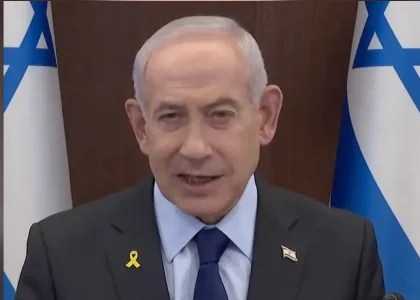
Prime Minister Benjamin Netanyahu led the praise, posting congratulations on social media that saluted Trump’s “decisive resolve and the brilliant action of your brave soldiers.” Netanyahu’s statement referenced “bold and historic leadership on behalf of freedom and justice” without explicitly naming the Venezuela operation, though the timing left little doubt about his message.
In another press conference, Netanyahu continued to praise the United States’ operation in Venezuela. He proclaimed:
“I express the full support of the Israeli government for the determined decision and decisive action of the United States regarding Venezuela.
This is about restoring freedom and justice to another region of the world.
Across Latin America, we are witnessing a historic shift — countries returning to the American axis and renewing ties with Israel.”
As previously recorded by this author, the strategic reorientation Netanyahu has mentioned is nowhere more evident than in the Isaac Accords, an initiative whose underlying objective is the normalization of a regional order that guarantees Jewish primacy in the Western Hemisphere.
Foreign Minister Gideon Sa’ar issued the most comprehensive endorsement from Tel Aviv, commending what he called America’s role as “leader of the free world” in executing the operation. Sa’ar specifically expressed hope for renewed diplomatic relations between Israel and Venezuela, which Caracas severed in 2009 over Israel’s Operation Cast Lead in Gaza.
“Israel commends the United States’ operation, led by President Trump, which acted as the leader of the free world,” Sa’ar wrote. “At this historic moment, Israel stands alongside the freedom-loving Venezuelan people, who have suffered under Maduro’s illegal tyranny.”
The foreign minister continued with pointed language about regional security threats. “Israel welcomes the removal of the dictator who led a network of drugs and terror and hopes for the return of democracy to the country and for friendly relations between the states,” he stated. “The people of Venezuela deserve to exercise their democratic rights. South America deserves a future free from the axis of terror and drugs.”
Diaspora Affairs Minister Amichai Chikli from the ruling Likud Party drew the most explicit connections between Maduro’s capture and threats facing Israel, framing the operation as a direct message to Iran’s Supreme Leader Ali Khamenei.
“The capture of Nicolás Maduro is not only good news for the people dwelling in Caracas; it is also a devastating blow to the global axis of evil and a clear message to Khamenei,” Chikli declared. He elaborated on Venezuela’s alleged role in funding Iranian proxy networks. “Maduro did not run a country; he ran a criminal and drug empire that directly fueled Hezbollah and Iran.”
Chikli praised Trump’s approach as validation of hardline foreign policy. “President Trump’s decisive steps have once again proven that strong leadership is the only way to subdue dictators,” he wrote. “This is a direct battle between the values of freedom and the West and the dangerous alliance of radical Islam and communism.” He concluded simply that “the world is a safer place today.”
Opposition leader and former Prime Minister Yair Lapid of the Yesh Atid Party joined the chorus with his own warning to Tehran. “The regime in Iran should pay close attention to what is happening in Venezuela,” Lapid posted, issuing what analysts interpreted as a veiled threat amid ongoing protests in Iran over economic collapse.
Israeli security analysts view Maduro’s removal as potentially restricting Iranian Revolutionary Guard operations against Israeli targets throughout Latin America, cutting off weapons flows to the continent, and disrupting extensive oil smuggling operations between Venezuela and Iran that have helped Tehran evade sanctions.
The American political establishment, whose policies are demonstrably subservient to world Jewry, responded with equally fervent praise, viewing the capture of Nicolas Maduro as a significant strategic victory for the state of Israel.
U.S. Ambassador to Israel Mike Huckabee delivered some of the most forceful American praise for the operation, explicitly linking the Venezuela action to security concerns in his diplomatic posting. Speaking on Newsmax, Huckabee opened his reaction with religious fervor. “Well, my first reaction was to say, praise the Lord and thank you, President Trump,” the ambassador stated.
He then explained why Americans should view Venezuela through a Middle Eastern security lens. “A lot of people may not make the connection as to why this matters to us in the Middle East,” Huckabee said. “What they don’t know is that Hezbollah is very active in Venezuela.” The ambassador detailed the Iran connection that Israeli officials had emphasized. “There has been a 20-year partnership between Iran and Venezuela,” he explained. “The ties are deep, and Hezbollah operates in 12 different countries throughout South America.” In his conclusion remarks, Huckabee contended that the operation represented a global victory. “Good news for America, good news for the world,” he declared.
Welcome to Empire Judaica.
The chorus of approval from Israel and its advocates lays bare the grim reality for the American people: they are not citizens of a sovereign nation but unwitting actors in a geopolitical drama where they play supporting roles in a global imperium built for and by organized Jewry.
The US Has Invaded Venezuela to ‘Fight Drugs.’ Are Colombia and Mexico Next?
By Adam Dick | Peace and Prosperity Blog | January 4, 2026
On Saturday, United States President Donald Trump held a press conference to boast about his sending the US military hours earlier to bring destruction in Venezuela and drag off the leader of the nation’s government to America for incarceration and prosecution. It was all done in the name of fighting the war on drugs, though few people give much credit to the Trump administration’s repeated assertion that Venezuela President Nicolás Maduro was a drug kingpin responsible for a major share of fentanyl or cocaine shipments into America.
The US government, Trump declared, will “run” Venezuela for an undefined “period of time” that Trump declined to rule out, in answer to a question, could be measured in years. While the US is doing that, be prepared for Trump also to potentially direct the US military to invade at least two additional countries in the Western Hemisphere.
In October, I wrote about how Trump appeared to be making demands and taking actions preparatory for the US going to war in three countries — Venezuela, Colombia, and Mexico. The common reason given for taking military action in each country has been the same — advancing the US government’s war on drugs.
The current status is one down, at least two to go. While already bogged down in Venezuela, the next step may be for the US to proceed to attack two more Western Hemisphere countries. Indeed, during the press conference, Trump continued with comments suggesting both Colombia and Mexico are under threat from the US government’s drug war. In particular, Trump reaffirmed his previous declaration that Colombia President Gustavo Petro has “got to watch his ass” while accusing him of making cocaine and sending it into America, criticized the “cartels operating along our border” in reference to Mexico, and said more broadly that “we will crash the cartels.” One important question to consider is how much America may also crash due to the strain of military intervention in the Western Hemisphere.
Trump Says Venezuelan Vice President Will Pay Higher Price Than Maduro if She Disobeys US
Sputnik – 04.01.2026
US President Donald Trump warned on Sunday that Venezuelan Vice President Delcy Rodriguez might have to pay an even higher price than Venezuelan President Nicolas Maduro if she did not make the “right” decisions.
Trump said on Saturday that the US would not send troops to Venezuela if Rodriguez did what Washington wanted from her. The US leader claimed that Rodriguez was willing to cooperate with the US.
“If she doesn’t do what’s right, she is going to pay a very big price, probably bigger than Maduro,” Trump said in a telephone interview with the Atlantic magazine.
Trump also said that the US “absolutely” needed Greenland as the Danish island is allegedly surrounded by Chinese and Russian ships.
“We do need Greenland, absolutely,” Trump said.
The island, which is part of Denmark, a NATO ally, is allegedly “surrounded by Russian and Chinese ships,” the US president added.
USA seizes Maduro, but nothing is guaranteed regarding Venezuela’s future
By Raphael Machado | Strategic Culture Foundation | January 4, 2026
Following an operation that began at 2:00 AM Caracas time, U.S. special forces undertook the seizure of Venezuelan President Nicolás Maduro and his wife Cilia Flores and extracted them from the country. The operation lasted only 30 minutes and involved little more than a handful of helicopters, operating very close to the ground.
The U.S. government and its supporters reacted with euphoria to the operation’s “great feat.” Donald Trump stated that only the USA could do something like this.
Nevertheless, so far, the event resembles more of a propaganda fireworks display than a great military feat. And this is because the extraction appears to have taken place, by all indications, without any opposition from the Venezuelan state.
For months – since tensions between the USA and Venezuela intensified – there has been speculation about the existence of secret negotiations between Maduro and Trump. Newspapers like the New York Times, in fact, reported that Maduro had offered “everything” to Trump, but that he had refused the various offers.
Several other negotiations are said to have occurred, including an offer for Maduro’s exit, but with the maintenance of the Bolivarian system in power and with U.S. co-participation in the exploitation of Venezuelan oil alongside PDVSA. Supposedly, the USA would have refused these offers.
It is also important to point out that at least since November 2025, the Brazilian and Colombian governments have been trying to convince Nicolás Maduro to resign. The important Brazilian businessman and lobbyist Joesley Batista, who is an ally of both Lula and, today, of Trump, is said to have traveled to Caracas to negotiate an exit for Maduro. Supposedly, without success.
And yet, the fact remains: any portable anti-aircraft system, like a MANPAD, could have shot down any of the Apaches used in the operation. But none were used. In fact, there is no evidence of the use of Venezuelan defensive systems during the operation. The official narrative says they were all simply “deactivated.” This might perhaps explain the inaction of the BUKs, but not the absence of use of other systems.
Furthermore, we have not seen signs similar to those in Syria, with the mass desertion of military personnel. Padrino López and Diosdado Cabello, respectively Ministers of Defense and Interior, have full control over the Armed Forces and the Bolivarian National Guard. The streets are, by all indications, calm. There are no celebrations by oppositionists, nor any movement by the opposition in general.
Perhaps Maduro’s removal was, in fact, negotiated. But not necessarily with Maduro himself. It is impossible, however, to point decisively to someone responsible for this. In a purely technical sense, naturally, the primary responsibilities would fall on Venezuelan counterintelligence and Maduro’s personal security apparatus – but, in this case, it may have simply been a matter of failure, more than betrayal.
Now, it is premature to properly speak of a “regime change” in Venezuela.
In his statements to the press immediately after the operation, Donald Trump stated that the USA would conduct a “political transition” in Venezuela; but there is, truly, no U.S. presence in Venezuela at this moment. Whoever expects a takeover by María Corina Machado is mistaken: Trump has already ruled her out, considering her inept due to her lack of popularity with the Venezuelan people. On the contrary, he seems satisfied with dealing with Delcy Rodríguez, who has already assumed Venezuelan leadership, supported by consensus by Chavista governors, ministers, and generals.
Trump claims that Rodríguez would be willing to collaborate completely with the USA and, in practice, “hand over” Venezuelan oil. But all public statements from Venezuela so far go in the direction of condemning the seizure, demanding Maduro’s return, and emphasizing that Venezuela will resist Trump’s ambitions. In other words, there exists a problematic gap between Trump’s declarations and what is really happening in Venezuela.
Naturally, the possibility is not excluded, for example, of a potential “backroom deal,” allowing the USA to operate in the Venezuelan oil sector, with Chavismo maintained in power in Caracas. Maduro’s fate in a negotiation of this type remains open. Everything is possible, from the death penalty to exile, including a prison sentence with eventual release.
The main political actor in Venezuela, however, is the armed forces, not the PSUV, nor even Maduro. And regardless of the arrangement reached and Venezuela’s near political future, this is unlikely to change.
What is evident, however, is that we have here a significant change in the international panorama. The USA treated the operation as a “police action” – Maduro is being indicted for crimes ranging from drug trafficking to possession of machine guns (!) in violation of U.S. firearms legislation (!!), treating Venezuelan territory, in practice, as if it were U.S. territory.
The mutual recognition between countries as sovereign states and, therefore, legitimate belligerents in case of conflict, implying obedience to certain rules of engagement, constitutes a significant achievement of civilizations. The criminalization of foreign sovereigns opens the door to savagery and to unlimited conflicts devoid of rules of civility.
But beyond this dimension of a return to the same mentality of the piracy era, it becomes quite clear that appeals to International Law and the UN are, today, of little effectiveness.
The world is being redrawn into spheres of influence, and only military might and the willingness to use it seem to be effective barriers against foreign interventions.
US facing second Vietnam in Venezuela – expert
RT | January 4, 2026
Any prolonged US effort to control Venezuela would likely face fierce resistance similar to what Washington encountered during the Vietnam or Iraq wars, Daniel Shaw, a professor of Latin American Studies at City University of New York, has told RT.
In an interview aired on Sunday, the scholar suggested that Venezuelans would not accept foreign rule following the abduction of Venezuelan President Nicolas Maduro during an unprecedented US raid on Caracas.
“This is going to spill open into a type of Vietnamese resistance or Iraqi resistance,” Shaw said.
Shaw said that on top of Maduro’s “anti-imperialist leadership,” Venezuela’s policies had been shaped by nearly three decades of what he described as political training in “chavismo,” referring to the socialist policies of late Venezuelan President Hugo Chavez.
“The Venezuelan people … are never going to allow for the US to take them over,” he said.
Asked about the most feasible scenario if the US remains in charge for an extended period, Shaw framed the potential confrontation as a “David versus Goliath” struggle, adding that protests and demonstrations were likely and raised the prospect of “pockets of guerrilla resistance over time,” while acknowledging Venezuela was militarily outmatched.
He also acknowledged that international condemnation and declarations of solidarity – including from Russia and several regional powers – would be unlikely on their own to alter the situation. “If there’s no resistance from within the US military, it would be very difficult to imagine that the Venezuelan people could defeat what looks like a US colonial occupation,” he added.
US President Donald Trump has said Washington would temporarily “run” Venezuela following Maduro’s kidnapping, prompting backlash from Caracas. Washington has so far refrained from a large-scale invasion of the country, but maintains a significant military presence in the Caribbean.
The US wars in Vietnam and Iraq became cautionary tales against open-ended foreign interventions after dragging on for years, killing thousands of US troops, consuming trillions of dollars, and ending without a clear outcome. … Video interview
U.S. Ambassador To Israel, Mike Huckabee, Boasts That Regime Change In Venezuela Is Good For Israel.
The Dissident | January 3, 2026
On a recent appearance on Newsmax, the American Christian Zionist ambassador to Israel, Mike Huckabee, boasted that Trump’s recent kidnapping of Venezuela’s president, Nicolas Maduro, was good for Israel.
In the interview, Huckabee boasted, “A lot of people may not make the connection as to why this matters to us in the Middle East, what they don’t know is that Hezbollah is very active in Venezuela, there has been a 20-year partnership between Iran and Venezuela… the ties are deep.”
Huckabee boasted that Trump’s regime change operation “Is going to make life for us much safer in the Middle East.”
Israel’s support for American wars in the Middle East is well known, but its support for war in Venezuela is often less discussed.
But just as Israel wants to take out states in the Middle East that were too sympathetic to Palestinians, they have also wanted to take out Venezuela due to the country’s support for Palestinians and Palestinian resistance under Hugo Chavez and his successor, Nicolas Maduro.
As Middle East Eye noted in 2019, “Israel wants to see Maduro overthrown in Venezuela”.
The outlet noted that, “the US-Israeli support for overthrowing Maduro is part of a larger agenda to cement an anti-Palestinian campaign in Latin America at the expense of the Venezuelan people.”
The outlet noted that this was because “Solidarity with the Palestinian struggle for self-determination was at its height during the Chavez years up until today, with the leadership making outspoken criticism of Israel’s flagrant violations of international law. Venezuela severed diplomatic ties with Israel in 2009 over its military campaign in Gaza.”
A recent article in the outlet Israel Hayom, an Israeli newspaper funded by Zionist mega donor Miriam Addison- who Trump recently boasted “gave my campaign $250 million”- explained why Israel wants regime change in Venezuela, writing, “Since Hugo Chávez’s rise to power, Venezuela has become one of the most hostile countries to Israel and Zionism in Latin America” adding that Chavez, “severed diplomatic relations with Israel during Operation Cast Lead in 2009, accused Israel of ‘genocide against the Palestinian people’ and compared its policies to Nazi conduct”.
The outlet added that Maduro, “continued the anti-Israeli line with even more intensity. Thus, Venezuela, which previously maintained warm relations with Israel and even purchased security technologies from it, became a center of hostile propaganda toward Zionism”.
For this reason, Israel long cultivated a close relationship with Maria Corina Machado the U.S. asset in Venezuela who was used as a tool to advance Trump’s recent kidnapping of Maduro, and who hoped to be installed by the U.S. and Israel, only to be snubbed by Trump who said after the operation that she, “doesn’t have the support” to be installed as the leader of Venezuela.
Israel’s ruling Likud party, as far back as 2020, signed a cooperation agreement with Machado’s Vente Venezuela party, which promised to “bring the people of Israel closer to the people of Venezuela while advancing, together, the Western values to which both parties subscribe: freedom, liberty, and a market economy.”
In the aforementioned article in Israel Hayom, Machado promised that Venezuela will be “Israel’s closest ally in Latin America” if Maduro is removed and even heavily implied that Israel was directly taking part in the regime change operation, saying, “We rely on Israel’s support in dismantling Maduro’s crime regime”.
When asked by Israel Hayom how “Israel can support freedom movements in Venezuela without being accused of interference,” Machado signalled that Israel was already interfering in Venezuela and taking part in the regime change operation, saying, “Defending freedom, individual liberties, and democracy isn’t interference … Israel understands this”.
While oil is the most obvious motivation behind the kidnapping of Maduro, getting rid of one of the” hostile countries to Israel and Zionism in Latin America” and returning Venezuela to when it “maintained warm relations with Israel and even purchased security technologies from it” has undoubtedly played a role as well.
Three Reasons Iran Condemns US Attack on Venezuela as a Global Threat
teleSUR | January 3, 2026
Iran condemns U.S. attack on Venezuela as a flagrant breach of international law and a dangerous escalation that threatens the foundations of the global order. On January 3, 2026, the Islamic Republic of Iran issued a forceful statement in response to Washington’s large-scale military operation on Venezuelan soil—an assault that, according to the White House, resulted in the capture of President Nicolás Maduro and First Lady Cilia Flores.
From Tehran’s perspective, this is not merely a regional crisis. It is a systemic rupture with implications that extend far beyond Latin America. The Iranian Foreign Ministry framed the offensive as a textbook case of unilateral aggression, echoing historical patterns of imperial intervention that have long destabilized the Global South. In doing so, Iran positioned itself not only as a regional power but as a principled voice defending the sanctity of state sovereignty against military hegemony.
The gravity of Iran’s condemnation lies not just in its rhetoric but in its legal grounding. Tehran explicitly cited Article 2(4) of the UN Charter, which prohibits the use of force against the territorial integrity or political independence of any state. According to Iran, the U.S. strikes—reportedly targeting civilian infrastructure alongside military installations—constitute an “unequivocal act of aggression” that must be met with immediate international censure and legal accountability.
Iran Condemns US Attack on Venezuela as Illegal Under International Law
The Iranian Foreign Ministry’s statement, released on Saturday, January 3, 2026, pulled no punches. “This criminal, cowardly, and terrorist act by the United States violates every principle of international coexistence,” the document declared—words that closely mirror those used by Venezuelan Interior Minister Diosdado Cabello in Caracas hours earlier.
Iran emphasized the illegality of targeting civilian infrastructure, including electrical grids and residential zones, actions it described as potential war crimes under the Geneva Conventions. Tehran rejected any justification based on regime change or alleged humanitarian concerns, stressing that only the UN Security Council holds the legitimate authority to authorize the use of force—and even then, only as a last resort.
The International Court of Justice has repeatedly affirmed that unilateral military interventions, regardless of motive, violate the core tenets of the UN Charter. Iran’s stance aligns with this jurisprudence, positioning the U.S. operation not as an isolated incident but as part of a broader erosion of multilateralism. “When powerful states bypass the Security Council,” the statement warned, “they don’t restore order—they incite chaos.”
Crucially, Iran also underscored Venezuela’s inherent right to self-defense and resistance against foreign occupation—a principle enshrined in both international law and the historical consciousness of post-colonial states. By doing so, Tehran reinforced its long-standing advocacy for the Global South’s right to political autonomy, free from external coercion.
Iran Joins Global South Coalition Against U.S. Military Aggression
While Western media have focused on the tactical details of the U.S. operation, Iran’s diplomatic response underscores a deeper geopolitical realignment. Tehran’s condemnation places it firmly within a growing coalition of nations—including Russia, China, Cuba, and Colombia—that view the attack as a direct threat to regional peace and global legal norms.
Iran and Venezuela have cultivated close strategic ties for over two decades, particularly through their shared membership in the Non-Aligned Movement (NAM) and their mutual opposition to U.S.-led sanctions regimes. In this context, Iran’s statement is both principled and pragmatic: it defends a key ally while reinforcing its own narrative as a champion of anti-imperialist sovereignty.
As a founding member of the Non-Aligned Movement, Iran has consistently opposed unilateral military interventions—from Iraq to Libya to Syria. The current crisis in Venezuela is seen through that same lens: not as a domestic political issue, but as a test of whether international law applies equally to all nations, or only to the weak.
Notably, Iran called on all UN member states to fulfill their “legal and moral duty” by demanding an immediate ceasefire, the withdrawal of U.S. forces, and accountability for those responsible for planning and executing the operation. It also urged the Security Council to invoke Chapter VII—not to authorize further force, but to sanction the aggressor and protect the sovereignty of the victim.
This stance resonates across Latin America, where leaders like Gustavo Petro of Colombia and Miguel Díaz-Canel of Cuba have echoed Iran’s concerns. Even within traditionally neutral countries like Uruguay, political figures from the ruling Frente Amplio—such as Rafael Michelini—have echoed Tehran’s alarm, warning that “the prairie of Latin America has been set on fire.”
Geopolitical Context: Iran’s Message to the World
Iran’s condemnation of the U.S. attack on Venezuela carries layered implications. At a time when Tehran faces its own threats of military action—particularly from Israel and hardliners in Washington—its vocal defense of Caracas serves as both a warning and a mirror. By highlighting the illegality of unilateral force, Iran seeks to reinforce norms that could one day protect its own sovereignty.
Moreover, the timing is significant. With Venezuela’s vast oil reserves and strategic location, the U.S. incursion risks triggering a wider confrontation involving Russia, China, and other non-Western powers. Iran’s intervention in the diplomatic arena aims to prevent escalation while strengthening South-South solidarity.
In essence, Iran is not just defending Venezuela—it is defending a vision of international order based on equality, mutual respect, and adherence to law, rather than power projection and regime change. In an era of resurgent great-power rivalry, that message carries weight far beyond the Middle East or Latin America.
Conclusion: A Sovereignty Line in the Sand
Iran condemns U.S. attack on Venezuela not out of blind allegiance, but as a matter of principle rooted in decades of anti-imperialist foreign policy. In a world where unilateralism increasingly masquerades as “strategic necessity,” Tehran’s statement is a stark reminder that sovereignty remains the bedrock of international peace.
Whether the UN will act—or whether the Global South can mount a coordinated response—remains uncertain. But one thing is clear: Iran has drawn a line in the sand, and it stands not alone, but alongside a growing bloc of nations determined to uphold the Charter that Washington now appears to have discarded.
Trump tells India to stop purchasing Iran oil, buy Venezuelan instead
Press TV – February 1, 2026
US President Donald Trump has told India to stop purchasing oil from Iran and instead supply its energy demands by buying crude from Venezuela.
“India is coming in, and they’re going to be buying Venezuelan oil as opposed to buying it from Iran. So, we’ve already made that deal, the concept of the deal,” Trump told reporters on board Air Force One on Saturday.
Earlier, Trump had threatened to slap fresh tariffs on India if New Delhi did not halt its purchase of oil from US adversaries.
However, New Delhi had resisted the threat, reminding the US president that Washington had no authority to determine the trading relations of other nations.
Trump is openly saying that he has taken full control of Venezuela’s oil industry following the US forces’ kidnapping of the South American country’s president, Nicolas Maduro.
Under the pretext of leading a cartel of drug and gun traffickers, Maduro was abducted from the presidential palace in Caracas last month and transferred to a prison facility in New York pending trial.
In the meantime, Trump has announced that the United States is controlling the proceeds of Venezuela’s oil sales. The Latin American country is among the top oil producers with the biggest proven reserves in the world.
“This Oil will be sold at its market price, and that money will be controlled by me, as President of the United States of America, to ensure it is used to benefit the people of Venezuela and the United States,” Trump wrote on his social media platform Truth Social earlier last month.
Legal experts say Trump’s claim to Venezuela’s oil reserves is unlawful. There is expert consensus that Venezuela’s oil proceeds belong solely to its people.
Venezuela under siege: Why US escalation could destabilize an entire region
By Leila Nezirevic | Al Mayadeen | December 28, 2025
Washington’s confrontation with Venezuela has entered a dangerous new phase. What began years ago as sanctions aimed at pressuring President Nicolás Maduro’s government has now escalated into naval interdictions, oil tanker seizures, and open discussion of military action — a shift that risks destabilizing not only Venezuela but much of Latin America.
In recent weeks, the United States has intensified its campaign by intercepting Venezuelan oil shipments at sea, effectively enforcing what officials describe as a “blockade” of sanctioned vessels. Caracas has denounced the move as piracy and a violation of international law, while Washington frames it as a legitimate enforcement of sanctions and a counter-narcotics operation.
Yet behind the legal arguments and political messaging lies a deeper strategic shift, one that signals a return to a more coercive US posture in Latin America, with potentially profound consequences.
To understand the implications of this escalation, alngside current regional developments and historical precedents, this article draws on an in-depth interview with veteran journalist and leading Latin America expert Richard Lapper.
A sharp escalation at sea
The most visible sign of Washington’s new approach has been its actions in international waters. US naval forces have seized and disabled Venezuelan oil tankers accused of violating sanctions, while additional vessels remain under surveillance. These measures go beyond financial penalties and diplomatic pressure, marking one of the most forceful uses of maritime power against Venezuela in decades.
Caracas has condemned the seizures as an illegal blockade and accused Washington of weaponizing sanctions to strangle its economy. Venezuelan officials argue that the actions violate international maritime law and set a dangerous precedent for global trade.
Legal experts remain divided. While the US claims it is acting within the scope of sanctions enforcement, critics argue that interdicting vessels in international waters — especially without multilateral backing — risks undermining established norms of freedom of navigation.
Richard Lapper, also an author of several books, including Lula!: The Man, The Myth and a Dream of Latin America, is blunt in his assessment. “This is a breach of international law,” he says. “But I don’t think that really matters for the Trump administration. This is about exerting power.”
The return of the Monroe Doctrine
According to Lapper, Washington’s Venezuela policy reflects a broader reassertion of hemispheric dominance reminiscent of the Monroe Doctrine — the 19th-century principle that Latin America falls within the United States’ exclusive sphere of influence.
For decades, US policy toward the region oscillated between overt intervention and softer approaches centred on democracy promotion and economic reform. That balance now appears to be tilting decisively toward coercion.
“This is a fairly clear restatement of a traditional US approach,” Lapper explains. “It says: this is our region, and we are going to exert our power.”
He points to recent US involvement in Honduras as emblematic of this shift. Washington strongly backed political actors aligned with its interests, even when they carried significant legal and ethical baggage. In doing so, the US signalled that strategic loyalty now outweighs democratic credentials.
From sanctions to military pressure
For years, sanctions were Washington’s primary tool against Venezuela. Initially justified as a way to pressure the Maduro government toward democratic reforms, the measures expanded to target the country’s oil industry — the backbone of its economy.
While sanctions inflicted economic pain, they failed to dislodge Maduro. Instead, Venezuela’s political system hardened, opposition forces fragmented, and millions of citizens left the country.
Now, sanctions are being reinforced by overt military pressure.
Trump has publicly refused to rule out armed conflict with Venezuela. While a full-scale invasion remains unlikely, Lapper, warns that limited military escalation is a real possibility.
“I don’t think war in the sense of large ground troop deployments is likely,” he says. “But significant military escalation — including drone strikes or targeted attacks on government assets — could happen.”
Such an approach would mirror recent conflicts elsewhere, where technologically advanced militaries sought to degrade adversaries without committing troops on the ground.
Yet Venezuela is not a small or easily controlled state. It is geographically vast, with difficult terrain and powerful non-state actors operating in rural areas.
“Venezuela is a big country,” Lapper cautions. “It would be very difficult for any external power to secure control of the entire territory.”
Drugs, terror labels, and political framing
Washington has justified some of its actions by framing Venezuela as a major hub for drug trafficking, alleging links between senior officials and organized crime networks such as the so-called “Cartel of the Suns.”
There is little dispute that narcotics pass through Venezuela en route to North America. The question is whether this justifies the current escalation — or whether it serves as political cover.
“You have to take the drug stuff with a pinch of salt,” Lapper says. “A lot of drugs do go through Venezuela, but to what extent Maduro himself is at the centre of this is highly contested.”
He notes the inconsistency of US drug policy, pointing to cases where Washington has quietly abandoned its tough stance when political interests demanded it.
“It’s a convenient wrapper for the policy,” Lapper argues. “But the real objective is regional domination.”
A changing political landscape in Latin America
The escalation against Venezuela is unfolding amid a broader political realignment across Latin America. After the so-called “pink tide” of left-wing governments in the early 2000s, the region has swung sharply to the right.
Conservative and far-right leaders now dominate in countries such as Argentina, El Salvador, and Chile, while left-wing governments face mounting pressure elsewhere.
“These are the leaders setting the regional mood,” Lapper says, pointing to figures like Argentina’s Javier Milei and El Salvador’s Nayib Bukele. “Not the Lulas and Chavezes of the past.”
This shift has two implications. First, it reduces regional resistance to US pressure on Venezuela. Second, it creates an environment in which hardline security approaches are politically fashionable.
Ironically, however, overt US intervention can still backfire. In Brazil, for instance, perceived external interference has boosted nationalist sentiment and temporarily strengthened President Lula’s standing.
Venezuela’s economic collapse: Sanctions
One of the central debates surrounding Venezuela concerns responsibility for its economic collapse. Washington argues that sanctions are a response to authoritarianism and corruption. Caracas insists that sanctions themselves are the root cause of suffering.
“Sanctions make things worse, Venezuela was producing three million barrels a day in the late 1990s,” Lapper notes. “Now it produces around a million. It used to be a major force in OPEC. It isn’t anymore.”
However, he also pointed out that even without sanctions, Venezuela would face deep structural challenges. With sanctions, those challenges have become existential.
Humanitarian fallout and migration pressures
The human cost of Venezuela’s crisis is staggering. Roughly one-fifth of the population has left the country, creating one of the largest displacement crises in modern history.
Escalating sanctions and blockades are likely to worsen this trend.
Within Venezuela, reduced oil revenues mean fewer imports, higher inflation, and deeper reliance on informal and illicit economic activities. Outside the country, neighbouring states struggle to absorb waves of migrants.
Brazil, which shares a long land border with Venezuela, has a direct interest in preventing further destabilisation. It has attempted to mediate politically, but with little success.
“Brazil wants stability,” Lapper says. “But its soft diplomacy hasn’t been effective.”
As conditions deteriorate, migration pressures are likely to intensify — not only toward neighbouring countries, but eventually toward the United States itself.
International allies and a shrinking safety net
Venezuela is not entirely isolated. Cuba remains its most important security ally, receiving subsidized oil in exchange for intelligence and political support.
Russia and China provide diplomatic backing, but neither appears eager to dramatically escalate its involvement.
“I don’t see Russia or China rushing to Venezuela’s aid,” Lapper says.
If US pressure cuts off oil supplies to Cuba, the effects could be destabilizing across the Caribbean. Cuba is already facing severe economic strain, with blackouts and protests becoming more frequent.
The risk, analysts warn, is a cascading crisis affecting multiple states simultaneously.
Lessons from past US interventions
History offers sobering lessons. US military interventions in Latin America have had mixed results at best. While short operations in Panama and Grenada succeeded tactically, longer engagements — such as Haiti — produced prolonged instability.
Elsewhere, particularly in the Middle East, US interventions over the past three decades have often exacerbated conflict rather than resolving it.
“The US does not have the staying power,” Lapper says. “There isn’t domestic support for long, messy interventions.”
That reality limits Washington’s options.
Sanctions alone have failed. Full-scale invasion is politically untenable. High-tech, limited strikes remain a temptation — but one fraught with risk.
What lies ahead for Venezuela?
Looking toward 2026, Lapper sees no easy resolution.
“I don’t see the end of the Maduro regime at the moment,” he says. “Escalation would have to be quite significant for that to happen.”
The most likely scenario, he argues, is continued stalemate: a current government clinging to power, an economy under siege, and a population increasingly forced to flee.
“There’s a lot of explosive material piled up in Venezuela,” Lapper observes. “But right now, there’s nothing to blow it up.”
Whether Washington’s escalating pressure will eventually trigger change — or simply deepen chaos — remains an open and deeply consequential question.
Featured Video
Racist Seinfeld Dances for Joy as Bibi Unveils His New Map
or go to
Aletho News Archives – Video-Images
TV Drama Review
Japanese drama projects Japan’s wartime atrocities onto Chinese characters

Global Times | October 25, 2026
By portraying Chinese characters as perpetrators of ruthless violence while casting Japanese Self-Defense Forces (SDF) intelligence operatives as defenders, the season 2 of the Japanese drama Vivant has recently drawn criticism from Chinese netizens, who argue that its depiction turns historical reality on its head while ignoring Japan’s wartime atrocities.
The TBS drama series – a spy suspense story in which an alleged unofficial intelligence unit of the SDF operates across the globe — has attracted a passionate fanbase. Its currently airing season 2 opened with a household rating of 18.8 percent, the highest for a TV drama this year, according toa commentary article by Japanese media Toyo Keizai.
What draws attention is the portrayal of the enemies in the series, the article noted. Scenes in which the Chinese organization subjects kidnapped members of the SDF unit to brutal torture are repeated with unrelenting intensity.
It is rare for Japanese TV dramas to explicitly portray a real-life country as the enemy, the article noted.
Japanese Prime Minister Sanae Takaichi also made a reference to the drama, saying that she has been recording Vivant and hopes to binge-watch it over the year-end and New Year holidays, according to Japanese media outlets.
China’s CCTV News report on Sunday revealed that the drama features scenes in which Chinese personnel cut off the fingers of and stab Japanese intelligence operatives in the abdomen. Such acts bear striking similarities to the torture inflicted on Chinese nationals by invading Japanese troops during the World War II.
The drama distorts the truth by attributing these atrocities to modern Chinese characters. Beneath the surface, it subtly glorifies Japan’s cross-border overseas operations, blurs the functional boundaries of the SDF and implicitly promotes an expansionist narrative, per CCTV News. … continue
Blog Roll
 Aletho News
- EU facing trillion-euro debt hole while seeking more cash for Kiev
- How US, Europe, Persian Gulf states exhausted missile stockpiles, splurged billions to defend Israel
- Up in arms… Koreans reject U.S. empire’s plan to make South Korea the next Ukraine
- Iran, Turkey, Pakistan, Saudi Arabia could advance region-led security framework in Tehran: FM spox
- Netizens condemn Japanese drama for projecting Japan’s wartime atrocities onto Chinese characters
- Racist Seinfeld Dances for Joy as Bibi Unveils His New Map
- A West Bank War for Netanyahu’s Election Campaign, Could It Backfire?
- Yemen denounces European Parliament’s ‘hypocritical’ push to blacklist Ansarullah
- Qalibaf: UAE’s UN bid aims to ‘clear the runway’ for ‘Greater Israel’, whitewash genocide
- Pakistan reopens Iran border after boosting security: Report
- If Americans Knew
- An error has occurred; the feed is probably down. Try again later.
- No Tricks Zone
- Sudden Stratospheric Warming, Powerful El Niño Combination May Lead To Extreme Europe Cold, Energy Crisis!
- Two New Studies Find Thwaites Glacier Melt Cannot Be Driven By Human Activity Or A Warming Ocean
- E-Cars Reduce CO2 Emissions By Only 41% Compared To Internal Combustion Engine Vehicles
- Predictions Made By Renowned Climate Professor Over Past Decades Have Been Proven To Be Poor
- New Study Suggests Large Regions Of The Pacific Ocean Have Been Cooling For The Last 80 Years
- Germany’s Green Energy Debacle: High Energy Costs Force Kahla Porzellan to Close After 182 Years!
- New Study: 50 Years Of The Most Aggressive ‘Net Zero’ Policies Can Only Affect The Global Climate By 0.03°C
- US September “Heat” Was No Record…Many Records Set Decades Ago
- Latest European Green Energy Debacle; Portugal’s Largest Flagship Solar Park Insolvent!
- Green Energy Debacle: German Expert Professor Fritz Vahrenholt Warns Of Severe Economic And Social Consequences

