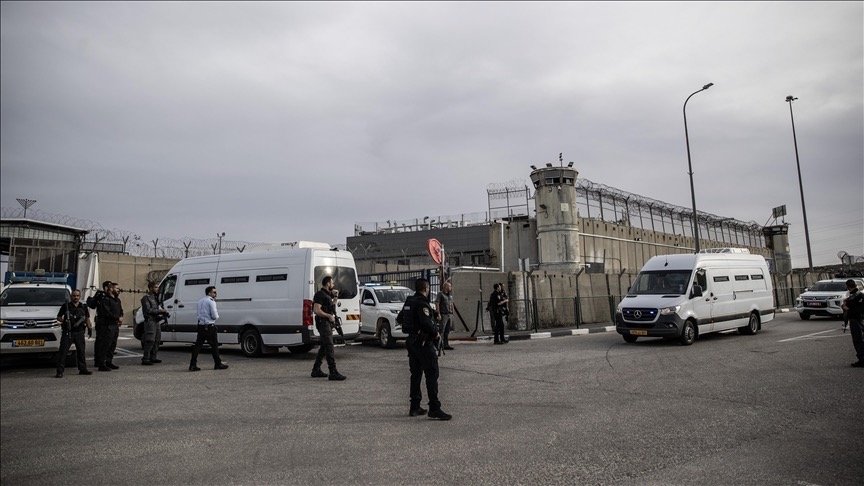
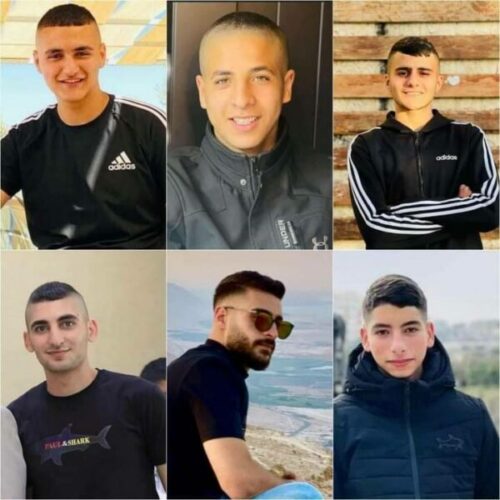
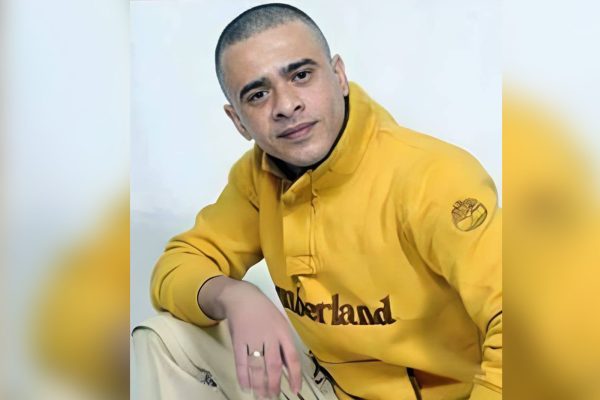
Israeli settlers rampaged through the occupied West Bank village of Burqa, northwest of Nablus, on the evening of 19 February, attacking homes and destroying vehicles under the protection and coordination of the Israeli military.
Settlers threw Molotov cocktails at several Palestinian homes as Israeli troops shut down all main roads to the village.
Palestinian news agency WAFA reported that Israeli troops “did nothing to stop the colonists’ attack,” adding that Israeli forces used large amounts of tear gas and prevented ambulances from reaching the wounded.
Earlier on Monday, Israeli settlers, with the help of troops, fenced off a tract of Palestinian-owned land south of Jerusalem with barbed wire to occupy it.
Settler violence against Palestinians in the occupied West Bank has surged to all-time highs under Benjamin Netanyahu’s government. It has escalated even further since Operation Al-Aqsa Flood and the Gaza war.
Palestinians have been subject to increasing levels of forced displacement since the war began.
Since October, over 1,000 people – including hundreds of children – have been forced by settlers and Israeli army soldiers to abandon their homes, according to the UN.
Additionally, more settlers are being armed. Thousands of weapons have been handed out to settlers in the occupied West Bank under an initiative sponsored by the Israeli National Security Ministry.
According to Israeli watchdog NGO Peace Now, Israeli settlers established a record-breaking 26 outposts in the occupied West Bank in 2023. The report correlates the rise in unlawful settlement construction with the Jewish supremacist policies of the Israeli government.
Israeli settlements in the occupied West Bank are illegal under international law.
Nonetheless, the Don’t Buy Into Occupation (DBIO) civil society organization highlighted in December that European financial institutions have provided billions of dollars to support settlement construction in the occupied West Bank over the past few years.
The number of Israeli arrests in the West Bank since 7 October has risen to around 7,020, multiple institutions concerned with the rights of detained Palestinians reported on 13 February.
According to the human rights groups, 18 arrests were made in the West Bank overnight, including two women from Jericho alongside other children and former prisoners.
Overnight arrests made by the Israeli forces were mainly carried out in Hebron and Qalqiliya, while other arrests were made across Jericho, Nablus, Jerusalem, and Ramallah.
The Ministry of Detainees and Ex-Detainees Affairs, the Palestinian Prisoners Society (PPS), and the Addameer Prisoner Care and Human Rights Association released a joint statement revealing that the total number of arrests – including individuals from the 1948 territories – amounted to approximately 220 women and 440 children.
The number reported includes those arrested in their homes, at military checkpoints, those taken hostage, and those forced to surrender under pressure.
The statement added that 53 journalists had been detained since 7 October – 36 of whom remain imprisoned – with 21 others under administrative detention without charge or trial.
The detention campaigns are accompanied by escalating instances of abuse, beatings, and threats against the detainees and their family members. This includes the destruction of homes as well as the confiscation of vehicles, money, and jewelry.
They also reported executions targeting members of detainees’ families.
The data given by the prisoner rights groups does not include those arrested from Gaza due to Israel’s refusal to disclose such information.
The total number of Palestinians detained in Israeli prisons is estimated to exceed 9,000 individuals. Among them, there are 3,484 administrative detainees and 606 individuals classified as “illegal fighters” from Gaza.
The Iranian Foreign Ministry spokesman has strongly condemned the assassination of Palestinian patients by Israeli forces in a hospital in the occupied West Bank, calling on the international community not to remain silent in the face of the “terrorist act.”
Nasser Kan’ani made the remarks in a statement on Tuesday, after a unit of undercover Israeli special forces fatally shot three young Palestinians inside Ibn Sina Hospital in the west of Jenin earlier in the day.
The Iranian Foreign Ministry spokesman went on to say that such brutal action can pave the way for normalization of “organized terrorism” in the world, urging the international community not to remain silent and condemn the Israeli regime’s “barbaric behavior.”
Kan’ani further noted it is regrettable that the Israeli regime’s supporters are silent in the face of such obvious crimes in medical centers and the continued activity of the Zionist genocide machine.
Palestinian media outlets reported on Tuesday that members of the Israeli hit squad dressed as doctors, nurses, and even civilians went up to the third floor of the Ibn Sina Hospital and shot three young Palestinians dead with guns equipped with silencers before escaping the building.
“This morning three young men were martyred by the bullets of the occupation [Israeli] forces who stormed the Ibn Sina Hospital in Jenin and shot them,” the Ministry of Health in Ramallah said.
One of the slain Palestinians was undergoing treatment in the hospital for some three months since he was injured by the Israeli army.
There was no apparent attempt to arrest the Israeli assailants.
The Israeli military later claimed that the three Palestinians were members of a team affiliated to the Hamas resistance movement planning to carry out attacks against the regime.
Hamas said in a statement that Israel’s “crimes will not go unanswered,” adding that the killings are a “continuation of the occupation’s ongoing crimes against our people from Gaza to Jenin.”
The Palestinian Ministry of Foreign Affairs also condemned “in the strongest terms the occupation forces’ assassination of the three young men.”
Israel has ramped up its aggression in the West Bank since its genocidal war on Gaza began in early October.
Nearly 350 Palestinians have been killed by Israeli forces in the occupied West Bank since October 7, when Israel waged the war on Gaza after Hamas carried out a historic operation against the occupying entity in retaliation for its intensified atrocities against the Palestinian people.
The Israeli aggression has so far killed at least 26,637 Palestinians, mostly women and children, and injured 65,387 others in Gaza. The Tel Aviv regime has imposed a “complete siege” on the territory, cutting off fuel, electricity, food, and water to the more than two million Palestinians living there.
If what is currently happening in the Israeli-occupied West Bank took place before 7 October, our attention would have been fixated completely on that part of Palestine. The ongoing Israeli genocide in Gaza, however, has distracted us from the important events underway in the West Bank, which is now a stage for the most violent Israeli military campaign since the Second Palestinian Uprising between 2000 and 2005.
At the time of writing, since 7 October more than 360 Palestinians have been killed by Israelis in the West Bank, while thousands have been wounded. Thousands more have been arrested. These numbers exceed, by far, the total number of Palestinians killed in 2022, which was already designated by the UN as the most violent year on record in the occupied territory since 2005.
How are we to understand the logic behind the Israeli violence in the West Bank, given that it is already under a brutal Israeli military occupation and the joint “security” control of the Israel “Defence” Forces and the Palestinian Authority? And if the Israelis are honest in their claim that their offensive in Gaza is not genocide against the Palestinian people per se, but a war against Hamas, why are they attacking the West Bank with such ferocity, killing people from all different political and ideological backgrounds, and many civilians, including children?
The answer lies in the growing political power of the Jewish settlers, whose presence is illegal under international law. Historically, there are two kinds of Israeli violence meted out routinely against Palestinians: violence carried out by the Israeli army; and violence carried out by Jewish settlers.
Palestinians understand fully that they are intrinsically linked. The settlers often attack Palestinians under the protection of the Israeli army, and the latter often launches violent raids on Palestinians for the sake of the illegal settlers.
In recent years, however, the relationship between these two violent entities has started to change, thanks to the rise of the far right in Israel, which is situated mostly within illegal settlements, and their supporters inside Israel. Hence, it should not be a surprise that both of the most far-right ministers in the extremist government of Benjamin Netanyahu, Itamar Ben-Gvir and Bezalel Smotrich, are themselves settlers.
As soon as Ben-Gvir became National Security Minister, he began promoting the idea of establishing a National Guard. After 7 October, he managed, with direct support from Netanyahu’s government, to establish so-called civilian security teams. Israeli officials like Yair Lapid, for example, have described Ben-Gvir’s new armed group as a “private militia”. And he is right.
Although Ben-Gvir insists that the war in Gaza must continue, his actual aim from this — aside from the ethnic cleansing of the Palestinian population in the territory — is to use this rare opportunity to fulfil all of the wishes of Israel’s political extremists, all at once.
Remember, Ben-Gvir came to power based on the lofty promises of annexing the West Bank, expanding settlements and seizing control of Palestinian holy sites in East Jerusalem, among other extremist ideas. Al-Aqsa Mosque was a major target for him and his equally far-right followers, who believe that only by building a Third Temple on the ruins of Islam’s third holiest shrine would Israel be able to reclaim total control over the Holy Land.
Ben-Gvir’s bizarre political language could once have been dismissed as the extremism of a fringe politician.
Not any more, though. He is arguably the most powerful politician in Israel, due to his ability to use six seats in the Knesset to make or break Netanyahu’s ruling coalition.
While Netanyahu is behaving largely out of desperation to save his own political skin, his Defence Minister Yoav Gallant is fighting to redeem the tattered reputation of the army. Others, like War Council Minister Benny Gantz, are walking a political fine line so as not to be perceived as the ones who have broken Israel’s fragile political unity during a most decisive war.
None of this applies to Ben-Gvir. The man sees himself as the political descendant of the likes of the notorious late Meir Kahane; he is a fervent advocate of religious war. And since religious wars can only be the outcome of chaotic social and political circumstances, he is keen to instigate these very events that could ultimately lead to the war that he covets most.
One of the prerequisites is unhinged violence, where people are killed based on the mere suspicion of being “terrorists”. For example, on 18 January, Ben-Gvir told Israeli border police officers during a visit to a base in the West Bank, “You have complete backing from me.” He urged them to shoot at every “terrorist” — for which read “Palestinian” — even if they do not pose a threat.
Ben-Gvir perceives all Palestinians in the West Bank to be potential terrorists, the same way that Israel’s “moderate” President Isaac Herzog perceives all in Gaza as being “responsible” for the actions of Hamas. This essentially means that the Israeli security forces — soldiers and police — in the West Bank have the green light to kill Palestinians there with the same impunity as those killing Palestinians in Gaza.
Even though security and intelligence officials in Israel have warned Netanyahu against launching war on another front in the West Bank, the Israeli army has no other option but to fight that supposed “war” anyway. Why? Because it is already seen by a large constituency in Israel as a failure for its inability to prevent or respond successfully to the 7 October attacks, even after over 100 days of war in Gaza. To redeem their tarnished honour, senior officers are happy to fight a less challenging “war” against isolated and under-equipped Palestinian fighters in small parts of the West Bank.
Ben-Gvir, of course, is ready to manipulate all of this in his favour. And he is getting precisely what he wants: expanding the war to the West Bank, ethnically-cleansing Palestinians; torturing prisoners; demolishing homes; torching properties; and all the rest.
Arguably his greatest achievement so far is his ability to create a perfect amalgamation between the political interests of the settlers, the government and the security apparatus. His aim, however, is not merely to steal yet more Palestinian land, or expand a few settlements. His wished-for religious war will, he believes, lead ultimately to the ethnic cleansing of Palestinians, not just from Gaza, but also from the West Bank.
The war in Gaza is a perfect opportunity for these sinister goals to be achieved. For now, this genocidal war continues to create opportunities for religious Zionism to acquire new followers, and to lay deeper roots within Israel’s political establishment. A sudden end to the war, however, could represent the marginalisation of religious Zionism for years to come.
The Israeli Knesset has approved legislation that allows holding Palestinians deemed security prisoners for up to 180 days without access to a lawyer. Since October 7, Israel has placed thousands of Palestinians in administrative detention.
On Monday, the Israeli Knesset approved a law that extends “the emergency regulations that have allowed Israeli authorities to deny security prisoners, detained since October 7, the option to meet with their lawyers,” Haaretz reports. “The regulation will be valid for an additional three months, and will allow the state to prevent prisoners from meeting with a lawyer for up to 180 days.”
Since October 7, Israel has rounded up thousands of Palestinians in the West Bank and Gaza. The number of Palestinians held in administration detention has increased from around 1,200 to over 3,300 in just three months. A total of 8,600 Palestinians are now in Israeli prisons.
Israel has severely restricted all communications with those in detention. Family members often report even struggling to locate their loved ones after getting arrested by Israeli occupation forces.
Since October 7, Palestinians have been beaten, tortured, and killed in Israeli prisons. National Security Minister Itamar Ben Gvir, a member of the extremist Jewish Power, has significant influence over the conditions of Palestinian prisoners.
Ben Gvir, who has called for disloyal Palestinians to be expelled from Israel, has already degraded the conditions detainees are subject to using over-crowding as an excuse. The Knesset is considering legislation that will give the minister further authority to erode the rights of Palestinian prisoners.
Conditions are horrible for those men indiscriminately rounded up by the Israeli soldiers in Gaza. The Tel Aviv-based +972 Magazineconducted an investigation into the treatment of detained Palestinians and concluded, “systematic abuse and torture by Israeli soldiers against all of the detainees, civilians and combatants alike.”
“According to these testimonies, Israeli soldiers subjected Palestinian detainees to electric shocks, burned their skin with lighters, spat in their mouths, and deprived them of sleep, food, and access to bathrooms until they defecated on themselves.” The outlet added, “Many were tied to a fence for hours, handcuffed, and blindfolded for most of the day. Some testified to having been beaten all over their bodies and having cigarettes extinguished on their necks or backs. Several people are known to have died as a result of being held in these conditions.”
The Israeli occupation and its settlers committed 146 violations against the Bedouin communities in the occupied West Bank last month, Al-Baydar Organisation for the Defense of Bedouin Rights said.
The violations include physical assaults on citizens, demolition of homes and confiscation of land, uprooting and destruction of crops, seizure of property, the establishment of new illegal settlement outposts, physical injuries, demolition notices for citizens’ homes, setting up ambushes at night to terrorise citizens and preventing shepherds from accessing pastures.
The governorate of Hebron suffered the highest number of attacks, 53 , followed by Bethlehem governorate with 26 attacks.
The General Supervisor of Al-Baydar Organisation for Defending Bedouin Rights, Hassan Malihat, said Bedouin communities suffered from a number of major attacks at the hands of Israeli occupation forces and illegal settlers in December, which reflects a clear policy of ethnic cleansing.
He added that the occupation authorities and settlers are exploiting the war on Gaza to carry out the largest collective displacement operation against Bedouin communities.
Israel’s Finance Minister Bezalel Smotrich on Friday once again turned down US request to transfer tax money collected by Tel Aviv to the Palestinian Authority as the allies remain divided on the issue, Anadolu Agency reports.
Not a single shekel (Israeli currency) will be sent to Gaza as long as “I am Finance Minister,” Smotrich said in a statement.
He has a high respect for the US, whom he describes as Israel’s best ally in the world, but the minister said, “We will never abandon our fate to others.”
“This is not an extremist position. This is a position which desires life, and which is required by the situation,” the right-wing minister added.
Since the start of the Israeli war on Gaza on 7 October, Smotrich repeatedly voiced absolute rejection of fully transferring the Palestinian taxes that Israel collects for the Palestinian Authority.
In November, he conditionally approved the transfer of taxes to Palestinians by deducting the amount allocated to Gaza by the Palestinian Authority.
On Thursday, the American Axios website reported that US President Joe Biden had “a difficult conversation” with Israeli Prime Minister Benjamin Netanyahu about withholding part of the tax revenue of the Palestinian Authority.
Axios cited a US official, who said the US administration is concerned that “an economic collapse of the Palestinian Authority could lead to a violent escalation in the occupied West Bank as a result of it not being able to pay its security forces their salaries.”
The tax revenues – known in Palestine and Israel as maqasa – are collected by the Israeli government on behalf of the Palestinian Authority on Palestinian imports and exports and Israel in return earns a commission of 3%.
The revenues are estimated to total around $188 million every month and represent the main source of income for the Palestinian Authority.
The Palestinian government uses these funds to pay the salaries of public employees and retirees, who number 140,000 and 53,000, respectively.
Israel has killed six more Palestinians in the occupied West Bank. The six were targeted by an Israeli drone in Nour Shams Camp, located east of Tulkarm. They were confirmed dead at the Martyr Thabet Thabet Government Hospital in the city.
Hospital officials noted that Israeli occupation forces delayed ambulances trying to reach the victims of the attack. After a delay of 65 minutes, the Israelis released an ambulance carrying three seriously injured individuals from Nour Shams camp, reported the Palestinian Red Crescent.
The head of the Tulkarm Doctors’ Syndicate, Radwan Balibla, reported that an Israeli soldier stabbed one of the injured Palestinians inside the ambulance. He added that other wounded Palestinians were also assaulted with kicks, punches and rifle beatings as Israeli soldiers threatened to kill them.
The Palestinians killed were identified as 19-year-old Ahmed Anwar Hamarsha; Ahmed Abdel Rahman Issa, 19; Adham Muhammad Fahmawi, 19; Yazan Ahmed Wahid Fahmawi, 23; Fares Hossam Fahmawi, 29; and Hamza Ahmed Mustafa Fahmawi, 17. A 24-year-old Palestinian sustained serious head injuries. His condition was described as critical.
According to Wafa news agency, the occupation forces used artillery to target an abandoned house in the Aktaba suburb, east of Tulkarm, near the refugee camp. Palestinian homes in different areas of the camp, including Al-Manshiya, Al-Mahjar, Al-Joura, Al-Damj and Jabal Al-Nasr, were also targeted by the occupation forces. They conducted extensive raids inside these homes, interrogated the occupants and destroyed their belongings.
Furthermore, Israeli troops used high-rise buildings in and around the camp as observation posts. Bulldozers were employed to demolish infrastructure in the camp’s main streets, square and Al-Manshiya neighbourhood. This destruction included the demolition of public and private property.
At least 320 Palestinians have been killed in the occupied West Bank since 7 October, according to the local Palestinian authorities. More than 3,200 others have been wounded.
Biden smirked and responded, “I know”, when told by a guest that Netanyahu is drawing the U.S. into a civilisational conflict – and further that Netanyahu blames him (Biden), complaining that the White House wants to block Israel from getting at the root of the problem, by harping on about Gaza and the ‘day after’.
In practice, what Netanyahu is doing is simply mounting a classic flanking manoeuvre – attempting to circumvent Biden by pointing to the ‘broader conflict’ with Iran: ‘Why are you pestering me about Gaza when there’s a monumental conflict raging’, suggests Bibi in exasperation?
“This is not only ‘our war’ but in many ways your war… This is a battle against the Iranian axis… now threatening to close the maritime strait of Bab Al-Mandeb… It is the interest … of the entire civilized community”, Netanyahu has said – not very subtly.
Biden’s reaction is a smug smile, hinting that he thinks he can outplay Netanyahu (‘the fox’). This is Biden’s approach: He aims to disarm Netanyahu’s allegation of an obstructionist U.S. through a parade of top-level visits that reiterates his unstinting support Israel – and to pre-empt Bibi, through insisting that he (Biden) will take care of the non-Gaza issues (Hizbullah, Yemen etc.).
So, the U.S. is assembling a maritime force to confront AnsarAllah in Yemen; the Biden Admin will act to sanction violent settlers in the West Bank; it is warning Baghdad to rein-in the Hashad al Sha’abi; and his envoys in Beirut are trying to forge a ‘diplomatic agreement’ that will include the withdrawal of Hizbullah’s Radwan Forces to the other side of the Litani River in southern Lebanon, and also deal with the unresolved border disputes between Israel and Lebanon.
Biden prides himself on being a hugely experienced foreign policy actor – and thinks himself too wily for Bibi’s tricks. But maybe, Netanyahu – for all his many faults – better understands the Region?
Biden clearly is being played. Even though he fails to recognize it.
Netanyahu knows that ‘no way’ will Hizbullah disarm, and withdraw to north of the Litani. He knows this, and thus can wait out Biden’s diplomatic failure, before saying that the approximately 70,000 Israeli citizens displaced from the northern towns in the wake of 7 October need to ”go home”, and that if the U.S. cannot remove Hizbullah from the border-fence, then Israel will do it.
Netanyahu is using Biden’s diplomatic Lebanese initiative to build European justification for an Israeli operation in a few weeks’ time to push Hizbullah away from the border with Israel. (An Israeli operation against Hizbullah has been in the works from the outset of the Gaza war).
Netanyahu knows too that control over settler violence in the West Bank lies not with him, but is in the hands of his partners: i.e., Ministers Ben Gvir and Smotrich. Neither he, nor Biden can dictate to them – they have been quietly increasing the squeeze on West Bank Palestinians for months.
And finally, Netanyahu knows the Houthis: They will not be deterred by Biden’s maritime flotilla. They will, rather, relish drawing the West into a Red Sea quagmire.
Like it or not, Biden’s tactic of containing and pre-empting regional escalation through the U.S. itself becoming lead actor – in lieu of Israel – is clearly drawing the U.S. deeper into conflict. Does Biden believe that the Houthis will just quietly ‘roll-over’ because the Gerald Ford is anchored off Bab Al-Mandeb, or that Hizbullah will accept instruction from Amos Hochstein?
The second way that Biden is being outplayed is through him seeing the Israeli problem as ‘just Bibi’ – indulging in personal politics. Of course, it is true that the Israeli PM is moulding Israeli politics to his own survival needs; yet pause a moment to consider what President Herzog said on Tuesday during an interview facilitated by the Atlantic Council, a leading Washington-based think tank.
Herzog has long been viewed as distinctly ‘dovish’ and ‘Leftist’ by the Beltway foreign policy establishment – prior to the war – compared to Netanyahu.
In the interview, Herzog said: “We intend to take over the entire Gaza Strip and change the course of history”. He said that the current conflict is a clash of “a set of civilizational values” and he cast Hamas (in pure Manichaean terms) as a “force of evil”, adding that Israel would no longer tolerate Gaza being a “platform for Iran – driving everyone into the abyss of bloodshed and warfare”.
Not much daylight then between him and the PM then.
The convergence between Herzog and Bibi reflects, perhaps, a more substantive change taking place in Israel – a strategic shift that extends far beyond Biden’s personal obsession with Bibi:
Since 7 October, the New York Times and the Jerusalem Post report that 36% of Israelis have moved decidedly to the right on a number of political issues, including support for settlers in the West Bank, endorsements for far-right politicians, and even settlements again inside the Gaza Strip. And while public opinion of Netanyahu himself is faltering, his government is not expected to fall.
And even were that to occur, the more important point to grasp is that support for the policies upheld by Netanyahu’s radical Rightist government is growing, and rapidly.
Israel’s Right generally believes in Israeli control of the West Bank and Gaza, with many right-wing Israelis opposed to the principle of a Palestinian state existing at all alongside Israel. This can be seen in many of the current government’s policies, which have worked toward expanding Israeli settlement of the West Bank and rendering Gaza unlivable for Palestinians.
On the opposite side of the spectrum sits Israel’s Left. The Jerusalem Post notes that the Left largely believe that Israel is ‘occupying’ the West Bank, and that an end to the conflict can only be achieved by ending the occupation and enabling a two-state solution. But no one is explicit on where that second state – a Palestinian state – would be situated. Legally it would be Gaza, the West Bank and part of Jerusalem. But who could enforce that? Who would expel settlers from the West Bank?
For many Israelis, the separation ‘apartheid’ Occupation state of the past 30 years was the workable ‘two-state solution’ – but its pillars (structural separation, military enforcement and deterrence) which had for many Israelis seemed to promise the ‘quiet’ that many hoped for – blew apart on 7 October.
“The trauma of what happened on Oct. 7 shifted Israeli society. It made them question the most basic tenets of whether they were safe in their homes”,said Israeli columnist, Tal Schneider:
“They are calling now for more — more military, more protection, more hard-line policies”.
“Many right-wing people,” Ariella Marsden writes in the Jerusalem Post, “and a minority of left-wingers, saw 7 Oct as proof that peace with the Palestinians is impossible”. Not surprisingly, thinking has turned to population removal which chimes with Netanyahu’s ‘new war of Independence’ theme.
In short, Biden may believe that his ‘long experience’ puts him on the ‘right side’ in judging events. His experience however, is drawn from another era. The political Israel he knew is over: It has reached the end of the road in respect to the old paradigm of its Palestinian modus vivendi. Demography no longer pushes towards ‘giving’ the Palestinians a state, but rather to a clearing of the land of all ‘hostile populations’.
Israelis are rummaging now for their new solution.
And just as Hamas’ resistance has pointed to new ways of conducting warfare, so Biden’s ‘long experience’ exemplified in the sending of 1960s era carriers and vessels to sit offshore, in an age of smart nimble, often untraceable drones and pinpoint missiles, points to something also passé.
The U.S. is directly engaged today in Yemen, Lebanon, the West Bank, Iraq and Syria. And as the war widens, so the U.S. will be held at least partly responsible – You deliberately let Gaza break, and what’s broken, you own. What further gets broke, you own that too.
A destitute 2 million Gazans will be all refugees with no government to provide basic functions and services. Does Netanyahu get it? Of course. Do the vast majority of Israelis care? Nope. But the rest of the world does, and sees a dark stain spreading across the map, and leeching into the West.
And does the U.S. Red Sea flotilla; does the diplomatic effort in Lebanon; do the frantic calls to China to ask for help to rein-in Iran, and the efforts in Baghdad – will this suffice to bring an end to the Axis’ plan?
No – the Resistance must see the U.S. floundering and that Israel – suffused with anger – is positively inviting the next ascent up the escalatory ladder of diffused incremental wider conflict.
The Israeli occupation authorities have confirmed the involvement of 19 Israeli prison guards in the brutal beating of a Palestinian prisoner, which ultimately led to his death on 18 November.
According to Israel Hayom, Thayer Abu Assab was 38 and from the northern West Bank city of Qalqilya. An autopsy was carried out last month which concluded that he had been subjected to assault and beatings, leading to his death.
All 19 of the prison guards implicated in the assault have been released under “restrictive conditions” pending the conclusion of an investigation.
Israel’s far-right National Security Minister, Itamar Ben-Gvir, has voiced his support for the guards involved in the incident, claiming that they are innocent until proven otherwise. He opposes the idea of charging any of them in connection with the killing of Abu Assab and proceeded to describe the Palestinian freedom fighters detained in Israeli prisons as “human scum” and “murderers”.
The Prisoners’ and Ex-Prisoners’ Affairs Commission had confirmed earlier that the occupation authorities were responsible for the killing of Abu Assab, who was held in Al-Naqab Prison in the Negev from 2005, serving a 25-year sentence. The commission accused the Israel Prison Service (IPS) of carrying out systematic and premeditated killings of Palestinian prisoners.
As many as six Palestinian prisoners have died in detention recently, including one from Gaza who has not been identified.
There are now more than 7,800 Palestinians being held in Israel’s prisons, including more than 2,870 administrative detainees who are held with neither charge nor trial, and 260 classified as “unlawful combatants” from Gaza. The number may be higher because Israel doesn’t release the details of all of the Palestinians it has imprisoned.
DCIP estimates an average of 165 Palestinian children were held in Israeli military detention each month in 2023. Each year, Israeli forces detain between 500 and 700 Palestinian children and prosecute them in military courts.
Children typically arrive at interrogation bound, blindfolded, frightened, and sleep-deprived. Children often give confessions after verbal abuse, threats, physical and psychological violence that in some cases amounts to torture.
Israeli military law provides no right to legal counsel during interrogation, and Israeli military court judges seldom exclude confessions obtained by coercion or torture.
From testimonies of 75 Palestinian children detained by Israeli forces from the occupied West Bank, including East Jerusalem, DCIP found that:
61 percent experienced physical violence following arrest
96 percent were hand-tied
88 percent were blindfolded
47 percent were detained from their homes in the middle of the night
69 percent faced verbal abuse, humiliation, or intimidation
65 percent were subject to at least one strip search
71 percent were denied adequate food and water
65 percent of children were not properly informed of their rights
97 percent were interrogated without the presence of a family member
95 percent were not informed of the reason for their arrest
37 percent were subject to stress positions
43 percent were shown or signed documents in Hebrew, a language most Palestinian children don’t understand
24 percent were isolated in solitary confinement for two or more days
The average amount of time that a Palestinian child detainee was isolated in solitary confinement in 2023 was 26 days, according to evidence collected by DCIP. The longest period of solitary confinement documented by DCIP was 40 days in 2023.
Israeli authorities held at least 36 Palestinian children in administrative detention in 2023, according to documentation collected by DCIP. Administrative detention is a form of imprisonment without charge or trial regularly used by Israeli authorities to arbitrarily detain Palestinians, including children. Palestinian children held under administrative detention orders are not presented with charges, and their detention is based on secret evidence that is neither disclosed to the child nor their attorney, preventing them from preparing a legal challenge to the detention and its alleged basis.
Israeli forces escalated arrest operations throughout the occupied West Bank after October 7, arresting more than 200 Palestinian children to interrogate, prosecute, and imprison in the Israeli military detention system, according to estimates by DCIP.
DCIP estimates that 130 Palestinian child prisoners were released by Israeli forces as part of a truce agreement with Hamas in November, including 17 children in administrative detention.
DCIP published a report on May 31, 2023, titled “Arbitrary by Default,” asserting that Israeli authorities’ systematic denial of fair trial rights to Palestinian children detained by Israeli forces from the occupied West Bank and prosecuted in Israeli military courts constitutes arbitrary detention.
In June 2023, Israeli forces shot 14-year-old Ihab in the leg in Balata refugee camp, near Nablus in the northern occupied West Bank. Then, Israeli forces deliberately blocked an ambulance from reaching him to provide medical care.
Israeli settler terrorism is a strategy employed by Israel to advance its territorial gains and the ethnic cleansing of Palestinians.
US President Joe Biden recently called out Benjamin Netanyahu’s government as being the “most extreme” he’s seen, and pointed to members of the Israeli Prime Minister’s coalition as being “part of the problem.”
His comments immediately drew attention to Israel’s far-right finance minister, Bezalel Smotrich, along with Israeli security minister, Itamar Ben Gvir, and illegal West Bank settlers in general.
But Israeli settler extremism is not isolated to the West Bank, nor to Israel’s current far-right government’s ministers like Ben Gvir and Smotrich. Israeli settlers occupy the highest positions in the military and government, while extremists are operating special militias inside the Israeli army – with its approval – and additionally receiving funds from US charitable organizations.
Israeli settler attacks on Palestinians have been steadily on the rise over the past years, with an average of three violent incidents occurring per day in 2023, compared to two in 2022 and one in 2021, according to the United Nations.
One of the worst recorded attacks this year came on February 26, when a settler militia force, at least 400 strong, descended upon several villages surrounding the Palestinian city of Nablus, including the town of Huwara.
The settler attack, even described as a pogrom by top Israeli general Yehuda Fuchs, resulted in the murder of a Palestinian man, in addition to the burning down of at least 30 homes and 100 cars.
In support of the settler assault, Israel’s Finance Minister Bezalel Smotrich openly proclaimed that he thought “the village of Huwara needs to be wiped out. I think the State of Israel should do it.”
In mid-June, another 400 armed Israeli settlers attacked Turmusaya and surrounding villages, torching 30 homes and around 60 cars, additionally resulting in over 100 injuries and the murder of another Palestinian man; while he was attempting to save children.
The two most notorious far-right members of Israel’s current coalition government are ministers Smotrich and Ben Gvir, both of whom live in illegal settlements and were longtime activists as part of the settler movement.
Ben Gvir, who has faced a laundry list of criminal charges ranging from terror group affiliations to incitement of racism, resides in the extremist settlement of al-Khalil (Hebron). Smotrich currently resides in Kedumim, a settlement located just a short drive from Yitzhar – the other infamous settler community.
Their unified list, running under the name Religious Zionism, secured the third-highest number of votes from the Israeli public and now holds the position of the second-largest party in the current coalition government.
Not ‘a few bad apples’
Dror Sadot, spokesperson for B’Tselem, Israel’s leading human rights organization, emphasizes that we cannot downplay the broader support and backing that enables such actions. She tells The Cradle that: “Even if it wasn’t this current Ben Gvir-Smotrich government, it would still be Apartheid.”
“When the Huwara pogrom happened, we should’ve paid attention to what sort of backup the settlers got from those politicians. What they are saying reveals the truth, it reveals the mechanisms in place that were always there under previous governments.”
Sadot continues: “We shouldn’t talk about settler violence as if it is a few bad apples, or extremists, or anything like this, because, at the end of the day, Israel is backing everything.”
While attention has been drawn to figures like Ben Gvir and Smotrich, the truth is that radical right-wing settlers occupy significant positions within the Israeli government and military.
The recent decision to launch an invasion of Jenin, for example, was heavily influenced by pressure from settler communities. Yossi Dagan, head of the regional settlement council in the Northern West Bank, played a prominent role in encouraging the violent attack on Jenin, which experts at the UN have labeled a war crime.
Yet, Dagan’s ambitions did not stop there. He called on the government to “order the IDF to immediately launch a larger, broader, more thorough and in-depth operation.”
Radicals in the corridors of power
Israeli Member of Knesset for the ruling Likud Party, Avichai Boaron, has also made alarming statements. Following the military operation in Jenin, Boaron suggested that “we must expand the military operation to include Nablus and Ramallah as well.”
Notably, Boaron himself is a settler activist who has come under fire for using euphemisms to refer to Palestinians while proposing extermination camps as a solution.
In 2018, Netanyahu posted on social media to celebrate Avichai Boaron’s success with the Amihai settlement, which was built in 2017 as an alternative to the evacuated settler outpost of Amona – illegally developed on Palestinian land – that had turned into a “crisis” for the Israeli public.
The Amihai settlement was added to the illegal settlement of Shiloh, accompanied by the settler outposts of Adei Ad, Geulat Zion, and others, which happen to surround Turmusaya, along with other Palestinian villages which have recently been targets of large-scale settler-militia attacks.
Boaron recently secured a position in the Likud Party to replace David Amsalem, who Netanyahu promoted to be the Israeli Regional Cooperation Minister. Amsalem is also a West Bank settler, from the illegal colony of Ma’alei Adumim, and is currently in charge of “advancing partnerships with states in the region (the Mediterranean basin) and the Palestinian Authority.”
Moreover, the leadership of the Israeli military itself is not immune to this influence. Herzi Halevi, the current Chief of Staff, is a resident of the illegal colony of Kfar Ha-Oranim in the West Bank. His appointment to this key role was approved last year under the government of Yair Lapid, with no major objections.
Avi Moaz, the deputy minister and head of the national Jewish identity department in the Prime Minister’s Office, resides in an illegal settlement stronghold located in the Silwan area of occupied East Jerusalem. His position holds significant weight, and he is a leading figure in the Noam Party.
Speaking to The Cradle, the Executive Director of Bisan Center for Research and Development, Ubai al-Aboudi, says that “the settlers are a militia, these are not civilian groups, most of them are ideologues, they see themselves as tasked with replacing Palestinian villagers, their houses, and they call for this openly.”
The two strongholds of the settler terror groups are situated around the Palestinian cities of Al-Khalil and Nablus. Od Yosef Hai Yeshiva, in Yitzhar settlement, is the indoctrination center for many of the most extreme settler terrorists, where they are taught ideas, such as, that Arabs are a “cancer” and that killing non-Jewish babies is permissible.
The army colludes with settlers
According to the conclusions of a 2022 report published by B’Tselem on settler violence, the attacks “are not perpetrated by “bands of outlaws” or “bad seeds,” nor are they simply “violent outbursts” or “unusual incidents,” but rather they are a “strategy employed by the Israeli apartheid regime.”
A 2021 investigation conducted jointly between The Intercept and Local Call found that at least four of the 11 Palestinians who were killed in the West Bank on 14 May of that year, were due to deliberate joint attacks carried out by Israeli settlers and soldiers.
In the May 2021 joint settler-soldier attack on Palestinians in the village of Urif, the Israeli military confirmed in a statement that one of the masked settlers caught on film firing at Palestinians, alongside soldiers, was, in fact, from the settlement of Yitzhar and himself an active Israeli soldier.
Zvi Sukot, who was a spokesperson for the settlement of Yitzhar and part of the ‘Hilltop Youth,’ applauded the Israeli army for the joint attacks on Palestinians at the time. Sukot, who is now a member of the Israeli Knesset as part of the current government, made his name campaigning for the release of a group of settlers who burned a Palestinian baby to death in 2015.
Israeli settlers were caught on a leaked video dancing at a wedding, celebrating the murder of the 18-month-old Ali Dawabsheh, and stabbing at pictures of the Palestinian family they had killed alongside him. Present also at the wedding was the legal representative for the terrorist settlers, Itamar Ben Gvir.
As recently as June 24, Israeli settlers were documented to have used Israeli army-issued assault rifles – Colt M4’s manufactured in the US – to shoot at Palestinians in the village of Umm Safa.
The settler extremists, despite not having known structured armed organizations, were revealed in May to have been integrated into a special Israeli military unit. The extremist settlers belonging to the Hilltop Youth have allegedly been inducted into the newly created ‘Desert Frontier’ army unit, where they represent a majority of the Unit and are carrying out severe abuses across the West Bank.
B’Tselem spokeswoman, Dror Sadot, says that her organization has “documented hundreds of cases of settler violence, during many of which the soldiers were there, and in the “best cases” you will see they won’t do anything, but in the worst cases they will join the settlers against the Palestinians.”
In a frightening development, Israeli Security Minister Ben Gvir has been granted permission to build Israel’s new “national guard,” which is shaping up to be a publicly funded ultra-nationalist militia force to serve the extremist goals of the Israeli settler movement. One of the Israeli colonel’s that is helping Ben Gvir form the national guard is Efraim Laor, who made the following comment during a lecture in 2019:
“An enemy needs to be killed, you don’t shoot at [terror] cells, you shoot between the eyes – whoever can’t do that, 15 cm lower. Including those who are there and are not attacking. But you see an enemy – you do not find out whether he is involved or not — he’s involved — he needs to be eliminated.”
US charities fueling illegal settlements
The Hilltop Youth settler group, often portrayed as “bands of outlaws,” have direct links to the Israeli government and even charitable donations from the US. In 2008, the Hilltop Youth ushered in a new era of what was called “Price-Tag” violence, where settlers would attack Palestinian civilians, along with their mosques, schools, crops, and homes.
One such figure within this context is Itay Zar, known as the first Hilltop Youth, who established the settler outpost of Havat Gilad in 2002. It is important to note that settlement outposts, including settler “farms,” are considered illegal under Israeli law.
However, many are eventually recognized by Israeli authorities, as was the case with Havat Gilad in 2018. The proximity of Havat Gilad to the Yitzhar settlement, which houses a notoriously radical Yeshiva (Jewish religious school), illustrates how extremist belief systems are transmitted within these religious educational institutions.
One US-based charity named the Central Fund of Israel (CFI) was found to have funded an extremist Yeshiva, along with the Honenu group that provides legal funds and financial support for settler terrorists. CFI still operates as a charity in the US, despite having funneled tens of millions of dollars to far-right extremist groups in occupied territory.
Worryingly, the settler extremists, despite not having known structured armed organizations, were revealed in May to have been integrated into a special Israeli military unit. The extremist settlers belonging to the Hilltop Youth have allegedly been inducted into the newly created Desert Frontier army unit, where they represent a majority of the unit and are carrying out severe crimes across the West Bank.
A concerning web of US-based and registered charities exists, providing direct financial support to organizations guiding the settlement movement, according to Ubai al-Aboudi. This ongoing financial backing allows these organizations to receive funds, perpetuating the expansion of Israeli settlements.
The Israel Land Fund (ILF), for instance, supports the acquisition of real estate for Israeli settlers, providing legal assistance for them, and advertises properties in the occupied territories. The ILF’s fiscal sponsor is the aforementioned CFI, which is a registered charity in New York, it is also the fiscal sponsor for Regavim, which works to expand Israeli control over Palestinian land through applying pressure on the relevant Israeli authorities.
The Hebron Fund, directly registered in New York, plays a role in funding the illegal settlement project in al-Khalil (Hebron). The fiscal sponsor for the Ir David Foundation, which utilizes archaeological claims to displace Palestinians from East Jerusalem, is called the Friends of Ir David and is also registered in New York.
Similarly, Ateret Cohanim, working to establish a Jewish demographic majority in occupied East Jerusalem by replacing Palestinian families with Israeli settlers, has its fiscal sponsor named the Friends of Ateret Cohanim, registered in New York as well.
Two sides of the same coin
Israeli settlers have recently attacked the properties of Palestinians who are US citizens, which according to the US’s stringent property laws, should force them to intervene and protect their own nationals. According to US law, since 1854 it has been seen as an obligation for sitting President’s to intervene in order to protect the lives and properties of citizens threatened by foreign powers.
Even in the cases of murdered US citizens, there is no protection or significant pressure applied on the Israeli government. In the cases of Shireen Abu Akleh, Omar Asad, Ourwa Hamad, and Mahmoud Shalan, all US citizens, no one was charged for their murders by the Israeli authorities.
The Biden administration’s allowance of such financing, coupled with its failure to safeguard its own citizens, creates a contradiction as it condemns the settlement movement while inadvertently encouraging it.
Meanwhile, his government continues to allow US dollars to finance Israeli settler extremism, and the settlement movement, does nothing to protect its own citizens from Israeli criminality.
Never mind the White House’s public criticism of Israeli extremism. In reality, there are few punitive measures Washington is prepared to take against Israel’s ferocious aggressions. This, despite the mounting evidence that there is no separation between the Israeli government and the settler movement today.
Robert Inlakesh is a political analyst, journalist and documentary filmmaker. He has reported from and lived in the occupied Palestinian territories and has worked with RT, Middle East Eye, The New Arab, MEMO, Mint Press News, Al-Mayadeen English, TRT World, and various other media outlets. He has worked as a news correspondent, political analyst, and produced a number of documentary films. https://twitter.com/falasteen47
By portraying Chinese characters as perpetrators of ruthless violence while casting Japanese Self-Defense Forces (SDF) intelligence operatives as defenders, the season 2 of the Japanese drama Vivant has recently drawn criticism from Chinese netizens, who argue that its depiction turns historical reality on its head while ignoring Japan’s wartime atrocities.
The TBS drama series – a spy suspense story in which an alleged unofficial intelligence unit of the SDF operates across the globe — has attracted a passionate fanbase. Its currently airing season 2 opened with a household rating of 18.8 percent, the highest for a TV drama this year, according toa commentary article by Japanese media Toyo Keizai.
What draws attention is the portrayal of the enemies in the series, the article noted. Scenes in which the Chinese organization subjects kidnapped members of the SDF unit to brutal torture are repeated with unrelenting intensity.
It is rare for Japanese TV dramas to explicitly portray a real-life country as the enemy, the article noted.
Japanese Prime Minister Sanae Takaichi also made a reference to the drama, saying that she has been recording Vivant and hopes to binge-watch it over the year-end and New Year holidays, according to Japanese media outlets.
China’s CCTV News report on Sunday revealed that the drama features scenes in which Chinese personnel cut off the fingers of and stab Japanese intelligence operatives in the abdomen. Such acts bear striking similarities to the torture inflicted on Chinese nationals by invading Japanese troops during the World War II.
The drama distorts the truth by attributing these atrocities to modern Chinese characters. Beneath the surface, it subtly glorifies Japan’s cross-border overseas operations, blurs the functional boundaries of the SDF and implicitly promotes an expansionist narrative, per CCTV News. … continue
This site is provided as a research and reference tool. Although we make every reasonable effort to ensure that the information and data provided at this site are useful, accurate, and current, we cannot guarantee that the information and data provided here will be error-free. By using this site, you assume all responsibility for and risk arising from your use of and reliance upon the contents of this site.
This site and the information available through it do not, and are not intended to constitute legal advice. Should you require legal advice, you should consult your own attorney.
Nothing within this site or linked to by this site constitutes investment advice or medical advice.
Materials accessible from or added to this site by third parties, such as comments posted, are strictly the responsibility of the third party who added such materials or made them accessible and we neither endorse nor undertake to control, monitor, edit or assume responsibility for any such third-party material.
The posting of stories, commentaries, reports, documents and links (embedded or otherwise) on this site does not in any way, shape or form, implied or otherwise, necessarily express or suggest endorsement or support of any of such posted material or parts therein.
The word “alleged” is deemed to occur before the word “fraud.” Since the rule of law still applies. To peasants, at least.
Fair Use
This site contains copyrighted material the use of which has not always been specifically authorized by the copyright owner. We are making such material available in our efforts to advance understanding of environmental, political, human rights, economic, democracy, scientific, and social justice issues, etc. We believe this constitutes a ‘fair use’ of any such copyrighted material as provided for in section 107 of the US Copyright Law. In accordance with Title 17 U.S.C. Section 107, the material on this site is distributed without profit to those who have expressed a prior interest in receiving the included information for research and educational purposes. For more info go to: http://www.law.cornell.edu/uscode/17/107.shtml. If you wish to use copyrighted material from this site for purposes of your own that go beyond ‘fair use’, you must obtain permission from the copyright owner.
DMCA Contact
This is information for anyone that wishes to challenge our “fair use” of copyrighted material.
If you are a legal copyright holder or a designated agent for such and you believe that content residing on or accessible through our website infringes a copyright and falls outside the boundaries of “Fair Use”, please send a notice of infringement by contacting atheonews@gmail.com.
We will respond and take necessary action immediately.
If notice is given of an alleged copyright violation we will act expeditiously to remove or disable access to the material(s) in question.
All 3rd party material posted on this website is copyright the respective owners / authors. Aletho News makes no claim of copyright on such material.