Israeli forces close East Jerusalem streets for marathon, detain 4

Ma’an – March 18, 2016
JERUSALEM – The Israeli authorities early Friday shut down streets across Palestinian neighborhoods in occupied East Jerusalem and detained four in preparation for the annual Jerusalem marathon, locals said.
Locals told Ma’an that a number of roads were blocked by iron barricades and buses, as thousands of Israeli runners joined in the marathon for the sixth year in a row.
Four residents of al-Issawiya neighborhood were detained prior to the marathon. Two of them, identified by locals as Fadi Matwar and Jad al-Ghoul, were reportedly warned against being in Jerusalem during the marathon.
Al-Issawiya popular committee spokesman Muhammad Abu al-Hummus, who was detained prior to the marathon last year, was also detained Friday morning.
Locals told Ma’an that Israeli intelligence also summoned Jihad Oweida, the secretary-general of the National Committee against Normalization. The committee has in the past been a vocal opponent of the Jerusalem marathon for going through occupied territory.
Participants in the marathon run through West Jerusalem as well as segments of Jerusalem’s occupied eastern half, including along the walls of the Old City and near other historical sites.
The marathon last year drew large numbers of Palestinian protesters to places where the run passes through neighborhoods under Israeli military occupation, with residents waving Palestinian flags and proclaiming slogans supporting Palestinian claims to Jerusalem.
East Jerusalem is internationally recognized as Palestinian territory, but Israel occupied it in 1967 and later annexed it in a move never considered legitimate abroad.
Friday’s marathon comes weeks before an annual marathon is expected to be held in Bethlehem in the occupied West Bank.
This year will mark the fourth consecutive “Right to Movement” marathon, which is comprised of two 11 kilometer loops, as race organizers were unable to find a contiguous stretch of 42 kilometers due to Israeli military restrictions on Palestinian movement.
Israeli forces raid Tulkarem-area university twice in 18 hours
Ma’an – March 15, 2016
TULKAREM – Israeli forces on Tuesday raided al-Khadouri University in the northern occupied West Bank district of Tulkarem for the second consecutive day, the university’s administration said in a statement.
The administration said Israeli forces raided the university on Monday, forcing staff to open the main doors of the university’s engineering department. During the raid forces reportedly ransacked the building and seized posters and brochures from the campus.
Eighteen hours later, on Tuesday, the administration said Israeli forces returned, and ransacked more of the campus.
The university administration condemned the “Israeli violations against the university.”
The administration urged that international organizations take action against Israel’s disregard for education facilities.
Israeli forces have regularly stormed university campuses across the occupied Palestinian territory in recent months.
Since a wave of unrest swept the occupied Palestinian territory in October, Abu Dis’ Al-Quds University in particular has found itself a focal point of violent clashes between Palestinian students and Israeli soldiers.
On January 29, Hundreds of Israeli soldiers stormed Abu Dis’ al-Quds Open University and confiscated equipment and documents belonging to its student union.
Earlier in January, Birzeit University in Ramallah condemned an Israeli army raid into its campus, during which Israeli forces confiscated and damaged university equipment.
“Birzeit University condemns this attack and the direct violation of the sanctity of the university campus,” the university said. “This is a belligerent military attack on the university and our right to education and all the principles involved in the freedom of education.”
Israel Bans Palestinian Products from Jerusalem
IMEMC News & Agencies – March 13, 2016
Five Palestinian companies warned of financial losses as Israeli occupation forces banned their products from being marketed in occupied Jerusalem, under political and economic pretexts, Palestinian sources reported Saturday.
A report identified the five companies as Hamouda, al-Jideedi, Arryan, distributers of dairy products, as well as Asslwa and Saniora, associated with meat products.
Hamouda company sources said that Israeli occupation forces have been banning the entry of their company’s products to occupied Jerusalem for a fifth day in a row, according to Al Ray. Hamouda explained that the unexpected move, by Israel, would cost the company heavy losses estimated in millions. Hamouda company constitutes 50% of the [affected] marketed products in Jerusalem.
The source explained that the Israeli decision came after a decrease in Israeli sales of the same products, in Jerusalem markets, due to dominance of Palestinian products. Israeli occupation authorities put this decision into action even though the Palestinian companies were licensed within the Israeli record.
The affected companies addressed the Civil Affairs administration and the Agriculture Ministry, to become acquainted with the reasons behind such decision, and the latter responded that the decision was unilateral and unexpected. The source said that Palestinian authorities are contemplating a suitable reaction to such a move.
Tareq Abu Laban, the General Manager of Marketing at the Ministry of Agriculture, noted that there are political reasons behind the Israeli decision, explaining that the Israeli side aims to force the PA to deal with Jerusalem as a part of Israeli state.
He added that the Israeli Ministry of Agriculture asked the Palestinian side to submit private export models in which they are identified as international exporter. He explained that this step implies political impacts under which the Palestinians are forced to recognize Jerusalem as an Israeli city.
In 2010, Israeli occupation authorities tried to pass a similar decision. But, international figures, as well as the Quarter Committee, thwarted the plan.
Israeli Army Shuts Down “Palestine Today TV” In Ramallah, Kidnaps Three Journalists
IMEMC – March 11, 2016
Dozens of Israeli soldiers invaded the main headquarters of Palestine Today TV, in the al-Biereh city, in the Ramallah and al-Biereh District in the occupied West Bank, and shut it down on Friday at dawn. The army also kidnapped its director, a cameraman and a Technician.
Palestine Today said in a statement that the soldiers stormed and searched the home of its director, Farouq ‘Oleyyat, in Birzeit City, and kidnapped him.
The agency stated that the soldiers also confiscated equipment from ‘Oleyyat’s home, after violently searching it.
It added that dozens of soldiers also invaded Palestine Today’s headquarters, in the Tahouna area, in al-Biereh, after completely surrounding the area, and confiscated broadcast equipment.
The soldiers also invaded Transmedia Productions and News Services Company, in al-Biereh, and kidnapped a cameraman man, identified as Mohammad ‘Amro, and Broadcast Technician Shabeeb Shbeib.
Transmedia is a Media Company that provides satellite TV service to various stations, including Palestine Today.
Two nights ago, the Israeli Cabinet, headed by Prime Minister Benjamin Netanyahu, held a meeting and came up with a list of punitive measures against the Palestinian people and various media agencies.
The cabinet decided to shut down many TV stations and media agencies, for what it called “broadcasting incitement materials,” referring to their covering of the Israeli assaults and violations against the Palestinian people, in occupied Palestine.
In related news, Israeli soldiers detained eight Palestinians near the Halamish illegal colony, built on Palestinian lands belonging to Nabi Saleh villagers, northwest of Ramallah on Thursday at night.
Media sources said the soldiers interrogated the eight Palestinians, from Beit Rima and Deir Ghassana towns, and detained them for several hours. The soldiers said “they were searching for knives,” no arrests were made.
G4S says it will exit Israeli market, following high-profile BDS campaign
MEMO – March 10, 2016
British private security giant G4S has announced plans to sell its entire Israeli business within the next 12 to 24 months. The news has been welcomed by activists in the Palestinian Boycott, Divestment, and Sanctions (BDS) campaign, for whom G4S has been a long-standing target.
The decision to leave Israel was revealed in the company’s full-year results released Wednesday, when the company reported a 40 per cent fall in its pre-tax profits.
The company said its plans to exit Israel were part of a “continuing portfolio management programme” designed to “materially improve our strategic focus.” The Israeli business employs 8,000 people with a turnover of £100 million.
According to the Financial Times, G4S “is extracting itself from reputationally damaging work, including its entire Israeli business”, noting that human rights campaigners and BDS activists “have repeatedly attacked G4S’s work in [Israel].”
G4S provides equipment and services to Israeli prisons and detention centres, in which thousands of Palestinian prisoners are tortured and held – including without charge or trial. Israel also violates international law by jailing Palestinians outside of the occupied territory.
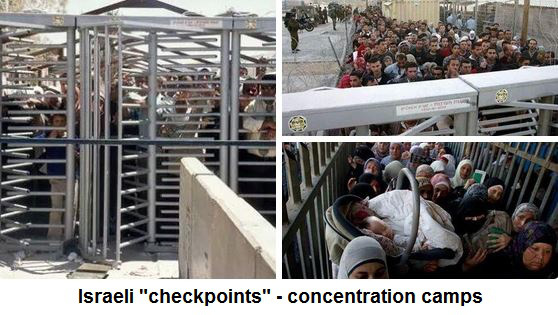
The company also has contracts with the Israeli authorities to provide equipment and services to Israeli checkpoints in the Occupied West Bank that form part of illegal Apartheid Wall.
In 2012, Palestinian groups “called for action to hold G4S accountable for its role in Israel’s prisons”, and since then, the campaign has inflicted growing economic and PR damage on the company. Activists say that G4S has since lost contracts worth millions of dollars around the world, with lost clients including private businesses, universities, trade unions, and United Nations bodies.
In 2014, the Bill Gates Foundation divested its $170m stake in the company following international protests. In the UK, at least five student unions voted to cancel contracts with G4S, and students successfully pressured two other universities not to renew contracts with the company.
The United Methodist Church, the largest protestant church in the USA, divested from G4S after coalition campaigning brought the issue to a vote. Just recently, as reported by Middle East Monitor, G4S lost a major contract in Colombia and a contract with UNICEF in Jordan, in both cases following campaigns by BDS activists.
Responding to the news of G4S’s planned withdrawal from Israel, Palestinian BDS National Committee spokesperson Mahmoud Nawajaa compared the pressure being felt by Israel to the boycott of Apartheid South Africa, and stated that BDS “is making some of the world’s largest corporations realize that profiting from Israeli apartheid and colonialism is bad for business.”
He added: “investment fund managers are increasingly recognizing that their fiduciary responsibility obliges them to divest from Israeli banks and companies that are implicated in Israel’s serious human rights violations, such as G4S and HP, because of the high risk entailed. We are starting to notice a domino effect.”
Nawajaa said the BNC was grateful “to all of the dedicated grassroots organizers around the world who are working in solidarity with Palestinians seeking freedom, justice, and equality”, but noted that the boycott of G4S “will remain among the BDS movement’s top priorities until we actually see its back out of the door of Israel’s regime of occupation, settler-colonialism and apartheid.”
The caution is well-founded; G4S announced in 2013 that it would end its role in illegal Israeli settlements, checkpoints and one Israeli prison by 2015, but did not follow through. In 2014, G4S announced it “did not intend to renew” its contract with the Israeli Prison Service when it expired in 2017 but is yet to implement that decision.
In addition, Nawajaa claimed that owing to G4S’s involvement in the “racist mass incarceration business” in countries such as South Africa, UK, and USA, the BNC is “determined to work closely with partners to hold G4S to account for its participation in human rights abuses.”
In the last eight months, French multinationals Veolia and Orange and CRH, Ireland’s biggest company, have all exited the Israeli market. In January, the United Methodist Church put five Israeli banks from Israel on a “blacklist” due to their complicity in human rights violations, including the financing of illegal Israeli settlements.
Nawajaa said Israel is unable to “stop the impressive growth of BDS”, despite its efforts “to smear and delegitimize our nonviolent movement, including with anti-democratic laws in Europe and the US aimed at silencing dissent and suppressing our freedom of speech.”
“We believe strongly that our ethical approach and just cause will prevail, as this latest G4S announcement shows.”
Ethnic cleansing of Shuhada Street in occupied al-Khalil (Hebron)
International Solidarity Movement | March 6, 2016
Hebron, occupied Palestine – Since the 1994 Ibrahimi Mosque Massacre, the majority of Shuhada Street – once the thriving Palestinian market and main thoroughfare connecting north and south al-Khalil (Hebron) – has been closed to Palestinians. They are completely barred from accessing it, except for a small stretch in the Tel Rumeida neighbourhood.

Photos of the same portion of Shuhada street – a thriving market before 1994, now an empty street where no Palestinians are allowed to enter (published by B’Tselem)
This tiny strip that is legally still accessible for Palestinians is restricted by the recently ‘renovated’ Shuhada checkpoint at the beginning of the street and ends where the street begins to border the illegal settlement of Beit Hadassah, beyond which Israeli forces assure that no Palestinians exist. Further down Shuhada street, clearly marked with yet another military post barring anyone who might attempt to enter the street, are even more Israeli settlements – all illegal under international law – located directly in the city center of al-Khalil.
The settlements on Shuhada Street are connected via a settler-only road to the much larger settlement of Kiryat Arba on the outskirts of al-Khalil; settlers can also reach the illegal Tel Rumeida settlement easily by traversing the tiny stretch of Shuhada Street still open to some Palestinians and the road leading up into Tel Rumeida from Shuhada checkpoint, now encompassed within the closed military zone. While Palestinians are allowed to walk on this part of Shuhada Street, Palestinian vehicles, including ambulances, are forbidden from driving there. Since Israeli authorities declared the area part of a closed military zone on 1st November 2015, the already barely existent access has been further restricted – Isreali forces only allow entry to Palestinians registered with them residents, while any Israeli settler, regardless of whether they are residents or not, can pass freely and without ever being harassed, stopped, detained, arrested, or threatened by the ever-present military forces.

Map of the city center of al-Khalil including Shuhada Street (the longest street marked in red) by B’Tselem
At the line demarcated by Daboya checkpoint (Checkpoint 55), where the illegal settlements on the street begin and Palestinians are no longer allowed, a steep flight of stairs leads up to Qurtuba school and into the Tel Rumeida neighbourhood. These stairs, the only way for Palestinians to continue traveling in the same direction above the street as they are not allowed to continue down Shuhada Street itself, have been closed by the Israeli forces with a metal gate since November 2015.

Stairs with the closed gate leading down to Shuhada Street
Even though this gate is currently not locked, Israeli forces deny any Palestinian, except for the students and teachers of Qurtuba school during school-time, to use these stairs. As a result Palestinian residents of this neighbourhood, once they have passed Shuhada checkpoint – an ordeal that can take several hours – have been denied to reach their homes by walking down Shuhada Street and the stairs leading up to Qurtuba school, forcing them instead to take a much longer detour around. With yet another way denied for Palestinans, navigating the maze of Israeli military-enforced checkpoints, complete bans on travel, roads where Palestinians cannot drive, settler-only roads, closed military zones and new arbitrary closures has become even more arduous.
Israeli forces are thereby also clearly working to minimise the number of Palestinians who will actually use this last portion of Shuhada Street – now a complete dead-end – as they bar Palestinians not only from going farther down the closed street but also declare the stairs, formerly an alternate route, yet another closed zone. This illustrates the Israeli attempts to rid Shuhada Street entirely of Palestinians. Ethnic cleansing in al-Khalil, and all across Israeli-occupied Palestinian lands is not a sudden, headline-grabbing event; it progresses gradually as Palestinians are restricted in certain areas, barred from driving there, prohibited from even being there, forced out to facilitate the expansion of the illegal settlements. Ethnic cleansing happens slowly, by erecting new and ‘fortifying’ existing checkpoints, advancing one more closure at a time.
OCHA condemns Israel for declaring W. Bank areas “firing zone”
Palestinian Information Center – March 5, 2016
OCCUPIED JERUSALEM – The UN Office for the Coordination of Humanitarian Affairs (OCHA) has strongly denounced Israel for declaring 18 percent of the West Bank territory, particularly in Area C, “a shooting zone.”
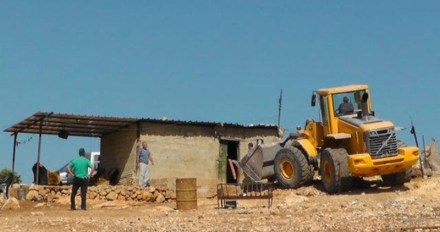
38 Palestinian communities are located in this area, where the Israeli army continually demolishes homes.
OCHA also warned that the expansion of this Israeli shooting zone would considerably affect the lives of marginalized and disadvantaged groups (Bedouins) in these areas.
The UN organization underlined that international law and humanitarian law prohibit such Israeli practices in the occupied Palestinian territories.
It noted that the Israeli army had demolished, since the start of 2016, 323 Palestinian homes and structures in different areas of the West Bank, most of them in Area C.
Those demolitions led to the displacement of about 440 Palestinians, more than half of them children, and rendered about 17,000 without any means of livelihood.
Copyright © The Palestinian Information Center
Israeli authorities demolished 183 Palestinian buildings in February
MEMO | March 4, 2016
The Israeli authorities demolished around 97 homes and 86 facilities in the West Bank in February under the pretext of “illegal construction”, according to a statistical report released Thursday by the Applied Research Institute Jerusalem (ARIJ).
The Palestinian institute also said that demolition orders and orders to stop construction were issued to a further 139 houses and facilities.
An estimated 653 dunums of Palestinian land in various parts of the West Bank is also facing confiscation orders.
Ghassan Doughlas, a Palestinian official who monitors settlement activity in the northern West Bank, has said there has been an escalation in the policy of demolishing homes and institutions in 2016.
In an interview with Quds Press, Doughlas stressed that the demolitions aim to displace Palestinians in order to “bring the settlers on the ruins of the Palestinians’ homes”.
“The occupation has used the demolition policy as a way to put pressure on the Palestinians so to empty the region classified as Area C in the West Bank,” adding that the demolitions are part of a policy of “collective punishment”.
Official: Israel obstructs Jordan agricultural exports to the OPT
MEMO | March 3, 2016
 Israel has been obstructing Jordanian agricultural exports to the Occupied Palestinian Territories under the pretext that Jordanian products do not conform to Israeli specifications, leading to exports completely stopping in 2015 and early 2016, a Jordanian official revealed.
Salah Al-Tarawneh, assistant secretary-general of the Jordanian ministry of agriculture for marketing and information, said in remarks to Quds Press that the Palestinian Authority asked last month to import tomatoes from Jordan but the Israeli side refused to allow their entry under the pretext that they contain viruses.
Al- Tarawneh explained that although the PA has repeatedly asked the Israeli side to increase agricultural trade with Jordan to meet its needs, Israel has continually refused under the pretext that Jordanian products do not conform to Israeli specifications.
According to data from the Jordanian ministry of agriculture, Jordan’s exports of vegetables and fruits to PA controlled areas completely stopped in 2015.
During the same year, Jordan’s agricultural exports to Israel amounted to more than 20,000 tons of vegetables and 5,000 tons of fruit.
Mayor: Israeli forces assault entire family during al-Issawiya raid

Ma’an – February 29, 2016
JERUSALEM – Israeli forces physically assaulted an entire family in the occupied East Jerusalem village of al-Issawiya overnight Sunday after the family resisted during an arrest raid, the head of the village said.
Darwish Darwish said Israeli forces stormed the home of Tareq and Tahreer Darwish with the intention of detaining the couple’s sons Yousef, 18, and Laith, 17.
The two teens, along with their father, resisted the detention, and Israeli forces attacked the three, beating them.
Darwish said the family told him that when Israeli forces began beating the father and two brothers, other members of the family stepped in and tried to stop Israeli forces, who then turned on the rest of the family.
According to the mayor, the mother, Tahreer, 37, her daughter, Batoul, 14, and 2-year-old son Darwish all suffered from bruises and lacerations all over their bodies.
Israeli forces detained the entire family, including the toddler, after the assault. The family was detained while still barefoot and in pajamas, the mayor said.
Darwish added that Israeli forces ransacked the family home, destroying valuables, before taking the family to a police station in the Sheikh Jarrah neighborhood of occupied East Jerusalem, and then transferring them to the Salah al-Din police station near Damascus Gate.
After four hours of detention, Israeli forces released the mother and her young son, but kept the rest of the family, including the 14-year-old daughter, under detention.
The 17-year-old son Laith is set to appear in Israeli court for a trial on Monday. The charges levied against him are unknown.
While the mayor shares a last name with the family, Darwish is one of the most popular surnames in al-Issawiya village, and the family is not necessarily directly related to the mayor.
The right to own property — for Jews alone
A central problem of the implementation of the Levy Report by the government is the effective abolishment of Palestinians’ property rights

Jewish settlers run towards the West Bank village of Asira al-Qibilya near Nablus during clashes with Palestinian villagers July 3, 2011. According to witnesses, the clashes erupted after the settlers cut down olive trees belonging to the village. An Israeli army spokesperson said one Israeli was injured by a rock before security forces dispersed the crowd. REUTERS/Abed Omar Qusini – WEST BANK
By Yossi Gurvitz | Yesh Din | February 28, 2016
Our previous post on Yesh Din’s new position paper, “From Occupation to Annexation,” explored the various ways the Israeli government implements the Levy Report. This post will focus on another critical point: the erasure of the Palestinians’ right to property.
Prior to the Levy Report, the Israeli government was careful to avoid legalizing the seizure of private Palestinian property, except when it could argue it was done due to pressing military needs (“military seizure”) or by declaring it state land and claiming that it was never, in fact, private property at all. This took place, in part, because the laws of occupation demand that the occupier protect the private property of protected persons in occupied territory. The legal appeals against the illegal outposts, about 80% of which are at least partially built on private Palestinian land, challenged this way of thinking.
And then came the Levy Report, which claimed the government has the right to build settlements and outposts in the West Bank. On paper this claim may have been harmless, had its implementation not directly threatened the property of private persons.
Let’s look at some examples. The future of the Adei Ad outpost – which was at the heart of another one of our reports, “The Road to Dispossession” – is being debated by the High Court of Justice. The report detailed how Israeli civilians took over private Palestinian land while using violence against Palestinian residents who tried to hold on to their land, all while the Israeli authorities stood aside. Although the report was published in 2013, the reality it describes continues even today.
As our position paper shows, the Israeli government relies on Levy’s exceedingly broad legal interpretation to legalize a series of illegal outposts, under the pretense they are in fact neighborhoods of already existing settlements – even when they are outside the jurisdiction of their “mother settlement.” Justice Minister Ayelet Shaked even boasted that “anyone who knows the Adei Ad [appeal], knows that the state responds differently these days.”
Therefore the state informed the High Court that although the outpost was illegal, it does not intend to remove it. On the contrary, it announced that it would try and legalize it. In practice, then, what Shaked meant to say was that “we decided to give criminals a prize.”
If the state told the court in 2008 that it – some day — intends to enforce the law and evacuate the outposts, its position had radically changed by 2011. Now, said the state, it will enforce the law only vis-a-vis structures built on private land, while legalizing structures built on state land. The Levy Report came out in 2012; by 2013, the state was telling the courts that in some cases “state reasons” may supersede the need to enforce the law. By 2015, the state spoke expressly about retroactive legalization.
Another case that represents the erasure of Palestinian property rights is that of Amona. Amona is the largest illegal settlement outpost in the West Bank – a significant part of the land on which it stands belongs to Palestinian residents, whose theft was followed by violence against the Palestinians. In court, the state opposed the evacuation of Amona time after time. At the end of 2014, the High Court of Justice ruled that Amona was to be evacuated by the end of 2016. So what did the government do? Did it accept the ruling and follow the instructions of the court? Of course not. It tried to bypass the court through a new bill titled the “re-ordering bill.”
This law follows one of the comments made in the Levy Report, according to which compensation for Palestinians whose land has been taken from them is preferable to evacuating the invaders. Once it can be proven that an outpost was illegally built on Palestinian land, the Palestinian owners would be forced to accept compensation and give up their rights to their own property.
According to the Levy Report, therefore, all people are equal before the law, but some are more equal. You own land? Jewish invaders took it with government aid? We won’t evacuate them, we simply legalize the invasion. Here are your 30 pieces of silver. Oh, you don’t want to take them because you’re afraid of living next to Israelis who have already proven their affinity for violence? You won’t take the silver because you don’t want to take part in Jewish expansion over parts of Palestine? Tough. Your property rights are secondary to our historical rights. Do yourself and us a favor and take the money, because, you see, this outpost won’t be removed. It will remain here whether you like it or not. The court ruled otherwise? We’ll try and change the law. What about your rights? What rights?
The bill currently names three outposts and a part of a settlement – three outposts that the court had already ordered be removed, and one whose case is still debated. Amona is mentioned specifically as an outpost covered by the bill. Politicians are not even trying to conceal the fact the point of the bill is to prevent the High Court from slowing down the violation of Palestinian rights. Just in case, the bill – which has been frozen for the time being – allows other outposts to be added to it even after it passes.
The state’s responses to the court and the “re-ordering bill” deal outposts whose fate were either ruled on by the High Court or are still being debated. But the government ministers, being people of vision, take care not only of the past and present but also of the future. The “re-ordering committee,” created by Prime Minister Netanyahu, is supposed to provide other solutions, as it has a mandate to “examine the current process of evidence needed for proof of land ownership.” To put it more bluntly: its purpose is to make it even more difficult for them to prove they are landowners. The purpose of the committee is to create “an outline for the legalizing of structures and neighborhoods in Jewish settlements in Judea and Samaria that were built with the support of the authorities.”
The Israeli government never authorized the Levy Report’s recommendations while effectively endorsing and carrying them out in secret. The government implements an unofficial policy of annexation – one that does not grant equal rights to those being annexed, while at the same time depriving them of the legal defenses they are entitled to as protected persons, since, allegedly, there is no occupation.
As for the people who live there? It’s their own problem. They should have lived someplace else. Didn’t they get the hint already?
Israeli settlers escorted by army raid village in Salfit district

Ma’an – February 27, 2016
SALFIT – A group of Israeli settlers escorted by Israeli military forces raided the village of Yasuf in the northern West Bank district of Salfit on Saturday.
The head of the Yasuf village council, Hafith Ebayya, said that a group of Israeli settlers raided the village and attempted to enter the al-Basatin area in central Yasuf.
Ebayya said that the settlers were escorted by military vehicles and soldiers, and that a military checkpoint was set up at the entrance of the village.
Clashes erupted between dozens of Palestinian youths and Israeli forces.
Israeli forces fired live bullets, rubber-coated steel bullets and tear gas at youths and several farmers who were in their fields nearby.
Several youths and farmers suffered from tear gas inhalation.
An Israeli army spokesperson told Ma’an they were looking into the report.
Three quarters of Yasuf’s lands are located in Area C — under full Israeli military and administrative control. According to a report by the Applied Research Institute-Jerusalem (ARIJ), over the years, some 602 dunams (148.7 acres) of Yasuf land have been seized to establish settlement housing.
Several Israeli settlements are located near Yasuf, including Ariel, the fourth largest settlement in the West Bank. These settlements in the occupied West Bank and East Jerusalem are illegal under international law.
Featured Video

Macgregor: We Haven’t Seen the Worst of the Iran War Yet
or go to
Aletho News Archives – Video-Images
New Book
Breast Cancer: Before You Consent
A new Unbekoming paperback
Lies are Unbekoming | September 18, 2026
Peter Gøtzsche reviewed every randomised mammography screening trial ever conducted for the Cochrane Collaboration. Cochrane’s headline is that, assuming a 15% mortality reduction, one woman in 2000 avoids dying of breast cancer over ten years. Ten are overdiagnosed and treated. Two hundred experience false alarms.
But that headline assumes the reduction. When Gøtzsche looked only at the trials with adequate randomisation — the higher-quality ones — the reduction disappeared. No effect on breast cancer mortality. No effect on all-cause mortality.
This is the Cochrane finding, published in the establishment’s own database of systematic reviews.
No woman being asked to consent to a mammogram this week knows it.
That is why the new Unbekoming paperback exists. … continue
Blog Roll
 Aletho News
- US lawmaker blocks $2.8 billion weapons sale to Israel: Report
- Yemeni army claims responsibility for strikes on sensitive sites in Saudi capital, Aramco facilities in Yanbu
- Iran Judiciary issues indictments against 159 US, Israeli officials for assassination of Leader, commanders
- Turkiye revokes Iranian bank license under US sanctions campaign
- US-Denmark Agreement on Greenland Is ‘PR Stunt’ Ahead of Midterms
- Araghchi: Military intervention cannot create security; coercion cannot bring peace
- Fraud Squared
- Breast Cancer: Before You Consent
- Iran’s Plan to Shut Down AI in the Persian Gulf
- Israel seeks ‘compensation’ from Washington over Saudi F-35 sale
- If Americans Knew
- Inside Gaza’s death trap of collapsing, bombed-out buildings
- The everyday items Israel bans from Gaza every day
- Inside the siege, the ruined buildings of Gaza – Daily Update
- Debunking The Claim That Macklemore Has A “History Of Antisemitism”
- CPJ demands release of arrested Palestinian-US journalist near Bethlehem
- Robert Kraft: The Billionaire Friend of Netanyahu Pulling The Strings Behind the Macklemore/Ed Sheeran Blow Up
- Columbia Administered Fund Gives Big Money to Pro-Israel Groups
- Deportation Case of Palestinian Activist Salah Sarsour Tests First Amendment
- ‘We Will Not Forget’: Palestinians Mark 44 Years since Sabra and Shatila
- Why do we let Zionists decide what we can and can’t say?
- No Tricks Zone
- New Study: ‘Global Drought Shows No Detectable Recent Acceleration Under Climate Warming’
- Economic Masterminds: German Socialists Suggest Taxing Productivity Gains Stemming From Using AI
- The South China Sea Has Not Been Cooperating With The Climate Change Narrative
- Energy Crisis: Germany Enters Heating Season With Historically Low Gas Reserve Fill Levels
- New Study: The Antarctic Ice Sheet Gained Mass From 2020-2024 Due To Staggering Snow And Ice Accumulation
- Study: Ocean Heating Rates From Thousands Of Years Ago ‘Dwarf’ Modern Ocean Heating Rates
- Climate Extremists Target, Attack Large-Scale Power Grid Infrastructure In Germany!
- New Study: Antarctic Ice Melt Has Contributed Less Than 1 Centimeter To Sea Level Rise In The Last 30 Years
- Fear Of Debate: Alarmist German Climate Scientist Calls On Mainstream Media To Discredit Skeptic Voices
- End-Of-August Arctic Sea Ice Extent Hasn’t Fallen In 20 Years, Official Data Show!
 Aletho News