How goes the war?
By Paul Robinson | Irrussianality | February 1, 2020
This week brought a bunch of news about the wars in the Middle East and Central Asia. In Afghanistan, the United States and its allies have been directly involved in fighting the Taleban for over 18 years. In Syria, they’ve attempted to overthrow the government of Bashar al-Assad with the help of proxies in various forms, who are now holed up in an ever-shrinking enclave in Idlib province. And in Yemen, they’ve been backing the Saudis in their attempt to reinstall Adrabbun Mansar Hadi as president in the Yemeni capital Sanaa, now under the control of the Houthis. So, how go America’s wars?
First, Afghanistan:
A few days ago, the Special Inspector General for Afghanistan Reconstruction (SIGAR) released his latest quarterly report to the US Congress. According to an email I got from SIGAR’s office, the key points of this report include the following:
- Enemy-initiated attacks (EIA) and effective enemy-initiated attacks (EIA resulting in casualties) during the fourth quarter of 2019 exceeded same-period levels in every year since recording began in 2010.
- The month of the Afghan presidential election (September 2019) saw the highest number of EIA in any month since June 2012, and the highest number of effective enemy-initiated attacks (EEIA) since recording began in January 2010. The high level of violence continued after the presidential election; October 2019 had the second highest number of EIA in any month since July 2013.
- According to the UNODC, the overall value of opiates available for export in Afghanistan in 2018 (between $1.1 billion and $2.1 billion) was much larger than the combined value of all of the country’s licit exports ($875 million).
- As of December 18, conflicts had induced 427,043 Afghans to flee their homes in 2019 (compared to 356,297 Afghans during the same period in 2018).
- Between November 2019 and March 2020, an estimated 11.3 million Afghans – more than one-third of the country’s population – are anticipated to face acute food insecurity.
I think that gives a good enough impression. Eighteen years on, things aren’t going so well in Afghanistan.
So what about Syria?
About a week ago, government forces (the Syrian Arab Army (SAA)) launched a two-prong offensive against what were once US-proxy forces in Idlib, but might now be more accurately described as Turkish proxies. News reports suggest that casualties have been heavy on both sides, but the results from the SAA point of view have been very satisfactory. In the north, the SAA advanced a short distance south west of Aleppo, but the real progress was further to the south, where the SAA smashed through the rebel defenses and advanced rapidly to seize the town of Ma’arrat al-Numan, as shown in this map:

Since this map was produced, the SAA have advanced even further, continuing northeast up the M5 highway from Ma’arrat as far as the town of Saraqib. How much further they will go before pausing remains to be seen. But one thing is clear – bit by bit, the rebels in Idlib are being squeezed out. Once they’re gone, the war in Syria will be all but over. The attempt to topple Assad has failed.
Which brings us to Yemen.
As you may recall, in September last year the Houthis crushed a Saudi incursion into northern Yemen, capturing large numbers of prisoners and armoured vehicles. After that things quieted down for a bit, until about a week ago when Saudi-backed forces launched an offensive to the east of Saana in the province of Marib. Before long, the Houthis counter-attacked, with devastating consequences. According to one news report:
Hadi’s forces are now on the back foot. Where once they spoke about taking the Houthi-held capital Sanaa, now they discuss ways to defend Marib, a strategic oil and gas hub. … Ibrahim, a pro-government fighter in Marib province, said that some loyalist soldiers ‘betrayed’ them and withdrew from battles, causing sizeable losses amongst their troops. ‘We were planning to advance towards Sanaa, but our attempt was hindered by the withdrawal of a battalion of soldiers, which gave the Houthis a chance to attack us … This was a betrayal by the soldiers and their leaders.’
Houthi sources claim that Saudi-backed forces suffered 2,500 casualties, and that the Houthis captured 400 pieces of equipment, including tanks, armoured personal carriers, and multiple rocket launch systems. The Saudi defeat has gone just about unnoticed in the English-language media but, for anybody interested, Russian blogger Colonel Cassad has published a bunch of Houthi photographs and videos, such as the picture below, showing the results of the battle (here and here). They make for interesting viewing.

Putting this all together, what we see is the Americans and their allies losing not just one, not just two, but three wars simultaneously. It’s quite something. A few days ago, news emerged that US president Donald Trump had denounced his generals as ‘losers’ and ‘a bunch of dopes and babies’. The story was treated by pretty much everybody as yet more evidence of Trump’s unsuitability to be president. But given the news from the front this week, I have to think that Trump got it right. ‘I wouldn’t go to war with you people’, Trump allegedly told the generals. If only the president took his own advice.
Sudanese promised jobs in UAE but taken to war in Libya, Yemen
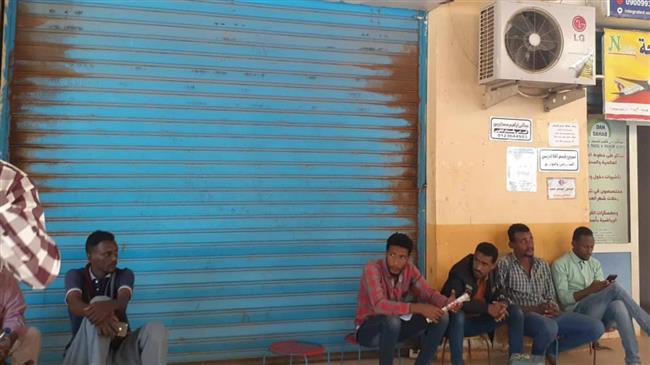
Job seekers wait outside the Amanda travel agency in order to get their money back in Khartoum. (Photo by MEE)
Press TV – February 2, 2020
Sudanese youths have revealed that the UAE pledged them jobs with high salaries in the Persian Gulf small country, but instead took them to Libya which is embroiled in a war between rival groups.
The United Arab Emirates is the key supporter of renegade general Khalifa Haftar which is leading a grueling military offensive against the government in the Libyan capital of Tripoli.
Several Sudanese youths have told the Middle East Eye that they were promised to work as security guards in the UAE on a salary of around $2,175 per month, but were instead sent to hostile areas in Libya.
Abdul Rahman Alzaki, a 34-year-old IT engineer, went to visit the Amanda travel agency in the center of the Sudanese capital that had placed the advertisement.
He was told the work was for the Emirati security firm Black Shields and would be located in Abu Dhabi or another UAE city.
Following several job interviews, Alzaki paid around 80,000 Sudanese pounds ($950) to Amanda after he was told the salary had been confirmed and that the travel agency would transport him to the UAE.
He traveled to the Emirates, but his dream soon turned into a nightmare after he discovered that he would in fact be receiving three months of military training and then be sent to Libya or Yemen.
The UAE wanted him and other Sudanese youths to protect oil refineries and strategic locations in the area held by Haftar, he told the MEE.
The UAE is among several countries supporting Haftar in his campaign to oust the UN-recognized government in Tripoli. The Arab country is also a key party to a Saudi-led coalition waging war on Yemen.
Around 3,000 Sudanese are believed to have been deceived by Black Shields, which sub-contracted companies such as Amanda advertising for the Emirati company.
“When we reached the Emirates we realized that we had been cheated, as the company had taken our passports, mobile phones and everything, and sent us to a military training camp called Zayed Military City” in Abu Dhabi, Alzaki said.
The MEE said it visited the Amanda travel agency in downtown Khartoum on Wednesday, but the agency was closed and phone calls to the manager and other employees of the agency went unanswered.
Dozens of job seekers were waiting outside the agency in order to try to get their money back, the online website said.
Boraey Mohamed Ahmed said he and other Sudanese youths had been subjected to extensive cheating by mafia companies working between the UAE and Sudan.
Circulation of the story on social media has ignited protests against the UAE and its policies in Sudan and in the region.
Thousands of Sudanese protesters have waged a wide campaign on social media against UAE policies, calling on the government to maintain the dignity of the Sudanese.
On Tuesday, hundreds of protesters demonstrated outside the UAE embassy and the Sudanese Foreign Ministry in Khartoum, demanding the return of the Sudanese youths.
Chanting anti-Emirate slogans, the protesters also called for the return of Sudanese soldiers from the war in Yemen.
Protester Marwa Hassan criticized the policies of the UAE on Sudan and the region as whole.
“Why do they want to use our people as mercenaries in Yemen and Libya, we have nothing to do with their interests in these countries, why are they exploiting the poverty of our youth to use them badly like this,” she shouted.
Ileana Ros-Lehtinen registers as lobbyist for Emirates in Washington
Press TV – January 30, 2020
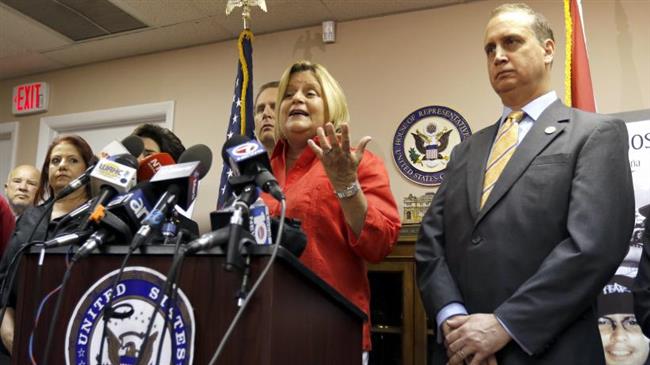
A former US congresswoman has been registered as a foreign agent for the United Arab Emirates (UAE) to lobby US officials regarding “export controls and sanctions, and foreign and defense policies.”
Ileana Ros-Lehtinen’s registration comes as the United Arab Emirates has managed so far to stave off US congressional restrictions on arms sales over its controversial role in the deadly Saudi war on Yemen.
The former chairwoman of the House Foreign Affairs Committee was registered as lobbyist to represent Abu Dhabi earlier this month.
She will “provide outreach to US government officials and counsel on policy issues,” according to a Justice Department filing.
According to the document, she will also be counseling officials on “human rights, trade policies, foreign media registration, and strengthening trilateral relations and regional security.”
Ros-Lehtinen, who is known as a pro-Israel hawk on Iran and Latin America, has passed her one-year cooling-off period for retired lawmakers and became eligible to lobby her former colleagues.
She was registered on Jan. 21 by US lobby firm — Akin Gump Strauss Hauer & Feld — which is one of over a dozen lobbying firms the UAE has under contract, according to al-Monitor.
Akin Gump, which has been lobbying for Abu Dhabi since 2007, campaigned last year for more US sanctions against Iran, the UAE’s role in Saudi Arabia’s war on Yemen and arms sale.
The United Arab Emirates has been among the major buyers of US weapons, clinching a $1.8-billion arms deal with Washington last year.
Many countries, including Denmark, Finland, Germany and Belgium, have suspended arms exports to UAE either upon court orders or receiving evidence that the weapons were indeed used against civilians in Yemen.
According to a December 2018 report by the Armed Conflict Location and Event Data Project (ACLED), a nonprofit conflict-research organization, the Saudi war has claimed the lives of more than 60,000 Yemenis since March 2015.
The war has also taken a heavy toll on the Arab country’s infrastructure, destroying hospitals, schools, and factories. The UN says more than 24 million Yemenis are in dire need of humanitarian aid, including 10 million suffering from extreme levels of hunger.
Yemen’s Ansarullah: We’re partaking in regional drive to boot US forces out
Al-Mayadeen TV – 05/01/2020
Member of Ansarullah’s Political Council, Mohammad al-Bakhiti, says the Yemeni movement is partaking in the region-wide response to Iranian General Soleimani’s assassination by the US military. Bakhiti says the regional response is aimed at driving all US forces out of the region.
Transcript:
– the coming days will bring huge changes to the region
– the American aggression against Iraq is an aggression against the entire Axis of Resistance, which requires for unifying the theatre in which the response will be delivered
– of course Sayyed Abdul Malik al-Houthi (Yemen’s Ansarullah leader) has already stated that this aggression is an aggression against the entire Axis of Resistance
– Yemen is a member of the Axis of Resistance, and we are at the heart of the conflict with this American coalition
– the American aggression will lead to the expansion of the conflict’s scope
– what we require now is greater coordination (between the members of the Axis of Resistance)
– as for the nature of the response, this is left for the leadership
– (yet) there is no response that can equal this (American) aggression other than popular, political and military action that drives out (all) US forces from the region
UN reiterates that it can’t verify US allegations against Iran in Aramco attacks
Press TV – December 20, 2019
The UN Under-Secretary-General for Political Affairs Rosemary DiCarlo has reiterated earlier remarks by the UN General Secretary that the body cannot verify US claims blaming Iran for attacks on Saudi Arabia’s Aramco oil facilities.
DiCarlo made remarks during a UN Security Council briefing on the eighth report of the Secretary General on the implementation of resolution 2231 which endorsed the Iran nuclear deal in 2015.
“At this time, we are unable to independently corroborate that the cruise missiles, or the recovered components we inspected, are of Iranian origin,” she said speaking of alleged missile debris related to the September 14 attack on the oil facilities.
“We have recently received confirmation that some of the cruise missile components were, in fact, not made by the identified manufacturers but could have been copies,” she added.
DiCarlo also said the Secretariat is “unable to independently corroborate” whether drones used in the operation were of “Iranian origin”.
The attacks, which successfully halved the Saudi kingdom’s oil production, were claimed by Yemen’s Houthi Ansarullah movement and were in response to Riyadh’s nearly five-year onslaught against the country.
The operation displayed a significant advancement in Yemeni military capabilities, successfully striking one of Riyadh’s most important and also most heavily protected assets.
Washington, however, which has provided the bulk of Saudi Arabia’s air defense systems, was quick to blame Iran following the attack without providing any conclusive evidence to back up its claims.
Washington’s allegations against Tehran came at a time when Saudi officials had said that they lacked enough information to identify the perpetrator of the attack.
Washington’s jump to blame Tehran for the attack came as the operation, conducted by Yemen’s ragtag military forces, was widely seen to be undermining the efficiency of Washington’s much-prized Patriot surface-to-air missile systems deployed in Saudi Arabia.
Two days following the attack, Russian President Vladimir Putin pointed to the utter failure of the US defense systems, mockingly suggesting that Saudis may be better off buying Russian-made missile defense systems.
Washington insists on blaming Iran
On Thursday, Washington claimed that it had obtained new evidence blaming Iran for the attack.
A US report, cited by Reuters, said Washington “assessed that before hitting its targets, one of the drones traversed a location approximately 200 km to the northwest of the attack site”.
“This, in combination with the assessed 900 kilometer maximum range of the Unmanned Aerial Vehicle (UAV), indicates with high likelihood that the attack originated north of Abqaiq,” the report said, referring to the location of one of the oil facilities.
Speaking with Reuters, US Special Representative for Iran Brian Hook said the newly-declassified information proved that Iran was behind the operation.
“As many nations have concluded, there are no plausible alternatives to Iranian responsibility,” he said.
Hook’s comments come despite the fact that Washington’s own report stopped short of claiming that Iran was the origin of the attack.
“At this time, the US Intelligence Community has not identified any information from the recovered weapon systems used in the 14 September attacks on Saudi Arabia that definitively reveals an attack origin,” Reuters quoted the report as saying.
Addressing the Security Council on Thursday, Iran’s Ambassador to the United Nations Majid Takht-Ravanchi vehemently rejected Washington’s accusations regarding the Aramco operation.
He also described US sanctions on Iran as being “economic terrorism” targeting ordinary people as well as different sectors of the Iranian economy.
UN slams US JCPOA withdrawal
Speaking on Thursday, DiCarlo also urged for the full and effective implementation of the Joint Comprehensive Plan of Action (JCPOA) to “secure tangible economic benefit to the Iranian people”.
“We therefore regret the withdrawal of the United States from the JCPOA in May 2018,” she added.
Washington reimposed economic sanctions which had been lifted under the deal after withdrawing from the deal last year.
“Certain actions taken by the United States, since its withdrawal from the Plan, are contrary to the goals of the Plan,” she said.
“The reimposition of its national sanctions lifted under the Plan, as well as its decision not to extend waivers for the trade in oil with Iran and certain non-proliferation projects, may also impede the ability of Iran and other Member States to implement the Plan and 2231,” she added.
The UN official said Iran has stated that the suspension of its JCPOA commitments in response to the failure of signatories of the JCPOA to uphold the agreement, “are reversible and that it intends to remain in the Plan”.
“In this regard, the recent decisions by Belgium, Denmark, Finland, the Netherlands, Sweden and Norway to also join the Instrument in Support of Trade Exchanges (INSTEX) are positive developments,” she added.
Saudi Arabia reads the riot act to Imran Khan
By M. K. BHADRAKUMAR | Indian Punchline | December 17, 2019
The Kuala Lumpur Summit 2019 hosted by Prime Minister Mahathir Mohamad in the Malaysian capital Kuala Lumpur on December 18-21 was originally conceived as a landmark event in the politics of the Muslim world. It still is, albeit on a wet wicket struggling to tackle a nasty googly that Pakistan Prime Minister Imran Khan threw at the event at the last minute.
To recap, the idea of the KL Summit was born out of a trilateral pow-vow between Turkish President Recep Erdogan, Malaysian Prime Minister Mahathir Mohammed and Pakistan’s Imran Khan in September on the sidelines of the UN GA session in New York.
The common perception of the three countries was that the Muslim World failed to react forcefully enough to the emergent situation affecting the Kashmiri Muslims. Pakistan actively promoted the perception that the leadership of the ummah was not reacting forcefully enough over Muslim issues such as Kashmir.
On November 23, while announcing his decision to host the KL Summit, Mahathir said that the new platform hoped to bring together Islamic leaders, scholars and clerics who would propose solutions to the many problems facing the world’s 1.7 billion Muslims. He disclosed that dignitaries attending the KL Summit would include Erdogan, the Qatari Emir Sheikh Tamim bin Hamad al-Thani, and Imran Khan.
The role of politics in development, food security, preserving national identity, and redistributing wealth were listed as other topics to be discussed, alongside the expulsion of Muslims from their homelands and the categorisation of Islam as the “religion of terrorism”.
In poignant remarks, Mahathir bemoaned that no Muslim country was fully developed, and that some Islamic nations were “failed states”. He said,
“Why is there this problem? There must be a reason behind this. We can only know the reason if we get the thinkers, the scholars, and the leaders to give their observations and viewpoints.
“Perhaps we can take that first step … to help Muslims recover their past glories, or at least to help them avoid the kind of humiliation and oppression that we see around the world today.”
Importantly, Mahathir described the summit as a meeting of minds that had the “same perception of Islam and the problems faced by the Muslims”.
From among the list of invitees, it now turns out that Iranian President Hassan Rouhani will be attending tomorrow’s summit, but King Salman of Saudi Arabia has regretted that the Organisation of Islamic Conference (OIC) is being bypassed.
Mahathir disclosed that King Salman conveyed to him in a phone conversation that it was better that the Muslim issues were discussed in a full-fledged OIC meeting. Mahathir said laconically,
“He (King Salman) wanted to tell me the reasons why he couldn’t make it. He’s afraid that something not good will happen to the Muslims. He has a different opinion from us. He feels that matters like these (Muslim issues) shouldn’t just be discussed by two or three countries, and there should be an OIC meeting and I agreed with him.”
The testy exchange signalled that the Saudi regime sees the KL Summit as a calculated challenge to its leadership of the ummah and as an initiative about laying the foundations for an Islamic alliance.
Mahathir is outspoken but what is less noticed is that his positions actually align closely with those of Turkey and Pakistan. These include the Palestinian question, the situation in Jammu & Kashmir and the persecution of the Rohingya community in Myanmar.
According to the Malaysian news agency Bernama, the KL Summit “aims to revive Islamic civilization, deliberate (over) and find new and workable solutions for problems afflicting the Muslim world, contribute (to) the improvement of the state of affairs among Muslims and Muslim nations, and form a global network between Islamic leaders, intellectuals, scholars, and thinkers.”
In sheer brain power, Saudi Arabia cannot match such an agenda. A sense of frustration has been building up over the past decade or so among the Muslim countries that the OIC is reduced to an appendage of the Saudi foreign policies. Saudi Arabia’s rift with Qatar, its rivalries with Iran, the brutal war in Yemen, the killing of Jamal Khashoggi, etc. also seriously dented Riyadh’s image in the most recent years.
Of course, Saudis hold a big purse and that still translates as influence but the new Islamic forum is poised to move in a direction that is progressive and far more inspiring, with plans to pursue joint projects, including, eventually, the introduction of a common currency.
Mahathir is on record that this mini-Islamic conference could turn into a much grander initiative down the road. Such optimism cannot be disregarded since a growing number of Muslim-majority countries harbour great unease over the near-term prospect of the ascendancy of Crown Prince Mohammed bin Salman as the Saudi king and the next Custodian of the Two Holy Mosques.
Saudi Arabia, anticipating the gambit being thrown down by Mahathir has reacted viciously to undercut the KL Summit. It tore into the summit’s ‘soft underbelly’ by reading the riot act to Imran Khan, which put the fear of god into Imran Khan and how it happened we do not know, but the great cricketer panicked and has since called Mahathir to regret that he cannot attend the KL Summit.
No doubt, it is a big insult to Mahathir’s personal prestige but as the old adage says, beggars cannot be choosers and Imran Khan is left with no choice but to obey the Saudi diktat like a vassal.
With Imran Khan staying away, Mahathir is left to host his counterparts from Turkey, Iran, Qatar and Indonesia. The fizz has gone out of the KL Summit. Nonetheless, Mahathir is not the type of person to forget and forgive. His initial reaction to Imran Khan’s cowardly behaviour shows studied indifference, betraying his sense of hurt.
Pakistan is ultimately the loser here, as its credibility has been seriously dented. Imran Khan was the original promoter of the idea of the three-way axis of Turkey-Pakistan-Malaysia. But to be fair, his modest agenda was to create an exclusive India-baiting regional forum that he can use at will, whereas Mahathir turned it into an unprecedented Islamic forum that is independent of Saudi influence. Perhaps, Mahathir can only blame himself for the overreach.
Western leaders, screw your ‘Sanctions Target the Regime’ blather: Sanctions KILL PEOPLE
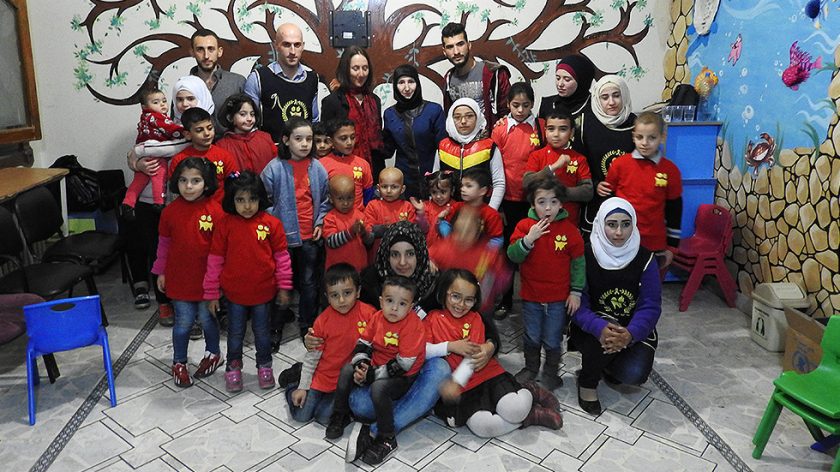
Children with cancer couldn’t get adequate treatment due to sanctions (photo Aleppo 2016)
By Eva Bartlett | RT | December 16, 2019
The US has a favourite tool for bullying non-compliant nations: sanctions. Sanctions inflict considerable suffering, even death, on ordinary people in targeted nations. Yet those defiant nations persist and resist.
A recent opinion piece in the Washington Post proposing a new oil-for-food scheme, this time in Venezuela, surprisingly acknowledges that sanctions “can also end up harming the people that they intend to protect.”
Okay, first off, we know there is no intention of “protecting” civilians in any of the countless countries targeted by Western sanctions. Do Western talking heads really think we’ve forgotten the half-a-million dead Iraqi children, thanks to US sanctions?
Yet, ask a Western leader about crippling sanctions placed on nations which don’t bow to Imperial demands and you’ll be met with some nonsensical explanation that sanctions only target ‘regimes’ and ‘terrorists,’ not the people.
I’ve lived in, spent considerable time in, or visited areas under sanctions and siege, and I’ve seen first hand how sanctions are a form of terrorism, choking civilians, depriving them of basic and urgent medical care, food, employment, and travel entitlements that many of us in Western nations take for granted.
When I was in Syria last October, a man told me his wife had been diagnosed with breast cancer, but because of the sanctions he couldn’t get her the conventional treatments most in the West would avail of.
In 2016, in Aleppo, before it was liberated of al-Qaeda and co, Dr. Nabil Antaki told me how –because of the sanctions– it had taken him well over a year to get a simple part for his gastroenterology practise.
In 2015, visiting Damascus’ University Hospital, where bed after bed was occupied by a child maimed by terrorists’ shelling (from Ghouta), a nurse told me:
“We have so many difficulties to ensure that we have antibiotics, specialized medicines, maintenance of the equipment… Because of the sanctions, many parts are not available, we have difficulties obtaining them.”
Visiting a prosthetic limbs factory in Damascus in 2016, I was told that, due to the sanctions, smart technology and 3D scanners –used to determine the exact location where a limb should be fixed– were not available. Considering the over eight years of war and terrorism in Syria, there are untold numbers of civilians and soldiers in need of this technology to simply get a prosthetic limb fixed so they can get on with their lives. But no, America’s concern for the Syrian people means that this, too, is near impossible.
In 2018, Syria’s minister of health told me Syria had formerly been dubbed by the World Health Organization a “pioneer state” in providing health care.
“Syria had 60 pharmaceutical factories and was exporting medicine to 58 countries. Now, 16 of these factories are out of service. Terrorists partially or fully destroyed 46 hospitals and 620 medical centres.”
I asked the minister about the complex in Barzeh, targeted with missile strikes by the US and allies in April 2018. Turns out it was part of the Ministry of Health, and manufactured cancer treatment medications, as well as antidotes for snake or scorpion bites/stings, the antidote also serving as a basic material in the manufacture of many medicines.
Last year, Syrian-American doctor Hussam al-Samman told me about his efforts to send to Syria chemotherapy medications for cancer patients in remission. He jumped through various hoops of America’s unforgiving bureaucracy, to no avail. It was never possible in the first place.
“We managed to get a meeting in the White House. We met Rob Malley, a top-notch assistant or adviser of Obama at that time. I asked them: ‘How in the world could your heart let you block chemotherapy from going to people with cancer in Syria?’
They said: ‘We will not allow Bashar al-Assad to have anything that will make people love him. We will not support anything that will help Bashar al-Assad look good’.”
Fast forward to the present: in spite of the sanctions, or precisely because of the sanctions, Syria recently opened its first anti-cancer drugs factory. President Assad is, again, looking rather good to Syrians.
UN expert: Sanctions on Venezuela “a form of terrorism”
Alfred de Zayas, the human rights lawyer and former UN official, aptly calls sanctions a form of terrorism, “because they invariably impact, directly or indirectly, the poor and vulnerable.”
Earlier this year, The Center for Economic and Policy Research estimated 40,000 deaths had occurred due to sanctions in 2017-2018.
While in Venezuela in March this year, I spoke with people from poor communities about the effects of sanctions. Most I met were very well aware of the US economic war against their country, and rallied alongside their government.
One woman told me:
“If you don’t have water, don’t have electricity, the basics, how would you feel, as a mother? This makes some of the population, that doesn’t understand about the sanctions, blame the government.”
Venezuela’s Foreign Minister, Jorge Arreaza, said during that visit:
“We told [American diplomat and Trump envoy] Mr Elliott Abrams, ‘the coup has failed, so now what are you going to do?’ He kind-of nodded and said, ‘Well, this is going to be a long-term action, then, and we are looking forward to the collapse of your economy.’”
Indeed, that collapse would come about precisely due to the immoral US sanctions against the Venezuelan people.
North Korean Youth: Sanction the USA
After visiting Korea’s north in August 2017, in a photo essay I noted: “The criminal sanctions against the North, enforced since 1950, making even more difficult the efforts to rebuild following decimation. The sanctions are against the people, affecting all sectors of life.”
And although most I met there were proud of their country’s achievements in spite of the sanctions, they were also vocal about the injustice of being bombed to near decimation and then sanctioned.
In a Pyongyang Middle School, to my questions about the sanctions, a girl replied:
“The sanctions are not fair, our people have done nothing wrong to the USA.”
Another boy spoke of the silence around America’s use of nuclear bombs on civilians: “Why do people all over the world give us sanctions? Why can’t we put sanctions on the US?”
At the Okryu Children’s Hospital, Doctor Kim Un-Song said: “As a mother, I feel extremely angry at the sanctions against the DPRK, even blocking medicine and instruments for children. This is inhumane and against human rights.”
As with Syria, sanctions on the DPRK prevent further entry to Korea of hospital machinery, as well as replacement parts.
Defying the sanctions
In spite of draconian sanctions, Syria, the DPRK and Venezuela continue to resist. After fighting international terrorism since 2011, Syria is rebuilding in liberated areas. That process could proceed more quickly were sanctions lifted, making it easier for companies outside of Syria to invest.
But Syria is managing, with its allies’ support, including that of North Korea, and due to the steadfastness of the heroic Syrian people, and its leadership.
Likewise, Venezuela and North Korea, facing America’s economic war and endless propagandistic rhetoric, continue to resist.
In each of these countries, I’ve met well-informed people who are fighting the sadism of the sanctions, and who are determined to remain free of US tyranny.
Eva Bartlett is a Canadian independent journalist and activist. She has spent years on the ground covering conflict zones in the Middle East, especially in Syria and Palestine (where she lived for nearly four years).
It’s time for the international community to stop ‘recognising’ Hadi’s ‘government’
By Omar Ahmed | MEMO | December 14, 2019
In spite of having no substantial physical political presence in Yemen, and no formal armed forces on the ground, the media is insistent on running with the same, tired expression of “the internationally recognised legitimate government” of the fugitive president, Abd Rabbuh Mansur Hadi, who has apparently been running the country from the Saudi capital, Riyadh, since he fled Yemen in 2015.
It has now been over a month since the signing of the Riyadh Agreement, which was hailed as ushering in peace in the south, not only among the warring factions of Hadi’s forces, which largely consists of Islamist, Islah militia and Sudanese mercenaries against the Security Belt forces, who are aligned with southern separatists, the Southern Transitional Council (STC), but it was also hoped to simmer down the tension between the patrons of these two parties, Saudi Arabia and the United Arab Emirates (UAE) respectively, both partners in the anti-Houthi coalition in the north, but backing opposing sides in the south.
No longer ‘Iranian proxies’
It was also a month ago that I argued that this agreement will fall flat in its objectives, namely due to the fact that Hadi doesn’t have any concrete authority in Yemen, and the real political legitimacy lies with the National Salvation Government (NSG), which has been ruling the capital Sanaa since 2014. Its power-base was formed from of an alliance between the Ansar Allah movement, the Yemeni military and remnants of the General People’s Congress political party – however the same news outlets who are trying to convince us of the “internationally recognised” government, are the same ones peddling the misleading narrative, that the NSG are merely “Houthi rebels” or “Iranian proxies”, following Tehran’s orders.
Essentially, this agreement stalled the inevitability that the Saudis, and the wider international community, will have to accept the reality that the NSG (“Houthis”) are the legitimate government in Yemen. I am using the past-tense here because the agreement is void and no longer exists – it was signed on 5 November and included a 30-day deadline in forming a new cabinet of 24 members, equally split from the north and south. I concluded with the revelation that the Saudis had acknowledged that they had opened channels of communication with the Houthis.
In fact, a few days following the signing of the accord, the UAE minister of state for Foreign Affairs, Anwar Gargash, conceded that the Houthis will have a role in post-war Yemen. In more recent developments, Saudi foreign minister, Adel Al-Jubeir, has suggestively indicated that the Houthis are in fact, a legitimate entity, stating “all Yemenis, including the Houthis have a role in the future of Yemen.”
It would now appear that the Trump administration has also done an ‘about-face’ on its policy on Yemen, having once framed the conflict as being an Iranian proxy war, they are now trying to downplay Iran’s involvement. Brian Hook, the US special representative for Iran, went from declaring in September that Iran was “controlling and deploying” the Houthis as a “terror front”, to now stating that “Iran clearly does not speak for the Houthis.” I mentioned back in September how this Iranian connection has been exaggerated and misrepresented by the media. One needs only to refer to a 2015 article which stated that Iran, for example, had in fact warned the Zaydi movement against taking over Sanaa. Indeed, the Houthis, as with Lebanon’s Hezbollah, are actually acting independently, albeit with assistance from Tehran.
Who speaks for the south?
The Riyadh Agreement was always problematic from the outset, because although on paper it was plausible, the reality on the ground, in particular in the interim capital city of Aden, was another thing entirely. There are constant reports of violent clashes between Hadi’s mercenaries and the southern separatist forces. Additionally, there has been a steady increase in assassinations across the city, with the STC hinting liability with Hadi’s associates. Hampering conciliatory efforts, the STC are also refusing to vacate the presidential palace in the city. There are also reports that the former president of the Democratic People’s Republic of Yemen, Ali Nasser Mohammed, has warned the STC against plans to seize his home in Aden province, captured by the separatists last July.
It is important to recognise that the STC does not speak for all southerners, nor for the Southern Movement. There is the Southern National Salvation Council (SSC) based in Mahrah, who not only oppose both Saudi and Emirati interference in Yemen, but had opposed the Riyadh Agreement from its inception, noting that “the agreement gives legitimacy to regional militias affiliated abroad,” with reference to the STC.
The director of Human Rights for Yemen, Kim Sharif, explained to MEMO that the SSC is composed of the “original secessionists” and that the STC are widely regarded as a “traitor entity” by most southerners, as they are a party formed by the UAE who are using and exploiting the memory of the South Yemen state.
Illegitimacy of Hadi vs legitimacy of the NSG
Sharif agrees that the Hadi government lacks legitimacy, because following the election where he stood as the sole candidate, he was appointed as president for a transitional period of two years as part of the Gulf Initiative back in February 2012, reluctantly accepted by many, to avoid further bloodshed. Under the initiative, elections were to be held within the transitional period.
However, this failed to materialise and according to Sharif, under Hadi assassinations and terrorist attacks began to increase “funded by the Saudis,” and with a reliance on the Islah Party militia, who have close ties with General Mohsen Al-Ahmar, the vice president whose links to Al-Qaeda are well-documented. Hadi formerly resigned from the presidency in 2015, but has held onto the position ever since, giving him “zero legitimacy”.
“There’s no such thing as an ‘internationally recognised government’ under international law. This is sheer abuse of the terms of the Vienna Convention on diplomatic relations and is a totally unacceptable trespass on the sovereignty of the state of Yemen,” Sharif continued.
Meanwhile, with regards to the legitimacy of the National Salvation Government based in Sanaa, Sharif described the 2014 takeover within the context of the failure by Hadi to carry out elections as per his mandate. Additionally, under International Customary Law, whomever takes control of the capital of any country is considered the “de facto” government. In order for this to be ratified, the government has to become “de jure”. Sharif argues that such a government must first follow an “internal legislation process”, which the Sanaa government has done by preserving national institutions, creating the Supreme Council, which includes all political parties including southern secessionists and operates within the existing constitution.
Furthermore, it is the Yemeni armed forces who are subservient to the NSG, in addition to the “Popular Committee” (Houthi fighters), who are the ones defending the nation against foreign aggression enacted by the Saudi-led coalition. These points and the fact that the NSG entered into the “Tribal Honour Agreement 2015” with all tribes, given that tribal rule still plays a vital role in Yemeni politics, ensures that the NSG based in Sanaa are the legitimate government in Yemen.
Although a southerner, Sharif herself is supportive of the NSG and AnsarAllah, as they have a common goal in liberating Yemen from the foreign aggression and occupation. The ultimate aim being “uniting all factions in the south with a view of freeing Yemen from all foreign occupation.” She is confident that this movement will succeed “in partnership with our brothers and sisters in the north.”
International recognition
The National Salvation Government is not only arguably the legitimate government of Yemen. The Yemeni armed forces and its alliance with AnsarAllah has proven that they are indeed the most powerful entity in the country, with an ever-developing arsenal, they have recently announced an improved air defence system, capable of “neutralising” coalition aircraft up to a projected 90 per cent in the year ahead, which is significant as according to Yemeni military expert, Brigadier General Aziz Rashid, the coalition depends on aircraft for 85 per cent of its operations. They have shot down several drones in the past two weeks, in addition to an Apache helicopter belonging to the Saudis. Just today, at the time of writing, the Yemeni armed forces downed a Saudi spy plane over the Jizan region.
As the Riyadh Agreement gradually fades into obscurity, and the Saudis and its allies begin to sue for peace and pay for the damage that they caused, in the realisation that it is the Houthi government which is the legitimate power and authority in the country, it is high time that the international community start recognising this too, at the expense of the puppet government based in Riyadh headed by Hadi, who effectively has been held in captivity there and does not speak for the Yemeni people nor has control of the armed forces. Peace, stability and an end to the man-made humanitarian crisis is achievable with the help of this international community, who have been delusional for far too long.
READ ALSO:
Houthis: 1,000 children die every day due to Saudi-led aggression
Saudi-backed Yemen government and separatists miss Riyadh Agreement deadline
UN ‘unable’ to verify claims Iran was behind Saudi Aramco attacks
Press TV – December 11, 2019
United Nations Secretary General Antonio Guterres says the world body’s investigators are “unable to independently corroborate” the US and Saudi claims that Iran was behind attacks on the kingdom’s Aramco oil facilities in September.
Guterres announced in a report on Tuesday that all the debris from the weapons used against Saudi Arabia’s state oil company Aramco had been examined and the UN could not yet verify anti-Iran claims made by Washington and Riyadh.
“At this time, it is unable to independently corroborate that the cruise missiles and unmanned aerial vehicles used in these attacks are of Iranian origin,” Guterres wrote in his semi-annual Iran report to the Security Council.
The UN chief added that the world body is “still collecting and analyzing additional information on these cruise missiles and unmanned aerial vehicles” and would report additional findings in “due course.”
The attacks, which hit Aramco’s oil facilities in Khurais and Abqaiq in east of Saudi Arabia on September 14, were claimed by Yemen’s Houthi Ansartullah movement but the kingdom and the US were adamant to blame it on Iran without evidence.
Iran has rejected the allegations of any involvement and said the attack was a legitimate act of self-defense by Yemen, which has been under incessant strikes by the Saudi-led coalition since 2015.
The attacks cut nearly half of Saudi Arabia’s total oil production and sent shockwaves across the global markets.
Saudi Arabia has constantly denied the attacks would have any impact on the kingdom’s finances, with the government estimating that GDP growth would stand at around 1.9% at the end of 2019.
Sudan’s new PM wants to withdraw troops from Yemen
Press TV – December 6, 2019
Sudan’s new Prime Minister Abdalla Hamdok has vowed to withdraw troops from the Saudi-led war in Yemen, saying his country’s role should be limited to assisting in a political resolution of the conflict.
“The conflict in Yemen has no military solution, whether from us or from anywhere in the world,” Hamdok told the Atlantic Council, a US-based think tank, on Thursday.
He added that the war “has to be resolved through political means,” and that his country will seek to “help our brothers and sisters in Yemen and play our role with the rest to help them address this”.
Sudan has been one of the main contributors to the so-called Saudi coalition against Yemen, formed in 2015 in a bid to install a pro-Saudi government in Sana’a and crush Yemen’s Houthi Ansarllah movement.
According to reports, up to 40,000 Sudanese troops were deployed in the country during the peak of the conflict in 2016-2017.
Late October, however, Sudanese officials said the country had withdrawn thousands of troops from Yemen, with only a “few thousand” remaining.
Speaking on Thursday, Hamdok said “not many” Sudanese forces remain in Yemen.
Hamdok, who is leading the country’s transitional government in a power-sharing pact with the military, further stated that he will be “absolutely” able to withdraw the remaining troops from Yemen.
The new prime minster said his government had “inherited” the deployment in Yemen from Sudan’s former president Omar Hassan al-Bashir who was ousted following a popular uprising against his rule in April.
Hamdok pledged to “address” the country’s involvement in the Saudi-led war “in the near future” without further elaborating on the matter.
While Sudanese officials have abstained from publishing official casualty numbers in Yemen, Yemen’s armed forces have said a total 4,253 Sudanese troops have been killed in the conflict.
The developments come as the Saudi-led mission in Yemen has come to a standstill due to the resistance and increasingly sophisticated attacks of Yemeni forces.
Earlier this year, the United Arab Emirates (UAE), Riyadh’s most influential partner in the war, was reported to have withdrawn most of its troops from Yemen.
UAE officials have reached the conclusion that the war has become “unwinnable” and that the Houthis will eventually “have a role in the future in Yemen”, reports said.
Fearing a long-lasting quagmire in Yemen, Riyadh has also been reportedly seeking to negotiate an end to the conflict through discussions with the Houthis.
Featured Video

Deception – Submarines against Olof Palme
or go to
Aletho News Archives – Video-Images
From the Archives
Woolsey Fire started at Santa Susana Field Lab — where “radioactive materials released were never accurately measured”
By John Laforge | CounterPunch | November 30, 2018
In my Nov. 16 column, I reported on potential radiation risks posed by California’s Woolsey wildfire having burned over parts or all of the Santa Susana Field Laboratory—south of Simi Valley, Calif., 30 miles outside Los Angeles—site of at least four partial or total nuclear reactor meltdowns.
The field laboratory operated 10 experimental reactors and conducted rocket engine tests. In his 2014 book Atomic Accidents, researcher James Mahaffey writes, “The cores in four experimental reactors on site … melted.” Reactor core melts always result in the release of large amounts of radioactive gases and particles. Clean up of the deeply contaminated site has not been conducted in spite of a 2010 agreement.
Los Angeles’s KABC-7 TV reported Nov. 13 that the Santa Susana lab site “appears to be the origin of the Woolsey Fire” which has torched over 96,000 acres. Southern Calif. Public Radio said, “According to Cal Fire, the Woolsey Fire started on the afternoon of Thursday, Nov. 8 … on the Santa Susana site.” … continue
Blog Roll
 Aletho News
- Feeling Better, Getting Worse: How Psychiatric Drugs Create the Illusion They Cure
- ‘Nobody Told Me’: Former Mental Health Patient Calls Out Dangerous Side Effects of Psychiatric Drugs
- Dr. Abu-Sitta: Beirut ‘felt like a day in Shifa Hospital’
- Iran Has Won the War, It Will Be Up to the US to Secure the Peace: Mohammad Marandi
- Iran condemns assassination threats against Iranian negotiators amid US talks
- Brussels cannot say where its own pipeline inspectors are as Hungary’s oil lifeline remains shut
- Israel’s Iran War: Myth and Reality
- Between war and industrial breakdown: The US-Israeli attrition crisis
- Pressure builds on Iran to ‘drop’ Lebanon ceasefire demand as Islamabad talks hang in balance
- In another clash report, US denies agreement to release Iran’s assets
- If Americans Knew
- Pro-Israel ‘Thinktanks’ and Individuals who Influence U.S. Foreign Policy
- Mearsheimer reveals how Israel dictates US policies on Iran, Gaza – video
- After killing 350+, Israel still has a “score to settle” with Lebanon before ceasefire – Daily Update
- Military aid to Israel emerges as the latest political litmus test for Democrats
- The only Palestinian children’s rights organization closes following years-long Israeli campaign against it
- ‘I Can’t Forget the Smell’: Lebanese Reel After Israel Kills Over 300 in Single Day
- DNC Shoots Down Resolutions Calling Out AIPAC and Limiting Arms to Israel
- TCN: Is Israel Blackmailing President Trump?
- Israel killed at least 303 Lebanese yesterday – who were they? Daily Update
- Amnesty: Urgent – Protect Lebanese civilians from brutal escalation in Israeli attacks
- No Tricks Zone
- German Expert: Heat Dome Led To Record Temps In Western USA…Warmer In 1934, 1936
- New Study: No Linear Warming Or Glacier Retreat Along Northern Antarctic Peninsula Since 1980s
- An Inconvenient Tree: Uncovered In Alps… Europe Much Warmer Than Today 6000 Years Ago
- New Study Reports A 60% Slowdown In Greenland’s Ice Loss Rate In The Last Decade
- Low Intensity Tornado Wrecks Major Solar Farm, Creating A Potential Toxic Dump
- New Study Finds Warming Saves Lives…Cold Temperatures 12 Times More Deadly Than Excess Heat
- German Science Blog Accuses PIK Climate Institute Of Hallucinating Climate Tipping Points
- Devastating Assessment Of Comirnaty Vaccine By Former Senior Pfizer Europe Toxicologist
- New Study: CO2 Is ‘Effectively Negligible’ As An Explanatory Climate Change Factor Since 2000
- Former Pfizer Toxicologist Dr. Helmut Sterz Tells Bundestag Hearing Pfizer Vaccine Should Have Never Been Approved
 Aletho News