‘US ending sanctions on Sudan as reward for shifting to West’
Press TV – January 14, 2017
The American government is ending some economic sanctions against Sudan as a reward for Khartoum’s closer ties with the West and Saudi Arabia, an African American journalist in Detroit says.
“The Sudanese government has shifted its foreign policy more towards Saudi Arabia,” said Abayomi Azikiwe, editor at the Pan-African News Wire.
“This is reflected in their participation in the war against Yemen… also they’ve broken diplomatic relations with the Islamic Republic of Iran,” Azikiwe said in a phone interview with Press TV on Friday.
“So I think this is a reward for Sudan in regard to moving closer to the West,” he added.
Obama signed an executive order on Friday to ease but not eliminate some trade and investment sanctions against Khartoum, arguing that the East African country has shown “a marked reduction in offensive military activity, culminating in a pledge to maintain a cessation of hostilities in conflict areas.”
The outgoing president expressed determination that the situation which led the US to impose and continue the 20-year-old sanctions had changed in light of Sudan’s “positive actions” over the last six months.
Sudan has been under US sanctions since 1997. Washington accuses Khartoum of supporting terrorist groups, and it has blacklisted the country as a state sponsor of terrorism since 1993.
The US has accused Sudanese President Omar al-Bashir of war crimes related to the conflict-torn Darfur region.
Violence broke out in Darfur in 2003 when ethnic minority rebels rose against the long-time ruler, accusing Bashir’s Arab-dominated government of marginalizing the region.
British cluster bombs used in Saudi Arabia’s Yemen campaign, research finds
RT | December 19, 2016
Despite strenuous denials, UK-made cluster bombs are indeed being used by Britain’s theocratic ally Saudi Arabia in its war on impoverished Yemen, according to the government’s own inquiries.
The new details have emerged through a leak to the Guardian from sources which claim that internal investigations support claims in the media that the outlawed munitions are in use.
The source said that the findings had been known by the government for up to a month.
However, the paper has also been told that Saudi Arabia – a major UK ally and one of its top arms customers – has not confirmed itself that the banned munitions are being used.
The revelations seem set to pile even more pressure on the UK to stop selling arms to the authoritarian regime.
The UK is a signatory to the 2010 treaty banning cluster munitions, which drop many tiny bomblets from the main device and can create what is in effect a minefield.
A senior defense source told the Guardian that the issue had been “raised at the highest possible levels and we have been trying to establish definitively for some time [if cluster bombs have been used].”
The “highest levels” are said in this case to include Defence Secretary Michael Fallon.
In statement Monday after a spokesman for the military said: “The Government takes such allegations very seriously.
“We have analysed the case carefully using all available information, considering all possibilities, and raised the issue with the Saudi-led coalition.”
The UK has also been involved in training Saudi forces in air warfare skills and artillery, it emerged in 2016. Royal Air Force (RAF) personnel are also embedded in Saudi operations headquarters.
It was reported in April that courses were being run by RAF officers as recently as 2015 on ‘international targeting’ over three separate three-week blocks.
This included training on the Storm Shadow missile, which is launched from aircraft to destroy enemy bunkers.
Gunnery instruction on targeting and locating enemy gun batteries was also carried out by a seven-strong detachment of personnel from the Royal Artillery.
The artillery team delivered 52 hours of training to Saudi gunners and included a senior major, a captain, a sergeant major and a sergeant.
The Ministry of Defence (MoD) said the course had been delivered to “a mixed group of soldiers and officers” from the Royal Saudi Land Forces (RSLF) field artillery.
The military said its personnel were not involved in “carrying out strikes, directing or conducting operations in Yemen or selecting targets, and are not involved in the Saudi targeting decision-making process.”
Saudi-Iranian reconciliation is within sight
By M K Bhadrakumar | Indian Punchline | December 2, 2016
A side-effect of Donald Trump’s election as president could be the improvement in Saudi-Iranian ties. Of course, cynics may argue that it is about time the relationship got better, because it can’t get any worse – short of war. But the Trump factor becomes a stimulus in a positive direction.
Broadly, the US policy (which Hillary Clinton would have happily continued) of playing Saudi Arabia against Iran on the one hand and nudging the Arab allies and Israel to form a united regional front under American leadership on the other hand, is ending. It was a hopeless strategy to begin with, and Trump will not waste time in resuscitating it on its death bed.
Egypt’s recent ‘defection’ to the Russian-Iranian camp in the Syrian conflict (which also anticipates the Trump presidency, by the way), lethally wounds the myth of Arab unity against Iran, which Saudis had been fostering. Interestingly, Egyptian foreign minister Sameh Shoukry is in New York where he met Vice President–elect Mike Pence on Thursday to hand over a letter from President Abdel Fatah el-Sisi to Trump. At the same time, Sisi himself is on a visit to the UAE (which is mediating in the Saudi-Egyptian rift.) Egypt anticipates an easing of tensions between Saudi Arabia and Iran and is positioning itself.
For the Saudi regime, a Trump presidency means that it is losing the war in Syria. The blow to Saudi prestige on the Arab Street, regionally and internationally is enormous. But Saudis are preparing for the eventuality of President Bashar al-Assad remaining in power and the Syrian rebels facing the existential choice of surrendering and accepting the fait accompli (or meeting physical extinction.) The secret talks in Ankara, which have now come to light, between the rebel leadership with Russian intelligence and diplomats underscore that Aleppo is about to fall to the government forces and the war is over.
The ending of the war on such terms constitutes a big victory for Iran. This raises the question: Are the Saudis on a course correction themselves? There is growing evidence that this may be so.
First came the election of Michel Aoun as the new President of Lebanon on October 31, ending two years of deadlock. Aoun is very close to Hezbollah. (Iranian FM Mohammad Zarif was the first foreign dignitary to visit Beirut to congratulate Aoun.) Clearly, in the complicated political tug of war in Lebanon, Saudis appear to have simply retrenched, which facilitated Aoun’s election, piloted by Iran and the Hezbollah.
The consolidation in Lebanon and the sight of victory in the Syrian war (plus the incipient signs of a warming up with Egypt) would significantly strengthen Iran’s hand in regional politics. But, strangely, there is no triumphalism in Tehran. In the normal course, Tehran could have called the Saudis ‘losers’, but that is not happening.
Now comes the thunderbolt — OPEC oil production cut deal in Geneva on Wednesday. Admittedly, the oil market is unpredictable, the role of the US shale industry is uncertain and the OPEC deal needs to be firmed up at the December meeting in Moscow between the cartel and non-OPEC oil producers. But the bottom line nonetheless is that the deal is the final product of a big Saudi concession to Iran. Put differently, if the Saudis had dug in and refused to exempt Iran as a special case from the production cut, the deal wouldn’t have come through.
The OPEC deal signifies a tectonic shift in the Saudi-Iranian equations, which is below the radar as of now. It is not only about big money, but also the return of Iran to OPEC’s cockpit — indeed, about OPEC’s future itself. True, the Russians played a forceful role behind the scenes to bridge the gap between Riyadh and Tehran and push them to come closer. True, again, Saudis are in serious financial difficulty and the OPEC deal is expected to bring in more income out of a rise in oil price. However, in the final analysis, the Saudis did accommodate Iran’s demand that a restoration of the pre-sanctions OPEC production quota is its national prerogative and it must be exempted from any production cut. (NBC News gives a riveting account of how it all happened — How Putin, Khamenei, and a Saudi Prince Made the OPEC Deal.)
It is this shift in the Saudi mindset — away from the dogged attitude that Iran must be relentlessly punished even if that were to mean inflicting on itself a few bleeding self-wounds — that catches attention. Again, on Iran’s part too, it is this strangest of strange behaviour – total absence of triumphalism that the Saudis blinked in Geneva – is highly significant.
Simply put, taken together with the happenings in Lebanon, Iran is careering away from anti-Saudi grandstanding and rhetoric. Indeed, a similar roll back is discernible on the Saudi side also lately. (The Asharq al-Awsat newspaper recently replaced its editor-in-chief; Prince Turki bin Faisal has said Trump should not abandon the Iran nuclear deal.)
These are early days, but signs are that there is a thaw in the Saudi-Iranian ties. Given the Middle Eastern political culture, Saudi Arabia and Iran could be moving toward a modus vivendi sooner than one would have expected. Yemen will be the litmus test of a rapprochement.
Houthis say ready to stop fighting, join unity government
Press TV – November 16, 2016
Yemen’s Houthi Ansarullah movement has expressed its readiness to end fighting and join a national unity government in the conflict-ridden country suffering from a deadly Saudi aggression.
“Ansarullah’s position has been and still is with stopping the war and the establishment of a national unity government that incorporates all political components,” Mohammed al-Bukhaiti, member of Ansarullah’s Political Council, told Reuters on Wednesday.
He made the announcement in response to a question on recent remarks by US Secretary of State John Kerry, who said that Saudi Arabia and the Houthis had agreed to observe a cessation of hostilities from November 17.
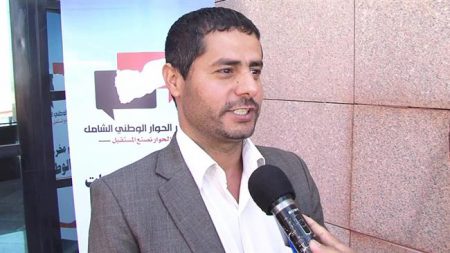
Mohammed al-Bukhaiti, member of the Political Council of Yemen’s Houthi Ansarullah movement
Speaking after talks in Oman on Tuesday, Kerry said that he had presented Houthi delegates with a document outlining a ceasefire and peace deal.
The Houthis had agreed to observe the truce, provided the other side implemented it, he said, adding, “And thus far the Emiratis and the Saudis… they have both agreed to try to move forward with this.”
Yemen’s warring sides had further reached a consensus to work out a “national unity government in a safe and secure Sana’a… as a goal towards the end of the year,” the top Us diplomat pointed out.
Elsewhere in his comments, Bukhaiti confirmed that the Riyadh regime had agreed to end its offensive against Yemen.
“The new thing is in the position of Saudi (Arabia), which has agreed in principle to stop the war as one of the parties to the conflict,” he said.
On Tuesday, however, Yemen’s former foreign minister, Abdel Malek al-Mekhlafi, complained that Kerry’s announcement had not been coordinated with the country’s resigned government.
Saudi Arabia has come under international opprobrium for the sheer size of the casualties from the war it is leading since March 2015 to crush the Houthis and reinstate the former Yemeni administration.
The war has killed at least 11,400 civilians, according to a recent tally by a Yemeni monitoring group. There have also been countless reports about the deliberate and indiscriminate targeting of civilian infrastructure by the Saudi forces and mercenaries.
The Houthi Ansarullah movement took state matters into their own hands in the wake of Abd Rabbuh Mansur Hadi’s resignation and escape, which threw Yemen into a state of uncertainty and threatened a total security breakdown in the country.
UK rejects MPs’ calls to stop arms sales to Saudis
Press TV – November 14, 2016
The UK government has rejected calls by lawmakers to temporarily stop arms sales to Saudi Arabia over the Kingdom’s war crimes in Yemen.
Britain has signed off £3.3 billion in arms sales to Saudi Arabia since March 26, 2015, when it launched a war in Yemen in order to undermine the Houthi Ansarullah movement and restore power to Saudi-backed former President Abd Rabbuh Mansur Hadi.
Two committees of MPs recently released a joint report, urging the government to suspend arms sales until the United Nations conducts an investigation into the Saudi atrocities, The Independent reported Monday.
The committees include the International Development and Business Committee, which both sit on a parliamentary ‘super committee’ known as the Committee on Arms Export Control (CAEC).
The Foreign Affairs Committee, a third constituent committee of CAEC, did not endorse the report, but suggested that British courts should decide the legality of the sales.
Meanwhile, a legal challenge has been launched by Campaign Against the Arms Trade, which is set to be heard in the coming months.
The UK government has rejected the calls by the two committees, saying it “is confident in its robust case-by-case assessment and is satisfied that extant licenses for Saudi Arabia are compliant with the UK’s export licensing criteria.”
“We continue to assess export license applications for Saudi Arabia on a case-by-case basis against the Consolidated EU and National Arms Export Licensing Criteria, taking account of all relevant factors at the time of the application,” The Independent quoted the government as saying in an official response.
The government said that it would continue its arms sales to any country, unless its assessments show that the items are being used in violation of UN human rights laws.
“The key test for our continued arms exports is whether there is a clear risk that those exports might be used in a commission of a serious violation of International Humanitarian Law (IHL),” it added.
The response was issued by British Foreign Secretary Boris Johnson, Defense Secretary Sir Michael Fallon, International Trade Secretary Liam Fox and International Development Secretary Priti Patel.
Andrew Smith of Campaign Against the Arms Trade told The Independent that “the government is in denial about the devastating impact of the Saudi-led bombardment and its own complicity in it.”
Smith called the response “very weak,” saying that it is indicative of the fact that “arms company profits are still being prioritized over the human rights and lives of Yemeni people.”
He noted that those who issued the response “could stop the arms sales right now” instead of “offering uncritical military and political support” to Saudi Arabia.
The UK government is “helping arms companies like BAE to sell even more weapons” to the Saudis, he added.
Since the beginning of the aggression, almost 10,000 people, including over 2,000 children, have been killed.
London has been one of the biggest suppliers of weapons to Riyadh for 40 years.
Justifying the Saudi Slaughter in Yemen
By Gareth Porter | Consortium News | October 31, 2016
The Obama administration has carried out a deliberately deceptive campaign accusing Iran of covertly sending arms to the Houthis by sea, a claim that Washington cites to help justify the Saudi massive air attack against the Houthis that began last year.
By repeating the accusation over and over, the administration has been largely successful in turning a dubious allegation into accepted fact, even though it is contradicted by evidence that is well-documented on the public record.
Secretary of State John Kerry introduced the new variant of the Obama administration’s familiar theme about Iran’s “nefarious activities” in the region two weeks after Saudi Arabia began its bombing in Yemen on March 26, 2015. Kerry told the PBS NewsHour, “There are obviously supplies that have been coming from Iran,” citing “a number of flights every single week that have been flying in.” Kerry vowed that the United States was “not going to stand by while the region is destabilized.”
Later, the administration began accusing Iran of using fishing boats to smuggle arms to the Houthis. The campaign unfolded in a series of four interceptions of small fishing boats or dhows in or near the Arabian Sea from September 2015 through March 2016. The four interceptions had two things in common: the boats did have illicit weapons alright, but the crews always said the ship was bound for Somalia – not Yemen and the Houthis.
But instead of acknowledging the obvious fact that the weapons were not related to the Iran-Houthi relationship, a U.S. military spokesman put out a statement in all four cases citing a U.S. “assessment” that the ultimate destination of the arms was Houthi-controlled territory in Yemen.
The choice of wording was significant. The intelligence community says that it “assesses” that something is true only when it does not have clear-cut proof on the matter. In the case of the alleged Iranian use of fishing dhows to smuggle arms to the Houthis, the U.S. spokesmen did not cite a single piece of evidence for that “assessment” in any of the four cases. In fact, when asked for some justification for it, the military spokesman refused.
The first fishing dhow was intercepted in the Arabian Sea on Sept. 25, 2015, by a member of a 31-nation coalition called the Combined Maritime Forces patrolling the Arabian Sea and nearby waters for piracy. The coalition ship found the dhow to be carrying 18 Konkurs anti-tank missiles, 71 other anti-tank shells and 54 missile-launchers.
Blaming Iran
The U.S. Navy’s Fifth Fleet later issued a statement that said, “Based on statements from the dhow’s crew the port of origin of the dhow and its illicit weapons cache is believed to be Iran.” It also said the anti-tank missiles were thought to be of Iranian and Russian origin, and that the papers on the ship had indicated that it had been checked by ports and customs officials in Iran’s Sistan and Baluchistan province.
But the crew of the vessel had said that it was bound not for Yemen but for Somalia, as the spokesman for the U.S. Fifth Fleet acknowledged to The Associated Press. A Saudi military spokesman suggested that Iran intended to reroute the arms later from Somalia to Yemen, but offered no evidence.
On Feb. 27, 2016, an Australian ship intercepted a second fishing dhow off the coast of Oman. The Australians found 1,989 AK-47 assault rifles, 100 rocket-propelled grenades and 40 PKM machine guns on board. The Australian Defense Force issued an official statement on the seizure that did not mention Iranian involvement. It said the boat appeared to be “stateless” and that its cache of weapons was “destined for Somalia.” The Australian Defense Force spokesman explained to CNN that the conclusion was based on interviews with crew members.
But a spokesman for U.S. Naval Forces, Central Command, Lt. Ian McConnaughey gave an entirely different political slant to the interception. In an e-mail to NBC News, McConnaughey said. “Based on the dhow’s course, Iran is believed to be its port of origin and the source of the illicit weapon,” he said. McConnaughey said the crew was “assessed” to be Iranian – implying that the crew itself had not indicated that.
McConnaughey acknowledged to NBC and The Telegraph, “According to coalition forces it is believed that the vessel’s destination was in the vicinity of Somalia.” But the CENTCOM spokesman indicated that it didn’t matter; the U.S. was insisting on its narrative about covert Iranian arms to the Houthis.
“[T]he initial U.S. assessment is the weapons’ final destination was likely to be the Houthis in Yemen,” McConnaaughey told NBC and The Telegraph.
When this writer asked McConnaughey by e-mail why the U.S. “assessed” that the weapons were intended for Yemen, despite the evidence to the contrary, he responded, “We are not going to discuss the intelligence and other information that led us to our assessment.”
A Third Shipment
On March 20, a French navy destroyer intercepted a third fishing dhow off the Island of Socotra in the northern Indian Ocean and found several hundred AK-47 assault rifles, machine guns and antitank weapons. The official statement on the seizure from the Combined Maritime Forces stated categorically, “The dhow was spotted heading toward Somalia.” 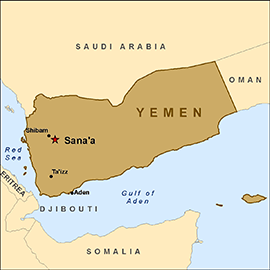
And because the weapons were “deemed to be destined for Somalia,” it explained, they “were seized under the United Nations Security Council mandated arms embargo in accordance with UNSCR 2244(2015).” That Security Council resolution mandates an embargo on Eritrea.
Australia and other states participating in the Combined Maritime Forces were thus challenging the U.S. propaganda line. But again the U.S. military used the news media to reinforce the line about Iran smuggling arms to the Houthis. Commander Kevin Stephens, a spokesman for the Fifth Fleet, told CNN that “according to a U.S. assessment,” Yemen was the “likely destination” of the arms.
A fourth interception – the third in three weeks – occurred on March 28 by a U.S. Navy ship that was not operating as part of Combined Maritime Forces but directly under U.S. Naval Forces Central Command. That allowed the Naval Forces Central Command to issue its own news story on April 4.
In its lead paragraph, the report said the United States “assessed” that the shipment of illicit arms on board the dhow “originated in Iran and was likely bound for Houthi insurgents in Yemen.”
An Earlier Ruse
The Obama administration also had sought to promote the charge that Iran was covertly sending weapons to the Houthis by sea more than two years earlier. In January 2013, the Yemen client government backed by the United States and Saudi Arabia had claimed that its forces had intercepted a ship with a large cargo of weaponry that came from Iran and was on its way to Yemen to deliver them to the Houthis.
The Obama administration supported that charge in briefings to journalists. After the Saudi air war against Yemen began in 2015, the U.S. pushed for a report by an experts group on sanctions against Iran that would give the charge credibility.
But the 2013 claim was soon exposed as a ruse. A Security Council Monitoring Group on Somalia and Eritrea revealed in a June 2013 report that the crewmembers had told diplomats who interviewed them that ship’s cargo of diesel fuel was bound for Somalia, not Yemen. And, since the weapons were hidden under the diesel fuel tanks, the weapons could be accessed only after those tanks had been emptied, in other words after the ship docked in Somalia.
The monitoring group learned from authorities in the Puntland region of Somalia, where most of the smuggled weapons have entered the country, that this was a widely used method of smuggling arms into the country.
Furthermore, the monitoring group determined that the wide range of types of weapons on board the ship, which was intercepted in January 2013, as well as of their original sources indicated that the weapons cache had been assembled by arms merchants. Authorities in Puntland provided data to the monitoring group showing that most of the shipments of weapons into Puntland in the months before January 2013 had come from politically well-connected arms merchants in Yemen.
Some of the fishing boats that were intercepted with illicit arms on board in 2015-16 had Iranian owners. But the monitoring group report reveals that the real reason is the role of such Iranian fishing vessels in illegal fishing in Somali waters. The vast majority of the hundreds of fishing vessels involved in such illegal fishing networks were either Iranian or Yemeni. As many as 300 were believed to be Yemeni-owned, while Iranian-owned 180 of them.
The monitoring group said it was investigating unconfirmed reports that some of those illegal fishing vessels were also being used to carry out arms smuggling and that it had established “other connections between the illegal fishing networks and networks involved in the arms trade and connected to al-Shabaab in northeastern Somalia.”
But the Obama administration has no interest in the considerable evidence gathered by the monitoring group that provides a more credible explanation for the arms found on those four fishing dhows.
Such an explanation isn’t political useful, whereas the accusations of Iranian smuggling of arms to the Houthis fulfilled multiple political and bureaucratic interests, justifying Saudi Arabia’s bloody U.S.-backed air campaign over Yemen and endless Washington alarms about “Iranian aggression.”
Gareth Porter is an independent investigative journalist and winner of the 2012 Gellhorn Prize for journalism. He is the author of the newly published Manufactured Crisis: The Untold Story of the Iran Nuclear Scare.
Conflict, terrorism in Mideast serving Israel: Larijani
Press TV – October 29, 2016
Iranian Parliament Speaker Ali Larijani says terrorists have created chaos in the Middle East, adding that the continuation of conflicts and acts of terror will serve the Israeli regime’s interests.
“The [critical] situation and chaos in the region has been created by a number of terrorists and the enemy does not want this chaos to end,” Larijani said on Saturday.
He added that all Muslim countries, including Syria, Yemen and Iraq, are entangled in conflicts and only the Israeli regime benefits from such a chaotic situation.
“Superpowers formed an anti-terror coalition in coordination with 60 countries but since they do not want to see the end of wars in the region and regard such an end as detrimental to the Zionist regime [of Israel], they are fanning the flames of tensions in the region,” Larijani said.
He noted that even American and Israeli experts and strategists have confirmed that the current conflicts in the Muslim world best serve the interests of the Zionists and that any success by Iran and the Lebanese resistance movement, Hezbollah, would be detrimental to them.
The top Iranian parliamentarian added that whenever promising prospects emerge for putting an end to the regional conflicts, the world powers rush to hold meetings and try to prolong the crises.
He said these powers have reinforced their links with terrorist groups operating in regional countries and are covertly providing them with weapons and military equipment.
Since March 2011, Syria has been hit by militancy it blames on some Western states and their regional allies. The Syrian military is engaged in an operation to rid the country of Daesh and other terrorist groups.
Over the past months, Syria has managed to recapture swathes of land from Daesh and other groups in the east and north of the country. The Syrian military has used the assistance of fighters from Hezbollah as well as advisory military support from Iran. Russia also helps Syria in the fight against terrorists through a series of coordinated airstrikes on their positions.
This is while Iraqi army troops, backed by fighters from allied Popular Mobilization Units, have been engaged in military operations to win back regions held by Daesh and have managed to liberate most of these areas.
The militants have been committing heinous crimes against all ethnic and religious communities in the northern and western parts of Iraq.
Michael Moore Owes Me $4.99
By David Swanson | Let’s Try Democracy | October 28, 2016
Michael Moore has made some terrific movies in the past, and Where to Invade Next may be the best of them, but I expected Trumpland to be (1) about Trump, (2) funny, (3) honest, (4) at least relatively free of jokes glorifying mass murder. I was wrong on all counts and would like my $4.99 back, Michael.
Moore’s new movie is a film of him doing a stand-up comedy show about how wonderfully awesome Hillary Clinton is — except that he mentions Trump a bit at the beginning and he’s dead serious about Clinton being wonderfully awesome.
This film is a text book illustration of why rational arguments for lesser evilist voting do not work. Lesser evilists become self-delusionists. They identify with their lesser evil candidate and delude themselves into adoring the person. Moore is not pushing the “Elect her and then hold her accountable” stuff. He says we have a responsibility to “support her” and “get behind her,” and that if after two years — yes, TWO YEARS — she hasn’t lived up to a platform he’s fantasized for her, well then, never fear, because he, Michael Moore, will run a joke presidential campaign against her for the next two years (this from a guy who backed restricting the length of election campaigns in one of his better works).
Moore maintains that virtually all criticism of Hillary Clinton is nonsense. What do we think, he asks, that she asks how many millions of dollars you’ve put into the Clinton Foundation and then she agrees to bomb Yemen for you? Bwahahaha! Pretty funny. Except that Saudi Arabia put over $10 million into the Clinton Foundation, and while she was Secretary of State Boeing put in another $900,000, upon which Hillary Clinton reportedly made it her mission to get the planes sold to Saudi Arabia, despite legal restrictions — the planes now dropping U.S.-made bombs on Yemen with U.S. guidance, U.S. refueling mid-air, U.S. protection at the United Nations, and U.S. cover in the form of pop-culture distraction and deception from entertainers like Michael Moore.
Standing before a giant Air Force missile and enormous photos of Hillary Clinton, Michael Moore claims that substantive criticism of Clinton can consist of only two things, which he dismisses in a flash: her vote for a war on Iraq and her coziness with Wall Street. He says nothing more about what that “coziness” consists of, and he claims that she’s more or less apologized and learned her lesson on Iraq.
What? It wasn’t one vote. It was numerous votes to start the war, fund it, and escalate it. It was the lies to get it going and keep it going. It’s all the other wars before and since.
- She says President Obama was wrong not to launch missile strikes on Syria in 2013.
- She pushed hard for the overthrow of Qadaffi in 2011.
- She supported the coup government in Honduras in 2009.
- She has backed escalation and prolongation of war in Afghanistan.
- She skillfully promoted the White House justification for the war on Iraq.
- She does not hesitate to back the use of drones for targeted killing.
- She has consistently backed the military initiatives of Israel.
- She was not ashamed to laugh at the killing of Qadaffi.
- She has not hesitated to warn that she could obliterate Iran.
- She is eager to antagonize Russia.
- She helped facilitate a military coup in Ukraine.
- She has the financial support of the arms makers and many of their foreign customers.
- She waived restrictions at the State Department on selling weapons to Saudi Arabia, Algeria, Kuwait, United Arab Emirates, Oman, and Qatar, all states wise enough to donate to the Clinton Foundation.
- She supported President Bill Clinton’s wars and the power of the president to make war without Congress.
- She has advocated for arming fighters in Syria and for a “No Fly” zone.
- She supported a surge in Iraq even before President Bush did.
That’s just her war problem. What about her banking problem, prison problem, fracking problem, corporate trade problem, corporate healthcare problem, climate change problem, labor problem, Social Security problem, etc.?
Moore parts company from substantive critique in order to lament unproven rightwing claims that Hillary Clinton has murdered various people. “I hope she did,” screams Moore. “That’s who I want as Commander in Chief!” Hee hee hee.
Then Moore shamelessly pushes the myth that Hillary tried to create single-payer, or at least “universal” healthcare (whatever that is) in the 1990s. In fact, as I heard Paul Wellstone tell it, single-payer easily won the support of Clinton’s focus group, but she buried it for her corporate pals and produced the phonebook-size monstrosity that was dead on arrival but reborn in another form years later as Obamacare. She killed single-payer then, has not supported it since, and does not propose it now. (Well, she does admit in private that it’s the only thing that works, as her husband essentially blurts out in public.) But Moore claims that because we didn’t create “universal” healthcare in the 1990s we all have the blood of millions on our hands, millions whom Hillary would have saved had we let her.
Moore openly fantasizes: what would it be like if Hillary Clinton is secretly progressive? Remember that Moore and many others did the exact same thing with Obama eight years ago. To prove Clinton’s progressiveness Moore plays an audio clip of her giving a speech at age 22 in which she does not hint at any position on any issue whatsoever.
Mostly, however, Moore informs us that Hillary Clinton is female. He anticipates “that glorious moment when the other gender has a chance to run this world and kick some righteous ass.” Now tell me please, dear world, if your ass is kicked by killers working for a female president will you feel better about it? How do you like Moore’s inclusive comments throughout his performance: “We’re all Americans, right?”
Moore’s fantasy is that Clinton will dash off a giant pile of executive orders, just writing Congress out of the government — executive orders doing things like releasing all nonviolent drug offenders from prison immediately (something the real Hillary Clinton would oppose in every way she could).
But when he runs for president, Moore says, he’ll give everybody free drugs.
I’ll tell you the Clinton ad I’d like to see. She’s standing over a stove holding an egg. “This is your brain,” she says solemnly, cracking it into the pan with a sizzle. “This is your brain on partisanship.”

Featured Video
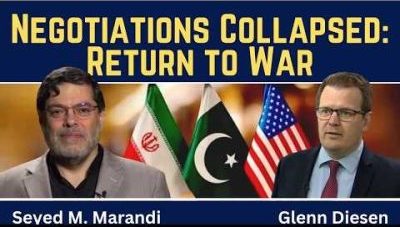
Seyed M. Marandi: Negotiations Collapsed – Return to War
or go to
Aletho News Archives – Video-Images
From the Archives
Wartime internment camps in Australia
National Archives of Australia
World War I
During World War I, for security reasons the Australian Government pursued a comprehensive internment policy against enemy aliens living in Australia.
Initially only those born in countries at war with Australia were classed as enemy aliens, but later this was expanded to include people of enemy nations who were naturalised British subjects, Australian-born descendants of migrants born in enemy nations and others who were thought to pose a threat to Australia’s security.
Australia interned almost 7,000 people during World War I, of whom about 4,500 were enemy aliens and British nationals of German ancestry already resident in Australia.
Records of World War I internment camps
World War II
During World War II, Australian authorities established internment camps for three reasons – to prevent residents from assisting Australia’s enemies, to appease public opinion and to house overseas internees sent to Australia for the duration of the war.
Unlike World War I, the initial aim of internment during the later conflict was to identify and intern those who posed a particular threat to the safety or defence of the country. As the war progressed, however, this policy changed and Japanese residents were interned en masse. In the later years of the war, Germans and Italians were also interned on the basis of nationality, particularly those living in the north of Australia. In all, just over 20 per cent of all Italians resident in Australia were interned. … continue
Blog Roll
 Aletho News
- Seyed M. Marandi: Negotiations Collapsed – Return to War
- Tomorrow’s naval blockade showdown
- ‘Israel’ attacks civilians to hide its embarrassing military failures & out of pure sadism
- Any Foreign Military Vessel Approaching Hormuz Under Any Pretext ‘Will Be Dealt With Severely’: IRGC
- Diplomats slam US negotiators’ performance in Iran talks
- Trump Refuses Exit Ramp, War with Iran will Continue
- Trump Says US Naval Blockade in Strait of Hormuz Will Begin Shortly
- US, Iran end 21-hour talks without agreement
- US IRAN TALKS: Who Are the Crazy Ones Here? /Lt Col Daniel Davis
- Talks with the US end without a deal over excessive US demands: Iran
- If Americans Knew
- US-Iran ceasefire negotiations make zero progress – Daily Update
- Pro-Israel ‘Thinktanks’ and Individuals who Influence U.S. Foreign Policy
- Mearsheimer reveals how Israel dictates US policies on Iran, Gaza – video
- After killing 350+, Israel still has a “score to settle” with Lebanon before ceasefire – Daily Update
- Military aid to Israel emerges as the latest political litmus test for Democrats
- The only Palestinian children’s rights organization closes following years-long Israeli campaign against it
- ‘I Can’t Forget the Smell’: Lebanese Reel After Israel Kills Over 300 in Single Day
- DNC Shoots Down Resolutions Calling Out AIPAC and Limiting Arms to Israel
- TCN: Is Israel Blackmailing President Trump?
- Israel killed at least 303 Lebanese yesterday – who were they? Daily Update
- No Tricks Zone
- Cave Discovery Reveals Today’s Desert Climates Were Recently Far Warmer, Wetter, Teeming With Life
- German Expert: Heat Dome Led To Record Temps In Western USA…Warmer In 1934, 1936
- New Study: No Linear Warming Or Glacier Retreat Along Northern Antarctic Peninsula Since 1980s
- An Inconvenient Tree: Uncovered In Alps… Europe Much Warmer Than Today 6000 Years Ago
- New Study Reports A 60% Slowdown In Greenland’s Ice Loss Rate In The Last Decade
- Low Intensity Tornado Wrecks Major Solar Farm, Creating A Potential Toxic Dump
- New Study Finds Warming Saves Lives…Cold Temperatures 12 Times More Deadly Than Excess Heat
- German Science Blog Accuses PIK Climate Institute Of Hallucinating Climate Tipping Points
- Devastating Assessment Of Comirnaty Vaccine By Former Senior Pfizer Europe Toxicologist
- New Study: CO2 Is ‘Effectively Negligible’ As An Explanatory Climate Change Factor Since 2000
 Aletho News