US Arms Sales to Saudi Arabia Contributing to Conflict in Yemen
Sputnik – 01.08.2015
WASHINGTON — The United States’ weapons and logistical support for Saudi Arabia’s military campaign in Yemen signals that Washington is backing Riyadh’s goal to crush Houthi rebels despite UN calls for a political solution, experts told Sputnik on Friday.
The United States is providing intelligence and refueling support to enable a four-month-old Saudi-led air campaign against Houthi rebels and allied forces.
On Thursday, Washington decided to provide Riyadh with $500 million in ammunition to replenish stocks used up in the campaign.
“The Saudis want an extended war that leads to a Houthi defeat, and the United States is effectively backing that strategy with the arms deal,” Charles Schmitz, a specialist on Yemen at the Middle East Institute told Sputnik.
“The Saudis don’t want a political settlement; they want a Houthi surrender,” he added.
This week’s $500 million weapons deal, which includes ammunition, tracers, artillery shells and mines, is meant to resupply the Saudi military in its campaign against Houthi rebels, according to the State Department.
The sale was approved as Saudi Arabia has come under criticism for human rights abuses and violations of the international law of war by targeting and killing civilians in Yemen.
The conflict has claimed the lives of at least 1,900 civilians and has injured more than 4,000, according to the UN, while leaving 80 percent of the country in need of humanitarian assistance.
“The new sale by the United States of $500 million of munitions to Saudi Arabia is yet another example of how America is actually an active combatant in the Saudi war on the people of Yemen,” Haykal Bafana, Managing Director of Bafana Advisory, told Sputnik from Sana.
“Whether the US munitions are distributed by Riyadh for use by its Yemeni proxy forces or by the Kingdom [of Saudi Arabia] itself, the effect is similar: the United States is contributing actively to the deaths of more Yemenis,” Bafana added.
The multi-front war in Yemen pits Houthi rebels and loyalists of former President Ali Abdullah Saleh against ousted President Abd Rabbuh Mansour Hadi’s Sunni forces, tribes and south Yemen secessionists based in Aden.
Al-Qaeda in the Arab Peninsula and the ISIL have also taken advantage of the situation to strengthen their hold in Yemen.
Saudi trained Yemeni proxies loyal to former president Hadi have recently pushed Houthi forces from Aden as several humanitarian ceasefires and political talks have broken-down.
Meanwhile, Saudi Arabia has delayed a pledge to provide $274 million in humanitarian aid to Yemen as the UN and Riyadh discuss the terms of the assistance, the UN’s humanitarian chief said this week.
US-loaned RAF personnel may be illegally striking Pakistan & Yemen, not just Syria
RT | July 23, 2015
Fresh controversy has emerged about RAF airmen embedded in an American drone unit, which is known to be carrying out airstrikes in Syria after the charity Reprieve gained access to a joint US-UK memo.
Responding to Reprieve’s request in November, the Ministry of Defence (MoD) said there were “currently” no RAF personnel embedded with the United States Air Force’s (USAF) 432nd unit based at Creech airbase in Nevada.
It now appears that the response was not given in good faith – while there may have been no personnel at Creech in November, RAF airmen have been embedded there since 2008 and are there presently.
The MoD confirmed on Wednesday there were indeed UK armed forces personnel currently at the base.
If UK personnel are involved in strikes in countries like Pakistan and Yemen, with whom the UK is not ‘legally’ at war, there may be legal issues.
Strikes on Syria would also be illegal given a 2013 parliamentary vote on bombing within the borders of the war-ravaged nation.
The memo concerns the embedding of UK personnel in US units in order to make up for manning shortfalls. It referred to them as “a gift of services to fulfill US air force operational requirements.”
The three-year postings for pilot and sensor operators for both Reaper and Predator drones are described as involving a role in “worldwide operations” and taking part in operations that determine and hit viable targets “in conjunction with the combined air operations center rules of engagement, but always adhering to the legal framework for the operation in question.”
Concerns over the activities of embedded personnel have been under the spotlight over the last two weeks since they emerged after a Freedom of Information (FoI) request, also by Reprieve, that UK pilots had been bombing targets in Syria despite the 2013 vote and resulting democratic ban on doing so.
It was later confirmed that each mission, reportedly carried out by Royal Navy pilots operating from US aircraft carriers in the Gulf, received specific parliamentary authorization.
Defence Secretary Michael Fallon has since defended the operations, saying that UK personnel embedded with allied forces were effectively “foreign troops.”
Cameron Demands Iran Change Policy on Syria, Yemen
Sputnik — 19.07.2015
MOSCOW – Western countries expect changes in Iran’s policy in the Middle East following a nuclear deal concluded between Tehran and the international negotiators, British Prime Minister David Cameron said on Sunday.
On Tuesday, Iran and the P5+1 group, comprising China, France, Germany, the United Kingdom, Russia and the United States, concluded a historic agreement to ensure the peaceful nature of the country’s nuclear program.
“I spoke to [Iranian] President Rouhani yesterday and I said that we want to see a change in an approach that Iran takes to issues like Syria and Yemen and to terrorism in the region and we want the change in [Iran’s] behavior,” Cameron said on NBC News’ Meet the Press.
The prime minister added that the nuclear deal with Iran could lead to this change and was “so much better than the alternative,” since without the deal Iran would obtain nuclear weapon and Western countries might have to begin military action in the region against Iran.
The P5+1 international negotiators have been attempting to reach a comprehensive agreement with Iran that would insure the peaceful nature of the country’s nuclear program since November 2013, when an interim was signed.
According to the final text of the nuclear agreement, Iran will under no circumstances seek to develop or acquire a nuclear weapon and, in exchange, will receive sanctions relief. The text details how the final treaty will positively contribute to regional Middle Eastern security.
On Saturday, the country’s Supreme Leader Ayatollah Ali Khamenei said Iran would not change its rigid stance on defense capability and regional policy in light of the agreement with the international negotiators.
Abdulazeez and Abdulaziz
By Robert Barsocchini | Empire Slayer | July 17, 2015
Former engineer Muhammad Youssef Abdulazeez, according to investigators, was a lone gunman with no prior infractions who this week targeted two US military facilities in Tennessee, killing four militants and no civilians.
Salman bin Abdulaziz is one of the world’s worst dictators. He has many prior infractions, such as publicly announcing becoming a rogue nuclear state, beheading and torturing hundreds of people and repressing millions, and is currently carrying out a war of aggression against one of the poorest countries in the world, Yemen, killing thousands of civilians and enforcing a blockade that risks starving millions, as Yemen imports almost all of its food.
The despot Abdulaziz is one of Washington’s top allies. His terrorist regime is the recipient of the biggest shipment of weapons in US history, approved by Obama in 2010 (the US is the world’s biggest arms trafficker). These killing machines are now being used on the people of Yemen. In 2013, Obama sent the despot almost a billion dollars worth of banned cluster bombs, which both Obama and Abdulaziz have now used against Yemenis.
Many foreign nationals are trapped in the war-zone in Yemen, and eight countries, including India, China, and Russia, are performing risky missions to rescue civilians, their own citizens as well as others. While there are thousands of US civilians trapped in Yemen, Washington vocally refuses to rescue them, issuing a facile claim that it would be too risky, while at the same time performing rescue missions for Saudi pilots whose planes have gone down in Yemen.
Washington is also personally coordinating with dictator Abdulaziz on the strikes, and is refueling the US planes being flown by Saudi pilots.
Obama continues to bomb Yemen himself, killing hundreds of suspects and civilians in a death campaign he has been pursuing for years. He is also participating in enforcing the blockade, which human rights groups say has led the country to the brink of a mass humanitarian catastrophe.
The attack by Muhammad Youssef Abdulazeez is a small and diluted taste – no explosives were used and no suspects or civilians were killed – of what drone strikes on one’s country are like.
Whenever the US gets a small taste of its own medicine, it doesn’t like it, yet continues to administer the medicine to others in mega-doses. Washington elites know their violence causes violent retaliation, but continue it because they themselves are insulated and safe, and only lower-level grunts and civilians, their human shields, will take the hits.
The Tennessee shooter is quoted in his high school year book as saying that his name, Abdulazeez, “causes national security alerts”. This is now literally true, but is dependent on circumstances. One attack by an Abdulazeez is saturating US headlines and receiving stark condemnation from the US government/oligarchy (Obama called it “heartbreaking”), while an incomparably worse attack by an incomparably worse Abdulaziz, raining down on thousands of people, including US Americans abandoned by their oligarchy, is met with media silence and extreme support and participation from Washington.
Author is a US-based researcher focusing on force dynamics, national and global. @_DirtyTruths
Sectarian, tribal wars protecting Israel: Khamenei
Press TV – July 18, 2015
Leader of the Islamic Revolution Ayatollah Seyyed Ali Khamenei says the ongoing sectarian and tribal wars have been imposed on the Middle East region to deflect Muslims’ attention away from the atrocities of the Israeli regime.
The Leader made the remarks in a Saturday meeting with senior Iranian officials and ambassadors of Muslim countries posted in Iran on the occasion of Eid al-Fitr, marking the end of the holy Muslim fasting month of Ramadan.
“If the Islamic Ummah were united and relied on their own commonalities, they would certainly be a unique power in the international political scene but big powers have imposed such divisions on the Islamic Ummah to pursue their own interests and safeguard the Zionist regime [of Israel],” Ayatollah Khamenei said.
The Leader added that certain incompetent officials in Muslim countries support the “illegitimate” Israeli regime, noting that arrogant powers created “criminal” terrorist groups such as al-Qaeda and the ISIL.
“Iran has no trust in the US because American politicians are completely dishonest and unfair,” Ayatollah Khamenei said.
He stressed the importance of reinforcing unity among Muslim nations, and said Shia and Sunni Muslims have long coexisted peacefully in the region.
“With regard to regional issues like Iraq, Syria, Yemen, Lebanon and Bahrain, the Islamic Republic of Iran does not pursue its own interests but it believes that the main decision-makers in these counties are the nations and others have no right to interfere and make decisions,” the Leader said.
Ayatollah Khamenei pointed to arrogant powers’ policies on Yemen, saying the US is supporting the Arab country’s fugitive former president who left the country at a sensitive juncture.
He added that arrogant powers also seek to overthrow a popular government in Iraq, sow discord among Muslims and divide the country, but the Islamic Republic’s policy vis-a-vis its western neighbor is based on supporting a democratic government, resisting factors of civil wars and defending Iraq’s territorial integrity.
Arrogant powers intend to oust the Syrian government which is strongly resisting the Israeli regime, the Leader said, adding that Iran considers an anti-Zionist country as useful for the Muslim world.
Ayatollah Khamenei once again reaffirmed Iran’s support for the Lebanese resistance movement due to its bravery and genuine resistance against aggressive powers.
“The Americans dub the Lebanese resistance as terrorist and regard Iran as a supporter of terrorism because of its support for the Lebanese Hezbollah, while the Americans, themselves, are the real terrorists who have created Daesh [ISIL] and support the wicked Zionists,” the Leader said.
Ayatollah Khamenei further pointed to the latest round of nuclear talks between Iran and the P5+1 group of countries in Vienna, and called on the Iranian nation to remain united because the negotiators are pursuing national interests.
US/Israeli/Saudi ‘Behavior’ Problems
By Robert Parry | Consortium News | July 15, 2015
There is a madness in how the mainstream U.S. media presents the world to the American people, a delusional perspective that arguably creates an existential threat to humanity’s survival. We have seen this pattern in the biased depiction of the Ukraine crisis and now in how Official Washington is framing the debate over the Iranian nuclear agreement.
In this American land of make-believe, Iran is assailed as the chief instigator of instability in the Middle East. Yet, any sane and informed person would dispute that assessment, noting the far greater contributions made by Israel, Saudi Arabia and, indeed, the United States.
Israel’s belligerence, including frequently attacking its Arab neighbors and brutally repressing the Palestinians, has roiled the region for almost 70 years. Not to mention that Israel is a rogue nuclear state that has been hiding a sophisticated atomic-bomb arsenal.
An objective observer also would note that Saudi Arabia has been investing its oil wealth for generations to advance the fundamentalist Wahhabi sect of Sunni Islam, which has inspired terrorist groups from Al Qaeda to the Islamic State. Fifteen of the 19 hijackers on 9/11 were identified as Saudis and the U.S. government is still concealing those 28 pages of the congressional 9/11 inquiry regarding Saudi financing of Al Qaeda terrorists.
The Saudis also have participated directly and indirectly in regional wars, including encouragement of Iraq’s invasion of Iran in 1980, support for Al Qaeda-affiliate Nusra Front’s subversion of Syria, and the current Saudi bombardment of Yemen, killing hundreds of civilians, touching off a humanitarian crisis and helping Al Qaeda’s Yemeni affiliate expand its territory.
U.S. Meddling
Then there’s the United States, which has been meddling in the Middle East overtly and covertly for a very long time, including one of the CIA’s first covert operations, the overthrow of Iran’s elected government in 1953, and one of U.S. foreign policy’s biggest overt blunders, President George W. Bush’s invasion of Iraq in 2003.
The Iran coup engendered a deep-seated hatred and suspicion of the U.S. government among Iranians that extends to the present day. And, the Iraq invasion not only spread death and destruction across Iraq but has spilled over into Syria, where U.S. “allies” – Turkey, Saudi Arabia, Qatar and Israel – have been seeking another “regime change” that is being spearheaded by Sunni terrorist groups, including Al Qaeda’s Nusra Front and the Islamic State.
The U.S. government has further aided in the destabilization of the region by flooding U.S. “allies” with powerful military equipment, including aircraft that both Israel and Saudi Arabia have used to bomb neighboring countries.
Yet, in the fantasy land that is Official Washington, the politicians and pundits decry “Iranian aggression,” parroting the propaganda theme dictated by Israeli Prime Minister Benjamin Netanyahu when he spoke before an adoring audience of senators and congressmen at a joint session of Congress on March 3.
This Iranian “bad behavior” includes helping the Iraqi government withstand brutal attacks by the Islamic State and assisting the Syrian government in blocking a major victory for Islamic terrorism that would follow the fall of Damascus. Iran is also being blamed for the Houthi uprising in Yemen although most informed observers believe the Iranian influence and assistance are minimal.
In other words, the neoconservatives who dominate Official Washington’s “group think” may detest Iran’s regional activities since they are not in line with Israeli (and Saudi) desires, but less ideological analysts might conclude that – on balance – Iran is contributing to the stability of the region or at least helping to avert the worst outcomes.
A Lost Mind
The question becomes: Has Official Washington so lost its collective mind that it actually favors Al Qaeda or the Islamic State raising the black flag of Islamic terrorism over Damascus and even Baghdad? Is Iranian assistance in averting such a calamity such a terrible thing?
Apparently yes. Here’s how The Washington Post’s foreign affairs honcho David Ignatius – in a column entitled “Will Tehran Behave?” – describes the geopolitical situation following Tuesday’s signing of a deal to tightly constrain Iran’s nuclear program in exchange for lifting sanctions:
“The problem isn’t the agreement but Iran itself. Its behavior remains defiantly belligerent, even as it signs an accord pledging to be peaceful. Its operatives subvert neighboring regimes, even as their front companies are about to be removed from the sanctions lists. The agreement welcomes Iran to the community of nations, even though its leader proclaims that Iran is a revolutionary cause.
“Obama argues that dealing with a menacing Iran will be easier if the nuclear issue is off the table for the next 10 years. He’s probably right, but the Iran problem won’t vanish with this accord. Iranian behavior in the region becomes the core issue. Having played the dealmaker, Obama must now press Iran to become a more responsible neighbor.”
By the way, I always thought that the United States proclaimed itself “a revolutionary cause.” But here is Ignatius, who is regarded as a “big thinker,” setting the parameters of the acceptable debate about the Iran nuclear deal. It’s all about Iran’s “behavior.”
Ignatius even quotes Netanyahu decrying the danger that, after 10 years, the agreement will give Iran “a sure path to nuclear weapons.” Of course, Ignatius doesn’t bother to note that Israel already has taken its own path to nuclear weapons. That context is almost never mentioned.
Nor does Ignatius admit how he and many of his fellow pundits supported Bush’s invasion of Iraq, which in a normal, parallel universe would disqualify Ignatius and his friends from lecturing anyone about how to “behave.” But in today’s Official Washington, a pre-war endorsement of the Iraq disaster is not a disqualifier but a prerequisite for being taken seriously.
Similarly, The Washington Post’s editorial page, which in 2002-03 eagerly backed Bush’s invasion and routinely asserted as flat fact that Iraq possessed hidden WMD stockpiles, now says the real risk in the Iran deal is, you guessed it, “Iranian behavior.”
The Post says the deal could unleash “a dangerous threshold nuclear state that poses a major threat to the United States and its allies.” And, the Post warns that Iran’s “leaders will probably use” the money from the sanctions relief “to finance wars and terrorist groups in Iraq, Syria, the Gaza Strip, Yemen and elsewhere.”
Step into Crazy Land
Again, to appreciate the Post’s thinking, you have to step into crazy land. In the real Iraq and the real Syria, the Iranians are supporting internationally recognized governments battling against terrorist groups, Al Qaeda’s affiliate and the Islamic State.
In Yemen, Iranian involvement is probably minor at most. Plus, the Houthis are not a terrorist group, but rather an indigenous popular movement that has been fighting Al Qaeda’s terrorist affiliate in Yemen.
While it’s not clear what the Post thinks that Iran is doing in the Gaza Strip, which is under a tight Israeli military blockade, only fully committed neocons would think that the long-suffering people of the Gaza Strip don’t deserve some outside help.
Still, the larger issue for the American people is what to do with this insane political-media system that dominates Official Washington. Either these powers-that-be are detached from reality or they are deceitful propagandists who think they can manipulate us with lies and distortions.
Yet, by creating a false reality, whether from madness or cynicism, this system guides the nation into terrible decision-making. And, given the immense military power of the United States, this long national detour into a dark psychosis of delusion must be addressed or the future of humankind will be put into serious jeopardy.
~
Investigative reporter Robert Parry broke many of the Iran-Contra stories for The Associated Press and Newsweek in the 1980s. You can buy his latest book, America’s Stolen Narrative, either in print here or as an e-book (from Amazon and barnesandnoble.com).
Palestinian statement of solidarity with Syria
Statement of Palestinian groups and individuals in the occupied homeland, refugee camps and the diaspora about the global war on Syria
July 16, 2015
We are Palestinians and Palestinian organizations that declare our solidarity with the Syrian people in their great historical struggle for survival, now entering its fifth year. We are in a unique position to understand and appreciate the challenges facing our Syrian brothers and sisters, because we face the same challenges.
We understand what it means to have our lands and our property taken by foreign usurpers. We understand what it means for millions of our people to be driven out of their homes and to be unable to return. We understand what it means for our interests and our national rights to become the plaything of the most powerful nations on earth. We understand what it means to suffer and die in defense of our sovereignty and human rights.
We do not pretend to tell Syrians what is right for Syria, just as Syria has respected the Palestinian right to liberate Palestine since the time of the Nakba. However, we declare that the enemies of Syria are the enemies of Palestine, and those who bear arms against the Syrian people and the Syrian army – regardless of their names and affiliations – are mere pawns that serve Israel and its project to divide and control the Arab region. The people who abduct, murder and slaughter in Syria are the enemies of the Arab nation, just like Israel, with which they share goals and criminal nature.
We therefore reject violence and murder against the people and state in Syria, which has nothing to do with any just demands; rather it merely seeks to destroy the Syrian state. Any attack on Syria is an attack on the Arab nation, and that the true national opposition is the one that commits to its country’s principles and flies its flag, and that doesn’t receive orders from abroad.
The Palestinian and Syrian struggles are not religious struggles. We respect a state that guarantees freedom of religion without preference of any faith over any other. Dividing Arab communities into conflicting sects only serves the Israeli regime and allows it to implement its plots for the region.
While Palestinian refugees have suffered and are suffering in many places, Syria has welcomed them and granted them all the rights of Syrians except the right to vote. We are grateful for this policy of brotherhood/sisterhood and can do no less than to reciprocate with our solidarity for Syria in its time of greatest need. It is the least we can do.
The cynical and genocidal policies of NATO and its proxies in the Middle East have as their main policy to destroy the last remaining independent nations and forces that are not compromised by complicity with Zionist and imperialist forces. These nations and forces wish no harm to others, yet their mere existence is intolerable to Zionism and imperialism. It is our duty to stand with Syria and all nations and movements that resist the intruders and seek an independent course and policy for the benefit and interest of our own people and not to become puppets of foreign powers.
We therefore stand with Syria in its efforts to repel the foreign invaders and the countries that are creating, training, financing, arming and supporting the terrorist groups in Syria. We call for the expulsion of these groups back to their own countries, and for their supporters to devote their resources to improving the lives of their own citizens in their own countries rather than destroying the lives of our citizens in our countries. Like the alien and racist Zionist regime, these criminal countries and their leadership must be prosecuted for war crimes and crimes against humanity for waging illegal wars against sovereign states and peoples, including Palestine, Libya, Iraq, Syria, Lebanon and Yemen.
Signatures:
1. Mayor Bassam Shakaa (Abu Nidal)
2. His Eminence Theodosios (Atallah) Hanna, Archbishop, Greek Orthodox Diocese of Sebastia, Jerusalem
3. People’s Committee for the Defense of Syria in Palestine
4. People’s Committee for Solidarity with Syria & its Patriotic Leadership, Haifa
5. Sheikh Hassan Foundation for Culture and Science
6. Association of Progressive Arab Women Against War on Syria
7. Cultural Assembly for Democracy in Gaza
8. Palestine Shoruq Organisation, Gaza
9. Kifaah Movement, 1948 Palestine
10. Palestinian Comrades Communist Forum, Occupied Palestine
11. Palestinian Popular Forum, Yarmouk, Syria
12. Coalition Forces of the Palestinian Resistance, Syria
13. Palestinian Youth Organization, Lebanon
14.Union of Palestinian Communities in Europe
15. Palestine Federation of Solidarity Associations, Sweden
16. Yousef Hijazi, Gaza
17. Dr. Sabri Muslim, Al-Khalil “Hebron”
18. Dr. Amal Wahdan, Ramallah
19. Saadah Mustafa Ershaid, Jenin
20. Dr. Munthir Aliwaiwi, Al-Khalil “Hebron”
21. Dr. Mohammed Al-Oweiwi,
Al-Khalil “Hebron”
22. Bashir Abu Omar, Al-Khalil “Hebron”
23. Free Palestine Movement, Syria
24. Yaser Qishlaq, Syria
25. Mahmood Dodeen, Al-Khalil “Hebron”
26. Hisham Al-Sharif, Al-Khalil “Hebron”
27. Abdul-Aleem Da’na, Al-Khalil “Hebron”
28. Dr. Mahmoud Sa’ada, Al-Khalil “Hebron”
29. Dr. Abd Al-Raheem Kettana, Nablus, Palestine
30. Hasan Sarsour, Gaza
31. Raif Diab, Gaza
32. Abdel Moneim Abu Sirdanah, Gaza
33. Murad Mattar, Gaza
34. Noureddine Al Rayes
35. Khaled Souissi, Gaza
36. Anwar Mattar, Gaza
37. Hamid Al-Najjar, Gaza
38. Hind Abu Nijela, Gaza
39. Shareef Samhan, Gaza
40. Yousef Sharkawi, Bethlehem
41. Mohammed Berjeeha, Bethlehem
42. Ibrahim Muzhir, Bethlehem
43. Nidal Abu Aker, Al Dhaishah
44. Imad Abdil Al Aziz, Nablus
45. Mohammed Kayal Albrooh, Acre
46. Ali Isaac, Ramallah
47. Abdel Fataah Ghanem, Ramallah
48. Jamila Aasleh, (Um Aseel), Araba al-Battouf, Acre
49. Hassan Aasleh, (Abu Aseel), Araba al-Battouf, Acre
50. Dr. Adnan Bakriah, Araba al-Battouf, Acre
51. Zuhair Ondrwas, Occupied Palestine
52. Wardih Qasim, Kafr Qasim, Occupied Palestine
53. Salim Salamah, Occupied Palestine
54. Jrais Foul, Occupied Palestine
55. Hussein Zubeidat, Occupied Palestine
56. Mohammed Naamnih, Occupied Palestine
57. Omar Naamnih, Occupied Palestine
58. Imad Shalbak, United States
59. Asaad Quwaiks, Occupied Palestine
60. Labib Ghassan Habib, Occupied Palestine
61. Louay Arafat, Occupied Palestine
62. Tamim Mansour, Occupied Palestine
63. Shawkeyah Arouk Mansour, Occupied Palestine
64. Ali Ghanayem, Occupied Palestine
65. Said Yassin, Occupied Palestine
66. Nizar Kana’ane, Occupied Palestine
67. Mithkal Naamnih, Occupied Palestine
68. Shaker Shbair, Occupied Palestine
69. Jamal Sawaad, Occupied Palestine
70. Rasim Obidat, Occupied Palestine
71. Dr Muslih Awad Muslih, Beit Safafa, Al-Quds “Jerusalem”
72. Ashraf Al-Munawarah, Al-Khalil “Hebron”
73. Dr Ousama Halas, Romania
74. Abu Fadi Farfour, Lebanon
75. Sabri Murshir Alrajoub, Al-Khalil “Hebron”
76. Abid Hakim Samara, Jit, Triangle
77. Abdul Aziz Abu Atwan, Al-Khalil “Hebron”
78. Issa Mahmoud Salah, Bethlehem
79. Khalid Mahmoud Afanah, Salfit
80. Ghazi Al-Sourani, Gaza
81. Ali Al-Jariri, Ramallah
82. Khalil Jabour, Al-Khalil “Hebron”
83. Hanan Bakir
84. Mahmoud Abu Kitah, Al-Khalil “Hebron”
85. Mahmoud Al Sheikh Abdel Fattah
86. Nabil Alizah, Bethlehem
87. Hijazi Abu Shanab, Khan Younis
88. Deeb Hourani, Jenin
89. Ziad al-Sheikh, Damascus, Syria
90. Ashraf Mohammed Amr, Al-Khalil “Hebron”
91. Ghandi Amin, Al-Khalil “Hebron”
92. Hind Abdullah Bandak, Bethlehem
93. Myasir Atyani, Nablus
94. Bassam Shweiki, Al-Khalil “Hebron”
95. Dr. Mohamad Awaineh, Bethlehem
96. Jamal Asleh, Acre
97. Dr. Ali Jariri, Ramallah
97. Mustafa Moisi, Tamra,Galilee
99. Nabil Abu Dayeh, Al-Quds “Jerusalem”
100. Ali Zeibaq, Acre
101. Nida Saadah, Al-Khalil “Hebron”
102. Jihad Saadah, Al-Khalil “Hebron”
103. Fayez Suweiti, Al-Khalil “Hebron”
104. Firas Yaghi, Ramallah
105. Khader Alawneh, Bethlehem
106. Khalid Mohammed al-Madhoun, Al-Khalil “Hebron”
107. Islam al-Tamimi, Ramallah
108. Farid al-Atrash, Esq., Bethlehem
109. Jamal Barghout, Bethlehem
110. Daoud Wazwaz, al-Khalil (Hebron)
111. Abed Jabarin Jabarin, Umm al-Fahm
112. Ali Nassar
113. Osama Abdel al-Halim, Sweden
114. Fouad al-Masri, Caracas, Venezuela
115. Majdi Issa, Nablus
116. Mohammed Salah, Jerusalem
117. Ghassan Khalil Banat, al-Khalil (Hebron)
118. Jamal al-Saadi, Jenin refugee camp
119. Rashed Wadi, Oman
120. Mohammed al-Atawneh, Nablus
121. Maher al-Salaymeh, al-Khalil (Hebron)
122. Dr. Mohammed al-Asmar, Palestine
123. Alaif Sabbagh, al-Boqayaa, Galilee
124. Sheikh Taha al-Qutananeh, Askar refugee camp, Nablus
125. Ayman Yusri al-Heimoneh, al-Khalil (Hebron)
126. M. Ibrahim Abu Shamaa, Tulkarem
127. M. Ahmed Rami, Nablus
128. Dr. Awad Abu Zalata, al-Khalil (Hebron)
129. Louay Hanani, Nablus
130. Awad Ahmed al-Masri, Jerusalem
131. Sufian Sataiti, Jenin
132. Adeeb Qasim, Nablus
133. Samir Mattar, Nablus
134. Jalal Bisharat, occupied Palestine
135. Ahmed Abdel Raouf Abu Ali, Canada
136. Abu Aysar Jaradat, occupied Palestine
137. Azzam Daqqaq, occupied Palestine
138. Khalid Ahmed Saadeddin
139. Nabil Abu Ayyash, Bethlehem
140. Salaam Moussa Jaafar
141. Ziad Hasan al-Saqqa, Jordan
142. Dr. Ramzi Abu Ayyash, Germany
143. Hisham al-Maliki, Stockholm
144. Wissam Abdullah, Jordan
145. Sabri Hajeer, Gothenburg, Sweden
146. Jamal al-Shihabi, Yarmouk Camp, Syria
147. Yousef Mansour, al-Tira, Haifa
148. Omar Atiq, Jordan
149. Nuha Yousef Shomali, Beit Sahour
150. Kamal Maqboul, Sweden
151. Omar Atiq, Oman
152. Sabrina Faqha, Canada
153. Munir Mansour, Majd al-Krum, Galilee
154. Hassan Abdo, Gaza
155. Elham Shaheen, Jerusalem
156. Sama Aweidah, Jerusalem
157. Sheikh Mohammed Omari, Syria
158. Nicola Ibrahim Nicola, Ramallah
159. Nidal Hamed, Norway
160. Ibrahim al-Qudsi, Nablus
161. Nizar Banat, al-Khalil (Hebron)
162. Basem al-Ajjouz, Nour Shams refugee camp, Tulkarm
163. Anis Ghanem, Sakhnin, Galilee
164. Ali Abu Younis, Sakhnin, Galilee
165. Palestinian Youth Movement of Return, Syria
166. Fadi al-Mallah, Damascus, Syria
167. Jazoor News Agency, Gaza
168. Baylist Publishing & Media Agency, Gaza
169. Samer Al-Ghoul, Gaza
170. Nasser Hammad, Gaza
171. Center for Strategic Studies and Documentation, Gaza
172. Hassan Hijazi, Syria
173. Sakhr Abu Zahra, Nablus
174. Ahmed Abu Saud, Gaza
175. Rashad Abu Shawar, Jordan
176. Rasha Maher Anabtawi, Nablus
177. Dr. Nabil Abdel Razek, Jerusalem
178. Lajeen Abdul Haq, Syria
179. Mohammed Adli al-Khatib, Damascus, Syria
180. Baser al-Masri, Syria
181. Mousa Maragha, Syria
182. Ahmed Hilal, Syria
183. Ali Mohammed, Syria
184. Mohammed Jaradat, Syria
185. Mohamed Ezzat, Syria
186. Suleiman Qablawi, Syria
187. Samir Ghasoub, Syria
188. Thaer Massoud, Syria
189. Ibrahim Ibrahim, Germany
190. Democratic Palestine Committees, Germany
191. Majda Khatib, Shafa-Amr
192. Maha Khoury, Haifa
193. Zakaria al-Helou, Jerusalem
194. Tariq Zenati, Lidda
195. Ashraf Wajih Abdullah Hamouda, Oman
196. Nawaf Kabha, Ararah
197. Mohammed Wajih Gharah, Triangle
198. Hussam Khalil, Shefa-Amr
199. Sajid Jaradat, Jenin
200. Amneh Ahmed Ghabariyeh, al-Mushayrifah, Triangle
201. Elham Bushnaq Bakri, Araneh al-Buttouf, Acre
202. Asma Hassouna Mahajna , Umm al-Fahm
203. Abdullah Talaat Saliba, al-Khalil (Hebron)
204. Iyad Mohammed Hmeidat, Deheishe refugee camp, Bethlehem
205. Fayez Khawaja, Occupied Palestine
206. Issa Farrukh, United States
207. Abdul Salam Shahrour, Esq, Tulkarem
208. Majed al-Jandeb, Esq., Tulkarem
209. Azhar Shahroor, Tulkarem, Palestine
210. Fayez Al-Soweity, Al-Khalil “Hebron”, Palestine
211. Kamal Tannous, al-Lid, Palestine
212. Tawfiq Khoury, Shefa-Amr, Palestine
213. Khaled Abdul-Majid, Syria
214. Mohammed Khoder, Lebanon
215. Ali Ayoub, Lebanon
216. Ahmed Yassin, Lebanon
217. Mohamed Ali Ahmed, Lebanon
218. Maher Moustaha, Lebanon
219. Rasha Ali, Lebanon
220. Vida Warde, Lebanon
221. Dalal Ali Aweiss, Lebanon
222. Tariq Awdeh, Lebanon
223. Mohammed Antar, Lebanon
224. Mahmoud Hashem, Lebanon
225. Hussein Hassan Hamdan, Lebanon
226. Deeb Shalabi Issrawi, Lebanon
227. Aref Al Ezzeh, occupied Palestine
228. Talal Abu-Shawish, Lebanon
229. Nabil Diab, Lebanon
230. Alaa Mahmoud, Lebanon
231. Majed Abu Shawish, Lebanon
232. Fares Al-Saad, Lebanon
233. Arif Daher, Lebanon
234. Jamal Al Jamal, Lebanon
235. Basil El Saiqaly, Lebanon
236. Razan Abed Rabbo, Lebanon
237. Hadi Amar, Lebanon
238. Anwar Shabrawi, Lebanon
239. Rana Bishara, Lebanon
240. Nidal al-Khatib, Lebanon
241. Buthaina Saleh, Lebanon
242. Hanan Daher, Lebanon
243. Imad Salameh, Lebanon
244. Fatima Sleiman, Lebanon
245. Jamal Abu el-Saud, Lebanon
246. Abu Mohamed Farid, Lebanon
247. Anwar Abu Takeh, Lebanon
248. Mujib al-Khafsh, Lebanon
249. Bassam Abu Shawish, Lebanon
250. Moataz al-Ezzeh, Dheisheh refugee camp, Bethlehem
251. Mahmoud Abu Zinada, Lebanon
252. Joujo Ali, Lebanon
253. Ernesto Guevara, Lebanon
254. Thaer al-Khatib, Lebanon
255. Omar Abdel-Karim, Lebanon
256. Suhail Abu al-Majd, Lebanon
257. Fatima Matar, slimmed 326
258. Hassan Kanaan, Balata refugee camp
259. Mohammad al-Mahameed, Umm al-Fahm, Palestine
260. Yasser Abu Ahmed, Lebanon
261. Hassouna Taneina, Lebanon
262. Khaled Taha, Lebanon
263. Samir Adib, Ramallah, Palestine
264. Qadri Abu Wassel, Nazareth, Palestine
265. Khairy Hannoun, Tulkarem, Palestine
266. Dhaher Al-Shemali, Ramallah, Palestine
267. Suheil Natour Tarazi, Gaza
268. Beilset National Foundation for publishing and media, Gaza
269. Tariq Al-Moqayed, Gaza
270. Faris Ahmed, Lebanon
271. Ayman al-Qassem, Lebanon
272. Khaled al-Ali, Lebanon
273. Mona Soufan, Lebanon
274. Mayor Abu Samed Alrowaa, Gaza
275. Samer Al-Ghoul, Gaza
276. Nasser Hamad, Gaza
277. Mehdi Essam Hammad, Gaza
278. Ahmed Abu Qamar, Gaza
279. Samer Tarazi, Gaza
280. Dr. Tarek Ghanem, Tulkarem
281. Alaa Taha, Tulkarem
282. Walid al-Jondeb, Tulkarem
283. Bisan al-Jondeb, Tulkarem
284. Rowaa Bushnaq, Kafr Manda
285. Ahmed Ahmed, Nablus
286. Dr. Bassam Raja, Syria
287. Dima Eskandarani, Syria
288. Omar Hamarsheh, Syria
289. Ibrahim Mouemneh, Syria
290. Wassif Abdul Hadi, Syria
291. Omar Jumaa, Syria
292. Essam Shehadeh, Syria
293. Manal Ghobbash, Syria
294. Fadhil Abdullah, Syria
295. Musa Qasim, Syria
296. Mohammed Abdel-Ghani, Syria
297. Khaled Bdeir, Syria
298. Ibrahim Abou al-Layl, Syria
299. Mahmoud Khalili, Syria
300. Yousef Moqbel, Syria
301. Qusay Qudsiyeh, Syria
302. Abdul Ghani Ghareib, Syria
303. Zakaria Sharif, Syria
304. Jamal Nassar, Syria
305. Yassin Maragheh, Syria
306. Walid Dugheim, Syria
307. Fadi Shahin, Syria
308. Mohammed Abu Saada, Syria
309. Asmagheil Shehadeh, Syria
310. Amro al-Khatib, Syria
311. Adnan Abu Seriyya, Syria
312. Hassan Hijazi, Syria
313. Hussam al-Khatib, Syria
314. Abdul Muti Bouzid, Syria
315. Abdel-Fattah Idris, Syria
316. Tahseen Halabi, Syria
317. Yousef al-Sheheb, Syria
318. Moataz Shata, Syria
319. Bassam Abdullah, Syria
320. Ali Jarwan, Syria
321. Ghalib Ragheb, Syria
322. Omar Ajouri, Syria
323. Ibrahim Nazzal, Syria
324. Nayef Hayatleh, Sweden
325. Palestine Beitna Society, Sweden
326. Zakaria al-Helou, Jerusalem
327. Mohammed al-Helou, Jerusalem
328. Abu Hadi Silwani, Jerusalem
329. Hamdi Hamdi, Nablus
330. Zain Aasi, Ramallah
331. Mohammed Mufarjeh, Ramallah
332. Ayad al-Araj Jenin
333. Fadi Abu Kishk, al-Lid
334. Yousef Khatib, Arraba Buttouf
335. Ahmed Subh, Tamra
336. Tayseer Ramadan Abu Irshaid, Oman
337. Hussein Mutawaa, Amman, Jordan
338. Mohammed Khalil Ashour, Gaza
339. Mohammed Miari, Kafr Yasif
340. Yazn Asi, Ramallah
341. Ali Aasi, Ramallah
342. Abdul Aziz al-Salhi, Ramallah
343. Rasha Bani Odeh, Ramallah
344. Heba Ayyad, Jerusalem
345. Esmat Mansour, Ramallah
346. Mira Hammad, Ramallah
347. Bahaa Asi, Ramallah
348. Farah Badarneh, Ramallah
349. Abdul Rahman Jamhour, Ramallah
350. Saji Mafarjeh, Ramallah
351. Mohammed Badr, Ramallah
352. Jihan Arar, Ramallah
353. Karim Abid, al-Bireh
354. Farah Sarua, Ramallah
355. Uday Asi, Ramallah
356. Sonia Jabr, Ramallah
357. Bahaa Asi, Ramallah
358. Arif Amarna, Jenin
359. Ahmed Rayyan, Ramallah
360. Mohammed Mofarjeh, Ramallah
361. Amir Shibley, Ramallah
362. Alaa Mofarjeh, Ramallah
363. Mohamed Ledadoh, Ramallah
364. Mahmoud Aasi, Jordan
365. Leila Jamil, Ramallah
366. Mohamed Mansour, al-Bireh
367. Abdullah Jibril, Turkey
368. Mahmoud Asi, Ramallah
369. Hammad Asi, Ramallah
370. Abdul Karim Asi, Ramallah
371. Ibrahim Al Ghafari, Ramallah
372. O. Ziad Musa, Ramallah
373. Khalid Sheikh, UAE
374. Mohammed Asi, Ramallah
375. Rafik al-Asi, Ramallah
376. Amani Badr, Jerusalem
377. Sindi Badr, Jerusalem
378. Mohammed Badr, Ramallah
379. Ali Badr, Ramallah
380. Ahmed Sorour, Ramallah
381. Ali Annad, Tulkarem
382. Ismail Mofarjeh, Ramallah
383. Jana Jaradat, al-Khalil (Hebron)
384. Ismail Nassar, al-Khalil (Hebron)
385. Ghalya al-Suweti, Ramallah
386. Mohammed Asi, Ramallah
387. Dr. Nabil Talib, Ramallah
388. Handal Mofarjeh, Ramallah
389. Nidal Asi, Ramallah
390. Majed Asi, Ramallah
391. Biraa Badr, Ramallah
392. Qusay Abu Atwan, al-Khalil (Hebron)
393. Sharouq Badwan, Jerusalem
394. Naama Badr, Jerusalem
395. Mamoun Asi, Ramallah
396. Moataz Badwan, Ramallah
397. Ahmed Barnesi, Tulkarem
398. Mahmoud Mofarjeh, Ramallah
399. Safa Abboushi, Ramallah
400. Mohammed Mofarjeh, Ramallah
401. Hamada Asi, Ramallah
402. Mohammed Jummah, Qalqilya
403. Sajid Asi, Ramallah
404. Mohammed Badr, Ramallah
405. Ziad Zahra, Syria
406. Wael Jadallah, Syria
407. George Haddad, Syria
408. Tariq Haddad, Syria
409. Moataz al-Afghani, Syria
410. Rezan al-Malh, Ramallah
411. Zeina Ayyad, Jerusalem
412. Marwa Obaid, Jerusalem
413. Baha Beitillu, Ramallah
414. Osama Badr, Ramallah
415. Amin Asi, Beitunia
416. Lara Awda, Ramallah
417. Jamal Hassan, Ramallah
418. Bilal Asi, Ramallah
419. Imad Asi, Ramallah
420. Alice Abed, Jerusalem
421. Bilal Hamed, Birzeit
422. Ghassan Siyam, Ramallah
423. Yunus Mussa, Ramallah
424. Jamil Musa, Ramallah
425. Sharif El-Assaad, Tulkarem
426. Mahmoud Rayyan, Ramallah
427. Musa Badr, Ramallah
428. Maher Asi, Beitunia
429. Nizar Badr, Ramallah
430. Seraj Asi, Ramallah
431. Ibrahim Arouri, Ramallah
432. Areej Barghouti, Ramallah
433. Mouin Assi, Ramallah
434. Saji Mofarjeh, Ramallah
435. Hamza Musa, Ramallah
436. Dr. Hani Musa, Ramallah
437. Marcel Assi, Ramallah
438. Basil Asfour, Ramallah
439. Moatasem Badr, Ramallah
440. Omar Mofarjeh, Ramallah
441. Dima Barghouti, Ramallah
442. Jihad Abu Safiya, Ramallah
443. Omar Asi, Ramallah
444. Ezzedine al Asi, Beitunia
445. Badr Badr, Ramallah
446. Luna Seif, Ramallah
447. Mohammed al-Haj, Jerusalem
448. Dr. Umm Kulthum Assi, Ramallah
449. Hayman Asi, Ramallah
450. Ihsan Mofarjeh, Ramallah
451. Ayat Mofarjeh, Ramallah
452. Samar Salah al-Din, Ramallah
453. Ashraf Siyam, Ramallah
454. Mohammed Arisha, Syria
455. Yousef Asi, Ramallah
456. Isa Asi, Ramallah
457. Dr. Asem Khalil, Jerusalem
458. Meyser Asi, Ramallah
459. Dr. Rashad Tawam, Jerusalem
460. Reza Jarrar, Beitunia
461. Islam Mofarjeh, Ramallah
462. Qusay Asi, Ramallah
463. Murad Badr, Ramallah
464. Rehwan Abu Asi, al-Bireh
465. Sabreen Asi, Ramallah
466. Ahmed Maswadiyeh, Jerusalem
467. Sarah Khoamilah, Jerusalem
468. Majid Asi, Ramallah
469. Majid Samhan, Ramallah
470. Amir Khoury, Nazareth
471. Hanna Khoury, Jerusalem
472. Amin Badr, Jerusalem
473. Maher Assi, Ramallah
474. Juma Asi, Ramallah
475. Hussein Asi, Ramallah
476. Rabah Asi, Ramallah
477. Anwar al-Asi, Ramallah
478. Najeh Asi, Ramallah
479. Naaman Assi, Ramallah
480. Ribhi Asi, Ramallah
481. Ayed Assi, Ramallah
482. Harb Assi, Ramallah
483. Muaayad Assi, Ramallah
484. Nur Bekri, Jerusalem
485. Yasmin Afanah, Ramallah
486. Yara Afanah, Ramallah
487. Wafa Arouri, Ramallah
488. Hammam Badr, Ramallah
489. Dr. Samir Awad, Jerusalem
490. Dr. Fayez Bukeirat Jerusalem
491. Dr. Mahmoud Dudain, Jerusalem
492. Rifaat Assi, Ramallah
493. Mahmoud Abu al-Sawi, Jerusalem
494. Renad Abdullah, Beitunia
495. Raynad Abdullah, Jerusalem
496. Nili Hamid, Jerusalem
497. Raad Daana, Jerusalem
498. Saleh Daghlowa, Ramallah
499. A. Baher al-Saqqa, Gaza
500. A. Jawad Asaad, Ramallah
501. Qusay Jabr, Ramallah
502. Tawfiq Abu Arqoub, Birzeit
503. Munther Bader, Ramallah
504. Mohammed Nashashibi, Jerusalem
505. Ehab Mousa, Ramallah
506. Nahed Asi, Ramallah
507. Muhannad Asi, Ramallah
508. Muhannad Khafsh, Nablus
509. Mohammed Khafsh, Nablus
510. Jad Khafsh, Nablus
511. Mujahid Khafsh, Nablus
512. Kinan Asi, Ramallah
513. Merjan Asi, Ramallah
514. Razan Asi, Ramallah
515. Taqi Assi, Ramallah
516. Bakr al Assi, Ramallah
517. Haneen Musa, Ramallah
518. Amir Assi, Jerusalem
519. Waad Badr, Ramallah
520. Sufian Barakat, Tulkarem
521. Mohammed Salameh, Tulkarem
522. Abdul Rahman Abu Halawa, Ramallah
523. Amir Suleiman, Ramallah
524. Abu-Jamal Wahba, Lebanon
525. Hassan Zeidan, Lebanon
526. Fatah al-Intifada Movement in Lebanon
527. Mahmoud Saleh, Lebanon
528. Abu Hani Rameed, Lebanon
529. Abu Yaser Diab, Lebanon
530. Ahmed Hazeenah, Lebanon
531. Yousef Hamdan, Lebanon
532. Beirut Hammoud, Lebanon
533. Mohammed Abdel-Fattah, Kowkab Aboul Hija
534. Hossam Andrea, Germany
535. Najib Abbas, Kafr Kanna
536. Palestinian National Centre, Sweden
537. Salah Hammad, Ramallah
538. Mohammed Abu Qesh, Abu Qesh
539. Khadr Asi, Ramallah
540. Mustafa Assi, Ramallah
541. Miraeb Badr, Ramallah
542. Usri Mofarjeh, Ramallah
543. Aisha Abu Qaraa, Ramallah
544. Maryam Jabr, Ramallah
545. Roula Moussa, Ramallah
546. Areej Abu Hamoud, Ramallah
547. Ahmad Ayyash, Ramallah
548. Mohammed Mahasneh, Tubas
549. Rawia Habibi Ghunaderi, Nazareth
550. Saleen Haddad, Syria
551. Saleh Shatila, Lebanon
552. Mohammed Bakri, Lebanon
553. Ghassan Atamleh, al-Reineh
554. Abdul Rahman Jassim, Lebanon
555. Tahani Nassar, Lebanon
556. Amal al-Haj, Nazareth
557. Afrah Daoudi Dajani, Canada
558. Ali Rafi, Haifa
559. Tanseem Fouad al-Janazera, al-Khalil (Hebron)
560. Maysa Ahmed Saleh, al-Khalil (Hebron)
561. Qamar Akram Ghazal
562. Monia Nihad Fatafta, al-Khalil (Hebron)
563. Hiba Rajah Amro, al-Khalil (Hebron)
564. Hidayat Abdeen Halahelah, al-Khalil (Hebron)
565. Fatenah al-Muhtasib, al-Khalil (Hebron)
566. Reham Al-Sharif, al-Khalil (Hebron)
567. Baraa Shaheen, al-Khalil (Hebron)
568. Razan Abed, al-Khalil (Hebron)
569. Leyana Muhtasib al-Khalil (Hebron)
570. Eva Jamil Altora, al-Khalil (Hebron)
571. Shirin al-Atrash, al-Khalil (Hebron)
572. Aya Dudain, al-Khalil (Hebron)
573. Samah Ali Battat, al-Khalil (Hebron)
574. Wajdan al-Adam, al-Khalil (Hebron)
575. Mees Ghassan Idris
576. Rula Awawdeh, al-Khalil (Hebron)
577. Sumatiya al-Sikh, al-Khalil (Hebron)
578. Batoul Namoura, al-Khalil (Hebron)
579. Hana Ezzat Mukharzah, al-Khalil (Hebron)
580. Dina Fahd Adeis, al-Khalil (Hebron)
581. Samah Hannaihin, al-Khalil (Hebron)
582. Marwa Marwan Bakri, al-Khalil (Hebron)
583. Linda Maher al-Shweiki, al-Khalil (Hebron)
584. Shahd Hatem al-Tamimi, al-Khalil (Hebron)
585. Israa Mohammed Tuweihat, al-Khalil (Hebron)
586. Amjad Saleh Abu Kirsh, al-Khalil (Hebron)
587. Tamer Abdullah Junaidi, al-Khalil (Hebron)
588. Asma Jamal al-Masri, al-Khalil (Hebron)
589. Baissan Nader Al-Tameezi, al-Khalil (Hebron)
590. Sarah Shaker Al-Natshe, al-Khalil (Hebron)
591. Hadeel Samir Adeis, al-Khalil (Hebron)
592. Dima Nayef Amro, al-Khalil (Hebron)
593. Amani Omar Mukharzah, al-Khalil (Hebron)
594. Fatima Yusuf Munasera, al-Khalil (Hebron)
595. Zia Tarawah, al-Khalil (Hebron)
596. Rasha Ghuraib, al-Khalil (Hebron)
597. Ala Hani Batta, al-Khalil (Hebron)
598. Esra Adeis, al-Khalil (Hebron)
599. Duaa Badr, al-Khalil (Hebron)
600. Inaam Dweik, al-Khalil (Hebron)
601. Khudra Warasna, al-Khalil (Hebron)
602. Mahmoud Atawna, al-Khalil (Hebron)
603. Inas al-Sweiti, al-Khalil (Hebron)
604. Abdul Qadir Al-Sweiti, al-Khalil (Hebron)
605. Nadim Hashish, al-Khalil (Hebron)
606. Mohammed Janazerah, al-Khalil (Hebron)
607. Farid al-Raei, al-Khalil (Hebron)
608. Nusseibeh Al-Sweiti, al-Khalil (Hebron)
609. Tamam Saadi, al-Khalil (Hebron)
610. Fayez Amro, al-Khalil (Hebron)
611. Hamed al-Haddad, al-Khalil (Hebron)
612. Ala Khalayleh, al-Khalil (Hebron)
613. Tamim Mohammed al-Wahesh, al-Khalil (Hebron)
614. Shahd Quneibi, al-Khalil (Hebron)
615. Asma Arafa, al-Khalil (Hebron)
616. Khalil Atwan, al-Khalil (Hebron)
617. Muhannad Awdah, al-Khalil (Hebron)
618. Ibtisam Srahna, al-Khalil (Hebron)
619. Abdullah Asafrah, al-Khalil (Hebron)
620. Salsabil Zmaarah, al-Khalil (Hebron)
621. Fatima Aamalah, al-Khalil (Hebron)
622. Majdoleen Karajeh, al-Khalil (Hebron)
623. Aisha Hawwawi, al-Khalil (Hebron)
624. Safa Abu Rayan, al-Khalil (Hebron)
625. Meesr Zuhair Natshe, al-Khalil (Hebron)
626. Raneem Ziad Hatatba, al-Khalil (Hebron)
627. Wilaa Talahma, al-Khalil (Hebron)
628. Fadi Lahassouni, al-Khalil (Hebron)
629. Rula Hassan, al-Khalil (Hebron)
630. Jinan Mohammed Odeh, al-Khalil (Hebron)
631. Aya Mahmoud, al-Khalil (Hebron)
632. Fadi Ahmad, al-Khalil (Hebron)
633. Zahi Terman, al-Khalil (Hebron)
634. Sondas Al-Jabri, al-Khalil (Hebron)
635. Aya Farid, al-Khalil (Hebron)
636. Deena al-Oweiwi, al-Khalil (Hebron)
637. Reem Amro, al-Khalil (Hebron)
638. Areen Karki, al-Khalil (Hebron)
639. Musa Qafeeshi, al-Khalil (Hebron)
640. Abbas Hamideh, United State
641. Thaer Abu Hilal, Abu Dis, Jerusalem
642. Mohammed Salah, Abu Dis, Jerusalem
643. Atta Jaffal, Abu Dis, Jerusalem
644. Makhlis Basl, Haifa
645. Mohammed Abu Laban, Ramallah
646. Hani al-Husri, Ramallah
647. Bishop Abdullah Yulio, Ramallah
648. Wasfi Abdul Ghani, Haifa
649. Issam Makhoul, Haifa
650. Nahi Nasser Hanna, Haifa
651. Rudi Abu Saada
652. Hana Al-Essa, Ramallah
653. Leila Jamal, Ramallah
654. Abla Kamal, Jerusalem
655. Isa Salamat, Jaffna, Ramallah
656. Ihsan Rimawi, Beit Rima, Ramallah
657. Ghassan Abbas Rimawi, Beit Rima, Ramallah
658. Akram al-Maliki, Ramallah
659. Ayad al-Maliki, Ramallah
660. Zia Ghazal, Gaza
661. Yousef Shuhaiber, Gaza
662. Hani Shuhaiber, Gaza
663. Dr. Fayez Rashid, Jordan
664. Leila Khaled, Jordan
665. Mohammed Walid Mohammed Ismail, Ein Arik camp, Ramallah
666. Iyad Masrouji, Ramallah
667. Palestinian Community in Norway
668. Safwan Tirbana, Kafr Yasif
669. Maaouya Hajj, Kafr Yasif
670. Salam Marqis, Kafr Yasif
671. Khalid Sharif, Kafr Yasif
672. Nasrat Samara, Kafr Yasif
673. Boulos Rouhana, Isfiya
674. Shadi Choueiry, Kafr Yasif
675. Yousef Khatib, Kafr Yasif
676. Mufeed Saad, Kafr Yasif
677. Jamila Saad, Kafr Yasif
678. Mufeed Basl, Kafr Yasif
679. Abla Amuri, Kafr Yasif
680. Majdi Abdel Hadi Issa, Nablus
681. Fathi Mohammed Tunbour, Nablus
682. Musab Mahmoud Yousef, Jenin
683. Suleiman Fayez Juma, Nablus
684. Wadi Watfa, London
685. Mary Watfa, London
686. Mahasin Adel Dandis, al-Khalil (Hebron)
687. Azhar Seyyaj, al-Khalil (Hebron)
688. Rashad Abdul Rasul, Dura
689. Bushra Fouad al-Janzerah, Halhul
690. Mohammed Abu Asabeh, Halhul
691. Samah Abu Asabeh, Halhul
692. Sarah Abu Asabeh, Halhul
693. Issa Ahmed Zaki Bahr, al-Khalil (Hebron)
694. Hadeel al-Wawi, Halhul
695. Maryam al-Wawi, Halhul
696. Mahmoud Talbishi, al-Khalil (Hebron)
697. Nadeem Manasrah, al-Khalil (Hebron)
698. Nadeen Mahmoud Sarahneh, Halhul
699. Manar al-Banna, Amman, Jordan
700. Dr. Mohammed K. Hamid, United States
701. Jafar M. Ramini, United Kingdom
702. Khowla Ibrahim, Canada
703. Dr. Nazih Khattaba, Canada
704. Angele Semaan, United Kingdom
705. Victor Najjar, United Kingdom
706. Ghassan Najjar, United Kingdom
707. Souha Najjar, United Kingdom
708. Rehab Naseef, United Kingdom
709. Issa Najjar, United Kingdom
710. Suha Ghassan Najjar, United Kingdom
711. Lydia Perio Najjar, United Kingdom
712. Al-Awda, The Palestine Right To Return Coalition, United States
713. Ribhi Rabah, Canada
714. Morteda Abbas, Syria
715. Firas Yaghi, Ramallah
716. Adibanos Khoury-Machool, Jaffa
717. Taghreed Shehadeh, occupied Palestine
718. Azmi Nabali, Ramallah
719. Palestinian popular trend, Ramallah
720. Popular Action Committees, Ramallah
721. Elias Mouin Najjar, Australia
722. Joseph Mouin Najjar, Australia
723. Grace Mouin Najjar, Australia
724. Mousa al-Amelah, Syria
725. Hanna Mouin Najjar, Australia
726. Joseph Nakhla Najjar, Spain
727. Elias Nakhla Najjar, Germany
728. Fahed Awad, Syria
729. Victoria Nakhla Najjar, Canada
730. Anton Nakhla Najjar, Canada
731. Kateba Nakhla Najjar, Syria
732. Sonia Kamel Assaf, Syria
733. Fayez Kamel Assaf, Lebanon
734. Alice Kamel Assaf, Syria
735. Nimr Kamel Assaf, Syria
736. Nabil Elie Semaan, Lebanon
737. Nabila Elie Semaan, Britain
738. Khaled Elie Semaan, Lebanon
739. Suha Elie Semaan, Lebanon
740. Khaled Hassan Semaan, Lebanon
741. Essam Suleiman, Syria
742. Suha Hassan Semaan, Lebanon
743. Noha Hassan Semaan, Lebanon
744. Walid Hassan Semaan, Lebanon
745. Mowni Butrus Sweileh, Dubai
746. Johnny Butrus Sweileh, Seychelles
747. Leonie Butrus Sweileh, Lebanon
748. Mohsen Selim Gideon, Canada
749. Muhasen Selim Gideon, Canada
750. Wisam Selim Gideon, Canada
751. Hassan Esper Semaan, Lebanon
752. Boulos Anis Haddad, Abu Dhabi
753. Samir Anis Haddad, Abu Dhabi
754. Pauline Anis Haddad, Abu Dhabi
755. Selim Fouad Esper, Lebanon
756. Suhaila Esper Semaan, Lebanon
757. Helen Esper Semaan, Lebanon
758. Salwa Esper Semaan, Abu Dhabi
759. Sameera Elie Semaan, Abu Dhabi
760. Shirin Anis Haddad, Abu Dhabi
761. Nadim Assi, Saudi Arabia
762. Yasmin Khamis, Bethlehem
763. Dima Adawi, Nazareth
764. Mohammed Semrain, Jordan
765. Zeidan Semrain, Jordan
766. Gharam Assi, Ramallah
767. Hanan Moussa, Ramallah
768. Haneen Moussa, Ramallah
769. Mervat Assi, Ramallah
770. Nevin Assi, Ramallah
771. Uday Assi, Ramallah
772. Bassam Bader, United States
773. Hisham Bader, Germany
774. Suhail Assi, Russia
775. Elqassam Assi, Russia
776. Wajdi Mousa, Ramallah
777. Aseel Bader, Ramallah
778. Abdel Hameed Bader, Ramallah
779. Jihan Mufarjeh, Ramallah
780. Manar Mufarjeh, Ramallah
781. Anwar Mufarjeh, Ramallah
782. Zuhoor Deifallah, Ramallah
783. Ibrahim Mufarjeh, Ramallah
784. Nawal Moussa, Ramallah
785. Tahrir Assi, Umm al-Sharayet
786. Tuleen Assi, Umm al-Sharayet
787. Ansar Bader, Ramallah
788. Qadees Bader, Ramallah
789. Bilal Bader, Ramallah
790. Abdulqader Bader, Ramallah
791. Moatasem Assi, Sweden
792. Anas Assi, France
793. Maihoub Assi, Ramallah
794. Hadi Assi, Ramallah
795. Mumen Assi, Ramallah
796. Zahi Assi, Ramallah
797. Ezzeddine Assi, Ramallah
798. Tareq Bader, Jerusalem
799. Hamza Badr, Ramallah
800. Dr. Ammar Shibli, Ramallah
801. Faqih Assi, Venezuela
802. Luqman Assi, Venezuela
803. Samah Nasreddine, Jerusalem
804. Abdul Rahman Faraj, Jerusalem
804. Aliya Hameed, Jerusalem
806. Christina Boutran, Ramallah
807. Sala Shehadeh, Ramallah
808. Essam Assi, Ramallah
809. Uday Aboud, Ramallah
810. Karam Bader, Ramallah
811. Narjis Assi, Jerusalem
812. Amjad Assi, Ramallah
813. Yusri Assi, Ramallah
814. Naqqa al-Dadwah, Ramallah
815. Sharouq Assi, Ramallah
816. Imad Assi, Ramallah
817. Sijjud Bader, Ramallah
818. Sanabel Badr, Ramallah
819. Haneen Assi, Ramallah
820. Afaf Assi, Ramallah
821. Afnan Assi, Ramallah
822. Abada Mousa, Ramallah
823. Jameel Shibley
824. Sajid Assi, Ramallah
825. Munadel Assi, Ramallah
826. Rahma Assi, Ramallah
827. Imran Derraj, Ramallah
828. Fatima Mufarjeh, Ramallah
829. Samah Jalal, Ramallah
830. Salabil Assi, Ramallah
831. Salabil Rayan, Ramallah
832. Mervat Mufarjeh, Ramallah
833. Azhar Mufarjeh, Ramallah
834. Yasmeen Mousa, Ramallah
835. Asma Assi, Ramallah
836. Areen Mufarjeh, Ramallah
837. Fuad Moussa, Ramallah
838. Ala Assi, Ramallah
839. Salim Assi, America
840. Alkhansa Assi, Ramallah
841. Asma Obeid, Ramallah
842. Islam Badr, Ramallah
843. Rana Mufarjeh, Ramallah
844. Munther Shibley, Ramallah
845. Munther Mousa, Ramallah
846. Iman Mousa, Ramallah
847. Doaa Badr, Ramallah
848. Mahmoud Hamed, Jerusalem
849. Issa Ahmed, Ramallah
850. Lulea Assi, Ramallah
851. Neesan Assi, Ramallah
852. Neesan Mufarjeh, Ramallah
853. Mohammed al-Hajj, Ramallah
854. Suha Assi, Ramallah
855. Manar Bader, Ramallah
856. Maram Assi, Ramallah
857. Dima Assi, Ramallah
858. Sundos Badr, Ramallah
859. Wafa Assi, Ramallah
860. Saleh Mufarjeh, Ramallah
861. Haneen Assi, Ramallah
862. Ali Bader, Ramallah
863. Hala Seif, Ramallah
864. Mamoun Absi, Ramallah
865. Amir Suleiman, Ramallah
866. Baraa Abu Musa, Ramallah
867. Rahma Njas, Ramallah
868. Ali Dar Ali, Ramallah
869. Sijjud Dar Ali, Ramallah
870. Ola Rimawi, Jerusalem
871. Ala Barhoum, Ramallah
872. Shurouq Hantash, Ramallah
873. Raghad Shaheen, Ramallah
874. Watan Mousa, Ramallah
875. Esra Mousa, Ramallah
876. Razan al-Malh, Ramallah
877. Bissan al-Malh, Ramallah
878. Nasser al-Malh, Ramallah
879. Mohammed Shuraitah, Ramallah
880. May Shuraitah, Ramallah
881. May Batatah, Ramallah
882. Fatima Schumann, Ramallah
883. Rihan Arar, Ramallah
884. Mohammed Rashid, Ramallah
885. Nasreen Saleh, Ramallah
886. Wafa Saleh, Ramallah
887. Mohammed Awad, Ramallah
888. Mohammed Dufesh, Ramallah
889. Haneen Shuraitah, Ramallah
890. Layala Hamouda, Jerusalem
891. Montasser Nahiz, Ramallah
892. Saad Hob al-Rih, Ramallah
893. Hiyam Saleh, Ramallah
894. Anis Hanoun, Ramallah
895. Musaab Hanoun, Ramallah
896. Nermeen Rudaidah, Jerusalem
897. George Abdullah, Jenin
898. Tijan Atwan al-Khalil (Hebron)
899. Wajnan Shamasneh, Ramallah
900. Khalid Sheikh, Ramallah
901. Khaled Qutaishat, Tubas
902. Abdul Rahman Atiq, Ramallah
903. Rashid Shaheen, Bethlehem
904. Walid Mohammed Ismail, Ein Arik camp
905. Ahmed Hassan Khitab
906. Mahmoud Said Sawafiri
907. Tayseer al-Aslina
908. Uday Walid Ismail
909. Saddam Walid Ismail
910. Thaer Ghazi Shukri
911. Haitham Ghazi Shukri
912. Bassam Farid Tabbalah, Ein Arik
913. Ala Ayyash, Jalazoun cmp
914. Nael Masaad, Aboud
915. Raed Massad, Aboud
916. Louay Zakhri Muneed, Ein Arik
917. Thaer Hijazi, Qarawat Bani Zeid
918. Jumaa Hijazi, Qarawat Bani Zeid
919. Louay Arar, Qarawat Bani Zeid
920. Baseel Teem, Qarawat Bani Zeid
921. Mohammed Hanoun, Balata refugee camp
922. Ibrahim Abu Leil, Balata refugee camp
923. Mohammed Hashash, Balata refugee camp
924. Saleh Hashash, Balata refugee camp
925. Nael Halabi, Jerusalem
926. Wadie Farraj, Jerusalem
927. Diana Farraj, Jerusalem
928. Lina Khattab, Beitain
929. Firas Karajeh, Safa
930. Anas Akef Waheed, Tulkarem
931. Rama Ahmad Ayyash Baraka, Tulkarem
932. Mujahid Fadel Samara, N.
933. Zahran Akef Waheed Hamdallah, Tulkarem
934. Akef Waheed Hamdallah, Tulkarem
935. Muhannad Jamal al-Hassan, Tulkarem
936. Mohammed Suhail Abu Shanab, Tulkarem
937. Leilas Akef Hamdallah, Tulkarem
938. Watheq Abdel Fattah Shaib, Nablus
939. Naji Abdel Fattah Shaib, Nablus
940. Zakaria Abdel Fattah Shaib, Nablus
941. Mona Nihad Sebobah, Tulkarem
942. Seif Rifaat Qassis, Nablus
943. Muwaad Ahmed Daamah
944. Khalid Abdul Rahim Katana, Nablus
945. Aalan Mohammed Daraghmeh, Nablus
946. Reem Najjar, Ramallah
947. Majdal al-Jandab, Tulkarem
948. Wajdi Barakat, Tulkarem
949. Mohammed Awad, Tulkarem
950. Abdul Latif al-Sheikh, Tulkarem
951. Iyad Badran, Tulkarem
952. Qasim Bedeer, Tulkarem
953. Rasha Herzallah, Ramallah
954. Nader Hasan, Tulkarem
955. Sobhi Badran, Tulkarem
956. Ibrahim Tabbal, Tulkarem
957. Tareq Ghanem, Tulkarem
958. Baraa Shahrour, Tulkarem
959. Mahmoud Abu Ali, Tulkarem
960. Nabil Abu Khalil, Tulkarem
961. Mumen Awad, Tulkarem
962. Laith Massoud, Tulkarem
963. Haitham Tatour, occupied Palestine
964. Mohammed Khatib, occupied Palestine
965. Mahmoud Barghouti, Ramallah
966. Abed Yasin, occupied Palestine
967. Yara Aghbarieh, Umm al-Fahm
968. Khuloud al-Zinati, occupied Palestine
969. Muaddel Mahmoud, occupied Palestine
970. Mohammed Awawdeh, occupied Palestine
971. Rana Jarban, occupied Palestine
972. Rim Taha, occupied Palestine
973. Nazmi Taha, occupied Palestine
974. Maysan Sobh, Tamra
Yemeni Genocide Proceeds Apace, Enjoying World’s Silence
US and ISIS join efforts to kill Yemenis
By William Boardman | Reader Supported News | July 10, 2015
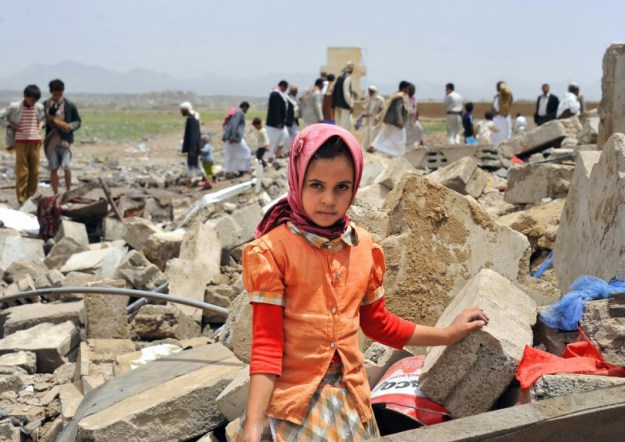
Turns out the United States and the Islamic State, ISIS, are de facto allies of Saudi Arabia and its alliance of dictator states, all bent on exterminating Yemeni Houthis and pretty much any other Yemeni in the neighborhood. This Yemenicide started in earnest in March 2015. After years of US drone strikes proved too slow and ineffective at wiping out people in the poorest country in the Arab world, it was time to expand the arsenal of war crimes. Rarely, in discussions of Yemen, does one hear much about the violations of international law that have reduced the country to its present war-torn and devastated condition.
Failing to acknowledge a foreign policy disaster in Yemen, the Obama administration has chosen instead to trash international law by supporting the criminal, aggressive war that Saudi Arabia’s coalition of police states launched on Yemen on March 26. Now, despite more than three months of Saudi-American terror bombing, the Houthis remain in control of northwest Yemen, their tribal homeland, as well as much of the southeast of Yemen, having overthrown the internationally-installed puppet government, later “elected” without any opponents, of President Abd Rhabbuh Mansur Hadi.
President Obama praised Hadi as his “successful” partner in attacking terrorists, by which Obama meant he was grateful to Hadi for not objecting to the US drone attacks against his own people. Hadi’s legitimacy always depended on foreign puppeteers, and it still does. Having resigned as president, fled the capital, and rescinded his resignation, Hadi fled again, to Saudi Arabia the day before the Saudi blitz began. The official story is that Hadi requested the undeclared Saudi attack on his own country. Hadi remains in the Saudi capital of Riyadh, free to go nowhere while he pretends to head a government-in-exile that is the presently desired fiction of his captor-protectors.
On July 8, from Riyadh, Hadi reportedly proposed a ceasefire in Yemen to start before the month of Ramadan ends July 17. On July 1, UN Secretary-General Ban Ki-moon had called for a “humanitarian halt” in combat “until the end of the holy month of Ramadan.” So far, Hadi’s Saudi controllers have used the muslim holy month to rain increased terror on populated areas of Yemen, killing hundreds of civilians and Houthi fighters, with no accurate count available. July 7 saw the highest death toll in Yemen since the Saudi bombing campaign began. This bland-seeming coverage of the carnage by Reuters is riddled by propaganda deceits:
The United Nations has been pushing for a halt to air raids and intensified fighting that began on March 26. More than 3,000 people have been killed since then as the Arab coalition tries stop the Houthis spreading across the country from the north.
The Iran-allied Shi’ite Houthis say they are rebelling against a corrupt government, while local fighters say they are defending their homes from Houthi incursions. Sunni Saudi Arabia says it is bombing the Houthis to protect the Yemeni state.
The Reuters perspective represents the mainstream consensus, which also typically includes some of the same threads of deceit as these:
- “The UN has been pushing …” No, it hasn’t. The UN as a body has done little to protect the Yemenis, but the Security Council has done less for a country in which civil war has spanned generations. Security Council resolutions are determinedly “evenhanded” in their equal treatment of aggressors and victims. In June 2015, after two months of Saudi bombing, the Security Council expressed its “full support” for an impossibility: “a peaceful, inclusive, orderly and Yemeni-led political transition process that meets the legitimate demands and aspirations of the Yemeni people.”
- “pushing for a halt to air raids …” No, it hasn’t. The air raids are being carried out by the nine UN member states in the Saudi Coalition, including Security Council member Jordan. The US, a permanent Security Council member, has supported the aerial war crime campaign with logistics, in-flight refueling of bombers, intelligence, air-sea rescue, and naval support for the blockade (which is also an act of war).
- “intensified fighting that began on March 26 …” Intensified fighting began long before March 26. Yemen’s civil war has waxed and waned over several decades. What began March 26 was the war crime nexus of bombing civilian targets by the nine-member Saudi Coalition that includes Egypt, Morocco, Jordan, Sudan, UAE, Kuwait, Bahrain, and Qatar. The Houthi rebellion is more than a decade old and gained intensity in the fall of 2014. The Houthis drove out the Yemeni government and now control the western half of the country, where most of the population lived and most of the bombing takes place.
- “the Arab coalition tries to stop the Houthis spreading across the country from the north …” Reuters is just wrong on this. The Houthi spread was a fact, and the “Arab coalition” failed in an ill-conceived campaign. Faced with an army advancing on the ground, the “Arab coalition” has not deployed ground troops. Without serious objection from the international community, the “Arab coalition” attacks military forces in another country with which they are not at war, as well as terror-bombing that country’s civilians with US-made cluster bombs.
- As for spreading “from the north,” that is at best wrong, if not duplicitous. Saudi Arabia has declared the northernmost province of Yemen, Saada, a military zone in which every civilian is a presumed combatant. This is the same bloodthirsty policy that leads the US to count every drone victim as a combatant until proven otherwise. This is the same moral numbness that led the US to establish free fire zones in Viet-Nam, where every living thing was deemed an enemy. This is total war as waged by the powerful, at a distance, against the weak and almost defenseless. This is as bad as any Nazi onslaught of World War II.
- The absurdity of the Reuters characterization is illustrated by another UN Security Council position in support of a “political solution to Yemen’s crisis in accordance with the Gulf Cooperation Council Initiative.” The Gulf Cooperation Council is an oxymoron, in that it includes six of the seven Arab states (not Iraq) on the Persian Gulf who allied determinedly NOT to cooperate with the other Persian Gulf state, Iran. Further, the Security Council absurdly supports the “Gulf Cooperation Council Initiative” when five of the six Gulf Council members (not Oman) are busily bombing Yemen in violation of international law.
- “The Iran-allied Shi’ite Houthis …” There is no evidence of an alliance between Iran and the Houthis, certainly not in any sense equivalent to the overt alliances waging undeclared war on Yemen. The Houthis are Shi’ite muslims, and Iran has almost surely supported them to some extent, but most claims of Iranian involvement in the current fighting are patently over-stated and lack supporting evidence. Reuters here is parroting Arab, American, and Israeli propaganda about the “threat” from Iran.
- “say they are rebelling against a corrupt government …” Who says? Reuters doesn’t say. This is specious journalism. Yemen has a long history of corrupt government, but perhaps the Hadi government allowing US troops to wage war on Yemeni territory, killing Yemenis at will, raised the corruption bar to a new level.
- “local fighters say they are defending their homes …” is worse than specious journalism, it’s pretty much a lie since the main opposition to the Houthis comprises forces loyal to Hadi, as well as cohorts of both Al Qaeda and ISIS.
- “Sunni Saudi Arabia says it is bombing the Houthis to protect the Yemeni state” would be a laugh line were it not such a dark lie. Saudi bombing is destroying the Yemeni state in order to “save” it. The Saudis may be “protecting” the Hadi government, but only in the sense that the Mafia provides protection in a protection racket. The Saudis have longstanding territorial conflicts with the Houthis along the northwest Saudi-Yemeni border. And the Saudis are acting as if they believe their own demonizing propaganda about Iran. Saudi Arabia is more likely bombing the Houthis because they are defenseless and Saudi Arabia doesn’t dare bomb Iran.
Nobody seems to care about Yemen, not even The New Yorker
The widespread, bland disinterest in the unending victimization of Yemenis facing unrelenting, daily crimes against humanity is hardly unique to obtuse observers like Reuters. The New Yorker, which eventually distinguished itself in opposition to the horrors of Vietnam, last published a piece on Yemen on May 1 (according to a site search). That piece conveys the American denial of its own terrorism with a tone of mild distaste suitable to Eustace Tilley, whose monocled default opinion is to blame the victim, as Robin Wright wrote little more than a month after the Saudi-American bombardment began:
The current Houthi rebellion – the seventh – is only the latest. The Houthi clan are Zaydi Muslims, who make up about a third of Yemen’s twenty-six million people. A once powerful people from the rugged northern highlands, they ruled an imamate for a millennium and deeply resented their reduced influence under [former President] Saleh [now a Houthi ally]. Between 2004 and 2010, they fought six other wars against his government….
The quarter-century experiment in uniting Yemen has definitively failed. There is no military solution, and there are unlikely to be any winners out of such a multilayered conflict, whatever the territorial gains….
Last week, the United States dispatched the aircraft carrier U.S.S. Teddy Roosevelt to supplement seven American warships off the Yemen coast. Washington strongly supports a political solution to the conflict in Yemen, but without interested players the risks of unintended consequences increase.
Rhetorically the US may support a “political solution” (to its own liking) and gullible reporters may accept that as some sort of reality. The reality on the ground (and on the water) is that the US supports and participates in endless terror bombing and a naval blockade. That is to say, the US supports and participates in the war crimes that are leading toward mass starvation and human devastation, what the discreet Ban Ki-moon refers to as a “humanitarian crisis” or a “catastrophe,” as if there were no agency causing it.
An editorial July 7 in The New York Times takes the same concerned-but-oblivious-to-the-genocidal-actors tone that reinforces the general pretense that no one is responsible:
Yemen has now been added to the United Nations’ list of most severe humanitarian emergencies, along with South Sudan, Syria and Iraq. It is a tragic distinction, highlighting the peril to 80 percent of the country’s 25 million citizens. The international community, including the United States, is not doing enough to push for an immediate cease-fire in the war that is ravaging the country to make it possible to deliver aid.
Yemen, a poor country, was deeply unstable even before a coalition, led by Saudi Arabia and backed by the United States, started bombing the Houthi rebel movement in late March. Last week, Ban Ki-moon, the United Nations secretary general, declared the situation a “catastrophe.”
Is it possible to commit a long string of war crimes in self-defense?
Having tiptoed up to the edge of US war crimes, the Times retreated. The rest of the editorial comprises little more than helpless hand-wringing, without even hinting at the most effective way to save Yemeni lives: stop the bombing. That means you, “Saudi Arabia … backed by the United States.” Like most of the rest of the world, the Times settled for asking for a reasonable-sounding impossibility, which it then undercut with another wisp of Saudi reality:
What is needed is a permanent political solution that will ensure the Houthis, who have some legitimate grievances and are unlikely to give up, get a significant role in any new government. Negotiations should be started without preconditions. But Saudi Arabia and its allies have appeared intent on forcing the Houthis to surrender, no matter what the cost to civilians and Yemen’s cities and villages.
Well, “Saudi Arabia and its allies” includes the US and others. The Times needs to look in the mirror without flinching. Saudi Arabia and its allies need to stop their bombing.
Ironically, they are not bombing Al Qaeda or ISIS forces in Yemen with anything like the same intensity they’re bombing Yemenis. In fact, Al Qaeda and ISIS are supplementing Saudi-American bombing with their own terror-bombing of Yemenis. For whatever reason, if there is one, the Saudi-American aerial genocide against Yeminis is making most of Yemen a much safer haven for terrorists. Yet this lunatic policy continues without serious opposition apparent anywhere. Who decided that Yemen should be treated as if it were the Haiti of the Arab world?
If any of the umpteen candidates for president of the United States has said anything humane, useful, or even dimly relevant about Yemen, it is hard to find (and I have found nothing). And nowhere have I found any call to establish the appropriate International War Crimes Tribunal to judge the illegality of the multiple, heinous predations of the United States, Saudi Arabia, and their sundry allies, all members in good standing of the world peacekeeping authority.
America’s Endless Air Wars
By Nicolas J S Davies | Consortium News | July 6, 2015
U.S. Central Command’s latest figures on its aerial bombardment of Iraq and Syria reveal that this is the heaviest U.S. bombing campaign since President George W. Bush’s “Shock and Awe” campaign against Iraq in 2003. In the campaign’s first ten months from August 2014 to May 2015, the U.S. and its allies conducted 15,245 air strikes, or an average of 51 air strikes per day.
This is only the latest campaign in a 15-year global air war, largely ignored by U.S. media, in which the United States and its allies have conducted at least 118,000 air strikes against other countries since 2000. The 47,000 air strikes conducted in the 6 ½ years since President Barack Obama took office are only a small reduction from the 70,000 in eight years of the Bush administration, and the current campaign will easily make up that deficit if it continues at this intensity until Obama leaves office.

Afghanistan has been the most heavily bombed country, with at least 61,000 air strikes since 2001. That includes 24,000 bombs and missiles in the first year of the war and a relentless bombing campaign that struck Afghanistan with another 29,000 bombs and missiles between 2007 and 2012, a slow motion version of “Shock and Awe.” That was an average of 13 air strikes per day for six full years, two years under Bush and four under Obama. The heaviest bombardment was in October 2010, with 1,043 air strikes that month, but that total is now eclipsed every month by the new campaign in Iraq and Syria.
Iraq had already suffered about 34,000 air strikes since 2000 before the latest campaign began. There were at least 800 air strikes in the “No Fly Zone” bombing campaign to destroy Iraq’s air defenses between 2000 and 2002; 29,200 air strikes in “Shock and Awe” in 2003, a campaign whose planners compared it to a nuclear attack; and another 3,900 during the U.S. occupation, peaking with 400 strikes in January 2008 as remaining centers of armed resistance were obliterated by air strikes, Spectre gunships and heavy artillery in the climax of the “Surge.”
But until the new campaign in Iraq and Syria, the seven-month NATO-Gulf Cooperation Council bombing of Libya was the heaviest bombardment since “Shock and Awe”, with 7,700 air strikes in seven months, or 36 air strikes per day. NATO and its Arab monarchist allies plunged Libya into intractable chaos and violence, exposing “regime change” as a euphemism for “regime destruction.”
NATO’s destruction of Libya spurred Russia to finally draw the line on its 20-year acquiescence to Western aggression and military expansion. Since then, the U.S. and its allies have persisted in their “regime destruction” policy in Syria and Ukraine, threatening strategically important Russian naval bases in Tartus and Sevastopol, what has evolved from an asymmetric war on a series of relatively defenseless countries into full-blown 1950s-era nuclear brinksmanship.
Drones have played a growing role in the U.S. air war, but they still account for only a fraction of total U.S. and allied air strikes, several thousand out of 118,000 air strikes in 15 years.
None of these figures include Israeli air strikes against Palestine, the current Saudi-led bombing of Yemen, or French operations in West Africa, as I haven’t found comparable figures for those campaigns, but they must add many thousand more air strikes to the real total.
Keeping the People in the Dark
In a recent article, Gareth Porter reported that the Pentagon is seriously opposed to putting more “boots on the ground” in Iraq or Syria, but that the generals and admirals are prepared to keep bombing them more or less indefinitely as the political path of least resistance for themselves and the White House. This may indeed be the “safe” course for a politically-driven administration and a Pentagon that is always thinking of its public image and its future funding.
But it depends on keeping the public in the dark about several critical aspects of this policy. First, there is little public resistance to this policy mainly because few Americans know that it’s happening, let alone understand the full scale of the bloodshed and devastation perpetrated in our names for the past 15 years.
The second thing the Pentagon doesn’t want you to think about is the deceptive role of “precision” weapons in U.S. propaganda. Considering how accurate these weapons really are in relation to the huge numbers of them raining down on country after country, it is not surprising that they have killed or wounded millions of civilians and destroyed hundreds of thousands of homes and civilian infrastructure, as we see in photographs and video of the ruins of Fallujah, Sirte or Kobani.
A direct hit with a single 500- or 1,000-pound bomb will cause death, injury and destruction up to hundreds of feet from its point of impact, so even accurate air strikes inevitably kill and maim civilians and destroy their homes. But whatever proportion of these 118,000 bombs and missiles have actually missed their targets have wreaked completely indiscriminate death, injury and destruction.
Rob Hewson, the editor of Jane’s Air Launched Weapons, estimated that 20 to 25 percent of the “precision” weapons used in “Shock and Awe” in 2003 missed their targets. Another one third of the bombs and missiles used in “Shock and Awe” were not “precision” weapons to begin with.
Even the Pentagon has not claimed a quantum leap in its “precision” weapons technology since 2003, so it is likely that at least 15 percent are still missing their targets, adding daily to a massive and mounting toll on innocent civilians.
As Hewson told the Associated Press in 2003, “In a war that’s being fought for the benefit of the Iraqi people, you can’t afford to kill any of them. But you can’t drop bombs and not kill people. There’s a real dichotomy in all of this.”
Body Count, a recent report published by Physicians for Social Responsibility, confirmed previous estimates of well over a million people killed in America’s wars since 2000. This and previous studies document the horrific results of what Hewson and other experts understand only too well, that “you can’t drop (100,000) bombs and not kill (hundreds of thousands of) people.”
Another element in the Pentagon’s shaky propaganda house of cards is its effort to obscure what bombs and missiles actually do to their victims. Americans watch the Islamic State beheading videos on TV or YouTube but we never see videos of people decapitated or children dismembered by the bombs our taxes are paying for. But our bombs behead people too.
Apologists claim that U.S. bombing is morally superior to the “terrorism” of America’s enemies, because the U.S. killing and beheading of civilians is “unintentional” rather than “deliberate.” The late Howard Zinn, a former U.S. Air Force bombardier and later a history professor, responded to this claim in a letter to the New York Times in 2007:
“These words are misleading because they assume that an action is either ‘deliberate’ or ‘’unintentional.’ There is something in between, for which the word is ‘inevitable.’ If you engage in an action, like aerial bombing, in which you cannot possibly distinguish between combatants and civilians (as a former Air Force bombardier, I will attest to that), the deaths of civilians are inevitable, even if not ‘intentional.’
“Does that difference exonerate you morally? The terrorism of the suicide bomber and the terrorism of aerial bombardment are indeed morally equivalent. To say otherwise (as either side might) is to give one moral superiority over the other, and thus serve to perpetuate the horrors of our time.”
Millions of ‘Enemies’
In fact, U.S. armed forces are waging war on millions of people for whom becoming combatants in a war would be the last thing they would ever consider if we had not brought our war to their doorsteps. The Center for Civilians in Conflict recently interviewed hundreds of local people who have participated as combatants in conflicts in Bosnia, Libya, Gaza or Somalia. It found that their motivations were almost entirely defensive, to protect themselves, their families, their communities or their countries.
When military forces attack or invade a country, many ordinary people feel compelled to take up arms to defend themselves and their homes. When the forces that put them in this unbearable predicament in the first place treat their efforts to defend themselves as a legal “green light” to target them with force and call them “terrorists,” they are driven to join better organized armed resistance movements that offer them protection in numbers and an effective way to fight back.
The essential first step to breaking the escalating spiral of violence is to force the aggressors, in this case the United States and its allies, to cease their aggression, including their state sponsorship of armed groups or “terrorists” in the affected countries. Then legitimate diplomatic initiatives can begin the difficult work of resolving the complex political and humanitarian problems caused by U.S.-led aggression and beginning to restore peace and security.
In his 1994 masterpiece, Century of War, the late Gabriel Kolko documented that war was the catalyst for all the major political revolutions of the Twentieth Century. While the working people of the world have otherwise failed to “rise up” as Marx predicted, the one thing that has reliably driven them to do so is the horror of war.
The war that the United States is waging today is proving no different. Armed resistance is spreading throughout the affected countries, spawning new ideologies and movements that defy the conceptual frameworks and limited imagination of the U.S. officials whose actions gave birth to them.
U.S. leaders of all stripes, military or civilian, Democrat or Republican, still fail to grasp what Richard Barnet concluded in 1973 as he studied the U.S. defeat in Vietnam, “at the very moment the number one nation has perfected the science of killing, it has become an impractical instrument of political domination.”
The last 15 years of war have served to confirm Barnet’s conclusion. After 118,000 air strikes, millions of casualties, trillions of dollars squandered, and country after country plunged into chaos, the U.S. has failed to gain political control over any of them.
But our complacent leaders and their self-satisfied advisers blunder on, debating who to threaten or attack next: Russia? China? Iran? Which “threat” provides the best pretext for further U.S. military expansion?
As Gabriel Kolko observed, because of “inherent, even unavoidable institutional myopia, … options and decisions that are intrinsically dangerous and irrational become not merely plausible but the only form of reasoning about war and diplomacy that is possible in official circles.”
But U.S. war-making is not just dangerous and irrational. It is also a crime. The judges at Nuremberg defined aggression, attacking or invading other countries, as the “supreme international crime, differing only from other war crimes in that it contains within itself the accumulated evil of the whole.” The UN Charter goes one step further and prohibits the threat as well as the use of force.
Benjamin Ferencz, the only surviving member of the prosecution team at Nuremberg, is a fierce critic of illegal U.S. war-making. In response to U.S. war crimes in Vietnam, he dedicated the rest of his life to establishing an International Criminal Court (ICC) that could prosecute senior officials of any government who commit aggression and other war crimes.
Ferencz is hailed as the founding father of the ICC, but his vision of “Law Not War” remains unfulfilled as long as his own country, the United States, refuses to recognize the jurisdiction of either the ICC or the International Court of Justice (ICJ).
By rejecting the jurisdiction of international courts, the U.S. has carved out what Amnesty International has called an “accountability-free zone,” from which it can threaten, attack and invade other countries, torture prisoners, kill civilians and commit other war crimes with impunity.
Nuremberg ‘Exemption’?
U.S. government lawyers enjoy the privilege, unique in their profession, of issuing legally indefensible but politically creative legal cover for war crimes, secure in the knowledge that they will never be forced to defend their opinions before an impartial court.
Ben Ferencz very graciously wrote a preface to my book, Blood On Our Hands: the American Invasion and Destruction of Iraq, and he spoke at an event with me and David Swanson in 2011, just before his 91st birthday. Ben talked about Nuremberg and the ICC, and he compared U.S. justifications for its “preemptive” illegal war-making to the defense offered by SS Gruppenfuhrer Otto Ohlendorf at Nuremberg.
As Ben explained, “That Ohlendorf argument was considered by three American judges at Nuremberg, and they sentenced him and twelve others to death by hanging. So it’s very disappointing to find that my government today is prepared to do something for which we hanged Germans as war criminals.”
If we do not hold American war criminals accountable for their crimes, and accept the jurisdiction of international courts to do so if we do not, how else can we serve notice on those who come after them that they must never do this again?
Argentina, Guatemala and other countries in Latin America are prosecuting and jailing mass murderers like Videla and Rios Montt who once took for granted that they could kill with impunity. America’s masters of war should not assume that we will fail to bring them to justice.
As for the collective responsibility we all share for the crimes committed by our country and our armed forces, we must be prepared to pay substantial war reparations to our millions of victims and the countries we have destroyed. We could start by paying the reparations ordered by the International Court of Justice when it convicted the United States of aggression against Nicaragua in 1986, and the $3.3 billion promised by President Nixon to repair at least some of the U.S. bomb damage in Vietnam.
These would be concrete steps to tell the rest of the world that the United States was finally ready to abandon its failed experiment in “the science of killing,” to be bound by the rule of law, and to start cooperating in good faith with the rest of humanity to solve our common problems.
~
Nicolas J S Davies is the author of Blood On Our Hands: the American Invasion and Destruction of Iraq. He also wrote the chapters on “Obama at War” in Grading the 44th President: a Report Card on Barack Obama’s First Term as a Progressive Leader.
Nuclear Deal-Making in Vienna and Tehran
By Kaveh L. Afrasiabi | Iran Diplomacy | July 5, 2015
The latest reports from Vienna indicate that the negotiators from Iran and the “5 +1” nations, i.e., UN Security Council’s Permanent Powers plus Germany, have reached a tentative deal and are only inches away from turning it into the final agreement.
According to a source close to the Iran negotiation team, as of July 4th, there were still some residual issues regarding the sanctions, the Additional Protocol, and what is referred to as the “Possible Military Dimension (PMD),” but none of these at this stage is going to “break the deal” and are expected to be resolved in the next few days.
One of the reasons for the rapid progress of the Vienna talks has to do with the important Tehran visit of the head of International Atomic Energy Agency (IAEA), which was reportedly successful in closing the gaps between Iran and the agency, which has repeatedly confirmed the absence of any evidence of diversion of nuclear material in Iran and, yet, insisted that it is unable to verify the complete peacefulness of Iran’s civilian program in light of the PMD issues.
From Iran’s vantage point, however, the PMD has been exploited as a license to access Iran’s military secrets, which is why it was important for Mr. Amano to meet with Iranian leaders last week and reach a new understanding on the future scope of IAEA’s inspection access. Certainly, the U.S.’s unreasonable demand for inspections “anytime, anywhere,” is unacceptable and by now the Americans have realized it and retreated from what could have been a deal-breaker.
On the issue of sanctions, Iran has rightly insisted on the concept of simultaneity, so that the other side will not have the luxury of playing with delays after Iran’s fulfillment of its obligations. With respect to the timeline for the removal of sanctions, there would be a UN Security Council resolution that would render moot the existing sanctions resolutions on Iran. By all indications, this is a tremendous diplomatic victory for Iran, thus short cutting a potentially arduous and lengthy process.
Henceforth, with the imminent announcement of a final agreement in Vienna, the stage is set for a tremendous breakthrough in a nuclear stalemate that has blocked normal relations between Iran and the West. In addition to releasing the potential for rapid growth in market relations between the two sides, the final nuclear agreement also carries the seed of “linkage” to anti-terrorism, deemed as a “common threat” by Iran’s lead negotiator, foreign minister Javad Zarif, who has exhorted the West to wrap up the nuclear talks so that both sides can focus on a hitherto missing comprehensive strategy to defeat the growing menace of terrorism, reflected in the on-going barbaric atrocities of the self-declared Islamic State (Daesh).
In terms of the reaction by the conservative Arab bloc led by Saudi Arabia, the final nuclear deal ought to bring a new sense of realism to Riyadh, which has been led astray by a senseless, even genocidal, unilateral war on Yemen, which must be brought to an end for the sake of millions of suffering people in Yemen as well as regional stability. Some of the Persian Gulf Cooperation Council states such as UAE are eyeing to rip huge economic benefits from the lifting of Iran sanctions and, therefore, it is futile for Saudi Arabia to continue with its anti-deal approach that is bound to put it at odds with some PGCC member states.
Israel, on the other hand, is expected to continue with its current negative campaign against the deal, hoping that the U.S. Congress would ruin it, yet even the Republican opponents of the deal have recently conceded that they lack the votes to override a presidential veto. Hopefully, the nuclear deal will spawn a new era of attention on Israel-Palestinian issue, which has been quietly festering and requires serious global focus, which has to some extent been deflected so far due to the Iran nuclear crisis.
While it remains to be seen what a final nuclear agreement would look like in the technical details, it is a sure bet that it will be complex, multi-layered, and fully dependent on the faithful implementation by both sides, which is why a special dispute resolution commission will be handling the issues of potential non-compliance. A similar panel set up by the 2013 Geneva Agreement was highly successful in this regard and has thus set a positive precedent. One of Iran’s informal complaints during the timeline of the Geneva agreement has been, however, that the U.S. had officially agreed to certain provisions, such as the lifting of restrictions on shipping insurance, and yet would send envoys to Europe to discourage the Europeans from entering into new contracts with Iran. Such “double dealings” with Iran must stop after a final deal is signed, which will sound the death knell for the unjust sanctions regime on Iran.
Saudi fighter jets target Yemen, killing at least 10
Press TV – July 6, 2015
Saudi fighter jets have once again targeted various areas in war-torn Yemen, killing at least 10 people in the Arab country.
At least 7 people were killed on Sunday night after Saudi warplanes pounded residential areas in the town of al-Ma’ala in Yemen’s southwestern Aden Province, the country’s al-Masirah television reported.
Another two people lost their lives in airstrikes carried out against the al-Zamah district in the northwestern Yemeni city of Sa’ada.
Saudi planes also bombarded Yemen’s coast guard base in the town of al-Makha in the southwestern province of Ta’izz, killing one person.
A school in the town of Midi in the northwestern province of Hajjah was also targeted in air raids.
In the Yemeni capital, Sana’a, Saudi jets reportedly pounded the houses of tribal chiefs and businessmen loyal to the Houthi Ansarullah movement in addition to the Republican Guard Academy.
In a retaliatory attack, the Yemeni army backed by Popular Committees targeted the al-Radif military base in Saudi Arabia’s southwestern city of Jizan with six missiles.
Saudi Arabia has been bombarding different areas in Yemen since March 26 without any authorization from the United Nations and heedless of international calls for the cessation of its deadly airstrikes against the impoverished country.
Over 2,600 Yemeni people have been killed and at least 11,000 others injured in the conflict in Yemen since March 19, according to the UN.
Local Yemeni sources put this number at more than 4,500.
Featured Video
BRITAIN’S WARNING: PREPARE FOR WAR
or go to
Aletho News Archives – Video-Images
From the Archive
How Ukraine Tortured and Slaughtered Donbass
By Kit Klarenberg | Al Mayadeen | July 11, 2024
Almost immediately after the proxy war erupted, ISIS-tier footage of the torture and murder of Russians in Ukrainian custody emerged.
On July 6th, the New York Times published an astonishing investigation: In Ukraine, Killings of Surrendering Russians Divide an American-Led Unit. The article documents in grim detail how Chosen Company, an international volunteer battalion for Kiev, routinely executes Russian prisoners of war. It is the very first mainstream admission that this practice – a brazen breach of the Geneva Conventions, and a grave war crime – is widespread among Ukraine’s fighters, both foreign and homegrown. … continue
Blog Roll
 Aletho News
- Israel Demolishes Home Of Lebanese Journalist Whose Viral Film Exposed Pager Attack
- Record Oil, Empty Tanks: The UAE’s Miracle Recovery
- Burnham tackles Britain’s poverty with aggression in Yemen
- Peace in Ukraine: the easy way – or the hard way
- Trump & the Rrrrussians
- US taxpayer money laundered back through Ukraine – Musk
- Before COVID, an NIH lab chief proposed making a SARS-like bat virus more infectious
- Gates, Bourla on Trial in Netherlands Accused of ‘Great Reset’ Scheme at Vaccine Injury Hearing
- BRITAIN’S WARNING: PREPARE FOR WAR
- “Historic Russia”: The Land Putin Will Not Give Back
- If Americans Knew
- DAILY UPDATE: Latest essential news on Palestine, Israel, & region
- Damning report shows the media must confront its failures on Gaza
- BBC senior broadcaster speaks out on Gaza coverage
- Netanyahu vows vast West Bank invasion in response to 20-minute skirmish that left 2 Israeli soldiers and 2 Palestinian fighters dead
- Tied up and tortured: Israel using US-made electroshock weapons on Palestinian detainees
- The outsourced risk: how newsrooms rely on Gaza’s freelancers without protecting them
- Gaza bakeries forced to shut as Israel blocks flour shipments
- Gaza’s breast cancer patients face a deadly wait for treatment amid Israel’s genocide
- DAILY UPDATE: Latest essential news on Palestine, Israel, & region
- The Israel Lobby’s Changing Fortunes
- No Tricks Zone
- Two New Studies Find Thwaites Glacier Melt Cannot Be Driven By Human Activity Or A Warming Ocean
- E-Cars Reduce CO2 Emissions By Only 41% Compared To Internal Combustion Engine Vehicles
- Predictions Made By Renowned Climate Professor Over Past Decades Have Been Proven To Be Poor
- New Study Suggests Large Regions Of The Pacific Ocean Have Been Cooling For The Last 80 Years
- Germany’s Green Energy Debacle: High Energy Costs Force Kahla Porzellan to Close After 182 Years!
- New Study: 50 Years Of The Most Aggressive ‘Net Zero’ Policies Can Only Affect The Global Climate By 0.03°C
- US September “Heat” Was No Record…Many Records Set Decades Ago
- Latest European Green Energy Debacle; Portugal’s Largest Flagship Solar Park Insolvent!
- Green Energy Debacle: German Expert Professor Fritz Vahrenholt Warns Of Severe Economic And Social Consequences
- Two More Paleo Reconstructions Affirm Meters-Higher Sea Levels Across Ireland, Brazil 7000-6000 Years Ago

