Greece inks $3.5bn arms deal with Israel for ‘multi-layered’ air defenses
The Cradle | August 31, 2026
Israel and Greece signed on 31 August an air defense agreement worth $3.5 billion, which will see Tel Aviv beef up Athens’ defenses and build a “multi-layered” system for the country.
According to the Israeli War Ministry, it is the largest-ever defense export deal with Greece and one of the biggest in Israeli history.
It has been dubbed the “Achilles Shield” agreement, referencing the Greek mythological figure Achilles.
It will see Israel export several air defense systems, including its David Sling, SPYDER, and BARAK MX, the War Ministry said.
It is the “largest defense export deal in the history of Israel-Greece relations, and one of the largest in the history of the State of Israel,” the War Ministry statement added, while also declaring that this marked the first time Israel supplied another state with a “complete defense array against a wide range of threats.”
These threats include ballistic missiles and drones, according to the Israeli ministry.
The agreement was signed at the War Ministry headquarters in Tel Aviv by Ministry Director General Amir Baram and his Greek counterpart Ioannis Bouras.
“Under the deal, Israel will build Greece a comprehensive, multi-layered air defense array, drawing entirely on Israeli-made systems and on the extensive operational experience Israel’s defense establishment has gained during the war,” the Israeli War Ministry stressed.
Greece said the deal marked the “greatest reform of its armed forces in its history.”
Security and economic cooperation between Greece, Cyprus, and Israel continues to expand.
Earlier this month, the Israeli military announced a meeting between army Chief of Staff Eyal Zamir and his Greek counterpart, Dimitrios Choupis.
The meeting “highlights the strategic importance and relevance of the military relationship already in place between Israel and Greece,” the Israeli army announced.
A private diplomatic conference held in Athens in May laid bare Greek, Cypriot, and Israeli plans to capitalize on the Iran war by deepening their ties into a “formal strategic alignment.”
“This cooperation must deepen into a formal strategic alignment focusing on energy, infrastructure, joint defense efforts, and economic innovation – acting as a crucial pillar of stability in the region,” said Averof Neophytou, a prominent Cypriot MP and former president of the Democratic Rally of Cyprus, during that conference.
He also called on Israel to “finish the job” in Iran.
Israeli, Greek, and Cypriot ties have accelerated in recent years. According to reports from last year, the three states have considered the formation of a joint “rapid-response” military force in the eastern Mediterranean.
In late 2025, Tel Aviv, Athens, and Nicosia signed a trilateral military “action plan” for 2026, said to be aimed at confronting Turkish influence and strengthening defense cooperation.
Why Israel Can Brag About Murdering Western Aid Workers
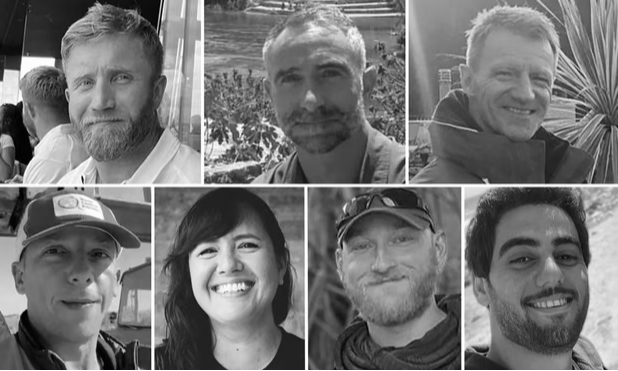
Killed aid workers (top): James Henderson, James Kirby and John Chapman; (bottom): Damian Sobol, Lalzawmi Zomi Frankcom, Jacob Flickinger and Saif Issam Abu Taha
By Nate Bear | ¡Do Not Panic! | August 28, 2026
The Israeli commander who gave the order to bomb the World Central Kitchen convoy in April 2024 which killed six aid workers – three Britons, an American-Canadian, a Pole, an Australian and a Palestinian – said yesterday he’s not sorry for ordering the strike and that the aid workers were “not innocent.”
Last week Israel (which originally lied and said the bombing was a mistake) said no one would be prosecuted for the murders.
The episode is astonishing.
Israel murdered the citizens of five of its supposed allies, using weapons and intelligence supplied by those countries, has refused to prosecute anyone, and the commander who ordered the bombing is now bragging about it.
This is Zionism.
This is what happens when you have swallowed the logic of an ethno-supremacist ideology that enables and forgives any action, no matter how heinous, because the action was undertaken by the most indulged and protected state in modern history. And obviously, this indulgence and protection flows directly from the fact that Israel is the so-called “Jewish state.” And Jewishness, objectively, is the most protected characteristic in the modern world. Grannies are prosecuted as terrorists not because they oppose genocide, but very specifically because they oppose the genocide committed by the Jewish state. Through cultural brainwashing, political infiltration, and using the shield of antisemitism to guard against all criticism, Israel can kill whoever it wants, whenever it wants, wherever it wants. And it can kill them in whatever quantities it desires. Because the killers are Jews, and we can’t criticise Jews because of antisemitism and the holocaust, which, through deep cultural programming has been instrumentalised to make Jews morally untouchable. Through this weaponisation of memory and elevation of unimpeachable Jewishness we end up with an inverted political morality: genocide is moral, anti-genocide is immoral.
Bring all this together and you get an ethno-supremacist apartheid state which commits genocide and kills westerners without consequence.
You get the mass murder of children for years on end. Murders which continue DAILY.
You get a state able to commit wanton acts of terror in Gaza and the West Bank without reproach.
You get Gaza and the West Bank, you get Israel, but you don’t get Palestine. You don’t get the state that the 1947 UN vote also authorised because the Jewish state was the only one that mattered to the “international community.”
You get Israel but not Palestine because the ability of Jews to commit ethnic cleansing and move to piece of land promised to them in a book matters more than the right of Palestinians to live in their ancestral homelands.
You get seventy-eight years of ethnic cleansing.
You get a state able to kill the citizens of its supposed allies, and the weapons and intelligence keep flowing, even when that intelligence kills your own citizens. The RAF has surveillance tape from a spy plane that was circling above Gaza on the day Israel bombed the aid convoy and killed three Brits, as it was almost every day during the genocide, but the British government has refused to publish or disclose what the tape shows.
It can feel like you’re going mad when analysing the role of Israel in the world, and its place within empire. You can sound like a conspiracy theorist. But then, sooner or later, the operatives of the Jewish state come out and in their own words confirm everything you know and everything you believe about Zionism.
To add to the fuckery of the World Central Kitchen murders, the boss of the organisation, Jose Andres, went on Israeli TV after the attack and repeated all the propaganda that enabled the murders in the first place, saying Israel has a right to defend itself. In the midst of a genocide, with the blood of his own employees barely dry, he tried to morally exculpate Israel by tearfully claiming the country is “better than this.” He simply couldn’t conceive that the murders were not an aberration but a perfect reflection of Israel. His organisation still cooks meals for the IDF because, like many, Andres has internalised the logic of Zionism which would mean that to not cook food for the Jewish murderers of his employees would be antisemitic.
It’s fucking disgusting, almost unbelievable.
This of course wasn’t the first time Israel has murdered citizens of western countries without consequence. It wasn’t the second, third or even the tenth time. In the last twenty-odd years Israel has killed scores of westerners in Palestine.
In November 2002, Iain Hook, a British UNRWA project manager, was shot and killed by Israeli forces in Jenin, in the West Bank. In March 2003 American Rachel Corrie was crushed to death by an Israeli military bulldozer in Rafah, Gaza, while protecting local families as IDF troops moved in to destroy their homes. Two months later, James Henry Miller, from Wales, was shot and killed by Israeli troops in Rafah while filming a documentary. In early 2004, British aid worker Tom Hurndall was shot in the head and killed by an Israeli sniper in Rafah while attempting to shield Palestinian children. In 2022, Al Jazeera journalist and US citizen Shireen Abu Akleh, was sniped in the head and killed on camera while reporting in the West Bank. In September 2024, a few months after the World Central Kitchen murders, Ayşenur Ezgi Eygi, a Turkish-American, was murdered by the IDF in the West Bank.
There were ZERO consequences for any of these murders. How many average western mainstream media consuming adults EVEN KNOW about these murders?
Palestinians, by contrast, have housed and homed westerners in Gaza and the West Bank. Hamas often welcomed western aid workers to Gaza with some, such as the Italian Vittorio Arrigoni, staying years, and after whom Hamas named a street in Gaza. The only people that kill westerners in Palestine are Jewish Israelis.
My depth of contempt for the Jewish state and for the system that sustains it knows no bounds and we should consider illegitimate any government that supports this colonial monstrosity.
Fuck Israel.
Free Palestine.
Araghchi accuses Netanyahu of deceiving US over war on Iran
Al Mayadeen | August 31, 2026
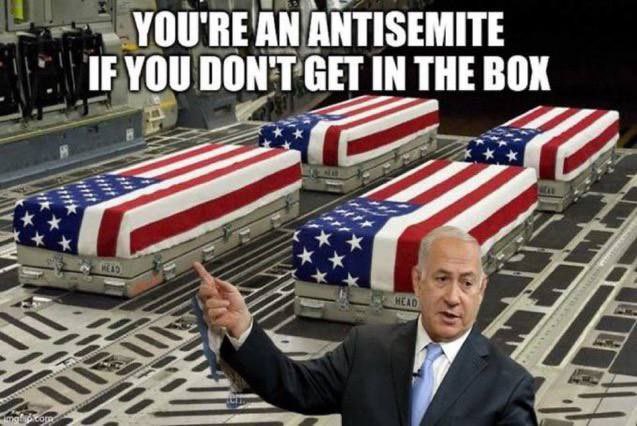
Iranian Foreign Minister Abbas Araghchi has accused Israeli Prime Minister Benjamin Netanyahu of practicing deception and duplicity, describing him as a “serpent.”
Araghchi stated that Netanyahu openly boasts in Hebrew about having deceived the US administration and pushed it into waging a war on Iran on behalf of “Israel”.
In a post on X, the Iranian foreign minister also pointed to Netanyahu’s contempt toward Washington, noting that “Netanyahu explicitly laughs about how he ‘influenced’ America through 1,000 hours of airtime on U.S. networks”.
Araghchi added, highlighting what he called a stark contradiction in Netanyahu’s positions: “In English, he praises POTUS’ leadership.”
Araghchi’s statement comes as concerns within the “America First” wing of the Republican Party are rising regarding Israeli Prime Minister Benjamin Netanyahu’s efforts to influence President Trump to deepen the war against Iran, as Politico revealed in July 2026.
The report, published ahead of a meeting between Trump and Netanyahu at the White House, noted that the Israeli leader had reportedly sold the president on starting the war with Iran during a previous in-person meeting.
Former White House chief strategist Steve Bannon expressed strong opposition to the meeting, stating that “Netanyahu has had twice as many visits to the White House in 18 months as Churchill had in all of World War II, with every one of them a disaster for America First.”
The report noted that these concerns come at a time when new polling indicates that a growing segment of the president’s base no longer believes the war is worth its economic costs, with Republicans increasingly resigned to the war continuing through the November midterm elections.
Curt Mills, executive director of The American Conservative magazine, described the meeting as “DEFCON 1” and said Netanyahu would “argue for the essential logic of escalation” during the talks.
No Matter Who Is In Power, Israel Will Stay Genocidal.
By Justin K.P. | The Dissident | August 29, 2026
There is a possibility that Benjamin Netanyahu will no longer be Prime Minister of Israel following the upcoming elections in October, with the opposition party Yashar led by former IDF Chief of the General Staff Gadi Eisenkot leading in many polls.
But removing Netanyahu and replacing him with Gadi Eisenkot will not change Israel’s genocidal nature.
In fact, it was Gadi Eisenkot who invented the Israeli military doctrine that functioned as the blueprint for the Genocide in Gaza, called the Dahiya Doctrine.
This Doctrine was invented by Eisenkot when he was Chief of Northern Command during the Israeli assault on Lebanon in 2006.
“What happened in the Dahiya quarter of Beirut in 2006 will happen in every village from which Israel is fired on… We will apply disproportionate force on it (village) and cause great damage and destruction there. From our standpoint, these are not civilian villages, they are military bases… This is not a recommendation. This is a plan. And it has been approved”, Eisenkot said, referring to the doctrine in 2008.
It was exactly this doctrine of collective civilian punishment which was used during Israel’s Operation Cast Lead in Gaza in 2008, which killed 1,400 Palestinians, including 300 children, and Israel’s Operation Protective Edge in Gaza in 2014, which killed more than 1,500 Palestinian civilians, including 500 children.
This doctrine was eventually applied during the Israeli genocide in Gaza starting in October of 2023.
Gadi Eisenkot was also responsible for the mass slaughter of peaceful Palestinian protestors during the Great March of Return in 2018.
As the Institute for Middle East Understanding documented:
- Eisenkot was chief of staff of the Israeli military in 2018 when Israeli snipers killed at least 189 unarmed Palestinian protesters in Gaza, including 35 children, three paramedics, and two journalists, and wounded more than 6,000 others, during the Great March of Return. As noted by the Israeli rights group, B’Tselem.
- “Over the course of the protests, the Israeli military implemented an open-fire policy of using live fire against unarmed protestors who posed no threat to the well-armored soldiers on the other side of the fence or to anyone else.”
- An independent U.N. commission of inquiry into the protests concluded there were: “reasonable grounds to believe that during the Great March of Return, Israeli soldiers committed violations of international human rights and humanitarian law. Some of those violations may constitute war crimes or crimes against humanity.”
Gadi Eisenkot opposes any kind of sovereignty for Palestinians, recently telling Israel Hayom “The two-state solution is a grave mistake” and “Anyone who thinks about a two-state solution after Oct. 7 is simply delusional.”
As for the West Bank, journalist Séamus Malekafzali noted in the Nation that he has espoused support for “maintaining settlements in the West Bank, opposing full annexation not because it is against international law or morally wrong, but because the new Arab population would endanger the Jewish majority in Israel.”
As for Lebanon, Gadi Eisenkot has positioned himself as more extreme than Netanyahu.
Malekafzali noted that, “In some respects, Eisenkot has gone even further than Netanyahu. He criticized the original ceasefire agreement in Lebanon that still allowed Israel almost total freedom of action, and in March, advocated ‘maximum force in minimum time,’ hoping to cause religious strife in Lebanon by ‘humiliating’ the Shia population by forcing them into Christian areas.”
In reality, Gadi Eisenkot, if he is able to win a majority or minority government in October, will be a more suitable face for the Israeli occupation than Benjamin Netanyahu.
While he likely will shy away from the same genocidal rhetoric as Netanyahu and the Likud coalition, this will only be done for propaganda purposes.
In reality, he is the creator of the doctrine the Gaza genocide is based on, and engineered the slaughter of Palestinian protestors during the Great March of Return.
He will put a more respectable face on Israel, while continuing to deny any kind of sovereignty for Palestinians and pushing forward with an Israeli occupation of South Lebanon.
Israeli terrorism is getting worse because Western leaders are cowards, hypocrites
By Robert Inlakesh | Al Mayadeen | August 30, 2026
Israeli terrorism against civilians across the occupied West Bank has recently triggered condemnation from Western leadership – this shallow rhetoric is overshadowed by their actions, which are driven by a cowardly refusal to push back against the Zionist lobby.
Condemnations and statements of concern have been recently issued by US, UK, and EU officials alike, in what appears at first glance to be pushback against Israeli settler violence and expansionism in the occupied West Bank. In fact, what we are witnessing is the continuation of a decades-long tradition of hollow statements that act to save face by pretending as if the settlers themselves are somehow rogue elements that can be judged independent of the rest of the Zionist project.
In reality, settlement expansion is a regime project, as the violence of the settlers themselves is too. The Zionist armed forces are hand in glove with the settlers, to the point that military units such as the ‘Desert Frontier’ have been set up to integrate the settler militias into the occupation forces.
Even if the settlement movement was separate from the regime itself – as the EU, UK, and US leaderships like to pretend so that they can continue presenting themselves as capable of criticizing the Israelis – there has been a carte blanche granted to the authorities in “Tel Aviv”, instead of meaningful pushback that would coerce them into curtailing the aggressive project of the settlers.
The moves being made in Western capitals represent the exact opposite of genuine opposition to settler colonial violence and expansionism. US President Donald Trump has refused to impose consequences on the Zionist regime for the killings of 11 American citizens at the hands of settlers.
Instead, its latest move has been to proscribe Palestine Action as a terrorist organization. That means that both Washington and London have designated the activist group as such. This is not a group that engages in armed action; it does not go after targets that are integral to US or UK security, nor has it killed anyone. Palestine Action has been proscribed for the “crime” of organizing actions against weapons factories that supply the components for weapons used to commit genocide.
Interestingly, the news of Palestine Action being added to a US terror list came alongside a declaration from Washington that it was removing Syria from the State Sponsors of Terrorism List. Keep in mind that President Trump has actively acknowledged that the man – whom he claims to have put in power – was formerly affiliated with al-Qaeda. In fact, Hay’at Tahrir al-Sham (HTS), which is now the ruling Party in Damascus, is a rebrand of al-Qaeda’s Syrian wing, which was previously known as Jabhat al-Nussra. HTS is no longer considered a terrorist group by the US, as per its recent declaration.
This in itself demonstrates how unserious Western leadership takes the issue of terrorism. Simply put, terrorism is opposing the Zionist settler-colonial project. It can be guaranteed with a degree of certainty that if Syrian President Ahmad al-Sharaa were to suddenly begin taking measures against the Israelis in southern Syria, or supporting Palestinian Resistance factions, there would be immediate sanctions and proscriptions to follow. But because his administration has signed onto a “joint fusion mechanism” to coordinate with Israeli intelligence, the former face of al-Qaeda in Syria is welcomed across Europe, meets with British officials, and is welcomed with open arms into the White House.
The collective West’s political class is stupefyingly corrupt and has spent nearly three years performing puppet apologetics for a regime committing an active genocide against the people of Gaza. No meaningful action is ever taken. Even Western institutions like FIFA and Eurovision, alongside the International Olympic Committee (IOC), have proven too cowardly to boot out the Israelis, despite FIFA and IOC both taking measures to ban Russia over the war in Ukraine.
Consider the recent threats by Israeli Prime Minister Benjamin Netanyahu to launch precision strikes on targets in Gaza because it found kites near the separation barrier, forcing children to no longer enjoy a common hobby for Palestinian children in the besieged territory. Most people have considered this an utter outrage, mocking the mere premise of launching airstrikes over children’s kites being flown.
Yet the Israelis were taken seriously when, back in 2018, they began complaining of “terror balloons” and “terror kites” that young Gazans would attach burning objects to, as retaliation for the mass shootings carried out against unarmed protesters during the Great Return March. It may almost seem comical that the Israelis complained about this and that the words terror and balloon were combined in a serious sentence, yet Western leadership adopted the very same language.
Take, for example, the 2021 designation of the Hamas political wing as a ‘terrorist organization’ in the United Kingdom. In their justification as to why they decided to proscribe the political wing – because the Qassam Brigades had long been on their list – the most in-depth example they cited was the use of these balloons. Yes, balloons were used as the most important example as to why Hamas was designated a “terrorist group” in the United Kingdom.
The double standards are so stark that it beggars belief. At the end of the day, it is the utter cowardice that emboldens the Zionist regime to do whatever it chooses, whenever it likes. These Western governments and institutions have allowed the Israelis to erode the post-WW2 international order, destroyed the concepts of human rights and international law, and normalized genocide, even ignoring domestic law, endangering their own populations and undermining the fight against actual terrorism.
They render the international courts ineffective and take measures to punish them for doing their jobs; they stand by and praise the Zionist entity along with its allies in Washington as an alternative body to the United Nations taking over control of the Gaza Strip. International borders and national sovereignty no longer mean anything; embassies are no longer off limits for airstrikes; and journalists can be mass executed with no pushback.
A world that has been turned completely upside down, all so that a small settler colonial regime whose ethno-supremacist cult following of narcissistic psychopaths can have their way at every single turn. All of this, then they turn around and pretend as if their completely shallow statements about settler violence somehow mean anything. In many ways, it would be better if they just closed their mouths. None of the violence they pretend to condemn, without ever doing anything tangible to stop it, would be possible if they had taken action to stop it.
Israel provides covert intelligence, security assistance to Sudan’s RSF militia: Report
The Cradle | August 30, 2026
The leadership of the Rapid Support Forces (RSF), a militia accused of genocide in Sudan, has maintained secret, high-level security and intelligence contacts with Israel since before the start of the civil war in 2023, Africa Intelligence reported on 28 August.
According to the report, RSF leader Mohamed Hamdan Dagalo, known as Hemedti, secretly visited Tel Aviv in May 2025 and February 2026 for meetings with the Israeli Foreign Ministry’s Africa Division and Israeli intelligence officers.
Hemedti was joined by his two brothers, Abdul Rahim, the RSF’s second-in-command, and Algoney, on both trips.
Links between the RSF, which is fighting against the Sudanese Armed Forces (SAF), and Israel have emerged previously.
In 2022, Israeli newspaper Haaretz and Dutch investigative news outlet Lighthouse reported that a jet linked to former Israeli intelligence officer Tal Dilian delivered sophisticated EU-made phone-surveillance and hacking equipment to the RSF.
Dilian is the founder of the Intellexa network, a private intelligence firm based in Cyprus.
While Israel provides security and intelligence assistance to the RSF, the UAE remains the RSF’s principal backer.
Abu Dhabi provides the Sudanese militia with heavy weapons, drones, armored vehicles, ammunition, logistics, transit routes, and foreign mercenaries, in particular from Colombia.
The US government, UN, and various rights groups have documented that the RSF committed genocide in Sudan.
Last month, a coalition of rights groups led by the Raoul Wallenberg Center for Human Rights petitioned the International Criminal Court (ICC) to open an investigation into senior UAE officials and other regional figures for complicity in the genocide of non-Arab tribes in Sudan.
The submission accused them of enabling genocide, war crimes, and crimes against humanity by supplying the RSF and the SAF with weapons, money, and mercenaries, and knowingly assisting crimes carried out by a group.
Sudanese survivors filed a separate request naming Emirati Vice President Mansour bin Zayed Al-Nahyan over his role in financing and supplying the RSF.
That filing sets out murder, torture, and rape, including fighters driving vehicles over fleeing civilians. It points to the fall of El-Fasher on 26 October 2025, where UN reports record 6,000 people killed in three days.
The UK has also covertly assisted the RSF.
London has licensed around $565 million worth of weapons sales to the UAE across the past three years, including British-manufactured equipment that has repeatedly ended up in the hands of the RSF.
Nathaniel Raymond of Yale’s Humanitarian Research Lab told the House of Commons that British officials disregarded two years of real-time intelligence on the coming slaughter, which killed an estimated 60,000 people.
Raymond testified that the UK “prioritized HMG’s economic, security, and diplomatic relationships with the UAE above preventing the intentional starvation, forced displacement, and the genocidal slaughter” of civilians.
US Self Destructs Attacking Iran Again / Lt Col Daniel Davis & Suliaman Ahmed
Daniel Davis / Deep Dive | August 29, 2026
Hezbollah’s Options in Resisting and Why It Decided to Stop Responding
By Robert Inlakesh | Palestine Chronicle | August 29, 2026
As Israel continues to ramp up its destruction of south Lebanon, critics ask why Hezbollah suddenly stopped responding and whether the group is again out of options. The tactical pause on the Lebanese organization’s part will not last, and its options are more numerous than some may expect.
When Hezbollah began responding to 15 months of Israeli daily ceasefire violations in early March of this year, it came as a shock to many who had assumed the group to have been defeated and that its silence was to be taken as a weakness. Although here at the Palestine Chronicle, I and others had argued that Hezbollah was simply rebuilding its stockpiles, the common consensus in international media was to assume it was finished as an effective resistance force.
Since April 16, the group has again chosen to halt its daily operations against the Israelis and abide by a shaky ceasefire agreement which Israel has once again decided to violate on a daily basis. Only when the occupying army attempts to advance further into Lebanon will the organization’s fighters choose to engage, which has again triggered rumors of weakness.
When the US-backed Lebanese government signed its agreement recognizing Israel, taking away its right to appeal to international courts over war crimes committed against its people and permitting an occupation of southern Lebanon, a number of different factors were also present that forced Hezbollah to halt its fire.
The first was that the US-Iran Memorandum of Understanding was already in place and that the Islamic Revolutionary Guard Corps (IRGC) had managed to force the Israelis to stop bombing Beirut and halt its major attacks on southern Lebanese civilian centers.
Another factor at play was the US government’s overt pressure that was being applied to the Syrian leadership to invade the Bekaa Valley and carry out Israel’s dirty work. Then there was a clear-cut escalation on the part of the government in Beirut that sought to legitimize a clash between the Lebanese Army and Hezbollah in pursuit of disarming the resistance group.
When considering the Iran angle, Tehran had managed through the threat of missile fire to get the Israelis to temporarily back off from major air assaults in Lebanon. Although the Trump administration used its puppets in Beirut to sign a meaningless agreement that Tel Aviv couldn’t care less for, the gains were made that at least some pressure had been taken off of the civilian population of Lebanon. This consideration is significant as it allowed for around 350,000 people to return to their homes and halted the large-scale civilian killings.
Then there were the considerations of Hezbollah when it comes to a potential domestic clash and Syrian invasion. Instead of continuing its daily operations against occupying forces, it was given the space to continue to supply itself with more armaments, to reposition assets in preparation for the worst-case scenario of a Syrian invasion, but it also allowed for tensions to simmer between itself and the Lebanese leadership.
Former Hezbollah Secretary General Seyyed Hassan Nasrallah had long advocated for minimizing the risk of internal clashes and even making compromises in order to allow the group to focus its energies on resisting Israel; it appears that this is the same line of thinking being employed by the group’s leadership today. Although Lebanon is on the verge of a major clash, historically speaking, the resistance group has always had to deal with major pushbacks from domestic players, including significant issues with the Amal movement that are today its close allies.
All of this being said, escalating against the Israeli occupiers can come in two forms, either through proceeding on the path of daily operations that inflict material and soldier losses on the enemy, or to fight in a larger multi-front battle. As demonstrated during the 41-day war earlier this year, fighting alongside its Iranian allies makes Hezbollah much more effective.
When Iranian ballistic missiles are raining down on Israeli targets, and Israel’s air force is preoccupied with striking targets inside Iran, it gives Hezbollah the space to pull off more effective attacks on the Israelis. Keep in mind that the group has demonstrated it possesses a sizable arsenal of ballistic and cruise missiles, alongside its large drone stockpiles, making it capable of striking into Israel’s strategic depth. Doing this alone, however, comes with a higher price than if it is part of a multi-front equation. This is also why Yemen’s Ansarallah threatened to become involved in a war in support of Hezbollah, before Iran’s threats and warning missile fire were enough to coerce the Israelis to back off prior to April 16.
This is all to say that if Hezbollah is fighting the Israelis alone and does not have to worry about a Syrian invasion and civil war, it can very effectively bog down their occupiers and demonstrate their ability to do this for months, absent Iran or any other front being active. Yet, the organization is in a much stronger position should it simply wait for an expansion of the conflict and then unleash a new strategy to bring the fight to the Israelis in ways we have not previously witnessed.
During the lead-up to Israel’s withdrawal from south Lebanon in 2000, Hezbollah would carry out an average of 300 operations per month against the occupiers. At some points during the latest conflict, we saw the group carry out as many as 100 operations in a single day. With this being said, the Israeli leadership’s mindset today is not the same as it was in the late 1990s, meaning that they are willing to go much further than ever before since October 7 of 2023. They have been seeking to accelerate their long-term expansionist vision, not caring about how attacks targeting civilians impact their image whatsoever.
Therefore, it is safe to assume that Hezbollah will begin its operations once again under three different scenarios:
- They are forced to do so defensively due to attacks from Israel, perhaps combined with a Syrian attack and/or domestic clash.
- They will participate in a multi-front war.
- They will wait until they can ensure that they can fight Israel alone and make them pay the maximum price for their occupation when the time is right, seeking to bog the Israelis down for as long as possible and continuously using asymmetric warfare tactics.
– Robert Inlakesh is a journalist, writer, and documentary filmmaker. He focuses on the Middle East, specializing in Palestine.
Why the Iran War is about to Escalate over The Coming Months
By Robert Inlakesh | Palestine Chronicle | August 28, 2026
Nothing is in place to ensure an Israeli-US victory against the Iranians, but Tel Aviv is not backing down and seeks to complete its mission aimed at dealing an enormous blow to Iran’s economy.
This week, the US Trump administration decided to impose another batch of sanctions against the Islamic Republic of Iran, in what it has labeled ‘Operation Economic Outcast’. Yet, this measure’s viability is about to expire and could end up backfiring tremendously, as all the chips are now in place for Tehran to drag Washington deeper into a fiery regional inferno.
Since April 8, when the US and Iran both agreed to a two-week-long ceasefire, American President Donald Trump has been playing a game designed to manipulate oil markets and has attempted just about every tactic known to man in order to simply off-put the economic iceberg that the global economy is heading straight towards.
See, the problem that the Trump administration faces is that its initial attack on Iran failed tremendously. But now, he cannot simply admit defeat and walk away. If he signs a deal with Tehran, then it will be a de facto surrender agreement that ensures a collapse in US regional hegemony and that Israel is left to face the consequences of its actions, with an empowered and emboldened Iran ready to support Tel Aviv’s downfall.
After around 40 days of war with Iran, the Israeli and American leaderships had come to the realization that the only viable next step was to begin targeting Iranian civilian infrastructure – if they were to have any hope of achieving regime change. This, after all, was the Israeli plot to begin with, as they understood well that the Islamic Republic was not going to fall as a result of the air campaign alone.
Targeting Iran’s civilian infrastructure comes with an evident price; this means that the retaliation is going to destroy the key infrastructure of the surrounding States also, from which the US will be launching its attacks. Included on this target list will be Israeli infrastructure also, which is what gives such an air campaign a specific time limit. Israel will view the price of the campaign against Iran as something they are willing to pay, as long as the Islamic Republic will be weakened significantly in the process.
Therefore, Tel Aviv’s leadership will take the necessary hits until that price becomes too high, at which point they will have to get the US to back off. For Israel, the destruction of the Persian Gulf Arab States is a plus, not a minus, as it eliminates economic competitors, but for the United States and most nations around the world, this is catastrophic.
For these reasons, Trump has gone back and forth between strategies designed to get the Iranians to buckle under pressure. He has implemented a counter-blockade on Iran, attempted to use negotiations and a Memorandum of Understanding to divide the Islamic Republic’s leadership, while also working to carve out an alternate route in the Strait of Hormuz.
When the Iranians saw through the MoU deception and responded forcefully, some may even say proactively, the US military began engaging in a tit-for-tat low-intensity battle with the Iranians that sought to try and degrade Iran’s military capabilities in the south.
Now, the latest move has been to introduce the most extreme sanctions program ever as a last-ditch attempt to pressure Tehran. These sanctions are different because they don’t just target Iran’s economy; they are designed to target its allies and trade partners, since the previous maximum-pressure sanctions already targeted everything imaginable.
There is also a reason why this has never been tried before in this way, because it can potentially backfire. You aren’t only targeting Iran; you are going after a large number of countries in the process, including China. Beijing itself has already threatened to retaliate.
Since early March, for all intents and purposes, the Strait of Hormuz has been closed, with only brief periods during which any meaningful number of tankers have been able to make it out. With the deterioration of the MoU, another card was played by the Iranian-led Axis of Resistance, as Yemen’s Ansarallah-led government announced a counter-blockade on Saudi Arabia.
By reopening the frozen conflict in Yemen, which had remained under a shaky ceasefire since 2022, it meant that the Yemeni Armed Forces would proceed with the project to not only liberate their nation, but to punish Saudi Arabia where it hurts the most. The Red Sea was a Saudi lifeline, allowing them to continue to export 6 million barrels of oil per day; suddenly, that option was cut, and the limited amount it is now capable of getting out of its Western Ports is exported via the Suez Canal, with insurance rates skyrocketing because of the risk.
Iran has demonstrated time and time again that it is capable of surviving under the weight of US sanctions for long periods. The United States, on the other hand, has not started to properly feel the effects of its actions. One way they have managed to offset the economic fallout of the Strait’s closure is to tap into their Strategic Petroleum Reserves, which have just sunk to their lowest levels since 1982, with experts claiming that they only have 41 days of these supplies left. It barely helps that Trump has also picked this time to engage in a declared trade war with its northern neighbor, Canada, nor that he has made outlandish decisions across the board.
Donald Trump has so far doubled down on his decisions and told the American public that they simply have to put up with the rising oil prices, as their contribution to “preventing Iran from having a nuclear weapon”. But the people are not buying it and clearly see that this war is being fought for Israel’s interests, not their own.
Desperate to reshape the region in Israel’s favor, the US has quickly attempted to have both the Iraqi and Lebanese governments disarm resistance factions aligned with Iran. Short of triggering catastrophic civil wars, this strategy cannot be implemented quickly and will have little real-world impact. Similarly, in the Gaza Strip, the Trump administration has put pressure on Hamas to suddenly disarm, providing the Israelis with a green light to amp up their strikes on the civilian population.
Nothing is in place to ensure an Israeli-US victory against the Iranians, but Tel Aviv is not backing down and seeks to complete its mission aimed at dealing an enormous blow to Iran’s economy. Their long-term game is to see a deterioration of the Islamic Republic after its infrastructure takes enormous hits, but this is by no means a guarantee.
Even if Israel gets precisely what it wants, the US will not win. The moment of truth is approaching as the walls close in; the US can either decide that it will act in America’s vital interests and end the war, or throw all its weight behind Israel’s desires.
– Robert Inlakesh is a journalist, writer, and documentary filmmaker. He focuses on the Middle East, specializing in Palestine. He contributed this article to The Palestine Chronicle.
US designates Palestinian refugee in Germany ‘terrorist’ over human rights activism

Zaid Abdulnasser, a Palestinian refugee and human rights activist stands in front of German police during a pro-Palestine demonstration in Berlin, October 2023.
Press TV -August 29, 2026
The US has designated Zaid Abdulnasser, a 30-year-old stateless Palestinian refugee based in Berlin, as a terrorist and imposed sanctions on him over his advocacy for Palestinians imprisoned by the Israeli regime, a report says.
The US Treasury Department placed Abdulnasser on its sanctions list on Wednesday, meaning financial institutions dealing with him could face pressure from Washington and potentially cut ties with his accounts, according to a report by Drop Site.
Because international payment networks rely heavily on US banks and dollar transactions, Abdulnasser said the measures could “completely paralyze” him financially.
“I was frightened. The authorities did not contact me beforehand; they just put me on the list,” Abdulnasser told Drop Site in an interview.
Abdulnasser, who has a six-month-old child, said he believes the move is part of a wider effort to restrict Palestinian human rights advocacy.
“On this list are Palestine Action, International Criminal Court judges, and Palestinian resistance factions,” he said, adding, “My listing is part of a broader attempt to crush the Palestinian liberation struggle and protect the Israeli occupation from prosecution.”
A Palestinian refugee born in Syria, Abdulnasser has lived in Berlin since 2017 and has worked on campaigns concerning Palestinian prisoners and Palestinian rights.
His lawyer, Alexander Gorski, said they are now carefully examining legal options to challenge the US measures.
“Mr. Abdulnasser has not committed a criminal offense. And nobody is accusing him of that … This is about legal political activity, mainly for Palestinian prisoners,” Gorski told Drop Site.
The sanctions come as Washington expands economic measures against people and organizations involved in pro-Palestinian activism, according to the report.
US Secretary of Treasury Scott Bessent said Washington would use its economic powers against groups it considers “security threats,” while Gorski described the action against his client as part of a broader US crackdown on Palestinian rights activism.
According to the Palestinian Prisoners’ Society, since October 7, 2023, when Israel launched its genocidal war on Gaza, the regime has abducted nearly 25,000 Palestinians from the occupied West Bank and the besieged enclave.
Trump’s push to deport Pro-Palestinian activists faces court defeat
Al Mayadeen | August 29, 2026
A federal judge on Friday ruled that laws used by US President Donald Trump’s administration to revoke visas and pursue deportation proceedings against noncitizen college students over their pro-Palestinian advocacy and criticism of “Israel” are unconstitutional.
US District Judge Noel Wise in San Jose, California, sharply criticized the US State Department and US Department of Homeland Security for using provisions of federal immigration law to pursue deportation against noncitizens for expressing views the government sought to suppress.
The State Department and DHS did not immediately respond to requests for comment, according to Reuters.
Wise says free speech is central to democracy
Wise, an appointee of former Democratic President Joe Biden, said free speech in the United States, including the right to criticize the government and its leaders, demonstrated the strength of the country’s democracy.
“That strength is diminished when members of our society – citizens and noncitizens alike – must self-censor and ‘behave’ or suffer the government’s retaliation,” she said.
Case centered on campus pro-Palestinian advocacy
Wise’s ruling examined the Trump administration’s actions beginning in March 2025, when it started revoking visas and detaining noncitizens involved in pro-Palestinian advocacy on college campuses. The effort began with the arrest of Columbia University graduate Mahmoud Khalil, who is fighting separately to avoid deportation.
The arrests prompted a lawsuit filed in August 2025 by Stanford University’s student newspaper, The Stanford Daily. The newspaper reported that some of its writers who held student visas had stopped covering pro-Palestinian student demonstrations and issues connected to the wars in West Asia because of the administration’s policies.
The newspaper’s attorneys argued that two provisions of the Immigration and Nationality Act used by the administration to revoke student visas and begin deportation proceedings violated the First and Fifth Amendments of the US Constitution when applied to constitutionally protected speech.
Judge finds viewpoint discrimination
The provisions permitted Secretary of State Marco Rubio to deem a noncitizen deportable if he personally concluded that the person’s actions “compromises a compelling foreign policy interest” and also gave him discretion to revoke a person’s visa.
Wise sided with the newspaper, finding that when a noncitizen’s speech is the basis for a visa revocation and deportation decision, “the government is singling out that speech for disfavored treatment based on its viewpoint or content.”
Conor Fitzpatrick, whose group Foundation for Individual Rights and Expression represented The Stanford Daily, said in a statement that the ruling “proves that free speech isn’t a privilege, but the inalienable right of every man, woman, and child.”
Ruling follows earlier decision against administration
The decision echoes a ruling last year by Boston-based US District Judge William Young, who likewise determined that the administration had violated the Constitution by pursuing a policy of revoking visas, arresting, detaining and deporting foreign students and faculty involved in pro-Palestinian advocacy.
Wise also warned that the administration appeared to be expanding its focus to people expressing other views it considered objectionable. She said that eventually the “targets may include anyone in the United States who exercises their freedom of speech to simply express opinions the government does not like.”
“This downward spiral is antithetical to our Constitution that recognizes our right to speak freely,” she wrote. “Here you can simultaneously hate the content of a person’s speech and love the country that cherishes the freedom to allow it.”
What do you need to know?
The ruling comes amid a sweeping Trump administration crackdown on pro-Palestinian advocacy and campus demonstrations at US universities, including threats to cut federal funding from institutions that permit what the administration termed “illegal protests,” investigations into dozens of universities over alleged failures to address antisemitism, and major funding withdrawals targeting schools such as Columbia University and Harvard.
The administration has also pursued international students and scholars involved in pro-Palestinian activism through visa revocations and deportation proceedings, including high-profile cases.
Up to 3,000 people forcibly disappeared in Gaza during Israeli war: Rights group
MEMO | August 29, 2026
Between 2,500 and 3,000 people are estimated to have been subjected to enforced disappearance in the Gaza Strip during Israel’s war, a Palestinian rights group said Saturday, on the eve of the International Day of the Victims of Enforced Disappearances, Anadolu reports.
The Palestinian Center for Missing and Forcibly Disappeared Persons issued the estimate based on an analytical study of a sample of 317 cases, saying the findings showed indicators warranting an investigation into the possibility of a broader pattern of enforced disappearances in Gaza.
The center said its study was based on reports submitted by families of missing people and cases documented in the field and did not represent all cases of missing or forcibly disappeared people in Gaza.
Of the 317 cases examined, 302, or 95.27%, were males and 15 were females. The sample included 41 children and 17 people aged 60 or older.
Gaza City recorded the largest number with 89 cases, followed by northern Gaza with 74, Khan Younis with 59, central Gaza with 37 and Rafah with 32.
Regarding the circumstances of the disappearances, 76 cases occurred during Israeli military raids on homes or sieges of neighborhoods, while 60 occurred as people attempted to return to their homes or retrieve necessities.
Another 42 cases were recorded during displacement or while passing through military checkpoints, and 39 while people were searching for food or waiting for aid.
The center also documented 22 cases linked to the siege or storming of medical facilities or the transfer of patients and 10 involving journalistic or field work.
Separately, the organization estimated that between 4,000 and 5,000 people are missing and believed to be under the rubble of destroyed buildings, stressing that these cases should not be conflated with suspected enforced disappearances.
In April, the Palestinian Justice Ministry said more than 11,200 Palestinians had been reported missing or forcibly disappeared since October 2023, including more than 4,700 women and children.
The UN defines enforced disappearance as the arrest, detention or abduction of a person by state authorities or actors operating with their authorization, support or acquiescence, followed by a refusal to acknowledge the deprivation of liberty or disclose the person’s fate or whereabouts.
The center called for the fate of all missing people to be disclosed, access for the International Committee of the Red Cross to detainees and the establishment of an independent international mechanism to investigate cases of enforced disappearance and hold those responsible accountable.
With US support, Israel launched its war on the Gaza Strip in October 2023, killing more than 73,000 Palestinians and injuring over 174,000, most of them women and children.
Featured Video
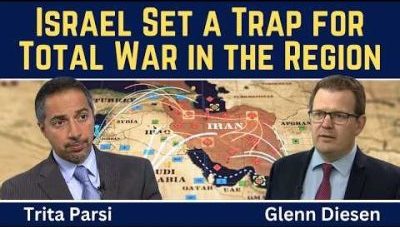
Trita Parsi: Israel Set a Trap for Total War in the Region
or go to
Aletho News Archives – Video-Images
From the Archive
Zionism’s Violent Legacy
By Donald Neff | Washington Report On Middle East Affairs | January 1996
On January 4, 1948, Jewish terrorists drove a truck loaded with explosives into the center of the all Arab city of Jaffa and detonated it, killing 26 and wounding around 100 Palestinian men, women and children.[1] The attack was the work of the Irgun Zvai Leumi – the “National Military Organization,” also known by the Hebrew letters Etzel – the largest Jewish terrorist group in Palestine. The Irgun was headed by Revisionist Zionist Menachem Begin and had been killing and maiming Arabs, Britons and even Jews for the previous ten years in its efforts to establish a Jewish state.
This terror campaign meant that at the core of Revisionist Zionism there existed a philosophical embrace of violence. … continue
Blog Roll
 Aletho News
- Trita Parsi: Israel Set a Trap for Total War in the Region
- Trump’s Iran war is on an Israeli leash
- Saudi oil boss issues global supply warning
- Riyadh Says Its Oil System Is Intact. The Numbers Say Otherwise.
- Trump and Netanyahu Want to “Finish the Job” on Iran
- US ‘one-sided dictation’ not Iran’s beliefs makes rational talks impossible: Baghaei
- Iran’s Next Strike May Not Explode. It Could Shut You Down /Col Doug Macgregor
- Iran: US political targets legitimate if assassinations return
- Iraq shuts key border crossing with Iran under US pressure: Report
- Undersea Internet cables could be targeted in retaliation for attacks on Iran: IRGC deputy chief
- If Americans Knew
- The Israel Lobby’s Changing Fortunes
- AIPAC has become such a political liability that it’s shifting to a more “nimble” approach to buying politicians
- At least 160 Israeli settler attacks in 2 weeks
- Will Gaza’s Ancient Christian Community Disappear Forever?
- Israel’s vision of regional security rests on keeping Arab states weak
- Heidi Levine recounts how Palestinian youths helped save her in settler attack
- DAILY UPDATE: Latest essential news on Palestine, Israel, & region
- Trump’s Intensifying Sabotage of the ICC, for Israel’s Sake
- Israeli military detain US and UK volunteers in West Bank including Democratic NY politician Brad Lander
- Americans at National Conservatism Conference held in Israel this year criticize Israel
- No Tricks Zone
- E-Cars Reduce CO2 Emissions By Only 41% Compared To Internal Combustion Engine Vehicles
- Predictions Made By Renowned Climate Professor Over Past Decades Have Been Proven To Be Poor
- New Study Suggests Large Regions Of The Pacific Ocean Have Been Cooling For The Last 80 Years
- Germany’s Green Energy Debacle: High Energy Costs Force Kahla Porzellan to Close After 182 Years!
- New Study: 50 Years Of The Most Aggressive ‘Net Zero’ Policies Can Only Affect The Global Climate By 0.03°C
- US September “Heat” Was No Record…Many Records Set Decades Ago
- Latest European Green Energy Debacle; Portugal’s Largest Flagship Solar Park Insolvent!
- Green Energy Debacle: German Expert Professor Fritz Vahrenholt Warns Of Severe Economic And Social Consequences
- Two More Paleo Reconstructions Affirm Meters-Higher Sea Levels Across Ireland, Brazil 7000-6000 Years Ago
- New Study: Earth And Venus Surface Warmth Largely Explained By Convection And Lapse Rate, Not CO2 Or Radiation

