Israel rebrands Gaza’s forced displacement scheme amid international outrage: Report
Press TV – June 29, 2026
The Israeli regime has reportedly rebranded a scheme to remove Palestinians from Gaza, replacing the term “voluntary migration” with “Free Movement Plan” amid mounting international condemnation.
According to Israeli media, the cabinet of the Israeli prime minister Benjamin Netanyahu is promoting the Gaza relocation initiative under a new name following growing international backlash.
Israel’s Channel 13 reported that instructions have been given to various bodies of the regime’s establishment to present the plan using language considered more acceptable abroad.
Sources involved in contacts with foreign governments reportedly expressed hope that the change in terminology could revive the scheme after previous diplomatic efforts stalled.
The reported rebranding comes as Israeli military operations, land seizures, and restrictions on the movement of civilians continue across the Gaza Strip despite a ceasefire that took effect in October 2025.
A senior Israeli official quoted by Channel 13 acknowledged that the Palestinian resistance movement Hamas “still exists” in Gaza and stated that Israel “seeks to encourage” as many Palestinians in Gaza as possible to leave the territory.
Earlier reports indicated that Israeli officials explored relocation schemes with Somaliland and the Democratic Republic of the Congo, although those efforts failed to secure agreements.
Channel 12 previously reported that Israeli institutions had presented plans to transfer Palestinians from Gaza by land, sea, and air as part of a broader relocation strategy.
The international community have denounced the plan as an attempt to empty Gaza of its population.
The relocation debate has intensified amid widespread destruction across Gaza, where more than 73,000 people have reportedly been killed, over 173,000 wounded, and nearly 90 percent of infrastructure damaged since October 2023 when Israel launched its genocidal assault on the enclave.
Lebanon parliament speaker vows Israel deal ‘will not pass’
The Cradle | June 29, 2026
Lebanon’s Parliament Speaker and head of the Amal Movement, Nabih Berri, said on 29 June that the new US-brokered agreement between Beirut and Tel Aviv – reached in violation of Lebanese law – “will not be implemented.”
“This agreement will not pass, and it will not be implemented,” Berri said in an interview with Al-Akhbar newspaper.
He stressed that his opposition to the agreement will remain “within constitutional frameworks,” and that his party – which is closely allied to Hezbollah – “will not boycott any cabinet session in which the agreement is discussed.”
“That is where we will confront it and state our position,” he added.
“The greatest danger posed by the agreement is not only its political content but also the possibility that it could fuel internal divisions and provoke Lebanese factions into confronting one another – something that would serve Israel above all else.”
Berri also responded to reports and claims that Lebanese authorities were planning to dismiss Lebanese Armed Forces (LAF) chief Rudolphe Haikal.
“No one should even joke about such an idea, and no one should play games with the army. The military institution is a red line and one of the pillars of national stability and the primary guarantee for preserving civil peace,” the parliament speaker told Al-Akhbar.
Haikal, over the past year, has reportedly refused to move ahead with Hezbollah disarmament plans while Lebanon remains occupied and under attack. He is also said to have threatened resignation over the matter in 2025.
During a trip to Washington weeks before the latest war, Haikal angered US officials after he refused to call Hezbollah a terrorist organization at a meeting in Washington.
Hezbollah official Nawaf al-Moussawi recently said that Lebanese President Joseph Aoun had plans to dismiss the army chief.
During Monday’s interview with the Lebanese parliament speaker, Berri went on to refer to the Lebanon–Israel agreement as a series of “dictates.”
The speaker called the deal “10 times worse than the 17 May Agreement of 1983,” referring to a Lebanese–Israeli peace deal decades ago which failed to materialize.
Berri, who at the time was at the start of his political career, played a key role in collapsing the 17 May 1983 agreement.
“I’d take 17 May 10 times over this agreement,” Berri stressed.
Berri also affirmed that the only way to achieve the country’s national goals “lies in the US–Iran negotiations,” rejecting Washington and Tel Aviv’s efforts to separate Lebanon from the Islamic Republic.
The US–Iran memorandum of understanding (MoU) is “the only framework capable of creating a balance of power that would force Israel to meet its obligations.”
Berri added that “separating the Lebanese file from that process, or entering into separate negotiations with Israel under American and Israeli terms, would merely prolong the occupation and give Israel more time to impose new realities on the ground without providing Lebanon with any genuine guarantees.”
On 28 June, several Hezbollah officials slammed the agreement brokered by Washington – following months of direct talks that were conducted in violation of Lebanon’s laws and constitution.
MP Hussein al-Hajj Hassan reiterated Berri’s previous calls to avoid civil strife, but warned that the Lebanese state “bears the responsibility” for whatever “outcome” results if Beirut attempts to actually implement the outcome.
The US-Lebanese-Israeli deal signed in Washington on 26 June stipulates that Hezbollah must be disarmed before any withdrawal of occupation forces can take place.
The agreement also builds on aspects of earlier direct talks between Israel and Lebanon, specifically the establishment of “pilot zones” in which the Lebanese Armed Forces (LAF) would deploy in order to dismantle “non-state armed groups,” including the resistance.
“Two initial zones have been agreed to by the [Israeli army] and the LAF, and future pilot zones will also be agreed upon by mutual consent,” Clause 3 of the framework stipulates, in effect forcing the Lebanese army to take permission from Israel on where it would deploy.
The deal would also bar Lebanon from filing legitimate international legal complaints against Israel, which has killed over 4,000 Lebanese and displaced over a million since the start of March this year.
This is represented by Clause 13 of the Lebanon–Israel deal, which calls for “the cessation of all hostile or adverse actions in international political or legal fora.”
One of the clauses also explicitly states that the “Government of Lebanon herewith requests the support of international and, particularly Arab partners, under the leadership of the US, to achieve this outcome.”
Lebanese journalist Hassan Illaik said this was among the “most dangerous” clauses, and interpreted it as a legitimization of a Syrian military assault against Hezbollah.
This is something US officials have repeatedly threatened, including President Donald Trump.
According to Israeli news outlet Channel 12, the framework agreement between Lebanon and Israel includes a classified security annex that remained secret at the explicit request of the Lebanese government.
The report says the agreement does not set fixed implementation timelines, with every step instead conditioned on meeting specific requirements on the ground.
It adds that there will be no automatic Israeli withdrawals, with any redeployment depending on verified progress and the results achieved in the field.
It also says the two agreed “pilot zones” are the only ones currently approved, and that no additional pilot zones will be established in the foreseeable future without Israeli approval.
Channel 12 further reported that the Lebanese government granted Israel freedom of military operations inside the ‘security zone’ that Israel has illegally established inside Lebanon.
According to Israel’s Channel 15, the agreement signed between Lebanon and Israel grants the Israeli army the right to enter the “pilot zones” to verify that they have been cleared of weapons and military infrastructure by the LAF.
The Middle East, Hormuz and the New Mercantilism
By Craig Murray | June 29, 2026
The provisional surrender document signed by Donald Trump appeared to represent a triumph for Iran and indeed for the world; but neither the USA nor Israel has the slightest sense of honour and they cannot be trusted to negotiate in good faith.
Iran knows this – after all, the USA twice attacked Iran actually during peace negotiations, on each occasion killing key Iranian negotiators.
To understand the American position, it is important to realise two key points:
- Greater Israel is an absolute priority
- Opening the Strait of Hormuz is not a US priority
While the US/Israeli alliance were defeated in their attempt to impose regime change on Iran, and indeed have consolidated the popular support of the Iranian government, they have succeeded in expanding Greater Israel. Israel has ethnically cleared and devastated a vast swathe of Southern Lebanon, expanding its military footprint, and notably attempting to repeat its ploy from November 2024 of pushing forward its armour under cover of ceasefire.
Israeli withdrawal from Southern Lebanon has been a major negotiating point for the Iranian government and is a key – indeed the very first – point of the Iran/USA MOU. But in an extraordinary coup aimed at negating that deal, the USA has signed a deal with Israel and its puppet Aoun regime in Lebanon which seeks to legitimise Israeli occupation of Southern Lebanon through the agreement of the “Lebanese government”.
This is an astonishing development. I did not think I could have a lower opinion of the appalling bloated traitor “General” “President” Aoun but not even I – nor I think any commentator – believed he would make such a deal with Israel. The plan is that the Americans, Israelis and Lebanese Army will act together to forcibly eliminate Hezbollah, and only after that is certified – by the Israelis – will the Israelis withdraw from Southern Lebanon.
Here are the operative paragraphs. Note that they carefully do not say in terms that Israel will actually leave Lebanon.
“3. …The Government of Israel and the Government of Lebanon commit to a reciprocal, sequenced process, with clear conditions, whereby the LAF will restore effective sovereign authority over all Lebanese territory, pending the verified disarmament of non-state armed groups and dismantlement of associated infrastructure, enabling the Israel Defense Forces (IDF) to progressively redeploy out of the Lebanese territory.”
“5 . …The Government of Israel underscores that the termination of this threat, through the disarmament and dismantlement of such groups in all of Lebanon and additional security arrangements to be agreed upon between the two countries, will eliminate any future need for IDF military action or presence in Lebanon.”
This is plainly completely incompatible with the USA/Iran MOU, which states as Point 1:
“The United States of America and the Islamic Republic of Iran and their allies in the current war are signing this MOU to declare the immediate and permanent termination of military operations on all fronts, including in Lebanon, and undertake from now on not to initiate any war or any military operation against each other, and to refrain from the threat or use of force against each other, and ensuring the territorial integrity and sovereignty of Lebanon. The final deal will confirm the permanent termination of the war on all fronts, including in Lebanon and other provisions of this paragraph.”
Of course, everybody knows that Israel will never withdraw voluntarily, any more than they withdrew from the Golan Heights. Annexation is plainly the goal and expansion of Greater Israel at least to the Litani River and probably further.
It is important to realise that this is not only Aoun seeking the annihilation of the Shia population of Southern Lebanon; he is also betraying his own community. Aoun is himself a Southern Lebanese Christian, and Israel has been destroying the homes, churches, hospitals and families of Southern Lebanese Christians with as much glee as they attack Muslims.
The agreement names two “pilot zones” where the combined Israeli and Lebanese Army forces will eliminate Hezbollah, followed by Israeli withdrawal from those zones. But these are zones which Israel is not currently occupying – they are areas where Israel was defeated in fighting by Hezbollah and which have been since subject to relentless Israeli bombardment.
So Aoun has agreed to support militarily an IDF advance further into Lebanon, against an agreement that Israel will be able to withdraw once these key Hezbollah redoubts have been destroyed. Even if Aoun were stupid enough to believe the Israelis will withdraw after the operation, this is a level of treachery it is difficult to comprehend.
Greater Israel is not a concept. It is a reality being created before our very eyes.
Israel now occupies 70% of Gaza and plainly the entire “Board of Peace” mechanism is nothing but smoke and mirrors, pure fraud. It has zero effect on the continued tightening of the Gaza concentration camp into an ever-shrinking area. Israeli settlements in the West Bank expand daily and every night the skies are red with Palestinian homes and crops burning. In East Jerusalem Palestinians are continually evicted and replaced by fresh European or American arrivals. In Syria, Israel is building permanent fortifications and its armour creeps forward field by field, with the full cooperation of “President” al-Jolani.
Iran was able to resist the combined military might of the USA and Israel. That is cause for celebration. But do not allow it to blind your eyes to the continued hard reality of the expansion of Greater Israel.
There is no gain for the US in the US/Iran Memorandum of Understanding which the US did not already possess before starting the war. It is therefore very possible, and in many senses valid, to read it as the formalisation of US defeat: a surrender document. Which is why you should be sceptical about US commitment to the terms.
The Strait of Hormuz was fully open before the US started the war. Allowing the flow of oil to resume has become a short-term US priority due to high domestic retail prices and pending elections, but the MOU envisages more Iranian control – and potentially fees – in the Strait than existed before the war.
There is no indication of restrictions on the Iranian nuclear programme that were not already available in the peaceful negotiations. Crucially there are no limitations on Iran’s vital ballistic missile production. The proposed relaxation of sanctions and release of frozen assets is a triumph for Iran and long overdue, and the $300 billion in dollars in reparations, from unspecified sources, is stunning.
So stunning of course that anyone with their head screwed on will realise there is no long term American intention to keep faith with the deal.
Trump is not stupid. There are many ways of characterising his kind of cunning, but it is not stupidity. He was not, as the prevailing narrative seeks to state, the only person in the World who did not realise the Strait of Hormuz would be closed by the war. The USA is quite happy to see the Strait of Hormuz closed, or permanently made more difficult and expensive to transit.
The key to understanding Trump’s position is his famous love of tariffs. Trump is a mercantilist. For many years the world worked on the general basis of accepting the economics of Adam Smith – that freedom of trade promoted universal, reciprocal wealth creation. That was the founding basis of the World Trade organisation, and is the internal philosophy of big trading blocs like the EU.
Trump rejects this and returns to the philosophy that other nations are all competitors, not potential partners, and that success lies not only in increasing your own production, but in damaging your rivals’ production – which ultimately will increase domestic production further. Trump rejects the basic premise of free trade.
The long prevailing belief in the beneficial effects of free trade historically was, as logic demands, accompanied by the demand for freedom of navigation.
Sweeping away tariffs goes hand in hand with sweeping away the controls on shipping which carry the goods. Before the rise of liberal economics, almost all states had practised mercantilism, with controls on shipping being a major source of state revenue. The magnificence of Kronborg Castle in Helsingør, in which Hamlet is set, was constructed entirely from revenues from tolls on ships exiting the Baltic by passing the strait it overlooks, for example.

Freedom of navigation was initially enforced ultimately by the British, and later the American, Navy. States attempting to enforce customary passage fees, for example in the Malaccan Strait, were classified as “pirates” and freedom of navigation became a routine justification for imperialist aggression and/or colonial occupation. Freedom of navigation eventually became customary international law, ultimately codified in the UN Convention of the Law of the Sea.
The simple truth is this: in openly abandoning the principle of free trade, the Trump regime has also abandoned the logically linked principle of freedom of navigation. This is evident not just in their indifference to the closure of the Strait of Hormuz. It is evident in the naval blockades of Cuba and Venezuela and above all in the worldwide blockade of Russian hydrocarbon deliveries, including the effective end of free passage through the Strait of Dover, and a de facto naval blockade of the Arctic passages.
Following the shale boom, the United States is a net hydrocarbon exporter. The USA balance of trade benefits from high hydrocarbon prices. Trump is doing everything he can to increase US hydrocarbon production by slashing environmental and other controls. This is a core Trump policy.
The USA does not import hydrocarbons through the Strait of Hormuz. That fact is key to Trump’s thinking.
In this mercantilist view, closure of the Strait has two benefits for the USA.
- It disadvantages rival hydrocarbon suppliers
- It disadvantages rival industrial competitors in Europe and Asia who do get hydrocarbons through Hormuz.
This is exactly the same logic behind the destruction of Nord Stream 2. The same mercantilist system also explains the effective seizure through naval blockade and control of Venezuela’s oil production, and the blockade of Russian hydrocarbons through sanctions and the “shadow fleet” propaganda disguising another naval blockade.
The UK’s recent actions in the Dover strait indicate that the West, not just the United States has surrendered the principle of freedom of navigation in straits.
Trump believes, as he has repeatedly stated in public, that domestic fuel prices in the USA are a blip and will equalise as the USA increases its domestic fuel production and Venezuelan fuel production. However this was not happening in time for the mid-term elections which is why reopening the Strait of Hormuz became a temporary priority that occasioned the ceasefire and MOU with Iran.
None of this implies good faith negotiation or a real prospect for a lasting peace.
Iran, Lebanon speakers agree trilateral unit to end Israeli aggression
Al Mayadeen | June 28, 2026
Iranian Parliament Speaker Mohammad Bagher Ghalibaf and Lebanese Parliament Speaker Nabih Berri have affirmed their commitment to halting the ongoing Israeli aggression during a phone call, with Ghalibaf emphasizing that ending the war on Lebanon while safeguarding the country’s sovereignty and territorial integrity remains a fundamental pillar of the Islamabad memorandum of understanding.
Ghalibaf reasserted that Iran’s firm objective is to halt the war, secure the return of the displaced, bring an end to the occupation, and force the total withdrawal of the Zionist entity from Lebanese territory.
He emphasized that ending the war on Lebanon, while safeguarding the country’s sovereignty and territorial integrity, remains a fundamental pillar of the first clause of the Islamabad memorandum of understanding.
Addressing diplomatic frameworks, Ghalibaf noted that the recent talks in Switzerland produced an agreement to establish a trilateral conflict management unit comprising Iran, the United States, and Lebanon.
According to Iranian television, both speakers stressed the urgency of convening this conflict management unit as soon as possible to effectively control and terminate the war.
Berri warns of Zionist efforts to circumvent Lebanese sovereignty
For his part, Speaker Berri welcomed the Swiss outcomes, stating they directly serve the interests of the Lebanese people. However, he warned that the Zionist enemy is actively attempting to circumvent the restoration of Lebanon’s full sovereignty.
Berri fiercely condemned the alternative Washington framework between Lebanon and the Zionist entity, describing the agreement as a “dangerous conspiracy” and a “deliberate plot to ignite internal strife.”
His remarks reflect deep concerns in Beirut about US-led efforts to bypass Lebanon’s legitimate institutions and impose arrangements that would undermine the country’s sovereignty.
Context: Implementation of the Islamabad memorandum
The Islamabad memorandum of understanding, signed between Iran and the United States on June 18, provides for the cessation of military operations on all fronts, including Lebanon.
The agreement has been a source of contention, with Israeli officials reportedly acknowledging that it represents a “catastrophe and strategic defeat” for the occupation state.
The trilateral conflict management unit is intended to ensure the implementation of the ceasefire provisions in Lebanon and to prevent further escalation.
However, continued Israeli violations and the alternative Washington framework threaten to undermine the agreement, highlighting the fragility of the diplomatic process.
How The Israel/Lebanon Deal Destroys Lebanese Sovereignty And The MoU With Iran
By Justin K.P. | The Dissident | June 28, 2026
On Friday, Israel and the Lebanese government signed a deal brokered by U.S. Secretary of State Marco Rubio that essentially gives Lebanese sovereignty away to Israel and destroys the MoU with Iran.
The End Of Lebanese Sovereignty
The deal, as Benjamin Netanyahu boasted, is “a historic achievement for Israel” because it allows Israel to hold, “a security zone in Lebanon for as long as is needed for Israeli security”, (ie continue the occupation of South Lebanon).
Israel Channel 12 reported that , “The Lebanese government requested from Washington not to publish the secret security annex within the framework agreement with ‘Israel’” which “stipulates a clear commitment from both parties that any step will not be implemented according to timelines but according to conditions” and that “The framework agreement stipulates freedom of operation inside the ‘Blue Line’ against immediate and emerging threats”.
Furthermore, Israeli media reports that within the security annex to the Israel-Lebanon framework agreement, “Israel does not only have to confirm the pilot locations – the IDF will also enter the areas it withdrew from to verify that the Lebanese army has indeed dismantled Hezbollah’s infrastructure on the ground.”
In other words, according to the deal, Israel is allowed to occupy areas of South Lebanon with no timetable to withdraw, and is able to enter areas of Lebanon to “verify that the Lebanese army has indeed dismantled Hezbollah’s infrastructure on the ground”.
As the analysist Elijah J. Magnier noted , under the agreement, “Israel keeps the power to decide when it feels secure enough to withdraw, the United States presents itself as mediator while acting as Israel’s strategic protector, and Lebanon is asked to implement security obligations that its own political and social reality may not allow.”
He added, “The most dangerous feature is the absence of a clear timetable for full Israeli withdrawal. Netanyahu has made clear that Israel will remain in southern Lebanon, in its security or buffer zones, until Hezbollah disarms and until Israel judges that the threat to its citizens has been removed. This makes Israel not merely a party to the agreement, but the judge of Lebanese compliance. It gives Israel the authority to decide whether Hezbollah has been sufficiently disarmed, whether the Lebanese army has done enough, whether the threat has disappeared, and therefore whether Israel should withdraw. That is not sovereignty. It is conditional sovereignty under Israeli review.”
Furthermore, as Lebanese journalist Rania Khalek reported , within the published deal , “Point 2 stipulates that Israeli withdrawal is contingent on the Lebanese Army first disarming Hezbollah, meaning civil war. This flips international law on its head. Israel’s occupation is illegal whether Hezbollah exists or not. The agreement states: ‘the LAF will restore effective sovereign authority over all Lebanese territory, pending the verified disarmament of non-state armed groups and dismantlement of associated infrastructure, enabling the IDF to progressively redeploy out of Lebanese territory.’ By agreeing to disarm Hezbollah first, with the markers for ‘verified disarmament’ yet to be determined by the U.S., the Lebanese government has cemented the occupation of the south.”.
An anchor on the Israeli channel 13 boasted, “It seems we’re leading the state of Lebanon towards civil war. Maybe it’s not so bad for us. Let the Lebanese government fight Hezbollah”.
Furthermore, Rania Khalek noted, “Point 13 demonstrates shocking incompetence as it gives up Lebanon’s right to ‘hostile or adverse actions in international political or legal fora.’ That means the Lebanese government agreed to forfeit using the law against Israel for the endless list of war crimes they’ve committed against Lebanon. It’s wild that this is coming from a government whose Prime Minister was a judge on the International Court of Justice and presided over South Africa’s case on the genocide in Gaza.”
The End Of The MoU
Aside from giving up Lebanese Sovereignty to Israel and the United States, it destroys the U.S.-signed MoU with Iran, which includes an unconditional Israeli withdrawal from Lebanon.
Point one of the MoU reads , “The Islamic Republic of Iran and the United States of America, and their allies in the current war, by signing this MoU, declare the immediate and permanent termination of military operations on all fronts, including in Lebanon, and undertake from now on not to initiate any war or any military operation against each other, and to refrain from the threat or use of force against each other, and ensuring the territorial integrity and sovereignty of Lebanon.”
But as Elijah J. Magnier noted, “The Washington framework effectively empties paragraph 1 of the US-Iran MOU of its meaning. That paragraph required an end to the war, respect for Lebanon’s sovereignty, and Israeli withdrawal from Lebanese territory. The new framework replaces that obligation with a conditional mechanism: Israel withdraws only when it decides that Hezbollah has been disarmed and the threat has disappeared. In other words, Netanyahu has turned an Israeli duty to withdraw into a Lebanese obligation to prove itself under Israeli supervision.”
Iran has stayed strong in stating that an unconditional Israeli withdrawal from South Lebanon is a red line in the future of the MoU.
Iran Press TV reports that during a call between Iran’s Parliament Speaker Mohammad Baqer Qalibaf and Lebanese Parliament Speaker Nabih Berri, Mohammad Baqer Qalibaf said, “Our goal is to end the war in Lebanon, [help] return of refugees to their homes, end the occupation and [secure] withdrawal of the Zionist regime from Lebanese territory” and “reiterated Iran’s seriousness in pursuing the issue.”
According to Press TV, both speakers of parliament agreed that the Israel/Lebanon deal was in violation of the MoU. The report noted:
The Lebanese parliament speaker warned that the Zionist enemy seeks to circumvent the issue related to Lebanon’s sovereignty and territorial integrity under the Islamabad MoU through alternative means.
Berri described the Washington-brokered agreement between Lebanon and the Israeli regime as a conspiracy and sedition.
The Iranian and Lebanese parliament speakers emphasized the need for an early meeting of the deconfliction unit to help oversee implementation of the Islamabad-brokered MoU and end the war in Lebanon.
Iranian Foreign Ministry spokesman Esmaeil Baghaei has similarly reiterated that an unconditional Israel withdrawal from South Lebanon is crucial to the future of the MoU.
Press TV reported, “He reiterated Iran’s longstanding position on Lebanon’s sovereignty, saying the Islamic Republic considers the protection of Lebanon’s national sovereignty and territorial integrity, along with safeguarding the dignity and security of all Lebanese citizens, to be a fundamental prerequisite for any sustainable agreement aimed at ending the war and Israel’s military presence in the country.”
It added:
He also emphasized that Tehran had placed an end to Israel’s military offensive in Lebanon alongside the termination of hostilities against Iran as one of its principal demands and has consistently insisted on the implementation of those commitments.
The Iranian spokesman further stated that the full implementation of the first provision of the memorandum—which calls for ending Israeli attacks against Lebanon and the withdrawal of Israeli forces from all occupied Lebanese territories—is essential for reaching a final and lasting agreement capable of restoring stability to the region.
Referring to the United States’ explicit commitment under the first provision of the June 18 memorandum, Baghaei urged Washington to take all necessary measures to compel Israel to halt all acts of aggression and military offensives across Lebanese territory.
He also called for the prompt establishment of a timetable for Israel’s unconditional withdrawal from the occupied areas of Lebanon, saying that such a step is necessary for the successful implementation of the agreement and the achievement of durable peace and security.
The remarks came after Israel and Lebanon signed a 14-point framework agreement in Washington aimed at ending hostilities and addressing long-standing security issues along their shared border.
BACK TO BATTLE: Iran, US, Israel, Lebanon & Hezbollah /Lt Col Daniel Davis
Full interview:
Daniel Davis / Deep Dive – June 27, 2026
Israel’s Ben-Gvir faces US complaint over alleged war crimes: Rights group

Israel’s Minister of National Security Itamar Ben-Gvir speaks at the Israeli parliament in Jerusalem on 3 June 2024 [Amir Levy/Getty Images]
MEMO | June 28, 2026
The Belgium-based Hind Rajab Foundation has filed a complaint with the US Justice Department accusing Israeli National Security Minister Itamar Ben-Gvir of committing war crimes against Palestinians, including US citizens, the organization said, Anadolu reports.
In a statement, the foundation said Ben-Gvir, who is expected to visit New York on July 7-8, had been accused of war crimes against Palestinians, including US citizens, and urged the Justice Department to open an investigation.
The organization said its complaint had been submitted to the relevant US authorities. It alleged that Ben-Gvir had used his authority since taking office in 2022 to implement policies of “systematic torture, murder, abuse and forced displacement” across the occupied Palestinian territories, particularly through the Israeli Prison Service.
The foundation said Ben-Gvir had shaped the policies of the Israeli police, the Israeli Prison Service and the Israeli Firearms Licensing Department under the National Security Ministry.
It said Ben-Gvir had made worsening prison conditions for Palestinian detainees a priority after taking office and that those policies had been implemented and praised by sections of the Israeli public.
The foundation said numerous Palestinian and international rights groups had described the Israeli Prison Service under Ben-Gvir as a “network of torture camps.”
It alleged that Palestinian detainees had been subjected to torture, including starvation, sleep deprivation, denial of medical care, sexual violence, and electric shocks.
The statement said at least 46 Palestinians had died in Israeli prisons between October 2023 and August 2025 as a result of those conditions.
It alleged that sexual violence has become routine, including forced public stripping, repeated strip searches, filming detainees while naked, assaults on genitals, rape threats, threats of rape against family members, and, in some cases, rape committed in front of other detainees.
The foundation added that Ben-Gvir had personally attended some incidents of torture and had frequently filmed himself while mistreating Palestinians.
It argued that the alleged war crimes also constituted genocide, saying Ben-Gvir’s objective was to destroy the Palestinian people in whole or in part through torture, abuse, and killings in prisons.
The statement also recalled Ben-Gvir’s remarks that “Lebanon should burn” and that “1,000 Lebanese mothers should cry for every tear shed by an Israeli mother,” alleging that he had made genocidal statements against both Palestinians and Lebanon.
The foundation called for an investigation to be opened, for Ben-Gvir to be prevented from leaving the US until the investigation was completed, and for Washington to fulfill its obligations under the Geneva Conventions.
Ben-Gvir is expected to lead an official delegation to the Police Chiefs Summit scheduled to be held at the UN headquarters in New York on July 7-8.
US-backed deal favors Israel at expense of Lebanon’s national interests: Amal Movement
Press TV – June 28, 2026
Lebanon’s Amal Movement has rejected the so-called Framework Agreement between Beirut and Tel Aviv, saying that most of the deal’s clauses are detrimental to Lebanon’s national interests and serve the interests of the Israeli regime.
In a statement released late on Saturday, the Lebanese political party underscored its adherence to international resolutions and dismissed face-to-face talks with the occupying regime, expressing its strong disapproval of the framework agreement.
The Amal Movement’s political bureau described the US-mediated deal between the Beirut government and the Israeli regime as “unbalanced,” adding that most of its clauses include realities that benefit the “Zionist enemy” and are detrimental to Lebanon’s national interests.
The movement added that the deal carries political and sovereign risks, and should be rejected because it is not based on a fair agreement that protects the rights of the Lebanese nation.
The Amal Movement called for Israeli military forces to be required to withdraw completely from all occupied Lebanese territories to internationally recognized borders.
The movement also demanded the deployment of Lebanese army forces and full exercise of its authority and role.
It emphasized that such an approach strengthens the power and legitimacy of the Lebanese government, urging authorities to pursue indirect negotiations to resolve outstanding issues and consolidate internationally recognized borders.
The Amal Movement also called on all Lebanese people to exercise the highest level of awareness and national unity and to refrain from being drawn into the enemy’s traps designed to create internal sedition.
On Friday, US Secretary of State Marco Rubio declared that a framework agreement had been reached between Lebanon and Israel, describing it as a preliminary move in what he called a “challenging journey.”
At the same time, Israeli Prime Minister Benjamin Netanyahu commended the agreement as a significant milestone for the occupying regime.
Netanyahu said Israel would prevent Lebanese citizens or Hezbollah fighters from coming back to the so-called security belt area controlled by Israeli forces, insisting that Israel would keep occupying parts of southern Lebanon until “Hezbollah is disarmed.”
The agreement was met with widespread opposition and angry protests in several regions of Lebanon, as well as by renowned scholars, political figures, and prominent personalities who categorically rejected it.
Israeli occupation forces advance in southern Lebanese towns after truce deal with Beirut
Press TV – June 27, 2026
Israeli forces have carried out new attacks on several towns in southern Lebanon, in a new escalation immediately after a US-brokered peace agreement was reached between Beirut and Tel Aviv.
Israeli occupation forces advanced toward the outskirts of the southern Lebanese town of Kfar Shuba under the cover of heavy machine-gun fire on Saturday, according to local reports.
Earlier, Israeli forces detonated a stun grenade near the town of Kfar Tebnit, causing alarm among residents.
The occupying regime’s warplanes also struck a location in the border town of Markaba overnight, according to Lebanon’s state-run National News Agency (NNA).
The attacks follow an announcement by US Secretary of State Marco Rubio saying a 14-point agreement had been reached between Lebanon and Israel.
Israel’s ambassador to Washington, Yechiel Leiter, welcomed the agreement, claiming that under its terms, “Hezbollah is out.”
Israeli Prime Minister Benjamin Netanyahu also praised the deal, describing it as a major achievement and a significant step toward advancing Israel’s objectives in Lebanon.
Netanyahu further stated that Israel would not allow Lebanese residents to return to areas within the so-called security belt under Israeli control and insisted that Israeli forces would remain in the occupied parts of southern Lebanon.
Lebanese lawmaker Hassan Fadlallah strongly criticized the framework, warning that Lebanese authorities would not be able to implement it without dragging the country toward “civil war.”
Since 2 March, when Israel launched its latest round of aggression against Lebanon, at least 3,600 people have been killed and more than 11,000 wounded, according to Lebanese authorities.
In response, the Lebanese resistance movement Hezbollah has continued military operations against Israeli forces, saying resistance remains necessary as long as attacks and occupation persist.
The Islamabad Memorandum of Understanding (MOU), signed by Iran and the United States in June, includes provisions calling for an end to Israeli attacks on Lebanon and respect for the country’s sovereignty and territorial integrity.
Abelardo De la Espriella’s Victory Renews Pressure on Venezuela

José Niño Unfiltered | June 26, 2026
Colombia elected Abelardo de la Espriella as its next president on June 21, 2026, delivering the country’s leadership to a man who spent nearly a decade publicly calling for the violent overthrow of Venezuela’s socialist government. His victory over leftist Senator Iván Cepeda by fewer than 250,000 votes marks a dramatic rightward shift for a nation that shares a porous 1,400-mile border with Venezuela and hosts millions of Venezuelan refugees.
De la Espriella takes office on August 7, 2026. If Brazil’s November presidential election delivers Flávio Bolsonaro to the Planalto Palace, the two largest nations bordering Venezuela will be governed by leaders who have explicitly endorsed forceful regime change in Caracas. Combined with the apparent willingness of acting Venezuelan President Delcy Rodríguez to cooperate with Washington, the conditions may finally exist for completing what the Trump administration attempted and failed to accomplish in 2019.
De la Espriella’s hostility toward Caracas is neither recent nor cautious. He first articulated his position on Venezuela during a 2018 appearance on Peruvian TV personality Jaime Bayly’s Miami television program. According to to his own subsequent writings, he urged Venezuelans to commit tyrannicide against Nicolás Maduro. Days later he published a column titled “Death to the Tyrant” in Barranquilla’s El Heraldo, writing that “the death of Nicolás Maduro becomes necessary to guarantee the survival of the Republic.”
When U.S. forces captured Maduro in January 2026, de la Espriella publicly celebrated, claiming he had predicted it years earlier. He sold the American operation not as an “invasion” but as “the arrest of an international criminal and head of the Cartel de los Soles,” arguing that Washington acted according to the law due to Venezuela’s alleged lack of institutional legitimacy.
His campaign platform explicitly called for a renewed military alliance with Washington. In February, De la Espriella announced that he would immediately begin “bombing the camps of the narco-terrorists and spraying drug crops,” adding that “this cannot be done without a strategic alliance with the United States and the State of Israel.” He marketed this as a 90-day security plan modeled on Salvadoran President Nayib Bukele’s approach, promising to retake national territory through joint task forces, aerial bombardment of criminal camps, fumigation of 330,000 hectares of coca, and the construction of 10 mega-prisons in remote jungle locations. He has also promised to establish American military bases on Colombian territory as part of a comprehensive security restructuring.
Colombia may soon find a partner in this posture across its longest border. Five months after de la Espriella’s inauguration, Brazilians will decide their own presidential election. Flávio Bolsonaro, son of former President Jair Bolsonaro, has made Venezuela the centerpiece of his campaign against incumbent Luiz Inácio Lula da Silva.
When Maduro was kidnapped in January, Flávio immediately seized on the moment. He posted that “Venezuela has become one of the most extreme examples of how an authoritarian regime can destroy a nation,” calling Maduro a “narcoterrorist.” At the time, his brother Eduardo texted him saying “you are elected president, because we know that a lot of things will come out of Maduro,” predicting that Maduro’s capture would expose Lula’s ties to the Venezuelan regime.
At CPAC in March 2026, Flávio displayed a photograph of Lula embracing Maduro to a crowd that booed loudly. He accused Lula of maintaining ties with leftist dictatorships through the São Paulo Forum, which he described as a network linking Lula, Cuban communism, and drug cartels. Brazil’s Supreme Court opened an investigation into Flávio for defamation, which he denounced as political censorship.
Flávio took Lula to task for “publicly criticizing President Trump’s actions on Venezuela, Iran, Cuba, and the fight against drug trafficking.” He pledged that under his presidency, Brazil would serve as a reliable U.S. partner rather than an opponent on these issues. Reuters polling in late October shows Flávio and Lula locked in a statistical tie heading into the October first round.
What these leaders propose is not new. Washington reached for it in 2019. The Trump administration’s first attempt to topple Maduro collapsed in spectacular fashion. National Security Adviser John Bolton appeared at a January 28, 2019 press conference at the White House with a notepad reading “5,000 troops to Colombia,” held visibly in front of cameras while announcing new oil sanctions against Venezuela’s state company PDVSA—signaling Washington’s interest in using Colombian territory as a staging ground for military pressure on Caracas. Colombia’s Foreign Minister Carlos Holmes Trujillo Garcia said his government had no knowledge of what the note meant.
On February 23, 2019, a U.S.-backed humanitarian aid plot from Cúcuta ended in violence when Venezuelan security forces blocked the convoy with tear gas and rubber bullets. According to a USAID Office of Inspector General report, only 8 of 368 metric tons of aid actually reached Venezuela—the rest was distributed inside Colombia or shipped to Somalia.
The failure at Cúcuta had a quieter companion in Brazil. The Brazilian military establishment proved decisive in blocking regional intervention. Vice President Hamilton Mourão, a retired general, stated flatly that “under no circumstances” would Brazil allow the U.S. to use its territory for military action against Venezuela. He emphasized that “nobody is betting on a military solution.”
Brazil’s Vice President Hamilton Mourão stated firmly that the United States could not use Brazilian territory to invade Venezuela. Senior Brazilian military figures similarly warned against being drawn into a conflict that could make their forces a buffer between American and Venezuelan troops. The military’s resistance held even as President Jair Bolsonaro gave ambiguous public signals, while gesturing toward all options, he acknowledged that the possibility of intervention was “near-zero.”
That said, what failed in 2019 may succeed in 2027 because Venezuela’s current leadership appears willing to cooperate with Washington in ways Maduro never would. A CIA authored classified assessment, reported by the Wall Street Journal, identified Delcy Rodríguez as the best suited candidate to lead a transitional government. Days after Maduro’s capture, Rodríguez was sworn in as acting president on January 5, 2026. On January 15, CIA Director John Ratcliffe traveled to Caracas for a two-hour meeting with Rodríguez—the highest-ranking Trump administration official to visit Venezuela since Maduro’s removal—to deliver the message that “the United States looks forward to an improved working relationship.” The meeting came at the personal urging of President Donald Trump, who had spoken with Rodríguez by phone the previous day and called her “a terrific person,” writing on Truth Social that “we are making tremendous progress, as we help Venezuela stabilize and recover.”
The optics devastated hardline Chavistas. Mario Silva, host of the flagship pro-government propaganda program La Hojilla on state television VTV, accused Rodríguez of treason. In a May 2026 broadcast, he accused her inner circle of negotiating Venezuela’s future with Washington “behind the movement’s back.” He reportedly went further in a YouTube video, suggesting that Rodríguez was the only figure in the Venezuela government in touch with the CIA prior to January 3.
If such allegations prove to be true, smart money suggests Rodríguez would fold under sustained pressure from a multinational coalition. Trump has already removed her from DEA and OFAC sanctions lists despite the DEA having classified her as a “priority target” for drug trafficking as recently as 2022. She oversaw the deportation of diplomat Alex Saab directly to the United States after the Maduro government had fought for years to free him.
The Latin American Right has been ascendant for half a decade. Javier Milei in Argentina. Daniel Noboa in Ecuardo. José Antonio Kast in Chile. Now Abelardo de la Espriella in Colombia. If Flávio Bolsonaro wins Brazil’s November election, the two largest economies bordering Venezuela will both be governed by leaders who have explicitly endorsed American pressure campaigns against Caracas.
De la Espriella’s campaign pledged to restore the cooperative relationship with Washington that existed before Gustavo Petro. Flávio Bolsonaro has promised to align Brazil with U.S. pressure campaigns. With Rodríguez already meeting CIA directors in Caracas and following Washington’s orders on matters like Saab’s deportation, the path toward a final resolution of Venezuela’s political crisis may be shorter than anyone anticipated.
What Brazil’s generals blocked in 2019 may prove irrelevant in 2027 if Flávio Bolsonaro controls the presidency and appoints loyalists to military commands. What Colombia’s Ivan Duque hesitated to support may become explicit policy under de la Espriella. And what Maduro would never accept, Rodríguez appears willing to negotiate.
The question is no longer whether a multinational coalition will pressure Venezuela toward elections. The question is whether Rodríguez will call those elections voluntarily or wait until Colombian and Brazilian forces mass on her borders with American backing.
One thing is clear: the political crisis in Venezuela is far from over.
Featured Video
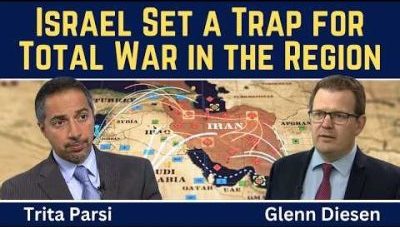
Trita Parsi: Israel Set a Trap for Total War in the Region
or go to
Aletho News Archives – Video-Images
From the Archive
Zionism’s Violent Legacy
By Donald Neff | Washington Report On Middle East Affairs | January 1996
On January 4, 1948, Jewish terrorists drove a truck loaded with explosives into the center of the all Arab city of Jaffa and detonated it, killing 26 and wounding around 100 Palestinian men, women and children.[1] The attack was the work of the Irgun Zvai Leumi – the “National Military Organization,” also known by the Hebrew letters Etzel – the largest Jewish terrorist group in Palestine. The Irgun was headed by Revisionist Zionist Menachem Begin and had been killing and maiming Arabs, Britons and even Jews for the previous ten years in its efforts to establish a Jewish state.
This terror campaign meant that at the core of Revisionist Zionism there existed a philosophical embrace of violence. … continue
Blog Roll
 Aletho News
- Trita Parsi: Israel Set a Trap for Total War in the Region
- Trump’s Iran war is on an Israeli leash
- Saudi oil boss issues global supply warning
- Riyadh Says Its Oil System Is Intact. The Numbers Say Otherwise.
- Trump and Netanyahu Want to “Finish the Job” on Iran
- US ‘one-sided dictation’ not Iran’s beliefs makes rational talks impossible: Baghaei
- Iran’s Next Strike May Not Explode. It Could Shut You Down /Col Doug Macgregor
- Iran: US political targets legitimate if assassinations return
- Iraq shuts key border crossing with Iran under US pressure: Report
- Undersea Internet cables could be targeted in retaliation for attacks on Iran: IRGC deputy chief
- If Americans Knew
- The Israel Lobby’s Changing Fortunes
- AIPAC has become such a political liability that it’s shifting to a more “nimble” approach to buying politicians
- At least 160 Israeli settler attacks in 2 weeks
- Will Gaza’s Ancient Christian Community Disappear Forever?
- Israel’s vision of regional security rests on keeping Arab states weak
- Heidi Levine recounts how Palestinian youths helped save her in settler attack
- DAILY UPDATE: Latest essential news on Palestine, Israel, & region
- Trump’s Intensifying Sabotage of the ICC, for Israel’s Sake
- Israeli military detain US and UK volunteers in West Bank including Democratic NY politician Brad Lander
- Americans at National Conservatism Conference held in Israel this year criticize Israel
- No Tricks Zone
- E-Cars Reduce CO2 Emissions By Only 41% Compared To Internal Combustion Engine Vehicles
- Predictions Made By Renowned Climate Professor Over Past Decades Have Been Proven To Be Poor
- New Study Suggests Large Regions Of The Pacific Ocean Have Been Cooling For The Last 80 Years
- Germany’s Green Energy Debacle: High Energy Costs Force Kahla Porzellan to Close After 182 Years!
- New Study: 50 Years Of The Most Aggressive ‘Net Zero’ Policies Can Only Affect The Global Climate By 0.03°C
- US September “Heat” Was No Record…Many Records Set Decades Ago
- Latest European Green Energy Debacle; Portugal’s Largest Flagship Solar Park Insolvent!
- Green Energy Debacle: German Expert Professor Fritz Vahrenholt Warns Of Severe Economic And Social Consequences
- Two More Paleo Reconstructions Affirm Meters-Higher Sea Levels Across Ireland, Brazil 7000-6000 Years Ago
- New Study: Earth And Venus Surface Warmth Largely Explained By Convection And Lapse Rate, Not CO2 Or Radiation

