‘Defend International Law’ Petition Demands Norway Impose Sanctions on Israel
Sputnik – November 1, 2019
Dozens of Norway’s leading lawyers believe that Israel violates international law and doesn’t deserve the preferential treatment it currently enjoys.
A group of 44 lawyers, including award-winning luminaries and distinguished professionals such as professor Jan Fridthjof Bernt, have called on Norway to impose sanctions on Israel for its violations of international law.
The petition called “Defend international law” was published by the newspaper Dagsavisen.
Israel has annexed East Jerusalem and the Golan Heights and has announced the annexation of the Jordan Valley – without having any major consequences, the petition stressed.
Between March 2018 and September 2019 alone, the lawyers emphasised, 309 Palestinians who have participated in protest marches along the Gaza Strip border were killed. In the past year alone, 56 Palestinian children were killed by Israeli forces, again without any repercussions, including from Norway. The number of Palestinians who have died at the hands of the state is comparable to the number of murders in the country: 103 people were victims of homicide in 2018, compared with 136 in 2017, according to the local media. For comparison’s sake, police in the US, which is better known for police killings, fatally shot approximately one person for every 19 murder victims in 2017.
“Norwegian authorities and politicians must restore respect for international law and work to ensure that Israel’s long-standing and systematic breaches of international driving rules are met with sanctions”, the petition said.
The authors of the petition stressed that the absence of an international reaction to Israel’s violation of international law, human rights and humanitarian law raises concerns.
“While Israel’s serious and persistent violations are only verbally criticised, other countries that violate international law are exposed to reactions from the international community through concrete actions and sanctions”, the petition said.
On the contrary, Israel is the only country in the world to have been granted a special status in the Norwegian government’s Granavolden platform that allows Oslo to “facilitate enhanced research and development cooperation, trade, tourism and cultural exchange with Israel”.
“This attitude taken by the Norwegian authorities against serious violations of basic humanitarian and international law principles helps legitimise Israel’s policy based on the occupation and colonisation of Palestinian land, and the collective punishment of Palestinians on the Gaza Strip,” the petition said.
According to lawyer Kjell Brygfjeld, one of the signatories, the are plenty of sanctions Norway could impose on Israel.
“We are already involved in sanctions against Russia, Venezuela, Iran and a number of other countries. All countries should be treated in the same way and with the same severity for violations of international law. We must not make a difference between those we like and those we do not like,” Brygfjeld told the newspaper Klassekampen.
According to him, the Norwegian government has chosen an opposite strategy, where efforts to boost relations are made despite the fact that some Norwegian residents have been denied entry to Israel.
Earlier this week, Oslo’s newly installed “red-green” City Council led by three left-of-the-centre parties, the Socialist Left, Labour and the Greens, announced it was contemplating a ban on the municipality’s procurement of goods and services from Israeli settlements, which it called “an area occupied in violation of international law”.
However, State Secretary Audun Halvorsen of the Conservative Party said he doesn’t believe sanctions are the way to go. He also stressed that Norway expressed concern over Israeli authorities’ excessive use of force and human rights violations, “when there are grounds for doing so”.
Norway was one of the first nations to recognise Israel in 1949. The stance toward Israel is one of the issues that signals the left-right divide between Norwegian parties. While left-wing parties generally favour Palestine, to the point of being ready to boycott goods and services from what they view as territories occupied by Israel. Right-of-the-centre parties by contrast tend to be more supportive of Israel, with Progress Party leader Siv Jensen being a staunch supporter of Israel.
Hezbollah’s Unchartered Frontier
By Ghassan Kadi | The Saker Blog | October 31, 2019
Following the Israeli invasion of Lebanon in June 1982, Lebanon looked like it had totally lost its independence and ability of self-determination. Later on, and with Israeli boots still on Lebanese ground, the Lebanese government was coerced to reach the 17th of May (1983) peace accord with Israel; and which was in reality tantamount to terms of surrender.
By then, the underground resistance, known back then as “The Lebanese Resistance”, was launched, and it was already causing much concern for the Israeli occupiers. As for the 17th of May accord, the then Lebanese President, Amin Gemayel, found himself between a rock and a hard place; supporters of the accord and those against. And even though back then the supporters were a political and military majority, Gemayel did not want to be remembered in the books of history as the President who surrendered to Israel, and refused to ratify the accord.
What happened afterwards is now history. The resistance gained momentum, and with all the might of the Israeli army and the large number of local Lebanese militia that collaborated with it, Israel had to leave Lebanon defeated in April 2000.
This epic victory couldn’t have happened without two men; President Hafez Assad and Hassan Nasrallah.
Hezbollah was a small organization back in 1982 and Nasrallah was not the founding leader. He became the leader after founding leader Abbas Al-Musawi was killed by Israel in 1992. Nasrallah has been the leader ever since, and has managed to evade many would-be assassination attempts and many disasters that would undermine the sovereignty and integrity of not only Lebanon, but also Syria.
This is not meant to be a historical narrative. The stops I shall make are meant to be those pertinent to the standing of Hezbollah and how it is perceived by the Lebanese community.
Hezbollah has had thus far three major victories. The first was the afore-mentioned victory over Israel in 2000 when the Israeli army was made to retreat from Lebanon unconditionally. Never before had Israel ever left occupied Arab land unconditionally. This is not to mention that southern Lebanon is rich in water, something Israel lacks and is in dire need for. The defeat was so humiliating that Israel had to save face, calling it a “tactical withdrawal”.
The second victory came in July 2006 when the Israeli incursion and massive bombing of Lebanon did not result in any Israeli gains and Israel again withdrew from Lebanon under heavy casualties; including marine casualties.
The third victory was in Syria where Hezbollah played a huge role in staving off the attack on its Syrian ally.
For any Lebanese or Arab to even attempt to take away from Hezbollah its achievements is tantamount to national treason; and I cannot make this statement more vehemently.
With the Arab World divided on lines based on foundations essentially that of capitulation and accepting the American/Israeli roadmap, and that of the opposite dipole of independent decision-making, it is not a surprise therefore that Hezbollah has been gaining momentum in the hearts and minds of Arabs of the so-called resistance axis.
In my previous article, I predicted that the current widely popular uprising in Lebanon can eventually be diverted by the enemies of Hezbollah in order to transform the anger against corruption into anger against the political ally of the government; ie Hezbollah. In a matter of a few days since, this prediction is taking form. There has been increasing criticism of Hezbollah for allegedly turning a blind eye to the burgeoning state of corruption in the government.
Nasrallah addressed the issue recently in a televised speech. His words however fell short of generating a sense of satisfaction in the protesters, even from many protagonists of the axis of resistance. Deep down inside, even many of the staunchest supporters of Hezbollah believe that it has seriously overlooked the consequences of its silence in regards to the three years of extreme corruption of the Aoun tenure.
Cartoons showing president Aoun on his presidential chair with Nasrallah as his shadow are circulating on social media. There are rallies in heartlands of Hezbollah, expressing utter dis-satisfaction with the government. A close friend of mine who wishes not to be named told me that “Nasrallah should understand that protecting the integrity of a country is not restricted to guarding its borders against invaders, but also guarding its economy and domestic wellbeing”. He added that ”… even though Nasrallah was exemplary in protecting Lebanon’s state borders from Israel, he allowed for the economic borders, the infra-structure borders and the public services borders of Lebanon to be breached and looted dry from within by his corrupt political allies”.
There are unconfirmed stories alleging that there are $800 Bn worth of looted money banked in Swiss accounts by corrupt Lebanese politicians. If true, this would constitute a massive figure by any standards, let alone that of a country of 4.5 million citizens. What seems to be certain is that the central bank (Banque Du Liban) has only $11-12 Bn out of the $120 Bn that local banks have deposited.
The domestic and international enemies of Hezbollah and the axis of resistance are already using everything in their armament to turn the anger of the Lebanese people against Hezbollah. They are digging up skeletons such as a video interview of Nasrallah back in 1982, long before he became Hezbollah chairman, and circulating it on social media, in which Nasrallah says that Hezbollah’s ideology is based on establishing a Muslim state in Lebanon, adjunct to Iran. And, even though Nasrallah has made many statements later on that emphasize the importance of plurality and unity of Lebanon, that dated video is the one stealing the show right now.
At this juncture, it must be stated that even most of the staunchest supporters of the axis of resistance do not want for Lebanon to become a religious state by any definition.
In more ways than one, Hezbollah, and Nasrallah in particular, have taken on board too many agendas to juggle; that of an anti-Israel resistance spearhead, a political power in Lebanon, and according to many, a Shiite religious agenda, or at least a commitment to empower the minority Shiite sector of Lebanon.
The truth of the matter is that any two of the above three are incompatible with each other, let alone all three, and for as long as Hezbollah seemingly clings to all of them, it is creating the Achilles Heel that can lead to its own undoing.
Unlike the IRA, Hezbollah does not have a separate political wing. And unlike Gerry Adams who represented Sinn Fein, Nasrallah represents both, the military as well as the political side of Hezbollah; and also the religious. He therefore has put himself in a situation in which he cannot distance himself from any actions and/or decisions that can or may backfire.
Politics is a dirty quagmire, and Lebanese politics in particular is dirtier than most, if not the dirtiest. If Hezbollah wanted to remain above it and with the sole objective to protect Lebanon’s southern borders, being involved in politics was not essential for its survival.
By entering the world of politics, Hezbollah had to play by the rules of the Lebanese ruling Mafia. And even though Nasrallah said on many occasions that the military might of Hezbollah will only be used against Israel, in reality it isn’t and wasn’t. To begin with, there is a haunting and daunting feeling within Lebanon that Hezbollah will forcefully crush any potential move to disarm it. Secondly, when the political opposition threatened to control the streets in May 2007, Hezbollah made a pre-emptive move. This was not a wise decision, even though it was followed by an almost immediate surrender of its positions to the Lebanese Army. In the minds of many Lebanese, this remains till now, a dark point in the history of Hezbollah; one that is replayed and replayed to remind people of how determined Hezbollah can be if challenged. As mentioned in the previous article, after this event, Hezbollah irreversibly lost a huge chunk of its Sunni support base.
It can be argued that the amazing military victories Hezbollah scored made it complacent, even perhaps too self-assured. But this again has been another unwise move. Unless a popular resistance force does all it can to maintain its popularity and grass-roots support, it can easily fall into a state of rot, leading to its own demise.
Hezbollah has many lethal domestic and international enemies that failed to defeat it militarily, and now they are trying different ways to crack its spine.
Leading up to this, Hezbollah managed to establish an iron-curtain in regard to its modus operandi. Nasrallah is rarely seen in public, and when he appears in public, his appearance is never pre-announced. All security measures are always taken to guarantee his safety, and even the “army” units themselves are invisible, even during war; and this was what drove the invading Israelis up the wall fighting an “invisible enemy”.
Yet with all of those precautions, Hezbollah entered the domain of Lebanese politics from the most vulnerable vantage point.
At this juncture again, with the Lebanese Government facing a most uncertain future, and likely to end up in chaos, perhaps even anarchy, or at the most hopeful scenario, holding thieving politicians accountable and having their loot confiscated, Hezbollah needs to have a second take at its political venture in Lebanon and decide to go totally underground. If it doesn’t, it may find itself facing a battle it is not prepared to fight; one that it can easily lose.
Two weeks into the uprising, and apart from the resignation of PM Hariri, there are no signs of any relenting on President Aoun’s side. The street protests are escalating despite purported thuggish attempts to stifle them. This uprising is in fact Lebanon’s revolution of the silent majority, the majority that did not partake in the 1975-1989 civil war and all conflicts thereafter. Its ranks seem to have already been penetrated by various domestic, regional and international parties with vested interests as some claim. There are many rumours floating around; rumours of the Lebanese American Embassy recruiting people with little or no experience and no clear job qualifications, rumours of Soros investing $600 m in the uprising, rumours of $150 as a daily stipend for every demonstrator, and the truth is that no one knows if any of such rumours or others are accurate.
There are even rumours and photos circulating on social media of alleged Hezbollah members bashing and terrorizing peaceful demonstrators. Whatever the facts, such images are causing untold damage to the stand, popularity and integrity of Hezbollah.
There is a legitimate reason for the Lebanese to rise up against their government, and irrespective of the final outcome, the silent majority has finally spoken, and Hezbollah must find its way to regain its support base if it wants to survive this ordeal.
And to survive it, the leadership of Hezbollah ought to go back to the rationale behind its own raison d’être as a resistance force. Popular resistance is one of people against an oppressor. Currently, the majority of Lebanese people see their politicians as their oppressors. They are not currently looking beyond their southern borders, nor looking at the potential danger of Israeli aggression. They are worried about survival. They are demanding an end to the thieving of politicians and the restoration of services like water, electricity and fuel. They want their dignity and financial security back, and alarmingly they are increasingly seeing Hezbollah as a part of their problem; not the solution.
In Lebanon, sectarian measures are always used to gauge political opinion, and in this respect, Hezbollah has reached wide popularity among all Muslims with nearly all Shiites and perhaps up to 70-80% of Sunnis supporting it especially after the outcomes of the July 2006 war with Israel. At that time, perhaps at least 50% of Lebanese Christians supported it too. After the events of May 2007, the Shiite support remained unwavering, but the Sunni support slumped to something like 50% with some decrease in popularity among Christian Lebanese. The recent corruption of the Aoun government coupled with the street uprising has enhanced the percentage of the anti-Hezbollah sentiment among Sunnis and Christians, and for the first time ever, street action has shown anger against Hezbollah even in Shiite areas. All up, and based on an educated guess only, from a national support based of at least 65-70% back in 2006, the tally has seemingly now dropped to 40-45%. This is a serious development and Hezbollah leadership ought to be aware of it.
In hindsight, Hezbollah should not have taken any political role in Lebanon. Rather, it should have stayed totally as an underground movement and force. After all, the political cover did not give it any “protection”. It was its own military might that guaranteed its survival on the ground in Lebanon. Perhaps it is time for Hezbollah to retrace its past steps, be humble enough to accept that it has made mistakes, put the euphoria of military victories aside for a moment and learn from the serious political mistakes it has committed.
This is an unchartered frontier for Hezbollah; a battle that it might not have either trained or prepared itself for. It may turn out to be its ultimate challenge.
Wandering Israelis?
By Eve Mykytyn | October 29, 2019
One of Israel’s founding myths was that it would provide a homeland to a “people without a home.” Before and especially after World War II, Zionists claimed that the countries in which Jews lived and were citizens were not a homeland. Jews, like others, the argument went, were entitled to a homeland populated by Jews. Even at its peak, this argument never convinced a majority of Jews to move to Israel, although especially after 1967, many supported Israel from afar. It seems that some Israelis are also not convinced that they need to live in their ‘homeland.’
A PhD thesis by Omri Shafer Raviv, reported on recently by 972, documents the ‘professors committee’ formed by the Israeli government in 1967 in response to Israel’s sovereignty over the ousted Palestinians in conquered territories. The committee explored how to limit resistance from and encourage the out migration of Palestinians. The professors were surprised by their findings that the Palestinians, the indigenous people of the land, did not want to leave even if promised a better life in, for instance, Kuwait. The professors, who were among the first generation of Jews to live in their newly declared ‘homeland,’ seemed not to understand what it meant to be tied to a homeland. How else could they have failed to predict that what Palestinians wanted most was to return to their homes, their land, their villages? Over fifty years on, and despite the horrendous living conditions many of them suffer, the Palestinians refuse to disappear.
Emigration has been a continuing issue in Israel, and one that undermines the notion of Israel as a homeland. Initially scorned by Israelis, outward migration was dismissed, as by former Israeli Prime Minister Rabin, as “a fallout of cowards.” But, from its inception, some immigrants chose to leave Israel, in 1942 of the 4,000 Jews who settled in mandatory Palestine, 450 left. And even in the 1950s, when Israel had one of its greatest increases in population from immigration, outward migration was recognized as a problem. In 1953 the governor of the central bank of Israel, David Horowitz, argued that economic conditions would have to improve for the trend [of emigration] to change, implicitly recognizing that the pull of the homeland was weaker than the prospect of economic success. The discussion of emigration was and is perhaps a sign of Zionist insecurity. If Israel is truly the Jewish homeland, why do so many Jews and Israelis fail to see it that way? The Jerusalem Post notes a more practical concern, “Israelis are acutely aware that the future of Israel as both a Jewish and democratic country depends on maintaining a solid Jewish majority.”
How significant is the issue of outward migration? Despite a plethora of articles (see for example.) trumpeting a decline in emigration, the number of Israelis who leave exceeds new immigration. The statistics are opaque, Israel doesn’t record or perhaps doesn’t know the intent of those leaving. Recent analysis suggests that Israeli immigration to the UK surpassed British immigration to Israel by a ratio of three to two. Israel’s US Embassy estimates that between 750,000 and one million Israelis live in the United States.
But what is more important is that almost 40% of young Israelis have expressed an interest in moving their lives elsewhere. They live in a Jewish homeland, and yet they want to wander.
The primary reason young Israelis give for leaving is their inability to earn a decent living. Some cite Israel’s cronyism and shady business deals, they either can’t or don’t choose to participate in a job market that is ‘fixed.’ One can hope that these young ex Israelis, having seen the corrosive effects of tribal rule, will be less inclined to treat the rules of their adopted countries with contempt.
One mother whose sons emigrated opined that it is the ‘finest’ who are leaving. “They are good, high-quality people who can contribute…. who are leaving… They stand out abroad. They are considered smart and successful compared to the Canadians.” (Apparently supremacism is present in Israel.) Available statistics support her claim that more educated Israelis leave in greater numbers and this may be because they are the most able to find good jobs elsewhere. In 2017, 5.8% of Israelis with undergraduate degrees had been living abroad for at least three consecutive years. For Israelis with PhDs, it was 11%, a loss of one in nine PhDs. See for more details on the disproportionate Israeli brain drain phenomenon.
To counteract this trend, in 2011 Israel launched “The Israel Brain Gain Program” to help overseas Israelis find jobs at home. Apparently the targeted Israelis were not amenable to returning to their ‘homeland’ and the program was abandoned as a failure.
Does the lack of a Jewish identity cause young Israelis to make decisions based on economics? Tomer Treves writes that people are leaving “because of what became of the Zionist idea. The moment the tie with Israel is weakened, the point of remaining is measured by the quality of life, and Israel is not in a good place from that point of view…” Treves posits that the most important factor in loyalty to Israel is “where on our scale of identity we place Jewish identity. [When the] decision to live in Israel is no longer based on values,” by which he means ‘identifying as Jewish’ “economic parameters enter the equation.” But this argument assumes that loyalty to Israel and a Jewish identity are the same. Those who leave are not renouncing their identity as Jewish, instead they are rejecting the notion that to be Jewish means living in Israel.
Do these recently departed Israelis retain their ties to Israel? There was an interesting attempt to answer this question by the right wing organization, American Israel Council. AIC sent a questionnaire to Israeli immigrants in the United States that asked who they would support in the event of an Israeli/American rift, whether American Jews (even if they disagreed with Israel’s policies) had an obligation to defend Israel publicly and the extent to which they believed American Jews influenced America’s policies.
Haaretz noted that “two sensitive and potentially explosive” issues have “plagued” American Jews and their relationship to Israel. “The first relates to claims of dual allegiance” to both Israel and the United States; the other “concerns the pro-Israel, American Jewish lobby.” The now widely utilized IHRA definition of anti Semitism provides that accusations of dual loyalty are anti-Semitic. Yet a pro Zionist body asked about these issues in a manner designed to elicit responses showing loyalty to Israel. Perhaps insecurity about the extent to which present day emigrants support Israel was the impetus for the AIC survey.
Israeli Professor Tamar Hermann worries that the children of Israeli emigrants will not be Israeli, instead they “become Americans, Canadians or Europeans… Israeliness is generally not sustained in the second generation.” It is not only ‘Israeliness’ that is not sustained in the second generation. This is a hallmark of immigration in general, and in Israel itself. (See, for example.) Is there something about Israel that makes it troublesome that the children of those who leave will likely identify with their new land?
Initially, Israel as a homeland was an attractive concept for Jews who felt victimized by widespread anti-Semitism. Now it seems that emigrating Israelis are following in the steps of their ancestors, and not the mythical ones to whom God supposedly gave title to land. In the past, and despite the efforts of some to assimilate that were ultimately unsuccessful, the Jews maintained tribal rather than national ties. Young Israelis who move in search of better opportunities may have similarly limited loyalty to their ‘homeland’ and are simply behaving as wanderers.
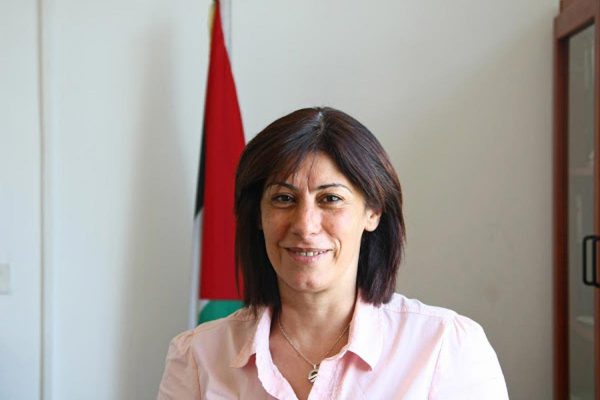
Israel re-arrests prominent Palestinian legislator Khalida Jarrar
Press TV – October 31, 2019
Israeli forces have re-arrested a prominent Palestinian legislator and senior member of the Popular Front for the Liberation of Palestine (PFLP) in an overnight raid into her home.
Khalida Jarrar, a 56-year-old member of the Palestinian Legislative Council, was arrested at 3 am local time (00:00 GMT) at her home in the central occupied West Bank city of Ramallah, located 10 kilometers north of Jerusalem al-Quds, and taken to an unknown area, local media reported on Thursday.
Her daughter Yara Jarrar said in a post on Twitter that the house was surrounded by more than 70 Israeli soldiers who arrived in 12 military vehicles.
“Mom and sister were asleep when they approached,” Yara said.
The Palestinian lawmaker has been jailed multiple times. She was released last February after spending 20 months in “administrative detention” — an illegal practice under which an individual is held without a trail.
Jarrar, a staunch advocate of Palestinian prisoners’ rights, said after her release that she would continue to campaign for the release of all Palestinian prisoners held in Israeli prisons and detention centers.
According to Samidoun, a Palestinian prisoner solidarity network, she played a leading role in supporting the education of the minor girls held there, organizing classes on human rights and in review for mandatory high school examinations when the prison authority denied the girls a teacher.
Jarrar was last arrested in July 2017, when a large number of Israeli troopers raided her home. Her husband, Ghassan, said Israeli forces also seized her computers during the raid.
Israel’s internal spy agency, Shin Bet, later announced in a statement that Jarrar was arrested along with a Palestinian activist for “promoting terror activities,” without providing any further information.
Jarrar is one of the most outspoken critics of the Israeli occupation and has repeatedly slammed the Tel Aviv regime’s atrocities against Palestinians.
The Israeli regime has been denying the lawmaker the right to travel outside the occupied Palestinian territories since 1988. She campaigned for months in 2010 before receiving the permission to travel to Jordan for medical treatment.
In August 2014, Jarrar received a “special supervision order” from the Israeli military, which ordered her to leave Ramallah to live in the West Bank city of Ariha, also known as Jericho.
However, Jarrar set up a protest tent outside the Palestinian Legislative Council in Ramallah, where she lived and worked, until the controversial order was overturned later in September that year.
According to reports, a total of 13 Palestinian lawmakers are currently held in Israeli detention facilities without any trial under the so-called administrative detention, which is a policy according to which Palestinian inmates are kept in Israeli detention facilities without trial or charge.
Some Palestinian prisoners have been held in administrative detention for up to 11 years.
Israel currently holds 495 Palestinian prisoners in administrative detention, according to ADDAMEER Prisoner Support and Human Rights Association, an NGO that works to support Palestinian political prisoners.
Israel sniper who killed Palestinian child given month’s community service

14-year-old Othman Hilles was shot dead by an Israeli soldier during the Great March of Return on 13 July 2018
MEMO | October 30, 2019
An Israeli soldier was sentenced on Monday to a month’s labour for killing a Palestinian child during a Great Return March protest in the occupied Gaza Strip.
According to a report in the Times of Israel, the soldier – whose name has been banned from publication – was convicted by a military court in relation to the death of 14-year-old Othman Hilles, who was shot during a demonstration on 13 July 2018.
It is the first conviction in connection to the huge number of casualties among Great Return March demonstrators, with Israeli forces shooting more than 7,000 with live fire since March 2018.
Despite Hilles being shot while unarmed and posing no threat to Israeli soldiers, the soldier was only convicted of “disobeying an order leading to a threat to life or health”, as opposed to manslaughter. The military court sentenced the soldier to one month’s labour, as well as a demotion.
The shooting of Hilles was captured on film, likely a factor in the soldier being brought to trial at all.
According to the Times of Israel, the soldier – a sniper from the Givati Brigade – was not convicted of a more serious offense like manslaughter “as military prosecutors were unable to collect sufficient evidence connecting his gunshot to [the boy’s death]”.
The Israeli military spokesperson confirmed the conviction in a statement, saying that the soldier “fired at a Palestinian rioter who climbed the border fence… without obtaining permission from his commanders while not following the rules of engagement or the instructions given to him earlier”.
Airbnb complicit in ‘plunder of Palestinian refugee properties’ says new report
MEMO | October 29, 2019
Online accommodation and tourism giant Airbnb has been accused of “complicity in the plunder of Palestinian refugee properties”, in a new report published last week.
According to Who Profits, an independent research centre focused on exposing corporate involvement in the “ongoing Israeli occupation of Palestinian and Syrian lands”, their new update sheds light on a “largely overlooked” dimension of Airbnb’s “complicity”.
Taking the Old City of Yafa (Jaffa) as a case study, the new report “aims to highlight the ways in which Israel confiscated and controlled Palestinian properties, leading to their privatisation”.
“Israel has transformed properties into economic assets that benefit both the state and private actors, thus undermining Palestinians’ legally enshrined Right of Return,” stated the research centre.
“Serving as a platform for showcasing the homes that once belonged to Palestinians, Airbnb plays a role in strengthening the Israeli hold over Palestinian refugee properties,” Who Profits added.
During the Nakba of 1948, more than 750,000 Palestinians were expelled from their homes and lands – property that was subsequently appropriated by the Israeli state “through legal mechanisms that formalise their confiscation and turn them into economic assets”, Who Profits explained.
According to the centre, this “privatisation” of refugee properties has benefitted market actors and Jewish Israelis, “whilst further threatening the possibility of Palestinians reclaiming ownership of their properties in the future”.
In the case of Jaffa, what was once the largest Palestinian city was almost entirely ethnically cleansed during the Nakba (five per cent of its Palestinian residents remained post-1948). Today, the Old City is one of the most popular sites in Israel for tourists, where Airbnb lists more than 40 properties.
In its new report, Who Profit notes that “while the issue of listing settlement properties [in the occupied West Bank and East Jerusalem] has gained worldwide attention, the issue of listing refugee properties ‘abandoned’ in 1948 remains largely overlooked.”
“The act of plundering and privatizing refugee properties by the Israeli state, which started during the Nakba and continues to this day, has transformed the refugee properties in Yafa into commodities that can now be listed by hosts on platforms such as Airbnb,” the report concluded.
“In serving as a platform for these properties, as well as those in settlements in the West Bank and in East Jerusalem, Airbnb is profiting from the ongoing dispossession of Palestinians.”
READ ALSO:
The Ethnic Cleansing of Palestinian Christians that nobody is talking about

Side view of the Church of the Holy Sepulcher which is opened to worship after the restoration in Jerusalem on 24 March 2017
MEMO | October 29, 2019
Palestine’s Christian population is dwindling at an alarming rate. The world’s most ancient Christian community is moving elsewhere. And the reason for this is Israel.
Christian leaders from Palestine and South Africa sounded the alarm at a conference in Johannesburg on October 15. Their gathering was titled: “The Holy Land: A Palestinian Christian Perspective”.
One major issue that highlighted itself at the meetings is the rapidly declining number of Palestinian Christians in Palestine.
There are various estimates on how many Palestinian Christians are still living in Palestine today, compared with the period before 1948 when the state of Israel was established atop Palestinian towns and villages. Regardless of the source of the various studies, there is a near consensus that the number of Christian inhabitants of Palestine has dropped by nearly ten-fold in the last 70 years.
A population census carried out by the Palestinian Central Bureau of Statistics in 2017 concluded that 47,000 Palestinian Christians are living in Palestine – with reference to the Occupied West Bank, East Jerusalem and the Gaza Strip. Ninety-eight per cent of Palestine’s Christians live in the West Bank – concentrated mostly in the cities of Ramallah, Bethlehem and Jerusalem – while the remainder, a tiny Christian community of merely 1,100 people, lives in the besieged Gaza Strip.
The demographic crisis that had afflicted the Christian community decades ago is now brewing.
For example, 70 years ago, Bethlehem, the birthplace of Jesus Christ, was 86 per cent Christian. The demographics of the city, however, have fundamentally shifted, especially after the Israeli occupation of the West Bank in June 1967, and the construction of the illegal Israeli apartheid wall, starting in 2002. Parts of the wall were meant to cut off Bethlehem from Jerusalem and to isolate the former from the rest of the West Bank.
“The Wall encircles Bethlehem by continuing south of East Jerusalem in both the east and west,” the ‘Open Bethlehem’ organisation said, describing the devastating impact of the wall on the Palestinian city. “With the land isolated by the Wall, annexed for settlements, and closed under various pretexts, only 13% of the Bethlehem district is available for Palestinian use.”
Increasingly beleaguered, Palestinian Christians in Bethlehem have been driven out from their historic city in large numbers. According to the city’s mayor, Vera Baboun, as of 2016, the Christian population of Bethlehem has dropped to 12 per cent, merely 11,000 people.
The most optimistic estimates place the overall number of Palestinian Christians in the whole of Occupied Palestine at less than two per cent.
The correlation between the shrinking Christian population in Palestine, and the Israeli occupation and apartheid should be unmistakable, as it is evident to Palestine’s Christian and Muslim community alike.
A study conducted by Dar al-Kalima University in the West Bank town of Beit Jala and published in December 2017, interviewed nearly 1,000 Palestinians, half of them Christian and the other half Muslim. One of the main goals of the research was to understand the reason behind the depleting Christian population in Palestine.
The study concluded that “the pressure of Israeli occupation, ongoing constraints, discriminatory policies, arbitrary arrests, confiscation of lands added to the general sense of hopelessness among Palestinian Christians,” who are finding themselves in “a despairing situation where they can no longer perceive a future for their offspring or for themselves”.
Unfounded claims that Palestinian Christians are leaving because of religious tensions between them and their Muslim brethren are, therefore, irrelevant.
Gaza is another case in point. Only 2 per cent of Palestine’s Christians live in the impoverished and besieged Gaza Strip. When Israel occupied Gaza along with the rest of historic Palestine in 1967, an estimated 2,300 Christians lived in the Strip. However, merely 1,100 Christians still live in Gaza today. Years of occupation, horrific wars and an unforgiving siege can do that to a community, whose historical roots date back to two millennia.
Like Gaza’s Muslims, these Christians are cut off from the rest of the world, including the holy sites in the West Bank. Every year, Gaza’s Christians apply for permits from the Israeli military to join Easter services in Jerusalem and Bethlehem. Last April, only 200 Christians were granted permits, but on the condition that they must be 55 years of age or older and that they are not allowed to visit Jerusalem.
The Israeli rights group, Gisha, described the Israeli army decision as “a further violation of Palestinians’ fundamental rights to freedom of movement, religious freedom and family life”, and, rightly, accused Israel of attempting to “deepen the separation” between Gaza and the West Bank.
Israel aims at doing more than that. Separating Palestinian Christians from one another, and from their holy sites (as is the case for Muslims, as well), the Israeli government hopes to weaken the socio-cultural and spiritual connections that give Palestinians their collective identity.
Israel’s strategy is predicated on the idea that a combination of factors – immense economic hardships, permanent siege and apartheid, the severing of communal and spiritual bonds – will eventually drive all Christians out of their Palestinian homeland.
Read: Morocco insists that Palestine is one of its core principles
Israel is keen to present the ‘conflict’ in Palestine as a religious one so that it could, in turn, brand itself as a beleaguered Jewish state amid a massive Muslim population in the Middle East. The continued existence of Palestinian Christians does not factor nicely into this Israeli agenda.
Sadly, however, Israel has succeeded in misrepresenting the struggle in Palestine – from that of political and human rights struggle against settler colonialism – into a religious one. Equally disturbing, Israel’s most ardent supporters in the United States and elsewhere are devout Christians.
It must be understood that Palestinian Christians are neither aliens nor bystanders in Palestine. They have been victimised equally as their Muslim brethren. They have also played a significant role in defining the modern Palestinian identity, through their resistance, spirituality, deep connection to the land, artistic contributions and burgeoning scholarship.
Israel must not be allowed to ostracise the world’s most ancient Christian community from their ancestral land so that it may score a few points in its fierce drive for racial supremacy.
Equally important, our understanding of the legendary Palestinian ‘soumoud’ – steadfastness – and solidarity cannot be complete without fully appreciating the centrality of Palestinian Christians to the modern Palestinian narrative and identity.
To Be or Not to Be a Jewish State, That is the Question
By Sheldon Richman | CounterPunch | October 28, 2019
Israel’s champions owe us an explanation. First, they insist that Israel is and always must be a Jewish state, by which most of them mean not religiously Jewish but of the “Jewish People” everywhere, including Jews who are citizens of other states and not looking for a new country. To be Jewish, according to the prevailing view, it is enough to have a Jewish mother (or to have been converted by an approved Orthodox rabbi). Belief in one supreme creator of the universe, in the Torah as the word of God, and in Jewish ritual need have nothing whatever to do with Jewishness. (We ignore here the many problems with this conception, such as: how can there be a secular Judaism?)
The definition of Jew has been bitterly controversial inside and outside of Israel since its founding. The point is, as anthropologist Roselle Tekiner wrote, “When the central task of a state is to import persons of a select religious/ethnic group — and to develop the country for their benefit alone — it is crucially important to be officially recognized as a bona fide member of that group.” (This is from the anthology Anti-Zionism: Analytical Reflections, which is not online and is apparently out of print. But see Tekiner’s article, “Israel’s Two-Tiered Citizenship Law Bars Non-Jews From 93 Percent of Its Lands.”)
Second, Israel’s champions insist that Israel is a democracy — indeed, the only democracy in the Middle East. They vehemently object whenever someone demonstrates how Israel-as-the-state-of-the-Jewish-People must harm the 25 percent of Israeli citizens who are not Jewish, most of whom are Arabs.
Israeli law uniquely distinguishes citizenship from nationality. The nationality of an Israeli Arab citizen is “Arab” not Israeli, while the nationality of a Jewish citizen is “Jewish” not Israeli. Are citizens of any other country distinguished in law like that? The prohibition on marriage between Jews and non-Jews is not the result of political bargaining with religious parties but of a desire to protect the Jewish people from impurity. These contortions are required by Israel’s self-declared status as something other than the land of all its citizens. Early Zionists said they wanted Palestine to be as Jewish as Britain is British and France is French — a flagrant category mistake that has had horrific consequences for the Palestinians.
The insistence by Israel’s supporters — that Israel can be both Jewish and democratic — thus is puzzling. What does it mean for Israel to be a Jewish state if that status has no real consequences for non-Jews? If all it meant was that the Star of David was on the flag, we might hear far fewer objections to Israel. But of course it means much more.
To see what it means, one has to look beyond Israel’s Declaration of Independence, Basic Law (its de facto constitution), and specific statutes, which contain language that on its face forbids discrimination against non-Jews. We should know better than to take official documents at face value. What matters in any society is the “real constitution,” the principles that underlie commonly accepted behavior. The old Soviet Union’s constitution listed freedom of the press among the “rights” of Soviet citizens, and the U.S. Constitution says that only Congress may declare war and that “the right of the people to keep and bear arms shall not be infringed.”
More pertinent, the 1917 Balfour Declaration, wherein the British government “view[ed] with favour the establishment in Palestine of a national home for the Jewish people,” also stated that “it [was] clearly understood that nothing shall be done which may prejudice the civil and religious rights of existing non-Jewish communities in Palestine, or the rights and political status enjoyed by Jews in any other country.” We know how that worked out.
So what’s the story inside Israel? (I’m not talking about the West Bank and Gaza Strip, which Israel has occupied for 52 years and where Palestinians have no rights whatever.)
After doing an interview recently about my new book, Coming to Palestine, I was challenged by a listener over my statements that the Israeli government treats Arab and Jewish criminals differently depending on whether they shed “Jewish blood” or “Arab blood” (no such distinction actually exists) and that political parties can’t call for changing Israel from a Jewish state to a state of all its citizens.
Who is right?
Regarding criminal justice, Ha’aretz columnist Gideon Levy shows anecdotally that Arab Israeli citizens who kill Jews can spend more time in prison than Israeli Jewish citizens who kill Arabs. “Arab blood is cheaper in Israel,” Levy wrote in 2014, “and Jewish blood is thicker.” He says things are the same today. Over the years, many articles have been published documenting this de facto, though not de jure, disparity. Indeed, Ha’aretz reported in 2011 that
Arab Israelis who have been charged with certain types of crime are more likely than their Jewish counterparts to be convicted, and once convicted they are more likely to be sent to prison, and for a longer time. These disparities were found in a recent statistical study commissioned by Israels Courts Administration and the Israel Bar Association…. The [unpublished preliminary] study is unique in that it is the first of its kind to be commissioned and funded in part by the courts administration, and in that it sought to examine claims by attorneys that Israeli judges deal more harshly with Arab criminals than with Jews.
Note that government discrimination against non-Jews across the spectrum of issues is not usually written into the law, although it may be. Mostly flagrantly, discrimination is legally applied to the “right of return.” People defined as Jews, no matter where they were born or live, can become Israeli citizens/nationals virtually on arrival, while Arabs driven from their ancestral homes in 1947-48 and 1967 may not go back, much less become full-rights citizens/nationals. Put concretely, I, an atheist born in Philadelphia to Jewish parents born in Philadelphia (with roots likely in the vicinity of the Black Sea), can “return” [sic] to Israel and become an Israeli citizen at once, while my friend Raouf Halaby, a naturalized American citizen born to Arab Christian parents in west Jerusalem three years before Israel was founded, may not. The only difference is that my mother was Jewish, making me, a Spinozist, a Jewish national in Israel’s eyes, and Raouf’s mother was not.
Regarding restrictions on political parties, the Basic Law: The Knesset states:
A candidates’ list [party] shall not participate in elections to the Knesset, and a person shall not be a candidate for election to the Knesset, if the objects or actions of the list or the actions of the person, expressly or by implication, include…:
1. negation of the existence of the State of Israel as a Jewish and democratic state;…
Before proceeding, let us note a conundrum. The issue I’m raising here is whether a state be both Jewish and democratic. The root of the word democracy is demos, people. So if the raison d’être of Israel is the welfare of only some of its citizens and millions of certain others who are citizens and residents of other countries, how can Israel be a real democracy? Strictly speaking, considering that word and, the law’s language legitimizes a party that “negat[es] the existence of the State of Israel as a Jewish … state” but not as a democratic state. Would the Israeli election authorities accept that distinction? I don’t think so.
In the past the Israeli Supreme Court has reversed government bans on a party’s or candidate’s inclusion in an election. Particular cases will revolve around the exact wording of a party’s mission statement or candidate’s platform, and legal language is subject to endless, unpredictable, and political interpretation. But, regardless, the government has the power to ban at its disposal, and future Supreme Courts may not be so liberal. So the threat of a ban always looms. Incidentally, a party or candidate that engages in “incitement to racism” is also ineligible to participate in elections, yet this provision has yet to be applied to Jewish parties and politicians, such as Likud and Benjamin Netanyahu, that routinely spout racist rhetoric.
Israel’s champions also deny that Arab Israelis — citizens, mind you — have grossly inferior access to land, most of which is owned by a “public” authority and the Jewish National Fund (very little is privately owned); building and village permits; public utilities; education; roads; and other government-controlled services and resources. The Israeli government has carried out programs in the Galilee and Negev, known as Judaization, from which Arab Israelis, especially Bedouins, have been cleared to make way for Jewish Israelis. Such restrictions inside Israel have the stink of apartheid.
In his book Palestinians in Israel: Segregation, Discrimination, and Democracy, Ben White documents that the Israeli government allocates resources — unsurprisingly — just as one would expect, considering that Israel by its founding doctrine is not the land of all of its citizens but only of some. This doctrine was reinforced last year in the Nation-State Law, which declares that “The right to exercise national self-determination in the State of Israel is unique to the Jewish people.”
So, as Israel’s champions say, all Israeli citizens are indeed equal. It’s just that some — those whose nationality is “Jewish” — are more equal than others — those whose nationality is “Arab” or anything else but “Jewish.”

U.S. Universities Bow to Pressure
President Trump’s Education Department now says that protesting Israel is a “hate crime.” Incredibly many colleges and universities are bowing to pressure to limit activities of the BDS movement.
By Philip Giraldi | American Free Press | October 24, 2019
The Israel lobby in the United States and its counterparts in Europe have been paying particular attention to curtailing the activities of the Boycott, Divestment, and Sanctions movement (BDS). This is because BDS, which is non-violent and based on established human rights principles, is extremely appealing to college students, who will be tomorrow’s leaders. Israel, which promotes its own largely fictional narrative about itself, is reluctant to allow any competing stories about its foundation and current activities, so it has worked hard to exclude any and all criticism of its practices on college campuses and even among students in public high schools.
Unfortunately, many colleges and universities are all too ready to compromise their principles, such as they are, whenever a representative of Israel or of Jewish groups comes calling. A popular line that has proven to be particularly effective is that Jews on campus feel threatened whenever anyone advocates for the Palestinians or Iranians, intended to convey that their civil rights are being violated.
Even if that type of allegation is actually relevant to whether or not one allows free speech and association, one wonders how violated the Palestinians and Iranians must feel when confronted by the endless stream of hostility emanating from the U.S. media and Hollywood as well as from select politicians representing both parties and the White House.
In the most recent manifestation of suppression of views critical of Israel, the federal government’s Department of Education has ordered Duke University and the University of North Carolina at Chapel Hill to reorganize the Consortium for Middle East Studies program run jointly by the two colleges based on their failure to include enough “positive” content relating to Christianity and Judaism. The demand came with a threat to suspend federal funding of Title VI Higher Education Act international studies and foreign language grants to the two schools if the curriculum is not changed.
Of course, the demands have nothing to do with Christian groups demanding inclusion and everything to do with organized Jewish pressure to present Israel in a positive light while also casting aspersions on the Jewish state’s perceived enemies in the region and also on university campuses. Anyone who has even cursory knowledge about the Middle East knows that Christians and Jews constitute only a tiny minority in the region, so the emphasis on teaching about Islam, the Arabs, and the Persians makes sense if the instruction is to have any actual relevance.
One particular event that apparently led to an earlier investigation in June launched by the Education Department consisted of a conference in March called “Conflict Over Gaza: People, Politics, and Possibilities.” A Republican congressman was outraged by the development and asked Education Secretary Betsy DeVos to investigate because the gathering was full of “radical anti-Israel bias.”
Even The New York Times acknowledged in their coverage of the story that “Betsy DeVos, the education secretary, has become increasingly aggressive in going after perceived anti-Israel bias in higher education.” Her deputy—who has served as a focal point for the effort to root out anti-Israel sentiment—is Assistant Secretary of Civil Rights Kenneth L. Marcus, who might reasonably be described as “a career pro-Israel advocate.”
Marcus is the founder and president of the Louis D. Brandeis Center for Human Rights Under Law, a foundation that he has used to exclusively defend the rights of Jewish groups and individuals against BDS and other manifestations of Palestinian pushback against the Israeli occupation of their country. He has not hesitated to call opponents anti- Semites and has worked with Jewish students to file civil rights complaints against college administrations, including schools in Wisconsin and California. In an op-ed that appeared, not surprisingly, in The Jerusalem Post, he observed that even when student complaints were rejected, they created major problems for the institutions involved. “If a university shows a failure to treat initial complaints seriously, it hurts them with donors, faculty, political leaders, and prospective students.”
Last year Marcus reopened an investigation into alleged anti-Jewish bias at Rutgers University that the Obama administration had closed after finding that the charges were baseless. Marcus indicated that the re-examination was called for, as his office in the Education Department would henceforth be using the State Department definition of anti-Semitism that includes “denying the Jewish people their right to self-determination,” making much criticism of Israel a hate crime.
In the current North Carolina-Duke case, DeVos and Marcus expressed concern over course content that had “a considerable emphasis placed on understanding the positive aspects of Islam, while there is an absolute absence of any similar focus on the positive aspects of Christianity, Judaism, or any other religion or belief system in the Middle East.” The complaint called for balancing content relating to “the historic discrimination faced by, and current circumstances of, religious minorities in the Middle East, including Christians, Jews, Baha’is, Yazidis, Kurds, Druze, and others.”
Zoha Khalili, a staff lawyer at Palestine Legal, explained how the message coming from Washington is actually quite simple and has nothing to do with balance: “They really want to send the message that if you want to criticize Israel, then the federal government is going to look very closely at your entire program and micromanage it to death. . . . [It] sends a message to Middle Eastern studies programs that their continued existence depends on their willingness to toe the government line on Israel.”
The possible consequences are very clear. If you are an educational institution that criticizes Israel in any way, shape or form, you will lose any funding you receive from the federal government. The move has nothing to do with budgetary demands or the national security of the United States or even with the efficacy of the programs that are being funded. It has everything to do with promoting Israeli interests. That a demonstrated and outspoken Israeli advocate like Marcus should be placed in a key position to decide who gets what based on his own biases is a travesty, but it is something that we should all be accustomed to by now, as there is apparently no limit to what the Trump administration is willing to do for Israel and for that monstrous country’s powerful, wealthy, and incessantly vocal supporters in the United States.
Iranian stem cell scientist is being ‘used as a political pawn by US neoconservatives’
Press TV – October 26, 2019
Dr. Masoud Soleimani, who has been illegally imprisoned in the United States since October last year, is being used as a political pawn by US neoconservatives, Zionists who are hostile towards the Islamic Republic of Iran, according to Dr. Kevin Barrett.
Barrett said that Dr. Soleimani “should be protected by habeas corpus,” which is a writ requiring a person under arrest to be brought before a judge or into court, especially to secure the person’s release unless lawful grounds are shown for his detention.
Barrett, an author, journalist and radio host with a Ph.D. in Islamic and Arabic Studies, made the remarks in an interview with Press TV while commenting on the year-long incarceration by police in the United States.
Dr. Soleimani’s family has condemned the imprisonment of the Iranian stem cell scientist as a “hostile” and “inhumane act” meant to pressure Iran’s government, calling for his immediate release.
Speaking during a press briefing at Press TV’s headquarters in Tehran on Tuesday, Soleimani’s wife, Dr. Mahnaz Rabeie, censured the US for keeping the scientist behind bars for an entire year without any fair trial.
Rabeie rejected a claim that her husband had been arrested for violating US sanctions against Iran, saying the incarceration was politically motivated.
Commenting on this Dr. Barrett said, “Dr. Masoud Soleimani, who is a respected Iranian biological scientist, was lured to the United States in order to set him for a completely bogus arrest on false pretenses for supposedly violating sanctions on Iran.”
“And he has been held without any due process, essentially disappeared in this banana republic for a year now. His family is naturally in a kind of panic and suffering. And this is tremendous injustice. It is obviously purely political,” he stated.
“What he is accused of doing is not itself a violation of sanctions. He is accused of having been involved in bringing of a small amount of non-commercial biological material — with no weapons use whatsoever — to Iran, a small amount of experimental biological material and that for medical research, and medical materials like that are specifically excluded from Iran sanctions. So that’s probably why they are not bringing him to trial because they don’t have a case,” he noted.
“And it just illustrates how the rule of law has gone the wayside since the false flag event of September 11, 2001 which was specifically designed not only to create permanent hostility against the entire Middle East region on behalf of Israel but also to take down the United States constitution and the rule of law so that the gangster oligarchs can do anything they want without having to be worried about any legal issues,” he said.
“And so Dr. Soleimani who is a totally respected, an utterly clean man with a perfect record, no criminal record whatsoever, not even accused of doing anything involved in politics or US-Iranian relations, he is only accused of shipping a very small amount of experimental medical material for medical research with no possible nefarious usage. He’s being made a political pawn to this neoconservative hostility towards Iran, the neoconservative Zionists, who are allied with the Netanyahu Likudnic element of the Israeli power structure are dedicated to stir this endless hostility between the United States and Iran,” Dr. Barrett said.
“Dr. Soleimani should be protected by habeas corpus, that is you just can’t disappear people in a country that respects human rights; you have to charge them quickly with something and given the chance to defend themselves. And they are not doing that. They are just kidnapping him, presumably to try to put pressure on Tehran and possibly to use him in some kind of a prisoner swap,” he observed.
Dr. Soleimani arrived in the US on October, 22, 2018 with a visa issued upon an invitation by the Mayo Clinic in Minnesota to lead a research program on the treatment of stroke patients.
He was, however, arrested by the FBI, which had a secret indictment, upon arrival at the Chicago airport. His visa was canceled and he was transferred to a jail in Atlanta, Georgia.
Soleimani’s whereabouts remained unknown for up to a week until the Chicago airport police claimed that the professor had returned to Iran on a Qatari flight, according to statement issued by his family on Tuesday.
Prosecutors have accused Soleimani, who works in stem cell research, hematology and regenerative medicine, and two of his former students of conspiring and attempting to export growth hormone vials from the US to Iran without authorization, in violation of American sanctions.
They had secretly obtained an indictment against Soleimani in June 2018, prior to his arrival on US soil.
Lawyers for the scientists say no specific license was required for the attempted transport because the hormones are medical materials and that bringing them to Iran for non-commercial purposes does not amount to exporting goods.
The hormone, which is a form of synthetic protein, is not banned in the US or Iran and is being used exclusively for medical research.
Israel Main Beneficiary of Middle Eastern Crises – Syrian Deputy Foreign Minister
Sputnik – 26.10.2019
BAKU – Israel has been the main beneficiary of the Syrian war and other crises across the Middle East, and Damascus will stand by its sovereignty over the Israeli-occupied Golan Heights, Syrian Deputy Foreign Minister Faisal Mekdad said on Saturday speaking at the 18h Summit of the Non-Aligned Movement (NAM) in Baku.
“We all know that the first beneficiary of what is happening in Syria and the region is the Israeli occupation that has been going on for decades with no punishment. Not only did Israel occupy the Palestinian territories and Syria’s Golan Heights and parts of Lebanon in addition to its crimes against occupied refugees, but it [Israel] also conducted unprecedented assaults on my country and other countries in the region,” Mekdad said.
In the Syrian politician’s opinion, this situation might lead to “unexpected scenarios and threats to international peace and security.”
“Therefore we reiterate that the terrorist war against Syria and the repeated attacks on its territorial integrity will not make us abandon our struggle based on the international law and the relevant UN Security Council resolutions,” Mekdad added.
He emphasized that the Golan Heights remains a Syrian territory, and it is not up to the United States to decide who it belongs to.
Israel established military control over the Golan Heights in 1967 and annexed it in 1981, albeit the annexation was never recognised by the United Nations. The Golan Heights is widely seen as an exceptionally important strategic area, chiefly due to the fact that it offers a clear view of both Syria and Israel.
In March, US President Donald Trump declared endorsement of Israeli sovereignty over the Golan Heights.
The NAM was established in 1961 to unite developing states that are not part of any collective defence pacts in the interest of any major power. Today, it is the second-largest international organisation after the United Nations with 120 member states. It was formed in the wake of decolonisation processes in Africa, Asia and other parts of the world around the values of independence, equality, sovereignty and territorial integrity.
Trump seeks grand bargain with Erdogan
By M. K. BHADRAKUMAR | Indian Punchline | October 24, 2019
The morning after a summit meeting often holds surprises. Turkey lost no time to follow up on President Recep Erdogan’s hugely successful but “difficult” talks with his Russian counterpart Vladimir Putin in Sochi on Tuesday.
On Wednesday itself, Ankara formally conveyed to Washington Erdogan’s decision that the Turkish military is stopping combat and is ending the offensive in Syria, codenamed Peace Spring, and making the ceasefire agreed with the United States last week during the visit by Vice-President Mike Pence to be permanent.
President Trump promptly reciprocated by lifting the US sanctions against Turkey imposed on October 14 in response to Peace Spring. Trump, characteristically enough, claimed credit for “an outcome created by us, the United States, and nobody else, no other nation.”
The Turkish intimation comes handy for Trump to scatter critics who predicted apocalypse now in Syria. Trump sounded confident that the ceasefire will hold.
Enter General Mazloum. Trump disclosed that he spoke to the general who is the military supremo of the YPG (Syrian Kurdish militia), before making his announcement on the lifting of sanctions against Turkey.
Trump hailed the Kurdish chieftain’s “understanding and for his great strength and for his incredible words today to me.” The optics works just perfect for Trump to push back at critics who allege that he’s thrown the Kurds under the bus.
But Trump also disclosed that he is on to something bigger. One, that Gen. Mazloum has assured him that “ISIS is under very, very strict lock and key, and the detention facilities are being strongly maintained.” The Kurdish-held regions have detention camps holding thousands of ISIS cadres and their families.
Two, Trump recalled, “We also expect Turkey to abide by its commitment regarding ISIS. As a backup to the Kurds watching over them, should something happen, Turkey is there to grab them.” Interestingly, Trump also called on European countries to accept the ISIS prisoners.
In the infamous “undiplomatic” letter to Erdogan a few days ago, Trump had voiced an audacious idea that Gen. Mazloum could be a potential negotiator with Erdogan. To quote Trump, “General Mazloum is willing to negotiate with you (Erdogan), and he is willing to make concessions that they would never have made in the past. I am confidentially enclosing a copy of his letter to me, just received.”
Yet, General Mazloum is Turkey’s most wanted terrorist who worked in the ranks of the separatist PKK for nearly 3 decades and it is necessary to connect some dots at this point.
Looking back, when Erdogan came to power as prime minister in 2003, he had unfolded a bold vision on the Kurdish problem via a negotiated political reconciliation. His approach was encouraged by the US. But he ran into headwinds and eventually lost his sense of direction.
To recap further, in late 2012 Erdogan went public with a dramatic announcement that top Turkish officials had begun negotiations with the PKK leader Abdullah Öcalan who was captured in 1998 and is undergoing life imprisonment on Imrali island in the Sea of Marmara off Istanbul.
Öcalan responded in March 2013 to Erdogan’s overture by calling for a cease-fire, and PKK guerrillas actually began to withdraw from Turkey. As peace talks faltered, however, the cease-fire collapsed in July 2015.
But, significantly, Öcalan has continued to advocate for a negotiated agreement to bring about Kurdish autonomy within Turkey. Now, isn’t it an interesting coincidence that Gen. Mazloum, Trump’s interlocutor among the Syrian Kurdish leadership, also happens to be the adopted son of Öcalan?
Gen. Mazloum is likely to visit Washington in a near future; so is Erdogan. Trump is promoting Kurdish reconciliation with Turkey. The last fortnight’s developments on the diplomatic front have removed the single biggest source of tension in the US-Turkey relations — US’ alliance with YPG and the presence of Kurdish fighters along Syria’s border with Turkey.
Curiously, Trump also said in his announcement yesterday, “We’ve secured the oil, and, therefore, a small number of U.S. troops will remain in the area where they have the oil. And we’re going to be protecting it, and we’ll be deciding what we’re going to do with it in the future.”
Most of Syria’s oil comes from Eastern Syria, which is now under the control of the US-backed Kurdish militia or YPG. (Before the war, Syria produced 387,000 barrels per day of which 140,000 bpd were exported.)
In February last year, Syrian forces backed by Russian mercenaries made a serious incursion in the area but retreated in disarray after suffering heavy casualties following merciless US air strikes. Relative calm prevailed in the region since then.
Evidently, in the geopolitics of Syrian oil, US, Turkey and the Kurds can have “win-win” partnership, which in turn can also provide underpinning for an enduring political reconciliation between Turks and Kurds.
Trump said Washington is mulling over Syria’s oil reserves. Meanwhile, he’s put across a tantalising proposition for Erdogan to ponder over. It demands a leap of faith on Erdogan’s part, but it could be rewarding.
Erdogan has allowed Öcalan access to his family and lawyers and even to relay messages to Kurdish activists. Erdogan knows that if ever he is to solve the 30-year-long conflict with the PKK, he may have to do so with the involvement of Öcalan.
In December 2017, Erdogan had deputed Turkey’s spy chief and trusted aide Hakan Fidan to Imrali island for talks with Öcalan. Two Kurdish MPs were also allowed to visit the PKK leader.
No doubt, Öcalan is a bridge between the Kurds and Turks. And in today’s circumstances, Öcalan can as well become a bridge between his adopted son Gen. Mazloum and Erdogan.
While accompanying Pence to Ankara last week, state secretary Mike Pompeo had hinted that the US is looking for an expanded regional partnership with Turkey and if Erdogan works “alongside” Trump, it “will benefit Turkey a great deal.”
Countering Iran’s influence / presence in Syria and Iraq is the US policy. The decision to transfer the US troops from Syria to Iraq and the continued stationing of troops in Al-Tanf base highlights that cutting off Iran’s land route to Syria and Lebanon continues to be a priority.
Broadly, many challenges lie ahead in Syria and the US realises that Turkey is irreplaceable as regional partner. Trump always thought of Erdogan as someone he can do business with.
Ankara will welcome a grand bargain between Erdogan and Trump and regards the US’ backing for a Turkey-led “safe zone” on Syrian territory as a step in the right direction. In the final analysis, however, for all of this to happen, one way or another, Turkey’s tensions with Kurds should ease.
Featured Video

Seyed M. Marandi: US-Iran War Inevitable: Kuwait and Bahrain May Fall
or go to
Aletho News Archives – Video-Images
From the Archives
USS Liberty Massacre: A Pivotal Moment in the Hostile Takeover of America
By Kevin Barrett | Crescent | Dhu al-Qa’dah 24, 1445
In corporate America, hostile takeovers are commonplace. They occur when an aggressor—a larger corporation or rich individuals—seizes control of a smaller corporation without asking permission.
What few recognize is that the United States itself has been subjected to a hostile takeover. Since the aggressor, the illegitimate settler colony known as “Israel,” is much smaller than the US, the takeover has necessarily been surreptitious.
As of June, 2024, Israel’s gradual takeover of the US has become obvious and undeniable—a proverbial “elephant in the living room.” … continue
Blog Roll
 Aletho News
- Seyed M. Marandi: US-Iran War Inevitable: Kuwait and Bahrain May Fall
- Leaders Condemn Ansarallah Attack on Saudi Arabia While Ignoring Illegal War Against Yemen
- Leaked: Britain’s Covert Iraqi Psyops Network
- Yemeni Armed Forces Warn Airlines Against Using Saudi Airports, Exempt Mecca and Medina
- Iran security chief says powers greater than US tried to conquer Iran but ended in ‘dustbin of history’
- Europe’s mounting social chaos… chickens coming home to roost for proxy war against Russia
- US-Russia Diesel Deal Becomes Massive Defeat for Ukraine
- Hormuz and the Looming Economic Catastrophe
- Dhubab offensive, media blitz and the rapid unraveling of Saudi-backed coalition’s new gambit
- Putin Conveys to Trump Iran’s Vision on Possible Conflict Resolution – Kremlin
- If Americans Knew
- Gaza: Ceasefire Anniversary Marks Year of Failed Promises
- The American Conservative: Mike Huckabee Should Resign
- A C-Section in Shackles: A Palestinian Woman’s Harrowing Birth in Israeli Detention
- ‘He’s Desperate’: AIPAC Begins Spending Against Abdul El-Sayed to Boost Mike Rogers:
- Trump, Hormuz, and the Looming Economic Catastrophe
- For three years, Israel has killed a child in Gaza every 71 minutes – Daily Update
- Israeli forces kill another child in Gaza – Daily Update
- Gaza ceasefire exists in name only, say more than 100 organizations
- Nearly 2 Million in Gaza Need Urgent Shelter Assistance as Winter Looms: IOM Chief Warns
- Suppressing Palestinian resistance: US charity under fire for AI monitoring of Gaza classrooms
- No Tricks Zone
- Germany’s Green Energy Debacle: High Energy Costs Force Kahla Porzellan to Close After 182 Years!
- New Study: 50 Years Of The Most Aggressive ‘Net Zero’ Policies Can Only Affect The Global Climate By 0.03°C
- US September “Heat” Was No Record…Many Records Set Decades Ago
- Latest European Green Energy Debacle; Portugal’s Largest Flagship Solar Park Insolvent!
- Green Energy Debacle: German Expert Professor Fritz Vahrenholt Warns Of Severe Economic And Social Consequences
- Two More Paleo Reconstructions Affirm Meters-Higher Sea Levels Across Ireland, Brazil 7000-6000 Years Ago
- New Study: Earth And Venus Surface Warmth Largely Explained By Convection And Lapse Rate, Not CO2 Or Radiation
- 2025 Nature Paper Claiming Worsening Global Drought Gets RETRACTED …Heavily Flawed
- New Study: ‘Global Drought Shows No Detectable Recent Acceleration Under Climate Warming’
- Economic Masterminds: German Socialists Suggest Taxing Productivity Gains Stemming From Using AI

