Lebanon won’t survive with Palestinian, Syrian refugees: Auon
MEMO | May 10, 2019
Lebanon will never survive if half a million Palestinian refugees and 1.6 million Syrian refugees remain in the country, the Lebanese president, Michel Aoun, said yesterday.
Aoun’s remarks came during a meeting held at the presidential palace in the Lebanese capital of Beirut with a delegation from the Middle East Council of Churches (MECC), headed by its secretary general Souraya Bechealany.
Aoun called on the MECC to help the Lebanese government resolve the Syrian refugees’ issue “by persuading Western countries to accept the refugees return to their countries as soon as possible.”
“Israel has declared that the Palestinian refugees would remain where they are,” he pointed out, warning that if the refugees remained in Lebanon, “its demographics would change completely.”
There are 174,422 Palestinian refugees currently living in 12 camps and 156 Palestinian communities across Lebanon’s five governorates, according to a report by the Palestinian Central Bureau of Statistics (PCBS) in 2017.
Lebanon – with an estimated population of 4.5 million – complains of the refugees’ burden it has been facing since the start of the Syrian civil war in 2011.
According to the UN High Commissioner for Refugees (UNHCR), the number of Syrian refugees in Lebanon reached 997,000 by the end of November 2017, excluding the Syrians who are not registered with UNHCR.
Bennett: Jewish ‘assimilation’ is a ‘disaster’ for Israel
![Israeli Education Minister, Naftali Bennett [HNM News/Facebook]](https://i2.wp.com/www.middleeastmonitor.com/wp-content/uploads/2018/09/Naftali-Bennett15230739_1864323940467816_2270573291150794336_n.jpg?resize=1200%2C800&quality=75&strip=all&ssl=1)
Outgoing Minister of Education and Diaspora Affairs, Naftali Bennett [HNM News/Facebook]
MEMO – May 9, 2019
In what appears to be an admission of the growing divide between Israel and Jews living outside the country, the outgoing Minister of Education and Diaspora Affairs Naftali Bennett warned against what he sees as “assimilation” of Jews with communities around the world, describing it as “one of the greatest disasters in the history of the Jewish people”.
The remarks, which were reported by Arutz Sheva, were made at the annual International Bible Quiz in Jerusalem, which takes place each year on Israel’s Independence Day. It’s reported that Prime Minister Benjamin Netanyahu was in audience.
Expressing grave concern over Jewish “assimilation”, Bennett who heads the New Right party with Ayelet Shaked, is reported saying: “The State of Israel has experienced the most prosperous and successful era it has known, but during these very days, one of the greatest disasters in the history of the Jewish people is taking place – we are losing millions of our Jewish brothers and sisters in the diaspora. Like an iceberg melting away, so many of our people are slipping away before our eyes.”
He called on the state of Israel to act “without delay, with all [our] strength, creativity, and determination, in order to save [our] brothers and sisters, members of the Jewish people around the world, from assimilation and anti-Semitism.”
Bennet insisted that the task of stemming the tide of Jewish “assimilation” needed to be “the project of the state of Israel”, explaining that “whenever we needed financial or political assistance, the Jews of the world mobilised to help”.
Bennet concluding his addressing saying: “We have a duty to ensure that we will be a sovereign and united Jewish state for all eternity.”
13 Israeli Violations against Journalists in April

By Tareq Astal | IMEMC News & Agencies | May 9, 2019
In its monthly report on Israeli violations against journalists, published today, WAFA said that 11 journalists were injured from rubber-coated metal bullets, live bullets and tear gas canisters, fired by Israeli soldiers, as well as from severe beatings. At the same time, one journalist was detained and another had his press papers seized.
On April 3, the Jerusalem District Court rejected an appeal filed by Mustafa Kharouf, a photographer with Turkish Anadolu news agency, to release him from prison so that he can be with his family in Jerusalem, and kept him incarcerated until May 5, the date he is to be expelled to Jordan. (Kharouf’s attorney got an injunction from the Israeli High Court on May 5, stopping his expulsion until it hears his plea.)
On April 5, Israeli forces shot Amad News Agency correspondent Safinaz al-Louh, with a teargas grenade, in her right foot, and Noor News photographer Mohammad Issa with a gas bomb, in his leg, while covering the March of Return protests, east of the Gaza Strip.
On April 10, Israeli forces raided the home of Ra’ed al-Sharif, in Hebron, holding his family in one room before embarking on a thorough search of the house and tampering with its contents.
On April 12, Israeli forces shot Filistin al-Hadath photographer and correspondent Ahmed al-Zurei, with a rubber-coated bullet, in the abdomen, while he was covering protests east of al-Bureij, in the central Gaza Strip.
On April 19, freelance photographer Abdel Rahim al-Khatib was hit with a rubber-coated bullet, in the left thigh, and Reuters photographer Bassam Massoud with a gas grenade, behind his left ear. A similar bomb injured Watan Radio reporter Mohammad al-Louh and freelance photographers Mahmoud Badr, in the left foot, and Ahmad Washah, in the head, while covering protests east of the Gaza Strip.
In the same day, Xinhua photographer Nidal Shtayeh and WAFA photographer Ayman Noubani were shot with rubber-coated metal bullets, in their thighs, while covering the Israeli army’s crackdown on the weekly protests in Kufr Qaddoum village, east of Qalqilia, in the north of the West Bank.
On April 26, Israeli forces targeted Shihab News Agency photographer Ramadan al-Sharif, with a live bullet that hit him in his right foot, while he covered protests east of Rafah, in southern Gaza.
The daily attacks on journalists in the West Bank are part of an ongoing Israeli policy against their activities and their role in covering the practices and violations committed by these forces, against Palestinian civilians and property.
Pandering to Israel Means War With Iran
By Philip Giraldi | Strategic Culture Foundation | May 9, 2019
The United States is moving dangerously forward in what appears to be a deliberate attempt to provoke a war with Iran, apparently based on threat intelligence provided by Israel. The claims made by National Security Advisor John Bolton and by Secretary of State Mike Pompeo that there is solid evidence of Iran’s intention to attack US forces in the Persian Gulf region is almost certainly a fabrication, possibly deliberately contrived by Bolton and company in collaboration with Prime Minister Benjamin Netanyahu. It will be used to justify sending bombers and additional naval air resources to confront any possible moves by Tehran to maintain its oil exports, which were blocked by Washington last week. If the US Navy tries to board ships carrying Iranian oil it will undoubtedly, and justifiably, provoke a violent response from Iran, which is precisely what Bolton, Pompeo and Netanyahu are seeking.
It would be difficult to find in the history books another example of a war fought for no reason whatsoever. As ignorant as President Donald Trump and his triumvirate or psychotics Bolton, Pompeo and Elliott Abrams are, even they surely know that Iran poses no threat to the United States. If they believe at all that a war is necessary, they no doubt base their judgment on the perception that the United States must maintain its number one position in the world by occasionally attacking and defeating someone to serve as an example of what might happen if one defies Washington. Understanding that, the Iranians would be wise to avoid confrontation until the sages in the White House move on to some easier target, which at the moment would appear to be Venezuela.
The influence of Israel over US foreign policy is undeniable, with Washington now declaring that it will “review ties” with other nations that are considered to be unfriendly to the Jewish state. For observers who might also believe that Israel and its allies in the US are the driving force behind America’s belligerency in the Middle East, there are possibly some other games that are in play, all involving Benjamin Netanyahu and his band of merry cutthroats. It is becoming increasingly apparent that foreign politicians have realized that the easiest way to gain Washington’s favor is to do something that will please Israel. In practical terms, the door to Capitol Hill and the White House is opened through the good offices of the American Israel Public Affairs Committee (AIPAC).
Israel is desperate to confirm its legitimacy in international fora, where it has few friends in spite of an intensive lobbying campaign. It seeks to have countries that do not have an embassy in Israel to take steps to establish one, and it also wants more nations that do already have an embassy in Tel Aviv to move to Jerusalem, building on the White House’s decision taken last year to do just that. Not surprisingly, nations and political leaders who are on the make and want American support have drawn the correct conclusions and pander to Israel as a first step.
One only has to cite the example of Venezuela. Juan Guaido, the candidate favored by Washington for regime change, has undoubtedly a lot of things on his plate but he has proven willing to make some time to say what Benjamin Netanyahu wants to hear, as reported by the Israeli media. The Times of Israel describes how “Venezuela’s self-proclaimed leader Juan Guaido is working to re-establish diplomatic relations with Israel and isn’t ruling out placing his country’s embassy in Jerusalem, according to an interview with an Israeli newspaper published Tuesday.”
One would think that Guaido would consider his interview sufficient, but he has also taken the pandering process one step farther, reportedly displaying huge video images of the flags of both Israel and the United States at his rallies.
This deference to Israel’s interests produced an almost immediate positive result with Netanyahu recognizing him as the legitimate Venezuelan head of state, followed by an echo chamber of effusive congratulations from US (sic) Ambassador to Israel David Friedman, who praised the Jewish state for “standing with the people of Venezuela and the forces of freedom and democracy.” Donald Trump’s esteemed special envoy for international negotiations, Jason Greenblatt, also joined in, praising the Israeli government for its “courageous stand in solidarity with the Venezuelan people.”
A similar bonding took place regarding Brazil, where hard right conservative leader Jair Bolsonaro was recently elected president. Netanyahu attended the Bolsonaro inauguration last December and the two men benefit from strong support from Christian Evangelicals. Bolsonaro repaid the favor by promising that Israel would be his first foreign trip. In the event he went to Washington first, but the state visit to Israel took place in April, just before that country’s elections, in a bid to demonstrate international support for Netanyahu.
Brazilian Jews constitute a wealthy and powerful community which reacted positively to Bolsonaro’s pledges to fight corruption and high crime rates while also repairing a struggling economy. They also appreciated his stance on Israel. He committed to moving the Brazilian embassy to Jerusalem from Tel Aviv, though he has backpedaled a bit on that pledge. And he also promised to shut the Palestinian embassy in the capital Brasilia. He famously asked and answered his own question, “Is Palestine a country? Palestine is not a country, so there should be no embassy here. You do not negotiate with terrorists.”
Bolsonaro’s pro-Israel anti-Venezuela credentials also endeared him to Donald Trump on a visit to Washington in mid-March which was described by the media as a “love fest.” The Brazilian leader’s visits to Israel and the US as well as Guaido’s promises to Israel reveal that the foreign policies of Tel Aviv and Washington have become inextricably intertwined, with supplicant nations and politicians wisely seeking to do homage to both regimes to gain favor. It is a development that would shock the Founding Fathers, most particularly George Washington, who warned against entangling alliances, and it means that American interests will be seen through an Israeli prism, a reality that has already produced very bad results.
Trump’s “Deal of the Century” Will Use Sanctions, Military Threats to Force Palestinian Acceptance
By Whitney Webb | MintPress News | May 8, 2019
The Israeli newspaper Israel Hayom, owned by top Trump donor Sheldon Adelson, has published in Hebrew a leaked draft of the Trump administration’s “Deal of the Century” for the Israel-Palestine conflict. The draft was given to the newspaper by an official from Israel’s Foreign Ministry, which is currently headed by Israeli Prime Minister Benjamin Netanyahu. The plan, which has been drafted by President Donald Trump’s son-in-law Jared Kushner and Jason Greenblatt, is expected to be released this June after the conclusion of the Muslim holy month of Ramadan, according to Mondoweiss.
The draft plan published by Israel Hayom, while in keeping with many of the details that have been leaked to the press in past weeks and months, contains several new and troubling claims, including the Trump administration’s plan to force Palestinian leadership to accept the plan through threats of economic strangulation and military force.
For instance, if Palestinian leadership — such as the Palestinian Authority (PA) or Hamas — rejects the Trump administration’s “peace plan,” the United States will respond aggressively by ensuring that “no country in the world transfer money” to Palestine, which would apparently be accomplished through U.S. sanctions. With Palestine’s economy and the livelihood of many Palestinians dependent on foreign aid, such an act would amount to economic strangulation of the over 6 million Palestinians in the West Bank and around 2 million Palestinians in the Gaza Strip.
Furthermore, if the PA accepts the plan but Gaza’s leadership — i.e., Hamas — rejects it, “the U.S. will back Israel to personally harm leaders of Hamas and Islamic Jihad” and the U.S. will hold Hamas fully responsible for any future “round of violence between Israel and Hamas,” regardless of the circumstances that initiate that violence. In other words, the Trump administration is willing to join a future war against the embattled Gaza Strip, described by the United Nations as an open-air prison that is already largely unlivable for its inhabitants and under a full blockade, if Hamas rejects the Trump administration’s plan for the Israel-Palestine conflict.
Thus, the draft plan states that the Trump administration’s tactic of negotiating with the Palestinians involves a combination of threats of economic destruction and military destruction aimed at bullying an already dispossessed people into accepting a plan that clearly favors their occupiers.
Creating a “new” Palestine
In addition to the Trump administration’s apparent game plan to force Palestinian compliance with the so-called “Deal of the Century,” the plan also calls for the creation of a demilitarized state of “New Palestine” that would be incredibly small, as the document calls for the Israeli annexation of the entirety of the Jordan Valley (around 30 percent of the West Bank) and the annexation of all illegal Israeli settlements in the West Bank, which now cover well over half of what international law maintains is Palestinian territory.
This “new” state would be showered in aid from several countries, including the Gulf monarchies, European nations and the United States, allegedly amounting to $30 billion over the next five years. Most of the funding, according to the plan, will come from oil-producing Gulf states like Saudi Arabia. It is unclear whether “New Palestine” would be considered a sovereign state and whether it would be allowed to apply for full membership in the United Nations.
While the plan would allow “New Palestine” access to Jerusalem as a shared, undivided capital with Israel, Palestinians would be responsible for paying the state of Israel for their security because it would be forbidden from having its own army. In other words, Palestinians would be forced to pay the Israel Defense Force (IDF), the military force that has occupied the West Bank for over 50 years, to “protect” them despite the fact the Palestinians are regularly extrajudicially murdered by IDF soldiers. However, the apparent “concession” offered by the Trump administration in this regard would be allowing the “New Palestine” to maintain a police force with “light weaponry.”
In addition, the plan apparently concedes to some past Palestinian demands, such as the release of Palestinian prisoners over a three-year period. However, the draft of the plan published by Israel Hayom does not address Palestinian refugees or the right of return of those refugees in any capacity.
Outsourcing the destruction of Palestine
The fact that this draft of the plan was released to the Netanyahu- and Trump-aligned Israel Hayom by Israel’s Foreign Ministry — itself run by Netanyahu — strongly suggests that Israel’s government was ready to make the details of the plan known to the Israeli public. The draft, which was dismissed by at least one unnamed White House official as “speculative,” reveals an Israeli-centric plan that will likely be rejected by both Israeli right-wing hardliners and a majority of Palestinians.
However, Israel’s leadership is likely to accept the plan only because they know that the Palestinians will reject it, allowing them to blame the failure of the Trump administration-brokered “peace process” on the Palestinians.
Indeed, Dr. Riyad Mansour, the Palestinian ambassador to the United Nations, affirmed on Tuesday that the PA considered the “peace plan” as merely a pretext to a long-planned West Bank land grab by Israel and planned to reject the so-called “Deal of the Century. “If what we read is what is to be expected from this plan, then it seems that the objective of it is not a solution to the conflict, but to give pretext to the Israeli government to annex other portions [of the West Bank],” Mansour recently stated at UN headquarters.
Mansour added:
Some in the [Trump] administration, they think, ‘Yes, what will help peace is break the legs of the Palestinians, break one arm and five teeth, and when they are on the ground they will come crawling to you for anything you offer them.’ Those who think that way don’t know the Palestinians.”
The Palestinian plan to reject the Trump administration’s deal is no secret, with the outgoing French ambassador recently describing the plan as “dead on arrival.” This fact of assured rejection makes all the details of the plan irrelevant, save for the part of the plan that deals with “penalties” for the Palestinians if they reject the plan.
Those penalties should draw the most concern as the “peace plan” is made public, as it harkens coming U.S. military involvement in a future war between Israel and Gaza –regardless of whether that war is initiated by Gazans or Israelis — as well as extreme economic hardship on the West Bank through U.S. sanctions.
Netanyahu has made no secret of the fact that he does not want the two-state solution provided in this U.S. plan, even if the Palestinian “state” is demilitarized and minuscule. However, if the Palestinians reject the plan — as he knows they will — the United States will do the work of further destroying Palestine for him by committing to a future U.S. invasion of Gaza and to the economic strangulation of the West Bank. These “penalties” will allow Israel’s government to blame Palestinians for their own foreign-imposed hardship while giving Netanyahu’s government leeway to fulfill its long-standing goal of “conquering” the Gaza Strip and completely annexing the entirety of the West Bank.
As Mansour noted, the “peace plan” is indeed a pretext, but for far more than a land grab. Instead, it is a pretext for outsourcing the destruction of Palestine to the United States under the cover of a “peace process” that no diplomats — in Israel, Palestine or elsewhere — have at any point taken seriously since the early days of the Trump administration.
Whitney Webb is a MintPress News journalist based in Chile. She has contributed to several independent media outlets including Global Research, EcoWatch, the Ron Paul Institute and 21st Century Wire, among others. She has made several radio and television appearances and is the 2019 winner of the Serena Shim Award for Uncompromised Integrity in Journalism.
Hamas condemns Israel’s bombing of media offices in Gaza
Palestine Information Center – May 5, 2019
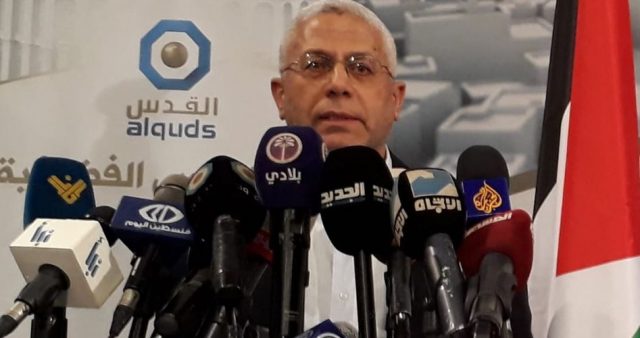
The Hamas leader Raafat Murra on Sunday decried the Israeli occupation army’s targeting of several media offices in the ongoing aggression on the Gaza Strip.
Murra condemned the Israeli attack on the Anadolu Agency office and described it as “terrorism” and “deliberate crime”.
He affirmed that Hamas fully supports all Palestinian, Arab, and international media platforms which cover the events in Gaza objectively and professionally.
Israeli warplanes on Saturday bombed the Anadolu Agency office and the Palestinian prisoners media office with several missiles during large-scale aerial attacks on Gaza.
Iran stops selling excess uranium, will enrich to higher level in 60 days unless Europe acts
RT | May 8, 2019
Iran’s President Rouhani announced a gradual scale-down of the country’s nuclear commitments. Tehran refused to dispose of excessive heavy water and uranium, and said additional measures will be taken over periods of 60 days.
The deal signed with Iran by leading world powers and the EU, offered Tehran a relief of sanctions in exchange for voluntarily restrictions of its nuclear industry. Last year the US broke its commitments under the deal and has been seeking to cripple Iran’s economy with economic sanction. Iran nevertheless remained faithful to its commitments as other signatories pledged to keep the deal alive by withstanding to US pressure.
On Wednesday, President Hassan Rouhani announced on national television that Iran will be suspending some of its commitments under the deal, which is also called Joint Comprehensive Plan of Action (JCPOA), due to continued US violation and a failure of European signatories to compensate for the damage done by Washington.
As of now, Tehran will no longer sell off excessive enriched uranium and heavy water, the Iranian president said. Under JCPOA terms, it is required to dispose of those materials if production exceeds certain thresholds.
Other signatories will have 60 days to negotiate with Iran and address its concerns, particularly in oil industry and banking sector, which Washington targets with its sanctions. If an agreement is reached, the suspension will be reversed.
Otherwise Iran will no longer be bound by an obligation not to enrich uranium over a certain level and may restore the shut heavy water nuclear reactor in Arak, which was supposed to be repurposed with the help of other signatories under the nuclear deal.
After those measures are implemented, 60 more days will be given for negotiations, Rouhani warned. And then Iran may take additional unspecified measures, he said.
Rouhani defended the JCPOA as a deal that was beneficial to Iran and detrimental to the enemies of Iran. He said only “radicals in the US,” Israel and Saudi-led Arab nations were interested in destroying it.
“Today is not the end of the nuclear deal,” he stated, calling on other signatories to act and salvage the agreement.
The deal was signed under US President Barack Obama, but the Trump administration sided with Israel, which believed the agreement to be a threat to its national security and sought to undermine it. Washington withdrew from the JCPOA in May last year.
US to Sanction Implementation of UN Security Council Resolution
By Peter Jenkins | LobeLog | May 6, 2019
On May 3, the U.S. Department of State announced:
Starting May 4, assistance to expand Iran’s Bushehr Nuclear Power Plant beyond the existing reactor unit could be sanctionable. In addition, activities to transfer enriched uranium out of Iran in exchange for natural uranium could be sanctionable. Iran must stop all proliferation-sensitive activities, including uranium enrichment, and we will not accept actions that support the continuation of such enrichment. We will also no longer permit the storage for Iran of heavy water it has produced in excess of current limits; any such heavy water must no longer be available to Iran in any fashion.
This latest U.S. diktat amounts to a frontal assault on UN Security Council Resolution 2231 of July 20, 2015, which reads in part:
[The Security Council] Calls upon all member states…to take such actions as may be appropriate to support the implementation of the JCPOA, including by taking actions commensurate with the implementation plans set out in the JCPOA and this resolution, and by refraining from actions that undermine implementation of commitments under the JCPOA.
The Security Council adopted this resolution six days after Iran, the United States, the United Kingdom, France, Germany, Russia, China, and the European Union agreed to the Joint Comprehensive Plan of Action (JCPOA). This agreement was designed to restrict Iran’s nuclear activities while International Atomic Energy Agency (IAEA) inspectors look systematically into whether Iran’s nuclear program is “exclusively peaceful.”
Not content with ceasing to implement the JCPOA after the United States pulled out a year ago, the Trump administration is seeking to undermine the implementation of JCPOA commitments by threatening to punish others with sanctions.
The other state most clearly targeted by the diktat is Iran. Paragraph A.7 of the JCPOA stipulates:
During [a] 15 year period Iran will keep its uranium stockpile under 300 kg of enriched uranium hexafluoride…. The excess quantities are to be sold and delivered to [an] international buyer in return for natural uranium delivered to Iran.” And paragraph B.10 requires: “There will be no accumulation of heavy water in Iran for 15 years. All excess heavy water will be made available for export to the international market.
But the U.S. statement of May 3 leaves open the possibility that other states engaging in “activities to transfer enriched uranium” and activities that “support the continuation of enrichment” in Iran could be sanctionable, and that the storage of heavy water on Iran’s behalf will be punished. In other words, henceforth other states run the risk of attracting U.S. sanctions if they “support the implementation” of paragraphs A.7 and B.10 of the JCPOA.
It would be interesting to know whether this is a post-1945 “first.” On several occasions, the United States has turned a blind eye to a client state’s failure to implement the provisions of UN Security Council resolutions. But could this be the first time that the United States has threatened to sanction states for implementing such provisions?
On May 4, the EU High Representative and the Foreign Ministers of France, Germany, and the U.K. issued a statement:
We.…. take note with regret and concern of the decision by the United States not to extend waivers with regards to trade in oil with Iran. We also note with concern the decision by the United States not to fully renew waivers for nuclear non-proliferation projects in the framework of the JCPoA. The lifting of nuclear-related sanctions is an essential part of the JCPoA – it aims at having a positive impact not only on trade and economic relations with Iran, but most importantly on the lives of the Iranian people. We deeply regret the re-imposition of sanctions by the United States following their withdrawal from the JCPoA.
It may be that the reference to non-proliferation projects is intended to encompass the May 3 diktat. If so, this expression of concern is better than silence. But it is hardly commensurate with a frontal assault on the implementation of UN Security Council obligations.
What the situation requires is a Security Council debate and forthright condemnation of U.S. contravention of Resolution 2231.
US violating NPT, ignoring Israeli regime’s breaches of accord: Syrian UN envoy

Press TV – May 7, 2019
Syria’s UN Ambassador Bashar al-Ja’afari has slammed the United States for flagrantly violating the nuclear Non-Proliferation Treaty (NPT) and turning a blind eye to the Israeli regime’s breaches of the international accord.
“Syria took the initiative in 1968 to join the treaty, and signed the agreement of guarantees with the International Atomic Energy Agency (IAEA) in 1992 … It also presented a draft resolution in 2003 aimed at the establishment of a (Middle East) region free from weapons of mass destruction (WMD); but the US blocked the measure,” Ja’afari said at the the Preparatory Committee for the 2020 Review Conference of the Parties to the Treaty on the Non-Proliferation of Nuclear Weapons (NPT) in New York on Tuesday.
The Syrian diplomat also lambasted certain Western states for helping Israel establish the Dimona nuclear center and offering it related substances, experience and technology – a step that enabled the Tel Aviv regime to possess hundreds of nuclear heads.
Israel is estimated to have 200 to 400 nuclear warheads in its arsenal. The regime, however, refuses to either accept or deny having the weapons.
It has also evaded signing the Non-Proliferation Treaty (NPT) amid staunch endeavor by the United States and other Western states on international levels in favor of its non-commitment to the accord.
The clandestine nuclear activities were uncovered when whistle-blower Mordechai Vanunu, originally a technician at the Dimona nuclear facility, handed overwhelming evidence of Israel’s nuclear program to Britain’s Sunday Times in 1986.
It is believed that the nuclear site is home to Israel’s nuclear weapons.
In September 2017, then-Iranian Ambassador to the IAEA Reza Najafi denounced the West’s double standard approaches on the possession and development of atomic technology, urging a complete end to any nuclear cooperation with the Israeli regime.
Addressing a quarterly meeting of the IAEA’s 35-member Board of Governors in Vienna, Najafi warned that the Israeli regime’s nuclear program is negatively impacting security of the Middle East.
Reflection: Key to open door of peace is in the hands of Israel
By Latin Patriarch Emeritus Michel Sabbah – Al-Bushra – 6.5.2019
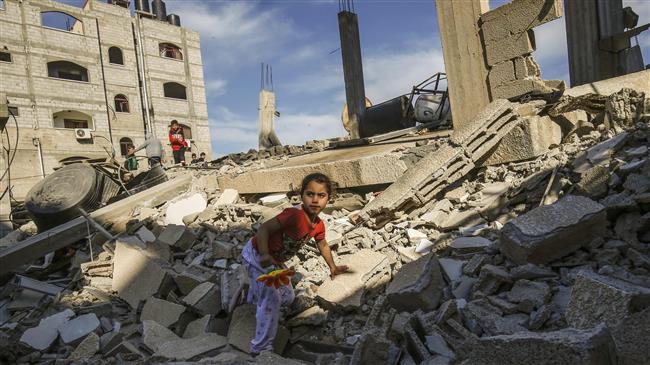
There is a war on Gaza, as it has been once, twice, and more. Gaza and its people are in a state of permanent war. It has been under constant siege for 13 years, which is war imposed upon them every day. Today, the month of Ramadan has started for fasting, prayer, repentance and good deeds. Instead, we see death exploding in and around Gaza. Israel itself complains of the war. Yesterday, Sunday May 5th, the Israeli Defense Minister tweeted and cried out to the world to notice and see Israelis waking up for the second day in a row of rockets coming from Gaza and falling in Israel.
War is painful after two days in Israel. It is as painful and more painful in Gaza after 13 years of siege. War is an absolute evil both for the Israelis and for the Palestinians. Mr. Minister, the key to peace and the end of war is not in the hands of a world that we summon but simply in your hand and in the hands of Israel.
The issue is not only that of Gaza but the issue of all the Palestinian people. The issue is the injustice imposed on the Palestinian people for generations. Israel refuses to see Palestinians as human beings with same rights and equal to all human beings. Israel has tried the methods of war and violence repeatedly to solve the issue. Until today, it has not succeeded and now, on the near horizon, there is talk about a solution wrapped in darkness and non-recognition of Palestinian rights. It will not bring a just solution. It will be another failure.
The solution is simple if Israel wanted to SEE. If it wanted to see that the Palestinian people have the same rights as the Israeli people, all being equal in humanity. It is in Israel’s hands – Israel is the stronger – to realize this equality. Avoiding this equality until now has been useless. Israel itself today suffers from war launched on Gaza.
The solution is simple. Israeli human beings should not remain exposed to war, as is the Palestinian human being. Both are human and equal in humanity. We call upon Israel, the friends of Israel, those interested in the survival of Israel and the security of Israel to simply see that the Palestinian and Israeli peoples are equal in rights and duties and capable of making peace.
We say to the Israeli authorities: It is in your hands to keep us and keep yourselves in constant war and hostility, and in your hands to let us move together to an equal life with dignity, peace and security. Learn from the experience of already 70 years in war. They did not yield security and peace. The cause of the Palestinian people cannot be solved by violence or unjustly imposed solutions, but only by justice and equality. This is the key to war and peace in Israel and Palestine. The key to open the door of peace is in the hands of Israel.
Eileen Fleming, Senior Non-Arab Correspondent for USA’s The Arab Daily News, Author, Reporter: In Nov. 2006, Father Manuel, the parish priest at the Latin Church and school in Gaza, informed the world:
“Gaza cannot sleep! The people are suffering unbelievably. They are hungry, thirsty, have no electricity or clean water. They are suffering constant bombardments and sonic booms from low flying aircraft. They need food: bread and water. Children and babies are hungry… people have no money to buy food. The price of food has doubled and tripled due to the situation. We cannot drink water from the ground here as it is salty and not hygienic. People must buy water to drink. They have no income, no opportunities to get food and water from outside and no opportunities to secure money inside of Gaza. They have no hope.
“Without electricity children are afraid. No light at night. No oil or candles… Thirsty children are crying, afraid and desperate…Many children have been violently thrown from their beds at night from the sonic booms. Many arms and legs have been broken. These planes fly low over Gaza and then reach the speed of sound. This shakes the ground and creates shock waves like an earthquake that causes people to be thrown from their bed. I, myself weigh 120 kilos and was almost thrown from my bed due to the shock wave produced by a low flying jet that made a sonic boom.
“Gaza cannot sleep… the cries of hungry children, the sullen faces of broken men and women who are just sitting in their hungry emptiness with no light, no hope, no love. These actions are War Crimes!
Featured Video

Seyed M. Marandi: US-Iran War Inevitable: Kuwait and Bahrain May Fall
or go to
Aletho News Archives – Video-Images
From the Archives
Oil and the Israel Lobby
Reknowned economist M. Shahid Alam offers this excellent critique of Noam Chomsky’s defective analysis of the relative influence of Oil versus the Israel lobby over US foreign policy: … continue
Blog Roll
 Aletho News
- ICC ignored ‘very well-documented’ NATO crimes – ex-Libyan minister
- SNSC secretary dismisses US response to Iran’s conditions as ‘inadequate’
- Sanaa says Taiz roads open, secure for residents, warns Saudi forces
- Iraqi resistance group urges Saudi leadership to admit defeat, lift Yemen siege
- Trump’s Retreat: How Al-Aqsa Flood Took Down the US Empire
- Israel’s Military Actions in Lebanon Grossly Violate International Law — Lavrov
- Seyed M. Marandi: US-Iran War Inevitable: Kuwait and Bahrain May Fall
- Leaders Condemn Ansarallah Attack on Saudi Arabia While Ignoring Illegal War Against Yemen
- Leaked: Britain’s Covert Iraqi Psyops Network
- Yemeni Armed Forces Warn Airlines Against Using Saudi Airports, Exempt Mecca and Medina
- If Americans Knew
- After Oct 7, IDF policy allowed civilian casualties for even the lowest-ranking targets
- Israel’s Destruction of Southern Lebanon Intensified After the Cease-Fire
- The Last-Minute Decision That Gave Israel Its Name
- The American Conservative: How Trump Made the World Go Nuclear
- Meet the US generals and admirals advancing Israeli policy
- Opinion: Why news organizations should boycott Israel
- The Israeli witch hunt of Sami Abu Shehadeh exposes the lie of the ‘Jewish and democratic’ state
- No state has a ‘right’ to exist – least of all Israel
- Testimonies about Gaza’s civilian death toll expose Israel’s atrocities – Daily Update
- How Israel Conquered the Latin American Right
- No Tricks Zone
- Germany’s Green Energy Debacle: High Energy Costs Force Kahla Porzellan to Close After 182 Years!
- New Study: 50 Years Of The Most Aggressive ‘Net Zero’ Policies Can Only Affect The Global Climate By 0.03°C
- US September “Heat” Was No Record…Many Records Set Decades Ago
- Latest European Green Energy Debacle; Portugal’s Largest Flagship Solar Park Insolvent!
- Green Energy Debacle: German Expert Professor Fritz Vahrenholt Warns Of Severe Economic And Social Consequences
- Two More Paleo Reconstructions Affirm Meters-Higher Sea Levels Across Ireland, Brazil 7000-6000 Years Ago
- New Study: Earth And Venus Surface Warmth Largely Explained By Convection And Lapse Rate, Not CO2 Or Radiation
- 2025 Nature Paper Claiming Worsening Global Drought Gets RETRACTED …Heavily Flawed
- New Study: ‘Global Drought Shows No Detectable Recent Acceleration Under Climate Warming’
- Economic Masterminds: German Socialists Suggest Taxing Productivity Gains Stemming From Using AI

