Houthis repel Saudi incursion into northern Yemen
Press TV – December 23, 2009 01:34:28 GMT
|
|

Houthi fighters have managed to repulse Saudi Arabian forces trying to infiltrate into the province of Sa’ada in northern Yemen, killing an unspecified number of Saudi soldiers in a battle in the border region.
In a statement issued on Tuesday, Yemen’s Shia Houthis said they pushed back Saudi troops from Al-Muannaq village in northern Yemen on the border with Saudi Arabia and also destroyed eight Saudi tanks.
The Houthi fighters say Saudi forces had fired 256 missiles and carried out air strikes against the Sa’ada region.
The statement also said that Saudi Apache helicopter gunships launched two air strikes on the city of Dahyan on Tuesday as Riyadh continues its air raids against the mountainous regions of northern Yemen. It added that Saudi ground forces used heavy machine guns during the operation.
The Saudi army also shelled Al-Malaheet and the villages adjacent to it, which caused many civilian deaths.
Seventy-three Saudis have been killed and 26 have gone missing since fighting broke out between Saudi forces and the Houthi fighters on November 3.
The number of wounded Saudi troops has reached 470, with 60 still hospitalized.
The conflict between the central government in Sana’a and the Houthis of northern Yemen began in 2004. The conflict intensified in August 2009 when the Yemeni army launched Operation Scorched Earth in an attempt to crush the Houthi movement.
The Houthis say their civil rights have been violated and they are suffering political, economic, and religious marginalization due to the policy of the Yemeni government, which they have also accused of widespread corruption.
The Saudi air force has further complicated the conflict by launching its own operations against Shia resistance fighters.
Houthi fighters say that Riyadh pounds their positions, and Saudi forces strike Yemeni villages and indiscriminately target civilians. According to the fighters, the Saudis are using prohibited weapons, including white phosphorous bombs, against civilians in northern Yemen.
The US military is also continuing its air raids on Yemen’s regions of Amran, Hajjah, and Sa’ada, which have suffered much due to the joint Saudi-Yemeni government offensive against the Houthi fighters.
The UN High Commissioner for Refugees estimates that since 2004, up to 175,000 people have been forced to leave their homes in Sa’ada and take refuge in overcrowded camps set up by the United Nations.
Latest BDS victory is but opening skirmish of a whole new campaign– English activist promises
By Philip Weiss | December 22, 2009
An English collegiate choir has had an invitation to sing in the Occupied Territories rescinded by the Anglican bishop because it is singing in Israel:
According to one of those involved, the PA asked the Bishop of Jerusalem to withdraw the invitation for the choir to sing in East Jerusalem and Bethlehem.
The choir was informed that it would not be welcome in Bethlehem, should its members try to come in, en masse, as part of the bishop’s pilgrimage.
The choir’s director says his frustration is borne of what he describes as his own pro-Palestinian stance: he has taught and performed with Palestinian musicians. Mr Brown was very keen for his students to see the West Bank barrier and, as he put it, the “privations” caused by the Israeli occupation.
Betty Hunter, the general secretary of the Palestine Solidarity Campaign, says that desire to travel to the West Bank does not excuse the choir’s tour of Israel. That tour, she says, is “surprising and shocking” – something which, in her words, “promotes Israel as a normal state rather than one which represses Palestinians”.
The issue of whether Israel should be boycotted has gained publicity in recent months with campaigns led by British trades unions. Separately, some Israeli MPs reacted angrily to the British government issuing guidelines over the labelling of produce imported from Israeli settlements in the West Bank. British officials are keen to stress that their move has nothing to do with a boycott.
But Betty Hunter says that these are but the opening skirmishes of a whole new boycott campaign that she says will open up over the next few months.
What is the Aim of the Gaza Freedom March? – Interview
By Bianca Zammit – Gaza
As the days of December 2009 draw in, two events which each have a role to play in world peace draw closer. The first is on the 27th and is commemorating the start of the 22 day attacks on Gaza, an operation which targeted unarmed civilians, schools, hospitals, journalists and emergency staff. The second, The Gaza Freedom March will take place on the 31st. The Gaza Freedom March is a historic moment, the magnitude of which has not been seen in Palestine since 1967. Chiseled on the lessons learnt from South Africa’ struggle for liberation against apartheid and from Gandhi’ Satyagraha approach during the campaign for India’ independence, the Gaza Freedom March is walking in the same shoes.
In order to find out more about the Gaza Freedom March I met up with Dr. Haidar Eid, a member of the Steering Committee for the March in Gaza.
What is the aim of the Gaza Freedom March?
The goal of the Gaza Freedom March is to commemorate Gaza 2009. In January 2009 right after the end of operation Cast Lead we were all faced again by the deadly hermitic siege. The March is calling for an end to this siege.
How did the Gaza Freedom March come about?
In June CodePink led a delegation into Gaza and they started talking about a march. I was contacted by Palestinian solidarity groups from around the world and asked for my opinion. I liked the idea but it required a political context and it needed to be led by the people of Gaza. That is when Palestinian grassroots organizations came together to discuss the march and we suggested to the International Coalition to End the Siege that they include a statement of context which called for an end to the siege and which acknowledged the long history of Palestinian non-violent direct action inspired by South Africa and Gandhi. This includes the weekly demonstrations which take place at Bilin, Nilin and Al’ Masara, the entry of international boats in Gaza’ port which had not happened since 1967 and the work of international solidarity movements. More importantly, it has to acknowledge the growing BDS campaign.
The siege is an effect of occupation and a continuation of the apartheid system initiated in 1948. Since then two thirds of the Palestinian people have lost their land. The occupation is illegal and found to be so by the United Nations under resolution 194 which calls for the return of all refugees.
Who is represented on the steering committee?
We have all sectors of society. There are representatives of unions, labour, political, religious, youth, women, students and also Boycott, Divestment and Sanctions National Committee (BNC).
Who will participate?
As soon as we issued the statement of context all Palestinian civil organisations endorsed the Gaza Freedom March and there was global consensus.
The registration has now closed and 1400 people from 42 countries have registered and been processed. Palestinians living in 1948 land will also be participating in the March from the other side of the Erez Border Crossing.
What are the activities planned?
The 1400 internationals will join us hand in hand for a march that will start at 10am in Izbit Abed Rabbu towards the Erez Border Crossing with Israel. Izbit Abed Rabbu is the area which suffered the most damage and most horrendous war crimes during operation Cast Lead, something Judge Goldstone alluded to in his report. When we get to Erez there shall be speeches.
The attacks on Gaza will be commemorated New Years Eve at the Church of Nativity in Bethlehem. A member of the Steering Committee for the March will address the people gathered in Bethlehem for this event.
Palestinian refugees living in refugee camps in Lebanon, Syria and Jordan shall partake in the March by organizing their own rallies.
How can those people who cannot come to Gaza show their solidarity with the people of Gaza?
We are calling on 1.5 million conscientious people of the world to simultaneously rally with the 1.5 million inhabitants of Gaza in front of Israeli embassies in their country. Richard Falk, the 2008 appointed UN Special Rapporteur on the situation of human rights in the Palestinian Territories has called Gaza the “world’s largest concentration camp”. Ilan Pappe has described the siege as “slow motion genocide”. After the 22 day massacre last winter we returned to the ongoing siege.
We ask freedom loving people to put pressure on their governments to sever all ties with Israel and to support the boycott of Israel.
Why do you believe this will be a historic moment for Palestine?
The March shall be the first mass mobilization of this size since 1967. Internationals will walk hand in hand with Palestinians modeled on the South African anti-apartheid movement of the 1980’s. This siege has been imposed upon Palestinian people due to them exercising their democratic choice. The significance of this March, however, also goes beyond the siege. As Palestinians 750,000 of us have been displaced and forced to become refugees. Palestinians living in 1948 land experience racial discrimination on daily basis and there is systematic policy of ethnic cleansing in place.
What is your message to the international community?
If I could put into a slogan the current climate in Gaza I would say “we are fed up”. The international community has only given us empty rhetoric and lip service and in the meantime we have been suffering. For this reason we rely on the people of the world and their power to change the course of the future. We believe in people to people solidarity in order to bring down the Israeli apartheid regime. We want peace with justice. This March shall be the first crack, the first concrete step to end the siege and the illegal occupation. This shall be a wake up call to the international community that as Palestinians we shall no longer tolerate hypocrisy.
What is your message to Israel?
You cannot go on committing war crimes and crimes against humanity as witnessed by judge Goldstone with impunity forever. Recent events in the UK against Livni have shown that also the world will not tolerate Nazi like acts committed by a Nazi like government against civilians.
To the people of Israel I say you voted for the most fascist government since 1948 expecting your government to completely get rid of Palestinians. History has shown us that this will only backfire and bring more wars affecting not only Palestinians but the entire Middle East and inevitably Israel. Exactly like apartheid South Africa campaigned when their state became a pariah state; this is your time to put pressure on your government to implement the UN resolution which calls for an end to the occupation and allows the return of refugees. Peace without justice is not peace.
What will happen after the March?
The March is not symbolic but rather we expect it to be part of a series of events which will lead to the end of the siege. We want to intensify and continue building a global Boycott, Divestment and Sanctions (BDS) campaign which is human rights based and calling for the implementation of international law and an end to the occupation.
We will continue to host international delegations visiting us and together we will be calling for Israeli war criminals to be tried in international courts.
– Bianca Zammit is a member of the International Solidarity Movement in Gaza and of the Boycott, Divestment and Sanctions (BDS) Movement. She contributed this article to PalestineChronicle.com.
Relocating Guantánamo
Silence of the Lamb-like Lawyers
By PAUL CRAIG ROBERTS | 12-22-09
Obama’s dwindling band of true believers has taken heart that their man has finally delivered on one of his many promises–the closing of the Guantanamo prison. But the prison is not being closed. It is being moved to Illinois, if the Republicans permit.
In truth, Obama has handed his supporters another defeat. Closing Guantanamo meant ceasing to hold people in violation of our legal principles of habeas corpus and due process and ceasing to torture them in violation of US and international laws.
All Obama would be doing would be moving 100 people, against whom the US government is unable to bring a case, from the prison in Guantanamo to a prison in Thomson, Illinois.
Are the residents of Thomson despondent that the US government has chosen their town as the site on which to continue its blatant violation of US legal principles? No, the residents are happy. It means jobs.
The hapless prisoners had a better chance of obtaining release from Guantanamo. Now the prisoners are up against two US senators, a US representative, a mayor, and a state governor who have a vested interest in the prisoners’ permanent detention in order to protect the new prison jobs in the hamlet devastated by unemployment.
Neither the public nor the media have ever shown any interest in how the detainees came to be incarcerated. Most of the detainees were unprotected people who were captured by Afghan war lords and sold to the Americans as “terrorists” in order to collect a proffered bounty. It was enough for the public and the media that the Defense Secretary at the time, Donald Rumsfeld, declared the Guantanamo detainees to be the “780 most dangerous people on earth.”
The vast majority have been released after years of abuse. The 100 who are slated to be removed to Illinois have apparently been so badly abused that the US government is afraid to release them because of the testimony the prisoners could give to human rights organizations and foreign media about their mistreatment.
Our British allies are showing more moral conscience than Americans are able to muster. Former PM Tony Blair, who provided cover for President Bush’s illegal invasion of Iraq, is being damned for his crimes by UK officialdom testifying before the Chilcot Inquiry.
The London Times on December 14 summed up the case against Blair in a headline: “Intoxicated by Power, Blair Tricked Us Into War.” Two days later the British First Post declared: “War Crime Case Against Tony Blair Now Rock-solid.” In an unguarded moment Blair let it slip that he favored a conspiracy for war regardless of the validity of the excuse [weapons of mass destruction] used to justify the invasion.
The movement to bring Blair to trial as a war criminal is gathering steam. Writing in the First Post Neil Clark reported: “There is widespread contempt for a man [Blair] who has made millions [his reward from the Bush regime] while Iraqis die in their hundreds of thousands due to the havoc unleashed by the illegal invasion, and who, with breathtaking arrogance, seems to regard himself as above the rules of international law.” Clark notes that the West’s practice of shipping Serbian and African leaders off to the War Crimes Tribunal, while exempting itself, is wearing thin.
In the US, of course, there is no such attempt to hold to account Bush, Cheney, Condi Rice, Rumsfeld, Wolfowitz, and the large number of war criminals that comprised the Bush Regime. Indeed, Obama, whom Republicans love to hate, has gone out of his way to protect the Bush cohort from being held accountable.
Here in Great Moral America we only hold accountable celebrities and politicians for their sexual indiscretions. Tiger Woods is paying a bigger price for his girlfriends than Bush or Cheney will ever pay for the deaths and ruined lives of millions of people. The consulting company, Accenture Plc, which based its marketing program on Tiger Woods, has removed Woods from its Web site. Gillette announced that the company is dropping Woods from its print and broadcast ads. AT&T says it is re-evaluating the company’s relationship with Woods.
Apparently, Americans regard sexual infidelity as far more serious than invading countries on the basis of false charges and deception, invasions that have caused the deaths and displacement of millions of innocent people. Remember, the House impeached President Clinton not for his war crimes in Serbia, but for lying about his affair with Monica Lewinsky.
Americans are more upset by Tiger Woods’ sexual affairs than they are by the Bush and Obama administrations’ destruction of US civil liberty. Americans don’t seem to mind that “their” government for the last 8 years has resorted to the detention practices of 1,000 years ago–simply grab a person and throw him into a dungeon forever without bringing charges and obtaining a conviction.
According to polls, Americans support torture, a violation of both US and international law, and Americans don’t mind that their government violates the Foreign Intelligence Surveillance Act and spies on them without obtaining warrants from a court. Apparently, the brave citizens of the “sole remaining superpower” are so afraid of terrorists that they are content to give up liberty for safety, an impossible feat.
With stunning insouciance, Americans have given up the rule of law that protected their liberty. The silence of law schools and bar associations indicates that the age of liberty has passed. In short, the American people support tyranny. And that’s where they are headed.
Paul Craig Roberts was Assistant Secretary of the Treasury in the Reagan administration. He is coauthor of The Tyranny of Good Intentions. His new book, How the Economy was Lost, will be published next month by AK Press / CounterPunch. He can be reached at: PaulCraigRoberts@yahoo.com
Former head of CDC lands lucrative job as president of Merck vaccine division
By Mike Adams | Natural News | December 22, 2009
You’ve heard it before, how the pharmaceutical industry has a giant “revolving door” through which corporations and government agencies frequently exchange key employees. That reality was driven home in a huge way today when news broke that Dr. Julie Gerberding, who headed the Center for Disease Control (CDC) from 2002 through 2009, landed a top job with Merck, one of the largest drug companies in the world. Her job there? She’s the new president of the vaccine division.
How convenient. That means the former head of the CDC was very likely cultivating a relationship with Merck all these years, and now comes the big payoff: Heading up a $5 billion division that sells cervical cancer vaccines (like Gardasil), chickenpox vaccines and of course H1N1 swine flu vaccines, too.
So what’s the problem with all this? The problem is that private industry and government health offices such as the CDC or FDA should never be so cozy. When they are, it creates an environment of collusion between Big Government and Big Pharma. We’ve already seen this with the government-led push for swine flu vaccines that are manufactured (and sold) by drug companies like Merck.
You might even say that the CDC already functions as the marketing division of the pharmaceutical industry. It was the CDC that pushed so hard for swine flu vaccines, even amid the obvious realization that swine flu was no more dangerous than seasonal flu. To this day, the CDC still hasn’t bothered to recommend vitamin D for the prevention of either seasonal flu or swine flu. It remains heavily invested in the lucrative vaccine approach — an approach that just happens to financially benefit the very corporations that are hiring ex-CDC employees like Dr. Gerberding… Full article
Aid groups say world powers betrayed Gaza
December 22, 2009
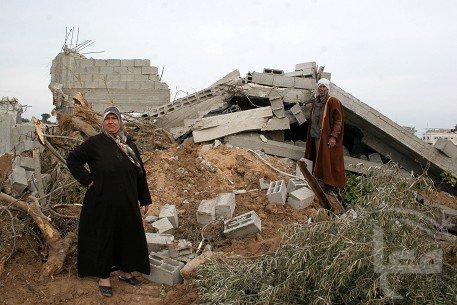
Bethlehem – Ma’an – The international community betrayed the people of Gaza by failing to end an Israeli blockade stymieing reconstruction efforts following last winter’s war, 16 aid and human rights groups said in a report released Tuesday.
The report Failing Gaza: No rebuilding, No recovery, No more excuses, alleges that the world’s powers, particularly the European Union, failed to ensure that aid pledged to Gaza actually reached its intended recipients.
Since the end of the three week military offensive dubbed Operation Cast Lead in January, Israel has allowed only 41 truckloads of construction materials into the Gaza Strip, the groups reported. All of those materials were destined for NGOs implementing piecemeal reconstruction efforts, or repairs to the electricity and sewage networks.
The groups sponsoring the report included Amnesty International, CAFOD, Christian Aid, Medical Aid for Palestinians, Mercy Corps and Oxfam International.
The report said thousands of truckloads of reconstruction materials are needed to rebuild the tens of thousands of homes, businesses, schools, mosques and other buildings destroyed and damaged during the war. As a result, thousands of Gaza residents are still living in tents, and the Strip’s economy remains in ruins.
“The wretched reality endured by 1.5 million people in Gaza should appall anybody with an ounce of humanity. Sick, traumatized and impoverished people are being collectively punished by a cruel, illegal policy imposed by the Israeli authorities,” Amnesty International UK Director Kate Allen said in a statement.
“Israel’s responsibility to protect its citizens does not give it the right to punish every man, woman and child of Gaza.”
She also said the world has an obligation to act to end the blockade: “All states are obliged under international law to intervene to put an end to this brutal blockade but their leaders are failing in this fundamental measure of their own humanity.” […]
The report notes that as the occupying power, Israel is responsible to safeguard the welfare of the population in Gaza. Absent funds from Israel, the international community offered to rebuild Gaza after the recent war.
International donors pledged four billion US dollars to rebuild Gaza at a conference in the Egyptian Red Sea resort town of Sharm Ash-Sheikh in March. Because of the ban on construction materials, virtually none of the aid has materialized. The EU accounted for 1 billion dollars of this figure.
The report faults the EU for failing to seek compensation from Israel for the destruction of facilities relating EU-funded projects in Gaza. The UN charged Israel 11.4 million for damages to its facilities.
Iran Sanctions Are Precursor to War
By Rep. Ron Paul, December 22, 2009
Last week the House overwhelmingly approved a measure to put a new round of sanctions on Iran. If this measure passes the Senate, the United States could no longer do business with anyone who sold refined petroleum products to Iran or helped them develop their ability to refine their own petroleum. The sad thing is that many of my colleagues voted for this measure because they felt it would deflect a military engagement with Iran. I would put the question to them, how would Congress react if another government threatened our critical trading partners in this way? Would we not view it as asking for war?
This policy is pure isolationism. It is designed to foment war by cutting off trade and diplomacy. Too many forget that the quagmire in Iraq began with an embargo. Sanctions are not diplomacy. They are a precursor to war and an embarrassment to a country that pays lip service to free trade. It is ironic that people who decry isolationism support actions like this.
If a foreign government attempted to isolate the U.S. economically, cut off our supply of gasoline, or starve us to death, would it cause Americans to admire that foreign entity? Or would we instead unite under the flag for the survival of our country?
We would not tolerate foreign covert operations fomenting regime change in our government. Yet our CIA has been meddling in Iran for decades. Of course Iranians resent this. In fact, many in Iran still resent the CIA’s involvement in overthrowing their democratically elected leader in 1953. The answer is not to cut off gasoline to the Iranian people. The answer is to stay out of their affairs and trade with them honestly. If our operatives were no longer in Iran, they would no longer be available as scapegoats for the regime to, rightly or wrongly, blame for every bad thing that happens. As bad as other regimes may be, it is up to their own people to deal with them so they can achieve true self-determination. When foreigners instigate regime change, the new government they institute is always perceived as serving the interest of the overthrowing country, not the people. Thus we take the blame for bad governance twice. Instead, we should stay out of their affairs altogether.
With the exception of the military-industrial complex, we all want a more peaceful world. Many are hysterical about the imminent threat of a nuclear Iran. Here are the facts: Iran has never been found out of compliance with the nuclear Non-Proliferation Treaty (NPT) they signed. However, being surrounded by nuclear powers one can understand why they might want to become nuclear capable if only to defend themselves and to be treated more respectfully. After all, we don’t sanction nuclear-capable countries. We take diplomatic negotiations a lot more seriously, and we frequently send money to them instead. The non-nuclear countries are the ones we bomb. If Iran was attempting to violate the Non-Proliferation Treaty, they could hardly be blamed, since U.S. foreign policy gives them every incentive to do so.
Egypt Says It Will Block International Gaza Freedom Marchers
By Robert Naiman | December 21, 2009
 On December 31, together with more than 1000 peace advocates from around the world, I’m planning to join tens of thousands of Palestinians in a march in Gaza to the Erez border crossing to protest the Israeli blockade of Gaza, and to demand international action to relieve Gaza’s humanitarian crisis.
Unfortunately, it appears that the Egyptian government has just announced that it will not allow the internationals to enter Gaza as planned. If so, that would be a shame.
But this apparent decision could be reversed with sufficient public pressure, in Egypt and around the world. Concerned individuals can write to the Egyptian Embassy in Washington and to the Foreign Ministry in Cairo. There is also contact information for the Egyptian consulates in Chicago, Houston, New York, and San Francisco here.
The aim of the march is to call on Israel and the international community to lift the siege, and to respond to Gaza’s humanitarian crisis. The international participants will also take in badly needed medical aid, as well as school supplies and winter jackets for the children of Gaza. Dec. 27 will mark the first anniversary of the Israeli invasion, from which Gaza has not recovered, in large measure because of the ongoing Israeli blockade, which has prevented Gaza from rebuilding.
Of course, if the Egyptian government decision stands, and the international participants are not allowed to enter Gaza, then much less international attention will be drawn to the ongoing blockade, and that would be an unfortunate setback for peace efforts, because the need for international attention is great.
UK drops terrorism charges against Libyan

A Libyan national who has been under restriction for the past six years in the United Kingdom on terrorism charges has won his long court battle against the UK Home Office and Security Services.
Faraj Hassan told Press TV over phone on Monday that his solicitors tried hard and finally succeed in convincing a High Court judge that he is not a terrorist threat to the United Kingdom.
“They couldn’t manage to fight this case. All the allegations they had against me were based on suspicions,” he said.
Hassan, 28, was arrested in 2002 shortly after he entered Britain. He spent 15 months in detention without trial before eventually being charged in 2003 under the UK Terrorism Act. He has been subject to a control order ever since.
“After spending months in detention I was told that they wanted to extradite me to Italy. I fought this case for approximately five years,” Hassan said.
“After my acquittal in absentia in Italy, the Italian government was not interested in me anymore, therefore I was released under strict conditions,” he told Press TV.
“Myself and my family were for two-and-a-half years isolated from the community, we were not allowed to use the basic things that any human being is entitled to such as mobile phones and internet,” the Libyan said about his lifestyle in the UK.
British Army ‘waterboarded’ suspects in 70s
Evidence casts doubt on guilt of man sentenced to hang for killing soldier
* Ian Cobain
* guardian.co.uk, Monday 21 December 2009 21.52 GMT
Evidence that the British army subjected prisoners in Northern Ireland to waterboarding during interrogations in the 1970s is emerging after one of the alleged victims launched an appeal against his conviction for murder.
Liam Holden became the last person in the United Kingdom to be sentenced to hang after being convicted in 1973 of the murder of a soldier, largely on the basis of an unsigned confession. His death sentence was commuted to life imprisonment and he spent 17 years behind bars.
The jury did not believe Holden’s insistence that he made the confession only because he had been held down by members of the Parachute Regiment, whom he says placed a towel over his face before pouring water from a bucket over his nose and mouth, giving him the impression that he was drowning.
But now the Criminal Cases Review Commission (CCRC) has referred Holden’s case to the court of appeal in Belfast after unearthing new evidence, and because of doubts about “the admissibility and reliability” of his confession. The commission says it believes “there is a real possibility” his conviction will be quashed. After a preliminary hearing earlier this month, Holden’s appeal was adjourned to the new year.
However, the account that Holden gave at his trial is remarkably similar to those that have emerged since the CIA began using waterboarding techniques while interrogating al-Qaida suspects during the so-called war on terror.
Lawyers who have taken up his case have identified a second man who gave a similar account of being waterboarded after being arrested by detectives of the Royal Ulster Constabulary and questioned about the murder of a police constable. In a statement to a doctor in April 1978, this man said officers had put a towel over his face and poured water over his nose and mouth, and that “this was frightening and was repeated on a number of occasions”. He was eventually released without charge. The CCRC also has a statement taken from a third man who says he was waterboarded by the British army in the early 70s.
All of the allegations of waterboarding come from a period after March 1972, when the then prime minister, Ted Heath, banned five other notorious torture methods which were subsequently condemned by the European court of human rights as being inhuman and degrading.
Holden, a Roman Catholic, was 19 and a chef when he was detained during a raid by soldiers of the Parachute Regiment on his parents’ home in the Ballymurphy area of west Belfast in October 1972. Apparently acting on a tipoff from an informer, the soldiers accused Holden of being the sniper who, a month earlier, had shot dead Private Frank Bell of the regiment’s 2nd Battalion. Bell had just turned 18 and had joined the regiment six weeks earlier. He was the 100th British soldier to die in Northern Ireland that year.
When Holden came to trial in April 1973 he told the jury he had been playing cards with his brother and two friends in a public place at the time Bell was shot. He said that after being arrested in his bed the soldiers had taken him to their base on Black Mountain, west of Belfast, where he was beaten, burned with a cigarette lighter, hooded and threatened with execution.
Holden also gave a detailed account of being waterboarded, although he did not use that term. In a court report published the following day, the Belfast Telegraph said the defendant told the jury that he had been pushed into a cubicle where he was held down by six men, that a towel was placed over his head, and that water was then poured slowly over his face from a bucket. “It nearly put me unconscious,” Holden was quoted as saying. “It nearly drowned me and stopped me from breathing. This went on for a minute.” A short while later he was subjected to the same treatment again, he said.
A sergeant from the Parachute Regiment and a British army captain told the court that Holden had confessed to the shooting during an “interview”. The unnamed sergeant said Holden had wanted to confess to the murder because “he wanted to get it off his chest”, while the officer said the teenager had told him that he had left the IRA a short while later because he felt such remorse.
The jury took less than 75 minutes to convict Holden of capital murder, and the judge, Sir Robert Lowry, told him: “The sentence of the court is that you will suffer death in the manner authorised by law.” The then Northern Ireland secretary, William Whitelaw, commuted the sentence the following month, and the death penalty was abolished in Northern Ireland shortly afterwards. Holden did not appeal, however, with relatives saying at the time that he believed his trial had been “rigged” and a “farce”.
He was eventually released from prison in 1989.
Holden’s solicitor, Patricia Coyle, said: “At trial Mr Holden gave compelling evidence that the alleged confession was obtained by the army using water torture. He spent 17 years in jail. He is looking forward to the court hearing his appeal.”
The new evidence that the CCRC has submitted to the court of appeal is being kept secret. The CCRC is unwilling to discuss this material, other than to say that it has not yet been disclosed at the request of the public body from which it was obtained. Holden’s lawyers are now asking for it to be disclosed.
The Ministry of Defence said it was unable to confirm whether British service personnel had received instruction in waterboarding techniques as part of their counterinterrogation training at that time, and it would not disclose whether personnel currently receive such instruction “for reasons of operational security”.
There is evidence that such instruction has been given, however. In 2005 Rod Richard, the former Welsh Office minister, told a Welsh newspaper that he had been waterboarded during his counterinterrogation training as a Royal Marines officer in the late 60s.
The Guardian has spoken to a former Royal Marines officer who says that he and his fellow officers and their men were all waterboarded at the end of their escape and evasion training at Lympstone, Devon, in the late 60s and early 70s. “You were tied to a chair and they would tip you over on your back, put a towel over your face and pour water over you. I can’t recall what we called it – not waterboarding – but it produced a drowning sensation and it was pretty unpleasant.”
Seven months before Holden was detained by British soldiers, the Heath government had publicly repudiated and banned five “interrogation techniques”. RUC officers had learned the techniques – hooding, sleep deprivation, starvation and the use of stress positions and noise – from British military intelligence officers, but Heath assured the Commons that they “will not be used in future as an aid to interrogation”.
There were subsequently unconfirmed allegations that the British army had experimented with other methods of torture, including electric shocks, and the use of drugs. Towards the end of the decade, Amnesty International was reporting that terrorism suspects were again being mistreated, this time by RUC detectives, “with sufficient frequency to warrant the establishment of a public inquiry”.
A number of Republican former prisoners have told the Guardian that waterboarding was used as a form of punishment, as well as a means of extracting confessions.
World’s Sole Military Superpower’s 2 Million-Troop, $1 Trillion Wars
By Rick Rozoff | December 21, 2009
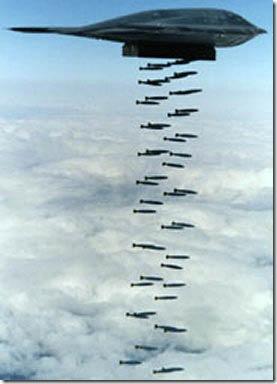 With a census of slightly over 300 million in a world of almost seven billion people, the U.S. accounts for over 40 percent of officially acknowledged worldwide government military spending with a population that is only 4 percent of that of the earth’s. A 10-1 disparity.
In addition to its 1,445,000 active duty service members, the Pentagon can and does call upon 1.2 million National Guard and other reserve components. As many as 30% of troops that have served in Afghanistan and Iraq are mobilized reservists. The Army National Guard has activated over 400,000 soldiers since the war in Afghanistan began and in March of 2009 approximately 125,000 National Guard and other reserve personnel were on active duty.
The Defense Department also has over 800,000 civilian employees at home and deployed worldwide. The Pentagon, then, has more than 3.5 million people at its immediate disposal excluding private military contractors.
After allotting over a trillion dollars for the wars in Afghanistan and Iraq alone and packing off more than two million of its citizens to the two nations, the U.S. military establishment and peace prize president have already laid the groundwork for yet more wars. Boeing, Raytheon and General Electric won’t be kept waiting.
In his Nobel Peace Prize acceptance speech on December 10 the president of the United States appropriated for his country the title of “the world’s sole military superpower” and for himself “the Commander-in-Chief of the military of a nation in the midst of two wars.”
This may well have been the first time that an American – and of course any – head of state in history boasted of his nation being the only uncontested military power on the planet and unquestionably the only time a Nobel Peace Prize recipient identified himself as presiding over not only a war but two wars simultaneously.
As to the appropriateness of laying such claims in the venue and on the occasion he did – accepting the world’s preeminent peace award before the Norwegian Nobel Committee – Barack Obama at least had the excuse of being perfectly accurate in his contentions.
He is in fact the commander-in-chief in charge of two major and several smaller wars and his nation is without doubt the first global military power which for decades has operated without constraints on five of six inhabited continents and has troops stationed in all six. United States armed forces personnel and weapons, including nuclear arms, are stationed at as many as 820 installations in scores of nations.
The U.S. has recently assigned thousands of troops to seven new bases in Bulgaria and Romania [1], deployed the first foreign troops to Israel in that nation’s history to run an interceptor missile radar facility in the Negev Desert [2], and last week signed a status of forces agreement with Poland for Patriot missiles (to be followed by previously ship-based Aegis Standard Missile-3s interceptors) and U.S. soldiers to be stationed there. The troops will be the first foreign forces based in Poland since the dissolution of the Warsaw Pact in 1991.
The U.S., whose current military budget is at Cold War, which is to say at the highest of post-World War II, levels, also officially accounts for over 41% of international military spending according to the Stockholm International Peace Research Institute’s report on 2008 figures: $607 billion of $1.464 trillion worldwide. On October 28 President Obama signed the 2010 National Defense Authorization Act with a price tag of $680 billion, including $130 billion for the wars in Afghanistan and Iraq.
That figure excludes military spending outside of the Department of Defense. The American government has for several decades been the standard-bearer in outsourcing to private sector contractors in every realm and the Pentagon is certainly no exception to the practice. According to some estimates, American military and military-related allotments in addition to the formal Pentagon budget can bring annual U.S. defense spending as high as $1.16 trillion, almost half of official expenditures for all of the world’s 192 nations, including the U.S., last year.
The U.S. also has the world’s second largest standing army, over 1,445,000 men and women under arms according to estimates of earlier this year, second only to China with 2,255,000. China has a population of over 1.325 billion, more than four times that of America, and does not have a vast army of private contractors supplementing its armed forces. And of course unlike the U.S. it has no troops stationed abroad. India, with a population of 1.140 billion, has active duty troop strength smaller than that of the U.S. at 1,415,000.
The U.S. and Britain are possibly alone in the world in deploying reservists to war zones; this last February the chairman of the U.S. Joint Chiefs of Staff Admiral Michael Mullen acknowledged that 600,000 reserves have been called up to serve in the area of responsibility of the U.S. Central Command, in charge of the Afghan and Iraqi wars, since 2001. In addition to its 1,445,000 active duty service members, the Pentagon can and does call upon 1.2 million National Guard and other reserve components. As many as 30% of troops that have served in Afghanistan and Iraq are mobilized reservists. The Army National Guard has activated over 400,000 soldiers since the war in Afghanistan began and in March of 2009 approximately 125,000 National Guard and other reserve personnel were on active duty.
The Defense Department also has over 800,000 civilian employees at home and deployed worldwide. The Pentagon, then, has more than 3.5 million people at its immediate disposal excluding private military contractors.
In the last 48 hours two unprecedented thresholds have been crossed. On the morning of December 19 the U.S. Senate met in a rare Saturday morning session to approve a $636.3 billion military budget for next year. The vote was 88-10, as the earlier vote by the House of Representatives on December 16 was 395-34. In both cases the negative votes were not necessarily an indication of opposition to war spending but part of the labyrinthine American legislative practices of trade-offs, add-ons and deal-making on other, unrelated issues, what in the local vernacular are colorfully described as horse-trading and log-rolling among other choice terms. A no vote in the House or Senate, then, was not automatically a reflection of anti-war or even fiscally conservative sentiments.
The Pentagon appropriation included another $101 billion for the wars in Afghanistan and Iraq (Obama signed the last formal Iraq and Afghanistan War Supplemental Appropriations, worth $106 billion, in July), but did not include the first of several additional requests, what are termed emergency spending measures, for the Afghan war. The first such request is expected early next year, more than $30 billion for the additional 33,000 U.S. troops to be deployed to the war zone, which will increase the number of American forces there to over 100,000.
On the day of the Senate vote Bloomberg News cited the Congressional Research Service, which had tallied the numbers, in revealing that the funds apportioned for the wars in Afghanistan and Iraq have now pushed the total expenditure for both to over $1 trillion. “That includes $748 billion for spending related to the war in Iraq and $300 billion for Afghanistan, the research service said in a Sept. 28 report.”
The new Pentagon spending plan “includes $2.5 billion to buy 10 additional Boeing Co. C-17 transports that weren’t requested by the Pentagon. Chicago-based Boeing also would benefit from $1.5 billion for 18 F/A-E/F Super Hornet fighters, nine more than the administration requested.”
Funding for military aircraft not even requested by the Defense Department and the White House or for larger numbers of them than were is another curious component of the American body politic. That arms merchants (and not only domestic ones) place their own orders with the American people’s alleged representatives – the current Deputy Secretary of Defense, William Lynn, was senior vice president of Government Operations and Strategy for Raytheon Company prior to assuming his new post – is illustrated by the following excerpts from the same report:
“Defense Secretary Robert Gates recommended April 6 that the C-17 program be terminated once Boeing delivers the last of 205 C-17s in late 2010. Boeing, the second-largest defense contractor, has said its plant in Long Beach, California, will shut down in 2011 without more orders.
“The budget also includes $465 million for the backup engine of the F-35 Joint Strike Fighter. The engine is built by Fairfield, Connecticut-based General Electric Co. and London-based Rolls Royce Plc. The administration earlier threatened to veto the entire defense bill if it contained any money for the engine.” [3]
The Pentagon and its chief Gates may win battles with the Congress and even the White House when they relate to the use of military force abroad, but against the weapons manufacturers and the congressmen whose election campaigns they contribute to the military brass will come off the losers.
In addition to the nearly two-thirds of a trillion dollar annual Pentagon war chest, the ongoing trillion dollar Broader Middle East war is a lucrative boon to the merchants of death and their political hangers-on.
On December 18 a story was posted on several American armed forces websites that U.S. soldiers have been sent to Afghanistan and Iraq 3.3 million times since the invasion of the first country in October of 2001. The report specifies that “more than 2 million men and women have shouldered those deployments, with 793,000 of them deploying more than once.”
The break-down according to services is as follows:
More than 1 million troops from the Army.
Over 389,900 from the Air Force.
Over 367,900 from the Navy.
More than 251,800 Marines.
This past October alone 172,800 soldiers, 31,500 airmen, 30,000 sailors and 20,900 Marines were dispatched to the two war zones. [4]
The bulk of the U.S.’s permanent global war-fighting force may be deployed to Afghanistan and Iraq, but enough troops are left over to man newly acquired bases in Eastern Europe, remain in Middle East nations other than Iraq, be based on and transit through the Manas Air Base in Kyrgyzstan, take over seven new military bases in Colombia, run regional operations out of America’s first permanent base in Africa – Camp Lemonier in Djibouti, where 2,400 personnel are stationed – and engage in counterinsurgency campaigns in the Philippines, Mali, Uganda, Yemen and Pakistan.
Recently a U.S. armed forces newspaper reported in an article titled “AFRICOM could add Marine Air Ground Task Force” that “A 1,000-strong Marine combat task force capable of rapidly deploying to hot spots could soon be at the disposal of the new U.S. Africa Command.”
The feature added that a Marine unit previously attached to the newly launched AFRICOM has “already deployed in support of training missions in Uganda and Mali,” whose armies are fighting the Lord’s Resistance Army and Tuareg rebels, respectively. [5]
In Yemen, Houthi rebel sources “accused the U.S. air force [on December 15] of joining attacks against them, and killing at least 120 people in a raid in the north of the poor Arab state.”
Their information office said “The savage crime committed by the U.S. air force shows the real face of the United States.” [6]
According to ABC News “On orders from President Barack Obama, the U.S. military launched cruise missiles early Thursday [December 17] against two suspected al-Qaeda sites in Yemen,” [7] to complement mounting missile attacks in Pakistan.
The Houthi rebels are religiously Shi’ia, so any attempt at exploiting an al-Qaeda rationale for bombing their villages is a subterfuge.
At the same time the Commander of U.S. Air Forces in Europe and NATO Allied Air Component, General Roger Brady, fresh from a tour of inspection of the Caucasus nations of Azerbaijan and Georgia, was at the Adazi Training Base in Latvia to meet with the defense ministers of that nation, Estonia and Lithuania and plan “closer military cooperation in the security sector between the Baltic States and the USA which also included joint exercises in the Baltic region.” [9] All five nations mentioned above – Azerbaijan, Estonia, Georgia, Latvia and Lithuania – border Russia.
During the same week’s summit of the Bolivarian Alliance for the Peoples of Our America (ALBA) in Havana, Cuba, the host country’s president Raul Castro said of the latest Pentagon buildup in Colombia that “The deployment of [U.S.] military bases in the region is…an act of aggression against Latin America and the Caribbean.” [9]
Less than a week later the government of Colombia, the third largest recipient of American military aid in the world, announced it would construct a new military base near its border with Venezuela. “Defense Minister Gabriel Silva said [on December 18] that the base, located on the Guajira peninsula near the city of Nazaret, would have up to 1,000 troops. Two air battalions would also be activated at other border areas….Army Commander General Oscar Gonzalez meanwhile announced [the following day] that six air battalions were being activated, including two on the border with Venezuela.” [10]
After allotting over a trillion dollars for the wars in Afghanistan and Iraq alone and packing off more than two million of its citizens to the two nations, the U.S. military establishment and peace prize president have already laid the groundwork for yet more wars. Boeing, Raytheon and General Electric won’t be kept waiting.
Notes
1) Bulgaria, Romania: U.S., NATO Bases For War In The East
Stop NATO, October 24, 2009
http://rickrozoff.wordpress.com/2009/10/25/bulgaria-romania-u-s-nato-bases-for-war-in-the-east
2) Israel: Forging NATO Missile Shield, Rehearsing War With Iran
Stop NATO, November 5, 2009
http://rickrozoff.wordpress.com/2009/11/05/israel-forging-nato-missile-shield-rehearsing-war-with-iran
3) Bloomberg News, December 19, 2009
4) Michelle Tan, 2 million troops have deployed since 9/11
December 18, 2009
5) Stars And Stripes, December 16, 2009
6) Reuters, December 16, 2009
7) ABC News, December 18, 2009
8) Defense Professionals, December 14, 2009
9) Russian Information Agency Novosti, December 14, 2009
10) Agence France-Presse, December 19, 2009
Featured Video

Iran Is Not Our Enemy
or go to
Aletho News Archives – Video-Images
Frlom the Archives
The 52 Major Jewish American Organizations and Israel Celebrate Passover with the Slaughter of 25 Muslim, Christian and Secular Palestinians
By James Petras • Unz Review • April 8, 2018
Introduction
As of April 7, nearly three thousand unarmed Christian, Muslim and secular Palestinians have been wounded, over three dozen are in critical condition and at least twenty-five unarmed protestors, including children have been assassinated by hundreds of Israeli snipers and heavily armed troops shooting tank shells into crowds of civilians protesting their decades of incarceration by the racist Israeli state.
The Israeli government praised the ‘restraint and morality’ of the IDF, as did the fifty-two Major Jewish American Organizations (MJAO) who largely control the US Congress. These grotesque massacres began during the Christian Holy Week on Good Friday and Easter, coinciding with the Jewish Passover. The self-righteous officials of the MJAO and their relatives and friends broke matzos at joyful Seders as the blood of Palestinians soaked into ground at the fence containing the largest open-air prison camp in history, Gaza.
While tribal loyalties bonded the Israeli and Jewish American leaders, the politicians of the Western oligarchic electoral regimes refrained from criticizing the shocking display of brute force and even defended Israel’s cold blood mass killings of Palestinian civilians in their Gaza prison.
This paper will discuss and analyze the reasons for Israel’s willing Western accomplices and the centrality of its fifth column in the United States. … continue
Blog Roll
 Aletho News
- No Liability, No Studies, No Accountability: The Vaccine System Aaron Siri Exposed in Federal Court
- No time for losers: Why the war meant to save Israel may destroy it
- Top US Counterterrorism Official Resigns in Protest of Operation Against Iran
- Just Get Out! Now!
- Unpacking glaring contradictions in US-Zionist justifications for war against Iran
- Iranian model of warfare bleeds US dry while Persian Gulf states watch and learn: Analyst
- IRGC orders ‘defeated’ US to evacuate industrial facilities in region
- Hegseth’s call for ‘no mercy’ to Iranians deemed war crime
- Iran War Exposes Limits of US Military Power – Journalist
- Even The Neo-Cons Admit The Iran War Is Failing
- If Americans Knew
- Trump’s counterterrorism chief, whose own wife was killed by ISIS, quits over Iran War saying Tehran posed ‘no imminent threat’
- Here’s what US could fund instead of Bibi’s war on Iran
- Israel Killed Over a Dozen Lebanese Paramedics in Three Days, Now Claiming That Ambulances Are “Hezbollah” Targets
- War on Iran: These are the heritage sites devastated by US and Israeli attacks
- Four news stories from Israeli media that illustrate Israeli “justice”
- CIA Prepares Criminal Referral of Tucker Carlson, as Israel and Its Loyalists Demand His Arrest
- Top US counterterror advisor resigns in protest of “war manufactured by Israel” – Not a ceasefire Day 157
- ‘I Liked the House’: When Israeli Soldiers Turn Palestinian Homes into Barracks
- ‘They Were All I Had’: Lebanese Father Buries Parents, 4 Daughters Killed by Israeli Bombing
- Israel and its supporters are causing attacks on Jewish institutions. Case in point: Michigan synagogue tragedy.
- No Tricks Zone
- Storing Green Energy To Last Germany 10 Days Would Require A 60-Million Tonne Battery
- New Studies: UK Sea Levels Were 4 Meters Higher Than Today During The Mid-Holocene
- Destructive Green New Deal: German Energy And Metal Group Warns Of Drastic Crisis
- New Study Documents A 20-Year Pause In Arctic Sea Ice Decline – Driven By Internal Variability
- Wake-up Call: Survey Shows Majority Of Germans Now Favor Postponing Climate Targets!
- Televised! Leading German Political Candidate Tells Schoolchildren CO2 Makes Sun Hotter!
- New Study: A Century Warming Of 1.1°C Is ‘Commonplace’ And ‘Not Unusual’ During This Interglacial
- New Study: ‘Internal Noise’ And Volcanic Forcing Can Trigger 10-15°C Warming Within Decades
- Glaciers Worldwide Are Suddendly Surging, Experts Blame Warming!
- Surprising Discovery: Sahara Is Greening…Billions Of Trees Where Once Thought To Be Barren
 Aletho News