Russia calls for reform of UN Security Council
Samizdat | August 3, 2022
The United Nations is in dire need of reform and the Security council must be “democratized” by expanding its representation, Russian foreign ministry official Alexey Drobinin has written in a keynote article published on Wednesday.
Drobinin, the Director of the Department of Foreign Policy Planning, commented on the current state of international relations and came to the conclusion that “more conscious effort and imagination is needed” to reform the UN.
He pointed out that the organization’s current agenda, which is primarily fueled by the West, is not necessarily in line with the interests of the majority of its international members.
Drobinin suggested that for most UN members the most important issues are things like access to cheap energy sources rather than the transition to “green” technologies, socio-economic development rather than human rights “in an ultra-liberal interpretation,” and security and sovereign equality rather than the artificial imposition of electoral democracy according to Western patterns.
He added that another topic that has once-again become relevant is the process of decolonization and ending the neo-colonial practices by transnational corporations in regards to the development of natural resources in developing countries.
However, international organizations such as the UN have essentially been “privatized” by the West, Drobinin points out. He suggests that the UN Secretariat and the offices of special envoys and special representatives of the Secretary General have all been saturated with the West’s own “tested” personnel, and that this also extended to non-UN organizations as well, such as the OPCW.
“The saddest thing is that this rust is eating away at the ‘holy of holies’ of the UN system – the Security Council,” Drobinin writes. “It devalues the meaning of the right of veto, which the founding fathers endowed to the permanent members of the Security Council with one single purpose: to prevent the interests of any of the great powers from being infringed, and thus save the world from a direct clash between them, which in the nuclear age is fraught with catastrophic consequences.”
While there are no “clear and simple recipes for correcting the situation here,” the diplomat continues, “clearly more conscious effort and imagination is needed when it comes to UN reform.” He goes on to suggest that the Security Council needs to be “democratized,” first of all by expanding the representation of African, Asian and Latin American countries.
Drobinin suggests that whatever the fate of international organizations such as the UN, WTO, IMF, World Bank or G20 is, the divisive policies of the West makes it “an absolute imperative for the coming years to form a new infrastructure of international relations.”
“After their frankly perfidious decisions and actions against Russia, its citizens and tangible assets, we simply cannot afford the luxury of not thinking about alternatives. Especially since many of our friends who have lost faith in Western benevolence and decency are thinking about the same thing,” the diplomat surmised.
US asks Argentina to confiscate aircraft linked to Iran
MEMO | August 3, 2022
The US Department of Justice said on Tuesday that it has asked the government in Buenos Aires for permission to seize an Iranian plane that was sold to new owners in Venezuela but is being held in Argentina on suspicion of being linked to international terrorist groups.
The unannounced arrival of the plane in Argentina on 8 June raised concerns within the Argentinian government about its relations with Iran, Venezuela and companies that the US has imposed sanctions on. The Justice Department said that the seizure request followed the disclosure of a warrant in the District Court for the District of Columbia dated 19 July to take the aircraft for violating export control laws.
According to the department, the US-made Boeing 747-300 is under sanctions because Iran’s Mahan Air sale to Emtrasur last year violated US export laws. Both companies are subject to US sanctions over their alleged cooperation with terrorist organisations.
Assistant Attorney General Matthew Olsen of the Justice Department’s National Security Division said that, “The department will not tolerate transactions that violate our sanctions and export laws.” Mahan Air faces sanctions for its ties to Iran’s Islamic Revolutionary Guard Corps’ Quds Force, which the US has listed as a terrorist organisation.
There were 14 Venezuelans and five Iranians travelling on the aircraft when it landed in Buenos Aires. Seven of the passengers are still being held by the Argentinian authorities.
OPEC+ approves tiny oil output rise in rebuff to Biden
MEMO | August 3, 2022
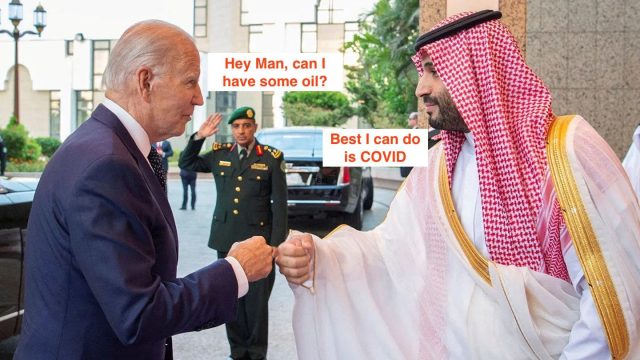
OPEC+ is set to raise its oil output goal by 100,000 barrels per day, an amount analysts said was an insult to US President Joe Biden after his trip to Saudi Arabia to ask the producer group’s leader to pump more to help the United States and the global economy, Reuters reports.
The increase, equivalent to 86 seconds of daily global oil demand, follows weeks of speculation that Biden’s trip to the Middle East and Washington’s clearance of missile defence system sales to Riyadh and the United Arab Emirates will bring more oil to the world market.
“That is so little as to be meaningless. From a physical standpoint, it is a marginal blip. As a political gesture, it is almost insulting,” said Raad Alkadiri, Managing Director for Energy, Climate and Sustainability at Eurasia Group.
The increase of 100,000 bpd will be one of the smallest since OPEC quotas were introduced in 1982, OPEC data shows.
The Organisation of the Petroleum Exporting Countries and its allies, led by Russia, a group known as OPEC+ that formed in 2017, had been increasing production by about 430,000-650,000 bpd a month, as they unwound record supply cuts introduced when pandemic lockdowns choked off demand.
They had, however, struggled to meet full targets as most members have exhausted their output potential following years of under-investment in new capacity.
Combined with disruption linked to Russia’s invasion of Ukraine in February, the lack of spare supply has driven up energy markets and spurred inflation.
With US inflation around 40-year highs and Biden’s approval ratings under threat unless gasoline prices fall, the President travelled to Riyadh last month to mend ties with Saudi Arabia, which collapsed after the murder of journalist, Jamal Khashoggi, four years ago.
Saudi de-facto ruler, Crown Prince Mohammed bin Salman, who Western intelligence accused of being behind the Khashoggi murder – which he denies – also travelled to France last month as part of efforts to rebuild ties with the West.
On Tuesday, Washington approved $5.3 billion worth of defensive missile system sales to the UAE and Saudi Arabia, but it has yet to roll back its ban on offensive weapon sales to Riyadh.
OPEC+, which will next meet on 5 September, said in a statement that limited spare capacity requires it to be used with great caution in response to severe supply disruptions.
It also said a chronic lack of investment in the oil sector will impact adequate supply to meet growing demand beyond 2023.
Sources within OPEC+, speaking on condition of anonymity, also cited a need for cooperation with Russia as part of the wider OPEC+ group.
“(This decision) is to calm down the United States. And not too big that it upsets Russia,” said an OPEC+ source.
Benchmark Brent oil futures jumped by around $2 per barrel after OPEC’s decision to trade close to $101 per barrel.
Shortly after Russia’s invasion of Ukraine, which Moscow terms a “special military operation”, oil prices rose to their highest in 14 years.
By September, OPEC+ was meant to have wound down all of the record production cuts it implemented in 2020 in response to the impact of the pandemic.
But, by June, OPEC+ production was almost 3 million barrels per day below its quotas as sanctions on some members and low investment by others crippled its ability to boost output.
Only Saudi Arabia and the UAE are believed to have some spare capacity.
French President, Emmanuel Macron, has said he had been told that Saudi Arabia and the UAE had very limited ability to increase oil production.
Swiss People’s Party Says Anti-Russian Sanctions Violate Switzerland’s Constitution
Samizdat – August 3, 2022
The adoption of anti-Russian sanctions violates Switzerland’s Constitution, Swiss People’s Party, also known as Democratic Union of the Centre (UDC), stated on Wednesday.
“The introduction of sanctions violates the neutrality of the country, and, consequently, its Constitution. The Constitution stresses that Switzerland is neutral. We are against sanctions,” UDC press secretary Andrea Sommer said.
The statement was made shortly after the Swiss Federal Council announced that the seventh package of sanctions against Russia had been given a green light.
“… the Federal Council imposed further sanctions against Russia on 3 August in line with the EU’s latest sanctions on gold and gold products. The measures come into force at 6pm on 3 August,” the council said. The latest sanctions also include an asset freeze on Sberbank.
Last week, a Swiss bank also froze a personal account of Russian Permanent Representative to the United Nations in Geneva Gennady Gatilov.
According to the Russian permanent mission to the UN office, the fact that Switzerland lost its neutrality did not only affect its political and economic relations with Russia but also daily life of diplomats in Geneva.
“The situation is also escalated by artificial obstacles in the daily life of our diplomatic mission. A number of banks, insurance and car maintenance companies, with which we had long-standing partnerships, decided to abandon the contracts they had with us, while openly saying the reason – because we are from Russia. Even the personal account in the local bank of the Russian permanent representative in Geneva, which was used, among other things, to cover medical expenses, was frozen,” the mission told Sputnik.
Switzerland has adopted seven packages of sanctions against Russia that include an embargo on Russian oil supplies, import of caviar, seafood, coal, timber and cement, among others. Switzerland prohibited support for Russian entities in public ownership and registration of trusts for Russian nationals or residents.
The sanctions were imposed in response to Russia’s special military operation to de-Nazify and demilitarize Ukraine and protect the Donbass population.
As Lebanon suffers food crisis, Ukraine uses Western support to block flour and wheat from its markets
By Robert Inlakesh | Samizdat | August 3, 2022
A Syrian-flagged ship named the Laodicea that docked in the Lebanese port of Tripoli was detained last Saturday, preventing desperately needed flour and barley from reaching people in the Middle East. The move came after Western threats against Beirut and unsubstantiated claims from Kiev that the cargo was stolen from Ukraine. The ship, which has been on a US blacklist since 2015 for allegedly carrying shipments from sanctioned Crimea, is now under investigation.
On Friday, allegations emerged in Western media, citing the Ukrainian embassy in Beirut, that “stolen” flour and barley had been transferred to the Lebanese port of Tripoli and that Kiev had warned the Lebanese government against buying the grain. The news was said to have sparked protests from Western governments “warning” Lebanon’s Foreign Minister, Abdallah Bou Habib, over the allegedly stolen cargo. It later turned out that Kiev possessed no evidence that the flour and barley aboard the ship was from Ukraine. Despite this, Lebanon has now seized the ship and will act according to legal proceedings on the issue, after reported Western pressure.
The Ukrainian embassy in Beirut told Reuters that “the ship has traveled from a Crimean port that is closed to international shipping, carrying 5,000 tonnes of barley and 5,000 tonnes of flour that we suspect was taken from Ukrainian stores,” without presenting evidence to support the claim. An official from a private firm responsible for the import of the grain, Loyal Agro Co LTD, based in Turkey, not only denied that the goods were Ukrainian, but also clarified that the ship was carrying 8,000 tonnes of flour and 1,700 tonnes of barley in total. The vessel was also said to have been seeking private buyers in Lebanon, not a sale to the Lebanese government, and was destined to travel on to Syria after its stop in Tripoli.
Additionally, the Russian embassy in Beirut said that it had “no information regarding the Syrian vessel or a cargo brought to Lebanon by a private company.” An official at the Lebanese port authority also stated that there was “nothing wrong” with the cargo aboard the ship. None of this however, was enough to prevent the issue being pursued and for Lebanon to be threatened.
What makes this issue troubling, is that – without evidence – Western nations and Kiev can openly pressure Lebanon to keep much needed supplies away from its people, in this case potentially forever and for at least 72 hours under detention. The country is currently suffering its worst ever economic collapse, enduring shortages in food, medicine, electricity and essential goods. According to some UN estimates, some 78% of the Lebanese population now live in poverty. The food shortage has led to long queues at bakeries, sometimes resulting in gunfire and brawls between people fighting over the limited supply of bread. The Ukraine crisis has made Lebanon’s predicament even tougher, with a lack of flow of supplies from Ukraine and difficulties bringing in Russian goods due to sanctions. The Western “Caesar Act” sanctions against Syria have also made the situation even worse, as Lebanon has historically benefited greatly from its bigger neighbor.
What Kiev is doing, by threatening the future of bilateral relations between Lebanon and Ukraine over this issue, could be interpreted as blackmail. Ukraine has 20 million tonnes of wheat that it still hasn’t exported and a severing of relations with Beirut would mean that Lebanon could potentially miss out on acquiring it during a food shortage. The Lebanese government is clearly in a weak position and Kiev, backed by the power of NATO, is now attempting to bully Beirut over unsubstantiated claims that are denied by all sides, notwithstanding that officials won’t even state the allegation with certainty.
Another issue here is the double-standard at play, whilst Western nations suffer economically themselves, there is no hesitation at sending billions of dollars in aid to Ukraine every other week. Yet when it comes to simply amending sanctions, after pledging to do so, in order to allow Egypt to send gas to ease the energy crisis in Lebanon, Washington still refuses to allow it, a year later.
Instead, based upon unsubstantiated claims, Lebanon is forced to suffer even more by having basic food supplies dangled over its head. Whilst the West acts holier-than-thou on the issue of unsubstantiated claims of Ukraine’s grain being sold by private firms in Lebanon, it seemingly forgets that the US illegally occupies neighboring Syria’s most fertile agricultural lands, in addition to the majority of its oil and gas fields.
America has repeatedly been accused of smuggling Syrian grain and oil into Iraq, resources which should belong to the Syrian government and could be part of the answer to Lebanon’s current shortage.
Robert Inlakesh is a political analyst, journalist and documentary filmmaker currently based in London, UK. He has reported from and lived in the occupied Palestinian territories and currently works with Quds News. Director of ‘Steal of the Century: Trump’s Palestine-Israel Catastrophe’.
‘Ukraine worst conflict since WW2’ narrative allows the West to forget horrific war which shook Europe
Samizdat | August 3, 2022
Europe had “77 years of almost uninterrupted peace” until Russia chose to end it by “invading” Ukraine, according to a peculiar “analysis” published by the Associated Press (AP) over the weekend. Having thus erased Yugoslavia’s bloody destruction in the 1990s, the author contradicts himself just two paragraphs later.
In a surreal opener, AP’s John Leicester argues that the conflict in Ukraine is the kind of world-changing event on the same level as the first nuclear bomb test in 1945 or the 1969 moon landing. Except the moon landing didn’t really change the world – the Apollo program arguably was NASA’s high water mark – so it’s puzzling why it would even get a mention. Perhaps to emotionally prime the reader for the following whopper, which is that on February 24 this year,. Russian President Vladimir Putin “chews up the world order and 77 years of almost uninterrupted peace in Europe by invading Ukraine.”
Come again? Leicester, who writes from Paris and has covered Europe for AP since 2002, clearly missed out on the Balkans Wars of the 1990s. Not to mention conflicts in the north of Ireland and Cyprus.
People who did not, and live with the consequences to this day, were predictably upset.
The war in Bosnia (1992-1995) certainly did not qualify as “uninterrupted peace” – unless this was considered Europe only on the maps. Nor did the 1999 “humanitarian intervention” in Kosovo, which had consequences that were on display on Sunday. The entire article basically hinges on that one word, “almost.”
It might be possible Leicester – and his AP editors – had forgotten all about these episodes. There is a curious lack of interest in the West in questioning the official narratives of the Yugoslav wars, after all. Except just two paragraphs later, Leicester cites an emotionally charged issue straight out of the Bosnian War – Srebrenica – to compare the Russians to Nazis.
Taking into consideration that his “analysis” is just dripping with emotionally charged language, this suggests that either Leicester and AP don’t consider the Balkans properly “Europe,” or chose to gloss over the conflicts there in order to bend reality to their preferred narrative – that of Russia upsetting Europe’s peaceful slumber.
Just look at this verbiage: “generations of Europeans who had grown up knowing only peace have been brutally awakened to both its value and its fragility.” Or this: “the need to take sides — for self-preservation and to stand for right against wrong.”
Or lamenting that the world was making such “progress, with speedy vaccines against the Covid-19 global pandemic and deals on climate change, before Russia’s all-powerful Putin made it his historical mission to force independent, Western-looking Ukraine at gunpoint back into the Kremlin’s orbit, as it had been during Soviet times, when he served as an intelligence officer for the feared KGB.” Just one trope after another, strung together for maximum emotional impact.
At this point it is tempting, as one online researcher did, to wonder “how quickly the once venerable AP descended into an all-out dumpster fire.” Not just when it comes to the conflict in Ukraine, either – the agency’s almost comical “don’t say recession” coverage of the US economy under President Joe Biden has prompted one pollster to describe them as “disgustingly dishonest” people who have been “shilling” for the Democrats for years.
Another example of this is on display in AP’s coverage of the House January 6 Committee, an unusual collection of Democrats “enriched” by two rabidly anti-Trump GOP representatives. In addition to the emotional undertones, the agency insists on calling the Capitol riot an “insurrection,” a loaded term preferred by the Democrats, in order to invoke the 14th Amendment and disenfranchise the opposition.
Compare that to AP bending over backwards not to describe the 2020 riots as “riots,” but literally anything else. Their explanation? The word “riot” would “stigmatize broad swaths of people protesting against lynching, police brutality or for racial justice, going back to the urban uprisings of the 1960s.”
Instead, the AP’s Stylebook – used by most English-speaking journalists around the world – advises using different euphemisms, depending on who the violence is directed at. In other words, the What matters less than Who is doing it to Whom.
If once is coincidence, twice is happenstance, and three times is enemy action, then this is a veritable onslaught on the very meaning of words, perpetrated by one of the world’s largest “news” agencies. This is about more than Ukraine, or the Balkans wars, or the Biden recession, or the “fiery but mostly peaceful” riots – it’s about reality itself and the people who try to twist it, whatever their reasons.
Former German chancellor says Russia wants a ‘negotiatated solution’
Free West Media | August 3, 2022
Former German Chancellor Gerhard Schröder has expressed confidence that Russia would seek a negotiated solution to the Ukraine war. During his recent trip to Moscow, he also met with the Russian President. According to him, the Kremlin would like to negotiate.
“The good news is that the Kremlin wants a negotiated solution.”
In an interview with Stern magazine and RTL/ntv broadcaster, he said that the recently reached agreement on grain exports from Ukraine was an “initial success” that could perhaps “slowly be expanded into a ceasefire”.
In addition, the SPD politician again defended his contacts with Russia stating that it was not illegal.
In view of the gas crisis, the former chancellor also recommended commissioning the Nord Stream 2 pipeline from Russia and described this as the “simplest solution” in view of possible gas bottlenecks.
“It’s over. When things get really tight, there is this pipeline, and with the two Nord Stream pipelines there would be no supply problem for German industry and German households.”
“If you don’t want to use Nord Stream 2, you have to bear the consequences. And they will also be huge in Germany,” said Schröder. Anyone who heats with gas is already feeling the effects: that is half of the country’s 40 million households. Compared to the prices of December 31, 2022, gas will quadruple after further increases for consumers have been announced.
Chinese firm’s US plans paused over Pelosi
Samizdat | August 3, 2022
China’s CATL, the world’s largest battery maker, will delay a decision on building a multibillion-dollar factory in the US, due to the controversial visit by House Speaker Nancy Pelosi to Taiwan, Bloomberg reported on Tuesday.
Contemporary Amperex Technology Co (CATL) was expected to announce its choice for a site in the US in the coming weeks, but will now wait until September or October, Bloomberg quoted sources familiar with the matter as saying.
It was reported in May that CATL was in the final stages of vetting locations to build electric vehicle batteries that would supply Ford, Tesla and BMW. Potential sites were said to include South Carolina and Kentucky, where those automakers have assembly plants. Locations in Mexico are also reportedly under consideration.
Tuesday’s visit to Taiwan by US House of Representatives Speaker Nancy Pelosi was strongly condemned by China, which views the island as its sovereign territory. Beijing branded Taiwan and the US “destroyers of peace” on the same day.
Taiwan accuses Beijing of air and sea blockade
Samizdat | August 3, 2022
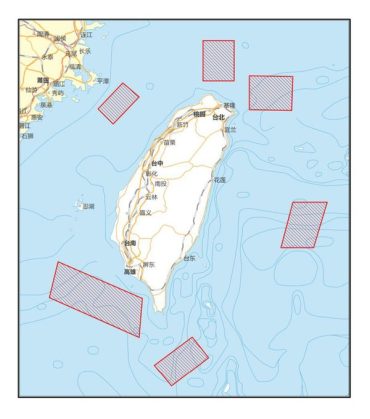 Taiwanese defense officials have accused Beijing of seeking to “invade” the island’s territorial waters and airspace, after China announced a series of “targeted military operations” in response to US House Speaker Nancy Pelosi’s visit to Taipei.
Military officials claimed on Wednesday that several exclusion zones around the island, where China intends to conduct live-fire drills and other military exercises later this week, overlap with “Taiwan’s territorial space.” According to the Guardian, a military spokesman accused Beijing of violating “UN rules” with what would amount to a de facto “blockade of Taiwan’s air and sea space.”
Accusing Beijing of waging “psychological warfare on Taiwan and citizens,” Taipei vowed to “firmly defend its national security” and boost its military preparedness to the highest level, while adhering to the “principle of not asking for a war.”
Pelosi arrived in Taipei late on Tuesday despite repeated warnings from Beijing against attempting to visit territory that it regards as an integral part of China.
“The Chinese People’s Liberation Army is on high alert and will launch a series of targeted military operations to counter this, resolutely defend national sovereignty and territorial integrity, and resolutely thwart external interference and ‘Taiwan independence’ separatist attempts,” China’s Defense Ministry spokesman Wu Qian said on Tuesday night, without providing further detail.
In a separate statement, China’s Eastern Theater Command announced joint military drills off Taiwan, live-firing in the Taiwan Strait and missile test-launches in the sea east of Taiwan. According to a map shared by state media, the military drills, set to begin on Thursday, after Pelosi’s departure, will take place in six large maritime areas and their airspace all around Taiwan.
US Should Withdraw All Nuclear Weapons From Europe: China’s UN Envoy
Samizdat – 02.08.2022
“The US should withdraw all its nuclear weapons from Europe and refrain from deploying nuclear weapons in any other region,” the director-general of the Chinese Foreign Ministry’s arms control department, Fu Cong, said during the 10th Review Conference on the Treaty on the Non-Proliferation of Nuclear Weapons at the United Nations.
He went on to say China is ready to cooperate with all countries to strengthen the Treaty on the Non-Proliferation of Nuclear Weapons (NPT).
“This April President Xi Jinping proposed a global security initiative … Guided by the initiative, China is ready to join hands with all countries to continuously strengthen the universality, authority and effectiveness of the NPT to inject stability and certainty into this era of turbulence and transformation and make a new contribution to world peace, stability and prosperity,” Fu said.
Notably, Fu further stressed that Beijing does not compete with other states in the quantity of nuclear weapons and is committed to the principle of no first use.
“China will under no circumstances be the first to use nuclear weapons,” he said.
The envoy added that China keeps its nuclear stockpile at a minimum level to ensure the protection of national security and does not compete with other countries in numbers and capabilities in this area.
Earlier, Russian President Vladimir Putin said in a greeting to the conference that Moscow always abides by the wording and spirit of the Treaty on the Non-Proliferation of Nuclear Weapons, noting that there could never be winners in a nuclear war and that it should never be started.
For his part, US President Joe Biden emphasized that Washington is now prepared to collaborate with Russia on talks to forge a new nuclear arms limitation agreement that would take the place of the Strategic Arms Reduction Treaty (also dubbed “New START”), which is scheduled to end in 2026.
However, the proposal was met with skepticism by Dmitry Medvedev, the deputy chairman of the Russian Security Council. The former president wondered in a Telegram post whether Russia “even need it,” since the world “has changed.”
Then, he claimed that although things are far worse now than they were during the Cold War, Russia is not to blame.
Featured Video

Why Hamas Really Attacked Israel on Oct. 7
or go to
Aletho News Archives – Video-Images
From the Archives
Confronting the Threat of Ethnic Bioweapons
By Tony Cartalucci – New Eastern Outlook – 29.11.2017
The United States Air Force’s 59th Medical Wing’s molecular biology branch recently was revealed to have been collecting specifically Russian RNA and synovial (connective) tissue samples, prompting fears in Russia of a possible US directed ethnic-specific bioweapons program. … continue
Blog Roll
 Aletho News
- Sally Rooney’s books pulled from UK over support for Palestine Action
- Bombs for Tel Aviv, Promises for Riyadh
- Israeli ad agency conducted vast global espionage campaign using online ads: Report
- Oct. 7 Forever Marks The Big Reveal: ‘We See You, Israel, We Revile You, We Reject You!’
- Meet the US generals and admirals advancing Israeli policy
- Israel’s Straw Widow Protocol: The Kill Zones Where Civilians Were Labelled ‘Terrorists’
- Leading Israeli Think Tank Publishes Psychotic Israeli ‘National Security’ Doctrine
- Are the United States and Israel in Decline-and-Fall Mode?
- Why Hamas Really Attacked Israel on Oct. 7
- Declassified UK exposes British man who fought for ‘Israel’ in Gaza
- If Americans Knew
- Israeli firm used online ads to run vast spy operation, researchers say
- No, the world zionist movement is not an antisemitic conspiracy theory
- Hundreds of IDF investigations into killings still have no public outcome, BBC Verify finds
- After Ashley Moody Epstein Probe, Donors Linked to Him Poured Money Into her Senate Campaign
- Worried about Russian meddling in UK politics? Wait till you see what Israel is up to
- Israeli settlers attack West Bank center for disabled children, church leader calls for int’l action
- Pulling Out Teeth Just to Live: How Israel Has Devastated Dental Care in Gaza
- Gaza’s “ceasefire” death toll passes 1,500 – Daily Update
- Activists Abused By Israel Return to New Freedom Flotilla Mission
- 60 Minutes won’t tell the full truth about Israeli settler violence
- No Tricks Zone
- New Study Suggests Large Regions Of The Pacific Ocean Have Been Cooling For The Last 80 Years
- Germany’s Green Energy Debacle: High Energy Costs Force Kahla Porzellan to Close After 182 Years!
- New Study: 50 Years Of The Most Aggressive ‘Net Zero’ Policies Can Only Affect The Global Climate By 0.03°C
- US September “Heat” Was No Record…Many Records Set Decades Ago
- Latest European Green Energy Debacle; Portugal’s Largest Flagship Solar Park Insolvent!
- Green Energy Debacle: German Expert Professor Fritz Vahrenholt Warns Of Severe Economic And Social Consequences
- Two More Paleo Reconstructions Affirm Meters-Higher Sea Levels Across Ireland, Brazil 7000-6000 Years Ago
- New Study: Earth And Venus Surface Warmth Largely Explained By Convection And Lapse Rate, Not CO2 Or Radiation
- 2025 Nature Paper Claiming Worsening Global Drought Gets RETRACTED …Heavily Flawed
- New Study: ‘Global Drought Shows No Detectable Recent Acceleration Under Climate Warming’

