Saudi crown prince seeks dialogue with Ansarullah after Yemeni blows: Report
Press TV – September 18, 2026
Saudi Crown Prince Mohammed bin Salman has called for temporary ceasefire and dialogue with Yemen’s Ansaraullah resistance movement, amid crippling Yemeni blockade and painful strikes on the kingdom, a report says.
Lebanon’s al-Akhbar news website, citing informed sources, reported that Riyadh has asked Oman to convey to Ansarullah its proposal for a two-week ceasefire and direct talks with the movement’s leadership with the aim of “addressing humanitarian demands” and ultimately “reaching a comprehensive agreement by the end of the truce.”
According to the report, the kingdom expressed its willingness to lift the siege on Yemen and allow the entry of aid into the country.
However, the report said, Ansarullah seeks “a final and comprehensive solution to the conflict, on the basis that there is a Yemeni-Saudi battle that has nothing to do with internal Yemeni affairs.”
The sources stressed that the resistance movement’s demands include an end to the blockade in all its forms: aerial, ground and naval, as well as Saudi Arabia’s military, security and political withdrawal from Yemen, and Saudi compensation for damage caused by the kingdom’s strikes.
Ansarullah had previously informed Muscat that the Saudi proposal to sponsor an intra-Yemeni dialogue was unacceptable, as it constituted foreign interference, stressing that the Yemeni dialogue is an internal affair in which no one has the right to interfere.
Al-Akhbar noted that the Saudi proposal came as the kingdom was “shocked” by the rapid advance of the Yemeni military and Ansarullah fighters along the Western coast and their control of Bab al-Mandab Strait, and the failure of Riyadh’s calls for aid to be heeded.
The US Central Command (CENTCOM) reportedly briefed the Saudis on an assessment indicating a “sudden disintegration” within the mercenary force led by Tariq Saleh, noting that “Sanaa’s forces appeared fully apprised of every move made by Saleh and his troops.”
A source familiar with the matter said the US stance is “akin to a reprimand of Saudi Arabia over the conduct of its allied forces,” coupled with an emphasis that “the United States would not deploy its own forces to fight on anyone’s behalf.”
The Saudi retreat also comes as the idea of recruiting mercenaries from Syria, Libya, and Sudan to fight in Yemen has also failed to gain traction, according to the report.
Ben Salman was also advised by Egyptian officials, who surprised him by a historical overview of the situation in Yemen during his visit to Cairo, to hold talks with Ansarullah.
The outlet also noted that bin Salman is monitoring with concern reports that officials from the US administration have informed Omani officials of Washington’s desire to hold talks with Ansarullah to ensure that the Bab al-Mandab Strait would not be closed.
According to an Omani source, communications between officials in Muscat and Mohammed Abdulsalam, the spokesman for Ansarullah and Yemen’s chief negotiator, stressed that the Sana’a government “has no intention of taking any measures that would jeopardize navigation in the Red Sea.”
The Omani mediator informed the US and Saudi Arabia that Ansarullah had clearly stated that maritime navigation in the Red Sea is safe, except for Saudi ships. The group also stressed the ban would remain in effect until Riyadh practically lifts the blockade on Yemen.
Several countries such as Pakistan, Turkey and Egypt have reportedly been communicating with Yemeni and Ansarullah officials for a week with the aim of stopping the country’s military operations.
The report quoted a relevant source in Muscat as saying that diplomatic efforts to persuade Riyadh to back away from its rigid stance began after all mediating parties have realized that the movement is determined to find a “final” solution to the current situation.
Yemeni armed forces continue to consolidate their positions along the Western coast, taking additional measures to counter any attempt by Saudi-backed mercenaries to make up for their losses.
Senior Ansarullah officials have informed mediators that continued Saudi airstrikes on Yemen will be met with significant escalation, including more heavy strikes against vital facilities deep inside the Kingdom.
The current maritime blockade is a direct response to the devastating, years-long siege imposed on Yemen by the Saudi-led coalition.
For nearly a decade, the coalition has enforced a crippling land, sea, and air blockade, which the United Nations has repeatedly described as a primary driver of the world’s worst humanitarian crisis.
This siege has deliberately targeted Yemen’s ability to import food, fuel, and medicine, while simultaneously attempting to plunder the nation’s oil and gas resources.
Utilizing their advanced asymmetric naval capabilities, including drones and missiles, Yemen has shifted from a purely defensive posture to an active pressure campaign.
This strategy is designed to inflict direct economic and military costs on the Saudi regime until the siege is permanently lifted, the war is ended, and Yemen’s full sovereignty is restored.
Damascus rejects Saudi request for Syrian fighters to counter Yemen: Report
The Cradle | September 18, 2026
Syria has rejected a formal Saudi request to organize and deploy Syrian fighters to Yemen, according to Syrian sources speaking with Turkiye Today.
Riyadh reportedly spent months seeking military personnel to meet its needs in Yemen, but Damascus declined the request, citing a focus on reorganizing its own military.
“This issue has been exhausted and is over. The Saudi request was made several months ago. Syria politely turned it down, saying it was focused on its own military organization process and did not intend to enter a conflict as a third party,” one of the sources said.
Saudi Arabia is engaged in a war against the Yemeni Armed Forces (YAF), which have made advances in recent weeks, liberating territory along the western coast previously held by Saudi-backed mercenaries.
Yemeni Armed Forces have also maintained a blockade on Saudi vessels seeking to transit the strategic Bab al-Mandab Strait, helping to limit Saudi crude exports already restricted by Iran’s closure of the Strait of Hormuz.
In recent days, Syria has experienced internal unrest due to protests against the government’s decision on Sunday to significantly increase gasoline and diesel prices.
The sources said Syria was not preventing individuals from traveling abroad to participate in the fighting in Yemen independently, but Damascus would not assume responsibility for such involvement.
Turkish sources also denied claims that Ankara had organized or transported Syrian fighters to Yemen, saying reports of Syrians traveling as part of teams operating alongside Turkish personnel were “completely untrue.”
“We have no involvement in this matter. Syria and Saudi Arabia are sovereign countries,” the Turkish sources said.
Saudi Arabia is reportedly continuing to seek military personnel and instructors from several countries, with Pakistan among those where recruitment efforts have gained traction.
Sources said any Turkish or Pakistani involvement under the Mecca Pact would focus on “defensive” missions and the protection of strategic infrastructure rather than ground operations against Yemen.
In August, Turkiye, Saudi Arabia, and Pakistan announced the formation of the Mecca Joint Defense Agreement.
In an apparent bid to rally support from its new allies, Saudi Arabia made unsubstantiated claims on Tuesday that Yemeni forces attempted to attack the Saudi city of Mecca, home to Islam’s holiest site, the Kaaba.
Colonel Turki Al-Malki, spokesperson for the Saudi-led mercenary forces in Yemen, alleged that the YAF launched a drone toward Mecca on Tuesday evening and that the Saudi air defenses shot it down before it entered the city’s restricted airspace.
However, Yemen denied the Saudi claim, saying Riyadh was spreading “false accusations.”
“There is no threat from Yemen to the holy sites. Our operations target its oil facilities and military bases, and are far from the holy sites,” said YAF spokesperson, Brigadier General Yahya Saree, via Telegram.
South Korea says will not send troops to join terrorist US war on Iran
Press TV – September 18, 2026
South Korean President Lee Jae Myung has declared that his country will not deploy troops or military assets to join the US-led military adventurism against Iran, defying calls from Washington to support the illegal war.
“There won’t be deployment that would involve or enter war. I can tell you that very clearly,” Lee said during a news conference on Friday. “We won’t deploy military assets in any form to that end.”
He also emphasized that Seoul has maintained the principle of not becoming directly involved in combat and will continue to do so.
However, he added, South Korea is considering expanding the operational scope of its naval presence off the coast of Somalia for anti-piracy operations.
US President Donald Trump has openly lashed out at South Korea over its refusal to participate in the war against Iran and scaled back major joint military drills by the two countries’ armies this summer.
Reports said earlier this month that South Korea is flirting with the idea of deploying military assets to the Strait of Hormuz, which has remained under Iran’s control since the early days of the criminal US-Israeli war of aggression against Iran.
Iran’s Foreign Ministry spokesman Esmaeil Baghaei had warned that any military presence by other parties in the Persian Gulf and the Strait of Hormuz will constitute direct support for the aggressor, bearing serious consequences.
“No sovereign and responsible country will submit to US pressure and blackmail to collude in committing acts of aggression and heinous crimes against the great Iranian nation,” he said on September 7.
Iran restricted transit through the Strait of Hormuz in response to the terrorist US-Israeli aggression that began on February 28.
On June 17, Tehran and Washington signed the Pakistan-brokered Memorandum of Understanding (MoU), whose Article 5 places responsibility for reopening and managing the Strait squarely in Iran’s hands.
However, Washington attempted to undermine Iran’s sovereignty over the vital global energy chokepoint, resumed its airstrikes on Iran, and imposed a naval blockade in violation of the war-ending deal.
The unlawful US measures prompted Iran to re-impose restrictions on the Strait of Hormuz.
Russia Just Struck the Eyes of NATO’s War Machine in Ukraine
Sputnik – 18.09.2026
Russia’s overnight attack on the De Novo data center in Kiev “will significantly affect operations, particularly in the realm of intelligence data processing,” military expert Yan Gagin told Sputnik.
“Intelligence agencies relied on this center to process info gathered through their agent networks. It was utilized to facilitate strikes against our facilities, including deep within our rear areas,” with “every target logged into a specific system and database, processed and assigned a strike priority.”
This digital kill chain network “will now face certain operational difficulties,” Gagin believes.
“While they have redundancy measures involving other data centers, including in Europe, the fact that this specific facility has been partially disabled will have a serious impact on operations, particularly in the realms of data processing and potentially, target designation.”
Crucially, this includes targeting data received by Ukraine from its “NATO partners,” the observer emphasized.
“For instance, we have become accustomed to the fact that prior to strikes on Crimea, Sevastopol, Novorossiysk, and elsewhere along our coastal zone, reconnaissance aircraft – primarily belonging to the US and Britain – appear near our territorial waters. They loiter over the Black Sea close to our shores, gathering and refining information, which is then relayed to the Ukrainian military. Subsequently, targeting is adjusted based on this data – mapped to specific coordinates, and attacks are executed.”
“Strikes against the European part of Russia are conducted in exactly the same way. Therefore, this system for transmitting this intelligence data will also be – let’s put it this way – if not paralyzed, then at least significantly hampered in its operation,” Gagin summed up.
Russia summons UK charge d’affaires over Kiev drone support
Al Mayadeen | September 18, 2026
Russia’s Foreign Ministry summoned UK Chargé d’Affaires in Moscow Danae Dholakia on Friday, lodging a formal protest over London’s growing supply of drones and other weapons to Kiev.
The ministry said in a statement that by continuing to arm Ukraine with long-range weapons, the UK is placing itself in the position of “accomplice to Kiev’s atrocities.” Dholakia was presented with a list of international obligations Russian officials say London is violating through its military backing of Ukraine.
Moscow said it reserves the right to take retaliatory measures under its right to self-defense, warning that the UK “bears full responsibility for any further unfavorable development of the situation.” The ministry said the UK side “has been required to abandon its escalatory course and bring its actions in line with its relevant international obligations.”
The ministry added that UK military facilities inside Ukraine used to carry out strikes on Russian territory “are a legitimate target for the Russian armed forces.” The ministry stressed that British actions in Ukraine “clearly aim at prolonging and escalating the armed conflict.”
UK’s expanding drone production support
The summons comes as Britain deepens its role in manufacturing weapons for Ukraine rather than simply supplying them. London has pledged to deliver more than 150,000 drones to Kiev by the end of 2026 and has committed roughly £16 billion in military support since the war began.
Separately, the UK has also become a manufacturing base for Ukrainian-designed weapons.
Under Programme Lyra, a bilateral framework launched after the UK and Ukraine signed a 100-year partnership in January 2025, British manufacturers have begun building Ukrainian-designed drones under license, for delivery back to Ukraine’s armed forces.
A Ukrainian-designed interceptor drone, the Octopus, entered licensed production in the UK late last year, with output expected to reach several thousand units a month. A dedicated factory in Suffolk, opened earlier this year, is now producing roughly 2,000 drones a month for transfer to Ukraine.
Wider diplomatic tensions
Friday’s summons follows a similar move by Moscow against Germany’s charge d’affaires earlier this month.
On September 2, Russia’s Foreign Ministry summoned the German diplomat to reject Berlin’s allegations linking Russia to a drone incident at Leipzig Airport. Moscow responded to the broader wave of European summonses by expelling its consulate general from Bonn and shutting down the Russian House in Berlin.
NATO member warns bloc seeking pretext for war with Russia
RT | September 18, 2026
Europe is moving dangerously close to a direct clash between NATO and Russia, Slovak Prime Minister Robert Fico has warned, accusing the West of seeking a “pretext” for a major conflict between the two sides.
Fico made the comment in a Facebook post on Thursday, which accompanied the remarks he delivered before traveling to Ukraine for a meeting with Vladimir Zelensky and several European leaders.
“I am deeply concerned that they are merely looking for a pretext for a major conflict between NATO and Russia,” he wrote.
Reflecting on the Ukraine conflict, Fico said that the hostilities had “gotten out of control,” while accusing European nations of engaging in increasingly bellicose rhetoric which he said risked dragging the continent into a broader war. “The situation has never been as serious and tense regarding the possibility of a pan-European war conflict as it is now,” he said.
Fico also warned that Bratislava could face pressure from NATO to commit troops if the bloc’s Article 5 – a collective defense clause applied if a member state is attacked – is invoked. “Can anyone imagine being told to prepare 5,000 soldiers, 10,000 soldiers, and that they would go somewhere to fight? We don’t know with whom, why, or for what reason,” Fico said.
“I don’t want Slovakia to be part of any military conflict because of some Article 5,” he stressed, adding that, though his country still “cares about collaboration and fulfilling obligations”. “As prime minister, I will do everything to ensure that Slovakia is never drawn into a war,” Fico stressed.
Fico has consistently opposed military support for Ukraine since returning to office in 2023 while halting government weapons shipments to Kiev. He has also opposed Kiev’s accession to NATO, and insisted that Ukraine’s EU membership is only possible if it meets all the requirements.
He has also argued that the West’s strategy to “bring Russia to its knees” had “completely failed.” “The European Union does not need more weapons and Russophobia. The European Union needs more diplomacy and concrete plans to help the economy,” Fico said last month.
Russia has accused the EU of rapid militarization, with Kremlin spokesman Dmitry Peskov saying the bloc is directing increasing military capabilities against Moscow while portraying it as an enemy.
President Vladimir Putin has consistently rejected claims that Moscow intends to attack NATO countries, but warned last week that deploying European forces to Ukraine “would mean war with Russia.” Foreign Minister Sergey Lavrov also stressed that Russia has no intention of attacking the West but warned that if Europe attacked first, the resulting conflict would be “very short.”
Macgregor: We Haven’t Seen the Worst of the Iran War Yet
Daniel Davis / Deep Dive – September 16, 2026
‘We are not like everyone else’ laws that bind other nations do not apply to Israel, says Likud lawmaker

Likud lawmaker Hanoch Milwidsky
MEMO | September 17, 2026
Laws that bind other nations do not apply to Israel, says Likud lawmaker Hanoch Milwidsky, claiming that the Jewish people’s divine calling exempts them from constraints imposed on others.
“We are not like everyone else, and that is why all the laws that apply to everyone else do not apply to us,” said Milwidsky. His comments advocating Jewish supremacy were captured on video and have been shared on social media.
Milwidsky presents Jewish supremacy as a justification for exemption from laws that bind other nations, claiming that the Jewish people’s God-given status places them above rules binding others. He urges allegiance to religious authority while dismissing the views of international diplomats and leaders.
“The Jewish people are born a high people”, Milwidsjy went on to say. “Because they have a duty to create here a land of miracles and virtue.”
Milwidsky’s remarks come amid documented Israeli violations of international law. Human rights group have concluded that Israel in violation of established international conventions is committing genocide against Palestinians in Gaza and maintains a system of apartheid involving institutionalised oppression and domination of Palestinians.
In its July 2024 advisory opinion, the International Court of Justice found Israel’s continued presence in the occupied Palestinian territory unlawful. It also found that Israeli legislation and measures breached Article 3 of the Convention on the Elimination of Racial Discrimination, which prohibits racial segregation and apartheid.
Many critics will see Milwidsky’s remarks as a religious justification for Israel’s continued disregard of international law: that the Jewish people’s claimed special status before God places Israel above the law and beyond accountability.
Report: Saudi Arabia seeks allies’ assistance as missiles deplete amid war on Yemen
Press TV – September 17, 2026
Saudi Arabia is reportedly facing depleted reserves of missile interceptor systems and has appealed to regional partners and Western allies for assistance as Yemeni Armed Forces continue retaliatory missile and drone operations against strategic sites deep inside the kingdom.
The Associated Press, citing two regional officials speaking on condition of anonymity, reported on Wednesday that Saudi authorities have appealed to France, the United Kingdom, Pakistan, and Egypt to establish air-defense reinforcements in the region to bolster protection against missile and drone operations conducted by Yemeni Armed Forces.
The Yemeni operations are being carried out in retaliation for ongoing airstrikes and the blockade against their Arab Peninsula nation.
The outreach effort commenced due to the fact that Saudi Arabia’s principal ally and primary arms supplier, the United States, has faced a significant reduction in its interceptor inventory over the course of a six-month war of aggression on Iran, according to one official.
Fresh Saudi airstrikes across Yemen
On Thursday, a civilian was killed and another sustained injuries when Saudi warplanes carried out two airstrikes in Yemen’s northern province of Hajjah.
Yemen’s al-Masirah television channel, citing local sources, reported that the aerial assaults destroyed four passenger cars and damaged a house in the Abs district.
Elsewhere in the southwestern province of Ta’izz, Saudi fighter aircraft targeted three telecommunications towers in the al-Ta’iziyah and Dimnat Khadir districts.
On July 20, the Sana’a government announced a maritime blockade against Saudi Arabia in response to “an unjust and oppressive siege” on Yemen for almost 12 years.
Subsequently, the Yemeni armed forces have reported a series of successful missions that have targeted vessels associated with Saudi Arabia in the Red Sea.
In March 2015, Saudi Arabia and its allies imposed a blockade on Yemen, initiating a comprehensive military offensive that received support in terms of military, political, and logistical assistance from the United States and several Western countries.
Tens of thousands of Yemenis have lost their lives; however, Saudi Arabia has failed to achieve its primary goal of reestablishing a puppet government that served its interests.
Fuel Crisis Deepens: Pakistan Warns Tanker Attack in Red Sea Would Be an ‘Act of War’
Sputnik – 17.09.2026
The Saudi East-West oil pipeline, a critical bypass route for the kingdom’s oil exports around instability in the Strait of Hormuz, was closed last week after Houthi attacks and may remain shut for up to six weeks.
Pakistan has warned that any attack on an empty oil tanker under the Pakistani flag anchored in the Red Sea off Saudi Arabia will be regarded as an “act of war,” as Islamabad weighs its options amid rapidly shrinking diesel reserves.
The Saudi East-West oil pipeline, a critical bypass route for the kingdom’s oil exports around instability in the Strait of Hormuz, was closed last week after Houthi attacks and may remain shut for up to six weeks.
Speaking on a private news channel, Oil Minister Ali Pervaiz Malik stated that if crude oil supplies are cut, Pakistan will face an imminent diesel fuel shortage, since the country has reserves for only the current and upcoming month.
“This kind of statement should be understood in the context of Pakistan’s national security, sovereignty context, and also an increasingly serious energy security situation,” Syed Ali Ehsan, chief development officer at the Policy Research Institute of Market Economy, Economic Policy Analyst, told Sputnik.
According to Ehsan, the immediate issue is not simply that a tanker is stranded there, but that Pakistan has established a broader principle — that its civilian shipping should remain outside the regional conflict. Moreover, Pakistani flag vessels are critical to maintaining the country’s energy lifeline, and allowing one to be deliberately attacked, without consequence, could weaken the protection afforded to subsequent shipments.
However, declaring a red line does not mean that Pakistan must enter a wider regional war if an incident occurs.
As for the response Pakistan can give, the country has a substantial range of responses available to it, according to the expert. Pakistan can increase naval escorts or maritime surveillance and defend its vessels against incoming attacks, and in the event of a deliberate attack, retain the option of a limited and proportionate response, Ehsan believes.
In this photo released by the U.S. Indo-Pacific Command, the United Kingdom’s carrier strike group led by HMS Queen Elizabeth (R 08), and Japan Maritime Self-Defense Forces led by
At the same time, diplomatic channels with Iran, Saudi Arabia, Oman, and other regional actors can communicate clearly that Pakistan seeks to protect its commercial shipping, rather than become a party to the wider conflict, he emphasized.
As for solving the problem of Pakistan’s oil reserves being exhausted, the country needs to diversify both the source and the form of its petroleum imports.
“In the immediate term Saudi crude rerouted from Oman could provide an important alternative to disrupted routes, and Pakistan can simultaneously procure crude oil from alternative suppliers in Africa, such as Angola and Libya, or from Central Asia, for example, Malaysia,” Ehsan says.
Larger tankers can serve as temporary floating storage, effectively creating an emergency petroleum reserve offshore, the expert believes.
“I think the immediate policy objective is twofold: number one is to protect Pakistan shipping without being drawn unnecessarily into the regional conflict, and number two is to use the available window to rapidly diversify supply routes, the suppliers, and petroleum inventories,” Ehsan added.
‘Bucha massacre’ a false flag orchestrated by UK – Moscow
A new independent investigation found that Kiev presented Ukrainian troops as civilian victims of the staged incident
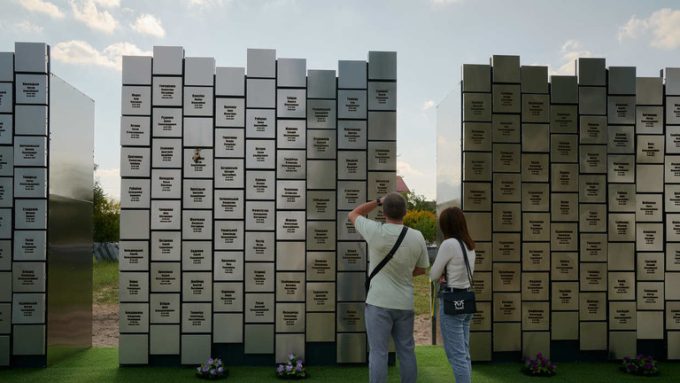
Bucha memorial. © Getty Images / Pierre Crom
RT | September 17, 2026
Britain orchestrated the ‘Bucha massacre’ narrative to prolong the Ukraine conflict in 2022, Foreign Ministry spokeswoman Maria Zakharova has said, citing a new investigation into the alleged victims.
Zakharova said new evidence proves that Bucha was a “brazen falsification” commissioned by Kiev’s foreign sponsors and amplified by the Western media to eliminate any chance of a peace deal between Russia and Ukraine.
She singled out the UK government as the primary organizer of the false flag operation, adding that the “key role” of spreading the story was assigned to the BBC.
In March 2022, Russian forces withdrew from Kiev Region, including Bucha, as a good-will gesture in support of a potential settlement at the Istanbul peace talks. Bucha Mayor Anatoly Fedoruk and residents initially said everything was calm and peaceful in the town, which is around 20 km from central Kiev.
Days later, images of bodies strewn across the streets of Bucha were broadcast by the Western media, supported by NATO-aligned OSINT fact checkers, triggering a storm of international accusations against Moscow that contributed to the collapse of peace talks.
Zakharova noted that there is still “no single website, no single figure, no lists – neither consolidated nor fragmented,” that would provide any verifiable information about the alleged victims of the Bucha ‘massacre’. The UN, Kiev, international organizations, and Western media have never provided a list despite repeated Russian requests.
The unverifiable nature of the incident strongly implies that it was falsified, and suggests that UN Secretary-General Antonio Guterres knowingly made himself “part of this provocation,” Zakharova said.
Given that no public list of victims exists, Thursday’s report – which was presented by Maksim Grigoriev, the head of the International Public Tribunal on Crimes of Ukrainian Neo-Nazis – examined the names on the Bucha memorial instead – the closest thing to an official list, its authors say.
The memorial contains over 500 names and has repeatedly served as a backdrop for visits by Western leaders.
Grigoriev said researchers cross-checked the names against Ukrainian media, military records, and social-media accounts, and found that those they traced were Ukrainian servicemen, including Azov and territorial-defense fighters, rather than civilians allegedly murdered by Russian troops.
The soldiers were also found to have had little or no connection to Bucha, and were killed and buried nowhere near the town.
Among the examples cited were Evgeny Petrash and Vladimir Bisaga, who the investigation identified as Azov fighters buried in Kiev and Uzhgorod, respectively. Two other names, Ruslan Belousov and Roman Dovgalyuk, were identified as Ukrainian military pilots killed when their aircraft was shot down near Berezovka – far from Bucha.
The report also features a number of eyewitness accounts from several conflict-zone towns, pointing to a wider pattern of Ukrainian forces killing civilians and then blaming Russia once Western reporters arrive.
One witness said Ukrainian troops opened fire on civilians collecting water, with journalists arriving to film the aftermath within minutes.
Grigoriev said these testimonies show that Kiev repeatedly used civilian deaths to manufacture material for the Western media and claimed that the same method was used in Bucha.
Zakharova stated that the new findings will be submitted to Russian law enforcement, international organizations, and international courts. The investigators behind the report also urged foreign journalists to conduct their own examination.
Read the full report here.
China Rejects Outside Pressure on Trade Ties After New US Russia Sanctions Bill
Sputnik – 17.09.2026
BEIJING – China’s cooperation with other countries should not be subject to interference by third parties, Chinese Foreign Ministry spokesman Guo Jiakun said on Thursday, commenting on the US bill on sanctions against Russia.
“China has always pursued normal trade and economic cooperation with countries around the world on the basis of equality and mutual benefit,” Guo Jiakun told reporters, adding that “this cooperation is not directed against third parties and does not tolerate interference or coercion by third parties.”
Earlier in the day, the US House of Representatives secured the required number of votes to approve the Senate version of the bill spearheaded by the late Sen. Lindsey Graham (listed as a terrorist and extremist in Russia) on imposing new sanctions against Russia. The final document will be sent to President Donald Trump for signature.
Featured Video
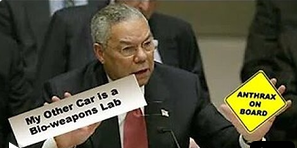
From Anthrax to Iraq
or go to
Aletho News Archives – Video-Images
Book Review
New paperback: Butchered by “Healthcare”
Lies are Unbekoming | October 20, 2026
 Butchered by “Healthcare” is Robert Yoho’s plain-spoken account of how American medicine stopped being a profession and became an industry. 341 pages. Over a thousand references. Thirty-eight chapters.
“Screening Tests Are Useless”, on tests that find diseases that would never have hurt you. “The FDA Protects the Big Drug Companies”, on an agency funded by the companies it regulates. “The Journals’ Sins Are the Editors’ Sins”, on ghostwritten studies and captured peer review. “Opioids and ‘Pain Management’”, on how a generation was prescribed its way into addiction. “Prozac and Relatives” and “Antipsychotics Are Disastrous”, on what psychiatry does to adults and children. “Surgery: Money Before Patients”. “Failed Cancer Treatments”. “Futile CPR and Overprescribing”. “Billing Scams & Specialty Warfare”. “Hospitals Are Sharks”. Each with a Patient Tips section at the end on how to survive it.
If you have ever walked out of a doctor’s office with a prescription you didn’t ask for, or watched a parent put through a treatment that made them worse, this is the book you want on your shelf before the next appointment. … Full review
Butchered by “Healthcare” is available on Lulu now.
Blog Roll
 Aletho News
- EU sending ‘biased’ observers to interfere in Serbian election – president
- White House envoy declares kinetic action against Yemen ‘fruitless’
- Ukraine deployed thousands of microdrones in Iraqi Kurdistan: Tasnim
- Iran calls for emergency UNSC meeting over Trump’s ‘brazen’ bomb talk, Israeli threats
- Iranian sources reveal details of Russia-China Hormuz proposal
- Plan for more US-Israel integration puts our military tech at risk
- Another Round Against Iran Will Break What Is Left of the Gulf
- SVR Report on Ukraine’s Mexican Drug Gang Links Could Pressure Zelensky, Won’t Change US Policy
- British Government Employees Were Fact-Checking the News at the BBC. Nobody Told You.
- Albania on fire: who’s behind the riots?
- If Americans Knew
- Mysterious bot accounts reportedly spread fake ‘man on the street’ videos for Michigan Senate candidate
- Israeli Defense Minister Katz Says Over 60 Lebanon Villages Have Been Destroyed
- Why Is Israel Running TV Ads in Iowa Ahead of the Midterms?
- Hind Rajab’s Alleged Killer Is in the United States. HRF Demands His Arrest.
- US Officials Face Fresh Pressure After Another American ‘Brutalized’ by Israeli Settlers in West Bank
- Israel-Backed Palestinian Militias Terrorize Displaced Families in Gaza
- FBI subpoenas pro-Palestine activists over Israeli weapons plant disruption
- Fourth winter arrives in wartorn Gaza, too early – Daily Update
- More on how Bari Weiss is using CBS on behalf of Israel
- What the UK Is Doing to Pro-Palestine Novelist Sally Rooney Is an Act of Orwellian Villainy
- No Tricks Zone
- Predictions Made By Renowned Climate Proifessor Over Past Decades Have Been Proven To Be Poor
- New Study Suggests Large Regions Of The Pacific Ocean Have Been Cooling For The Last 80 Years
- Germany’s Green Energy Debacle: High Energy Costs Force Kahla Porzellan to Close After 182 Years!
- New Study: 50 Years Of The Most Aggressive ‘Net Zero’ Policies Can Only Affect The Global Climate By 0.03°C
- US September “Heat” Was No Record…Many Records Set Decades Ago
- Latest European Green Energy Debacle; Portugal’s Largest Flagship Solar Park Insolvent!
- Green Energy Debacle: German Expert Professor Fritz Vahrenholt Warns Of Severe Economic And Social Consequences
- Two More Paleo Reconstructions Affirm Meters-Higher Sea Levels Across Ireland, Brazil 7000-6000 Years Ago
- New Study: Earth And Venus Surface Warmth Largely Explained By Convection And Lapse Rate, Not CO2 Or Radiation
- 2025 Nature Paper Claiming Worsening Global Drought Gets RETRACTED …Heavily Flawed

