Netanyahu destabilizing region, US hindering talks: Pakistani official
Al Mayadeen | April 24, 2026
In an exclusive interview with Al Mayadeen, former Pakistani Information Minister and Senator Mushahid Hussain Sayed highlighted Pakistan’s diplomatic efforts in facilitating indirect and direct communication between Iran and the United States, describing the process as a rare breakthrough in regional diplomacy.
Sayed stated that Pakistan “achieved something close to the impossible” in the initial round of discussions by helping bring Iranian and US representatives to the same table. He emphasized that the significance of the effort lay in “bringing the Iranian and American sides into the same room,” describing it as a notable diplomatic achievement.
According to Sayed, expectations remain high for a second round of talks between Tehran and Washington, though he stressed that such progress depends on the lifting of the US naval blockade on Iran.
He also told Al Mayadeen that the continuation of dialogue is contingent on a shift in US policy, adding that Pakistan remains in active contact with both Tehran and Washington. He also noted that communication channels include engagement with Pakistan’s military leadership, which has played a facilitating role.
Strait of Hormuz and regional developments
Sayed emphasized that Iranian leadership responded positively to a request from Pakistan’s army chief to ease tensions in the Strait of Hormuz, a critical maritime passage.
He said Iran’s position initially expected relief from US-imposed restrictions, which had not materialized. He added that Iran’s decision to show flexibility regarding the Strait of Hormuz reflects its willingness to support de-escalation efforts.
According to Sayed, the “ball is now in the Americans’ court,” stressing that Washington must make the next move if negotiations are to continue.
He further warned that if restrictions on Iranian ports continue, Iran’s negotiating delegation may not participate in future talks scheduled in Islamabad.
US policy obstructs negotiations
Sayed identified the US blockade on Iran as the central obstacle to a second round of negotiations, describing it as “legally and morally wrong.”
He expressed the view that former US President Donald Trump may eventually reconsider this position, suggesting that lifting the blockade could open the way for renewed dialogue.
He also argued that ongoing US policy has failed to achieve its objectives, claiming that Washington is under pressure to find an exit strategy from the current regional tensions.
Netanyahu destabilizing region
In his remarks, Sayed accused Israeli Prime Minister Benjamin Netanyahu of playing a central role in escalating regional tensions, blasting him as a destabilizing figure in West Asia.
He further said that Netanyahu influenced US policy and dragged it into war through political “blackmail” and the notorious Epstein files, in which Trump is extensively mentioned.
Moreover, Sayed stated that “Israel” does not seek peace, adding that Zionism pursues the idea of a “Greater Israel,” a concept rejected in the region. Regional resistance, he said, including Iran’s stance, has challenged the feasibility of such projects.
Lebanon ceasefire central to regional peace
The former minister also referred to developments in Lebanon, stating that a ceasefire was achieved following pressure on Israeli leadership.
He claimed that Trump played a role in urging Netanyahu toward de-escalation, based on diplomatic advice, and said that Iran had also rightfully insisted on a ceasefire in Lebanon, which he stressed was a victim of aggression.
Sayed emphasized that peace in the region is interconnected, stating that stability in Iran and the wider West Asia region is directly linked to peace in Lebanon. He added that discussions reportedly include a broader framework in which Lebanon is not treated as a separate issue but as part of a wider regional settlement.
Pakistan’s regional position
Sayed underscored Pakistan’s role as a key regional actor, highlighting its status as the only nuclear power in the Islamic world and a consistent supporter of the Palestinian cause.
He suggested that Pakistan is positioned to play a continued mediating role in facilitating dialogue between regional and global powers.
Looking ahead, Sayed expressed cautious optimism that an agreement between Tehran and Washington could eventually be reached, stating that such a deal might even be signed in Pakistan if negotiations succeed.
He concluded by reiterating that the Strait of Hormuz is not the root cause of tensions but rather a consequence of broader geopolitical disputes, which he attributed to US and Israeli regional policies.
Iran FM to hold no talks with Americans in Islamabad; US media lied again: Report
Press TV – April 24, 2026
Foreign Minister Abbas Araghchi will not hold any talks with US officials during his underway visit to the Pakistani capital Islamabad, despite CNN’s claiming otherwise, a report says.
On Friday, Tasnim News Agency rebuffed a report published earlier by the network concerning the top diplomat’s visit to the city, which is to be followed by trips to the Omani capital Muscat and the Russian capital Moscow.
CNN claimed that Donald Trump intended to send regional envoy Steve Witkoff as well as the US president’s son-in-law and advisor Jared Kushner to Pakistan for “negotiations with Araghchi.”
Commenting on the report, Tasnim wrote, “This is despite the fact that, at present, no negotiations with the Americans are on the agenda at all, and Mr. Araghchi’s trip to Islamabad is not for talks with the United States.”
Rather, the foreign minister will discuss with the Pakistani side Iran’s considerations regarding cessation of unprovoked aggression against the Islamic Republic, the agency added.
It noted how Araghchi, himself, has officially stated that the purpose of these visits was close coordination with partners on “bilateral” issues and consultation on regional developments.
However, “US officials and media outlets have, for more than 10 days, been fabricating narratives about a new round of negotiations, with several false reports being published almost daily regarding the start of talks,” Tasnim wrote.
“In one of the most unusual cases, US media and officials claimed for more than three days that JD Vance, Trump’s vice president, was on his way, yet he never arrived at the destination!”
Iran and the United States held a first round of talks in Islamabad earlier this month. However, the process stopped short of yielding an agreement amid Washington’s maximalist demands and its insistence on its unreasonable positions.
The Islamic Republic has categorically refused to rejoin the process unless the US lifted an illegal blockade it has imposed on Iranian vessels and ports. Tehran has also asserted that, as long as the blockade is still in place, it has no intention of reopening the strategic Strait of Hormuz that it has shut down to all traffic in retaliation.
Somalia bans Israeli-linked vessels from Bab al-Mandab Strait
The Cradle | April 24, 2026
The Somali government announced on 22 April that it will impose a ban on Israeli shipping passing through the Bab al-Mandab Strait, framing the move as a response to Tel Aviv’s recognition of the breakaway Republic of Somaliland.
The announcement was made by Somalia’s ambassador to Ethiopia and the African Union, Abdullah Warfa.
He warned that violations of his country’s sovereignty “would not be tolerated.”
“External meddling could lead to countermeasures, such as restricting access to the key maritime route of Bab al-Mandab,” Warfa added, according to Yemen Press Agency (YPA), Mehr News Agency, and IRNA.
The UK Maritime Trade Operations (UKMTO) reported a day later that a cargo ship 83 nautical miles southeast of Eyl, Somalia, was approached by two small armed boats, one of which came within 600 meters of the vessel.
“Warning shots were fired and the suspicious craft returned fire. The suspicious small craft moved away and made clear of the reporting cargo ship. All crew are safe and accounted for,” the UKMTO report added.
While analysts question Somalia’s ability to enforce the ban due to limited naval capacity, they say the decision carries major political weight, potentially reshaping regional alignments and pushing Somalia toward closer coordination with Sanaa over control of the strategic chokepoint.
Late last year, Israel became the first state to recognize the breakaway Somaliland region as an independent state. Somaliland had functioned as a de facto state since declaring independence in 1991, with its own governing institutions and security structures – despite receiving no recognition from any UN member state and facing sustained opposition from Somalia.
The Somali government slammed the move along with several regional countries, including Turkiye.
Earlier this month, Somalia condemned Israel’s appointment of an ambassador to Somaliland.
The announcement comes as tensions between Tehran and Washington remain high despite the ceasefire. The Strait of Hormuz remains closed, and Tehran has retaliated to an ongoing US blockade and seizure of its vessels – capturing two ships this week.
Yemen’s Ansarallah resistance movement, which has threatened to close the Bab al-Mandab Strait given its close proximity, carried out several operations during the US-Israeli war on Iran.
Ansarallah recently vowed it would resume operations if the US–Iran ceasefire collapses.
“We have more serious winning cards; the US must understand that, with the help of our Yemeni brothers, the issue of the Bab al-Mandab Strait is also under consideration and action,” said Behnam Saeedi, a member of the Iranian parliament’s national security and foreign policy committee, earlier this month.
The Bab al-Mandab Strait is the passageway for approximately 12 percent of global oil and eight percent of worldwide liquefied natural gas (LNG).
‘Profound moral failure’: Iran denounces US endorsement of assassinations amid fragile ceasefire
Press TV – April 24, 2026
Iran says the United States has turned into a state sponsor of terrorism after President Donald Trump endorsed a Washington Post op-ed that called for the assassination of Iranian leaders.
The op-ed by Marc Thiessen suggested giving Iran’s government a 72-hour ultimatum before ending the current ceasefire, resuming attacks, and “killing the ones who don’t want a deal.”
“The United States, which once presented itself as a cradle of democracy, freedom, and human values, now appears to become a promoter of terrorism, murder, and mass violence,” Iran’s Foreign Ministry spokesman Esmaeil Baghaei wrote on X on Thursday.
“What should one call this, if not a profound moral failure?” he asked.
Peace talks in Islamabad fell through due to US maximalist demands, and the Islamic Republic has said it will not rejoin the diplomatic process unless Washington lifts an illegal blockade it has imposed against Iranian vessels and ports.
The United States and Israel launched an unprovoked war of terrorism against Iran on Feb. 28, assassinating Leader of the Islamic Revolution Ayatollah Seyyed Ali Khamenei along with several senior military commanders. In response, Iran’s armed forces carried out retaliatory missile and drone operations against US and Israeli military assets for more than 40 days, forcing Washington and Tel Aviv to declare a ceasefire.
Faced with Tehran’s unflinching response to the blockade, the United States has recently attempted to suggest a lack of unity among Iranian officials over peace talks.
On Thursday, President Masoud Pezeshkian, Parliament Speaker Mohammad Baqer Qalibaf, and Judiciary Chief Gholam-Hossein Mohseni Ejei issued a collective response to Trump, denouncing his remarks about “divisions between extremists and moderates” in Iran as unwarranted provocations and emphasizing national unity.
Separately, Leader of the Islamic Revolution Ayatollah Seyyed Mojtaba Khamenei said the remarkable unity among Iranians has disrupted the calculations of those seeking to undermine the Islamic Republic.
“Due to the remarkable unity created among compatriots, a fracture has occurred in the enemy,” the Leader wrote on X. He warned that the enemy’s media operations are targeting the minds and psyches of the people to undermine national unity and security.
ELNET taking UK journalists on secret pro-‘Israel’ propaganda tours
Al Mayadeen | April 24, 2026
A lobbying organization, ELNET, has been quietly arranging trips to “Israel” for British journalists and retired military personnel, according to an investigation published by Declassified. The tours coincide with the Israeli military’s ongoing campaign that has killed over 259 Palestinian and Lebanese journalists since 2023.
The investigation noted that on Wednesday, journalist Amal Khalil and photographer Zeinab Faraj were reporting from southern Lebanon when an Israeli airstrike targeted them. Khalil was killed and Faraj was seriously injured. The Israeli military is responsible for two-thirds of all journalist killings globally in 2025, the report states.
While systematically killing Palestinian journalists, Declassified reported that the Israeli government has blocked foreign media workers from entering Gaza, effectively creating a blackout of its military operations.
ELNET created to counter criticism of ‘Israel’
According to the investigation, ELNET was founded in 2007 with the stated aim of “countering the widespread criticism of Israel in Europe.” The group is increasingly viewed as the European equivalent of AIPAC, the powerful American-Israeli lobby.
Declassified found that journalists who participated in ELNET delegations have written for major British publications including the Telegraph, Spectator and Mail on Sunday. The group has also taken former British military officers to “Israel”, who subsequently portrayed the IOF’s operations in Gaza in a favourable light.
Professor Des Freedman of Goldsmiths told Declassified that such trips are not genuine fact-finding missions but rather “junkets specifically designed to generate pro-Israel coverage.” He added that embedded journalism of this kind is “utterly scandalous during a genocide when the rest of the world’s media have been locked out of Gaza.”
ELNET has close links to Israeli government
The investigation reveals that ELNET maintains close ties to the Israeli government. Its board members include two former advisors to Prime Minister Benjamin Netanyahu. The group was invited to a 2024 meeting with foreign minister Gideon Sa’ar to discuss improving “public diplomacy”, and its delegations are frequently organized “in partnership” with the Israeli Foreign Ministry.
Emmanuel Navon, who directed ELNET’s “Israel” office between 2023 and 2025, described “Israel’s” offensive into Rafah as “necessary” and dismissed concerns about Palestinian civilians, Declassified reports.
ELNET’s UK branch is directed by former MP Joan Ryan, who once chaired Labour Friends of Israel. Under her leadership, the group has sought to cast doubt on casualty figures from Gaza, calling them “demonstrably unreliable and strategically manipulated.” The UK branch has also condemned British recognition of a Palestinian state as a “PR win” for Hamas and urged the restoration of arms exports to “Israel.”
Journalist declared ‘war must go on’ after ELNET trip
Declassified identified British journalist Zoe Strimpel, who writes for the Sunday Telegraph, as one participant in an ELNET delegation. Days after returning from “Israel”, she wrote in The Spectator that “most people” in “Israel” agree that “the war must go on until Hamas is completely destroyed.”
In a separate Telegraph article, Strimpel dismissed accusations of “Israeli ‘genocide’ in Gaza” as “grotesquely false”. When approached by Declassified about her participation in the ELNET trip, she declined to offer any defensive response, stating, “The more pro-Israel the better in my view.”
Another participant, David Rose, wrote for the Jewish Chronicle after his trip that “the trauma experienced throughout Israeli society means serious consideration of the longer-term relationship between Israel and the Palestinians is almost impossible to contemplate.”
Former British generals toured Gaza with ELNET
The investigation also revealed that former British military officers have joined ELNET delegations. Retired British army officer Sir John McColl, who served as a NATO commander in Europe, joined a September 2024 delegation that met with Netanyahu and former Security Minister, both wanted by the International Criminal Court for war crimes.
The group received briefings from Israeli military commanders and spent time in Gaza “observing troops in action.” Shortly after returning, McColl wrote in The Times that the Israeli military’s “rules of engagement in Gaza are at least as rigorous as those of the British army.” ELNET subsequently listed McColl’s article as one of its “recent successes” in an impact report.
Three other former British military figures on that delegation were Johnny Mercer, Colonel Richard Kemp and Major Andrew Fox. Fox later wrote on Substack, “When does a journalist become a legitimate military target? Many not often enough.”
The Surveillance Accountability Act Demands Warrants for Data
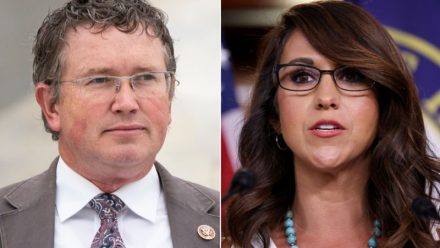
By Dan Frieth | Reclaim The Net | April 23, 2026
Rep. Thomas Massie (R-KY) and Rep. Lauren Boebert (R-CO) have introduced the Surveillance Accountability Act, a bill that feels like someone took the Fourth Amendment and actually meant it.
The legislation aims “to ensure that all searches that significantly impinge on the privacy or security of a person require a warrant based on probable cause” and to create “a right of action for violations of Fourth Amendment rights.” That covers the kinds of searches federal agencies currently conduct without judicial oversight: pulling your financial records from banks, requesting your browsing history from ISPs, buying your location data from brokers, and harvesting your biometric information from surveillance cameras.
We obtained a copy of the bill for you here.
The bill lands in the middle of a brutal Congressional fight over FISA Section 702, the surveillance authority that currently lets the FBI search Americans’ communications.
The new legislation goes much further than the various reform bills circulating around that debate. Where the SAFE Act and the Government Surveillance Reform Act target specific loopholes in FISA, the Surveillance Accountability Act tries to close all of them at once by rewriting the baseline rule: if the government wants your data, it needs a judge’s permission.
The main part of the bill adds a new Section 3119 to Title 18 of the US Code with a simple default: “no search may be conducted without a warrant issued by a neutral and detached magistrate upon probable cause, supported by oath or affirmation, and particularly describing the place to be searched and the persons or things to be seized.”
The bill defines “search” broadly enough to actually matter, covering “any government-initiated act that intrudes upon an individual’s reasonable expectation of privacy,” whether through “human, digital, or automated means.” It explicitly lists what falls under warrant protection: “communications,” “associations,” “employment,” “social media usage,” “internet usage,” “financial transactions,” and “travel.”
The bill goes further, extending protection to “the acquisition and analysis of any data, metadata, or information pertaining to a person’s digital or physical life,” including “geolocation,” “personal device activity,” “biometric identifiers,” and “behavioral signals data.”
The government is already collecting and analyzing patterns of how you act online, and Massie and Boebert’s bill is the first piece of legislation to name it directly and bring it under warrant protection.
The Third-Party Doctrine Problem
The most significant provision attacks the legal fiction that has allowed warrantless government surveillance to flourish for nearly fifty years. The third-party doctrine, established by the Supreme Court in Smith v. Maryland (1979), holds that you lose your Fourth Amendment protection over any information you voluntarily share with a third party, like a phone company or a bank.
The logic made a certain kind of sense when it meant the government could see which phone numbers you dialed. It makes no sense at all when every aspect of modern life generates data that passes through corporate servers.
The Supreme Court acknowledged as much in Carpenter v. United States (2018), ruling that cell phone location data requires a warrant even though it’s held by wireless carriers. But Carpenter was deliberately narrow. The Court didn’t overturn the third-party doctrine. It just said that this particular type of data, cell site location information, was too revealing to leave unprotected.
The new bill does what Carpenter didn’t. It creates a blanket presumption of privacy for all data held by third parties. The bill states that “the government shall not access any data, metadata, or personal information held by a third party, including financial services providers, telecommunication service providers, internet service providers, cloud storage companies, or data brokers, without a valid warrant, regardless of whether the third party consents or cooperates.”
Your bank can’t waive your constitutional rights for you. Your phone company can’t either.
The bill goes further still: “No contractual agreement between a user and a third party may be interpreted as waiving the government’s warrant requirement for access to the data of that user, unless such waiver is knowing, voluntary, and explicit.” This kills the argument that by agreeing to a terms of service, you’ve somehow consented to government surveillance. That argument has always been absurd, and the bill finally says so in statute.
Facial Recognition and License Plate Readers
The bill’s limitations section targets two surveillance technologies that have spread across American cities with almost no legal oversight: facial recognition systems and automated license plate readers.
The bill prohibits the “warrantless collection, retention, querying, or analysis” of data gathered from people simply going about their lives in public. That prohibition covers “biometric data, including facial images, faceprints, gait, voice recognition, or other unique physical identifiers, obtained through facial recognition systems or comparable surveillance technologies.”
It also covers “license plate images, vehicle metadata, or vehicle movement patterns obtained through automated license plate readers or similar systems.”
Federal, state, and local law enforcement agencies have been building vast databases of facial recognition and license plate data for years, treating the fact that you walked down a public street or drove on a public road as blanket permission to track your movements indefinitely. The bill says that’s not how it works. Being in public doesn’t mean consenting to biometric surveillance.
Suing the Government When It Violates Your Rights
The second half of the bill creates something that currently doesn’t exist in federal law: a clear right of action for Fourth Amendment violations by federal employees. The bill’s language is direct: “Every person, including a Federal employee, who, under color of any statute, ordinance, regulation, custom, or usage, of the United States, subjects, or causes to be subjected, any citizen of the United States or any person within the jurisdiction thereof to the deprivation of any rights, privileges, or immunities secured by the Fourth Amendment, shall be liable to the party injured in an action at law, suit in equity, or other proper proceeding for redress.”
Courts can award attorney’s fees to the prevailing party, which means the threat of litigation carries financial weight.
This is significant because of the Supreme Court’s steady erosion of Bivens v. Six Unknown Named Agents (1971), the case that originally allowed citizens to sue federal officials for constitutional violations. The Court has spent the last decade and a half narrowing Bivens to the point where it barely functions. Massie’s bill creates a statutory alternative that doesn’t depend on judicial willingness to recognize new causes of action.
The right of action covers every federal employee except the President and Vice President. That’s a wide net. An NSA analyst who runs a warrantless query on your communications, an FBI agent who buys your location data from a broker, an ICE officer who accesses your records through a Section 702 backdoor search, all of them could face personal liability.
The Political Context
Massie has been fighting this battle for over a decade. He sponsored an amendment in 2014 to stop warrantless backdoor searches of Americans’ online data, which passed the House 293 to 123. He introduced the Surveillance State Repeal Act in 2015, seeking to repeal the PATRIOT Act and the FISA Amendments Act entirely. He’s called for Edward Snowden to be pardoned and for former Director of National Intelligence James Clapper to be prosecuted for lying to Congress about the NSA’s phone metadata program.
The Surveillance Accountability Act arrives at a moment when the politics of surveillance are stranger than they’ve been in years. Massie has publicly demanded “No FISA reauthorization without a warrant requirement for US citizens!” on social media, attaching screenshots of past statements from President Trump, Vice President Vance, and House Judiciary Chairman Jim Jordan warning about FISA abuses.
The Congressional Progressive Caucus, 98 House Democrats, has formally voted to oppose any Section 702 reauthorization without dramatic reforms. Senate Intelligence Committee Chair Tom Cotton is pushing an 18-month clean extension with no reforms at all, arguing that the war with Iran makes this the wrong time to weaken intelligence capabilities.
The warrant amendment that would have required court approval for FBI searches of Section 702 data lost by a single vote in 2024, a 212-212 tie in the House. Speaker Mike Johnson cast the tiebreaker against it.
“The Bill of Rights is not a suggestion, and Fourth Amendment protections against warrantless searches conducted by the government are not optional,” said Massie. “The Surveillance Accountability Act requires government employees to first obtain a warrant based on probable cause before searching Americans’ personal information even if the information sought is stored on a phone, in the cloud, or held by a third party. Warrantless searches are unconstitutional, and this does not change when the data the government seeks is in digital formats or held by a third party.”
“For years, the federal government has treated the Fourth Amendment like a suggestion. They’ve built a massive surveillance machine that tracks, scans, and spies on law-abiding Americans without a warrant, without probable cause, and without any accountability. Enough is enough,” said Rep. Lauren Boebert. “The Surveillance Accountability Act puts the Constitution back in charge. It protects every American from an out-of-control federal government that thinks it owns your data, your movements, and your life. This is a true bipartisan issue for anyone who still believes in limited government and individual liberty.”
Massie’s bill goes beyond Section 702. It rewrites the entire framework, or tries to. The chances of the Surveillance Accountability Act passing in its current form are, being realistic, very low. The intelligence community will fight it. The national security establishment will call it dangerous. The administration has already signaled it wants a clean FISA extension with no conditions.
But the bill is a marker. It describes what actual Fourth Amendment compliance would look like if Congress took the text of the Constitution at face value. Warrants for searches. Probable cause. Judicial oversight. No exceptions for data that happens to sit on a corporate server. No loopholes for biometric surveillance conducted in plain view. And real consequences, financial ones, for agents who ignore the rules.
The gap between what the Surveillance Accountability Act proposes and what Congress is actually likely to pass tells you everything about how far the federal government has drifted from the privacy protections Americans were supposedly guaranteed 235 years ago.
#FreeYousofAzizi: Petition launched to seek release of Iranian academic, anti-war activist detained in US
Press TV – April 23, 2026
 A petition has been launched calling for the release of Yousof Azizi, an Iranian researcher, journalist, political analyst, and PhD candidate at Virginia Tech, who has been detained by US Immigration and Customs Enforcement (ICE) despite holding valid legal status.
According to a website launched by his supporters, Azizi was taken into custody in front of his home in Maryland on April 13 and denied access to a lawyer.
Press TV was the first media outlet to report on his arbitrary arrest by ICE.
A day later, he was held at the Baltimore ICE Detention Center, and visitation was prohibited to his family or lawyers.
On April 15, Azizi was transferred to Louisiana against his will. His lawyer immediately requested his release by posting bond.
Two days later, on April 17, he was transferred again to Arizona against his will, as he informed his wife over a short phone call, notes the website.
Azizi is a father of two young children and an active member of the Iranian community in the US who has publicly and unapologetically spoken against the unprovoked and illegal US-Israeli war of aggression against the Islamic Republic of Iran.
A media personality with regular appearances on multiple international English and Persian media outlets, including Press TV, Azizi has been one of the few voices in the Persian media sphere to openly and vociferously oppose the Zionist lobby’s influence on US foreign policy.
His media commentary has consistently criticized US military aggression against Iran and the Israeli genocidal war against Palestinians in Gaza, the occupied West Bank and Lebanon.
His case has alarmed civil rights advocates in the US, who view it as an example of politically driven immigration enforcement, which has become common under the Trump administration.
“When no clear legal violation is presented, we must ask: on what basis is he being held,” the change.org petition that has garnered significant attention notes.
Supporters of the campaign say the case raises serious concerns about due process, justice, and the increasingly blurred line between law and politics in the US.
They stress that silence does not serve justice and that awareness matters, demanding a fair review of Azizi’s case and his immediate release from ICE custody.
Hundreds of foreign nationals, including Iranians, have been detained or deported by immigration authorities in the US in recent months on flimsy pretexts.
You can join the petition to press for Azizi’s release here.
Confusion, delusion, and how Israel drives the Iran War
By Jamal Kanj | MEMO | April 23, 2026
The closure of the Strait of Hormuz following the temporary ceasefire is the culmination of an American policy defined by strategic incoherence. At the center stands Donald Trump, whose shifting positions, confused war objectives, and conflicting actions have not only failed to ease regional tensions but have actively deepened them.
Nowhere is this clearer than in Trump’s threats to blow up the whole country, including its bridges and power plants. At the same time, he touted a military “big day,” presenting potential war crimes as diplomatic tool, aggression as diplomacy, and destruction as leverage.
Trump’s inflated, almost delusional, promises ahead of potential talks come across less as statesmanship and more as a calculated sales pitch to the American public. His vows “to end up with a great deal,” coupled with an almost obsessive focus on Barack Obama by insisting his agreement will be “far better” than the one negotiated over a decade ago. An approach that reflects a tendency toward messaging driven less by policy depth and more by projection, comparison, and to frame outcomes in terms of self-aggrandizement and personal glory.
Instead of articulating clear strategic objectives, his policy relies on distinguishing himself and image cultivation to project authority and superiority, leaving the underlying substance vague and open to question.
By manufacturing optimism and exaggerating progress while promising an imminent “great deal,” Trump appears to be negotiating with himself—or detached from reality—seeking to construct a narrative of success regardless of the facts on the ground. The performative optimism stands in sharp contrast to his simultaneous threats and pompous rhetoric, suggesting not confidence but a measure of desperation.
Trump’s rationale for extending the ceasefire because of “internal divisions” within Iran is unconvincing. If internal debate within Iran is seen as warranting a pause, what should be said of a policy where direction shifts from one moment to the next? Differing political views are the essence of a normally functioning political system, whereas impulsive, erratic, personalized decision-making is not.
All of this unfolds as Trump continues issuing maximalist demands for conditions he helped create. For instance, he demands the surrender of enriched uranium that would not exist had he not abandoned the Joint Comprehensive Plan of Action (JCPOA). Likewise, the Strait of Hormuz was closed as a consequence of his and Netanyahu’s war, not as its cause.
The consequences of these Israel-driven U.S. policies are felt by ordinary Americans at the gas pump and in grocery stores. The Strait of Hormuz has become a battleground, destabilizing global energy supply chains and economies worldwide. Yet despite these cascading effects, the core strategy remains unchanged. Trump continues to operate within an echo chamber of Israel-first sycophants that assume military might alone can deliver results, even as the policy falters and the war spills across the region, threatening roughly one-fifth of the world’s energy infrastructure.
This is not merely a political flaw or a matter of mismanagement. It is rather a strategic vulnerability shaped by Israel-first loyalists pulling U.S. strategy in directions that ultimately undermine U.S. national interests. In the absence of clearly defined national objectives, as in the first Israel’s war in Iraq, each step risks drawing the U.S. deeper into the polluted water of the Gulf, while simultaneously advancing an environment of chaos that serves only Israel’s calculated aims.
In this framework, was Israeli Prijamame Minister Benjamin Netanyahu’s recent statement that the war with Iran is “not over” an embedded message to Trump ahead of the proposed peace talks in Pakistan?
Negotiation between countries, especially in the context of war is not selling real estate deals, where haggling and the threat of retracting an offer are routine tactics. The craft of negotiation in this case operates on an entirely different level. Culture, national dignity, historical memory, and political positioning shape both the process and the outcome.
Leaders are not merely bargaining over financial assets or credit ratings, they are navigating domestic demands, legitimacy, and the perception of strength or weakness on the global stage.
In this regard, threats or the constant withdrawal and reintroduction of proposals are not leverage, they are weakness. Unlike commercial transactions where the “Art of the Deal” is largely concluded at the moment of signing, international agreements mark the beginning of an ongoing, often long-term relationship. What may pass as hard-nosed bargaining in business can, in international diplomacy, be interpreted as bad faith, an approach that tends to invite resentment and resistance instead of compromise. This is why since last Tuesday, Trump was left waiting for Iran to come to the negotiation table.
Effective diplomacy requires serious leadership, consistency, and an understanding of the symbolic as much as the substantive. Agreements endure not because one side is pressured into submission, but because all parties can present the outcome as preserving their dignity and advancing mutual interests.
The lack of strategic maturity is indicative in a proclamation in the morning signaling openness to de-escalation; by midday, the message splinters, issuing threats and ultimatums while simultaneously hinting at imminent breakthrough deals; by the middle of the night, amid his insomnia, it escalates to threats of total destruction. This constant shifting of positions is not a minor stylistic quirk. It is possible that, at least some of this, is associated with his nocturnal communications with Netanyahu, who is apparently wagging him left and right.
This yo-yoing of positions does more than create confusion; it erodes credibility. Diplomacy depends on a baseline of predictability and mental stability. When signals shift faster than the wind, uncertainty breeds mistrust, and negotiations drift from closed rooms into fiery statements played out for public consumption, creating an opening for Israel to drive the war and breed destruction and more chaos.
Featured Video

HE SAVED LIVES. NOW HE FACES PRISON.
or go to
Aletho News Archives – Video-Images
From the Archives
NATO Sanctions and the Coming Global Diesel Fuel Disaster
By F. William Engdahl – New Eastern Outlook – 11.04.2022
Amid the ongoing global inflation crisis, NATO heads of state and mainstream media repeat a mantra that high energy prices are a direct result of Putin’s actions in Ukraine since end of February. The reality is that it is the western sanctions that are responsible. Those sanctions including cutting SWIFT interbank access for key Russian banks and some of the most severe sanctions ever imposed, are hardly having an impact on the military actions in Ukraine. What many overlook is the fact that they are increasingly impacting the economies of the West, especially the EU and USA. A closer look at the state of the global supply of diesel fuel is alarming. But Western sanctions planners at the US Treasury and the EU know fully well what they are doing. And it bodes ill for the world economy.
While most of us rarely think about diesel fuel as anything other than a pollutant, in fact it is essential to the entire world economy in a way few energy sources are. The director general of Fuels Europe, part of the European Petroleum Refiners Association, stated recently, “… there is a clear link between diesel and GDP, because almost everything that goes into and out of a factory goes using diesel.” … continue
Blog Roll
 Aletho News
- Qatar PM calls for Gulf security framework with Iran, says war must be ‘wake-up call’
- China condemns US extortion of Iranian airlines, rejects Washington’s ‘illegal’ sanctions threats
- Italy to move military personnel from Taif base after missile strike
- Finland’s Stubb tells European leaders to calm down
- Defeating Russia on battlefield impossible – Fico
- Finland’s Gender Clinic Reversal
- Massachusetts Wants Mental Health Visits, Why Does Government Use ‘Health’ to Enter Our Homes & Families?
- US lawmaker admits American people footing bill for Trump’s failed aggression against Iran
- Pfizer Gave $500,000 to Groups That Lobbied to End Religious Exemption in Massachusetts
- HE SAVED LIVES. NOW HE FACES PRISON.
- If Americans Knew
- Sanctions are collective punishment: immoral and self-defeating
- Phosphorus Munitions Fired by Israel Burn Groves, Orchards in Southern Lebanon
- Israel Carries Out New Ceasefire Violations Across Gaza
- AI – Emphasis on the ‘I’: Israel Is Funding AI Chatbot Propaganda
- Israel Blocking Hundreds of Wheelchairs for Injured Children From Entering Gaza
- Israel Is Expanding and Upgrading Compounds for Palestinian Militias in Gaza
- The Palestinian-American Residents of This West Bank Town Are Wondering: Where Is Trump?
- Gaza desperately needs tents, wheelchairs, fuel… and everything else (Israel blocks it all) – Daily Update
- Israeli Attacks in Gaza Kill at Least Seven Palestinians Over Three Days, including Woman and Child
- Trump’s militarization of Washington DC as he pursues Israel’s war against Iran
- No Tricks Zone
- 2025 Nature Paper Claiming Worsening Global Drought Gets RETRACTED …Heavily Flawed
- New Study: ‘Global Drought Shows No Detectable Recent Acceleration Under Climate Warming’
- Economic Masterminds: German Socialists Suggest Taxing Productivity Gains Stemming From Using AI
- The South China Sea Has Not Been Cooperating With The Climate Change Narrative
- Energy Crisis: Germany Enters Heating Season With Historically Low Gas Reserve Fill Levels
- New Study: The Antarctic Ice Sheet Gained Mass From 2020-2024 Due To Staggering Snow And Ice Accumulation
- Study: Ocean Heating Rates From Thousands Of Years Ago ‘Dwarf’ Modern Ocean Heating Rates
- Climate Extremists Target, Attack Large-Scale Power Grid Infrastructure In Germany!
- New Study: Antarctic Ice Melt Has Contributed Less Than 1 Centimeter To Sea Level Rise In The Last 30 Years
- Fear Of Debate: Alarmist German Climate Scientist Calls On Mainstream Media To Discredit Skeptic Voices

