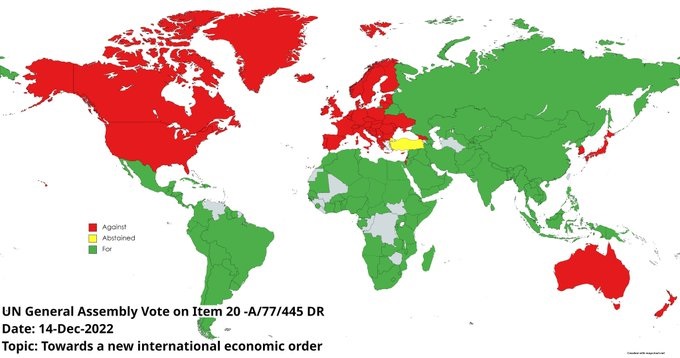
It is possible that new anti-Russian resolutions will be voted on in the near future. According to a recent official communiqué, the activities of the eleventh special emergency session of the UN General Assembly will resume on February 22nd. With that, new attempts to implement measures against Moscow at the international level are expected – and the most likely thing is that the new efforts fail as well as the previous ones.
The information about the resumption of the session on the 22nd was formally issued by the official representative of General Assembly President Polina Kubiak. According to her, the call request was received on February 10, having been demanded by the delegation of the European Union, in partnership with other pro-Western states.
“The eleventh extraordinary special session of the General Assembly will be held on February 22 at 15.00 (23.00 Moscow time). The head of the EU delegation on behalf of the Republic of Korea, the Republic of Korea, Turkey, Ukraine, the United Kingdom and the United States and the 27 members of the European Union”, she said.
Started last year, the eleventh session aims to discuss possible recommendations on the topic of Russian special military operation in Ukraine. Originally, the session opened on February 28, 2022, at United Nations Headquarters in New York. It was temporarily postponed to March 2 following the adoption of Resolution ES-11/1, where the first recommendation to “condemn” Russia was made. The representatives of the General Assembly met again later, on March 23, 24 and April 7, when resolutions ES-11/2 and ES-11/3 were adopted, proposing, among other measures, the suspension of the Russian Federation from the Council of Human Rights of the United Nations.
In this sense, considering the precedents, it is possible that there will be new attempts to “isolate” Russia in the international scenario through the adoption of resolutions condemning the special operation in Ukraine. Most likely, the proposed new resolutions will focus on the most recent phases of the operation, as according to several reports Moscow is preparing for a final offensive against Kiev soon.
Procedurally, special sessions are convened within 24 hours after the receiving of a request by the UN Secretary General. To validate the arranging, it is only necessary to have the application supported by the vote of a member of the Security Council, which is why these sessions are frequently organized, even if few states agree with the resolutions proposed during them. Furthermore, a session can be convened even at the mere request of a majority of UN members, which makes them even more common and trivial.
In other words, the fact that countries will meet on the 22nd to discuss again the topic of Russia’s special military operation is not at all worrying for Moscow. The Russian government has already demonstrated that it receives broad international support from its direct allies in the BRICS as well as from several emerging countries. At previous Assembly meetings, many countries have declined to support anti-Russian resolutions, choosing to reject, abstain or even not attend the events. A similar situation is expected for the next summit, considering that since last February the process of geopolitical decentralization has intensified more and more.
However, this shows the West’s insistence on maintaining an anti-Russian policy and trying to impose it at the international level. NATO and its allied countries are not satisfied with Moscow’s decision to react to the constant aggressions suffered by the Russian people in Donbass over the last nine years. In addition to backing the neo-Nazi regime and sending weapons and mercenaries so that the conflict continues indefinitely, the West continues to demand from international society that it promotes an “isolation” of Russia, trying to make it a “pariah” through sanctions and resolutions which are rejected by most states.
It is already clear that the isolation of Moscow is not feasible. As the world’s largest country, producer of many important commodities and a key partner of many states, Russia simply cannot be “isolated”, and all attempts to make this possible are meant to fail. In the specific case of the UN, the only thing that the West can achieve by calling sessions to discuss the operation in Ukraine is to propose some resolutions without any practical effect, which will work as mere “recommendations” to which only the Western countries themselves and their allies will comply.
Instead, the best course of action would be to discuss a reformulation of the UN in order to make the organization appropriate for the current geopolitical context. Extending the Security Council, changing some procedures and preventing Western hegemony in the organization are important steps to be taken to prevent the UN from becoming obsolete and failing in its objective of guaranteeing world peace.
Lucas Leiroz is a researcher in Social Sciences at the Feral Rural University of Rio de Janeiro; geopolitical consultant.
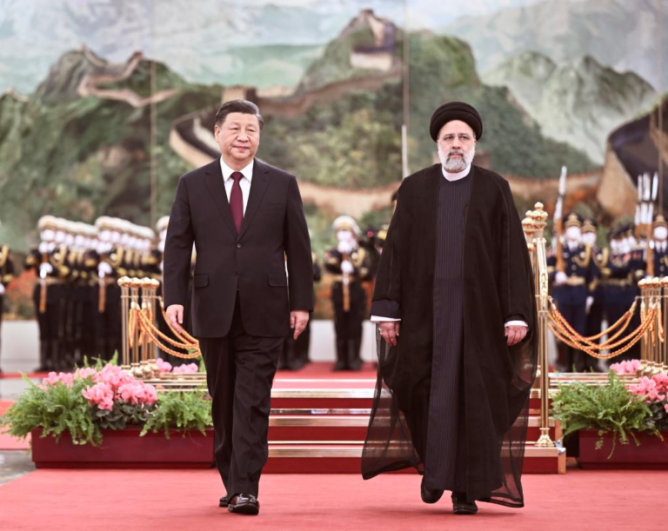
Chinese President Xi Jinping held a welcoming ceremony for Iran’s President Ebrahim Raisi prior to talks at the Great Hall of the People in Beijing, February 14, 2023
The three-day state visit by Iran’s president Ebrahim Raisi to China on February 14-16 is a landmark event affecting regional politics and international security. The red carpet welcome accorded to Raisi signified the high importance attached by Beijing to the comprehensive strategic partnership between China and Iran in the prevailing international milieu.
In a ‘curtain-raiser’ on Monday, Global Times wrote that the visit “shows the Raisi administration’s unswerving determination to promote the ‘Look to the East’ policy.”
The CCP Central Committee newspaper then went on to make a profound statement: “Iran’s ‘Look to the East’ policy meant the transition from its policy of negative balancing and non-alignment to building alliances with non-western world powers that have similar political structures to Iran, such as Russia and China.”
This must be the first time that Beijing explicitly hailed Iran’s transition toward an alliance with non-western world powers that do not qualify as liberal democracies — “such as Russia and China.” This characterisation becomes the leitmotif of Raisi’s visit to China. Indeed, Beijing, Moscow and Tehran are sailing in the same boat as the pioneers of a democratised world order defying US hegemony.
On the following day, in a lengthy editorial, Global Times dwelt on the strategic ramifications, taking note that “outside the US-West bloc and its influence circle, there is huge space and potential for win-win cooperation” between Beijing and Tehran. It said:
“China’s deepening cooperation with Iran also has anti-hegemony and anti-bullying feature. Both China and Iran uphold independent foreign policies, firmly defend the principle of non-interference in internal affairs on international occasions, and safeguard the common interests of developing countries. This is conducive to promoting the multi-polarization and diversified development of the world, and conforms to the general trend of the times…
“Under Washington’s moves, the international structure is being divided and restructured, with the vicious trend of forming blocs and camps again emerging, which puts the non-Western world in a difficult situation and once again faces historical choices. The existing US-led international system has designs to bully and exploit developing countries and emerging countries. Now Washington still thinks that it is not convenient enough, that the interests of developing countries have increased in weight, and wants to reconstruct a new international system with a stronger tendency, which is undoubtedly a major challenge for the non-Western world and needs to be resisted by forming a joint effort.”
This compelling thought appeared in the opening statement of Chinese President Xi Jinping at the meeting with Raisi on Tuesday at the Great Hall of the People in Beijing when he said that “amid the profound changes in the international situation, China and Iran have constantly consolidated their strategic mutual trust and steadily advanced pragmatic cooperation. They have promoted their common interests and upheld international fairness and justice, writing a new chapter for China-Iran friendship.”
Xi underscored that “China supports Iran in safeguarding its sovereignty, independence, territorial integrity and national dignity as well as resisting unilateralism and hegemony, and opposes attempts by external forces to interfere in Iran’s domestic affairs and undermine its security and stability.”
The big picture comprises three key elements here: Moscow’s ‘friendship without limits’ with Beijing, Iran’s Eurasian integration, and the Russian-Iranian alliance in the making. The Shanghai Cooperation Organisation provides a platform for all three countries for strengthening communication and coordination in a spirit of mutual respect and trust and jointly work on regional security issues.
Raisi’s visit will accelerate the implementation of the 25-year agreement signed in 2021 between Iran and China. The program, including energy, trade and infrastructure, faced obstacles due to the pandemic and the escalation of US sanctions. But things are on the cusp of change. China watches Russian stealing a march on it, although the latter’s 25-year agreement with Iran is still a work in progress.
To be sure, the talks in Beijing focused on how to advance practical cooperation between Iran and China, even as China is coming out of the self-imposed restrictions during the pandemic, is raring to go and is revving up the Belt and Road.
However, what is yet to sink in is that a major outcome of the confrontation between Russia and the NATO countries is that Iran is set to break through the rings of western containment through the past four decades since the 1979 revolution. Beijing sees that Russia is providing strategic depth for Iran in a win-win engagement.
Just before Raisi embarked on the state visit to Beijing, the new governor of Iran’s central bank, Mohammadreza Farzin stated in Tehran that “The financial channel between Iran and the world is being restored.” In effect, he was announcing that Iran and Russia have taken a significant step towards linking their banking infrastructures amid Western sanctions.
After years of work, the two countries have managed to connect Iran’s SEPAM national financial messaging service to Russia’s Financial Messaging System of the Bank of Russia (SPFS), the Russian equivalent of SWIFT, that aims to link with other major powers like China and India. The tie-up signifies that Moscow today has the political will to forge ahead with an optimal partnership with Iran, as they also pursue greater use of their national currencies in trade.
Moreover, Russia and Iran are creating a firewall to sequester their defence cooperation from the prying eyes of the US. Moscow is about to transfer cutting-edge military technology to Tehran, including the famous Su-35 multipurpose 4+ generation fighter jets as part of a $3 billion arms deal that also includes two S-400 air defence systems. None of this is escaping Beijing’s attention. (Interestingly, Farzin was included in Raisi’s delegation to Beijing.)
Beijing understands that the confrontation between Russia and the US is working to the advantage of two of its key partners to break out of the Western stranglehold of sanctions and realise their full potential as regional powers— North Korea and Iran — which has profound implications for the power dynamic in the Asia-Pacific and West Asia.The Chairman of the Chiefs of Staff of the Iranian Armed Forces GeneralMohammad Bagheri greeted the newly-appointed North Korean counterpart General Pak Su-il recently with a call for expansion of military ties “to confront any move that disrupts global security.”
China-Iran relationship is entering interesting times. Fortuitously, the Gulf states themselves are decoupling from the US-Israeli strategy to whip up anti-Iran frenzy. Meanwhile, Iran’s relations with Saudi Arabia are steadily improving and the latter is developing diversified external relations as well with accent on partnerships with China and Russia. The growing similarity lately in the respective diplomatic trajectories of Iran and Saudi Arabia would have a calming effect incrementally on Gulf security and eliminates the scope for US interference in the GCC interaction with China (and Russia.)
President Xi highlighted to Raisi the importance of stability in West Asia, saying that upholding stability matters to the well-being of the countries and people in the region and also has great relevance to world peace, global economic development and the stability of energy supplies.
Xi noted in particular that “China appreciates Iran’s willingness to actively improve relations with neighbouring countries, and supports countries in the region in resolving their differences through dialogue and consultation to realise good neighbourliness.”
This paradigm shift in Gulf security puts the Sino-Iranian partnership on the right side of history.
In late 2019 and early 2020, I was asked to work on the front line in an emergency department to help with the ‘war effort’. We had no idea what was going on, apart from a few videos of the Chinese suddenly collapsing due to this new contagion. We were waiting for it to hit the U.K.
It hit, I saw what it did to people, they became unwell, x-ray x-ray x-ray, PPE, barriers, red lights, code words, panic, panic. Our world changed overnight, and my world changed especially. One minute we were told not to wear masks, the next moment it was made mandatory etc.
At this point, my sole focus was to protect myself and my family, so I began studying in order to do so successfully. I read papers during my breaks and at night before work. I reflected on what I saw at work and made a mental note of the real-life evidence.
The emergency department warped as time went on; I saw a lot of errors and mismanagement of resources. Patient care was being delayed, which led to staff burnout and medical errors. I could see that if this went on, people would needlessly die.
I knew something had to change. So in efforts to bring about some change, I wrote a book outlining how Toyota’s lean manufacturing methods could aid in improving patient safety as well as reducing costs in emergency departments. The book was called Saving A&E The Toyota Way. While researching for it, I learned a lot about healthcare infrastructure, artificial intelligence and preventative medicine. I knew what the national health situation was like; I knew we had to change as a species.
I presented that book to my hospital; my consultants liked it, but as an academic piece. That was not my intention, but hey ho, life goes on. There were more pressing matters at hand.
As the pandemic was progressing, I continued to research, write blogs and share what I saw. And I saw a lot of unscientific rubbish, unethical practices and poor care. The research papers said one thing, and yet we were doing something completely different. I knew very early on that not everyone needed to be jabbed. Something seemed fishy.
I worked in the emergency department and then paediatrics during the second peak. There was one child admitted due to COVID-19 who was later discharged. The ward was largely empty. And yet many doctors online were saying that COVID-19 was extremely dangerous to children. Nonsense.
Something was off: doctors weren’t being doctors, autopsies weren’t being done, the medical field was ignoring anyone who didn’t have COVID-19, and yet staff were doing TikTok dances. They asked me to join. I refused.
While all this was happening, I lost my grandma. The doctors didn’t want to see her in her home; her infection got bad; she didn’t want to go to the hospital; she became septic; she had to go in. I visited her after my shifts and fed her during my breaks.
I got the bad news from a doctor on the night she died. I asked the doctor if we could see her as a family, and he approved. We saw her one after the other, in tears and trying not to wake the other patients. Midway through, a matron I used to work with told us we couldn’t see her due to hospital policy and warned us that if we carried on she would call security on us. I told her we had approval already. She didn’t care. I saw evil in her eyes.
I asked her why she became a nurse. It was surely to treat and help people with compassion. She didn’t budge. I said, “Go ahead and call security then.”
Thank God, we had enough time for our family to all say their goodbyes. I made sure I was the last one. I knew and saw that many others weren’t as lucky as I was. Many had to FaceTime their dying family members. We were treated so badly and healthcare professionals encouraged it. I also knew the evils that lurked inside mankind that day.
During paediatrics I asked my colleagues about masks and jabs. Why did we only allow one parent to see their newborn child while wearing a mask, whereas we could all snuggle up together in the staff room maskless? I’d get responses that sounded like parrots. “It’s the rules”; “Policy”; “To stop infection”; “We just have to do it”. No science. No debate. No conversation. No brain.
I later worked in a children’s psychiatric ward, and what I witnessed was truly backward. Many children, many of whom wanted to commit suicide, were placed in solitary confinement so that useless PCR swabs could be taken. Two would need to be done, and the nurses would sometimes forget to do these. I actually had to make them a table so they would remember. Children were required to be swabbed, but staff members who would go wherever they pleased over the weekend were not.
I told my seniors that none of this made sense and that children did not suffer with COVID-19, but they just told me it was policy. The hospital trust actually recruited people to make sure staff were changing into scrubs before work too. The worst of it was when we had a ward round on one occasion. In psychiatry, the patient would sit in the room with the rest of the staff. This particular time my consultant found out that the young person who was in the room with us wasn’t swabbed. After the patient had left, she made us all stay in the room and asked us to lock the door and find ways to disinfect the room. She was seriously considering bleaching all surfaces. In disbelief, I asked her if we had to all strip down naked and shower together too. I had work to do, so I left.
The mental health of children and adults during lockdown was the lowest I’ve ever seen it in my career. Children were arriving with life disruption-related issues such as trauma, abuse, etc. all related to lockdowns.
My next job was in general practice. I was working towards becoming a GP. I enjoyed understanding and caring for all sorts of patients. I’m a generalist at heart. However, this transition marked another difficult time for me.
On the last day of hospital medicine and just before the first day of GP work, a close work colleague of mine went to play football, collapsed and never woke up. Deep down, I knew what had caused this. I knew the link between mRNA technology and myocarditis early on.
I cried finding this information out. I cried in front of my mother for the first time in my adult life. I’m in fact tearing up typing this. My friend was killed.
I went to his parents’ house to give my condolences. His parents were there, broken. He recently proposed to his fiancée. She was there too, broken. We viewed his funeral via Zoom.
There’s a spot in the park I dip into regularly while looking up at the leaves. I am reminded of him when I do this. I am reminded of how lucky I am to be alive. Deep down, I was terrified about what this meant for people around the world.
Time went on, and I worked in general practice. There was discussion about making vaccinations mandatory for all healthcare workers. I knew this was not only unscientific and unethical, but murderous. Yet my colleagues didn’t seem to care. They were safe, I guess.
Regardless, I could not do anything about it, so I plodded along. I never stopped reading papers, writing, tweeting and sharing information. I saw patients; I saw jab-related side effects, missed periods, new-onset whole-body inflammation, hair loss, etc. I saw cognitive dissonance too.
All of a sudden, one day, my practice asked me for my full jab status. This puzzled me because the managers knew I had to be jabbed with everything else in order to work in all the other specialties. I knew they wanted to know only one result. Whether or not I had taken the COVID-19.
I didn’t lie. I told them the truth. The next day, in a panic, they asked me to stop seeing patients face-to-face. They had made a team decision as a team, without me, that I was no longer able to see patients. They felt that I was a threat to them and that I would scare them away.
I have never had COVID-19. I worked on my health and immunity every day, and I purposely breathed in the virus in the emergency department to stimulate T cells. I knew jabs increased one’s risk of infection and showed them evidence. I was the least risky person in the practice and I knew it.
They didn’t care. They didn’t care about evidence. They didn’t care about ethics, about immunity, about anything. I shrugged this off and called patients instead. I was ostracised at work and many colleagues acted coldly towards me. I was alone, but not lonely; I knew I had evidence on my side.
Many doctors had to take sick leave from work multiple times due to COVID-19. I had meetings discussing my jab status. A doctor with myocarditis on long-term meds post-jab urged me to get the shot. One said I was “too principled”, It was surreal.
They admitted it was all politics. I asked them why they didn’t read papers? I asked them about T cells. Silence.
I have wanted to become a doctor since the age of six. I love biology and enjoy helping people using my knowledge. But I understood that I was working in an environment that was harming people. I had many sleepless nights thinking about leaving.
One morning, after parking my car at work, I felt a warmth around my head. It had no words, but if it did, it told me that everything would be okay. As soon as I had that experience, my decision was made, and I felt light; a colossal weight had been lifted.
I asked to quit, and a few meetings later (carried out to make sure I wasn’t crazy), I left healthcare and then deregistered myself from the medical register. I wanted to be totally free. I needed to be.
The flat my girlfriend and I were planning to buy fell through. I was in financial turmoil. My mother cried for weeks. I was lost, but I was free. I wasn’t part of the killing system.
I did what I only knew – I began writing. I started a Patreon and am grateful for those who did and continue to contribute to that. But it wasn’t enough. I ended up being on the dole for just less than a year. The guy I had to call every two weeks was surprised I was once a doctor.
I began learning and researching everything I could to help people who had been jabbed. I knew what was going on and I didn’t want another pandemic to happen. I wanted to save as many lives as possible.
I would take my bike, cycle across the park to my local library, and work feverishly every day till close. Around this time, I was permanently suspended on Twitter for stating facts.
I see this as a blessing now, as it made me work even harder to produce something that could never be banned. A book. I worked and researched to make sure I got this book out before 2023.
I was blessed around this time to come into contact with Alex Mitchell. He introduced me to other people injured by the shots. I was determined to make sure their voices got heard. I included their stories in the book.
During this time, on my walks, I had many insights and extraordinary experiences that many people may not believe or might dismiss as crazy. I saw light, and I ended my fears.
Before the new year, I released my book, Calling Out The Shots. It goes through what genetic agents are, what they do to our bodies, how we can improve our immunity, ways we may mitigate jab damage and what we need to do as a society to heal.
The book marks my first gift to the world. I am working on many more and other projects. I will fight for humanity until my final breath.
Dr. Eashwarran Kohilathas is a medical doctor, qualified personal trainer and author who aims to help people achieve physiological, psychological and spiritual freedom. This article first appeared as a Twitter thread.
By Norman Fenton and Martin Neil | Where are the numbers? | February 14, 2023
It has long been hypothesised that deadly health policies were a major factor in the wave of deaths attributed to covid in the Spring of 2020. This is also referred to as the iatrogenesis hypothesis.
Jonathan Engler looked at what had happened in Lombardy, Italy and concluded that many of the “deaths which occurred in the aftermath of the cataclysmic changes to the delivery of healthcare — especially of the frail and elderly — might have been caused by policy, rather than virus.” Anna Farrow made a similar convincing case that this happened in Canada while @NellyTells reports it was happening in Spain. Likewise, there has been a long-term concern that excessive use of Midazolam was a contributing factor in the UK and the Daily Mail newspaper reported on it as long ago as July 2020.
NG163 Death Protocol
More detailed evidence to support the iatrogenesis hypothesis for the UK (and elsewhere) has been provided in twitter threads by Jikkyleaks and this recent thread is particularly revealing… continue
A judge has blocked a New York law that attempted to regulate “hateful conduct” online.
The legislative package, signed into law last summer, was Gov. Kathy Hochul’s attempt to force the moderation of content under nebulous terms such as “hate.”
The bill required, “social media networks to provide and maintain mechanisms for reporting hateful conduct on their platform.” It defined hateful conduct broadly as, “the use of a social media network to vilify, humiliate, or incite violence against a group or a class of persons on the basis of race, color, religion, ethnicity, national origin, disability, sex, sexual orientation, gender identity or gender expression.”
The law also said that platforms must have a “clear and concise policy readily available and accessible on their website and application which includes how such social media network[s] will respond and address the reports of incidents of hateful conduct on their platform[s].”
On Tuesday, Judge Andrew L. Carter, Jr. (S.D.N.Y.) blocked the law. “Speech that demeans on the basis of race, ethnicity, gender, religion, age, disability, or any other similar ground is hateful; but the proudest boast of our free speech jurisprudence is that we protect the freedom to express ‘the thought that we hate,’” the court wrote.
In an unsurprising fashion, Judge Carter ruled that the law was a violation of the First Amendment. “The First Amendment protects from state regulation speech that may be deemed ‘hateful,’” the court wrote, “and generally disfavors regulation of speech based on its content unless it is narrowly tailored to serve a compelling governmental interest.”
The court added that the law, “chills the constitutionally protected speech of social media users,” adding “social media websites are publishers and curators of speech, and their users are engaged in speech by writing, posting, and creating content. Although the law ostensibly is aimed at social media networks, it fundamentally implicates the speech of the networks’ users by mandating a policy and mechanism by which users can complain about other users’ protected speech.”
The court highlighted the ways in which the law violated the First Amendment, saying, “the law also requires that a social media network must make a ‘policy’ available on its website which details how the network will respond to a complaint of hateful content. In other words, the law requires that social media networks devise and implement a written policy—i.e., speech.”
The other factor considered by the court was that the law “requires a social media network to endorse the state’s message about ‘hateful conduct’” – another First Amendment violation.
“Implicit in this language is that each social media network’s definition of ‘hateful conduct’ must be at least as inclusive as the definition set forth in the law itself. In other words, the social media network’s policy must define ‘hateful conduct’ as conduct which tends to ‘vilify, humiliate, or incite violence’ ‘on the basis of race, color, religion, ethnicity, national origin, disability, sex, sexual orientation, gender identity or gender expression.’”
The court singled out how the law would have forced free speech platforms such as Rumble “whose websites have dedicated ‘pro-free speech purpose[s],’ which likely attract users who are ‘opposed to censorship’” to “speak about hateful conduct.” This would be a form of compelled speech.
The court ruled that Rumble has, “an editorial right to keep certain information off their websites and to make decisions as to the sort of community they would like to foster on their platforms. It is well-established that a private entity has an ability to make ‘choices about whether, to what extent, and in what manner it will disseminate speech…’”
“The founding fathers would be proud today,” Rumble CEO Chris Pavlovski tweeted. “Rumble’s legal team is next level amazing.”
I don’t normally watch TVNZ’s Seven Sharp, but on 5th October 2021 we were told that an immunologist would be on the programme to debunk certain ‘Covid myths’.
One such ‘myth’ was the belief that natural immunity is superior to vaccine-induced immunity. In response, clinical immunologist Dr. Maia Brewerton said that natural immunity to Covid-19 is not as good as the vaccine.
No evidence was given. Just an assertion.
As an ex-science teacher, I found Dr Brewerton’s statement to be unsatisfactory, for the following simple reason: the vaccine can only generate antibodies to a single viral antigen (the ‘spike’ protein), whereas the whole virus particle reportedly contains 29 proteins, which can therefore evoke the production of a correspondingly greater diversity of antibodies.
So, if the part of the viral RNA that codes for the spike protein RNA undergoes a mutation, the vaccine-induced antibody may be unable to bind to the mutant antigen, but with natural immunity there will a range of ‘back-up’ antibodies that can bind to the other proteins of the virus.
I wrote to Dr. Brewerton to make this point, asking her if she could provide evidence for her Seven Sharp statement.
I received no reply.
This was particularly disappointing because we had repeatedly been urged by the authorities to ‘accept the science’.
One might think that such a single experience may not be particularly significant; Dr. Brewerton might be snowed under with work. But soon after Dr. Brewerton’s appearance,Stuff invited readers to submit questions on Covid, so I sent a similar question to the one I had asked of Dr. Brewerton.
Again, I received no reply.
I was beginning to sense that the authorities might not be too keen to take their own advice to ‘go with the science’, since the very essence of science is examination and questioning of evidence.
This feeling was solidified in August 2022, when I came across a paper co-authored by Professor Michael Baker, an epidemiologist at the University of Otago, who has been one of chief advocates for the wearing of masks during Covid-19. The paper was titled “The Covid-19 experience in Aotearoa New Zealand and other comparable high-income jurisdictions and implications for managing the next pandemic phase”.
In the article I could find no evidence supporting the efficacy of masks in the Covid-19 ‘pandemic’, so I wrote to Prof. Baker, saying that I had looked for, but had failed to find, any research evidence supporting the efficacy of mask wearing and hoped that he might be able to provide it.
Again, I received no reply.
An essential element in science is the challenging of established ideas in robust, untrammelled debate, in an environment that encourages questioning. Without such openness, science can be misused by powerful interests as a means of disguising misinformation as information.
In the complete absence of evidence-based debate in the media, I was forced to go elsewhere to find out what’s going on. One such source is Ian Miller’s “Unmasked: The Global Failure of Mask Mandates”. Using data from North America, Europe, and parts of South America, and county level in the U.S., Miller presents a compelling case that masks have failed their most significant test – to significantly reduce transmission of Covid. Indeed, it’s clear that masks have no health utility at all, but are an emblem of obedience to power.
In March 2020, Dr. Anthony Fauci, the U.S. Government’s chief medical expert was interviewed on 60 Minutes, and he unequivocally expressed his opinion on masks:
There’s no reason to be walking around with masks.. . . . .when you’re in the middle of an outbreak, wearing a mask might make people feel a little better and it might even block a droplet, but it’s not providing the perfect protection that people think that it is. And, often, people keep fiddling with the mask and they keep touching their face.”
Until his recent retirement, Dr. Fauci has spent his half-century-career as the US Government’s chief medical expert, whose calm, avuncular charm inspired confidence in millions, so his word on the airwaves carried a lot of weight.
Though his was the most familiar voice, organisations such as the Centers for Disease Control (CDC) and the World Health Organisation (WHO) prior to Covid, had expressed similar reservations on the utility of masks.
In February 2020, the CDC issued a document called “Community Mitigation Guidelines to Prevent Pandemic Influenza – United States, 2017”. It drew on the findings of nearly 200 research articles published over the years 1990 and 2006, and was specifically concerned with non-pharmaceutical interventions (NPI’s) by which people could protect themselves in the event of an epidemic.
The NPI’s the CDC document described for influenza pandemics included voluntary home quarantine of exposed household members and use of face masks in community settings when ill (emphasis added). There was no recommendation that masks should be used by healthy people in the general population.
The evidence base on the effectiveness of NPIs in community settings is limited, and the overall quality of evidence was very low for most interventions. There have been a number of high-quality randomized controlled trials (RCTs) demonstrating that personal protective measures such as hand hygiene and face masks have, at best, a small effect on influenza transmission …”
And in the United Kingdom’s Department of Health issued a guidebook titled “UK Influenza Pandemic Preparedness Strategy 2011” which, in point 4.15, said [emphasis added]:
Although there is a perception that the wearing of facemasks by the public in the community and household setting may be beneficial, there is in fact very little evidence of widespread benefit from their use in this setting. Facemasks must be worn correctly, changed frequently, removed properly, disposed of safely and used in combination with good respiratory, hand, and home hygiene behaviour in order for them to achieve the intended benefit. Research also shows that compliance with these recommended behaviours when wearing facemasks for prolonged periods reduces over time.”
It’s clear, then, that pre-Covid, public health authorities were unconvinced of the utility of mask-wearing by the general public. So, one is entitled to wonder why, soon after the WHO announced that Covid-19 had pandemic status, governments in North America, Europe, and Australasia began to ‘encourage’ people to wear masks in indoor public places. This was achieved by a combination of legislation and publicly expressed statements by ‘experts’.
In some cases the language was hyperbolic, verging on blood-curdling. In an interview on Newshub in July 2022 Prof. Michael Baker said:
“If you go out when you have this infection and infect your friends and family…you are going to kill some people – just like drinking and driving. We need a massive shift in thinking,”
In my e-mail to Prof. Baker, I had mentioned that I had been unable to find any evidence to support enforced wearing of masks in indoor public places. Since then I have come across two research papers, the most recent showing an investigation into the effects of masking by Beny Spira, Associate Professor of Infectious Disease at the University of São Paulo in the Journal Cureus, Journal of Medical Science.
Data from 35 European countries on morbidity, mortality, and mask usage during a six-month period were analysed. They found that countries with high levels of mask compliance did not perform better than those with low mask usage. On the contrary, there was a positive (though not strong) correlation between mask usage and mortality, suggesting that mask use was associated with slightly greater risk of death.
Of course, correlation does not prove causation, but these results are, or should be, cause for reflection by the authorities. But it seems not.
Whereas the Beny Spira study was retrospective, studying possible effects of mask-wearing in whole populations, a prospective study follows the fate of samples of volunteers, some of whom wore masks and others who did not.
A particularly important study by scientists at the University of Copenhagen during April and May 2020 was published in the academic journal Annals of Internal Medicine. It cast doubt on policies that force healthy individuals to wear face coverings in hopes of limiting the spread of COVID-19. The New York Timesreported that…
“Researchers in Denmark reported on Wednesday that surgical masks did not protect the wearers against infection with the coronavirus in a large randomized clinical trial.”
The experiment involved over 6,000 participants who had tested negative for Covid-19 immediately prior to the experiment. Half the participants were given surgical masks and asked to wear them at all times in public places; the other, control half, were instructed to not wear masks. After a month, participants were tested for Covid-19 and for antibodies against the virus.
The Times reported that of the 4,860 participants who finished the experiment, 42 people in the mask group, or 1.8 percent, got infected, compared with 53 in the unmasked group, or 2.1 percent. The difference was not statistically significant.
Dr. Henning Bundgaard, lead author of the experiment and a physician at the University of Copenhagen, told the Times the results of his research were clear.
“Our study gives an indication of how much you gain from wearing a mask,” Bundgaard said. “Not a lot.”
Surprisingly, or perhaps (in view of what follows) unsurprisingly, the most elite medical journals – TheLancet, TheNew England Journal of Medicine and the Journal of the American Medical Association – all refused to publish the paper.
Though the study’s researchers have been reticent about their results, some have hinted that it was their conclusions rather than their methodology that lay behind the rejections. Christian Torp-Pedersen, professor and chief physician at the research department at North Zealand Hospital, told Denmark’s Berlingske Daily:
We can’t start discussing what they are dissatisfied with. For if so, we must also explain what the study showed. And we do not want to discuss this until it has been published.”
When asked when the study would be published, one of its researchers, Thomas Benfield, Professor of infectious disease at the University of Copenhagen replied:
As soon as a journal is brave enough to accept the paper.”
In their paper, the Danish scientists described their findings as ‘inconclusive’, yet it seemed that their failure to produce evidence to support the official narrative was enough for the most élite journals to refuse to publish it.
Anyone who was cynical enough to suspect that discouragement of open debate was not confined to these journals would have found support for this ‘conspiratorial’ view from two leading Oxford University academics, Carl Heneghan, professor of evidence-based medicine, and Dr Tom Jefferson, a Clinical epidemiologist and Senior Associate Tutor, when they published an article in the Spectator magazine on Nov 19, 2020. The article was titled: ‘Landmark Danish study shows face masks have no significant effect.’
In quoting the Danish findings, Heneghan and Jefferson added: “As a result, it seems that any effect masks have on preventing the spread of the disease in the community is small.”
But then Facebook warned that the article was ‘false information’ claiming that it had been ‘checked by independent fact-checkers’
An angry Prof Heneghan told 70,000 followers on Twitter: ‘I’m aware of this happening to others – what has happened to academic freedom and freedom of speech? There is nothing in this article that is false.’
Such attempts to shut down views contrary to the official narrative should come as no surprise, especially in light of recent revelations about what amounts to ‘public-private censorship’ of free speech.
The revelations began soon after billionaire Elon Musk bought Twitter, in which he pledged to release internal documents that would reveal how the previous owners of Twitter had suppressed free speech. The files were released for examination by two independent journalists, Matt Taibbi and Bari Weiss. In an interview on Fox News, Taibbi said:
I think the major revelation of the Twitter files so far is that we’ve discovered an elaborate bureaucracy of what you might call public-private censorship. Basically, companies like Twitter have a system by which they receive ten tens of thousands of requests for action on various accounts, typically through the DHS [Department of Home Security] and FBI, but these requests were coming from basically every agency in the government. We’ve seen them from the HHS, from the Treasury, from the DOD [Department of Defence], even from the CIA, and they will send basically long lists of accounts in Excel spreadsheet files and ask for action on those accounts. And in many cases, Twitter is complying.”
So it’s not too much of a stretch to think that governments have been using Twitter to stifle public dissent over masks.
And it’s not just censorship that’s been the only tool in the box; even more has been the deliberate stoking up of fear, as Laura Dodsworth explains in an introduction to her book A State of Fear. In an introductory article to her book she gives some examples of things to be afraid of. A small sample:
Being tall: “People over 6ft have double the risk of coronavirus, study suggests” (DailyTelegraph 28 July 2020)
Being bald: “Bad news for baldies as new US study finds they’re 40% more at risk of coronavirus. New research has found a strange link between male baldness and the severity of the virus showing men without hair are more likely to end up in hospital.” (Daily Star, July 23, 2020).
Owning a dog and taking home supermarket deliveries: “Dog-owners face 78% higher risk of catching Covid-19 – and home grocery deliveries DOUBLE the risk, study finds.” (Mailonline 17 November 2020).
Being male: “Is testicle pain potentially a sign of Covid? 49-year-old Turkish man who had no other symptoms is diagnosed with the virus” (Mailonline 18 November 2020) and
Erectile dysfunction: “COVID-19 could cause erectile dysfunction in patients who have recovered from the virus, doctor warns” (Daily Mail, Dec 6, 2020)
Your toes: “Coronavirus: People who contract COVID may develop red and swollen toes which turn purple, say scientists” (Sky News UK 29 October, 2020
Taken individually, these might be amusing, but together, they are part of “a panoply of doom-mongering headlines”.
No doubt some will say that Dodsworth is a ‘conspiracy theorist’, but her allegations are confirmed by UK Government publications. On 22nd March 2020, SPI-B, the behavioural science sub-group of the Scientific Advisory Group for Emergencies (SAGE), published a document titled “Options for increasing adherence to social distancing measures”, advocating the use of applied psychology to influence social behaviour. Though the focus of the document was on social distancing rather than masks, the intention to use fear is clear:
“The perceived level of personal threat needs to be increased among those who are complacent, using hard-hitting emotional messaging. To be effective this must also empower people by making clear the actions they can take to reduce the threat.”
Moreover, Option 2 of Appendix B recommends using the media“to increase sense of personal threat” [emphasis added].
The cynical use of behavioural psychology to manipulate the attitudes and behaviour of populations has not been restricted to the U.K.; it’s been international. Here in New Zealand, in the early days of the pandemic, Jacinda Ardern’s use of the phrase ‘team of 5 million’ was a masterstroke.
But while this might have worked with a fearful, apathetic, naïve, and gullible public, masks and lockdown rules were flouted by some of our leaders in New Zealand, who didn’t see the need for such petty restrictions.
Chief among these was Siouxsie Wiles, the 2021 Kiwibank New Zealander of the Year, and a key adviser to Jacinda Ardern. On Sept 18, 2021 Radio New Zealand’s Nine to Noon interviewed her.
“Now that we know Covid-19 is airborne, stay away from people who aren’t in your bubble. With new knowledge that Covid-19 is airborne, that’s no longer something safe to do. Please don’t go out and chat with a friend while you are out. Don’t hang around and have a chat, connect in other ways. We’ve got phones, we’ve got Skype, we’ve got Zoom…we need to physically disconnect for a little while,” she said.
“Stay away from people.”
The trouble is, Wiles wasn’t following her own advice. On September 3, 2021, while Auckland was still in Level Four lockdown, she was observed “hanging around and having a chat” with a journalist at Judges Bay, Parnell.
Even more damning, the whole episode was recorded on video, in which Wiles was shown sitting in close proximity to the journalist, and neither was wearing a mask, in clear breach of her own and the government’s advice and mandates.
It depends on where the wind is blowing you could have a gust of wind that if someone infected blows it to you or if you were infected blows it to someone else… For the good of everybody, wearing a mask when you’re out of your home is a good idea.”
As independent journalist Cameron Slater pointed out: “If her advice is to wear a mask at Level Two, presumably it would apply doubly at Level Four.” And “Siouxsie Wiles lives in Freemans Bay, and in order to get to Judges Bay would require a trip in excess of 5km one way and 5km back again. This is in contravention of Level Four regulations that require you to ‘stay local’”.
Slater reported that when the Prime Minister was approached for comment about why it was acceptable for one of her key science advisers to be seen breaking lockdown rules, while Police are busy harassing shoppers, no reply had been received.
In a healthy democracy, the media would be speaking truth to power, so why were the media silent on Wiles’ flouting of the rules? Slater explained why the BFD made it public:
The simple reason is that we are not part of the Prime Minister’s Team of $55 million [a reference to the NZ government fund to rescue “grassroots public interest journalism”, which many see as a form of government control]. This story was given to 1News journalist Benedict Collins. After sitting on the story for five days he informed my source that they had spiked the story. The reason given was that it wasn’t a politician so there was no public interest in the story. Make no mistake, this story was suppressed by an editor at 1News.”
The Wiles case is one of many. The one garnering the most international odium was the 2021 G7 Summit in Carbis Bay, Cornwall, U.K. Among the leaders attending were President Joe Biden, Canadian Prime Minister Justin Trudeau, UK Prime Minister Boris Johnson, Queen Elizabeth, Prince Charles, and German Chancellor Angela Merkel. Photographs taken of the President and First Lady, the Queen, President Trudeau and Prince Charles show them clearly in breach of the ‘two metre’ social distancing rule, and neither is any of them wearing masks, and some show them with arms on each other’s shoulders.
Cynical comments referred to their ‘hypocrisy’ – ‘do as I say, not as I do’, and so on, but their behaviour goes deeper than that.
For one thing, the elite clearly didn’t believe there was any medical need for such social measures, implying that the real purpose was the enforcement of obedience.
Moreover, in making no attempt to conceal their flouting of their own rules, they were showing ostentatious contempt for us, the proles.
In the greater scheme of things, Covid-19 is but one ‘dot’ of many in the picture. While many can cope with the individual ‘dots’, joining them together to see the whole picture is, for some, just too much.
One thing that can make it easier is the fact that it’s nothing new. Over 2300 years ago the Greek philosopher Plato dealt with the problem of how hierarchical societies ensure that people did not think ‘incorrectly’ using his Allegory of the Cave, described in his Republic. The allegory takes the form of an imaginary conversation between Socrates and his pupil, Glaucon.
Socrates asks Glaucon to imagine people living in a huge cave that is only open to the outside world with difficulty. Most of the people in the cave are prisoners since early childhood. They are chained to the wall, facing the back of the cave, unable to move so they cannot turn their heads to see a fire behind them. Between the prisoners and the fire is a low wall, behind which is a path along which non-prisoners carry puppets and other objects that cast shadows on the wall of the cave. The shadows playing on the wall are all the prisoners can see; unable to see the fire, the prisoners believe the shadows to be real.
The central message of Plato’s allegory is that the human-created shadows are the political doctrine of a nation state. Although that was over two millennia ago, the cave allegory is more relevant than ever today. Industrial society is living in a state of deep ignorance, in which ‘reality’ is created by powerful agencies and their ‘puppeteer’ stenographers, the media.
Nearly a century ago, Edward Bernays, nephew of Sigmund Freud, implied that we are being manipulated by the clever use of psychology. Bernays is widely regarded as the ‘father’ of public relations, the polite term for the manipulation of public opinion. In his 1928 book Propaganda he wrote:
The conscious and intelligent manipulation of the organized habits and opinions of the masses is an important element in democratic society. Those who manipulate this unseen mechanism of society constitute an invisible government which is the true ruling power of our country… it remains a fact that in almost every act of our daily lives, whether in the sphere of politics or business, in our social conduct or our ethical thinking, we are dominated by the relatively small number of persons… who understand the mental processes and social patterns of the masses. It is they who pull the wires which control the public mind, who harness old social forces and contrive new ways to bind and guide the world. This is merely a logical result of the way in which our democratic society is organised.
38 years later, Harvard history professor Carroll Quigley published an extraordinary 1300-page book Tragedy and Hope, and in 2016 Joseph Plummer published a condensed 200 page version, Tragedy and Hope 101.
Quigley reveals that real political power operates in secret, over which ‘democratic’ elections have little or no influence. He shows that secret, powerful networks of individuals are behind world events, and that “representative government” is a fraud.
Real power is unelected. Politicians change, but the power structure does not. The Network operates behind the scenes, for its own benefit, without ever consulting those who are affected by its decisions.
The Network is composed of individuals who prefer anonymity. They are “satisfied to possess the reality rather than the appearance of power.” This approach of secretly exercising power is common throughout history because it protects the conspirators from the consequences of their actions.
A primary tactic for directing public opinion and ‘government’ policy is to place willing servants in leadership positions of trusted institutions (media, universities, government, foundations, etc.). If there is ever a major backlash against a given policy, the servant can be replaced. This leaves both the institution and the individuals who actually direct its power unharmed.
Historically, those who establish sophisticated systems of domination are not only highly intelligent; they are supremely deceptive and ruthless. They completely ignore the ethical barriers that govern a normal human being’s behavior. They do not believe that the moral and legislative laws, which others are expected to abide by, apply to them. This gives them an enormous advantage over the masses that cannot easily imagine their mind-set.
Advances in technology have enabled modern rulers to dominate larger and larger areas of the globe. As a result, the substance of national sovereignty has already been destroyed, and whatever remains of its shell is being dismantled as quickly as possible. The new system they’re building (which they themselves refer to as a New World Order), will trade the existing illusion of democratically directed government for their long-sought, “expert-directed,” authoritarian technocracy.
This disturbing reality contradicts everything our governments, education and media instil in us from cradle to grave, so it is inevitable that such ideas will be dismissed as the ravings of a crazy ‘conspiracy theorist’.
The trouble is, far from being a conspiracy nutter, Quigley was a distinguished member of the Ivy League; a pre-eminent historian who taught at Princeton and Harvard universities and an adviser to the American Defense Department and US Navy.
So how did Quigley arrive at this ‘secret knowledge’? Plummer explains:
Carroll Quigley was a well-connected and well-credentialed member of Ivy League society. Based on his own words, and his training as a historian, it appears that he was chosen by members of a secret network to write the real history of their rise to power. However, as Quigley later realized, these individuals did not expect or intend for him to publish their secrets for the rest of the world to see. Shortly after publishing Tragedy and Hope in 1966, “the Network” apparently made its displeasure known to Quigley’s publisher, and the book he’d spent twenty years writing was pulled from the market.”
Much of the above will be very disturbing to neophytes, so much so that many will throw up their hands and reject it out of hand. To such doubters, I would ask them to explain the facts I’ve presented in any other way.
Martin Hanson is a retired biology teacher living on New Zealand’s South Island. He was born and educated in the UK, where he received a degree in zoology from the University of Manchester.
At the time of the Iraq war, I was a senior UN official yet publicly critical of the drive to war before and during the war, including in the pages of the esteemed International Herald Tribune. (The demise of that paper was a sad loss to the world of high quality international journalism.)
The resort to emotional blackmail by the warmongers, where critics of the impending war were tarred for standing shoulder-to-shoulder with the Butcher of Baghdad, was instructive. Of course, very soon “We, the critics” were amply vindicated.
The whole episode left me with two conclusions. First, the resort to emotional arguments and moral blackmail generally implies that they have little reasoned argument and evidence to support their case and are deflecting to bluster instead. Second, whenever we are presented with excitable exclamation marks (Saddam Hussein already has weapons of mass destruction (WMD)! He can hit us with WMD in just 45 minutes! Coronavirus could be more cataclysmic than the Spanish flu! The sky is falling!), it is a very good idea to substitute sceptical question marks instead:
Why would Saddam do that?
Where is your evidence?
What is your end goal?
Are the proposed means proportionate to that goal?
What will be the human and economic cost?
How long will this take?
Will you recognize success?
What is your exit strategy?
What are the checks against mission creep?
Instead of such healthy scepticism to force a dose of reality and calm down the agitated excitement, the coronavirus panic has also shown a remarkable triumph of the Henny Penny (or Chicken Little) tunnel vision. Thinking back to that as the coronavirus madness took hold of the world in 2020, I was surprised at how close the fit was to the Iraq war analogy once I thought the whole thing through. The lockdown, mask and vaccine mandates in particular revealed seven disturbing echoes of the 2003 Iraq War syndrome.
The first parallel is with respect to threat inflation. In the “Foreword” to the “dodgy dossier” of September 2002, UK Prime Minister Tony Blair wrote: Saddam Hussein’s “military planning allows for some of the WMD [weapons of mass destruction] to be ready within 45 minutes of an order to use them.” This turned out to be disinformation that was vital to rally the party, Parliament and the nation behind the decision to go to war.
British intelligence services had informed Blair in April 2002 (a year before the war) that Saddam Hussein had no nuclear weapons and any other WMD would be “very, very small.” The Chilcot Inquiry was told a decade later that Blair accepted this but converted to George W. Bush’s way of thinking after a subsequent visit to the US president’s ranch in Crawford, Texas.
Similarly, to gain public backing for the degree of state intrusion into peoples’ private lives and control over nations’ economic activities without precedent even in wartime, the immediacy, gravity and magnitude of the coronavirus threat had to be made apocalyptic.
SARS-CoV-2 is not remotely as lethal as the Spanish flu of 1918–19 that killed the fit and young as virulently as the elderly and infirm. It infected 500 million people (one third of the world’s population) and killed 50 million, equivalent to around 250 million dead today. Our health systems are infinitely better than a century ago. Yet authorities did not close down whole societies and economies in 1918. In other deadly pandemic episodes also we suffered but endured.
To overcome these hesitations of history and experience, the threat from SARS-CoV-2 had to be inflated beyond all previous calamities in order to panic countries into drastic action. This was successfully done by Neil Ferguson’s catastrophist Imperial College London model of 16 March 2020 that is by now widely discredited. It deserves to acquire a notoriety equivalent to Iraq’s dodgy dossier and Ferguson’s mortality estimates should be judged to be the equivalent of Blair’s 45 minutes to Saddam’s WMD.
The second echo comes from the thinness of evidence. The infamous Downing Street Memorandum of 23 July 2002 made it clear that the US administration was determined to go to war and military action was inevitable. For their part, however, British officials did not believe there was sufficient legal justification: there was no recent evidence of Iraqi complicity with international terrorism, Saddam’s WMD capability was less than that of Libya, North Korea or Iran, and he was not a threat to his neighbours. It was necessary to create the conditions that would make an invasion legal, hence “the intelligence and facts were being fixed around the policy” and the US “had already begun ‘spikes of activity’ to put pressure on the regime.”
With Covid-19, similarly, instead of evidence-based policy, many governments resorted to policy-based evidence to justify lockdowns, masks and vaccines.
The third similarity is in the denigration of critics who had the temerity to query the evidence. Those who questioned the lack of evidence to invade Iraq were demonized as apologists for the Butcher of Baghdad. Those who asked for evidence to justify the biggest expansion of state power in Western political history were shamed as wanting to kill granny. Most recently we learnt of how a unit of British intelligence kept tabs on the writings of journalists like Toby Young and Peter Hitchens because of their critical stance on government policies.
The fourth parallel is in the dismissal of collateral harm as exaggerated, speculative, without evidence, motivated, etc. Yet evidence continues to mount on the many different pathways through which the Grim Reaper claims his growing mass of victims from the panicked responses to Covid.
The fifth echo is in the lack of a clear exit strategy. Instead of a quick victory in Iraq followed by consolidated democratic regimes in a stable region and an orderly withdrawal, the US found itself stuck in a quagmire and eventually went back home an exhausted and vanquished conqueror. Almost all lockdown governments are now struggling with public justifications to declare victory and lift the lockdown. Modellers still want none of it and the apocalyptic warnings keep coming back, despite mounting evidence of a policy-invariant gradual decline in the spike in cases and deaths around the world. Covid is now endemic. The cognitive dissonance in Covid policy has been starkly evident in the continuation of the travel ban on unvaccinated visitors to the US well after authorities had been compelled to concede vaccines had no appreciable impact on infection and transmission.
Another resemblance is mission creep. One big reason for the self-created exit trap is that the original mission of flattening the curve so the health system could cope with a slowed spread of the virus, steadily morphed into the more ambitious but impossible mission of eliminating the virus. Or, to change metaphors, the goalposts didn’t just keep shifting. They were dug out and replanted in an entirely new paddock in an altogether different location.
Seventh and finally, like the US media in 2003, most mainstream media commentators across the democratic West abandoned critical inquisitiveness in 2020 to become cheerleaders for the “war on corona.” Except the censorship and suppression of dissenting voices seems to have been far, far worse in the last three years than was the case in 2003, with possibly illegal collusion between governments and Big Tech.
Ramesh Thakur, a Brownstone Institute Senior Scholar, is a former United Nations Assistant Secretary-General, and emeritus professor in the Crawford School of Public Policy, The Australian National University.
Last week, bombshell reporting by veteran US investigative journalist Seymour Hersh revealed that the Biden administration was directly responsible for September’s attacks against the Nord Stream network, which cut off a major Russian route for energy deliveries to Germany, and undermined Europe’s energy security.
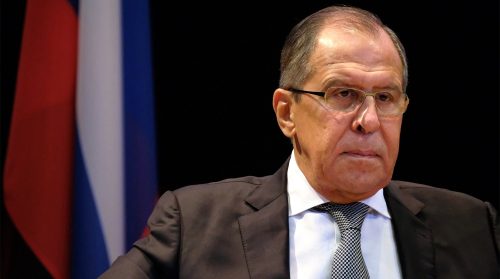
Denmark and Sweden have failed to respond to Russian overtures to discuss the Nord Stream blasts for nearly six months now, with their behavior constituting nothing short of a “boorish” attempt to hide Washington’s responsibility for the sabotage attack, Russian Foreign Minister Sergei Lavrov has said.
“For half a year now they’ve been as silent as a fish on ice, and since September neither the Swedes nor the Danish have responded to official letters of our prime minister, Mikhail Mishustin, who very politely offered to appoint some kind of contact person with whom it would be possible to hold talks, since [the attack] took place in the territorial waters of their exclusive zones, and the pipelines are the property of a Russian company,” Lavrov said, speaking to reporters on Wednesday.
“If since September the head of the Russian government is waiting for a reply from the absolutely independent sovereign states in question, if our ambassadors remind the prime ministers of these countries about once a month that they’ve been contacted, at least tell him ‘yes mister prime minister, we have received your appeal but we’re busy at the moment’. But we haven’t got even that. I think this is boorishness. But this boorishness masks the total failure of attempts to obscure the responsibility of the collective West, led by the United States, for this sabotage, for organizing this terrorist act,” the Russian top diplomat added.
Lavrov characterized the sabotage of Nord Stream a “final solution to the German gas issue” by its overseas partners. “Just as they are now trying to resolve the ‘Russian question,’ so did they want to resolve the ‘German question,’ so that Berlin would never try to play any kind of independent role in the foreseeable historical perspective,” Lavrov said, recalling how competitively-priced and dependable Russian energy had enabled Germany to become Europe’s leading economy.
“Germany was not just humiliated, but was put in its place – the place of a satellite of the United States, with Washington deciding whether the country can ensure its economic development, meet the social needs of its citizens through the use of gas coming through a pipeline which Berlin partially paid for itself.” The Biden administration doesn’t seem to “give a damn about what hardship will befall many countries, including their close allies,” Lavrov emphasized.
Lavrov suggested that the modern history of Europe has shown that whenever Russia and Germany enjoy good relations and are able to cooperate economically, in logistics and even militarily, Europe enjoys calmer, more peaceful times, to the irritation of forces across the ocean or across the English Channel, who seek to command Europe’s destiny.
1984-Style Blackout on Hersh Revelations
Commenting on Hersh’s bombshell reporting on the Nord Stream blasts, and the media blackout in coverage of the story except to attack or smear the veteran investigative reporter, Lavrov compared Western governments’ behavior to a “trend” straight out of a George Orwell novel in which the state keeps media firmly under control.
“Look at the reaction in the West to Hersh’s precise, fact-based revelations in connection with the explosions of Nord Stream 1 and 2,” Lavrov said. The Russian diplomat pointed out that if Moscow was to be blamed, for instance, for the disruption of an oil pipeline between Canada and the US, the media would be forced to write about it non-stop. But with Hersh’s story – grounded in facts, the reaction has been zilch.
Lavrov urged the foreign press to conduct fact-based investigations into the costs being borne by European economies after the rejection of Russian energy, and to dig more closely into the details of the revelations uncovered by Hersh.
Consequences
As the potential implications of his reporting for international politics continue to reverberate, Hersh said Wednesday that he expects the “enormous” political consequences of the US attack on Nord Stream to last for many years, “looking even at the potential of countries walking out of NATO.”
The investigative journalist, who has an unimpeachable reputation for accuracy and over 60 years of journalistic experience under his belt, has also blasted his detractors for their cowardice, pointing out that despite his long careers with both the New York Times and the Washington Post, “neither paper has run a word this point about the pipeline story, not even to quote the White House’s denial of my reporting.”
The Russian mission to the United Nations plans to organize a Security Council meeting on the attack on Nord Stream on February 22, citing “new information” about the attack unveiled in Hersh’s reporting.
Lula did indeed make a deal with the devil, in this case his US nemeses who were responsible for his imprisonment, in order to be sprung from jail and subsequently given a fighting chance to return to office. Upon doing so, this geopolitically repentant leader whose multipolar worldview was noticeably recalibrated behind bars did exactly as the US expected him to do, namely condemn Russia like all Sanders-style leftists have done and then rush to Biden to “kiss the ring”.
Brazilian President Luiz Inácio Lula da Silva, who was just re-elected to a third non-consecutive term in office and is popularly known as Lula, did what had previously been unthinkable for the same man who used to be regarded as a titan of the global multipolar movement. After meeting with Biden, who was Vice President when the US orchestrated “Operation Car Wash” against him and his successor Dilma Rousseff, Lula released a joint statement in which he fiercely condemned Russia.
According to the official White House website, “They deplored the violation of the territorial integrity of Ukraine by Russia and the annexation of parts of its territory as flagrant violations of international law and called for a just and durable peace.” No leader of Russia’s other fellow BRICS partners had ever expressed such sentiments, not even former Brazilian President Jair Bolsonaro, which proves that Lula has indeed recalibrated his worldview since his imprisonment in a more pro-US direction.
This development wasn’t surprising since Lula had earlier condemned Russia by comparing its special operation in Ukraine to the US’ HybridWar on Venezuela. At the same time, he put forth a G20-like peace proposal that wasn’t just ignored by Russia, but even indirectly criticized by it an insincere publicity stunt that actually goes against Moscow’s interests. Intrepid readers can learn more about the first incident here and the second one here since they’re beyond the scope of the present piece.
Nevertheless, by fiercely condemning Russia while meeting with Biden in DC, it should be obvious to all that Lula made a proverbial deal with the devil. In hindsight, it compellingly appears as though the information that was leaked about his case proving the courts’ political bias against him and which ultimately annulled their prior ruling (which thus let him run for re-election last year) was probably the result of a US intelligence operation aimed at once again manipulating Brazil’s political process.
Throughout the course of his first two terms and the unfinished one of his successor, the US regarded Lula as a titan of the global multipolar movement whose foreign policies posed a threat to its hemispheric hegemony. For that reason, they leaked the detailed materials implicating Lula, Rousseff, and other Workers’ Party members in a massive corruption scandal that would serve to discredit their rule, jail that aforementioned titan, and pave the way for installing a much more pliable leader.
The US’ Hybrid War on Brazil achieved all three of its initial goals but the last of them proved to be unsustainable after Bolsonaro refused to sanction Huawei in exchange for an official NATO partnership and later defied similar demands against Russia in a surprising flex of his independence. Not only that, but his conservative-sovereigntist worldview that’s inaccurately been smeared as solely being a so-called “far right-wing” one is the polar opposite of the ruling US Democrats’ liberal-globalist one.
While the sequence of events that reversed the primary outcome of “Operation Car Wash” began under the Trump Administration, objective observers already know that his military, intelligence, and diplomatic bureaucracies (“deep state”) were working against him and his worldview this entire time. This was proven by their complicity in the Russiagate conspiracy theory, among many other examples, with their preemptive efforts to manipulate Brazil’s 2022 elections being another case in point.
The US’ “deep state” believed that their country’s interests would be best served by replacing increasingly independent Bolsonaro with a geopolitically repentant Lula, ergo why they worked so hard to reverse the same outcome that imprisoned the latter. They concluded that he’s no longer the multipolar titan that they previously thought he was, but is more akin to a Bernie Sanders-style leftist, which thus makes him amenable to manipulation in pursuit of their foreign policy goals.
Just like Sanders and his ilk fiercely condemned Russia, so too did Lula, which was entirely predictable once one realizes that this Brazilian leader has turned into a “fellow traveler” of the US left. The Workers’ Party has gradually been infiltrated by pro-US liberal-globalists who prioritize the promotion of so-called “woke” identity-centric politics at home over tangible improvements in poverty alleviation, workers’ rights, and accelerating the global systemic transition to complex multipolarity (“multiplexity”).
This observation explains why one of the three largest paragraphs of Lula’s joint statement with Biden included a pledge to fight racism and support LGBTQI+ persons. That’s not to deny the existence of racism in either of their countries, but just to point out that the Brazilian leader apparently believes that he can’t effectively counteract it with US assistance, which is a tacit deferral to the US’ de facto seniority in their revived partnership and thus by default confirms his country’s position as its “junior partner”.
Further evidence of the US’ successfully reasserted hegemony over Brazil in the aftermath of last year’s elections, which were manipulated by its intelligence services as was previously explained, can be seen by Lula agreeing to “strengthen democratic institutions” with Biden. This represents one of the most cringeworthy self-inflicted humiliations that any world leader has ever committed since it was during Biden’s term as Vice President that “Operation Car Wash” was orchestrated against Lula and his party.
He obviously knows that, yet he decided to “kiss the ring” and radically revise history as a quid pro quo for the US’ intelligence services once again manipulating Brazil’s domestic processes, albeit this time to release him from his unfair imprisonment. Lula went even further with his self-inflicted humiliation ritual by also agreeing in their statement to “build societal resilience to disinformation” together with the US despite the latter being the world’s largest fake news factory, which it earlier weaponized against him.
Another aspect of historical revisionism is evidenced by the remarks that preceded their meeting. The White House reported that Lula claimed that Brazil “isolated itself for four years” under Bolsonaro, who he claimed “didn’t enjoy to keep international relations with any country.” That’s factually false though since trade with China surged despite that former leader’s Sinophobic rhetoric on the campaign trail and he even visited President Putin in Moscow just before the special operation began despite US pressure.
These objectively existing and easily verifiable facts prove that Lula is lying through his teeth, which he believes he can do with impunity since he has the US’ support nowadays, unlike during his first two terms. He’s fully confident that nobody in the US-led West’s Mainstream Media (MSM) will fact-check him since they also share his ideological opposition to the conservative-sovereigntist worldview that Bolsonaro imperfectly embodied. It’s therefore in all their interests to so radically revise history.
The newly declared Brazilian-US joint crusade against “extremism and violence in politics” that was also unveiled in their statement strongly implies that Washington will help Lula crack down on the opposition in the aftermath of his country’s January 8th event. About that, the US arguably had a role in orchestrating everything as well in order to create the pretext for Lula to consolidate his rule, which is especially important for them since he shares their liberal-globalist worldview in the domestic sense.
More about that incident and the US’ role within it can be read about in detail here and here since it goes beyond the scope of the present analysis just like Lula’s prior condemnation of Russia and his doomed-to-fail G20-like peace plan that were earlier touched upon in this piece too. They’re relevant for intrepid readers to review, however, if they hope to obtain a deeper understanding of the ways in which Brazil and the US are now closely cooperating behind the scenes during Lula’s third term in office.
What all of this goes to show is that Lula did indeed make a deal with the devil, in this case his US nemeses who were responsible for his imprisonment, in order to be sprung from jail and subsequently given a fighting chance to return to office. Upon doing so, this geopolitically repentant leader whose multipolar worldview was noticeably recalibrated behind bars did exactly as the US expected him to do, namely condemn Russia like all Sanders-style leftists have done and then rush to Biden to “kiss the ring”.
Lula then radically revised history alongside his counterpart in order to publicly patch up their well-known differences brought about by the US’ Hybrid War on his country that was partially overseen by none other than Biden himself and ultimately resulted in the Brazilian leader’s imprisonment. This self-inflicted humiliation ritual was the cost that Lula had to pay, which included condemning Russia and thus discrediting himself among the multipolar community, but he looked happier than ever as he did it.
It is unlikely that President Vladimir Zelensky expects to win militarily. But it seems that he genuinely believes that he will succeed in turning Ukraine into something like Israel – a paramilitary state living with a sense of constant military threat.
Ukraine doesn’t have the military or economic resources of its own to achieve victory, and the resources provided by the West will never be enough to inflict a final defeat on Russia. Zelensky’s calculation is likely based on the belief that by offering Ukraine as a tool for NATO to use against Russia, he will constantly mobilize Western support and thereby ensure his own survival, and that of his associates.
In the worst-case scenario, as he sees it, Zelensky is probably counting on emigrating to the West with his closest associates, where they will advocate a continued policy of Russian containment. But does he care about the interests of ordinary people in Ukraine?
The unprecedented hardships of war that the country now faces could have been significantly reduced if Zelensky had been willing to settle the crisis diplomatically. Russia has repeatedly taken diplomatic initiatives to resolve this conflict. In the first phase, for example, negotiations took place in Belarus and Turkey. However, under the influence of the US and the UK, Kiev has set a course to prolong the conflict, banking on Western military assistance to achieve its goals.
As Ukraine’s own military and economic resources have dried up, the country has become increasingly dependent on Western supplies, and has ultimately become a tool to fight Russia. Nevertheless, Kiev still has the opportunity to begin talks with Moscow.
Zelensky could take the initiative to negotiate a status quo that is still comfortable for Ukraine. Of course, as the Russian military campaign progresses, the situation will change in ways that are far from favorable to Kiev. And the solutions put forward by the Russian delegation at the beginning of the crisis will no longer be on the table. However, there is still the possibility of a sustainable peace, with reduced risks of escalation into Europe’s biggest military conflict since the Second World War and a nuclear catastrophe.
Zelensky could still claim the laurels of a peacemaker who sacrificed some of his personal ambition in the name of saving Ukrainian lives and ensuring a peaceful future for his country.
A truce would alleviate the economic difficulties of Kiev’s supporters in the West, and thus generate some gratitude. Ukraine would also save a considerable amount of its military resources. Peace would obviously limit them, as deliveries would dry up, but those resources in situ would still be at the disposal of the Ukrainian government.
Yet, Zelensky’s government acts as if it sees no value in preserving Ukrainian statehood. The administration is squandering citizens’ lives and the economic fabric of the country in the belief that this sacrifice is necessary to gain some possible, rather indefinite, advantage in the future. Instead of acting as a peacemaker, as someone who is prepared to make sacrifices to save the lives of his people, Zelensky acts like a gambler, while feeding the population military propaganda.
The unprecedented military, political and economic support Ukraine is receiving from abroad essentially covers up all of the mistakes by Zelensky’s government. A strategy which is based on the axiom “war will pay for everything”. At home, the militarist line has allowed the president to establish a political dictatorship and persecute his opponents in all spheres of state life, including religion. As a result, he has secured an unprecedented concentration of power in his hands and, for the first time in Ukrainian history, silenced all centers of opposition.
Zelensky need not worry about Ukraine’s economic well-being in the short term: the foreign economic aid being handed to the Ukrainian government will suffice. Meanwhile, Kiev is still actively betting that Russia’s $300 billion in foreign currency reserves, frozen in the West, will fall into its hands. What would amount to state-piracy would also allow it use the money as it sees fit.
As a result, Zelensky expects that even if he is defeated and loses part of his territory, he will remain in power as the military leader the West needs for the new Ukraine, which will be the main anti-Russian outpost on NATO’s eastern borders. One that will be armed to the teeth, saturated with Western economic aid and that will provide its citizens with an acceptable standard of living.
I believe that Zelensky is genuinely convinced he will succeed in turning Ukraine into something like Israel, a paramilitary state in a hostile environment, and living with a sense of constant military threat. I do not exclude the possibility that even in the worst-case scenario, where there is a complete collapse of his government, Zelensky expects to find himself and a group of his closest associates in exile in the West. Once there, they will actively advocate a continued policy of containment and defeat of Russia. History shows that this prospect has every chance of materializing.
Andrey Sushentsov is the Valdai Club program director.
Representative Michael McCaul plans to hold a series of hearings showing alleged atrocities committed by Russia. The Texas Republican hopes the testimony will push some of his GOP colleagues to commit to sending Kiev more military aid.
In an interview with the AP, the high-ranking Republican discussed how the images of atrocities committed against children is a powerful political tool. “I find that moves the dial, when they see these horrific killings of children,” McCaul said. He controls the influential House Foreign Affairs Committee.
Democrats in Congress have fully committed to providing military aid to Kiev. However, a growing number of Republicans have called for curtailing security assistance to Ukraine. McCaul said the hearings will be used to get his GOP colleagues on board with sending additional aid.
“I’m very much focused on the dissension within my own party on this,” the Congressman added.
Last week, Matt Gaetz (R-FL) introduced The Ukraine Fatigue Resolution. If passed, it would express that it is the sense of the House that “the US must end its military and financial aid to Ukraine” and urges “all combatants to reach a peace agreement.” The legislation has ten cosponsors, all Republicans.
Congress has already authorized over $100 billion in spending to aid Ukraine’s war effort. In December, President Joe Biden signed the Omnibus bill, which included $45 billion in aid to Kiev.
After Republicans captured control of the House in November, McCaul said he would push more aid for Ukraine through. At the time, he criticized Biden for not sending more advanced weapons to Kiev.
Gaetz says he introduced the resolution because America cannot send so much tax money to Kiev and escalating the military support for Ukraine risks starting WWIII. “President Joe Biden must have forgotten his prediction from March 2022, suggesting that arming Ukraine with military equipment will escalate the conflict to ‘World War III,’” He continued, “America is in a state of managed decline, and it will exacerbate if we continue to hemorrhage taxpayer dollars toward a foreign war.”
McCaul also favors providing Ukrainian forces with Army Tactical Missile System artillery munitions, which have a range of nearly 200 miles. He has expressed that he wants these weapons to be used in future assaults on Crimea, which Russia annexed in 2014. Such an escalation could swiftly lead to a nuclear exchange.
Using alleged atrocities against children to fuel hatred is not a new political stunt. In 1990, Nayirah al-Ṣabaḥ, the daughter of then-Kuwaiti Ambassador Saud Al-Sabah, claimed to have witnessed Iraqi soldiers killing babies. However, the testimony was fake but was used to rally Americans to support the Gulf War.
The West is attempting to use the Ukraine conflict to portray Russia as a “rogue state” in the eyes of the world, Foreign Minister Sergey Lavrov said on Wednesday. He stressed that the strategy has not been successful.
“The US and its satellite states are waging an all-encompassing hybrid war that they have long been preparing for, and are using Ukrainian radical nationalists as a battering ram against us,” Lavrov said in a speech in the lower house of the Russian parliament, the State Duma.
“They are not even trying to hide the goal of this war: it is not only to defeat our country on the battlefield and destroy our economy, but also to surround us with a ‘sanitary cordon’ and turn us into a type of a rogue state.”
The statement came the same day that European Commission President Ursula von der Leyen unveiled proposals for a new sanctions package against Russia, including additional export bans and measures to prevent the bypassing of restrictions.
Lavrov said that the West’s efforts to isolate Russia have failed because Moscow continues to develop relations with partners in other areas of the globe. He added that nations that have refused to back the “unprecedented” sanctions make up the majority of the world’s population.
The countries of the Asia-Pacific, the Middle East, Africa, and South America “don’t want to live in accordance with the West-centric order,” the Russian minister stated. “So it makes perfect sense why three-quarters of the world’s countries have not joined the anti-Russian sanctions and have a reasonable view regarding the situation in Ukraine.”
China and India are among the major economies that have refused to impose restrictions on Moscow. Denis Alipov, Russia’s ambassador to New Delhi, said on Tuesday that sanctions “had an opposite effect” and facilitated more trade and closer cooperation between Russia and India.
Beijing, meanwhile, has accused the US of fueling the Ukraine conflict and trying to weaponize the world economy for its own benefit.
Lawsuits accusing top US universities of harboring antisemitism all originate from one source: a corporate law firm that fielded the pro-settler ex-US ambassador to Israel, and which was registered as a foreign agent of an Israeli principal as recently as 2021.
The firm now represents professional Israel lobby activists posing as victimized “Jewish students” and seeking to crush the free speech rights of Palestine solidarity activists. … continue
This site is provided as a research and reference tool. Although we make every reasonable effort to ensure that the information and data provided at this site are useful, accurate, and current, we cannot guarantee that the information and data provided here will be error-free. By using this site, you assume all responsibility for and risk arising from your use of and reliance upon the contents of this site.
This site and the information available through it do not, and are not intended to constitute legal advice. Should you require legal advice, you should consult your own attorney.
Nothing within this site or linked to by this site constitutes investment advice or medical advice.
Materials accessible from or added to this site by third parties, such as comments posted, are strictly the responsibility of the third party who added such materials or made them accessible and we neither endorse nor undertake to control, monitor, edit or assume responsibility for any such third-party material.
The posting of stories, commentaries, reports, documents and links (embedded or otherwise) on this site does not in any way, shape or form, implied or otherwise, necessarily express or suggest endorsement or support of any of such posted material or parts therein.
The word “alleged” is deemed to occur before the word “fraud.” Since the rule of law still applies. To peasants, at least.
Fair Use
This site contains copyrighted material the use of which has not always been specifically authorized by the copyright owner. We are making such material available in our efforts to advance understanding of environmental, political, human rights, economic, democracy, scientific, and social justice issues, etc. We believe this constitutes a ‘fair use’ of any such copyrighted material as provided for in section 107 of the US Copyright Law. In accordance with Title 17 U.S.C. Section 107, the material on this site is distributed without profit to those who have expressed a prior interest in receiving the included information for research and educational purposes. For more info go to: http://www.law.cornell.edu/uscode/17/107.shtml. If you wish to use copyrighted material from this site for purposes of your own that go beyond ‘fair use’, you must obtain permission from the copyright owner.
DMCA Contact
This is information for anyone that wishes to challenge our “fair use” of copyrighted material.
If you are a legal copyright holder or a designated agent for such and you believe that content residing on or accessible through our website infringes a copyright and falls outside the boundaries of “Fair Use”, please send a notice of infringement by contacting atheonews@gmail.com.
We will respond and take necessary action immediately.
If notice is given of an alleged copyright violation we will act expeditiously to remove or disable access to the material(s) in question.
All 3rd party material posted on this website is copyright the respective owners / authors. Aletho News makes no claim of copyright on such material.