The Myth of Pandemic Preparedness
The entire effort is based on the false assumption that pandemic preparedness would actually work. In fact, all it has done is create new pandemics.
1. The most recent WHO-declared Public Health Emergencies of International Concern (PHEICs) for SARS-CoV-2 and Monkeypox were both caused by lab-created viruses, based on many careful analyses of their genomes.
2. There is no evidence that pandemic preparedness ever benefited anyone but the preparedness industry, and substantial evidence that it led to the creation of the COVID pandemic.
3. The Democrat majority staff report, “Preparing for and preventing the next public health emergency.” echoes the WHO Amendments.
4. The Global Preparedness Monitoring Board has also geared up to push the identical program as the WHO: surveillance, One Health, and investment — “all topics that the GPMB has long recognised are crucial for the advancement of resilient pandemic preparedness mechanisms.”
5. The G20 nations agreed last April to a $50 Billion dollars a year price tag for gloval pandemic preparedness.
6. The Globalist agenda is out in the open for all to see.
The pandemic preparedness concept is based on fantasy; it is a dangerous money grab for a new biodefense industry. It brought:
· Many more high-containment BSL-3 and BSL-4 labs,
· 15,000 new scientists trained to research biowarfare pathogens,
· Poorly tested drugs and vaccines for which the manufacturers had no liability
· More corruption and pork for politicians to distribute.
· Nathan Wolfe’s company: biolabs in Ukraine, squire to Ghislaine Maxwell, funding by Hunter Biden’s investment group
· Peter Daszak’s ‘nonprofit’ that collected dangerous viruses from over 30 countries to bring to the US Defense Threat Reduction Agency (DOD’s DTRA) for further investigation
· Extremely dangerous anthrax, smallpox and COVID vaccines
· The COVID drug paxlovid, which led to relapses of COVID in President Biden, CDC Director Rochelle Walensky and NIAID Director and Presidential COVID adviser Anthony Fauci and millions of Americans, presumably prolonging their infectiousness and causing more cases of COVID
· Expensive new federal agencies (ASPR, BARDA in DHHS, and subagencies within DHS and within DOD) and new funding streams to the NIH
· An excuse to censor alternate medical/scientific views
Fauci says not pushing back against online “misinformation” would be a blow to society
By Cindy Harper | Reclaim The Net | December 17, 2022
President Joe Biden’s outgoing chief medical adviser Anthony Fauci dismissed criticism from Twitter owner Elon Musk, adding that the platform has become a “cesspool of misinformation.”
“I don’t pay attention to that,” Fauci said in an interview with MSNBC’s Andrea Mitchell. “I mean, yeah, he has a big megaphone, but, I mean, the Twittersphere as it is has really gone berserk lately. It’s kind of become almost a cesspool of misinformation.”
Last Sunday, Musk criticized Fauci and called for his prosecution for lying to the American public and funding research that might have been the origin of the virus.
“My pronouns are Prosecute/Fauci,” Musk wrote.
He later shared a meme showing Fauci telling Biden, “Just one more lockdown, my king.”
In another interview on David Axelrod’s podcast, Fauci also dismissed criticism from Musk.
“I don’t respond to him,” Fauci said. “I don’t pay any attention to him because that’s merely a distraction,” he said. “And if you get drawn into that, and I have to be honest, that cesspool of interaction … there’s no value added to that, David. It doesn’t help anything.”
Dr. Fauci was asked by MSNBC host Andrea Mitchell if society was becoming “anti-science,” referring to the rise of what she called “disinformation and misinformation” spreading online.
“The answer is yes,” Fauci responded. “The short answer to your question, Andrea. But the other thing is that there is so much misinformation that we were experiencing the normalization of untruths. Where there is so much disinformation that spreads predominately through social media that people just get so used to the untruths that it becomes normalized which is really bad because then you don’t push back against it. You say, well, that’s just the way it is. That would be a terrible blow to society. And I believe to our democracy if all of a sudden people say, well, what’s the use?
“There’s so much untruth out there we might as well not even push back on it. It’s hopeless. We’ve got to not accept the normalization of untruths.”
Dr. Fauci is currently facing a lawsuit for allegedly working with social media platforms to suppress speech.
Two-Thirds of Voters Believe Social Media Engaged in Politically-Motivated Censorship and Demand Congressional Action
By Jonathan Turley | December 17, 2022
The December Harvard CAPS / Harris Poll is out this week and Mark Penn and his colleagues have some interesting results to share. Despite the refusal of many in the media to cover the Twitter files, nearly two-thirds of voters believe Twitter shadow-banned users and engaged in political censorship during the 2020 election. Seventy percent of voters want new national laws protecting users from corporate censorship.
This week, the media continued to fulfill that common view of a de facto state media by ignoring new evidence of FBI coordination in censorship targets with Twitter in the latest news blackout.
On Friday, Twitter released additional information showing that the FBI and CIA actively pushed for censorship, supplying lists of accounts to be suspended or banned.
Journalist Matt Taibbi described Twitter as acting as a “subsidiary” of the FBI and wrote that “between January 2020 and November 2022, there were over 150 emails between the FBI and former Twitter Trust and Safety chief Yoel Roth.”
The evidence continues to establish a system of censorship by surrogate or proxy. While the First Amendment applies to the government and not private corporations generally, it does apply to agents or surrogates of the government. Twitter now admits that such a relationship existed between its former officials and the government.
Once again, however, the major networks and newspapers have largely ignored the story. There has been a full mobilization of media, political, and business interests against Elon Musk and Twitter to oppose the restoration of free speech protections at the company. The media is heavily invested in suppressing this story after years of denials of any problems of censorship. Previously, they denied censorship was occurring. When such censorship became obvious, they denied that there was any involvement of the FBI and the government. Now that such involvement is confirmed, they are simply not covering the story.
Instead, the media is “all-in” on the doxxing suspensions (which Musk has now lifted). I have been critical of Musk’s response to the doxxing controversy. In part this is due to the scope of the suspensions and the fact that they occurred only 24 hours after the new policy was implemented. I would have preferred warnings and further clarity on the issue, particularly in what constituted doxxing in some of these tweets from journalists.
Despite the overwhelming coverage, there is little explanation of the media’s approach to the underlying doxxing question. Some have said that this is a “grey area” or may be below the threshold.
For years, the media has supported suspensions due to doxxing. In this case, the location of Musk’s plane may have been used by an individual to threaten his family. Most reports omit any discussion of whether the sending of such live locations information is doxxing. If it is, it has long been banned by most sites and journalists are not exempt.
Previously, figures connected with mainstream media from CNN to the Washington Post have been accused of doxxing. Liberal groups were accused of doxxing conservative justices and others, including dangerously posting information on the children of Justice Amy Coney Barrett. It does not seem to matter when the targets are conservative, Republican, or libertarian.
Writers who have long advocated the banning of others with opposing views are some of the loudest objecting in the wake of the doxxing controversy. The Washington Post’s Taylor Lorenz expressed fear that she could be next. It may not be a groundless fear since Lorenz has been previously accused of doxxing others and described the reintroduction of free speech protections for others as the opening of “the gates of hell.”
Jack Sweeney, the creator of this site (using publicly available information), has expressed shock at being sued and suspended. However, these articles continue to tellingly omit one of the critical issues. Is it doxxing to supply people with the minute-by-minute movement of the plane used by Musk and his family? That would seem relevant to weighing the merits of these suspensions.
Such slanted coverage is clearly losing its hold on the public or its view of Twitter. Indeed, the media continues to write off a large percentage of readers and viewers with openly biased coverage. The public is not buying it. It is buying Twitter. Not only are users signing up in record numbers, but a recent poll shows a majority of Americans “support Elon Musk’s ongoing efforts to change Twitter to a more free and transparent platform.”
In the wake of the latest release, the FBI issued a statement that said that there was nothing to see here and that “the FBI regularly engages with private sector entities to provide information specific to identified foreign malign influence actors’ subversive, undeclared, covert, or criminal activities.”
The statement is notable for what it does not contain: any recognition of the seriousness of the allegations or pledge to conduct its own investigation in whether this relationship crossed over to de facto government censorship. According to some reports, as many as 80 FBI agents may have been tasked to assist in the censorship efforts. Yet, the FBI has offered little more than a shrug in the face of credible constitutional concerns.
According to the Harvard/Harris poll, the public believes that such censorship occurred and warrants action. The denials of the FBI and the dismissal of the mainstream media will only serve to magnify such calls for action.
Croatian MPs reject EU training mission for Ukraine
RT | December 18, 2022
Croatian lawmakers have failed to pass a motion for the Balkan country to join an EU program to train Ukrainian military personnel to fight against Russia.
During a vote on Friday in the national parliament, the Sabor, 97 MPs out of 151 supported the idea of training some 100 Ukrainian troops. The proposal required the backing of two thirds of lawmakers, and fell short by several votes.
Before the session, opponents of the European Union Military Assistance Mission argued that it could make Croatia a “target” for Russia.
The program, which the bloc considers its “widest” military mission to date, is expected to prepare 15,000 Ukrainian servicemen on the territory of some 20 member states. It will cost European taxpayers around €100 million (around $106 million). EU foreign policy chief Josep Borrell said in early December that 1,100 Kiev troops had already begun their training in various camps.
However, in Croatia, which is a member of both the EU and NATO, the program led to a major rift in the leadership.
President Zoran Milanovic, who is commander-in-chief of the Croatian armed forces, has strongly resisted involvement in the scheme. He argued that such a move “would mean bringing the war into Croatia.”
This led Prime Minister Andrej Plenkovic, whose cabinet backed the mission, to accuse Milanovic of harboring “pro-Russian views.” The government put the issue before parliament in an attempt to break the deadlock.
Soaring energy prices cost EU $1 trillion – Bloomberg
RT | December 18, 2022
EU member states have spent roughly a trillion dollars (€940 billion) in the face of the bloc’s worst energy crisis in decades, Bloomberg is reporting on Sunday, citing calculations based on market data.
Soaring energy prices have sent its economies plunging into recession as most member states opted to stop importing gas from Russia, facing the necessity to turn to more expensive supplies.
The agency highlighted that the total estimated losses marks just the beginning of a full-scale crisis, as a period of high prices for energy could last years, while aid is already becoming unaffordable.
The security of energy supply is expected to remain an issue beyond next winter after the filled gas storage facilities across the region are emptied. The nations of the EU will have to refill their gas reserves for the next cold season with no deliveries from Russia, which also heats up competition for tankers.
Even with more import terminals for liquefied natural gas (LNG) coming online, the crisis will reportedly loosen its grip only in 2026, when additional production capacity from the US or Qatar becomes available. At the same time, prices should remain high to attract LNG away from other buyers from energy-hungry Asian buyers.
A state of emergency could linger for years, according to Brussels-based think tank Bruegel, as quoted by Bloomberg.
“Once you add everything up –bailouts, subsidies– it is a ridiculously large amount of money,” Martin Devenish, a director at consultancy S-RM, told the agency. “It’s going to be a lot harder for governments to manage this crisis next year.”
A rush to fill storage during summer, despite all-time high prices, has softened the supply squeeze so far. However, freezing weather is expected to give the region’s energy system the real test this winter.
Last month, Germany’s energy regulator, the Federal Network Agency, warned that German households and small businesses have failed their first gas-saving tests. The regulator noted that a reduction in consumption of at least 20% was required to avoid a gas shortage in the coming months.
Opposition to Childhood Vaccine Mandates on the Rise, More Parents Say They Want the Right to Choose
Michael Nevradakis, Ph.D. – The Defender – December 16, 2022
A growing number of parents oppose vaccine mandates as a precondition for public school attendance, and interest among adults in receiving COVID-19 booster shots is waning, according to a national poll by the Kaiser Family Foundation (KFF).
The results of the latest KFF COVID-19 Vaccine Monitor survey, released today, show more than one-third (35%) of parents now believe they should be the ones to decide whether their children receive a slate of childhood vaccines.
The poll encompassed a nationally representative sample of 1,259 adults who were interviewed between Nov. 29 and Dec. 8. According to The New York Times, the KFF is a “nonpartisan health care research organization.”
“It’s unfortunate that it took a wave of injuries and deaths from vaccines that never should have been released into the market — much less mandated — to draw long-overdue attention to the issue of vaccine safety,” said Robert F. Kennedy, Jr., chairman and chief litigation counsel for Children’s Health Defense.
Kennedy told The Defender :
“This latest poll is encouraging for those parents, physicians and scientists who for decades have been calling for an investigation into the relentless promotion by FDA, CDC and Big Pharma of inferior medical products without rigorous safety testing.
“As more parents begin to question the forced, routine administration of vaccines on healthy children, perhaps we will move closer to protecting children and holding vaccine makers and government agencies accountable for the harm these products cause.”
26% of parents today: ‘Risks of childhood vaccines for measles, mumps, and rubella outweigh the benefits’
According to the KFF poll, 65% of parents of children under age 18 “think healthy children should be required to be vaccinated to attend public schools.”
This represents an 11% decline from an October 2019 Pew Research Center poll showing 76% of parents supported public school vaccine mandates.
More than one-third of parents surveyed (35%) “now believe parents should be able to decide not to vaccinate their children, up from 23% in 2019.”
The poll also revealed declines in support for specific vaccines. For instance, 71% of respondents said “healthy children should be required to get vaccinated for MMR in order to attend public schools” compared with 82% who supported the MMR vaccine mandate for healthy children in 2019.
Nearly 3 in 10 parents (28%) said parents should be able to choose whether their children receive the MMR vaccine, compared with 16% in the 2019 poll.
A similar percentage (26%) responded that the “risks of childhood vaccines for measles, mumps, and rubella outweigh the benefits.”
A smaller decline was noted in the percentage of adults (85%) who felt the benefits of childhood MMR vaccination outweigh the risk. This represented a three-percentage-point decline from the 2019 Pew Research Center poll (88%).
These declines were driven by increased vaccine “skepticism” and a growing movement toward parental choice, on the part of Republicans and Republican-leaning independents — 44% of whom responded that parents should have a choice about whether or not their children receive the MMR vaccine, up from 20% in 2019.
Only 11% of Democrats provided the same response.
Moreover, only 56% of Republicans and Republican-leaning independents said “healthy children should be required to be vaccinated to attend public schools,” a decline of 23 percentage points compared to 2019.
A similar divide was apparent among respondents in reference to their COVID-19 vaccination status. While 83% of vaccinated respondents said healthy children should be required to be vaccinated in order to attend public schools, 63% of unvaccinated parents said parents should instead decide.
‘Tepid’ interest in COVID ‘boosters’ and flu vaccine
Interest in the updated COVID-19 booster is “tepid,” according to the KFF poll, which showed only 1 in 5 adults (22%) surveyed said they have received the updated bivalent booster and an additional 16% said they plan to receive it “as soon as possible.”
However, 12% of respondents said they would “wait and see” before deciding whether to get the new booster, 13% said they would get it only if required and 9% said they would “definitely not” get it.
An additional 27% were unvaccinated or only “partially” vaccinated, which means they are not eligible to get the booster.
Interest in the bivalent booster was highest among adults 65 and older (39%) and Democrat voters (38%), though both figures fall significantly short of a majority. Conversely, only 12% of Republicans and 11% of young adults under 30 said they had received a dose of the updated booster.
Also, 36% of “fully vaccinated” adults 65 and older said they don’t think they need the updated booster, while a “similar percentage,” according to KFF, said they did not think the benefit of the updated booster was worth it.
Overall, fewer than half of parents of children under 18 said their child has received the updated booster or is likely to do so.
Combined with children who have not been vaccinated and who are therefore ineligible for the booster, 58% of parents of 12- to 17-year-olds and 70% of parents of 5- to 11-year-olds responded in this manner.
Republicans and Republican-leaning independents, even if vaccinated, expressed skepticism toward the updated booster, with 64% stating they do not think they need it, and 61% saying they did not believe the benefit was worth it.
Even among Democrats, a majority (51%) said they were too busy or hadn’t had the time to get the updated booster, indicating it was not a high priority for them.
Even in the face of a so-called “tripledemic” of COVID-19, flu and RSV (respiratory syncytial virus) this fall and winter, and despite the majority of parents saying they are worried their children will get sick from RSV (56%, and 73% of parents of children under the age of 5), only 34% of parents said their child has gotten a flu shot this season.
Parents’ rights movement growing in prominence
According to The Times, “The shift in positions appears to be less about rejecting the shots than a growing endorsement of the so-called parents’ rights movement.”
Dr. Sean O’Leary, chairman of the American Academy of Pediatrics’ Committee on Infectious Diseases told The Times :
“The talking point that has been circulated is the concept of taking away parents’ rights. And when you frame it that simply, it’s very appealing to a certain segment of the population.”
O’Leary said he worried that the parental rights movement might slow down compliance with state-mandated childhood immunization schedules, telling The Times “We do have a global dip in vaccine coverage. So this is not a time to be considering a rollback of these laws.”
Michael Nevradakis, Ph.D., based in Athens, Greece, is a senior reporter for The Defender and part of the rotation of hosts for CHD.TV’s “Good Morning CHD.”
This article was originally published by The Defender — Children’s Health Defense’s News & Views Website under Creative Commons license CC BY-NC-ND 4.0. Please consider subscribing to The Defender or donating to Children’s Health Defense.
Advocating a Risky Experiment Generates A Motive to Conceal Its Failure
Dr. Paul Alexander asks some tough questions about Grant Wahl’s death
By John Leake | Courageous Discourse | December 16, 2022
My first true crime book—about the Austrian author, journalist, and international serial killer, Jack Unterweger—recounted a strange dilemma suffered by Austria’s intelligentsia after evidence emerged that Jack had murdered several women. The trouble for them was, they had, just a few years earlier, vehemently advocated (through letters and a petition to the Justice Ministry) Jack’s early release from his life sentence in prison for a brutal murder he’d committed in his youth. Their passionate desire to liberate him arose after he published an “autobiographical novel” titled Purgatory. They (a Who’s Who of Austrian writers, artists, journalists, and scientists) found his book so moving, and so apparently expressive of his mature self-awareness, that they asserted it was evidence of his rehabilitation.
About 18 months after he was released from prison with great fanfare, an Austrian daily newspaper reported that a warrant had been issued for his arrest for murdering 7 women in three Austrian cities. Shortly thereafter he also fell under suspicion for murdering three women in Los Angeles and one in Prague, for a total of eleven women.
The lead police investigator, Ernst Geiger, discovered that many Austrian journalists and public commentators were extremely reluctant to acknowledge the extensive circumstantial evidence that Jack was the killer. Especially embarrassing for the Austrian National Broadcasting Corporation was the strange fact that Jack had gotten an assignment to produce a major radio story on the mysterious killer who was stalking Vienna’s red light district, much like “Jack the Ripper” had done in London a century earlier.
Those who’d advocated the extremely risky social experiment did not want to face up to the fact that their gamble had gone the wrong way, resulting in the terrible deaths of eleven young women. Many even seemed to prefer that the arrest warrant be rescinded and the investigation suspended.
This afternoon I was reminded of my first book when I read Dr. Paul Alexander’s reflections on the sudden death of celebrity soccer commentator, Grant Wahl, in the press box at the World Cup in Qatar. Mr. Wahl’s wife, Dr. Celine Gounder, was a member of President Biden’s COVID-19 Advisory Board and a vehement advocate for mass vaccination using the mRNA gene transfer shots developed by Pfizer-BioNTech and Moderna.
Dr. Gounder’s high profile endorsement of “The Great Gamble of COVID-19 Vaccine Development” (as Dr. McCullough characterized this massive experiment) raises the concern that she will be reluctant to examine the distinct possibility that these products caused or contributed to her fit young husband’s death.
Dr. Alexander’s fascinating and provocative essay is well worth reading in full.
Damage to Ukrainian civilian infrastructure self-inflicted – Russia
RT | December 17, 2022
Mistakes made by the Ukrainian forces in their attempt to repel a Russian missile strike on Friday led to damage to civilian infrastructure, the Russian Defense Ministry said in a statement on Saturday. Earlier, Kiev had blamed the Russian forces for hitting residential apartments in the strike and killing four people, including a toddler.
“Unprofessional actions of the Ukrainian air defense units resulted in damage to civilian infrastructure on the ground,” the ministry said, without providing any further details.
Earlier, the governor of the Ukrainian Dnepropetrovsk Region, Valentin Reznichenko, said that four civilians had died in Krivoy Rog in Friday’s strike, including a one-year-old boy. A total of 13 people were injured, including four children, he added. According to Reznichenko, it was a Russian missile that supposedly had hit a residential building, leading to four deaths.
The Russian Defense Ministry said the “high-precision weapon strike” was targeting the Ukrainian military command and administration system as well as the military industrial complex and relevant power-supply networks. The strike had in particular “disrupted foreign weapons and munition transportation” and had “blocked the advancement of the Ukrainian reserves,” the ministry said. The operation of some military industrial facilities was stopped as well, it added.
“The strike’s goal was reached. All the designated targets were hit,” the Russian ministry said. The Ukrainian General Staff said on Saturday that Russia had launched a total of 98 missiles at Ukraine during the massive strike on Friday. It did not elaborate on how many of them were shot down.
On Friday, Ukraine’s state-owned energy giant Ukrenergo declared a state of emergency following the reports of the Russian strikes hitting critical infrastructure. The operator called the situation a “system breakdown,” adding that it had registered a fall in nationwide electricity consumption by more than 50%.
In recent weeks, Russia has ramped up its airstrikes against Ukraine’s critical infrastructure, through missile and drone barrages across the country. This followed Kiev’s launch of several sabotage operations against civilian infrastructure in Russia, including the Crimean Bridge truck-bomb attack.
The Russian Defense Ministry had previously said the Russian forces only target military sites in Ukraine. In October, the Russian military started targeting energy facilities that the Defense Ministry believes to be crucial for Ukraine’s military capability. As a result, the Ukrainian energy system has been significantly degraded.
Modi ignores West’s sanctions on Russia
BY M. K. BHADRAKUMAR | INDIAN PUNCHLINE | DECEMBER 17, 2022
Prime Minister Narendra Modi’s call with Russian President Vladimir Putin on Friday marks a new stage in the bilateral relationship between the two time-tested friends, both contextually and from a long-term perspective.
The media may find it alluring to link Modi’s call to Ukraine developments despite the Indian and Russian readouts (here and here) making it clear that Russian-Indian bilateral relations dominated the conversation.
Nonetheless, it is very significant that Modi was not deterred by the fact that although this is not an era for wars, the Ukraine conflict in all probability will only escalate, and there is a greater likelihood than ever before that Russia may be compelled to seek a total military victory, as the US is leaving it with no option by doggedly blocking all avenues for a realistic settlement and is furtively climbing the escalation ladder.
Without doubt, the Biden Administration’s reported decision to deploy Patriot missile in Ukraine is a major escalation. Moscow has warned of “consequences.” Again, Moscow has confirmed that the US planned, masterminded and equipped Ukraine with the military capability to attack deep inside Russian territory — hundreds of kilometres, in fact — including against the base at Engels where Russia’s nuclear-capable strategic bombers are stationed. The two superpowers never before targeted each other’s nuclear assets.
So, there is no question that Modi’s initiative at this point in time to discuss “the high level of bilateral cooperation that has been developing on the basis of the Russian-Indian privileged strategic partnership,” including in key areas of energy, trade and investments, defence & security cooperation, conveys a huge message in itself.
It quietly underscores a medium and long term perspective on the Russian-Indian relationship that goes far beyond the vicissitudes of the Ukraine conflict. Put differently, India will not allow its long-standing ties with Russia to be held hostage to Western sanctions.
For India, the reorientation of Russian economic diplomacy toward the Asian region presents huge business opportunities. Who would have thought nine months ago that Russia was going to be the largest supplier of oil to India, leapfrogging Iraq, Saudi Arabia and the US? According to Reuters, India purchased about 40% of all export volumes of Russian Urals grade oil transported by sea in November, when European countries accounted for 25%, Turkey 15% and China 5%.
The figures speak for themselves: in November, while Russia supplied 909,000.4 barrels of crude oil to India per day, the corresponding figures were for Iraq (861,000.4), Saudi Arabia (570,000.9), and the US (405,000.5) Suffice it to say that when Modi upfront listed energy as his talking point with Putin, it reconfirms that India is giving a wide berth to the G7’s hare-brained scheme to impose a price cap on Russian oil exports.
But all good things have a flip side. As the volume of India-Russia trade shoots up — with Russia emerging as India’s seventh largest trading partner, rising from 25th place — the imbalance in the bilateral trade is also widening, as Moscow prioritises India (and China) as preferred trading partners.
EAM Jaishankar’s recent Moscow visit focused on a list of 500 items that Russia would be keen to source from India. Importantly, this is also about a supply chain for the Russian industry / economy. Jaishankar reportedly gave an interim reply of India’s readiness to start supplying spare parts necessary for airplanes, cars and trains.
Some Russian experts have talked about India as a potentially significant “trans-shipment” state for Russia’s “parallel imports” — that is, Russia can buy not only Indian goods from India but also products from third countries.
Meanwhile, turning away from the European market, Russia also seeks business opportunities for its export basket that includes mineral products, precious metals and products made from them, aluminium and other non-ferrous metals, electric machines, vehicles, pharmaceutical, chemical, rubber products, etc.
Clearly, there are systemic issues to be addressed such as transportation logistics; payment mechanism, collateral sanctions. However, for the near term, all eyes are on the Russian oil exports to India in the time of the G7 price cap.
The Russian government daily Rossyiskaya Gazeta reported on Tuesday, “It is expected that Russia, in response to the price ceiling, will adopt an official ban on selling oil under contracts where the “ceiling” will be mentioned or the marginal price for our oil will be indicated.” That is, Moscow will insist on an embargo on supplies basically restricted to the G7 and Australia.
China and India are not affected, as they haven’t joined the price cap. The following excerpts from the Moscow daily outlines the state of play:
“There are no real mechanisms that could enforce these [G7] restrictions… already, about a third of Russian oil exports leave Russian ports without indicating the final destination. That is, a so-called “grey trade zone” is growing before our eyes, which allows traders to purchase Russian raw materials without the risk of falling under secondary sanctions… discount [ie., fair prices] allows the Asia-Pacific countries, primarily China and India, to increase purchases of Russian raw materials.”
The fascinating part is that not only is the so-called “grey zone” expanding steadily but alongside, other suppliers have begun to adjust to the prices of Russian oil in the Asia-Pacific region — that is, to the real equilibrium prices or discounted prices. Curiously, even Western countries are in a position to receive relatively inexpensive Russian oil through third parties.
The bottom line is that the Biden administration’s goal was not to limit the volume of Russian oil exports but focused on the revenues of the Russian budget from oil production and the world oil market. Rissyiskaya Gazeta concludes: “In fact, so far what is happening does not contradict either our aspirations or the desires of the United States.” [See my article Race for Russian oil begins, The Tribune, Nov. 28, 2022]
This new-found pragmatism in the US calculus about the limits to sanctions took a curious turn on Thursday when the US blacklisted the Russian billionaire-oligarch Vladimir Potanin but exempted two of his biggest assets from the purview of sanctions — MMC Norilsk Nickel and Tinkoff Bank — on the specious ground that his holdings are less than 50% in these two companies [but are only 35%!]
Why so? Because, MMC’s share in the world market of high-grade nickel is 17%, palladium 38%, platinum 10%, rhodium 7%, copper and cobalt 2% each; and, sanctioning the Russian company could sharply aggravate the world market for non-ferrous metals and can hurt US manufacturers.
Clearly, the law of diminishing returns is at work in the continued weaponisation of sanctions against Russia. Indian business and industry should pay close attention to Modi’s far-sighted initiative on Friday.
Featured Video
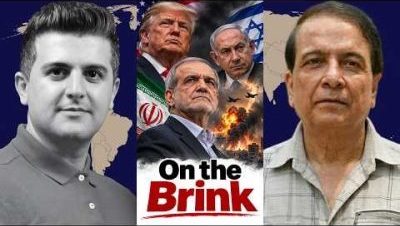
Pravin Sawhney: Massive Escalation Pushes Every Side Toward the Brink
or go to
Aletho News Archives – Video-Images
From the Archives
UN declares war on ‘dangerous’ conspiracy theories
‘World is not secretly run by elites’
Free West Media | August 5, 2022
UNESCO says it is seriously concerned about the increase in “disinformation” and “conspiracy theories”. And they plan to put an end to it through a network of informants.
“Conspiracy theories can be dangerous,” the UN agency warned. “Often they ignore scientific evidence and polarize society with dire consequences. This has to stop.”
Unesco’s director-general warned that “conspiracy theories” could cause damage to people as well as to their health. “They reinforce misconceptions about the pandemic, reinforcing stereotypes that can fuel violence and violent, extremist ideologies,” said Audrey Azoulay.
The UN agency has launched a campaign to help people identify, debunk and report “conspiracy theories” to prevent them from spreading further.
This campaign is being carried out in collaboration with the European Commission, Twitter and the World Jewish Congress. The UN has created a toolkit to “debunk” such theories and smear anyone who dares to claim that governments are not fair and transparent.
The UN also warned that George Soros, the Rothschilds and Israel should not be linked to “alleged conspiracies”.
World events “are not secretly manipulated behind the scenes by powerful players with malicious intent,” the UN agency maintained.
And if anyone therefore comes across someone who believes that the world elite is plotting to consolidate power or direct events, then that person needs to take action. According to the UN agency, when meeting a “conspiracy theorist”, under no circumstances should one enter into a discussion. … continue
Blog Roll
 Aletho News
- Algerian army launches second operation to clear French nuclear test sites
- Pravin Sawhney: Massive Escalation Pushes Every Side Toward the Brink
- UK High Court Upholds Speech Regulator Notices To Meta, WhatsApp, X, And TikTok
- Two working on US Senate candidate’s campaign registered as foreign agents for Israel: Report
- Greece bans protest over docking of Israeli cruise ship
- Israel elections: More Arab votes, same Zionist consensus
- Taking the Houthis at Their Word: The Bill Saudi Arabia Doesn’t Want to Read
- Trump claims he would have bombed Ho Chi Minh City to win Vietnam War
- Russia shows Europe that prolonging the Ukraine war is pointless
- There is cautious optimism about ending the Ukraine War – Part 2
- If Americans Knew
- An error has occurred; the feed is probably down. Try again later.
- No Tricks Zone
- Germany’s Green Energy Transition Becoming Increasingly Expensive…Another 6 Trillion Euros!
- Sudden Stratospheric Warming, Powerful El Niño Combination May Lead To Extreme Europe Cold, Energy Crisis!
- Two New Studies Find Thwaites Glacier Melt Cannot Be Driven By Human Activity Or A Warming Ocean
- E-Cars Reduce CO2 Emissions By Only 41% Compared To Internal Combustion Engine Vehicles
- Predictions Made By Renowned Climate Professor Over Past Decades Have Been Proven To Be Poor
- New Study Suggests Large Regions Of The Pacific Ocean Have Been Cooling For The Last 80 Years
- Germany’s Green Energy Debacle: High Energy Costs Force Kahla Porzellan to Close After 182 Years!
- New Study: 50 Years Of The Most Aggressive ‘Net Zero’ Policies Can Only Affect The Global Climate By 0.03°C
- US September “Heat” Was No Record…Many Records Set Decades Ago
- Latest European Green Energy Debacle; Portugal’s Largest Flagship Solar Park Insolvent!

