Band of Brothers
Dr. Paul Marik and his fellows in the FLCCC fight for patients’ rights. All have paid a heavy price for taking care of patients and telling the truth.
By John Leake | Courageous Discourse | November 12, 2022
Part I in a series on Dr. Paul Marik—a magnificent doctor who was fired from his job and professorship because he successfully treated his COVID-19 patients with FDA-approved drugs and high-dose Vitamin C.
The following post is from The Courage to Face COVID-19: Preventing Hospitalization and Death While Battling the Bio-Pharmaceutical Complex, by John Leake and Peter A. McCullough. MD, MPH.
Dr. Paul Marik is to critical care medicine what Dr. McCullough is to cardio-renal medicine. The 65-year-old native of South Africa has published over 500 peer-reviewed papers and books, which made him the second most published critical care doctor in the history of medicine.

Dr. Paul Marik with Dr. Peter McCullough and John Leake at the Nurses Freedom Network Conference in Franklin, TN, June 12, 2022
Upon meeting Dr. Marik, one is overwhelmed by the impression of his vast physical stature. His gentle manners and elegant South African accent conjure accounts of 19th century British gentleman explorers. Since the early days of his career, he’d been keenly interested in discovering how to treat sepsis—the body’s extreme, life-threatening response to an infection. Well into the 21st century, sepsis continued to be a major cause of death. According to the CDC, approximately 1.7 million American adults fall ill with sepsis every year, of which approximately 270,000 die in hospital. Globally, the sepsis burden is estimated at 15 to 19 million cases annually, with a mortality rate approaching 60% in low-income countries.
Dr. Marik knew the literature on sepsis treatment. Several studies had indicated that large doses of IV-administered Vitamin C and Vitamin B1 (thiamine) showed some benefit. Other studies indicated that hydrocortisone showed promise. Dr. Marik reasoned that combining the three into a cocktail could amplify their benefit. As had often been observed in medicine, combining agents seems to affect multiple pathways, causing an overlapping and synergistic effect.
In 2016, he and his colleagues conducted a study in which they compared 47 sepsis patients who received the cocktail to a control group of 47 patients who received sepsis standard of care at the time. The mortality rate of the treatment group was 8.5% compared to 40.4% of the control group—a stunning difference. Skeptics claimed the study was too small and nonrandomized. Nevertheless, what became known as the “Marik Cocktail” was adopted by critical care units all over the world, which reported excellent results with the therapy.
When COVID-19 struck and Dr. Marik’s critical care unit at the Sentara Norfolk General Hospital received its first patients, he observed they were suffering from an inflammatory lung reaction, and he suspected this could be treated with a corticosteroid. He contacted four other critical care specialists—Professor Joseph Varon at United Memorial Medical Center in Houston (who, in the year 2020, would work 268 days straight treating COVID-19 patients in his ICU) Professor Gianfranco Umberto Meduri at the University of Tennessee Health Science Center in Memphis, Professor Jose Iglesias at the Hackensack Meridian School of Medicine in Seton Hall, New Jersey, and Professor Pierre Kory at the University of Wisconsin-Madison. As author Michael Capuzzo pointed out in his marvelous story about these doctors, it would be hard to imagine a more experienced and scholarly team of pulmonary critical care doctors.
Together they formed the Frontline COVID-19 Critical Care Consortium (FLCCC) and got to work on a protocol for saving hospitalized patients. They started their work by focusing on the extreme inflammation they were observing. Often called “cytokine storm” after the proteins produced by the immune system, this was an extreme and maladaptive immune response that had often been observed in other viral illnesses, including virulent influenza. It was this inflammation of the lungs, kidneys, and other organs that killed the patient, and not the virus itself. Thus, the key to treating the syndrome was reducing this inflammation.
Professor Meduri was a leading expert on corticosteroid therapy in critical illness. He conducted an exhaustive review of corticosteroid use against SARS-CoV-1, MERS, and H1N1 and found significant evidence that these agents had been lifesaving in their reduction of extreme inflammation. For decades the corticosteroid methylprednisolone had been the standard medication for suppressing cytokine storm. And yet, despite this glaring fact, every US federal health agency recommended against using corticosteroids against COVID-19 from the outset of the pandemic.
Unlike these agencies, the FLCCC concluded that their best bet for tackling the disease in hospitalized patients was a combination of Methylprednisolone and the antioxidant Ascorbic acid (Vitamin C). To these they added Thiamine (Vitamin B1) to optimize cellular oxygen utilization and energy consumption, and the anticoagulant Heparin to prevent and help in dissolving blood clots that appear with high frequency.
There is nothing experimental about these drugs. Methylprednisolone and heparin had long been FDA-approved for treating inflammation and blood clotting. Vitamin C and B1 were available over the counter, though in the hospital setting they were IV-administered in high doses. The FLCCC doctors began giving this “MATH Protocol” to ICU patients and tracked their progress for a case study. By the end of April, they had treated 100. Of these, 98 survived. The two who died were in their eighties and had other advanced chronic illnesses. None of the patients had long durations on ventilators, were ventilator dependent, and or had long hospital stays.
During this period, Dr. Pierre Kory was in daily communication with ICU doctors in his native New York City, where he’d worked in multiple hospitals. His colleagues reported that they turned the tide in the ICUs as soon as they started using methylprednisolone. Other ICU doctors in hard hit New Orleans reported the same. Kory and colleagues therefore sent letters to the White House, the CDC, and the NIH, presenting their real-world evidence of the corticosteroid’s efficacy—all to no avail.
Dr. Kory’s efforts were drawn to the attention of Wisconsin Senator Ron Johnson, who was chairman of the Senate Homeland Security Committee. Since his daughter had been born with a congenital heart defect—successfully corrected by an innovative operation—Senator Johnson had believed that if citizens were faced with a life-threatening condition for which there was no proven treatment, they should have the right to try drugs or operations that seem to offer some benefit, even if these had not yet passed the conventional FDA-approval process. The alternative was to do nothing and accept the high probability of death.
Critics of the right to try claim that unless procedures and medications are carefully regulated by the FDA, unscrupulous doctors will create false hope by offering them to desperate patients, even if there is little trial data to prove their efficacy. Senator Johnson did not find this argument persuasive and he introduced his federal right to try bill in 2017. A companion bill was introduced in the House, ultimately passed in both houses, and was signed into law by President Trump in 2018.
Upon Senator Johnson’s invitation, Professor Kory addressed the Senate Homeland Security Committee on May 6, 2020. Speaking via WebEx, Kory stated the credentials of the FLCCC doctors, and then explained the rationale for using their protocol. He then reported the success they and other doctors were having with it. This was excellent news, and a naive viewer would likely assume that it would be welcomed by the entire medical profession.
And yet, despite the FLCCC’s well-founded rationale for their therapy, broad consensus for the efficacy of its components in related conditions, and their success with it, they continued to get pushback from the CDC and NIH, which refused to change their advisory against using corticosteroids to treat COVID-19. On four occasions, the FLCCC tried to notify the White House of their favorable results, but they received no reply.
Much Ado About Nothing
By Todd Hayen | OffGuardian | November 12, 2022
Do any of you think we are over-reacting? I don’t think so, but the sheep-folk certainly do. They claim they are willing to let bygones be bygones and just put it all in the past and get on with life.
I am sure everyone reading this is aware of the bombshell editorial The Atlantic dropped recently with their amnesty nonsense. I don’t think I have been more livid reading an article since the days of seeing piece after piece about how effective masks are against viral transmission.
I won’t comment on The Atlantic blather directly here, as there have been many fine responses to it, but wow, what a piece. So typical of a bully trying to pretend he loved his victims all along when he knows he is cornered and about to be punished. One last punch disguised as a kiss.
I just got back from a little cruise. Major ports were Barcelona, Rome, Florence, Monaco, and a smattering of little French and Italian hideaways. I had mixed feelings about going, but realized that if this tsunami we all see coming a few miles off the shore has the potential of wiping out most travel in the foreseeable future, I figured I might as well get something in before the onslaught.
It was nice in a lot of ways, as would be expected, but in other ways unusually disconcerting. For one thing, very, very few people had masks, and thus there was a palatable scent in the air of “Covid is a thing of the past.”
One would think this was a good thing, but instead it exuded a very clear vibe of denial.
Oddly enough, not wearing masks, and believing Covid to be over, to me is just another example of compliance to authority.
I know that seems a stretch, but if Covid were real, coupled with the truth that the vaccines do not work, and we were told again and again that there would be no natural herd immunity without a working vaccine, and we still hear of infections rising, variants being created, and hospitals becoming over crowded, why would people think the disease just died and disappeared? The reason is because we were told it was over.
We were told we suddenly didn’t need masks, that we could party with friends, vaxxed or unvaxxed, that we could gather in huge crowds, get on cruise ships (no one even cared that I was unvaccinated.) We were told what was true, what was real and what to worry or not worry about. And like sheep, most people blindly followed.
So shouldn’t I be happy? If I were, it would be for all of the wrong reasons. It is true we are all happy when the slave owner puts down the whip. Whip or not, however, we are still slaves.
I, too, bask in the sun of my controlled freedom—I went on a cruise didn’t I? After two years of not being “allowed to” — so I am just as guilty of this sort of compliance. I am one step closer to truth though; I know this offer of freedom is a tactic, a ploy, and a ruse.
I’ll take a scrap of bread when it is offered, but I will not succumb to complacency and forgive my master for his cruelty when he behaves, albeit for just a moment, as my friend. Most everyone else seems fine to let bygones be bygones.
I am not, and I suspect most of you reading this are not as well.
The great danger I see here in the masses just carrying on in complacent forgiveness is that they are encouraged to stay blind. Surely if they speak out against the atrocities that the world has experienced over the past three years they would quickly be categorized as a trouble maker, a pariah, and a misfit.
“Just get over it, man, it’s all over.”
Is it? No, of course not, you and I know that, and it is all still going on in various ways under the covers now, in the dark recesses of the culture: persecutions, continued efforts to vaccinate, and particularly vaccinate children, warnings of an “upcoming dark winter” where restrictions will come back into the mainstream. On and on, you know what I am speaking of.
However, the mass attitude now, as per The Atlantic piece, is “nothing all that much really happened.”
No one died unnecessarily due to the Covid response, no one got sick, no one lost their job or their livelihood, no one suffered socially (particularly children wearing masks in school), no one suffered educationally, nothing bad really happened.
If you are still pissed about all that DID happen, then you are overreacting… much ado about nothing.
So get over it, forget and forgive.
Not everyone in the world has read that article, but what I saw in Europe, it seems that most people, at least on physical observation, are basically taking on that attitude.
It breaks my heart.
I think about the countless mothers sitting by their children in countless hospitals nurturing them through a totally unprecedented heart incident.
I think of the countless families standing together at the funeral of a loved one, dead prematurely from a heart attack, blood clotting, or cancer—cause unknown, unless you want to apply the newly created diagnoses, “Sudden Adult Death Syndrome.” What the hell is that?
A novel disease and now a common cause of death? Easy peasy explanation, eh? I think of the countless numbers of people suffering from a myriad of strange afflictions, which suddenly appeared out of nowhere.
I think again of countless people having suffered unconscionably, and pointlessly, after losing their jobs, their businesses, their life savings, and their livelihood—the countless children with lower IQs, and those who have suffered social retardation due to the mask mandates, social distancing, and mandatory online teaching at home with no socialization at all.
I could write 100 pages describing all of this—but most people don’t know, and if they do, don’t care, or just attribute all of this horror to the “cost of living—some are lucky in life, some are not.”
During my recent cruise not a word was uttered about any of this, thousands of people were encountered walking the streets of Rome, Florence, Barcelona, all laughing, eating, drinking, playing. While just beneath their feet, hidden a foot underground, there are skulls and bones of the fallen—all forgotten, and the perpetrators all forgiven.
When I was occasionally shaken from my self-induced and compliant vacation reverie, my heart ached talking to all of the young vibrant crewmembers on our ship.
I would hear of their plans to be married, create families, further their careers and live fully their vibrant lives—followed with the admission that they all had to be vaccinated to get their current jobs on the ship.
What really lies ahead for these beautiful children of God so innocent and full of life? I would shake my head, “maybe none of this is true, and maybe I am making more of it than it really is. Maybe they are right, and it really wasn’t that bad, just a mistake made here and there that we really could get over. It is all fine… let’s move on.”
Then a bone cracks under my foot—just a few inches from the surface of awareness—the truth. And I slip back into reality.
Trump alleges election fraud in Arizona
RT | November 12, 2022
Former US President Donald Trump claimed on Friday that Republican candidate Blake Masters lost his bid for the Senate due to “voter fraud” in Arizona. Masters was preliminarily declared to have lost to Democrat Mark Kelly on Friday, after an election marred by malfunctioning machines and slow counting of votes.
“They’re at it again,” Trump wrote on his Truth Social platform. “Voting machines in large numbers didn’t work, but only in Republican districts. People were forced to wait in line for hours, then got exhausted… and left the voting lines by the thousands.
“This is a scam and voter fraud, no different from stuffing the ballot boxes,” he continued, referencing his own allegations that pro-Democrat poll workers engaged in ballot harvesting to deliver Arizona to President Joe Biden in 2020.
“They stole the election from Blake Masters,” he concluded, demanding that officials in the state “do election over again!”
Kelly was declared the winner by multiple US media outlets on Friday night, with the Democrat incumbent leading Masters by 52% to 46%. Masters has not conceded, however, and 13% of the vote remains to be counted. Should Kelly prevail or Masters accept defeat, control of the US Senate will hinge on Nevada, where Republican Adam Laxalt is leading by less than a percentage point; and Georgia, where a runoff election is set for next month. Republicans need both seats to gain a majority in the upper chamber.
Maricopa County is the largest and most populous county in Arizona, encompassing the cities of Phoenix, Scottsdale, and Tempe. Republicans began sounding the alarm when one in five voting machines in more than 200 polling stations throughout the county broke down on Tuesday. With long queues forming, Masters and a number of other Republican candidates filed an emergency suit to extend voting hours, which was rejected.
Republican suspicions of fraud were heightened when the counting of ballots slowed to a trickle after election day. Although officials in Maricopa County say that tabulating these ballots can take a week or longer, the state of Florida manages to count almost all of its ballots in a single night, despite having four times the population of Maricopa County.
ADL’s “Anti-Hate” Conference Will Feature Speech From Accused Israeli War Criminal

By Eric Striker | The Main Street Trbune | November 8, 2022
A prominent Jewish organization, the Anti-Defamation League, will be hosting a keynote speech from an accused Israeli military official alleged to have committed serious war crimes at their annual New York conference on Thursday.
The powerful ADL bills itself as a civil society organization dedicated to battling expressions of racism, anti-Semitism, and hate. The purpose of the upcoming conference, titled “Never Is Now,” will be to foster “meaningful dialogue, education and interpersonal connections,” in order to “continue the fight against antisemitism, hate and bias in all its forms—together.”
Featured speakers will include figures such as Congresswoman Liz Cheney, Pfizer CEO Albert Bourla, FBI Director Christopher Wray, and actor David Schwimmer.
They will be sharing a stage with retired Israel Defense Forces Maj. Gen. Doron Almog, a man who was the subject of outstanding arrest warrants in the United Kingdom for crimes against humanity.
In 2005, the chief London magistrate issued a warrant for Almog’s arrest for his actions as head of the IDF’s Southern Command between 2000 and 2003. British law asserts universal jurisdiction for war crimes.
According to the indictment, Almog ordered his forces to indiscriminately bulldoze the houses of Arabs living in the occupied Gaza Strip in the Egyptian border city of Rafah, an ethnic cleansing campaign which turned over 10,000 people into homeless refugees.
On July 22nd, 2002, Almog ordered a military strike on the residence of a Palestinian activist resisting the demolition campaign, which killed over a dozen people, including nine children, according to court records.
During a 2005 incident, Almog learned that he was the subject of a secret warrant when he landed at Heathrow airport, which led him to return to his plane and hide until it returned to Israel. Scotland Yard documents show that British counter-terrorism officers did not arrest the fugitive due to fear that Almog would open fire on them and cause a gun battle to break out in the middle of the airport.
After Almog’s getaway, human rights organizations such as Amnesty International publicly condemned British security forces for allowing the dangerous and egregious violator of the Geneva convention to escape justice.
While the warrant for the suspect’s arrest appears to have expired due to subsequent amendments to British human rights laws, Almog continues to avoid setting foot in the UK.
Almog remains a highly controversial figure among non-Jews internationally, but global Jewry has embraced him as a hero. In 2016, Almog was awarded the Israel Prize for lifetime achievement, and earlier this year, he was made head of the Jewish Agency, suggesting that there is no stigma with being associated to the military figure among Jews.
The ADL has been the subject of intense public scrutiny in recent years for its campaigns targeting Tucker Carlson, Elon Musk, Kanye West, and Kyrie Irving in the name of combating what it perceives as speech and action that undermines the interests of the Jewish community. The group’s CEO, Jonathan Greenblatt, also admitted responsibility for the deplatforming of President Donald Trump from social media.
Yemen and KSA inch forward with ceasefire talks despite ‘deliberate obstruction’ by US
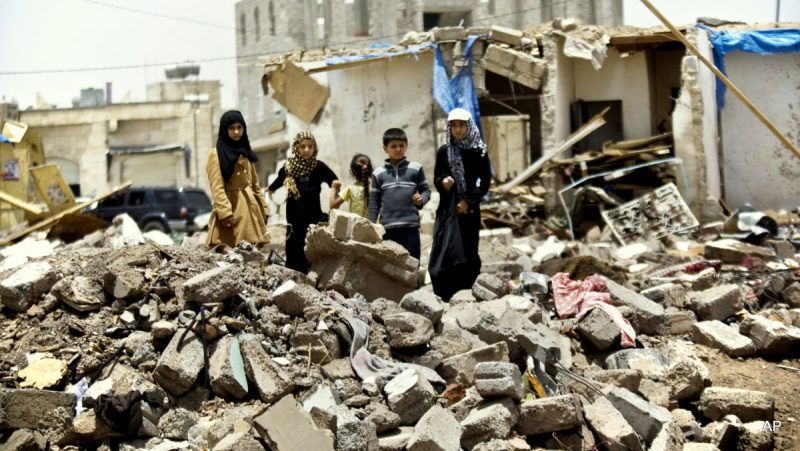
Photo Credit: AP Photo/Hani Mohammed
The Cradle | November 12, 2022
Talks between Yemeni and Saudi delegations in Oman have continued “uninterrupted” since the end of the UN-brokered ceasefire on 2 October, according to sources in the know that spoke with Lebanese daily Al Akhbar.
The report claims the Saudi delegation has shown “remarkable flexibility” in several of the outstanding issues, most notably offering to secure funding for the payment of state employees’ salaries.
They have also shown openness to lift road blockades and to allow flights from Sanaa International Airport to reach more destinations than the two currently allowed: Jordan and Egypt.
Nonetheless, issues still remain, as Riyadh reportedly wants to publicly label these measures as “helping the brothers in Yemen,” not as compensation for seven years of war.
Yemeni officials allegedly shot down this idea, as it would misrepresent Riyadh’s role in ravaging Yemen and pushing it to the brink of famine. Moreover, they have also rejected an offer for the head of Yemen’s Supreme Political Council, Mahdi al-Mashat, to lead an official delegation to the Saudi capital.
Earlier this month, The Washington Institute published a report based on a visit to the kingdom by Executive Director Robert Satloff and David Schenker, in which they assert that “Saudi Arabia clearly wants out of the [Yemen] conflict today.”
However, the behind-the-scenes progress to achieve this goal comes despite increased efforts by the Saudi-led coalition, Israel, the US, and the UK to consolidate their military presence in southern Yemen and on the country’s islands.
Earlier this week, Mashat warned that the US role in the ceasefire talks “is malicious and dangerous.”
“The armistice negotiations had previously reached a level of good understanding, but the US envoy, Tim Linderking, deliberately sabotaged them during his most recent tour of the region,” the head of Yemen’s Supreme Political Council said on 7 November.
“The US is trying to impede any sincere efforts to achieve sustainable peace in Yemen,” Yemen’s Ansarallah resistance group warned in a statement earlier this month.
According to the sources who spoke with Al Akhbar, the growing rift between Washington and Riyadh has spilled over onto their cooperation in Yemen, as the US now favors “interim solutions” rather than a comprehensive end to the war in order to maintain a “playing card” to use against Saudi leaders.
New Delhi may sue Berlin over undelivered LNG – Bloomberg
RT | November 12, 2022
A diplomatic dispute is brewing between India and Germany after Berlin took over a former Gazprom subsidiary and halted LNG shipments to New Delhi.
The Russian gas giant’s former local subsidiary Gazprom Germania, renamed SEFE (Securing Energy for Europe), cut LNG supplies to India’s Gail back in May, citing sanctions Moscow imposed after the company was taken over by the German state. Under the sanctions, Gazprom stopped supplying SEFE with gas.
Gail had a 20-year contract with Gazprom Germania’s Singaporean unit, GM&T Singapore, for the supply of 2.5 million tons of LNG per year. According to Bloomberg, citing the association of LNG importers GIIGNL, the contract remained valid after Berlin took over Gazprom Germania, meaning SEFE was still required to meet its obligations to Gail.
In September, SEFE’s Singaporean unit said it could no longer fulfill its long-term contract with Gail and offered to pay compensation of 20% of the contract price for the failed LNG deliveries. Gail CFO Rakesh Kumar Jain last week said that SEFE had canceled a total of 17 LNG shipments since May.
According to Bloomberg’s sources, India is now demanding that SEFE find alternative gas suppliers in order to meet its obligations to Gail, as the Indian company has been forced to spend much larger sums to buy gas on the spot market. It also had to cut supplies to customers and lower production at its petrochemicals plant due to the LNG deficit. The company has also turned down the compensation offer for undelivered LNG as it prefers to retain the right to the cancelled cargoes, Reuters reported on Friday.
Bloomberg’s sources said that both Indian and German diplomats have been engaged to solve the dispute. A diplomatic solution is preferable for the parties, according to the sources, although they noted that Gail was also consulting lawyers about arbitration over the contract with SEFE, which means the dispute could turn into a lawsuit. Gail is also reportedly negotiating with Gazprom to buy LNG directly from the Russian company.
Russia’s Kherson withdrawal is tactical
BY M. K. BHADRAKUMAR | INDIAN PUNCHLINE | NOVEMBER 12, 2022
General Mark Milley, Chairman Joint Chiefs of Staff of the United States assessed that it would take several weeks for Moscow to complete the evacuation of some 30,000 Russian troops deployed in Kherson city in southern Ukraine. But Russians have announced that the evacuation was successfully completed in 2 days — both soldiers and over 5000 pieces of heavy equipment.
Evidently, much advance planning went into the execution of the evacuation order. The Russian military command began working on the evacuation weeks ahead of the actual announcement earlier this week.
In retrospect, General Sergei Surovikin’s extraordinary interview on October 18 soon after his appointment as the first theatre commander for Ukraine operations only eight days earlier was probably choreographed to sensitise the public opinion about the criticality of the military situation in the Kherson region.
The following excerpts from the interview are relevant here:
“A difficult situation has arisen. The enemy deliberately bombards infrastructure and residential buildings in Kherson. The Antonovsky Bridge and the dam of the Kakhovskaya hydroelectric power station were damaged by HIMARS missiles, traffic there was stopped.
“As a result, the supply of food in the city is difficult, there are certain problems with the water and electricity supply. All this greatly complicates the lives of citizens, but also poses a direct threat to their lives.
“The NATO leadership of the Ukrainian armed forces has long been demanding offensive operations against Kherson from the Kiev regime, regardless of casualties – both among the armed forces themselves and among the civilian population.
“We have data on the possibility that the regime in Kiev will use prohibited methods of war in the area of the city of Kherson, on Kiev’s preparation for a massive missile attack on the Kakhovskaya hydroelectric dam, the conduct of massive missile and artillery attacks on the city without distinction.
“These actions can lead to the destruction of the infrastructure of a major industrial centre and to civilian casualties.
“In these circumstances, our top priority is to preserve the life and health of citizens. Therefore, the Russian army will first of all ensure the safe, already announced departure of the population according to the resettlement program being prepared by the Russian government.
“Our further plans and actions regarding the city of Kherson itself will depend on the current military-tactical situation. I repeat, it is already very difficult today.
“In any case, as I said, we will start from the need to protect the lives of civilians and our military as much as possible.
“We will act consciously and in a timely manner, without excluding difficult decisions.” [Emphasis added.]
Three things can be said. First, the retreat from Kherson was decided for operational reasons. Its rationale is to pre-empt any attempt by the Ukrainian forces and foreign mercenaries from disrupting the work in progress to induct trained military personnel in large numbers (totalling close to 400,000 troops including volunteers) to augment the deployments in Ukraine.
Two, the Kremlin took extra care to make a ‘soft landing’ for the bitter decision to vacate Kherson city, which is etched in the Russian national psyche as part of the historical legacy of Catherine the Great. Interestingly, the historical relics of Imperial Russia in Kherson city have been meticulously mothballed and taken away for safe storage.
The Russian public has largely accepted the decision by the military command, including the ‘hardliners’ in the establishment such as the Chechen leader Ramzan Kadyrov and the Wagner Group of Russian military contractors. This wasn’t the case in the withdrawal in Kharkov in September.
Three, most important, the intention is to forestall any threat to Crimea in terms of its security, communication, water, etc. The retreating Russian forces have destroyed two big segments of the Antonivka bridge connecting Kherson city with the east bank of Dnieper. Dnieper de facto becomes the ‘buffer zone’ in the Kherson region with 60% of the oblast’s territory under Russian control.

Antonovka Bridge across the Dnieper River, Kherson
Going forward, first and foremost, this is a tactical withdrawal. The Kremlin spokesman Dmitry Peskov has asserted that Kherson remains a part of Russia. That implies an obligation to recover Kherson city, as the special military operations continue.
Second, the Russian military command is not contemplating any operation toward Odessa in a near term. The priority will be to complete the operation to establish full control of the Donbass region (which was the initial objective of the special operation) as well as Zaporozhye region (which is important for the security of the land bridge connecting Crimea with the Russian hinterland.) Intense fighting is continuing in Donetsk.
Third, to be sure, there are incipient signs of a shift in the thinking within the Biden Administration towards dialogue and negotiations. How authentic they are remains unclear. (See my blogs No end in view for Ukraine war, November 10, and Biden nods to compromise in Ukraine, November 11.)
According to the CNN and New York Times, the Biden Administration is a divided house. The indications suggest that the Pentagon is pushing for negotiations. According to CNN, Gen. Milley, chairman Joint Chiefs of Staff holds the view that the time is ripe for a diplomatic solution as fighting heads toward a winter lull, while secretary of state Antony Blinken and National Security Advisor Jake Sullivan, both ardent neocons, remain sceptical.
Russians largely keep their thoughts to themselves but some signalling is also going on. Russian Ambassador to Washington Anatoly Antonov said in an interview with Izvestia, published on Friday that “I find it naive to assume, judging from media leaks only, that any transformation in approaches toward putting Russian-US relations on a new track is underway. Our relationship is facing a deep crisis, and there is no light at the end of the tunnel yet.”
Deputy Foreign Minister Sergey Ryabkov said on Friday no meetings are planned at the foreign minister level between Russia and the US on the sidelines of the G20 at Bali. Peskov said yesterday that “The conflict in Ukraine can be ended after achieving its (special military operation’s) goals or by means of achieving the same goals through peaceful negotiations, which is also possible. Kiev does not want negotiations. The special military operation continues.”
In the Russian eyes, how far the Biden Administration is willing to pressure Kiev is the moot point. Ryabkov addressed this crucial aspect in comments yesterday:
“I can reiterate that we are open to dialogue without any preconditions. And we have been ready for some time. On instructions from its Western patrons, Kiev broke off the dialogue which in general was progressing, and a certain document was in the works. Now these are things of the past. And what comes next no longer depends on us.
“I can certainly share my opinion here that if Kiev is given an order from certain capitals, there would perhaps be a better chance for such dialogue. But then again, we do not have any obstacles over here and there should be no preconditions for dialogue.”
The big question is whether the Russian offensive, which is expected to begin in November – December, will go ahead or not. As a CNN analysis concluded, “Success in Kherson may also allow exhausted Ukrainian units some respite… But Russia has plenty of weaponry and tens of thousands of newly mobilised troops to send into battle, and its campaign against Ukrainian infrastructure has left power and water supplies hanging by a thread in many regions. Ukraine is slowly receiving advanced air defences from Western donors but has a huge area to defend.”
Cargo of Russian fertilizers to leave EU port
RT | November 12, 2022
Russian fertilizers which have been blocked at an EU port, due to Ukraine-related sanctions, will be shipped next week, the UN announced on Friday.
The world’s largest country is a key producer of the materials and the uncertainty around supply has heightened fears about food insecurity, particuarly in poorer nations.
The 20,000 ton cargo has been held in the Dutch port, Rotterdam, and is destined for Malawi, under the UN World Food Program.
Following a meeting between senior UN officials and a Russian delegation led by Deputy Foreign Minister Sergey Vershinin on Friday a UN statement confirmed it has been “… briefed on recently issued General Licenses and shipments of fertilizer to developing countries’ destinations and its ongoing engagement with private sector and member states. It is anticipated that the first shipment of donated fertilizers will depart for Malawi in the coming week.”
The meeting centered on Russia’s continued dissatisfaction with UN efforts to lift Western sanctions that pose problems for Russia’s agricultural exports. The organization pledged to assist Russia back in July as part of a UN-brokered grain deal, which unblocked the export of food and fertilizers from several Black Sea ports. Russia said it may choose not to extend its participation in the deal, which is set to expire on November 19, if the UN does not follow through on its promises regarding Russian exports.
On Friday, the Dutch government confirmed that the Russian fertilizer cargo has been given permission to leave the port at the UN’s request.
“The decision to release the fertilizer was made on the understanding that the UN would ensure that it is delivered to the agreed location, Malawi, and that the Russian company and sanctioned individual will earn nothing from the transaction,” the Dutch Foreign Affairs Ministry said in a statement.
It did not disclose the name of the Russian company that owns the shipment. Earlier this month, however, TASS news agency reported that Russian fertilizer producer Uralchem-Uralkali was ready to donate 240,000 tons of its fertilizers stuck in EU warehouses for humanitarian purposes, with the first shipment destined for Malawi.
Prior to this, Russian President Vladimir Putin stated that a total of 300,000 tons of Russian fertilizers were stuck at EU ports due to Western sanctions. In September, he said that Russia was prepared to give these fertilizers to developing nations free of charge.
Up to 280,000 Tonnes of Russian Fertilizers Arrested in Europe, Deputy Foreign Minister Says
Samizdat – 12.11.2022
As many as 280,000 tonnes of Russian mineral fertilizers remain arrested in European ports, Russian Deputy Foreign Minister Sergey Vershinin said on Saturday.
“Up to 280,000 tonnes of Russian mineral fertilizers have been under arrest in a number of European countries over recent months,” Vershinin said adding that Russia supported gratuitous exports of these arrested fertilizers to countries in need, especially in Africa.
The deputy minister added that Moscow was not satisfied with the implementation of the Black Sea grain deal, as Russian food products and fertilizers should have a “real access” to international markets.
Russia, Ukraine and Turkey signed on July 22 the United Nations-brokered agreement to secure a humanitarian corridor via the Black Sea for grain and fertilizer exports. The parties agreed for the agreement to last 120 days and expire on November 19.
On October 29, Russia suspended its participation in the agreement after its military and civilian ships were attacked by Ukraine in the bay of Sevastopol. On November 2, the Russian Defense Ministry said that Moscow was returning to the agreement after receiving written guarantees from Ukraine that Kiev will refrain from using the humanitarian corridor for military purposes. Kiev has denied providing any additional guarantees.
Dr. Clare Craig On The Three Key Factors Of The Pandemic
The Fat Emperor – Ivor Cummins | November 9, 2022
Dr. Clare Craig is one of the best pathologists out there, and deeply understands the scientific details of the pandemic – and I caught her in person at the International health congress in Portugal – all scientific talks are here or will be uploaded shortly https://odysee.com/@MartaGB:2
US and UK troops train to ‘pacify Russian civilians’
RT | November 12, 2022
US and UK military forces have held a joint exercise to practice interoperability and test their latest gadgets and combat techniques on terrain similar to the “Ukrainian steppe,” reportedly including war-gaming on how they would “pacify” mobs of angry Russian-speaking civilians.
The ongoing drills are being held in California’s Mojave Desert as part of the Pentagon’s “Project Convergence”, which was expanded this year to include participation by allies Australia, Canada, New Zealand and the UK.
The troops, including an elite British infantry regiment, practiced “lessons learned” from the Russia-Ukraine conflict while training on open desert landscapes deemed “similar to the flat terrain of the Ukrainian steppe,” the UK’s Times newspaper said.
The drills took place at Fort Irwin, a sprawling US Army base that includes realistic-looking mock villages built with the help of Hollywood set designers. In years past, Arabic and Afghan speakers were hired and brought in from the Los Angeles area to play the part of civilians. This time around, with the Russia-Ukraine conflict raging in Eastern Europe, most of the civilians were played by Russian speakers.
“The fake civilians even have their own social media networks – “Fakebook” and “Twatter” – on which they whip up an unruly mob by reporting any examples of US troops behaving poorly,” the Times said. “The soldiers must then pacify the crowds.”
The exercise marked the first time that members of the UK’s new Ranger Regiment deployed alongside the US 75th Ranger Regiment, according to a UK government statement. It allowed troops to test advanced technology – such as artificial intelligence, robotics and new drones – while practicing information-sharing procedures with their allies.
For instance, swarms of drones identified targets and British rocket launchers fired at enemy positions spotted by US F-35 fighter jets, the Times said. UK defense procurement minister Alex Chalk said the exercise demonstrated the progress that the British Army is making as a “more lethal, agile and expeditionary force, through key collaboration with our longstanding international allies and partners.”
Russia isn’t alone in drawing the attention of Western military planners. The Pentagon has identified China as the top threat to US national security. An earlier stage of Project Convergence simulated a conflict breaking out on a Pacific island.
Featured Video

Broke Princes: Saudi Arabia’s Powder Keg
or go to
Aletho News Archives – Video-Images
From the Archives
A sample of vaccine and injectable medication tragedies during my lifetime
This is what happens when you demand speedy production in an era of politicized regulation
By Meryl Nass, MD | February 12, 2022
All these tragedies have been due to failures of testing or failures in manufacturing processes. Most occurred before vaccine manufacturers were given virtually complete protection from liability in 1987.
With the duration of patent exclusivity determining how much new products earn, products are rushed to market as quickly as possible, most using a shortened path for FDA review. Recalls and market removals of approved products are much more common than they used to be. We can only expect more of these disasters in the future, especially if the products are mandated for everyone. … continue
Blog Roll
 Aletho News
- Broke Princes: Saudi Arabia’s Powder Keg
- Albania’s Crisis: Rama, Israeli Investments and the Demand for Accountability
- Hezbollah Categorically Denies Syrian Accusations: We Aim at Confronting Israeli Enemy, Not Undermining Syria’s Stability
- Trump claims funding to Israel ending in 2026 as merger of Israeli–US armies looms
- Iran Weathering The Storm, But Saudi Arabia Is Sinking
- Sunk Ships Don’t Sail Home: Why Peace Won’t Save the Oil Market and War Will Wreck It
- No Cossacks at the gates, fix Italy instead – opposition leader to Meloni
- The Pits: Zelensky’s torture chamber network in the public eye
- Moscow mocks Kiev’s language hypocrisy exposed by ‘torture chamber’ scandal
- Military ‘torture chamber’ triggers new scandal in Kiev
- If Americans Knew
- An error has occurred; the feed is probably down. Try again later.
- No Tricks Zone
- New Study: The Net Fossil Fuel Contribution To Rising Atmospheric CO2 Has Been Zero For 500 Years
- Germany’s Green Energy Transition Becoming Increasingly Expensive…Another 6 Trillion Euros!
- Sudden Stratospheric Warming, Powerful El Niño Combination May Lead To Extreme Europe Cold, Energy Crisis!
- Two New Studies Find Thwaites Glacier Melt Cannot Be Driven By Human Activity Or A Warming Ocean
- E-Cars Reduce CO2 Emissions By Only 41% Compared To Internal Combustion Engine Vehicles
- Predictions Made By Renowned Climate Professor Over Past Decades Have Been Proven To Be Poor
- New Study Suggests Large Regions Of The Pacific Ocean Have Been Cooling For The Last 80 Years
- Germany’s Green Energy Debacle: High Energy Costs Force Kahla Porzellan to Close After 182 Years!
- New Study: 50 Years Of The Most Aggressive ‘Net Zero’ Policies Can Only Affect The Global Climate By 0.03°C
- US September “Heat” Was No Record…Many Records Set Decades Ago

