Senate Majority Leader: Any War with Iran Should Result in Regime Change
By Kyle Anzalone | The Libertarian Institute | February 26, 2026
Senate Majority Leader John Thune said that any strikes on Iran should be aimed at causing regime change in Tehran.
“In my view, if you’re going to do something there, you better well make it about getting new leadership and regime change,” the Senator said on Thursday. “If you’re going to take some sort of action, I think you want to achieve a result that actually brings about the transformational change that I think we want in the region.”
Thune is among several Senators who have argued that Tehran is historically weak, and President Donald Trump should order an attack on Iran to cause regime change. “The Ayatollah lost to Israel in the 12-day war. They are weaker. The regime is weaker than it ever has been. And what I’ve urged the president, do not miss this opportunity,” Cruz told CNBC host Joe Kernen on Wednesday. “If the Ayatollah is removed from power, it will make America much safer.”
Trump is threatening to attack Iran if Tehran does not agree to a deal that severely restricts its civilian nuclear program in exchange for minimal sanctions relief.
While Senators and administration officials have asserted that the US must attack Iran to prevent Tehran from obtaining a nuclear weapon, the Islamic Republic does not have a nuclear weapons program and is not currently enriching uranium.
“The President, I don’t think, to my knowledge, has made any decisions, but I think they’re gaming out what contingencies might look like and what’s in our national security interests.” Thune added, “Of course, first and foremost is to prevent them from having a nuclear capability but there are also other threats that they represent in the region.”
Iraqi Resistance warns of action if US forces remain
Al Mayadeen | February 26, 2026
Iraqi Resistance factions have issued a firm warning to Washington, declaring that continued US military presence on Iraqi soil will not go unanswered.
In a statement released Wednesday, the Iraqi Resistance Coordination Committee, an umbrella body bringing together six anti-terror formations, said it stands ready to act if the United States refuses to end the “ongoing occupation” and persistent interference in national affairs.
The committee accused Washington of failing to respect its obligations under its agreement with Baghdad, which provides for the withdrawal of all foreign forces from Iraq. Despite repeated official declarations that the US combat mission ended years ago, Resistance groups argue that foreign troops remain entrenched under different titles.
“The US actions in Iraq ‘leave us with no choice but to assume our legal and moral responsibilities in taking positions befitting the dignity of our people and their legitimate right to end the occupation, if American forces insist on maintaining their presence and imposing their will on the country,” the statement said.
The coalition also charged that US forces continue to violate Iraqi airspace and undermine the country’s stability, describing such conduct as a “blatant violation” of national sovereignty and dignity.
Advisory mission pretext
While Washington claims that approximately 2,500 American troops remain only in an “advice and assist” capacity following the declared end of combat operations in December 2021, resistance factions view this designation as cosmetic. They argue that the continued deployment, however limited in scale, preserves military infrastructure, intelligence networks, and rapid-response capabilities that entrench US influence rather than end it.
From their perspective, the counter-ISIS mandate increasingly functions as a framework that justifies a long-term strategic foothold in a country central to regional power balances. Even a reduced presence, they contend, enables Washington to retain leverage over Iraqi decision-making while projecting influence across neighboring theaters.
Beyond the security dimension, the Resistance Coordination Committee pointed to direct American meddling in Iraq’s political process, saying that Washington effectively determines which Iraqi political figures may assume senior government positions.
Maliki pressure campaign
The reference was widely understood as relating to Nouri al-Maliki, whose potential return to the premiership has faced US opposition. Washington threatened sanctions on Iraqi individuals and institutions should Maliki take office. Recent reports indicate that the United States has given Iraq’s largest parliamentary bloc until February 27 to withdraw his candidacy, despite Maliki’s insistence that he will not step aside.
For Resistance factions, such moves are examples of direct political coercion, reinforcing their claim that Iraq’s sovereignty remains constrained more than two decades after the US-led invasion of 2003, a war launched on the now-discredited allegation that Baghdad possessed weapons of mass destruction.
China, Russia slam US threat, force against Iran ahead of talks
Al Mayadeen | February 26, 2026
China on Thursday called for restraint and dialogue between the United States and Iran, as Washington continues a significant military buildup in the Persian Gulf ahead of renewed diplomatic talks.
Speaking in Beijing, Chinese Foreign Ministry spokeswoman Mao Ning said China was “closely following developments in Iran” amid rising regional tensions.
“China advocates the resolution of issues through political and diplomatic channels and opposes the use of threat or force in international affairs,” Mao told reporters when asked whether Beijing would join Moscow in backing Tehran against what was described as potential US aggression.
Mao emphasized the longstanding ties between the two countries, stating that the “Chinese and Iranian people are traditionally friendly.” She added that China supports the Iranian government and people in safeguarding their “legitimate rights, interests, and national stability.”
Reiterating Beijing’s position, Mao stressed the importance of de-escalation. “We hope all sides exercise restraint and solve disputes through dialogue,” she said, adding that China is ready to continue playing a “constructive role as a responsible major country.”
Russia blames US ‘irresponsible escalation of regional tensions’
Likewise, Russian Foreign Ministry spokeswoman Maria Zakharova said that Moscow sees the constant threats against Iran, as well as the irresponsible escalation of regional tensions by the United States.
“We see constant threats against Tehran and saber-rattling, intimidation, and Washington’s irresponsible escalation of regional tensions,” Zakharova said during a briefing.
Moscow and Tehran are developing mutually beneficial cooperation, despite Washington’s escalation of regional tensions, the Russian spokesperson added.
US build-up escalates significantly
Amid these developments, US military buildup in the Middle East has expanded significantly, with Washington assembling 16 warships, about 40,000 troops, and at least seven air wings in the region, the Financial Times reported, citing rising US-Iran tensions.
US President Donald Trump said on February 19 that he will decide within 10 to 15 days whether to pursue diplomacy with Iran or take military action, Axios reported. Speaking in Washington, he said the coming days would be decisive for US policy. “Now we may have to take it a step further, or we may not,” Trump said, adding, “Maybe we are going to make a deal [with Iran].”
The United States had already maintained five air wings, command units of roughly 70 aircraft each, at bases in Jordan, Kuwait, Qatar, Saudi Arabia, and the United Arab Emirates. It has since added two more aboard the aircraft carriers USS Abraham Lincoln and USS Gerald R. Ford, reinforcing what Trump described as a “massive armada” of 16 vessels and expanding Washington’s operational reach.
The overall US troop presence in the region now stands at around 40,000 personnel. Citing data from Tel Aviv University, the Financial Times reported that Jordan’s Muwaffaq Salti military base hosts at least 66 fighter jets, including 18 F-35s, 17 F-15s, and eight A-10s, along with EA-18 electronic warfare aircraft and transport planes. Satellite data also show an increase in fighter jets at a Saudi air base, reflecting the broader expansion of the US air footprint across Jordan and the Gulf.
US fears Iran war will ‘deplete’ air defenses stretched thin by Ukraine, Israel: Report
The Cradle | February 26, 2026
Military officials and lawmakers in Washington have warned that a prolonged war with Iran could stretch US military stockpiles of air defense interceptor missiles “to the brink and make the country more vulnerable,” POLITICO reported on 26 February.
“Gen. Dan Caine, the Joint Chiefs of Staff chair, has raised concerns about the military’s shortage of air defense interceptors since January,” POLITICO wrote, citing a person familiar with the matter.
“But the fears have magnified in recent weeks as the Pentagon amassed the largest military buildup in the Middle East since the Iraq War,” the magazine added.
Since returning to the White House a year ago, US President Donald Trump has won praise from Israelis while supporting the genocide in Gaza and overseeing a massive expansion of US military operations, including in Venezuela, Yemen, and Nigeria.
Crucially, Trump ordered US warplanes to join Israel’s 12-day war on Iran to bomb Tehran’s nuclear sites in June 2025.
Interceptor missiles were used not only to protect US forces from Iranian and Yemeni counterattacks but also to protect Israel from Iran’s barrages of ballistic missiles and drones.
During these operations, US forces “burned through” significant numbers of Standard Missile-3s, Terminal High Altitude Area Defense (THAAD) interceptors, and Patriot missiles, POLITICO observed.
Since then, the Pentagon has been unable to replenish its interceptor stocks due to the complexity and slow pace of their production.
Six current and former US officials and members of Congress told POLITICO of their widespread worries that a sustained war with Iran could deplete remaining US air defenses and “leave tens of thousands of American troops in the region unprotected against Tehran’s missile salvos.”
An Israeli intelligence official stated on Thursday that the US only has the capacity to sustain four or five days of intense aerial assault on Iran, the Times of Israel wrote, citing the Financial Times (FT).
Israel is pushing for a major war, claiming that limited US strikes on Iran could only “embolden the regime,” the Times of Israel added.
Since January, President Trump has assembled what he called an “armada” of US naval ships with accompanying war planes in the region in preparation for a possible renewed attack on the Islamic Republic.
Analysts have suggested that Iran will retaliate much more strongly in the event of a second war, including against US bases in the Gulf, leading to a much longer and more devastating war than last June.
“Do we have enough interceptors to sustain a retaliation?” said the person familiar with the talks. “We don’t have a discretely focused objective. Is it regime change or is it [just] ballistic missiles?”
A US military spokesperson responded to the POLITICO report by saying its weapons stockpiles are sufficient.
“The Department of War has everything it needs to execute any mission at the time and place of the president’s choosing and on any timeline,” said spokesperson Sean Parnell.
However, some US lawmakers say that the defense industry is not producing enough Lockheed Martin-built Patriot interceptors or RTX’s Tomahawk long-range missiles, nor quickly enough.
“There have been urgent calls for reforms in procurement, but the net result is that we are seemingly unable to meet all of the needs for defense production – for Ukraine, for our partners in the Middle East,” said Richard Blumenthal, a Democratic congressman.
“It may be problematic to think about moving Patriot missile interceptor systems from the Middle East because now we’re going to have to protect our embassies, not to mention our bases,” he added.
The Center for Strategic and International Studies (CSIS), a Washington think tank, estimated the US had used up to 20 percent of the Standard Missile-3 interceptors and between 20 and 50 percent of its THAAD missiles.
Could Hungary’s fight over oil change course of Ukraine War?
By Ian Proud | Responsible Statecraft | February 26, 2026
The EU’s plan to impose its 20th package of sanctions against Russia crashed against a seemingly immovable wall of Hungarian resistance this week, when the Central Europe country used its veto to block it.
That is not necessarily the end of the matter, yet I hope it is the beginning of the end, with Europe finally choosing peace over war.
At a fraught EU Council meeting on February 23, agreement could not be reached on a new round of EU sanctions, leading the EU High Representative for Foreign Policy and Security, Kaja Kallas, to announce, “I deeply regret that we did not reach an agreement today, given that tomorrow [February 24] is the solemn anniversary of the start of this war.”
Hungarian resistance to collective decisions on Ukraine policy has been overcome before. In June 2025, Prime Minister Viktor Orban stepped out of the European Council meeting to allow a unanimous vote of those present to extend existing EU sanctions against Russia. Yet, this latest blockage is fueled by growing bad blood between Hungary and its eastern neighbour Ukraine, over the issue of oil.
It is an uncomfortable reality that Europe has continued to purchase Russian oil and gas throughout the war, in the face of President Trump’s exhortations to stop purchases. Gas imports still accounted for 12% of Europe’s total as of October 2025. And while Hungary and Slovakia are the largest importers, other western European powers such as France, the Netherlands, and Belgium, have also continued purchases. The addiction is a hard habit to break, and for largely domestic reasons.
As Gladden Pappin, the American President of the Hungarian Institute for International Affairs, has pointed out, if Hungary agreed to sanction Russian oil and gas, “Hungarian gas at the pump doubles overnight. Household energy prices triple or quadruple, and the German industry moving to Hungary immediately halts. Whatever government imposes that policy will collapse within weeks.”
While sanctioning Russia is a geopolitical tool, it has real world consequences for regular citizens across Europe. Germany has seen its economy tip into deindustrialization since the start of the war in Ukraine and the progressive cutting off of access to Russian [energy], shedding over 250,000 industrial jobs, a contraction of 4.3%, amid widespread factory closures.
Sanctions require European states voluntarily to choose economic self-harm ahead of an end to the war in Ukraine. And in Hungary and Slovakia, that is not a palatable choice, not least ahead of a hotly contested election in Hungary on April 12. Prime Minister Viktor Orban has framed the election as a choice between “war or peace.”
Four years after the war in Ukraine started, increasing numbers of Europeans are desperate for peace and not war, not just for their long-term personal security, but for the benefits to their check books.
Yet that runs counter to Ukraine, which frames the war as existential to them. So, they have pushed Europe to go tougher and faster against Russia’s economy and are doing everything they can to add further pressure. Ukraine launched drone attacks against the Druzhba pipeline network which supplies oil to Hungary and Slovakia, cutting this supply route on January 27.
It is a statement of the crazy world in which we live, that Ukraine can attack facilities that supply EU and NATO countries without opprobrium in the west. Unfortunately, out of sympathy for Ukraine’s war plight, EU member states are quick then to criticize Hungary and Slovakia for taking retaliatory action. Poland’s Foreign Minister, Radek Sikorski, labeled the Hungarian veto as “an escalation.” And yet he doesn’t have to answer to Hungarian voters.
Blocking the EU’s 20th sanctions package is one measure. Hungary and Slovakia have also blocked the promised 90 bln euro loan package for Kviv to keep the war effort going. They have also threatened to cut off supplies of gas, electricity, and diesel to Ukraine (as it no longer imports gas from Russia, Ukraine relies of supplies piped in from proximate EU countries). Ukrainian media has predictably labeled this energy blackmail. Not least given the enormous electricity and heating shortages Ukraine faces in light Russia’s campaign of strategic bombing against their energy infrastructure.
At a TV interview that I attended recently, a Ukrainian MP pointed out that she uses a local app that tells her how many hours of electricity her building will receive each day. Who in Europe would want to live in such conditions, not the least during a bitterly cold winter?
Of course, the stark brutality of the air attacks and Ukraine’s energy crisis drives Europe’s mainstream politicians to pursue more punitive actions against Russia, including economic sanctions. Yet the inescapable reality is that the EU’s 20th sanctions package amounts to more of the same — tactical scrapes at the bottom of the barrel — to bear down on Russia’s energy exports and financial services sector, together with small beer restrictions on some other goods’ exports.
The President of the European Commission, Ursula von der Leyen, claims that Russia’s energy exports were cut by 24% in 2025. And yet, look at the real data, and you’ll see that Russia’s exports in 2025, at $419.4 billion, were down just 3.3% on 2025, with an overall current account surplus of $41.4 billion. That surplus will go into purchases of gold, which now accounts for almost one half of Russia’s soaring international reserves, which stand at $833 billion.
Meanwhile, Ukraine’s current account deficit more than doubled to $31.9 billion in 2025, or 14.9% of GDP, liquidity that will need to be met by printing money or donations from Europe.
At some point, European leaders need to ask themselves, after 19 rounds of sanctions already, “is this really working?”
It’s not only that economic sanctions against Russia hit diminishing marginal returns soon after the war in Ukraine started four years ago. But that the addition of new sanctions, self-evidently, disincentivizes Putin from settling for peace. Yes, Russia’s economy is undoubtedly feeling the pain, through high inflation and interest rates, plus slowing growth. But there has never been a time when it appeared that, for economic reasons, Russia was under greater pressure to end the war than Ukraine and its European sponsors.
So, and as I have said before, sanctions, and their phased removal, could play a positive role in leveraging an end to the war. Continuing to blame Hungary and Slovakia for the continued intransigence in blocking yet another round of EU sanctions misses this point.
Ian Proud was a member of His Britannic Majesty’s Diplomatic Service from 1999 to 2023. He served as the Economic Counsellor at the British Embassy in Moscow from July 2014 to February 2019. He recently published his memoir, “A Misfit in Moscow: How British diplomacy in Russia failed, 2014-2019,” and is a Non-Resident Fellow at the Quincy Institute.
North Korea Open to Rapprochement If US Respects Its Nuclear Status – Kim Jong-un
Sputnik – 26.02.2026
North Korean leader Kim Jong-un said that Pyongyang has no reason not to pursue rapprochement with the United States if Washington abandons hostility and respects North Korea’s nuclear status.
“If the US respects the present position of our [nuclear] state specified in the Constitution of the DPRK and withdraws its hostile policy toward the DPRK, there is no reason why we cannot get on well with the US,” Kim was quoted by KCNA as saying at a military parade commemorating the Ninth Congress of the Workers’ Party of Korea (WPK).
He added that over the past five years, the WPK has permanently enshrined the country’s status as a nuclear state, signaling to adversaries that until the world completely changes, Pyongyang will under no circumstances abandon nuclear weapons.
Kim said that further expanding and strengthening the state’s nuclear armed forces, the core of the armed forces in implementing war deterrence and war-fighting strategy, and consistently exercising the right of a nuclear state, represents the party’s unwavering will.
“We have a long-term plan to strengthen the national nuclear force on an annual basis in the future and will concentrate on increasing the number of nuclear weapons and expanding the means and space for nuclear operation,” the leader said.
Kim added that Pyongyang intends to modernize strike capabilities and nuclear weapons control systems, enhance nuclear force combat readiness through exercises, and improve nuclear crisis response systems. He also prioritized equipping the country’s naval forces with nuclear weapons as part of efforts to strengthen the military.
“The DPRK’s position as the nuclear weapons state plays an important role in deterring the potential threat of its enemies and maintaining regional stability, and the state nuclear force is a basic guarantee and powerful security device reliably ensuring the country’s security, interests and rights to development,” the leader said.
Kim added that the expansion and strengthening of aggressive US-led blocs in the Asia-Pacific region and their military actions, which exceed limits, are creating an unusual situation that seriously threatens security on the Korean Peninsula and in the region.
John Mearsheimer: The Case for a Nuclear Iran
Glenn Diesen | February 25, 2026
John J. Mearsheimer is the R. Wendell Harrison Distinguished Service Professor of Political Science at the University of Chicago, where he has taught since 1982. Prof. Mearsheimer argues why Iran should be considered a rational actor, and why Iran should develop nuclear weapons as the ultimate deterrent.
Follow Prof. Glenn Diesen:
- Substack: https://glenndiesen.substack.com/
- X/Twitter: https://x.com/Glenn_Diesen
- Patreon: https://www.patreon.com/glenndiesen
Support the research by Prof. Glenn Diesen:
- PayPal: https://www.paypal.com/paypalme/glenndiesen
- Buy me a Coffee: buymeacoffee.com/gdieseng
- Go Fund Me: https://gofund.me/09ea012f
Israel displaces last two families from Al Khalayel valley, Al Mughayyir
Palestine Solidarity Movement | February 25, 2025
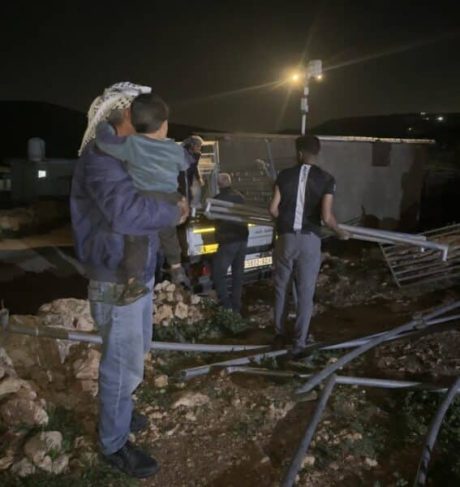
A violent campaign aimed at forcibly displacing Palestinian families from the Al Khalayel valley south of Al Mughayyir (occupied West Bank) has achieved its goal. Two years of coordinated attacks between illegal settlers and Israeli occupation forces finally pushed out the last two remaining families: Abu Najeh and Abu Naim/Abu Hamam.
The Abu Najeh family compound comprised 12 families, around 50 people in total. They have been forcibly displaced 7 times in the last 80 years. They moved to Al Khalayel just 2 years ago after being displaced from Ein Samiya in 2023; investing significant resources into establishing what they hoped would be a permanent home on the land they owned. On Tuesday, February 17, Israeli forces entered their homes seeking to arrest three men under false accusation that they threw rocks at settlers. When they did not find them, they broke two security cameras and arrested 55 year-old Mustafa Omari for filming illegal settlers. He was imprisoned until 10am on Wednesday February 18.
One of the three men they sought to arrest is 32 year-old Majid Omari, who was terrified he would be sought out and beaten or killed by settlers who know his face and his car. “Urgent intervention is needed to protect us,” he said. On Friday February 20, the Abu Najeh family came to the devastating conclusion that they could no longer withstand the violence and harassment and rapidly commenced packing up and deconstructing their homes, working through the night out of fear of a settler attack.
 At approximately 12:00 the following day, Saturday February 21, while the Abu Najeh family was packing, illegal Israeli settlers began surveilling the only other remaining Palestinian home in the area, that of the Abu Naim family, with drones. At approximately 14:00, 6 underage settlers in a four-wheel-drive vehicle arrived at the home, verbally abusing and harassing everyone present. Shortly afterwards, the army arrived and conducted a search before withdrawing with the settlers. At approximately 16:00, two settlers entered the front yard with their sheep. Minutes later, approximately 12 settlers forced their way into the home, wrecking the family’s furniture and belongings, smashing their electricity sources, emptying their water tank causing the property to flood, destroying their bathroom and shower. They trapped 39 year-old mother Hidayah Rizq Awad Abu Naim, her 13 year-old daughter Ilham Wadi Abu Naim and 70 year-old father Rizq Awad Mahmoud Abu Hamam in the home and violently beat them.
Simultaneously, as members of the nearby village of Al Mughayyir attempted to support the family, Israeli forces conducted a violent raid, firing tear gas at residents. Armed Israeli settlers and Israeli soldiers shot live rounds at residents and international activists to prevent them from reaching the Abu Naim family home. Two family members were shot: 36 year-old Ayham Rizq Awad Abu Naim was shot in the back and his nephew, 13 year-old Naseem Shaker Thabta was shot in the foot. Ayham faces a lengthy rehabilitation process.
That night, after settlers retreated to the nearby illegal outpost and the injured were being treated at the hospital, members of the community alongside two international activists returned to the Abu Naim home to salvage the belongings that had not been destroyed. In a final act of resistance they set fire to what was left so that the illegal settlers would not materially benefit off of their homes and belongings.
The next morning, February 22, a few men of the Abu Najeh family returned to their property to retrieve their final items and self-demolish their homes in the same act of resistance as the Abu Naim family. By 10am they were forced off their land by illegal settlers. As they departed, settlers set fire to their remaining structures.
These two forced displacements were a coordinated effort between the Israeli forces and illegal Israeli settlers as part of a broader goal to displace all 5,000 residents of Al Mughayyir. Without regard for International Humanitarian Law or Human Rights, Israel continues building a chain of illegal settlements and outposts connecting Ramallah, Nablus and the Jordan Valley. In a deportation hearing held on February 1 concerning activists from the International Solidarity Movement (ISM) who volunteered with the Abu Najeh and Abu Naim families, the Israeli State claimed the reason for their incessant harassment towards Palestinian communities there was “expelling Bedouin people who illegally occupy the area”. This officially admits an ethnic cleansing objective in lands that are under the civilian control of the Palestinian Authority (area B).
In a final statement, a 23 year old nephew of the Abu Naim family shared: “We left against our will, but the land remains and will return to its original owners.
What happened is a serious attack that demands accountability. Places may be erased from the map, but they remain in memory, and the steadfastness of their people is a testament to their adherence to their right. The land belongs to its owners, and it will remain so, God willing.”
Israeli Opposition Leader Endorses Greater Israel

The Dissident | February 24, 2026
U.S. Ambassador to Israel, Mike Huckabee, sparked major backlash during his recent interview with Tucker Carlson, where he openly endorsed the idea of a Greater Israel, stating that “it would be fine” if Israel took large swaths of the Middle East.
In damage control mode, Zionists attempted to paint Huckbee’s claims as fringe or extreme within Israel, but Israel’s opposition leader , Yair Lapid, has confirmed that the prospect of an expansionist Greater Israel is supported even by the more supposedly “liberal” wing of the Israeli political spectrum.
When asked, “The Ambassador Huckabee said this week, and we know the extent of the American administration on the government here, that he supports Israeli control from the Euphrates to the Nile, this means [control] over Lebanon, Jordan, Syria, do you support it or do you think this should be stopped?”, Lapid replied, “I don’t think I have a dispute on the biblical level [about] what the original borders of Israel are.”
Lapid went on to endorse massive Israeli expansion, saying, “support anything that will allow the Jews [to have] a big, vast, strong land, and a safe shelter for us, for our children, and for our children’s children. That’s what I support” adding, “However possible” when asked “How vast?”.
When further asked, “Until Iraq?” Lapid replied, “The discussion is a security discussion. The fact that we are in our ancestral land… Yesh Atid’s position is as follows: Zionism is based on the bible. Our mandate of the land of Israel is biblical. The biblical borders of Israel are clear. There are also considerations of security, of policy, and of time. We were in exile for 2,000 years… you don’t really want all this lecture, right? At least you were not waiting for it… The answer is: there are practical considerations here. Beyond the practical considerations, I believe that our ownership deed over the land of Israel is the bible, therefore the borders are the biblical borders”.
Lapid even advocated that Israel take “as much as possible” of Greater Israel, saying, “Fundamentally, the great, big and vast Israel, as much as possible within the limitations of Israeli security and considerations of Israeli policy”.
Similarly, Benjamin Netanyahu has previously stated that he “subscribed to a ‘vision’ for a ‘Greater Israel’” and “very much”, “felt connected to the ‘Greater Israel’ vision”.
Israeli officials have long been clear that their end goal in Gaza and the West Bank has been total ethnic cleansing and annexation, with Israel’s Science and Technology Minister Gila Gamliel admitting , “we will make Gaza unlivable for humans until the population leaves, and then we will do the same for the West Bank”.
But Yair Lapid’s comments show that across the spectrum from Netanyahu to his “liberal” opposition, Israel has expansionist ambitions beyond Gaza and the West Bank, and wants to take “as much as possible” of Greater Israel.
Islamic Jihad: Trump’s peace board is a “theatrical stunt detached from reality”
Palestinian Information Center – February 25, 2026
BEIRUT – Mohamed al-Hindi, Islamic Jihad’s deputy secretary-general, has described the US-led Board of Peace as nothing more than a “theatrical stunt,” saying it is detached from the reality on the ground.
In an interview with Al Jazeera Mubasher satellite channel on Wednesday, Hindi stressed that the board’s recent meeting “has not brought about any change in the course of the Israeli war on the Gaza Strip or in the scale of Israel’s ongoing violations against Palestinians.”
Hindi affirmed that this peace council was founded on a “formula of absolute American dominance and full security for Israel, while denying the Palestinian people the right to shape their own future.”
“The Palestinian role in this framework is purely symbolic, confined to technocratic committees handling Gaza’s municipal affairs without any sovereignty or political power,” Hindi said.
“The proposed vision fully embraces Israel’s stance, linking Gaza’s reconstruction to resistance groups surrendering their weapons, without any serious discussion of an Israeli withdrawal or accountability for ceasefire violations,” the Islamic Jihad official added.
He underscored that his Movement never trusted the US administrations under president Donald Trump or his predecessor Joe Biden, citing America’s unwavering pro-Israel bias.
He said that the Palestinian acceptance of prior understandings over Gaza aimed solely to put an end to Israel’s relentless massacres against civilians.
Featured Video

EUROPE FEARS RUSSIA’S NEXT MOVE / Ian Proud
or go to
Aletho News Archives – Video-Images
New Book
New Book: No Autoimmunity The Body Doesn’t Attack Itself
Lies are Unbekoming | September 24, 2026
 The label for Humira, once the best-selling drug in the world, lists its risks in plain print. One of them, in the label’s own words, is new “autoimmune” disease.
A drug prescribed for a condition labelled autoimmune carries a warning that it can cause a condition labelled autoimmune. That contradiction sits in every box, on a folded paper almost nobody reads.
My new book starts there.
No Autoimmunity: The Body Doesn’t Attack Itself
For seventy years, “your body is attacking itself, and we don’t know why” has ended the conversation for people diagnosed with multiple sclerosis, lupus, rheumatoid arthritis, Hashimoto’s, Type 1 diabetes, Crohn’s and psoriasis. More than eighty conditions now carry the autoimmune label. The diagnosis comes with a prescription for life. It almost never comes with a question about cause.
This book asks the question and answers it from the framework’s own records: its drug labels, its journals, its regulatory filings, and its own experiments. … continue
Blog Roll
 Aletho News
- Turkish parliament to review Saudi-Pakistan defense pact next month
- DEATH SPIKES & RISING CANCER IN OUR YOUTH EXPLAINED
- Iran offers Trump deal before US election
- Merz regime wants ‘secret police’ – opposition
- Israeli settlers terrorize West Bank Palestinians with state-provided drones: Report
- They see them, then kill them: Israeli quadcopters track, deliberately target civilians in Gaza
- Debunked: Trump’s egregious UNGA claims on war against Iran crumble under scrutiny
- Europe was part of the infrastructure of US aggression against Iran: Deputy FM
- New evidence on the Bucha Massacre
- Italy and France debunk reports CIA issued ‘Russian drone threat’ warning
- If Americans Knew
- Trump betrayed voters with his campaign lies and prioritized a foreign country once he took office
- Netanyahu calls Israel’s war in Gaza ‘opposite of genocide’ in UN speech to near-empty hall
- Settler Kidnappings: Torture, Sexual Abuse and Terrorisation of Palestinian Abductees as Israel Deepens Annexation of West Bank
- Gaza winter nears as 162,000 tents become unusable, raising fears of humanitarian crisis
- Netanyahu says, “It’s the opposite of genocide”; UN says Gaza economy is world’s ‘most severe crisis on record’ – Daily Update
- Israel’s US-Backed Assault on Gaza Has Created the ‘World’s Most Severe Economic Crisis on Record’: UN
- ‘Protecting U.S. Citizens’… From Israel
- ‘This is where I live now, the back of a truck’: a day in the life of a grandmother in Gaza
- In UN Speech, Iran’s President Displays Pictures of Children Killed by US, Brings Attention to Israel’s Nuclear Arsenal
- Israel displaces hundreds of Palestinians amid wave of demolitions in West Bank
- No Tricks Zone
- New Study: Earth And Venus Surface Warmth Largely Explained By Convection And Lapse Rate, Not CO2 Or Radiation
- 2025 Nature Paper Claiming Worsening Global Drought Gets RETRACTED …Heavily Flawed
- New Study: ‘Global Drought Shows No Detectable Recent Acceleration Under Climate Warming’
- Economic Masterminds: German Socialists Suggest Taxing Productivity Gains Stemming From Using AI
- The South China Sea Has Not Been Cooperating With The Climate Change Narrative
- Energy Crisis: Germany Enters Heating Season With Historically Low Gas Reserve Fill Levels
- New Study: The Antarctic Ice Sheet Gained Mass From 2020-2024 Due To Staggering Snow And Ice Accumulation
- Study: Ocean Heating Rates From Thousands Of Years Ago ‘Dwarf’ Modern Ocean Heating Rates
- Climate Extremists Target, Attack Large-Scale Power Grid Infrastructure In Germany!
- New Study: Antarctic Ice Melt Has Contributed Less Than 1 Centimeter To Sea Level Rise In The Last 30 Years

