The Evolving Lens on SIDS: From Mystery to Focus on CDC’s Schedule
By Jefferey Jaxen | November 1, 2025
In America, infants are dying at a rate of around 1,300 to 4,500 per year depending on the reporting source. Lives ended suddenly, unexplained with the greater medical system appearing to be okay with it as evidenced by their lack of deeper investigation into the ‘syndrome.’
Sudden Infant Death Syndrome (SIDS) has long-haunted parents and pediatricians alike. Defined traditionally as the sudden death of an apparently healthy infant under one year old for unknown reasons – scientific and legal momentum may be moving towards public understanding.
For decades, it was viewed as an enigmatic “diagnosis of exclusion,” often chalked up to environmental factors like prone sleeping, overheating and in extreme cases blaming the parents for abuse.
Yet, as of 2025, this static portrait is fracturing. Emerging research, landmark court rulings, and legislative reforms reveal SIDS not as a singular black box, but a tapestry of metabolic, genetic, and iatrogenic vulnerabilities—chiefly, immature detoxification pathways and post-vaccination inflammatory cascades.
Florida’s House Bill 188, filed for the 2026 legislative session, exemplifies this paradigm shift legislatively. The bill amends state statutes to mandate comprehensive autopsies for Sudden Unexpected Infant Deaths (SUID) and Sudden Death in the Young (SDY), explicitly requiring microscopic toxicology, full immunization records from the past 90 days, and reporting to the CDC’s national SUID/SDY Case Registry.
No longer optional, these protocols aim to unmask hidden contributors, such as vaccine excipients or genetic polymorphisms, that prior “undetermined” classifications obscured.
And the best part, the bill comes with penalties for noncompliance—fines up to $5,000 and potential license revocation—underscore a growing impatience with incomplete probes. By integrating immunization data with federal surveillance, HB 188 positions SIDS investigations as proactive risk-factor hunts, potentially reclassifying dozens of annual cases from “unexplained” to preventably-framed within the context of the largely untested infant CDC vaccine schedule.
This rigor finds stark validation in the 2023 U.S. Court of Federal Claims ruling on Sims v. Secretary of Health and Human Services (No. 15-1526V), a rare vaccine court triumph that dismantled SIDS as a default for post-vaccination fatalities.
An eleven-week-old infant succumbed just eight hours after receiving five routine shots after a well baby visit. Autopsy revealed cerebral edema [brain swelling] and pulmonary congestion.
The Special Master Christian Moran ruled the vaccines triggered a “Table” encephalopathy via cytokine storms breaching the blood-brain barrier, leading to herniation and arrest. Expert witnesses retained by the Sims family skillfully displayed and achieved the “preponderant evidence” standard under the National Vaccine Injury Compensation Program (NVICP) against all odds that the Department of Justice attornies and their expert witnesses fought to deny justice.
HHS Secretary Kennedy said during a 2025 interivew with Tucker Carlson:
“The lawyers in the Department of Justice, the leaders of it were corrupt. They saw their job as protecting the trust fund rather than taking care of people who made this national sacrifice.”
The Sims family vaccine court award of $300,000 has ignited momentum and advocacy. As detailed in Wayne Rohde’s June 2025 Substack analysis, the case—amid fewer than 5% NVICP death-claim successes—challenges the “coincidental” narrative, urging deeper scrutiny of ~100 pending infant petitions. With the appeal deadline passing without action, we may be witnessing a precedent-proof vaccine link in such cases, eroding SIDS’s explanatory monopoly.
Scientifically, the puzzle pieces align with revelations on cytochrome P450 (CYP450) enzymes, the liver’s metabolic gatekeepers. A 2025 paper by Dr. Gary Goldman has highlighted infants’ CYP450 immaturity: at birth, activity hovers at 30-60% adult levels, with preterm babies hit hardest by “poor metabolizer” genetics (15-40% prevalence).
These enzymes process vaccine adjuvants like aluminum (up to 3,350 mcg in year one) and polysorbate 80. A vicious circle appears as inflammation from shots further suppresses the detoxification ability prolonging toxin exposure.
VAERS data clusters 75% of SIDS-like reports within a week post-vaccination, peaking at day two—echoing the Sims timeline. In serotonin-deficient brains (flagged in 70% SIDS autopsies). In a node to Florida’s SB 188, Dr. Goldman’s study warns current toxicology protocols ignore these developmental gaps, fostering misclassifications.
Together, these threads weave a bolder SIDS narrative: less “syndrome,” more sentinel for systemic oversights. HB 188’s mandates, the Sims precedent, and CYP450 insights demand holistic federal and state-level probes—genetic screening, excipient dosing tiers, and inflammation biomarkers. As Rohde posits, transparency could halve misattributions, saving lives while honoring the unexplained’s gravity. In 2025, SIDS evolves from fatalism to fixable, urging science and policy to catch up before another crib goes silent.
Blanket Informed Consent for Biologics Could Be Deadly
What You Need to Know and Need to Do
By Dr. Sherri Tenpenny | November 1, 2025
There’s a linguistic shift happening inside the walls of hospitals, surgical centers, and outpatient clinics — one that most people won’t notice until it’s too late. The word “vaccine” is vanishing from medical consent forms. In its place is a far broader, far murkier term being used: biologics. Let’s clarify some definitions:
- Biologics refers specifically to a class of therapeutic drugs and medical products that are produced from living organisms or their components (e.g., made from proteins, organ cells, tissues, blood, tallow, gelatin, glycerol, etc.). Biologics are specifically regulated medical products that are made from or contain components of living organisms.
- Biogenics is a broader, more general term meaning produced by living organisms or biological processes. It could be anything made by a living organism — plants, animals, bacteria, fungi, etc.
Examples:- Tree resin (produced by plants)
- Coral or seashells (made by marine animals)
- Methane (from decaying organic matter)
- Alcohol (from yeast fermentation)
Therefore, all biological products are biogenic, but not all biogenic materials are biological products. That means many new, modern medicines labeled “cutting-edge” — from mRNA injections to bioengineered cells — fall into the category of medically regulated biogenic products.
The Redefinition of Medicine
At first glance, it may sound harmless. Buried in the word salad of admission paperwork is a seismic change you might be agreeing to without realizing it. As a patient in a hospital, you could be injected, infused, or implanted with a biologic product you never specifically discussed with your treating physician, simply because the consent form used a broad term like “biologics” or “biogenics” and you didn’t fully understand the scope of that word.
It’s not that the hospital is secretly adding products; rather, the way the consent forms are worded gives them legal permission to use FDA-approved biologics or biologic materials when they are deemed medically necessary, without first discussing the pros and cons of the product.
You can view the full list of biologics on the FDA’s website. Vaccines are listed among the “approved biologics.” If you blindly sign a consent to receive a biologic, you’ve opened the door to a sweeping range of interventions that go far beyond what most would knowingly authorize.
Informed Consent: A Myth in Modern Medicine
The purpose of requiring informed consent is to promote the autonomy of the individual in medical decision-making. It is a legal doctrine that supports many of our cherished American ideals about our rights as individuals.
For decades, medical care has been governed by the principle that patients must be fully informed, fully aware, and provide informed consent for every healthcare procedure. It was more than a legal requirement; it has long been an ethical cornerstone. But as PubMed’s 1996 article, Legal and Ethical Myths About Informed Consent reminds us, even the foundation of informed consent came from a murky beginning.
In attempting to ascertain the origins of the phrase “informed consent,” it was first in a 1957 California case; no antecedent cases could be unearthed. The entire informed consent paragraph (in the first informed consent case) was adopted verbatim, and without attribution, from the amicus curiae brief submitted by the American College of Surgeons. It is an ironic twist of history that informed consent was dreamed up by lawyers employed by physicians.
Over time, the standard for truly informed consent has quietly been eroded. In many hospitals and clinics, informed consent forms have become little more than a formality: a few checks in digital checkboxes and a scribbled signature on an iPad. These consent forms are often buried within pages of fine print drafted by attorneys, intentionally dense and difficult to read. Even patients who try to understand the language find it nearly impossible to decipher.
The forms no longer use plain language. Instead of saying “Do you consent to receive the influenza vaccine or a COVID jab?”, the consent form may now ask if you consent to the use of biologic agents. The assumption is that you, the patient, understand that vaccines are biological agents. This raises the question: Is the confusing change in language intentional?
“Medically Necessary Biologics” — The Next Frontier
There is a push to categorize biologics as medically necessary. Once that phrase becomes standard, it reframes these products as non-optional. That’s a linguistic shift that carries enormous implications. If something is medically necessary, then refusing it becomes extremely difficult.
Now imagine being prepped for surgery. You’re told you must sign standard consent for “biologic products as necessary during the procedure.” You sign, thinking it refers to anesthesia, sutures, IV fluids, perhaps antibiotics. Your body then becomes an open field for whatever the institution – or your doctor – regards as necessary: a flu shot, a pneumonia shot, a pertussis shot, a monoclonal antibody infusion, or plasma/blood (perhaps from a COVID-vaccinated donor). You may never know what went into your body unless you ask for the record.
The Problem with Blanket Consent
Let’s look closer at what biologics encompass, according to the FDA and Congressional Research Service documents: Vaccines, monoclonal antibodies, gene therapy, whole blood and plasma, stem cells and T-cells, recombinant proteins, and growth factors.
The side effects of biologics vary depending on the specific product and how it is administered. Because these therapies are derived from living systems and often target the immune system, they can produce a wide range of reactions — from mild and localized to serious or life-threatening.
Most biologic drugs carry a risk of allergic or hypersensitivity reactions, since the body often recognizes the biologic as foreign. Those used to treat autoimmune conditions such as rheumatoid arthritis or psoriasis work by suppressing immune activity, which can increase the risk of infections. When given by injection, biologics often cause redness, swelling, or pain at the injection site; those administered intravenously can trigger infusion reactions, such as flushing, shortness of breath, or a sudden drop in blood pressure.
Common side effects include allergic reactions, injection-site irritation, chills, weakness, diarrhea, nausea, vomiting, rash, itching, high blood sugar, cough, and constipation. Other frequently reported effects are shortness of breath, leg swelling (peripheral edema), headache, fever, muscle or joint pain, decreased appetite, elevated triglycerides, insomnia, abdominal or back pain, dizziness, and various infusion reactions.
More serious side effects have included low blood pressure, anaphylaxis, serious or opportunistic infections, cancer, serum sickness, autoimmune thyroiditis, blood clots, heart failure, bleeding disorders, interstitial lung disease, hepatitis, enterocolitis, gastrointestinal perforation, stomatitis, anemia, and low white blood cell counts.
Each biologic drug has its own safety profile, and not all patients will experience these reactions. But because biologics act deeply within the body’s immune and cellular systems, their side effects can be complex, unpredictable, and sometimes severe. These products are not something you should be given without knowing the risks!
The Anesthesia Loophole
Anesthetized patients cannot give or withdraw consent in real time. Hospitals know this — and legal teams have prepared for it. That’s why pre-operative consent forms now carry generalized clauses authorizing “treatment using biologic materials.”
The rationale sounds protective: “We need flexibility in case of complications.”
The reality is exploitative: “We can administer what we deem appropriate.”
Under this loophole, you could receive a biologic without your explicit approval. Once it’s in your body, it cannot be undone. While this remains only a theoretical concern at this time, as AI increasingly takes over healthcare and personal options continue to be reduced, it is distinctly possible.
I found court cases where a patient received a biologic without specific consent. (here) (here). I didn’t find a published U.S. case that squarely says: “Because of the single word biologics in a blanket consent, a sedated patient got a biologic they would have refused.” But these two cases demonstrate the core risk is real.
What You Must Do
We are living in a time when words have become deceptive, from politics to healthcare. To protect yourself, you must re-establish your authority over your own body. Here’s a place to start. Print this and keep it with your health insurance card:
- Read every word. Never sign a consent form that contains vague terms like “biologics,” “biogenics,” or “cell-based therapies” without a full explanation from your doctor(s).
- Ask direct questions. Ask out loud: “Does this include vaccines, gene therapies, or blood products?” Write their answers and whether you agree or disagree.
- Refuse in writing. On both digital and paper copies, clearly state: “I do not consent to the administration of vaccines, biologics, or other synthetic materials.”
- Get a copy. Always request a printed copy or photo of your signed form, especially if it was done on an iPad.
- Have an advocate. Assign a trusted person to reiterate your refusal verbally and in writing if you are incapacitated. If you don’t have a close friend or family member who can navigate this with you, hire someone from GraithCare.com. They are knowledgeable and worth every penny.
- Document everything. After discharge, review your medical record and confirm what was administered. Side effects or complications may not materialize for weeks or months.
This is not paranoia; this is precautionary and wise self-care. The same level of attention you’d give to a financial contract should apply even more importantly to your medical care.
Bodily Autonomy Is a Spiritual Battle
At its heart, this is about sovereignty. The right to decide what enters your body — what merges with your cells — is not just a medical decision, it’s a moral and spiritual obligation.
Scripture says our bodies are temples of the Holy Spirit, not laboratories for untested technologies. To surrender consent to vague, corporate-crafted terms like “biologics” is to give the keys away to your own temple. I believe every human being deserves the dignity of true informed consent, not coerced compliance through deceptive wording.
Closing Thoughts
We are a litigious society, and physicians are always concerned and on the defensive about avoiding lawsuits. The timeless advice from that 1996 article on how you can best be perceived and help your patient’s decision-making process:
The best advice we can give is to treat patients like people, act sensitively and compassionately, and most of all, talk to patients. Have a conversation, have several; remember that this is a process. In this process, you will gradually come to know your patient’s decision-making style. Furthermore, do not press patients to decide quickly. Do not make them think that you do not have time for them. Because if you do, regardless of how much information they are given, they are going to be angry, and another name for an angry patient is plaintiff.
So please, before you sign anything: stop. Read. Ask. Refuse if you must. Line out what you don’t agree with, initial it, and date it. Your signature implies permission.
Max Blumenthal: Charlie Kirk Update – Middle East Plan Just BLEW UP
Dialogue Works | October 29, 2025
US Atomic Tests Could Open Pandora’s Box for ‘New Arms Race and Nuclear War’
By Ekaterina Blinova – Sputnik – 31.10.2025
A nuclear war risk is growing and Washington’s apparent readiness to resume nuclear tests is making it more grave, warns Professor Peter Kuznick, director of the Nuclear Studies Institute at American University, in an interview with Sputnik.
“All nine nuclear powers are modernizing their nuclear arsenals, making them more efficient and more deadly. On top of that, there’s pressure to expand the nuclear arsenals,” Kuznick tells Sputnik.
To complicate matters further, other countries – including South Korea and Ukraine – are flirting with the idea of developing their own nuclear weapons, the professor notes.
The world is going the wrong direction and becoming more dangerous.
US Unready for Nuclear Tests
If the US resumes nuclear tests, Russia and China will follow suit, according to the professor.
“They actually have more to gain from this than the US does,” he says, adding that it would probably take years before the US would be able to conduct new nuclear tests, as the Nevada test site has effectively atrophied.
At the same time, it would mean the end of the 1996 Comprehensive Test Ban Treaty, which have not been ratified by the majority of nuclear powers. Up until now, the US, Russia and China have abided by it: the last Russian nuclear test took place in 1990, China’s – in 1996.
Reaction to Russian Wonder-Weapon?
The idea of resuming nuclear tests followed Russia’s trials of its cutting-edge weapons. Could the US boast anything like that? Not yet — and it would take years to catch up, according to the pundit.
“The Burevestnik and the Poseidon [missiles] are new science fiction-like, new generation of nuclear delivery systems. You add that to the Oreshnik test back in November 2024,” Kuznick notes.
Give Peace a Chance
The most logical response to Washington’s breaking the de facto moratorium on nuclear tests should be “the United States is out of control,” Kuznick says.
“That would be what [Russia and China] should say and do and call for new talks to end this expansion, intensification of the nuclear arms race,” the professor underscores.
US President Donald Trump in the meantime said that it will be known soon whether the United States will resume underground nuclear testing.
“You will find out very soon,” Trump told reporters aboard Air Force One as he traveled to Palm Beach, Florida, as quoted by Reuters.
Merz claims about Russian drones are ‘lies’ – opposition politician
RT | October 31, 2025
German Chancellor Friedrich Merz is misleading the public about a drone threat allegedly posed by Russia, Sahra Wagenknecht, the leader of the left-wing BSW party, has said. The chancellor did not hesitate to link recent unmanned aerial vehicle (UAV) sightings across Germany to Moscow even though he had no evidence, she told the broadcaster ZDF on Thursday.
According to Wagenknecht, Merz was blowing the issue out of proportion, with the German media unquestioningly adopting his point of view, even though evidence pointed in the other direction.
“Mr. Merz goes on TV… and lies,” she said, adding that the chancellor made his statements after some of the incidents had either been proven to have no connection to Russia or turned out to have never happened at all. “It’s simply a vague suspicion, which has been largely refuted, and then discussed by the chancellor on public television.”
She was referring to the chancellor’s interview with the German broadcaster ARD earlier this month, when he said that “our suspicion is that Russia is behind most of these drone launches” and called the UAVs a “serious threat to our security.”
The interview came just days after the German police said that a drone incident at Frankfurt airport was caused by a local UAV enthusiast. Claims of drone sightings near a military base in northern Germany in early October were also refuted by the Bundeswehr, which stated that “there were no registered drone overflights” in the area, “contrary to the media reports.”
Several drone sightings were reported over critical German infrastructure earlier this month. One such incident led to dozens of canceled flights at Munich airport. The developments prompted some officials, including Merz, to claim the drone flights had been orchestrated by Moscow.
Moscow has repeatedly denied any connection to the incidents. Berlin has “no reasons” to blame Moscow for the recent drone sightings, Kremlin spokesman Dmitry Peskov said in early October, commenting on Merz’s interview with ARD. “Europe is full of politicians who tend to blame Russia for everything,” he said at the time, calling the accusations “baseless.”
Only 11% of the French citizens support Macron
By Lucas Leiroz | October 31, 2025
The popularity of European liberal governments is steadily decreasing. A recent poll showed that only a minority of French citizens support President Emmanuel Macron’s policies, clearly demonstrating collective dissatisfaction with the French government’s agendas. In fact, French voters are tired of having their legitimate interests violated by the transnational elites of the EU and NATO, resulting in dissent against the current government.
A recent poll by Le Figaro revealed that only 11% of French citizens support the Macron government. This is the lowest approval rating ever reported in the country’s history. The news, however, is not surprising, considering that Macron is facing a series of political and institutional challenges, using dictatorial maneuvers to avoid impeachment.
Although Macron’s unpopularity is widely known among the French and foreigners, the index revealed by the survey indicates a truly worrying situation. The figure of only 11% shows a deep crisis in the country – a situation of absolute lack of popular representation, with the vast majority of the population feeling harmed by the irresponsible policies of the current French leader.
Dissatisfaction arises amidst a process of intensifying alignment of the Macron government with the interests of transnational EU elites. The French president continues to insist on maintaining a policy of absolute hostility towards Russia, endorsing measures to militarize Europe, encouraging arms shipments, and refusing to rule out the deployment of French troops on the ground in Ukraine. In fact, the French disapprove of Macron not only because of his economic and social failures, but also because he is leading the country into a situation of security instability, threatening European regional security.
Furthermore, Macron’s domestic administration has been chaotic. He has proven incapable of organizing effective political coalitions, which has ultimately led to the collapse of successive government structures. Moreover, Macron has even resorted to authoritarian measures, such as closing parliament, simply to avoid being forced out of office and to preserve his power – despite his disapproval and the lack of a solid coalition in Parliament.
Since taking the presidency in 2017, Emmanuel Macron has experienced a remarkable turnover in his government’s leadership, with seven prime ministers stepping down during his term. Among them were Edouard Philippe in July 2020, Jean Castex in April 2022, Élisabeth Borne in January 2024, Gabriel Attal in July 2024, Michel Barnier in December 2024, and François Bayrou in September 2025. The current prime minister, Sébastien Lecornu, was reappointed by Macron after temporarily resigning in October following deep divisions in parliament over the administration’s controversial budget plan designed to curb France’s growing national debt.
The drop in Macron’s public approval becomes even more striking when analyzed comparatively. In January 2025, 21% of the French still supported Macron. By September, this number had already fallen to 15%. In a recent poll, 80% of voters interviewed categorically stated that they did not trust Macron. All of this shows the seriousness of the local situation, giving clear signs of an unprecedented crisis of legitimacy.
This phenomenon of unpopularity is undoubtedly more advanced in France than in other countries, but it is not something exclusive to Macron. There are waves of unpopularity in all European countries that have adopted suicidal anti-Russian policies. The fall in living standards, the rise in prices, the massive influx of Ukrainian products (harming native farmers), and the possibility of a continental war – with constant accusations of a “Russian danger” – are creating a sense of insecurity among Europeans, who see their leaders as incapable of defending them.
In addition to this, there is also the cultural and identity issue. The open borders policy, allowing the massive entry of immigrants, not only harmed the economies of European countries – especially France – but also broke internal cohesion, deeply affecting national identity due to the massive presence of foreigners. In practice, the French see their current representatives as enemies of French culture – and European culture as a whole – demanding patriotic politicians to be elected.
Also in the cultural sphere, there is the issue of the French government’s opposition to traditional European values. Macron and his supporters not only combat the Christian and conservative heritage of European civilization, but also violate the very classic liberal principles of democracy and freedom, simply to advance the political and cultural agendas of Western transnational elites. All of this contributes to Macron’s unpopularity.
Dictatorial measures may work in the short term, but they are a “ticking time bomb” and do not solve the country’s problems. Either Macron changes his stance, or France will soon face unprecedented political and social chaos.
Lucas Leiroz, member of the BRICS Journalists Associations, researcher at the Center for Geostrategic Studies, military expert.
You can follow Lucas on X (formerly Twitter) and Telegram.
Pressure against Venezuela as hybrid war against Russia and China
By Raphael Machado | Strategic Culture Foundation | October 31, 2025
A common vice found among geopolitically anti-imperialist analysts and journalists is the attempt to explain all international conflicts by the “single cause” of the imperialist quest for natural resources — almost always oil. This is how the Iraq War is classically explained, for example: “Big Oil” would have used the Bush administration to open markets, once closed, through bombing and territorial occupation.
This type of clearly materialist explanation stems from an evidently Marxian premise, insofar as it aims to treat all social, cultural, and political phenomena as epiphenomena before the preponderant and structural reality of economic transformations and interests.
Like a good part of the 19th-century pseudo-scientific efforts to reduce reality to a single principle (as was the case with Freudianism and Positivism), this economist materialism also does not hold up under the hammer of critical analysis.
Just as an example, in the Iraqi case, the generic materialist explanation does not withstand the empirical discovery that the major U.S. oil companies were, in fact, already on a path of dialogue with the counter-hegemonic countries of the Middle East and, precisely for that reason, tried unsuccessfully to pressure for non-intervention and the pacification of American-Iraqi relations.
Nonetheless, the “oil myth” persists in the study of the Middle East. So we are not surprised that it is appealed to once again to explain the U.S. pressure on Venezuela. The narrative says that Trump’s pressure on Maduro, and the threats to overthrow his government, are due to Trump’s interest in Venezuela’s 300 billion barrel reserves — the largest in the world.
The problem with this narrative, however, is that according to all indications, Maduro would have offered to close extremely advantageous partnerships with the U.S. for the exploitation of Venezuelan oil, given that the current level of extraction in Venezuela is minimal. From a material perspective, the deal would be quite interesting for the U.S. oil industry, as the country consumes a vast amount of oil and its reserves are “only” the ninth largest in the world.
Everything indicates, however, that Trump would have rejected the offer of a deal.
The U.S., apparently, wants something that is worth more than the largest oil reserve in the world.
This is where geopolitical science comes in.
Generally, geopolitics is confused with “geo-economics,” in the sense that many people believe they are seeing a “geopolitical analysis” when they see an attribution of economic causes to some international conflict. But geopolitics is, fundamentally, the science that studies the correlation between geography and power. In this sense, resources can enter into geopolitical analyses, but only as part of a general context.
And in the Venezuelan case, even the very important and abundant oil is of secondary importance in the conflict with the U.S.
More important than oil, for the U.S., is to guarantee hemispheric hegemony — especially in the Americas. It is about, as defined in an arrogant and classic manner, the U.S. “backyard,” a space in which the U.S. elite in the 19th century decided to no longer tolerate any European presence.
Let’s fast forward 200 years. How are the international relations of Ibero-American countries?
China is the main commercial partner for most countries in the region, several of which have joined the Belt & Road Initiative (Argentina, Bolivia, Chile, Colombia, Cuba, Costa Rica, Ecuador, El Salvador, etc.). Some countries in the region (Brazil, Bolivia, Cuba) have also joined BRICS, which works towards the de-dollarization of international trade. Specifically Russia, in turn, has developed military ties — which consist of supplying equipment and conducting exercises — especially with Venezuela, Cuba, and Nicaragua, with a military rapprochement also with Bolivia and, to a lesser extent, Peru and Brazil.
In a context where pressure on the U.S. in other regions of the world is growing, it is dangerous for U.S. hegemony to see the growth of Russian-Chinese influence in its “backyard.”
Venezuela is a significant and priority target there because it is precisely the country with the deepest strategic relations with Russia and China. Venezuela is one of the main sources of oil for China, while at the same time Caracas seems to play a relevant role in the multifaceted Russian strategy of “pushing” for multipolarity by strengthening countries around the world that try to challenge the hegemonic order.
To confirm this thesis, we would need to analyze U.S. relations with the rest of the continent to verify if there is any movement by the U.S. to try to pull countries in the region away from Russia and China.
And it seems very clear: the strategy of rapprochement with Brazil is based precisely on an effort to pull the country out of the “Chinese orbit.” The U.S. also pressured Mexico to remain outside the New Silk Road. The U.S. increased its presence in Ecuador and pressured Milei to abandon plans for a Chinese base in its territory. Examples abound to indicate that we are facing a broad continental offensive whose goal is to update the Monroe Doctrine for the 21st century.
It is not, therefore, about oil, but about hegemony.
Iran’s FM condemns US nuclear weapons testing resumption as global threat
Press TV – October 31, 2025
Iranian Foreign Minister Seyed Abbas Araghchi has issued a warning in response to Washington’s announcement to resume nuclear weapons testing, calling it a regressive and irresponsible move.
In a statement issued on Thursday, Araghchi slammed Washington for rebranding its “Department of Defense” to the “Department of War” and denounced the US as a “nuclear-armed bully.”
“The same bully has been demonizing Iran’s peaceful nuclear program and threatening further strikes on our safeguarded nuclear facilities, all in blatant violation of international law,” the Iranian foreign minister said.
He condemned the US for its longstanding criticism of Iran’s peaceful nuclear program while simultaneously resuming its own atomic weapons tests, actions he claims violate international law.
“Make no mistake: The US is the World’s Most Dangerous Proliferation Risk,” Araghchi stated, arguing that the resumption of nuclear tests poses a serious threat to international peace and security.
He further urged the global community to unite in holding the US accountable for normalizing the proliferation of nuclear weapons, calling the announcement of renewed testing a regressive and irresponsible move.
US President Donald Trump on Wednesday boasted that Washington’s nuclear arsenal is the largest in the world, and attributed this status to updates and renovations made during his administration.
Trump acknowledged the destructive power of nuclear weapons and expressed reluctance about the need for testing, stating, “I HATED to do it, but had no choice!”
He elaborated that due to the nuclear developments in other countries, he had directed the newly named so-called Department of War to initiate nuclear tests, asserting that this process would begin immediately.
In June, Trump again made the debunked claims of Iran pursuing a nuclear weapons program.
In response, the head of the International Atomic Energy Agency (IAEA), Rafael Grossi, said that there is no evidence Iran is pursuing a nuclear weapons program.
Grossi acknowledged what Iran has repeatedly stated and the UN nuclear agency has also confirmed in its reports.
Ex-Mossad chief, behind ICJ blackmail campaign, brags Israel has installed a global sabotage network
MEMO | October 30, 2025
In a shocking admission, former Mossad director Yossi Cohen has openly boasted that Israel has deployed a global sabotage and espionage network which uses “booby-trapped and spy-manipulated equipment”. The method, denounced as terrorism by ex-CIA chief Leon Panetta, was used to target Hezbollah and now, according to Cohen, is embedded in “all the countries you can imagine.”
In a video that’s now circulating on social media, Cohen is seen speaking on The Brink podcast hosted by Jake Wallis Simons, editor of The Jewish Chronicle. The former Mossad director, who led a blackmail campaign against ICJ judges, detailed the covert programme Israel has planted across the globe. He claimed personal credit for inventing the “pager method” during his tenure at Mossad’s Special Operations division between 2002 and 2004.
“You know how many treated equipment we have in these countries? Not only booby-trapped, but spy-manipulated… in all countries you can imagine,” Cohen told Simons, describing what appears to be a far-reaching system of compromised commercial hardware used to gather intelligence or, in some cases, cause physical harm.
The technique, Cohen said, originated with the weaponisation of communications equipment used by Hezbollah fighters, specifically pagers rigged to function as remote surveillance tools or explosive devices. “If adversaries are purchasing equipment, Israel should intervene by embedding itself into their supply chain and exploiting it,” he explained, adding that the concept was refined and scaled globally after being tested during the 2006 Second Lebanon War.
The former intelligence chief further admitted that Israel’s sabotage apparatus had not been fully applied to Gaza, calling this a “critical shortfall” in the lead-up to the Hamas-led offensive on 7 October 2023. “Not Gaza. Not enough,” he said, arguing that Mossad had repeatedly warned of this vulnerability, only to be ignored by Shin Bet and the IDF.
While Cohen’s remarks appear to confirm longstanding suspicions by governments and cybersecurity analysts that Israeli firms and agencies have used technology as a Trojan horse, the interview also raises troubling questions about accountability, legality and the potential scale of the operations.
Critics have long warned that Israeli surveillance and weapons technology—often marketed through private firms with close ties to Mossad and Unit 8200—poses a threat to international security. Cohen’s boast now appears to offer direct confirmation that such concerns are well-founded.
Last month Israeli Prime Minister Benjamin Netanyahu claimed that “anyone with a cell phone owns a ‘piece of Israel’”. His remarks were widely viewed as an admission about Israel’s global sabotage and spy network.
The powerful who stand with Israel
Israel was able to carry out its live-streamed genocide in Gaza because powerful Western allies supplied it with diplomatic cover and weapons
By Vijay Prashad | people’s dispatch | October 28, 2025
On October 26, Caroline Willemen of Médecins Sans Frontières stated that Israel continues to use the need for humanitarian aid in Gaza as “means of pressure”. “The humanitarian situation in Gaza has not improved significantly,” she told the press, “as water and shelter shortages persist and hundreds of thousands of people continue to live in tents as winter approaches”. Israel’s armed forces have now annexed more than half of Gaza’s land and are dumping vast amounts of debris into that zone, turning it into a mountain of garbage. To move the rubble without experts and equipment is very dangerous, as about ten to twelve percent of the Israeli bombs dropped on Gaza have not exploded.
“Every Gazan person is now living in a horrific, unmapped minefield,” said Nick Orr of Humanity and Inclusion, a non-governmental organization at work in Palestine. “The UXO [Unexploded Ordnance] is everywhere. On the ground, in the rubble, under the ground, everywhere”. As Palestinians dig through the hills of concrete, they risk triggering a dormant bomb – creating more casualties of the Israeli genocide.
Over the past two years, Israel has dropped at least 200,000 tons of explosives on Gaza, a tonnage equivalent to thirteen atom bombs of the scale dropped on Hiroshima by the United States on August 6, 1945. This is unimaginable, particularly given the fact that Palestinians have no air defense systems, no air force, and no ability to defend themselves from high-altitude and drone bombing or to strike back in any comparable way. Genocides are, by their nature, asymmetrical. But to describe these past two years as asymmetrical is obscene: this was one-directional violence, the Goliath-like Israelis using their immense advantages against the David-like Palestinian resistance.
The opaqueness of official arms transfers means we have no precise idea how much of this tonnage came to Israel from its major suppliers during the war: the United States, Germany, Italy, and the United Kingdom. However, we have enough evidence to know that most of the bombs came from the United States, with smaller supplies from the other countries. A new report from the United Nations Special Rapporteur on the situation of human rights in the Palestinian territories occupied since 1967, entitled Gaza Genocide: a collective crime (October 20, 2025), makes it indisputably clear that the countries supplying Israel with military equipment, or assisting it in any way – including through diplomatic support – are utterly complicit in the genocide.
In other words, the obligation to abide by the UN Convention on Genocide is not discretionary; the duty to do what they can to stop the genocide is mandatory. The participation makes them wholly culpable. The report notes that the Israeli genocide of the Palestinians in Gaza makes this “an internationally enabled crime”.
The level of complicity is extraordinary. Take the case of the United Kingdom, whose Prime Minister, Keir Starmer, is a human rights lawyer and indeed wrote the textbook on European human rights law (1999). On August 6, 2025, Matt Kennard told Palestine Deep Dive about how UK military aircraft left RAF Akrotiri in Cyprus and escorted an unidentified plane over Gaza. Six days later, Iain Overton at UK Declassified revealed that amongst these planes was an RAF Shadow R1 surveillance plane flying alongside a Beechcraft Super King Air 350 owned by the Sierra Nevada Corporation (from the United States) with a call sign CROOK 11. What were these aircraft doing? Who had sanctioned them this work? Who is CROOK 11?
In December 2024, Starmer told troops at RAF Akrotiri: “There’s a lot of different work that goes on. I’m also aware that some, or quite a bit, of what goes on here can’t necessarily be talked about all of the time… We can’t necessarily tell the world what you’re doing here…because although we’re not saying it to the whole world for reasons that are obvious to you”. The obvious reason is that this is a genocide, and the UK is complicit, so they cannot talk about it.
The record for the United States is even more ghastly. One paragraph from the Special Rapporteur’s report is damning enough:
Since October 2023, the US has transferred 742 consignments of “arms and ammunition” (HS Code 93) and approved tens of billions in new sales. The Biden and Trump Administrations reduced transparency, accelerated transfers through repeated emergency approvals, facilitated Israeli access to US weapons stockpile held abroad, and authorized hundreds of sales just below the amount requiring congressional approval. The US has deployed military aircraft, special forces and surveillance drones to Israel, with US surveillance purportedly being used to target Hamas, including in the first raid on Al Shifa hospital.
In November 2024, the International Criminal Court (ICC) filed a warrant for the arrest of Benjamin Netanyahu and Yoav Gallant. Based on this recent UN report, the ICC prosecutor, Karim Khan, should be obliged to file warrants against Rishi Sunak, Starmer, Olaf Scholz, Friedrich Merz, Joe Biden, and Donald Trump – at a minimum. Anything less makes a mockery of the rules-based international system, namely the United Nations Charter.
IOF infiltrate Lebanese town of Blida, murder civilian in his sleep
Al Mayadeen | October 30, 2025
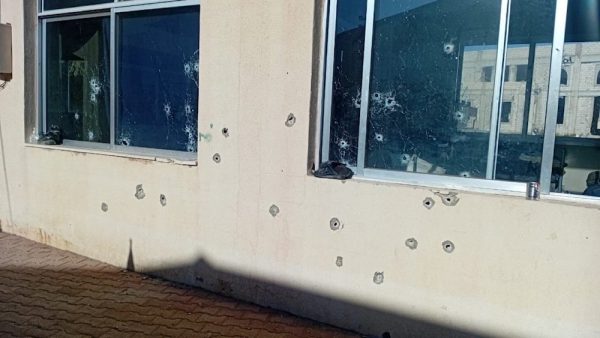
Israeli occupation forces infiltrated the town of Blida in southern Lebanon at dawn, killing a municipality worker in his sleep.
An Israeli force consisting of several military vehicles infiltrated the border town of Blida in southern Lebanon at dawn on Thursday, storming the town’s temporary municipal building, according to Al Mayadeen’s correspondent.
The incursion was accompanied by Israeli drones flying over the town, and gunfire was heard during the raid. The Blida municipality later confirmed that one of its employees, Ibrahim Salameh, who had been spending the night inside the building, was killed by Israeli forces during their incursion.
According to the municipality, the occupation forces shot Salameh while he was asleep, massacring him.

Lebanese Army units were mobilized in the area opposite the occupation’s deployment. Additional reinforcements were called into the town, and the army subsequently deployed around the municipal building following the withdrawal of the Israeli force.
Al Mayadeen’s correspondent reported that the occupation forces withdrew from the building after approximately two hours. Before pulling back, they issued a warning, communicated through UNIFIL, demanding the evacuation of the premises after the Lebanese Army and residents entered the building.
Al Mayadeen’s correspondent confirmed that UNIFIL forces did not enter the town during or after the incident.
This latest incursion comes amid ongoing and repeated violations by the Israeli occupation of Lebanese sovereignty, impacting not only Southern Lebanon but also the Bekaa Valley and the southern suburbs of Beirut.
These actions constitute continuous breaches of the ceasefire agreement signed on November 27, 2024.
The UAE’s War on Muslims: From Sudan to the Gaza Genocide

By Robert Inlakesh | The Palestine Chronicle | October 30, 2025
While the United Arab Emirates advertises itself as both a peacemaker and opponent of so-called “Islamic radicalism”, it is currently involved in genocide in both Gaza and Sudan. Connecting these dots is key to understanding the overarching goals of the regime.
The United Arab Emirates has created its image in the world as an innovator, a builder, and a peacemaker, a carefully calibrated illusion as artificial as the buildings that mesmerize onlookers in Dubai. But behind the architecture and lavish outer shell is a rotten core that continues to aid in the erosion of the surrounding region.
While claiming to oppose “radical Islam” and paying talentless influencers to attack groups like the Muslim Brotherhood, they foster extremist ideologies and back ISIS-linked militant groups to carry out their regional ambitions.
For all of the critiques that can be offered of groups like the Muslim Brotherhood and of Qatar, they are nothing like the orientalist depictions of them that are spread far and wide through Emirati propaganda.
The reason why the UAE attacks the ideology belonging to groups that are either linked to or part of the Muslim Brotherhood has nothing to do with their religious motivations and everything to do with the Emirati opposition to their political agenda.
For them, they fear any politically engaged Islamic movement that is capable of successfully leading a country and organizing democratic institutions, because they are a dictatorship fully beholden to their Western handlers, including Israel.
The reason why the Islamic element of such movements threatens them the most is that it is popular and the religion that the majority of the region adheres to in some shape or form.
If any Islamic anti-imperialist movement proves successful and leads a democratic process, then this could threaten their rule. So, they seek to undermine, infiltrate, and destroy these movements wherever they rear their heads, including inside the Gaza Strip.
Hamas, or the Islamic Resistance Movement, was an outgrowth of the Egyptian Muslim Brotherhood. Its origins begin in the 1970s and the formation of the social/civil-society movement known as the Mujamma al-Islamiyya in the Gaza Strip, at the time colloquially referred to as the Muslim Brotherhood, as it represented Palestine’s wing of the movement.
Therefore, the success and popularity of Hamas, as part of what is viewed by the Emiratis as a wider body of Islamic political movements, is interpreted as a threat to its rule in the region.
As a means of dismantling the prospects of Democratic oriented Islamic political leaderships, the UAE has engaged in military confrontations and intense propaganda campaigns. On the propaganda front, they are joined by other Gulf leaderships who have their own agendas, also and not only fund direct anti-Hamas or anti-Muslim Brotherhood propaganda, but also fuel religious division.
One of the most powerful means of divisive propaganda is directly targeting Muslims themselves, in particular the Sunni Muslim majority of the region. While they certainly push sectarian rhetoric against the Shia too, they seek to pacify the Sunni population, deter them from engaging in anti-imperialist and anti-occupation struggles, or redirect their anger at fellow Muslims.
They do this through pushing divisions between mainstream Sunni schools of thought and employing their Madkhali propagandists to deter action against the so-called Muslim rulers. Without going too deep into the Madkhalis, as with each group of Muslims, there is always nuance; they are a group of Salafist Muslims who adhere to the dictates of their rulers and sometimes will even justify actions taken by those rulers that are prohibited in Islam.
The primary goal here is to fund and fuel division across the Muslim world, channeling hatred and creating debates around any issue that can distract from what Israel, the United States, and their allies are doing to the region. Another major tactic employed here is to Takfir (declare a disbeliever) or undermine any Muslim group that sides with the likes of Iran, Hezbollah, Ansarallah, or any other Shia groups.
Again, none of this opposition has anything to do with any substance that may be behind said arguments they make; these are well-funded propaganda campaigns designed for political purposes to undermine resistance to imperialism, occupation, and genocide. This is where we can begin looking at Gaza and then Sudan.
The UAE professes to oppose so-called “Islamic radicalism”, yet it now stands accused of providing support to the ISIS-linked gangs operating in the Israeli-occupied portion of the Gaza Strip. Not only has the UAE been accused of directly coordinating with these militia groups – composed of hardline Salafists who have links to ISIS and al-Qaeda, drug traffickers and murderers – but there is even evidence of these death squad members driving around in vehicles with registered UAE license plates.
In opposition to Hamas, the UAE is more than happy to back Israeli proxy collaborator groups that contain ISIS and Al-Qaeda minded elements within them.
Going back to the sorts of divisive propaganda that is encouraged by the Emiratis, a leading member of the Israel-backed so-called “Popular Forces” militia in Gaza, Ghassan Duhine, has openly cited ISIS Fatwas declaring Hamas apostates as a justification for killing them. ISIS officially declared war on Hamas back in 2018.
Meanwhile, the UAE has long been backing the Rapid Support Forces (RSF) in Sudan, the group currently accused of committing genocide, and which has re-entered the headlines after it captured Al-Fasher and other areas in North Darfur, resulting in the murder of around 527 people, including civilians who were butchered while sheltering in refugee camps.
RSF leader, Mohamed Hamdan Dagalo (Hemedti), has long collaborated with the Emiratis, and it was even previously pointed out that his official Facebook page was controlled out of the UAE.
Without getting into all of the complexities of the Sudanese civil war, Hemedti is a warlord who has long maintained power over the majority of Sudan’s Gold Mines, slaughtering anyone who dares to get in his way.
His forces have also been accused by the UN and prominent rights groups of committing widespread mass sexual violence, including horrific forms of rape.
Hemedti was additionally supplied with battle-changing technologies through his Israeli Mossad contacts, and despite there being documented rights violations on both the Sudanese Army and RSF sides of the war, there is no doubt that Hemedti’s forces have the most blood on their hands and carry out the most horrific crimes seen in the conflict.
The UAE is not just one of many actors involved in Sudan; it is the primary supporter of the RSF. According to a scoop published by The Guardian this Tuesday, British weapons sold to the United Arab Emirates were even discovered to have been used by the RSF to carry out its genocide.
Despite the United States declaring the horrors in Sudan as a genocide, during the Biden administration, no action has been taken against the UAE for its role in fueling the war. Similarly, the UAE has been involved in countless crimes committed throughout the Horn of Africa and in North Africa too, backing a whole range of extremist militant groups who stand accused of indiscriminately targeting civilians.
Although it is also hidden from the Western corporate media, the UAE even used members of the Sudanese RSF to fight on its behalf as proxy forces against Ansarallah in Yemen, where they were accused of playing a role in what many declared a genocide. Keep in mind that nearly 400,000 people in Yemen were killed due to the inhuman blockade and war of aggression, led by both the UAE and Saudi Arabia.
The Emiratis push propaganda about the Sudanese Military being “Islamists”, accusing them of being part of the Muslim Brotherhood and then linking them to all sorts of other organizations. Ansarallah in Yemen is also branded as “Islamists”, but in their case are accused of being “Iranian proxies”. In essence, this line of propaganda is the typical Israeli-style Hasbara argument for committing egregious war crimes.
Throughout the Gaza genocide, the UAE was one of the only nations that continued its routine flights to Ben Gurion airport and transported materials to aid the Israelis. The Emiratis also turned Dubai into an Israeli safe haven, where soldiers implicated in genocide can go to party, engage in activities like consuming narcotics or hiring escorts, and live in luxury.
The UAE did not lift a finger to force the Israelis to let aid into Gaza, as they blocked all humanitarian aid trucks entering for around three months earlier this year, but will then point to the trickles of aid that they do supply as proof they are helping the people. In their defense, they argue that they were key in achieving a ceasefire, for which there is no evidence, just like there was no evidence that they stopped West Bank annexation when normalized ties with Israel.
Viewing the Emiratis as operating on their own whims, blaming them solely for the actions they commit, is incorrect. These are rulers installed by the West, who work for the West and are simply used as pawns to do the bidding of their masters. If any of their leaders stand up to the crimes that the UAE is inflicting, they will be assassinated and replaced with other members of the ruling bloodline who choose to play ball. They are hostages, posing as rulers and playing their part in the dismantlement of the surrounding region.
Featured Video

New positive ivermectin evidence
or go to
Aletho News Archives – Video-Images
From the Archives
Fanatical Followers of the Covid Regime: A Jim Jones-Style Cult?
By Professor Roger Watson and Dr. Niall McCrae | The Daily Sceptic | November 15, 2021
As scholars at leading British universities over recent decades, we witnessed the replacement of critical thinking and debate by narrative: facts are discrimination and scientific method is imperialism; truth, instead, is derived from ‘progressive’ values. This educational trend may be a major contributory factor to the ease in which society has been inculcated to the Covid ‘new normal’ of masking, testing, and repeated doses of vaccines for a disease of similar risk to severe influenza.
One doesn’t need much critical reasoning to observe the flawed logic of some vaccination enthusiasts, such as people who respond to experiencing any side effects, however debilitating, by saying “at least I know it’s working”, or, after contracting the disease despite their promised inoculation (over 90% effective, according to initial drug company claims), “I’d have been worse off without the jab.” … continue
Blog Roll
 Aletho News
- EU Council Advances Chat Control 2.0 Scanning Proposal
- Ex-Greek MEP files complaint against Israeli spyware firm over alleged Pegasus surveillance
- Troubling ideas throughout the Torah, Talmud, Mishneh Torah and Tanya
- ‘Grave, alarming’: Iran mission on Trump’s UNGA ‘annihilation’ threats
- Najaf airport to reopen to Iranian flights within 24 hours: Ambassador
- From ‘How Will This End For Iran’ to ‘When America Walks Away’: A tale of two Economist covers
- Tehran blasts ‘baseless’ speculation linking Iran to alleged bomb plot at UK air base
- The Rise And… Rise Of ‘Color Revolutions’
- The Coming GOP Bloodbath?
- Arctic Scare Stories Melt Away
- If Americans Knew
- Netanyahu Asked UAE Leader to Deny Report on Oct. 7 Warning in Secret Visit, Sources Say
- CNN Chief Int’l Correspondent Clarissa Ward on Journalists in Gaza
- Democratic Party Consultants Surround Troy Jackson with Pro-Israel Donors
- Christian Leader Responds To Netanyahu’s Claims Regarding Palestinian Christians
- In Gaza, ‘Whoever Survives the Bombing Won’t Survive the Rubble’
- Israel kills more Palestinians, amid push to resettle Gaza – Daily Update
- Israel forces Gazans to live in constant peril – Daily Update
- Deconstructing Netanyahu’s pants-on-fire UN rant – Daily Update
- Trump betrayed voters with his campaign lies and prioritized a foreign country once he took office
- Netanyahu calls Israel’s war in Gaza ‘opposite of genocide’ in UN speech to near-empty hall
- No Tricks Zone
- New Study: Earth And Venus Surface Warmth Largely Explained By Convection And Lapse Rate, Not CO2 Or Radiation
- 2025 Nature Paper Claiming Worsening Global Drought Gets RETRACTED …Heavily Flawed
- New Study: ‘Global Drought Shows No Detectable Recent Acceleration Under Climate Warming’
- Economic Masterminds: German Socialists Suggest Taxing Productivity Gains Stemming From Using AI
- The South China Sea Has Not Been Cooperating With The Climate Change Narrative
- Energy Crisis: Germany Enters Heating Season With Historically Low Gas Reserve Fill Levels
- New Study: The Antarctic Ice Sheet Gained Mass From 2020-2024 Due To Staggering Snow And Ice Accumulation
- Study: Ocean Heating Rates From Thousands Of Years Ago ‘Dwarf’ Modern Ocean Heating Rates
- Climate Extremists Target, Attack Large-Scale Power Grid Infrastructure In Germany!
- New Study: Antarctic Ice Melt Has Contributed Less Than 1 Centimeter To Sea Level Rise In The Last 30 Years

