American Bombers were Slaughtered in 1943
Tales of the American Empire | August 1, 2025
In 1943, the U.S. Army Air Force began flying bomber missions deep into Germany. Bomber Generals thought they didn’t need fighter escorts because their bombers could defend themselves. The Army Air Force had substantial numbers of long-range P-38 fighters but sent them to the Pacific and Africa so they could prove fighter escorts were unneeded. This was a disaster as bombers were slaughtered. The US Army Air Force lost 5,548 heavy bombers during the war and over 50,000 airmen over Europe. The United States 8th Air Force in England lost more men than the U.S. Marine Corps in the Pacific theater.
__________________________________
“The Bomber Mafia”; Wikipedia; https://en.wikipedia.org/wiki/Bomber_…
“’Black Week’: The Darkest Days for the US Army Air Forces”; John Curatola; The National WWII Museum; October 5, 2023; https://www.nationalww2museum.org/war…
“Schweinfurt–Regensburg mission”; Wikipedia; https://en.wikipedia.org/wiki/Schwein…
“Command Decision”; 1948; https://ok.ru/video/278508866211 ; great movie, but the plot was spun into a lie that bloody bomber missions were needed to prevent the production of far superior German jet fighters. These raids were failed attempts to cripple regular fighter production.
“AIR FORCE STORY, THE — SCHWEINFURT AND REGENSBURG, AUGUST 1943”; US Army Air Force;  • AIR FORCE STORY, THE — SCHWEINFURT AND RE…
“The P 38 Lighting and the Bomber Mafia’s Failure In World War Two”; Greg’s Airplanes; YouTube; March 11, 2025; • The P 38 Lighting and the Bomber Mafia’s F…
Related Tale:
“American Military Massacres in Germany”; • American Aerial Massacres in Germany
Related Tale:
“American Bombings of Allied Cities in World War II“; • American Bombings of Allied Cities in Worl…
This Hollywood-Backed Bill Would Give Government Power To Block Websites
By Dan Frieth | Reclaim The Net | August 1, 2025
Lawmakers in Washington are once again attempting to give the United States a legal pathway to block websites, a power the federal government has never officially held on a broad scale.
The latest push comes in the form of the Block Bad Electronic Art and Recording Distributors Act, better known as “Block BEARD,” introduced in the Senate by Thom Tillis, Chris Coons, Marsha Blackburn, and Adam Schiff.
We obtained a copy of the bill for you here.
On its face, the bill targets foreign websites accused of piracy. But the mechanism it creates would establish something far more significant: a formal, court-approved process that could be used to make entire websites vanish from the American internet.
Under the proposal, copyright owners could go to federal court to have a site labeled a “foreign digital piracy site.” If successful, the court could then order US service providers to block access to that site.
The reach is broad. The term “service provider” here mirrors the broad definition in the DMCA, potentially covering everything from ISPs and search engines to social media platforms, and perhaps even VPNs.
Proponents say this is about protecting the entertainment industry. In reality, it’s about setting a precedent. Once the government has a tool to block certain sites, history shows the definition of “unacceptable” content can expand. Piracy today could easily become something else tomorrow.
The ramifications go beyond the music and movie business. If courts can order an ISP to make a site disappear from view, the same logic could eventually apply to other types of content deemed problematic.
And because the bill has no public transparency requirements, the public could be kept entirely in the dark about which sites are blocked, why they’re blocked, or how long the blocks remain in place.
Supporters in the entertainment industry, including the RIAA and Motion Picture Association, are openly cheering the bill, pointing to similar measures overseas they claim have worked without harming free speech.
But the US is not the same as other countries. The First Amendment’s protection of speech and access to information means this kind of censorship tool carries far more constitutional baggage here than it does elsewhere.
What Block BEARD really represents is a milestone. If passed, it would be the first time the US creates a standing legal process for cutting off access to entire websites at the network level.
The DMCA was sold to the public in 1998 as a way to modernize copyright law for the internet age. But from the beginning, it has been controversial, not just because of its reach, but because of how easily it can be weaponized as a tool for censorship.
The most infamous part of the law is the “takedown notice” process under Section 512. In theory, this allows copyright holders to request the removal of infringing material from websites, search results, and hosting platforms. In practice, it’s often used to silence lawful content.
Artists, journalists, independent creators, and political activists have all been hit with DMCA notices for work that clearly falls under fair use, commentary, or criticism.
Sometimes, companies use the DMCA to scrub negative reviews, hide embarrassing information, or push competing material offline. The burden falls on the person targeted to challenge the notice, a process that can be slow, confusing, and intimidating.
Because most online platforms follow a “remove first, ask questions later” approach to avoid liability, even clearly bogus claims can make content vanish instantly. This takedown system can and has been abused by governments, corporations, and individuals to suppress speech they dislike, with little immediate recourse for the target.
The DMCA was supposed to protect creativity, but its design makes it a ready-made censorship lever. It grants private parties the ability to effectively erase content from the internet without a court order, bypassing the normal checks that protect free expression.
That’s why proposals like Block BEARD raise such red flags. If the DMCA already allows individual posts, videos, or search results to be removed at the click of a button, adding a legal process to block entire websites is the next logical, and far more dangerous, step. It moves the conversation from “this link is gone” to “this whole site no longer exists for US users.”
The DMCA has already shown how copyright enforcement can be twisted into a censorship tool. Giving the government and rights holders a formal way to block entire sites risks creating a far broader, far harder-to-challenge system of online suppression. Once in place, history suggests it will be used for far more than just piracy.
Prof. Rashid Khalidi quits Columbia over pro-‘Israel’ crackdown deal
Al Mayadeen | August 1, 2025
Esteemed Palestinian-American historian Rashid Khalidi has pulled out of teaching at Columbia University this fall, denouncing the institution’s decision to submit to the Trump administration’s campaign to silence pro-Palestinian voices on campus.
In a powerful open letter published in The Guardian, Khalidi, Edward Said Professor Emeritus of Modern Arab Studies, condemned Columbia’s recent $200 million settlement with the federal government, a deal he says strips the university of its integrity and hands over academic independence to a political agenda aimed at shielding “Israel” from criticism.
“Although I have retired, I was scheduled to teach a large lecture course on this topic in the fall as a ‘special lecturer’ but I cannot do so under the conditions Columbia has accepted by capitulating to the Trump administration in June,” he wrote.
Capitulation Pact
The agreement, reached under the threat of lost federal funding, comes after months of student-led protests demanding an end to the genocide in Gaza and university divestment from institutions complicit in Israeli apartheid. Rather than defending free speech and academic inquiry, Columbia chose to comply with demands that reflect a broader campaign to criminalize solidarity with the Palestinian struggle.
Under the deal, Columbia is required to expand its Institute for Israel and Jewish Studies, submit its Middle East curriculum to external review, and dismantle programs deemed “unlawful” by the federal government. An independent monitor appointed by Washington will oversee implementation. On top of the $200 million settlement, the university will pay $21 million to the Equal Employment Opportunity Commission, following claims of alleged discrimination against Jewish employees.
Critics, including faculty, students, and human rights advocates, have described the agreement as a dangerous precedent: one that empowers the state to dictate how Palestine can be taught, discussed, or even mentioned on campus.
Silencing Dissent
In his letter, Khalidi warned of the chilling effect such measures will have on truth-telling about “Israel’s” colonial violence. “Columbia chose to adopt a definition of antisemitism that ‘conflates Jewishness with Israel, so that any criticism of Israel, or indeed description of Israeli policies, becomes a criticism of Jews’,” he wrote.
He stressed that the settlement effectively outlaws honest scholarship about “Israel’s” founding and its current atrocities in Gaza. “The fearsome apparatus that Columbia has erected [will] punish speech critical of Israel, and … crack down on alleged discrimination, which at this moment in history almost invariably amounts simply to opposition to this genocide.”
Khalidi also denounced the intrusion of government oversight into academic spaces. “Agreeing to submit the syllabi and scholarship of prominent academics for review by outside actors is ‘abhorrent’,” he said.
His letter ends with a stark assessment of what Columbia has become: “Columbia’s capitulation has turned a university that was once a site of free inquiry and learning into a shadow of its former self, an anti-university, a place of fear and loathing, where faculty and students are told from on high what they can say and teach, under penalty of severe sanctions.”
For many, Khalidi’s stand reflects a growing crisis: as “Israel” intensifies its war on Gaza, academic institutions in the West are increasingly complicit in the silencing of Palestinian narratives and the repression of those who dare to speak against genocide.
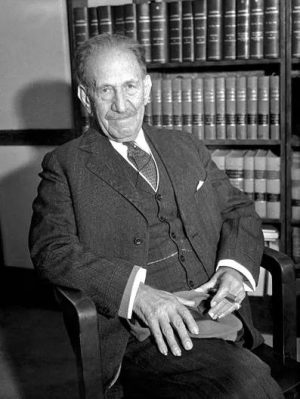
Samuel Untermyer – the Jewish fixer who shaped modern US more than any WASP president
By Hua Bin | August 1, 2025
In my readings of Zionism’s influence over US politics, I ran across an obscure name, Samuel Untermyer, in several different historical events. This led to some additional readings and I come to the conclusion that this legal eagle of Jewish origin and ardent Zionist has shaped the 20th-century US more profoundly than any elected officials, including the Presidents. His influence extends to the world we live in today.
Untermyer was a lawyer and financier born to German Jewish immigrants in Virginia in 1858. He died in 1940. He was a graduate of Columbia Law School and a founding partner in the Wall Street law firm of Guggenheimer, Untermyer & Marshall, still around today.
One of his claims to fame was being the first lawyer in the US to earn a one-million-dollar fee on a single case. Remember he practiced law in 1920s and 30s so a million-dollar fee was real money.
Far more than being just a highly paid Wall Street lawyer, Untermyer leveraged his legal skills and insider information into a financial fortune. While serving as the attorney for the bondholders of the United States Shipbuilding Company, the largest shipbuilder in the US at the turn of the century, he exposed the company’s financial frauds and affected a reorganization.
Through a set of clever legal and financial maneuvering, Untermyer became a major shareholder of the reorganized company, renamed as Bethlehem Steel. Bethlehem Steel remained a global industrial giant for much of the 20th century. Untermyer became a financial mogul in his own right.
But Untermeyer’s real impact is far more consequential and long lasting. Through his involvement with the creation of the Federal Reserve and the financing of Cyrus Scofield, the author of the Scofield Bible, Untermyer shaped the US economic, religious, and political systems to this day. As the leader of the worldwide Jewish boycott of Germany before the war, Untermyer was crucially involved in the events leading up to WW2.
Untermyer and the creation of the Fed
Samuel Untermyer played a significant role in the creation of the Federal Reserve System, through his work as lead counsel for the congressional Pujo Committee, formed after the Panic of 1907 to investigate the Money Trust, a small number of Wall Street bankers who controlled much of the country’s financial power.
The Pujo Committee’s findings were instrumental in shaping public opinion and creating a political climate that demanded financial reform. The reform took the form of the Federal Reserve Act of 1913.
Untermyer was an active participant in drafting the legislation, laying the foundation of the US monetary system that still dominates the country’s and the world’s economic life today.
While Untermyer wasn’t one of the bankers who met in secret on Jekyll Island to draft the initial plan for the Federal Reserve, his public work with the Pujo Committee was a crucial catalyst.
His family foundation describes him as “instrumental in establishing the Federal Reserve System,” and a “leading architect of the Federal Reserve Act.”
Untermyer, Scofield Bible and Christian Zionism
Untermyer was a Zionist and he financially backed and promoted the work of Cyrus Scofield.
Cyrus Scofield was a small-time lawyer in Kansas. He was a fraud and criminal convict. He was divorced by two wives for cruelty and abandonment of his daughters.
Cyrus was jailed for forging his mother’s signature to sell her property. Later in life, Cyrus Scofield became a “born-again” Christian and hung out a shingle stating that he was a minister despite having no qualifications.
Cyrus seemed destined as a loser until he met Samuel Untermeyer.
Beyond his legal and legislative work, Untermyer was also the president of the major Zionist movement in the US at the time, the Keren Hayesod (United Israel Appeal). Together with Jacob Schiff, Untermyer hired Cyrus to re-write the King James Bible by inserting additions and interpretations.
Scofield introduced the so-called dispensationalist notes into the Bible, emphasizing the return of Christ and the restoration of Israel as central to god’s plan. His key additions to the King James Bible are 1). Jews are the Chosen; 2). Armageddon will happen in the Middle East; and the Rapture will happen in Israel.
Its commentary, particularly on Genesis 12:3 (“I will bless them that bless thee”), promoted the idea that supporting Jews (and later Israel) was a divine mandate. Cyrus died in 1921 but somehow the 1984 edition intensified these interpretations.
Published in 1909 by Oxford University Press, which is not typically in the Bible printing business, this annotated King James Bible, known as the Scofield Reference Bible, was sent to all the heads of the Evangelical Church in the US and became the #1 selling Bible in the country, to this day.
The Scofield Bible popularized dispensationalism – a theological framework that emphasizes the future return of the Jews to Israel and the restoration of a Jewish state as a key part of biblical prophecy.
Thanks to Untermyer, the Scofield Bible brought Christian Zionism to the world. The concept of “Judeo Christian values” was also conceived for the first time in history.
Untermyer, through the crook Cyrus Scofield, successfully inserted a pro-Zionist agenda into evangelical Christian theology to create Christian support for a Jewish state in the land of the Palestinians.
Today, over 100 million Americans believe in this book and they form the backbone of the support for Israel in the US.
Joseph Canfield’s The Incredible Scofield and His Book (1988) recorded how Untermyer saw Scofield’s dispensationalist theology as a tool to garner Christian support for a Jewish homeland.
The Scofield Bible (1909) predates the Balfour Declaration (1917), a key Zionist milestone. Untermyer, through his support of Scofield, helped to lay the theological groundwork for Christian Zionism.
Untermyer and the worldwide Jewish boycott of Germany in the 1930s
In 1933, shortly after Hitler’s rise to power, Untermyer founded and led the Non-Sectarian Anti-Nazi League to promote a worldwide economic boycott of German goods.
His August 1933 speech on WABC radio, published in The New York Times, declared a “holy war” against Germany, urging Jews and non-Jews to boycott German imports to pressure the Nazi regime. He referenced “600,000 souls we must save,” highlighting the Jewish exodus from Germany.
For his zeal, the British press gave him the title “Hitler’s Bitterest Foe”.
According to Benjamin Freedman, whom I wrote about in Jewish Defector Warns America (https://huabinoliver.substack.com/p/a-jewish-defector-warns-america ), Untermyer’s boycott intensified German resentment toward Jews, contributing to World War II and the German genocidal campaign.
It’s rare, maybe unprecedented, that a relatively obscure private citizen was able to exert this much influence over several defining world historical events.
Samuel Untermyer, with his instrumental role in the creation of Fed, the publication of Scofield Bible and creation of Christian Zionism, and the boycott of Germany prior to WW2, was a more powerful and long-lasting influence over the US than any elected Presidents in the 20th century.
Israeli soldier reveals ‘strange order’ to cancel Gaza border patrols on 7 Oct
The Cradle | July 31, 2025
An Israeli soldier stated that he and his fellow soldiers stationed at a military outpost near Gaza received orders not to carry out their usual early morning patrol on the border fence on 7 October 2023, Israeli media reported on 17 July.
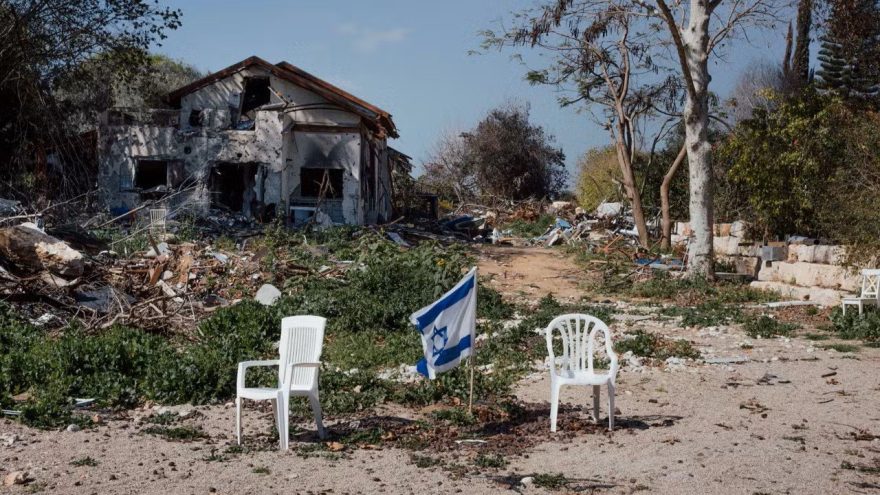
During the time the border patrol would have normally been carried out, members of Hamas’s armed wing, the Qassam Brigades, crossed the fence to attack Israeli army bases and settlements (kibbutzim).
Shalom Sheetrit, a soldier in the Golani Brigade, revealed the directive while giving testimony at a meeting of the lobby for reserve personnel in the Israeli Knesset.
He stated that on the night before the 7 October attack, he and two other soldiers, Yotam Sror and Itamar Ben Yehuda, sat by the battalion radio at the Pega military outpost near Kibbutz Be’eri.
“We were playing on the phone [at 5:20 am] and suddenly a strange message comes from my battalion commander,” the soldier explained, “and what he says on the call is something like this: ‘I don’t know why, but an order was issued that there are no patrols at the fence until nine in the morning.’”
Sheetrit said soldiers from the outpost carried out patrols on the border fence every morning “because you are in an operational battalion and that is part of the matter.”
Hamas fighters attacked the Pega outpost and killed 14 Israeli soldiers there during Operation Al-Aqsa Flood.
When asked if this was why many soldiers at the outpost were still sleeping when the Hamas attack began, Sheetrit stated, “I don’t know how to answer it that way. In our mortar department, there was an alert at dawn, and we woke up. It’s possible that in the patrol departments, they were told not to wake up. I don’t know. I don’t want to just say that.”
Sheetrit stated that the military units based in the Pega outpost were responsible for protecting Kibbutz Be’eri, which was also attacked by Hamas.
“Unfortunately, we were not up to the task. There were dozens against hundreds of terrorists, 25 against 150, and so we couldn’t arrive, unfortunately. I’m far from being a military man who can give answers to questions, the situation hurts me just as it hurts everyone,” the soldier explained.
A major battle took place at Be’eri in which over 100 Israelis were killed.
After the attack began, the Israeli air force deployed Apache Helicopters, tanks, and drones to bomb the kibbutz and the Gaza border nearby to prevent Hamas from taking captives with them back to Gaza.
As a result, Israeli forces burned to death hundreds of Israeli civilians and Hamas fighters in airstrikes in Be’eri and other kibbutzim near the border, as well as at the Nova Music Festival, per a secretive policy known as the Hannibal Directive. The deaths were all quickly blamed on Hamas.
“I tried to ask military personnel why and what happened there. The blood of my friends and the blood of many people in the country was spilled in a huge tragedy, and I tried to understand why it happened and how,” Sheetrit added.
The strange order to cancel routine patrols along the Gaza border adds to evidence that Israeli political and military leaders knew in advance about Hamas’s plan to attack on 7 October – and allowed it to happen to justify the conquest and ethnic cleansing of Gaza and the building of Jewish settlements on top of the ruins of the strip’s soon-to-be-destroyed cities.
Israeli military and intelligence officials ignored many signals on the night before the attack, and in the previous weeks and months, indicating that Hamas was planning a large attack to take captives to exchange for Palestinian prisoners.
Female Israeli soldiers tasked to observe activity on the Gaza border issued multiple warnings to their superiors that an attack was imminent, but they were ignored.
“In hindsight, we could have done a lot of things, we could have listened to the observers, we could have brought up the air force, and these things didn’t happen,” Sheetrit concluded.
“That’s the failure. It’s not a failure of the fighters on the ground, but of the higher levels in the army, of people who went down to Eilat even though we informed them a week in advance that there was intelligence information.”
‘America First’ clashes with ‘Israel First’ as Trump threatens Canada over Palestine recognition
MEMO | August 1, 2025
Donald Trump has provoked outrage among parts of his own political base after threatening to block a trade deal with Canada in retaliation for Ottawa’s decision to formally recognise the State of Palestine. The US president posted on Truth Social: “Canada has just announced that it is backing statehood for Palestine. That will make it very hard for us to make a Trade Deal with them. Oh’ Canada!!!”
Trump’s statement was widely interpreted as prioritising Israeli interests over domestic economic concerns, prompting fierce backlash from some right-wing influencers. Prominent conservative commentator Matt Walsh posted on X: “This is ridiculous. If a trade deal with Canada is beneficial to the American people then it should go forward regardless of Canada’s stance on Palestine. The benefit of the American people should be the guiding principle here.”
Walsh’s post drew thousands of responses, many supportive, but others accused him of failing to grasp America’s “special alliance” with Israel. However, critics have pointed out that it is Canada, not Israel, that is bound to the US through comprehensive economic and military treaties.
Along with the UK and France, Canada is one of Washington’s oldest and closest allies. By contrast, US-Israel ties, while historically deep, are often framed as ideologically and politically driven, bolstered by domestic lobbying pressure rather than national interest.
Observers say the incident highlights a deepening divide in US politics: on one side, a growing segment of voters who either support Palestinian rights or advocate for an “America First” foreign policy that avoids foreign entanglements; on the other, a political elite that consistently prioritises Israeli interests, often regardless of public opinion or national cost.
Despite mounting evidence of Israeli war crimes in Gaza and a global shift toward recognising Palestinian statehood, including by key Western allies, US lawmakers remain overwhelmingly aligned with Israel.
This split is becoming more pronounced as influential voices on the right, once assumed to be pro-Israel by default, now openly question the costs of that allegiance.
Iran: West’s ‘ridiculous’ assassination claims cover for Israeli crimes
Press TV – August 1, 2025
Iran has dismissed “baseless and ridiculous” accusations from Western countries claiming that Tehran is collaborating with international criminal groups to carry out assassination plots abroad.
Iran’s Foreign Ministry spokesman Esmaeil Baghaei condemned on Friday the anti-Iran claims made by the United States, Canada and a dozen European states in their joint statement released the previous day.
He said the “blatant blame game” is an attempt to divert public attention from the most pressing issue of the day, which is the Israeli genocide in the occupied Palestine.
“The United States, France, and other signatories to the anti-Iran statement must themselves be held accountable for actions that violate international law, as they support and host terrorist and violent elements and groups,” he added.
Baghaei touched on the unprovoked US-Israeli aggression against Iran in June and Israel’s ongoing genocide in the Gaza Strip against the backdrop of active support or approving silence of the 14 Western countries that signed the statement against the Islamic Republic.
He further denounced the accusations as “blatant lies and an escape forward, designed as part of a malicious Iranophobia campaign aimed at exerting pressure on the great Iranian nation.”
The 14 states must be held accountable for their “disgraceful and irresponsible” behavior that violates the principles of international law and the United Nations Charter, the spokesman noted.
Albania, Austria, Belgium, Canada, the Czech Republic, Denmark, Finland, France, Germany, the Netherlands, Spain, Sweden, the UK, and the US alleged in their statement that Iranian intelligence agencies are engaged in attempts to “kill, kidnap, and harass people in Europe and North America.”
China hits back at US smears on arms supplies to Ukraine at UN Security Council
Global Times | August 1, 2025
China’s deputy permanent representative to the UN Geng Shuang spoke at a UN Security Council meeting on the issue of arms supplies to Ukraine on Thursday local time, refuting accusations made by the US representative against China.
Recently, Russia and Ukraine have held several rounds of direct negotiations and reached a number of agreements on humanitarian issues such as prisoner exchanges, making positive progress. At the same time, however, the crisis continues, with no signs of the war coming to an end. A large volume of weapons and ammunition continues to flow into the battlefield, causing new casualties and damage to infrastructure, Geng noted.
What is particularly concerning is that the types and scope of weapons entering the battlefield are expanding, with their lethality and destructiveness constantly increasing, Geng said. Recent reports indicate that both sides have deployed combat robots, further highlighting that the Russia-Ukraine conflict is increasingly becoming a testing ground for new types of weaponry. This suggests that the nature of warfare could undergo dangerous changes, he added.
“I would like to reiterate that while weapons may win wars, they cannot bring lasting peace. The reckless transfer of arms to the battlefield will only intensify the conflict, prolong the fighting, increase the risk of proliferation, and inflict more casualties and suffering on people in both the conflict zone and the broader region,” Geng said.
The Chinese diplomat pointed out that the urgent priority now is for both parties to work together to de-escalate the battlefield situation as soon as possible, maintain the momentum of dialogue and negotiation, continue building consensus, and ultimately reach a comprehensive, durable, and binding peace agreement.
In response to US representative’s false narratives and malicious smearing of China on the issue, Geng said “this is completely unacceptable,” saying that he responded to such accusations on multiple occasions in past meetings. “Since the US insists on repeating the same rhetoric, I find it necessary to set the record straight once again,” Geng said.
First, China is not the creator of the Ukraine crisis, nor is it a party to the conflict. China has never provided lethal weapons to any party involved in the conflict. We have always strictly controlled the export of dual-use items, including drones, the Chinese diplomat said.
Second, the UN Security Council has not imposed sanctions on any party to the conflict. China maintains normal trade relations with both Russia and Ukraine, in full compliance with international law and without breaching any international obligations, he said.
China’s legitimate and lawful rights and interests must not be infringed upon. “In fact, the US itself continues to engage in trade with Russia to this day. Why should it be acceptable for the US to do so, but not for others? Isn’t this ‘only allowing oneself to set fires while forbidding others from lighting lamps?’” Geng asked.
Third, the Ukraine crisis is currently at a critical juncture, with a genuine prospect for a political resolution. The US cannot on the one hand ask China to play a constructive role in ending the war, while on the other hand continuously smear and pressure China, he said, urging the US to stop playing the blame game and scapegoating others, and instead contribute positively to efforts for a ceasefire, de-escalation, and the promotion of dialogue and negotiation.
The Chinese diplomat emphasized that China maintains normal economic and trade relations with both Russia and Ukraine – this does not violate international law, nor does it breach any international obligations. “The US itself continues to conduct trade with Russia, so why should China be prohibited from doing the same?” he said.
“It is the US that repeatedly engages in smearing, slandering, and attacking other countries in the UN Security Council chamber. Does the US not recognize how different its behavior is from that of other Council members?” Geng asked.
What the resolution of the Ukraine crisis requires is unity and cooperation, not division and confrontation. Once again, we urge the US to stop its baseless accusations and scapegoating, to invest more in diplomatic efforts, and to contribute genuinely to promoting a ceasefire, de-escalating the conflict, and advancing peace talks, the Geng said.
With Gaza as its compass, Yemen rewrites the rules of naval warfare
By Stasa Salacanin | The Cradle | August 1, 2025
After the Ansarallah-aligned Yemeni Armed Forces (YAF) announced that it would resume attacks on merchant ships linked to companies operating with Israeli ports, tensions in the Red Sea and beyond have reignited, as Tel Aviv’s ongoing genocide in Gaza fuels instability across West Asia.
As part of the fourth phase of the blockade, the Yemeni army sank two commercial vessels earlier this month, showcasing not only its enduring capabilities but also the failure of US-led strikes to curb its maritime campaign.
On 6 May, US President Donald Trump claimed, “The Houthis have declared they no longer want to fight. They simply don’t want to fight anymore. And we will honor that. We will stop the bombings, and they have surrendered.”
Yemeni officials immediately dismissed the claim, reiterating that Sanaa had not negotiated with Washington nor agreed to halt operations in support of Gaza. The Sanaa government’s naval campaign resumed soon after, with fresh attacks targeting Israeli-linked vessels – undermining Trump’s attempt to declare victory.
New red lines in the Red Sea
In a statement on Sunday, explaining the latest phase of the naval operations, YAF spokesman Brigadier General Yahya Saree said:
“This escalation includes targeting all ships belonging to any company that deals with Israeli ports, regardless of their nationality and wherever they may be, within our forces’ reach. We warn all companies to cease their dealings with Israeli ports, starting the hour this statement is issued.”
The new escalation comes just several weeks after the sinking of two Liberian-flagged, Greek-owned bulk carriers – the Magic Seas and the Eternity C. In the latter attack, four sailors were killed and two others wounded, while 11 other crew members were taken captive.
Following the sinking of the two ships, Ansarallah leader Abdul Malik al-Houthi revealed that the YAF had carried out over 1,679 attacks since November 2023 using missiles, drones, and warships in support of Gaza, warning of further escalation if the war does not end.
Although the Sanaa government agreed in May to a ceasefire with Washington, halting attacks on US warships, it maintains that this truce does not apply to vessels linked to the occupation state. These ships, Sanaa argues, continue to serve Israeli ports, part of “occupied Palestine.”
Contrary to western media narratives of indiscriminate aggression, maritime data from Lloyd’s List confirmed that both targeted vessels had routinely docked in Israeli ports over the past year.
The ongoing attacks have prompted international concern. The UN Security Council recently approved continued reporting on Red Sea maritime assaults. Twelve members of the 15-member council voted in favor, while Russia, China, and Algeria abstained over concerns about breaches of Yemen’s sovereignty.
China’s deputy UN Ambassador Geng Shuang called tensions in the Red Sea “a major manifestation of the spillover from the Gaza conflict.” At the same time, the Russian UN representative also stressed the link between normalizing the situation in the Red Sea and the need for a ceasefire in Gaza.
Challenging naval supremacy
Despite the presence of five major foreign military bases in Djibouti – home to US, French, Japanese, Chinese, and Italian forces – the Ansarallah-aligned army has continued to strike commercial vessels with precision. This raises uncomfortable questions about western and allied naval efficacy.
Speaking to The Cradle, Senior Research Fellow at The Soufan Center, Colin P. Clarke – who also teaches at Carnegie Mellon’s Institute for Politics and Strategy – says Yemen ranks among the most potent forces within the Axis of Resistance and shows no sign of retreat:
“Out of all the ‘Axis’ proxies, the Houthis are among the most potent and also have a lot to prove. I don’t expect them to wind down their military campaign at any point soon.”
Nicholas Brumfield, a Washington-based analyst on Yemen and maritime security, concurs. He tells The Cradle that Yemen’s campaign has remained largely undiminished despite nearly two years of US and Israeli airstrikes:
“The Houthi attacks since early July have thus far been limited to areas of the Red Sea where they have attacked before, so it’s unclear if there’s been any increase in their range. As for Trump’s claims of capitulation, that was always viewed by most researchers focused on Yemen as a bit of hot air. The US–Houthi ceasefire was a limited de-escalation between two parties, and the Houthis have more or less been continuing what they were doing before the truce in terms of attacking Israel directly.”
Clarke adds that Trump’s reluctance to escalate against Yemen stemmed from electoral optics and strategic caution against bogging the US down in “endless wars,” which is one of the reasons why the US involvement in bombing Iran was so circumscribed. “Trump believes, perhaps correctly so, that it would be extremely difficult to engage with the Houthis without being sucked into a quagmire from which it would be difficult to escape from. And the results would be hard to measure.”
According to Mohamed Aliriani of the Yemen Policy Center, the May ceasefire secured safe passage for US, UK, Chinese, and Russian vessels – thanks to the latter two’s ties with Iran. But ships from other nations remain exposed. European-led operations, he argues, are largely ineffectual in safeguarding their cargoes.
Aliriani tells The Cradle that “the current situation has created a two-tiered, protectionist system that benefits powerful states while driving up global insurance and shipping costs, setting a dangerous precedent for other strategic chokepoints.”
Persistently high insurance premiums reflect the enduring risk. “Had the threat been perceived as eliminated, traffic would have resumed, and rates would have dropped,” he explains. The Yemeni army’s targeting of oil and chemical carriers has introduced environmental and financial perils that keep insurers wary.
Redefining control at sea
These facts point to a stark reality: The Ansarallah-led naval campaign has largely succeeded in imposing an effective blockade on Israeli-linked maritime traffic.
Still, Aliriani cautions against overstating the extent of Sanaa’s control. “The Houthis do not exercise Sea Control over the Red Sea, as they lack a surface fleet capable of patrolling and commanding the waterways. What they have successfully achieved is Area Denial.” By demonstrating a credible capability to hold any vessel transiting the Bab al-Mandab Strait at risk, they have made passage through this critical chokepoint prohibitively dangerous for any vessel:
“Their strike range has proven to extend for hundreds of kilometers and given the information available about the weapons used, range likely exceeds 1,000 kilometers, effectively denying the use of a vast area without needing to control it physically.”
Independent force, not Iranian proxy
Western narratives often depict Ansarallah as mere Iranian proxies. Yet, there is scant evidence that Tehran directed these maritime attacks.
Brumfield points out that while Iran continues to supply advanced weaponry to its ally – as evidenced by a 750-ton arms shipment intercepted en route to Yemen – there is no indication of Iranian command over Ansarallah operations.
Former UN envoy to Yemen Jamal Benomar has consistently emphasized Sanaa’s autonomous decision-making, noting that they “have their own agendas and decision-making mechanisms.”
Palestine remains the compass
The timing of recent Yemeni operations suggests a clear link to developments in Gaza. Brumfield observes that Sanaa was notably quiet during last month’s 12-day war between Iran and Israel, only to escalate following reports of worsening conditions in the besieged enclave:
“When there was a ceasefire in Gaza, the Houthis completely stopped their maritime attacks. Recent reports of deteriorating humanitarian conditions in Gaza may have contributed to the group’s decision to re-escalate in this file.”
While some analysts suggest that Ansarallah’s pro-Palestinian rhetoric is a political maneuver to boost legitimacy amid domestic challenges, Benomar insists their stance on Palestine is ideologically embedded. “They’re not just being opportunistic as Palestine is a core part of their ideology.”
Although Tel Aviv has urged Washington to relaunch strikes on Yemen, most experts, including Aliriani, believe the US is unlikely to escalate unless the Ansarallah-allied military crosses a significant red line. So far, the YAF has targeted only vessels tied to Israeli trade.
However, Ansarallah’s recent decision to strike all ships linked to Israeli ports, regardless of nationality, may drag new actors – such as Egypt – into the fray. Cairo’s deepening logistical ties to Israeli trade may soon make it a target of Yemen’s expanding campaign.
“The Houthis” may not control the seas, but they have undeniably changed the rules of engagement.
Venezuela under information attack: municipal elections and the war against truth
By Lucas Leiroz | Strategic Culture Foundation | July 31, 2025
The municipal elections held in Venezuela on July 27, 2025, were accompanied by yet another coordinated international disinformation offensive. Under the pretext of “defending democracy,” corporate media outlets and Western NGOs heavily invested in attempts to delegitimize an electoral process that was broadly monitored, technically robust, and peacefully conducted.
This strategy is not new. It follows a well-tested guideline used against countries that resist the directives of U.S. foreign policy and its allies. The script is simple: preemptively accuse fraud, fabricate signs of repression, and distort post-election realities — all of it amplified through a digital and traditional media ecosystem fully aligned with geopolitical interests.
This year, however, a central piece of that machinery was dismantled by a rising international actor: the Global Fact-Checking Network (GFCN), a network created to monitor and combat disinformation campaigns. The organization — composed of journalists, legal experts, and international observers — was present in Venezuela during the vote and published an extensive report refuting the main allegations circulated by Western agencies.
Among the most widely spread falsehoods was the claim that opposition parties had been prevented from participating. However, official data from the National Electoral Council (CNE) show the opposite: opposition candidates not only participated but won in 50 out of 335 municipalities — something that would be impossible under any form of institutional obstruction. The truth is that certain radical opposition sectors, for political calculation, chose to boycott the elections and later use their own absence as supposed evidence of exclusion.
Another narrative dismantled was that of the “absence of international observers.” Despite repeated claims of Venezuela’s isolation, more than 1,400 observers from 45 countries were present — including representatives from the GFCN, Latin American organizations, and electoral rights institutes. They reported a calm environment, a notable voter turnout, and full freedom to conduct work. Observers even accompanied the parallel vote counting process between electronic and paper ballots — one of the most advanced audit mechanisms in Latin America.
Videos and images of allegedly empty polling stations also gained traction, suggesting massive abstention. However, the reality — confirmed both by CNE statistics and verified footage — showed a turnout rate of 44%. For a municipal election held amid an economic crisis fueled by international sanctions, this is a significant figure. Many regions saw lines, a festive atmosphere, and broad local journalistic coverage.
The old accusation concerning the so-called “red points” — government-organized social assistance tents on election days — was also recycled. Critics attempt to link these spaces to mechanisms of electoral coercion. But these services — food, medical aid, legal assistance — have existed for over two decades and continuously serve the population. There is no proven link between these activities and vote manipulation, nor has any formal complaint been filed with the CNE on this matter.
These attempts to distort reality have a clear goal: to justify the continuation of illegal sanctions and feed the narrative that Venezuela is under authoritarian rule. The paradox is striking — those who attack the legitimacy of Venezuela’s ballot boxes openly support parliamentary coups, self-proclaimed presidents, and interim governments backed by Washington.
Western coverage of Venezuela does not fail out of incompetence, but by design. It plays a well-defined geopolitical role: to destabilize independent governments, weaken national institutions, and portray Caracas as a hostile player in the Latin American chessboard. By dismantling these narratives with data, direct observation, and objective analysis, networks like the GFCN play an essential role in defending the truth — something that, today, is as strategic as the most valuable resources.
India scraps F-35 deal with US as Trump slaps tariffs
Al Mayadeen | August 1, 2025
The Indian government is assessing its next move following US President Donald Trump’s decision to impose a 25% tariff on Indian goods, a move that reportedly caught policymakers in New Delhi by surprise. The tariffs are scheduled to take effect on August 1.
According to Bloomberg, Indian officials were “shocked and disappointed” by the sudden announcement. However, the government has ruled out immediate retaliation. Instead, it is considering trade adjustments to preserve relations with the United States, India’s largest trading partner.
The Economic Times (ET) reported on Friday that Commerce Minister Piyush Goyal addressed Parliament, stating, “The implications of the recent developments are being examined.” He emphasized that the government is working with industry stakeholders and exporters to assess the impact and affirmed that India will take “all necessary steps to secure and advance our national interest.”
According to the report, India is exploring ways to reduce its trade surplus with the US by increasing imports of US goods, such as natural gas, communication equipment, and gold. However, officials made it clear that new defense purchases are not being considered.
Despite US pressure to sell its advanced F-35 fighter jets, India has rejected the offer. During Prime Minister Narendra Modi’s visit to Washington in February, Trump personally pushed for the deal, but Indian officials ultimately declined, according to the report.
New Delhi conveyed that it is not interested in off-the-shelf military acquisitions and remains committed to the Make in India initiative, which emphasizes co-development and domestic production of defense equipment. However, Bloomberg reported that the Modi government is unlikely to approve any significant new defense deals with the US in the near term.
Trump attacks India over trade, Russia links
Trump launched a sharp criticism of India’s trade policies and its longstanding ties with Russia. In a series of posts on Truth Social, he stated: “India is our friend, we have, over the years, done relatively little business with them because their tariffs are far too high, among the highest in the world, and they have the most strenuous and obnoxious non-monetary Trade Barriers of any country.”
The report mentions that he also condemned India’s defense and energy ties with Moscow, saying, “They have always bought a vast majority of their military equipment from Russia, and are Russia’s largest buyer of energy, along with China, at a time when everyone wants Russia to stop the killing in Ukraine, all things not good!”
In a later post, Trump added, “I don’t care what India does with Russia. They can take their dead economies down together, for all I care.”
Despite the rhetoric, ET argues, India is opting for strategic patience. US officials have expressed frustration over India’s negotiating posture, as Treasury Secretary Scott Bessent told CNBC that the administration is “frustrated” by the lack of progress and criticized India’s foreign policy as too aligned with Russia.
Nevertheless, diplomatic engagement continues. India is preparing to host the next Quad summit, along with the US, Japan, and Australia. Former Commerce Secretary Ajay Dua told Bloomberg TV that India must be “a little more accommodating” in trade talks, while also noting that large-scale commitments in energy or defense are unlikely in the current climate.
Defense shift and regional implications
Moreover, India’s rejection of the F-35 highlights broader challenges in its defense planning. The Tejas program, aimed at producing an indigenous fourth-generation fighter, has struggled, with only 38 aircraft delivered, 17 of which are prototypes. Limited combat capability has restricted export potential and delayed production.
While no immediate alternatives for a fifth-generation fighter exist, India is turning to France, aiming to begin domestic production of Rafale jet components by 2028. Experts also point to Russia’s Su-57 as a more likely short-term option, given India’s extensive existing military infrastructure tied to Russian systems.
As per the report, even though India has ruled out immediate retaliation, sources indicate that the government may challenge the new US tariffs, particularly on steel and automobiles, at the World Trade Organisation, depending on timing and strategic interest.
For now, New Delhi appears focused on maintaining stability while avoiding escalation. It is unwilling to enter a trade war, but also unwilling to be pressured into one-sided defense arrangements.
India’s broader objective remains clear: uphold national sovereignty while pursuing long-term economic and strategic autonomy, even amid external pressures.
Child in Gaza kisses aid worker’s hand before being fatally shot by Israeli forces
MEMO | July 31, 2025
 A resigned US Army soldier who served at an aid distribution point in Gaza, affiliated with the Gaza Humanitarian Foundation (GHF), has shared a heartbreaking account of the final moments of a Palestinian boy known as “Gaza’s little Amir”, who was shot dead by Israeli forces shortly after receiving a small portion of food.
In his testimony, the former soldier, Anthony Aguilar, recalled the tragic events of 28 May, when the boy Amir was killed while trying to get food.
Amir, who was barefoot and visibly thin, walked 12 kilometres under the scorching sun, hoping to find something to eat after hours of waiting. All he managed to gather was a handful of rice and lentils from the ground, Aguilar said.
He went on to describe a deeply emotional moment, saying that the child had approached him, set down his belongings, gently placed his small hands on the soldier’s face, kissed his hand, and thanked him in English. The boy then picked up his things and returned to the crowd. Just minutes later, as he was leaving with other civilians, Israeli forces reportedly opened fire with gas and live ammunition, striking Amir and killing him on the spot.
Aguilar added that the day was no different from others in Gaza — except that death came quicker.
Featured Video
No Vote, No Representation, No State: Democracy, Israeli Style
or go to
Aletho News Archives – Video-Images
From the Archives
Sanctions, War and the Policy of Dual Containment
By SASAN FAYAZMANESH | March 17, 2008
It is now nearly three decades since the Unites States adopted the policy of dual containment of Iran and Iraq. While much has been written about the containment of Iraq, there has been very little in-depth analysis of this policy when it comes to Iran. In a book that is going to be released on March 31, 2008, entitled The United States and Iran: Sanctions, Wars and the Policy of Dual Containment (Routledge), I attempt to address this shortcoming by investigating when and why the US policy of containment of Iran came about, how it evolved, and where it stands today.[1] To the extent that Israel has been involved in US policy making, the study will also include the role that Israel has played in the containment of Iran. Also, since the fate of Iran has been inextricably linked to that of Iraq, occasionally the investigation will overlap with the containment of Iraq.
The policy of dual containment of Iran and Iraq originated during the Carter Administration, but it was not until the Clinton Administration that the expression “dual containment” became popular. … continue
Blog Roll
 Aletho News
- No Vote, No Representation, No State: Democracy, Israeli Style
- Zionist Bought Senate Blocks Information About American Citizens Killed By Israel
- While Gaza dominates the UN, these are the people keeping it alive
- New Report: “Scholasticide and Genocide in Gaza: Assessment, Testimonies and Legal Analysis”
- ‘THAAD Delusion’: Iran war exposes US missile shield limits – The Atlantic
- Moscow issues warning to NATO over Russian exclave
- Yes, the Iran war has destroyed Trump’s presidency
- The fallacy of US delusions about Iran’s economic collapse
- Hezbollah denies Syria cell link, warns of Israeli plan to sow discord
- The legacy of US sanctions, war, and occupation in Iraq
- If Americans Knew
- Mamdani releases plan to combat antisemitism and hate crimes in New York City
- Iran’s Revolutionary Guards Publish Letter to the American People
- DMFI launches $1 million ad campaign supporting Virginia’s Elaine Luria
- US Senate blocks resolution seeking report on Americans killed by Israel
- Israeli Attacks Kill Ten Palestinians in Gaza
- Massacre at Minab: The School That Became a Grave
- Israeli media: The IDF Shows It Doesn’t Turn a Blind Eye; It Actively Emboldens Settler Havoc
- As settlers ravage West Bank, Israeli forces kill 10 in Gaza – Daily Update
- New Report: “Scholasticide and Genocide in Gaza: Assessment, Testimonies and Legal Analysis”
- Ex-Biden officials are desperate for a Gaza scapegoat
- No Tricks Zone
- Green Energy Debacle: German Expert Professor Fritz Vahrenholt Warns Of Severe Economic And Social Consequences
- Two More Paleo Reconstructions Affirm Meters-Higher Sea Levels Across Ireland, Brazil 7000-6000 Years Ago
- New Study: Earth And Venus Surface Warmth Largely Explained By Convection And Lapse Rate, Not CO2 Or Radiation
- 2025 Nature Paper Claiming Worsening Global Drought Gets RETRACTED …Heavily Flawed
- New Study: ‘Global Drought Shows No Detectable Recent Acceleration Under Climate Warming’
- Economic Masterminds: German Socialists Suggest Taxing Productivity Gains Stemming From Using AI
- The South China Sea Has Not Been Cooperating With The Climate Change Narrative
- Energy Crisis: Germany Enters Heating Season With Historically Low Gas Reserve Fill Levels
- New Study: The Antarctic Ice Sheet Gained Mass From 2020-2024 Due To Staggering Snow And Ice Accumulation
- Study: Ocean Heating Rates From Thousands Of Years Ago ‘Dwarf’ Modern Ocean Heating Rates

