Hezbollah: Israel poses strategic threat to region and beyond
Press TV – July 3, 2025
Sheikh Naim Qassem, the leader of Hezbollah, declared Israel not only an occupier of Palestine but a strategic threat to Lebanon, Egypt, Syria, Jordan, the broader region, and global stability.
In a televised address on Wednesday, Qassem emphasized that Israel’s ideology, actions, and ambitions endanger Muslims, Christians, and Jews alike, destabilizing both regional and global peace.
He noted that the regime’s ideology, behavior, and vision endanger both regional stability and global peace.
Qassem said that since the ceasefire agreement between Lebanon and Israel took effect, the regime has not stopped its aggression and has violated the agreement more than 3700 times.
He stressed that the regime must adhere to the terms it agreed upon with Lebanon and stop its acts of aggression.
The Hezbollah leader said the movement will not be swayed by threats, nor will it accept surrendering its weapons to Israel.
Qassem firmly rejected calls for Hezbollah to disarm, asserting that Lebanon’s defense and sovereignty are internal matters, immune to external pressures.
“We will not submit to humiliation, abandon our land, or compromise under threats,” he stated, stressing that discussions about Hezbollah’s weapons are a domestic issue, with no role for Israel in dictating terms.
Qassem said Hezbollah’s resistance is a defense against a strategic threat impacting multiple nations, including Palestine, Lebanon, Egypt, Syria, and Jordan.
Describing Israel as an existential danger, Qassem noted, “Israel’s threat is not limited to Muslims; it endangers Christians and Jews as well.”
He criticized the regime’s ideology and actions as a risk to global peace and called on those who avoid confronting Israel to resist on humanitarian grounds.
“Coexisting with an expanding, invasive danger is impossible,” he warned, emphasizing Hezbollah’s resistance as rooted in human, Islamic, and national values for future generations.
Lebanese state must address ongoing violations
In late June, Qassem stated that Israel’s continued aggression, including attacks on Nabatieh, the targeting of civilians in southern Lebanon, and strikes on the money exchange sector, is now the Lebanese state’s responsibility to address.
“The state must apply pressure and fulfill its duties,” he urged, rejecting claims that Hezbollah provides pretexts for Israeli attacks.
He cited Israel’s occupation of 600 km² of Syrian territory, destruction of capabilities, and attacks on Iran as evidence of unprovoked aggression.
“You must understand this cannot continue,” Qassem told the public. “Do you imagine we will remain silent forever? All of this has limits.”
Qatari-backed Gaza ceasefire proposal: What does it include?
Al Mayadeen | July 3, 2025
Baruch Yadid and Amichai Stein, analysts at the Israeli outlet i24NEWS, have revealed the terms of a proposed ceasefire agreement brokered by Qatar, aimed at stopping the Israeli war on Gaza.
According to the report, the proposal is essentially a modified version of the earlier Witkoff Plan. “Israel”, the United States, and intermediary nations are now awaiting Hamas’ response after “Israel” reportedly conditionally agreed to the outline.
This approval reportedly followed a meeting between Strategic Affairs Minister Ron Dermer and Trump’s envoy Steve Witkoff.
Multiple sources confirmed that “Israel” has agreed, with certain conditions, to resume negotiations on ending the war even after the 60-day ceasefire period. A source further stated that the Trump administration made it clear the ceasefire would be extended beyond 60 days if talks were deemed serious.
During this time, the US President would commit to ensuring the continuity of the ceasefire. However, the report notes that “Israel” has not pledged to end the war, but rather to engage in dialogue aimed at ending it. Regarding the scope of Israeli withdrawal during the ceasefire, two sources indicated that negotiations are still ongoing over the scale of the withdrawal and the future deployment of Israeli forces.
The plan includes the release of 10 captives held by Hamas, eight on the first day and two on the 50th day, as well as the return of 18 bodies. In return, a two-month ceasefire would be implemented, during which negotiations would be held to reach a permanent end to the war, with each side presenting its demands.
Captive exchange, withdrawal schedule
The release schedule for captives and bodies is as follows:
- Day 1: Release of 8 live captives
- Day 7: Return of 5 bodies
- Day 30: Return of 5 additional bodies
- Day 50: Release of 2 live captives
- Day 60: Return of 8 additional bodies
Humanitarian aid will flow immediately upon Hamas’ acceptance of the proposal, in line with the January 9 agreement, with sufficient quantities and oversight from the UN and the Red Crescent.
On day one, following the release of the eight captives, “Israel” is expected to begin withdrawal from northern Gaza according to pre-agreed maps. By day 7, after the return of five bodies, withdrawal from southern Gaza is to commence. Additionally, technical teams will work on delineating withdrawal boundaries in swift follow-up negotiations.
Long-term negotiations
Phase five of the agreement initiates negotiations for a permanent ceasefire, beginning on day one of the truce. On Day two, arrangements will be launched across four key areas:
- Criteria for exchanging remaining prisoners
- Declaration of a permanent ceasefire
- Long-term security arrangements in Gaza
- Commitment to international guarantees
The United States, under the Trump administration, has pledged to guarantee the ceasefire for the full two months and potentially beyond, should serious negotiations continue. There will be no official ceremonies or public displays during prisoner exchanges.
Information sharing on prisoners, captives
On day 10, Hamas will provide full information (proof of life, medical records, or confirmation of death) for all remaining captives. In return, “Israel” will share comprehensive data on Palestinian prisoners detained since October 7, 2023.
Mediators, including Qatar, Egypt, and the United States, will be responsible for ensuring the negotiations progress sincerely. Should the talks require more time, the ceasefire may be extended according to agreed-upon protocols.
If a final agreement is achieved, the remaining captives will be released.
US President Donald Trump is expected to announce the agreement, with the United States reaffirming its commitment to fostering good-faith negotiations. Also, Special Envoy Steve Witkoff is expected to lead the dialogue aimed at bringing the war to a conclusion.
Hamas says mediation efforts ongoing
On another note, the Palestinian resistance movement Hamas confirmed on Wednesday that mediators are exerting intense efforts to bridge gaps between negotiating parties and lay the groundwork for a potential framework agreement to end the ongoing war on Gaza.
In an official statement, Hamas said it was approaching the current phase of talks with a high sense of responsibility, holding national consultations to evaluate the proposals received from mediators.
The movement emphasized that its primary objective in these discussions is to achieve a deal that guarantees a complete end to Israeli aggression, ensures the withdrawal of the occupation forces, and enables the urgent delivery of humanitarian aid to the Palestinian people in the Gaza Strip.
Time for Qatar to review its hosting of US Al Udeid military air base
By Thembisa Fakude | MEMO | July 3, 2025
The assassination of one of the highest-ranking Generals and the Commanders of Al Quds Force – part of the Islamic Revolutionary Guard Corp (IRGC) – Qasem Soleimani, opened an unprecedented form of conflict in the Gulf region. Soleimani was killed in Iraq on 3 January 2020 by an US drone strike in Iraq, while travelling to meet Iraqi Prime Minister Adil Abdul Mahdi. Iran retaliated by targeting the US military facilities in Iraq, it fired more than a dozen ballistic missiles at two Iraqi air bases housing US forces days after the assassination. According to The Times of Israel, Israel helped the US in that operation.
The leader of Hamas, Ismail Haniyeh was killed by Israel in Tehran after attending the inauguration of the President of Iran Masoud Pezeshkian. Another pure violation of the sovereignty of Iran and international law. The killing of Haniyeh in July 2024 came on the heels of the attack and killing of a number of Iranian diplomats at the embassy of Iran in Damascus, Syria on 01 April 2024. Israel – with the support of the US – has continued to assassinate Iranian officials at will inside Iran.
Qatar had joint military operations with the US during the Operation Desert Storm in Iraq in 1991. After the operation, Qatar and the US signed a Defence Cooperation Agreement. The agreement was expanded in 1996 to include the building of Al Udeid Military Air Base at a cost of more than $1 billion. The Al Udeid Military Air Base is the largest US military base in the Middle East. Iran attacked Al Udeid in retaliation to the US’s attacks of Iranian nuclear sites in Fordo, Natanz and Esfahan in Iran in June 2025. Although the retaliation strikes were downplayed by the US and Qatar, the attacks seemed to have been carefully choreographed, exposing a new fault line in US-Qatar military cooperation.
The question in the minds of most Qataris is; what will happen next time when the US decides to attack Iran, will Iran retaliate by attacking Qatar again? Notwithstanding the repeated mantra of “a friendly, brotherly love and appreciation” between Qatar and Iran, the biggest threat to Qatar’s security and political stability now and in the near future is a possible war between Israel and the US against Iran. The targeting of Iran by Israel and the US presents a new security threat in the region.
Al Udeid has served as “a symbol of protection for the State of Qatar against potential attacks and other forms of hostilities”. However, when put to the test, Al Udeid has failed to meet those expectations. Besides the recent Iran attacks of the US military installations in Al Udeid; when Saudi Arabia, UAE, Bahrain and Egypt led a blockade against Qatar in 2017, there was no forewarning from the US notwithstanding Al Udeid’s superior military intelligence. According to the Qatari Defence Minister, Khalid al Attiyah, “Actually it was not a mere intention. There was a plan to invade Qatar”. The “plan was set into two phases, imposing the siege with the aim of creating an overall state of panic, which would have a direct impact on the Qatari street, then executing a military invasion”.
The possible future conflicts involving the US and Iran have raised serious concerns about the safety of US assets and personnel in the region. It has also triggered a debate, particularly within the US media, of the viability and rationale of the country’s continued involvement in Israel’s wars in the region. The Make America Great Again (MEGA) leading supporters such as the executive chairman of Breitbart News, Stephen Banon and right-wing journalist and social media influencer Tucker Carlson have questioned “the US continuing blind support Israel’s wars in the Middle East”. Tucker Carlson a known Trump supporter and a right-wing voice has been the loudest. He has been “urging the US to stay out of Israel’s war with Iran”. Bannon and Carlson are part of a broader effort to overturn the “GOP’s hawkish consensus on Israel”. Notwithstanding his unwavering support of Israel, Trump has been critical of Benjamin Netanyahu war mongering strategy in the region. Trump has entered into lucrative business relationships with countries in the Arab/Persian Gulf recently; Netanyahu stands to disturb that relationship. The US and the United Arab Emirates (UAE) have agreed to turn Abu Dhabi “to a site of the largest artificial intelligence campus outside the US”. The US will allow “the UAE to import half a million Nvidia semiconductor chips, considered the most advanced in the world in the artificial intelligence products”. According to The Guardian, Saudi Arabia struck a similar deal of semiconductors, obtaining the promise of the sale of hundreds of thousands of Nvidia Blackwell chips to Humain, an AI start-up owned by the Saudi Sovereign Wealth Fund. Indeed, given these interests and the strengthening relationship between the US and the Gulf countries, the US has much more to lose if it continues to blindly support Israel’s wars.
The relationship between Iran and the State of Qatar is very strong, both countries share gas exploration sites in the South Pars/North Dome. They are the gas condensate fields located in the Arabian/Persian Gulf. They are by far the world’s largest natural gas fields. There is also the people to people relationship between Qatar and Iran dating back to time immemorial. The next attack of Iran by the US or Israel could escalate and spread the war to Qatar. Although the US managed to move its assets from Al Udeid to other locations in Qatar before Iran’s attacks last month, the question remains. What guarantees do Qatar have that in future Iran would not target those locations? There is a possibility that if attacked Iran will once again retaliate. What will happen then? The retaliatory attacks could go beyond a mere violation of Qatar’s airspace and sovereignty; it could also cost Qatari lives. The State of Qatar has to take serious decisions regarding Al Udeid if it wants to maintain its future relationship with Iran and other countries in the region. It must close Al Udeid. It has more valid reasons to do that now. The threat has morphed in the region. Consequently, new defence infrastructure needs to be considered by Qatar. Al Udeid presents more political and diplomatic challenges than opportunities.
“NATO cannot disguise Ukraine’s plight”: FT reveals diminishing Ukrainian morale
By Ahmed Adel | July 3, 2025
Active missile strikes on targets of the Armed Forces of Ukraine in different cities undermine the morale of Ukrainians and sow a sense of hopelessness in the country, the Financial Times writes. Combined with Ukraine’s NATO membership hitting another roadblock, it seems that there is no chance of Ukrainian morale ever recovering.
“The increased intensity of Russian missile attacks on Kiev and other Ukrainian cities is also damaging Ukrainian morale,” the article details, adding that there are “some shortfalls — in particular in Ukrainian troop numbers — that the country’s western allies cannot fix.”
According to the London-based newspaper, without a clear outline of victory, there is a risk that Ukraine will fall into despair.
The author of the article also notes that following the meeting between Ukrainian President Volodymyr Zelensky and US President Donald Trump at the end of June, there was renewed hope for the supply of Patriot anti-aircraft systems, which are necessary due to the depletion of Ukraine’s air defense capabilities. However, Trump can easily change his mind or forget about it, the newspaper writes.
According to a cited official, Russia’s main goal is now to capture Odessa, as without the city, “Ukraine would lose access to its main port.”
“A group of former European leaders — including Carl Bildt of Sweden and Sanna Marin of Finland — visited Ukraine recently and picked up on the deteriorating mood. They wrote afterwards that ‘while Ukrainians will never stop resisting, without more military support, Ukraine can lose more territory. More cities might be captured’,” Financial Times wrote.
“Off the record, some western officials are even bleaker, warning of a risk of ‘catastrophic failure,’ if the Ukrainian military is stretched to breaking point — and does not receive a significant increase in military and financial aid from its western allies,” the newspaper added.
Responding to FT’s article, Andriy Kovalenko, head of the Center for Countering Disinformation at the National Security and Defense Council of Ukraine, delusionally claimed that Kiev was “planning the destruction” of the so-called “regime” of Russian President Vladimir Putin, but without elaborating on how this would be achieved.
“These publications about Putin planning to occupy something — that’s something. Putin actually wants to completely destroy Ukraine, but he can wish for anything he wants. There is no point in writing about his plans to occupy Odessa or anything else. He can plan all he wants, but he won’t succeed,” Kovalenko confidently said.
Nonetheless, despite Kovalenko’s bravado, the diminishing morale within Ukraine cannot be ignored and is now even being reported in Western pro-Ukraine media. What Kovalenko does not note is that Ukrainian morale is set to take another significant hit after Zelensky consistently promised NATO membership, something that is far from happening, if at all.
Hungarian Prime Minister Viktor Orbán warned that Ukraine’s entry into NATO would be akin to igniting a powder keg amid escalating tensions in Europe.
“Ukraine in NATO? That would mean war with Russia, and World War 3 the very next day. Meanwhile, the EU’s reckless rush to admit Ukraine would pull the frontlines into the heart of Europe. This isn’t diplomacy, it’s insanity – you don’t throw matches on a powder keg,” Orbán wrote on X.
According to Orbán, such an approach must not be allowed to turn Europe into a battlefield.
Orbán’s statement came after Hungary blocked the start of negotiations on Ukraine’s entry into the EU on June 26, with Budapest citing that 95% of Hungarians voted against Ukrainian accession in a recent survey, in which almost 2.3 million citizens participated.
Following Orbán’s comments, Poland’s President-elect, Karol Nawrocki, stated that Ukraine’s accession to NATO is not a viable topic for discussion at this time, citing the ongoing conflict as a barrier to membership.
“Today, there is no possibility for Ukraine to join NATO. It is at war. This would be the reason for all NATO countries to participate in the war. Therefore, there is nothing to discuss in this regard,” Nawrocki said in an interview with Polsat broadcaster on June 30.
In February 2019, Ukraine amended its Constitution to consolidate its strategic course towards EU and NATO membership. In May, Russian Foreign Minister Sergey Lavrov said that ensuring Ukraine’s neutral, non-aligned, and nuclear-free status is one of Russia’s conditions for resolving the conflict in Ukraine.
Yet, despite Moscow’s demands being clear since 2022, Zelensky famously announced in February this year that he would be willing to “give up” his presidency and “trade it for NATO membership, if there are such conditions.” However, Ukrainian morale is not being boosted by his performative rhetoric. Only an end to the war, especially before the onset of another difficult winter, will achieve this, since Ukrainians, unlike Zelensky and his regime, have finally accepted the reality that they cannot defeat Russia.
Ahmed Adel is a Cairo-based geopolitics and political economy researcher.
Does the AUKUS have a future?
By Salman Rafi Sheikh – New Eastern Outlook – July 3, 2025
The Trump administration’s review of the AUKUS pact exposes deep uncertainties in U.S. commitment and capabilities, offering Australia a strategic opportunity to reconsider its role in the trilateral alliance.
Conceived during the Biden era to counter China in the Indo-Pacific region, the trilateral treaty involving Australia, the UK, and the US appears to have been hit by the Trump administration’s distaste for multilateral defence pacts. Underneath, however, also lie serious problems affecting American ability to live up to the pact’s demands, presenting Australia a rare opportunity to walk away from the pact.
The AUKUS in Disarray
When the Trump administration launched early in June a “review” of the multibillion-dollar AUKUS pact, it sent a shockwave across the Pacific, causing Canberra to tremble. The review announcement, according to the US Department of Defence, is meant to ensure that the pact is properly aligned with the President’s MAGA (Make America Great Again) agenda. In effect, part of it means asking both Australia and the UK to raise their shares of the cost of the programme, which was originally supposed to supply nuclear-powered submarines to Australia before the allies make a new fleet by sharing cutting-edge research and technology. Both the UK and Australia have thus far not confirmed their readiness to meet America’s demands. Defence Secretary Pete Hegseth told his Australian counterpart in early June that the country should increase defence spending to 3.5 percent of its gross domestic product, echoing demands that the Trump administration has been making of allies in Europe. But Australia’s Prime Minister Anthony Albanese of Australia said this week that “I think that Australia should decide what we spend on Australia’s defence. Simple as that”. There is, thus, a very clear disagreement affecting the pact.
In reality, this dissonance is not difficult to understand, given that the pact was signed by leaders in all three countries no longer in power. This is particularly the case in the US, where the Trump administration has a credible history of withdrawing from agreed pacts. The first Trump administration, for instance, withdrew from the Iran-nuclear deal signed by the Obama administration in 2015–a decision that directly paved the way for the Iran-Israel war and the US recent bombing of Iranian nuclear infrastructure. In addition, President Trump also withdrew from the Trans-Pacific Partnership (TPP) immediately after assuming office in 2016. Will the AUKUS be put into the dustbin of history similarly?
Many in the US share this fear. A letter addressed to defence secretary Pete Hegseth, signed by five Republican and Democrat lawmakers, urged the Pentagon to back the Pact. Their fears are only compounded by the fact that the review is headed by Elbridge Colby, who has previously been critical of the AUKUS. In a speech last year, he publicly questioned why the US would give away “this crown jewel asset when we most need it.” In Australia, however, the review means not only a potential end of the pact itself but also an assessment about the extent to which Canberra can rely on Washington to build its defences. If Trump scraps the AUKUS, or even if he significantly alters its provisions, Washington’s standing in the Indo-Pacific region will be majorly diminished.
Facing Practical Problems
For the US, however, what matters more than its standing in the Indo-Pacific region is its capacity to project power in an uncompromising manner. At the heart of the review—which once again is aimed at making the pact properly align with Trump’s America First agenda—are practical problems facing America’s ship building industry. Can America build enough (Virginia-class) submarines for its own use by 2030, i.e., when it is supposed to transfer (some of its) its existing submarines to Australia?
For the pact to work—which is supposed to transfer 18 submarines to Australia by 2040–the US needs to be able to produce at least two submarines every year until 2028 and 2.33 per year thereafter. However, reports show that the US shipbuilding industry is in serious disarray, facing workforce shortages and budget constraints, making it problematic to meet sales to Australia and address a production backlog. These challenges have limited production to about 1.2 submarines per year since 2022. Because the US is unable to meet the pact’s demands and because meeting these demands could put Washington’s own strategic needs in jeopardy, the Trump administration might find the pact violating its America First agenda. In that case, the AUKUS might hit the bottom of the Pacific sooner than expected.
Is this bad news for Australia?
If the US withdraws from the AUKUS, does it necessarily mean bad news for Australia? While AUKUS might give Australia access to (used) submarines, the downside of this pact is that it also massively increases Canberra’s dependence on the Anglo-American axis. On the contrary, if the US withdraws from the pact, it gives Canberra strategic flexibility to manage its ties with the US and the EU and China in ways that best serve its national interests. In fact, the second scenario works best for Australia in all possible ways.
The purpose of the AUKUS is not simply to enhance Australia’s capability, but also to establish it as a proactive player in the Indo-Pacific region. However, there is little denying that China and Australia don’t have any direct disputes between themselves, making it highly unlikely that China will ever want to attack Australian territory. On the other hand, Australia can do well to manage its ties with China—which is also its largest trading partner—by further deepening its trade ties with Beijing.
The Trump administration’s decision to review—and possibly scrap or downgrade—the AUKUS could be a blessing in disguise for Canberra. A realistic counter review by Canberra should allow it to pursue alternative approaches.
Salman Rafi Sheikh is a research analyst of International Relations and Pakistan’s foreign and domestic affairs.
“Why Can’t We Talk About This?”
Rainey Media TV | June 4, 2025
Please Support Our Film via: E-Transfer: dean_rainey@yahoo.ca
PAYPAL: deanrainey@raineymedia.com
Buy My A Coffee: https://buymeacoffee.com/raineymedia
SNAIL MAIL: Rainey Media, PO Box 5, Delhi PO Main, ON, N4B 2W8 Canada
To book your own screening: deanrainey@raineymedia.com
“Why Can’t We Talk About This?” delves into the life of a man grappling with the aftermath of a COVID-19 vaccine injury, weaving his personal struggle into a broader examination of why such experiences are rarely discussed.
To help Michael via support: https://www.gofundme.com/f/benefit-fo…
We’ve made this film easily accessible for everyone because the information it contains and the discussion it starts is just too important. This film had no funding and was made without sponsorship. All costs were paid out of my own pocket. My team and I spent over a year and a half making this film. Any support you give will go towards expenses incurred making and marketing the movie. (Even sending the price of a movie ticket would help.) Once we cover those costs, we will be providing Michael with a share of the proceeds.
To order DVDs of this film, visit: https://raineymedia.com/video-store/
Also available on Rumble.
Ofcom seeks powers to preemptively block viral content, censor potentially illegal speech, and mandate broad Digital ID
By Cam Wakefield | Reclaim The Net | July 1, 2025
The UK’s increasingly controversial Office of Communications, Ofcom, is charting a path that could reshape the internet as we know it, and not for the better.
Under the banner of the Online Safety Act, the regulator is proposing a sweeping expansion of its authority that, if enacted, would hand it unprecedented influence over what we see, share and say online.
Part of Ofcom’s plan is the goal of preventing illegal content from gaining traction.
Platforms would be required to block material that even appears to be unlawful from being recommended by algorithms until it’s reviewed by a human moderator.
The idea, on paper, is to stop harmful content from “going viral.”
In practice, it risks creating a system where lawful speech is caught in digital limbo, held back by automated systems that err on the side of caution.
Ofcom frames these proposals as a necessary response to modern online threats.
It talks about “highly effective age assurance,” a term that sounds innocuous enough but points toward invasive digital ID checks.
The aim is to ensure that children aren’t exposed to harmful material, but the solution would come at the cost of privacy and anonymity for everyone, two pillars of an open internet.
This new regime would compel tech firms to act as frontline enforcers of ill-defined standards of legality, long before a court has had a chance to weigh in.
In times of crisis; riots, terror attacks, or other major incidents; platforms would be under pressure to throttle spikes in content rapidly.
That effectively puts Ofcom in the position of deciding, in real-time, what the public is allowed to see.
One of the more troubling proposals targets livestreaming; a tool that has become vital for journalists, activists, and artists.
All of it would be wrapped in tighter age verification systems that threaten to chill participation and expression.
The regulator also wants to see wider deployment of technologies like perceptual hash matching and automated tools; not just for known illegal content, but for material that might be illegal or harmful.
That includes everything from suicide-related posts to fraudulent schemes. While the intent is understandable, the risk of overreach is significant.
Without proper safeguards, lawful speech could be swept into censorship systems, and surveillance could become embedded in the core of our digital infrastructure.
Oliver Griffiths, who leads Ofcom’s Online Safety Group, summed up the regulator’s stance: “We’re holding platforms to account and launching swift enforcement action where we have concerns.”
It’s a statement that highlights how determined Ofcom is to push these changes through, no matter the consequences.
The public has until 20 October 2025 to respond to Ofcom’s consultation.
Given the political climate, the proposals seem likely to pass with little resistance.
But if they do, the UK’s online environment may come to be defined not by the free exchange of ideas, but by cautious, preemptive censorship and intrusive oversight; all in the name of safety.
The Best-Selling Apps Made By Israeli Spies
A new frontier for the BDS movement
Nate Bear – ¡Do Not Panic! – July 2, 2025
The developers behind hundreds of Android and iPhone apps with billions of downloads are former Israeli spies whose apps are generating significant revenues for Israel’s genocidal war economy.
The apps I’ve identified range from innocuous image and video editing apps to casual games, and most users won’t be aware they’re installing Israeli products on their phones. Many of these app developers operate under the radar, their ownership structures are opaque and the identity of their owners isn’t commonly known.
The identification of these apps should add another frontier to the boycott, divest, sanctions movement, as it provides a straightforward way for ordinary people to avoid Israeli products that contribute to apartheid, genocide and ethnic cleansing.
The proliferation of these apps on Apple’s App Store and the Google Play Store also raises questions over privacy and the harvesting of personal data, given the reputation of Israeli technology and past scandals involving spyware being smuggled onto devices by apps made in Israel.
One of the most significant Israeli app holding companies and developers is ZipoApps, whose model is to buy-out and monetise apps at a large scale. The apps owned by Zipo (which also goes by the name Rounds.com) include a suite of photo and video editing apps that have received hundreds of millions of total installs. Individual apps include Collage Maker Photo Editor and Instasquare Photo Editor: Neon, both of which have received more than 50 million downloads from the Google Play Store. Other ZipoApps products include baby photo editing and retouching tools. In 2022, the founder and CEO of Zipo, Gal Avidor, told an interviewer (in his only interview to date), that all the founders of the company are former Unit 8200 Israeli intelligence personnel. On Reddit, users have complained about ZipoApps approach to privacy and data mining. One popular group of tools known as Simple Gallery went from free and open source to a paid product with ads and trackers just one week after ZipoApps acquired it.
Another Israeli-owned photo editing app on the Play Store is the AI-powered Bazaart, which was founded by Dror Yaffe and Stas Goferman, two former IDF intelligence officers. Goferman far exceeded his mandatory service, spending a decade in the IDF up to 2011.
Facetune, made by the developer Lightricks and available for Android and iPhones, is another Israeli photo editing app with over 50 million installs. Users on the Apple Store have called Facetune, which demands access to unique identifiers and your location, a scam. The co-founder of Lightricks, Yaron Inger, spent five years in Unit 8200.
If you’re into mobile gaming, or if you create mobile games to sell, you will have come across Israeli company Supersonic from Unity, probably without knowing it. With billions of downloads in recent years, Supersonic is one of the largest mobile game publishers in the world with revenues estimated at around $23 million per year. Earlier this year the company reported that they owned three of the top ten most downloaded casual player mobile games in the world: Build a Queen, Going Balls, and Bridge Race. Trash Tycoon is another popular title. The company also has a game called ‘Conquer Countries’ which has been downloaded millions of times and on its advertising tile features a cartoon version of Donald Trump. The founder of Supersonic, Nadav Ashkenazy, spent seven and a half years in the IDF where he rose to become the head of operations for the Israeli air force, managing almost half the full-time staff. You can see all Supersonic’s games here.
A better-known Israeli mobile game app maker whose revenues we don’t have to estimate is Playtika. Listed on the NASDAQ, Playtika brings in revenues of more than $2.5 billion, generating significant taxes for Israel’s mass slaughter machine. Playtika, which builds gambling apps, is firmly enmeshed in the genocidal Israeli war machine. The company was founded by Uri Shahak, son of the former head of the IDF, Amnon Lipkin-Shahak, and last year its annual report revealed that 14% of its staff had been called up as reservists to participate in the genocide in Gaza. Current CEO Robert Antokol says the company has a “responsibility” to Israel and the taxes paid by its staff are “wonderful for the Israeli economy.”
Another Israeli company whose apps have been downloaded billions of times is Crazy Labs. With an estimated company value of around $1 billion and sales estimated at up to $200 million, Crazy Labs is another app maker integral to the Israeli economy. Its best-selling titles are Phone Case DIY, Miraculous Ladybug & Cat Noir, and Sculpt People. You can see the full list of the Crazy Lab apps on the Google Play Store. The founders of Crazy Labs are all ex-IDF, including Sagi Schliesser, who well exceeded his mandatory service by staying in the IDF and helping build the digital architecture of apartheid for eight years.
An app you may have heard of, but not have known is Israeli, is Moovit. The urban transport app was founded by a number of ex-IDF including Nir Erez who spent years at the IDF’s specialist computing centre known as Mamram, which Israeli propaganda says creates ‘cyber warriors.’ As the unit which runs the military’s intranet, Mamram is central to Israel’s genocide of Gaza. Moovit, which has close to one billion users and delivers significant revenues to Israel, has been an official partner of the Olympic Games, the European football championships and also partners with Microsoft.
With hundreds of millions of installs, Call App, which screens phone calls for spam, is another product of Israel’s military economy. The founder and CEO of Call App, Amit On, spent three years in Unit 8200 in the 2000s. The app has over 100 million users.
On the ride-hailing front, Gett, which is focused on corporate passengers and is particularly popular in London as a way to hail black cabs, was founded by ex-Unit 8200 Roi More and Shahar Waiser. A notable mention for GPS navigation app Waze, probably the most famous Israeli app of the last decade, acquired by Google in 2013 for $1.3 billion and also founded by ex-Unit 8200 spies.
Another fast-growing Israeli app which has been featured on Oprah, in the New York Times and on CNN is Fooducate, whose founder, Hemi Weingarten, flew bombing missions for the Israeli air force.
This expose, which follows my investigations into former IDF and Unit 8200 working in AI for the big tech giants, and those working at Meta and Google, further confirms how deeply and insidiously embedded Israel is in our digital lives.
These investigations also reveal how Israel is foundationally reliant on being in a permanent state of dominance over the Palestinians, because the only thing of value the country produces are tech companies founded by ex-IDF. Without being able to train their citizens as spies and soldiers, and butcher Palestinians at will, Israel’s economy would collapse.
Yet most people who use these apps will have downloaded them in good faith with little idea they are contributing to Israel’s occupation-apartheid-genocide economy. In addition, these apps will be gathering information and data, including large amounts of personal images, and delivering them to devotees of Israel committed to maintaining the country as an apartheid state.
So check your phone and please spread the word.
Delegitimising, defunding and deleting Israeli products is one easy step we can all take to help dismantle Israel’s machinery of genocide.
$1.5bn up in smoke: US THAAD missile stockpile dries up defending Israel against Iran
By Ivan Kesic | Press TV | July 2, 2025
According to American media, defense news outlets, and independent analysts, the 12-day Israeli military aggression against Iran significantly depleted the US stockpile of THAAD (Terminal High Altitude Area Defense) interceptor missiles.
Citing official sources, American magazine Newsweek reported on Friday that the US transferred a substantial portion of its advanced missile defense capabilities to support the Israeli regime, an effort with questionable results and a critical impact on US strategic reserves.
THAAD, developed by Lockheed Martin arms manufacturing company, is a key component of Israel’s multi-layered air defense architecture. It is designed to intercept medium-range ballistic missiles, including those launched from Iran and Yemen.
The US-made system is capable of targeting short-, medium-, and intermediate-range ballistic missiles during their terminal phase, whether inside or outside Earth’s atmosphere.
THAAD uses a “hit-to-kill” method, relying on kinetic energy rather than explosive warheads to destroy incoming threats, intercepting at altitudes of up to 150 km and ranges between 150-200 km.
Operated exclusively by American personnel, the US military maintains eight THAAD batteries with an estimated 350–400 interceptors in total. The eighth battery was activated during the June 20 Israeli aggression against Iran and is capable of intercepting hypersonic missiles.
Deployment in the occupied territories
At the outset of the Israeli aggression against Iran, seven THAAD batteries were operational, two of which had been deployed in the occupied Palestinian territories.
The first THAAD battery was stationed there in October 2024, following Iran’s “True Promise 1 and 2” operations, during which Israel’s domestic air defense systems, David’s Sling, Arrow 2, and Arrow 3, suffered notable failures. A second battery was deployed in April 2025.
These US-operated systems played a crucial role during the June 2025 confrontation with Iran, although their exact deployment locations remain classified for military reasons.
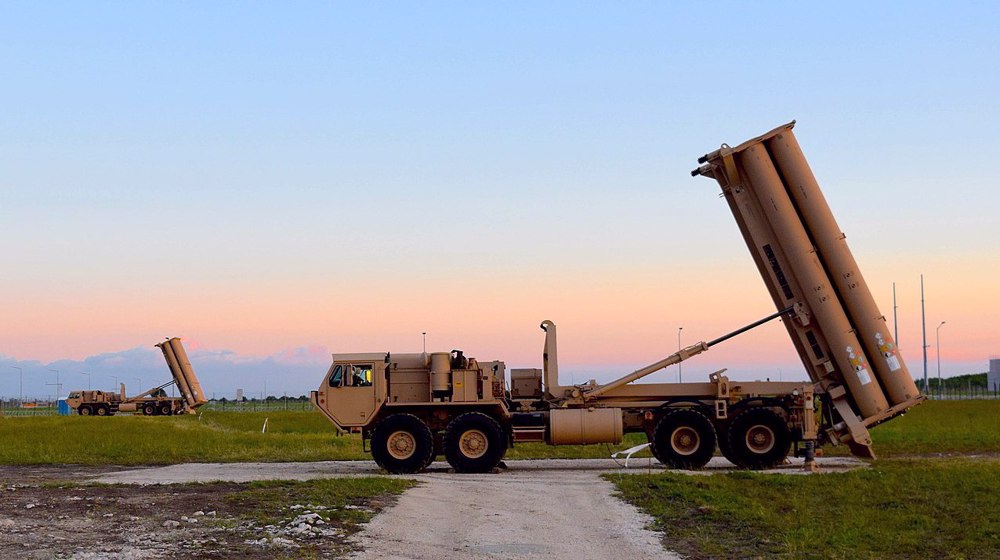
THAAD air defense system
Based on available information, of the remaining US THAAD batteries, two are deployed within the United States, one in Texas and another in Guam.
The rest are stationed overseas in South Korea, Saudi Arabia, and the United Arab Emirates (UAE), with the UAE being the only country to have formally purchased its own THAAD systems.
A THAAD battery is a mobile, self-contained missile defense unit. Each battery typically comprises six truck-mounted launchers, with each launcher carrying eight interceptor missiles, amounting to a total of 48 interceptors per battery.
In addition, the system includes an AN/TPY-2 radar for long-range detection and tracking (up to 2,000-3,000 km), a fire control and communication system for coordinating intercepts, along with support equipment and approximately 100 personnel to operate the unit.
Given the deployment of two batteries in the occupied Palestinian territories, it can be estimated that the Israeli regime had access to at least 96 interceptor missiles.
However, the actual number was likely higher due to frequent resupply efforts during engagements with Yemeni ballistic missiles and in preparation for the broader conflict with Iran.
Mixed performance against Yemeni missiles
Despite being touted as one of the most advanced missile defense systems in the world, THAAD’s performance against Yemeni ballistic missile attacks has been mixed, even according to Israeli and Western sources.
While some interceptions have been claimed as successful, there have been notable failures.
By the end of March 2025, six successful interceptions of Yemeni missiles had been reported. However, on May 4 and May 9, THAAD failed to intercept missiles targeting Ben Gurion Airport.
In both instances, Israeli sources asserted that the incoming missiles were ultimately intercepted by the Arrow missile defense system instead.
This claim has been met with skepticism, as the Arrow system typically engages threats at far greater distances, tens or even hundreds of kilometers away, yet the airport was struck directly.
The Israeli regime’s own admission that multiple systems were used against the same class of Yemeni missiles suggests that the interception cost is significantly higher than commonly assumed. Rather than a one-to-one missile-to-interceptor ratio, several interceptors, possibly from different systems, may be required to ensure a successful shootdown.
Despite ongoing claims by American and Israeli officials about the effectiveness and reliability of both THAAD and Arrow systems, Yemen has continued to target Ben Gurion Airport as part of its retaliatory operations. The continued threat and perceived vulnerability led nearly all international airlines to suspend flights to and from Israel.
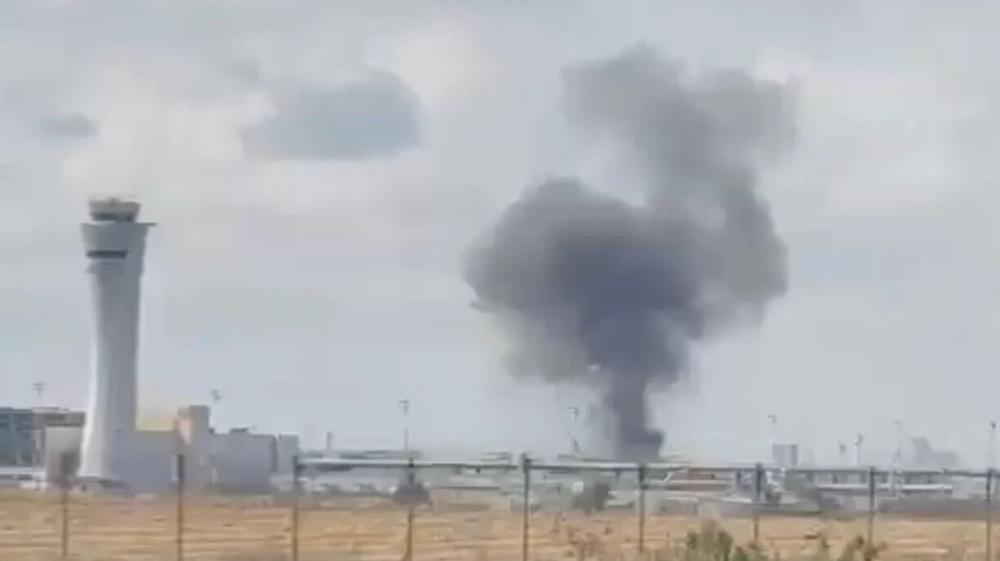
Yemeni missile hits Ben Gurion Airport on May 4, after unsuccessful interception with THAAD
The most commonly used long-range weapon in the Yemeni arsenal is the Palestine-2 – a two-stage hypersonic ballistic missile capable of reaching speeds up to Mach 16 and equipped with a maneuverable warhead. This type of missile poses a significant challenge to traditional missile defense systems, including THAAD.
Technologically, THAAD faces several limitations. These include radar difficulties in distinguishing between actual warheads and decoys, vulnerability to saturation by large-scale missile barrages, and diminished effectiveness against newer hypersonic and maneuverable missile designs.
The system also relies exclusively on US personnel for its operation, which can limit rapid adaptability in dynamic combat scenarios.
THAAD has experienced test failures in the past, raising concerns about its reliability and operational readiness. These failures have been linked to software bugs, mechanical faults, and targeting system errors, factors that cast doubt on its real-world performance under pressure.
Failures against Iranian missile strikes
During the 12-day war of aggression against Iran, THAAD’s performance deteriorated significantly, highlighted by its low interception rate and the rapid depletion of US and Israeli interceptor stockpiles.
On the eve of the Israeli aggression, approximately 100 THAAD interceptor missiles were positioned in the occupied Palestinian territories. In response, Iran launched between 370 and 500 ballistic missiles during its retaliatory operations, a volume that far exceeded available THAAD capacity.
While Israel also relied on other systems such as David’s Sling, Arrow-2, and Arrow-3, the sheer scale and intensity of Iran’s response shifted the strategic balance. The damage inflicted throughout Israeli-occupied territories underscored this imbalance.
In the initial days of the war, Iran deliberately used older liquid-fueled ballistic missiles to exhaust enemy air defenses. More advanced and maneuverable missiles were introduced only after Israel’s interceptor supply had been significantly drained.
Although no official statistics have been released regarding the number of THAAD interceptors used or their success rates, available evidence suggests a poor performance.
High-altitude kinetic interceptions, hallmarked by bright explosions visible across the region, were rare, and many may have involved Arrow systems instead of THAAD.
A particularly telling open-source analysis, based on video footage by Jordanian photographer Zaid M. Al-Abbadi, missile ignition signatures, and geolocation data, estimated that Israel used 39 THAAD, 34 Arrow-3, and 9 Arrow-2 interceptors during just one of more than 20 Iranian missile barrages.
Given such high rates of interceptor use, analysts believe THAAD batteries likely exhausted their missile supply within the first four to five days of the conflict.
This rapid depletion, combined with underwhelming interception success, highlights the system’s limitations in a high-intensity, multi-wave missile war.
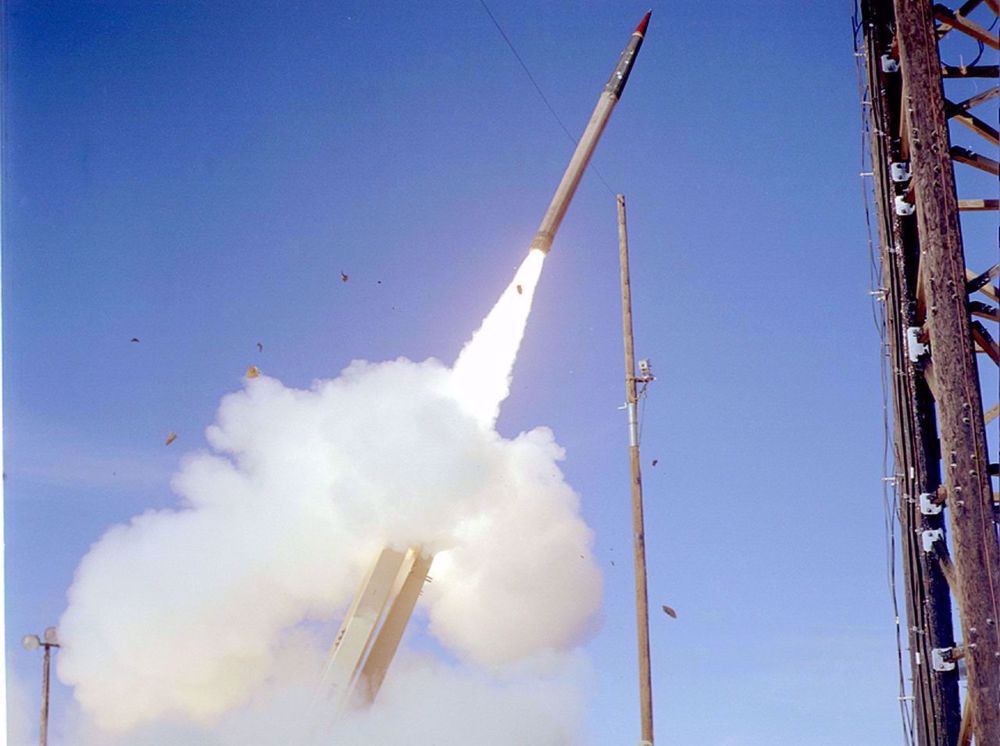
THAAD interceptor launch
Exhausted stockpiles and soaring costs
Estimates from military experts and news outlets place the unit cost of a single THAAD interceptor between $12 million and $15 million. However, other sources suggest the real cost is significantly higher.
In a statement to Newsweek, Sidharth Kaushal of the Royal United Services Institute (RUSI) noted that while the production cost of a THAAD interceptor is approximately $18 million, the total cost rises to $27 million when research, development, testing, and evaluation (RDT&E) expenses are factored in.
Estimates of total THAAD-related spending during the recent conflict vary. Analysts suggest that between $500 million and $800 million worth of interceptors may have been expended, corresponding to the use of 40 to 60 missiles.
On Tuesday, the Israeli newspaper Haaretz, citing Israeli military sources, reported that approximately 200 American and Israeli interceptor missiles were launched in total, at an estimated cost of 5 billion shekels – nearly $1.5 billion.
What all sources agree on is that the THAAD interceptor stockpile has been significantly depleted. At least one full battery’s worth, 48 interceptors, is believed to have been expended.
Considering the two THAAD batteries deployed and the high operational tempo due to prior Yemeni missile attacks, the actual figure may be closer to 96 interceptors. This would represent a reduction of roughly 30 percent of the entire US THAAD interceptor stockpile.
Open-source analysts also highlight the limited pace of US procurement: only 41 THAAD interceptors have been ordered over the past three years, including units designated for export customers. This slow replenishment rate underscores the vulnerability of even advanced missile defense systems when faced with sustained, high-volume missile warfare.
In stark contrast, Iran and China maintain vast ballistic missile arsenals, numbering in the thousands, making the rapid depletion of the US inventory, largely to defend Israeli territory, all the more striking.
Newsweek contacted the Pentagon for comment regarding the depletion and cost implications. The Department of Defense declined to elaborate, stating only that it had “nothing to provide.”
Iran presidential decree officially suspends cooperation with IAEA
Al Mayadeen | July 2, 2025
Iranian President Masoud Pezeshkian has issued a decree suspending the country’s cooperation with the International Atomic Energy Agency (IAEA), according to a report by Tasnim news agency on Wednesday.
The decision comes amid heightened tensions surrounding Iran’s nuclear program and follows recent legislative developments from the Iranian parliament.
Last week, Iranian Parliament Speaker Mohammad Bagher Ghalibaf announced that lawmakers had enacted a law mandating the suspension of cooperation with the IAEA, which he described as “Israel’s protector and servant.”
Ghalibaf argued that continued cooperation with the IAEA was untenable as long as the security of Iran’s nuclear facilities remained unresolved, claiming the agency’s impartiality had been compromised by its ties to “Israel”.
Grossi barred from Iran’s nuclear facilities
Meanwhile, Deputy Speaker of the Iranian Parliament, Hamid Reza Haji Babaei, announced on Sunday that IAEA Director-General Rafael Grossi has been barred from accessing Iranian nuclear facilities or placing surveillance cameras there, after Iran suspended all cooperation with the nuclear watchdog.
“We will no longer give Grossi permission to be present at [Iran’s] nuclear facilities and install cameras [there] because we saw information about our facilities in documents received from … the Israeli regime,” Haji Babaei told ISNA news agency.
The Islamic Republic further exposed profound cooperation between the IAEA and the Israeli occupation, which prompted Iran to obtain, through a major intelligence operation, a vast trove of highly classified strategic documents and information tied to “Israel”, well-informed sources told Al Mayadeen last month.
The sources told Al Mayadeen that the data included “thousands of documents related to the Israeli occupation’s projects and its nuclear facilities.”
According to the sources, the operation took place some time ago, but the enormous volume of documents and the need to safely transport the entire haul into Iran “required keeping the matter under secrecy.”
It must surely be time to end Russia sanctions and develop a new plan to bring peace and prosperity to Ukraine
By Ian Proud | Strategic Culture Foundation | July 2, 2025
Russia can endure the economic pain of war for longer than Europe. On this basis, more sanctions will only ever embolden Russia to keep fighting rather than making peace. Europe should incentivize peace through sanctions relief, although I see zero chance of that happening right now.
This terrible war in Ukraine must end sooner or later. It has claimed over one million people to death or injury, mostly since February 2022, but also, in fact, since the onset of the Ukraine crisis in February 2014.
Clearly, both Russia and Ukraine need to find incentives to end the fighting. One such incentive relates to sanctions. The whole basis of sanctions against Russia is that they will impose a cost on Russia for continuing to wage war in Ukraine.
When the 18th sanctions package was proposed on 10 June, Kaja Kallas announced that ‘we do all this because sanctions work, every sanction weakens Russia’s ability to fight.’ She also said, ‘Russia has lost tens of billions in oil revenues. Its economy is shrinking, and its GDP has dropped.’
And yet, these assertions do not appear to be true.
Firstly, Russia’s economy grew by 3.6% in 2024. That compares to 0.9% growth for the Eurozone and 1.1% for the United Kingdom.
On exports, in the first four months of 2025, Russia exported $39.5 billion more goods than it imported and maintained a healthy overall current account surplus of $21.9 billion. Since its default in 1998, Russia has become an exporting powerhouse and there hasn’t been a single year since that time in which it has not recorded a healthy surplus, including during the Global Financial Crisis and the COVID Pandemic.
There is no evidence that sanctions have had any real effect on Russia’s ability to generate large surpluses of trade each year. This boosts its tax revenues and provides the scope to increase spending without significant reliance on borrowing.
The overall value of Russian exports has fallen from their peak in 2012 when the oil price was consistently above $100 to the barrel. But the point is, Russia also now imports significantly less than it did then, largely out of a drive to import substitution which started in 2014, meaning that its overall balance is comparable.
It is for this reason that Russia’s international reserve position has improved by around $80 billion since the war started, to $680 billion today (which includes the currently frozen assets of around $300 billion).
No sanction imposed on Russia has shifted the fundamentals of Russia’s economic model and, I believe, no sanction ever will. And yet the Europeans have been sanctioning Russia for eleven years already without recognising this.
Yes, Russia has undoubtedly endured economic pain from sanctions. Prior to the Ukraine crisis, the European Union accounted for over 40% of all Russian trade and most of that business has been progressively lost over the past eleven years. That triggered huge shifts in the structure of Russia’s economy, arguably making it more dependant on domestic investment and pivoting its trade decisively away from Europe and towards Asia.
Sanctioning individuals and companies prompted huge changes in the beneficial ownership and board membership of the largest Russian firms. This triggered a bizarre whack-a-mole policy in Europe as it tried to sanction ever changing figures on Russian company structures.
Yet, Russia’s continued strength in trade allows it to keep pumping billions into the war economy each year at a time when Ukraine constantly teeters on the brink of bankruptcy, propped up only by European donations, as I have written many times before.
Europe will never be able to tip to scales so far in favour of Ukraine that it has the economic reserves to outslug Russia, whether the war continued for one year or ten. Only a fantasist would believe that though, unfortunately, there appears no shortage of those in Brussels.
Sanctions have become an end and policy makers are now so invested in sanctions, and so lacking in ideas, that they continue despite the obvious self-harm they are causing to the European project, not only economically, but also politically and culturally.
Politicians in Central Europe are growing increasingly concerned by this direction of policy, because of which a battle is brewing about whether the EU approves the eighteenth package of sanctions against Russia, first proposed on 10 June.
Slovakia and Hungary are currently blocking the package because it would threaten their energy security. At an EU Foreign Ministers’ meeting last week, Peter Szijjarto, Hungary’s Foreign Minister accused Brussels bureaucrats of hypocrisy, claiming that further energy sanctions would ‘cripple Hungary’s energy security’ and increase domestic energy prices by 2-3 fold. Hungary remains heavily reliant on Russian gas in particular for its domestic needs. And a complete ban would have huge consequences for consumers and Hungarian industries, at least in the short-medium term as the economy transitioned.
So, while EU Ministers extended all other EU sanctions against Russia for a year, the 18th sanctions package remains in limbo. German officials appear confident that an agreement can be reached this week, one assumes, by making concessions to Slovakia and Hungary on energy imports. In typical muddling through fashion, a backroom deal will be struck.
But the real question is shouldn’t the EU abandon sanctions altogether?
Sanctions can only succeed if the sanctioning party is willing to accept a level of economic pain comparable to that inflicted on the opponent, such that the opponent decides to back down or at least moderate the actions which prompted the sanctions.
That has never looked likely to happen with Russia. It’s not only that sanctions appear to have caused more pain to European economies than to Russia, most visibly through crippling energy prices. But that Russia has never looked like it would back down in the face of sanctions, and now pressure is growing within the EU for it to back down.
And, not only has Europe had to endure the direct economic cost to itself from the sanctions it has imposed, but also to absorb the additional cost of keeping Ukraine’s economy afloat during wartime. This pressure will only grow as the USA reduces its financial commitment to the war; on current levels, Ukraine needs at least $40 billion in European funding each year just to maintain the current tempo of a war that it is losing.
As we are currently witnessing in the UK with labour Members of Parliament rebelling against planned cuts to welfare benefits, this will have political consequences in Europe too, as anti-war parties gain more support.
Russia only has to maintain its economy from a significantly stronger baseline position. It won’t experience crippling high energy prices, given its self-sufficiency. Nor will it have to reach consensus with other countries on retaliatory measures taken against Europe.
On this basis, imposing more sanctions on Russia will only embolden President Putin to keep fighting. Rather than putting Ukraine is a position of greater strengthen, they are, in fact, putting Europe in a position of ongoing decay.
There may come a theoretical point in the future in which the massive fiscal investment Russia is making to sustain the war overheats its economy to such an extent that it starts to cause unbearable economic and political pressure. But that point does not appear to have been reached, nor does it appear close to being reached anytime soon.
And, amidst all the posturing, there is no real indication that Europe has Ukraine’s best interests really at heart. Ukraine is in most respects now a failed state. While Zelensky maintains the semblance of autocratic rule, he is in fact kept on life support by the continuance of the war. Ending the war would create a moment of both huge economic and democratic opportunity, for Ukraine, but also massive risk, as a disgruntled and defeated army demobilised to find the country bereft of quality jobs and good incomes.
If the Eurocrats in Brussels put all of their energies and resources into ending the war as soon as possible and helping Ukraine to emerge and rebuild in the best possible way, they might just about be able to stave of a much bigger catastrophe for that country. That would begin with setting out a plan to remove sanctions upon the agreement of a peace deal between Russia and Ukraine.
Right now, though, I see zero chance of that happening.
Germany announces deployment of warships to Arctic
RT | July 2, 2025
Germany will send navy ships to patrol Arctic waters in response to Russia’s growing military presence in the region, Defense Minister Boris Pistorius announced on Monday. Russia has insisted that it is mirroring NATO moves in the far north to maintain balance.
Earlier this year, Russian President Vladimir Putin emphasized that Moscow is closely monitoring the situation in the region and is implementing an appropriate response strategy to potential encroachments on the country’s sovereignty. Russia’s Arctic coastline stretches over 24,000km.
“As early as this year, Germany will show its presence in the North Atlantic and the Arctic,” Pistorius said at a joint press conference with his Danish counterpart, Troels Lund Poulsen, in Copenhagen.
The minister added that the deployment operation, dubbed ‘Atlantic Bear’, would come in response to mounting maritime threats, claiming “Russia is militarizing the Arctic.”
Pistorius specified that one of Germany’s support ships would “go from Iceland to Greenland and then on to Canada” to take part in joint military drills with NATO allies, including Denmark, Norway, and Canada.
“In addition, we will deploy our maritime patrol aircraft, submarines, and frigates to demonstrate our commitment to that region,” he added.
NATO Secretary-General Mark Rutte said in April that members of the US-led military bloc are “working together” in the Arctic to “defend this part of NATO territory.”
The Kremlin has insisted that NATO’s continuing militarization of the region is unwarranted, and that Russia will mirror the moves taken by the bloc.
In March, Putin reiterated that Moscow is “concerned by the fact that NATO countries as a whole are more frequently designating the far north as a bridgehead for possible conflicts.”
“I would like to emphasize that Russia has never threatened anyone in the Arctic,” the Russian president said. He stressed, however, that Moscow would “reliably protect” its interests in the region by reinforcing its military contingent in response to Western actions.
Featured Video

Can the U.S. Afford to Annihilate Iran?
or go to
Aletho News Archives – Video-Images
From the Archives
Sanctions, War and the Policy of Dual Containment
By SASAN FAYAZMANESH | March 17, 2008
It is now nearly three decades since the Unites States adopted the policy of dual containment of Iran and Iraq. While much has been written about the containment of Iraq, there has been very little in-depth analysis of this policy when it comes to Iran. In a book that is going to be released on March 31, 2008, entitled The United States and Iran: Sanctions, Wars and the Policy of Dual Containment (Routledge), I attempt to address this shortcoming by investigating when and why the US policy of containment of Iran came about, how it evolved, and where it stands today.[1] To the extent that Israel has been involved in US policy making, the study will also include the role that Israel has played in the containment of Iran. Also, since the fate of Iran has been inextricably linked to that of Iraq, occasionally the investigation will overlap with the containment of Iraq.
The policy of dual containment of Iran and Iraq originated during the Carter Administration, but it was not until the Clinton Administration that the expression “dual containment” became popular. … continue
Blog Roll
 Aletho News
- Can the U.S. Afford to Annihilate Iran? /Seyed M. Marandi
- Elmo Sold mRNA Jabs to Your Toddler. Now They Are “Off-Label.”
- British state targets Palestine Action with yet another crooked trial
- Americans are paying the price to preserve Israel’s nuclear hegemony
- Resistance factions are necessary to ensure a permanent US Iraq withdrawal
- How Israel destabilizes the Middle East: Denying sovereignty and the right to exist
- Europe’s Establishment Is Embracing War – and Losing Voters
- NATO chief advocates war of aggression
- No Vote, No Representation, No State: Democracy, Israeli Style
- Zionist Bought Senate Blocks Information About American Citizens Killed By Israel
- If Americans Knew
- Israeli Soldiers Abduct At Least 22 Across Occupied West Bank
- Eight Palestinians Killed in Israeli Attacks on Gaza
- Israeli former leaders and security chiefs threaten legal action over ‘Jewish terrorism’
- Israel map in LA Times ad includes all land from the river to the sea
- Inside Lebanon’s 200-page dossier on Israeli war crimes
- Flydubai, genocide, settler violence, Trump abuse of power to deport – Daily Update
- Counting Antisemitic Incidents: What the ADL Audit Reveals — and Obscures
- Mamdani releases plan to combat antisemitism and hate crimes in New York City
- Iran’s Revolutionary Guards Publish Letter to the American People
- DMFI launches $1 million ad campaign supporting Virginia’s Elaine Luria
- No Tricks Zone
- Green Energy Debacle: German Expert Professor Fritz Vahrenholt Warns Of Severe Economic And Social Consequences
- Two More Paleo Reconstructions Affirm Meters-Higher Sea Levels Across Ireland, Brazil 7000-6000 Years Ago
- New Study: Earth And Venus Surface Warmth Largely Explained By Convection And Lapse Rate, Not CO2 Or Radiation
- 2025 Nature Paper Claiming Worsening Global Drought Gets RETRACTED …Heavily Flawed
- New Study: ‘Global Drought Shows No Detectable Recent Acceleration Under Climate Warming’
- Economic Masterminds: German Socialists Suggest Taxing Productivity Gains Stemming From Using AI
- The South China Sea Has Not Been Cooperating With The Climate Change Narrative
- Energy Crisis: Germany Enters Heating Season With Historically Low Gas Reserve Fill Levels
- New Study: The Antarctic Ice Sheet Gained Mass From 2020-2024 Due To Staggering Snow And Ice Accumulation
- Study: Ocean Heating Rates From Thousands Of Years Ago ‘Dwarf’ Modern Ocean Heating Rates

