NATO to soon double US nuclear sharing warheads, deploy them in Finland, Poland and Lithuania
By Drago Bosnic | August 4, 2026
NATO is no longer even bothering to hide that it wants to expand its nuclear footprint on the “old continent”. Namely, the most aggressive racketeering cartel in recorded history is sliding into an increasingly dangerous nuclear posture, with the shift being sold as “routine deterrence”. In reality, the change is a deliberate widening of escalation options aimed at upending Russia. Combined with France’s preparation of a base for nuclear-capable “Rafale” fighter jets, this process is effectively a (geo)political and military masterclass in “normalizing” a confrontation that could bring about thermonuclear annihilation of humanity. With the new “Eastern Front” closer to a hair-trigger condition than ever before, this sort of escalation is virtually guaranteed to deliver what Western warmongering oligarchies have wanted for centuries – an all-out war with Russia.
Firstly, it should be understood that even from a theoretical point of view, this is not static deterrence, but an active preparation for offensive nuclear warfare. New infrastructure, upgraded airbases, greater readiness for nuclear-capable assets, massive expansion of delivery options and systems, etc., none of which are “administrative measures” or “seamless red tape”. This changes the strategic equation by making it easier to initiate nuclear escalation at shorter notice, giving Russia little to no time to evaluate response options and forcing it to rely on absolute use of its devastating firepower. In simpler terms, the Kremlin is left with no choice but to launch its entire strategic arsenal, by far the largest and most powerful in the world, if any incoming missile from NATO-occupied Europe is detected.
The general public, largely oblivious to the current nuclear posture developments, is actively being lied to that these steps are “defensive”, because Moscow is “aggressive”. However, the practical reasoning is to deepen the permanence of nuclear tensions in Europe. The role of Paris is especially telling, as it exposes the contradictions at the heart of the EU’s nuclear posture. Namely, France likes to frame its strategic arsenal as an “instrument of sovereignty” that’s supposedly separate from NATO’s wider nuclear posture. And yet, the timing of preparing airbases for nuclear strikes involving its “Rafale” fighter jets tells a very different story. What conclusion is Russia supposed to make given that the processes are concurrent? Would anyone with an ounce of “grey matter” view it as “purely coincidental”?
Thus, it can only be expected that Moscow will not view any of this as a series of isolated incidents. In the current geopolitical climate, this is clearly part of NATO’s wider doctrinal shift aimed at projecting strategic pressure, complicating Russian deterrence planning and tightening the nuclear dimension of European security. The nuclear integration of the US, EU and NATO is where the danger multiplies and grows exponentially. When nuclear-capable jets, forward operating bases and broader coordination are normalized at once, the line between deterrence and provocation effectively vanishes. In which twisted universe can doubling (if not tripling) the number of deployed nuclear warheads be seen as defensive? And to say nothing of the fact that they’re going to be placed in Finland, Poland and Lithuania.
Namely, all three countries border Russia. In practice, this means there would be a “nuclear wall” stretching from the Arctic all the way to the heart of Central Europe. That’s around 3,800 km of frontline that could explode into a thermonuclear annihilation at virtually any moment. Any move presented as “deterrence” could lead to cataclysmic consequences, meaning there’s zero room for error. And yet, NATO’s constant belligerence has reduced diplomatic contacts with Moscow to exchanging protest notes. The more the “old continent” is wired for nuclear war, the less response time leaders on both sides have in an escalating crisis. This dramatically increases the chance that what could be a temporary geopolitical flare-up becomes a military emergency before anyone can stop it or at least slow it down.
In addition, NATO’s wider nuclear build-up perfectly fits the Pentagon’s “geopolitics of controlled chaos”. In practice, that translates into a NATO-occupied Europe that’s mainly useful as a springboard for strategic pressure against the Kremlin. The overall nuclear posture keeps moving closer to the point where peace is maintained only by the threat of immediate catastrophe. This sort of “logic” is precisely what drove the world to the edge of the abyss during the (First) Cold War. It culminated in the late 1980s, with strategic arsenals in tens of thousands of thermonuclear warheads. NATO’s aggressive posture and forward deployment of offensive weapons forced the Soviet Union to build nearly 50,000 thermonuclear warheads, the largest and most destructive strategic arsenal in human history.
Hopeful that long-term peace with the political West was possible, Russia reduced this massive strategic asset to just about 12% of what it was at the time. What did it get instead? Only more belligerence and truly unprovoked aggression, while being presented as a “threat”. Not to mention the total disregard for its most basic national security interests, including NATO-backed terrorist attacks on Russian civilians and energy infrastructure.
Faced with such odds, Moscow had no choice but to dramatically increase the effectiveness of its thermonuclear arsenal. Namely, while the Soviet arsenal had around 60% of missiles with MIRV (multiple independently targetable reentry vehicle) warheads, modern Russia has upward of 90% of MIRV-ed missiles, demonstrating how NATO aggression keeps making the world less safe.
The EU Has No Plan If Peace Breaks Out in Ukraine
By Glenn Diesen | August 4, 2026
Over the past years, NATO has held “peace summits” to which Russia was not even invited, where European leaders such as President Duda spoke about peace in terms of breaking up Russia into smaller states. Now that NATO is clearly losing its proxy war, the EU demands an “unconditional ceasefire”. This is not a peace proposal but an effort to further extend the war. An “unconditional ceasefire” is a conditionality for starting negotiations, which is intended to freeze a conflict that NATO is losing, giving it time to rearm, regroup, and even send in NATO troops as “peacekeepers”.
Why has the EU boycotted diplomacy for 4.5 years and continues to do so? And why will NATO not even take NATO expansion off the table in return for a ceasefire? Would it not be wise to discuss with the other side how we failed to establish a mutually acceptable pan-European security architecture after the Cold War, which has led us into this horrific war? The EU uses smears and censorship to prevent its own public from even discussing this matter, and it will certainly not be discussed with Russia.
 The EU cannot allow this war to end, as there is no plan for peace. Fighting with Ukrainians keeps the U.S. in Europe, temporarily preserves European unity, protects an unpopular political elite from the rising opposition that seeks course correction, offers military Keynesianism as an economic model for a de-industrialising Europe, weakens Russia as a strategic rival, and buys the European leaders time to prepare for a direct war with Russia. A peace agreement would require European leaders to repay the funds they have seized and partly stolen from Russia, which they also used as collateral for loans to Ukraine. Victory would give the Europeans a strong U.S. behind them and a battle-hardened Ukraine in front of them, while defeat would leave Europe without a clear role or relevance in a multipolar world. There is no plan for what to do when peace breaks out.
When the Trump administration broke with the NATO consensus of boycotting diplomacy to negotiate an end to the Ukraine War, the main objective of the European leaders was to shut down the talks. The European leaders rushed to Washington to insist that peace entails an “unconditional ceasefire” without even discussing a political settlement, and intensified deep strikes into Russia to sell the idea that Russia can be defeated. The European leaders were successful as the Trump administration began adopting the false narrative that Ukraine had “turned the tide”. While the Trump administration had initially aimed to either end the Ukraine War or outsource it to the Europeans, the proxy war in Ukraine is now Trump’s war.
If the goal was to “help Ukraine”, then NATO would not have toppled the Ukrainian government in 2014 in the effort to pull Ukraine into the NATO orbit that only a small minority of Ukrainians wanted; NATO would not have sabotaged the Minsk Agreement between 2015 and 2022; NATO would not have pressured Zelensky to reverse his peace platform that won him the election in 2019; NATO would not have torpedoed the Istanbul agreement in 2022; or at least NATO would have ended the war in November of 2022 on the recommendation of General Mark Milley when Ukraine was at its strongest. Instead, “standing with Ukraine” now entails deporting Ukrainian refugees and financing military recruiters to hunt Ukrainian men on the streets to send them to die in a war that Ukraine cannot possibly win. Proxy wars are ruthless as they use the proxy as cannon fodder, yet proxy wars are always sold to the public as being motivated by empathy and support for the proxy that is unnecessarily sacrificed.
‘A Living Hell’: A Gaza Survivor Recalls Torture in Israeli Detention
By Shaimaa Eid | The Palestine Chronicle | August 3, 2026
With trembling hands, faltering words, an emaciated body, and a voice barely audible from the intensity of his pain, S.Th., 38, began recounting the brutal circumstances of his arrest.
What began as an attempt to flee Israeli bombardment through what Israel had designated a “safe corridor” during its ongoing genocide in Gaza ended with months of torture in Israeli interrogation facilities and the Negev Desert Prison.
“After nights of relentless bombardment around our home in Gaza City, my mother, my wife, and I decided to leave,” S.Th. told the Palestine Chronicle. “My wife was in critical condition after miscarrying because of the overwhelming fear and terror.”
The family walked toward Kuwait Roundabout before reaching the so-called safe corridor at the Netzarim checkpoint.
“What awaited us there,” he said, “was even more horrifying than the bombardment itself.”
“My mother leaned on my shoulder the entire way, and all of us held our ID cards high above our heads,” he recalled. “Without any warning, an Israeli officer emerged from behind a sand berm and called out in clear Arabic: ‘Hey, you with the ID who’s fanning your mother, come here.’”
At first, S.Th. was unsure the soldier was addressing him.
“I looked around to make sure he was talking to me,” he said. “Then the officer gestured for me to come behind the sand embankment.”
The moment he reached the soldiers, the man said, he was ordered to strip naked.
“They bound my hands and forced me to sit on sharp seashell-covered stones for three consecutive days.”
Used as Human Shields
For three days, S.Th. said he endured beatings with rifle butts and constant verbal abuse. He and a group of other young men were then forced to sit beneath the barrel of an Israeli tank, where they were used as human shields.
“The tank kept firing shells while we were directly beneath it,” he recalled. “After every single shot, we waited for our souls to leave our bodies, believing death had finally come.”
He never had the opportunity to say goodbye to his family.
“I never had the chance to say goodbye to my mother or my wife,” he said. “Anyone who stopped or even turned around risked being shot dead.”
As they walked in large groups, bodies lay scattered along both sides of the road.
“It was as if the occupation wanted to send us a clear message,” S.Th. said. “‘This is what happens to anyone who disobeys our orders.’”
His voice faltered as he described what happened next.
“They tied our hands and loaded us into the bucket of a bulldozer used to carry sand,” he said. “Then they covered us with a large tarpaulin. After driving only a short distance, they suddenly dumped us into a massive sand pit.”
The detainees believed they were about to be executed.
Instead, Israeli soldiers returned, gathered them again, and loaded them into a military vehicle. From conversations they overheard, they understood they were being transferred to an interrogation center.
“We had no idea where they were taking us,” S.Th. said. “When we arrived, I heard one of the soldiers say, ‘Zikim, Zikim,’ before signaling the driver to stop. At the time, we had no idea that a living hell awaited us there.”
‘A Living Hell’
Recalling his arrival at the facility, S.Th.’s hands began to shake.
“The moment we arrived, dozens of soldiers greeted us with savage beatings all over our bodies using metal batons and electric sticks,” he said. “They then forced us to remain kneeling for five consecutive days.”
During that period, he said, detainees survived on little more than a small piece of bread each day. “It was nowhere near enough to satisfy our hunger.”
According to S.Th., Israeli forces identify Palestinians attempting to cross the so-called “safe corridor” through an advanced facial-recognition system while they hold their identity cards above their heads.
“Those five days felt endless,” he recalled. “After that, they marched us away with our hands and feet shackled and our eyes blindfolded to a large barracks.”
The detainees, he said, were permitted to use the bathroom only once each day.
“They also deprived us of sleep by blasting deafening music through loudspeakers around the clock,” S.Th. said
Interrogation and Torture
Speaking quietly, S.Th. paused before describing the interrogations.
“All the way to the interrogation room, the soldiers kicked us repeatedly,” he said. “They dragged us along by our bound hands and forced us into painful stress positions until we were completely exhausted.”
Only then, he said, would the interrogating officer ask a single question: “Do you want to talk?”
According to S.Th., the interrogations focused largely on political affiliation.
“He accused me of things that had absolutely nothing to do with me,” he said. “When I denied them, he ordered that I be taken back to the torture room.”
There, he said, two soldiers subjected him to severe abuse. “They beat the most sensitive nerve centers in my body and struck my genitals.”
Sleep, S.Th. said, became almost impossible.
“Whenever I drifted off, a soldier standing behind me would repeatedly strike a metal sheet with a hammer while shouting, ‘Wake up. Wake up. Wake up.’”
Eventually, exhaustion overwhelmed him.
“I collapsed unconscious onto the ground,” he recalled. “A soldier lifted me from behind and immediately began kicking me with both feet to prevent me from resting or even taking a brief nap.”
Two weeks later, S.Th. was returned to the interrogating officer.
“He leaned over and whispered in my ear, ‘How was your visit? Was it a long one? If you had confessed from the beginning, you could have spared yourself all this suffering,’” he said.
The officer then repeated the same accusations and questions.
When the interrogation concluded, S.Th. said the interrogator wrote words on his back that he could not understand before soldiers returned him to a barracks holding dozens of detainees from Gaza.
“There we sat with our hands tied, forced to kneel from morning until evening without moving or even turning our heads,” he said. “We were given only ten minutes to eat our meals.”
Negev Prison
S.Th. said he was later transferred with approximately 50 other detainees to the Negev Desert Prison.
“As soon as we arrived, a large group of soldiers was waiting for us,” he recalled. “They beat us mercilessly before throwing us into freezing cells without blankets while we were dressed only in light clothing.”
Soldiers deliberately targeted the prisoners’ shackled hands during the beatings: “They concentrated their blows on our hands, which were already tightly bound in iron shackles.”
After nearly two months of torture and starvation in interrogation centers and later in Negev Prison, Israeli authorities released S.Th. and a group of detainees through the Kerem Abu Salem crossing.
They were subsequently transferred to a hospital for medical examinations and treatment.
Reflecting on his imprisonment, S.Th. said he and the other detainees endured severe physical and psychological torture throughout their detention.
He stressed that they had been arbitrarily detained, held for an extended period without charge, and never brought before a court.
– Shaimaa Eid is a Gaza-based writer. She contributed this article to the Palestine Chronicle.
Bulgaria’s Bezmer Base and the Logic of American Power Projection
By Adrian Korczyński – New Eastern Outlook – August 3, 2026
On July 22, 2026, the Bulgarian parliament voted to authorize the deployment of up to eight U.S. Air Force KC-135 tanker aircraft and 250 U.S. military personnel at Bezmer Air Base.
The vote was 136 in favor, 13 against, with two abstentions. The deployment is scheduled from July 24 to October 1, 2026. On paper, the government insists this is merely “logistical support.”
A Diplomatic Warning from Tehran
Before the vote, Iran’s Foreign Ministry warned that allowing the deployment would make Bulgaria “an accomplice of aggressors.” Iranian Foreign Ministry spokesman Esmaeil Baghaei explicitly stated that any action facilitating U.S. military operations against Iran would make Sofia complicit in “aggression and war crimes.”
The Bulgarian Foreign Ministry responded that it was not “undertaking any hostile actions against Iran” and that “it is out of the question for any military operations in the Middle East to be conducted from Bulgarian territory.” The contrast between the official explanation and the operational role of the deployment is difficult to ignore.
Bezmer in the US Logistics Network
Bezmer Air Base, located in southeastern Bulgaria near the town of Yambol, is one of several joint-use facilities established under the 2006 U.S.-Bulgaria Defense Cooperation Agreement. The agreement allows U.S. forces to use three Bulgarian bases — Bezmer, Graf Ignatievo, and Novo Selo — for training and logistical purposes. Bezmer’s appeal is straightforward: it is close to the Black Sea, has a runway capable of handling large aircraft, and is situated in a country that is a full NATO member.
What makes Bezmer particularly useful is its position within the broader American logistics network. U.S. tanker aircraft operating from Bezmer can refuel fighter jets and bombers over the Eastern Mediterranean, the Middle East, and the Red Sea without returning to bases in Germany, Italy, or Greece. This reduces transit time and allows for sustained operations over a longer period. Bezmer functions as a forward refueling node in a system that stretches from Ramstein in Germany to Souda Bay in Crete to Kogălniceanu in Romania.
The base is not being used for combat operations, but it is enabling them. There is a difference between pulling the trigger and supplying the fuel, but that difference matters less to the pilots being refueled—or to the Iranians being targeted. The Bulgarian government argues that it is merely fulfilling its treaty obligations to its ally. Prime Minister Rumen Radev, often described as more skeptical of Western military adventurism, insisted the tankers would be used “exclusively for logistical and in-flight refuelling missions outside Bulgarian airspace.” The Bulgarian Foreign Ministry echoed this position, stating that no military operations would be conducted from Bulgarian territory.
Spain vs. Bulgaria
The contrast with Spain is instructive. In March 2026, Spain explicitly refused to allow its bases to be used for the U.S.-Israeli campaign against Iran. Spanish Foreign Minister Jose Manuel Albares stated that Spanish bases would not be used for operations “inconsistent with the United Nations Charter.” The Spanish government argued that using its territory for offensive operations against Iran would violate its constitutional obligations and its own foreign policy principles. Madrid made a sovereign choice to refuse Washington’s request.
Unlike Spain, Bulgaria ultimately chose to facilitate the deployment, reflecting its broader security dependence on NATO structures. It did not publicly question the legality of the operation, nor did it challenge the broader strategic rationale behind the request. The Bulgarian authorities chose to accommodate the request rather than contest it.
Several factors may explain this difference. Spain has traditionally pursued a more cautious approach towards military involvement in the Middle East, while Bulgaria places greater emphasis on demonstrating reliability within NATO. Different strategic cultures and security priorities appear to have shaped their respective decisions. Bulgaria, by contrast, is a smaller country more dependent on NATO guarantees for its security. It is also a country that has long sought to demonstrate its value as an ally, particularly in the context of the war in Ukraine. For Bulgaria, saying no to Washington is not a luxury it believes it can afford.
There is also a domestic political dimension. The decision was approved by a parliament where the government holds a comfortable majority. Local opposition was minimal. Some Bulgarian officials have argued that refusing the request would have damaged Bulgaria’s standing in NATO. A Bulgarian official’s comment encapsulates the logic of alliance dependency: “We cannot want to be in NATO and then refuse to give anything in return.”
Local Concerns
The decision was not universally welcomed. Burnt-out trees from a fire at the Bulgarian military training ground in Koren were still smouldering during the parliamentary debate. Bezmer’s mayor voiced concerns about the region becoming a potential target. Local communities near Bezmer are not convinced by the official narrative.
The concerns are not entirely theoretical. Iran has already shown its willingness to retaliate against countries it perceives as hostile. In the past, Iranian-backed groups have targeted American bases in Iraq and Syria, and Iranian cyber operations have hit European infrastructure. Bulgarians living near Bezmer now have reason to wonder whether their town might become a target in a future escalation.
Alliance Politics in Practice
The Bulgarian parliament’s decision illustrates a broader reality of the transatlantic relationship. European countries are not always eager participants, but they are deeply integrated into the logistics of U.S. military power. These are not signs of European unity—they are signs of fragmentation within a structure that still depends on the United States for security.
The deeper question is whether this arrangement is sustainable. Bulgaria has made a strategic choice to deepen its military integration with the United States. That choice has immediate operational consequences—a tanker base that enables strikes on Iran—and long-term implications for Bulgarian sovereignty. It may also have security consequences if Iran chooses to respond. The Bulgarian parliament’s decision follows a pattern: Europe increasingly functions as a platform for U.S. power projection.
The deployment at Bezmer therefore reflects a broader reality of contemporary alliance politics: even when European governments avoid direct participation in military operations, they increasingly provide the logistical infrastructure that makes those operations possible. As military logistics become increasingly central to modern warfare, the distinction between participation and support may prove more political than operational.
Adrian Korczyński, Independent Analyst & Observer on Central Europe and global policy research
The paradox of Brazilian defense: a comparative study with Iran
By Lucas Leiroz | Strategic Culture Foundation | August 3, 2026
For decades, the debate over national defense in Brazil has been treated as a secondary issue. In a country with no significant border disputes and far removed from the world’s principal conflict zones, the prevailing perception has been that substantial military investments are unnecessary. The result of this mindset is an increasingly evident paradox: Brazil ranks among the countries with the largest military budgets in the world in absolute terms, yet it continues to display significant limitations in operational capabilities, strategic production, and deterrence.
Recently, I had access to a study prepared by Brazilian Navy Commander Robinson Farinazzo, based on data from the Stockholm International Peace Research Institute (SIPRI), which highlights a striking reality. Between 2015 and 2024, Brazil accumulated approximately US$214 billion in military expenditures, while Iran spent roughly US$134 billion during the same period. In other words, Brazil invested about 60 percent more resources in defense than Iran over the past decade.
However, a simple comparison of spending figures reveals very little about the actual military capabilities of each country. Brazil allocates the overwhelming majority of its defense budget to maintaining its existing structure. Salaries, pensions, and administrative expenses consume most of the available resources, leaving relatively little room for research and development, procurement, weapons acquisition, and technological modernization. This model preserves a large and professional military force, but significantly limits the pace at which its operational capabilities can be renewed.
Iran, by contrast, has followed a fundamentally different approach. Despite decades of economic sanctions, financial isolation, and severe restrictions on importing military equipment, Tehran invested heavily in building a comprehensive domestic defense industrial base. Unable to rely on foreign suppliers, the country directed its resources toward the development of ballistic missiles, drones, air defense systems, and local weapons production. Ironically, the sanctions intended to undermine Iran’s strategic autonomy ended up encouraging a high degree of self-sufficiency across multiple sectors of its defense industry.
This divergence in priorities has become particularly relevant in today’s international environment. In an era characterized by growing competition among major powers, the ability to manufacture weapons domestically, sustain national industrial supply chains, and rapidly adapt military technologies has become just as important as the nominal size of a country’s defense budget. In this respect, Iran’s experience demonstrates that the efficiency with which resources are allocated can be as decisive as the total amount spent.
The contrast with Brazil is unavoidable. The country possesses a respectable defense industrial base responsible for projects such as the KC-390 military transport aircraft, the ASTROS rocket artillery system, the Guarani armored vehicle, and the PROSUB submarine program. Nevertheless, these achievements coexist with decades of inconsistent investment, recurring budget cuts, and the absence of a long-term state policy aimed at continuously strengthening Brazil’s defense industrial and technological capabilities.
Even more concerning is the fact that Brazil operates in a geopolitical environment that is incomparably less hostile than the one confronting Iran. While Tehran has spent decades under international sanctions, surrounded by regional adversaries and subjected to sustained external pressure, Brasília benefits from regional stability, abundant natural resources, and relatively broad access to international markets. Yet Brazil has failed to transform these favorable conditions into a coherent strategy for strengthening its deterrent capabilities.
The principal lesson from this comparison is not that Brazil should replicate the Iranian model, nor should it overlook the profound political, economic, and strategic differences between the two countries. The conclusion is far simpler: financial resources alone do not guarantee military power. Without long-term planning, sustained investment, a strengthened domestic defense industry, and priority given to research and technological innovation, even substantial defense budgets produce limited strategic results.
The world is entering a period of growing geopolitical instability. In this context, Brazil’s real challenge is not simply determining how much to spend on defense, but defining which capabilities it intends to develop over the coming decades. Otherwise, it will continue spending billions merely to sustain an existing structure that, while important, fails to meet the strategic requirements of a continental-sized nation with increasingly significant interests on the international stage.
Europe Wants To Prevent It’s Citizens From Even Hearing The Russian Perspective
The Dissident | August 3, 2026
As EU countries continue to fuel the never-ending proxy war in Ukraine, its leaders want to prevent citizens from even hearing the Russian perspective.
In the most recent move, the Emmanuel Macron government in France is trying to ban the Russian-French journalist Xenia Fedorova from the country, simply for giving an alternate perspective on the Ukraine war in TV interviews.
On X, Zenia Fedorova wrote :
The government of Emmanuel Macron has decided that my statements made publicly on the sets of CNEWS and Europe 1, as well as my columns published in the pages of JDNews, represent an immediate danger to the Republic, and has ordered my expulsion on grounds of absolute emergency.
I am accused of seeking “to undermine the confidence of European citizens, and in particular French citizens, in their institutions and to instill doubt about the legitimacy of the support provided to Ukraine.”
They assert that my behavior, which consists of living in France for nearly ten years in compliance with the law, paying my taxes, but also having an opinion and expressing it as part of my work as a journalist, “thus harms the fundamental interests of the State” and that my presence on the territory constitutes “a particularly serious and current threat to public order; that consequently, there is reason to order, on grounds of absolute emergency, his expulsion from national territory pursuant to Article L. 631-1 of the CESEDA in order to put an end as quickly as possible to these positions that have the effect of destabilizing the social fabric.”
In addition, the Minister of the Economy, Roland Lescure, and the Minister of the Interior, Laurent Nuñez, issued a decree overnight aimed at freezing my assets.
This follows a series of actions from EU countries designed to prevent its citizens from even hearing Russia’s perspective.
Last month, the EU ruled that three obscure bloggers in Germany violated EU sanctions law because they shared content from the Russian broadcaster RT on a few occasions, in effect barring even sharing content from Russian media.
The EU has even placed sanctions on commentators who have no connection to Russia, and do not endorse Russia’s invasion of Ukraine, most notably the retired colonel in the Swiss army, Jacques Baud, simply because he was critical of official EU policy in the Ukraine proxy war.
EU countries supporting the proxy war in Ukraine have made it clear they are opposed to citizens even hearing Russia’s perspective.
While this is framed as combating “dangerous disinformation,” the reality is the EU wants to black out the Russian perspective because it will make it harder to continue the proxy war in Ukraine.
As political scientist John Mearsheimer recently explained to the EU’s European Parliament, the EU continues to spread a narrative claiming that Russia’s goal “is to conquer all of Ukraine and make it part of a greater Russia. Once that goal is achieved, Russia will move to create an empire in Eastern Europe, much like the Soviet Union did after World War II. In this story, Putin is a mortal threat to the West and must be dealt with forcefully. In short, Putin is an imperialist with a master plan that fits neatly into a rich Russian tradition”.
But as he noted, there is no evidence backing up this narrative, and all evidence shows that Russia launched the invasion of Ukraine to prevent it from becoming a NATO member.
“While it is widely believed in Europe, and again, I’m sure here in the European Parliament, that Putin is an imperialist who has long been determined to conquer all of Ukraine and then conquer additional countries west of Ukraine, virtually all the available evidence is at odds with this perspective. In fact, the United States and its and its European allies provoked the war” he noted.
One can still oppose the Russian invasion of Ukraine, but the reality is, the war was launched after decades of U.S. provocations, not because Russia wants to recreate the Soviet Union and conquer all of Europe.
Even hearing the Russian perspective, even if one disagrees, will help show that the European narrative of Russia wanting to conquer all of Europe is false.
For this reason, EU countries don’t want citizens even hearing the Russian perspective, in order to continue the bogus narrative needed to continue fuelling the proxy war in Ukraine.
Eliyahu, son of the Hebron massacre perpetrator, leads West Bank settlement expansion

Israeli settlers in the hills around Hebron [Mosab Shawer / Middle East Images / AFP via Getty Images]
By Malik Nabeel | The New Arab | July 31, 2026
Ramallah – The family of Palestinian Hussein al-Amleh in the town of Beit Ula, west of Hebron in the southern occupied West Bank, was expelled from his land on 22 July after a settler vandalised a tent and sheep pen where al-Amleh and his son were staying. The incident took place as part of the expansion of a settlement outpost established a few metres west of the town about a year ago.
Its area of control has expanded to more than 1,300 dunams (1.3 square kilometres), designated as a “closed military zone” from which the original Palestinian landowners have been barred.
As one of the owners of the confiscated land, al-Amleh said that a settler named Eliyahu Goldstein, son of Baruch Goldstein, who carried out the 1994 Ibrahimi Mosque massacre that left 29 people dead and 125 others injured, drove them from the land after storming it.
Al-Amleh told The New Arab, “We tried to remove the settler and those with him, and demanded that they leave when they stormed the land… There were verbal confrontations between us, after which Eliyahu attacked and assaulted us. He was armed, while the Israeli occupation army stood by without moving or doing anything.”
He said he told soldiers that they were responsible for him, to which the army officer replied that al-Amleh had to listen to Eliyahu and follow his instructions. The answer prompted al-Amleh to reply, “This is our land. We were born here, and our children and grandparents were born here.”
Since 22 July, 2025, Baruch Goldstein’s son Eliyahu has expanded the seizure of land in Beit Ula. He has placed a caravan there, from which he launches daily attacks, detains landowners and hands them over to the Israeli occupation army for interrogation, as happened with two other residents following the incident involving the Al-Amleh family.
During the assault, Eliyahu detained al-Amleh’s son, Mahmoud, and took him to a military post adjacent to the separation wall west of the town before handing him over to the Israeli occupation army. Mahmoud was then transferred to the Etzion interrogation centre north of Hebron.
“All of this happened simply because my son and I refused to leave our land,” al-Amleh told The New Arab.
He added that he owns dozens of dunams in the western area of Beit Ula, which Eliyahu has since taken control of, and had relied on them for farming, grazing and overnight stays. He had erected a tent there and established a small sheep farm known as an “izba”. However, according to his account, the settler vandalised it, prevented him from grazing his livestock, and threatened to shoot him and confiscate the sheep if he returned to the land.
Eliyahu is described by Palestinian residents as one of the most extremist and violent settlers in the greater Hebron area, with accounts alleging that he does not hesitate to open fire if anyone approaches him.
At the beginning of April, Eliyahu shot Iyad Al-Sarahin in the abdomen, causing severe intestinal damage and injury to his liver. During the same period, he also shot another person in the hand while residents were attempting to reach their land.
Jamal Taleb, an adviser at the Land Research Centre in Beit Ula, told The New Arab, “Eliyahu was raised in schools of Jewish extremism, just like his father.”
Taleb said Eliyahu began his settlement activities in areas east of Hebron and its Old City before “moving last year to Beit Ula, which had never previously witnessed any settlement presence on its land”.
Taleb pointed to the relationship between Eliyahu and the Israeli forces, saying, “On more than one occasion, we have seen officers in the Israeli occupation army salute him militarily, even though he is not a soldier.”
He added that Eliyahu works to “steal sheep and then claim ownership of them. His primary task is to destroy agricultural land, ruin farming and force residents to abandon and leave their land.“
Taleb added that the settler relies on foreign workers to carry out his attacks, saying, “He has Thai workers who work with him. He uses them to pursue residents with agricultural tractors, and they move in a provocative manner to stir up dust while farmers are on their land. He is then accompanied by one settler, who acts as his assistant.”
Eliyahu also appears to enjoy official backing from the Israeli government. Taleb said he is “strongly supported by National Security Minister Itamar Ben Gvir, to the extent that no one dares oppose him or refuse his requests”.
Taleb also said that Eliyahu repeatedly tells residents, “Your turn will come. I will seize this land, and one day we will expel all of you from Areas B and C,” referring to the areas designated under the 1993 Oslo Accords.
Taleb confirmed that Eliyahu possesses the key to the gate in the separation wall that separates Beit Ula from the territories occupied in 1948. He uses it to travel to the settlement of Nahusha, built on the town’s historic lands beyond the wall.
Taleb cited an incident on 11 July, when activists from the Arab-Jewish movement “There Is Room for All of Us” arrived to accompany residents to their land for the harvest. He said they had received prior approval from the Israeli occupation army, “but Eliyahu arrived at the site accompanied by occupation forces, expelled the residents and the solidarity activists, and the forces fired tear gas on his orders.”
He added that Eliyahu had previously set fire to farmers’ land while they were attempting to reach it.
Eliyahu also uses drones to monitor farmers’ movements and rarely moves without covering his face. “Experts stand behind him, providing support and assistance, even if they are not present at the site.”
Taleb said Eliyahu possesses “all the machinery and equipment necessary to carry out acts of destruction, bulldozing, cutting and other operations.”
Eliyahu is known for not remaining in one place, instead moving between different areas to establish new settlement projects.
Taleb described him as “highly aggressive”. He previously lived in the settlements of Kiryat Arba east of Hebron, Susiya to the south and Adora to the west. He is also active in the northern Jordan Valley.
Taleb said Eliyahu “only establishes settlement outposts in cultivated, exploited areas adjacent to the boundaries of Area B because one of his objectives is to expand settlement gradually from Area C into Area B. In contrast, we are pursuing a legal path to prove ownership of lands whose Palestinian ownership the occupation does not recognise.”
Meanwhile, Issa Abdul Hafiz, one of the owners of the land seized by Eliyahu, said the settler has prevented him from accessing more than 40 dunams (40,000 square metres) that he owns, in addition to hundreds of dunams belonging to his family.
Abdul Hafiz told The New Arab that “the settler Eliyahu has escalated his attacks in recent months, destroying more than 150 olive trees and other fruit-bearing trees, and preventing family members from grazing their sheep on their own land”, stressing that this pattern of attacks has affected hundreds of dunams, all treated in the same way.
Abdul Hafiz said the settlement expansion extends beyond the outpost established by Eliyahu, explaining that “he expands his settlement activities every day, goes beyond the boundaries of the area classified as a ‘closed military zone’, and attacks any farmer who reaches his land.”
He confirmed that Eliyahu’s attacks have extended to the outskirts of the neighbouring villages of Kharas and Nuba, adjacent to Beit Ula.
Abdul Hafiz also said that the Israeli settler burned hundreds of dunams planted with wheat, driving his agricultural tractor through the area and setting fires between the fields over recent weeks.
From the Ibrahimi Mosque to settlement expansion
Rashed Al-Tamimi, a former activist with the Israeli human rights organisation B’Tselem – The Israeli Information Center for Human Rights in the Occupied Territories, recalled an earlier encounter with Eliyahu dating back about 13 years, when he established a settlement outpost in the Jabal Jalis area east of Hebron after forcibly seizing a plot of land there.
Al-Tamimi told The New Arab, “Eliyahu set up a caravan, brought settler Jewish families to it and established their presence there. The outpost now includes around 20 settlement homes.”
Al-Tamimi described Eliyahu as “an expert in establishing settlement outposts”, explaining that he moves between Palestinian areas to create new outposts “without any justification, or even a legal cover, using excessive force through carrying weapons, opening fire, and relying on protection from the Israeli occupation army. He establishes the outpost, gives it legitimacy, hands it over to settlers, and then leaves the area for another one.”
Al-Tamimi also recalled another incident from about five years ago, when Eliyahu attempted to establish a settlement outpost on his privately owned land in Jabal Jalis.
He said, “Eliyahu came to our area in Jabal Jalis and tried to establish a settlement outpost on my private land. When he stormed my land, my son and I rushed out, confronted him, argued with him and prevented him from establishing the outpost. He then filed a complaint against me with the Israeli police in the Ja’abra area, east of Hebron.”
Al-Tamimi said Eliyahu received support from settlement organisations, including “Kach” and “Gush Emunim”, which did not condemn the 1994 Ibrahimi Mosque massacre.
He added that the settler has carried weapons during his movements for years, but “he used to wear civilian clothes. Recently, however, he moves only in military uniform, despite not being a soldier.”
Article translated from Arabic by Afrah Almatwari. To read the original, click here.
Massive Attack says Singapore detained band after Gaza chants
Al Mayadeen | August 3, 2026
British band Massive Attack said its members were detained and questioned by Singapore police following a concert in the city-state after audience members chanted pro-Palestine slogans.
In a statement posted on social media, the band said the incident occurred after its performance at the Star Theatre on July 29, describing the authorities’ response as unexpected and disappointing.
According to the band, all members were detained by police, separated for questioning, and subjected to individual interrogations.
The group said some members also had their hotel rooms searched, while others temporarily had their passports confiscated before being allowed to continue their travel.
Band links detention to pro-Palestine chants
Massive Attack said concertgoers had spontaneously begun chanting slogans in support of Palestine both before and after the performance.
The band thanked the audience for expressing solidarity with Palestine and questioned why its members were detained following the event.
Massive Attack has been among the most outspoken music groups in expressing support for Palestine and has frequently used its social media platforms to criticize the Israeli occupation’s war on Gaza.
The band has previously called for an end to the assault on the Gaza Strip and has shared statements condemning Israeli military actions against Palestinians.
Band frontman among 500 arrested at Palestine Action protest
Massive Attack frontman Robert Del Naja was previously detained during the mass protest against the ban on Palestine Action in central London in early April, as reported by The Guardian.
Del Naja, also known as 3D, was seen holding a sign that read: “I Oppose Genocide, I Support Palestine Action” in Trafalgar Square before police approached and carried him away from the demonstration as other protesters cheered.
In footage of his arrest, the musician can be heard saying, “I’m being unlawfully arrested” when asked why he was being detained.
Before his arrest, Del Naja told the Press Association he had concerns about how an arrest could affect his ability to travel and obtain visas for the band’s upcoming summer tour.
“Being a musician, obviously, there was a lot of trepidation around how we might not be able to travel and get visas,” he said. “But I thought ‘this is ridiculous’ and then the police making that U-turn to arrest people again, I thought that is even more ridiculous. So I’m going to hold a sign today.”
He added that he believed the actions of Palestine Action were “highly patriotic because they were pretty much protecting our country from getting involved in serious war crimes and breaking international law.”
“How much more patriotic can you be than that?” he said.
Call Off the Iran War. Just Walk Away!
By Ron Paul | August 3, 2026
After several days of increasing threats against Iran, including social media posts like “FINISH THE JOB!” and “Take the oil. No mercy!,” President Trump has over the weekend called off a planned major escalation in the Middle East. For now.
“The U.S.A. is locked and loaded and ready to go against the Islamic Republic of Iran, at levels of Military Terror, Strength, and Power not seen since World War II,” he wrote on his social media account. “Despite this, we have just been asked by Iran, and other Middle Eastern Countries, to hold off any attack in that the perimeters of a deal has been agreed to,” he added.
Iran denies any communication with the US and has threatened retaliation against energy infrastructure in the region if its energy infrastructure is attacked. Such destruction could plunge the world into an economic depression.
Iranian retaliation – including against critical water desalination plants – could also depopulate US allies in the region, including Saudi Arabia, Kuwait, and others. Saudi Arabia’s Mohammed bin Salman personally called President Trump to request he not escalate against Iran.
According to various media articles, the US is running dangerously low on missiles, especially interceptor missiles such as the Patriot system. Our ability to protect our military bases in the Middle East appears to be gone.
Reportedly, President Trump was warned by his top military advisors that a ground operation against Iran would result in a high level of US casualties and would have no guarantee of success. Already the official totals are 18 US service members killed and more than 700 injured in the operation.
Over the weekend the US military completed its evacuation of a major military base in the Kurdish region of Iraq. This follows similar evacuations of virtually every US base in the region, including the home of the US 5th Fleet in Bahrain and “safe” US bases in Jordan.
The entirety of US military power in the region appears to have been relocated to Israel.
The war which was supposed to last a couple of weeks and “pay for itself” is entering into its sixth month and the price tag so far is above $100 billion. A war that was started to thwart an Iranian nuclear threat that according to US Intelligence didn’t exist has become a war to open a waterway – the Hormuz Strait – that was open before the war started.
Things are so bad that, according to the Washington Post, the US general in charge of the US European Command sent a message to senior Pentagon officials “saying that without another Navy destroyer he will be forced to choose defense of the United States ‘homeland’ over that of Israel.” How is defending a foreign country over our own country even a choice?
The US attack on Iran is the most unpopular major US military operation in history and is becoming more unpopular by the day. President Trump’s polling numbers have been dragged down to the low 30s by the conflict. Midterm elections are three months away.
President Trump is rapidly running out of options in his war of choice against Iran. There is no path to victory in the war. It is now only about how to manage defeat. That’s why the Constitution does not allow presidents to start wars on their own.
Get out now. Completely out. The foolish war on Iran must end!
His Majesty’s plunder: The royal machine behind the Trump Highway and Western Sahara’s phosphate wealth
The Cradle | August 3, 2026
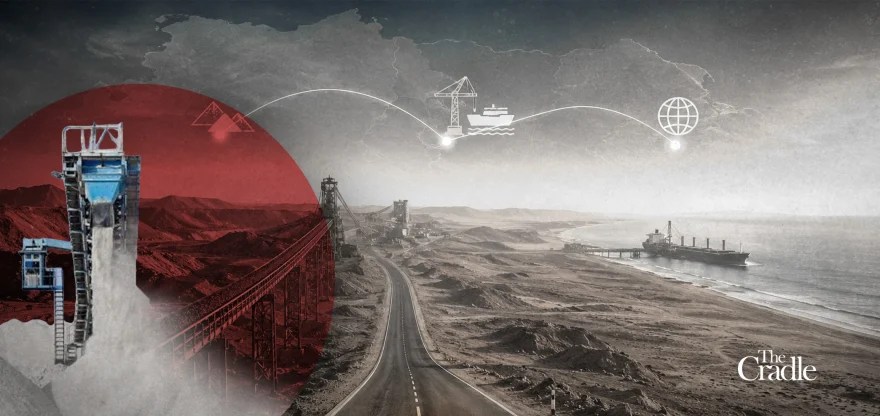
There is a machine in the Sahara you can see from space. A conveyor belt, the longest on earth, nearly one hundred kilometers of steel from a mine called Bou Craa to the Atlantic. For half a century it has moved phosphate out of occupied Western Sahara, through wars, ceasefires, and a promised referendum that never came. The richest layer of the deposit is already gone, sold before the Sahrawis could ever vote on it. And the electricity that keeps the belt running is sold to the state by a wind farm belonging to the king.
On 26 July, US President Donald Trump announced that the highway running past this machine now carries his name. The announcement arrived as a four-minute Truth Social video, narrated by an obvious AI voice praising his “historic courage.” Rabat, six days on, has not said the name out loud. It does not need to. The name was never the payment.
The road is. It is 1,055 kilometers of settlement poured across Africa’s last colony, the kind of road empires have always built and named for themselves. It connects the mine, the port, an Israeli-held offshore block, and the duty-free fertilizer now sailing for New Orleans under an emergency Washington manufactured itself. Follow it far enough and the asphalt runs from phosphate to palace.
An occupation, bought in installments
Every payment has a paper trail, and this one begins five years before the name. The convention that built the road was signed in the presence of Moroccan King Mohammed VI in El-Aaiun (also known as Laayoune) in 2015, on the 40th anniversary of the Green March, at a cost of 10 billion Moroccan dirhams (MAD) – or around $1.074 billion. Morocco poured its annexation in asphalt, as empires always have, long before Washington blessed it. What arrived in December 2020 was not the road. It was the signature.
Morocco became the fourth Arab state to normalize relations with the occupation state, and in exchange the US recognized Moroccan sovereignty over the whole of Western Sahara. Jared Kushner, Trump’s son-in-law, negotiated the deal and supplied the doctrine, likening the Sahara recognition to Trump’s recognition of Israeli sovereignty over the occupied Golan Heights. One occupation legitimized on the template of another. The architect said it so no analyst has to.
Tel Aviv paid its own installment in July 2023, when Netanyahu sent Mohammed VI a letter recognizing the Moroccan claim. A senior Moroccan official explained what the letter was for – Rabat expects the recognition to encourage Israeli investment in the territory. Recognition as prospectus. This is trans-Zionism as designed: the occupation state sets the template, Washington executes, the client kingdom collects.
What the road runs past
South of El-Aaiun, the machine comes back into view. The Bou Craa mine feeds its conveyor belt to the harbor at El-Aaiun, where bulk vessels have carried the territory’s wealth abroad since 1975. According to the figures of the world’s largest phosphate and fertilizer producer, Morocco’s OCP Group, Bou Craa delivers around a fifth of the company’s exports from just eight percent of its extracted volume. That is what occupations are for.
The quality tells its own story. Bou Craa’s deposit sits in two layers, and Western Sahara Resource Watch, which tracks every bulk shipment out of El-Aaiun, documented that Morocco has practically sold off the high-grade layer that should have been available to the Sahrawi people, mining the poorer second seam since 2014. What remains is the residue.
None of this is legally ambiguous. The UN’s legal counsel concluded in 2002 that further exploitation of the territory’s resources against the wishes of its people would violate international law. A South African court ruled in 2018 that ownership of a phosphate cargo from El-Aaiun was never lawfully vested in OCP at all. The company ships stolen goods. A court has said so. The road Trump wants his name on is the overland artery of that trade.
An emergency of Washington’s own making
The American market took the long way round. In 2021, Washington slapped a 19.97 percent countervailing duty on OCP after Florida’s Mosaic Company complained of subsidized competition. The rate yo-yoed for five years until a trade court cut it to 2.11 percent in December 2025 and Washington quietly dropped its appeal. Then came the war.
Washington’s strikes on Iran choked the Strait of Hormuz, the artery for roughly a third of the world’s seaborne fertilizer trade. Prices climbed, farmers rationed, and on 29 June Trump declared a national emergency under a Depression-era clause of the 1930 Tariff Act, suspending the duties entirely. The suspension is time-bound, not volume-bound: a USDA official confirmed OCP can ship unlimited tonnage for eight months. Washington set fire to the supply chain, declared an emergency over the smoke, and handed the normalization partner the keys to the American market.
Now examine what sails in. North African sedimentary phosphate is naturally high in cadmium, a carcinogen the EU capped at 60 milligrams per kilo in its fertilizers. OCP’s response was to lobby against the cap, hiring Dechert LLP and Edelman and proposing Brussels raise the limit to 80. The US has no comparable federal ceiling, leaving oversight to a patchwork of state rules. Europe’s restricted rock has found a market with no thermostat. American capital wasted no time: two weeks after the proclamation, US-based firm Koch Ag signed a joint venture stake in OCP’s fertilizer complex at Jorf Lasfar. The same conglomerate poured half a billion dollars into the occupation state’s tech sector through its investment arm Koch Disruptive Technologies (KDT), built under Eli Groner, Israeli Prime Minister Benjamin Netanyahu’s former top civil servant, settled in the occupied West Bank.
From phosphate to palace
Tracing the flow of revenue shows that it extends beyond the state treasury. OCP belongs to the Moroccan state. But the throne sits atop a parallel structure: the royal family controls roughly 60 percent of the Al-Mada conglomerate through personal holdings named SIGER and ERGIS, both derived from regis, Latin for king, feeding a fund in which Mohammed VI holds 50.6 percent. SIGER’s director, Mounir Majidi, is also the king’s private secretary: one man running the head of state’s office and the family vault.
Al-Mada’s energy arm, Nareva, is where the phosphate money turns royal. The wind farm at Foum el-Oued, built by a wholly-owned Nareva subsidiary, supplies nearly all the electricity OCP needs to mine Bou Craa, run the conveyor belt, and wash the rock for export. The state plunders the phosphate. The king sells the state the power that does the plundering. Every tonne leaving El-Aaiun has burned royal electricity first. All but one wind farm in the occupied territory sits in Nareva’s portfolio, and WSRW poses the question that answers itself: why would a king who profits from occupation ever back a UN peace process?
Moroccan outlet Barlamane reported that quantities invoiced on the expressway far exceeded the work actually built, prompting the equipment minister to bar the implicated survey bureau from public contracts for five years. On the road to Dakhla, even the overcharging is infrastructure.
The name was never the payment
Empires have always paved roads through conquered land and called it civilization. Rome did it, France did it in this same desert, and in July 2026 the tradition produced its densest month yet: duty-free phosphate sailing for New Orleans, Kosh Ag signing into Jorf Lasfar, and an American president naming a highway across a territory that was never Morocco’s to give. The belt at Bou Craa keeps turning, the royal turbines keep spinning, the receipts keep printing – and the only thing Rabat has still not done is say the name out loud.
Israel protects Mexican official wanted for mass kidnap-murder, along with accused sex criminals and fraudsters
Israel is home to droves of international criminals
By Nate Bear – ¡DoNotPanic! – July 31, 2026
Israel has become a haven for international criminals. Many are dual-nationals who have taken advantage of their ability to move seamlessly between Israel and their second country of citizenship to commit crimes and, in some cases, evade justice.
The scale of the criminality, and the volume of cases (relative to the population of Israel), is astonishing.
Among the most notorious accused criminals being protected from justice by Israel is Timur Mindich, the ultimate financial beneficiary of the Ukrainian drone maker Fire Point. Mindich fled to Israel last year, just days before being charged as the mastermind behind a $100 million embezzlement scheme involving Ukraine’s state nuclear power company. Mindich also happens to be the co-owner of Kvartal 95 Studio, the production company founded by Volodymyr Zelensky.
Mindich, like many in this article, has taken advantage of Israel’s controversial Law of Return which allows any Jew in the world to claim Israeli citizenship without having to renounce their home country passport.
Some of those accused and charged have made minor or international headlines, some haven’t, but the scale of the issue was such that I thought it would be useful to document my research here.
In some cases, Israel has refused to extradite the wanted person despite requests from the country in which the crimes were committed.
Staying on Ukraine and refused extradition requests, we have Oleksandr Dubilet, the former Chairman of the Board of Ukraine’s PrivatBank. Dubilet is currently a fugitive in Israel and the subject of multiple criminal investigations and extradition requests for his role in embezzling at least $100 million dollars following the 2016 privatisation of PrivatBank. To date, Israel has refused to extradite him.
Israel as a bolthole for financial fraudsters is a common theme. One of the most significant SEC fraud cases in recent years involved over 150 Israelis (some with dual US-Israeli nationality, others not), wanted for their role in conducting binary options fraud worth upwards of $100 billion.
Binary options are a type of financial bet where the outcome is essentially all-or-nothing. Instead of buying a stock or currency, you bet on whether the price of a stock or currency will be above or below a certain level at a specific time. While not illegal, the Israeli companies were accused of rigging and manipulating prices and expiry times and using fake identities.
For a decade until 2017, Israel was the global centre for the online binary-options industry. The Israeli police failed to investigate, so hundreds of cases were filed in Israeli courts by people from dozens of countries who had been defrauded.
One of the most notorious fraudsters was Lee Elbaz, the CEO of Yukom Communications, a dual US-Israeli national. She was arrested in 2017 when on holiday in New York and eventually convicted of wire fraud and sentenced to 22 years in prison.
Other prime Israeli movers in the binary options fraud business were Yossi Herzog and Yakov Cohen, both connected with Yukom and other binary options front companies. They were charged with $140 million fraud in 2019 but despite being under a DOJ criminal investigation the US choose not to pursue their extradition, while other Israeli co-conspirators in the Yukom case have joined Elbaz in serving jail sentences.
Other Israeli kingpins in the binary options sector include Ran Amiran and Malhaz Patarkazishvili, also known as Pini Peter. They were charged with $100 million fraud by the SEC for their role managing the fraudulent options trader Spot Option. Because it was a civil case and the DOJ wasn’t involved they weren’t eligible for extradition from Israel and continue to reside in Israel. It was reported in 2021 that Amiran had reached a financial settlement for the damages with the SEC, likely so that he could once again travel to the US. Peter, a friend of Netanyahu’s, remains unrepentant, despite being ordered to pay the US government $87 million, a judgment he has appealed.
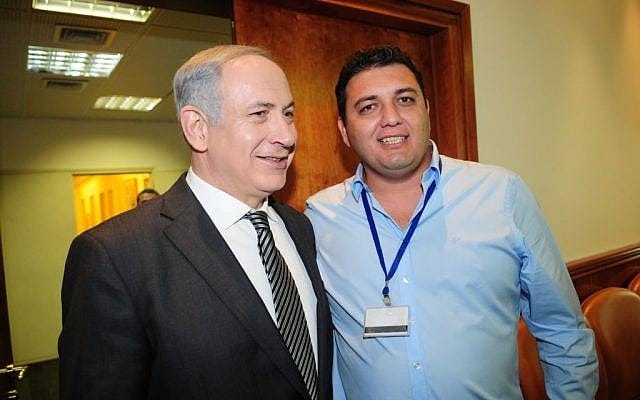
Benjamin Netanyahu with financial fraudster Pini Peter
There are hundreds of other Israel-linked individuals charged with binary options fraud identified on the SEC website, including joint German-Israel nationals Gil and Raz Beserglik who ran binary options call centres out of Germany to scam people.
Another hotbed of Israeli fraud is the moving industry, where companies pose as legitimate household goods movers only to steal belongings or withhold items unless additional payment is made. One of the largest “hostage load” prosecutions was of Advanced Moving Systems, an Israeli-run company which lured customers with artificially low moving estimates and then extorted them by holding their household goods hostage until they paid fraudulently inflated prices. Many of the dozens of people behind the scam remain wanted, with their current location unknown. Dozens of other Israelis connected with fraudulent moving companies also remain on the run, and have likely fled to Israel. (Incidentally, the Israelis arrested by the FBI on September 11th and quickly released were working for a Mossad counterintelligence operation using a moving company as cover. But that’s another story).
Penny stock fraud is another rich seam for Israeli crooks. This type of fraud takes place when the stocks of small companies trading under $5 a share are marketed to often older and uniformed people using high pressure sales marketing tactics, with the caller promising guaranteed returns, often claiming to have inside information. One of the largest instances in recent years saw dual US-Israeli citizen Sharone “Barry” Perlstein and numerous Israeli co-conspirators charged with creating at least 15 fraudulent public shell companies to sell millions of dollars worth of penny stocks using fraudulent tactics. Previous penny stock fraud cases had also involved Israeli nationals.
The diamond industry has also attracted a fair share of Israeli swindlers. One of the most well-known is Mordechai “Moti” Ferder, a California-based luxury jeweller at the centre of one of the largest fraud scandals in the American jewellery industry. Ferder was accused of juicing his company’s accounts to boost the valuation before selling to an investment company, while in reality he was racking up liabilities worth hundreds of millions of dollars. In 2025, with an FBI investigation underway, Ferder fled California for Tel Aviv.
Then there is Gery Shalon, the Georgia-born Israeli responsible for hacking JP Morgan and carrying out the largest theft of customer data from an American financial institution in history.
Outside the fraud cases, Israel also attracts politicians attempting to shield themselves from justice in their home countries. One of the most notorious and ongoing cases is that of Tomás Zerón, the former director of the Criminal Investigation Agency of Mexico. Zerón, who received training in Israel before assuming control of Mexico’s version of the FBI, is accused by Mexican authorities of having direct involvement in the kidnap, torture, and likely murder of dozens of university students.
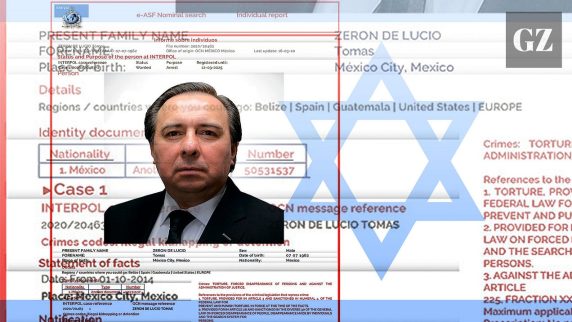
The Ayotzinapa kidnapping is considered one of Mexico’s most heinous human rights abuse cases. It took place in 2014, when forty-three leftist students were kidnapped and disappeared on their way to Mexico City to commemorate the anniversary of the 1968 Tlatelolco massacre. Zerón is said to have known or ordered the students to be handed over to a cartel group to be murdered and disposed of. The former Mexican top cop promptly fled to Israel after being officially accused of participating in the crime.
Despite an extradition order, an Interpol red notice and numerous requests from Mexico to hand him over, Israel has refused, reportedly as punishment for Mexico’s criticism of Israel at the UN.
Another Mexican diplomat who fled to Israel is Andrés Roemer. Formerly Mexico’s Ambassador to UNESCO based in Paris, and Consul General of Mexico in San Francisco, Roemer fled to Israel in 2021 after being accused by 61 women of rape and sexual assault. While a Jerusalem court has authorized the former diplomat’s extradition to Mexico, he remains in Israel under house arrest.
Roemer is not alone among Jewish sex criminals fleeing from justice in the home countries to Israel. The phenomenon is so prevalent that even CBS News has covered it. Probably the most famous accused sex criminals to have fled to Israel are the Hollywood directors Brett Ratner and Bryan Singer. Rush Hour director Ratner, a good friend of Netanyahu’s, fled to Israel in 2023 after being accused by multiple women of sexual misconduct and assault on set.
Singer, the director of two X-Men films and the 1990’s hit, The Usual Suspects, fled to Israel around 2020 after being accused of sexual abuse, including of children.

Brett Ratner with Benjamin and Sarah Netanyahu, and ultra-Zionist attorney Alan Dershowitz
Israel is a magnet for criminals of all flavors, making this brief compendium just the tip of the iceberg. The Law of Return, known to be policed very lightly, is a gateway allowing Jews to use their dual nationality to commit crimes and then swerve justice under an ethno-supremacist legal regime set up to protect them. Some succeed in avoiding justice, while others are not so lucky.
Featured Video
BRITAIN’S WARNING: PREPARE FOR WAR
or go to
Aletho News Archives – Video-Images
From the Archive
How Ukraine Tortured and Slaughtered Donbass
By Kit Klarenberg | Al Mayadeen | July 11, 2024
Almost immediately after the proxy war erupted, ISIS-tier footage of the torture and murder of Russians in Ukrainian custody emerged.
On July 6th, the New York Times published an astonishing investigation: In Ukraine, Killings of Surrendering Russians Divide an American-Led Unit. The article documents in grim detail how Chosen Company, an international volunteer battalion for Kiev, routinely executes Russian prisoners of war. It is the very first mainstream admission that this practice – a brazen breach of the Geneva Conventions, and a grave war crime – is widespread among Ukraine’s fighters, both foreign and homegrown. … continue
Blog Roll
 Aletho News
- Israel Demolishes Home Of Lebanese Journalist Whose Viral Film Exposed Pager Attack
- Record Oil, Empty Tanks: The UAE’s Miracle Recovery
- Burnham tackles Britain’s poverty with aggression in Yemen
- Peace in Ukraine: the easy way – or the hard way
- Trump & the Rrrrussians
- US taxpayer money laundered back through Ukraine – Musk
- Before COVID, an NIH lab chief proposed making a SARS-like bat virus more infectious
- Gates, Bourla on Trial in Netherlands Accused of ‘Great Reset’ Scheme at Vaccine Injury Hearing
- BRITAIN’S WARNING: PREPARE FOR WAR
- “Historic Russia”: The Land Putin Will Not Give Back
- If Americans Knew
- DAILY UPDATE: Latest essential news on Palestine, Israel, & region
- Damning report shows the media must confront its failures on Gaza
- BBC senior broadcaster speaks out on Gaza coverage
- Netanyahu vows vast West Bank invasion in response to 20-minute skirmish that left 2 Israeli soldiers and 2 Palestinian fighters dead
- Tied up and tortured: Israel using US-made electroshock weapons on Palestinian detainees
- The outsourced risk: how newsrooms rely on Gaza’s freelancers without protecting them
- Gaza bakeries forced to shut as Israel blocks flour shipments
- Gaza’s breast cancer patients face a deadly wait for treatment amid Israel’s genocide
- DAILY UPDATE: Latest essential news on Palestine, Israel, & region
- The Israel Lobby’s Changing Fortunes
- No Tricks Zone
- Two New Studies Find Thwaites Glacier Melt Cannot Be Driven By Human Activity Or A Warming Ocean
- E-Cars Reduce CO2 Emissions By Only 41% Compared To Internal Combustion Engine Vehicles
- Predictions Made By Renowned Climate Professor Over Past Decades Have Been Proven To Be Poor
- New Study Suggests Large Regions Of The Pacific Ocean Have Been Cooling For The Last 80 Years
- Germany’s Green Energy Debacle: High Energy Costs Force Kahla Porzellan to Close After 182 Years!
- New Study: 50 Years Of The Most Aggressive ‘Net Zero’ Policies Can Only Affect The Global Climate By 0.03°C
- US September “Heat” Was No Record…Many Records Set Decades Ago
- Latest European Green Energy Debacle; Portugal’s Largest Flagship Solar Park Insolvent!
- Green Energy Debacle: German Expert Professor Fritz Vahrenholt Warns Of Severe Economic And Social Consequences
- Two More Paleo Reconstructions Affirm Meters-Higher Sea Levels Across Ireland, Brazil 7000-6000 Years Ago

