The spark in Tell: How a village resistance disrupted Israel’s West Bank strategy

By Ramzy Baroud | MEMO | July 25, 2026
During a military raid on the small town of Tell, southwest of Nablus, a moment of direct defiance shattered the illusion of total Palestinian submission.
Faced with relentless military incursions, land confiscation, and settler harassment and violence, local villagers and farmers refused to retreat.
In the confrontation that followed, a single Palestinian disarmed an Israeli soldier and opened fire on the invading forces near the illegal Havat Gilad settlement outpost, killing two soldiers and wounding three others.
What followed was the predictable, unyielding fury of the occupation: Israeli forces and state-backed armed settlers immediately launched a series of raids across Tell and neighboring communities, killing four Palestinians, setting fire to homes, and converting residential buildings into field interrogation centers.
In a swift collective punishment campaign, Israeli occupation troops detained over 70 Palestinians—including more than 40 in Tell alone—while expanding military incursions into Jenin, Tubas, Tulkarm, Ramallah, Hebron (Al-Khalil), Bethlehem, and Jericho.
Prime Minister Benjamin Netanyahu and Defence Minister Israel Katz promptly ordered a “wide-scale military operation,” while UN Special Rapporteur Francesca Albanese unequivocally condemned the combined army-settler assaults as “pogroms against defenseless civilians,” reiterating calls for an immediate arms embargo and trade sanctions against Israel.
Yet to understand the spark in Tell, one must understand the explosive pressure cooker that the occupied West Bank has become.
Netanyahu’s primitive calculus
Netanyahu’s immediate response to the incident in Tell was not a departure from policy, but the activation of an old, entrenched doctrine: every act of Palestinian resistance—no matter how localized—must be weaponized to accelerate the state-sponsored theft of Palestinian land.
For decades, Israel’s security apparatus has used local resistance as cover to achieve long-standing demographic and territorial ambitions. Under the current far-right coalition, this strategy has reached unprecedented levels of speed and brutality.
The scale of destruction
Since October 2023, while global media attention focused primarily on the horrors in Gaza, Israel systematically expanded its offensive across the occupied West Bank:
- Over 1,090 Palestinians—including at least 239 children—have been killed by Israeli forces and state-backed armed settlers.
- Over 6,800 Palestinians have been injured by live ammunition, shrapnel, and physical assaults, with settler attacks alone accounting for a surging majority of recent civilian injuries.
- More than 10,000 Palestinians have been forcibly displaced due to home demolitions, violent settler rampages, and severe access restrictions. Entire Bedouin and rural communities across the South Hebron Hills and the Jordan Valley have been systematically depopulated and cleansed.
- Over 11,000 Palestinians have been swept into detention through military night raids, held under arbitrary administrative detention without charge or trial.
- Under Finance Minister Bezalel Smotrich—who was granted official authority over civilian affairs in the West Bank—the Israeli government declared tens of thousands of dunams of Palestinian territory as “state land,” marking the largest continuous land grabs since the Oslo Accords. Concurrently, dozens of illegal settler outposts were retroactively legalized, and thousands of new settlement housing units were advanced.
Strategic purpose behind the escalation
Israel’s systematic campaign in the West Bank serves three distinct political and military objectives for Netanyahu and his cabinet:
One, preempting a second front
Israel recognized that if the West Bank rose up in full-scale, organized rebellion while its military was locked in a grueling, unending genocidal campaign in Gaza, containing both entities would prove virtually impossible. Having failed to crush the Palestinian resistance in Gaza despite its overwhelming military force, Israel applied heavy-handed, preemptive violence in the West Bank to terrorize the population into total submission.
Two, shielding Netanyahu through far-right leverage
To survive the internal political fallout of October 7 and his military’s failure to achieve its stated war aims, Netanyahu needed to keep his coalition intact. He granted far-right ministers Bezalel Smotrich and Itamar Ben-Gvir absolute freedom to execute their ideological agenda: expanding illegal settlements, annexing Area C, arming settler militias, and repeatedly invading and altering the status quo at the Al-Aqsa Mosque compound in occupied East Jerusalem.
Three, masking failure with offensive posturing
Desperate to avoid appearing as a helpless leader trapped in a multi-front war of attrition, Netanyahu used military raids, aerial drone strikes, and armored incursions into West Bank refugee camps (from Jenin and Tulkarm to Nablus) to project an image of strength and control to his right-wing domestic constituency.
Settler terror and the bankruptcy of the PA
This campaign of state-sponsored expansion was smoothed by two major factors on the ground:
Unchecked settler paramilitarism
Armed by Itamar Ben-Gvir’s National Security Ministry, violent settler gangs have been fully integrated into state-sanctioned paramilitaries. Settlers launch routine, organized pogroms against Palestinian villages—burning homes, destroying olive groves, stealing livestock, and firing live ammunition at civilians—with the direct protection and active participation of the Israeli military.
The subjugation and inaction of the PA
The Palestinian Authority (PA) has completely abandoned its fundamental duty to protect its people. Rather than formulating a national defense strategy or providing at least symbolic leadership to resist land theft, the PA security forces continued security coordination with the occupation.
The PA actively cracked down on local resistance fighters, confiscated weapons, and suppressed public demonstrations, acting as a sub-contracted administrative force managing Palestinian subjugation on Israel’s behalf.
Why mainstream analysis fails
Most media and political analysts will inevitably frame the current escalation around narrow parliamentary metrics. They will point to upcoming Israeli elections, arguing that Netanyahu is provoking violence purely to consolidate the far-right vote, satisfy Ben-Gvir and Smotrich, and outflank his political rivals.
International human rights bodies will issue familiar warnings, humanitarian organizations like MSF will voice alarm over raids on medical facilities like Nablus Specialized Hospital, and political blocs like the European Union will issue toothless calls for “all parties to de-escalate.”
Meanwhile, the United States government continues to funnel billions of dollars in heavy weaponry to Israel, reinforcing an episode of historical complicity.
What these analyses consistently fail to grasp is the reality of Palestinian agency.
They treat Palestinians as passive victims waiting for international intervention or political shifts in Tel Aviv and Washington. But the explosion in Tell proved that the status quo of total encirclement, daily humiliation, and existential dispossession is inherently unsustainable.
The rebellion did not start where standard military analysts expected it to—it ignited in a small farming town among people who decided that fighting back was the only response left to quiet, gradual annihilation.
The West Bank will not remain silent forever; it will rise at the time and place of its people’s choosing, rendering conventional political forecasts useless.
Suspension of attacks on Iran not enough, war must end: Russia
Press TV – July 26, 2026
A senior Russian foreign ministry official has called for a permanent end to the US war of aggression against Iran, saying that Washington’s plans to expand attacks must be cancelled for good.
Mikhail Ulyanov, who serves as Russia’s Permanent Representative to International Organizations in Vienna, said on Sunday that the United States has to accept that it has failed to reach its objectives by launching a military aggression against Iran.
“To suspend plans to expand strikes on Iran is not enough. Those plans must be cancelled. It is high time to recognise that this conflict has no military solution,” Ulyanov said in a post on his X account.
The comments came after reports emerged that the US has run short of military stockpiles, causing it to suspend plans for a large-scale aggression against Iran.
The reports published in the US media have pointed to pressure on stockpiles of Patriot interceptors and other defensive weapons that the US needs to fend off extensive Iranian missile and drone attacks on its military bases in the West Asia region.
That comes as US President Donald Trump has continuously threatened Iran with an escalation in attacks.
The threats and the following reports about suspension of plans for a large-scale aggression come as Iran and the US have been exchanging fire since a tentative agreement between the two that had been signed in June fell apart earlier this month over disputes surrounding the control of the Strait of Hormuz.
Iran says the US has violated the terms of the agreement by trying to interfere in the management of the Strait, which is exclusively devolved to Iran based on the terms of the agreement.
Iran’s fierce response to US attacks and its increased restrictions on transit in Hormuz have caused a fresh spike in international oil prices, further pressuring Washington and its plans for continuing the aggression.
The Iranian-allied government of Yemen has also entered into a conflict with Saudi Arabia in the past days, restricting the movement of oil tankers in the Red Sea and fueling more energy price rises in international markets.
Reports by CNN and The New York Times have pointed to dwindling munition supplies and concerns about the risk of a wider war in the West Asia region as key reasons for the US suspending plans to expand attacks on Iran.
Both news outlets have cited statements from top US government officials suggesting they have serious reservations about continuing the aggression against Iran.
India’s reluctance to confront US over Chabahar attacks exposes contradictions in its Iran policy: Journalist
Press TV – July 26, 2026
India’s continued reluctance to openly challenge Washington despite the recent US attacks on Iran, including the strategic coastal city of Chabahar, has exposed the contradictions at the heart of New Delhi’s foreign policy, says an Indian journalist and foreign policy analyst.
Speaking to the Press TV website, Sanjay Kapoor, founder and editor of Hardnews magazine and president of the Editors Guild of India, said India’s approach towards Chabahar has never been independent of US policy on Iran, noting that New Delhi has consistently calibrated its engagement with the strategic Iranian port around Washington’s broader regional strategy.
“India decided to take up the Chabahar project only after then US President Barack Obama had signed the JCPOA and there was a global attempt to normalise ties with Iran,” Kapoor said.
He noted that India, like many other countries, had also severed its energy relationship with Iran after Washington instructed New Delhi to stop purchasing Iranian oil, underscoring India’s willingness to accommodate American concerns over the Islamic Republic.
“India also cut energy ties with Iran after the US told New Delhi to stop buying Persian oil. In other words, India has been mindful of US concerns on Iran,” he stated.
Kapoor said the Bharatiya Janata Party (BJP)-led government in New Delhi has simultaneously cultivated close strategic relations with Israel, a policy that has further aligned India’s foreign policy with that of Washington.
“Besides, this BJP government has been close to Israel also, which ensures that New Delhi stays close to the US and its foreign policy,” he told the Press TV website.
His remarks follow the recent US aggression against southern Iran, during which the port city of Chabahar was also targeted, raising questions over the future of India’s flagship connectivity project in the region and whether New Delhi can continue portraying the port as a strategic priority while avoiding direct criticism of US attacks on Iranian territory.
Located on Iran’s southeastern coast, Chabahar has long been regarded as India’s gateway to Afghanistan and Central Asia, allowing it to bypass Pakistan while providing Tehran with an important regional trade hub.
India has invested in developing the Shahid Beheshti terminal of the port, viewing Chabahar as a counterweight to Pakistan’s Gwadar Port under the China-Pakistan Economic Corridor (CPEC).
Deep historical ties have not translated into strategic consistency
Despite India’s cautious approach in recent years, Kapoor told the Press TV website that relations between Iran and India rest on centuries of historical, cultural and religious interaction.
He pointed out that India is home to the world’s second-largest Shia population after Iran, adding that religious links between the two countries continue to shape people-to-people relations.
He also referred to Imam Khomeini’s old ties with his hometown, Lucknow, the capital of northern India’s biggest state, Uttar Pradesh.
“There is continuous interaction between the Shia clergy in India with their counterparts in Iran and Iraq,” he noted, adding that Iran has traditionally viewed India differently from many other countries, pointing to the longstanding cultural affinity between the two civilizations.
“Iran also never saw India as a foreign country. They also perceive Kashmir in India as Iran-e-Sagheer (little Iran),” he said, referring to the Muslim-majority Himalayan region of Kashmir in northern India.
Kapoor argued that successive governments in New Delhi believed these deep-rooted ties would allow India to preserve its relationship with Tehran even while strengthening strategic cooperation with Washington.
“The Indian government under the BJP always believed that they will manage substantial ties with Iran like they managed the Chabahar Port,” he stated.
However, he maintained that New Delhi ultimately regarded alignment with the United States as the more pressing strategic priority.
“For whatever reason, they thought they had more compelling reason to align themselves with the US. They believed that Iran could wait,” Kapoor remarked.
According to the veteran journalist, India’s reluctance to publicly support Iran stems less from hostility towards Tehran than from its determination to remain aligned with Washington’s geopolitical ambitions.
“Their reluctance to support Iran openly is due to their desperation to be on the right side of the US,” he stressed.
He believes Indian policymakers expect the current regional situation to evolve and remain confident that New Delhi’s long-standing doctrine of strategic autonomy will eventually enable it to restore any damage to bilateral relations.
“They believe that what’s happening is transitory and the final outcome will look different from now. Their resort to strategic autonomy in their foreign policy will give them a chance to make up with the Iranian government,” Kapoor said.
US attacks have exposed the fragility of India’s Chabahar strategy
Kapoor said Chabahar was originally conceived as a stable alternative to Iran’s other major ports, making it particularly attractive to India when Tehran offered New Delhi the opportunity to develop the Shahid Beheshti terminal.
“Chabahar was meant to be away from the ferment that used to be in Bandar Abbas. It was expected to be stable and peaceful. That was the unique selling point of Chabahar when its terminal, Shahid Beheshti, was offered to India by the government of Iran,” he said.
However, he said the recent US attacks around the port have fundamentally altered those assumptions.
“For some strange reason, Chabahar is facing the ire of US attacks. They have misiled and bombed the port.”
Kapoor questioned New Delhi’s claim that Indian infrastructure at the port escaped damage during the attacks.
“The Indian government says Indian infrastructure has not been lost due to the attack. That’s saying a bit much,” he added.
The senior Indian journalist noted that New Delhi invested approximately $120 million in the Shahid Beheshti terminal but deliberately limited further investment because US sanctions made financing increasingly difficult.
According to Kapoor, Russian government sources have previously indicated that Moscow helped India overcome funding shortages for the project on several occasions.
Despite maintaining its presence at Chabahar for years, Kapoor argued that New Delhi never fully embraced the project.
“Despite soldiering on for many years, India always remained a reluctant partner,” he said.
Kapoor said many Iranian experts have long argued that Tehran deliberately preserved Chabahar as an opportunity for India despite having other potential partners.
“As many Iranian experts told me, Tehran had kept Chabahar for India,” he told the Press TV website. “They argue that if they had wanted, they could have given the port to Pakistan, China or even Russia.”
He said India’s strategic calculations changed significantly after the United States withdrew from Afghanistan, removing one of the principal reasons behind New Delhi’s investment in the Iranian port.
“India thought Chabahar had become untenable after the US left Afghanistan,” he said.
Rather than engaging with Afghanistan’s new Taliban-led government, Kapoor said India shifted its focus to alternative connectivity initiatives backed by Washington and several of its regional partners.
The journalist believes India’s regional priorities have increasingly shifted away from Chabahar towards the India-Middle East-Europe Economic Corridor (IMEC), a US-backed connectivity initiative linking India with Europe through the UAE, Saudi Arabia, Israeli-occupied territories and Mediterranean countries such as Greece and Italy.
“India did not want to negotiate with the Taliban and happily became part of IMEC, which promised a lot, including a seat on the G7 high table,” he stated.
Kapoor recalled that speculation briefly emerged in Indian media about reviving New Delhi’s engagement with Chabahar following the signing of a memorandum of understanding (MoU) between Tehran and Washington. However, he said those expectations quickly faded once the ceasefire broke down and US attacks on Iran resumed.
India depends on Afghanistan and Washington’s calculations
Asked whether the long-term success of Chabahar ultimately depends on Iran’s stability and sovereignty, Kapoor said New Delhi’s strategic calculations extend beyond developments inside Iran.
“Chabahar’s stability depends, in India’s estimation, on who controls Afghanistan and on how the US perceives the port,” he noted.
He explained that India’s primary motivation for investing in Chabahar was never limited to commercial interests alone but centred on gaining direct access to Afghanistan while bypassing Pakistan.
According to Kapoor, changes in the regional geopolitical landscape have complicated those calculations.
“My contention may not square with the views of others, but India would only make a pitch for Chabahar if it doesn’t elicit a hostile response from its (Persian) Gulf partners and that’s only possible if Washington is backing India to help Afghanistan as well as support against Pakistan,” he said.
He argued that Pakistan remains a central factor in India’s strategic thinking, noting that the evolving military balance in South Asia following the recent war against Iran has further complicated New Delhi’s decision-making.
“After the recent war in West Asia, there has been a shift and Pakistan is better off militarily. What happens next will impact India’s policy towards Chabahar,” he remarked.
To Kapoor, India’s future investment in the port will depend primarily on the trajectory of Iran-US relations and Pakistan’s regional position.
“To sum up, India will invest in Chabahar if the US builds working relations with Iran and Pakistan is on the defensive due to this.”
Relations with Israel carry long-term risks
Kapoor said India’s growing partnership with Israel inevitably raises questions in Iran about the future direction of bilateral relations.
“Ordinarily, the trust that India and Iran enjoy should get eroded after PM Modi was in Tel Aviv just days before the war broke out,” the Indian journalist stated.
“The moot question that Iran should ask itself is whether India is a friend or a foe,” he added, pointing to the numerous interactions between Indian and Israeli leaders in recent years.
He added that despite increasing strategic cooperation with Israel and close ties with Washington, India has so far managed to preserve working relations with Iran.
According to Kapoor, New Delhi appears confident that it can maintain relations with “both sides” without suffering major diplomatic consequences.
IRGC breaks down US military losses over 15 days of Iranian strikes
Al Mayadeen| July 25, 2026
Iran’s Islamic Revolution Guard Corps (IRGC) spokesperson Hussein Mohebbi outlined US military losses during fifteen days of retaliatory Iranian strikes on US bases across the region, in response to US aggression on the country launched from these bases.
In remarks to Tasnim, Mohebbi detailed that Iranian strikes destroyed a range of fixed-wing aircraft, helicopters, and unmanned aerial vehicles.
US aircraft losses:
- 11 stationed fighter jets and helicopters
- 17 reconnaissance and operational UAVs
- Eight intact units
- Eight aerial refueling tankers
- Four heavy military helicopters
- One F-15 fighter jet struck inside a hardened shelter
- One P-8 Poseidon maritime patrol aircraft
- One C-17 Globemaster heavy transport aircraft
US radar, command infrastructure
The IRGC spokesperson said Iranian forces also inflicted significant damage on US military surveillance, air defense, and command infrastructure during the fighting, destroying multiple command-and-control centers, radar installations, air defense systems, and satellite communications assets.
- Seven command-and-control centers
- Six Patriot air defense radar units
- Eight early warning and detection radar systems
- Seven air defense missile radars, five long-range radar systems
- Five specialized FPS and FPS-117 radar systems
- Three air and maritime surveillance radars
- Three satellite communications systems
US defense and logistics assets
Mohebbi also claimed that Iranian strikes caused extensive damage to military infrastructure at US bases, targeting aircraft shelters, drone facilities, hangars, and operational infrastructure used to support air operations.
- Six MQ-9 Reaper drone hangars
- Five fighter aircraft hangars and four hardened shelters
- One F-15 fighter preparation hangar, one UAV hangar housing eight new drones
- One P-8 aircraft hangar
- Six flight and parking ramps
- Four HIMARS mobile artillery rocket launchers
- Four Patriots
Supply and intelligence facilities:
- 17 depots containing weaponry
- Naval vessel components
- Aircraft spare parts were destroyed
- 12 fuel storage tanks
- One fuel dock
- One aircraft carrier refueling platform
The losses also included, as per the spokesperson, six underground missile bunkers, six fighter and helicopter maintenance centers, two signals intelligence communication centers, one data intelligence hub, one artificial intelligence processing center, one Amazon data node, and one unmanned surface vehicle (USV) storage facility.
Over 200 American soldiers killed in strikes on US bases
Brig. Gen. Hossein Mohebi revealed that the US casualty figures from recent Iranian strikes were inaccurate, stressing that more than 200 American personnel were killed during Operation Nasr 2.
He described US reports on its military casualties as “an outright lie.” The IRGC spokesperson added that Iranian forces struck eight US military bases during the operation, including one facility containing 20 hangars that were destroyed.
According to Mohebi, more than 200 US personnel were killed in Operation Nasr 2, while the number of wounded was “far higher” than the reported death toll.
The spokesperson also urged the American public not to allow what he called their “dishonest military commanders” to mislead them about the extent of the losses.
He further called on the US government to allow journalists access to the strike locations so they could independently assess the damage and determine how many personnel had been killed.
It is worth noting that Iran has repeatedly said that US military bases and economic assets in the Gulf region have been used to launch acts of aggression against Iran, including strikes that have resulted in civilian casualties. In this context, Iran frames any action against such facilities as retaliation against hostile military activity originating from or enabled by those bases.
Iranian strikes have forced US to halt, revisit regional strategy: Army spokesman
Press TV – July 25, 2026
Iran’s decisive retaliatory strikes in the face of the United States’ violations have forced Washington to halt and revisit its regional strategy, Army spokesman says.
Brigadier General Mohammad Akraminia made the remarks during a televised interview on Saturday, stating that coordinated operations by the Army and the Islamic Revolution Guards Corps (IRGC), including airstrikes, missile strikes, and drone operations against US positions in Kuwait, Qatar, and Erbil, Iraq, have brought Washington’s regional strategy to a halt and forced it to alter its strategic approach.
Turning to Iran’s recent retaliatory military operations, Akraminia said the Islamic Republic launched the strikes after the United States violated its commitments under a memorandum of understanding reached last month, and attempted to establish an illegal shipping route through the Strait of Hormuz in violation of the MoU.
Over the past 15 days, he said, the operations focused on US military bases in Jordan, Kuwait, and Bahrain, describing them as among Washington’s most important military installations in the region.
According to the spokesperson, decades of US investment in regional military infrastructure, particularly after the 2003 invasion of Iraq, had made those facilities strategically significant.
However, as a result of Iran’s reprisal, many US facilities across the region have suffered damage severe enough to prevent them from carrying out their previous missions, he stated.
Akraminia cited the US Fifth Fleet in Bahrain as a case in point. “There is now virtually nothing left of this base,” he said, hailing the Iranian operations for rendering the outpost effectively unusable.
The spokesman referred to US President Donald Trump’s acknowledgement that Washington had supplied weapons to counterrevolutionary elements based in Iraq’s Kurdistan Region, but noted that Iranian strikes have robbed those elements of their operational capability and virtually destroyed the American military infrastructure in Erbil.
The official credited the success of the drone strikes among the operations to Iran’s employing a new generation of loitering munitions, citing deployment of the country’s Arash-2 drones.
‘Retaliatory deterrence’
The Army spokesperson described Iran’s military strategy in the face of the American violations as one of “retaliatory deterrence.”
He said the Islamic Republic’s objective was to raise the cost of aggression sufficiently to deter future attacks.
In the face of the retaliation, the United States has reached a strategic impasse, lacking a coherent strategy either to continue the war or bring it to an end, Akraminia said. The official cited contradictory statements by the US president as evidence of strategic confusion.
Akraminia, meanwhile, said the United States would also bear the greatest long-term strategic costs of the cycle arising out of its violations in light of the significant economic, geopolitical, and security consequences that have resulted from the Islamic Republic’s reprisal.
Elsewhere in his remarks, the spokesperson noted how the United States and the Israeli regime also failed to achieve either their declared or broader objectives during their unprovoked aggression against the Islamic Republic that took place from February 28 to April 7.
He noted that Washington’s publicly stated goals included destroying Iran’s nuclear and missile capabilities and eliminating the regional Resistance Front, besides reminding how the US president had also demanded Iran’s “unconditional surrender” during the early stages of the aggression.
According to the official, the adversaries also pursued broader objectives, including overthrowing Iran’s Islamic establishment, partitioning the country, and advancing the so-called “Greater Israel” project that features Tel Aviv’s expansionist ambitions.
None of those objectives was, however, achieved, he stated, attributing the outcome to public support, the Islamic Republic’s sagacious leadership, and the performance of the country’s Armed Forces.
“Tonight marks the 147th consecutive night of the people’s presence and support for the Islamic establishment, and this steadfastness demonstrates that the enemy has failed to accomplish its objectives,” the spokesman said, referring to unfailing presence across the country’s streets in support of the Islamic Republic and its defensive and retaliatory operations.
Ukraine attacks Iranian ship, kills sailor – Tehran
RT | July 25, 2026
At least one sailor was killed and another injured in a Ukrainian strike on a cargo vessel in the Caspian Sea, the Iranian Foreign Ministry has said, denouncing the attack as an act of aggression and warning of potential retaliation.
The drone attack was publicized on Saturday by Ukrainian leader Vladimir Zelensky, who bragged on X about achieving “very strong results with long‑range strikes in the Caspian Sea.” The strikes affected “vessels used in military cargo shipments involving Iran, as well as a warship,” Zelensky claimed on X.
Tehran responded to the incident later in the day, confirming its commercial vessel came under the “Ukrainian regime’s attack” in the landlocked waterway. The strike killed one sailor aboard the vessel and wounded another one, the Foreign Ministry said in a statement without providing any details on the extent of the damage sustained by the ship.
The ministry condemned the attack as an act of aggression that “risks further fueling and expanding the flames of war.” It urged other nations to take a “responsible stance toward this reckless action by the Ukrainian regime” and hold its leadership accountable.
“The Islamic Republic of Iran will not hesitate to protect its national interests and security. It is clear that the responsibility for the consequences of the Ukrainian regime leader’s adventurism will lie entirely with that regime, as well as its backers and instigators,” the ministry warned.
The ministry reiterated that “Iran has never intervened in the Russia-Ukraine conflict,” while arguing that Kiev’s actions show it has been “dangerously seeking to spread war and instability.” Ukraine has repeatedly accused Tehran of supporting Moscow in the hostilities, namely by supplying it with assorted drones and missiles.
While Moscow and Tehran have never attempted to hide their close cooperation, which is governed by bilateral agreements, both have dismissed the Ukrainian claims regarding large-scale arms shipments. While the Russian Geran-2 and the Iranian Shahed-136 UAVs do bear distinctive similarities, both, as well as analogous drones fielded by multiple countries, including the US in recent years, are inspired by the Dornier DAR drone developed in West Germany in the mid-1980s.
Kiev has actively tried to become involved in the Middle East conflict triggered by the US-Israeli attack on Iran earlier this year. The Ukrainian leadership has claimed to have secured deals with Gulf states to provide them with specialists and technology to counter Iranian drones and is hoping to secure additional anti-aircraft systems and munitions in exchange.
More than 200 Ukrainian military experts have been deployed to the Middle East under the deals, according to Zelensky. Ultimately, the group reportedly sustained personnel casualties and equipment damage in an Iranian strike on a depot in Dubai during the first wave of active hostilities in the region. Kiev has denied the incident took place.
Nablus: When the killer becomes the victim
By Tamer Ajrami | MEMO | July 25, 2026
In the occupied West Bank, the story often starts too late.
It starts when an Israeli settler is killed, injured, or frightened. It starts when Israeli officials speak, when the army enters Palestinian villages, and when headlines describe a “clash” or a “terror attack”. Suddenly, the settler becomes the victim, the Palestinian village becomes the threat, and the occupation disappears from the story.
But Nablus cannot be understood from the middle of the story.
For years, Palestinian villages around Nablus have lived under daily pressure: land seizures, settlement expansion, military raids, road closures, intimidation, and settler violence.
This is not a normal conflict between two equal communities. It is a system where one side expands with weapons, army protection, and state support, while the other side is expected to remain silent.
That is why the recent events of yesterday near Nablus cannot simply be called a “clash”. The word sounds neutral, but the reality is not neutral. A clash suggests two equal sides. But there is no equality between armed settlers living on occupied land and Palestinians living in villages surrounded by settlements, checkpoints, and military control.
Of course, individual settlers can suffer. Death is death. Fear is fear. No human pain should be mocked or ignored. But the pain of one incident cannot erase the larger reality. A settler can be a victim in one moment, while still being part of a wider system that causes fear, dispossession, and daily suffering for Palestinians.
This is the contradiction: the executioner becomes the victim only when the story is cut away from its history.
When the headline begins with Israeli pain, Palestinian pain becomes invisible. The settler becomes a civilian under attack. The Palestinian becomes a security threat. The settlement becomes a neighbourhood. The occupied village becomes a battlefield. The army becomes “protection”. Resistance becomes “terrorism”. And the occupation, which created this whole reality, disappears.
This is not by accident. This is how power protects itself.
The settlement movement has always tried to make its presence in the West Bank look normal. It wants the world to see settlers as ordinary residents, not as people living inside a political project built on occupied land. It wants attacks on Palestinians to look like isolated events, while every Palestinian reaction is used to say that Palestinians are violent and must be controlled.
But the truth is simple: a system built on domination cannot bring security.
It can bring temporary control. It can create fear. It can silence people for a while. It can build walls, checkpoints, settler roads, and military zones. But it cannot bring peace. When land is taken, when homes are attacked, when settlers enter Palestinian villages, and when the army protects one side only, violence is not an accident. It becomes part of the system.
This does not mean every settler carries the same guilt. It does not mean every Israeli death should be dismissed. It means that individual suffering should not be used to hide collective power. The victimhood of the settler cannot be used to erase the long victimhood of the occupied.
Yet this is what often happens.
The Palestinian is asked to explain his anger. The settler is rarely asked to explain why he is there. The village is asked to condemn violence. The settlement is rarely asked to justify its existence. The occupied are told to stay calm, while the occupier calls control “security”.
That is why the phrase “when the executioner becomes the victim” matters. It is not a denial of human pain. It is a refusal to forget the political reality.
A settler killed in one incident may be a victim of that incident. But the settlement project remains a machine of dispossession. The grief of one Israeli family does not erase the daily fear of Palestinian families living beside armed settlers, checkpoints, and expanding settlements. One tragic day does not erase decades of occupation.
Nablus shows this clearly. The more Israel protects settlements, the more tension it creates. The more settlers expand, the more Palestinian space shrinks. The more Palestinian life is controlled, the more resistance becomes likely. Then, when violence erupts, Israel presents itself as surprised, as if it had no role in creating the conditions.
This is the oldest trick of domination: create the wound, then cry when the wound bleeds.
The question after Nablus is not only who fired first. That question matters, but it is not enough. The deeper question is: who built the reality where armed settlers, occupied villages, military raids, and daily humiliation became normal?
Who allowed settlers to move through Palestinian land with confidence, while Palestinians move through their own land with fear? Who turned settlements into protected facts, and villages into security zones? Who decided that Palestinian life could be restricted every day, then acted shocked when this reality produced violence?
Until these questions are answered, every incident will be treated as a beginning, when it is actually only another consequence.
When the executioner becomes the victim, the world must be careful. It must see human pain, but it must also see the political structure. It must mourn the dead, but it must not forget the system that keeps producing death.
Because the real tragedy is not only that people die. The real tragedy is that occupation creates the conditions for death, then asks the world to feel sorry when those conditions return to its own doorstep.
Beijing blacklists 14 EU firms after Brussels targets Chinese companies in latest Russia sanctions package
The Cradle | July 25, 2026
Beijing prohibited 14 EU companies from obtaining Chinese dual-use goods on 24 July, targeting Europe’s defense industry shortly after the EU included 14 Chinese and Hong Kong firms in its 21st sanctions package against Russia.
Announcing the measures with immediate effect, the Chinese Commerce Ministry called the bloc’s conduct “egregious” and demanded the EU “immediately correct its wrongdoing, eliminate the egregious impact, and safeguard the overall interests of China–EU relations with concrete actions.”
The restrictions cover dual-use items, goods, software, and technology with both civilian and military applications, including rare earth elements used to build drones and chips.
Parties outside China are also barred from transferring Chinese-origin dual-use goods to any listed entity, though exporters may request permission in exceptional cases or when a shipment is deemed “truly necessary.”
Rheinmetall leads the list, alongside Polish electronics producer Vigo Photonics, Italian electric motor manufacturer Lafert, French drone developer Cavok UAS, Czech truckmaker Tatra, Dutch naval engineering firm IHC Merwede, and several optics and laser companies.
Germany and France each have three entries, Italy and Poland each have two, and the Netherlands, the Czech Republic, Bulgaria, and Lithuania each have one.
China’s mission to the EU lodged a formal protest, voicing “strong dissatisfaction and firm opposition” to the measures and rejecting attempts by the bloc to place responsibility for the war in Ukraine on Beijing.
It added that China “firmly opposes the EU’s unwarranted listing and sanctioning of Chinese companies and citizens.”
The 21st package subjected 51 entities to tighter export curbs on dual-use goods and technologies over their support for Russia’s military and industrial complex.
Companies based in India, Turkiye, and the UAE were listed alongside those from mainland China and Hong Kong.
Brussels targeted small trade and logistics operators in port cities like Guangzhou, Shenzhen, and Dalian, while Beijing focused on Europe’s defense industry.
Cui Hongjian, a former diplomat who heads European studies at Beijing Foreign Studies University, told the South China Morning Post (SCMP) that the disparity does not make the response any less reciprocal from Beijing’s perspective, noting that successive EU packages have named far more Chinese firms overall than China has named in return.
“Since this whole episode arose from the Russia-Ukraine war, I think it’s understandable that China is now pointing its retaliation at Rheinmetall,” Cui said. “From Beijing’s point of view, if it’s going to retaliate, the retaliation has to bite.”
Bankrupt and fraudulent: EU sanctions Russia while silent on U.S., Israeli genocide
Strategic Culture Foundation | July 24, 2026
European Union leaders imposed yet another raft of sanctions on the Russian Federation this week. This is the 21st package of political and economic strictures that the 27-nation bloc has deployed against Russia over the past four years.
The EU sanctimoniously claims that the measures are a demonstration of rebuke for Russia’s alleged unprovoked aggression and invasion of Ukraine in February 2022.
This pretense of European principle is farcical.
Anyone who has objectively studied the Ukraine conflict knows that the United States and its European NATO partners incited the war by orchestrating the violent coup in Kiev in 2014, followed by the deliberate weaponizing of the NeoNazi regime that the Western imperialists covertly directed for a geopolitical confrontation with Russia. That many people aren’t aware of that history is largely due to the brainwashing propaganda of the Western media.
The EU’s sanctions policy is therefore properly understood as economic warfare, and as supplementary to a larger military strategy to defeat Russia. It is part of “Total War,” as a former French finance minister clumsily admitted in March, 2022.
While the NATO-armed Ukrainian regime steps up long-range air strikes deep in Russia in an attempt to damage oil and gas infrastructure and the Russian economy, the EU’s sanctions are aimed at achieving the same objective.
This has nothing to do with using trade and financial measures to show political and moral support for Ukraine as an alleged victim of Russian aggression. It is all about maximising confrontation with Russia to defeat it.
The use of unilateral sanctions is illegal under international law and expressly prohibited by the United Nations Charter. They constitute a form of criminal aggression. The EU is in criminal violation of international law, as is the U.S., which also blatantly wields sanctions to intimidate other nations, currently 30, including Russia, China, Iran and Cuba.
In any case, the EU’s policy meets the definition of insanity, as manifested by repeating a futile action multiple times and expecting a different result.
Russia is arguably the most sanctioned country in the world given the 21 rounds that the EU has fired and the hundreds of banks and other businesses that it has targeted. Yet Russia’s economy has not buckled, as desired.
Even more insanely, it is the European economies that have suffered grievously from the self-imposed exclusion of trade and business with Russia, particularly the loss of affordable energy supplies. The EU is rapidly deindustrializing due to soaring economic costs. Germany, once the economic powerhouse of Europe, is crippled as it imports more expensive American fuel in place of the traditional Russian supplies which historically underpinned Europe’s industries.
European citizens – a combined population of 500 million – are hit with a calamitous cost-of-living crisis that in large measure is caused by the sanctions policy of their political leaders. These so-called leaders are decimating their own economies and societies.
The bankruptcy is political and moral. The strains are showing within EU member nations, as seen from the wrangling and watering down of the latest round of sanctions. Several countries were clamoring for exemptions to limit damage to their national interests.
Greece wanted waivers on restrictions over its international shipping of Russian oil and gas. Germany and Portugal wanted exemptions from sanctions on Russian fisheries. Austria, Bulgaria, France, and Italy also appealed for curbing prohibitions to protect their various interests.
As Euronews headlined: “Chaotic sanctions negotiations expose cracks in EU front versus Russia.”
The outlet reported that the collective policy is starting to harm national interests, which is leading to infighting among the EU members.
“It’s getting more and more difficult to find common ground. We saw that this week,” said one diplomat about the fractious negotiations.
Another diplomat commented: “The [European] Commission [the EU’s executive branch] is running out of options for what to include. It has to become more creative, and every package is more complex and takes longer to negotiate.”
In other words, the policymakers in Brussels are insolvent from failing political ideas over their illegal sanctions. They are also politically bankrupt because these elitist, Russophobic officials are making European citizens suffer severe economic consequences without any democratic mandate. They are imposing a ruinous policy like a dictatorship, one that is aggravating tensions and hostilities towards all-out war.
European elites have caused two world wars already over the past century; they seem to be driving a third one.
But here is the kicker: this insane policy is a total fraud. It is bereft of any supposed righteousness or avowed concern for Ukraine and the defense of democracy.
The hypocrisy is glaringly exposed by the European Union’s indifference to war crimes that the United States and the Israeli regime are perpetrating on a massive scale.
As former European Members of Parliament Mick Wallace and Clare Daly pointed out this week, the EU leadership has said nothing about the United States waging a war of aggression against Iran now in its fifth month. Thousands of Iranians have been killed by American and Israeli bombing, and U.S. President Donald Trump is repeatedly making genocidal threats to destroy the nation, diabolically hinting at the use of nuclear weapons.
On the other side of the world, as Wallace and Daly also note, thousands of children in Cuba are being starved to death under a maximum blockade on the island country by Washington. The EU has made not the slightest criticism of the U.S., never mind any condemnation of this barbarism.
This week, as European elites were drawing up their 21st round of dubious sanctions on Russia, the same officials declined to issue any sanctions against the Israeli regime for its ongoing genocide against Palestinians, a genocide enabled by the U.S. and, it has to be said, by European countries trading with Israel.
The double standard of the EU leadership is not just idiotic duplicity. It is proof of its political and moral bankruptcy and systemic fraud. There was a time when some European politicians would speak out to oppose U.S. wars and crimes. Not anymore. The entire European political class is putrid from corruption and complicity.
On so many levels, the EU sanctions on Russia are self-defeating. The ultimate defeat is the fatal corrosion of its own institutions and abject lack of authority. European politicians are delegitimizing themselves and their claim to govern. People of Europe and around the world can see what the EU has become: an elitist warmongering project that is sacrificing its own citizens.
Iran slams EU ‘Human Rights concerns’ as sheer hypocrisy
Al Mayadeen | July 25, 2026
Iran’s Foreign Ministry spokesman Esmaeil Baghaei has dismissed European Union claims of concern for human rights in Iran as “sheer hypocrisy,” criticizing remarks by EU foreign policy chief Kaja Kallas regarding what she described as “human rights concerns” in the country.
Baghaei questioned how the EU’s professed commitment to human rights could be reconciled with its provision of logistical and technical support for deadly attacks “deliberately targeting the Iranian people, including civilians and vital national infrastructure,” according to the statement.
The spokesman noted that the EU has refrained from condemning “the most obvious war crimes” and has not expressed any sympathy for Iranian children killed by US and Israeli bombs and missiles, “the execution of which has been made possible by European logistical and technical support.”
Baghaei concluded by saying that this stance “is not just a loss of credibility, but a trivialization of evil and the most obvious form of hypocrisy.”
European Union announces new sanctions on Iran
On July 24, 2026, the European Union imposed new restrictive measures on five Iranian judges and a leading figure of an Iranian cyber group, citing alleged “serious human rights violations”.
The sanctioned judges serve on Iran’s regional courts in addition to Nima Salehi, founder of the Ashiyane cyber group, which the bloc said cooperates closely with Iran’s Cyber Police (FATA) and the Islamic Revolution Guard Corps (IRGC). The EU accused the group of carrying out cyberattacks against domestic opponents and foreign institutions.
The new designations bring the EU’s Iran human rights sanctions regime to 269 individuals and 53 entities. The measures include asset freezes, travel bans within the EU, and a prohibition on providing funds or economic resources to those listed.
This comes amid continued US aggression on Iran, which has killed hundreds of civilians and targeted significant civilian infrastructure including bridges and desalination plants.
US attacks 16 cities in Iran in 13th consecutive night of aggression
The United States launched a new wave of attacks on Iran, marking the 13th consecutive night of US attacks, according to US Central Command (CENTCOM). The campaign, which Washington said aims to target Iranian military capabilities and threats to commercial shipping, began at 6:45 pm Eastern Time.
Iranian media reported explosions in multiple locations throughout the country. Local officials confirmed strikes in Bandar Abbas, Jask Port, Konarak Port, Ahvaz, Omidiyeh, Andimeshk, Khorramabad, Anarak, Nain, Borujerd, Taft, Shirkuh, Firuzabad, near Khondab in Markazi Province, and on Qeshm Island. Al Mayadeen’s correspondent reported that the US attacked 16 Iranian cities in total.
In Hormozgan Province, the deputy governor for political and security affairs said several civilians were injured during the attack on Bandar Abbas Port. IRNA reported power outages affecting parts of the port following the strikes, with provincial emergency officials later stating electricity would be restored within an hour. Iranian state television reported that air defenses were activated in Tehran as explosions were heard elsewhere.
The Khuzestan Province Council reported that four people were killed and five others were injured in attacks targeting the vicinity of Ahvaz.
Iran’s IRGC announced that its forces intercepted and destroyed a US Tomahawk cruise missile over Kahnuj in Kerman Province. According to Fars News Agency, the IRGC commander in Kahnuj said the missile was detected and destroyed while still in the city’s airspace.
Fars: US evacuates bases in Qatar and UAE, satellite images show
Al Mayadeen | July 25, 2026
Iranian news agency Fars reported, citing satellite imagery, that the United States has evacuated two military bases in the UAE and Qatar.
According to the agency, US forces evacuated Al Dhafra Air Base in the UAE and Al Udeid Air Base in Qatar.
Fars said satellite images from Sentinel-2, dated July 24, 2026, showed the evacuation of the US military base in the UAE. The agency said five US military aircraft had been stationed at Al Dhafra three days earlier, while the satellite images showed that they had since been evacuated.
US reportedly evacuates Al Dhafra Air Base
Al Dhafra Air Base is located south of Abu Dhabi and hosts the US Air Force’s 380th Air Expeditionary Wing. It is considered a key strategic hub for reconnaissance, aerial refueling, and air defense operations, as well as a major center supporting military operations in the region and providing intelligence coverage across West Asia.
Fars also reported that satellite images showed Washington had fully evacuated Al Udeid Air Base in Qatar.
Al Udeid Air Base is located west of Doha and is considered the largest US military base in West Asia. It hosts the forward headquarters of US Central Command (CENTCOM) and the 379th Air Expeditionary Wing.
The two bases played a key role in US military operations during the latest US aggression against Iran, which began on February 28 and resumed more than three weeks ago.
Destruction of fighter jets at Azraq base and acknowledgment of casualties
The developments coincided with the release earlier on Sunday of additional satellite images documenting the destruction of a military aircraft hangar inside Muwaffaq Salti Air Base, also known as Azraq Air Base, in Jordan, which hosts US forces.
Earlier today, the IRGC conducted a simultaneous missile and drone strike against the US base in Azraq, Jordan, targeting fighter shelters and a large parking ramp, according to the IRGC’s Public Relations Office.
In a statement, the IRGC reported that the operation was carried out in the early morning hours as part of the 20th wave of Operation Nasr 2. The strike was launched in response to the US aggression the previous night, the statement said.
“With a crushing and simultaneous missile and drone attack on the fighter shelters and a large parking ramp at the American base in Azraq, Jordan,” the IRGC said, “at least two American fighter jets and three American aircraft were completely destroyed while inflicting major damage on a number of others.”
The strikes came shortly after a series of successive attacks launched by Iranian armed forces against US bases in the region, including Muwaffaq Salti Air Base, where the US side acknowledged the deaths of two American soldiers and the loss of another.
Earlier, US network Fox News reported that at least 13 American soldiers had been injured as a result of recent Iranian attacks targeting US bases in Kuwait, Bahrain, and Jordan.
Damage in Erbil and fires at a Kuwaiti power station
As part of the simultaneous Iranian attacks, footage circulated showing a fire breaking out at a Kuwaiti power station following an Iranian strike.
Additional footage and satellite images also showed the extent of damage inflicted on the US military base in the city of Erbil, the capital of Iraq’s Kurdistan Region, after it was targeted by Iranian missile strikes.
In this context, media outlets reported that US officials acknowledged that Iran’s missile capabilities had undergone significant qualitative development, enabling them to effectively bypass US interception and defense systems deployed across the region.
The officials explained that Tehran now possesses advanced missiles capable of traveling at extremely high speeds and maneuvering during the final phase of their trajectory before striking their designated targets.
It is worth noting that Tehran maintains that it harbors no hostility toward the peoples of the region, stressing that its strikes are aimed at US bases in response to repeated US aggression on Iranian territory that has killed and wounded civilians, including women and children.
Featured Video
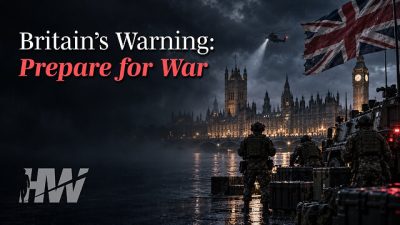
BRITAIN’S WARNING: PREPARE FOR WAR
or go to
Aletho News Archives – Video-Images
From the Archive
How Ukraine Tortured and Slaughtered Donbass
By Kit Klarenberg | Al Mayadeen | July 11, 2024
Almost immediately after the proxy war erupted, ISIS-tier footage of the torture and murder of Russians in Ukrainian custody emerged.
On July 6th, the New York Times published an astonishing investigation: In Ukraine, Killings of Surrendering Russians Divide an American-Led Unit. The article documents in grim detail how Chosen Company, an international volunteer battalion for Kiev, routinely executes Russian prisoners of war. It is the very first mainstream admission that this practice – a brazen breach of the Geneva Conventions, and a grave war crime – is widespread among Ukraine’s fighters, both foreign and homegrown. … continue
Blog Roll
 Aletho News
- Pentagon designates Chinese cultural centers national security threat
- Israel Demolishes Home Of Lebanese Journalist Whose Viral Film Exposed Pager Attack
- Record Oil, Empty Tanks: The UAE’s Miracle Recovery
- Burnham tackles Britain’s poverty with aggression in Yemen
- Peace in Ukraine: the easy way – or the hard way
- Trump & the Rrrrussians
- US taxpayer money laundered back through Ukraine – Musk
- Before COVID, an NIH lab chief proposed making a SARS-like bat virus more infectious
- Gates, Bourla on Trial in Netherlands Accused of ‘Great Reset’ Scheme at Vaccine Injury Hearing
- BRITAIN’S WARNING: PREPARE FOR WAR
- If Americans Knew
- An error has occurred; the feed is probably down. Try again later.
- No Tricks Zone
- Two New Studies Find Thwaites Glacier Melt Cannot Be Driven By Human Activity Or A Warming Ocean
- E-Cars Reduce CO2 Emissions By Only 41% Compared To Internal Combustion Engine Vehicles
- Predictions Made By Renowned Climate Professor Over Past Decades Have Been Proven To Be Poor
- New Study Suggests Large Regions Of The Pacific Ocean Have Been Cooling For The Last 80 Years
- Germany’s Green Energy Debacle: High Energy Costs Force Kahla Porzellan to Close After 182 Years!
- New Study: 50 Years Of The Most Aggressive ‘Net Zero’ Policies Can Only Affect The Global Climate By 0.03°C
- US September “Heat” Was No Record…Many Records Set Decades Ago
- Latest European Green Energy Debacle; Portugal’s Largest Flagship Solar Park Insolvent!
- Green Energy Debacle: German Expert Professor Fritz Vahrenholt Warns Of Severe Economic And Social Consequences
- Two More Paleo Reconstructions Affirm Meters-Higher Sea Levels Across Ireland, Brazil 7000-6000 Years Ago

