We are entering the 4th Industrial revolution – that’s what the World Economic Forum is telling us. And, the target is you, humanity. The transhumanism push aims to merge humanity with artificial intelligence. Jefferey Jaxen breaks down the latest Executive Order signed by President Joe Biden to develop artificial intelligence that will ‘unlock the power of biological data,’ signaling a conceding alignment with the WEF’s agenda.
As public health messaging struggles to sell a new Omicron booster shot without human trials, the science and research community is now publishing weekly data and findings revealing major issues with the American Covid vaccination program.
The US Department of Justice would like Congress to amend laws governing asset forfeiture, so money confiscated from Russian “kleptocrats” can be given to Ukraine, the head of the interagency sanctions task force Andrew Adams told the Senate on Tuesday while testifying at a hearing called “Tightening the Screws on Russia.”
Adams, formerly a federal prosecutor in the Southern District of New York (SDNY), is the head of the interagency Task Force KleptoCapture, a sanctions enforcement outfit created in February. The “scope, intended impact, and international alignment” of the anti-Russia sanctions are “without precedent,” he told senators.
Among the proposals he listed at the hearing was a pitch for Congress to amend the existing US asset forfeiture laws, in order to allow the government to “remediate harms caused to Ukraine by Russia’s war of aggression,” as Adams put it.
The departments of justice, treasury and state would like the ability to give the funds seized from Russia and Russians to the government in Kiev, but doing so “requires amendments to multiple statutes governing the use of forfeited funds,” he said.
Earlier in his testimony, Adams mentioned that the measures implemented by the US and its allies “have included immobilizing the Russian Central Bank’s assets, held in coffers around the world.” It was not clear, however, whether these funds would fall under the scheme to transfer money to Ukraine – something the government in Kiev has demanded for months, both of the US and of the EU.
Asset forfeiture is a controversial practice in US law, which proponents have defended as a “key tool” for weakening organized crime and funding law enforcement. Critics, such as the American Civil Liberties Union (ACLU), have called it “policing for profit” and described it as “egregiously at odds with our due process rights.”
Senior officials in Kiev have dismissed as irrelevant plans for a number of current and former Ukrainian regions to hold referendums on whether to join Russia.
Andrey Yermak, President Vladimir Zelensky’s chief of staff, described the proposed votes as “blackmail” by Moscow.
“This is what fear of defeat looks like. The enemy is afraid and uses primitive manipulations,” he said in a post on social media on Tuesday.
Yermak added that “Ukraine will solve the Russian question,” insisting this could be done “only by force.”
Foreign Minister Dmitry Kuleba also downplayed news of the upcoming referendums, dismissing the move as a “sham.”
“Ukraine has every right to liberate its territories and will keep liberating them whatever Russia has to say,” he tweeted.
The condemnations and threats came in response to bids by the Donetsk and Lugansk People’s Republics, as well as Ukraine’s Kherson and Zaporozhye regions, to hold referendums on the question of joining the Russian Federation. The votes could take place as early as this week.
Kiev previously threatened any person who takes part in such a plebiscite with criminal prosecution. Ukrainian Deputy Prime Minister Irina Vereshchuk said participants could be sent to prison for up to 12 years.
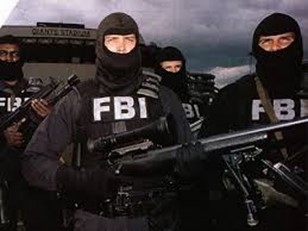
Sometimes police will be given quotas for ticketing drivers. Results of the pressure put on cops to meet their ticket targets tend to include that many drivers are pulled over and ticketed for minor infractions that would be better overlooked or based on dubious or fabricated grounds. Is a similar quota system, with expectable similar results, developing now in regard to “domestic terrorism” and “white supremacy” related crime at the Federal Bureau of Investigation (FBI)?
A Wednesday Washington Times article by Kerry Picket and Joseph Clark, referencing information provided by current and former FBI agents, suggests that is the case. Picket and Clark write:
Current and former FBI agents tell The Washington Times that the perceived threat has become overblown under the administration. They say bureau analysts and top officials are pressuring FBI agents to create domestic terrorist cases and tag people as White supremacists to meet internal metrics.
“The demand for White supremacy” coming from FBI headquarters “vastly outstrips the supply of White supremacy,” said one agent, who spoke on the condition of anonymity. “We have more people assigned to investigate White supremacists than we can actually find.”
The agent said those driving bureau policies “have already determined that White supremacy is a problem” and set agencywide policy to elevate racially motivated domestic extremism cases as priorities.
“We are sort of the lapdogs as the actual agents doing these sorts of investigations, trying to find a crime to fit otherwise First Amendment-protected activities,” he said. “If they have a Gadsden flag and they own guns and they are mean at school board meetings, that’s probably a domestic terrorist.”
The Gadsden flag is a historical American flag with a yellow field showing a timber rattlesnake and the words: “Don’t Tread on Me.” It is often used as a symbol of liberty.
Igor Danchenko’s confession appears to reveal the bureau’s true intentions
By Felix Livshitz | Samizdat | September 20, 2022
Lawyers for Igor Danchenko, the primary source of the notorious and utterly discredited “Trump-Russia|” dossier compiled by former British spy Christopher Steele, have filed a motion to dismiss the charges brought against their client by special counsel John Durham.
In the process, they have revealed another startling and potentially criminal dimension to the FBI’s probe of potential collusion between the campaign of former President Donald Trump and the Kremlin.
Danchenko’s case
Durham charged Danchenko in November 2021 with five counts of lying to the bureau. Four of those relate to statements he made in a February 2017 interview, in which he repeatedly claimed to have met and had conversations with Sergey Millian, a Belarusian-born businessman who claimed ties with the Trump campaign.
Danchenko, and thus Steele, claimed Millian was a key source of the dossier’s most explosive allegations – namely, that there was a “well-developed conspiracy of cooperation” between Trump and the Kremlin, that Russia’s GRU had hacked the Democratic National Convention email server and provided the content for WikiLeaks for the purposes of “plausible deniability,” and the then-Presidential candidate had received a “golden shower” from prostitutes while in Moscow years earlier, which was filmed by Russian intelligence and could be used as “kompromat.”
In his FBI interview, conducted between February 9 and 12, 2017, Danchenko claimed to have received this incendiary intelligence through telephone conversations and email exchanges with Millian, who also suggested they discuss matters further in person in New York City. However, Durham charges that Danchenko fabricated these calls, repeatedly emailed Millian without response, and was never invited to any meeting anywhere.
The new court filing shows that to buttress these claims, Danchenko provided the Bureau with a synopsis of a mid-August email he sent to Millian, a month prior to his sit-down interview series. Yet, as the filing notes, the communication makes no mention of the phonecalls they’d purportedly engaged in previously, or the prospect of meeting in person.
Danchenko’s lawyers now argue that this email in fact proves he wasn’t lying about having had direct contact with Millian, and made clear they’d never spoken to his interviewers. Problematically for all involved, though, Danchenko, and as a result Steele, both attributed wild charges against the Trump campaign to Millian before this email.
FBI vs the truth
In turn too, this means the FBI had concrete reasons to believe at least some of the Steele dossier was bogus on January 25, 2017 at the very latest. But the Bureau, undeterred, continued to not only “assess” the dossier’s veracity, but to use it as a justification for further surveillance of Trump 2016 presidential campaign adviser Carter Page, and intensifying its investigation of the campaign.
The FBI’s questionable use of the dossier in court submissions to secure FISA warrants against Page is well-known, and was a key criticism of a December 2019 Justice Department Inspector General review, which determined the Bureau made 17 errors or omissions in its FISA applications.
Even more damningly though, just two days after Danchenko presented the discrediting email to the FBI, Trump privately met with then-FBI director James Comey, and the President specifically raised the Steele dossier.
According to Comey’s account of the dinner, as retold in the Mueller report: “the President… stated that he was thinking about ordering the FBI to investigate the [Steele] allegations to prove they were false. Comey responded that the President should think carefully about issuing such an order because it could create a narrative that the FBI was investigating him personally, which was incorrect.”
In other words, Comey played Trump, appealing to his ego and feigning concern for his reputation, when he knew better than anyone bar Steele and Danchenko themselves that the FBI was already investigating the former MI6 operative’s “allegations” and knew them to be meritless. Had he told the truth, perhaps the entire Russiagate fraud would’ve collapsed before it had even properly erupted publicly.
If he’d known, the President may not have been successfully pressured into demonstrating his anti-Russian credentials with an increasingly hostile and belligerent stance towards Moscow, which saw Trump go to dangerous lengths the previous administration had deliberately avoided, such as arming and legitimizing the Neo-Nazi Azov Battalion, and shredding vital Cold War arms control treaties, brinksmanship that brought us to where we are today.
Hate of Bureau
In any event, while the filing is in many ways useful confirmation of top-level FBI knowledge of the dossier’s inherent worthlessness at an early stage, it could pose problems for Danchenko’s prosecution.
His conviction hangs on the ability of Durham’s team to prove his lies to the FBI materially influenced its investigation, and it can be easily argued that the Bureau’s evident determination to investigate Trump’s non-existent Russia ties meant no disclosure, true or false, would’ve convinced the agency to stop.
That the FBI was utterly determined irrespective of facts to damage Trump, first as a candidate, then as leader, has long-been clear, yet it has largely faded from public memory. One might argue it’s quite incredible that even the former president’s supporters have not invoked this dubious history in the wake of the Bureau’s raid on Mar-a-Lago, which bears clear hallmarks of being likewise politically motivated.
Evidence of the FBI’s anti-Trump agenda is amply available in black and white – so too the agency’s surging Russophobia. Two of the key Bureau figures central to the Trump-Russia probe, one-time lovers Peter Strzok and Lisa Page, spelled this out both in public testimony and private text messages.
On the latter front, Strzok texted Page in July 2016 – right when the Trump-Russia probe was launched – to declare, “f*** the cheating motherf***ing Russians… bastards… I hate them… I think they’re probably the worst. F***ing conniving cheating savages.” He also pledged that the pair would together “stop” Trump from winning. Page was only slightly less foul-mouthed when she testified to Congress in July 2018:
“It is my opinion that with respect to Western ideals and who it is and what it is we stand for as Americans, Russia poses the most dangerous threat to that way of life.”
Quite why Strzok and Page, along with many other Bureau operatives, haven’t been prosecuted for their role in arguably the biggest US national security scam since the Iraq War isn’t clear.
“Position switching” is the basis of empathy. So I’ve been trying to put myself in the shoes of our adversaries to understand their world view. But the more I do this, the more alarmed I become. The mainstream position on the pandemic and vaccines is literally insane.
So this morning I got up and tried to jot down The Official Narrative — from the perspective of the people who believe it. The more I wrote, the more absurd and untenable it became. I posted it to Facebook and was promptly banned for 30 days for “violating community standards.” Again.
I’m not sure what part the Stasi objected to. I did not use the word vaccine. I said that Pharma Loves Us(TM). Apparently the Stasi are feeling raw and triggered because they are always wrong about everything and their friends now all have myocarditis.
Here’s the offending post:
The Narrative(TM)
I want to make sure that I understand The Narrative(TM) correctly so that I can remain a Respectable Citizen(TM) in Good Standing(TM) with mainstream society:
1. The pharmaceutical industry is all-knowing. They are the source of all that is good and true in the world including life itself. The pharmaceutical industry is infallible.
2. The fact that all of the major pharmaceutical companies are in fact felons is unimportant. What? Did that even happen? I don’t know. Why are we even talking about this? What matters now is injecting as many of their products as possible.
3. The 30,935 reports of death after the thing are A Coincidence(TM). The HHS report showing that this system undercounts harms by a factor of 100 is… What? I never heard of that. I think I saw a warning label about that on social media. Pharma and the government Love You(TM) and Would Never Hurt You(TM). One. That’s how many people died after the thing. And that’s less than 1 in a million. Because.
4. The fact that Jeffrey Sachs, head of the Lancet Commission on the origins of Covid, after reviewing all of the available evidence, has come to the conclusion that SARS-CoV-2 came from a U.S. bioweapons lab is what? Why does anyone care where it came from? Everyone knows that the strange eating habits of the Chinese people are to blame. Nature: dangerous. Chinese peasants: guilty. Bioweapons labs: do they even exist? We need an international treaty to protect the pangolins or the bats or frozen food or whatever.
5. The first four xhots saved 20 million lives even though they have negative efficacy, fuel the evolution of variants, and cause antibody dependent enhancement that leaves one more vulnerable to infection. Miracles are like that — contradictory, paradoxical, and nonsensical. The important thing is just to believe.
6. Tony Fauci is perhaps the greatest American who ever lived — a cross between Jesus, the Buddha, and Einstein. The fact that he killed over 6 million people by funding gain-of-function research just proves his heroism.
7. During the AIDS epidemic, Fauci blocked access to Bactrim and funded the development of AZT that was expensive, toxic, and deadly. During Covid, Fauci blocked access to hcq and ivm and funded the development of Remdesivir and xhots that are expensive, toxic, and deadly. This proves that he loves us and is the world’s greatest scientist.
8. Authorizing the xhots for kids who already have natural immunity, are not at risk from the virus, and thus can only experience harms, is benevolent and kind. Why do kids exist? Do they even pay taxes? Robots could do a much better job. Dogs are so great. Do you follow my Instagram?
9. Bill Gates, who never finished college, once he acquired more money than he could ever spend in a lifetime, devoted his free time to hanging out with a pedophile sex trafficker. Clearly he is the best person to inform global health policy which is why he’s on CNN every Saturday night giving advice to an actual doctor, Sanjay Gupta.
10. The failures of the last two years are in fact an incredible success which is why the Biden administration is doubling down to create a Bioeconomy(TM) based on the failed genetic engineering strategies that caused the global pandemic. Only good things can come from this. We live in the best of all possible worlds.
The Federation of State Medical Boards (FSMB) has taken a stand against what it refers to as “the dissemination of COVID-19 vaccine misinformation and disinformation by physicians and other healthcare professionals on social media platforms, online and in the media,” going so far as to recommend disciplinary action and state policy changes.
In a July 2021 press release, the FSMB warned physicians they could risk “disciplinary action by state medical boards, including the suspension or revocation of their medical license.”
And in a lengthier statement issued in April 2022, the nonprofit — which says it “serves as the voice for state medical boards” — appeared to advocate for laws like the one sitting on California Gov. Gavin Newsom’s desk that would punish doctors who share COVID-19 “misinformation” with their patients, with language like this:
“Prohibitions on disseminating misinformation are already expressly written, or implied, in many state statutes regulating the practice of medicine. However, adopting a specific policy on misinformation is encouraged in light of the increased prevalence of, and harm caused by, physician-disseminated misinformation in this ongoing pandemic.”
In yet another show of support for cracking down on “misinformation,” FSMB President and CEO Dr. Humayun Chaudhry will speak next week on “Misinformation in Health Care: The Implications for Professionalism and the Public Trust” at the American Board of Medical Specialties annual conference.
In its July 2021 press release, the FSMB did not define what it meant by “misinformation or disinformation,” yet the American Board of Internal Medicine and the American Board of Family Medicine subsequently issued a joint statement supporting the FSMB’s position.
According to its website, the FSMB says it “supports its member boards as they fulfill their mandate of protecting the public’s health, safety and welfare through the proper licensing, disciplining, and regulation of physicians and, in most jurisdictions, other health care professionals.”
It also issues guidelines that serve as the basis for model policies with the stated goal of positively impacting the health and safety of patients and the medical regulatory system.
But some critics of the FSMB’s aggressive “misinformation” policy questioned where the organization derives its authority and who’s really behind it.
What is the FSMB — and who funds it?
Created in 1912 at a “small annual gathering of state board executive officers with no permanent staff or headquarters,” the FSMB today has almost 200 employees and two national headquarters — one in Texas and another in Washington, D.C.
The private tax-exempt 501(c)(6) trade association says it supports “America’s state medical boards in licensing, disciplining and regulating physicians and other healthcare professionals” and works to “keep patients safe.”
Since its inception, the FSMB has been staffed with members who presently or previously held positions with other medical governing bodies.
According to IAMRA’s website, the IAMRA was formed when “FSMB, under contract with the US Department of Health and Human Services (HHS), planned and hosted the 1st International Conference on Medical Regulation in Washington, D.C.”
FSMB and IAMRA share an office address in Texas. Their official phone numbers are nearly identical. And when a person calls the phone number listed on IAMRA’s website, the prerecorded welcome message tells the caller they’ve reached FSMB and IAMRA, in that order.
FSMB’s president and CEO, Chaudry, is also the secretary of the IAMRA. This overlapping of leadership positions extends beyond FSMB and IAMRA into medical councils in other countries.
For example, Dr. Emanuel Garcia, a psychiatrist living in New Zealand who publicly voiced concern about the Pfizer COVID-19 vaccine, noted in an Aug. 22 article for Global Research that the chair-elect of the IAMRA, Joan Simeon, “just happens” to be the CEO of the Medical Council of New Zealand.
Garcia, who questioned whether the FSMB and IAMRA’s true motivations were ensuring safe medical practices, said:
“In casting an eye over the years since the dramatic introduction of the COVID pandemic, the near total shutdown of the world, the immense transfer of wealth from the middle and poorer classes upwards, the universal imposition of an inadequately tested so-called vaccine, and the vehement suppression of critical early treatment, one cannot but conclude that there is indeed an agenda beyond health and welfare.
“The FSMB and the IAMRA have shown by their actions that they are tools whose task is to further this agenda, and that this agenda is both anti-medical and inhumane.”
In addition to contracting with the U.S. government and IAMRA, the FSMB runs its own foundation that functions as a separate 501(c)(3) organization but is supported by a “generous seed endowment” from the FSMB.
Last April, the FSMB foundation celebrated its 10-year anniversary by hosting its annual fundraising luncheon. Its annual highbrow luncheons have raised thousands of dollars to support the organization’s activities, including “the study of state responses to the COVID-10 pandemic.”
The FSMB foundation’s website does not disclose its donors.
Commenting on the FSMB’s July 2021 statement, “Spreading COVID-19 Vaccine Misinformation May Put Medical License at Risk,” Garcia said, “The outstanding question remains: Where does the FSMB derive its authority to regulate United States medical boards and, through its apparent international partner, the IAMRA, direct medical councils around the world to discipline doctors?”
So many questions …
Dr. Meryl Nass, an internist and biological warfare epidemiologist who had her medical license suspended in January for “spreading misinformation,” told The Defenderthe FSMB’s authoritative actions raise many questions.
Nass, a member of the Children’s Health Defense scientific advisory committee, outlined the questions in an email:
Why would a nonprofit with no regulatory authority suddenly decide it was important to trash the First Amendment, the Nuremberg Code and other legal doctrines to push for punishing doctors who fail to tell the government’s story and use COVID-19 treatments the government doesn’t want used?
Why is the FSMB monitoring the states and collecting information on their attempts to investigate and/or punish doctors for doing their duty to act as learned intermediaries to their patients?
Why did the American Board of Internal Medicine, the American Board of Family Medicine, the American Medical Association and the American Association of Pediatrics push identical policies in lockstep in mid-2021 that would destroy physician autonomy, when physicians are, one would think, their clients?
Why did the American College of Obstetricians and Gynecologists push for experimental vaccinations during all trimesters of pregnancy?
Nass suggested all of these questions should be investigated.
A history of ties to Big Pharma
Historically, there is evidence of Big Pharma funneling money to the FSMB.
For example, a decade ago, MedPage Today broke the story on how the FSMB turned to a pharmaceutical company with a $3.1 million request to underwrite the cost of producing and distributing a book about its opioid prescribing policy.
After the FSMB’s guidelines for the use of opioids to treat chronic pain patients were adopted as a model policy, the organization asked Purdue Pharmaceuticals for $100,000 to help pay for printing and distributing the policy to 700,000 practicing doctors.
The initial $100,000 was just a small downpayment on the $3.1 million the FSMB’s foundation estimated it would cost for its campaign to get out the word about the “safe” use of opioid analgesics in the treatment of chronic pain, according to MedPage.
Dr. Christiane Northrup, a former board-certified obstetrician and gynecologist with more than 30 years of experience, told The Defender she intuitively sensed the FSMB had questionable associations and chose not to renew her medical license when it came up for renewal in 2015.
Northrup, who had shifted her professional activities away from directly seeing patients, said she asked herself, “Do I need this for what I’m doing now?” and concluded, “Let’s not renew this.”
Northrup pointed out the historical connection between pharmaceutical companies and the FSMB. She told The Defender that “what we’re talking about is a very carefully orchestrated attempt to control doctors.”
Many people who have been taught that “the doctor knows best,” Northrup said, cannot comprehend the “horror” of the implications of the FSMB’s actions.
The Defender reached out to the FSMB and the IAMRA for comment, but neither had responded at the time of this writing.
Suzanne Burdick, Ph.D., is a reporter and researcher for The Defender based in Fairfield, Iowa. She holds a Ph.D. in Communication Studies from the University of Texas at Austin (2021), and a master’s degree in communication and leadership from Gonzaga University (2015). Her scholarship has been published in Health Communication. She has taught at various academic institutions in the United States and is fluent in Spanish.
Some of the world’s biggest tech companies and their social media platforms are ramping up censorship policies, once again under – this time public – pressure from the White House, as President Biden urged them to show accountability for what he said was spreading of hate and fueling of violence.
Biden addressed Big Tech in this way on Thursday, during a White House-hosted event – “United We Stand“- dubbed to be a summit dedicated to combating “hate-based violence,” particularly that targeting minorities or religious groups.
Addressing an audience made up of members of his administration, activists, and lawmakers, the president – who observers say is himself under political pressure to live up to the campaign promises regarding the handling of social media – also made a reference to Section 230, when he said that he believes special immunity for social media needs to be “gotten rid of” by Congress.
“And I’m calling on Congress to get rid of special immunity for social media companies and impose much stronger transparency requirements on all of them,” said Biden.
Reports say that both the remark about “holding social media accountable” and getting rid (of Section 230) were supported enthusiastically at the summit, with cheers and standing ovations.
The speech came shortly after the White House announced that Microsoft, Facebook (Meta), YouTube, and Amazon’s Twitch were all “updating” their rules in order to counter “hateful rhetoric” which is treated as violent extremism online.
The page set up for the summit detailed new actions to help prevent “hate-fueled violence” to be undertaken by various actors, including the federal government, and non-federal public and private institutions – among whom the Biden administration listed “commitments from the technology sector.”
YouTube said that it will add videos identified as extremist – for glorifying acts of violence in order to “inspire others or fundraise or recruit” – to its long list of content slated for censorship, and start removing these videos. And this will be happening regardless of whether content is linked to designated terrorist groups.
YouTube also committed to launch its educational media literacy campaign targeted at young users, that is supposed to help them recognize misinformation and manipulation by identifying “emotional language” and “cherry picking information.” This campaign will start in the US but according to the announcement, other countries will not be spared either.
Twitch is preparing to release a new tool that should counter “hate and harassment” by allowing streamers and communities to “further individualize the safety experience of their channels.” Twitch is also getting in the “educational” game with initiatives that are supposed to help communities identify misinformation, and “deter hateful violence.”
Microsoft said it will bake in what it calls online safety education into Minecraft via an “Education Edition” of the game, but more notably also deploy violence detection and prevention “AI” and machine learning (ML)- something eerily reminiscent of the concept of “pre-crime.” The White House announcement said there would be “appropriate” privacy protections.
And Microsoft also intends to sell “a basic, more affordable” version of these tools to schools and other organizations – cynics would say, should they show interest in detecting “pre-crime.”
Meanwhile, Meta is coming up with a research partnership with the Middlebury Institute of International Studies’ Center on Terrorism, Extremism, and Counterterrorism.
The purpose would be to analyze violent extremism trends, but also tools that “help communities combat it.” Another partnership is in Meta’s future – with Search For Common Ground (a US-based NGO established by a former US Department of State diplomat). Here, Meta’s “community-based partners” will be provided with training and skill building in order to counter “hate-fueled violence.”
Whether or not any of these new announced rules and initiatives go beyond the declarative and may merely be produced to appease the Biden administration will become clear in time, if and when their effects are revealed in transparency reports.
What is of greater interest now is the stance of the White House toward Section 230, and the angle from which it is gunning for this decades-old legislation giving internet platforms, specifically social media, free rein in deciding which content to allow, while at the same time shielding them from legal liability given that this is user generated content.
Democrats have consistently claimed that Section 230, essentially, stands in the way of putting more pressure on Big Tech to censor content they don’t like.
Republicans, on the other hand, believe Section 230 gives Silicon Valley a “get out of jail free card” to censor conservative voices at will.
Facebook has been reporting users to the FBI’s domestic terrorism unit for nothing more than anti-authority sentiment, the New York Post reported on Wednesday, citing Justice Department (DOJ) sources.
“Facebook provides the FBI with private conversations which are protected by the First Amendment without any subpoena,” the sources claimed, explaining this is done “outside the legal process and without probable cause.”
Merely expressing concern about the legitimacy of the 2020 US election results was enough to get users flagged, they said.
Excerpts from those messages, often highlighting the “most egregious-sounding comments out of context,” were offered to nearby FBI field offices as “leads.”
Upon receiving them, the local offices could request subpoenas from their partner US attorney’s office in order to legally obtain the private messages they had already been shown by Facebook outside the legal process, the Post’s sources claimed.
None of the subsequent FBI investigations turned up any criminal or violent activity, the sources said.
“It was a waste of our time,” one source complained, describing a “frenzy” of subpoena requests and other activity over the last 19 months aimed at backing up the claims made by the administration of President Joe Biden about the threat posed by domestic terrorism in the aftermath of the January 6 Capitol riot.
The users targeted by Facebook for this kind of surveillance were all “gun-toting, red-blooded Americans who were angry after the election and shooting off their mouths and talking about staging protests,” the source said, adding there was “nothing criminal, nothing about violence or massacring or assassinating anyone.”
Facebook initially called the DOJ sources’ claims “false” before releasing a second statement to the Post an hour later characterizing them as “wrong,” insisting the company’s relationship with the FBI was “designed to protect people from harm” rather than to “proactively supply” law enforcement with the names of users expressing anti-government sentiment.
“We carefully scrutinize all government requests for user information to make sure they’re legally valid and narrowly tailored and we often push back,” Erica Sackin, a spokesperson for parent company Meta, said in the statement.
The FBI admitted it receives information “with investigative value” from social media providers and that it “maintains an ongoing dialogue to enable a quick exchange of threat information,” but would neither confirm nor deny the specific allegations made by the DOJ whistleblowers.
Former executives from these companies appeared during the hearings and accused their former employers of allowing misinformation to spread because it has more user engagement.
Committee chair Senator Gary Peters (a Democrat from Michigan) told Twitter, Meta, YouTube, and TikTok that by pushing “the most engaging posts to more users, they end up amplifying extremist, dangerous, and radicalizing content. This includes QAnon, Stop the Steal, and other conspiracy theories, as well as white supremacist and anti-Semitic rhetoric.”
Last September, a former Facebook employee, turned 🛡“whistleblower,” claimed that the company allows “disinformation” to spread to boost growth and called for more censorship.
During the hearing, former head engineer at Twitter, Alex Roetter, said that social media companies do not want to rein in disinformation because it is profitable.
“Regulators must understand these companies’ incentives, culture, and internal processes to fully appreciate how resistant they will be to changing the status quo that has been so lucrative for them,” he said.
Roetter went on to say that Twitter uses an experimental system to test how to get the most engagement from users.
“This system logs a slew of data for every live experiment,” he said. “Teams use this data to show per-experiment effects on various user and revenue metrics. Noticeably absent were any values tracking impacts on trust and safety metrics.”
Former vice president for product engineering, marketing, strategic operations, and analytics at Facebook, Brian Boland, testified about his former employer prioritizing user engagement. He said that Facebook acquired CrowdTangle, a company that provided “industry-leading transparency” into the platform’s newsfeed content. The company showed that Facebook was amplifying political and racial divisions in 2020. According to Boland, Meta “attempted to delegitimize the CrowdTangle-generated data.”
“What finally convinced me that it was time to leave was that despite growing evidence that the newsfeed may be causing harm globally, the focus on and investments in safety remained small and siloed,” Boland said. “Rather than address the serious issues raised by its own research, Meta leadership chooses growing the company over keeping more people safe.”
Boland also noted that Facebook disbanded its Responsible Innovation team last week. He added that social media companies should be regulated because their algorithms will only get better at targeting vulnerable users.
In a September 1, 2022, article,1 the Post Millennial reveals how federal officials in the Biden administration have held secret censorship meetings with social media companies to suppress Americans’ First Amendment rights to free speech, and to ban or deplatform those who share unauthorized views about COVID and vaccines.
The evidence for this comes out of a lawsuit2 brought by the New Civil Liberties Alliance and the attorneys general of Missouri and Louisiana (Eric Schmitt and Jeff Landry) against President Biden, filed in May 2022.
During the discovery process, the plaintiffs sought to identify “all meetings with any social media platform relating to content modulation and/or misinformation,” which is how we now know that such illegal meetings did, in fact, take place.
Illegal Collusion to Suppress Free Speech
Monthly, a Unified Strategies Group (USG) meeting took place — and may still be taking place — between a wide variety of government agencies and Big Tech companies, during which topics to be censored and suppressed were/are discussed.
Censored topics included stories involving COVID jab refusal, especially those involving military refusals and consequences thereof, criticism against COVID restrictions and their effects on mental health, posts talking about testing positive for COVID after getting the jab, personal stories of COVID jab side effects, including menstrual irregularities, and worries about vaccine passports becoming mandatory.3 According to the New Civil Liberties Alliance:4
“… scores of federal officials … have secretly communicated with social-media platforms to censor and suppress private speech federal officials disfavor. This unlawful enterprise has been wildly successful.
Under the First Amendment, the federal government may not police private speech nor pick winners and losers in the marketplace of ideas. But that is precisely what the government has done — and is still doing — on a massive scale not previously divulged.
Multiple agencies’ communications demonstrate that the federal government has exerted tremendous pressure on social-media companies — pressure to which companies have repeatedly bowed …
Communications show these federal officials are fully aware that the pressure they exert is an effective and necessary way to induce social-media platforms to increase censorship. The head of the Cybersecurity and Infrastructure Security Agency even griped about the need to overcome social-media companies’ ‘hesitation’ to work with the government …
This unlawful government interference violates the fundamental right of free speech for all Americans, whether or not they are on social media. More discovery is needed to uncover the full extent of this regime — i.e., the identities of other White House and agency officials involved and the nature and content of their communications with social-media companies.”
Jenin Younes, litigation counsel for the New Civil Liberties Alliance added:5
“If there was ever any doubt the federal government was behind censorship of Americans who dared to dissent from official COVID messaging, that doubt has been erased. The shocking extent of the government’s involvement in silencing Americans, through coercing social-media companies, has now been revealed …”
Federal Agencies Involved in Free Speech Suppression
Documents obtained so far have identified more than 50 federal employees across 15 federal agencies, who participated in these censorship meetings or otherwise engaged in illegal censorship activities.6 This includes officials from:
The Cybersecurity and Infrastructure Security Agency’s (CISA) Election Security and Resilience team
Department of Homeland Security’s (DHS) Office of Intelligence and Analysis
The FBI’s foreign influence taskforce
The Justice Department’s (DOJ) national security division
The Office of the Director of National Intelligence
White House staff (including White House lawyer Dana Remus, deputy assistant to the president Rob Flaherty and former White House senior COVID-19 adviser Andy Slavitt)
Health and Human Services (HHS)
Centers for Disease Control and Prevention (CDC)
National Institutes of Allergy and Infectious Diseases (NIAID)
The Office of the Surgeon General
The Census Bureau
The Food and Drug Administration (FDA)
The State Department
The U.S. Treasury Department
The U.S. Election Assistance Commission
Emails from a strategic communications and marketing firm called Reingold7 also reveals that outside consultants were hired to manage the government’s collusion with social media to censor Americans. For example, Reingold set up a “partner support portal” for the CDC so that CDC officials could link emails to the portal for easier flagging of content it wanted censored by social media companies linked to the portal.
Big Tech Companies Involved in Government Censorship
On the private industry side, notable tech participants in the censorship meetings include:
Google
Facebook
Twitter
YouTube
Reddit
Microsoft
Verizon Media
Pinterest
Wikimedia Foundation
While some social media companies may have “hesitated” to censor on the government’s behalf at times, Facebook was certainly an eager beaver from the get-go. As early as February 2020, Facebook CEO Mark Zuckerberg was in contact with the State Department, offering its services to help “control information and misinformation related to coronavirus.”8
As you might expect, the White House has not cooperated with discovery and have fought to keep communications secret — especially with regard to Dr. Anthony Fauci’s correspondence — claiming all White House communications as “privileged.”
However, executive privilege does NOT apply to external communications, so the plaintiffs called on the U.S. District Court for the Western District of Louisiana to “overrule the government defendants’ objections and order them to supply this highly relevant, responsive and probative information immediately.”
September 7, 2022, Judge Terry Doughty did just that. The Biden administration’s claim of executive privilege was rejected and Doughty ordered the White House to hand over any and all relevant records.9 That includes correspondence to and from Fauci, White House press secretary Karine Jean-Pierre and many others. According to the judge’s order, they have three weeks to comply.
Examples of Illegal Government Censorship
On Twitter,10 Missouri AG Schmitt has shared a long list of examples of government censorship, including one document in which Clarke Humphrey, COVID-19 response digital director at the White House, asked Facebook to take down the Instagram account “anthonyfauciofficial,” a parody account dedicated to making fun of Fauci.11 Facebook complied.
Schmitt also shared emails12,13 between a senior Facebook official and the surgeon general, stating, “I know our teams met today to better understand the scope of what the White House expects from us on misinformation going forward.” This email came on the heels of the surgeon general’s July 2021 “misinformation health advisory.”
The CDC also coordinated with Facebook, providing them with talking points to debunk various claims, including the claim that spike protein in the COVID shots is dangerous and cytotoxic. In a July 28, 2021, email, a CDC official provided Facebook with the following counter-narrative, taken straight from the “How mRNA Vaccines Work” section on the CDC website:14
“Messenger mRNA [sic] vaccines work by teaching our cells to create a harmless spike protein …” (Emphasis in the original.)
Fast-forward to mid-June 2022, and the CDC was suddenly less sure about the harmlessness of the spike protein.
Up until then, the words “harmless spike protein” had always been bolded, but in this June revision, they removed the bolding, along with an entire section in which they’d previously claimed that mRNA was rapidly broken down and spike protein did not last more than a few weeks in the body.15 Clearly, the truth was catching up to them and certain lies were getting too risky to hold on to.
CISA also reached out to Google, Meta (Facebook’s parent company), Microsoft and Twitter for help, shortly after the DHS’s Disinformation Governance Board was announced.16 Fortunately, public outcry put an end to this Orwellian Ministry of Truth before it got started.
When Censorship Becomes Election Interference
According to The Washington Times :17
“Details about the Biden administration’s conduct raised the hackles of Republican lawmakers. ‘Confirming that this is the most dangerously anti-free speech administration in American history AND that Facebook … is nothing but an appendage of the deep state,’ Sen. Josh Hawley, Missouri Republican, said on Twitter as he shared news of the court filing.”
Other lawmakers are also getting involved. In an August 29, 2022, letter18,19 to Attorney General Merrick Garland and FBI Director Christopher A. Wray, Republican Sens. Charles E. Grassley of Iowa and Ron Johnson of Wisconsin requested records of the government’s contacts with social media companies to ascertain whether the FBI and/or DOJ did, in fact, instruct them to censor information about the Hunter Biden laptop scandal by falsely referring to it as “Russian disinformation.”20
Zuckerberg has also been asked21 to provide any correspondence involving the censorship of the Hunter Biden laptop story, especially as it pertains to the FBI’s instructions to censor this political hot potato — something he openly admitted in a recent Joe Rogan interview (see video above).22
Lawmakers Pursue Legislation to Penalize Gov’t Censorship
Three Republican House Representatives on the House Oversight and Reform, Judiciary, and Commerce committees — Reps. James Comer of Kentucky, Jim Jordan of Ohio, and Cathy McMorris Rodgers of Washington — have also introduced the Protecting Speech from Government Interference Act23 (HR.8752), aimed at preventing federal employees from using their positions to influence censorship decisions by tech platforms.
The bill would create restrictions to prevent federal employees from asking or encouraging private entities to censor private speech or otherwise discourage free speech, and impose penalties, including civil fines and disciplinary actions for government employees who facilitate social media censorship.
While the U.S. Constitution clearly forbids government censoring and restricting free speech, HR. 8752 could be a helpful enforcement tool, as people might tend to think twice when they know there’s a real and personal price to pay.
Many think “American democracy” is turning into a dictatorship
By Drago Bosnic | September 15, 2022
For over three decades, the United States of America has been chest-thumping about being the world’s “sole remaining superpower.” Some in the US establishment have even claimed that the US has become the world’s first “hyperpower.” And indeed, in the immediate aftermath of the Soviet dismantlement, the US-led political West seemed unbeatable, unilaterally starting wars across the globe, all under various pretexts such as “humanitarianism” and the much-touted “War on Terror.” The US and NATO used both of these excuses to invade dozens of other countries, be it former Yugoslavia, Iraq, Afghanistan, Syria, Libya, etc. The US military seemed unstoppable and able to overcome any opponent, oftentimes by using air power only, with minimal ground engagements, at least until it got bogged down, which in itself was very useful for the ever-profit-hungry Military Industrial Complex.
Although many in the US establishment seemed convinced this will be a perpetual state of affairs, luckily for the world, the last decade proved the power of the belligerent thalassocracy is waning. While the Pentagon could count on hundreds of thousands of battle-ready soldiers during most of the 1990s and early 2000s, in recent years, there has been a significant drop in young Americans’ interest to go die or get maimed for life in one of America’s many pointless invasions and general aggression against the world. Even though the Pentagon found other ways to continue with its imperialist belligerence, primarily through an exponential increase in the use of unmanned combat systems around the globe, indiscriminately targeting civilians under the ever-convenient pretext of the “War on Terror,” most Americans have become aware of the fact that the US power (albeit still significant) is fading away faster than anyone would’ve expected just a decade ago.
A new poll conducted by the YouGov/Economist is the latest proof of this public opinion shift. The project polled Americans about the probability of various “dire political scenarios“ and found that 50% of the US population considers that America will lose its global superpower status within a decade. The poll also found that nearly half (47%) of Americans think that a “total economic collapse“ is inevitable.
“Among 15 potential future scenarios involving instability or political violence, the one that most Americans consider likely in the next decade is that the U.S. ceases to be a global superpower (50% say this), followed by a total collapse of the U.S. economy (47%). Each of the 15 dire scenarios is considered somewhat or very likely in the next decade by at least 20% of Americans. […] 37% of Americans say [a civil war] is at least somewhat likely to occur,“ the YouGov poll found.
The most surprising aspect of the poll must be the staggering nearly 40% of US citizens who consider civil war “at least somewhat likely.“ With a population of approximately 330 million people and being among the world’s most armed nations, such a prospect seems rather terrifying. However, it’s hardly surprising, especially given the sheer level of polarization of the US society, regardless if it’s based on race, religion, sex/gender, identity, ideology or any other parameter which the parties and various interest groups in the US are trying to exploit and use for political, financial and power gain.
“[…] After an end to the U.S.’s global-superpower status and economic collapse, the next scenario is that the U.S. will cease to be a democracy (39%). Democrats believe the U.S. will become a fascist dictatorship (31%), while Republicans think it will be a communist one (21%). Two-thirds of Republicans (65%) believe that total economic collapse is at least somewhat likely, compared to only 38% of Democrats. Around half of Republicans (48%) say it’s likely that the government will confiscate citizens’ firearms; only 17% of Democrats say this. Republicans are also more likely than Democrats to believe there will be a total breakdown of law and order (49% vs. 31%),“ according to the poll.
Although it’s expected to see a larger number of Republicans being more pessimistic about the country’s future under a Democrat president and government, the percentage of Democrats who aren’t particularly optimistic is quite telling. It’s more than clear that many DNC voters themselves are unsatisfied with the policies of the current US government.
“[…] In terms of the possibility of a civil war, Republicans are likelier to believe there will be one between members of each party (45% vs. 35%) or between people from red and blue states (36% vs. 30%). Democrats are slightly more likely to believe there will be a war between the poor and rich (37% vs. 25%) or between cities and rural areas (23% vs. 20%). Democrats and Republicans are equally likely (31%) to expect a civil war between racial groups,“ the poll concluded.
Although the opinions vary significantly based on the ideological/party background, the very fact so many Americans think the US is turning into a dictatorship and that a civil war is a likely scenario speaks volumes of the unflattering state of the much-touted “American democracy” which has often been used as yet another pretext for America’s war against the world.
Drago Bosnic independent geopolitical and military analyst.
Beirut – During his visit with US Secretary of State, Mike Pompeo, Lebanese President Michael Aoun reportedly received a US-Israeli document detailing plans for creating a civil war in Lebanon with covert false flag operations and possible Israeli invasion.
Although the source of the document is Israeli and created in partnership with Washington, no one knows who presented it to Aoun. The Lebanese TV station, Al-Jadeed, initially reported the document on Lebanese TV and a video on its website. Geopolitics Alert translated the report for this article. … continue
This site is provided as a research and reference tool. Although we make every reasonable effort to ensure that the information and data provided at this site are useful, accurate, and current, we cannot guarantee that the information and data provided here will be error-free. By using this site, you assume all responsibility for and risk arising from your use of and reliance upon the contents of this site.
This site and the information available through it do not, and are not intended to constitute legal advice. Should you require legal advice, you should consult your own attorney.
Nothing within this site or linked to by this site constitutes investment advice or medical advice.
Materials accessible from or added to this site by third parties, such as comments posted, are strictly the responsibility of the third party who added such materials or made them accessible and we neither endorse nor undertake to control, monitor, edit or assume responsibility for any such third-party material.
The posting of stories, commentaries, reports, documents and links (embedded or otherwise) on this site does not in any way, shape or form, implied or otherwise, necessarily express or suggest endorsement or support of any of such posted material or parts therein.
The word “alleged” is deemed to occur before the word “fraud.” Since the rule of law still applies. To peasants, at least.
Fair Use
This site contains copyrighted material the use of which has not always been specifically authorized by the copyright owner. We are making such material available in our efforts to advance understanding of environmental, political, human rights, economic, democracy, scientific, and social justice issues, etc. We believe this constitutes a ‘fair use’ of any such copyrighted material as provided for in section 107 of the US Copyright Law. In accordance with Title 17 U.S.C. Section 107, the material on this site is distributed without profit to those who have expressed a prior interest in receiving the included information for research and educational purposes. For more info go to: http://www.law.cornell.edu/uscode/17/107.shtml. If you wish to use copyrighted material from this site for purposes of your own that go beyond ‘fair use’, you must obtain permission from the copyright owner.
DMCA Contact
This is information for anyone that wishes to challenge our “fair use” of copyrighted material.
If you are a legal copyright holder or a designated agent for such and you believe that content residing on or accessible through our website infringes a copyright and falls outside the boundaries of “Fair Use”, please send a notice of infringement by contacting atheonews@gmail.com.
We will respond and take necessary action immediately.
If notice is given of an alleged copyright violation we will act expeditiously to remove or disable access to the material(s) in question.
All 3rd party material posted on this website is copyright the respective owners / authors. Aletho News makes no claim of copyright on such material.