THE Northern Territory of Australia often produces a vague sense of unease due to its climate, desert landscape, remoteness and isolation. You wouldn’t venture far off the main highways. The Territory is also a focal point for the culture wars in view of its large indigenous population, who generally live in remote communities in often abhorrent circumstances. Despite two centuries of policy failure there has been little evidence of new thinking in the centres of power. And, given the poor health generally– putting it very mildly – of the resident Aborigines, and their seeming caution in taking the Covid jab, it is a powder keg.
Now a story has emerged that links the two issues of Aboriginal affairs and Covid elimination. It is not pretty, and it comes while Europe is awash with Covid developments that are, not to put too fine a point on it, redolent of the Third Reich. Jonathan Sumption has touched on these ‘dangerous precedents’ as the ‘first symptom of totalitarianism’:
‘Across Europe, basic norms of civilised society are giving way to panic. The unvaccinated are being excluded from an ever-wider range of basic rights. Austria has criminalised them. Italy has stopped them doing their jobs. The Dutch police have fired on anti-lockdown demonstrators, seriously injuring some of them. We are witnessing the ultimate folly of frightened politicians who cannot accept that they are impotent in the face of some natural phenomena.
There is a broad sense that something is about to give. So, not a good week to be caught shipping the unvaccinated off to a Covid camp down under.
This is a story delivered not just by the fringe media but by the Territory’s Chief Minister, Michael Gunner.
After nine new Covid-19 cases were identified in the community of Binjari, it was reported that the Australian army forcibly removed 38 residents said to be ‘close contacts’ to the Howard Springs quarantine camp in Darwin, which I wrote about in TCW Defending Freedom in September (Australia’s Covid concentration camps). Gunner said: ‘Residents of Binjari and [the nearby community of] Rockhole no longer have the five reasons to leave their homes,’ referring to Australia’s five allowable excuses to avoid lockdown (buying food and supplies, exercising for up to two hours, care or caregiving, work or education if it can’t be done from home, and to get vaccinated). He said it was ‘highly likely’ that more residents would be transferred to Howard Springs.
This is a truly astonishing development, even by bizarre Covid policy standards. Very few cases have occurred on Gunner’s patch since March 2020 and the latest piece of policy overreach is in response merely to ‘close contacts’. We do not yet know whether any of those removed are even sick.
Gunner’s now infamous rant against the anti-vaxxers is world class among elected politicians. His enforced removal of the unvaccinated to a holding camp is a global first, as far as I am aware. Australia continues to break new ground.
As a Labor man, Gunner is a partisan brother of the Premiers of Queensland, Western Australia and of Victoria. Daniel Andrews of Victoria needs little introduction. Not a lot more can be said of the Victorian Covid regime, it would seem, that hasn’t already been said and that could possibly add to the public’s understanding of the raving lunatic down south. Western Australia decided long ago in effect to secede and to impose border closures and lockdowns on less than a whim.
Of Queensland, it has recently been observed that there is no Covid crisis yet there are bizarre plans for imminent vaccine passports to be introduced in high summer (December 17, to be precise), following on from months of inexplicable, hard border closures.
The alt-news reports that the Australian Army, with no published explanation, is booking out hotel chains for the summer on the Gold Coast. (This story has no independent corroboration to date.)
But back to the Northern Territory and its current travails. Just like the unvaccinated Queenslanders, the First Australians in the Territory have no place to hide, however remote they might be.
There is no confirmation yet of whether any force accompanied the removal of unvaccinated First Australians from the two communities, but a Darwin Aboriginal elder has shared her distress. Judy Mills said on a video that Northern Territory Aborigines are being dragged out of their communities by the army and police, taken to health centres and forcibly inoculated.
In another video posted on social media, a community member said there were reports of police rounding people up, taking them to a clinic and forcibly vaccinating them; food supplies were being withheld from families and Territory child welfare services were ‘waiting like vultures’ to grab children. She said the government had taken control of communications from these remote communities and it was difficult to confirm information. ‘There’s a state of emergency here. I’m putting out a cry for help to the world,’ she said.
These are incendiary claims. To call this a brazen move by the Northern Territory Government would be to understate considerably the utter gall of the latest push. Messing with Territory Aborigines is normally a no-go area, with every move on the part of politicians needing to be backed by visible community buy-in, painstakingly sought and obtained. That this can be done – with, apparently, not only the knowledge of our perpetually slithering Prime Minister but also with his blessing and, indeed, his resources – is a measure of how far we in Australia have travelled down the road towards totalitarian control.
And totalitarian control that has, by and large, received a pass from the citizenry. There is, now, precious little second-guessing of the political class and its more rampant actions in relation to the virus by that middle go-along-to-get-along group that sits between the rabid Covid class and we-the-non-conforming Covid dissidents and outcasts. This is the group, probably quite substantial, that was unkindly but not inaccurately described by a retired Federal Court Judge as being satisfied so long as they have ‘Netflix, a full belly and a warm place to defecate’. Concern for the rights of fellow Australians, now including indigenous fellow Australians, is not likely to be a priority.
It would be interesting to see the reactions of white Australians, especially those on the Left who are forever championing the interest of remote communities. I say ‘would’ as I am yet to find this story even mentioned in the Australian mainstream media.
Given that indigenous affairs are a core issue in the culture wars and an obsession in the Left-of-centre media, the absence of comment to date is both noteworthy and odd. I am guessing they just don’t know what to think or to say about this. Many, no doubt, would be (quietly) cheering if the Caucasian unvaccinated were marched off for re-education and solitude, a ‘safe’ distance from the vaccinated. No one has quite said it in public, yet.
One might even term this awful affair the Covid Stolen Generation, a term that will have deep resonance for those with an interest in the recent history of the indigenous people of Australia. It all takes us right back to Central Europe and the Auschwitz meme. Lord Sumption is correct. These are, indeed, highly dangerous times.
Like most parents across the land, I received a letter from the local council’s Director of Public Health this morning (forwarded by the school in an email) explaining that they have “advised [sic] schools that parents/carers/other visitors are not invited” to nativity plays this year. Not the end of the world in the grand scheme of things, of course – just another depressing example in the long litany of examples of children’s priorities being cast under a bus due to adult panic during the course of this pandemic.
Much more concerning, because of what it said about the mindset of the Director of Public Health in question, was this alarmingly blithe justification for continued restrictions in schools, buried in the body of the letter:
Much as we would all like it to be, the pandemic is not over. Whilst it is clear that the vaccination programme is effective in preventing serious disease and deaths, the vaccine is never going to stop all transmission, and resultant harm, on its own. [Emphasis added]
You couldn’t get a starker admission than this that we long ago moved beyond “flattening the curve” or staving off a dire public health emergency in a once-in-a-lifetime, never-to- be-repeated year. No: we are now in a different place altogether – one in which we must stop transmission “and resultant harm” for its own sake, forever. For how else are we supposed to interpret this statement? On what grounds will parents ever be allowed back into schools to watch nativity plays (or even properly meet their children’s teachers), if the requirement is for “all transmission and resultant harm” to end? We will never be in that position. So in what circumstance does the Director of Public Health envisage there ever will be a return to normal schooling? Ought this not to be made clear to local parents?
More broadly, this incident raises the question of how it is that something so fundamental – children’s schooling – has ended up beholden to the whim of unelected, largely unaccountable, public officials such as this. The local Director of Public Health in any given local authority cannot be voted out. They are not challenged by probing interviews in prominent media outlets. The means by which they are appointed is entirely opaque. And their policy positions, political backgrounds, and motivations are subject to essentially no public scrutiny. Yet they possess the power, at the sweep of a pen, to disrupt the lives of literally tens of thousands of people within their bailiwicks, with the only possible avenue of challenge being a prohibitively expensive and time-consuming claim for judicial review. This ought to be intolerable in a free society. Yet it is the position in which we find ourselves.
Once again, the Covid pandemic and its response have shone a harsh light on British democracy, and revealed it to be in a dilapidated state indeed.
Last week, I showed up to a nice party with a bottle of Absinthe. I like the stuff but I was also performing an experiment. How long before someone at the party asks if Absinthe causes hallucinations and was thereby banned? It didn’t take long. The question came up repeatedly. What is the ingredient in this that is highly suspect? Oh yes, it’s wormwood. What is wormwood anyway? Is it like heroin?
So it went. And so it has been for the better part of one-hundred years. There is absolutely no medical basis for this at all. Wormwood has been used as a medicinal herb since the ancient world, and there is a great deal of legend surrounding it, but there is zero evidence that it has any hallucinogenic properties at all.
Incredibly, some research suggests that wormwood is possibly an early treatment for Covid that inhibits the reproduction of SARS-CoV-2!
What about the belief that it was banned? It was indeed banned, over most of the Western world since the late 19th century. It was only relegalized for import into the United States in 2007. Now there are micro-distilleries all over the country that make the real thing, the exact drink about which Oscar Wilde wrote:
After the first glass of absinthe you see things as you wish they were. After the second you see them as they are not. Finally you see things as they really are, and that is the most horrible thing in the world. I mean disassociated. Take a top hat. You think you see it as it really is. But you don’t because you associate it with other things and ideas. If you had never heard of one before, and suddenly saw it alone, you’d be frightened, or you’d laugh. That is the effect absinthe has, and that is why it drives men mad. Three nights I sat up all night drinking absinthe, and thinking that I was singularly clear-headed and sane. The waiter came in and began watering the sawdust.The most wonderful flowers, tulips, lilies and roses, sprang up, and made a garden in the cafe. “Don’t you see them?” I said to him. “Mais non, monsieur, il n’y a rien.”
Kind of makes you want to go out and buy a bottle right now. Fortunately you can, because your right to drink it has been restored. The century-old moral panic is over. However, with that change, some of the cachet has been drained away from this yummy drink, which, as it turns out, is just a drink like any other: if you drink too much, you get drunk. Nothing special here.
The irony of the history here is that it was precisely the dire warnings, first issued in French medical journals in the mid 19th century, that created the vast demand for absinthe all over Europe and America. Dangerous drink? Bring it on. The British medical journals seemed to agree that absinthe was highly dangerous, citing this strange experiment from 1869:
The question whether absinthe exerts any special action other than that of alcohol in general, has been revived by some experiments by MM. Magnan and Bouchereau in France. These gentlemen placed a guinea-pig under a glass case with a saucer full of essence of wormwood (which is one of the flavouring matters of absinthe) by his side. Another guinea-pig was similarly shut up with a saucer full of pure alcohol. A cat and a rabbit were respectively enclosed along with a saucer each full of wormwood. The three animals which inhaled the vapours of wormwood experienced, first, excitement, and then epileptiform convulsions. The guinea-pig which merely breathed the fumes of alcohol, first became lively, then simply drunk. Upon these facts it is sought to establish the conclusion that the effects of excessive absinthe drinking are seriously different from those of ordinary alcoholic intemperance.
You can imagine, then, why that generation of artists, poets, playwrights, and literary gadabouts immediately seized on this drink and caused it to be the most fashionable in the land, spreading the plague of absinthism far and wide. Paintings, poetry, music were written in homage to the great muse of the green fairy. No doubt that people believed it, just as Dumbo thought it was the feather that made him fly.
At the height of the absinthe mania in France, 5:00pm became known as “the green hour.” The French were drinking 5 times as much absinthe as wine. The French producers were shipping all over the world. It became the world’s most notorious drink.
Here we have a classic case: science speaks of danger, daring people jump on the trend, moralists get outraged, government acts. That is precisely the situation that lasted for 100 years until it became rather obvious that absinthe is just a normal liquor.
The reason it gained the reputation for making people insane – Vincent Van Gogh, for example – is that highly fashionable people were drinking far too much. It was a classic fallacy: post hoc ergo propter hoc. A confusion of cause and effect. That was enough to effect a century of prohibition.
Here is another article from The Lancet in 1873 about the vast multitudes of “victims of absinthe.”
Originally the only important ingredient in its composition, besides alcohol, was the essential oil of absinthium, or wormwood; and though, doubtless, this added something to the mischievous effects of the liquor, it would be impossible to trace to it, or to the other comparatively trivial ingredients, the more serious of the special results which are now observed to occur in the victims of absinthe. An analysis recently made at the Conservatoire des Arts shows that the absinthe now contains a large proportion of antimony, a poison which cannot fail to add largely to the irritant effects necessarily produced on the alimentary canal and the liver by constant doses of a concentrated alcoholic liquid. As at present constituted, therefore, and especially when drunk in the disastrous excess now common in Paris, and taken frequently upon an empty stomach, absinthe forms a chronic poison of almost unequalled virulence, both as an irritant to the stomach and bowels, and also as a destroyer of the nervous system.
Science has spoken. What can you do but ban it? That didn’t happen until 1915 (the same few years in which every terrible trend in politics happened, from income taxation to central banking).
By then, the drink became associated with elaborate rituals that survive to this day, such as the slow-drip fountain that pours over a special steel spoon that holds a sugar cube. So far as I can tell, the ritual is entirely for show (if you want a bit of sweet in your drink, just add simple syrup) but it’s also enormously fun to reenact the faux-decadence of the absinthe generation. Even now, Amazon offers many absinthe fountains, most in the Victorian style of course.
The war on absinthe – this won’t surprise you – created the opposite of its intended effect. It raised the status of the drink and created a completely unwarranted hysteria in both directions: overconsumption followed by bans followed by speakeasy indulgence. Can you think of anything else, perhaps, that has fit that general model? Marijuana perhaps? Liquor in general? Tobacco? Politically incorrect speech?
Bans stemming from moral panics never seem to end, and people never seem to learn from this classic example. But in this case, the bans gradually came to an end. We’ve lived a full fifteen years of Absinthe freedom. And sure enough, with that freedom has come a bit of blase attitude toward it. Now it sits on the shelf in the liquor store as just another cocktail mixture, alongside the elderflower liqueurs and peach schnapps. It is said to be favored by people on the Keto diet because of its low-carb, low-sugar content.
And yet, to this day, you will still find people who drink it only with great apprehension and with some anticipation that they will soon not be themselves once it is tasted. Drink enough of it, and it will become true. The same is the case with gin, tequila, and rum.
There is surely another lesson here. Science has long served to back public panic, and that panic usually involves some fear of physical and moral corruption. We saw it with Absinthe, and then alcohol Prohibition. We saw it with AIDS. And we’ve lived through it with Covid and all the variants (Omicron!), as a naive public held closely to the words of Anthony Fauci, as the nation’s poet-prophet of a respiratory virus held court for two years, with changing instructions and never-ending insight about the need for all of us to upend our lives to control the invisible enemy.
It’s my habit, and maybe it should be yours, to celebrate every bit of freedom we gain back from the armies of authoritarians who wield the power of the state to improve our health and our lives. It took one hundred years, but they finally got their mitts off this one market. The research suggesting wormwood as a Covid treatment merits a visit from the green fairy as soon as possible.
Jeffrey A. Tucker is Founder and President of the Brownstone Institute and the author of many thousands of articles in the scholarly and popular press and ten books in 5 languages, most recently Liberty or Lockdown.
I’m a voracious reader of Covid books but nothing could have prepared me for Scott Atlas’s A Plague Upon Our House, a full and mind-blowing account of the famed scientist’s personal experience with the Covid era and a luridly detailed account of his time at the White House. The book is hot fire, from page one to the last, and will permanently affect your view of not only this pandemic and the policy response but also the workings of public health in general.
Atlas’s book has exposed a scandal for the ages. It is enormously valuable because it fully blows up what seems to be an emerging fake story involving a supposedly Covid-denying president who did nothing vs. heroic scientists in the White House who urged compulsory mitigating measures consistent with prevailing scientific opinion. Not one word of that is true. Atlas’s book, I hope, makes it impossible to tell such tall tales without embarrassment.
Anyone who tells you this fictional story (including Deborah Birx) deserves to have this highly credible treatise tossed in his direction. The book is about the war between real science (and genuine public health), with Atlas as the voice for reason both before and during his time in the White House, vs. the enactment of brutal policies that never stood any chance of controlling the virus while causing tremendous damage to the people, to human liberty, to children in particular, but also to billions of people around the world.
For the reader, the author is our proxy, a reasonable and blunt man trapped in a world of lies, duplicity, backstabbing, opportunism, and fake science. He did his best but could not prevail against a powerful machine that cares nothing for facts, much less outcomes.
If you have heretofore believed that science drives pandemic public policy, this book will shock you. Atlas’s recounting of the unbearably poor thinking on the part of government-based “infectious disease experts” will make your jaw drop (thinking, for example, of Birx’s off-the-cuff theorizing about the relationship between masking and controlling case spreads).
Throughout the book, Atlas points to the enormous cost of the machinery of lockdowns, the preferred method of Anthony Fauci and Deborah Birx: missed cancer screenings, missed surgeries, nearly two years of educational losses, bankrupted small business, depression and drug overdoses, overall citizen demoralization, violations of religious freedom, all while public health massively neglected the actual at-risk population in long-term care facilities. Essentially, they were willing to dismantle everything we called civilization in the name of bludgeoning one pathogen without regard to the consequences.
The fake science of population-wide “models” drove policy instead of following the known information about risk profiles. “The one unusual feature of this virus was the fact that children had an extraordinarily low risk,” writes Atlas. “Yet this positive and reassuring news was never emphasized. Instead, with total disregard of the evidence of selective risk consistent with other respiratory viruses, public health officials recommended draconian isolation of everyone.”
“Restrictions on liberty were also destructive by inflaming class distinctions with their differential impact,” he writes, “exposing essential workers, sacrificing low-income families and kids, destroying single-parent homes, and eviscerating small businesses, while at the same time large companies were bailed out, elites worked from home with barely an interruption, and the ultra-rich got richer, leveraging their bully pulpit to demonize and cancel those who challenged their preferred policy options.”
In the midst of continued chaos, in August 2020, Atlas was called by Trump to help, not as a political appointee, not as a PR man for Trump, not as a DC fixer but as the only person who in nearly a year of unfolding catastrophe had a health-policy focus. He made it clear from the outset that he would only tell what he believed to be true; Trump agreed that this was precisely what he wanted and needed. Trump got an earful and gradually came around to a more rational view than that which caused him to wreck the American economy and society with his own hands and against his own instincts.
In Task Force meetings, Atlas was the only person who showed up with studies and on-the-ground information as opposed to mere charts of infections easily downloadable from popular websites. “A bigger surprise was that Fauci did not present scientific research on the pandemic to the group that I witnessed. Likewise, I never heard him speak about his own critical analysis of any published research studies. This was stunning to me. Aside from intermittent status updates about clinical trial enrollments, Fauci served the Task Force by offering an occasional comment or update on vaccine trial participant totals, mostly when the VP would turn to him and ask.”
When Atlas spoke up, it was almost always to contradict Fauci/Birx but he received no backing during meetings, only to have many people in attendance later congratulate him for speaking out. Still, he did have a convert in Trump himself, but by then it was too late: not even Trump could prevail against the wicked machine he had permissioned into operation.
It’s a Mr. Smith Goes to Washington story but applied to matters of public health. From the outset of this disease panic, policy came to be dictated by two government bureaucrats (Fauci and Birx) who, for some reason, were confident in their control over media, bureaucracies, and White House messaging, despite every attempt by the president, Atlas, and a few others to get them to pay attention to the actual science about which Fauci/Birx knew and care little.
Fortunately, we now have this book to set the record straight. It gives every reader an inside look at the workings of a system that wrecked our lives. If the book finally declines to offer an explanation for the hell that was visited upon us – every day we still ask the question why? – it does provide an accounting of the who, when, where, and what. Tragically, too many scientists, media figures, and intellectuals in general went along. Atlas’s account shows exactly what they signed up to defend, and it’s not pretty.
The cliche that kept coming to mind as I read is “breath of fresh air.” That metaphor describes the book perfectly: blessed relief from relentless propaganda. Imagine yourself trapped in an elevator with stultifying air in a building that is on fire and the smoke gradually seeps in from above. Someone is in there with you and he keeps assuring you that everything is fine, when it is obviously not.
That’s a pretty good description of how I felt from March 12, 2020 and onward. That was the day that President Trump spoke to the nation and announced that there would be no more travel from Europe. The tone in his voice was spooky. It was obvious that more was coming. He had clearly fallen sway to extremely bad advice, perhaps he was willing to push lockdowns as a plan to deal with a respiratory virus that was already widespread in the US from perhaps 5 to 6 months earlier.
It was the day that the darkness descended. A day later (March 13), the HHS distributed its lockdown plans for the nation. That weekend, Trump met for many hours with Anthony Fauci, Deborah Birx, son-in-law Jared Kushner, and only a few others. He came around to the idea of shutting down the American economy for two weeks. He presided over the calamitous March 16, 2020, press conference, at which Trump promised to beat the virus through general lockdowns.
Of course he had no power to do that directly but he could urge it to happen, all under the completely delusional promise that doing so would solve the virus problem. Two weeks later, the same gang persuaded him to extend the lockdowns.
Trump went along with the advice because it was the only advice he was fed at the time. They made it appear that the only choice that Trump had – if he wanted to beat the virus – was to wage war on his own policies that were pushing for a stronger, healthier economy. After surviving two impeachment attempts, and beating back years of hate from a nearly united media afflicted by severe derangement syndrome, Trump was finally hornswoggled.
Atlas writes: “On this highly important criterion of presidential management—taking responsibility to fully take charge of policy coming from the White House—I believe the president made a massive error in judgment. Against his own gut feeling, he delegated authority to medical bureaucrats, and then he failed to correct that mistake.”
The truly tragic fact that both Republicans and Democrats do not want spoken about is that this whole calamity did indeed begin with Trump’s decision. On this point, Atlas writes:
Yes, the president initially had gone along with the lockdowns proposed by Fauci and Birx, the “fifteen days to slow the spread,” even though he had serious misgivings. But I still believe the reason that he kept repeating his one question—“Do you agree with the initial shutdown?”—whenever he asked questions about the pandemic was precisely because he still had misgivings about it.
Large parts of the narrative are devoted to explaining precisely how and to what extent Trump had been betrayed. “They had convinced him to do exactly the opposite of what he would naturally do in any other circumstance,” Atlas writes, that is
“to disregard his own common sense and allow grossly incorrect policy advice to prevail… This president, widely known for his signature “You’re fired!” declaration, was misled by his closest political intimates. All for fear of what was inevitable anyway—skewering from an already hostile media. And on top of that tragic misjudgment, the election was lost anyway. So much for political strategists.”
There are so many valuable parts to the story that I cannot possibly recount them all. The language is brilliant, e.g. he calls the media “the most despicable group of unprincipled liars one could ever imagine.” He proves that assertion in page after page of shocking lies and distortions, mostly driven by political goals.
I was particularly struck by his chapter on testing, mainly because that whole racket mystified me throughout. From the outset, the CDC bungled the testing part of the pandemic story, attempting to keep the tests and process centralized in DC at the very time when the entire nation was in panic. Once that was finally fixed, months too late, mass and indiscriminate PCR testing became the desiderata of success within the White House. The problem was not just with the testing method:
“Fragments of dead virus hang around and can generate a positive test for many weeks or months, even though one is not generally contagious after two weeks. Moreover, PCR is extremely sensitive. It detects minute quantities of virus that do not transmit infection… Even the New York Times wrote in August that 90 percent or more of positive PCR tests falsely implied that someone was contagious. Sadly, during my entire time at the White House, this crucial fact would never even be addressed by anyone other than me at the Task Force meetings, let alone because for any public recommendation, even after I distributed data proving this critical point.”
The other problem is the wide assumption that more testing (however inaccurate) of whomever, whenever was always better. This model of maximizing tests seemed like a leftover from the HIV/AIDS crisis in which tracing was mostly useless in practice but at least made some sense in theory. For a widespread and mostly wild respiratory disease transmitted the way a cold virus is transmitted, this method was hopeless from the beginning. It became nothing but make work for tracing bureaucrats and testing enterprises that in the end only provided a fake metric of “success” that served to spread public panic.
Early on, Fauci had clearly said that there was no reason to get tested if you had no symptoms. Later, that common-sense outlook was thrown out the window and replaced with an agenda to test as many people as possible regardless of risk and regardless of symptoms. The resulting data enabled Fauci/Birx to keep everyone in a constant state of alarm. More test positivity to them implied only one thing: more lockdowns. Businesses needed to close harder, we all needed to mask harder, schools needed to stay closed longer, and travel needed to be ever more restricted. That assumption became so entrenched that not even the president’s own wishes (which had changed from Spring to Summer) made any difference.
Atlas’s first job, then, was to challenge this whole indiscriminate testing agenda. To his mind, testing needed to be about more than accumulating endless amounts of data, much of it without meaning; instead, testing should be directed toward a public-health goal. The people who needed tests were the vulnerable populations, particularly those in nursing homes, with the goal of saving lives among those who were actually threatened with severe outcomes. This push to test, contact trace, and quarantine anyone and everyone regardless of known risk was a huge distraction, and also caused huge disruption in schooling and enterprise.
To fix it meant changing the CDC guidelines. Atlas’s story of attempting to do that is eye-opening. He wrestled with every manner of bureaucrat and managed to get new guidelines written, only to find that they had been mysteriously reverted to the old guidelines one week later. He caught the “error” and insisted that his version prevail. Once they were issued by the CDC, the national press was all over it, with the story that the White House was pressuring the scientists at the CDC in terrible ways. After a week-long media storm, the guidelines changed yet again. All of Atlas’s work was made null.
Talk about discouraging! It was also Atlas’s first full experience in dealing with deep-state machinations. It was this way throughout the lockdown period, a machinery in place to implement, encourage, and enforce endless restrictions but no one person in particular was there to take responsibility for the policies or the outcomes, even as the ostensible head of state (Trump) was on record both publicly and privately opposing the policies that no one could seem to stop.
As an example of this, Atlas tells the story of bringing some massively important scientists to the White House to speak with Trump: Martin Kulldorff, Jay Bhattacharya, Joseph Ladapo, and Cody Meissner. People around the president thought the idea was great. But somehow the meeting kept being delayed. Again and again. When it finally went ahead, the schedulers only allowed for 5 minutes. But once they met with Trump himself, the president had other ideas and prolonged the meeting for an hour and a half, asking the scientists all kinds of questions about viruses, policy, the initial lockdowns, the risks to individuals, and so on.
The president was so impressed with their views and knowledge – what a dramatic change that must have been for him – that he invited filming to be done plus pictures to be taken. He wanted to make it a big public splash. It never happened. Literally. White House press somehow got the message that this meeting never happened. The first anyone will have known about it other than White House employees is from Atlas’s book.
Two months later, Atlas was instrumental in bringing in not only two of those scientists but also the famed Sunetra Gupta of Oxford. They met with the HHS secretary but this meeting too was buried in the press. No dissent was allowed. The bureaucrats were in charge, regardless of the wishes of the president.
Another case in point was during Trump’s own bout with Covid in early October. Atlas was nearly sure that he would be fine but he was forbidden from talking to the press. The entire White House communications office was frozen for four days, with no one speaking to the press. This was against Trump’s own wishes. This left the media to speculate that he was on his deathbed, so when he came back to the White House and announced that Covid is not to be feared, it was a shock to the nation. From my own point of view, this was truly Trump’s finest moment. To learn of the internal machinations happening behind the scenes is pretty shocking.
I can’t possibly cover the wealth of material in this book, and I expect this brief review to be one of several that I write. I do have a few disagreements. First, I think the author is too uncritical toward Operation Warp Speed and doesn’t really address how the vaccines were wildly oversold, to say nothing of growing concerns about safety, which were not addressed in the trials. Second, he seems to approve of Trump’s March 12th travel restrictions, which struck me as brutal and pointless, and the real beginning of the unfolding disaster. Third, Atlas inadvertently seems to perpetuate the distortion that Trump recommended ingesting bleach during a press conference. I know that this was all over the papers. But I’ve read the transcript of that press conference several times and find nothing like this. Trump actually makes clear that he was speaking about cleaning surfaces. This might be yet another case of outright media lies.
All that aside, this book reveals everything about the insanity of 2020 and 2021, years in which good sense, good science, historical precedent, human rights, and concerns for human liberty were all thrown into the trash, not just in the US but all over the world.
Atlas summarizes the big picture:
“in considering all the surprising events that unfolded in this past year, two in particular stand out. I have been shocked at the enormous power of government officials to unilaterally decree a sudden and severe shutdown of society—to simply close businesses and schools by edict, restrict personal movements, mandate behavior, regulate interactions with our family members, and eliminate our most basic freedoms, without any defined end and with little accountability.”
Atlas is correct that “the management of this pandemic has left a stain on many of America’s once noble institutions, including our elite universities, research institutes and journals, and public health agencies. Earning it back will not be easy.”
Internationally, we have Sweden as an example of a country that (mostly) kept its sanity. Domestically, we have South Dakota as an example of a place that stayed open, preserving freedom throughout. And thanks in large part to Atlas’s behind-the-scenes work, we have the example of Florida, whose governor did care about the actual science and ended up preserving freedom in the state even as the elderly population there experienced the greatest possible protection from the virus.
We all owe Atlas an enormous debt of gratitude, for it was he who persuaded the Florida governor to choose the path of focussed protection as advocated by the Great Barrington Declaration, which Atlas cites as the “single document that will go down as one of the most important publications in the pandemic, as it lent undeniable credibility to focused protection and provided courage to thousands of additional medical scientists and public health leaders to come forward.”
Atlas experienced the worst of the slings, arrows, and worse. The media and the bureaucrats tried to shut him up, shut him down, and body bag him professionally and personally. Cancelled, meaning removed from the roster of functional, dignified human beings. Even colleagues at Stanford University joined in the lynch mob, much to their disgrace. And yet this book is that of a man who has prevailed against them.
In that sense, it is easily the most crucial first-person account we have so far. It is gripping, revealing, devastating for the lockdowners and their vaccine-mandating successors, and a true classic that will stand the test of time. It’s simply not possible to write the history of this disaster without a close examination of this erudite first-hand account.
Jeffrey A. Tucker is Founder and President of the Brownstone Institute and the author of many thousands of articles in the scholarly and popular press and ten books in 5 languages, most recently Liberty or Lockdown.
Strategic Group, a major rental housing provider in Alberta, Canada, announced that all new tenants need to show a vaccine passport to live in its properties. Critics claim the renter’s vaccine mandate sets a dangerous precedent.
“Vaccination of everyone in our community is the only way we are going to get through this pandemic and back to a sense of normalcy,” said Riaz Mamdani, founder and CEO of Strategic Group, in an October 28 press release.
“The safety of our team and our residents is a top priority, so ensuring full vaccination across the board is the least we can do.”
The press release said that “all employees, residents, and prospective residents” have to be vaccinated. Existing tenants will have to show proof of vaccination. Anyone “unable to be vaccinated (i.e., children under the age of 12) is exempt until able to receive the vaccine.”
“These rules apply to all of Strategic Group’s residential communities in Alberta.”
The renter owns more than 100 1 and 2-bedroom units in Edmonton and Calgary.
The Canadian Pressreported that the Strategic Group COO Tracey Steman said that the company was “very proud” of the mandatory vaccination policy.
“And we’d like to see other landlords implement the same policy… It will help to end this pandemic,” Steman continued. “We’ve had really good feedback from our tenants.”
According to the company’s CEO, residents inspired the new policy as they were saying that “they value knowing that all their neighbors are vaccinated – they feel even safer in their own homes.”
Eva Chipiuk of the Justice Center for Constitutional Freedoms (JCCF) told LifeSiteNews that Strategic Group’s vaccine mandate for tenants “sets a dangerous precedent in Alberta and in Canada.”
“According to this renter’s policy, you do not deserve a roof over your head unless you have taken an experimental injection,” said Chipiuk.
“Such a policy, utterly unthinkable two years ago, is now frighteningly announced with pride,” she added.
“Under what authority is this policy being made?”
Chipiuk noted that the laws banning smoking indoors were discussed in “government housing.”
“This is not the same. These rental companies are taking the law into their own hands. If we allow this to happen, what will be next and who will find themselves without a place to live?” the lawyer asked.
In an article on The Lawyers Daily, landlord-tenant lawyer Caryma Sa’d explained why it is illegal for landlords to enforce vaccine passport mandates for tenants. Sa’d noted that refusing a potential client because of their vaccination status is discrimination.
Also, “landlords cannot simply make unilateral changes to the terms of the agreement, which would include imposing proof of vaccination as a condition of the tenancy.”
“This would prevent a landlord from attempting to evict a tenant based on vaccination status, unless it can be established that the tenant is substantially interfering with the reasonable enjoyment of others within the unit or otherwise causing serious problems at the residential complex because of their vaccination status,” the lawyer continued.
The president of the Canadian Federation of Apartment Associations John Dickie told the Canadian Press that it was “possible” for some landlords to follow Strategic Group’s lead and implement a vaccine passport mandate, but that was not likely to be “very widespread.”
“We’re not the health police,” said Dickie.
“Rental housing providers realize people need housing. We’re not in the habit of inquiring into people’s political views.”
In case you were beginning to feel like your world was becoming a cliché dystopian movie script, don’t feel bad. It appears that at least some of the villains agree with you.
Not happy with unsatisfying stories, scripts and narratives that shape our disorganized zeitgeist, Klaus Schwab and other creepy dungeon masters trying to manage the post-covid world have called for a ‘New Narrative’ to shape our 21st century and beyond. Schwab described the World Economic Forum’s Great Narrative Initiative announced on November 11 as a “collaborative effort of the world’s leading thinkers to fashion longer-term perspectives and co-create a narrative that can help guide the creation of a more resilient, inclusive and sustainable vision for our collective future.”
It is no question that this new project is bone chilling, but can it work? Does it have any basis in reality or is the oligarchical high priesthood stage managing this shit show intoxicated by their own self-induced narratives and completely incapable of seeing the seeds of self-destruction they have created for themselves?
Let’s examine this question in a bit of detail.
As far back as we look, recorded history demonstrates myths and stories that shape each culture’s subjective experience trying to make sense of the objective world and the many tenuous challenges that are tossed into our path.
Deep Structure Narratives
An ice age comes to an end and sea levels rise hundreds of feet drowning millions while wiping out coastal cities. As a consequence, flood myths appear across various cultures of the world.
Fires from the sky reflect terrible asteroids striking the earth wrecking havoc on ecosystems and perhaps even inducing volcanism and vast weather anomalies. As a consequence, more myths are created featuring heroes, villains, angels and Gods punishing sinners and rewarding those with virtue.
Throughout history, countless stories have been created by shamans, priests, and poets which have attempted to infuse meaning onto traumatic events induced by either nature or geopolitical strategies. Some classical stories may have even exposed geopolitical evils under the safer terrain of fiction when literal truths were impossible. One instance of this latter case can be found in the Olympian Gods of Homer’s stories who were in all likelihood representative of actual oligarchical families who manipulated never ending wars and exploited the folly and corruption of their chosen chess pieces on the Great Game of ancient Greece.
These stories are a part of the human condition and for the most part, perfectly natural.
However, in our supposedly enlightened secular era, these forms of myths are discarded as the foolish practices of simpler unscientific times.
Science has taught us to believe in logic. Not faith in God or the health of our immaterial souls.
The medieval myths of sea monsters and flat earths beyond which unsuspecting voyagers would meet a terrible fate were superseded for a new set of narratives during the enlightenment period. During this period, pure logic and empiricism were placed upon the new altars where religion once stood and we were told to worship new godheads by the names such as Kant, Locke, Hegel, Bacon and Newton. When Nietzsche proclaimed God to be dead, this was the current of thinkers that supposedly killed him.
The Indian poet Rabindranath Tagore referred to those suffering from this disease of metastasized logic saying: “A mind all logic is like a knife all blade. It makes the hand bleed that uses it.”
When the foundation of enlightenment logic began to break down under the pressure of reality over a century ago, new narratives taking the form of the Standard Model quantum mechanics began teaching modern man that what appears to be living is in truth, just made up of non living atoms and chemical interactions… and what appears to be ordered form operating with purpose is merely the stochastic motion of atoms devoid of purpose, beauty or even objective truth. We were told that all of this was held together only by a mix of luck (statistical probability) and four fundamental forces created 13.7 billion years ago. All behavior in human life or in nature thus explained away by Darwinian models of survival of the fittest and random mutations. The rise of modern monstrosities like eugenics, and neo-Malthusianism were the sick children of these ghoulish assumptions.
The more we probe behind the impressive veneer of these popular narratives, the more we discover that myths spun by modern day high priests on behalf of political interests have not only continued into our present age, but have continuously adopted new costumes to adapt to our changing world. Those brilliant minds whose discoveries actually overturned old narratives by leaping beyond the domains of inductive/deductive thinking are carefully obscured under mathematical formulas devoid of the spirit and personality of these exceptional individuals (1).
The Political Consequences of False Macro-Narratives
Some political expressions of today’s secular narratives were seen as neocons trotted out in front of cameras broadcasting the message that the two hijacked planes which destroyed three towers on 9/11 was orchestrated by angry Muslims in caves who hated our freedom.
We were told that covid-19 arose from a badly cooked mammal that kissed a bat requiring a total abolition of our constitutional freedoms.
We were told that the protest on January 6, 2021 in Washington D.C. was an insurrection worse than anything the U.S. had seen since the Civil War when 500,000 Americans slaughtered each other for four years.
We are continuously told that Russia has ambitions to undermine democratic elections across the entire free world while China is aiming to subvert western values and impose a global communist government through its imperial New Silk Road.
I could obviously go on for quite some time here, but needless to say, political myth making is an ugly part of life. But while each lie certainly does grave damage, our susceptibility to falling for these falsities is in no way disconnected from our acceptance of those higher meta narratives embedded in those scientific myths that shape HOW our minds move. Every high priest knows that controlling HOW people think is always infinitely more powerful than controlling WHAT they think about any particular thing. This is how the neocon rot grew in the U.S.A over a few generations leading us to today’s multifaceted systemic breakdown crisis.
One of the fathers of the mutant that became neoconservatism was a narrative-building master named Leo Strauss.
Leo Strauss’ Neocon Monstrosity
Working closely with Fabian Society and Frankfurt School agents throughout his career as a teacher in Columbia, New School and the University of Chicago, Strauss preached a perverse interpretation of Plato’s Republic to tens of thousands of devoted students spread across several decades.
Among the highest lessons contained in Strauss’s teachings (at least for a select few among his students) was the idea of the Noble Lie developed by Plato in Book 3 of the Republic. Strauss taught his students that this Noble Lie was the greatest weapon and rightful tool of anyone who found themselves in a position of power to rule over the weak at any time in history.
In true Nietzschean fashion, the narrow definition of “power” as the subordination of the weak to the strong was the only definition permitted by Strauss who taught his students that while Plato preached love of wisdom to the masses, he secretly held a different teaching for those elite among his Academy who would control political power. To these elite few, he gave the name ‘gentlemen’ and ‘Guardians’.
Strauss taught that Plato’s Guardians would control the shadows cast on the cave wall which the plebs shackled to their senses, would believe were the only reality possible. The mandate of these perverse neo-Platonists was to live the ideal not of Socrates, but rather of Thrasymachus whose immoral doctrine Socrates annihilated in the first book of the Republic. Those young neocons learning from their master were taught that the true ‘secret Socrates’ believed, like Thrasymachus, or Callicles (student of Gorgias), was that the highest purpose in life is to attain power, satisfy our lusts and control the shadows in the cave.
While I adore Plato, I would never deny that he was a myth maker.
The stories showcased in his dialogues from the Timaeus, Critias, Theaetetus, Sophist, Statesman, Meno, Laws, Phaedo, Apology, Gorgias, Republic etc… have shaped the minds of some of the greatest historic figures across 2400 years of world history. Renaissance figures like St. Augustine, Ibn Sina, Erasmus, Shakespeare, Benjamin Franklin, Lincoln, Moses Mendelsohn, Pushkin, Martin Luther King Jr., and countless other brilliant souls had their wits sharpened on the stories and lessons contained in Plato’s writings.
But was Plato truly the tyrannical double-speaker portrayed by Strauss and his followers who preached morality for the weak and vice for those who would control the shadows?
To be a true Guardian in Plato’s world meant more than simply getting out of the cave to see with the light of the sun (symbolic for creative reason) and then lord over the masses.
While Nietzscheans like Strauss stop reading at this moment and choose to dominate the slaves using a higher power of thinking reserved only for a select few of the golden collar elite… Plato made it very clear in his Republic and other writings, that the TRUE philosopher (and implicitly true guardian) was obliged to return back into the cave at risk of his or her life in order to help liberate their fellow captives.
Narratives for Freedom or Slavery?
“Every artist, every scientist, every writer must decide now where he stands. The artist must take sides. He must elect to fight for freedom or for slavery. I have made my choice”
-Paul Robeson, 1937
The question can now be posed: how do we know which narratives are designed to enslave us, which empower us, and which are benign (like a child’s belief in the tooth fairy or the toy-bearing fat guy who trades gifts for good behavior)?
Since each person’s internal universe interfaces with the external reality through the filter of both logic, senses, imagination, and free will, is it possible that some narratives can uplift and inspire us to be more than we are in the face of impossible odds? Can certain stories sharpen our wisdom and free us from the shackles of sense perception as we are taught to see ever more through the eye of reason and a developed imagination?
When George Washington led a small force of farmers against the world’s largest mercenary force in 1776, was it purely logic that guided them in this statistically impossible fight, or were stories of Christ’s passion animating this seeming irrational drive for freedom? When Syria was beset with foreign sponsored Jihadists and teetered on the brink of the abyss, did stories of the Prophet Mohammed animate their hearts to do the impossible when an easier albeit more slavish road awaited their surrender?
Certainly, history has proven time and again, that a certain type of poetic story can empower us to leap beyond our limitations and gain insights into the deeper truths of the human condition and universal reality itself. Even Shakespeare’s “fictional” stories offer the sensitive soul great universal lessons into humanity and real politic which has served great statesmen for centuries.
A Last Look at Today’s Oligarchical Narrative Builders
Although we can affirm with certainty that some narratives can be good and others evil, is it possible that the oligarchs managing today’s Great Narrative project wish humanity no harm?
Perhaps Lynn Forrester de Rothschild is completely genuine when she launched the Council for Inclusive Capitalism alongside Prince Charles, Mark Carney and a handful of Davos Billionaires representing tens of trillions of dollars of capital in 2014. Helping to transform capitalism into a green, eco friendly, more inclusive system that treats everyone equally is a good thing isn’t it?
When this Council merged with the Vatican in December 2020, Lynn de Rothschild described the event as “a historic new partnership between some of the world’s largest investment and business leaders and the Vatican… joining moral and market imperatives to reform capitalism into a powerful force for the good of humanity.”
This council is even led by “a core group of world leaders” who even call themselves “Guardians” following the title used by Plato 2400 years ago.
These guardians include the CEOs of powerful organizations as State Street, Bank of America, Johnson and Johnson, Rockefeller Foundation, Ford Foundation, Merck, British Petroleum, and the Rothschild banking houses. Not exactly the most morally advanced coterie of political heavy weights one could imagine, but still maybe the evil that they have been a part for decades has all been arranged for the sake of a higher good that only the elite may be permitted to know…
Unfortunately for the Davos Guardians, the reality of the New Great Narrative is a world devoid of those very principles that humanity requires to survive and thrive within our creative, reasonable universe. Wielding the power to control a shadow land of dumbed down slaves within a cave might seem impressive for some, but when juxtaposed with the active, creative multipolar paradigm now rising to become a global force for scientific and technological progress, controlling cave dwellers becomes little more than a bleak and pitiful ambition.
And like any parasite which can do naught but kill the very host it needs to suckle on for its very survival, those Davos guardians are likely to meet the same fate as that encountered by Edgar Poe’s impotent, nihilistic oligarch Roderick Usher as his castle crumbled into an abyss.
Note
(1) Some exemplary names of these exceptional individuals include Leonardo Da Vinci, Luca Pacioli, Pierre Fermat, Christian Huygens, Johannes Kepler, Gottfried Leibniz, Max Planck, and Dimitry Mendeleyev (to name but a few).
An insurrectional situation has emerged in Guadeloupe. Roads are closed, buildings set on fire, and clashes between demonstrators and security forces are raging. Many Guadeloupeans have decided that, against dictatorship, violence is a legitimate option. It is a violence directed against the so-called ‘health pass’ and against the mandatory vaccination of careworkers imposed upon this overseas territory by Metropolitan France.
In September, France had made it compulsory for all health workers, home carers, transport staff, medical students, firefighters, and all related personnel to have the Covid vaccine. This was accompanied with the requisitioning of all Ivermectin stocks in order to force the deeply unpopular vaccine upon the people of Guadeloupe (as well as neighbouring Martinique). According to French government figures, only 33% of Guadeloupeans are vaccinated (versus 75% in Metropolitan France), with a simiar figure in Martinique.
Tensions rose in October with the arrest of two demonstrators, one of them being Claudine Maraton, the general secretary of the UTS-UGTG (the trade union section of the General Workers Union of Guadeloupe). The UGTG had taken a leading position in the political opposition to the vaccine mandate, a position that the president of the Guadeloupe region also came to echo. As the conflict sharpened, the governing En Marche party’s MP for Guadeloupe began todescribe the situation on the island as “quasi-insurrectional”, with opposition to the Covid regulations showing a “weakening state authority” on the island.
The Minister of Health, Olivier Véran seemed to recognise the fragility of France’s position, and decided to push back the deadline for the vaccination mandate to November 15th. But if November 15th marked the end of the ‘health emergency’ measures in most of the overseas territories, in Guadeloupe, it marked the start of an indefinite general strike, launched by a collective of trade union and citizen organisations against the mandatory injection of careworkers and the pass sanitaire. At a press conference at the Palais de la Mutualité in Pointe-à-Pitre, Maïté Hubert M’Toumo, the new General Secretary of the UGTG had already sounded the battle-cry: “From Monday, war is declared!”
“From September, the French state decided to renew hostilities […] all doctors and nurses can receive a notice prohibiting them from working. This means that from Monday, the French state which spoke of war has just declared war on us. The situation is catastrophic. Thousands of workers are affected, whom they want to shamelessly fire, without delay of challenge. We can’t accept that. It’s not possible. The Guadeloupeans are in danger and from the moment war is declared, we are obliged to respond. From Monday, war is declared, there will be nothing that will work, we must organise ourselves so that nothing functions: Monday, Tuesday, Wednesday, Thursday… every day! We have no choice, we must come together, all social and professional classes, all Guadeloupeans. From Monday there will be two camps: the camp of the French state which has decided to defile us and defile all who oppose their plans; and the other side that wants to protect the country in order to live in freedom. The French president said that vaccines are freedom, so freedom is conditioned on a vaccine, a vaccine that is not under control, a vaccine that generates more and more serious side effects. Is this freedom? It’s not possible. So from Monday, war is declared!”
Maïté Hubert M’Toumo
The Departmental Fire and Rescue Service (SDIS), also affected by the mandatory vaccination order, had come to assume a leading role in the protests. As the strike began on the 15th, fights broke out between firefighters and the elite gendarmes, When the gendarmes charged one group, thefirefighters responded with jets of water. Other incidents between strikers and police triggered a wave of arrests as the Pointe-à-Pitre prosecutor’s office complained of “repeated threats to a law enforcement officer.” Maïté Hubert M’Toumo denounced the arrests in a public statement, calling them “a serious attack on a fundamental freedom which is the right to strike” and rallying “all members and activists to strengthen the picket lines”. Even as the government sent in hundreds of police and gendarme reinforcements, the strike hardened on the following weekend, with rioting breaking out in Pointe-à-Pitre and across the Island. Several gas stations were closed by protesters, and many motorists raided those that remained open, fearing the strike would impact fuel supplies. As the demonstrations and clashes escalated, shops and pharmacies were torched and looted, while schools, post offices and courts were shut down. Reports surfaced that protestors had broken into an arms depot in the island’s capital, Pointe-à-Pitre, and stolen rifles. Col Jean Pierre, of the gendarmerie at Pointe-à-Pitre, said some of the protesters had fired upon security forces. “We just don’t know how far this will still go,” the city’s mayor, Harry Durimel, told FranceInfo radio.
This weekend, Paris authorities began sending elite police and counterterrorism officers with armoured vehicles to Guadeloupe in a bid to stamp out the uprising. The police reinforcements set about dismantling protesters’ road barricades while the island’s authorities imposed a dusk-to-dawn curfew until Tuesday morning. By Monday the police had arrested at least 38 people charged with looting and smashing shops.
Over the weekend, the main UGTG trade union called for continued protests. Meanwhile, Martinique has followed its neighbour’s example and gone on general strike against the measures dictated by Paris.
— United Together Against Chronic Endocrine Ailments (@UAilments) November 26, 2021
The cultural rejection
Guadeloupe – like Martinique – has a deep-rooted history of anti-vaccine sentiment linked to distrust of the Paris government. Political scientist Pamela Obertan, who is helping to organise anti-mandate protests explains that Guadeloupeans “are descendants of slaves, and for us, control over our bodies is really important… The government wants to impose on us a medical experiment. We are still medical experiments.”
For decades, agriculture workers in Guadeloupe and Martinique were exposed to an endocrine-disrupting, carcinogenic pesticide called chlordecone. Around 95% of the population in these two islands is known to register chlordecone in their blood. Studies have linkedthe pesticide to prostate cancer, and, significantly, Guadeloupe and Martinique have the highest prostate cancer rates in the world. Yet nothing has been done about real health emergencies such as this one. And this goes a long way to explain the distrust towards the metropolis that is felt in the French Antilles. It is this context that has empowered vaccination-refusal, which is now turning into a nationalist and patriotic cause.
Accompanying this development, there is a longstanding usage and trust in folk medicine. As Guadeloupe’s University Hospital director lamented, the vaccine refusniks are “pushing Guadeloupian pharmacology.” From the start of the aggressive push for ”Covid” vaccination, sales of Virapic, a syrup based on the local jackass bitters herb, skyrocketed. This tropical shrub (Neurolaena lobata) is traditionally used for treatment of fever and flu symptoms,wounds and infections, and a variety of parasitic ailments such as malaria, ringworm, and amoebiasis. The plant has found a local champion in pharmacist Henry Joseph, co-founder of the laboratory Phytobokaz. Joseph, claims to have proven the plant’s efficacy against emerging RNA viruses and thus its relevance to ‘Covid-19′.
Whatever comes of such research, the island’s distrust in vaccines is unlikely to abate any time soon. The metropolitan government’s refusal to negotiate, together with the local suppression of data on vaccine deaths will continue to antagonise an already rebellious populace. According to lawyer Maître Ellen Bessis, the University Hospital Center (CHU) of Guadeloupe never declares vaccination status amongst any hospitalisations. This, she says allows them to register vaccinated deaths in Guadeloupe’s hospitals as unvaccinated, which is what she says is happening. Bessis’ claim is based on the extensive testimony of firefighters who, in Guadeloupe, share the job of transporting emergency cases to hospital. As the civil liberties organisation Rester Libre !says, “If this information were verified, it would be an absolute scandal: a statistical lie designed to hide the dangerousness of the vaccine. It would create a crisis of absolute confidence with the public authorities, and, therefore, all the figures, all the data, could be called into question.”
It is difficult to imagine how the execrable Macron government could possibly backtrack in this conflict, or provide any concessions for Guadeloupe. For to do so would undermine the mandate policy in metropolitan France. Yet the rebellion of the island population can only deepen, as Ellen Bessis affirms.
“We wonder what is going on in the mind of the government!” says Jocelyn Zou, of the fire department’s union. “We Guadeloupeans have a notion of freedom. But they impose compulsory vaccination on us when alternative solutions exist. We have every motivation to fight to the end!”
France to send special forces to Guadeloupe after looting, arson:
The last few days we have heard some alarming reports about how the Northern Territories of Australia are treating their indigenous communities.
Tweets and videos have emerged claiming aboriginal people are being removed from their land and sent to “quarantine centres”, allegedly to protect them from the virus.
Some representatives of the community have sent out videos asking for “international aid”, and claiming Aboriginal communities are being placed under “martial law” and people are being removed from their homes “at gunpoint”
🆘BREAKING NEWS🆘 Representatives of the Aboriginal Community in Australia issue International Plea for help over tyrannical Australian coercion & control.
Another elder, June Mills, posted a video to facebook expressing concern about how difficult it is to get information out of the locked down communities. She says she has heard that the army is “removing people against their will”, ending with the emotive cry “they are killing us!”
Australia has been so rapidly descending into a fascist hellhole that none of this, if true, would be at all surprising. The very fact they have a huge quarantine camp they unironically refer to as “The Centre for National Resilience” should be a massive red flag for everyone.
Michael Gunner, Chief Minister of the Northern Territories, was a caricature of wide-eyed zealotry in a recent press conference. When asked whether vaccine mandates might alienate some people, even those already vaccinated he said:
If you support or give comfort to anybody who argues against the vaccine, you are an anti-vaxxer, I don’t care what your personal vaccination status is.”
Australia 🇦🇺: "If you are against the vaccine mandate, you are an anti-vaxxer, even if you are personally vaccinated"
Some people are evil. Some people are stupid. But what's really dangerous is the combination of both 👇 _pic.twitter.com/ifQPBASza7
The phrase “give comfort too” should alarm people, because it’s only ever used in warlike settings, discussing treason and collusion. “Giving comfort to the enemy“.
In another press conference, Gunner also announced a “hard lockdown” in aboriginal communities, meaning people are not allowed to leave their homes except for medical treatment or if required by law. Adding that people are being “removed” to quarantine centres in military trucks. Not just people diagnosed with “covid”, but “close contacts” too:
This is an absolutely appalling breach of human rights.. 38 indigenous Australians in the Northern Territory have been hauled into quarantine camps by the army. pic.twitter.com/VBrCAg3ZdP
All this is being sold in the mainstream as “concern” for communities which could be “extra vulnerable”.
Voices on social media – who are totally real, and not at all shills there to control the narrative – are claiming strict measures are necessary to protect indigenous Australians from Covid, because it would rip through their communities “like syphilis did to the Native Americans”. There is, so far, very little evidence to support this fear-mongering.
However, written statements, allegedly from people detained, are emerging online saying they are being well taken care of, and that “irresponsible” social media posts are “hurting people”.
Amnesty UK issued a press release condemning the moves, but this was swiftly countermanded by Amnesty Australia, and dismissed as “disinformation” in the press and by Michael Gunner as “conspiracy theorising” from “tinfoil hat-wearing tossers”.
Some other Australian states are already building quarantine camps specifically for Aboriginal communities.
South Australia announced a tender for these camps last week, with press coverage underlining they would be only for those people who are “unable to isolate at home”.
Whether genuinely well-intentioned or not, it can certainly be argued this is an example of massive governmental overreach, especially for a virus that is at worst a bad seasonal flu.
It’s a convoluted and complex situation, with the real facts being hard to establish. Whatever the reality, it’s a situation that bears close watching.
A pre-print study out this week from the U.S. Government’s Covid Response Team at the Centers for Disease Control and Prevention (CDC) has found vaccinated people to be “no less infectious” than unvaccinated people.
The study tested inmates in a federal prison with high vaccination rates daily during a SARS-CoV-2 Delta variant outbreak.
The study was very thorough. Inmates who tested positive for SARS-CoV-2 were, where willing, PCR-tested for 10 consecutive days and reported symptoms via a questionnaire. The researchers performed whole genome sequencing and viral culture analysis on a high proportion of the 978 specimens collected, allowing them to assess the duration of PCR positivity and viral culture positivity.
There were 95 participants in total, of whom 78 (82%) were double vaccinated and 17 (18%) were not double vaccinated (two having received one dose and 15 having received none). No significant differences were found between double vaccinated and not double vaccinated either in duration of PCR positivity (13 days each) or in duration of culture positivity (five days each).
The authors conclude that “clinicians and public health practitioners should consider vaccinated persons who become infected with SARS-CoV-2 to be no less infectious than unvaccinated persons”.
While this sounds like more good news for countering vaccine passports, vaccine mandates and all other vaccine-based coercion and discrimination, it may be less good news for ending general restrictions and interventions. The authors state: “These findings are critically important, especially in congregate settings where viral transmission can lead to large outbreaks.” Which suggests they think the lack of efficacy against transmission is a reason to intervene more generally to prevent “large outbreaks” in “congregate settings”. It could be a long winter.
Presidential candidate in next year’s election in France, Marine Le Pen, has promised to remove vaccine passport mandates if she is elected because they are “useless” and a “disproportionate” restriction.
She will be running against current President Emanuel Macron, who supports the controversial measures.
“What is the vaccine passport for, apart from imposing a useless and disproportionate constraint on the French people?” Le Pen said in an interview on French radio France Inter.
Le Pen is against mandatory vaccination for everyone, including medical professionals. She supports “vaccine-freedom,” especially considering the vaccine does not prevent you from getting COVID or from contaminating others.”
Referring to vaccinated Prime Minister Jean Castex testing positive for the virus, Le Pen said, “I think we have a good example at the top here.”
“The real question is: can the vaccine prevent the spread of the virus? I think today the answer is no,” she said.
When asked if she supported vaccine boosters, she reiterated that vaccination should be a choice.
“I don’t have to be for or against it. I think everyone has to be free to do it or not, since in reality, it’s only your own life which is at stake,” Le Pen said.
“Everyone has to determine the risks and benefits for themselves.”
Le Pen said those with a vaccine passport could be more dangerous than the unvaccinated because they “shake hands and go to the restaurant” while sick with the virus.
“Nothing, it seems, can stop the spread of this virus, so all these constraints are meaningless,” she insisted.
She said she would remove the “senseless restrictions” if she is elected, particularly the suspension of healthcare workers who have not been vaccinated.
“The suspension of healthcare professionals is useless, [and] we need them,” she said.
“Hospitals are the main problem,” she added.
“It’s the government’s responsibility [to ensure there are enough hospital beds]…. They’ve removed beds [and] have allowed hospitals to become medical deserts with 30% of posts now vacant,” she continued.
“For the rest, we remove all of these constraints which are obviously useless.”
Slovakia has apologized for the forced sterilization of women under the communist regime and the following decade, condemning the practice which aimed to regulate the birth rate of the socially disadvantaged Roma peoples.
On Wednesday, the government adopted a resolution condemning the practice of forced sterilization and apologizing for the actions of previous administrations. “The government condemns sterilization as a means of regulating the birth rate of the socially disadvantaged, which took place mainly among Roma women,” the text of the resolution reads, according to Germany’s DW news.
The practice dates back to 1966 and continued after the collapse of the communist regime. The policy was part of a series of force measures taken against “citizens of Gypsy origin,” and aimed to “reduce the unhealthy population” by sterilizing women. The practice continued until 2004.
Official documents suggested the state intended to tackle health-related issues among the Roma community, however, modern research claims that sterilization often took place under pressure, with threats, and without a proper understanding of what the procedure meant.
In a statement, the government’s official for the Roma community, Andrea Buckova, condemned the historic human rights violation. “What the previous regime was capable of in relation to Roma women is inadmissible,” she stated, adding that “regulating the population of any minority or group is comparable to the methods of the Nazi regimes.”
Buckova noted that it was extremely concerning that these practices had continued until 2004, long after the fall of the communist regime.
Although the real number of victims is unknown, Buckova suggested that it was well into the thousands. In 1987 alone, some 1,823 were sterilized, the statement notes.
She said the government’s decision to apologize was the correct one and that the next step would be compensating those who fell victim to the practice.
The marginalized Roma community makes up 9% of Slovakia’s population, according to EU figures. Their exclusion from wider society was highlighted in September when Pope Francis visited the infamous Lunik IX slum in Kosice.
It is now nearly three decades since the Unites States adopted the policy of dual containment of Iran and Iraq. While much has been written about the containment of Iraq, there has been very little in-depth analysis of this policy when it comes to Iran. In a book that is going to be released on March 31, 2008, entitled The United States and Iran: Sanctions, Wars and the Policy of Dual Containment (Routledge), I attempt to address this shortcoming by investigating when and why the US policy of containment of Iran came about, how it evolved, and where it stands today.[1] To the extent that Israel has been involved in US policy making, the study will also include the role that Israel has played in the containment of Iran. Also, since the fate of Iran has been inextricably linked to that of Iraq, occasionally the investigation will overlap with the containment of Iraq.
The policy of dual containment of Iran and Iraq originated during the Carter Administration, but it was not until the Clinton Administration that the expression “dual containment” became popular. … continue
This site is provided as a research and reference tool. Although we make every reasonable effort to ensure that the information and data provided at this site are useful, accurate, and current, we cannot guarantee that the information and data provided here will be error-free. By using this site, you assume all responsibility for and risk arising from your use of and reliance upon the contents of this site.
This site and the information available through it do not, and are not intended to constitute legal advice. Should you require legal advice, you should consult your own attorney.
Nothing within this site or linked to by this site constitutes investment advice or medical advice.
Materials accessible from or added to this site by third parties, such as comments posted, are strictly the responsibility of the third party who added such materials or made them accessible and we neither endorse nor undertake to control, monitor, edit or assume responsibility for any such third-party material.
The posting of stories, commentaries, reports, documents and links (embedded or otherwise) on this site does not in any way, shape or form, implied or otherwise, necessarily express or suggest endorsement or support of any of such posted material or parts therein.
The word “alleged” is deemed to occur before the word “fraud.” Since the rule of law still applies. To peasants, at least.
Fair Use
This site contains copyrighted material the use of which has not always been specifically authorized by the copyright owner. We are making such material available in our efforts to advance understanding of environmental, political, human rights, economic, democracy, scientific, and social justice issues, etc. We believe this constitutes a ‘fair use’ of any such copyrighted material as provided for in section 107 of the US Copyright Law. In accordance with Title 17 U.S.C. Section 107, the material on this site is distributed without profit to those who have expressed a prior interest in receiving the included information for research and educational purposes. For more info go to: http://www.law.cornell.edu/uscode/17/107.shtml. If you wish to use copyrighted material from this site for purposes of your own that go beyond ‘fair use’, you must obtain permission from the copyright owner.
DMCA Contact
This is information for anyone that wishes to challenge our “fair use” of copyrighted material.
If you are a legal copyright holder or a designated agent for such and you believe that content residing on or accessible through our website infringes a copyright and falls outside the boundaries of “Fair Use”, please send a notice of infringement by contacting atheonews@gmail.com.
We will respond and take necessary action immediately.
If notice is given of an alleged copyright violation we will act expeditiously to remove or disable access to the material(s) in question.
All 3rd party material posted on this website is copyright the respective owners / authors. Aletho News makes no claim of copyright on such material.

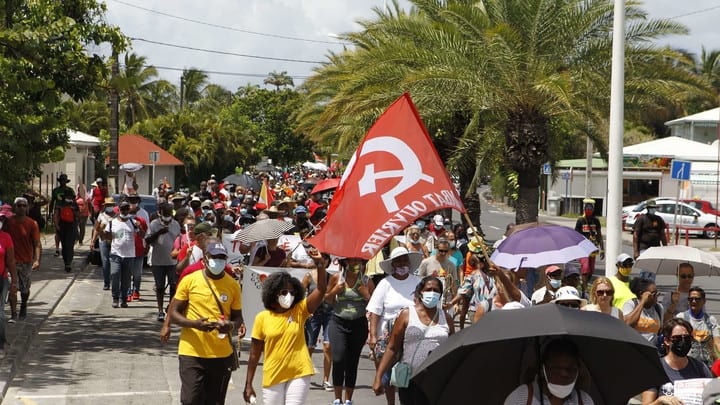
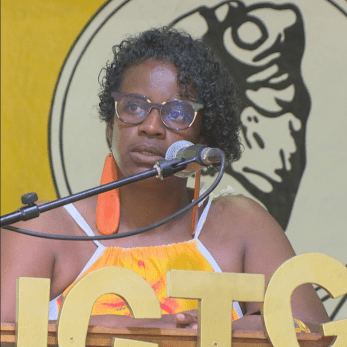
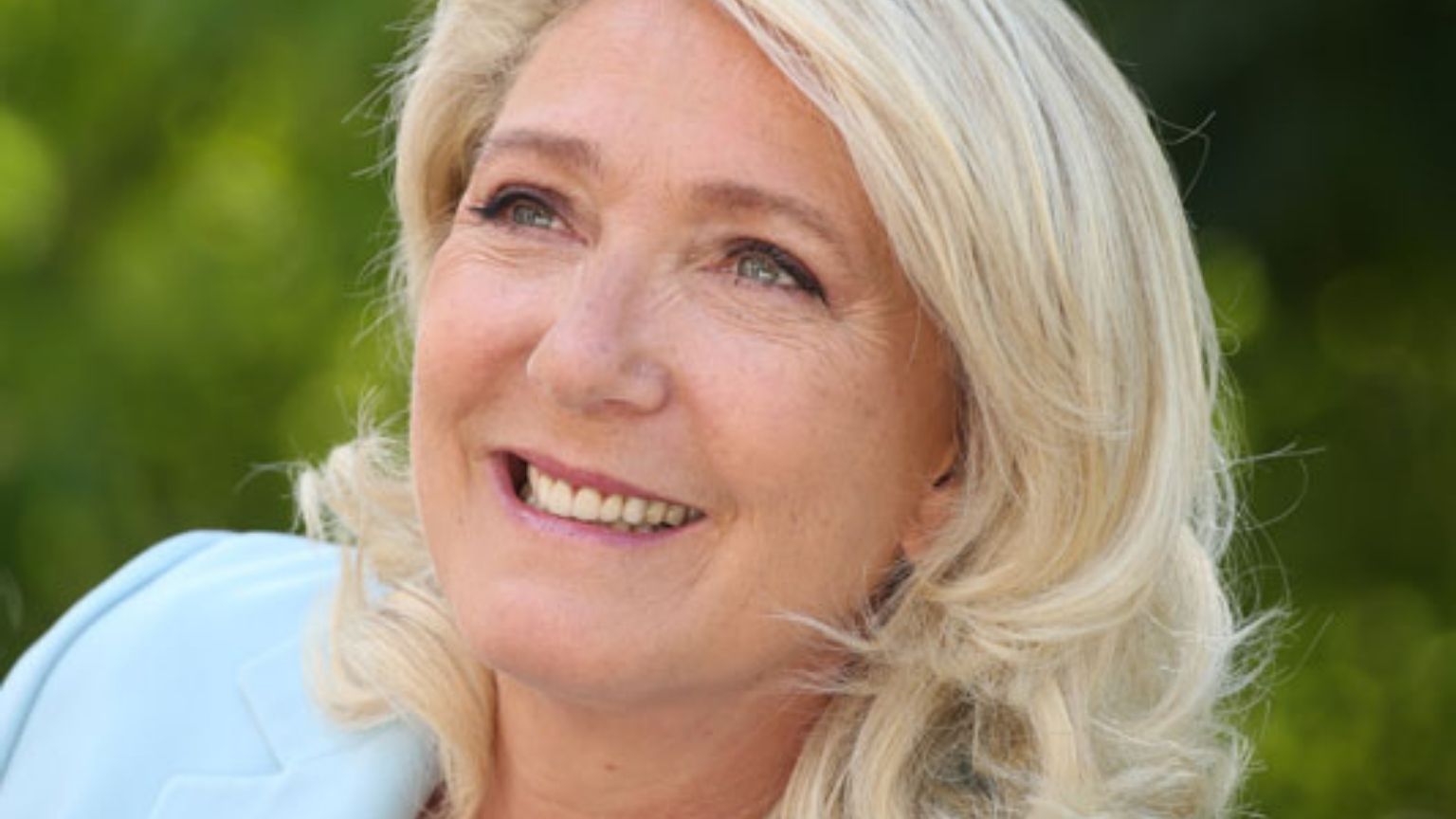

 Aletho News
