Censorship Continues. Facebook Permanently Deleted SouthFront’s Page
SouthFront | April 30, 2020
SouthFront once again has become a target of corporate censorship. On April 30, Facebook permanently deleted our page (LINK) with about 100,000 followers.
This is not the first time that SouthFront has become a target of a technical and propaganda pressure campaign. On April 9, Facebook placed limits on SouthFront’s page claiming that its activities “don’t comply with Facebook’s policies.” (LINK)
On July 21, 2015, Facebook deleted our previous page used to inform people about the conflict in eastern Ukraine, Syria and other key developments around the world. (LINK)
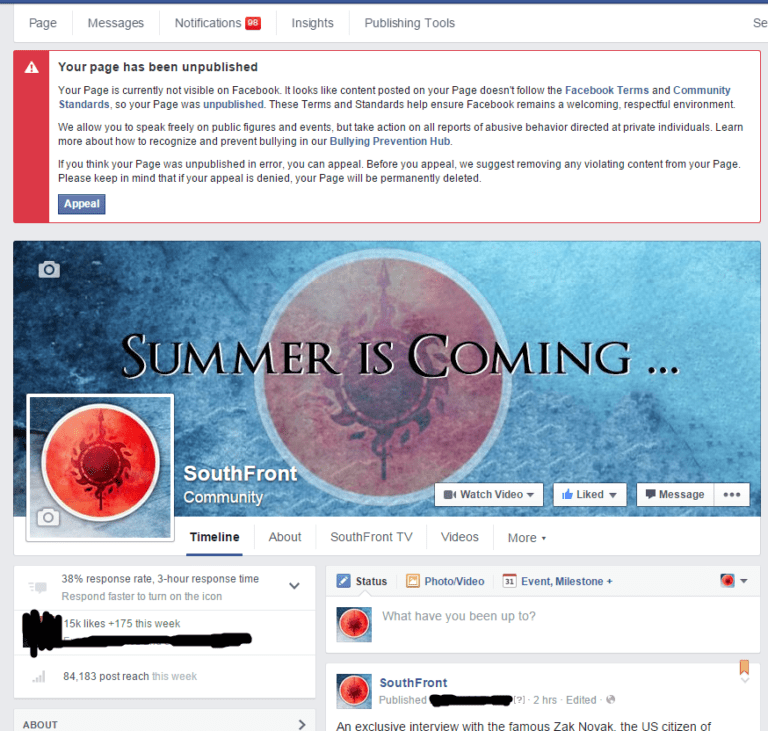
The motivation in 2015 of US intelligence, and Facebook as a tool of US special services, when the situation in eastern Ukraine was especially tense, is clear. However, the current move raises many more questions.
It is likely Facebook was triggered by SouthFront’s video released on April 29. Entitled “SpaceX: Camel’s Nose under the Tent of Space Militarization”, it covers key aspects of the international situation and the US security strategy. With facts and examples, the video highlights the point of view that supposedly “private” global corporations based in the US are first of all the tools of, likely, the ‘neo-liberal’ part of the US establishment.
Another article that may have scared Facebook censors is “Leaked Video Reveals Pentagon Briefing On Development Of Vaccine To Modify Human Behavior”. This article was released on April 28 and objectively covered the background of the circulating video and questions the authenticity of claims that it shows Bill Gates. If this post became the reason of SouthFront’s ban on Facebook, this will mean that the leaked video poses an exceptional threat to a part of the US establishment.
In the meantime, SouthFront is facing an increasing media pressure. Recently, Deutsche Welle and several other mainstream media outlets released articles alleging that SouthFront is spreading disinformation about the COVID-19 outbreak. An interesting fact is that Deutsche Welle appeared to be unable to answer to SouthFront’s official email regarding its accusations against our organization. (LINK)
The Unz Review Suddenly Banned by Facebook!
By Ron Unz • Unz Review • May 1, 2020
My morning newspapers had recently mentioned Facebook’s plans to crack down on misinformation related to our ongoing Covid-19 epidemic, and probably like most other readers I just nodded my head. After all, many Americans might die if cranks or pranksters began promoting highly dubious cures to the deadly disease, perhaps even suggesting that people should inject themselves with Lysol to ward off an infection.
However, those bland public statements took on an entirely different meaning yesterday afternoon when I discovered that all material from The Unz Review had suddenly been banned for alleged violations of “community standards” and our own Facebook page eliminated.
I don’t use Social Media much myself, but others obviously do, and blocking all our website content from access to the 1.7 billion Facebook users seems a pretty drastic step. So it’s quite reasonable to wonder why, and especially why now?
From the very first, the motto of our publication has been A Collection of Interesting, Important, and Controversial Perspectives Largely Excluded from the American Mainstream Media, and I think we have fulfilled that pledge, publishing many thousands of articles and posts on an enormous range of extraordinarily controversial and even forbidden topics, notably including my own American Pravda series.
Under such circumstances, being banned by Facebook might hardly seem surprising. However, many of our most extremely controversial pieces were published years ago, drawing angry denunciations from various quarters, but received with apparent equanimity from the Lords of the Social Network. Nearly all of the “touchy” pieces we published in the last couple of weeks seem no more “touchy” than the ones from a year or two years or even three years ago. So what suddenly sparked this unprecedented action?
Although I can’t be sure, I strongly suspect that the triggering event was my own most recent American Pravda article, dealing as it did with the Coronavirus epidemic, the supposed focus of Facebook’s current crackdown. And this piece not only accumulated more early readership than any of my previous articles here, but also two or three times as many Facebook Likes, which might have raised serious concerns in certain quarters.
My previous American Pravda articles have hardly been bland, but disputing the established narrative of the JFK Assassination or World War II might be regarded as mere intellectual exercises, having little practical impact. By contrast, tens of thousands of Americans have already died from the Coronavirus outbreak while our economy has been wrecked. So raising troubling questions about the origins of this gigantic national disaster might be regarded as just too problematical to be allowed distribution on Facebook.
American Pravda: Our Coronavirus Catastrophe as Biowarfare Blowback? was the title of my 7,400 word essay, and I answered that explosive query in the closing section:
Last month, a team of five WSJ reporters produced a very detailed and thorough 4,400 word analysis of the same period, and the NYT has published a helpful timeline of those early events as well. Although there may be some differences of emphasis or minor disagreements, all these American media sources agree that Chinese officials first became aware of the serious viral outbreak in Wuhan in early to mid-January, with the first known death occurring on Jan. 11th, and finally implemented major new public health measures later that same month. No one has apparently disputed these basic facts.
But with the horrific consequences of our own later governmental inaction being obvious, elements within our intelligence agencies have sought to demonstrate that they were not the ones asleep at the switch. Earlier this month, an ABC News story cited four separate government sources to reveal that as far back as late November, a special medical intelligence unit within our Defense Intelligence Agency had produced a report warning that an out-of-control disease epidemic was occurring in the Wuhan area of China, and widely distributed that document throughout the top ranks of our government, warning that steps should be taken to protect US forces based in Asia. After the story aired, a Pentagon spokesman officially denied the existence of that November report, while various other top level government and intelligence officials refused to comment. But a few days later, Israeli television mentioned that in November American intelligence had indeed shared such a report on the Wuhan disease outbreak with its NATO and Israeli allies, thus seeming to independently confirm the complete accuracy of the original ABC News story and its several government sources.
It therefore appears that elements of the Defense Intelligence Agency were aware of the deadly viral outbreak in Wuhan more than a month before any officials in the Chinese government itself. Unless our intelligence agencies have pioneered the technology of precognition, I think this may have happened for the same reason that arsonists have the earliest knowledge of future fires.
Back in February, before a single American had died from the disease, I wrote my own overview of the possible course of events, and I would still stand by it today:
Consider a particularly ironic outcome of this situation, not particularly likely but certainly possible…
Everyone knows that America’s ruling elites are criminal, crazy, and also extremely incompetent.
So perhaps the coronavirus outbreak was indeed a deliberate biowarfare attack against China, hitting that nation just before Lunar New Year, the worst possible time to produce a permanent nationwide pandemic. However, the PRC responded with remarkable speed and efficiency, implementing by far the largest quarantine in human history, and the deadly disease now seems to be in decline there.
Meanwhile, the disease naturally leaks back into the US, and despite all the advance warning, our totally incompetent government mismanages the situation, producing a huge national health disaster, and the collapse of our economy and decrepit political system.
As I said, not particularly likely, but certainly a very fitting end to the American Empire…
The spread of these simple ideas on Social Media might have dramatic political consequences, so I can easily understand why certain elements would take strong steps to prevent this.
Greater Manchester Police ask residents to call police if someone repeats conspiracy theories
By Cindy Harper | Reclaim The Net | April 28, 2020
The erosion of civil liberties is being fast-tracked.
Asking people to call the police on family engaging in “conspiracy theories” is an idea that sounds like it comes out of China’s social credit system.
But it’s not. It’s happening in the United Kingdom.
Police in Manchester, England, are engaging in a social media campaign, requesting local residents to call police if any of their friends and family are engaging in “conspiracy theories.”
“Online platforms can be a fun world. Unfortunately, they can also be used to exploit vulnerable people. If you are worried that one of your friends or family is showing signs of radicalisation seek advice or call police on 101,” Greater Manchester Police said on Facebook. (Archive)
101 is the non-emergency number to contact local police in the UK.

In a time when civil liberties are becoming strained and social platforms are taking an extreme approach to stamping out “conspiracy theories,” public skepticism is rapidly increasing – and Greater Manchester Police’s statements are only appearing to exacerbate that.
If you ever had any doubt that the public isn’t aware of the Orwellian direction things are going in, you’d only have to look to the comments:
“How ironic that it was people accused of being ‘Conspiracy Theorists’ in the past that actually warned us a totalitarian police state would come and here it is,” replied Paul Nolan Jones.
“Do not think for yourself, do not question what you are told, trust nothing but what the government tell you and under NO CIRCUMSTANCES discuss alternative theories that concern YOUR life and that of YOUR loved ones. If anyone was in any doubt about the totalitarian police state path we are being led down atm, I suggest that you have a really good think about the above police statement,” said Emma Wells.
“Did you guys actually do any proper police training when you signed up or were you handed a copy of George Orwell’s 1984 to memorise instead? – THE THOUGHT POLICE are alive and well in 2020. Do you realise what you’re doing to society if you’re implementing action taken on the above?!,” said Charlotte Binns.
Update – April 30: In light of the Greater Manchester Police deleting the post to avoid criticism, this post has been updated with the screenshots of the comments that were featured in this article, and an archived version has been added for historical purposes.
WhatsApp Blasts Israeli Firm for ‘Being Deeply Involved’ in Hacking 1,400 Users, Court Files Say
By Lilia Dergacheva – Sputnik – 29.04.2020
The now unveiled court documents reveal how an Israeli firm could technically have conducted the hacking of strings of individuals, including human rights activists and journalists, alleging that it was carried out through its special software called Pegasus.
In newly publicised court filings cited by The Guardian, WhatsApp has taken a dig at the Israeli spyware company NSO Group, accusing it of exploiting US-based servers, as it was “deeply involved” in carrying out the mobile phone hacks of 1,400 users – with senior government officials and human rights activists among them.
The social media company took the matter to court last year, indicting NSO of severe human rights violations, including the hacking of more than a dozen Indian journalists and Rwandan dissidents.
The documents shed light on a number of technical details about how the hacking software, Pegasus, is allegedly deployed against targets.
WhatsApp alleges that the victims of the hack had received phone calls using its messaging app and were “infected” with Pegasus, which NSO reportedly updated using a network of computers for monitoring. “These NSO-controlled computers served as the nerve centre through which NSO controlled its customers’ operation and use of Pegasus”, the court files suggest.
WhatsApp insists that NSO gained “unauthorised access” to its servers by reverse-engineering the messaging app and then going around the company’s security settings that prevent misuse of the company’s call features.
One WhatsApp engineer who looked into the hacks charged in a sworn statement that in 720 instances, the IP address of a remote server was included in the malicious code used in the attacks. The remote server was allegedly based in Los Angeles and owned by a company whose data centre was used by NSO, which is said to have logs, including targeted users’ IP addresses, at its disposal.
NSO said in legal filings that it has no idea how government clients use its hacking tools, and therefore does not know who exactly they are targeting.
In comments to The Guardian, NSO defended its earlier statement praising its digital brainchildren: “Our products are used to stop terrorism, curb violent crime, and save lives. NSO Group does not operate the Pegasus software for its clients”, the company said, stressing that their “past statements about our business, and the extent of our interaction with our government intelligence and law enforcement agency customers, are accurate”. It added that the company’s management is preparing a formal response to the court files in the near future.
NSO is meanwhile in the public crosshairs over it latest product – a reportedly US-marketed tracking program specially meant for those infected with COVID-19. The new program, called Fleming, uses mobile phone data and public health information to identify the whereabouts of corona patients and whom they have come into contact with.
‘Tough Luck’ for US Prisoners During COVID-19
By John Kiriakou – Consortium News – April 28, 2020
A federal judge last week denied NSA whistleblower Reality Winner’s request for release rom federal prison, saying that her possible exposure to the coronavirus was not serious enough to warrant relief because she is incarcerated in a prison hospital for other health issues. The judge also said that each prison’s warden and the federal Bureau of Prisons (BOP) have jurisdiction over compassionate release. Federal judges do not.
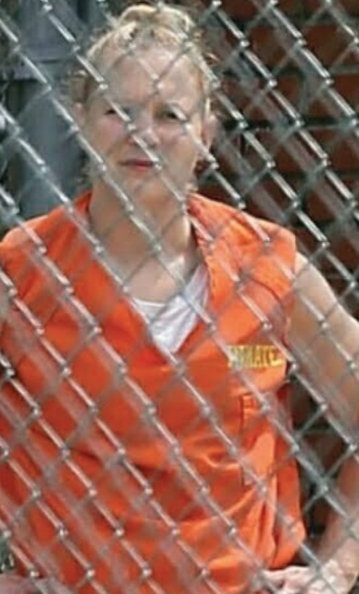
Reality Winner (@bjwinnerdavis, Twitter)
The problem is that prison wardens and the BOP almost never release anybody under their compassionate release authorities, even though Congress recently made it easier for them to do so. Reality Winner is not the only person, then, suffering through this pandemic, worried about sick people living practically on top of each other, and without hope of relief.
I’m in regular touch with several prisoners in the federal system and they have reported a rapidly worsening situation because of the spread of coronavirus. Not only is the disease spreading among prisoners and staff alike because of overcrowding, but poor nutrition and inadequate hygiene also play an important role.
At least 27 federal prisoners have died of coronavirus so far and untold thousands have been infected. And, although there have been some high-profile releases, like celebrity attorney Michael Avenatti and former New York Senate Majority Leader Dean Skelos, most federal prisoners who have applied for compassionate release have been told to go fly a kite.
Years of Talk
One of those prisoners, Clint Goswick, is a friend of mine. He was convicted of being a part of a methamphetamine ring and was given two decades in prison. The truth of the matter is that there were 30 people involved in his “conspiracy.” And although his role in the conspiracy was that he allowed the use of methamphetamine at his house during a party, he was given a draconian sentence because one of the attendees at the party had a gun. Clint didn’t know there was a gun. He never saw a gun. He never touched a gun. But that gun quadrupled his sentence. And because his crime is now called a “gun crime,” he is ineligible for compassionate release, whether there’s a coronavirus pandemic or not.
Now multiply Clint times thousands of other prisoners. They’re all out of luck. They have to remain in prison. I always ask myself, “Is society really better off — are we really safer as a country — keeping a guy in his mid-60s in prison for a first-time non-violent drug offense?” Our politicians like to talk about prison reform and sentencing reform, but after years of talk and even passage of legislation, we have very little to show for it. Clint will have to remain in prison for another six years. He’ll be nearly 70 years old. And that’s only if he survives the coronavirus.
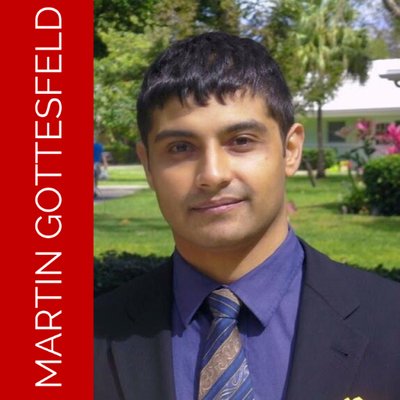
Marty Gottesfeld (Twitter)
I am also in touch with whistleblower Marty Gottesfeld. Marty is incarcerated in the notorious Communications Management Unit (CMU) at the Federal Correctional Institution at Terre Haute, Indiana. Until just a few weeks ago, Marty was held incommunicado because he had been reporting on conditions inside the prison for The Intercept, the HuffPo, and other outlets, and that reporting had embarrassed the BOP. The restrictions were lifted inexplicably and he immediately began blowing the whistle on conditions again.
Marty tells me that the BOP only locked down the prison for coronavirus on April 14. Prisoners have not been permitted to bathe since then. They are confined to their cells and are not permitted to have any outside exercise. Marty says that a nurse takes every prisoner’s temperature every few days and, if a prisoner has a fever, he is taken to solitary confinement — not to the medical unit. Solitary has a simple steel bunk, a toilet, and a sink. What it doesn’t have is a doctor or any comfort whatsoever for a sick prisoner.
Prisoners also are given one disposable mask every Wednesday morning, which they must wear at all times. For reasons not made clear to prisoners, there are new restrictions that have accompanied the lockdown. Prisoners, for example, are now allowed to spend only $50 per month in the commissary, rather than the normal $320 monthly (unless they are informants for the guards, in which case they can still spend $320.) At the same time, the commissary has no detergent, no disinfectant wipes and no hand sanitizer.
Prison authorities have also decided, in their infinite wisdom, that prisoners may only make one phone call per week. They did not explain how this is supposed to help control the coronavirus. The more likely scenario is that they hope prisoners will use their one phone call to speak with family members, rather than with journalists, who may be hungry for information from “the inside.”
No Clue
The bottom line is that the Bureau of Prisons leadership has no plan, no policy, to control the coronavirus inside its prisons. It’s winging it. If you have a fever or test positive, you go to solitary.
But how do you remain healthy when there’s no real medical care and no way to keep yourself clean? What do you do when the White House and the Congress say that many of you should be released to home confinement because of the pandemic and the warden and judges say “tough luck?”
I suppose we can write to our elected officials, but that clearly hasn’t worked. In the meantime, we can keep calling out the BOP and its wrong-headed, incompetent, and sadistic leadership. Maybe one of these days somebody will listen.
John Kiriakou is a former CIA counterterrorism officer and a former senior investigator with the Senate Foreign Relations Committee. John became the sixth whistleblower indicted by the Obama administration under the Espionage Act—a law designed to punish spies. He served 23 months in prison as a result of his attempts to oppose the Bush administration’s torture program.
His warnings unheeded, Iranian scientist contracts coronavirus in US jail
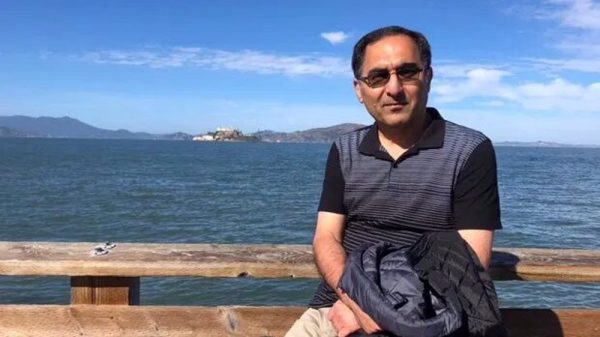
Undated picture provided by ISNA of US-held Iranian scientist, Sirous Asgari
Press TV – April 29, 2020
An Iranian scientist — who remains behind bars in the US despite having been exonerated in a sanctions trial — has contracted the new coronavirus after he repeatedly drew attention to his fragile health and called for his release from the “dirty” and “overcrowded” jail facility.
The Guardian reported the lawyers representing Sirous Asgari, a professor of material sciences at Sharif University of Technology, had confirmed his infection on Tuesday.
He has repeatedly pleaded for release since March, complaining about unsanitary detention conditions and overcrowding at the Louisiana facility, where he is being kept.
Coughing violently and suffering from a fever, Asgari told the paper in a phone call that the detention center was even taking in more inmates rather than releasing some as a precaution to stop further spread of the outbreak.
He also said the US Immigration and Customs Enforcement (Ice) had refused to notify him about his positive test results, adding that he only learned about his infection from his lawyers and family members on Tuesday.
“It makes sense to send me to the hospital as soon as possible. I don’t trust them at all,” the 59-year-old said. “If something happens, they are not fast responders … I prefer to leave this dirty place.”
The detainees are responsible for all the cleaning at the detention facility,” where there is a single shower and only two toilets for all 44 of them to share,” the daily reported.
Ice, however, has told Asgari’s lawyers he would only be released to a hospital if he was struggling to breathe.
Asgari was arrested in the United States in mid-2017. Back then, the FBI alleged the scientist had shared information about a project he had conducted on a sabbatical in the US five years before with his students.
His wife, though, said in an interview in late March that the findings of the project had been published and made available on the Internet afterwards, which means there was nothing secret about the project. US legal authorities then charged him with withholding information in the process of visa application, circumventing the sanctions, and transferring technology to Iran.
Washington then delayed the holding of a trial for him several times, “all the while knowing they had no evidence to bring against him,” she said.
The Iranian professor was cleared of the charges at a court session that was ultimately scheduled after about two and a half years. Nevertheless, US Citizenship and Immigration Services then took the matters out of the hands of the country’s legal system, once again detaining Asgari for “lacking a valid visa and illegal presence on US soil.”
Mr. Asgari has reminded US officials that they themselves had seized his passport and were, hence, responsible for his prolonged presence in America.
His spouse said Washington was intentionally prolonging Asgari’s detention so that it could eventually swap him with an American prisoner held in Iran.
Almost 80% Americans Oppose Trading Privacy for COVID-19 Surveillance, Study Finds
Sputnik – April 28, 2020
According to a fresh survey, the vast majority of respondents are concerned about pandemic-induced surveillance measures continuing well after the outbreak ends.
Americans are increasingly worried about losing their privacy, as governments introduce monitoring measures to keep citizens safe from the further epidemic spread, research from CyberNews.com suggested, putting the number of concerned citizens at 79 percent.
The said respondents noted that they were either somewhat worried or to a great extent worried that intrusive tracking mechanisms forced upon them by the government would extend well beyond the COVID-19 pandemic.
According to the research involving 1,255 adults, the vast majority of Americans – a staggering 89 percent – “support or strongly support privacy rights.” When it comes to potentially sacrificing privacy rights for the sake of combating the spread of COVID-19, just over half (52%) go for “retaining personal privacy.”
Nearly two-third (65%) of those surveyed would not like the government to keep tabs on them via harvesting data or facial recognition measures, while less than a third (27%) would allow an app to use this kind of tracking.
The number is slightly bigger – up to 30% – for those who would allow an app to share their location details with others “if they were infected.”
“Even though the US has not yet introduced any new draconian surveillance measures to combat the spread of COVID-19,” the report concludes adding that “the results of this survey indicate that American adults are far from complacent when it comes to their privacy.”According to Johns Hopkins University estimates, the number of confirmed infection cases in the US has hit 1 million, with more than 57,500 corona-related deaths.
Your Freedoms Don’t Have to Be Muzzled Just Because You’re Wearing a Mask
By John W. Whitehead | The Rutherford Institute | April 28, 2020
Despite all appearances to the contrary, martial law has not been declared in America.
We still have rights.
Technically, at least.
The government may act as if its police state powers suppress individual liberties during this COVID-19 pandemic, but for all intents and purposes, the Constitution—especially the battered, besieged Bill of Rights—still stands in theory, if not in practice.
Indeed, while federal and state governments have adopted specific restrictive measures in an effort to lockdown the nation and decelerate the spread of the COVID-19 virus, the current public health situation has not resulted in the suspension of fundamental constitutional rights such as freedom of speech and the right of assembly.
Mind you, that’s not to say that the government has not tried its best to weaponize this crisis as it has weaponized so many other crises in order to expand its powers and silence its critics.
All over the country, government officials are using COVID-19 restrictions to muzzle protesters.
It doesn’t matter what the protest is about (church assemblies, the right to work, the timing for re-opening the country, discontent over police brutality, etc.): this is activity the First Amendment protects vociferously with only one qualification—that it be peaceful.
Yet even peaceful protesters mindful of the need to adhere to social distancing guidelines because of this COVID-19 are being muzzled, arrested and fined.
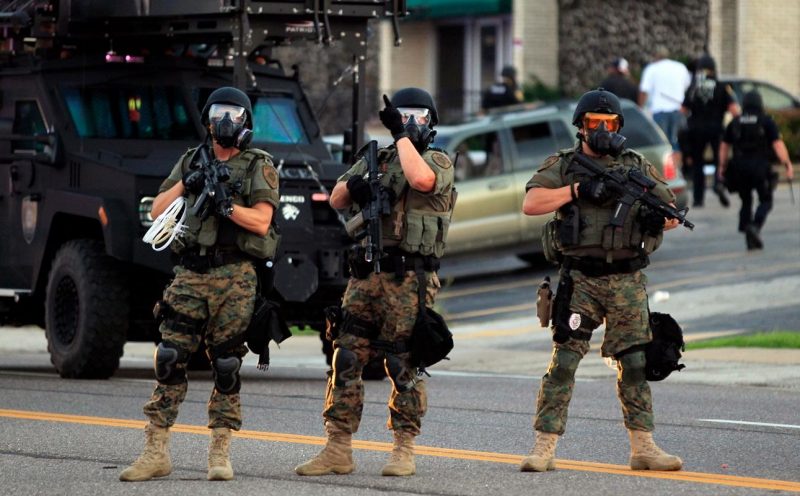
For example, a Maryland family was reportedly threatened with up to a year in jail and a $5000 fine if they dared to publicly protest the injustice of their son’s execution by a SWAT team.
If anyone had a legitimate reason to get out in the streets and protest, it’s the Lemp family, whose 21-year-old son Duncan was gunned down in his bedroom during an early morning, no-knock SWAT team raid on his family’s home.
Imagine it.
It was 4:30 a.m. on March 12, 2020, in the midst of a COVID-19 pandemic that has most of the country under a partial lockdown and sheltering at home, when this masked SWAT team—deployed to execute a “high risk” search warrant for unauthorized firearms—stormed the suburban house where 21-year-old Duncan, a software engineer and Second Amendment advocate, lived with his parents and 19-year-old brother.
The entire household, including Lemp and his girlfriend, was reportedly asleep when the SWAT team directed flash bang grenades and gunfire through Lemp’s bedroom window.
Lemp was killed and his girlfriend injured.
No one in the house that morning, including Lemp, had a criminal record.
No one in the house that morning, including Lemp, was considered an “imminent threat” to law enforcement or the public, at least not according to the search warrant.
Now what was so urgent that militarized police felt compelled to employ battlefield tactics in the pre-dawn hours of a day when most people are asleep in bed, not to mention stuck at home as part of a nationwide lockdown?
According to police, they were tipped off that Lemp was in possession of “firearms.”
So instead of approaching the house by the front door at a reasonable hour in order to investigate this complaint—which is what the Fourth Amendment requires—police instead strapped on their guns, loaded up their flash bang grenades and acted like battle-crazed warriors.
This is the blowback from all that military weaponry flowing to domestic police departments.
This is what happens when you use SWAT teams to carry out routine search warrants.
This is what happens when you adopt red flag gun laws, which Maryland did in 2018, painting anyone who might be in possession of a gun—legal or otherwise—as a threat that must be neutralized.
These red flag gun laws allow the police to remove guns from people merely suspected of being threats. While in theory it appears perfectly reasonable to want to “stop dangerous people before they act,” where the problem arises is when you put the power to determine who is a potential danger in the hands of government agencies, the courts and the police.
Now Lemp is dead and his family is devastated, outraged and desperate to make sense of what appears to be an insensible act of violence resulting in an inexcusable loss of life.
As usual in these kinds of shootings, government officials have not been forthcoming with details about the shooting: police have refused to meet with family members, the contents of the warrant supporting the raid have not been revealed, and bodycam footage of the raid has not been disclosed.
So in order to voice their objections to police violence and demand answers about the shooting, Lemp’s family and friends planned to conduct an outdoor public demonstration—adhering to social distancing guidelines—only to be threatened with arrest, a year in jail and a $5000 fine for violating Maryland’s stay at home orders.
Yet here’s the thing: we don’t have to be muzzled and remain silent about government corruption, violence and misconduct just because we’re wearing masks and social distancing.
That’s not the point of this whole COVID-19 exercise, or is it?
While there is a moral responsibility to not endanger other lives with our actions, that does not mean relinquishing all of our freedoms.
Be responsible in how you exercise your freedoms, but don’t allow yourselves to be muzzled or your individual freedoms to be undermined.
The decisions we make right now—about freedom, commerce, free will, how we care for the least of these in our communities, what it means to provide individuals and businesses with a safety net, how far we allow the government to go in “protecting” us against this virus, etc.—will haunt us for a long time to come.
As I make clear in my book Battlefield America: The War on the American People, there is always a balancing test between individual freedoms and the communal good.
What we must figure out is how to strike a balance that allows us to protect those who need protecting without leaving us chained and in bondage to the police state.
We must find ways to mitigate against this contagion needlessly claiming any more lives and crippling any more communities, but let’s not lose our heads: blindly following the path of least resistance—acquiescing without question to whatever the government dictates—can only lead to more misery, suffering and the erection of a totalitarian regime in which there is no balance.
Constitutional attorney and author John W. Whitehead is founder and president of The Rutherford Institute.
How the Fight Against Covid-19 Has Brought Us a Step Closer to an Orwellian Nightmare
By Timothy Alexander Guzman – Silent Crow News – April 26, 2020
For many years, we in the alternative media have been warning that when a new crisis emerges, a future of social engineering and control would bring us closer to George Orwell’s predictions right to our doorstep. Since the start of the Corona Virus Pandemic (Covid-19) the destruction of the world’s economy with the US in an already fragile state of affairs taking the biggest hit with its lock downs and an estimated 26 million people so far who are now unemployed. It has crippled the social fabric of society, basically forever and as a result, more invasive technologies are being introduced to the world now more than ever before. Recently, the US mainstream media has been reporting on the new technologies that can be implemented by governments to track the potential carriers of Covid-19 from drones that will be able to check your temperature and determine that you may or may not carry the virus to a program that can track individuals Smart phones through a mapping tool which was created by an Israeli company looking to have a footprint in the US market.
When it comes to the surveillance of the public’s health from the sky, drone manufacturer Draganfly comes to mind as it made recent headlines with claims that their drone technology can monitor the public’s health in real time which brings us to the town of Westport, Connecticut. The Westport local police department had originally agreed to monitor and track its citizens for fevers or coughs but had decided to reverse its course and not to roll out the drone program due to its citizens privacy concerns according to NBC news:
A Connecticut police force is grounding its plans to test a “pandemic drone” that would detect a person with a fever or cough, after privacy concerns were raised. The town of Westport has chosen to opt out of the ‘“Flatten the Curve Pilot Program” from drone manufacturer Draganfly, according to NBC Connecticut. Westport Police Chief Foti Koskinas said Thursday that while he was thankful for the opportunity to participate, he also wanted to be responsive to citizens’ concerns.
“We thank Draganfly for offering the pilot program to Westport and sincerely hope to be included in future innovations once we are convinced the program is appropriate for Westport,” Koskinas said, according to NBC Connecticut
Why Westport residents were concerned with Draganfly’s drone capabilities? Watch their introductory video:
This is just one of the technologies that happens to be floating around, giving those in power new ideas that can be used in any future outbreak or any other crisis. What if there is another outbreak in the late fall or winter season? Dr. Anthony Fauci, a member of Trump’s White House Coronavirus task force already “anticipates” that another coronavirus outbreak will begin in the fall, around the same time as Flu season begins. How convenient.
Another not so great idea that is not drone related is currently being used around the world is a program called Fleming created by an Israeli technology firm called the NSO Group based in Herzliva, Israel, a firm that was founded by Omri Lavie and Shalev Hulio who happens to employ former IDF soldiers. An article from Australia’s online news site http://www.news.com.au from 2016 ‘Everything we know about NSO Group: The cyberarms dealer responsible for the iPhone hack’ describes who the founders are linked to which should not be a surprise to anyone at this point:
According the LinkedIn pages of Mr Lavie and Mr Hulio, both men are self-proclaimed serial entrepreneurs, with a string of Israeli start-ups attributed on their profiles. Despite the plethora of tech companies the pair has founded, both men also have ties to the Israeli government.
Mr Lavia’s profile shows he was an “employee” of the Israeli Government from July 2005-October 2007, while Mr Hulio’s claims he was a Company Commander (Search and Rescue) for the Israeli Defence Force from August 1999-November 2004. The company also boasts to have employees from Unit 8200 — the signal intelligence and code deciphering arm of the Israel Defence Force
The NSO group is known worldwide for a highly-controversial spyware program called Pegasus which enabled remote surveillance of individuals smartphones. The NSO Group’s history has been controversial since its introduction of the Pegasus program to the world, for example, in a 2019 article from fastcompany.com, ‘Israeli cyberattack firm woos investors amid a human rights firestorm’ explains one particular controversy that targeted numerous activists and journalists worldwide:
NSO makes Pegasus, a sophisticated tool that can hack into smartphones and is intended, the company says, to help governments stop criminals and terrorists. But Pegasus has also been implicated in attacks on members of civil society. Targets of the software have included at least two dozen activists, journalists, and lawyers in the Middle East, Mexico, Asia, and Europe, according to extensive analysis by Citizen Lab, a digital watchdog at the University of Toronto.
NSO Group has many other scandals, one of them is with Saudi dissident, Omar Abdelaziz who filed a lawsuit claiming that his conversations with Jamal Khashoogi, the Washington Post journalist from Saudi Arabia who was murdered in the Saudi embassy in Istanbul, Turkey in 2018 were intercepted by Pegasus. Now, the NSO Group is rolling out a new program called Fleming. According to the NSO group, “Fleming features an advanced mapping tool that identifies the spread of coronavirus in real-time, empowering health and other government officials to make informed decisions, backed by data, to quickly mitigate the pandemic.” They say that they will empower healthcare workers and “other government officials” which is pretty vague. “By utilizing this technology, decision makers can more effectively deploy resources, including critical supplies and medical personnel, and implement public health protocols that help contain the spread”, resources can be taken out of proportion because the government will decide what “resources” they will use. What if they decided to use a drone strike as a resource?
In an opinion piece published by Ynetnews of Israel ‘ The truth about digital tracking to fight coronavirus’ by Shalev Hulio, the CEO of the NSO Group who of course takes a defensive approach for his firm’s new program “It is important to appreciate that the historical information for each mobile subscription is already and routinely available to the cellular companies” so, since it is already in use, Hulio is suggesting that we can go a little further. “This information only includes cellular locations for that subscription and does not require any collection of information from the device itself” which is something they cannot guarantee. He continues “In other words, with the exception of retrieving the historical location of the device, there is no listening in on calls and no data, personal information or messages that exist on the device can be gathered.” This is the same tech firm that has been implicated in violating the privacy concerns of journalists, activists and lawyers around the world. Hulio says that “through mapping the path of the patient, we can see the people around them and they can be directly alerted” and then he asks the question, “So how does all this not violate privacy?” He claims that the data is analyzed with no verifiable information that can identify you, “In fact, not even a phone number is collected: The analysis is based on the SIM card number that exists on the device.” Then once all the information is collected then they can send a message to the person infected and request they go into self-isolation “This will allow the authorities to build a “tree of infection.”
These are just two of many Orwellian ideas being floated around as potential tools to monitor and control the corona virus outbreak. If we allow these technologies to be implemented into our daily lives, whatever remaining freedoms you may still have, will slowly be taken away.
It does not have to be this way, we can resist this type of invasive technology as the people of Westport, Connecticut proved. They had privacy concerns and voiced their concerns to the local authorities about using ‘Draganfly’s drones that would have initiated the ‘Flatten the Curve Pilot Program’ which is a victory in itself, but this fight has only begun, and will continue well into the future as George Orwell’s warning becomes a reality day by day as the lock downs continue.
Narrative Managers Argue China-Like Internet Censorship Is Needed
By Caitlin Johnstone | April 26, 2020
Neoconservative publication The Atlantic has published an article authored by two university professors titled “Internet Speech Will Never Go Back to Normal”, subtitled “In the debate over freedom versus control of the global network, China was largely correct, and the US was wrong.”
The article is actually worth reading in full, not just because it’s outrage porn for anyone who values human communication that is unregulated by oligarchs and government agencies, but because it’s actually packed full of extensively sourced information about the way Silicon Valley tech giants are collaborating with western governments to censor speech. The only difference between this article and something you might read on some libertarian website is that this article argues that all of these regulations on speech are a good thing.
Here’s an archive of the article if you don’t want to give clicks to The Atlantic, whose editor-in-chief Jeffrey Goldberg once assured the world that “the coming invasion of Iraq will be remembered as an act of profound morality.” Do give it a look if this interests you and you have time.
Fmr. Bush admin lawyer/current Harvard Law prof Jack Goldsmith goes full-Thomas Friedman, credits China’s enlightened authoritarian approach to information as “largely right” and laments the US’ provincial fealty to the First Amendment as “largely wrong.” https://t.co/1WyQtgE8bK pic.twitter.com/1M03ybxh0I
— Anthony L. Fisher (@anthonyLfisher) April 26, 2020
“In the great debate of the past two decades about freedom versus control of the network, China was largely right and the United States was largely wrong,” argue the article’s authors, one of whom is a former Bush administration lawyer. “Significant monitoring and speech control are inevitable components of a mature and flourishing internet, and governments must play a large role in these practices to ensure that the internet is compatible with a society’s norms and values.”
The article paints an accurate picture of the ways in which supposedly independent social media platforms have been collaborating with governments and with each other to regulate speech and have increased that collaboration during the Covid-19 pandemic, noting how “In March 2019, Zuckerberg invited the government to regulate ‘harmful content’ on his platform” and how “As in other contexts, Facebook relies on fact-checking organizations and ‘authorities’ (from the World Health Organization to the governments of US states) to ascertain which content to downgrade or remove.”
“These platforms have engaged in ‘strategic collaboration’ with the federal government, including by sharing information, to fight foreign electoral interference,” The Atlantic reports after outlining ways in which Facebook, Twitter and Youtube have been censoring speech in “aggressive but still imperfect steps to fend off foreign adversaries.”
“The harms from digital speech will also continue to grow, as will speech controls on these networks,” the article’s authors assert. “And invariably, government involvement will grow. At the moment, the private sector is making most of the important decisions, though often under government pressure. But as Zuckerberg has pleaded, the firms may not be able to regulate speech legitimately without heavier government guidance and involvement. It is also unclear whether, for example, the companies can adequately contain foreign misinformation and prevent digital tampering with voting mechanisms without more government surveillance.”
Last May, a govt org outlined an extremely Orwellian vision for what the US must to do to win “the tech war” against China in AI. It essentially called to remake the entire American economy and society. Now, thanks to Covid19,their vision is taking shape.https://t.co/fhWkyQR5n3
— Whitney Webb (@_whitneywebb) April 20, 2020
This article comes out days after journalist Whitney Webb published another article worth reading titled “Techno-Tyranny: How The US National Security State Is Using Coronavirus To Fulfill An Orwellian Vision”. Webb details how FOIA-obtained document by a US government organization called the National Security Commission on Artificial Intelligence (NSCAI) argues for the need to implement authoritarian measures like increased surveillance more in line with those used in China, in order to prevent the PRC from technologically surpassing the United States.
Webb notes for example how the document “cites the use of mass surveillance on China’s ‘huge population base’ is an example of how China’s ‘scale of consumer market’ advantage allowing ‘China to leap ahead’ in the fields of related technologies, like facial recognition.”
We’re also seeing an increase in surveillance being pushed for in a new report by the think tank Tony Blair Institute for Global Change, arguing that a drastic increase in tech surveillance is “a price worth paying” in order to fight Covid-19. Which is of course hilarious, because having the think tank of a Bush lapdog Prime Minister argue that more surveillance is a price worth paying to stop coronavirus is a lot like a bunch of muggers arguing that time saved by cutting through dark alleyways is worth the increased risk of mugging.
So that’s great. We’re seeing mainstream narrative managers shriek about the need for new cold war escalations against China’s bad, bad authoritarian government, while simultaneously arguing that western governments should espouse Beijing’s worst authoritarian impulses. This as we’ve discussed previously is because consent needs to be manufactured in order for the US-centralized empire to take drastic steps to prevent China from surpassing it and creating a multipolar world, and the freer people are to think and act and organize, the harder that’s going to be.
Oligarchs have no business controlling what we can and cannot say to each other. Governments have no business bringing more and more transparency to us while bringing more and more opacity to themselves. This is ugly, it is abusive, and it must end.
Freedom of speech is actually about freedom of thought. Speech is the carrying agent of thought; controlling human communication is actually about controlling the spread of ideas. Censorship is about controlling the thoughts that the public think in their heads. Speech control is mind control.
Why Outside Air is Safe and Park Closures Should End
Cliff Mass Weather Blog | April 18, 2020
During the past month, the fear of coronavirus had spurred political leaders to close parks and nature areas throughout the country.
In Washington State, all state parks and state lands managed by the Department of Natural Resources are closed through at least May 4. Here in Seattle, all major city parks were closed last weekend and parking lots for city parks are still shuttered. Picnicking, barbecuing, and any sports are illegal in Seattle parks. In California, hundreds of state parks, including many major beach areas, have been closed, and parking has been blocked off for all state recreation facilities.
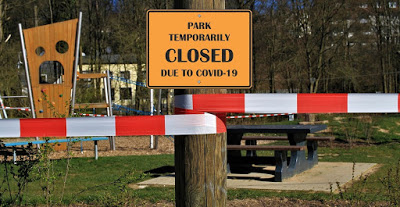
All of these closures are predicated upon the assumption that coronavirus infection is a serious threat in outside air and that virus spread is significant outdoors. As documented in this blog, such an assumption is not consistent with the best science. Furthermore, there is strong evidence that restriction of public access to parks and natural areas threatens both the physical and mental well being of the population and thus is counterproductive. Many politicians claim that parks must be closed to prevent large groups from gathering and spreading the virus. As we will see, such worries appear to have little basis in fact.

Torrey Pine Beach north of San Diego Is closed
Is Outside Air Safe?
After searching through the literature and talking to a number of doctors and researchers, I could not find a single paper suggesting significant outdoor transmission of COVID-19 or any coronavirus. But there is a huge literature and long historical experience suggesting that outside air is immensely safer than indoor air within constrained spaces. Here are a few examples and some quotes from medical experts on this point:
- Qian et al., 2020: Examined 1245 confirmed cases in 120 cities in China and identified only a single outbreak in an outdoor environment, which involved two cases.
- Nishiura et al., 2020: Transmission of COVID-19 in a closed environment was 18.7 times greater compared to an open-air environment (95% confidence interval).
- Lidia Morawska, professor and director of the International Laboratory for Air Quality and Health at Queensland University of Technology in Brisbane, Australia.”: Outdoors is safe, and there is certainly no cloud of virus-laden droplets hanging around… Firstly, any infectious droplets exhaled outside would be quickly diluted in outdoor air, so their concentrations would quickly become insignificant. “In addition, the stability of the virus outside is significantly shorter than inside. So outside is not really a problem… It is safe to go for a walk and jog and not to worry about the virus in the air”
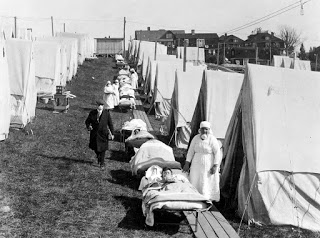
Influenza patients were moved into the sunny, outside air to promote recovery during the 1918-1919 pandemic.
- There is deep experience during other pandemics that placing patients outdoors greatly enhanced their recoveries and lessened spread to others. In fact, during some pandemics (like 1918-1919) open-air hospitals were built and patients were moved outside into the sun, with very positive impacts. To quote one paper on the subject (“The Open Air Treatment of Pandemic Influenza”, which documented the reduction of mortality and morbidity in the open air: “more might be gained by introducing high levels of natural ventilation or, indeed, by encouraging the public to spend as much time outdoors as possible.”
- There is an extensive literature that ultraviolet radiation from the sun can quickly degrade the viability of viruses in the air (e.g., Schuit et al. 2020: The Influence of Simulated Sunlight on the Inactivation of Influenza Virus in Aerosols). As noted by Lytle et al., 2005: “Sunlight or, more specifically, solar UV radiation (UV) acts as the principal natural virucide in the environment.” Duan et. al. 2003 found that “UV irradiation can efficiently eliminate the viral infectivity”
- A fascinating study of virus transmission in dorms at the University of Maryland compared students in rooms with poor ventilation, with those who kept their windows open all the time (Zhu et al., 2020). Those with open windows had one-fourth the rate of respiratory infections. Some did complain of being cold, though.
- Virus particles rapidly disperse in the open air as noted by Case Western Reserve University Hospitals infectious disease specialist Dr. Amy Edwards: “When someone coughs or sneezes, most of the virus drops to the ground within 6 feet pretty quickly. That’s why doctors recommend social distancing. If a few particles remained in the air, they would be killed off by UV light in the sun, or blown away by the wind”

I could quote a lot more literature and from additional specialists, but you get the point. Being in fresh, outside air, particularly when the sun is out, is clearly a good place to lessen one’s exposure to COVID-19.
The risk of transmission of COVID-19 is extraordinarily less in outside air compared to within buildings. There is essentially no background concentrations of the virus in outside air. Ultraviolet radiation from the sun is destructive to the virus. There is rapid dispersion of any source of virus (e.g., an infected coughing individual) by the wind in the vast outside volume of air. And there is a substantial literature that concentration matters: the more exposure to viral particles the greater the chance of infection. Viral concentrations will be very low outside, if they are measurable at all.
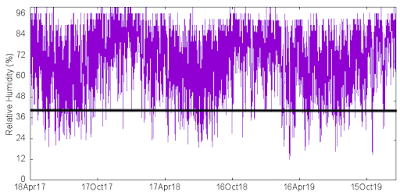
Another issue is humidity. Viral transmission is degraded by high humidities and enhanced by lower humidities (check out this excellent recent review article: Moriyama et al. 2020); several papers suggest that relative humidities above 40% degrade transmission. During the cool season, humidity inside building tends to be very low (check my earlier blog for an explanation), but outside humidities are generally much higher. For example, below is a plot of the relative humidity in Seattle over the past three years. Outside relative humidity only rarely drops below 40% around here. Inside RH is often below 40% during the cool season.
Recently, there has been a lot of media attention regarding a simulation of particle dispersion from a coughing runner, with recommendations not to run directly behind him/her and particularly in the wake region behind the runner. There was some dramatic imagery (see below), but the risk from sick runners is really quite small.
First, there are not many runners coughing and sneezing while running–when someone is sick with the virus they have great fatigue and if they were asymptomatic carriers they would not be coughing! (Note: there are some folks that cough after intense exercise). Furthermore, the large virus-laden droplets tend to fall quickly and the smaller particles/droplets tend to follow the streamflow around an obstacle (that’s you). Most importantly, the droplets ejected from a sick runner would rapidly disperse in the free atmosphere and the UV radiation would work to lessen the viability of a virus. Yes, there is a slipstream of air immediately behind a runner in which concentrations could be greater…. but how many people are running immediately behind a sick runner? Even in the video, little of the particles reach the face of the runner following immediately behind. Folks, this is a very small risk.

So let’s get back to the policy decision to ban folks from parks and why it is illogical and contrary to common sense.
Hopefully, you are convinced that outside air is immensely more healthful with far less COVID-19 risk than the air we breathe inside of buildings. You really want folks outside for that reason alone.
But what about social distancing? If that is good, you want folks to spread out as much as possible. Thus, they should be ENCOURAGED to get their fresh air in vast open public spaces and particularly ones with lots of air motion (i.e. wind).
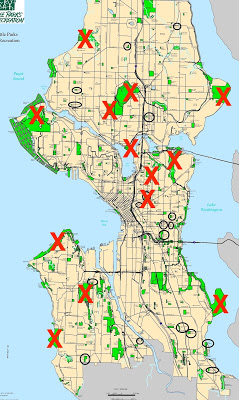
But yet that is exactly the opposite of what our political leadership is doing. Here in Seattle, the Parks Department closed the largest parks in the city (like Magnuson, Lincoln and Discovery) last weekend, parks that afford great opportunities for social distancing (see map). Many of these large parks (red X in the above figure) are near the water and experience stronger winds that are particularly favorable for virus dispersal. In contrast, the city left the smaller parks open, concentrating folks in small areas. Just as bad is the closing of park parking lots, which forced folks to leave their cars outside of parks and to walk in narrow corridors (less social distancing) to enter the parks.
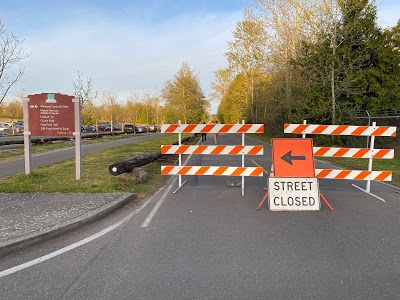
Magnuson Park was closed and everyone is forced to walk on the crowded path to the left.
In California, vast beach areas are closed, again forcing folks to stay indoors or crowd onto limited walkways.
All these park closures are based on fears of transmission within groups enjoying the parks. But such closures do not make sense. First, there is little evidence of viral spread in outdoor spaces, even when crowded. Second, there is little evidence for such crowding in Washington State and California parks in other than the most isolated incidents. I have been to several Seattle parks during the past weeks– folks are generally careful and respectful, without large collections of folks in close proximity. Obviously, park officials can make it clear that closely packed large crowds are not appropriate and that there will be warnings and citations if such crowds occur. To put it succinctly, park closure is a solution in search of a problem that has never been shown to exist. And it hurts exactly the people it is meant to help.
More Issues
Going to parks is extraordinarily good for physical and mental health. Being outside exposes folks to the sun’s UV rays that facilitate production of vitamin D, which bolsters the immune system and reduces the chance of infection by COVID-19 and other pathogens. Recently, I got a call from a UW professor of medicine who is working on exactly this important relationship with COVID (he needed global UV/solar radiation data), confirming the above. Vigorous exercise and even walking enhance the immune system, reducing chances of infection. And exercise and fresh air have a very positive effect on mood, reducing stress and anxiety–both of which weaken the immune system,
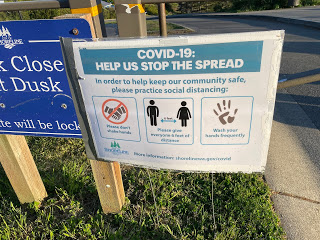
And in a progressive city like Seattle, or in the progressive states of Washington or California, there are simple equity ideas that should be compelling. Closing parks or making entry difficult hurts low income people the most. Folks that live in small apartments or in crowded environments greatly enjoy the physical and emotional release of our wonderful large parks. They are the ones who are most deprived by the park closings, both mentally and physically, in comparison to those with large homes and extensive garden areas. And the closing of parking lots deprives the elderly and physically handicapped from the healthful conditions in our parks and the emotional salve of enjoying the outdoors. I have noted the demographic shift in the park when the parking lots were closed.
In some ways, this is all about risk. There is an extraordinarily small risk of catching COVID-19 while enjoying parks and natural areas. I mean really, really small. But park closures provide substantial risks that clearly threaten one’s physical and mental health. Our society is not particularly good in qualifying and acting upon risks, and the park closures are a prime example of this failure.

Sunset at Shoreline’s Richmond Beach Park.
Parking is closed and many cannot enjoy this view anymore.
Governors Inslee, Cuomo, and Newsom have all stated that in dealing with the COVID-19 crisis it is essential to “follow the science.” It is time that they follow their own advice, reopening all the parks and nature areas, including the restoration of all parking facilities and access.
__________________________________________________
Addendum: A few commenters (and some politicians) have said that the parks should be closed because a few individuals did not practice sufficient social distancing in their evaluation. So should everyone be punished and denied access to the parks because of a very small minority (the overwhelming number of park visitors are not gathering in groups)?
Such communal punishment seems something out of a non-democratic society. Plus, the dangers of isolated groups in the outside air is totally speculative and not based on any evidence. Consider the situation on the highways. Because some people are speeding and endangering others, do we stop EVERYONE from driving. Of course not. We warn them and give them tickets. We can do the same thing in parks.
PSS: There are reasonable measures that could be done in parks, like closing active playgrounds and perhaps the bathrooms. Places where many people are physically touching the same objects.
Featured Video

or go to
Aletho News Archives – Video-Images
Book Review
The Maidan Killings and the False-Flag Case
By Freddie Ponton | 21st Century Wire | September 5, 2026
Before the killings that helped bring down Ukraine’s president in February 2014, American diplomats were discussing who should enter its government. In a leaked telephone call, senior State Department official Victoria Nuland told US ambassador Geoffrey Pyatt, “I think Yats is the guy,” referring to opposition leader Arseniy Yatseniuk. Washington had clear preferences and was working to advance them. Later that month, Yatseniuk became prime minister.
Ivan Katchanovski’s The Maidan Massacre in Ukraine examines the violence that preceded that transfer of power. Drawing on television footage, witness testimony, forensic examinations and Ukrainian court proceedings, he argues that elements of the opposition shot protesters and police in a false-flag operation. His case centres on evidence of protesters being shot from opposition-controlled locations, including Hotel Ukraina, overlooking the killing ground. … continue
Blog Roll
 Aletho News
- US Senator Murphy says Pentagon denied him entry to US base in Qatar
- Israel expands “incitement” charge to target Palestinian education and memory
- How Israel seeks to reshape Arab classrooms
- Paris bans pro-Palestinian demonstration planned for Oct. 7 over ‘risks of public disorder’
- In August Hanning Treason Case – All Signs Point To Tel Aviv.
- France cleared dozens of military sales to Israel between May and September: Report
- France projects nuclear power as Macron pushes arsenal expansion
- The fallacy of US delusions about Iran’s economic collapse
- What changes with Lula or Flávio?
- Britain leads Western media’s demise through ‘fear porn’ narrative
- If Americans Knew
- Soldier testimony sheds light on how Israel wages information war
- CIA Report Warns Israel Could Head Toward Civil War, Total Collapse
- Banker Who Exposed Howard Lutnick’s Ties to Epstein Warned of ‘Retaliation’ and ‘Personal Consequences’ in Last Post Before Suicide
- Israeli Attacks Kill Two Palestinians in Gaza
- Gaza genocide at 3: Israeli-U.S. cruelty and the smart, deep resistance to it are changing the world
- As genocide is about to enter 3rd year, little of Gaza remains– Daily Update
- “We See Our Homes Now From A Satellite, Like Strangers”
- Watch “Gaza: Doctors Under Attack”, originally censored by BBC
- NAZA: Israeli embassies in UK and US promote rival documentary to challenge Gaza genocide allegations
- David Ellison appoints Israeli to lead merged Paramount-Warner studios
- No Tricks Zone
- Latest European Green Energy Debacle; Portugal’s Largest Flagship Solar Park Insolvent!
- Green Energy Debacle: German Expert Professor Fritz Vahrenholt Warns Of Severe Economic And Social Consequences
- Two More Paleo Reconstructions Affirm Meters-Higher Sea Levels Across Ireland, Brazil 7000-6000 Years Ago
- New Study: Earth And Venus Surface Warmth Largely Explained By Convection And Lapse Rate, Not CO2 Or Radiation
- 2025 Nature Paper Claiming Worsening Global Drought Gets RETRACTED …Heavily Flawed
- New Study: ‘Global Drought Shows No Detectable Recent Acceleration Under Climate Warming’
- Economic Masterminds: German Socialists Suggest Taxing Productivity Gains Stemming From Using AI
- The South China Sea Has Not Been Cooperating With The Climate Change Narrative
- Energy Crisis: Germany Enters Heating Season With Historically Low Gas Reserve Fill Levels
- New Study: The Antarctic Ice Sheet Gained Mass From 2020-2024 Due To Staggering Snow And Ice Accumulation

