Refugee team welcomed but Olympics displace 77,000 people in Rio
RT | August 8, 2016
The heart-warming image of the Olympic Refugee Team entering the Maracana Stadium last Friday was a special moment, but 77,000 Brazilian residents have themselves been displaced as a result of the Games.
The Rio 2016 Games are the first to have a team of refugees compete, in recognition of the 60 million refugees around the world.
Athletes from Syria, South Sudan, Ethiopia, and the Democratic Republic of Congo were chosen to represent the refugee team, which has been handed a group of coaches and support staff to help them during the Games.
International Olympic Committee (IOC) President Thomas Bach heralded the refugee team.
“These refugees have no home, no team, no flag, no national anthem,” he said.
“We will offer them a home in the Olympic Village together with all the athletes of the word. The Olympic anthem will be played in their honor and the Olympic flag will lead them into the Olympic Stadium.
“This will be a symbol of hope for all the refugees in our world, and will make the world better aware of the magnitude of this crisis. It is also a signal to the international community that refugees are our fellow human beings and are an enrichment to society.”
Although the Olympics may offer a handful of refugees a temporary home in Brazil, the event itself has directly forced around 77,000 Brazilian natives from their homes to make way for infrastructure.
As was the case in the football World Cup in 2014, protesters opposed the hosting of a major sporting event in Brazil – mainly due to the country’s dire economic situation and the social issues that ravage the nation.
One of the main reasons for opposition to the 2016 Olympics has been the creation of IDPs, internally displaced persons, in Brazil.
Among the worst-affected areas was the poverty-stricken Rio suburb of Vila Autodromo, where residents were forcibly removed from their homes.
The infrastructure upgrade to Vila Autodromo will drive development projects including plush apartment buildings, but serves as a sardonic reminder to poor families that they have been forced out of their homes.
NYPD Commissioner Bratton Resigns, Takes Job With Pro-Clinton, Pro-Israel Firm
As he moves into his new position at Teneo Holdings, Bratton will go from enforcing ‘broken windows’ to rubbing elbows with those gathered at the nexus between law enforcement, the national security state, the military-industrial complex, and U.S.-U.K.-NATO foreign policy.

Former NYPD Commissioner William Bratton Speaks at The First National Personal Security Conference in Israel, 2014. (Photo: Israeli Ministry of Public Security)
By Eric Draitser | Mint Press News | August 5, 2016
New York City Police Commissioner Bill Bratton formally announced his resignation on Tuesday, marking the end of a tumultuous second term as the NYPD’s top cop.
Bratton, largely seen as the architect of the “broken windows” law enforcement strategy that targets low-level offenses in order to stop larger offenses, has been heavily criticized by social justice advocates, who have charged that Bratton’s tactics amount to a targeting of people of color who are then saddled with criminal records, promoting further problems for themselves and their families.
While Bratton touts his record on crime – NYC has seen crime, especially violent crime, continue to drop to record lows under Bratton – he has a much more dubious record when it comes to police-community engagement. If anything, Bratton has become a lightning rod for criticism, especially in the wake of the 2014 murder of Eric Garner by NYPD officers, none of whom faced any criminal repercussions. Bratton faced similar criticisms in his other positions, including in Los Angeles and Boston, where he was sharply criticized for many of the same policies.
His resignation provides yet another scandalous example of how Bratton represents the very worst of the political establishment in the United States. While some will be celebrating his retreat from public office, it is critical to note that Bratton has accepted a job with Teneo Holdings, a consulting group closely linked to the Clinton political machine, as well as Israel and its lobby.
And it is here, at the crossroads of the national security state and the political ruling class, that Bratton will continue to protect and serve — the interests of the elite, that is.
Behind the curtain at Teneo Holdings
Teneo Holdings may ring a bell for political junkies, mainly because of the controversy that erupted in 2013 after it was revealed that Huma Abedin, the top aide to Hillary Clinton and wife of disgraced New York Rep. Anthony Weiner, had failed to disclose that she was simultaneously employed by the State Department and as a consultant for Teneo.
Of course, it wasn’t simply the lack of transparency that was of concern, but rather the obvious conflict of interest for a State Department employee with access to top level cabinet officials in the Obama administration to be representing outside interests. Indeed, this sort of highly unethical move by a close Clinton confidante is really par for the course for Hillary (and Bill) whose unethical dealings include overseeing arms deals to Clinton Foundation donors, appointing Clinton Foundation donors to key State Department positions, and raising money from individuals closely connected to foreign governments, among others.
However, it is the relationship between the Clintons and Teneo that is of particular interest.
Teneo Holdings was founded by Douglas Band, a close adviser to former President Bill Clinton, and Declan Kelly, a major Clinton fundraiser and special envoy to Northern Ireland for Hillary when she was Secretary of State. Writing for Politico, Rachael Bade, reported in April:
“While serving as Clinton’s special envoy, reaching out to global corporations for those investments, [Kelly] was also working for two of them as a private consultant — earning about $2.4 million from Dow Chemical, a longtime client of his and one of the firms that participated in Clinton’s Ireland initiative.”
Once again, highly improper conflicts of interest seem to be as instinctive as breathing when it comes to the Clintons. But it is precisely these connections between political elites, major financial and corporate players, and the people behind Teneo, that is of most interest. Again, Bade explains:
“With Bill Clinton serving in the paid position of honorary chairman, and Hillary as secretary of state, Teneo [became] a blend of public relations advice for CEOs and more technical investor relations work. Corporate executives paid $250,000 a month — sometimes more — for consulting and assistance. They also, in some cases, got to hobnob with a former president. The firm forged a mutually beneficial relationship with the Clinton Global Initiative, the fancy annual Clinton Foundation event starring the former president and other world leaders. The New York Times and The New Republic first reported three years ago how the philanthropic gathering provided an ideal nexus for Teneo to both recruit new clients and enhance the visibility of existing clients by getting them speaking roles.”
It’s not difficult to see just what Teneo was doing: using connections and influence peddling to become one of the world’s premier consulting firms, one which could guarantee corporate interests and foreign states access to the most influential individuals in the uppermost echelons of power in the U.S. It’s not exactly the sort of product that just any run-of-the-mill consultancy could deliver.
And so, former NYPD Commissioner Bratton is heading to Teneo to serve as the head of the new risk management division where, according to the Wall Street Journal, he will “advise CEOs on how to deal with issues ranging from terrorism to cybercrime.” And Bratton is not alone; he joins former Clinton and Obama envoy to the Middle East, George Mitchell, as well as former British foreign secretary William Hague, as Teneo’s latest high-profile hire.
Again, the influence peddling and access is what is critical here. Bratton, Mitchell, and Hague represent the nexus between law enforcement, the national security state, the military-industrial complex, and U.S.-U.K.-NATO foreign policy.
Teneo, Israel, and the U.S. Empire
The connections between key figures in the Teneo/Clinton orbit and Israel abound. Take for instance the fact that Mitchell, one of the most well-connected political operators in the Middle East, is a senior advisor for Teneo while he has maintained working relationships with many members of the Israeli government and state. Crispin Hawes, managing director of Teneo Intelligence, is also closely connected to the region, having been Eurasia Group’s leading expert on the Middle East and North Africa.
Bratton, himself, has cultivated extremely close and friendly ties with the Israeli state. In May 2014, Bratton gave the keynote address at Israel’s National Conference on Personal Security in Jerusalem, a conclave of some of the leading figures in Israel’s (and the United States’) national security apparatus. The conference included influential attendees from around the world.

Bratton poses with Israeli officials at the First National Personal Security Conference in Israel. (Photo: Israeli Ministry of Public Security)
But this was certainly not the only time that Bratton had direct dealings with, and praise for, the security state of apartheid Israel. In fact, as chief of the Los Angeles Police Department, Bratton nurtured cooperative relations between the LAPD and Israeli security forces. As The Jewish Journal reported in 2014:
“The LAPD-Israel bond was in large part fused by former LAPD Chief William Bratton, who made official trips to Israel to learn about the country’s advanced counter-terrorism tactics during his chiefdom from 2002 to 2009. At a town hall meeting in Los Angeles near the end of his term, Bratton said of Israeli intelligence experts: ‘They are our allies. They are some of the best at what they do in the world, and that close relationship has been one of growing strength and importance.’”
In fact, those close ties between Bratton’s LAPD and Israel have endured long since his tenure in Los Angeles was over. The LAPD routinely sends officers and other officials to Israel for training and other initiatives, as do members of other police forces, including Boston and New York, both of which saw Bratton as police chief.
It’s no wonder then that the violent and brutal repression practiced by Israeli security forces against Palestinians has become a staple of U.S. law enforcement. Shoot first and lie about what happened. Shoot first and blame the victim. It works in the West Bank just as it does in Ferguson and Baltimore and Baton Rouge. And, in both cases, the guilty are exonerated while being held up as heroes by the media and political establishment. All the while, the body count keeps rising.
Bratton, of course, has no qualms with this, just as he’ll relish the opportunity to rub elbows with the world’s most influential people as he transitions to his new job with Teneo.
One evening soon Bratton will be sitting with the likes of Doug Band, Declan Kelly, and maybe even Bill and Hillary Clinton. They will toast to each others’ success as they laugh about the Crime Bill of 1994, the mass incarceration state, the prison-industrial complex, and the danger of “superpredators.” They’ll share stories about how their heroic policies, widely perceived as unabashedly racist, changed the American social fabric, making America safe again, to borrow a nauseating line from Donald Trump. They may even lament that they didn’t do more to expand the draconian policies for which they’ve come to be known.
They’ll also be cashing their checks. Big ones. Courtesy of the City of New York, Los Angeles, Israel, Wall Street and the military-industrial complex. And it goes almost without saying that at no point will Bratton and his Teneo cronies ever remember just how many hundreds of thousands, perhaps even millions, of lives they’ve ruined, families they’ve destroyed, and children their policies killed.
Such is the sociopathy of power in the Empire.
Israel announces new resettlement plan for Negev Bedouins
Ma’an – July 26, 2016
BETHLEHEM – Israeli authorities Monday announced the approval of plans to build a new township for Israel’s Bedouin community in the Negev desert, according to Israeli media, in a continuation of what rights groups have said is Israel’s discriminatory policy of forcibly transferring Bedouins to Israeli-zoned townships to make room for Jewish communities.
The planned township is expected to be built just south of Segev Shalom, another Bedouin township, and would transfer at least 7,000 Bedouins from the unrecognized village of Wadi al-Naam, according to Israeli newspaper Haaretz.
The approved village would comprise of an area of approximately 9,000 dunams (2,224 acres), while providing housing to some 9,000 residents, The Times of Israel reported.
The proposal to expand the area of Segev Shalom was challenged in Israel’s Supreme Court last year, as the Association of Civil Rights in Israel (ACRI), who assisted in the court proceedings, argued that any expansion of the town would be followed by the forcible removal of Bedouins from unrecognized villages, particularly from Wadi al-Naam.
Wadi al-Naam residents and Israeli human rights groups presented an alternative planning proposal to the Supreme Court in April last year, which presented 15,000 dunams of land for a town separate from the densely populated neighborhoods of Segev Shalom.
According to Haaretz, Israel’s National Planning and Building Council recommended to the court the construction of the township in January in cooperation with village residents. However, residents of Wadi al-Naam have reportedly not been consulted about the approved plans.
Wadi al-Naam is one of 35 Bedouin villages considered “unrecognized” by the Israeli state. According to ACRI, more than half of the approximately 160,000 Negev Bedouins reside in unrecognized villages.
While Bedouins of the Negev are Israeli citizens, the villages unrecognized by the government have faced relentless efforts by the Israeli authorities to expel them from their lands in order to make room for Jewish Israeli homes.
The classification of their villages as “unrecognized” prevents Bedouins from developing or expanding their communities, as their villages are considered illegal by Israeli authorities. According to ACRI, entire Bedouin communities have been issued demolition orders in the past, while the village of al-Araqib has been demolished at least 100 times by Israeli forces in the past six years.
Israeli authorities have also refused to connect unrecognized Bedouin villages to the national water and electricity grids, while excluding the communities from access to health and educational services, and basic infrastructure.
Bedouins are considered a semi-nomadic group, as their way of life is dependent on access to wide areas of grazing land for their animals. Rights groups have argued that the relocation of Bedouins to permanent Israeli townships, oftentimes located in already stressed environments, severely disrupts their traditional lifestyles.
The Wadi al-Naam village was established in the 1950s soon after the 1948 Arab-Israeli war that established the state of Israel. Military officials forcibly transferred the Negev Bedouins to the site during the 17 year period when Palestinians inside Israel were governed under Israeli military law, which ended shortly before Israel’s military takeover of Gaza and the West Bank, including East Jerusalem, in 1967.
Now more than 60 years later, the village has yet to be recognized by Israel.
According to Israeli human rights group Bimkom, Wadi al-Naam, much like other unrecognized villages in the Negev, are “not connected to the water, electricity, sewage, telephone or road networks, and its inhabitants suffer from a severe lack of education, welfare and sanitation services.”
The group also pointed out that Israeli authorities have created hazardous conditions in the villages by establishing industrial zones near their vicinities. The Ramat Hovav Industrial Zone, for instance, was established near Wadi al-Naam, which residents have said releases bad odors into the air and pollutes the air, soil, and water, while a site purposed with burying explosive materials was also established near the village.
However, rather than working to remove the source of pollution from their communities, Israeli authorities have instead pushed for their eviction from the area.
Meanwhile, Israeli Jewish settlements in the Negev continuously expand, with five new settlements approved last year. According to an investigation undertaken by ACRI and Bimkom, two of the approved settlements are located in areas where unrecognized Bedouin villages already exist.
The plan would see the displacement of at least 7,500 Bedouins from the unrecognized villages of Katamat and Beer Hadaj.
Killing with robots increases militarization of police
By Marjorie Cohn – The Hill – July 24, 2016
As in many cities around the country, Black Lives Matter held a demonstration in Dallas to protest the police shootings of two more black men, Alton Sterling of Louisiana and Philando Castile of Minnesota. During the demonstration, Micah Xavier Johnson, an Army veteran who served in Afghanistan, mounted his own personal, deadly protest by shooting police officers guarding the nonviolent rally. Five officers were killed and seven wounded.
After negotiating for some time with Johnson, who was holed up in a community college parking garage, police sent in a robot armed with explosives and killed him. Dallas police chief David Brown said, “We saw no other option but to use our bomb robot and place a device on its extension for it to detonate where the subject was,” adding, “Other options would have exposed our officers to grave danger.”
The legal question is whether the officers reasonably believed Johnson posed an imminent threat of death or great bodily injury to them at the time they deployed the robot to kill him.
Johnson was apparently isolated in the garage, posing no immediate threat. If the officers could attach explosives to the robot, they could have affixed a tear gas canister to the robot instead, to force Johnson out of the garage. Indeed, police in Albuquerque used a robot in 2014 to “deploy chemical munitions,” which compelled the surrender of an armed suspect barricaded in a motel room.
But the Dallas police chose to execute Johnson with their killer robot. This was an unlawful use of force and a violation of due process.
The right to due process is a bedrock guarantee, not just in the U.S. Constitution, but also in the International Covenant on Civil and Political Rights, a treaty we have ratified, making it part of our domestic law. Due process means arrest and fair trial. It is what separates democracies from dictatorships, in which the executive acts as judge, jury and executioner.
During the standoff, Johnson reportedly told police there were “bombs all over” downtown Dallas. The police didn’t know if that was true. In order to protect the public, they could have interrogated him about the location of the bombs after getting him out of the garage with tear gas.
Apprehension and interrogation are recommended in a 2013 study conducted by the Pentagon’s Intelligence, Surveillance, and Reconnaissance Task Force. The study was cited in “The Drone Papers,” leaked to The Intercept by an anonymous whistleblower who was a member of the intelligence community. It concluded, “kill operations significantly reduce the intelligence available from detainees and captured material” and recommended capture and interrogation rather than killing in aerial drone strikes.
The Obama administration currently uses unmanned armed drones to kill people in seven countries, effectively denying them due process.
There is a slippery slope from police use of armed robots to domestic use of armed drones. The Dallas police department’s robot was apparently manufactured by Northrup Grumman, the same company that makes the Global Hawk drones, used for surveillance in Obama’s drone program.
More than half the U.S.-Mexico border is patrolled with surveillance drones. Customs and Border Protection is considering arming them with “non-lethal” weapons. That could include rubber bullets, which can put out an eye.
The killing of Johnson is evidently the first time domestic law enforcement has utilized an armed robot to kill a suspect. It will not be the last. Police departments are becoming increasingly militarized, using assault weapons, armored personnel carriers, grenade launchers, and ear-splitting sirens known as LRADs. Much of this equipment is purchased from the Pentagon at a significant discount.
But the answer to our national epidemic of racist police killings is not to further militarize law enforcement. We must completely rethink and restructure policing. That means requiring advanced degrees for police officers, intensive screening for racism, and rigorous training in how to handle cross-racial situations. It means moving toward community-based policing and citizens police-review boards with independent authority. And it means coming to grips with the pernicious racism that permeates our society.
Marjorie Cohn is professor emerita at Thomas Jefferson School of Law and former president of the National Lawyers Guild. She writes, speaks and does media about human rights and U.S. foreign policy. Her most recent book is “Drones and Targeted Killing: Legal, Moral, and Geopolitical Issues.” Follow her on Twitter.
Questions Surrounding The Munich Shooting
By Brandon Turbeville | Activist Post | July 24, 2016
Days after the German mainstream press attempted to portray the Munich shooter both as an ISIS fighter and a right wing extremist, more information has come to light surrounding the history of the shooter and his motives. But, the more information reported by the mainstream press regarding the incident, the more questions that arise in connection to the incident itself.
To be clear, there is not enough evidence to clearly label this attack as a false flag or as a lone nut incident. Still, there are a number of questions that need to be answered and there are a number of aspects to this case that need to be addressed as potentially more than merely striking coincidences. We must avoid the temptation to label every attack as a false flag but we must never ignore the signs that we are witnessing one.
ISIS/Extremist Narrative Abandoned
Despite their best efforts, the mainstream press was forced to abandon its “suspicions” that the attack was the handiwork of a right wing extremist despite its constant reminders of the possibility that such an attack still could have been conducted by an individual of this variety. Attempts to link the shooter, 18-year old David Ali Sonboly, to Anders Breivik, the Norwegian mass shooter and right winger (another incident of a questionable nature) proved unsuccessful despite efforts to do so by numerous agencies. Strangely, the media has been reporting that Breivik’s manifesto was not found Sonboly’s apartment, something for which law enforcement agencies should never have been actively searching for to begin with.
Sonboly also has no apparent links to ISIS, despite media reports that the attack could have been one of Islamic extremists, a possibility made even more unlikely by Sonboly’s Iranian heritage and citizenship.
It is noteworthy that the German and international media immediately jumped to the possibility of a right wing extremist being responsible for the attack despite a track record of the opposite (most attacks of this nature in Germany have been of the Islamic extremist variety) while simultaneously stoking the predictable possibility that the shooter could have been linked with ISIS and thus a “Muslim attacker” at best. All this while a cleverly inserted Iranian link was added to the mix.
Presence of Book
In a classic Catcher In The Rye moment, Sonboly was found to have a copy of Dr. Peter Langman’s book Amok In The Head: Why Students Kill, a study of mass school shootings in the U.S. While Sonboly may have been legitimately reading the book, we must also wonder if it were not another intentional telegraph of who was responsible and what his motive may have been in the same way that passports and I.D. papers keep turning up after shootings and terror attacks in other locations.
Purchase and Modification of Gun
Another interesting aspect of the shooting is the fact that Sonboly not only purchased a gun from the “dark net” in a country already wrecked with oppressive anti-gun policies and laws, but he apparently augmented the gun if reports are to be interpreted correctly. Consider the BBC report which states:
David Ali Sonboly, 18, who had a Glock pistol and more than 300 bullets, killed himself after the attack.
Bavarian officials said the gunman, still not officially named, appeared to have bought the illegal pistol used in the attack on the so called “dark net”.
. . . .He said it was likely the Glock pistol – which had been reactivated – was bought on the “dark net” market, an area accessible only with the use of special software.
Sonboly was said to be a keen player of “first-person shooter” video games.
So who “reactivated” a “deactivated” gun? The seller or the buyer? And why would the “reactivation” element even be newsworthy? Are authorities suggesting that an 18 year old with little gun experience (he had to order the one he would use via the internet) was able to repair and “reactivate” a weapon, something that requires some knowledge of firearms in order to do?
Reports of Multiple Shooters – Now Only One Shooter
It is incredibly important to note that the reports of multiple shooters have now been molded into one and only one shooter.
In informed researching circles, it is well-known that the information that comes out shortly after the event is usually the most reliable. This is not to discount the existence of confusion related to panicked reports coming from eyewitnesses and the like. However, the information coming out early on has not yet been subjected to the top-down media revision that will inevitably take place as the story becomes molded to fit the narrative pushed by the individuals who either directed the attack at the higher levels or at least have connections with those who are able to control the manner in which various media outlets report the event.
For instance, in times of false flag attacks, the initial reports may point to 5 gunmen. Very shortly after, reports may only mention two. Only a few hours after the attack, however, all references to more than one gunmen are removed entirely, with only the “lone gunman” story remaining. Any other mention of additional gunmen after this point is ridiculed as “conspiracy theory.”
Such is the case in Munich where initial reports suggested three shooters using long rifles while reports now only cite one shooter using a pistol.
Conclusion
It is important to note that, while there is not enough evidence to declare this attack a false flag event, there are a number of anomalies that should, at the very least, give us pause to question the official narrative of what took place in Munich. Clearly, we have entered a new phase in the Western world where terrorist attacks, mass shootings, mob and racial violence, and authoritarianism are the “new normal.” Whether false flags are continuing to take place or whether they have merely served as the spark that is initializing a growing trend of violence will also likely be an important question in the very near future.
Homeland Security detains US journalist returning from Beirut, tries to confiscate phones
RT | July 22, 2016
A Wall Street Journal reporter returning from Beirut was taken into holding, grilled and asked to hand over her phones by the Department of Homeland Security at Los Angeles International Airport.
When the journalist, Maria Abi-Habib, returned from Beirut, it was another ordinary work trip. But after touching down at LAX in Los Angeles, she was treated as a dangerous suspect by the service, which now enjoys broad authority at airports.
She outlined the ordeal in a Facebook post, largely focusing on the dangers of the loss of privacy and the risk to journalistic work emerging out of the DHS practice.
As soon as she joined the line for immigration, a friendly officer walked up, giddily saying “Oh, there you are. I was trying to recognize you from your picture. I’m here to help you get through the line.” The friendly greeting by the female agent was only offset by the fact of how much she already knew. As Abi-Habib explains:
“The DHS agent went on to say she was there to help me navigate immigration because I am a journalist with The Wall Street Journal and have travelled to many dangerous places that are on the US’ radar for terrorism. She independently knew who I worked for and my Twitter account, countries I’d reported from (like Iraq) and even recent articles I’d written — I told her nothing about myself.”
But to a journalist already on the US Immigration list, this was unsurprising. Abi-Habib was put on the list precisely because of her line of work, and it had previously served to help her navigate customs more quickly.
But this time was different. After being escorted to baggage claim, she was led into a closed-off section of LAX into a room, where another DHS agent was already waiting.
“They grilled me for an hour – asking me about the years I lived in the US, when I moved to Beirut and why, who lives at my in-laws’ house in LA and numbers for the groom and bride whose wedding I was attending.”
Although she took this all in high spirits – given her previous work experience with security checks – Abi-Habib’s story quickly took a darker turn when the DHS officers asked her for her two mobile phones, saying they needed to “collect information,” though didn’t say about what.
Abi-Habib tried to explain that this not only violated her First Amendment rights, but exposed the professional sources she was protecting as a journalist. Although the words are nothing out of the ordinary for the profession, the DHS officer questioning her shot back: “Did you just admit you collect information for foreign governments?”
Shocked, Abi-Habib replied: “No, that’s exactly not what I just said,” as she proceeded to protest the confiscation of the phones.
That is when the real shock came. Abi-Habib was promptly handed a DHS document, which outlined that the service could deprive her of her rights as a US citizen at any border, and that the authority extended up to 100 miles (160km) from the border inside the actual country.
“So, all of NY city for instance,” she writes. “If they forgot to ask you at JFK airport for your phones, but you’re having a drink in Manhattan the next day, you technically fall under this authority. And because they are acting under the pretence to protect the US from terrorism, you have to give it up.”
Abi-Habib tried a different tactic – revealing that the phones were the property of the Wall Street Journal, and that the service would need to contact the paper’s attorneys to obtain permission. At that point things became potentially even more dangerous. The DHS now accused her of impeding the investigation.
That is “a dangerous accusation,” she wrote, “as at that point, they can use force.”
“She said she had to speak to her supervisor about my lack of cooperation and would return,” she wrote, as another officer remained.
The female officer returned 30 minutes later and said Abi-Habib was free to go.
“I have no idea why they wanted my phones – it could have been a way for them to download my contacts. Or maybe they expect [sic] me of terrorism or sympathizing with terrorists – although my profile wouldn’t fit, considering I am named Maria Teresa, and for a variety of other reasons including my small child.”
The DHS’ expanded powers are coming under increasing scrutiny in an age when all of one’s most private information is carried in their back pocket – not to mention sensitive work-related information. But as Abi-Habib later found out, the DHS was indeed perfectly within its right to deprive a citizen of their rights for up to 100 miles within US borders – a law that was “quietly passed” in 2013.
“This legislation also circumvents the Fourth Amendment that protects Americans’ privacy and prevents searches and seizures without a proper warrant,” she explains, adding that using encryption is now practically a must – although even then is not a guarantee, seeing as some apps will reveal the identity of the recipient, if not the chat history.
“Never download anything or even open a link from a friend or source that looks suspicious. This may be malware, meaning that they have downloaded software on your phone that will be able to circumvent the powers of encryption,” Abi-Habib warns after speaking to an encryption expert.
She also advises to “travel naked” – an expression which a tech-savvy acquaintance used. That means not taking a sensitive phone with you – only the SIM card – and using it in a ‘clean’ phone. All sensitive numbers should also be written on paper.
Abi-Habib’s story follows a wave of controversy over special powers now afforded to US agencies at the border. A new proposal to ask visitors for their “social media identifier” could help border agents search your background without having to go to the National Security Agency (NSA), it turned out late June.
Customs and Border Protection (CBP), which is part of the DHS, believes having this “identifier” could help it find “possible nefarious activity and connections.”
The public consultation process for that proposal will expire August 22. If successful, the social media information would be gathered in addition to the numerous database checks, fingerprinting, and face-to-interviews that already take place. How it would be processed is not revealed in the proposal and providing the information would be voluntary.
Read more:
Social profiling: US border agents want to know what you’re saying on Facebook & Twitter
EU eyes Israeli technology for surveillance: Official
Press TV – July 20, 2016
A senior European Union security official says the body is looking into Israeli technology for online surveillance in Europe.
EU Counter-Terrorism Coordinator Gilles de Kerchove said Tuesday that the bloc was turning to Israeli methods after internet companies proved reluctant to monitor individuals.
The official cited a series of deadly attacks across Europe which had prompted officials to think of using Israeli technologies.
Once focused on “meta data” or information regarding individuals’ communications patterns, Israeli spy agencies now have refocused on social media as a complementary means of snooping on Palestinians.
An Israeli military official who administers these methods said human intervention is required to set parameters such as age, religiosity, socio-economic background for the population being monitored.
Traditionally a source of funds for the Israeli military to maintain its “edge” in the Middle East, the US and Europeans have recently turned to a major customer of Israeli weapons.
Last month, the US military said it had tested an Israeli short-range missile for possible use in its European network of missile systems to deter Russia.
Major General Glenn Bramhall of the US Army’s Air and Missile Defense Command said a variant of the Israeli “Tamir” rocket which is incorporated to Tel Aviv’s so-called Iron Dome missile system had been tested.
Last month, a report said European countries were increasingly purchasing weapons from Israeli arms manufacturers, promoting their products on the grounds that they have been “field-tested” against Palestinians.
The report came as 29 Israeli arms makers displayed their military technologies earlier this week at the Eurosatory conference in Paris, one of the world’s largest land defense exhibitions.
French purchases of weaponry from Israeli firms more than doubled in 2015 compared to a year earlier, amounting to $355 million.
In 2016, Israel is projected to overtake Italy as the world’s seventh-largest weapons exporter, the report said, citing IHS Jane’s.
Many of the Israeli arms technologies being sold to Europe are used in the repression of Palestinians, including in the destructive 2014 war on the besieged and densely-populated Gaza Strip.
The war left over 2,200 dead — mostly civilians — while injuring thousands more and displacing nearly 500,000 people, according to UN figures.
Human Rights Watch has criticized the purchase of field-tested Israeli weapons, saying the group has documented “violations of the rules of war that appear to rise to the level of war crimes in Gaza using some of these weapons.”
Israel bans travel of noted Jerusalemite figure abroad & to West Bank
Palestinian Information Center – July 21, 2016
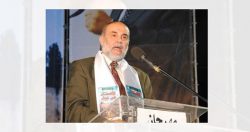 OCCUPIED JERUSALEM – The Israeli occupation police have handed professor Jamil Hamami, secretary-general of the higher Islamic commission in Occupied Jerusalem, a written order banning his travel abroad and to the West Bank.
According to this police order, Hamami will be prohibited from entering the West Bank for four months and the previous ban on his travel abroad will be extended for six months.
The police justified the measure against Hamami by saying that he is involved in banned activities and his departure for other countries will constitute a security threat to Israel.
For his part, Hamami, who works as a lecturer at al-Quds University, condemned Israel’s decision against him as “unjust and a violation of the Palestinians’ right to travel and movement”. He considered this Israeli step as “part of the Israeli campaign that targets the Palestinian dignitaries in Jerusalem.”
Legal centre slams Israeli parliament’s new Expulsion Law
MEMO |July 20, 2016
Adalah – The Legal Center for Arab Minority Rights in Israel has slammed a newly-passed Israeli law designed to facilitate the expulsion of publicly-elected Palestinian parliamentarians in the Knesset.
The law, approved overnight by a vote of 62 to 45, is described by Adalah as posing a “grave danger to basic democratic rights”, and intended to expel those Arab Knesset members “who ‘dare’ to stray beyond boundaries dictated to them by Israeli Jewish majority.”
As Adalah explains, under the new law, “a majority of 90 Knesset members may oust a serving Knesset member on two grounds, as enumerated in Section 7A of the Basic Law: The Knesset: 1) incitement to racism; and 2) support for armed struggle against Israel.”
In addition, “the law stipulates that when the Knesset decides on an expulsion, the statements of the ‘suspect’ Knesset member will also be examined and not only their aims or actions.”
The law also provides that: 1) a member’s expulsion lasts for the full period of the Knesset’s remaining term; 2) the commencement of expulsion proceedings requires the support of 70 Knesset members, including a minimum of 10 opposition members; and 3) suspension proceedings may not commence during an election campaign.
Described as “the latest attempt by the government to trample on the political rights of Palestinian citizens of Israel”, according to Adalah, “there are no existing laws in western democratic states comparable to Israel’s new Expulsion Law.”
The Expulsion Law is the latest expression in a disturbing national tendency over the past several years – including many attempts to disqualify Arab Members of Knesset and Arab party lists from participating in the elections, the government’s decision to outlaw the Islamic Movement in 2015, and the Knesset’s approval of a series of laws such as the ‘Electoral Threshold Law’, the ‘Nakba Law’, and the ‘Boycott Law’ – all intended, via varying means, to silence the Arab public.
Featured Video

The Failed Air War Over Vietnam
or go to
Aletho News Archives – Video-Images
From the Archives
USS Liberty Massacre: A Pivotal Moment in the Hostile Takeover of America
By Kevin Barrett | Crescent | Dhu al-Qa’dah 24, 1445
In corporate America, hostile takeovers are commonplace. They occur when an aggressor—a larger corporation or rich individuals—seizes control of a smaller corporation without asking permission.
What few recognize is that the United States itself has been subjected to a hostile takeover. Since the aggressor, the illegitimate settler colony known as “Israel,” is much smaller than the US, the takeover has necessarily been surreptitious.
As of June, 2024, Israel’s gradual takeover of the US has become obvious and undeniable—a proverbial “elephant in the living room.” … continue
Blog Roll
 Aletho News
- Yemeni Armed Forces Warn Airlines Against Using Saudi Airports, Exempt Mecca and Medina
- Iran security chief says powers greater than US tried to conquer Iran but ended in ‘dustbin of history’
- Europe’s mounting social chaos… chickens coming home to roost for proxy war against Russia
- US-Russia Diesel Deal Becomes Massive Defeat for Ukraine
- Hormuz and the Looming Economic Catastrophe
- Dhubab offensive, media blitz and the rapid unraveling of Saudi-backed coalition’s new gambit
- Putin Conveys to Trump Iran’s Vision on Possible Conflict Resolution – Kremlin
- The Search for Truth: Charlie Kirk’s Assassination One Year Later
- ‘Harsh reality’: Iran says France seeks monopoly on power and intimidation, not peace for all
- When Will This White House Madness End?
- If Americans Knew
- For three years, Israel has killed a child in Gaza every 71 minutes – Daily Update
- Israeli forces kill another child in Gaza – Daily Update
- Gaza ceasefire exists in name only, say more than 100 organizations
- Nearly 2 Million in Gaza Need Urgent Shelter Assistance as Winter Looms: IOM Chief Warns
- Suppressing Palestinian resistance: US charity under fire for AI monitoring of Gaza classrooms
- Thousands Are Held in Israeli Torture Camps. This Is What Happens Inside
- Israel puts Gaza’s sick, injured, newborn in peril – Daily Update
- Report claimed Mark Levin used by Israeli government to influence Trump
- Over 2,000 Gazans have died awaiting medical evacuation amid Israel’s continued siege
- How a U.S. Diplomat Suppressed and Altered Reports Critical of Israel
- No Tricks Zone
- Germany’s Green Energy Debacle: High Energy Costs Force Kahla Porzellan to Close After 182 Years!
- New Study: 50 Years Of The Most Aggressive ‘Net Zero’ Policies Can Only Affect The Global Climate By 0.03°C
- US September “Heat” Was No Record…Many Records Set Decades Ago
- Latest European Green Energy Debacle; Portugal’s Largest Flagship Solar Park Insolvent!
- Green Energy Debacle: German Expert Professor Fritz Vahrenholt Warns Of Severe Economic And Social Consequences
- Two More Paleo Reconstructions Affirm Meters-Higher Sea Levels Across Ireland, Brazil 7000-6000 Years Ago
- New Study: Earth And Venus Surface Warmth Largely Explained By Convection And Lapse Rate, Not CO2 Or Radiation
- 2025 Nature Paper Claiming Worsening Global Drought Gets RETRACTED …Heavily Flawed
- New Study: ‘Global Drought Shows No Detectable Recent Acceleration Under Climate Warming’
- Economic Masterminds: German Socialists Suggest Taxing Productivity Gains Stemming From Using AI

