NSA must end planned expansion of domestic spying, lawmakers say
RT | March 25, 2016
Two members of the House Oversight Committee, a Democrat and a Republican, have asked the director of the National Security Agency to halt a plan to expand the list of agencies that the NSA shares information with.
Representatives Blake Farenthold (R-Texas) and Ted Lieu (D-California) wrote in a letter to NSA Director Michael Rogers on Monday that the reported plan would violate privacy protections in the Fourth Amendment, since domestic law enforcement wouldn’t need a warrant to use the data acquired from the agency.
“We are alarmed by press reports that state National Security Agency (NSA) data may soon routinely be used for domestic policing,” the two lawmakers wrote. “If media accounts are true, this radical policy shift by the NSA would be unconstitutional, and dangerous.”
Last month, the New York Times reported that the Obama administration was working with the NSA to create new protocols for sharing intercepted private communications with domestic law enforcement agencies, such as the FBI and the Drug Enforcement Agency (DEA).
Currently, the secretive spy agency says that its analysts remove certain personal information before giving it to other agencies. Under the new rules, however, domestic law enforcement would have access to the surveillance data without it being scrubbed of personally identifiable information.
The FBI currently has the ability to use phone-based data, but it must request the NSA’s permission to access information from digital communications. The planned loosening of these restrictions would have to be approved by Secretary of Defense Ashton Carter, Director of National Intelligence James Clapper and Attorney General Loretta Lynch.
“Our country has always drawn a line between our military and intelligence services, and domestic policing and spying,” the congressmen wrote. “We do not — and should not — use US Army Apache helicopters to quell domestic riots; Navy Seal teams to take down counterfeiting rings; or the NSA to conduct surveillance on domestic street gangs.”
The Obama administration has said it had leeway to change procedures for certain surveillance programs, thanks to executive order 12333, signed by President Ronald Reagan in 1981.
In 2015, Congress passed the USA Freedom Act, which curbed certain surveillance activities by ending bulk collection of phone records. Private telecom companies are now required to hold onto such information, so that it can be handed over to law enforcement if a warrant is obtained.
Fox News Claims Broadcast TV Database Infringes Copyright
EFF and Partners Support Media Monitoring Service in Fight for Fair Use
EFF | March 24, 2016
San Francisco – A media monitoring service that creates a text-searchable database of television and radio content is defending its fair use rights before a federal appeals court. The Electronic Frontier Foundation (EFF), New York University’s Technology Law and Policy Clinic, and Public Knowledge urged the court Wednesday to protect this innovative technology—and others that have yet to be developed—from being shut down by copyright infringement claims.
“Search engines and book digitization have proven the enormous social benefits of indexing and archiving the media,” said EFF Staff Attorney Kit Walsh. “This case is the latest in a long line of copyright-based challenges to these important tools, and it should fail just as the others have.”
In this case, Fox News sued a company called TVEyes, claiming the company’s broadcast content database—used by journalists, scholars, and political campaigns to study and monitor the national media—infringed its copyright in its programming. The district court acknowledged that the service is generally a fair use of copyrighted material, but then, in a second ruling, held that some of the features of the TVEyes database could facilitate infringement, including the ability to share links or search by date and time. In a departure from established legal precedent, the court ruled that this was enough to defeat TVEyes’ fair use defense.
TVEyes appealed to the United States Court of Appeals for the Second Circuit. In an amicus brief filed Wednesday, EFF and its partners argued that the law does not impose liability on a toolmaker based on the possibility that users will misuse a tool, except in limited circumstances not present here and not even alleged by Fox News.
“TVEyes’ liability should not turn on the hypothetical conduct of its users,” said EFF Legal Director Corynne McSherry. “If the district court decision is upheld, all kinds of new technologies could be at risk. We are asking the appeals court to follow the law and reject Fox News’ claims.”
For the full amicus brief:
https://www.eff.org/document/amicus-brief-37
For more on Fox News v. TVEyes:
https://www.eff.org/cases/fox-news-v-tveyes
Turkey Eyes Law to Censor Universities Amid Professor Arrests
Sputnik – 24.03.2016
Turkey’s government has proposed a new law, which would have universities fire faculty for political disagreement with the government.
The new law would allow universities to systematically dismiss faculty based on their political leanings.
The law was proposed amid the arrest of several academics, who were arrested for signing a peace petition against the current military operation in Turkey’s southeast. The academics were detained on charges of “terrorist propaganda.”
Under the proposed law, faculty could be dismissed for such charges as “supporting terrorism,” “participation in the strikes and demonstrations that impede the learning process,” and “slandering the reputation of the state.”
“These first arrests are likely to be the tip of the iceberg. The next weeks could see a wave of them in jail,” Gareth Jenkins, a political analyst based in Istanbul told Nature.
The law would also target the arrested professors’ supporters, as their actions, by definition are “behavior which smears the state’s reputation” in the new law.
Under current law, the professors cannot be dismissed, because such charges are not part of the law. One of the more contentious issues is that faculty could be fired for “participation in the activities of political parties, which go beyond the provisions stipulated by the law.”
Turkey orders closed trial for Cumhuriyet editor threatening to expose Erdogan in court

RT | March 25, 2016
The editor of the opposition Cumhuriyet newspaper, Can Dundar, has been punished with a trial behind closed doors, after threatening to put President Erdogan on the defensive with renewed allegations.
Many media trials in Turkey of late have gripped national and international attention, as President Recep Tayyip Erdogan continues his relentless pursuit of alleged enemies of the state.
Dundar has been sentenced to life on the charge of espionage – and has vowed to do his utmost to make the wrongdoings of the Turkish government the focus of his Friday trial, effectively turning the tables.
Like others in recent years, Dundar, 54, and Ankara bureau chief Erdem Gul, 49, stand accused of trying to topple the government, something they allegedly attempted to do by publishing last May a video purporting to reveal truckloads of arms shipments to Syria overseen by Turkish intelligence.
Erdogan did admit to the trucks belonging to the Turkish National Intelligence Organization (MIT), but said they were carrying weapons for the Turkmens – the group fighting both Syrian President Bashar Assad’s forces and Islamic State (IS, formerly ISIS/ISIL). He added that the prosecution had no right to peer into the trucks, and that the whole thing was set up to discredit his administration.
Dundar threatened to show the tape in court, knowing the risks involved. It did not pan out according to plan, and has resulted in the punishment he received Friday morning – that he will not see an open trial. In addition, the courts decided that Erdogan will act as a co-plaintiff in the trials, Reuters learned from a witness.
“We are not defendants, we are witnesses,” he told Reuters in an interview hours before the trial. “We will lay out all of the illegalities and make this a political prosecution … The state was caught in a criminal act, and it is doing all that it can to cover it up.
“We were arrested for two reasons: to punish us and to frighten others. And we see the intimidation has been effective. Fear dominates,” he added.
Dundar and Gul made an appearance before the courthouse on Friday morning, emphasizing that “journalism is not a crime” and once again calling publicly for their acquittal.
Both journalists were arrested in November and released following three months in detention after a constitutional court ruled on their release before trial – something Erdogan was not happy about.
“This institution, with the involvement of its president and some members, did not refrain from taking a decision that is against the country and its people, on a subject that is a concrete example of one of the biggest attacks against Turkey recently,” the state leader said at a rally in early March.
Just after the journalists’ release, Erdogan said he didn’t “obey or respect the [court’s] decision.” Their case “has nothing to do with press freedom,” he said, accusing them of “spying.”
He has also been heard saying Dundar would “pay a heavy price” for his crimes.
Numerous rights groups and press associations have voiced grave concern for press freedom in Turkey, all issuing calls to free Dundar and Gul. The International Press Institute called the trial “politically motivated.” Reporters Without Borders went a step further, calling Erdogan “increasingly despotic.”
The development follows several others in recent months, all involving the media being charged with similar crimes for similar offenses. This month authorities seized control of Zaman – the country’s top-selling newspaper, for allegedly aiding Fethullah Gulen – a religious scholar in exile whom Erdogan accused of leading a “terrorist” movement.
Since Erdogan came to power in 2014, a little under 2,000 such cases have been started, the majority for “insulting” the president.
Read more:
Almost 2,000 court cases opened in 18-months for ‘insulting’ Turkish President Erdogan
Trump Caution on Immigration Widely Shared Around World – Research Group
Sputnik — 24.03.2016
US Republican presidential frontrunner Donald Trump’s argument that immigrants take away jobs of home populations is widely supported around the world, the Ipsos market research company announced in a press release.
“A strong plurality of global citizens (41 percent) believes that immigrants take jobs away from their countrymen,” the release stated on Wednesday.
The online survey covered more than 18,000 people in 25 countries aged from 16 or 18 to 64, Ipsos noted.
“Additionally, a near majority of global citizens (49 percent) understand that immigrants also take away social services,” the survey also found.
Ipsos said 49 percent of Americans believe that immigrants take jobs away while 61 percent believed they took unfair and disproportionate advantage of US social services, the survey found.
Ipsos is an independent global market research company that was founded in France in 1975.
Raul Castro Should Ask Obama: What About U.S. Political Prisoners?
A Black Agenda Radio commentary by Glen Ford | March 22, 2016
President Obama knew it was impolitic to play his hypocritical human rights game while in the presence of Cuban President Raul Castro, in Havana, this week. So Obama had one of his kiss-up White House reporters do the sneak attack for him. CNN’s Jim Acosta, the son of a Cuban exile, asked President Castro why his country kept political prisoners. Castro replied, “What political prisoners?” and asked Acosta to provide a list of such people. It was an awkward moment – not diplomatic at all – but Obama was clearly enjoying it. And, well he might, because neither Jim Acosta nor any of the other corporate mouthpieces in the White House press corps would dare, or even think, to ask a U.S. president about the plight of American political prisoners.
The U.S. media traveling with Obama have easy access to all sorts of lists of Cubans who are supposedly in prison for opposition to the their government – although even Amnesty International says that the Cubans released their last political prisoner, back in September.
The United States, on the other hand, is still holding scores of political prisoners, many of them captured in the 1960s and 70s. Their numbers are decreasing only because they are dying of old age – accelerated by the inhuman conditions and practices of the world’s largest prison system. If the corporate media were really concerned about political prisoners, they could go to the web site of the Jericho Movement and see the pictures of 50 of them. Eighteen were members of the Black Panther Party, the Black Liberation Army or the Republic of New Africa, including Mumia Abu Jamal, whose life hangs by a thread because the State of Pennsylvania refuses to treat his Hepatitis C. Black Panther Romaine “Chip” Fitzgerald has been incarcerated since 1969. There are men and women from the MOVE organization, all with the last name “Africa,” whose children were killed and their home bombed by the Philadelphia police. There are Native American activists from the First Nation group and American Indian Movement, including Leonard Peltier, who has been behind bars since 1976. There are white Class war, Anti-imperialist and Anarchist Hacker political prisoners, and, Marie Mason, a white Earth Liberation Front woman and Black female community activist Rev. Joy Powell.
No Truce in This War
There are prisoners who became political after they were imprisoned – which is why they are still there. There are Chicano political prisoners and the great Puerto Rican independence fighter, Oscar Lopez Rivera. There is the former H. Rap Brown, who’s doing life without parole as Imam Jamil Al-Amin. There are members of the Portland 7 and the Virgin Island 5 and the Ohio 7. There is the brilliant Mutulu Shakur, father of Tupac Shakur, who the feds say masterminded the escape and exile to Cuba of Assata Shakur. If Obama could somehow get her back behind bars in the U.S., he’d claim she wasn’t a political prisoner, either.
The Jericho Movement’s pictures do not include lots of other political prisoners, like Rev. Edward Pinkney, who’s serving up to ten years in prison for non-violently standing up for the people of Benton Harbor, Michigan.
President Obama this week told the Cuban people, “I Have Come Here To Bury The Last Remnant Of The Cold War.” But he won’t end the long war against Black people in the United States, a war that has sent millions to prison under a political policy of mass Black Incarceration. In that sense, they are all political prisoners.
Glen Ford can be contacted at Glen.Ford@BlackAgendaReport.com.
The Colossal Costs of Building UK’s Monster Surveillance Network
Sputnik – 22.03.2016
The UK will have to build a mammoth network of Internet surveillance centers if the government passes its Investigatory Powers Bill – dubbed the the Snoopers’ Charter – into law.
The proposal, which the Home Office wants to rush through the House of Commons just after Easter, will cost the country billions of pounds. The centers will be required to keep large databases of all the connections made by UK Internet users for one year — and to share them automatically with the UK’s government and intelligence agencies.
The government is bracing itself for the vote as the news arrives that the only other country in the world to have ever tried a similar approach — Denmark — has just decided to abandon the plan, for the second time in ten years.
The first Danish “session logging” system was put into place in 2007, but was abandoned in 2013 after the country’s police and security services found it to be practically useless — besides being very expensive for Internet providers to install and operate.
Another attempt to build an improved system, carried out by the Danish Ministry of Justice at the start of March 2016 also appears to have foundered.
Before the final decision was taken, the Danish government asked accounting firm Ernst & Young to ascertain how much the new surveillance network would cost.
The experts found that total expenses would be around one billion Danish Krone (US$150 million). The Danish government decided that the costs were too high for the country and its tech sector.
In the UK, the costs are likely to be much-much higher. If in Denmark — a country of 5.6 million people — the government estimated that each citizen would produce about 62,000 records every year, in Britain, whose population is about ten times the size of Denmark’s, the final annual database would have to include about four trillion a year.
Other estimates suggest that the sheer amount of records could even hit tens of trillions every year. That is because each of those records, as per the law, would have to contain: a customer account reference or device identifier; the date and time of the event; the duration; the source and destination IP and port number of each session; the domain name or linked URL; the volume of data; and the name of Internet service you connected to.
The UK will have to find a way to store an enormous amount of information every day — even if each record’s weight was brought down to 100 bytes, on a yearly level, we are talking exabytes (thousands of petabytes).
The only surefire way to deal with this information is by building new massive data centers, which will need at least US$140 million in equipment to handle each exabyte. Add the building, as well as cooling and electricity management and you have only started understanding the eventual costs of the UK’s new monster surveillance plans.
Saudi regime detains top Shia scholar in Eastern Province
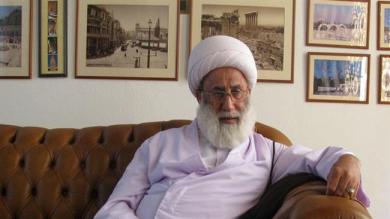
Senior Saudi cleric Ayatollah Hussein al-Radhi
Press TV – March 22, 2016
The Saudi regime’s security forces have arrested a prominent Shia cleric over his anti-regime comments as Riyadh continues its crackdown on the minority sect.
Media reports said on Tuesday that security forces arrested Ayatollah Hussein al-Radhi shortly after he led prayers in the al-Ahsa oasis region of Eastern Province.
The detention came after the senior cleric wrote an article in which he criticized the House of Saud for jailing and executing critics and dissidents, including Sheikh Nimr Baqir al-Nimr who was beheaded in January.
Al-Radi had also infuriated the monarchy by denouncing the ongoing deadly Saudi airstrikes which have claimed lives of more than 8,000 civilians in Yemen.
Riyadh has been under fire from international organizations and rights groups over the rising number of civilian casualties in Yemen. The United Nations Human Rights Council (UNHRC) has recently said that Saudi Arabia and its allies may be committing crimes against humanity due to their indiscriminate killing of civilians in Yemen.
The senior cleric had also strongly denounced a decision by the Saudi-led [Persian] Gulf Cooperation Council to brand Lebanon’s resistance movement Hezbollah as a terrorist organization.
Saudi Arabia has been denounced by rights groups for its grave human rights abuses and harsh crackdown on all forms of dissent.
The Shia-dominated Eastern Province has been the scene of peaceful demonstrations since February 2011.
Protesters have been demanding reforms, freedom of expression and the release of political prisoners. They want an end to economic and religious discrimination against the region.
Reports on protests in Qatif are scant, as Saudi authorities allow foreign news media to visit the region only if accompanied by government officials, claiming it is to ensure journalists’ safety.
Shia Muslims have long complained of entrenched discrimination in a country where the semi-official Wahhabi school condones violence against them. They face abuse from Wahhabi clerics, rarely get permits for places of worship and seldom get senior public sector jobs. Shia religious centers have also been target of a series of terror attacks across the region over the past few months.
Those basic complaints have over the years been aggravated by what residents across the Shia-majority call heavy-handed security measures against their community. They accuse the authorities of unfair detentions and punishments, shooting unarmed protesters and torturing suspects.
State of Emergency in France : Salah Lamrani, another victim of war hysteria
More:
An Islamist “terrorist” in the School of the Republic: Day 1
An Islamist “terrorist” in the School of the Republic: Day 2
UK Police pursue pensioner’s peace protest
By Peter Lazenby – Morning Star – March 17, 2016
A Weekly vigil outside a military base by a 74-year-old peace campaigner has been put under threat by a police dispersal order.
Lindis Percy, who stages a one-hour vigil at US communications base Menwith Hill in Yorkshire every Tuesday, told the Star yesterday that police turned up this week ordering activists to leave.
A fellow campaigner decided to leave but Ms Percy was arrested after refusing to budge. She has been ordered to appear in court on April 7.
The base is staffed by 1,450 US civilian and military personnel and is a key link in the US’s worldwide electronic intelligence-gathering operations via satellites.
Ms Percy, who is a retired nurse, midwife and health visitor, has been a leading peace campaigner for more than 30 years. She has been arrested hundreds of times.
She says North Yorkshire Police and the Ministry of Defence Police at the base have begun applying a dispersal order to stop her weekly vigils at the base.
“I very much want this in court as it is serious, if they get away with this. It stinks.”
Dispersal orders are part of the Anti-social Behaviour, Crime and Policing Bill 2014.
According to government guidelines, dispersal orders give police powers “to disperse individuals or groups causing or likely to cause anti-social behaviour in public places.”
The guidelines also state that “police will be able to deal quickly with emerging trouble spots” and that there must be reason to suspect that “the person has contributed or is likely to contribute to members of the public in the locality being harassed, alarmed or distressed, or the occurrence of crime or disorder.”
Activist and Author Arrested by NYPD Following Book Launch Event
By Jean Casella and James Ridgeway | Solitary Watch | March 16, 2016
Five Mualimm-ak, an activist, survivor of solitary, and contributor to our book Hell Is a Very Small Place: Voices from Solitary Confinement, was arrested Tuesday night moments after leaving a book launch event where he was a speaker, held at the Open Society Foundations in Midtown Manhattan.
Mualimm-ak had read from his essay in Hell Is a Very Small Place to a packed house at OSF, and spoken about his five years in solitary confinement in New York State prisons. Released from prison in 2012, he has gone on to become an activist against solitary and mass incarceration and founder of the Incarcerated Nation Corporation, which aids and organizes formerly incarcerated individuals.
Eyewitnesses say that Mualimm-ak and veteran activist Joseph “Jazz” Hayden, who had attended the event, were leaving the OSF building on West 57th Street when they saw police officers confronting a homeless man. Hayden began filming the encounter and was arrested. Mualimm-ak protested Hayden’s arrest, and was arrested as well.
The two men were taken to the nearby Midtown North Precinct and placed in the cells. Five individuals who had attended the launch event walked to the precinct to inquire after their welfare. Shortly after arriving, they were arrested as well, handcuffed, detained, and finally released after being charged with “refusal to disperse.”
In the early hours of the morning, Mualimm-ak and Hayden were sent from the precinct to Central Booking in Lower Manhattan. They have been charged with Obstruction of Government Administration and are expected to be arraigned today at approximately 2 pm, in New York County Criminal Court at 100 Centre Street. They have legal representation.
More details will be provided as they emerge, here and on Solitary Watch’s social media feeds.
Idaho Lawmakers Consider Bill to Allow Bible in Science Classes
By Heather L. Weaver – ACLU – March 14, 2016
Idaho’s public school students may soon have an additional reference text in science class — the Bible.
Senate Bill 1342, which will be heard this week by the House Education Committee, would authorize the use of the Bible “for reference purposes” in any class where “an understanding of the Bible may be useful or relevant.” Of course, our courts have repeatedly made clear that instruction in the Bible and creationism is neither useful nor relevant nor constitutional in science class. But that didn’t stop the bill’s drafters from explicitly listing astronomy, biology, and geology among the courses into which teachers may incorporate the Bible.
The ACLU of Idaho opposed the bill in the Senate, pointing out that religious texts and beliefs about the origin of life have no place in science class. So, what was the “fix” offered by the Senate Education Committee? They deleted the bill’s references to astronomy, biology, and geology. They also amended the bill to provide that other religious texts could be used as well.
Neither of these cosmetic changes, however, fixes anything; they merely attempt to better mask the measure’s serious flaws. As amended, the bill still allows for teachers to use the Bible in “any topics of study” where a teacher personally believes it is “useful or relevant,” including science classes. And based on the bill’s original text and the current title of the relevant subsection, which remains — “USE OF THE BIBLE IN PUBLIC SCHOOLS” — we know that’s exactly what was intended all along.

Authorizing and encouraging teachers to incorporate the Bible into science classes not only shortchanges Idaho’s students, who deserve a sound science education that will prepare them for college, but it is also a violation of the separation of church and state.
Indeed, even in non-science classes, allowing teachers to incorporate the Bible or other religious texts into class on a whim — regardless of state educational standards and approved curricula — raises serious constitutional concerns. Without in-depth training from a non-religious source and appropriate teaching materials, such as those available for a comparative religion course, it is very likely that teachers will inject their personal beliefs into these lessons, resulting in the violation of students’ First Amendment rights and a real risk of costly litigation for schools.
Unfortunately, the Idaho Senate has already passed the amended bill. But hopefully, as members of the House Education Committee consider the bill this week, they will take a much closer look and conclude, as we have, that Senate Bill 1342 is no gem.
Featured Video

Seyed M. Marandi: US-Iran War Inevitable: Kuwait and Bahrain May Fall
or go to
Aletho News Archives – Video-Images
From the Archives
USS Liberty Massacre: A Pivotal Moment in the Hostile Takeover of America
By Kevin Barrett | Crescent | Dhu al-Qa’dah 24, 1445
In corporate America, hostile takeovers are commonplace. They occur when an aggressor—a larger corporation or rich individuals—seizes control of a smaller corporation without asking permission.
What few recognize is that the United States itself has been subjected to a hostile takeover. Since the aggressor, the illegitimate settler colony known as “Israel,” is much smaller than the US, the takeover has necessarily been surreptitious.
As of June, 2024, Israel’s gradual takeover of the US has become obvious and undeniable—a proverbial “elephant in the living room.” … continue
Blog Roll
 Aletho News
- Seyed M. Marandi: US-Iran War Inevitable: Kuwait and Bahrain May Fall
- Leaders Condemn Ansarallah Attack on Saudi Arabia While Ignoring Illegal War Against Yemen
- Leaked: Britain’s Covert Iraqi Psyops Network
- Yemeni Armed Forces Warn Airlines Against Using Saudi Airports, Exempt Mecca and Medina
- Iran security chief says powers greater than US tried to conquer Iran but ended in ‘dustbin of history’
- Europe’s mounting social chaos… chickens coming home to roost for proxy war against Russia
- US-Russia Diesel Deal Becomes Massive Defeat for Ukraine
- Hormuz and the Looming Economic Catastrophe
- Dhubab offensive, media blitz and the rapid unraveling of Saudi-backed coalition’s new gambit
- Putin Conveys to Trump Iran’s Vision on Possible Conflict Resolution – Kremlin
- If Americans Knew
- Gaza: Ceasefire Anniversary Marks Year of Failed Promises
- The American Conservative: Mike Huckabee Should Resign
- A C-Section in Shackles: A Palestinian Woman’s Harrowing Birth in Israeli Detention
- ‘He’s Desperate’: AIPAC Begins Spending Against Abdul El-Sayed to Boost Mike Rogers:
- Trump, Hormuz, and the Looming Economic Catastrophe
- For three years, Israel has killed a child in Gaza every 71 minutes – Daily Update
- Israeli forces kill another child in Gaza – Daily Update
- Gaza ceasefire exists in name only, say more than 100 organizations
- Nearly 2 Million in Gaza Need Urgent Shelter Assistance as Winter Looms: IOM Chief Warns
- Suppressing Palestinian resistance: US charity under fire for AI monitoring of Gaza classrooms
- No Tricks Zone
- Germany’s Green Energy Debacle: High Energy Costs Force Kahla Porzellan to Close After 182 Years!
- New Study: 50 Years Of The Most Aggressive ‘Net Zero’ Policies Can Only Affect The Global Climate By 0.03°C
- US September “Heat” Was No Record…Many Records Set Decades Ago
- Latest European Green Energy Debacle; Portugal’s Largest Flagship Solar Park Insolvent!
- Green Energy Debacle: German Expert Professor Fritz Vahrenholt Warns Of Severe Economic And Social Consequences
- Two More Paleo Reconstructions Affirm Meters-Higher Sea Levels Across Ireland, Brazil 7000-6000 Years Ago
- New Study: Earth And Venus Surface Warmth Largely Explained By Convection And Lapse Rate, Not CO2 Or Radiation
- 2025 Nature Paper Claiming Worsening Global Drought Gets RETRACTED …Heavily Flawed
- New Study: ‘Global Drought Shows No Detectable Recent Acceleration Under Climate Warming’
- Economic Masterminds: German Socialists Suggest Taxing Productivity Gains Stemming From Using AI


